
Vegan Pancakes Recipe
Published · Updated
Pillowy soft, impossibly fluffy vegan pancakes, these will be your new morning go-to, whether you're vegan or just pancake-curious.
Jump To Recipe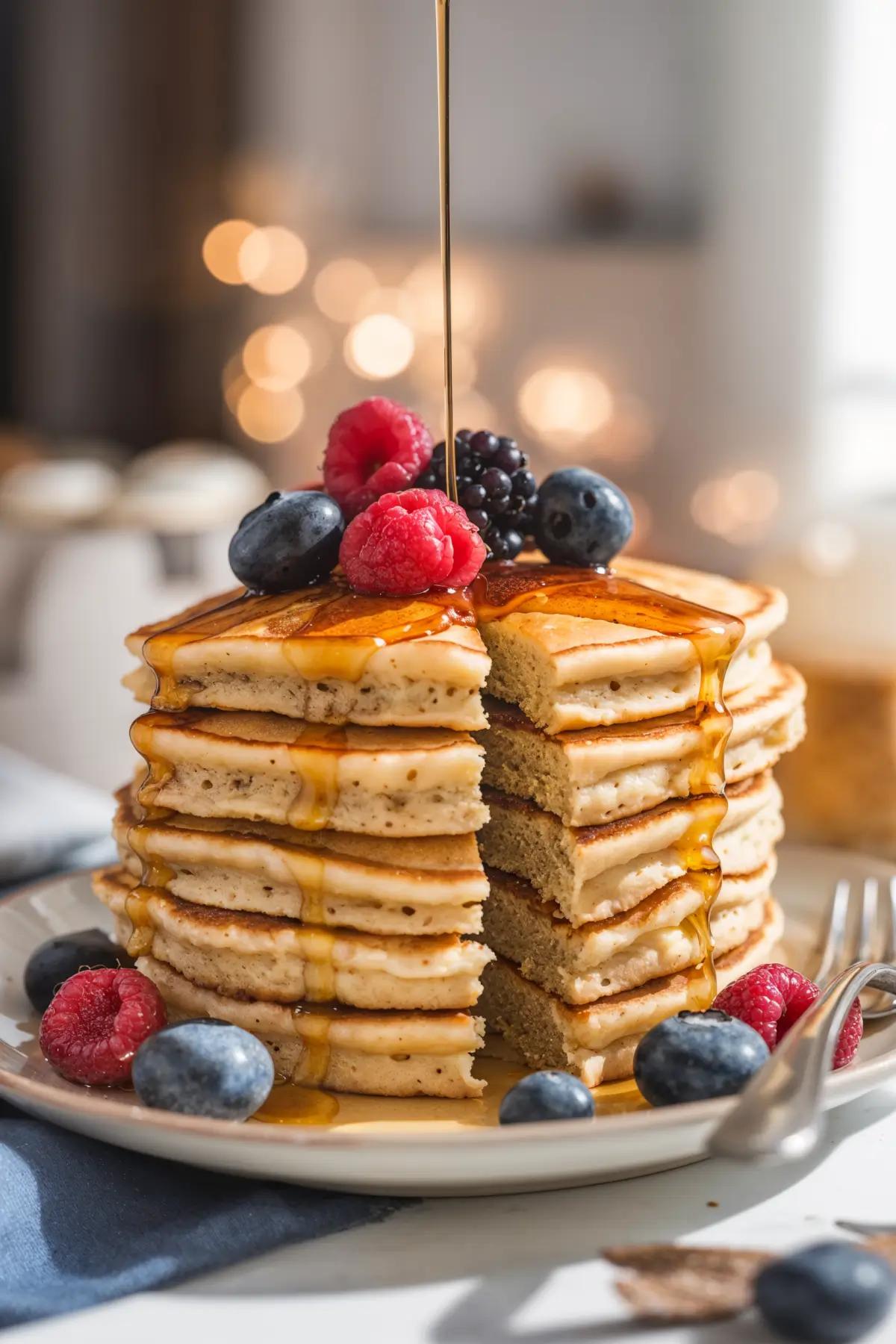
Why These Vegan Pancakes Hit the Spot
There's something unbeatable about waking up on a Sunday, fixing a fresh cup of coffee, and whipping up a batch of pancakes. But I’ll admit, I was skeptical about plant-based pancakes being able to match the classic stack we all know. These, though? They totally deliver.
What I love is how you can make a killer pancake breakfast from just simple things lying around the kitchen. No eggs? No problem. All you need is the right combination of flour, baking powder, and vinegar for extra rise and fluff, plus your favorite plant-based milk.
Pair them with whatever you’ve got on hand, maple syrup, berries, or a handful of crunchy nuts. You can’t go wrong. If you want my top game-changers:
My favorite pancake upgrades:
- A big spoonful of peanut butter while they’re hot
- Fresh berries or sliced banana for a fresh, sweet kick
- A handful of toasted coconut or walnuts for a bit of texture
If you don’t have almond milk, oat or soy works just as well, and soy is the one I reach for when I want them to brown properly. For me these are a staple: quick, comforting, and hard to get wrong once the batter has had its ten minutes.
The story
Vegan Pancakes Are Older Than Baking Powder
Stirring vinegar into plant milk reads like a modern workaround, one more substitution invented to cover a missing ingredient. It is closer to a restoration. For most of the nineteenth century American griddle cakes were leavened exactly this way, an alkali and an acid meeting in the bowl, with no commercial baking powder involved, because there was none to buy.
The alkali was saleratus, usually potassium bicarbonate, which reached American kitchens in the 1830s and replaced the pearlash cooks had been scraping out of wood ash. The acid came from whatever the household already had, and on a farm that was milk on the turn. Sour milk griddle cakes run through nineteenth-century American cookbooks as an ordinary weekday breakfast. Then in 1856 Eben Norton Horsford, a Harvard chemist, patented the first commercially successful American baking powder, still sold under the Rumford name. His real invention was packaging: acid and alkali premixed in one tin, so the cook no longer needed sour milk to make a pancake rise. Buttermilk stayed in the recipes, but from then on for flavor and tenderness rather than lift.
The egg came later still, and it has always been the first thing to go. Eggless pancake recipes surface whenever eggs get scarce. One ran in the Lincoln Journal Star in May 1918, and during the Second World War Britain’s Ministry of Food published a Shrove Tuesday pancake written around a ration book that allowed one egg per person per week. None of them were vegan recipes or trying to be. They were pancakes made by people who could not get eggs, and nobody printed an apology alongside them.
That is worth knowing before you make these, because it changes what you think you are eating. Nothing here stands in for something better. The vinegar is not imitating buttermilk, it is running the reaction buttermilk was there to run. A pancake gets its structure from starch swelling in heat and gas pushing through the batter, and the egg adds richness and a little chew on top of that. Take it out, and two tablespoons of oil replaces the richness while everything that makes it a pancake stays put.
What to buy
Ingredient Notes
Plant milk
Which one you choose changes the result more than the ingredient list suggests. Soy has the most protein, around 7 grams a cup, and behaves closest to dairy: it curdles visibly with the vinegar and browns best, because protein is most of what browns. Oat comes next and its own starch adds body. Almond carries about 1 gram a cup, so those pancakes come out paler and more delicate. Skip rice milk, thin and sweet, which gives a floppy pancake.
Apple cider vinegar
Cider or plain white, and under one tablespoon there is nothing to taste either way. Lemon juice works at the same volume. What does not work is skipping it and adding more baking powder instead, because then the soda has nothing to react with and undissolved soda tastes soapy. Rice and most wine vinegars run weaker, nearer 4 percent than 5, so add a scant extra teaspoon.
Baking powder
Buy it in small tins and write the opening date on the lid, because it loses strength within about six months of opening and a flat pancake is more often a stale tin than anything the cook did. To check, drop half a teaspoon into hot water: it should foam hard immediately, not fizz politely. Aluminum-free brands taste cleaner, which matters more here than in a cake, with no egg or butter for an off note to hide behind.
Baking soda
A quarter teaspoon looks like a rounding error and is doing real work. It is the half of the leavening that reacts with the vinegar, on contact, before the pan is involved at all. Do not increase it. One tablespoon of vinegar is all there is to neutralize it, and the surplus goes into the pancake, where it tastes metallic and tints the crumb faintly yellow.
All-purpose flour
Plain all-purpose is right and there is no upgrade. Bread flour carries too much protein and gives a pancake you have to chew; cake flour tears when you flip it. Use a scale if you have one. A cup is 120 grams, but scooped straight from the bag it can hold 145 or more, and that 25 grams is the difference between a batter you pour and one you spread.
Vegetable oil
Any neutral oil works: sunflower, canola, grapeseed. Melted coconut oil is the trap, and an earlier version of this recipe offered it as an equal swap. Poured into fridge-cold plant milk it sets on contact into hard white specks that no amount of whisking redisperses, and they cook into waxy spots. Melt a solid vegan butter instead if you want that flavor. You also want a little extra oil for the pan, which is not optional even in non-stick.
Fluffy Vegan Pancakes
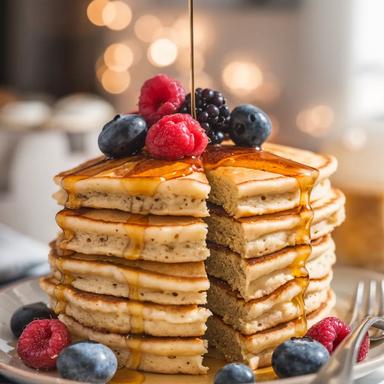
Egg-free, dairy-free pancakes that actually rise, built on plant milk soured with vinegar so the batter gets buttermilk body and lift.
Ingredients
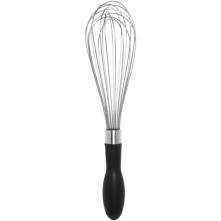
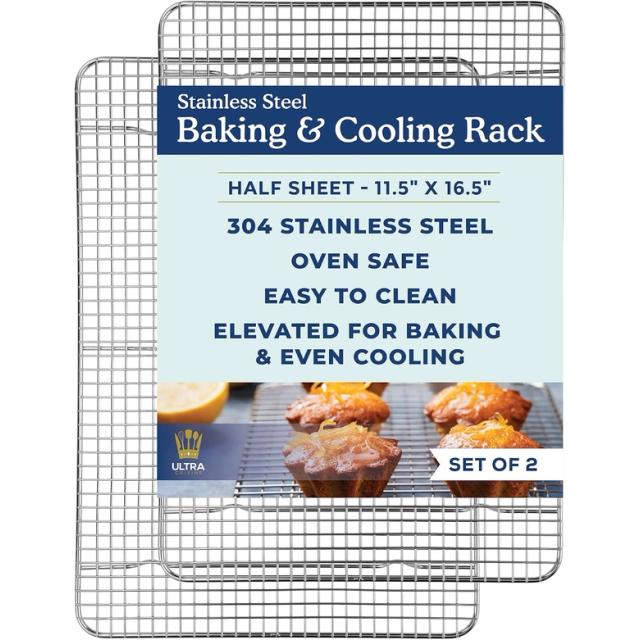
Equipment
As an Amazon Associate I earn from qualifying purchases, at no extra cost to you.
Instructions
- 1
Sour the milk
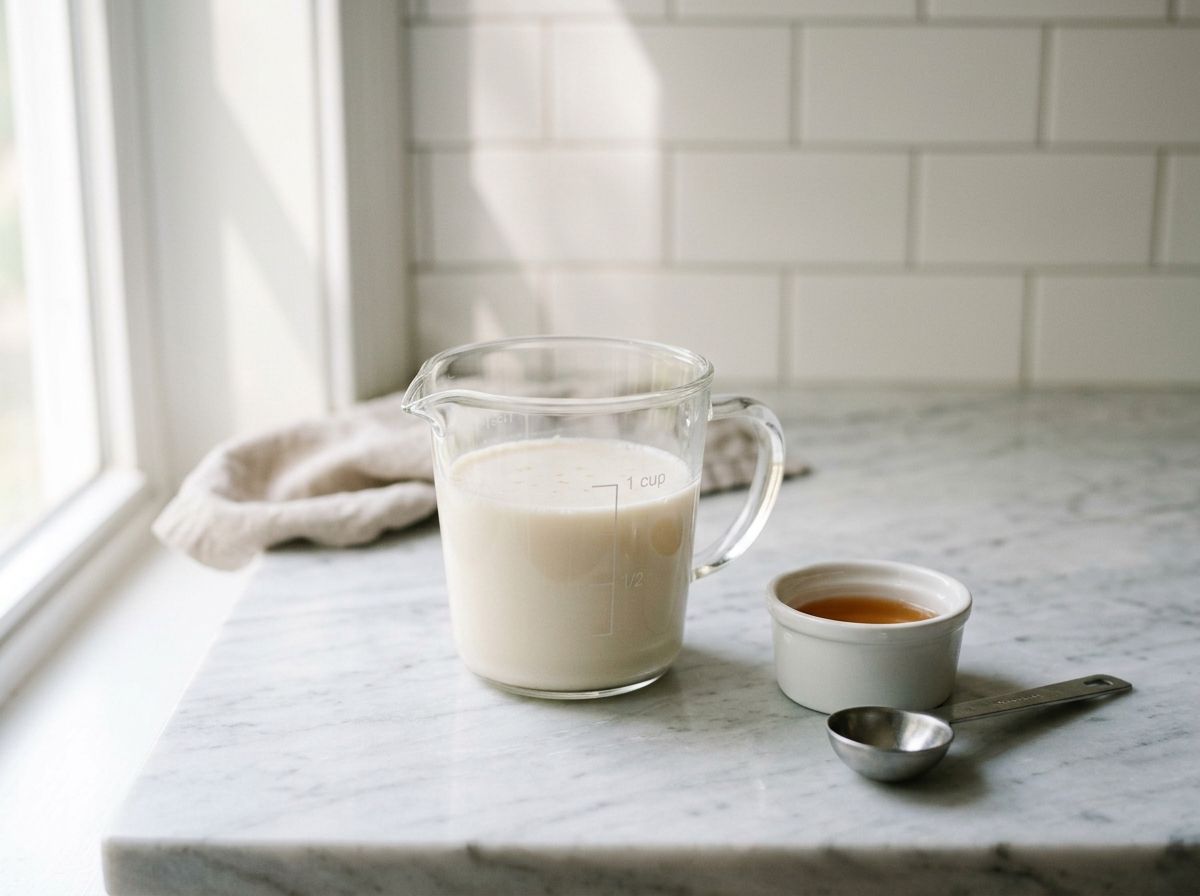
Stir the vinegar into the plant milk and leave it for 5 minutes while you measure everything else. Soy visibly thickens and flecks; almond and oat barely change, and that is fine. The acid is there to tenderize the batter and react with the baking soda, not to put on a show.
- 2
Whisk the dry ingredients
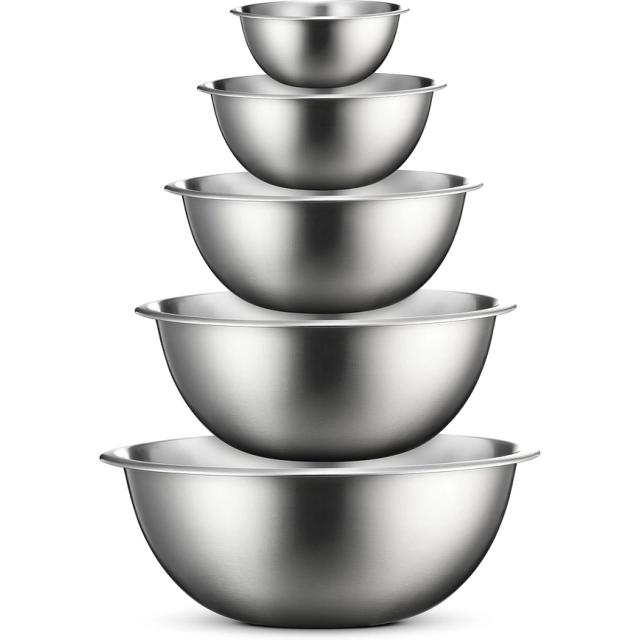
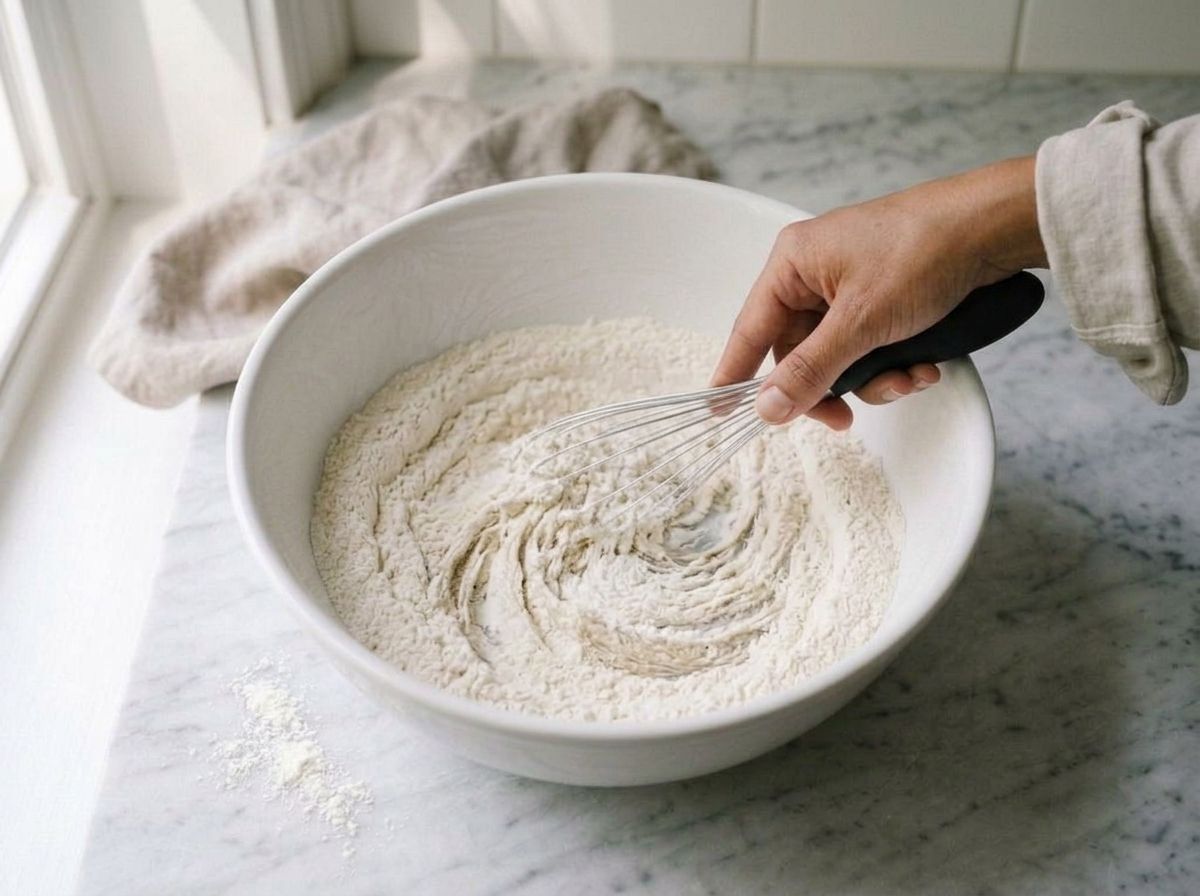
Whisk the flour, sugar, baking powder, baking soda and salt in a large bowl for a good 20 seconds. Leavener left sitting in pockets bakes into bitter yellow spots, so this is worth more than a token stir.
- 3
Finish the wet mix
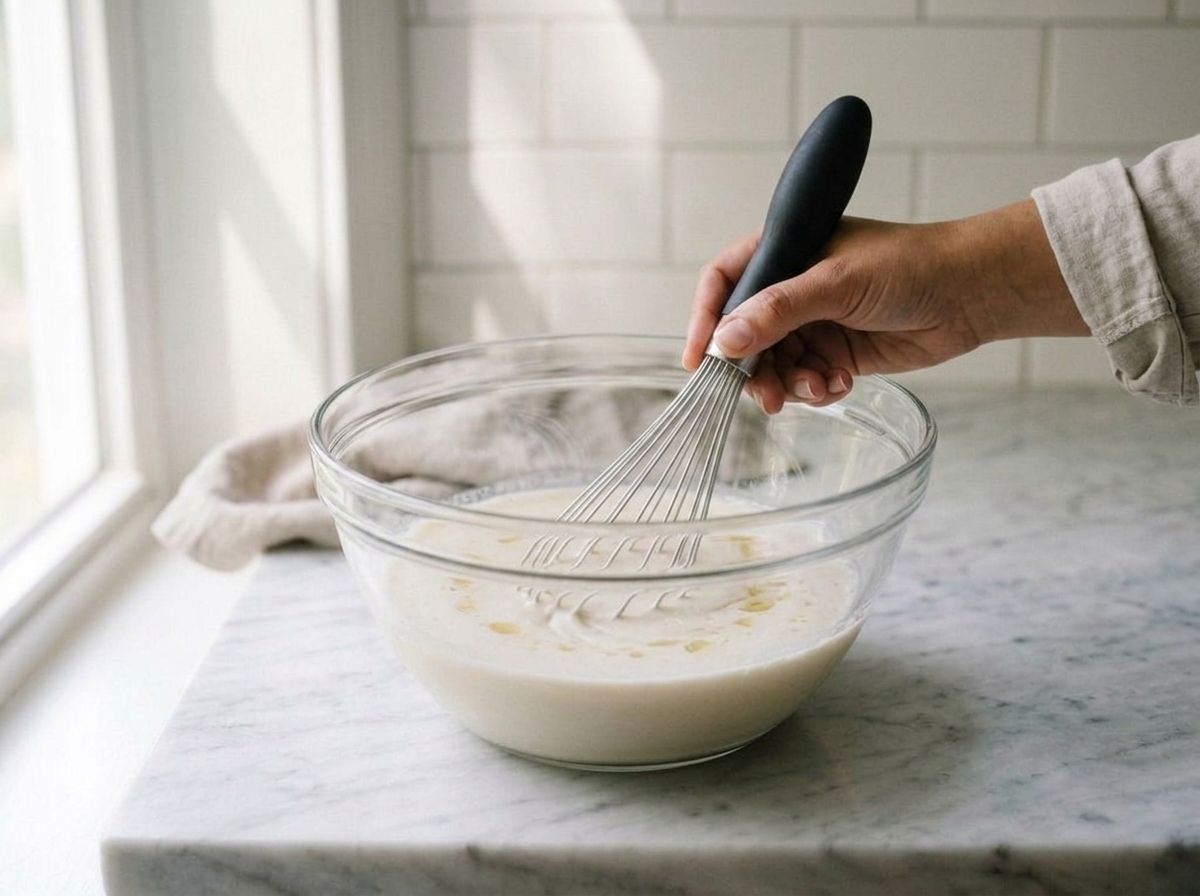
Whisk the oil and vanilla into the soured milk until the oil stops beading on the surface.
- 4
Fold, and stop early
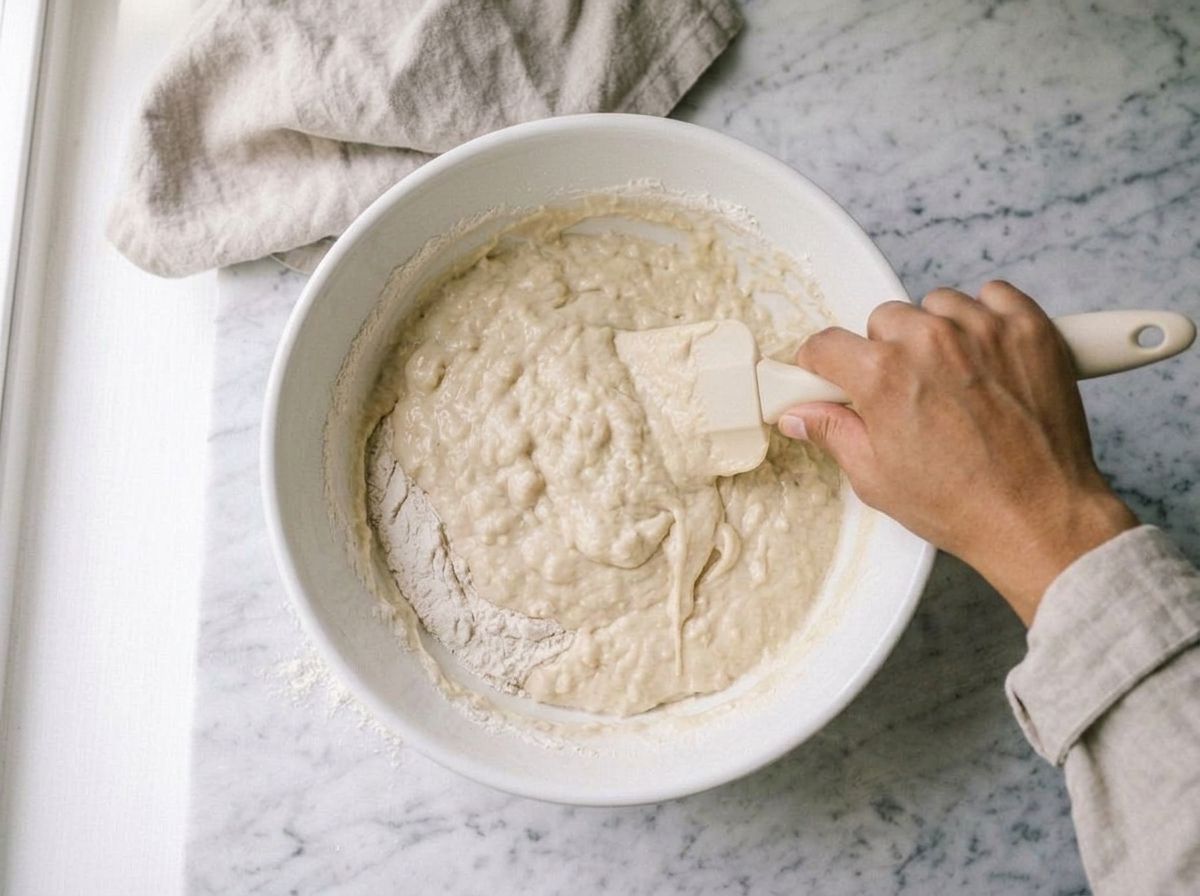
Pour the wet into the dry and fold with a spatula until you cannot see dry flour. Ten or twelve strokes is usually enough. The batter should look lumpy and thick, falling off the spatula in a slow ribbon rather than a stream. Every extra stroke builds gluten, and gluten is what turns a pancake chewy.
- 5
Rest the batter
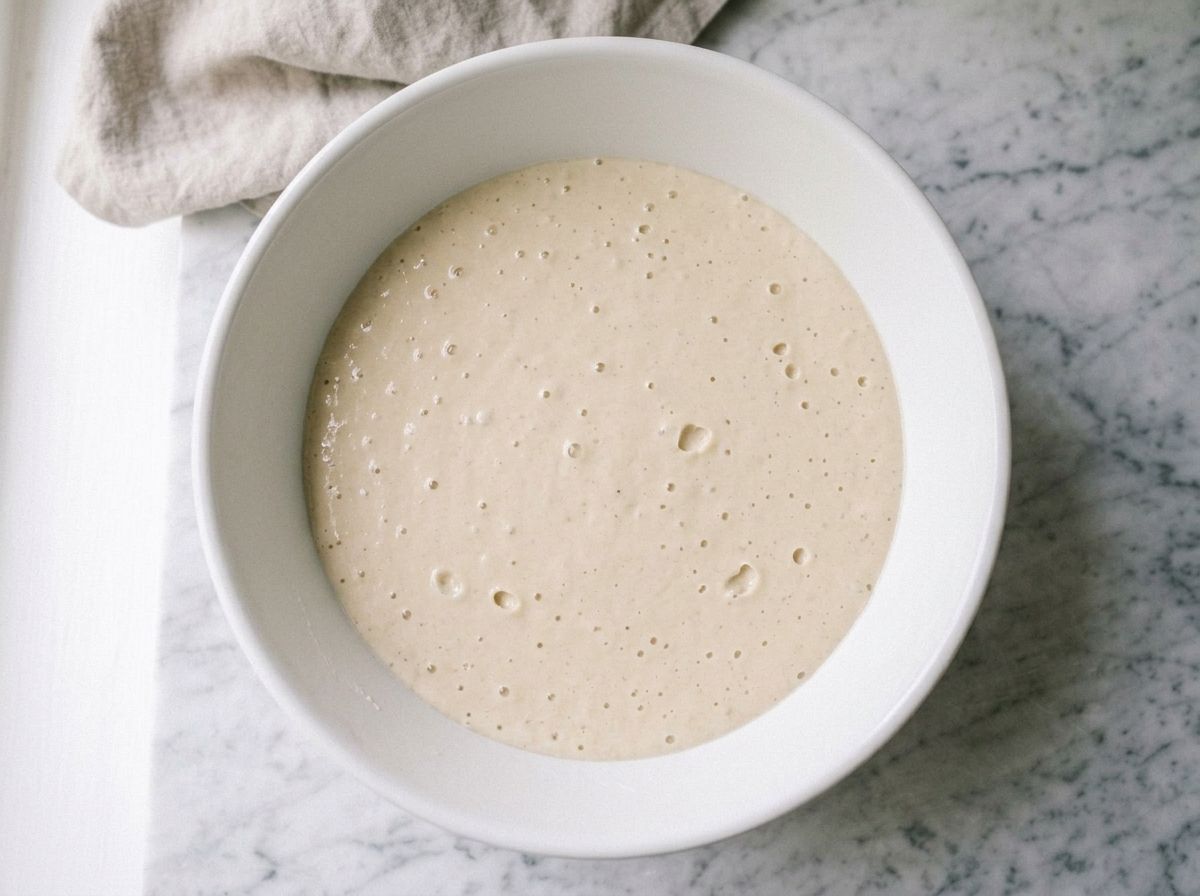
Leave the bowl alone for 10 minutes. The flour hydrates and the batter thickens noticeably, which is what lets a pancake hold its height instead of spreading thin in the pan. By the end you should see bubbles working their way up through the surface. Do not stir them back out.
- 6
Cook one batch at a time
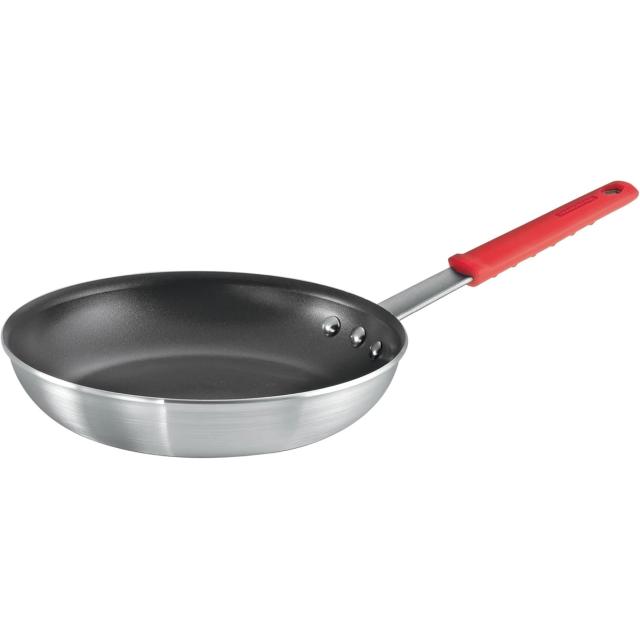
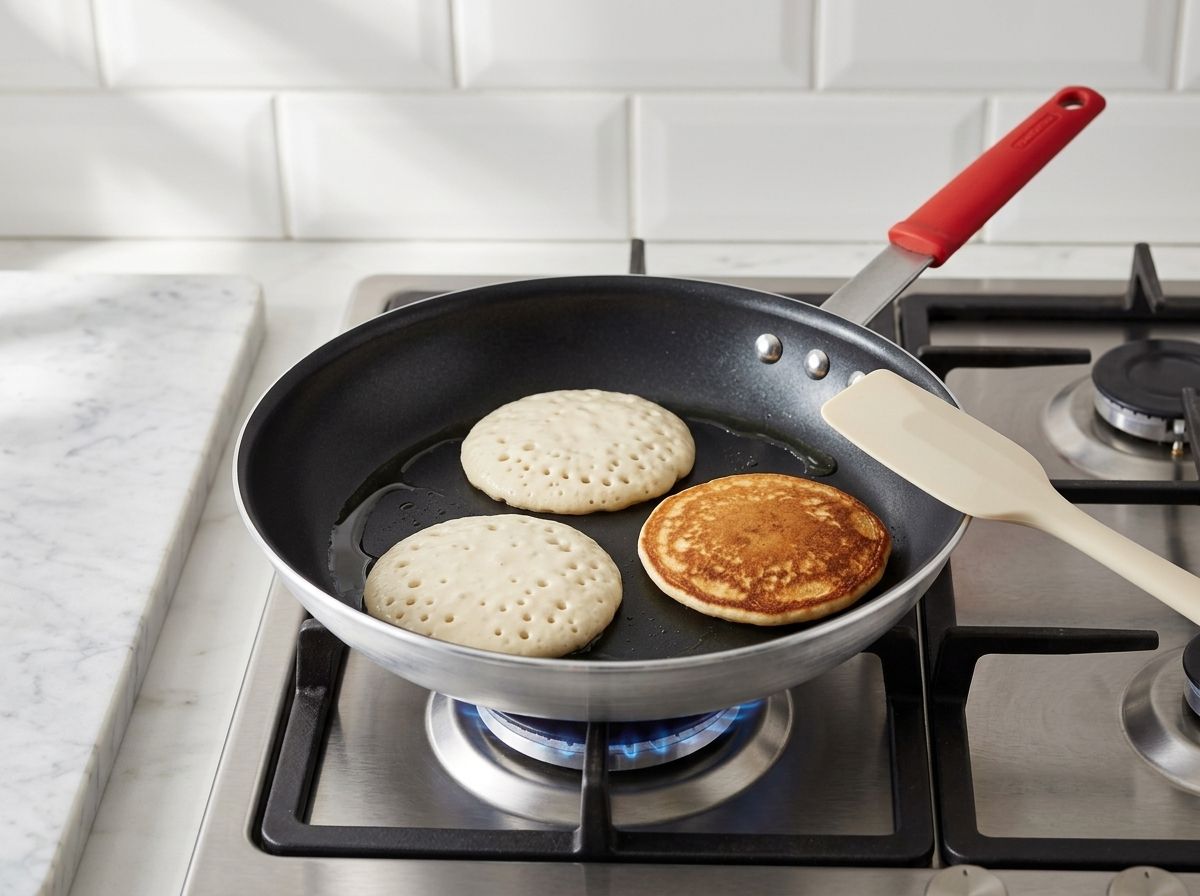
Heat the skillet over medium for 3 or 4 minutes, add about half a teaspoon of oil and wipe it around with a paper towel so only a film is left. Pour 1/4 cup of batter per pancake and leave them alone. After 2 to 3 minutes the edges look dry and matte and the bubbles on top have opened and stayed open, and that is the flip. Give the second side 1 to 2 minutes, until golden. Wipe and re-oil the pan between batches.
- 7
Serve them straight away
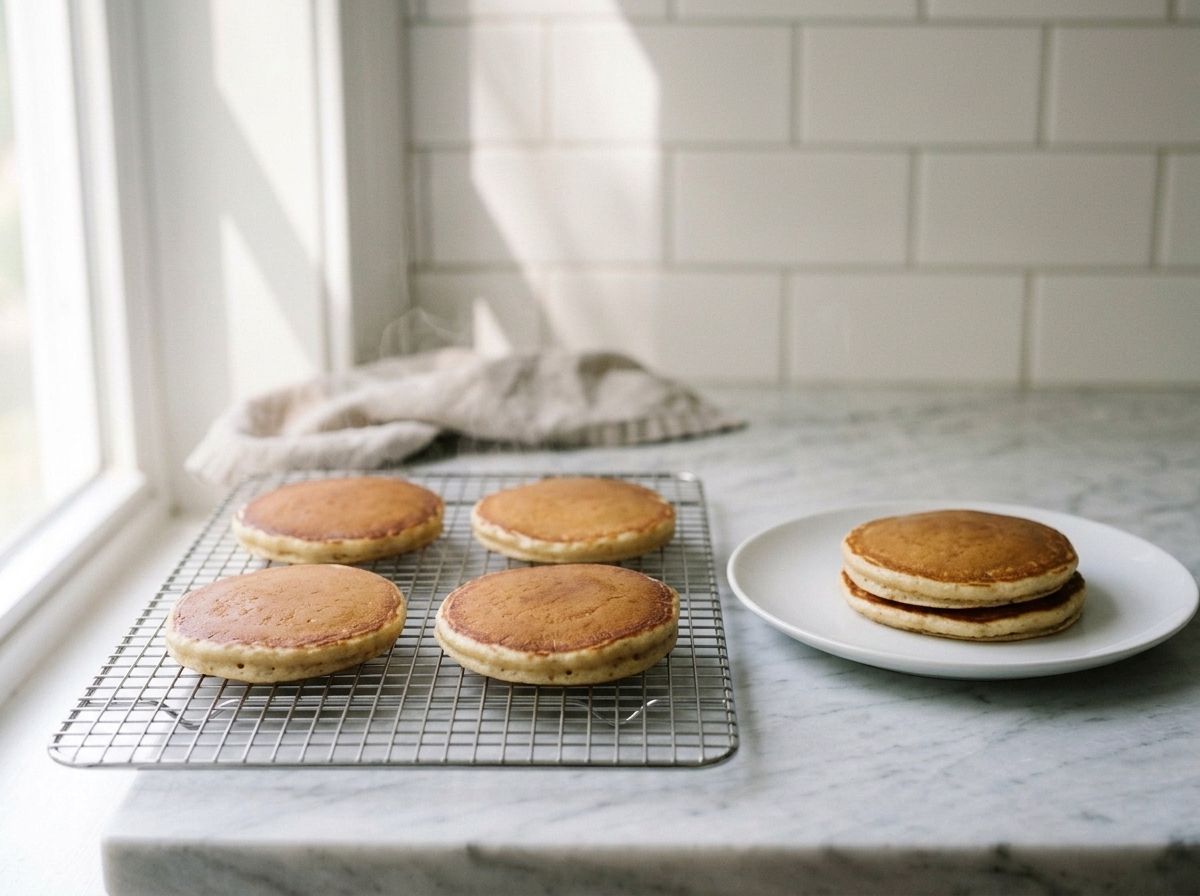
Serve them hot, or hold them in a single layer on a wire rack in a 200F (95C) oven while the rest cook. Stacking them on a plate traps steam and the bottom pancake goes limp.
Notes
Make the dry mix ahead rather than the batter. Once the vinegar meets the soda the clock is running, and batter left overnight rises noticeably less.
A 1/4 cup measure is the size this recipe is written around. Larger pancakes brown before the middle sets.
Cast iron works in place of non-stick. Drop the heat one notch and use a little more oil.
Nutrition Facts
6 pancakes · 76 g per serving
- Calories
- 140 kcal
% Daily Value*
- Total Fat
- 5.2 g7%
- Saturated Fat
- 0.7 g3%
- Sodium
- 464 mg20%
- Total Carbohydrate
- 20.6 g7%
- Dietary Fiber
- 0.7 g3%
- Sugars
- 4.2 g—
- Protein
- 2.4 g5%
Recipe from veggierecipes.blog
When it goes wrong
Troubleshooting
They came out flat and dense
Two usual causes, easy to tell apart. If the batter looked thin going into the pan it was overmixed or under-rested, so fold only until the dry flour disappears and give it the full 10 minutes. If the batter looked right and they still spread flat, suspect the baking powder: drop half a teaspoon into hot water, and if it does not foam hard straight away, there is your answer.
There is a soapy, metallic aftertaste
Too much leavening, or leavening that never got distributed. An older version of this recipe called for a full tablespoon of baking powder to a cup of flour, roughly triple what a pancake needs and well past where you start tasting it. It is 2 teaspoons now, with a quarter teaspoon of soda and a tablespoon of vinegar to cancel it. If the taste comes in patches rather than throughout, the cause is mixing: a pocket of powder bakes into a bitter yellow spot.
The outside burnt before the middle cooked
The pan is too hot or the pancakes are too big. Medium is the setting, and non-stick heats faster than you expect, so give it three or four minutes and no longer. A quarter cup of batter spreads to about four inches, which cooks through in roughly the time the surface needs to brown. A half-cup pancake does not, and no heat setting fixes that.
The first pancake was a write-off
It usually is, and it is not you. The first one goes into a pan that has not evened out its temperature and is still carrying too much oil, so it fries patchily and sticks. Cook it, eat it standing at the stove, and treat it as the pan telling you it is ready. From the second on they match.
The batter is full of little white specks
Melted coconut oil meeting cold plant milk. It sets solid the moment it touches anything below about 76F (24C) and will not go back into suspension however hard you whisk. Nothing rescues the batch beyond cooking it and accepting the waxy spots. Use a liquid oil, or bring the milk to room temperature before the two meet.
My soy milk curdled and I thought I had ruined it
Not a fault, that is the step working. The vinegar drops the pH far enough that soy protein stops staying in suspension and comes out in soft flecks, exactly as happens when dairy milk sours into buttermilk. Soy shows it dramatically, oat faintly, almond barely at all. Whisk it smooth and carry on.
Before you serve
Serving & Storage
Butter and maple syrup is the American default, and vegan butter plus real maple syrup lands in the same place. The grade is worth a thought, though. The one you want on a pancake is the dark one, sold since the 2015 labelling change as Grade A Dark with Robust Taste and known before that as Grade B. Pale amber syrups cost more and disappear underneath a pancake. Warm it first; cold syrup on a hot pancake cools the plate.
Drop berries onto the wet side of each pancake right after you pour, rather than stirring them through the bowl. Fruit folded into the batter weighs it down exactly where the leavening is trying to lift, and blueberries bleed gray-green into the crumb once a spatula cuts them. Sliced banana survives the batter better than any berry, and is still happier on top.
Making it ahead
The batter is the one part not to make in advance, whatever the old version of this page said. Soda and vinegar react on contact and the baking powder starts as soon as it is wet, so batter left overnight has spent most of its lift into the bowl. The dry mix keeps indefinitely: multiply the flour, sugar, baking powder, baking soda and salt by four, jar it, and label the lid with what one batch takes, one cup of mix, one cup of plant milk, a tablespoon of vinegar, two tablespoons of oil, a teaspoon of vanilla. Cooking the pancakes the night before is a better shortcut than trying to store batter.
Storing leftovers
Cool them on a rack before they go anywhere, because sealed while still warm they steam themselves soggy. Three days in a sealed box in the fridge. For the freezer, spread them on a tray and freeze them hard before bagging so they do not weld into a block, and two months is comfortable.
The toaster is the best way back, straight from frozen, medium setting, no thawing. A 350F (175C) oven works too, loosely covered with foil, about eight minutes. The microwave is quick and goes rubbery roughly twenty seconds after it stops being cold, so stand over it. Avoid the skillet, the obvious choice and the wrong one: the outside toughens long before the middle is warm.
Still wondering
Frequently Asked Questions
Can I make these gluten-free?
Yes, with two adjustments. A 1:1 gluten-free blend drinks more liquid than wheat flour, so add 2 extra tablespoons of plant milk, and rest the batter 20 minutes instead of 10 so the rice flour and starches hydrate. Skip the longer rest and you get a gritty texture with a wet center. There is no gluten left to overwork, so the light hand on the folding stops mattering.
Can I double the recipe?
Yes, and everything scales straight up, leaveners included. The catch is timing, not measuring. A double batch takes about half an hour to get through one skillet, and the batter waiting in the bowl has been reacting the whole time, so the last pancakes come out flatter than the first. If that bothers you, whisk the dry ingredients for both batches at once but only wet half, and mix the rest when the first batch is nearly done.
Can I leave the sugar out?
You can, and you lose the color rather than the sweetness. Two tablespoons across six pancakes is about 4 grams each, which you barely register under syrup. What the sugar does is caramelize against the pan, and that is most of what turns the surface golden instead of flat beige. Leave it out, cook them a shade longer, and expect them to look paler.
More Vegan Brunch Classics
Made this?