
Lentil Cottage Pie Recipe
Published · Updated
Lentils and mushrooms simmered into a gravy with real depth, under a forked mash that browns in ridges. Vegan as written.
Jump To Recipe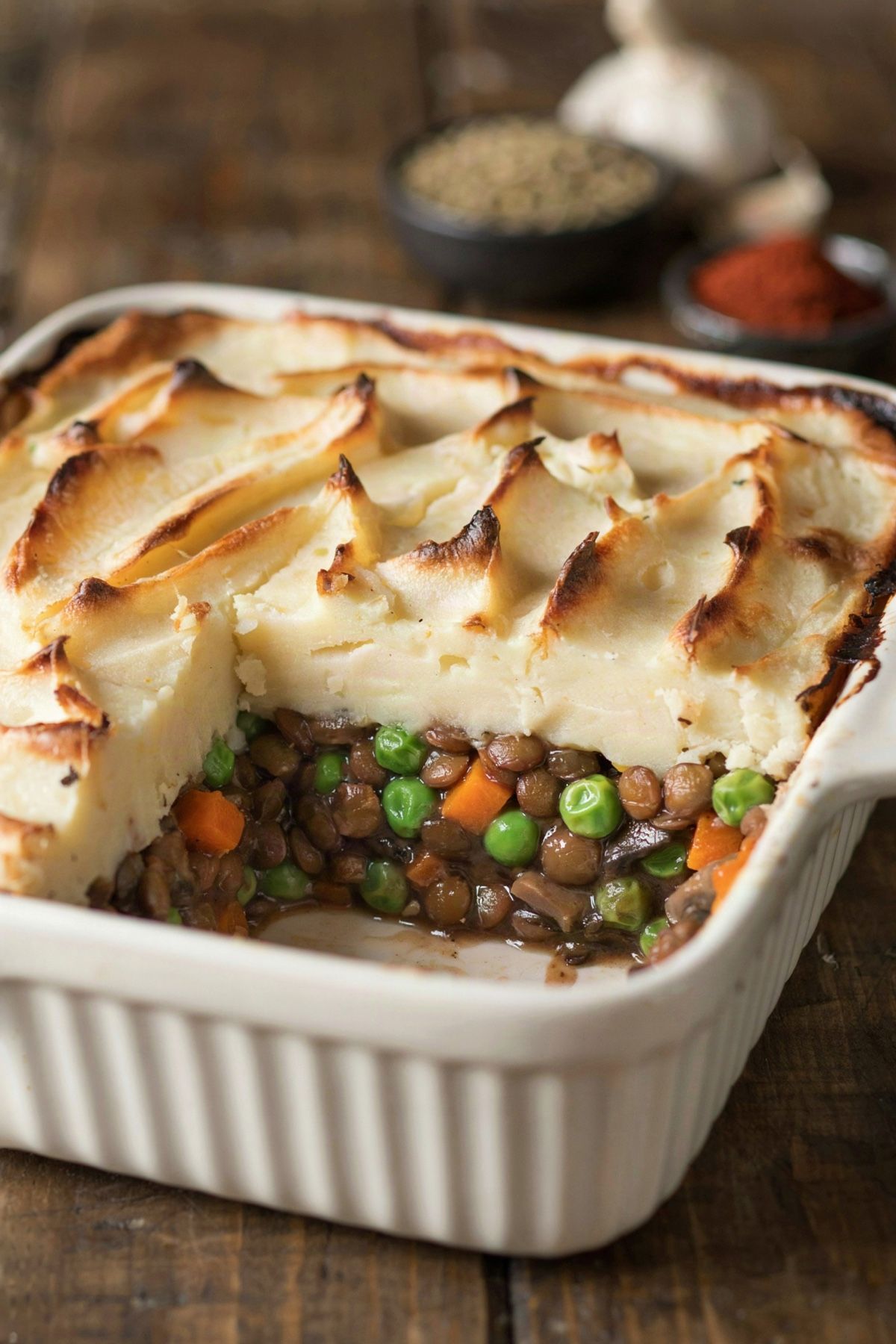
Why I Love Making Lentil Cottage Pie
There’s just something about pulling a bubbling, golden lentil cottage pie out of the oven that makes my evening instantly better. It fills the kitchen with a warm, savory aroma that signals good things ahead. No matter how my day’s been, this dish always delivers comfort in each spoonful.
What I really appreciate is how forgiving it is. The filling takes whatever is going soft in the vegetable drawer, which is exactly what the dish was invented to do, and once it is assembled the oven does the rest. It is filling in the stick-to-your-ribs way that a bowl of lentils on its own never quite manages.
Some tweaks I highly recommend:
- soak a small handful of dried porcini and use the soaking liquid in place of some of the broth
- top with a sprinkle of cheese or nutritional yeast if you want a more savory finish
- swirl a little brown mustard into the mashed potatoes for a zingy lift
This pie is the very definition of cozy food for me. It’s a classic you can keep coming back to, straightforward, nourishing, and always welcome at my table.
The story
Cottage Pie Is Named for the House, Not the Meat
The first written trace of the dish is a diary entry. On 29 August 1791 the Reverend James Woodforde, a Norfolk parson who wrote down what he had for dinner, recorded eating “Cottage-Pye and rost Beef”. Two things sit in that line. The cottage pie was on the table next to a roast, so it was the thrifty dish alongside the centerpiece rather than the centerpiece. And the filling of the earliest cottage pie on record was veal.
The name came from the kitchen it was cooked in. Potatoes had only just become a crop that rural laborers could grow cheaply and eat every day, and a lid of mash was the cheapest way to turn a little meat into a meal that filled people up. A cottage was the laborer’s dwelling. The dish was named for who ate it and where.
The early recipes bear that out. Maria Rundell’s 1806 version is minced beef or mutton with onion and gravy under mashed potato. An 1849 Edinburgh recipe asks only for cooked meat of any kind, sliced rather than minced, because it came off Sunday’s joint in a house with no refrigeration. Shepherd’s pie appears later, in the nineteenth century, and the two names were used interchangeably for most of the hundred years after. The rule that shepherd’s means lamb and cottage means beef is a modern retail convention.
Which leaves cottage pie as the one of the two names that never described an animal. Shepherd’s pie is named for the man who keeps the sheep, and the sheep is the point. Cottage pie is named for a building. So a version built on lentils and mushrooms is not standing in for something that has gone missing. Cheap protein, root vegetables, a good gravy and a potato lid was the original brief, and this hits it more literally than a pound of ground beef does.
What to buy
Ingredient Notes
Green or brown lentils
Whole green or brown lentils, or Puy if you want to spend a little more. They keep their shape through a half hour simmer and then a bake, which is what gives the filling something to chew on. Red and yellow split lentils are the trap: no skin, collapsed inside fifteen minutes, and a filling that turns to paste under the mash.
Chestnut or cremini mushrooms
These do the job the beef does in the original, so they are not an optional extra. Chop them to about pea size so they read as texture rather than as slices of mushroom in gravy. White buttons work and taste milder. Portobellos work too, but the gills bleed and the filling comes out close to black.
Tomato paste
The double-strength kind in a small can or tube, labeled tomato concentrate or tomato puree in the UK. Not passata, canned tomatoes or ketchup, none of which swap in one for one, because you would be adding several hundred milliliters of water to a filling you are thickening. Fry it until it darkens; straight from the tube it tastes tinny, and that does not cook out.
Tamari
A tablespoon does not make the pie taste of soy sauce, it makes it taste more like itself, which is the job Worcestershire does in the meat version. Worcestershire is out here because it is made with anchovies, and that catches people. Tamari is the wheat-free soy sauce and is what keeps this gluten-free. White miso or yeast extract will also do it.
Floury potatoes
Russet or Idaho in the US, Maris Piper or King Edward in the UK. They break down when boiled and mash dry and fluffy, which lets the topping stand in ridges and brown. Waxy potatoes, meaning red-skinned, new and fingerling, mash wet and dense and slump into the filling instead of crisping. Yukon Gold sits between and is fine.
Dry red wine (optional)
Half a cup, poured in after the tomato paste and boiled almost dry, gives a background depth that is hard to get another way. It is genuinely optional and not worth opening a bottle for. Without the alcohol, use two extra tablespoons of broth and a teaspoon of balsamic vinegar.
Lentil Cottage Pie
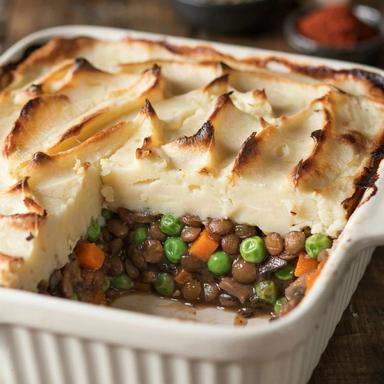
Lentils and browned mushrooms simmered into a proper gravy, under a stiff forked mash that browns in ridges. A vegetarian cottage pie with the savor the meat version gets from beef.
Ingredients
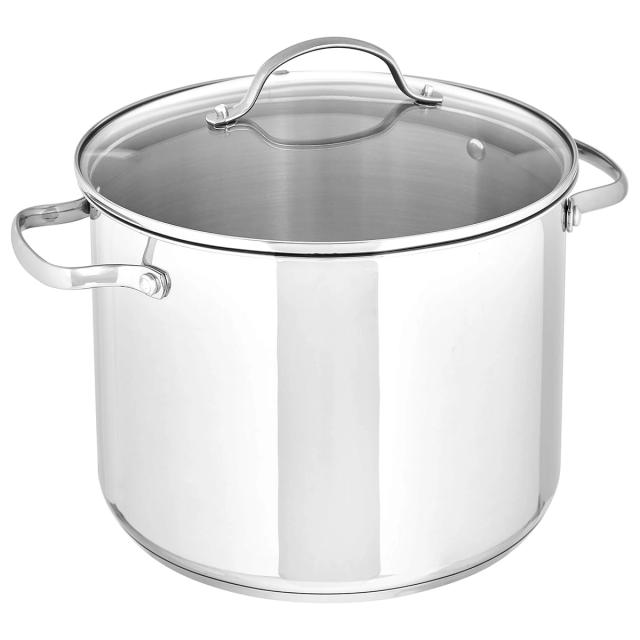
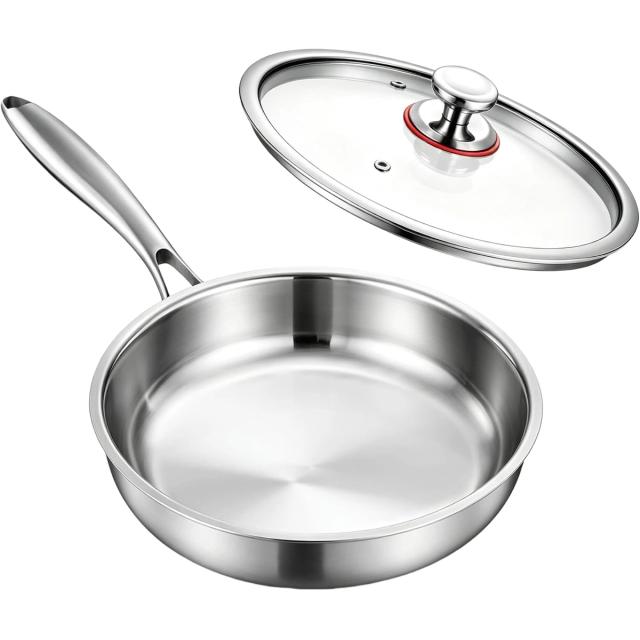
Equipment
As an Amazon Associate I earn from qualifying purchases, at no extra cost to you.

Instructions
- 1
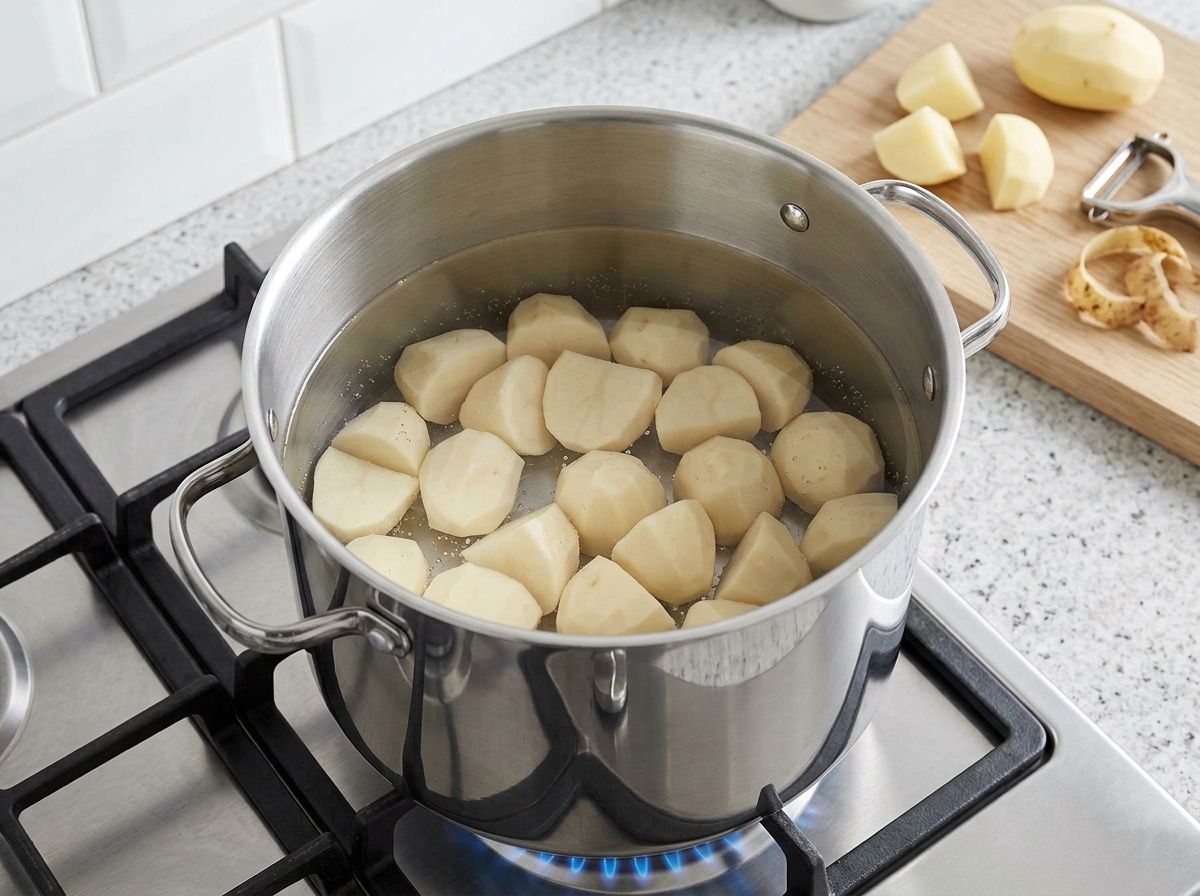
Boil the potatoes
Peel the potatoes and cut them into even chunks about 1½ inches (4 cm) across. Cover with cold salted water in a large pot, bring to a boil and simmer for 18 to 20 minutes, until a knife slides in with no resistance. Drain and leave them in the colander to steam dry while you make the filling.
- 2
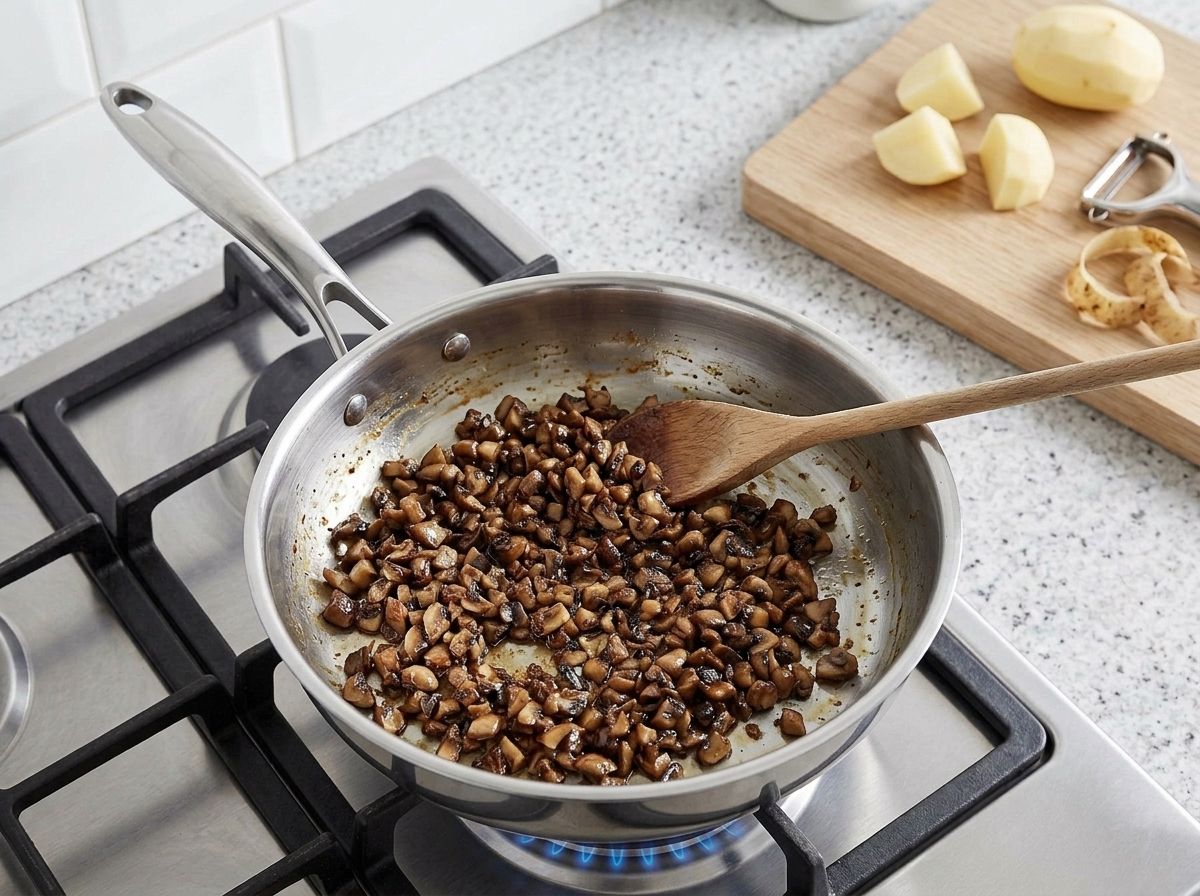
Brown the mushrooms
Heat 1 tablespoon of the oil in a large skillet over medium-high heat. Spread the mushrooms out in as close to a single layer as you can and leave them alone for 3 to 4 minutes, until the undersides have colored. They will give up their liquid and take it back; keep cooking and stirring another 4 to 5 minutes, until the pan is dry and the mushrooms are deep brown. Tip them into a bowl.
- 3
Soften the aromatics
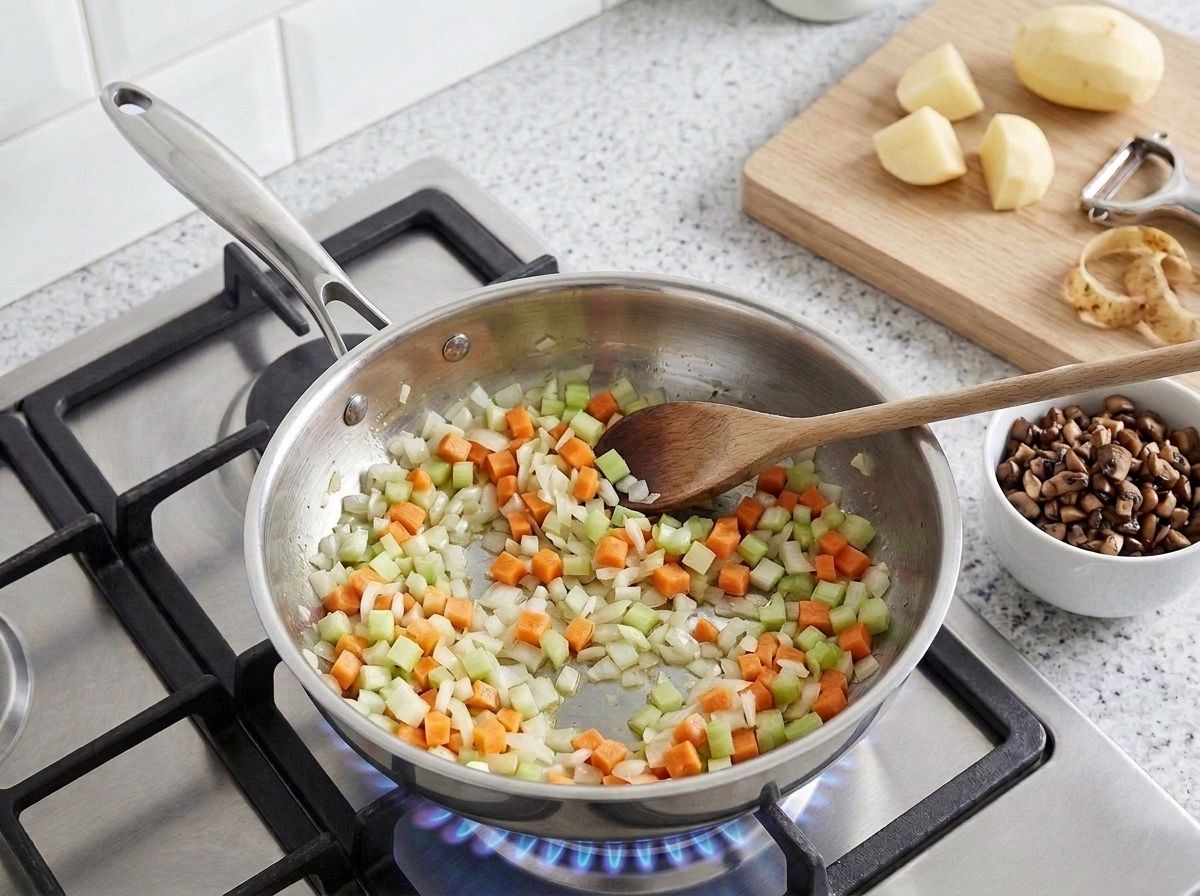
Add the second tablespoon of oil to the same pan, drop the heat to medium and add the onion, carrots, celery and a good pinch of salt. Cook for 8 to 10 minutes, stirring now and then, until the onion is translucent and the carrot has lost its crunch. Stir in the garlic and cook one minute more.
- 4
Fry the tomato paste
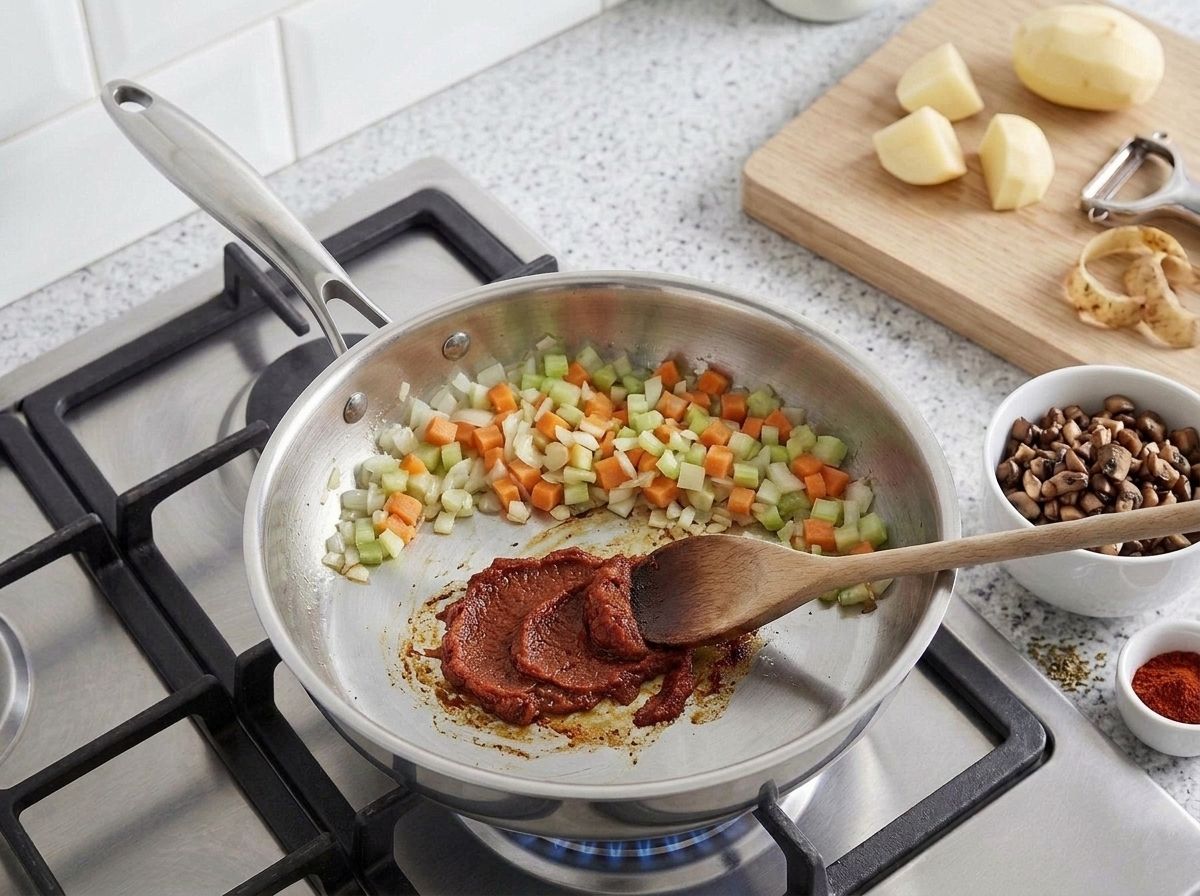
Push the vegetables aside, add the tomato paste to the bare patch and fry it for 1 to 2 minutes, stirring, until it darkens from red to brick. Stir in the thyme, rosemary and smoked paprika and mix everything together. If you are using the wine, pour it in now and let it bubble until the pan is almost dry.
- 5
Simmer the lentils
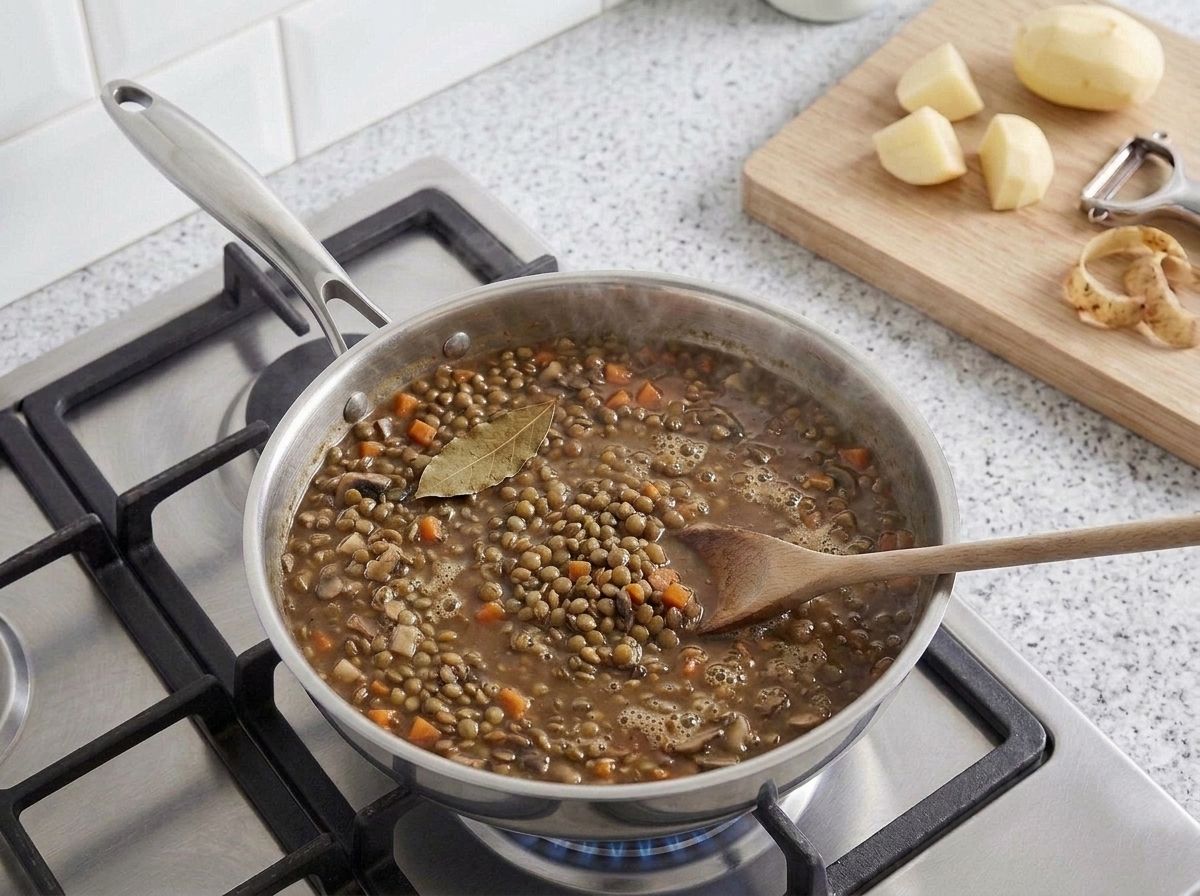
Return the mushrooms to the pan with the lentils, broth, bay leaf and tamari. Bring to a boil, then simmer uncovered for 25 to 30 minutes, stirring occasionally, until the lentils are tender but still hold their shape and the liquid has reduced to a gravy that coats them. Heat the oven to 400°F (200°C) meanwhile.
- 6
Mash the potatoes
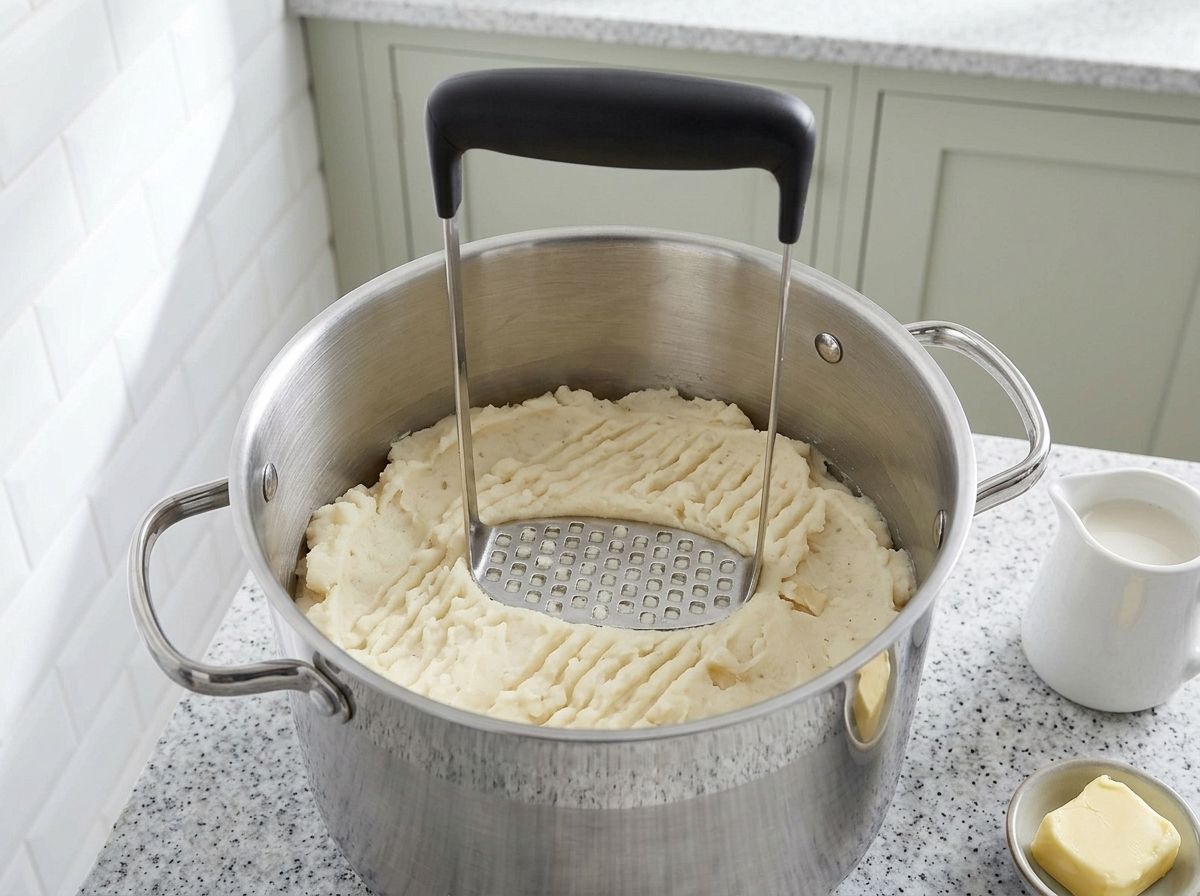
Warm the plant milk and vegan butter together. Push the drained potatoes through a ricer, or mash them thoroughly, then beat in the warm milk and butter and season well with salt. You want a mash stiff enough to hold a peak on the spoon.
- 7
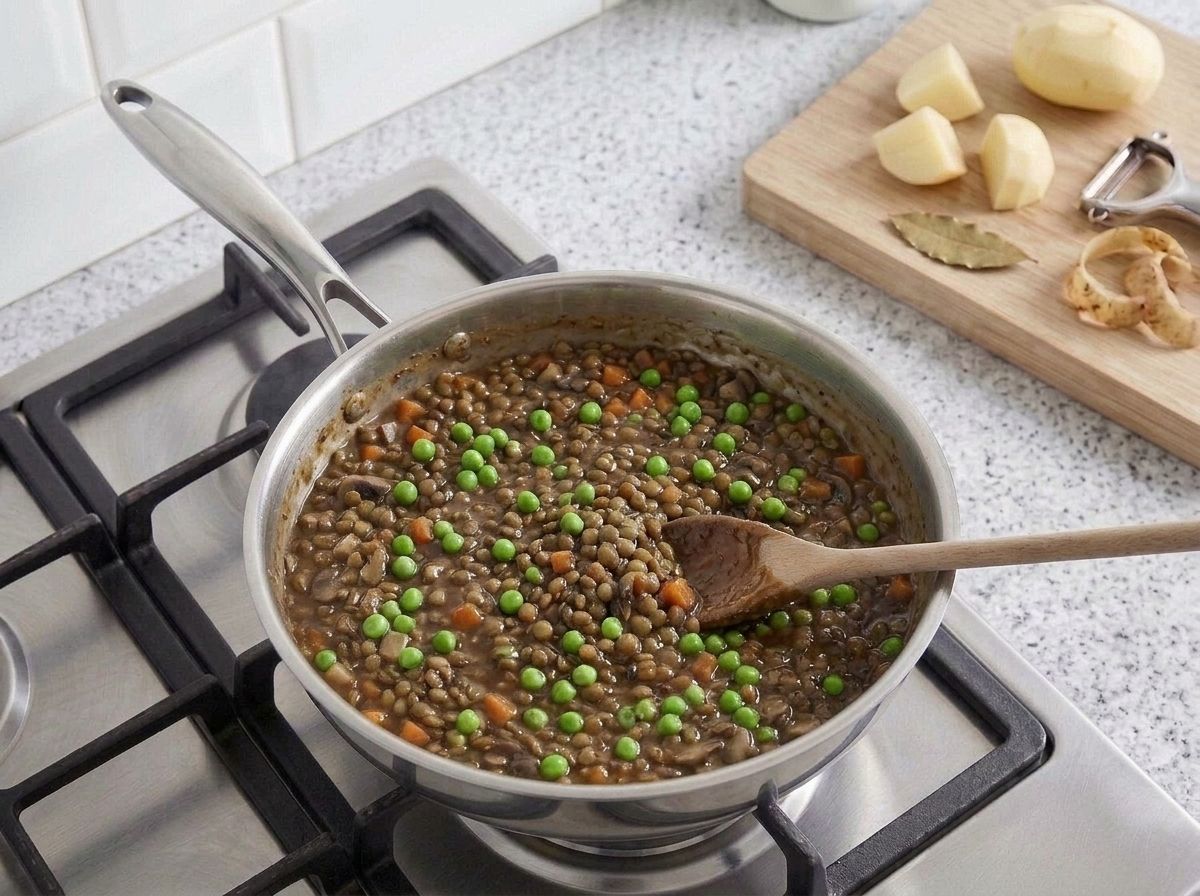
Finish and season the filling
The filling should be saucy but not soupy; if liquid is pooling on the surface, give it a few minutes more over the heat. Off the heat, fish out the bay leaf and stir in the frozen peas. Taste, then season with salt and plenty of black pepper.
- 8
Top it and bake
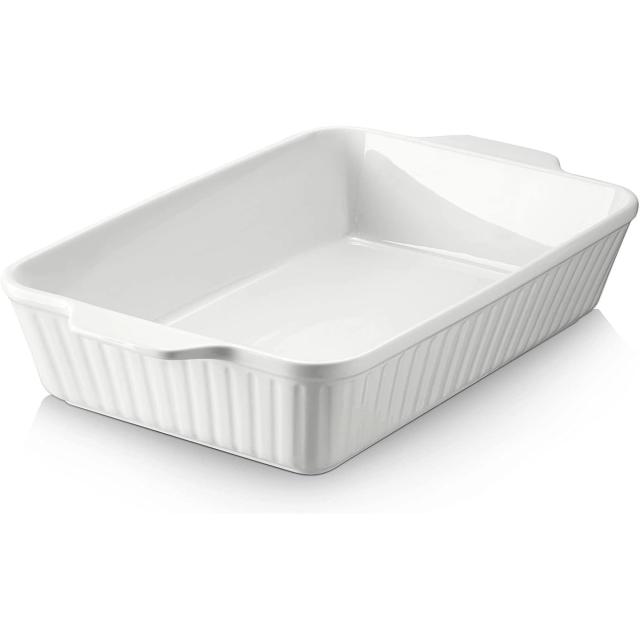
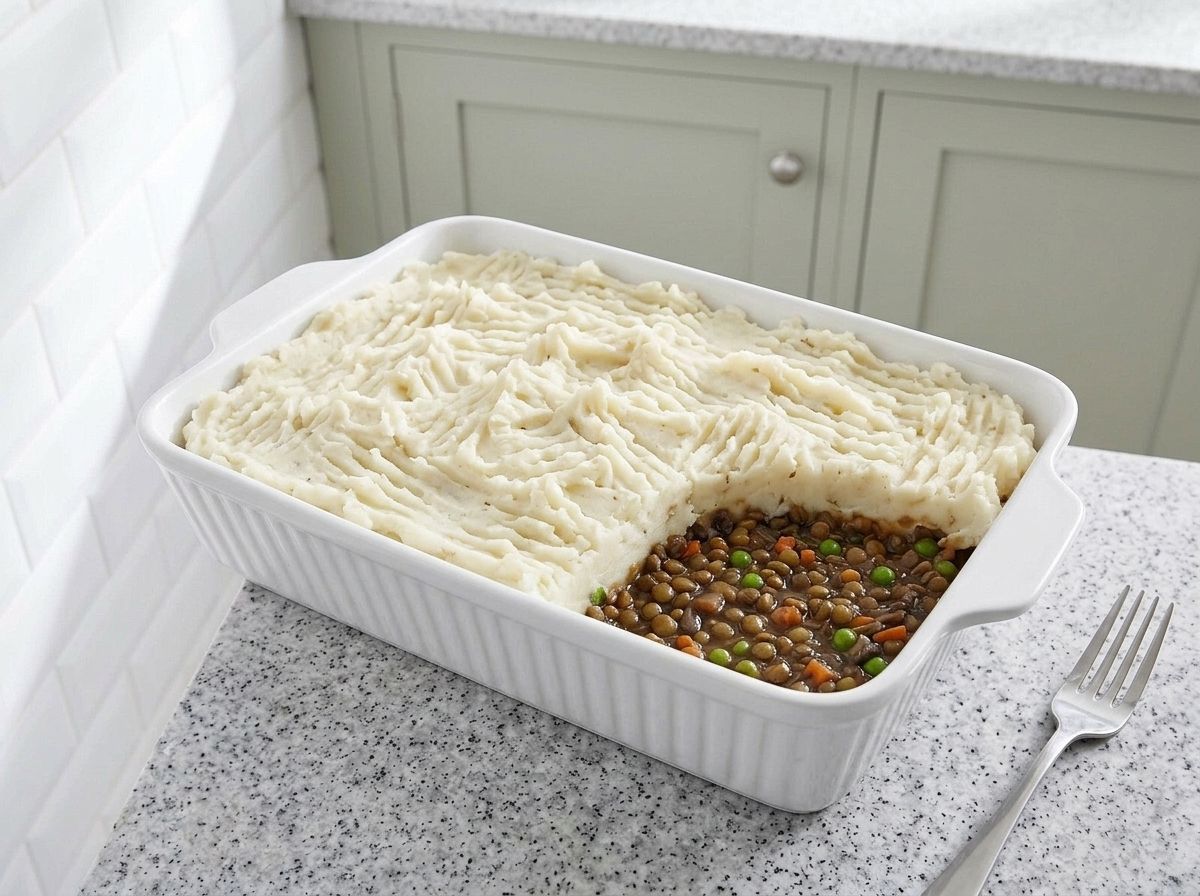
Spread the filling in a 9x13 inch baking dish and level it. Spoon the mash on in dollops across the whole surface, then join them up and push it out to the edges so the filling is sealed in. Rough the top with a fork to give it ridges. Bake for 25 to 30 minutes, until the ridges are golden and the filling bubbles at the sides.
- 9
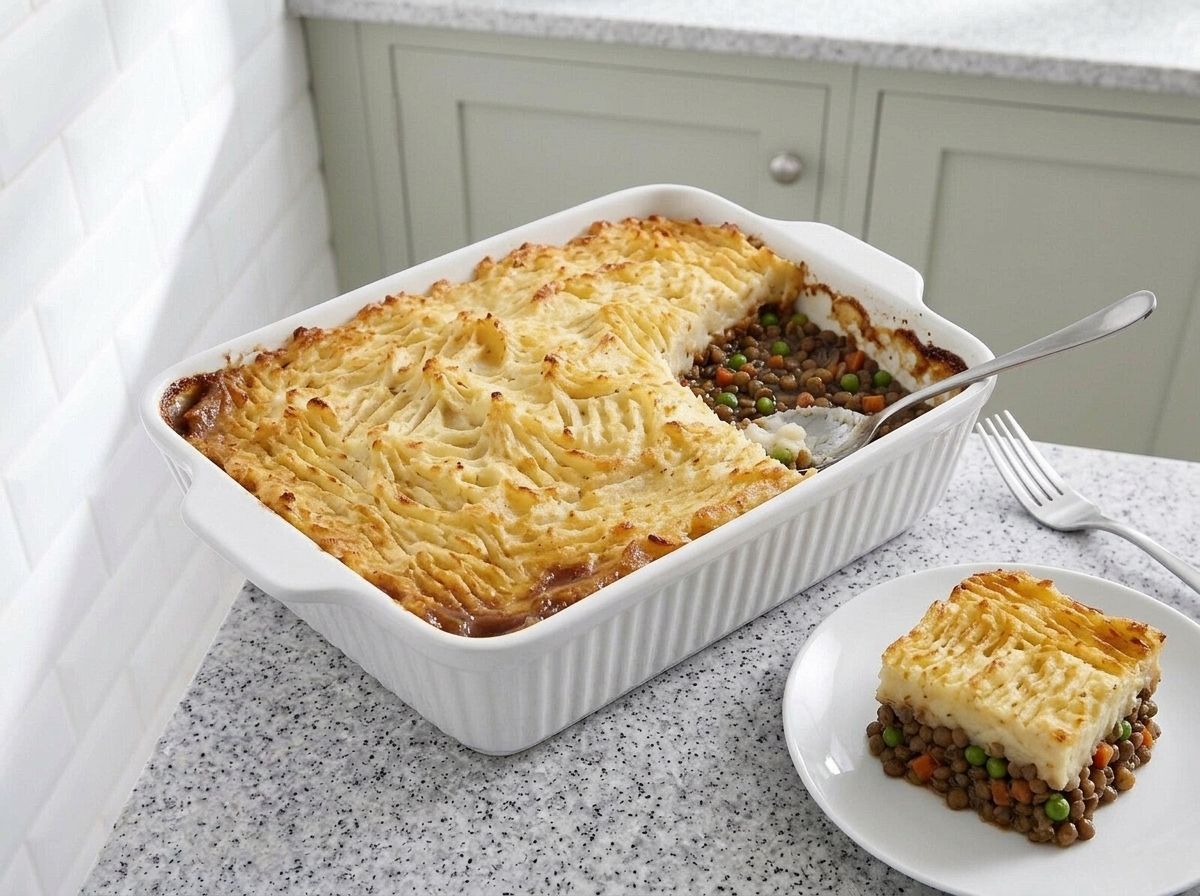
Rest before serving
Let the pie stand for 10 minutes before cutting, so the gravy sets and a portion holds its shape.
Notes
The mash uses plant milk and vegan butter, so the pie is vegan as written. Dairy milk and butter behave the same way.
For gluten-free, use tamari rather than soy sauce and check the broth is labeled gluten-free.
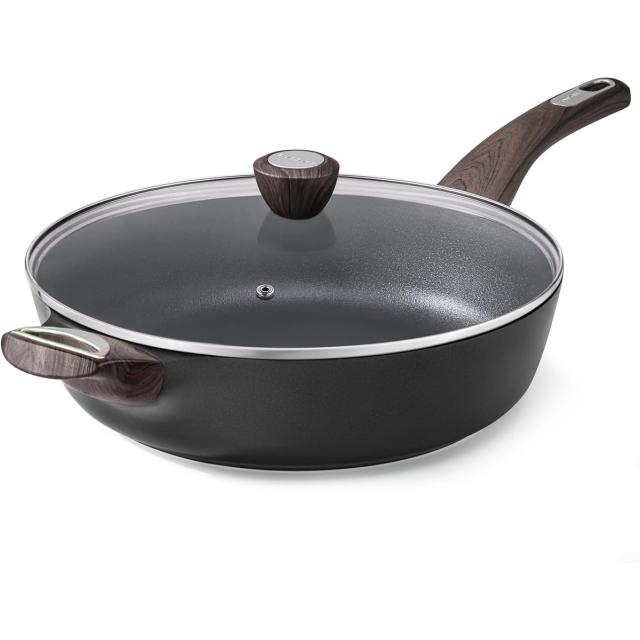
If you have a stainless pan, brown the mushrooms and tomato paste in that rather than in non-stick. The browned bits stuck to the base carry a lot of flavor and lift back into the gravy once the broth goes in.
A 9x13 inch dish holds this comfortably. Stand anything smaller on a baking sheet, because the filling bubbles up the sides.
Nutrition Facts
6 servings · 306 g per serving
- Calories
- 248 kcal
% Daily Value*
- Total Fat
- 6.2 g8%
- Saturated Fat
- 1 g5%
- Sodium
- 936 mg41%
- Total Carbohydrate
- 34.1 g12%
- Dietary Fiber
- 13.1 g47%
- Sugars
- 6.7 g—
- Protein
- 12 g24%
Recipe from veggierecipes.blog
When it goes wrong
Troubleshooting
The filling is dry and crumbly, like plain lentils under mash
The lentils were cooked in just enough liquid to absorb, which is how you cook them as a side dish, not how you build a filling. They need enough broth to swell in and still leave a gravy behind, which is why this uses three cups to one cup of lentils and simmers them with the vegetables rather than boiling them separately first. If yours has gone dry, stir broth back in a quarter cup at a time.
It tastes flat, and more salt has not fixed it
Salt is not what is missing. Nothing in a pan of vegetables browns unless you make it happen, so mushrooms stirred as soon as they went in steamed instead of searing, and tomato paste added at the end never cooked out. That is where the savory depth comes from, with the tamari and smoked paprika as the other half. Smoked paprika is doing real work here: it stands in for the faint char browned meat would have brought, and sweet paprika will not cover for it.
The mash sank into the filling
Two causes, usually together: the filling was still hot and loose, and the mash was too soft to sit on it. Let the filling settle off the heat and check it has really reduced, and keep the mash stiff enough to hold a peak. Spoon it on in dollops and join them up, rather than dropping it in the middle and spreading outwards.
There is a watery pool under the crust when I cut into it
Either the gravy had not reduced far enough before the mash went on, or the pie was cut too soon. A finished filling holds a trail for a second when you drag a spoon across the bottom of the pan. And the ten minute rest is not manners, it is the gravy setting.
The peas came out gray and mushy
They were cooked twice. Frozen peas need about ninety seconds, and going in with the lentils gets them half an hour of simmering and another half hour in the oven. Stir them in off the heat instead: the residual warmth thaws them, the bake finishes them, and they stay green.
The mash is gluey rather than fluffy
Potato starch turns to paste when it is worked hard, so a blender or food processor does this every time, and so does over-beating. Use a ricer or a masher and stop as soon as the lumps are gone. The other causes are a waxy potato and wet potatoes: steam the drained chunks in the colander before mashing, and warm the milk first.
Before you serve
Serving & Storage
In Britain this does not get sliced and plated. It comes to the table in the dish it was baked in and is served out with a big spoon, and nobody expects a tidy rectangle. A jug of extra gravy on the side is normal, and more useful here than with beef, because a vegetarian filling has less fat to carry the flavor. The traditional partners cut through it: buttered greens or cabbage, or the pub standard of peas and gravy. A spoonful of pickled red cabbage or brown sauce on the edge of the plate does more for a rich pie than another vegetable would.
Making it ahead
Assemble the pie unbaked, cool it completely, cover and refrigerate for up to two days. The one thing not to do is put warm filling under the mash and refrigerate that: the steam condenses into the topping and the mash comes out wet. Bake from cold at 400°F (200°C) under foil for 25 minutes, then uncovered for another 20 to 25. Uncovered from the start, the ridges go dark long before the middle is warm.
To freeze, assemble unbaked and freeze for up to three months, then bake from frozen under foil for about an hour and ten minutes before uncovering to brown. Better, if you have the choice, is to freeze the filling alone and make fresh mash on the day, because mash that has been frozen and then baked comes out slightly grainy.
Storing leftovers
Baked leftovers keep four days covered in the fridge. Reheat a whole dish at 350°F (180°C) for about twenty minutes. For a single portion the best method is not the microwave: cut a wedge, put it cut side down in a little oil in a skillet over medium heat until the mash builds a crust, then cover the pan to heat it through. The microwave works, but it steams the topping and you lose the only crisp part of the dish.
What does not work is freezing portions already baked and cut. The cut faces weep as they thaw and the mash turns watery.
Still wondering
Frequently Asked Questions
Is lentil cottage pie gluten-free?
Yes, and it gets there without a substitution. Most cottage pie recipes thicken the gravy with a spoonful of flour and season it with Worcestershire sauce, and this one uses neither, so there is nothing in the method to work around. The only real risk is the vegetable broth, because barley and wheat turn up in stock cubes and bouillon powders more often than people expect. Read that label.
Can I use canned lentils instead of dry?
Yes, with one adjustment to the liquid. Two 15-ounce (400 g) cans, drained and rinsed, give roughly the 3 cups of cooked lentils that 1 cup of dry produces. Cut the broth from 3 cups down to 1, add lentils and broth together at step 5, and simmer about 10 minutes instead of 25 to 30. Canned lentils are softer than you would cook them yourself, so stir gently.
Can I halve this, or bake it in smaller dishes?
Halved it fits a 9x9 inch pan and bakes in 20 to 25 minutes rather than 25 to 30. Split across two 8-inch square dishes it makes two pies for three each, which is the version worth making if you want to freeze one. The filling simmers the same 25 to 30 minutes either way, because that is set by the lentils and not the quantity. Past about 12 servings, cook the filling in two pans, because a crowded pan steams the mushrooms.
Featured In
More Cozy Plant-Based Comforts
Made this?