
Vegan Chili Recipe
Published · Updated
Packed with beans, lentils, and veggies, this hearty vegan chili is the perfect bowl for warmth and comfort on any night.
Jump To Recipe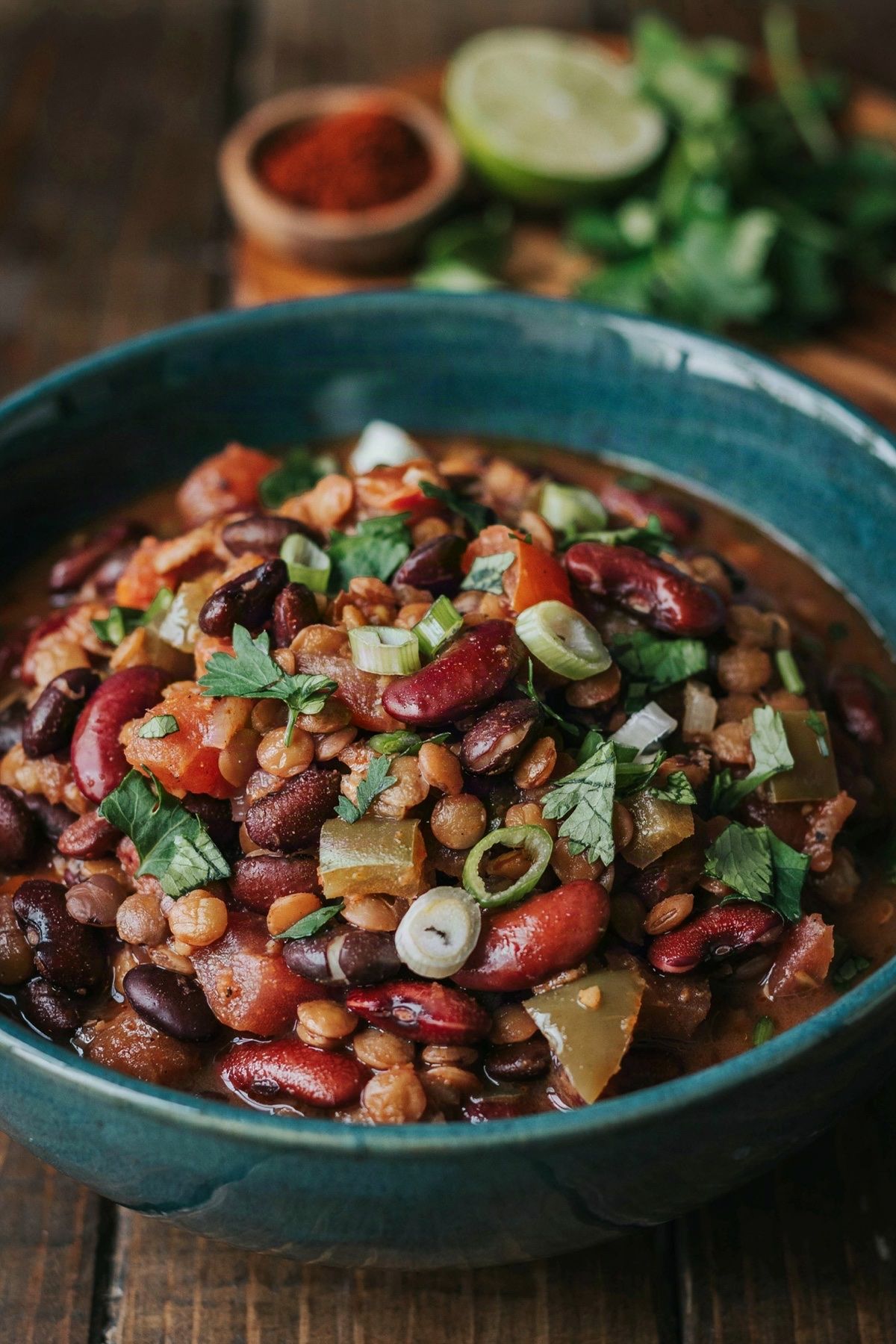
Why This Vegan Chili Works for Me
There’s something deeply satisfying about coming home to a simmering pot of chili, especially one that delivers as much flavor and nutrition as this vegan version. The mix of beans and lentils gives it a solid protein punch, which makes it filling and keeps my energy up through a long evening. Honestly, chili like this is a staple in my kitchen, particularly when I want meals that are easy to batch cook and store.
This chili nails the balance between hearty and healthy, and it’s got enough boldness with chili powder, cumin, and smoked paprika to keep every bite interesting. I like how the onions and peppers soften into the mix, adding depth while the tomatoes provide a bit of tang.
What I love to pair it with:
- Big slices of crusty bread.
- A simple green salad on the side.
- Topped with chopped green onions or cilantro for fresh contrast.
If you’re after something deeply warming, nutrient-dense, and fuss-free, you can’t go wrong with this chili. I hope you enjoy it as much as I do.
The story
What Makes Chili Taste Like Chili Has Never Been the Meat
Vegan chili gets treated as a substitution exercise, as though something has been given up. What gives chili its identity is a spice blend, and that blend has never had any meat in it.
Chili con carne as a recorded dish belongs to San Antonio, where women known as the Chili Queens sold it by lamplight from open-air stands in Military Plaza from the 1860s onward. Food historian Robb Walsh traces the flavor further back, to the sixteen Canary Island families, fifty-six people in all, whom the Spanish crown settled there in 1731. Canarian cooking carried Berber and North African habits across the Atlantic, and one of them was a heavy hand with cumin. That is why Tex-Mex chili tastes of cumin while most cooking in interior Mexico does not. The Chili Queens fed the plaza until 1937, when the city shut them down over sanitation rules about flies and poorly washed dishes.
The blend became a product in the 1890s. William Gebhardt, a German immigrant running a café behind a saloon in New Braunfels, ground dried chiles, cumin seed, oregano and black pepper through an old hammer mill and sold the result from 1894 as Tampico Dust, later Gebhardt’s Eagle Chili Powder. At about the same time DeWitt Clinton Pendery was selling a rival powder called Chiltomaline to hotels in Fort Worth, and his company grinds spices there still. Historians argue over which man was first. Nobody argues about what was in the jar: chiles, cumin, oregano, pepper, garlic, and nothing else.
The bean argument is younger and noisier than it sounds. The International Chili Society still bans beans from its Traditional Red competition category, which is where the heresy line comes from. Beans have gone into chili in Texas kitchens for as long as there has been chili. Competition rules are not history.
So the flavor was never the part you had to replace. What is genuinely missing is fat and body: the beef fat that carries ground chile into every spoonful, and the connective tissue that makes long-cooked chili cling. That is what the method below is built around. Oil goes in first so the spices have something to bloom in, and the lentils go in dry so a third of them break down and thicken the pot.
What to buy
Ingredient Notes
Chili powder
American chili powder is a blend: mild ancho or New Mexico chile already cut with cumin, oregano, garlic and salt. Indian and British “chilli powder” is pure ground cayenne, and swapping one for the other at 2 tablespoons makes a bowl nobody can finish. If your jar lists only chilli, use 2 teaspoons of it plus 4 teaspoons of sweet paprika. A jar open more than a year tastes like dust whatever you do.
Brown or green lentils
Use the ordinary flat brown or green ones. Red and yellow lentils have had their skins removed, which is why they collapse into a purée in fifteen minutes and would turn this into orange soup. Puy and beluga hold their shape so firmly they thicken nothing. Brown lentils sit in the middle: about a third break down by the end, and that is where the body of the pot comes from.
Tomato paste
Two tablespoons does more work than the whole can of diced tomatoes. It is concentrated glutamate, the savory depth beef would otherwise supply, and it only delivers if you fry it, which is why it goes in with the dry spices and cooks until it darkens to brick red. Leave it out and the chili tastes thin rather than deep.
Smoked paprika
Spanish pimentón is dried over oak fires and is the cheapest way to get a suggestion of smoke into a meatless pot. Two teaspoons is deliberate: the half teaspoon this recipe used to call for is inaudible next to 2 tablespoons of chili powder. Buy sweet, dulce, rather than picante, so you control the heat separately. Ordinary paprika brings color and little else.
Vegetable broth
Four cups, not two. A cup of dry lentils drinks roughly two and a half cups before it is tender, so two cups leaves nothing for the pot and scorches the base. Check the sodium, though: 4 cups of a salty broth can carry more salt than the dish needs, which is why salt goes in at the end by taste rather than by measurement.
Soy sauce or tamari
One tablespoon, and you will not taste soy sauce. You will taste a bowl that seems better seasoned than it was. Tamari keeps it gluten-free, and a teaspoon of white miso stirred in off the heat does the same job; the usual Worcestershire bottles contain anchovy.
Lime juice or cider vinegar
A seasoning, not a garnish, and the difference between a chili that tastes finished and one that tastes heavy. It goes in off the heat, because lime juice held at a simmer for twenty minutes loses its aroma and turns faintly bitter. Cider vinegar is the more robust of the two.
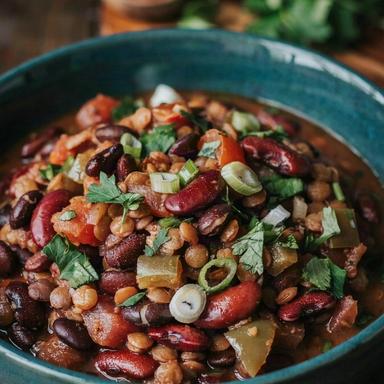
Hearty Vegan Chili
A thick and comforting vegan chili made with beans, lentils, vegetables, and warming spices. Perfect for cold nights and meal prepping.
Ingredients
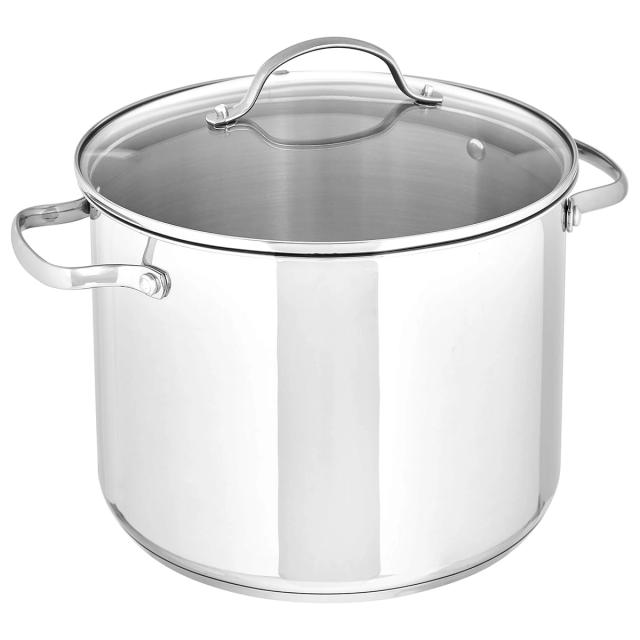
Equipment
As an Amazon Associate I earn from qualifying purchases, at no extra cost to you.
Instructions
- 1
Soften the onion and pepper
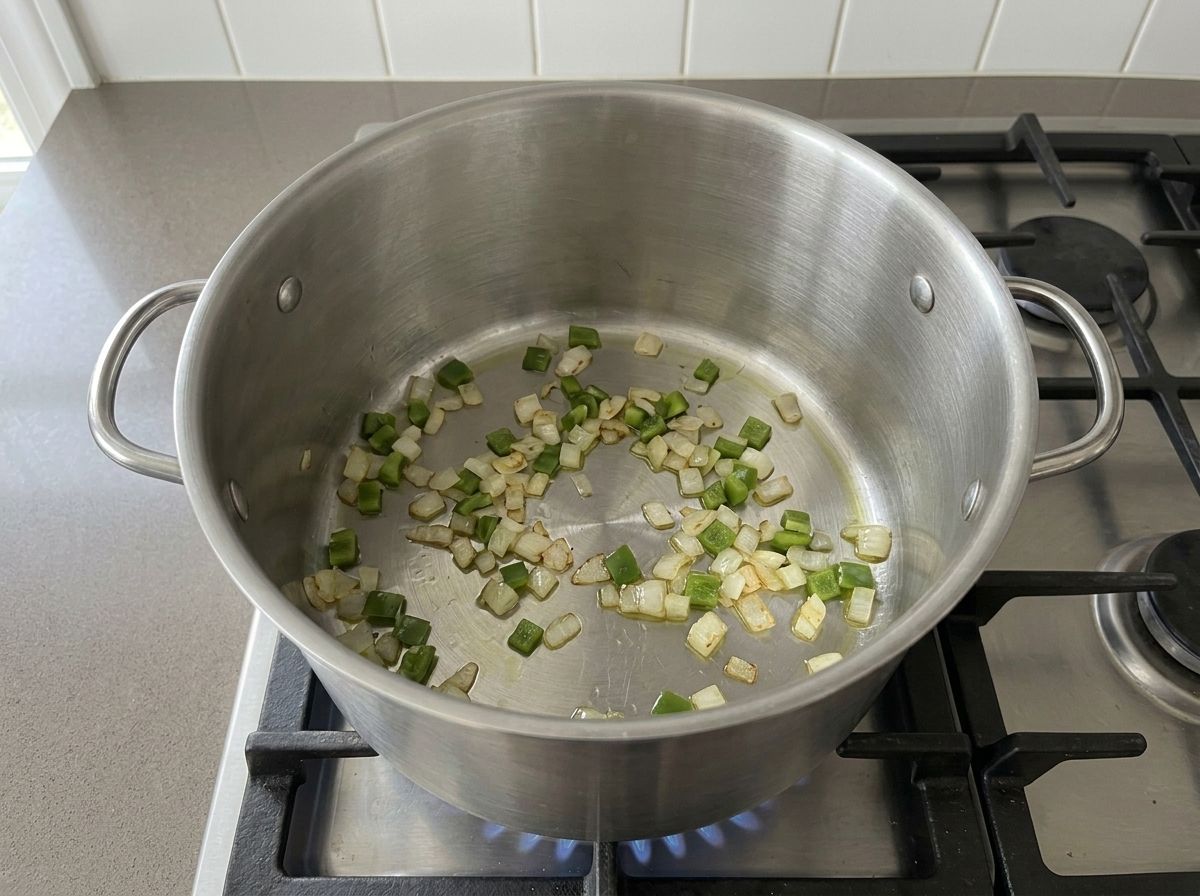
Heat the olive oil in a large pot over medium heat. Add the diced onion and bell pepper with a good pinch of salt and cook for 7 to 8 minutes, stirring now and then, until they are soft and the edges of the onion are just starting to color. Add the garlic and cook for 1 minute more.
- 2
Bloom the spices and tomato paste
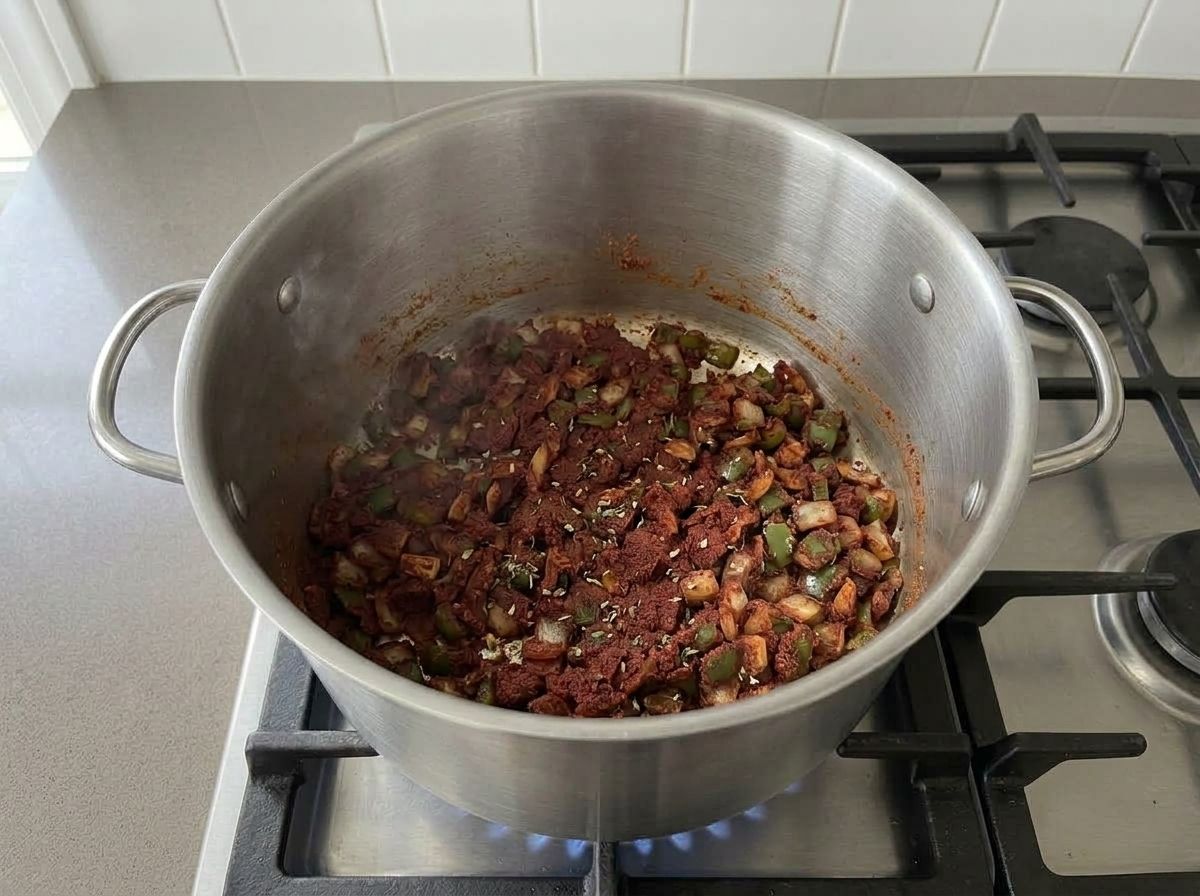
Add the chili powder, cumin, smoked paprika, oregano and tomato paste and stir constantly for 60 to 90 seconds, until the paste darkens from bright red to brick and the spices smell toasted rather than dusty. It will look like a dry paste clinging to the vegetables, which is right. Ground chile is fat-soluble, so this minute in hot oil is where most of the flavor is made.
- 3
Simmer the lentils in broth alone
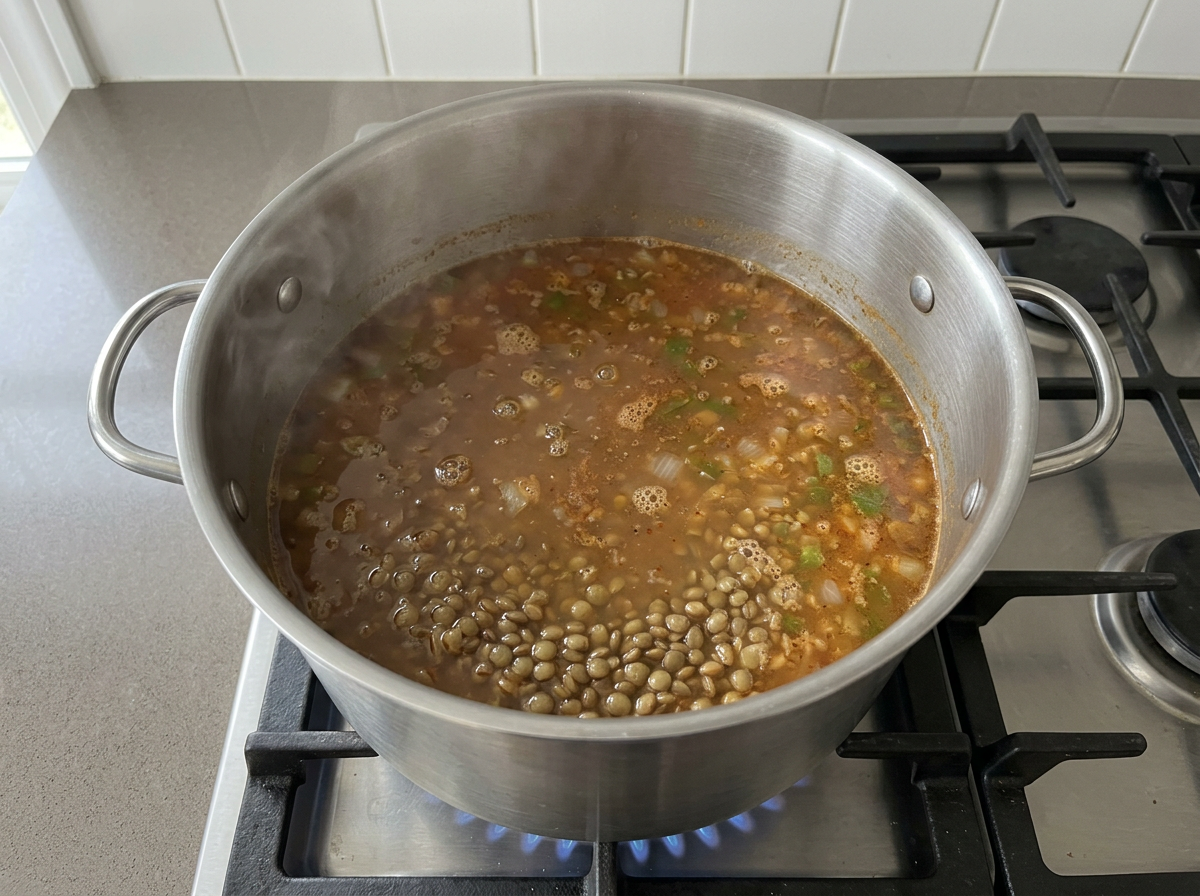
Add the lentils and all of the vegetable broth. Do not add the tomatoes yet. Bring to a boil, drop to a bare simmer, cover partially and cook for 25 minutes, until a lentil squashes easily against the side of the pot but still holds its shape. Acid firms the skins, so lentils started off with tomatoes can still be chalky an hour later.
- 4
Add the tomatoes and beans
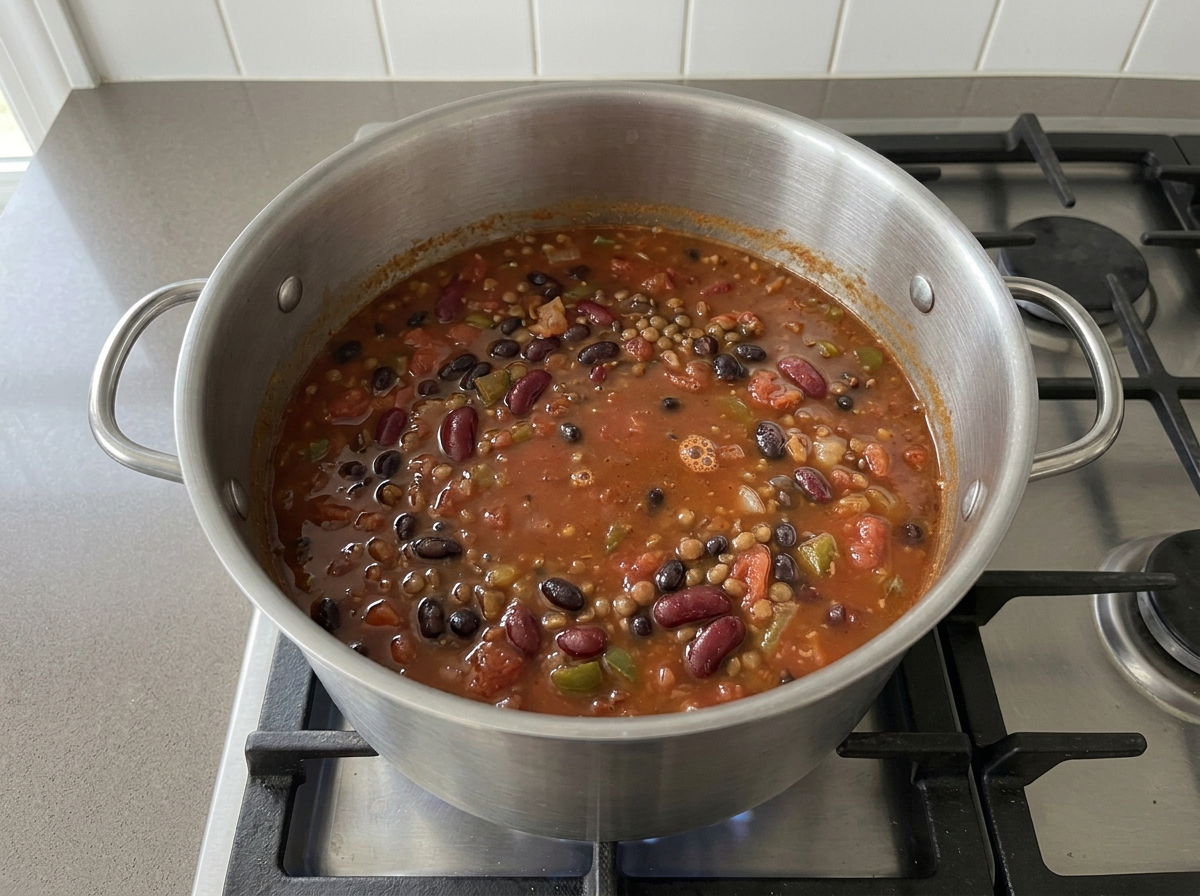
Stir in the diced tomatoes with their juice, the drained black beans and kidney beans, and the soy sauce. Bring back to a gentle simmer.
- 5
Simmer uncovered to thicken
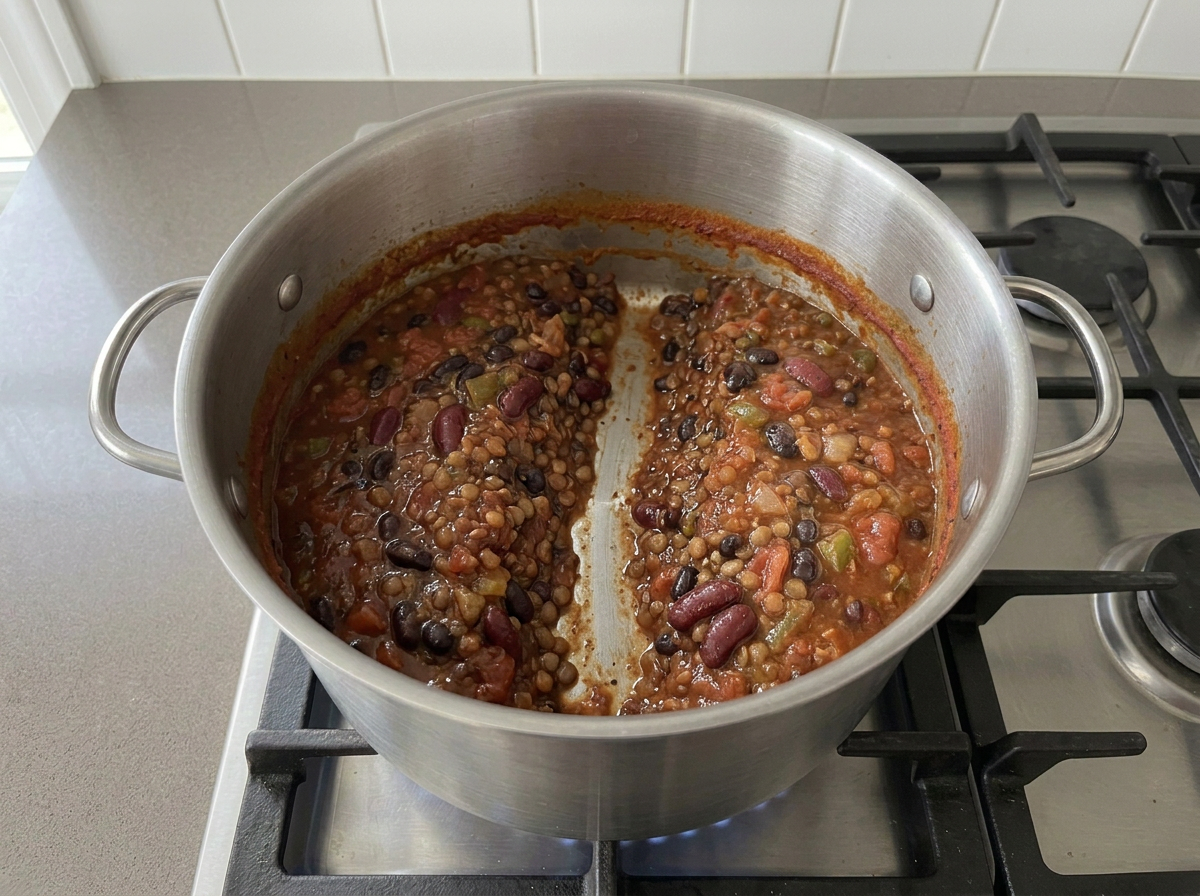
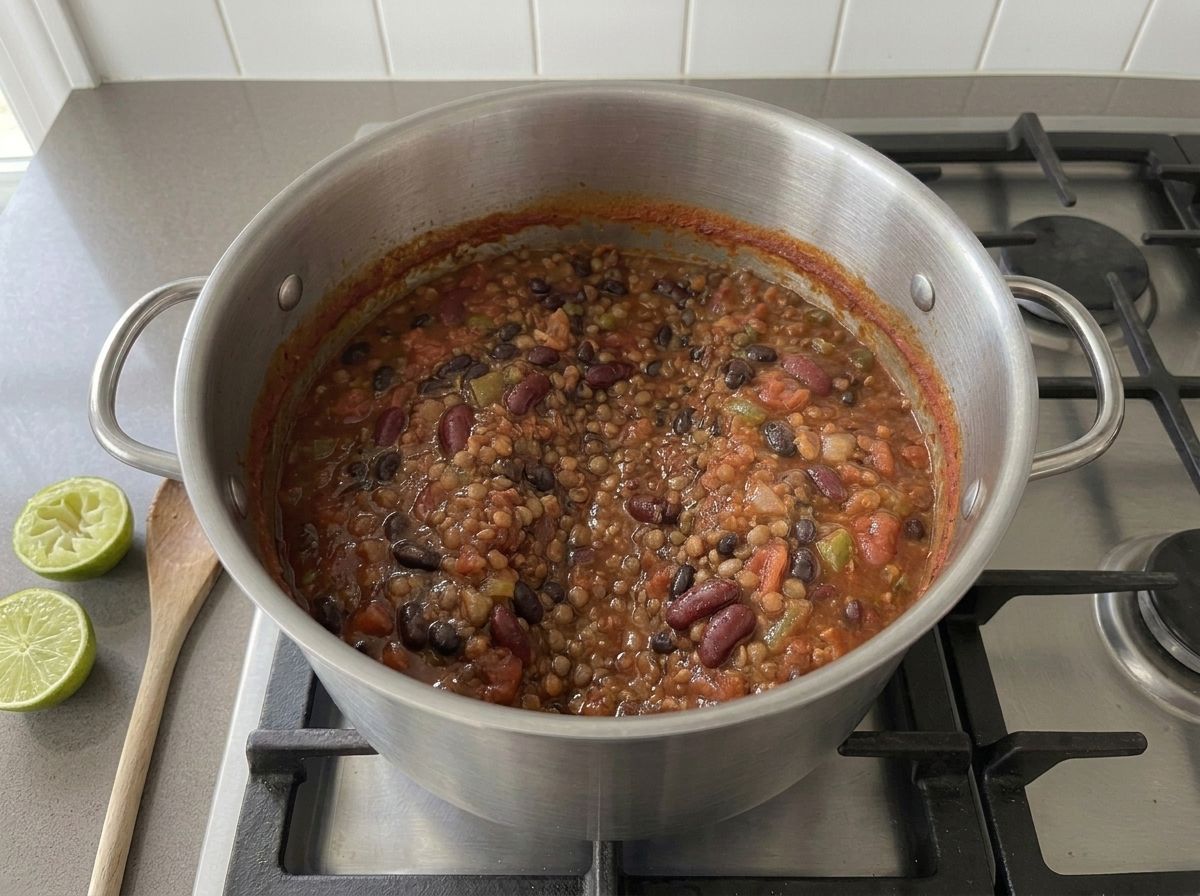
Cook uncovered for 20 minutes, stirring every 5 minutes and dragging the spoon flat across the base, because chili this thick stops circulating at the bottom and catches. It is ready when a spoon pulled across the base leaves a track that fills in slowly.
- 6
Finish with acid off the heat
Take the pot off the heat and stir in the lime juice or cider vinegar. Season with salt and plenty of black pepper, then taste and adjust. Acid added early simmers away and leaves the pot tasting flat, so it goes in last.
- 7
Ladle and garnish
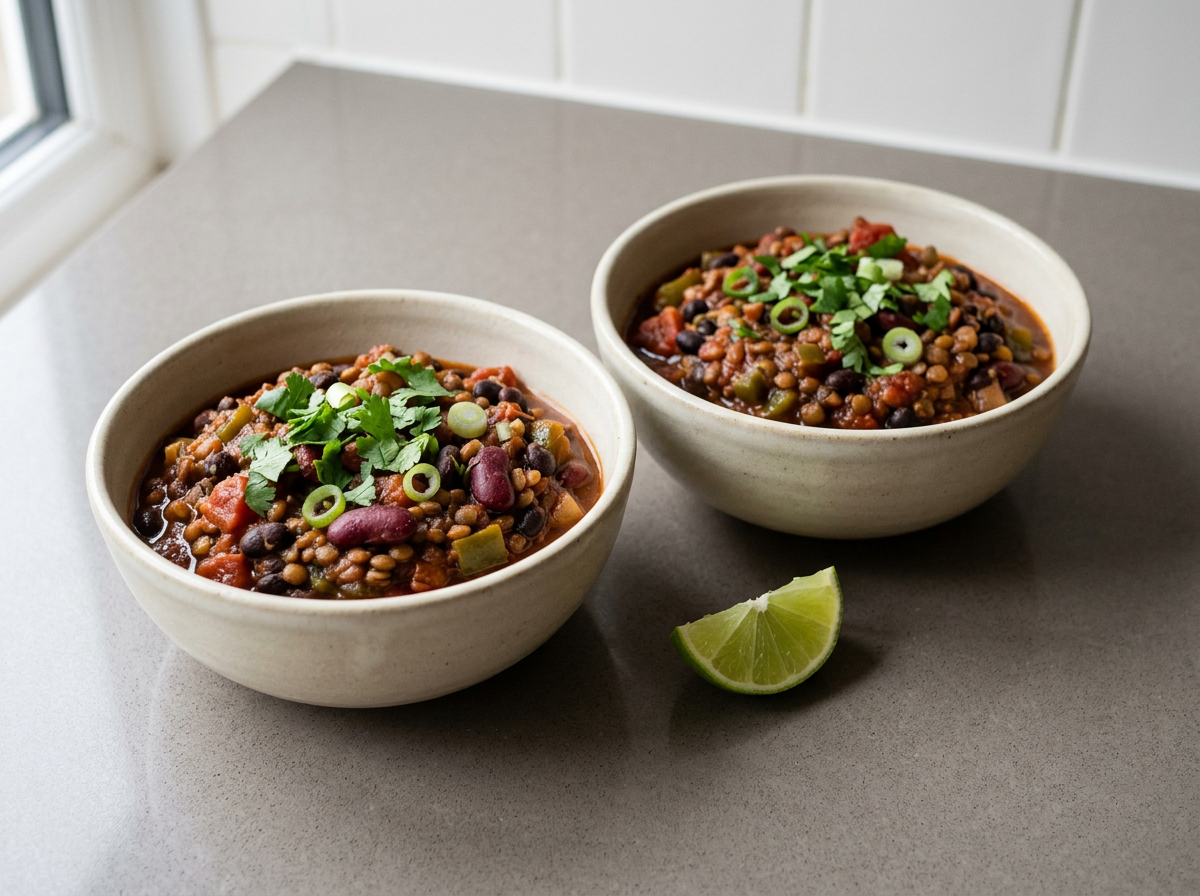
Ladle into bowls and scatter over the chopped cilantro or green onions. Serve hot with cornbread, crusty bread, or over rice.
Notes
Store leftovers in an airtight container in the fridge for up to 4 days. The chili keeps thickening as it sits, so loosen it with a splash of broth when you reheat.
For more heat, add 1 chopped jalapeño with the onion, or a quarter teaspoon of cayenne with the dry spices. One minced chipotle in adobo plus a teaspoon of its sauce brings heat and smoke at once.
Mexican oregano is a different plant from the Mediterranean kind, more citrus and less pine, and it is what sits in a Texas chili powder blend. Ordinary oregano works, it is just more herbal.
Swap in pinto or cannellini beans, or stir in a cup of frozen corn for the last 5 minutes.
Nutrition Facts
6 bowls · 457 g per serving
- Calories
- 392 kcal
% Daily Value*
- Total Fat
- 6.6 g8%
- Saturated Fat
- 1 g5%
- Sodium
- 1085 mg47%
- Total Carbohydrate
- 63.6 g23%
- Dietary Fiber
- 24.3 g87%
- Sugars
- 6.6 g—
- Protein
- 22.9 g46%
Recipe from veggierecipes.blog
When it goes wrong
Troubleshooting
My lentils are still hard after an hour
The tomatoes went in too early. Acid firms the pectin in lentil skins and slows softening dramatically, and canned tomatoes sit around pH 4.3. Lentils simmered in plain broth are tender in 25 minutes; the same lentils started off with tomatoes can still be chalky at seventy, which is why step 3 keeps them out. There is no shortcut once it has happened, just more broth and another 30 to 40 minutes.
It burned on the bottom of the pot
The pot ran dry, or the layer against the base stopped circulating, which chili this thick does. Stir every 5 minutes once the beans are in, dragging the spoon flat across the bottom. If you catch a scorch early, do not stir it in: pour the chili into a clean pot without scraping and leave the burnt layer behind.
It tastes dusty and raw, like eating spice powder
The spices went in with the liquid instead of into hot oil. Ground chile and cumin are fat-soluble, and the minute in oil at step 2 is what turns powder into flavor. A wet pot can be partly rescued: push the solids aside, pour a tablespoon of oil into the clear patch, sprinkle in a teaspoon of chili powder, let it sizzle for thirty seconds, then stir through.
It never thickened and it is more like soup
Chili thickens by evaporation and by lentils breaking down, and both want the lid off, which is what the last 20 minutes are for. If it is still loose, take out a cup, mash or blend it, and stir it back in. That thickens without watering the flavor down the way a cornstarch slurry does.
It is far too hot to eat
Almost always the wrong chili powder, so check the jar against the note above. Heat cannot be taken back out, so dilute and distract: another can of beans and a cup of broth, plus a grated carrot cooked in for 10 minutes. In the bowl, fat and acid both blunt capsaicin, so lime and a spoonful of coconut yogurt go a long way. Water does not.
It tastes flat even though I put in plenty of spice
Salt first, acid second. A pot this size made with unsalted broth can want a teaspoon and a half of salt or more, and until it has that the spices read as muddy rather than missing. Then the lime, off the heat. If both are in and it still sits heavy, the spice quantities are simply too small for six servings.
Before you serve
Serving & Storage
Chili is a base rather than a finished dish, and where it is eaten most the bowl gets built at the table. Put out diced raw onion, grated cheese or a vegan equivalent, sour cream, pickled jalapeños and lime wedges, and let people finish their own. The raw onion in particular does something for a long-simmered pot that no amount of cooked onion can.
Cornbread is the traditional partner and still the best, sweet enough to set against the chile and dry enough to be worth dunking. Rice stretches the pot furthest, a split baked potato is how most of Britain eats chili, and in Texas the same chili gets poured into a slit bag of corn chips and eaten with a plastic fork, which is a Frito pie and is not a joke.
Making it ahead
Chili is genuinely better on the second day, and this one more than most: the lentils keep absorbing and the bloomed spices keep spreading through the oil. Make it up to three days ahead, cool it quickly and refrigerate, but hold back the lime juice. The acid stirred in on Monday has faded by Wednesday, and a fresh tablespoon on reheating wakes the pot up. What does not work is holding it hot: left in a slow cooker on warm for an afternoon, the beans go pasty and the bell pepper disappears.
Storing leftovers
Fridge, airtight, up to 4 days. It sets into something closer to a paste as it cools, which is normal; loosen it with broth rather than more tomato, which pushes the seasoning off balance. It freezes for up to 3 months and comes back better than most stews, since there is no meat to go stringy and no dairy to split. Freeze it flat in portioned bags, then thaw overnight in the fridge or go straight from frozen into a covered pan on low with 2 tablespoons of water.
Turning leftovers into something else
Thick leftover chili is more useful than the first night’s bowl. Stir it through cooked macaroni with a handful of cheese, spoon it into baked potatoes or soft tacos, ladle it over tortilla chips and grill it into nachos, or thin it with broth and lime back into a soup.
Still wondering
Frequently Asked Questions
Can I use canned lentils instead of dry?
You can, but the recipe changes shape. Canned lentils are already cooked, so they go in with the beans at step 4 rather than simmering in the broth, and they never take on the spice the way dry ones do. Use two 15 ounce cans, drained, and cut the broth from 4 cups to 1½, because nothing is left to absorb the rest. You also lose the thickening, so mash a ladleful of the beans against the side of the pot instead.
Is this recipe gluten-free?
Yes, with two things to check. Use tamari rather than soy sauce, and read the label on the vegetable broth, since some cubes and pastes carry wheat. Chili powder is worth a glance too: it is a blend rather than a single ingredient, and a few brands use wheat flour as an anti-caking agent.
Can I make this in a slow cooker or Instant Pot?
Both, with one change each. For a slow cooker, do steps 1 and 2 in a pan first, since blooming spices in oil is not something a slow cooker can do, then add the lentils and broth, cook on low for 4 hours and stir in the tomatoes and beans for a final hour. Tomatoes at the start is the classic slow cooker failure: at around 195°F in an acidic pot, dry lentils can go 8 hours and stay gritty. For an Instant Pot, use Sauté for steps 1 and 2, add the lentils and 3 cups of broth rather than 4, pressure cook 12 minutes with a 10 minute natural release, then stir in the tomatoes and beans and simmer on Sauté for 10 minutes.
More Cozy Plant-Based Comforts
Made this?