
Marinated Vegetable Salad Recipe
Published · Updated
Cauliflower, carrots and mushrooms soaked overnight in a sharp red wine vinaigrette, with the broccoli added late so it stays green. Make it the day before and it is waiting for you.
Jump To Recipe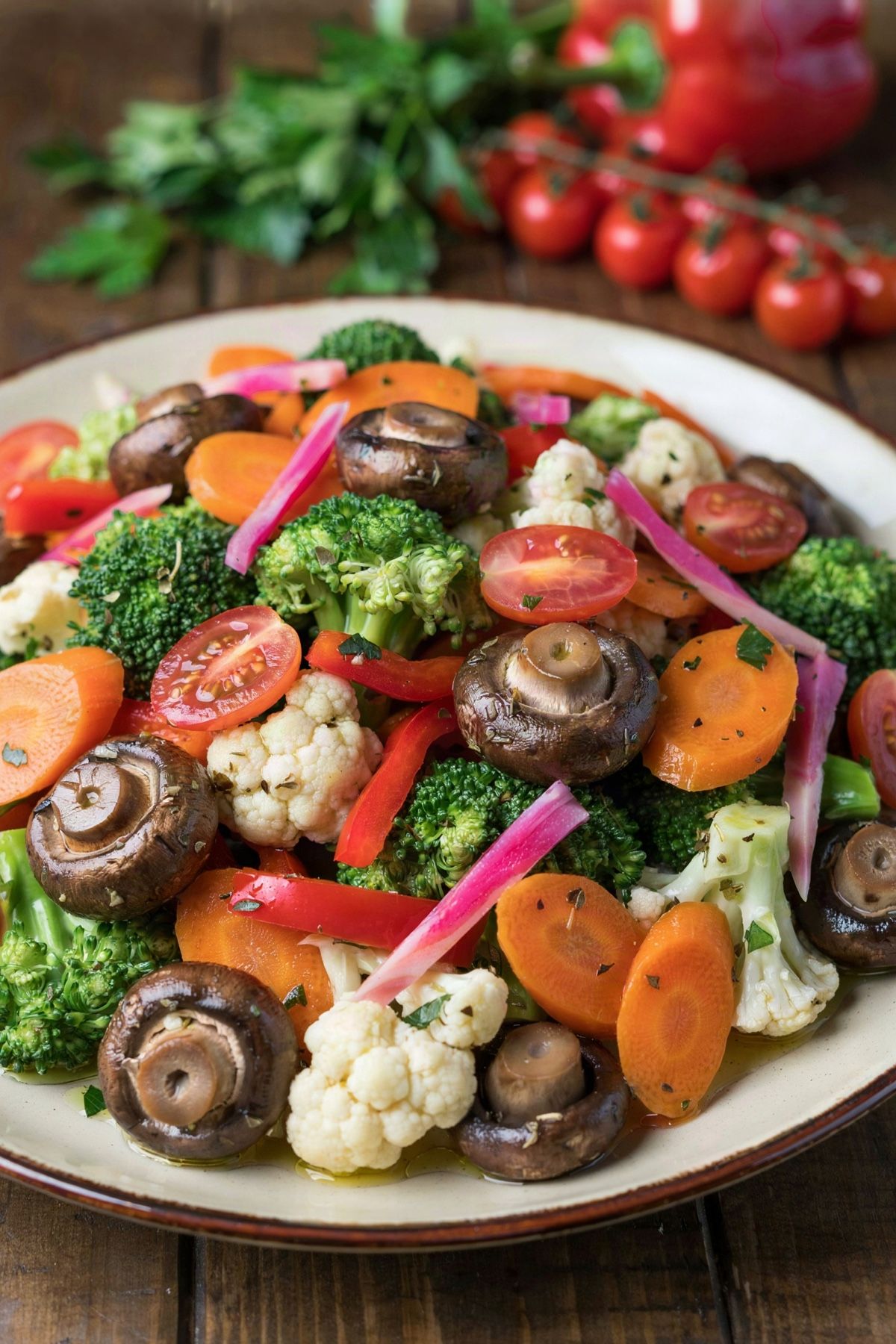
Why I Love This Marinated Vegetable Salad
When it comes to side dishes that really brighten up a table, this zesty marinated vegetable salad is at the top of my list. I enjoy not only the pop of colors it brings but also that satisfying crunch and the tangy punch from the marinade.
There’s something almost therapeutic about chopping up fresh produce and tossing it all together. The marinade does most of the work, infusing the vegetables with bold flavor without needing much effort on my part.
Here’s what makes this salad a go-to in my kitchen:
- Easy to customize with any seasonal veggies
- Great for meal prep: it actually gets better after a night in the fridge
- Pairs well with almost any main, from grilled fare to sandwiches or just some hearty bread
It’s my answer to quick, healthy eating that doesn’t skimp on flavor. If you want a salad that holds up for a picnic or a barbecue, this one ticks all the boxes.
The story
Marinated Vegetable Salad Was Built to Wait
Most salads start dying the moment they are dressed. This one starts getting better, and that is the whole reason it exists. Marinated vegetable salad is the dish of the American church supper and the community cookbook, where from the 1960s into the 1980s it sat on the table beside the three-bean salad and the relish tray. The appeal was practical: you made it the night before, it survived a car ride and an afternoon on a folding table, and there was nothing in it to spoil.
The idea is much older than the potluck. French cooks have long served vegetables à la grecque: mushrooms, leeks or cauliflower poached in olive oil, lemon and coriander seed, then left to cool in their own liquid. Despite the name it is a French technique, called Greek for its olive oil and lemon. Italian kitchens put garden vegetables under vinegar as giardiniera, and Naples has insalata di rinforzo, the “reinforcement salad” of cauliflower, pickled peppers and olives that is made on Christmas Eve and topped up every day until Epiphany.
What the American version added was the bottle. In 1948 Lena Sollomi’s Sicilian dressing started being served at her son’s Kansas City restaurant, and demand soon had him bottling it as Wish-Bone. Lipton bought the brand in 1957 and took it national, and bottled Italian dressing became a supermarket staple. Plenty of the old community cookbook recipes are exactly that: a bottle of dressing poured over raw cauliflower and mushrooms and left overnight, or a sweet homemade oil and vinegar version of it.
This version makes its own marinade and changes one thing the old recipes got wrong: the broccoli goes in late, so it is still green when it reaches the table. The dish was vegetarian long before anyone called it that, one of the few potluck salads with no bacon, cheese or mayonnaise in it, and it stays that way here.
What to buy
Ingredient Notes
Cauliflower
Cauliflower is the backbone because it is dense enough to sit in vinegar for a day and still crunch. Its density is also the catch: a whole floret stays raw and plain in the middle. Cut it small, about the size of a large grape, and split the stems so the marinade has more surface to work on. Any white vegetable in the bowl will turn pink from the red onion, which is harmless.
Broccoli
Broccoli is the one vegetable here the marinade harms. Acid pushes the magnesium out of chlorophyll and turns it olive drab, and in a vinaigrette that takes a few hours, not days. That is why it goes in last. Do not blanch it to set the color: blanched broccoli goes gray faster in acid, not slower. Peeled, sliced stems are as good as the florets.
Mushrooms
Button or cremini mushrooms turn this from a bowl of raw vegetables into something closer to antipasto. Raw, they absorb the oil like sponges and then, as the salt draws their water out, release it back into the bowl, shrinking by about a third and turning dark and silky. That liquid is why the dressing starts out concentrated. Wipe them clean rather than soaking them.
Red onion
Stirred into the marinade first, the onion spends the whole time in vinegar, which takes the raw bite out and turns it vivid pink. The pink leaks, tinting the cauliflower and the dressing. If you want white cauliflower, use a shallot or a sweet yellow onion; the flavor is milder and nothing changes color.
Extra virgin olive oil
Extra virgin olive oil starts to cloud at about 50°F (10°C) and thickens toward solid at fridge temperature, which is the waxy coating you find on cold vegetables. It melts back without harm. Old church recipes used vegetable oil, which stays liquid in the fridge, so they could be served straight from it. Half and half gives you the flavor of one and the pourability of the other.
Red wine vinegar and sugar
The ratio is two parts vinegar to three of oil, far sharper than a salad dressing, because the vegetables’ own water dilutes it overnight. The two teaspoons of sugar do not make it sweet; they round off the vinegar’s edge. Cider vinegar works as a swap. Avoid balsamic, which stains everything brown and turns syrupy against the mushrooms.
Zesty Marinated Vegetable Salad
Cauliflower, carrots, mushrooms and red pepper marinated overnight in a sharp red wine vinaigrette, with the broccoli added late so it stays green.
Ingredients
Equipment
As an Amazon Associate I earn from qualifying purchases, at no extra cost to you.
Instructions
- 1
Whisk the marinade and soak the onion
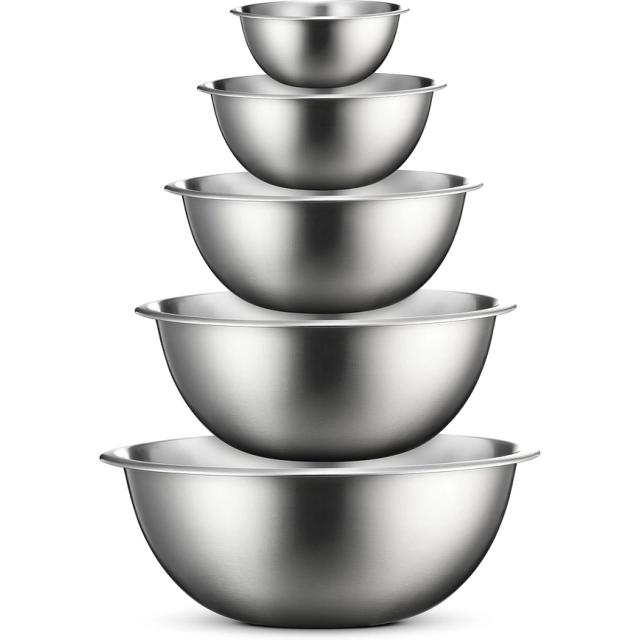
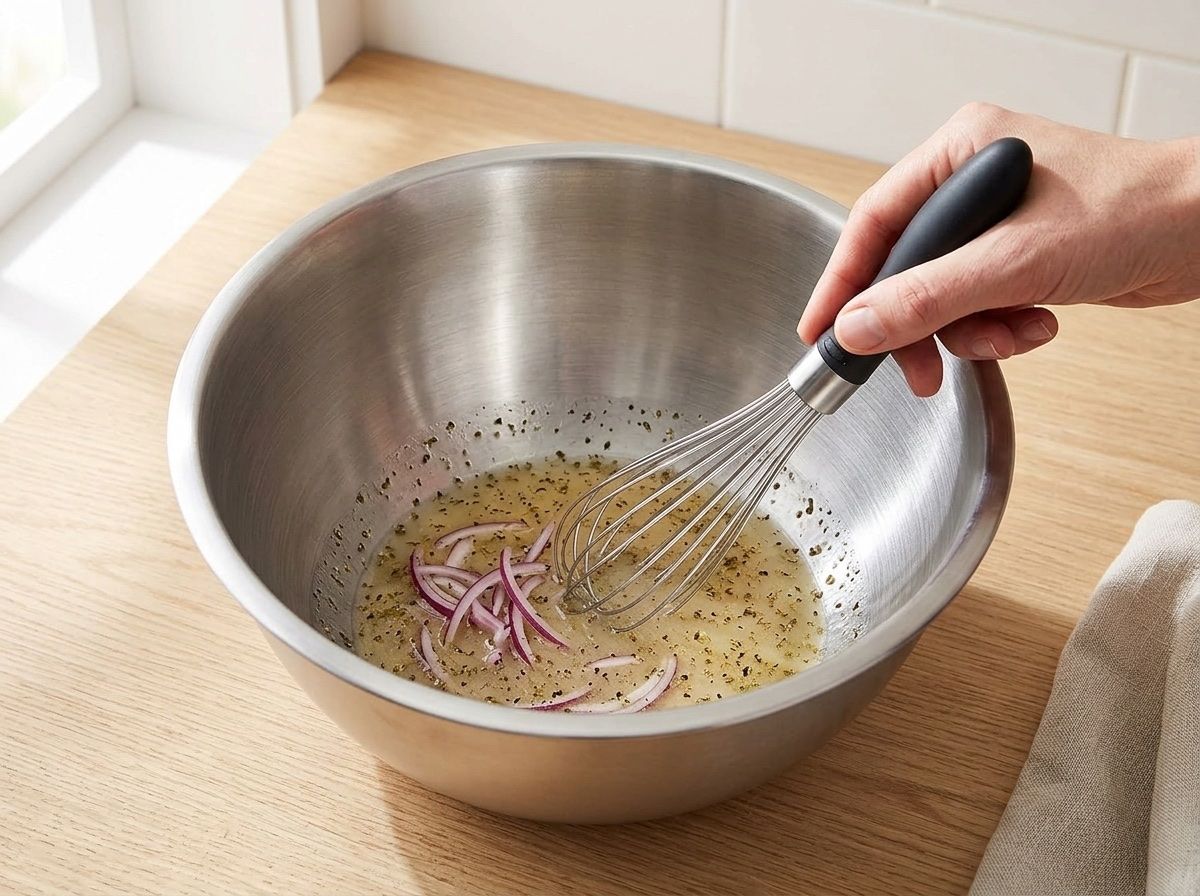
In a bowl big enough to hold all the vegetables, whisk the olive oil, red wine vinegar, sugar, Dijon mustard, grated garlic, oregano, salt and pepper until the dressing turns cloudy and slightly thick. Stir in the sliced red onion, so it softens in the vinegar while you cut everything else.
- 2
Cut everything small
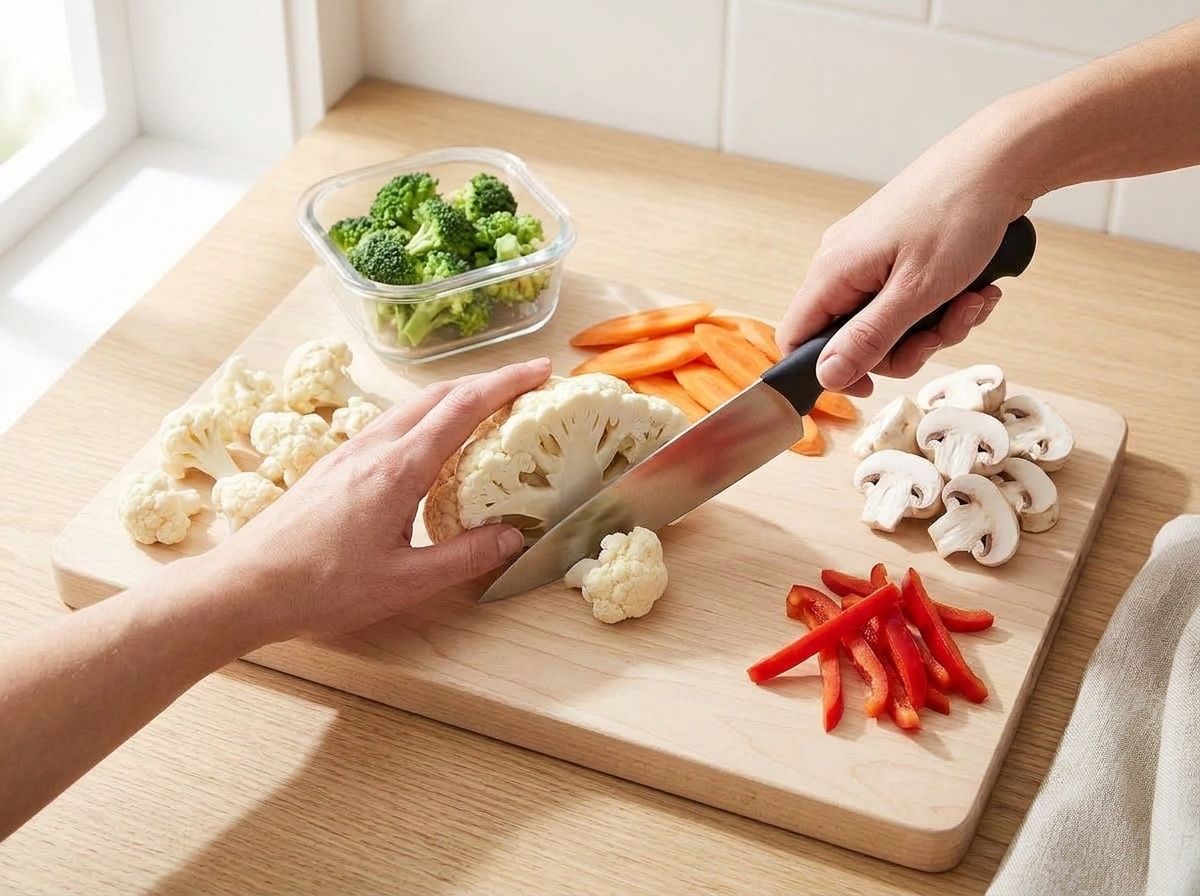
Cut the cauliflower and broccoli into florets no bigger than a large grape, splitting any thick stems lengthwise. Slice the carrots thinly on the diagonal, halve the mushrooms and cut the pepper into short strips. Small, thin pieces are what let the marinade reach the middle. Put the broccoli in a container in the fridge; it goes in later.
- 3
Toss and cover
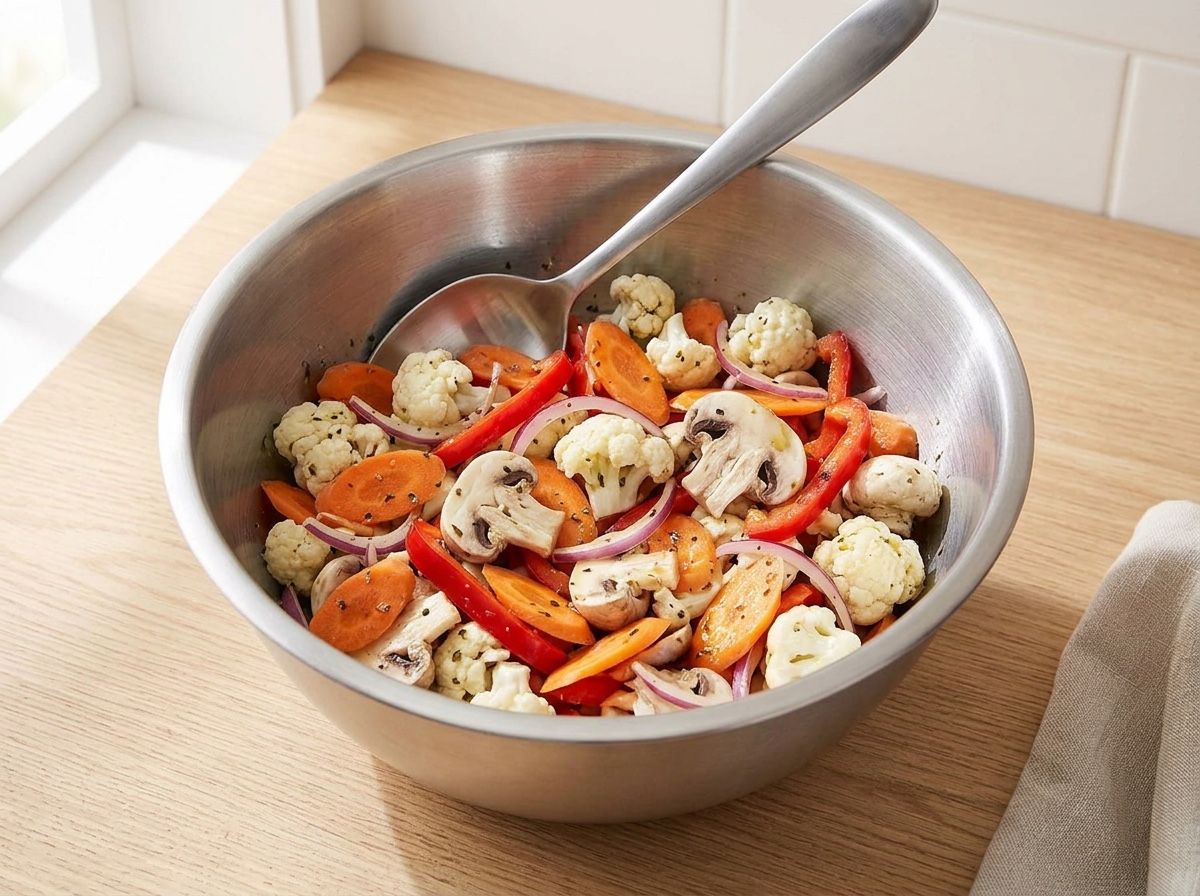
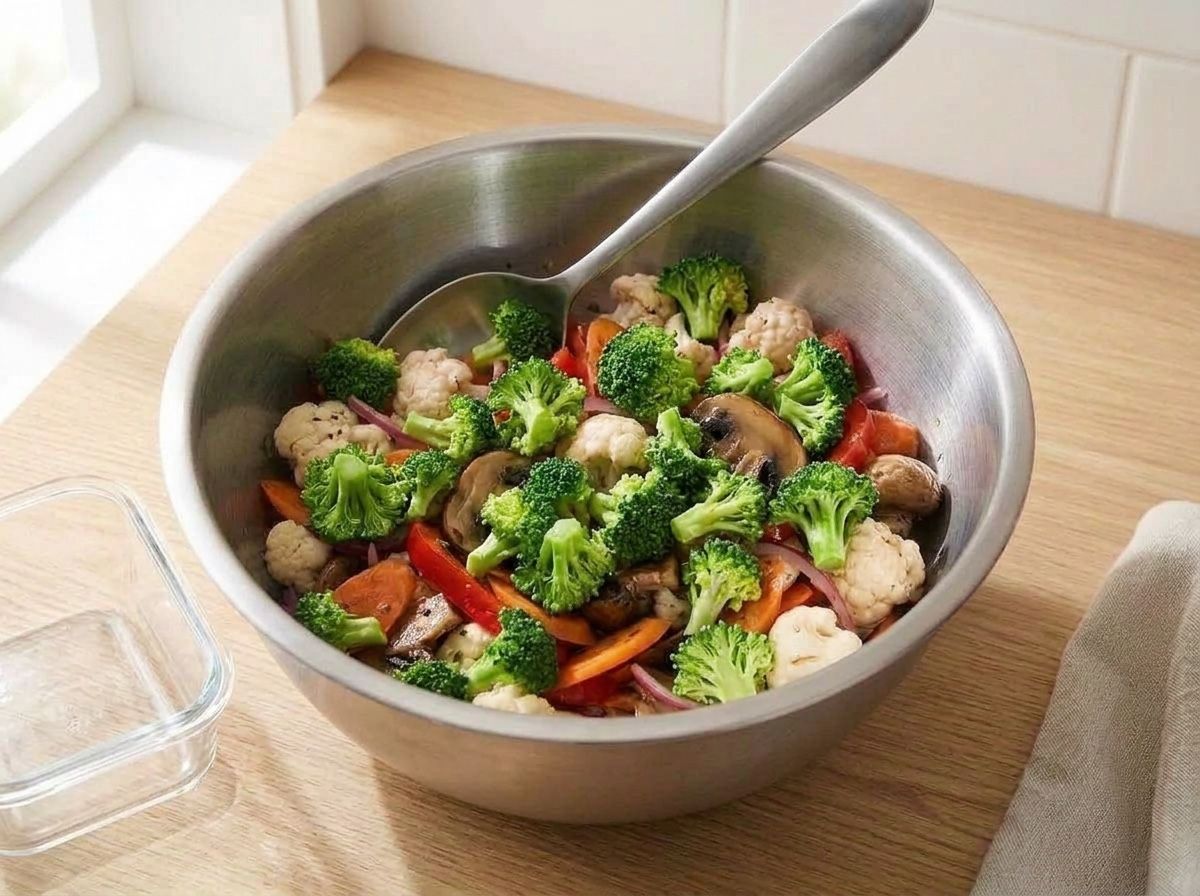
Add the cauliflower, carrots, mushrooms and pepper to the bowl and toss for a full minute, until every piece is glossy. It will look underdressed, with most of the marinade pooled at the bottom. That is right: the mushrooms and cauliflower give off liquid as they sit and the dressing loosens. Cover tightly, or tip it all into a large zip-top bag and press out the air.
- 4
Marinate, turning once or twice
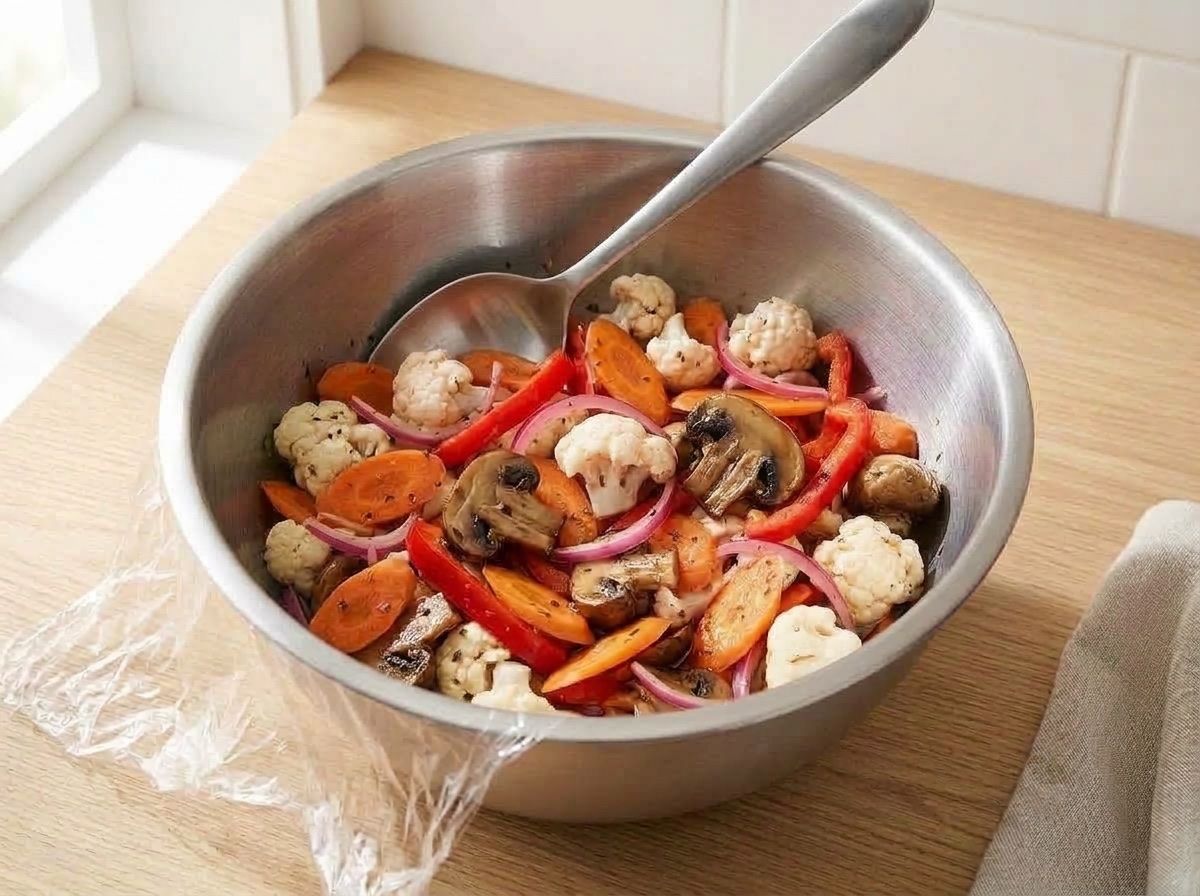
Refrigerate for at least 4 hours and up to 24. Stir the bowl, or turn the bag over, once or twice along the way so the vegetables on top get their turn in the dressing. The mushrooms darken and turn silky, the onion goes bright pink, and the cauliflower and carrots soften at the edges while keeping their snap.
- 5
Add the broccoli
Between 1 and 4 hours before serving, toss the broccoli florets into the marinated vegetables and return the salad to the fridge. The vinegar dulls broccoli from bright green to olive over a few hours, so this keeps it green. If you cannot come back to it, add it with everything else the night before: it will be khaki but it tastes the same.
- 6
Warm, season and serve
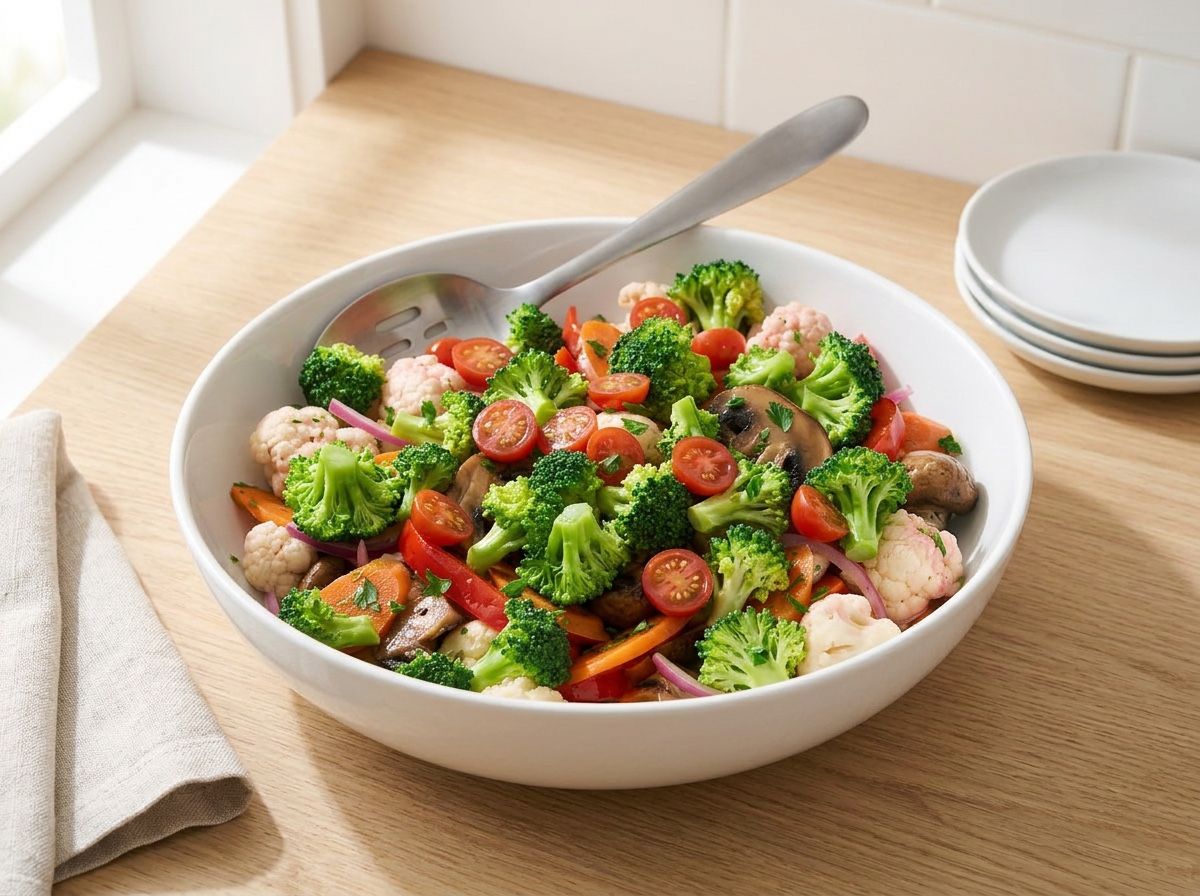
Take the salad out of the fridge 20 to 30 minutes before serving, so the olive oil, which thickens and clouds when cold, turns clear and liquid again. Toss well, taste a piece of cauliflower, and add a pinch of salt or a splash of vinegar if it needs it. Fold in the cherry tomatoes and parsley, if using, and serve with a slotted spoon.
Notes
Keeps in the fridge for up to 4 days. Stir it before serving, since the vegetables on top dry out.
Tomatoes, cucumber and avocado go in just before serving, never into the marinade; they turn watery or brown overnight.
Making it more than a day ahead? Use half olive oil and half vegetable oil, which stays liquid when cold.
Nutrition Facts
6 servings · 253 g per serving
- Calories
- 236 kcal
% Daily Value*
- Total Fat
- 19.2 g25%
- Saturated Fat
- 2.7 g14%
- Sodium
- 643 mg28%
- Total Carbohydrate
- 14.8 g5%
- Dietary Fiber
- 4.1 g15%
- Sugars
- 7 g—
- Protein
- 4.1 g8%
Recipe from veggierecipes.blog
When it goes wrong
Troubleshooting
The broccoli turned a dull olive green
The acid in the vinegar converts bright chlorophyll into olive-colored pheophytin, and a few hours is enough to start it. Overnight, it goes the whole way. It is still safe and tastes almost the same, but it looks tired on a buffet. Next time keep the broccoli out until 1 to 4 hours before serving, as the method does, and keep it raw.
The cauliflower has gone pink
That is the red onion. Its color comes from anthocyanins, which dissolve in the vinegar and dye anything pale they touch. It is harmless and many people like it. If you would rather keep it white, swap the red onion for a shallot or yellow onion, or soak the red onion in the vinegar separately and add only the slices, not the pink liquid.
The dressing is thick, cloudy and clumpy
The olive oil has partly set in the cold. Nothing has spoiled: extra virgin olive oil turns cloudy at around 50°F (10°C) and firms up further at fridge temperature. Leave the bowl on the counter for 20 to 30 minutes and toss it, and the dressing turns clear and loose again. For a salad served straight from a cooler, use half vegetable oil.
The cauliflower still tastes raw in the middle
The florets were too big, or the salad had less than four hours. The marinade works from the outside in, and a thick floret never lets it reach the center. Cut them grape-size and split the stems. If you like it softer, blanch the cauliflower and carrots in boiling salted water for one minute, then cool them completely before they go in.
There is a pool of watery liquid at the bottom
The mushrooms and cauliflower released their water as the salt drew it out, which is expected and is why the bowl looks underdressed at the start. Serve with a slotted spoon and keep the liquid, which is a good dressing for greens. If there is a lot of it and the vegetables taste washed out, a tomato or cucumber went in too early. Both are nearly all water, so add them at the table.
It tastes flat after a night in the fridge
Cold numbs flavor, and the vegetables’ water has diluted the salt. Taste it after it has warmed for 20 minutes, not straight from the fridge, and taste a piece of cauliflower rather than the dressing. Add salt a pinch at a time until the vegetables taste seasoned, then a splash of vinegar if it needs brightness.
Before you serve
Serving & Storage
This is a relish-tray salad at heart, so serve it where a relish tray would go: on a buffet next to something rich, at a cookout beside grilled corn and veggie burgers, or piled onto an antipasto board with olives, marinated artichokes and crusty bread to catch the dressing. For a lunch, spoon it over arugula and use the marinade as the dressing, or fold in a can of chickpeas and some cooled pasta to make it a main.
It does not work warm. Tossed through hot pasta or grain, the olive oil runs off and the vegetables taste of vinegar and not much else. Let anything warm cool to room temperature first.
Making it ahead
The best timing is to cut and marinate everything except the broccoli the evening before, then add the broccoli the next morning. If you are driving it to an event, marinate it in a zip-top bag, which takes up less room in the fridge and can be turned over instead of stirred, and tip it into the serving bowl when you arrive. The salad is fine at room temperature for up to two hours.
Storing leftovers
Leftovers keep in a covered container in the fridge for up to 4 days. The cauliflower and carrots hold their crunch the whole time; the mushrooms get softer and the broccoli duller each day. Do not freeze it. The vegetables collapse into mush when they thaw.
Still wondering
Frequently Asked Questions
Can I use other vegetables?
Yes, as long as they are firm. Celery, fennel, radishes, green beans, asparagus tips, jarred artichoke hearts and olives can all marinate overnight; green beans and asparagus behave like the broccoli, so add them late. Zucchini and summer squash work for a few hours but soften by the next day. Keep tomatoes, cucumber and avocado out of the marinade altogether and add them just before serving.
Is marinated vegetable salad vegan and gluten-free?
Yes, as written. Every ingredient is plant-based, and vegetables, olive oil, red wine vinegar, sugar and dried oregano are all naturally gluten-free. Most Dijon mustard is gluten-free, but a few mustards are made with beer or malt vinegar, so check the label if you cook for someone with celiac disease. If you swap in bottled Italian dressing, check that too.
Can it sit out at a picnic or potluck?
For up to two hours, or one hour if it is above 90°F (32°C), which is the standard rule for any perishable food. It has no mayonnaise, dairy or eggs, so it is safer than most picnic salads, but garlic and mushrooms in oil still belong in the fridge. Keep it in a cooler until you serve it and return what is left within the time limit.
Featured In These Collections

More Fresh and Vibrant Salads
Made this?