
Sweet Potato and Black Bean Tacos Recipe
Published · Updated
Tender roasted sweet potatoes, cozy black beans, and vibrant fresh garnishes come together in these tacos for a meal that's satisfying, nutritious, and seriously crave-worthy.
Jump To Recipe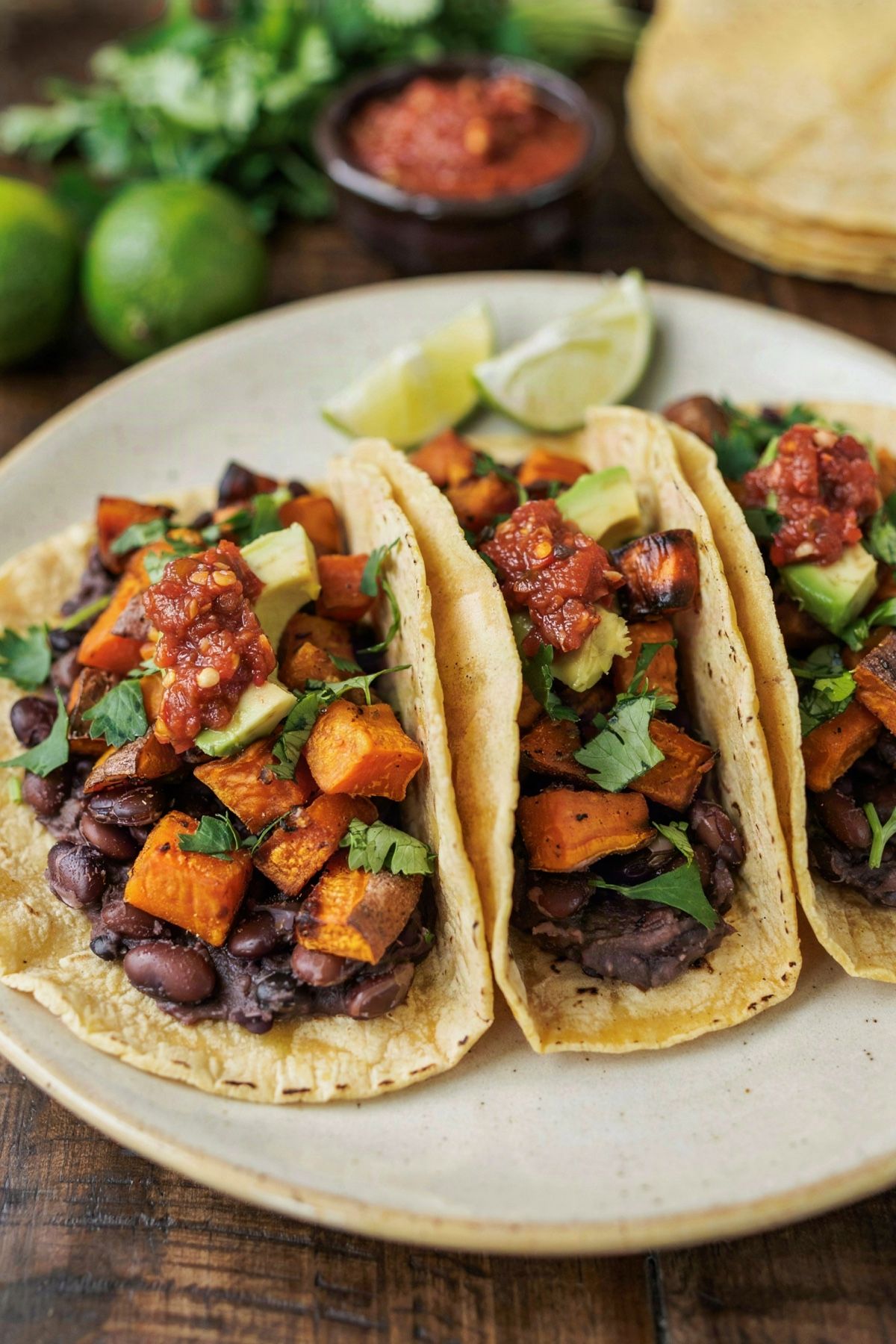
Why I Keep Coming Back to These Tacos
There’s just something totally satisfying about these sweet potato and black bean tacos. After a long day, I want food that hits the spot and feels good to eat. This recipe never disappoints. The crispy, caramelized sweet potatoes and the savory black beans just work together. It’s hearty, filling, and way more interesting than your average taco.
Here’s what stands out about this recipe for me:
- Preparation is a breeze, most of the time is hands-off while the sweet potatoes roast.
- The satisfying texture you get from perfectly roasted sweet potatoes can’t be beat.
- The toppings are totally customizable, play around with avocado, salsa, cheese, or whatever you’ve got handy.
I often find myself reaching for another taco or two. They’re just that craveable. And they never make me feel weighed down.
If you’re looking for a weeknight dinner that’s simple and jam-packed with flavor (and nutrients), this is it. I love serving these at casual get-togethers as well; everyone can dress up their tacos just the way they want.
The story
Sweet Potato Tacos Are A New Idea, The Beans Are The Old One
The sweet potato is about as American as a vegetable gets. It was domesticated in this hemisphere thousands of years before anyone thought to write about it, and the Spanish took the Nahuatl word for it, camotli, more or less whole: camote. What it is almost never used for in Mexico is a savory filling.
Ask a Mexican cook about camote and you are more likely to hear about candy. The nuns of the Convento de Santa Clara in Puebla cooked it down into a sugar paste in the colonial period, and camotes de Santa Clara are still wrapped in waxed paper and sold along Puebla’s Calle de los Dulces four hundred years later; the recipe was in print by 1831 as camotitos poblanos. The other camote you meet is the one that whistles. At dusk a camotero pushes a wood-fired cart through the neighborhood with sweet potatoes roasting in the bottom drawer, venting steam through a pipe to make a long shriek that carries several streets, and sells them split open with condensed milk poured over. Again, a sweet.
So this is not a dish somebody in Oaxaca has been making forever. Roasted cubes of spiced sweet potato in a tortilla is a modern idea, worked out in American and British kitchens during the plant-based boom of the last fifteen years, and it earns its place honestly: root vegetable sugars caramelize in a hot oven the way meat browns in a pan, which is the depth a vegetable taco usually goes without.
The black beans are the part with real ancestry. Frijoles negros belong to the south and southeast, to Yucatán, Oaxaca and Veracruz, where saying frijoles with no further explanation means black ones; the arid north cooks pinto instead. And in that southern belt the everyday taco is very often nothing but beans and a little onion. A bean taco there is not a vegetarian substitute for something else. It is the baseline, and the meat is the addition. The least novel thing on this plate is also the thing holding it together.
What to buy
Ingredient Notes
Sweet potatoes
Look for the orange-fleshed kind, sold as Beauregard, Garnet or Jewel. They are moist and high in sugar, which is what lets cut edges caramelize rather than just dry out. The white and purple-fleshed camotes in Latin and Asian groceries are starchier and roast more like an ordinary potato. Choose medium ones over giants, which run fibrous at the core, and cut everything to a consistent ¾ inch, because uneven dice is why half a tray burns while the rest stays raw.
Black beans
This is what canned beans are for; cooking from dried gains little in a filling that gets half mashed and spiced. One 15 oz can drained is about 1½ cups, so home-cooked beans swap in at that measure. Buy no-salt-added if you can and rinse properly, since most of the sodium in a can sits in the liquid. Avoid anything labeled seasoned, ranchero or chili-style, which arrives pre-flavored in a direction that fights the cumin.
Chili powder
Read the jar before you measure, because two different products share the name. American chili powder is a blend, mild ground chiles cut with cumin, oregano and garlic, and a teaspoon is background warmth. British and most European chilli powder is pure ground hot chile, and a teaspoon of that will make these tacos painful. If your jar lists a single ingredient, start with a quarter teaspoon and make up the bulk with sweet paprika. Ancho powder is the closest single-chile substitute.
Smoked paprika
Spanish rather than Mexican, and it stands in for the smoke a chipotle would bring without asking you to open a tin for half a teaspoon. Buy pimentón dulce, the sweet one, since the chili powder is already carrying the heat. If you do keep chipotles in adobo, one minced chipotle plus a teaspoon of the adobo stirred into the beans is better still.
Corn tortillas
Small ones, 6 inch, the size a taquería uses; an 8 inch tortilla holds enough filling to collapse. Turn the bag over and look for corn or masa harina, water and lime at the top of the list, because the brands padded with gums stay flexible for months and taste of almost nothing. Refrigerated beats shelf-stable by a wide margin. Corn is also what keeps this gluten free, and a certified brand covers the cross-contamination plain corn tortillas cannot promise.
Limes and cilantro
Both go on at the end and both have to be fresh. Bottled lime juice is heat-treated and tastes flat and slightly metallic, which you notice immediately against something this sweet. Buy limes that feel heavy and give under your thumb; a rock-hard one is mostly pith. Chop cilantro just before it goes on, stems included, since the stems carry more flavor than the leaves. If cilantro tastes soapy to you, parsley and extra lime is the usual workaround.
Savory Sweet Potato and Black Bean Tacos
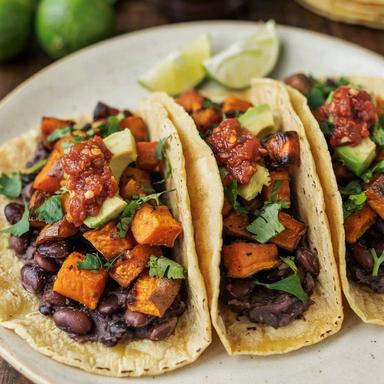
Sweet potatoes roasted hard enough to caramelize at the edges, piled onto a base of black beans simmered with onion, garlic and cumin and half mashed so the filling stays put, in warm corn tortillas.
Ingredients
Equipment
As an Amazon Associate I earn from qualifying purchases, at no extra cost to you.
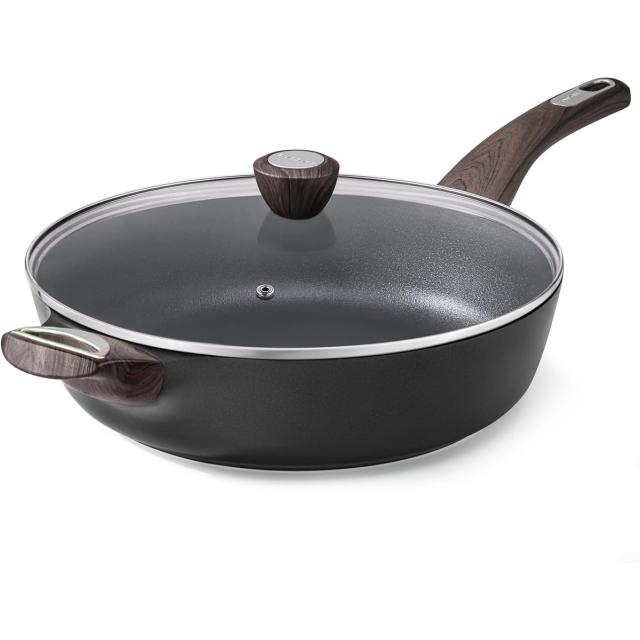
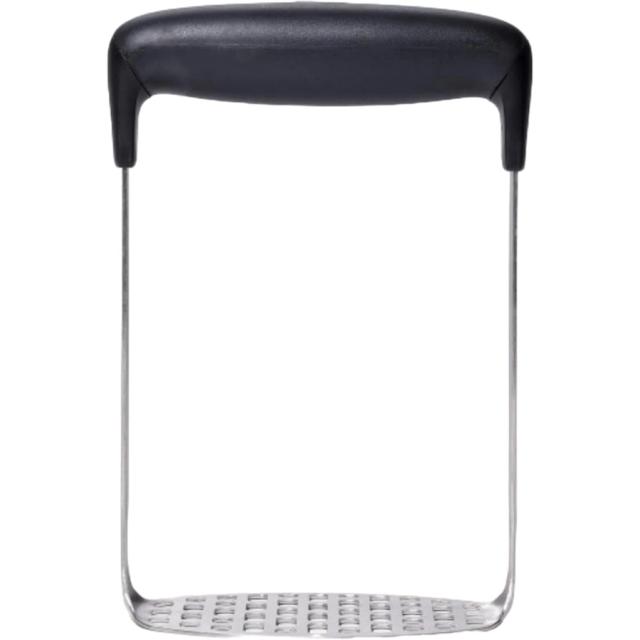
Instructions
- 1
Heat the oven and the sheet
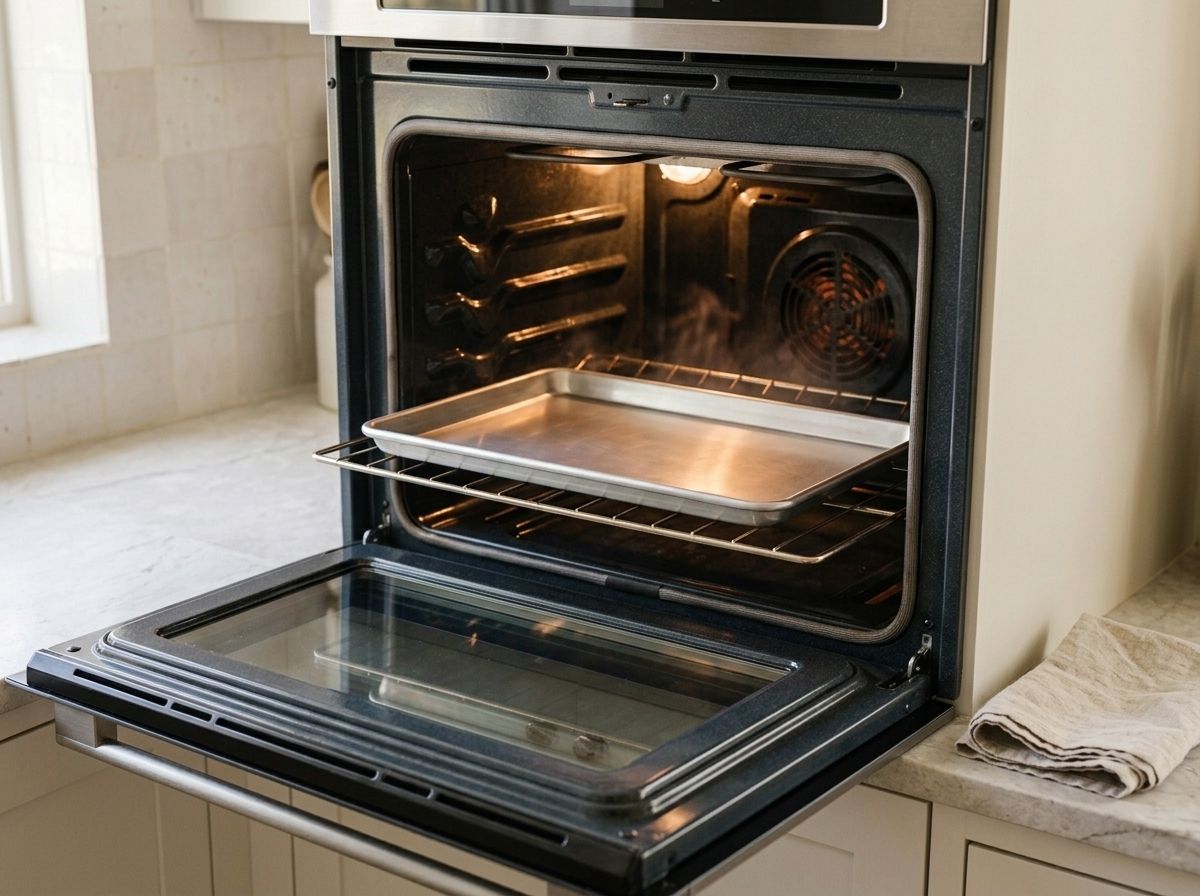
Heat the oven to 425°F (220°C) with a large rimmed baking sheet inside. Diced sweet potato dropped onto hot metal starts browning on contact.
- 2
Season the sweet potatoes
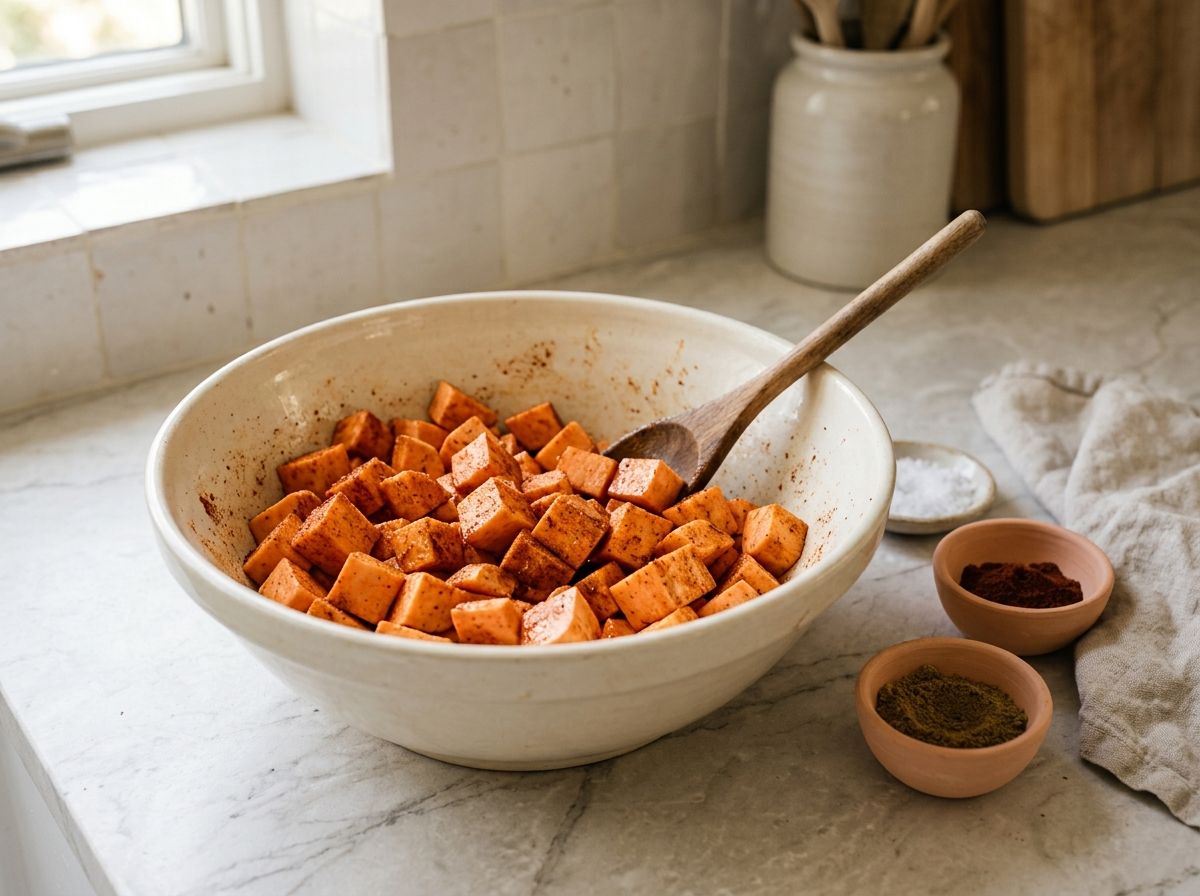
Toss the diced sweet potato with 1½ tablespoons of the olive oil, 1 teaspoon of the cumin, the chili powder, the smoked paprika, ½ teaspoon of the salt and a grind of pepper, until every piece is coated.
- 3
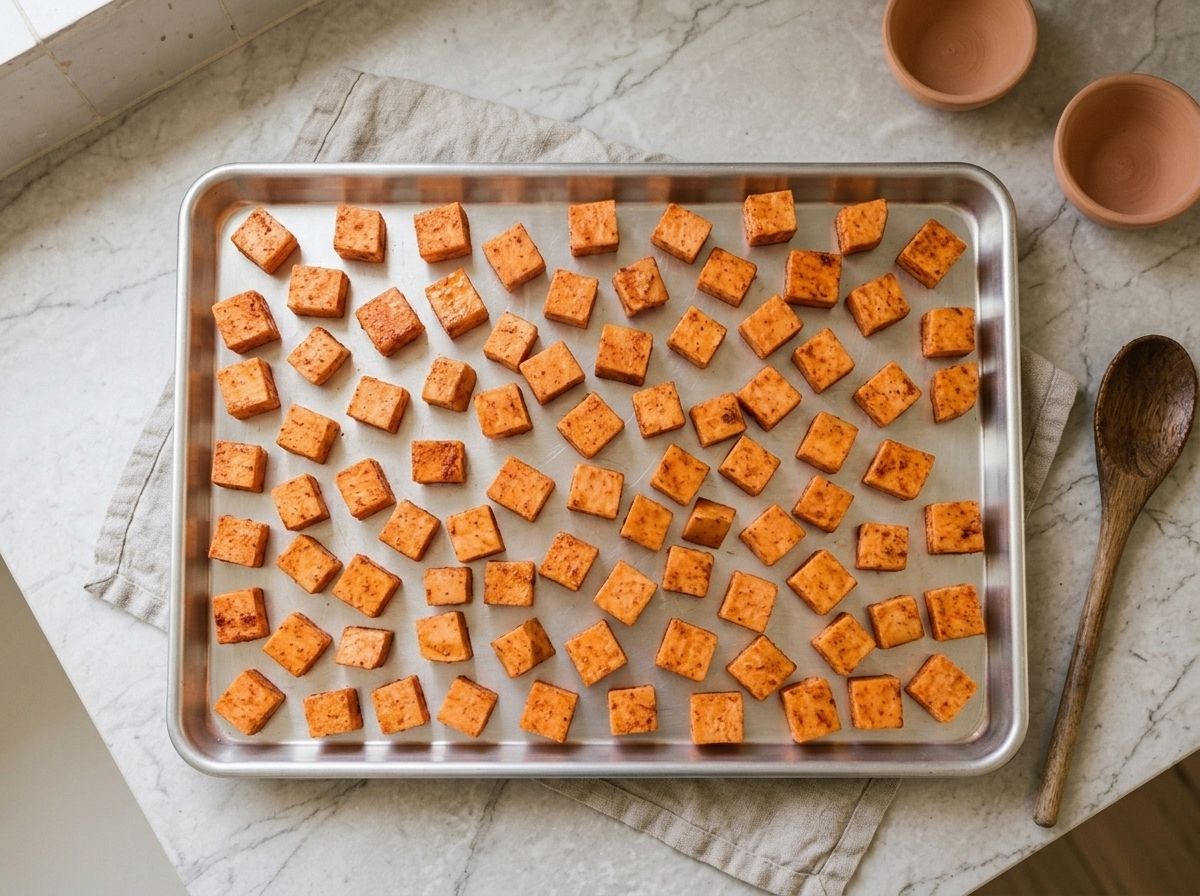
Spread them out in one layer
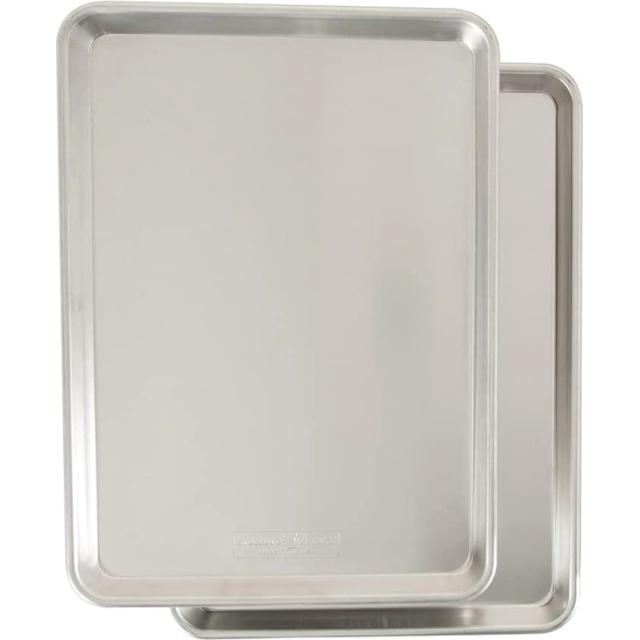
Tip the sweet potato onto the hot sheet and spread it into a single layer with space showing between the pieces. Use two sheets if it does not fit, because crowded sweet potato steams instead of roasting.
- 4
Roast until the edges catch
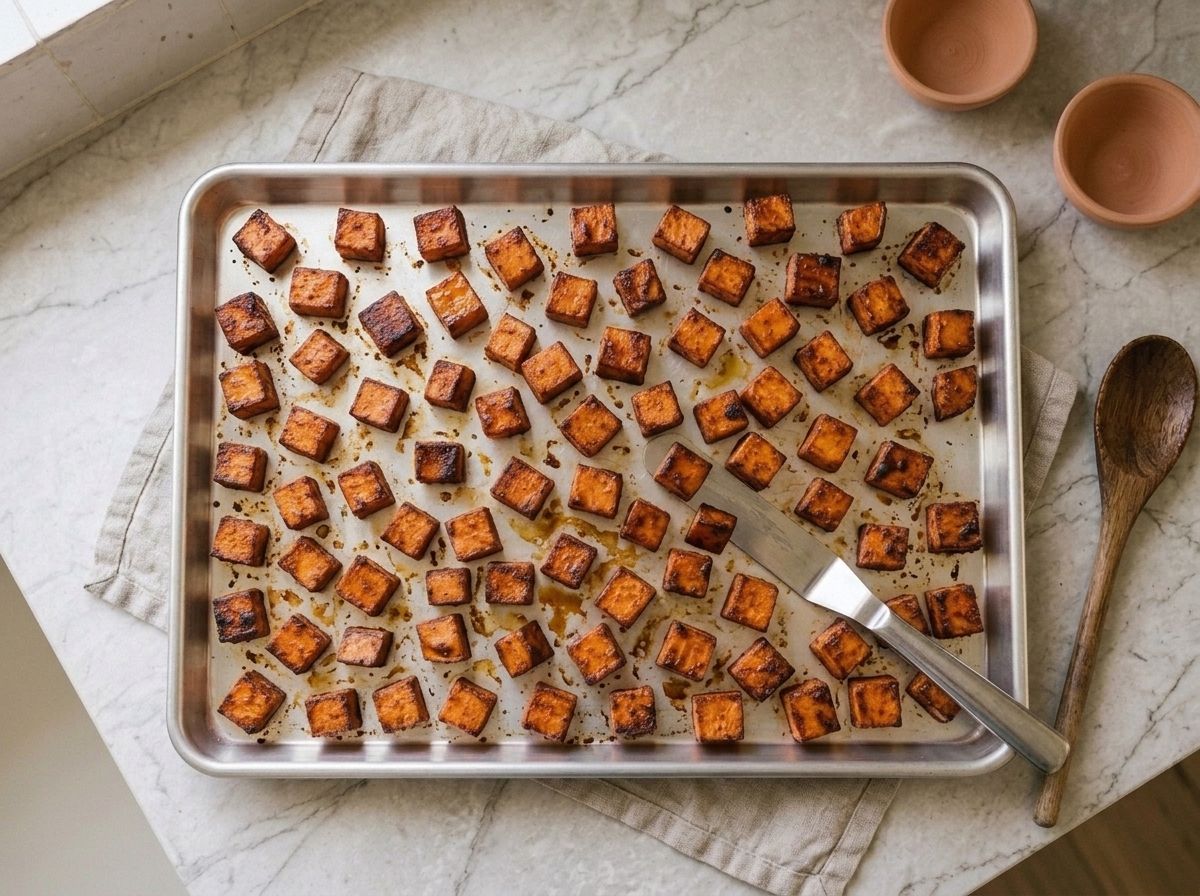
Roast for 30 to 35 minutes, turning once at about 20 minutes and not before, since the pieces release from the pan only once the undersides have browned. They are done when the edges are dark and a piece crushes easily.
- 5
Soften the onion and bloom the spices
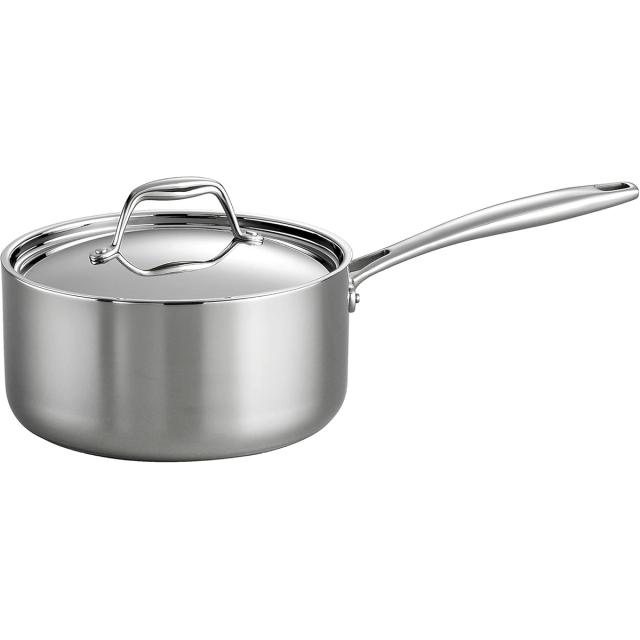
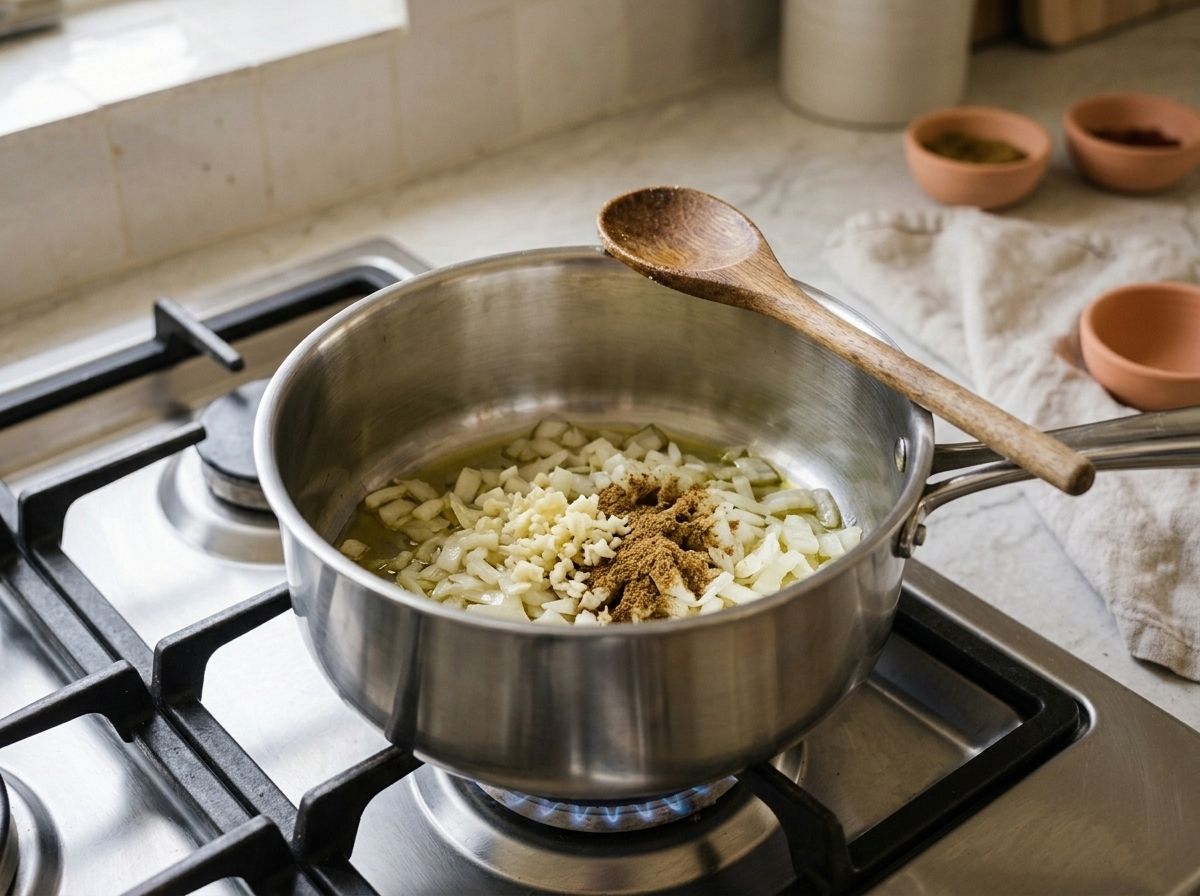
Meanwhile, warm the remaining ½ tablespoon of oil in a small saucepan over medium heat. Cook the onion with a pinch of salt for 5 to 6 minutes until soft and translucent, then add the garlic and the remaining ½ teaspoon of cumin and stir for 30 seconds, until it smells toasted.
- 6
Simmer and mash the beans
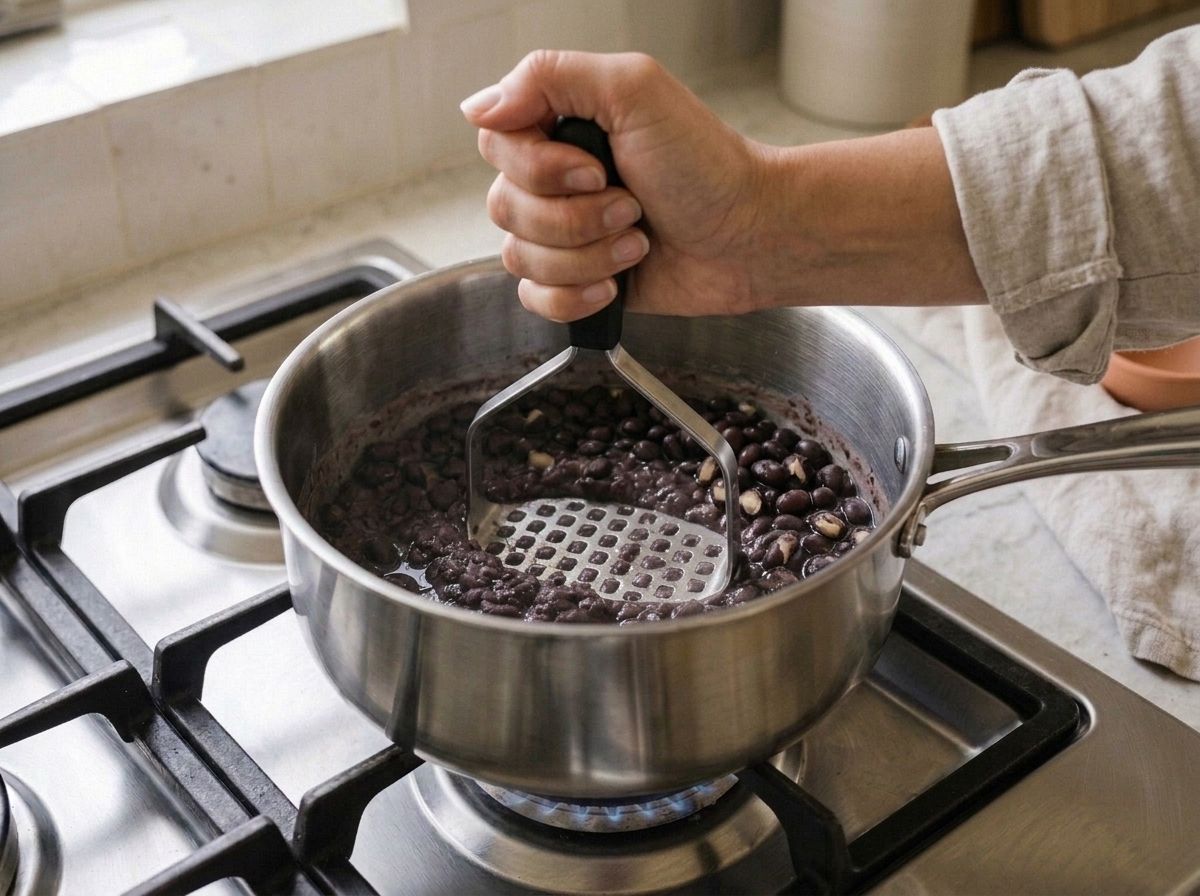
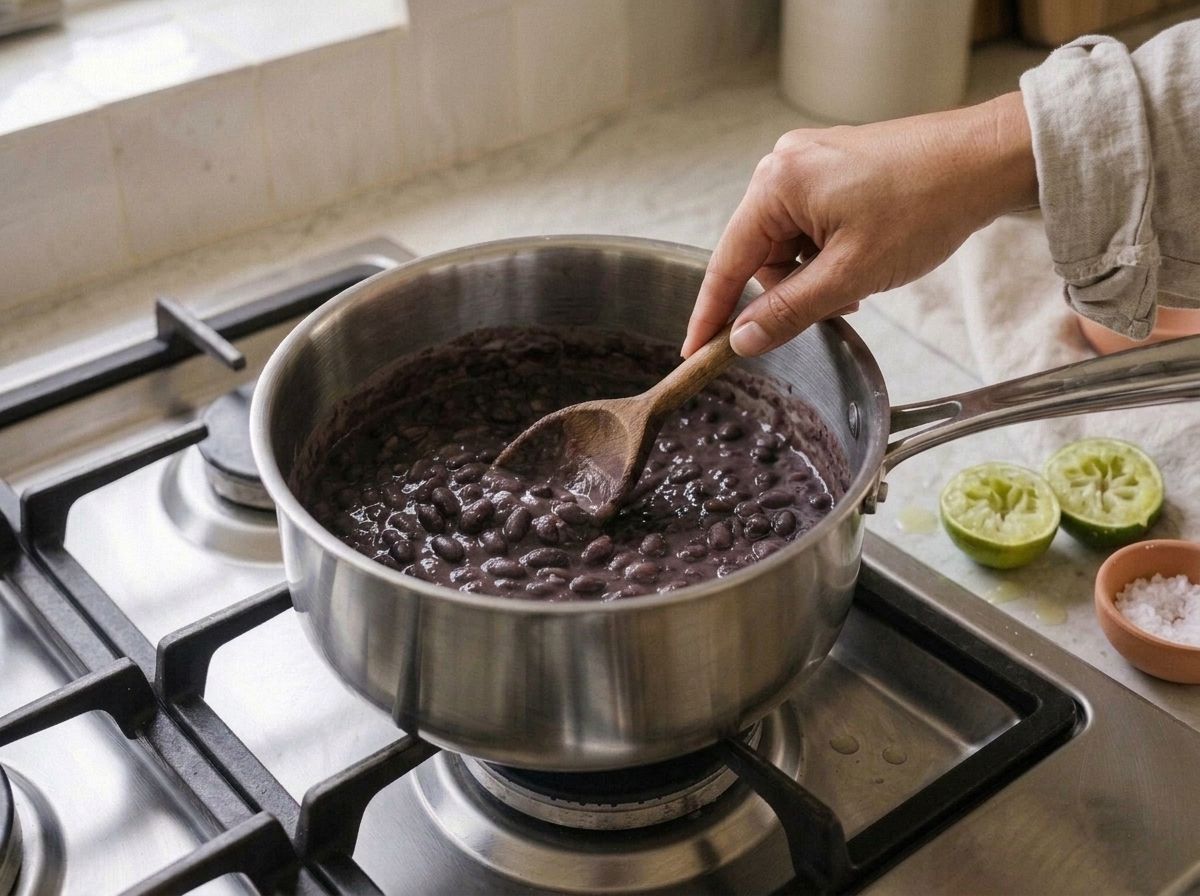
Add the drained beans and the water, bring to a gentle simmer and cook for 5 minutes. Mash about half of them against the side of the pan with a fork or a potato masher, until the mixture is thick and spreadable with whole beans still in it.
- 7
Finish the beans off the heat
Off the heat, stir in 1 tablespoon of lime juice and the remaining ½ teaspoon of salt, then taste. Lime juice simmered in a pan turns dull and faintly bitter, so it goes in last. Cover and keep warm.
- 8
Warm the tortillas
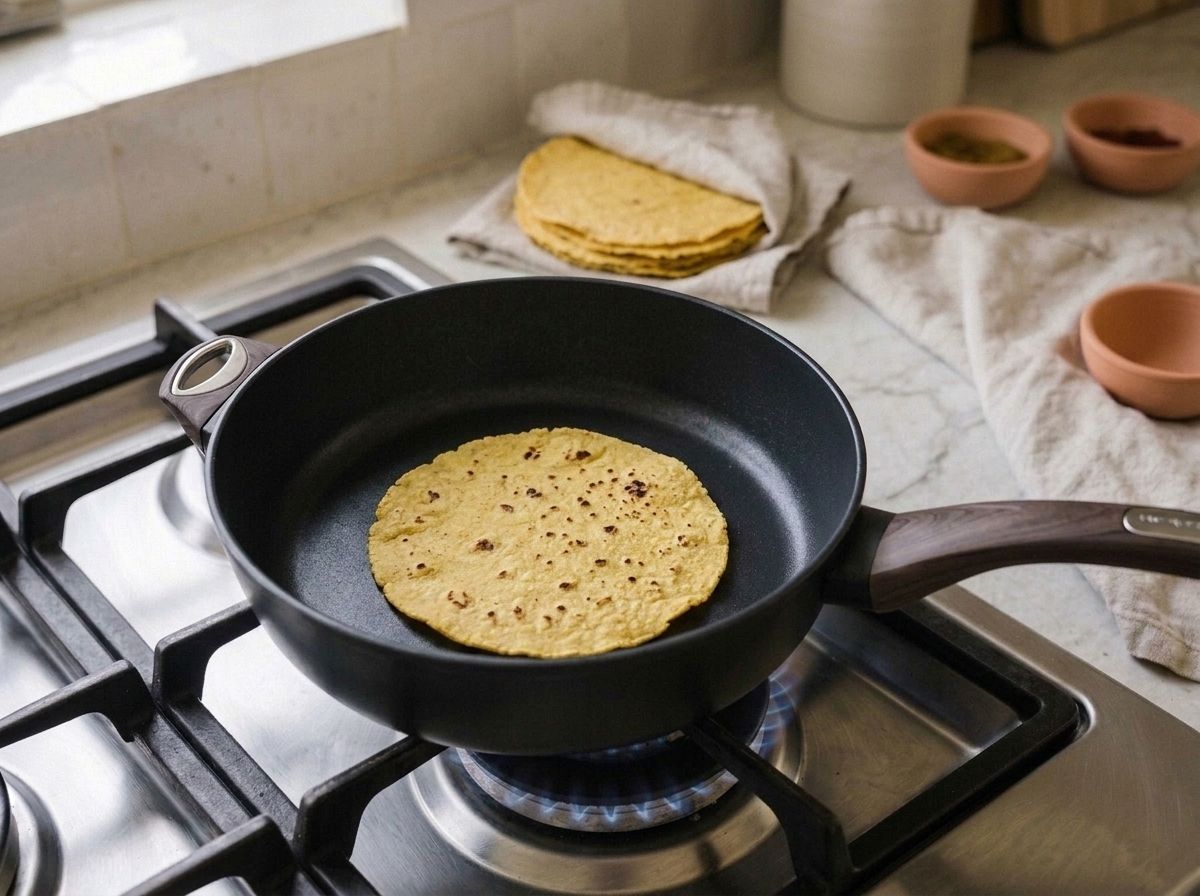
Heat a dry skillet over medium-high and warm each tortilla for about 30 seconds a side, until soft, flexible and freckled with brown spots. Stack them in a folded tea towel as they come off.
- 9
Build the tacos
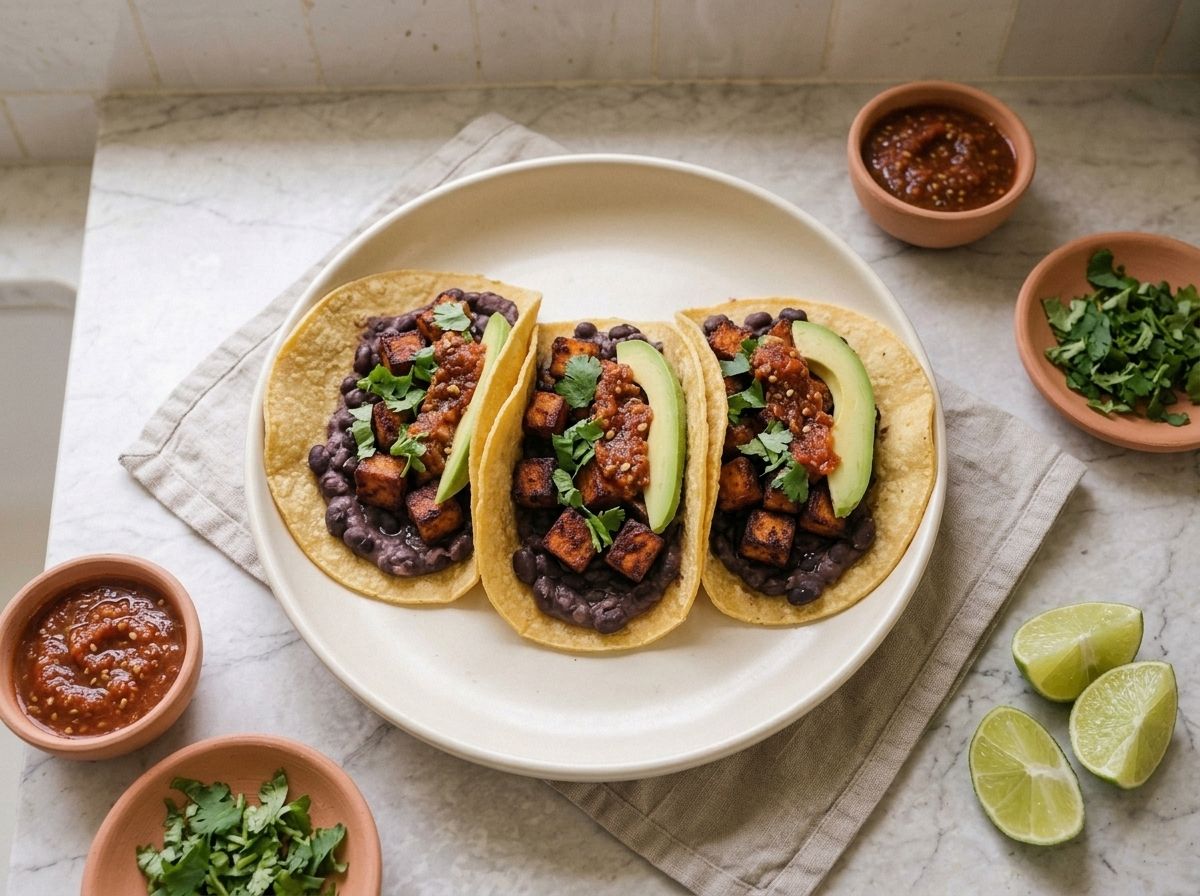
Spread a spoonful of the mashed beans across each tortilla first, then pile on the roasted sweet potato. Finish with cilantro, salsa, a squeeze of lime and avocado, and serve with the lime wedges.
Notes
One baking sheet is not enough for 1½ lb of sweet potato. Use two rather than piling it up.
Mashing half the beans is what holds the taco together. Left whole they roll out of the tortilla.
Corn tortillas keep this gluten free, and a certified gluten-free brand covers cross-contamination.
Nutrition Facts
4 servings (3 tacos each) · 474 g per serving
- Calories
- 513 kcal
% Daily Value*
- Total Fat
- 10.1 g13%
- Saturated Fat
- 1.5 g8%
- Sodium
- 1343 mg58%
- Total Carbohydrate
- 96.2 g35%
- Dietary Fiber
- 19.8 g71%
- Sugars
- 10.9 g—
- Protein
- 14.9 g30%
Recipe from veggierecipes.blog
When it goes wrong
Troubleshooting
My sweet potatoes came out soft and orange with no browned edges
The pan was crowded. Sweet potato is mostly water, and pieces packed shoulder to shoulder trap each other’s steam, so the tray simmers instead of roasting. Spread 1½ lb across two sheets if it will not sit in one layer with gaps showing. The other causes are too little oil, since 1 tablespoon cannot coat this much surface, and a cold baking sheet that spends five minutes warming up rather than searing.
Everything falls out the moment I pick the taco up
Whole beans and cubes of roast vegetable have nothing to grip each other with. This is what the mashing is for: crushing half the beans turns them into a paste with whole beans suspended in it, and spreading that on the tortilla first gives the sweet potato a sticky bed. Build in that order every time, beans down, potato on top, everything else after.
The tortillas cracked and split down the middle
Corn tortillas are pliable only while warm and steamy, and they stiffen within about two minutes of leaving the pan. Warm them last, once both fillings are done, and stack them straight into a folded tea towel so the trapped steam keeps working on the ones underneath. If they still split, do what a taquería does and use two per taco. It sounds like a hedge; it is standard practice for anything heavy or wet.
It tastes sweet and a bit flat
There is 1½ lb of sugar-heavy root vegetable here and something has to push back. The salt in the beans and the lime stirred in off the heat are the counterweight, not garnish, so taste the beans before you assemble. Then treat salsa as structural rather than decorative: a tomatillo verde is sharper than a red one and does the most work, and pickled red onion will rescue a plate that has already gone too sweet.
It came out far hotter than I wanted
Almost certainly the chili powder, which is a mild blend in the United States and pure ground hot chile nearly everywhere else. Once it is roasted onto the potatoes you cannot take it out, so add fat and bulk instead: avocado, sour cream, more beans, an extra tortilla per taco. Fat dissolves capsaicin and water does not, which is why a glass of water makes it worse.
The bottom of the taco went soggy before I finished it
Wet toppings sitting straight on corn. Salsa and lime soak through a warm tortilla in a couple of minutes, which is the other reason the mashed bean layer goes down first; it works as a moisture barrier. Lift salsa out with a slotted spoon so the watery liquid stays in the jar, and put the components on the table rather than dressing twelve tacos in the kitchen.
Before you serve
Serving & Storage
In Mexico the cook does not finish a taco, the person eating it does. The counter puts out salsas, lime wedges, chopped white onion and cilantro, sometimes radishes and pickled chiles, and everyone dresses their own. Copy that: the two fillings in bowls, the tortillas in a towel, everything else in small dishes. It also solves the soggy tortilla problem outright.
If you add one thing to the table, make it quick pickled red onions. Ten minutes with sliced red onion, lime juice and salt, a Yucatán habit that belongs with black beans, and the sharpness is what 1½ lb of sweet potato needs. For salsa, a tomatillo verde cuts through better than a tomato roja, while a chipotle salsa doubles down on the smoke. Alongside, keep it light: a shredded cabbage slaw with lime, or Mexican rice.
Making it ahead
Both fillings hold 4 days in the fridge in separate containers. The beans improve overnight and set firm when cold, so loosen them with a splash of water as you reheat. The sweet potato is what suffers, because the crisp edges soften and a microwave will not bring them back; spread it on a sheet at 425°F for 8 to 10 minutes, or press it into a dry skillet. Assembling ahead does not work at all, since a filled taco is a wet tortilla within fifteen minutes.
Storing leftovers
Beans freeze well for 3 months and thaw into exactly what they were. Roasted sweet potato does not, because ice crystals rupture the cells and it comes back watery and collapsed, so eat that part fresh. Leftovers are arguably better as something else anyway: both fillings over rice with the toppings, folded into a quesadilla, or spooned cold over salad leaves with lime and olive oil.
Still wondering
Frequently Asked Questions
Are these tacos vegan?
Yes, exactly as written. There is no dairy anywhere in it, the beans simmer in water rather than stock, and corn tortillas are corn, water and lime. The only way to fall off is with the toppings, so check that your salsa has no crema or cheese stirred through it and reach for avocado rather than sour cream. For the cooling element dairy usually provides, blend avocado with lime juice, water and salt into a loose crema.
Can I use flour tortillas instead of corn?
You can, and in northern Mexico it is the normal choice, but three things change. Flour tortillas are not gluten free, so the recipe stops working for anyone avoiding wheat. They are softer and stretchier and will not crack, which makes them the easier option if corn keeps splitting on you. And they go limp under wet fillings faster than corn does, so build them at the table. Use 8 rather than 12, since flour tortillas are usually sold larger.
How many tacos does this make, and how do I scale it up?
Twelve small tacos, which is four people at three each. Scaling the fillings is arithmetic; scaling the roasting is not, because the limit is oven space rather than ingredients. Doubling means 3 lb of sweet potato and three baking sheets or two batches, since piling it onto two crowded trays is the one change that ruins the dish. For eight, roast in two rounds and hold the first in a low oven, or roast everything an hour ahead and revive it all at 425°F for 10 minutes.
More Flavor-Packed Mexican-Inspired Dinners
Made this?