
Vegan Burrito Recipe
Published · Updated
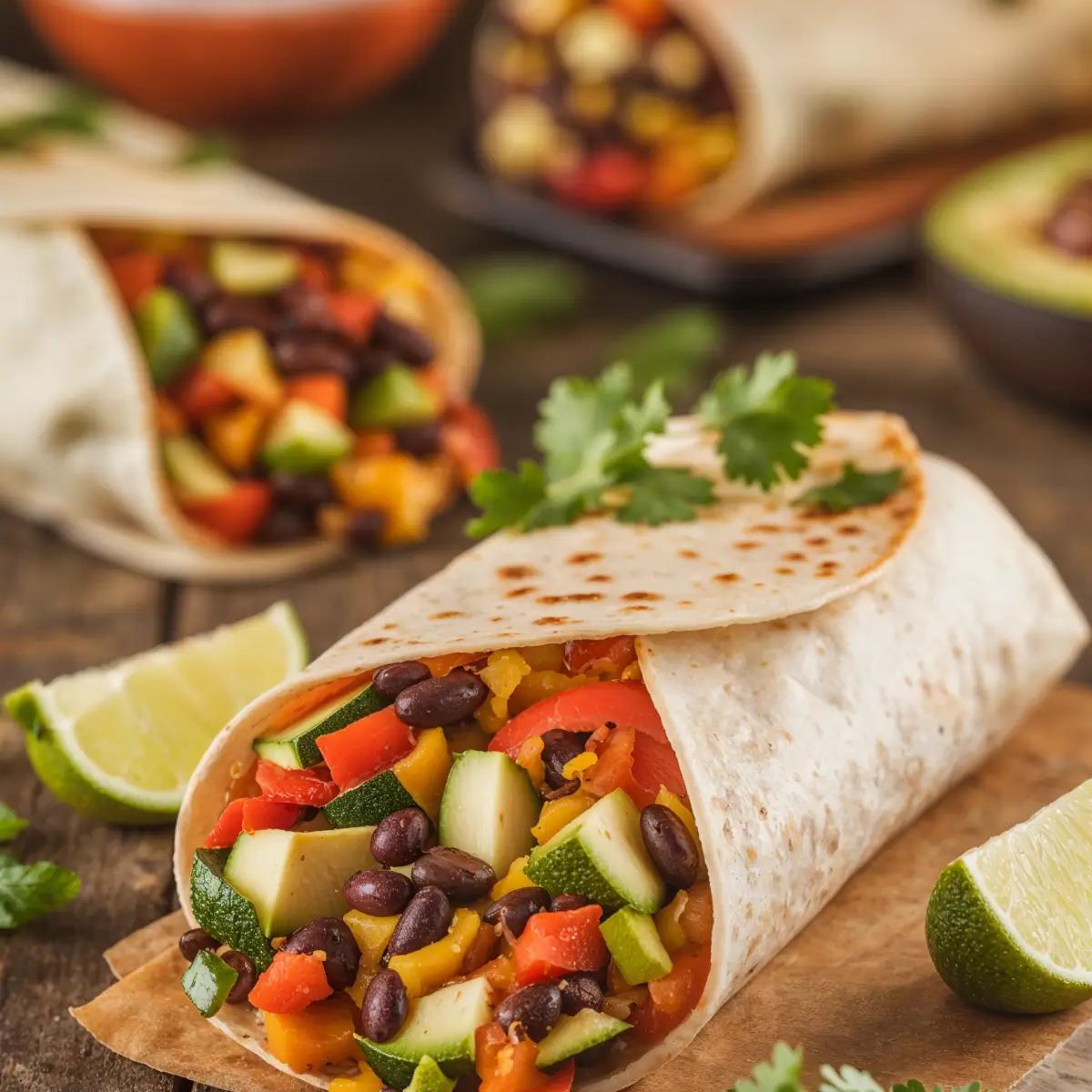
A hearty vegan burrito bursting with colorful veggies, black beans, and brown rice, all wrapped in a warm tortilla. So easy, so satisfying!
Jump To Recipe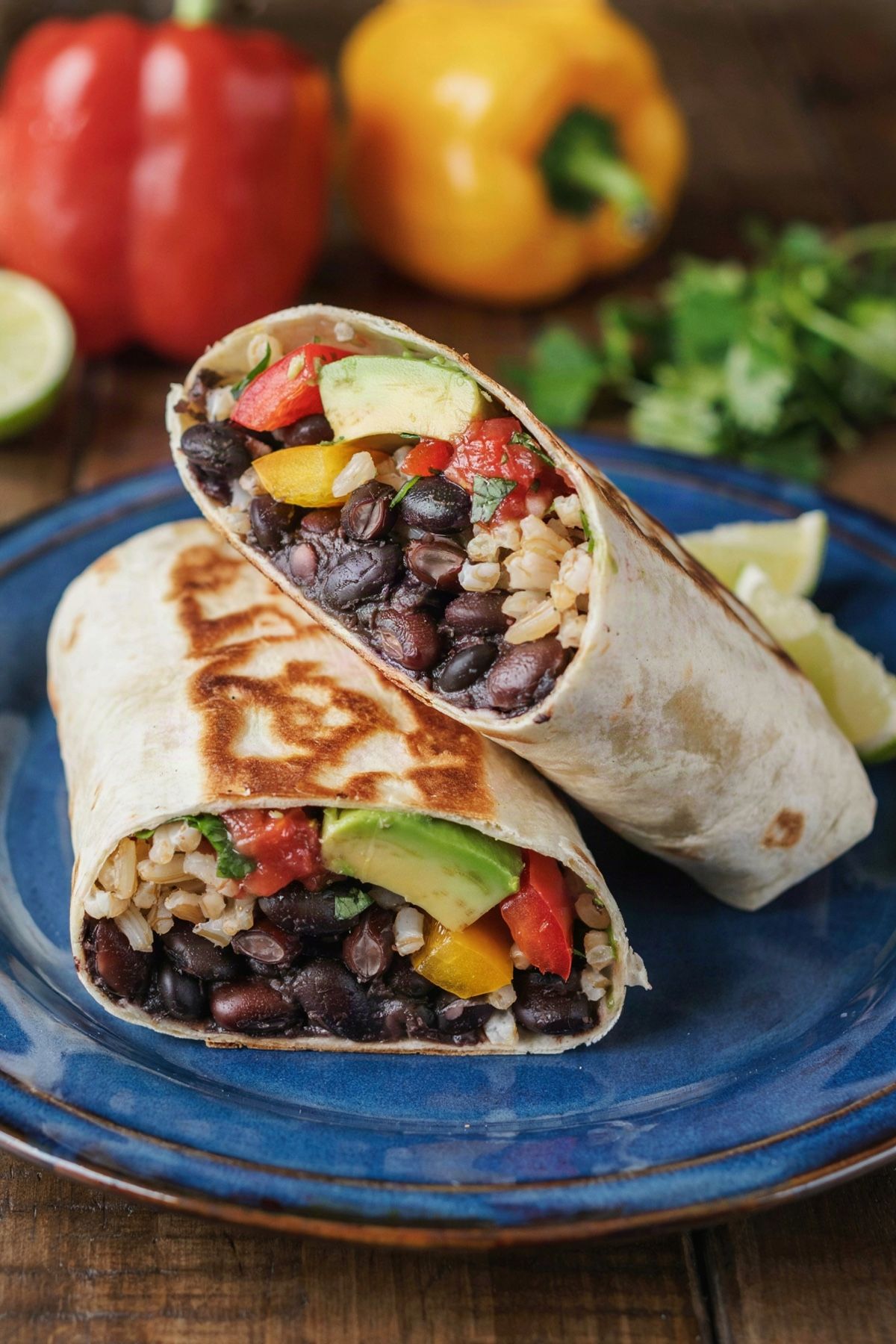
Why This Vegan Burrito Deserves a Spot in Your Weekly Lineup
You just can’t go wrong with a plant-based burrito that’s hefty and full of delicious flavors. This recipe is perfect for those who love easy prep and bold flavors. The colorful sautéed peppers add a subtle sweetness and color to the meal. Seasoned black beans and brown rice make a satisfying and filling base, high in protein, which keeps me full for hours.
The burrito is highly customizable, and that is one of the best things about it. At times, I'll throw in jalapeños to make it spicy, or sometimes corn for sweetness. The avocado and salsa just add everything to make it a meal.
What I love about this burrito:
- It’s totally meal-prep friendly, so you can wrap up a couple for lunch all week.
- Perfect for using up whatever vegetables you have hanging out in the fridge.
- A big squeeze of lime, plus fresh cilantro, wakes up all the flavors.
If you’re looking for an easy, fast, and healthy way to fuel your day, this vegan burrito is a clear winner. Trust me, after one bite, you’ll want these in regular rotation.
The story
The First Burritos Were Mostly Beans
Burrito means little donkey, and nobody has proved why. The favorite story puts a man named Juan Méndez in Ciudad Juárez during the Revolution, selling food from the back of a donkey and wrapping it in flour tortillas to keep it warm. It is a good story, and the dates sink it: an 1895 dictionary of Mexican Spanish by Félix Ramos y Duarte already lists burrito as a Guanajuato word for a rolled tortilla with meat or something else inside, the same thing Mexico City called a taco.
Where the burrito became a dish of its own was the north. The Spanish brought wheat, it took to the dry farmland of Sonora and Chihuahua, and the tortilla there is still made of flour, which stretches thin and wide where corn would crack. A burrito in Juárez today is slim and holds one filling or two: chile colorado, shredded beef, and above all frijoles, refried beans and nothing else. The plain bean burrito is not a vegetarian afterthought. It is close to the original.
Rice arrived later and much further north. In the 1960s, taquerías in San Francisco’s Mission District began steaming oversized tortillas and packing them with rice, beans, salsa and everything else; Febronio Ontiveros claimed the first, at El Faro in 1961. That is the burrito most people outside Mexico know, and it is the one this recipe makes.
One catch before calling any burrito vegan. Northern Mexican cooking fries its refried beans in manteca, which is pork lard, and traditional flour tortillas are made with it too. Here half the beans are mashed in olive oil instead, which gives the same creamy paste the old bean burrito depended on, without the pork.
What to buy
Ingredient Notes
Flour tortillas
Buy the 10 inch (25 cm) size, usually sold as burrito size. Smaller ones cannot close around this much filling, and 12 inch ones leave a thick wad of dough at each end. Read the ingredients for lard or manteca, which traditional brands still use, and choose refrigerated tortillas over shelf-stable ones if you can find them; they are softer and tear less.
Black beans
Canned is the right call here. Half the beans get mashed, so the better texture of home-cooked ones is mostly lost. Rinse them well, because the canning liquid carries most of the salt and turns the filling a murky purple. If you cook your own, 1½ cups replaces one can, and a splash of their cooking liquid can stand in for the water.
Brown rice
The recipe starts from cooked rice: ½ cup dry makes about 1½ cups and takes 40 to 45 minutes, so this is a dinner for the rice already in the fridge. Day-old rice is better anyway, since the grains have firmed and stay separate instead of smearing into the beans. Long-grain white rice works too and cooks in a third of the time.
Chili powder
In the United States this is a mild blend of ground chiles, cumin, oregano and garlic, and a teaspoon is background warmth. In Britain and most of Europe, chilli powder usually means pure ground hot chile, and a full teaspoon makes this fierce. If your jar lists a single ingredient, use ¼ teaspoon and make up the rest with sweet paprika.
Bell peppers
Red and yellow are ripe peppers, and they turn sweet and soft once browned. Green is the same pepper picked early; it tastes grassy and faintly bitter against the beans, so swap it in only if that is what you like. Dice to about ½ inch (1 cm). Long strips make a lumpy roll that is hard to close tightly.
Salsa
Thick is the word that matters. A chunky jarred salsa or a fresh pico de gallo, drained in a sieve or lifted out with a slotted spoon, adds acid without adding water. A thin, restaurant-style salsa poured inside will soak the tortilla before you are halfway through, so serve that kind on the side for dipping.
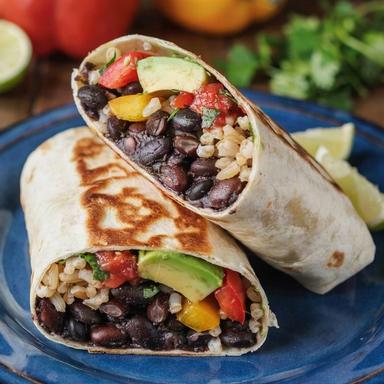
Flavor-Packed Vegan Burrito
A hearty vegan burrito with half-mashed black beans, browned peppers and lime-bright brown rice, rolled tight around avocado and salsa and seared shut in the pan.
Ingredients
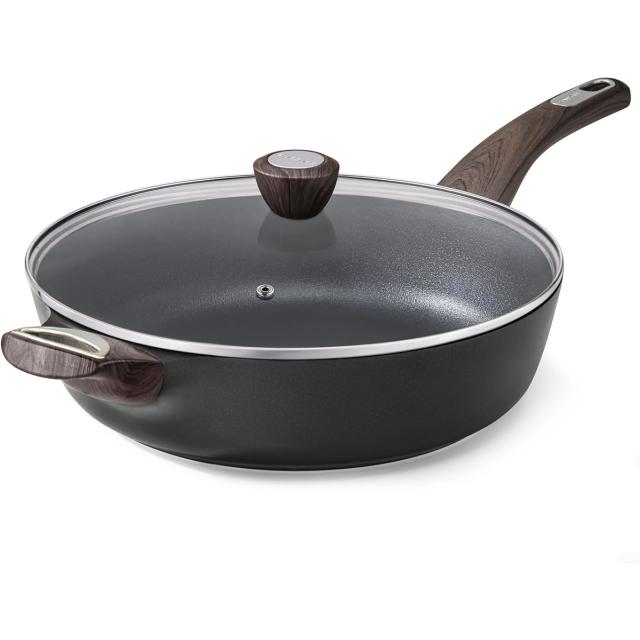
Equipment
As an Amazon Associate I earn from qualifying purchases, at no extra cost to you.
Instructions
- 1
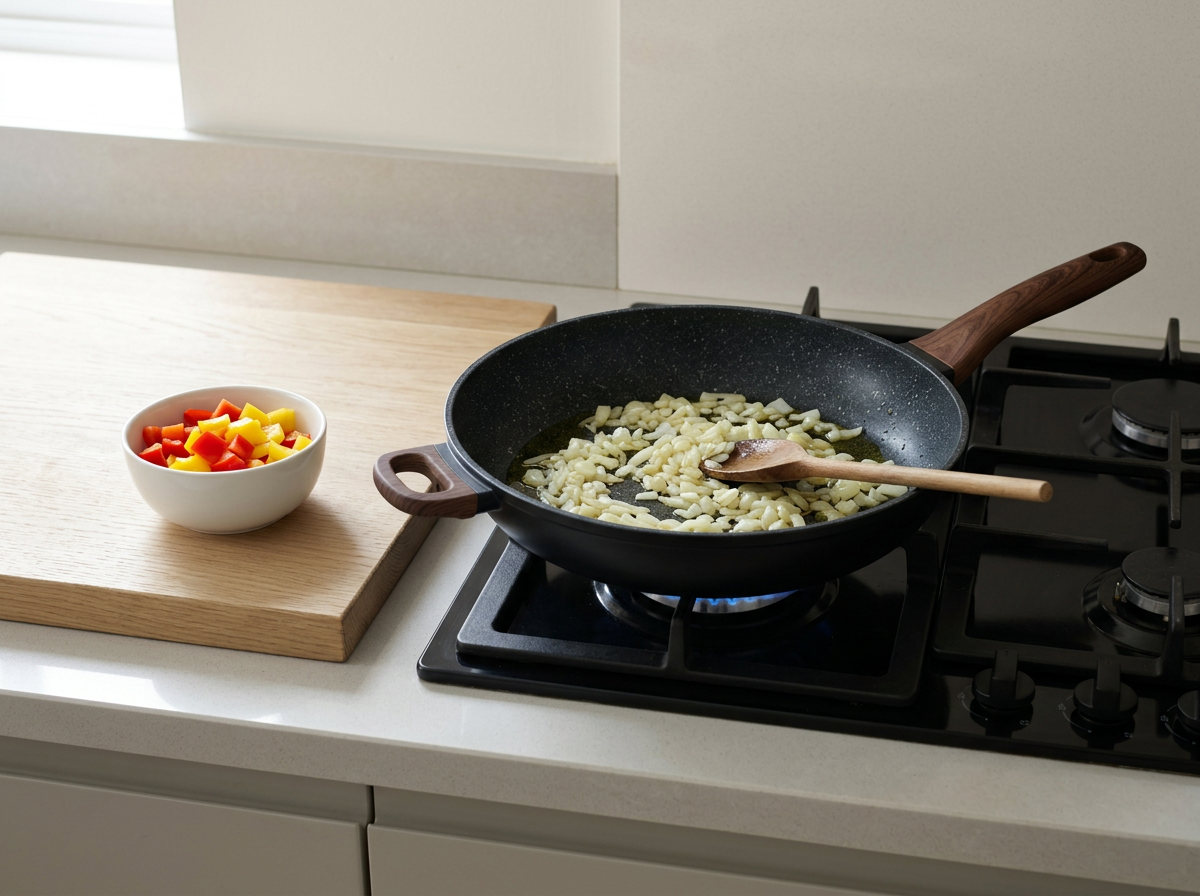
Soften the onion
Heat the oil in a large skillet over medium heat. Add the onion with a pinch of the salt and cook for 4 to 5 minutes, stirring now and then, until soft and translucent. The garlic waits: added now, it would burn long before the onion is done.
- 2
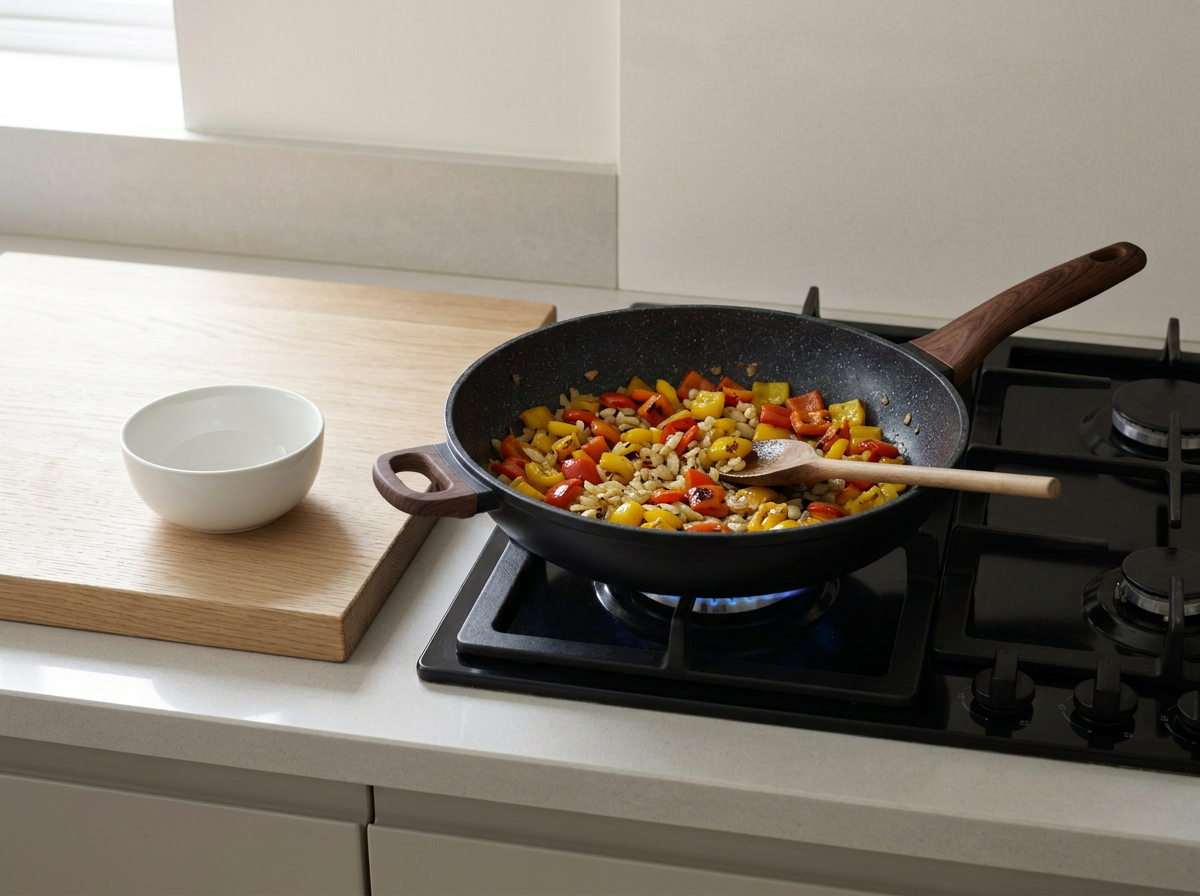
Brown the peppers
Add both peppers and turn the heat up to medium-high. Cook for 6 to 8 minutes, stirring only every minute or so, until they are soft with browned spots at the edges but still hold their shape. Stirred constantly, they steam and go limp instead of picking up color.
- 3
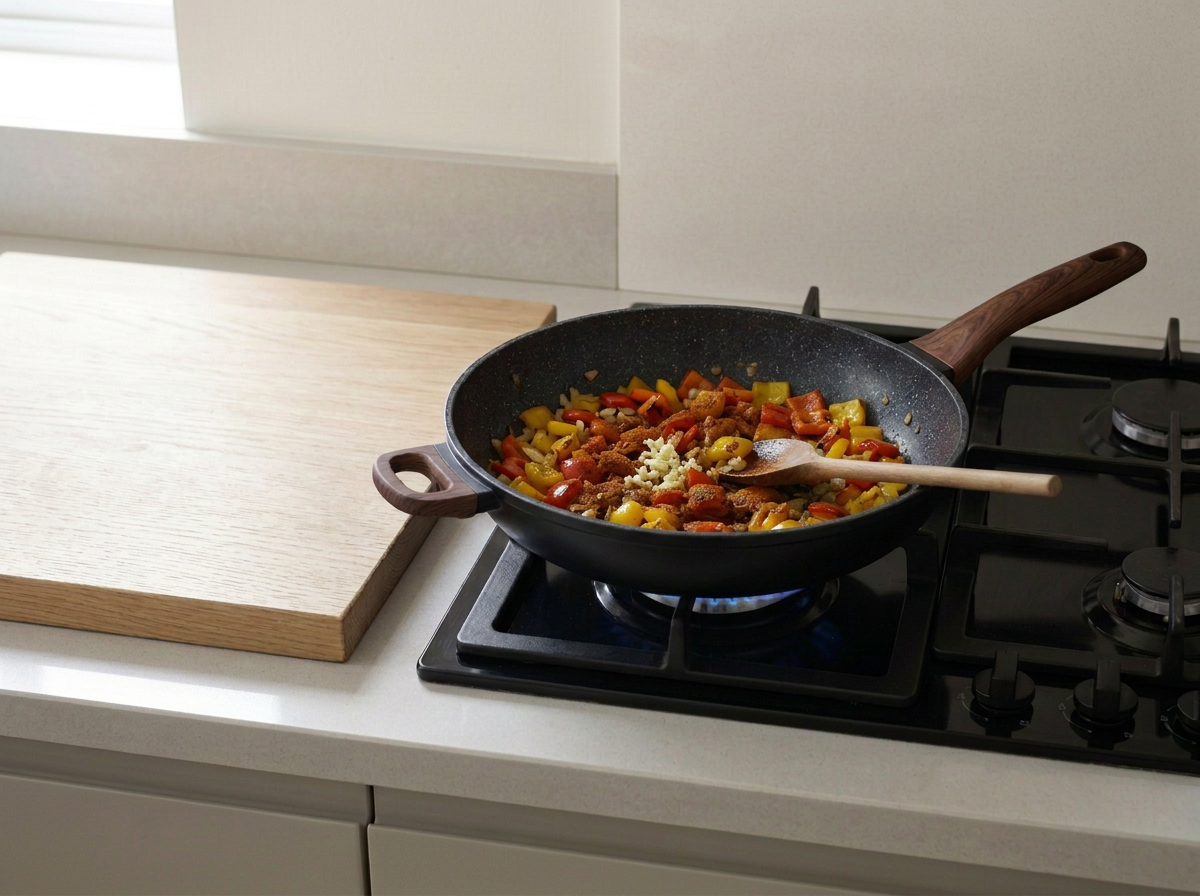
Toast the garlic and spices
Add the garlic, cumin and chili powder and stir for 30 to 60 seconds, until the garlic smells sweet and the spices darken slightly. Toasted in the oil, the spices carry through the whole filling; stirred into wet beans later, they taste raw and dusty.
- 4
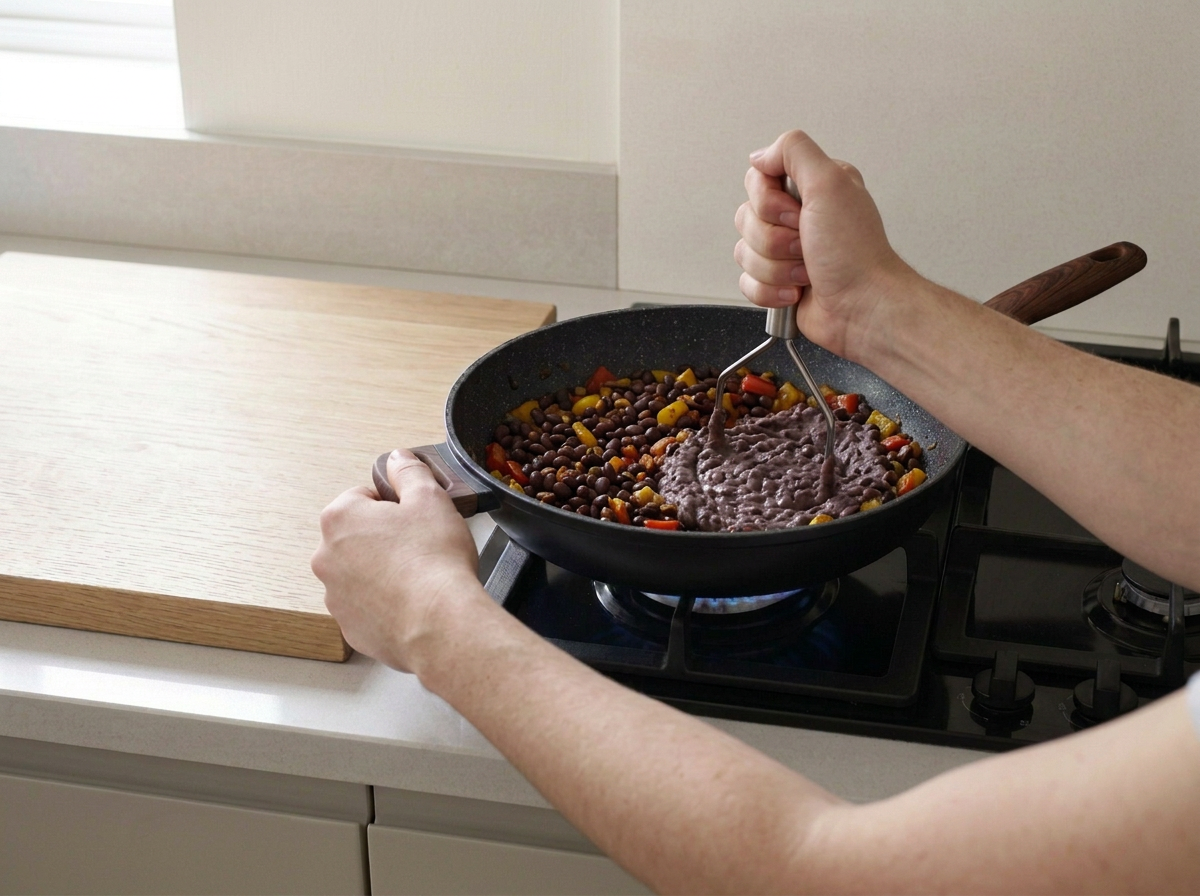
Mash half the beans
Add the beans, the water and the rest of the salt, and bring to a simmer. Cook for 2 minutes, then crush about half the beans against the pan with a fork or potato masher, until the mixture turns thick and creamy around the whole beans. This paste is what holds the burrito together.
- 5
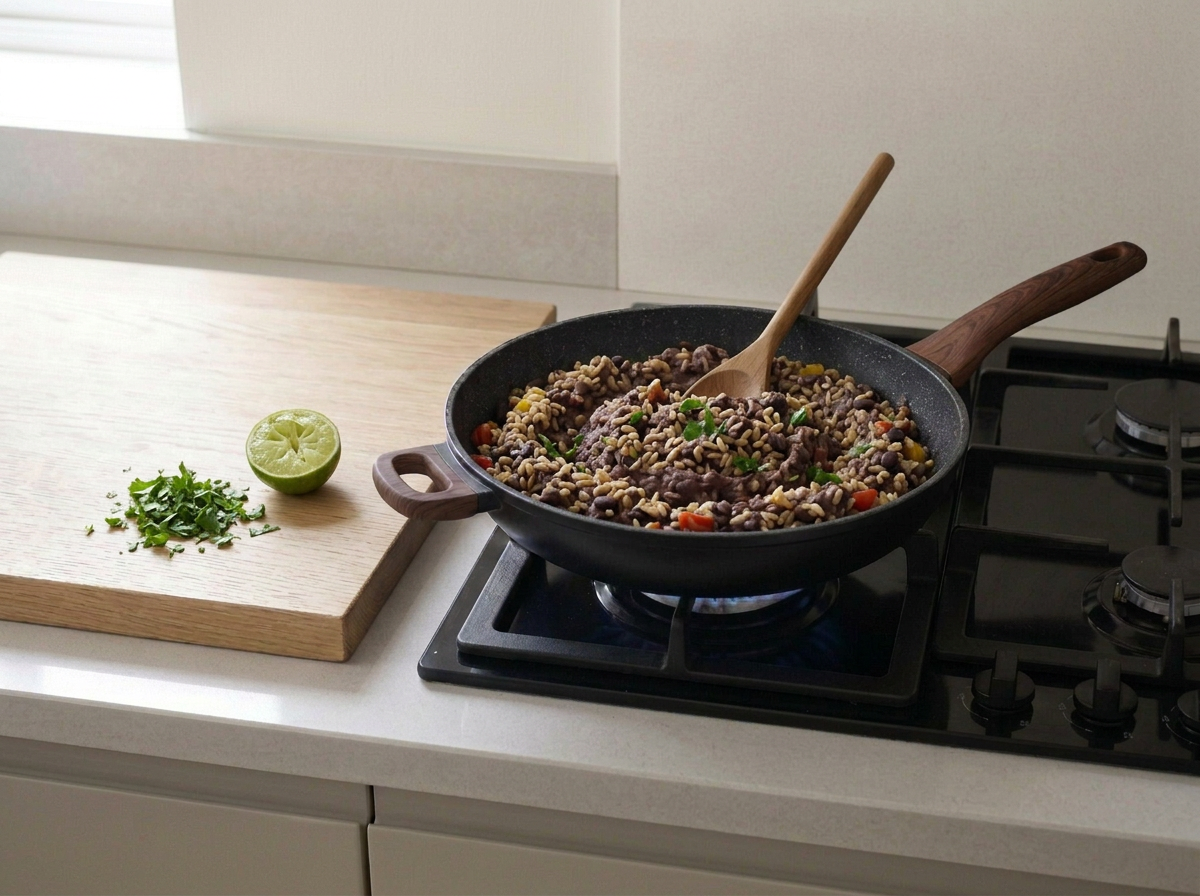
Fold in the rice and finish
Add the rice and stir for 2 to 3 minutes, until it is hot through and has absorbed the liquid. The filling should hold its shape on a spoon rather than run. Off the heat, stir in the juice of one lime and half the cilantro, then taste for salt and pepper. Scrape the filling into a bowl and wipe out the skillet.
- 6
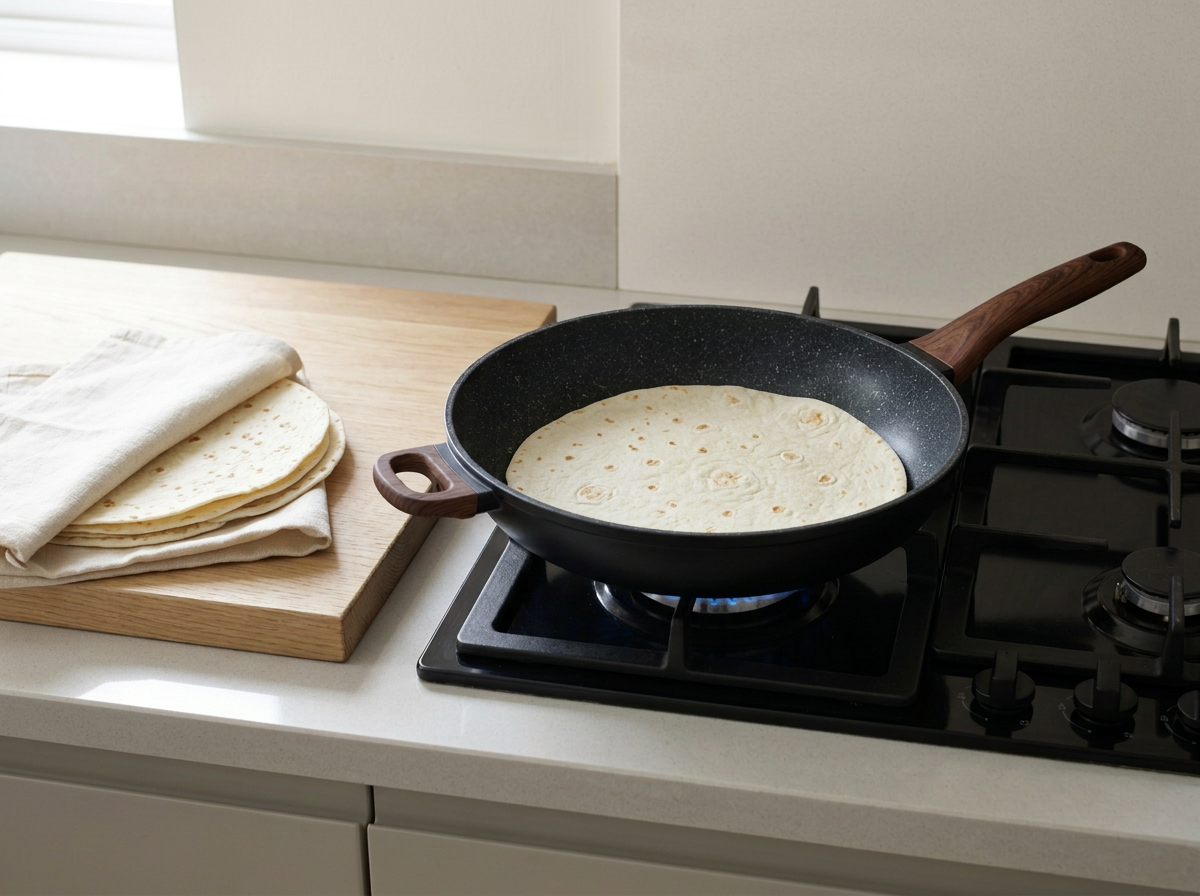
Warm the tortillas
Set the clean skillet over medium heat and warm each tortilla for 20 to 30 seconds a side, until soft and floppy with a few pale brown spots. Stack them in a folded kitchen towel as they come off, where the trapped steam keeps them supple. A cold flour tortilla cracks at the first fold.
- 7
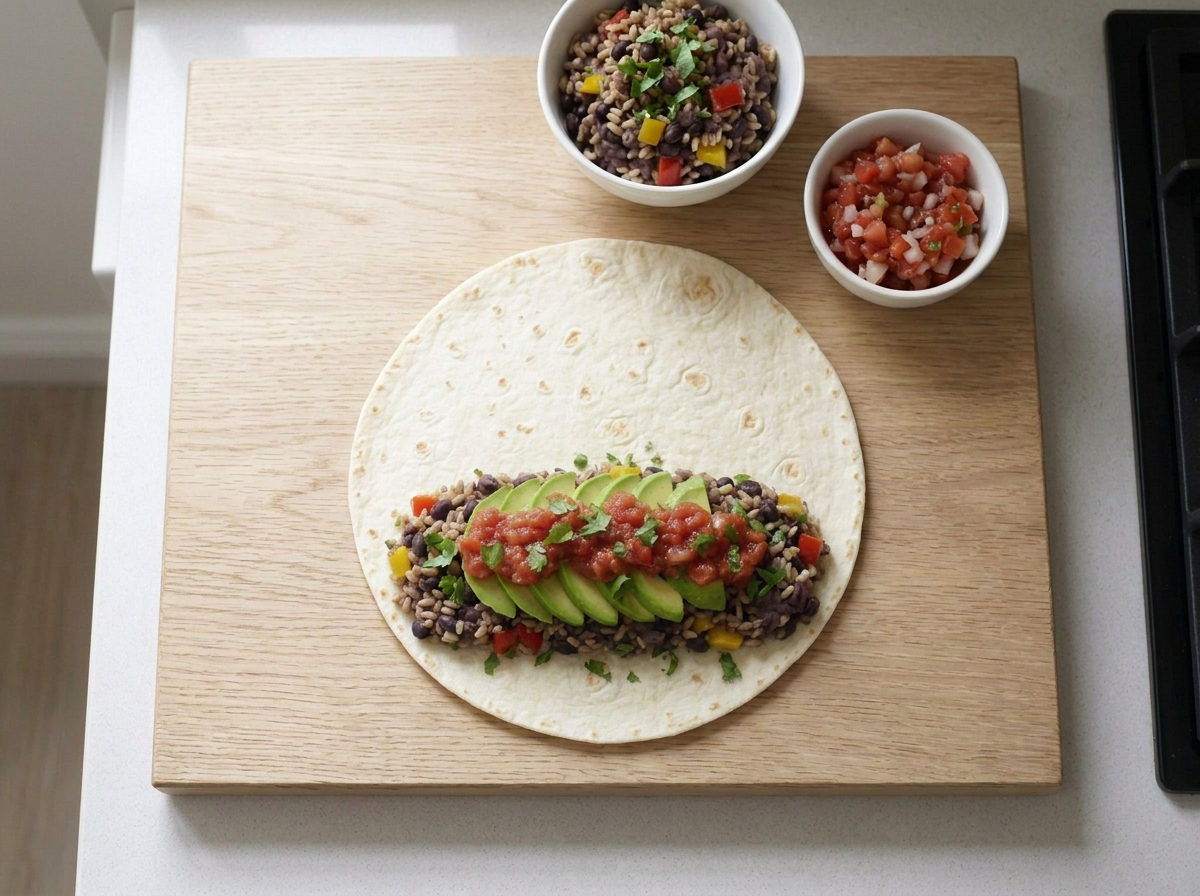
Fill each tortilla
Lay a warm tortilla flat and spoon a quarter of the filling in a log across the lower third, leaving about 2 inches (5 cm) clear at each side. Top with a quarter of the avocado, 2 tablespoons of the drained salsa and some of the remaining cilantro, keeping the salsa on the filling rather than the bare tortilla.
- 8
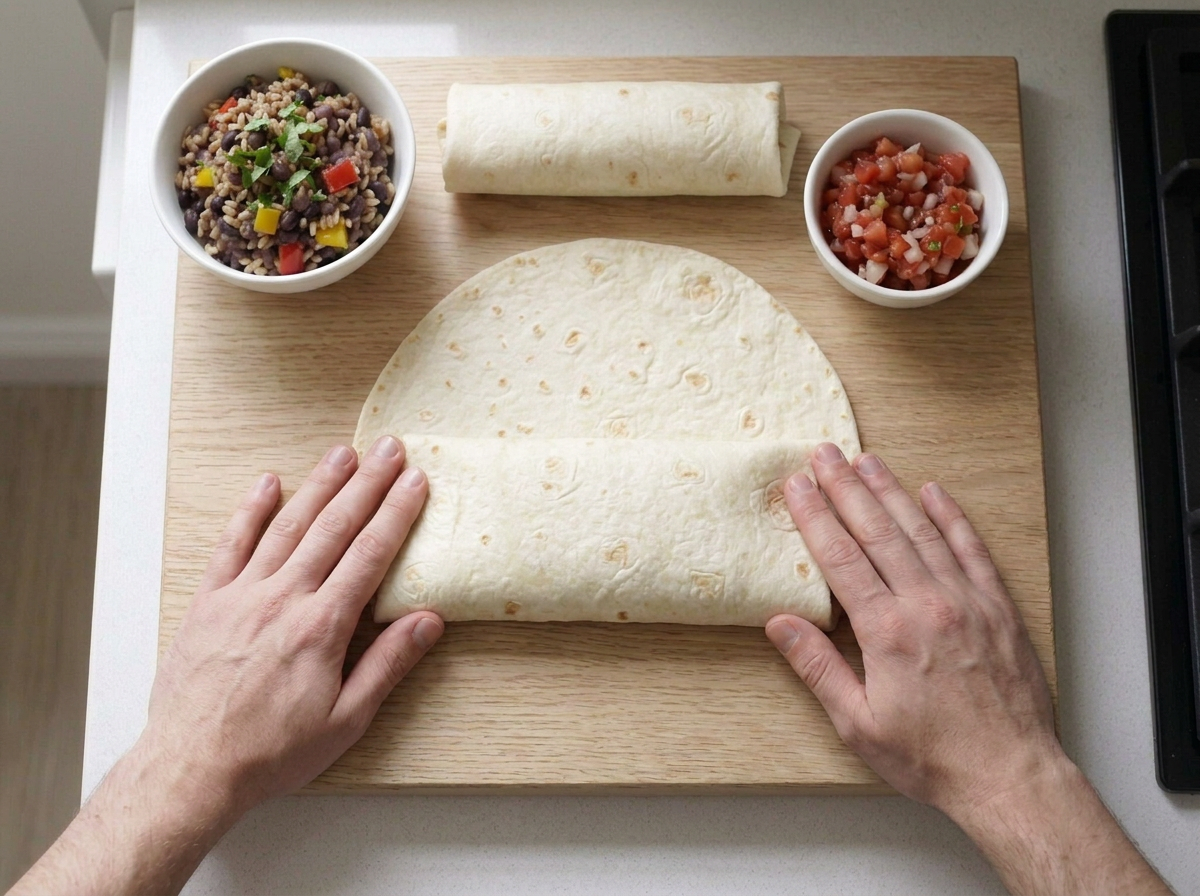
Tuck, fold and roll
Lift the bottom edge up and over the filling, then pull it back toward you so it tucks snugly underneath. Fold in both sides, then roll away from you to close, keeping it tight. Set it seam side down and repeat with the rest.
- 9
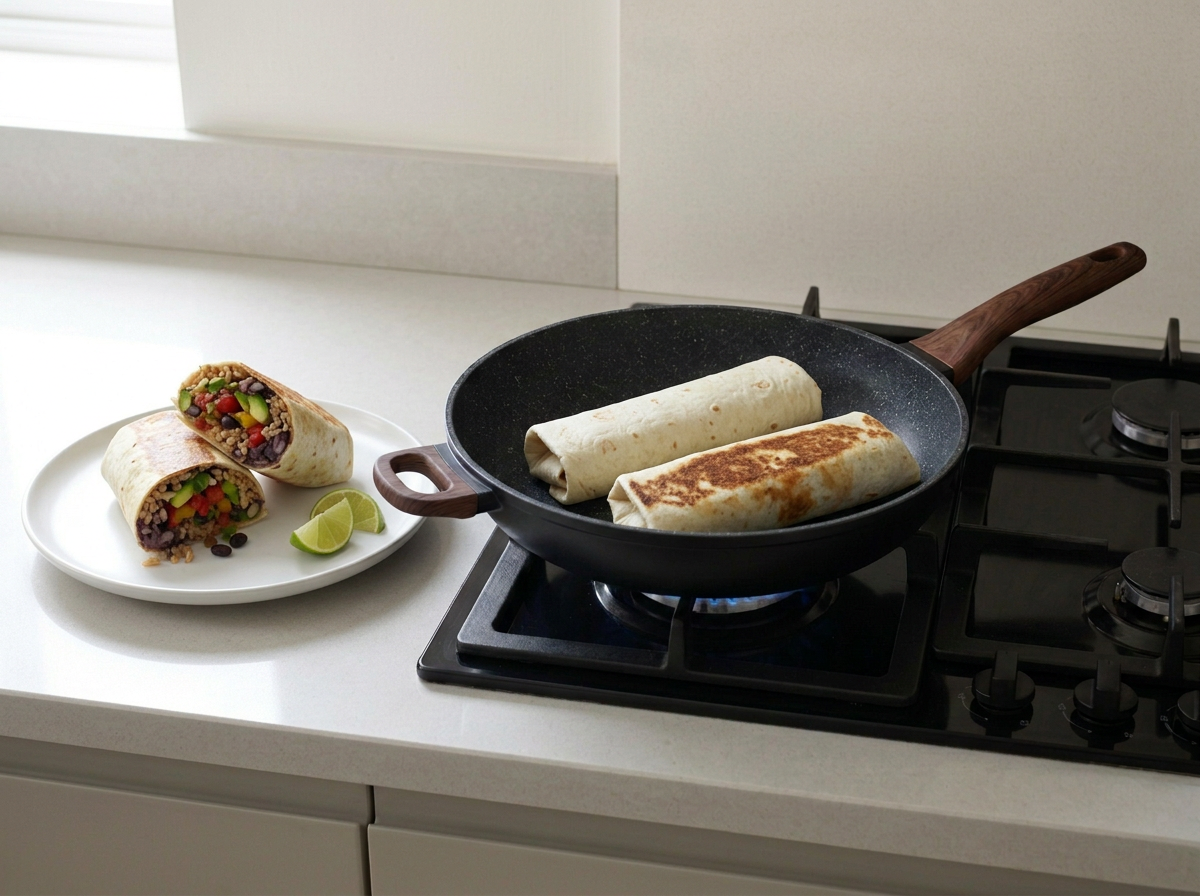
Sear the seam shut
Lay the burritos seam side down in the dry skillet over medium heat, two at a time, and cook for 2 minutes until golden and the seam has sealed. Turn and toast the other side for 1 to 2 minutes. Cut in half on the diagonal and serve with the lime wedges.
Notes
Leftover rice works well here. Rice straight from the fridge needs an extra splash of water in the pan to loosen it.
Pinto beans swap in for black beans one for one, and they mash more easily.
For heat, cook a minced jalapeño with the peppers, or pass hot sauce at the table.
Nutrition Facts
4 burritos · 476 g per serving
- Calories
- 557 kcal
% Daily Value*
- Total Fat
- 17.9 g23%
- Saturated Fat
- 3.9 g20%
- Sodium
- 1435 mg62%
- Total Carbohydrate
- 87.7 g32%
- Dietary Fiber
- 17 g61%
- Sugars
- 8.2 g—
- Protein
- 16.2 g32%
Recipe from veggierecipes.blog
When it goes wrong
Troubleshooting
The tortilla cracked when I folded it
It was cold. Flour tortillas bend only when warm, which softens the fat in the dough; straight from the fridge they split along the first fold. Warm each one in a dry skillet for 20 to 30 seconds a side and keep the stack wrapped in a towel. If the edges have dried out in an opened bag, flick a few drops of water on each before warming.
Everything fell out the end when I picked it up
Two things cause it. Whole beans and loose rice have nothing to cling to, which is why half the beans are mashed into a paste. And folding in the sides first leaves the bottom loose; lift the bottom flap over the filling and pull it back tight, then fold the sides, then roll. Searing seam side down glues the last edge shut.
The filling is dry and crumbly
The beans simmered too long, or the rice drank the last of the liquid. The filling should hold its shape on a spoon but still look glossy. Stir in water a tablespoon at a time over low heat until it does. Rice from the fridge soaks up more than fresh rice, so expect to add a little extra when you use leftovers.
It went soggy before I finished eating
Wet salsa against bare tortilla. Drain the salsa and spoon it onto the filling, so the beans sit between it and the dough, and give every burrito its two minutes in the pan, because a seared surface holds out against moisture far longer than a soft one. Any thin salsa belongs on the side.
It tastes flat, like beans and rice and not much else
Usually the spices went in with the beans instead of into the oil, or the lime was skipped. Cumin and chili powder need half a minute in hot fat to taste of anything; stirred into wet beans they stay dusty. Then salt and lime finish it. Taste after the lime goes in and add salt in pinches until the beans taste seasoned on their own.
My peppers went limp and pale
The heat was too low or the pan too full, so they steamed in their own juice. Medium-high heat and a stir only once a minute lets each piece sit on the hot metal long enough to brown. If your skillet is smaller than 12 inches (30 cm), brown the peppers in two batches and combine them before the spices go in.
Before you serve
Serving & Storage
In Ciudad Juárez a burrito is street food, eaten out of hand, and a well-rolled one needs nothing alongside: the lime, salsa and avocado are already inside. At a table, set out extra salsa, lime wedges and hot sauce. If you want a side, keep it light and sharp, such as shredded cabbage dressed with lime and salt, or a few quick-pickled red onions. Mexican rice or refried beans on the plate only repeats what is in the tortilla.
Making it ahead
The filling keeps 4 days in the fridge and reheats in a skillet with a splash of water. For packed lunches, roll the burritos without the avocado and salsa, which turn brown and watery within a day, wrap each one tightly in foil, and refrigerate for up to 3 days. Pack the avocado and salsa separately and eat them alongside.
Storing leftovers
Rolled without avocado and salsa, burritos freeze well for up to 3 months. Wrap each in parchment and then foil, and freeze them flat. Reheat from frozen: unwrap, microwave on a plate for 2 minutes a side, then crisp seam side down in a dry skillet for 2 minutes. The skillet is not optional, since it brings back the seal and the browned outside that a microwave leaves soft and damp. An assembled burrito with avocado inside does not freeze at all; it thaws gray and slick.
Still wondering
Frequently Asked Questions
Can I make this vegan burrito gluten-free?
The filling already is, provided your chili powder blend is gluten free, which most are. The tortilla is the problem, and the usual advice to swap in corn tortillas does not work for a burrito: corn tortillas top out around 6 inches and crack when rolled. Use a large gluten-free wrap, warm it a little longer than you would flour, and roll gently. Or skip the wrap and serve the filling as a bowl with the toppings over it.
What other vegetables can I add?
Keep the total to about 1 lb (450 g) of raw vegetables, roughly the weight of the two peppers and the onion, or the burritos will not close. Corn and spinach go in late: a cup of corn with the beans, a couple of handfuls of spinach stirred in until it wilts. Zucchini and mushrooms hold a lot of water, so cook them with the peppers until the pan is dry again before the spices go in, or they will make the filling wet.
More Mexican-Inspired Vegan Mains
Made this?