
Vegan Breakfast Casserole Recipe
Published · Updated
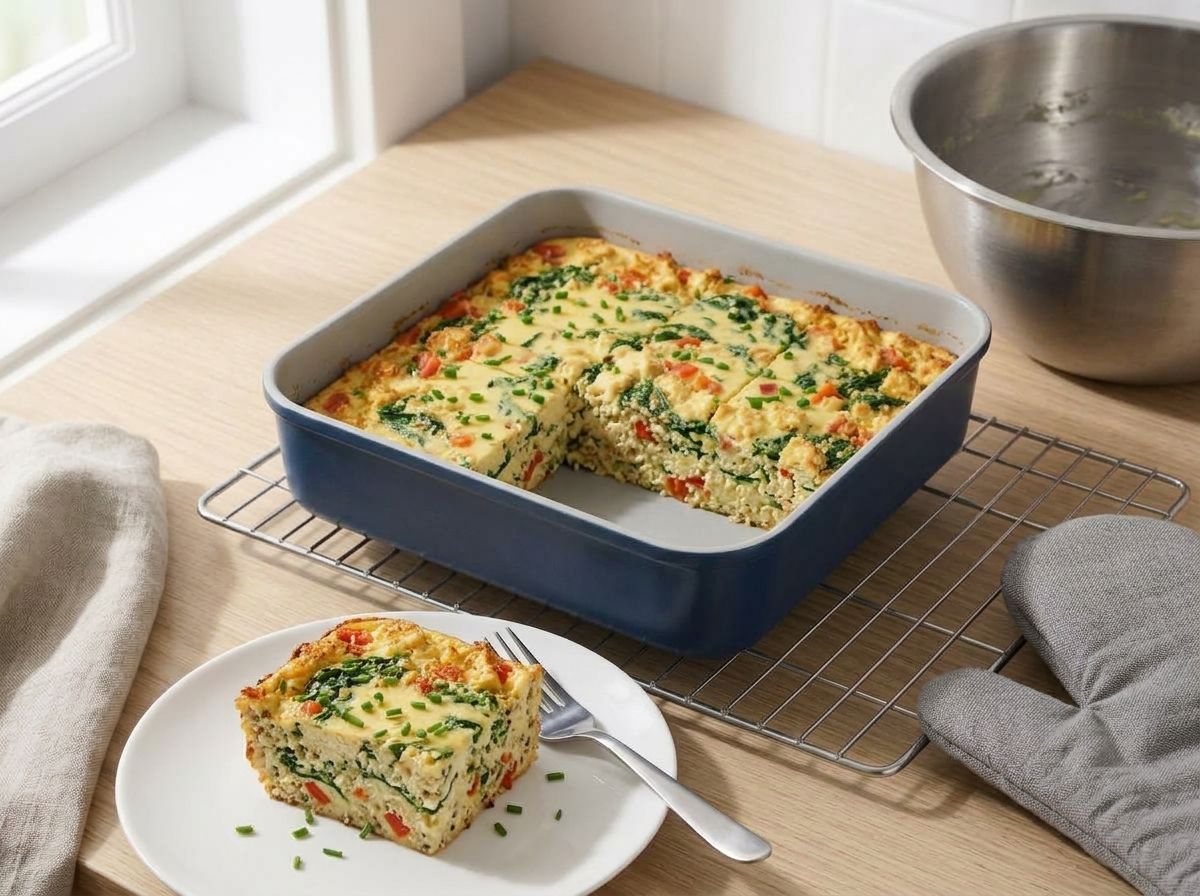
Start your day with this vegan breakfast casserole: tofu curds, spinach, peppers and quinoa held together by a blended tofu custard that bakes into squares you can actually cut.
Jump To Recipe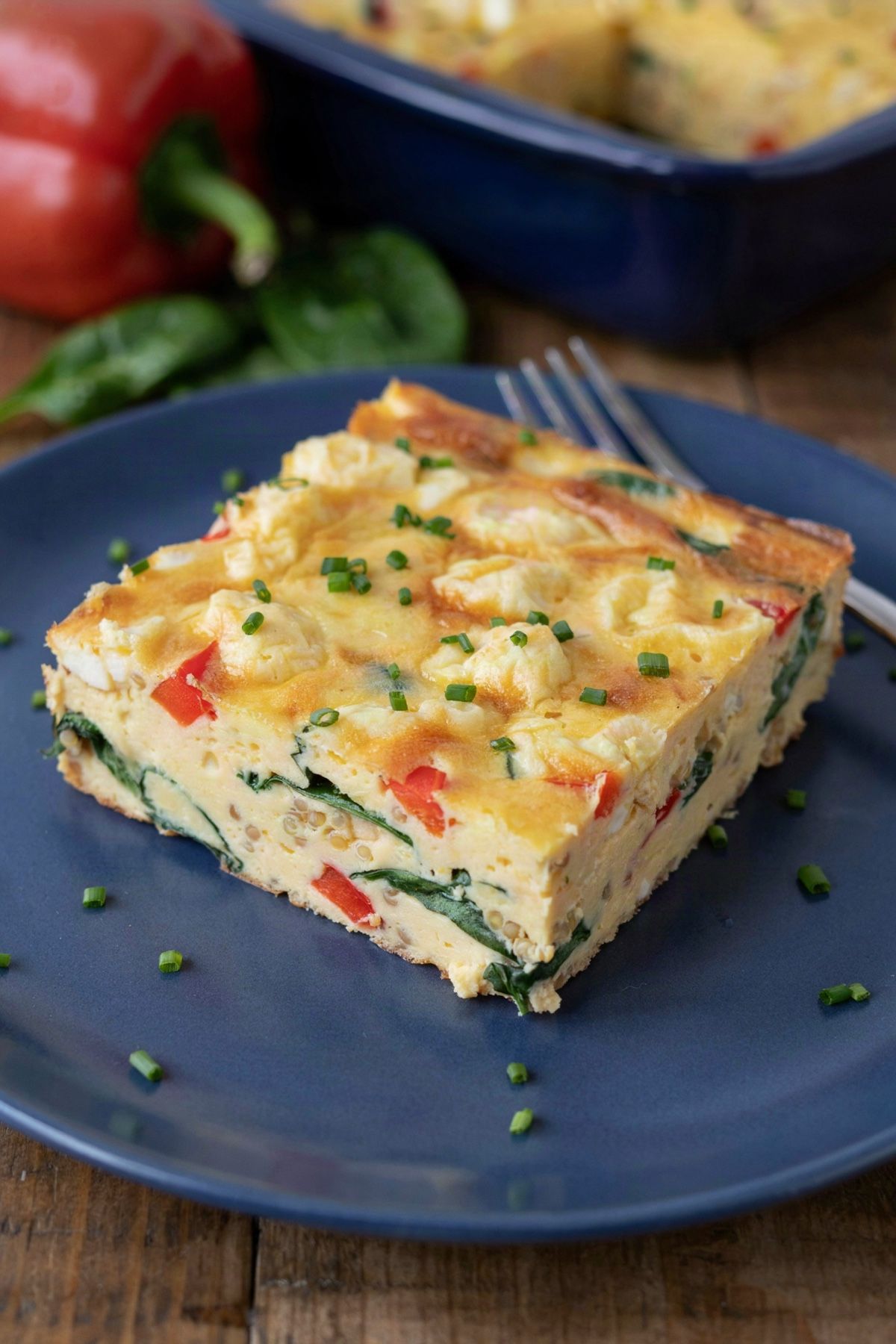
Why This Vegan Breakfast Casserole Is My Cold-Morning Go-To
To tell you the truth, on those cold mornings or busy days, this casserole is the breakfast that gets me out of bed. It’s a pretty hearty, craveable dish, and you wouldn’t miss the eggs and cheese.
What I love about it:
- It’s Protein-Dense: Tofu and quinoa (or brown rice) mean I’m not hungry again by 10am.
- Prep-Friendly: I can make it on Sunday, reheat all week, and it doesn’t lose flavor or texture.
- Veggie Versatility: Swap in mushrooms, kale, or leftover roasted vegetables, as long as they go in dry.
Let's be honest, sweets like overnight oats can get tiresome sometimes. You want something hearty, but also easy and quick. This vegan casserole hits that comforting savory spot every time. Give it a try and I bet it will join your meal prep rotation.
The story
How the Breakfast Casserole Met the Tofu Scramble
The breakfast casserole is a do-ahead dish from American church cookbooks and holiday mornings: cubes of day-old bread, beaten eggs, milk, cheese and usually sausage, assembled the night before and baked while the coffee brews. Its ancestor is strata, Italian for “layers.” The oldest strata recipe usually cited appears in Juniata Shepperd’s Handbook of Household Science in 1902, and it is bread layered with white sauce and cheese, not eggs at all.
Eggs arrived later and turned it into breakfast. By the time the Silver Palate Good Times Cookbook printed a Basil Breakfast Strata in 1984, the egg-soaked casserole was a brunch fixture, and every version since has relied on the same trick. Beaten egg is a liquid that sets. As it heats, between roughly 60°C and 80°C, its proteins unfold and bond to each other, locking the bread, vegetables and cheese into one mass you can cut.
The other half of this dish has its own American history. In 1975 The Farm, a commune in Summertown, Tennessee, published The Farm Vegetarian Cookbook, a vegan book despite its title, with about two dozen tofu recipes including Scrambled Tofu. The same year William Shurtleff and Akiko Aoyagi’s The Book of Tofu sold 40,000 copies in its first year. Between them, they put tofu on the American breakfast plate.
Put the two together naively and the result does not work, because tofu is already set. It is a curd that has been coagulated and pressed, so heating it again binds nothing. Crumble it into a dish with vegetables and grains and you get a tofu scramble shaped like a pan, which falls apart at the first cut.
The fix is to let one block of tofu play the eggs. Blended smooth with soy milk and cornstarch it becomes a thick custard that sets in the oven around the curds of the second, crumbled block. The crumbled block gives the look of scrambled egg, the blended block does the binding. There is one advantage over the egg version: tofu is safe to eat raw, so you can taste the custard and fix the seasoning before it ever goes in the oven.
What to buy
Ingredient Notes
Firm tofu
Buy tofu labeled firm, packed in water, for both blocks. Extra-firm crumbles well but blends grainy, so if it is all the store has, use it for the crumbled half and add 2 tablespoons more soy milk to the blender. Silken tofu blends beautifully but carries more water, so the custard sets soft and weeps on the plate. Firm tofu is also what gives each square its pale, curdy look.
Nutritional yeast
This is where the savory, faintly cheesy depth comes from, and against two blocks of tofu it takes the full 3 tablespoons. Buy flakes rather than powder if you can; powder packs denser, so a tablespoon tastes stronger and the custard can turn pasty. Brewer’s yeast is a different, bitter product and does not substitute.
Cornstarch
Cornstarch is what lets the casserole cut. It thickens once the custard passes about 95°C (203°F) and firms further as it cools, which is why the rest matters as much as the bake. Arrowroot or potato starch work at the same amount. Wheat flour has about half the thickening power, tastes raw in a dish this moist and ends the gluten-free claim.
Kala namak
Indian black salt is the one ingredient that makes this taste of eggs rather than of tofu. It is kiln-fired with harad seeds, which leaves sulfur compounds that smell like a cooked yolk. Ground, it is pinkish gray, not black. It is marked optional because many supermarkets do not stock it, but Indian grocers sell it cheaply. Some aroma bakes off, so a pinch over the cut squares brings it back. If you use it, cut the fine salt to 3/4 teaspoon.
Turmeric
It is here for color, not flavor, and half a teaspoon turns the whole custard the soft yellow of scrambled eggs, with paler tofu curds showing through. More than that and the casserole picks up a dusty, bitter edge and the cut squares come out mustard rather than butter yellow. It also stains: a blender jar or wooden spoon keeps the tint for a few washes.
Cooked quinoa or brown rice
The grain fills the gaps between the curds so a square eats like a casserole rather than a slab of tofu. Use it cooked and cooled, ideally a day old, because freshly steamed grains are wetter and turn the edges gummy. Quinoa gives a lighter, nuttier result with tiny pale rings showing in the cut face. Brown rice is denser and chewier.
Hearty Vegan Breakfast Casserole
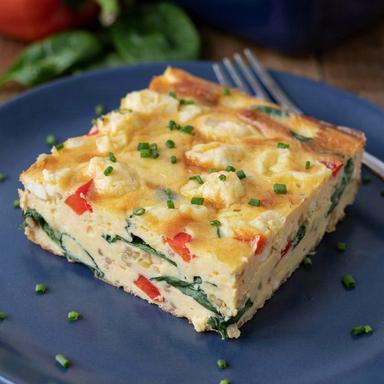
A vegan breakfast casserole of crumbled tofu, spinach, peppers and quinoa, bound by a blended tofu custard so it bakes up firm enough to cut into squares.
Ingredients
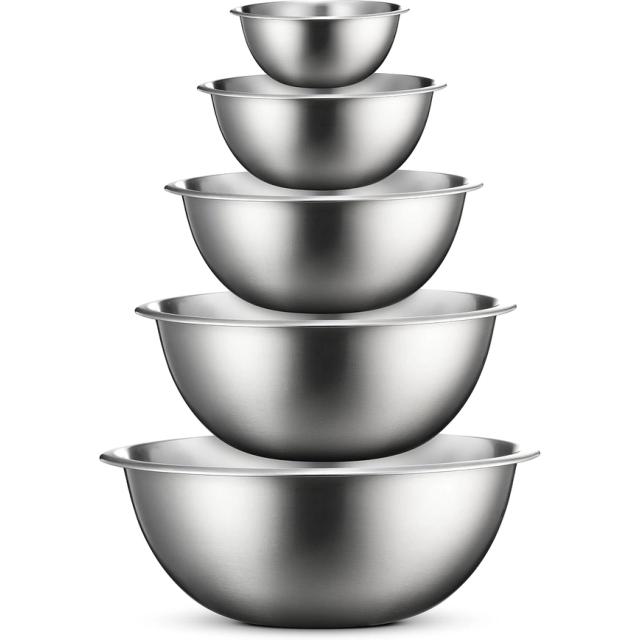
Equipment
As an Amazon Associate I earn from qualifying purchases, at no extra cost to you.
Instructions
- 1
Heat the oven and press the tofu
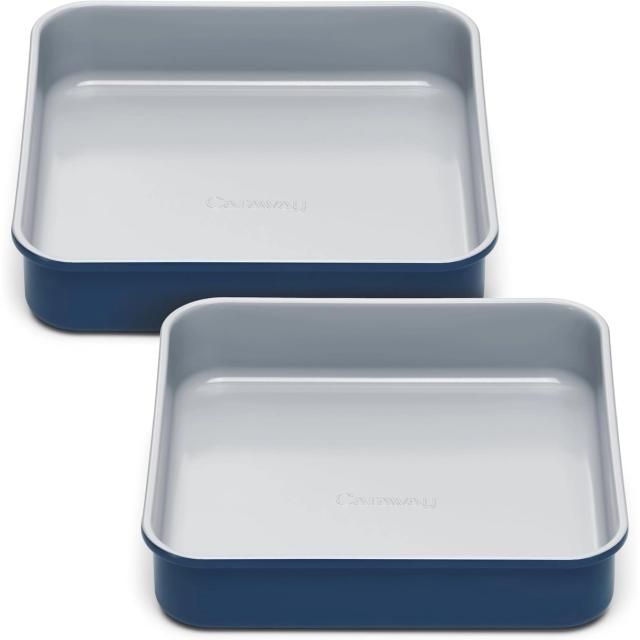
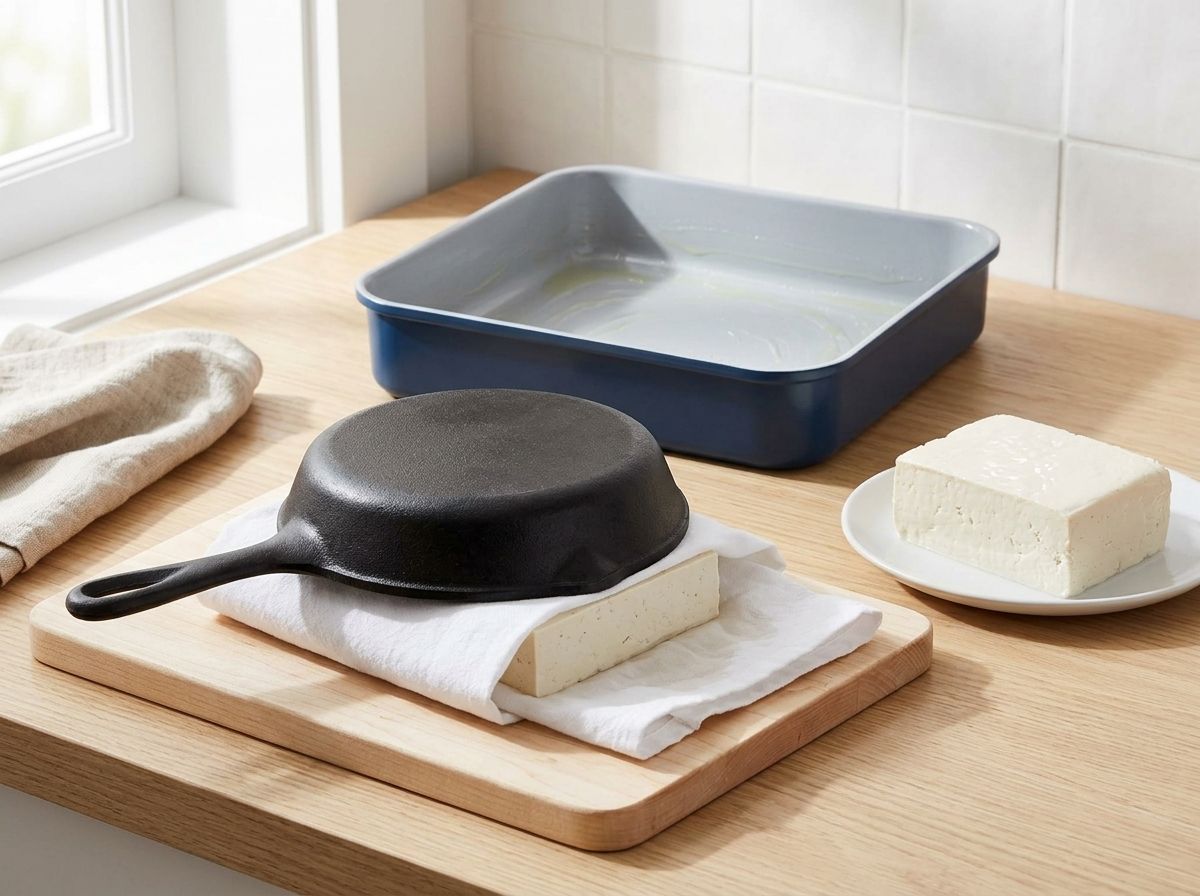
Heat the oven to 375°F (190°C) and grease a 9×9-inch baking pan with a little oil. Wrap the tofu for crumbling in a clean kitchen towel, set a heavy pan on top and leave it for 15 minutes. The tofu for blending only needs draining, because its water helps it blend smooth.
- 2
Cook the vegetables until the pan is dry
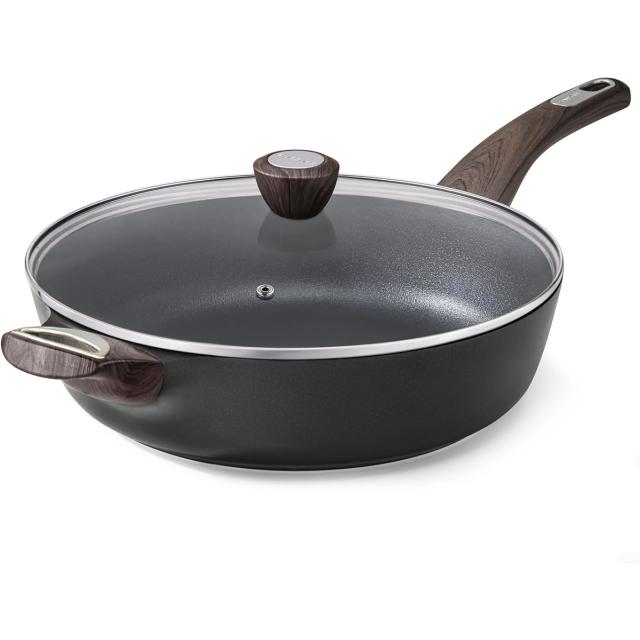
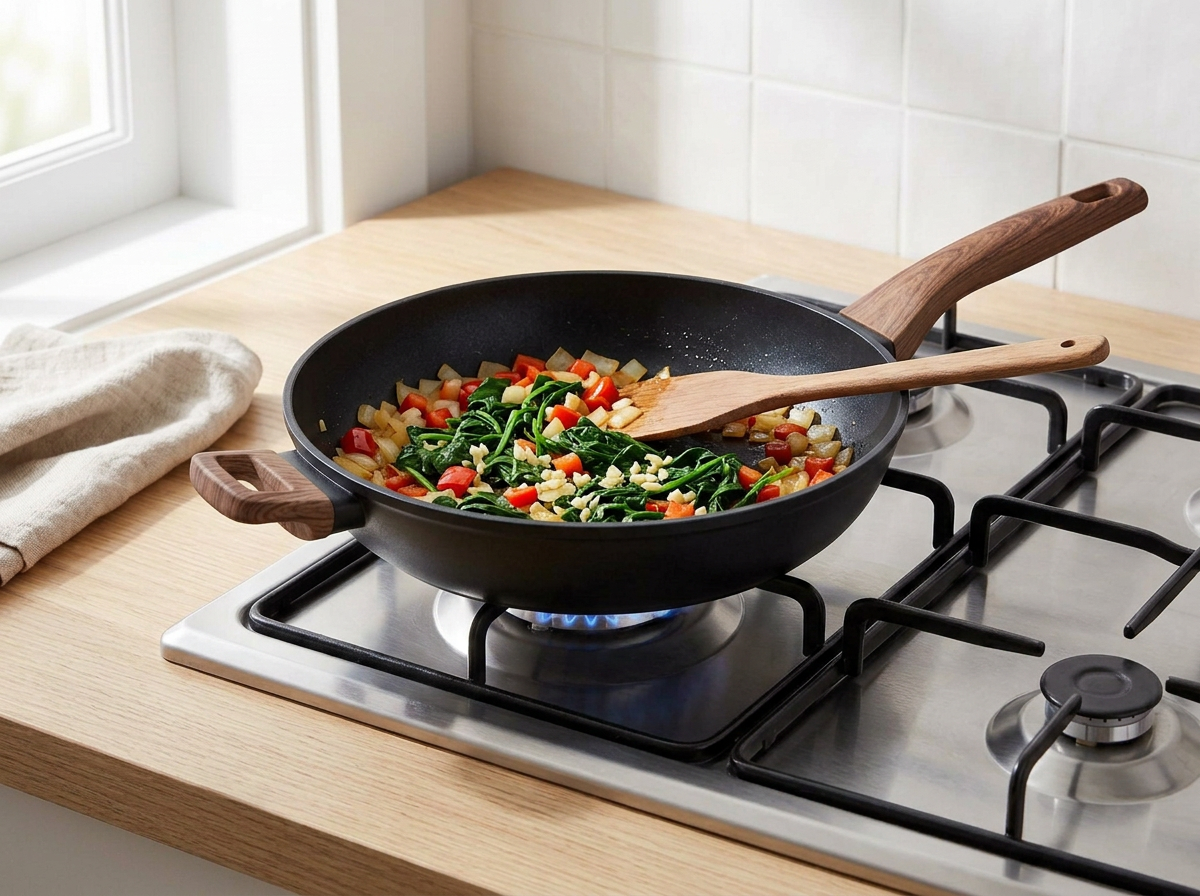
Heat the olive oil in a large skillet over medium heat. Cook the onion with a pinch of the salt for 5 minutes, until soft. Add the bell pepper and cook 3 minutes more, then the garlic for 30 seconds. Add the spinach a handful at a time and keep stirring until it has wilted and no liquid pools in the pan, 2 to 3 minutes. Take the pan off the heat.
- 3
Blend the tofu custard
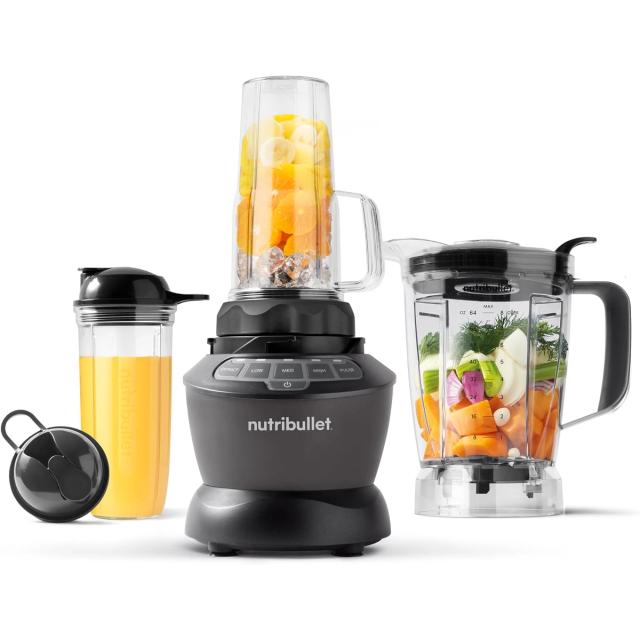
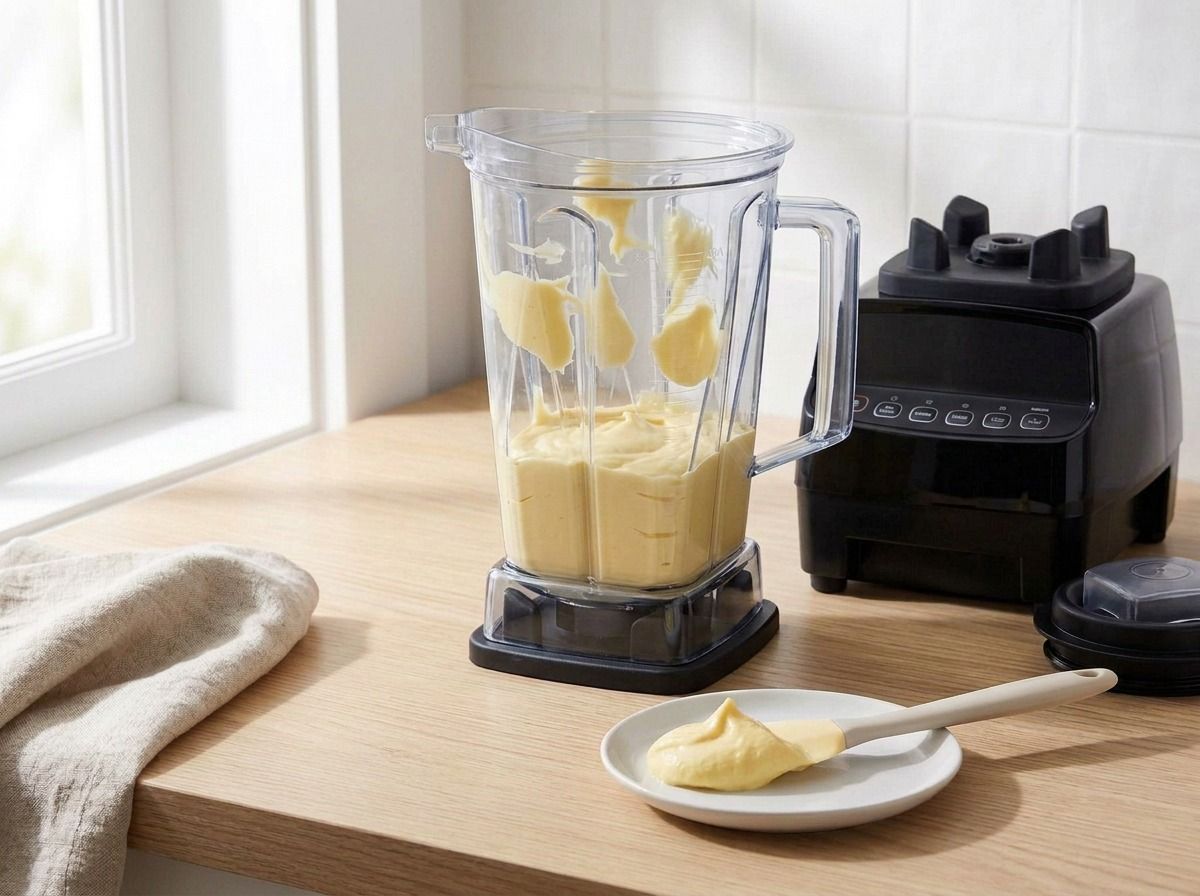
Break the tofu for blending into a blender and add the soy milk, nutritional yeast, cornstarch, turmeric, the rest of the salt, the pepper and the kala namak, if using. Blend for about a minute, scraping down once, until completely smooth and as thick as hummus. Taste it: it should be a little saltier than you want the finished dish.
- 4
Crumble the tofu and fold everything together
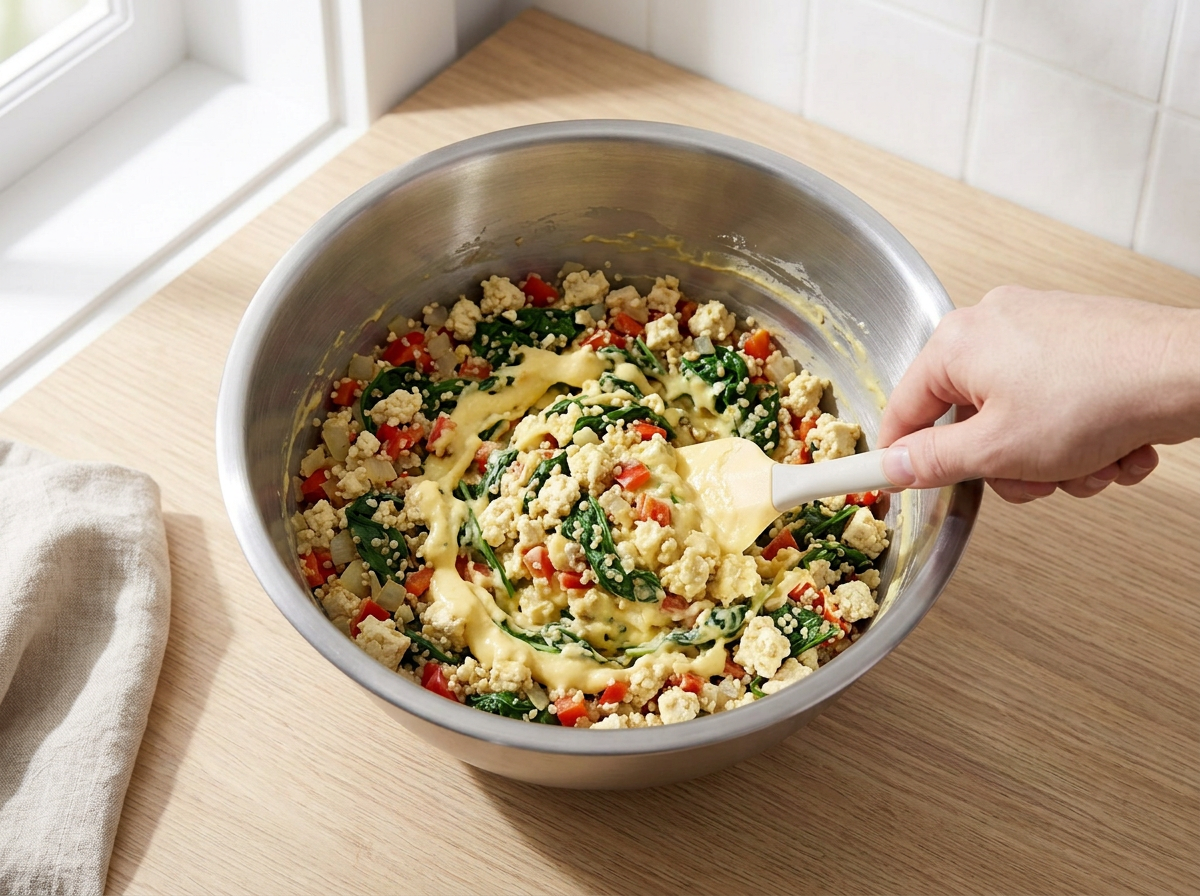
Crumble the pressed tofu into a large bowl in uneven pieces, some the size of a hazelnut and some smaller. Add the quinoa, the cooked vegetables and the custard, and fold with a spatula until every piece is coated and no dry tofu shows.
- 5
Fill the pan
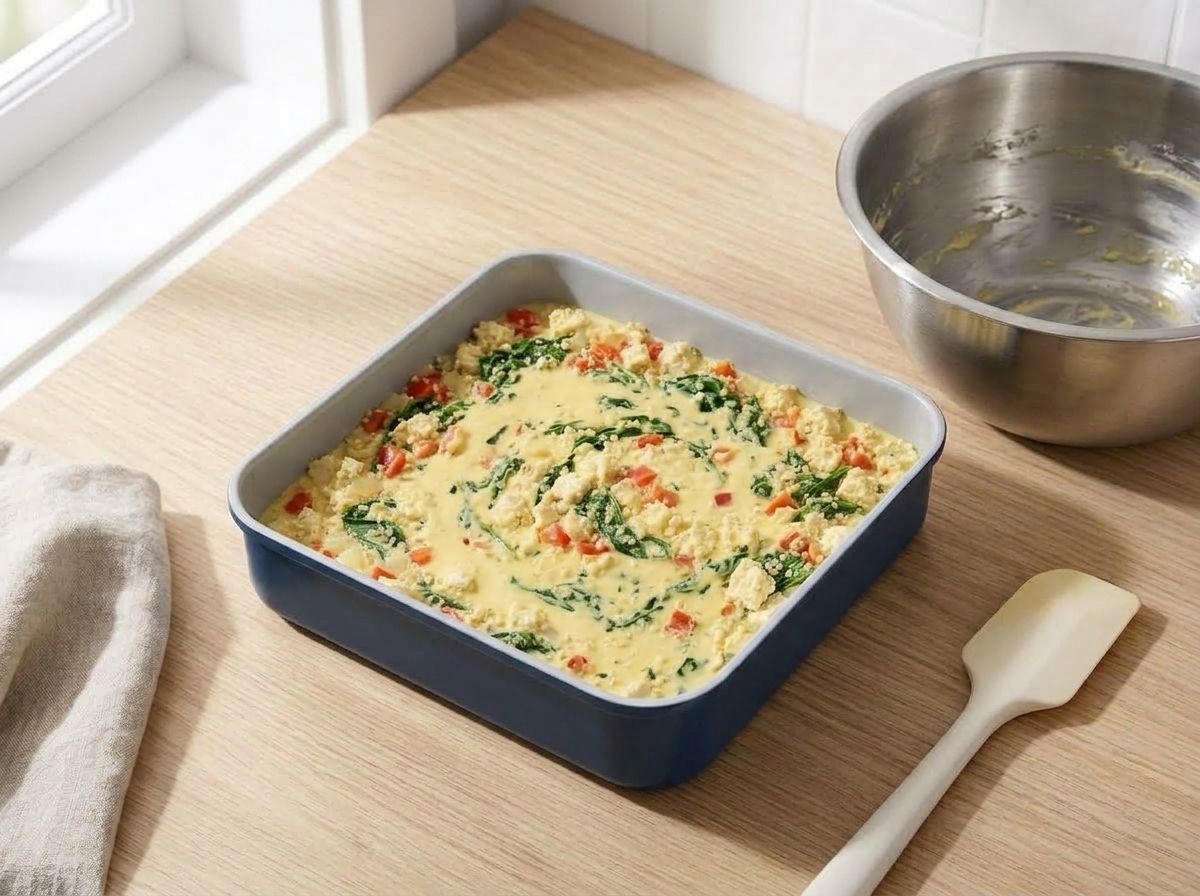
Scrape the mixture into the pan, press it into the corners with the back of the spatula and smooth the top. Scatter the cheese shreds over, if using.
- 6
Bake until the center is set
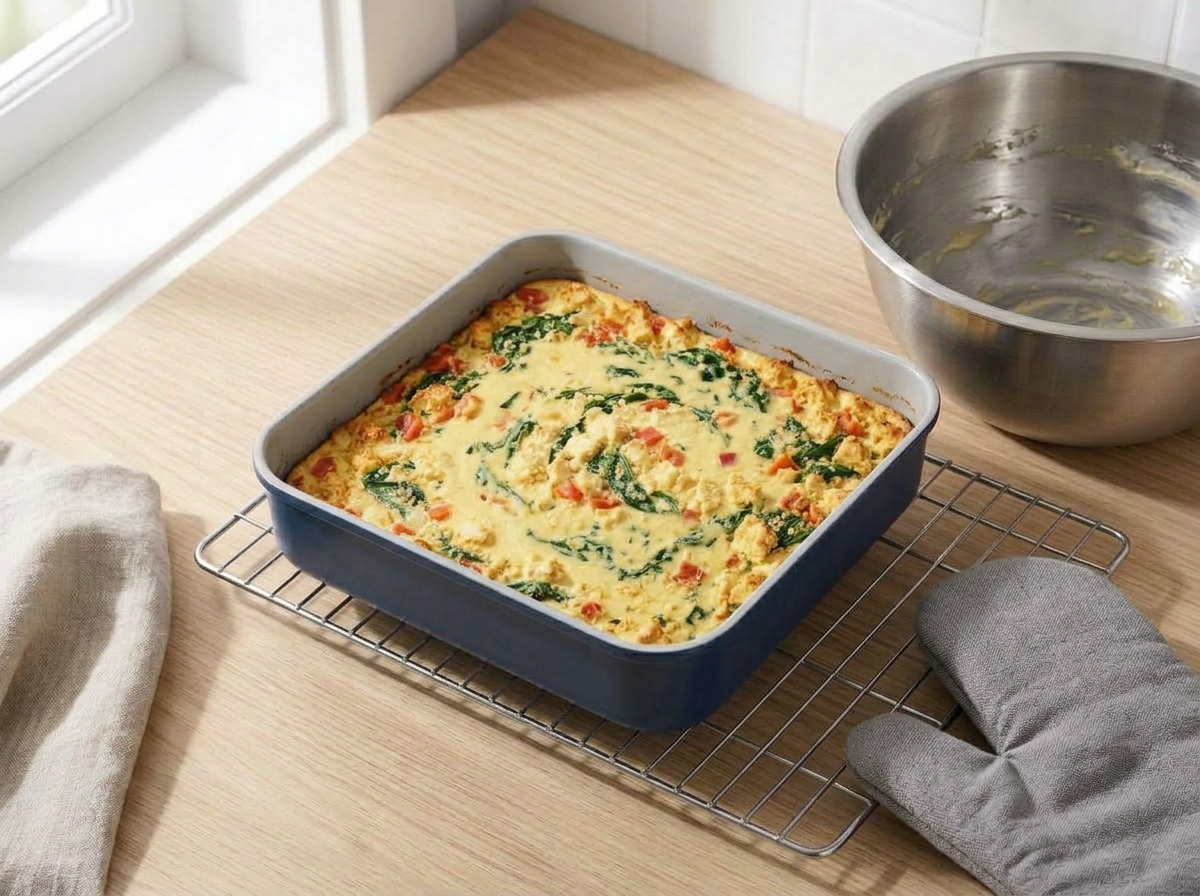
Bake uncovered for 35 to 40 minutes, until the edges are golden and pulling away from the pan and a knife pushed into the very center comes out without wet custard on it. The middle should not wobble when you nudge the pan.
- 7
Rest, then cut into squares
Let the casserole rest for 15 minutes. The custard keeps firming as it cools, and cut any sooner the pieces slump on the plate. Scatter the herbs over, cut into six pieces and serve warm.
Notes
Swap in mushrooms, kale, zucchini or leftover roasted vegetables, but cook anything fresh until the pan is dry first. Raw mushrooms and zucchini release their water in the oven and leave a wet layer under the casserole.
A pinch of smoked paprika in the custard adds a faint, bacon-like smokiness.
Nutrition Facts
6 servings · 271 g per serving
- Calories
- 254 kcal
% Daily Value*
- Total Fat
- 11.6 g15%
- Saturated Fat
- 1.9 g10%
- Sodium
- 715 mg31%
- Total Carbohydrate
- 21.1 g8%
- Dietary Fiber
- 4.7 g17%
- Sugars
- 2.7 g—
- Protein
- 17.2 g34%
Recipe from veggierecipes.blog
When it goes wrong
Troubleshooting
It fell apart when I cut it, more like a scramble than a casserole
Crumbled tofu has nothing to hold it together. In an egg bake the beaten eggs bind everything, and here the blended block does that job. If both blocks were crumbled, or the cornstarch was left out, the pieces sit side by side with no custard between them. Blend one block completely smooth, and give the casserole its full 15 minutes of rest before cutting.
The bottom is wet and there’s liquid in the pan
The water came from the vegetables or the tofu. Spinach, peppers and especially mushrooms release a lot of liquid, and if they go into the bowl while the skillet still has a puddle in it, that puddle ends up under the casserole. Cook them until the pan is dry, and press the crumbling tofu for the full 15 minutes. Already baked? Tip off the liquid and give it 10 more minutes.
The center is still soft and gummy
It was underbaked, cut too soon, or both. The custard sets from the edges inward, and the middle is the last part to get hot enough for the cornstarch to thicken. Test with a knife in the very center, not near the edge, and if it comes out coated, bake 5 to 10 minutes more. A glass or ceramic dish runs about 10 minutes slower than a metal pan.
It tastes like tofu, flat and a bit beany
It needs more seasoning. Tofu has almost no flavor of its own, so it needs salt in proportion to its weight: a full teaspoon for two blocks, all 3 tablespoons of nutritional yeast, and kala namak if you can find it. Taste the raw custard before folding. It should taste slightly too salty, because the plain crumbled tofu and quinoa will dilute it.
It came out bright mustard yellow and tastes bitter
Too much turmeric. Half a teaspoon colors a whole pan, and a full teaspoon overshoots both the color and the flavor, which turns dusty and bitter. Measure it level rather than heaped. If a batch already came out too yellow, chopped herbs over the top and a sharp hot sauce on the side cover the bitterness better than more salt does.
The edges are dry and rubbery
It was baked too long or in a pan too large. Spread across a 9×13-inch dish this mixture is about two-thirds of an inch deep, and the edges dry out before the center sets, which is why it goes in a 9×9. Take it out when the knife comes out clean from the center rather than waiting for deep browning; by then the edges are already golden.
Before you serve
Serving & Storage
A breakfast casserole is a serve-from-the-pan dish. It goes on the table in the pan it baked in, cut into squares, with a bottle of hot sauce beside it and everyone helping themselves. Something sharp is what it wants alongside: salsa, a vinegary hot sauce or a spoon of pickled jalapeños cuts through the richness of the custard. Sliced avocado, a bowl of fruit and toast or roasted potatoes make it a full brunch.
What does not work is serving it straight from the oven, when the squares slump, or pairing it with something sweet and soft like syrupy pancakes, which leaves the plate with no contrast at all.
Making it ahead
There are two ways. Assemble it the night before, cover the pan and refrigerate it for up to 24 hours, then bake it straight from the fridge, adding 10 minutes. Longer than a day and the vegetables start to weep into the custard. Or bake it completely, let it cool and refrigerate it whole, then cut and reheat squares through the week. Tofu custard reheats better than an egg casserole, which tends to turn rubbery and leak water the second time around.
Storing leftovers
Keep it covered in the fridge for up to 4 days. Reheat squares covered with foil at 350°F (175°C) for 10 to 12 minutes, or in the microwave for 60 to 90 seconds. To freeze, wrap single squares and freeze for up to 2 months, then thaw overnight in the fridge. Freezing changes tofu, so the curds come back chewier and a little spongy. It is still good, just not quite the same.
Still wondering
Frequently Asked Questions
Can I make it in a 9×13-inch dish?
Yes, by doubling everything, which serves 12. A single batch in a 9×13 is spread only about two-thirds of an inch deep and dries at the edges long before the center sets. Doubled, it sits about 1 1/2 inches deep, close to the single batch in a 9×9. Bake it at the same temperature for 45 to 55 minutes and use the same knife test in the center.
Can I make it without tofu, or soy-free?
Not as a straight swap, because the tofu is both the curds and the binder. For a soy-free version, replace the blended block, soy milk and cornstarch with a batter of 1 1/2 cups (180 g) chickpea flour whisked into 1 1/2 cups (360 ml) water, seasoned the same way. Replace the crumbled block with a second cup of cooked quinoa and a cup more vegetables, and bake the full 40 minutes, because underbaked chickpea flour tastes raw and bitter.
Is this gluten-free?
Yes, as written. Tofu, quinoa or brown rice, cornstarch and nutritional yeast are all naturally gluten-free. Check two labels: the vegan cheese, since a few brands use wheat starch, and the milk if you swap the soy for oat milk, since oats are often cross-contaminated unless certified.
More Hearty Vegan Breakfasts & Brunches
Made this?