
Vegan Chickpea Omelette Recipe
Published · Updated
A fluffy, golden vegan omelette made from chickpea flour and loaded with fresh veggies, perfect for breakfast, brunch, or even a light dinner.
Jump To Recipe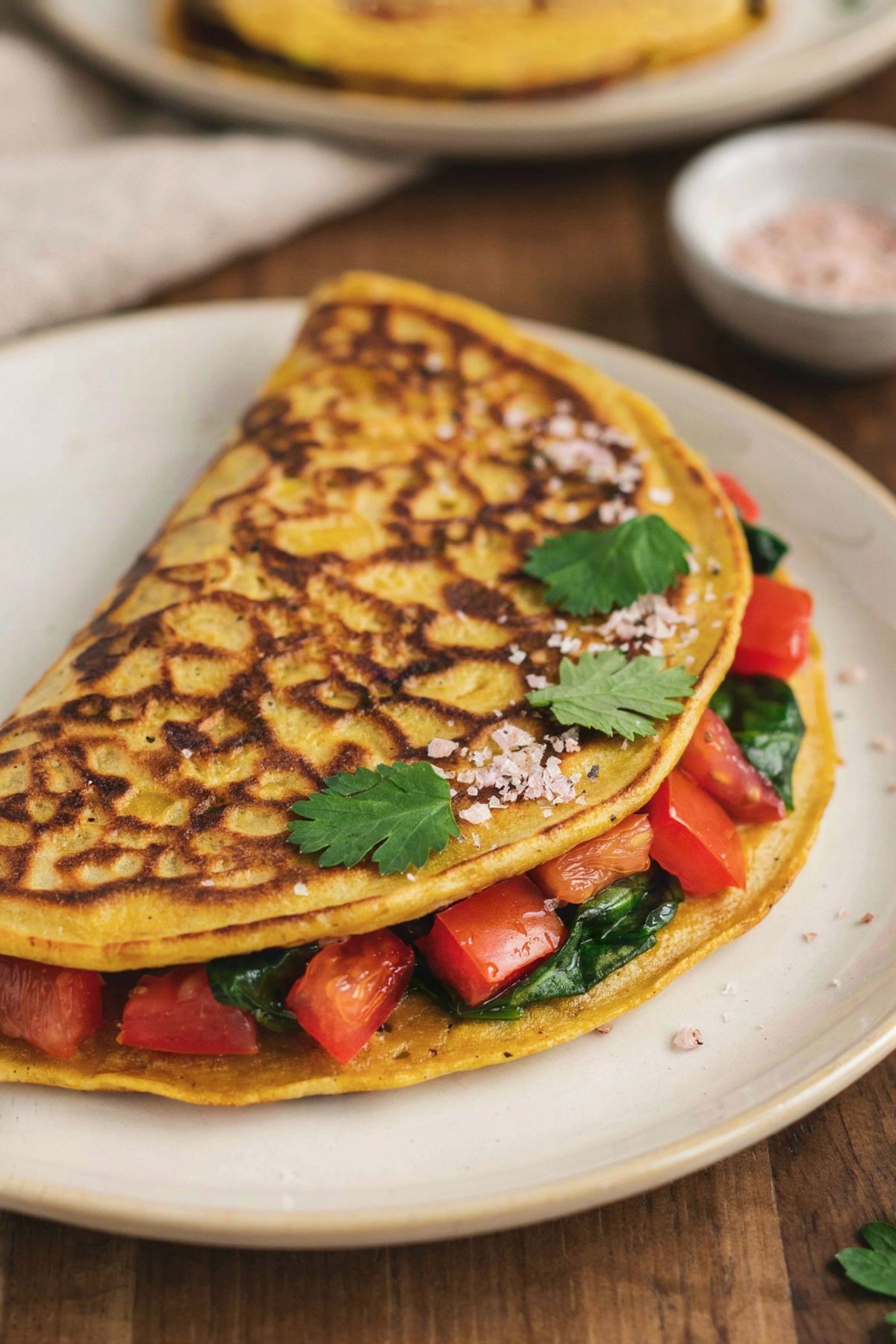
Why I Love This Vegan Chickpea Omelette
As someone who is always looking for a hearty, savory breakfast, this chickpea omelette checks all the boxes for me. Plant-based, filling, and brimming with flavor, it’s a recipe that has become a staple in my rotation.
What I love about this omelette is the fluffiness along with the warmth of spices like turmeric and vegetables. It’s impressive how chickpea flour can mimic the classic omelette experience, with no eggs required.
I like to mix and match vegetables every time I make it, depending on what’s in my fridge. Sometimes I’ll go classic with spinach and tomatoes, other days I’ll toss in mushrooms or zucchini for a change of pace.
If you’re into savory, satisfying, and easy weekday meals, this chickpea omelette is a must-try. Aside from breakfast, I find it makes a solid quick lunch or a light dinner, especially when paired with a leafy salad or some crunchy toast.
Some of my favorite add-ons and serving ideas for this omelette are:
- Alongside smashed avocado on toast
- A generous sprinkle of cilantro or parsley
- Fresh tomato salsa or a touch of hot sauce
Whatever combination you go with, you end up with a meal that’s easy, healthy, and seriously satisfying.
The story
The Chickpea Omelette Is Far Older Than Veganism
Search for this dish and almost every result frames it the same way: a clever modern workaround for people who have given up eggs. That framing is backwards. A batter of chickpea flour and water, poured flat into a hot pan, is one of the oldest cheap hot meals in the world. It shows up independently across North India and around the northern Mediterranean, and every one of those versions is centuries older than the idea that anyone would want it to taste like egg.
In North India the dish is besan chilla, also written cheela, and in Gujarat pudla. Besan is gram flour and chilla means pancake, so the name is simply “gram flour pancake.” It is a weekday breakfast and a tea-time snack, cooked on a tawa in the time it takes to make coffee, and it happens to be vegan and gluten-free without anyone having set out to make it either. One detail matters for cooking: besan is milled from split brown chickpeas, chana dal, not the big pale kabuli chickpeas that become hummus. It is a different, finer flour than the bag labeled chickpea flour in a Western supermarket.
The Mediterranean version is the same two ingredients baked rather than griddled, and it has a different name in every port. Genoa calls it farinata, Nice calls it socca, Pisa cecina, Livorno torta di ceci, and Palermo fries the set batter into panelle. Genoa tells a story about where it came from. Sailing home from the Battle of Meloria in 1284, the story goes, the fleet was caught in a storm, sacks of chickpea flour burst and mixed with seawater in the hold, and the crew scraped up the paste, dried it in the sun and found the next day that it was worth eating. It is a lovely story and almost certainly a later invention. Chickpea flour batter appears in Genoese records as ordinary food for sailors and laborers, and Roman writers describe much the same thing long before anyone sailed to Meloria.
What is genuinely new is the egg part. None of these dishes was ever pretending to be an egg. The thing that turns a chickpea pancake into an omelette is a single ingredient, kala namak, an Indian rock salt whose sulfur compounds smell so much of boiled egg that opening the jar is startling the first time. The pleasing irony is that kala namak was never far from this batter to begin with. It is a core component of chaat masala, which Indian cooks have been dusting over fried and griddled gram flour snacks for generations, entirely without meaning egg by it. The vegan omelette is that accident noticed and then done on purpose.
Which is a better way to think about what you are cooking. This is not an imitation with something missing from it. It is besan chilla with a Western frame around it and one salt added, and it holds up on its own terms: roughly 16 grams of protein per omelette, more than two eggs would give you, out of a bag of flour that costs very little and sits in the cupboard for months.
What to buy
Ingredient Notes
Chickpea flour
Two different products share this shelf. Besan, sold at Indian grocers, is milled from split brown chickpeas and is fine, smooth and slightly sweet. Garbanzo bean flour, the usual Western supermarket bag, comes from white kabuli chickpeas and is coarser, fluffier and more bitter when raw. Both work. The quantities here were written for the coarser garbanzo flour, so if you use besan hold back about 50 ml of the water at the start and whisk it in after the rest, because the finer flour drinks more and thickens further as it sits. Buy from somewhere that sells a lot of it either way, since chickpea flour goes stale and takes on a soapy edge.
Kala namak (Indian black salt)
This is the ingredient the whole dish turns on, and there is no substitute for it. It is a sulfurous rock salt from South Asia, black in lump form and pink-gray once ground, and the hydrogen sulfide in it is what your nose reads as boiled egg. Two rules. Buy it finely ground, because the lumps are hard and do not dissolve on a dry surface. And treat it as a finishing salt, never a batter salt: heat drives off exactly the compounds you bought it for, which is why the recipe salts the batter with plain sea salt and saves the kala namak for the plate. A small bag costs a few dollars and lasts for years.
Baking powder
Half a teaspoon looks like an afterthought and it is not. Chickpea flour sets firm, and without a little lift the omelette comes out closer to leather than to something you would fold. Baking powder gets one chance and it starts spending it the moment it meets liquid, which is the reason it goes in after the 20 minute rest rather than at the beginning. Whisked in with everything else and then left to sit, it does its work in the bowl and none of it in the pan.
Turmeric
Here it is a color, not a flavor. Half a teaspoon takes the batter from beige to a convincing yellow and stops there. Going heavier does not make the omelette taste of anything you want; turmeric turns bitter and faintly medicinal in quantity, and it stains wooden spoons, plastic bowls and grout permanently. If yours has been open for two years it will have lost most of its color anyway, which is the only real reason to replace it.
Tomatoes
The one filling worth being fussy about. The seeds sit in a pocket of jelly that is almost entirely water, and released into a setting batter that water is what leaves a raw stripe through the middle and tears the omelette when you fold it. Halve the tomato, squeeze the seed pockets out over the sink and dice what is left. Plum or roma tomatoes have the least jelly and the firmest flesh, so they are the easiest choice. Halved cherry tomatoes are the worst, because every one of them is a sealed pocket of liquid that bursts in the pan.
Nutritional yeast (optional)
Deactivated yeast flakes, sold for their savory, faintly cheesy taste, and not the same thing as brewer's yeast or the live yeast for bread. In this batter it fills in a background savoriness that chickpea flour on its own does not have, but it is doing nothing structural, so leaving it out costs you flavor and no texture. If you skip it, push the black pepper and the kala namak a little harder to compensate.
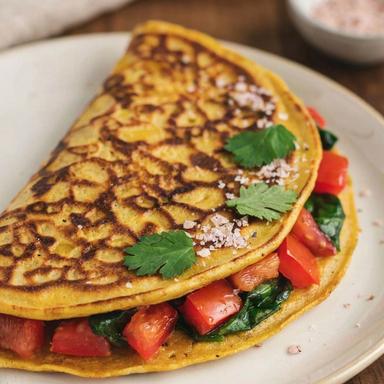
Savory Vegan Chickpea Omelette
A fluffy vegan chickpea omelette packed with fresh vegetables, perfect for a plant-based breakfast or brunch.
Ingredients
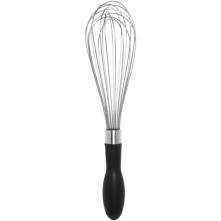
Equipment
As an Amazon Associate I earn from qualifying purchases, at no extra cost to you.
Instructions
- 1
Whisk and rest the batter
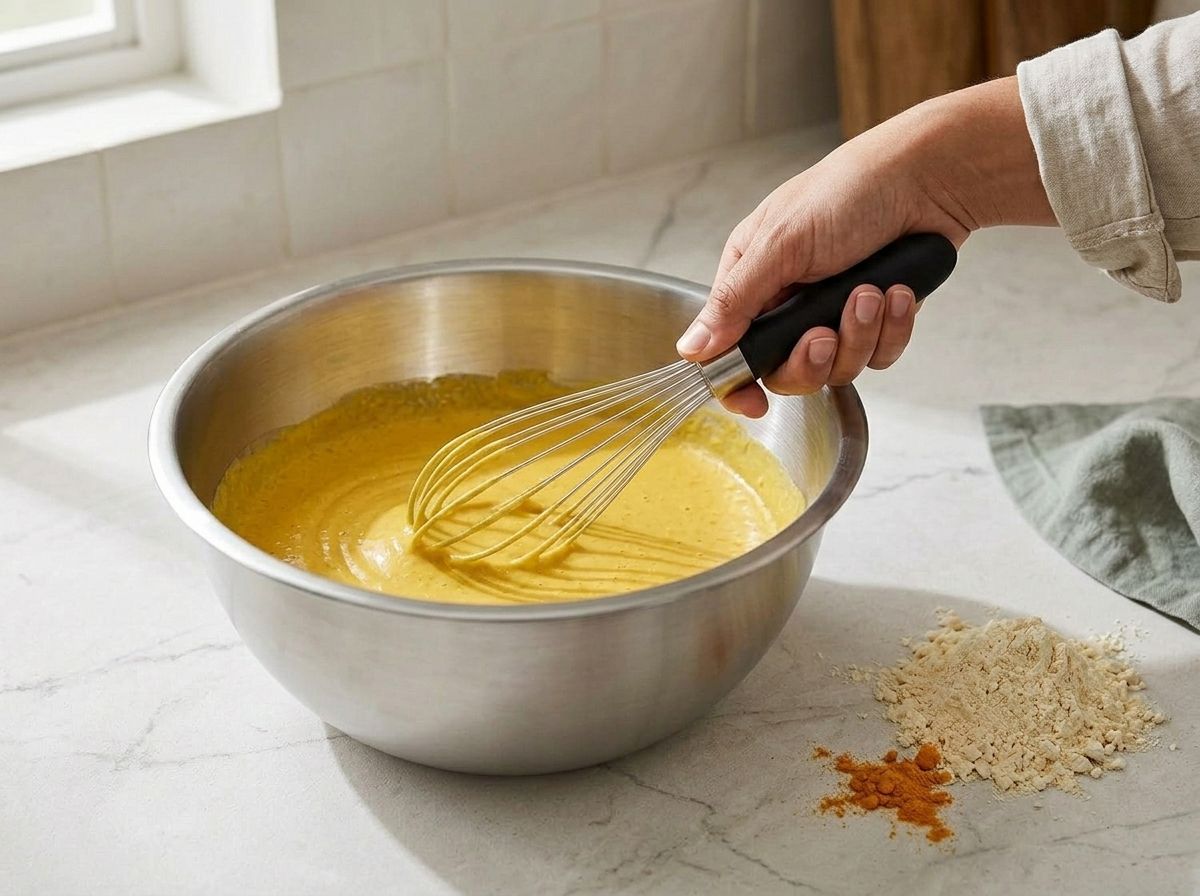
In a bowl, whisk the chickpea flour with the water, turmeric, sea salt and black pepper until completely smooth, scraping the sides so no dry flour hides there. Stir in the nutritional yeast if you are using it. Cover the bowl and leave it for 20 minutes. Chickpea flour hydrates slowly, and a batter cooked straight from the whisk tastes chalky and raw.
- 2
Soften the peppers
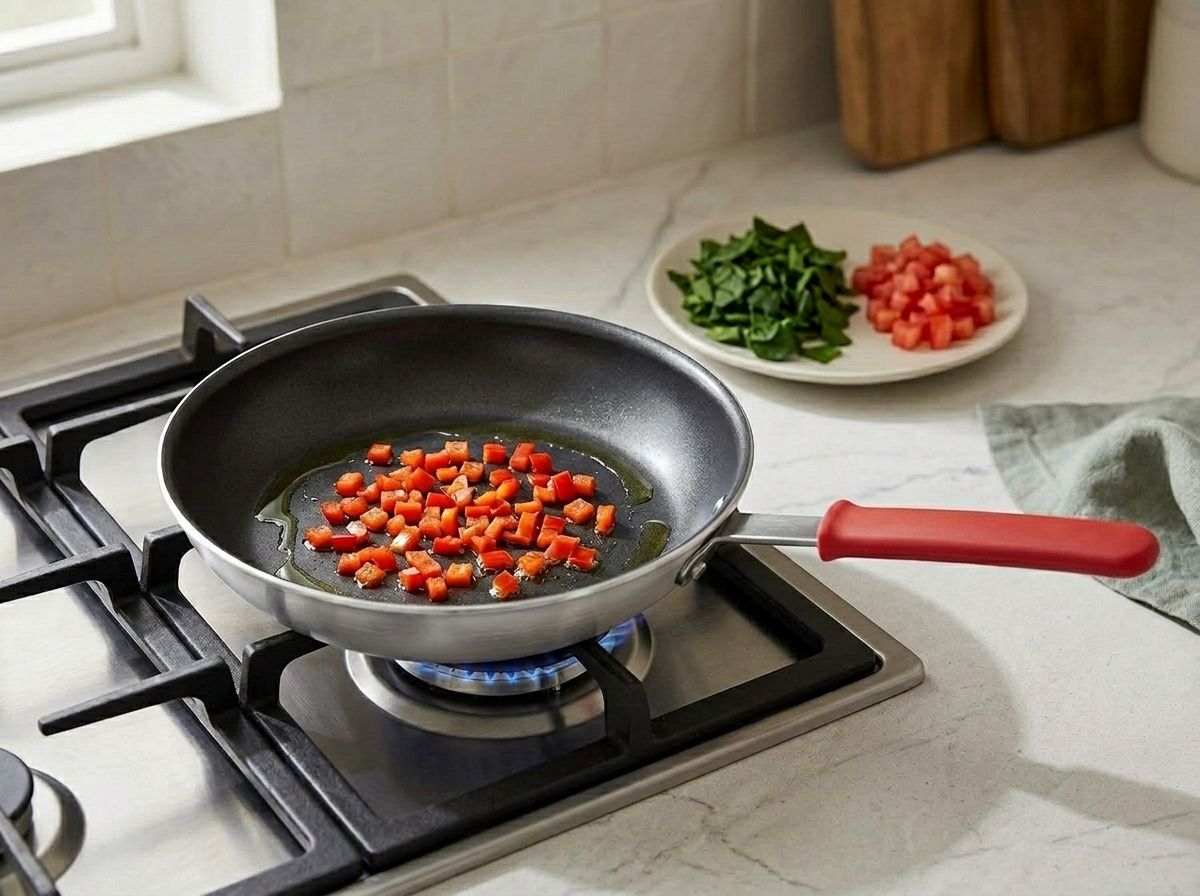
While the batter rests, warm half the olive oil in the skillet over medium heat and cook the diced bell pepper for 3 to 4 minutes, until it has lost its raw crunch. Tip it onto a plate with the chopped spinach and the tomato. Squeeze the seeds and jelly out of the tomato first: that part is mostly water, and water in the middle of the batter is what stops an omelette setting.
- 3
Loosen the batter, then add the baking powder
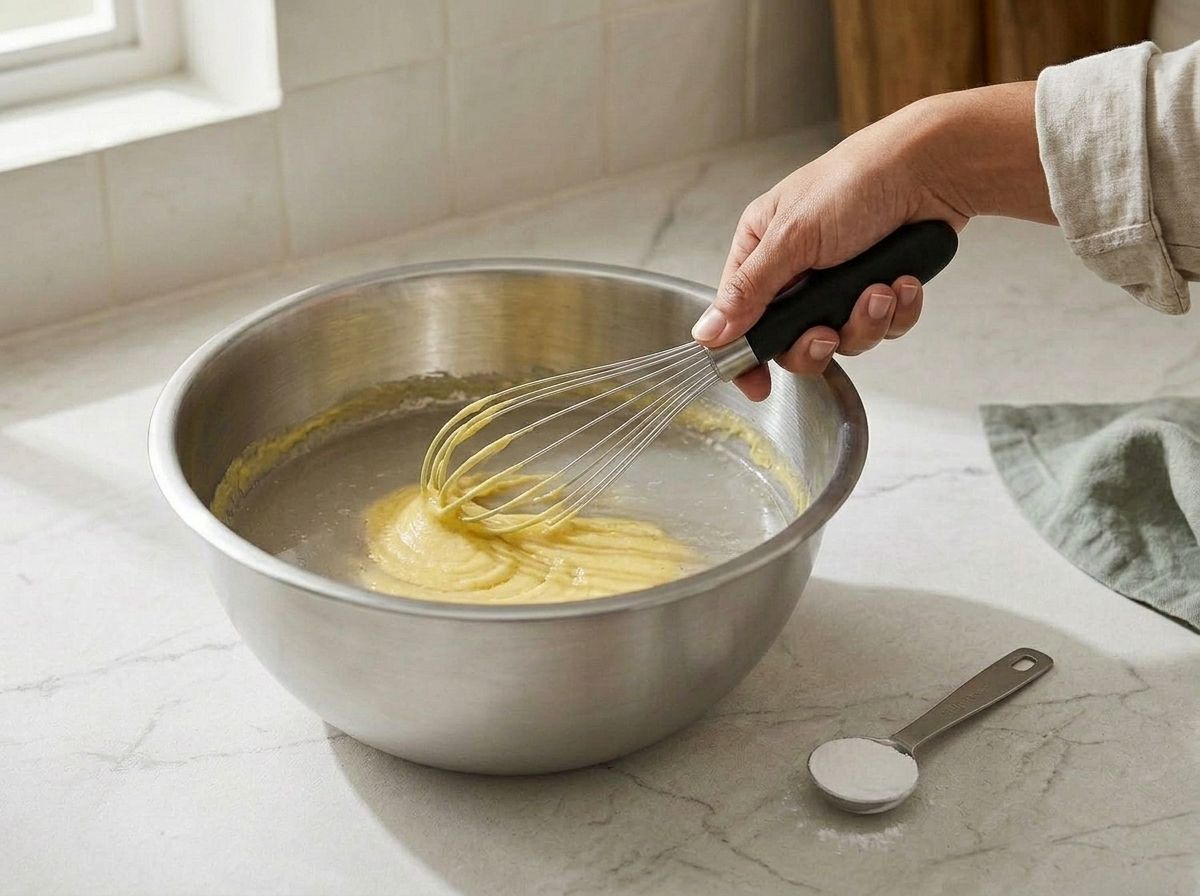
The rested batter will have thickened and the flour may have settled. Whisk it again, adding a splash of water if it has gone past the consistency of pouring cream, then whisk in the baking powder. Baking powder starts working the moment it gets wet, so it goes in now rather than before the rest, when it would spend itself in the bowl.
- 4
Pour, top and cover
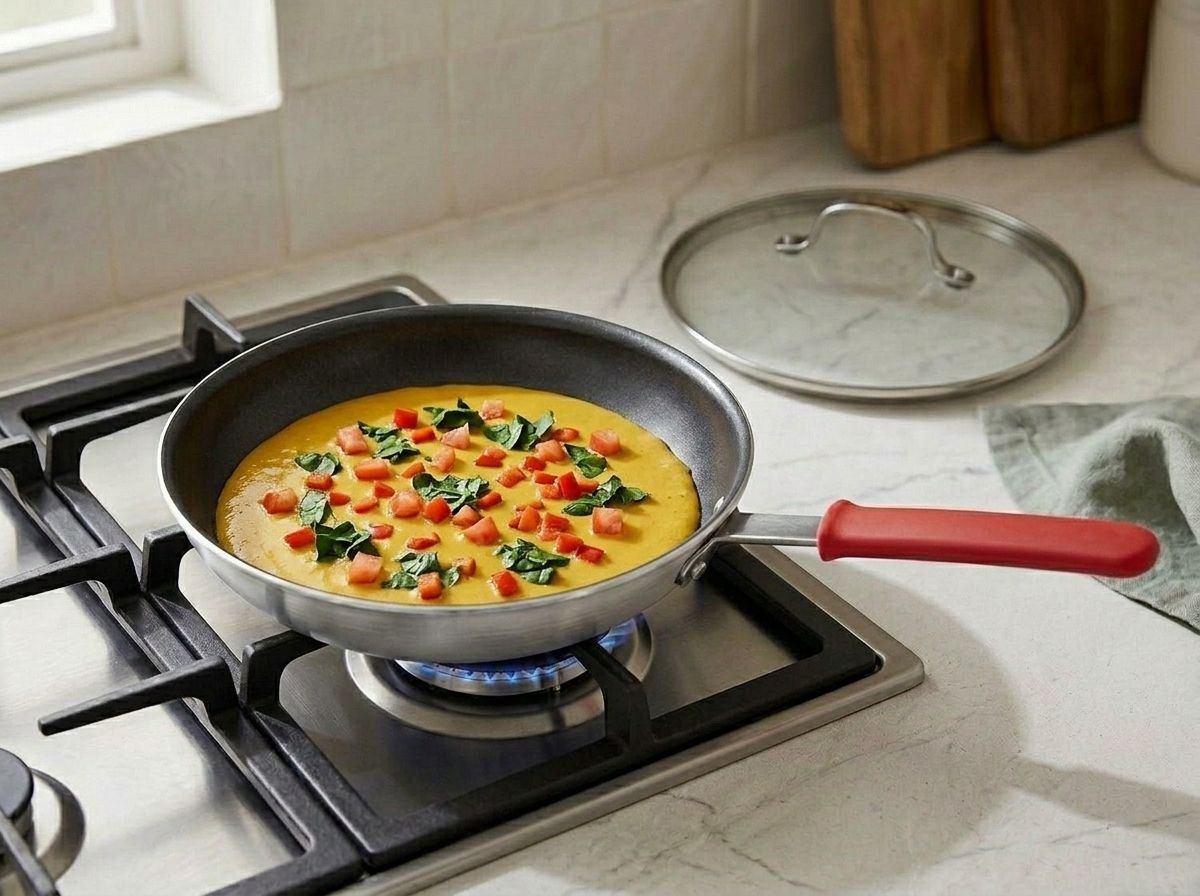
Wipe the skillet, add a teaspoon of oil and set it over medium heat. Pour in half the batter and tilt the pan to spread it evenly. Scatter half the vegetables over the wet surface instead of stirring them through, so they sit in the top face rather than forming wet pockets in the middle. Cover the pan and cook for 5 to 6 minutes. The lid is doing the real work here: it traps steam and sets the top while the underside browns, so the omelette cooks through without ever being turned over. It is ready when the edges lift away from the sides and the top has gone matte and dry with no wet shine left in the center.
- 5
Fold it over the vegetables
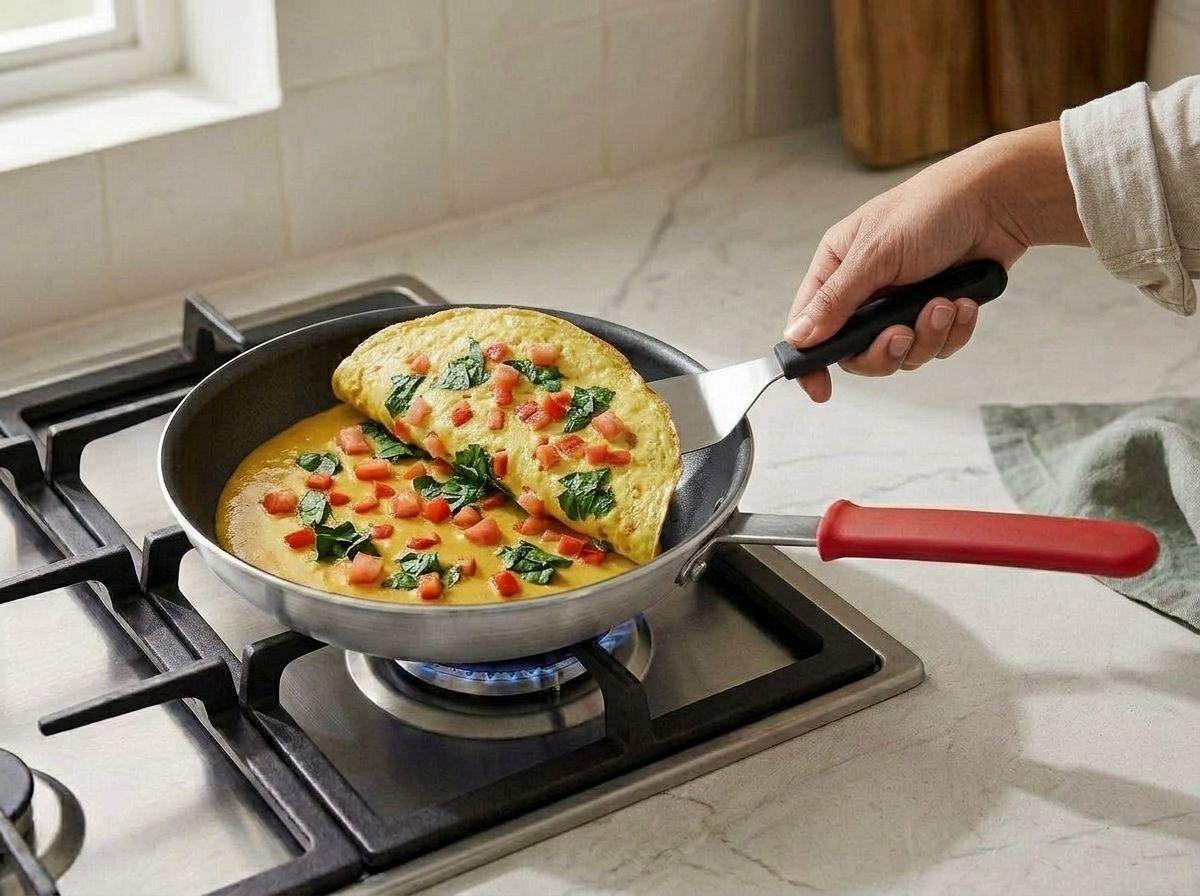
Slide a thin spatula under one half of the omelette and fold it over the other, so the vegetables are shut inside and the browned face ends up on the outside. Press the fold gently flat and give it about a minute more in the pan to set. Do not turn the omelette over before folding: the side facing up is the side that ends up inside, so an omelette that gets flipped first comes out with its filling on the outside.
- 6
Season off the heat and serve
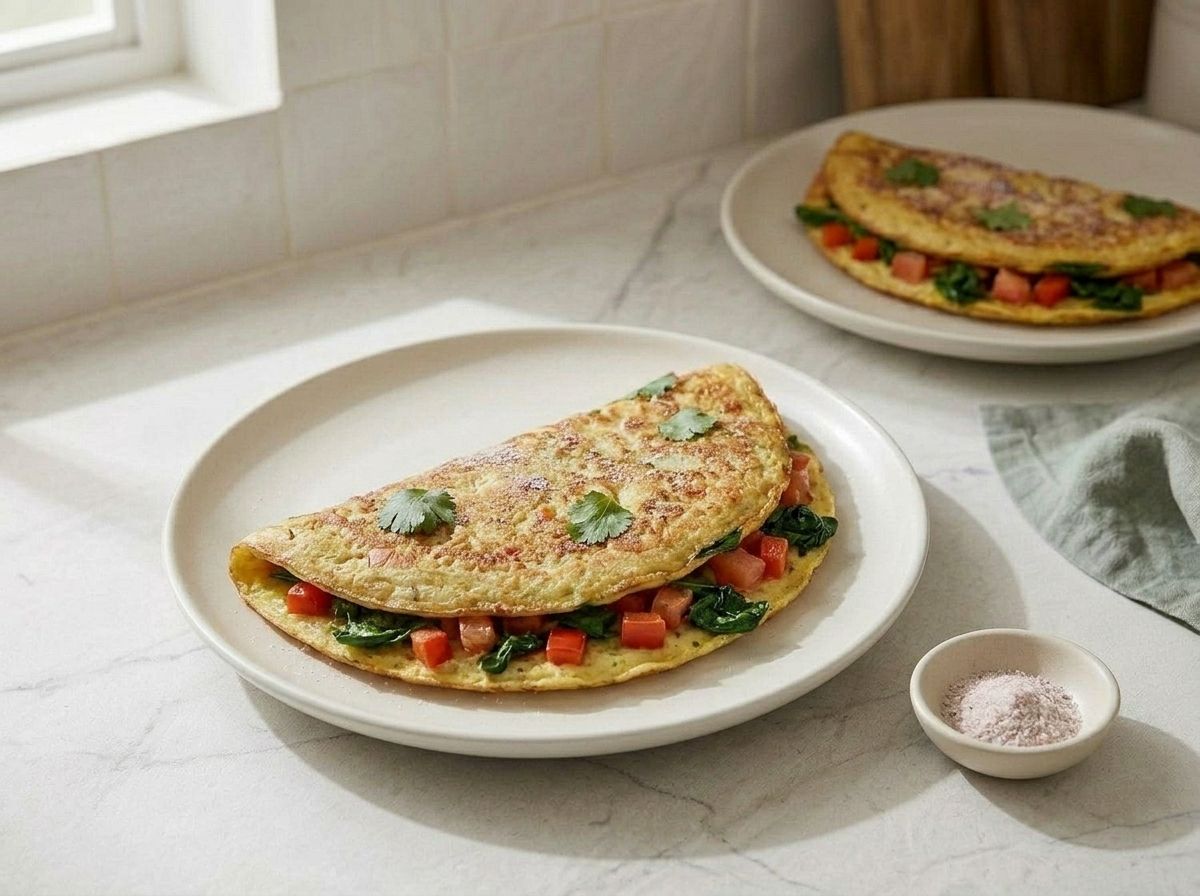
Slide the folded omelette onto a plate and sprinkle the kala namak over it while it is hot. The sulfur in that salt is what makes the dish read as egg, and it burns off in the pan, so it has to go on at the end rather than into the batter. Cook the second omelette the same way and serve both straight away with the herbs, because chickpea flour pancakes tighten and turn dense as they sit.
Notes
Kala namak goes on after cooking, never into the batter. Heat drives off the sulfur compounds that make it taste of egg.
A rested batter thickens. Loosen it with a splash of water until it pours like cream before it goes near the pan.
Nutritional yeast adds a savory, faintly cheesy background. The omelette works without it.
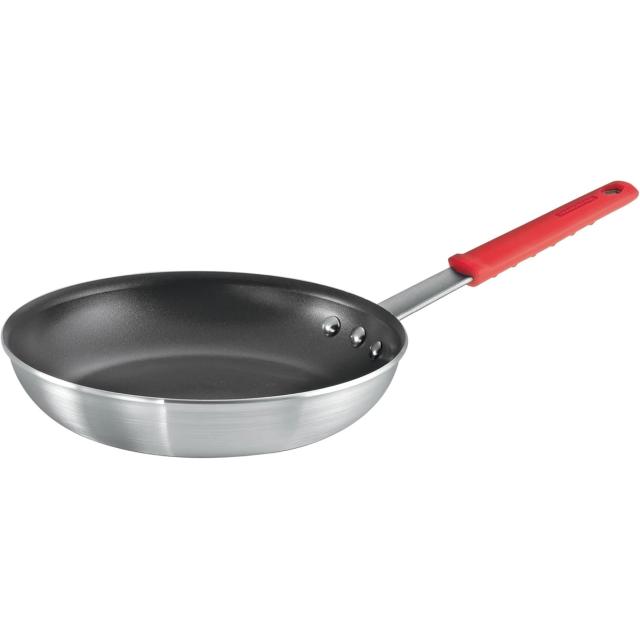
A 20 to 24 cm (8 to 9 inch) skillet gives an omelette thick enough to fold and thin enough to cook through.
Nutrition Facts
2 omelettes · 274 g per serving
- Calories
- 336 kcal
% Daily Value*
- Total Fat
- 11.5 g15%
- Saturated Fat
- 1.4 g7%
- Sodium
- 453 mg20%
- Total Carbohydrate
- 41 g15%
- Dietary Fiber
- 9.4 g34%
- Sugars
- 7.9 g—
- Protein
- 17.9 g36%
Recipe from veggierecipes.blog
When it goes wrong
Troubleshooting
It tore when I folded it
Almost always the fold came too early. The signal to look for is the top surface, not the clock: it has to go matte and dry all the way to the middle, with no wet shine left, and the edges have to have pulled back from the sides of the pan. Fold it while any part of the top is still liquid and it squeezes out along the crease. If it looked ready and still tore, the other two causes are a batter that was not rested, so nothing had hydrated enough to hold together, or too much filling. Keep the vegetables to about a cup for two omelettes and scatter them on top of the poured batter rather than stirring them through.
It tastes chalky, or like raw beans
Raw chickpea flour is genuinely bitter, and the taste only leaves when the flour is hydrated and then cooked all the way through. Two things fix it. Give the batter the full 20 minute rest, which is not an optional refinement but the step that turns dusty flour into batter. Then keep the lid on for the full 5 to 6 minutes and go by the surface rather than the color: chickpea flour browns underneath long before the middle has set, and the top still looking wet is the only reliable sign it is not done. If you want to go further, dry-toast the flour in a pan for a couple of minutes before you mix it and let it cool first.
The middle stayed wet and gummy while the outside browned
The heat was too high, so the outside got ahead of the inside. Medium, and covered, is the whole technique here: the lid traps steam and sets the top of the omelette at roughly the same speed the bottom is browning, which is what lets it cook through without being turned over. The other cause is water from the filling. Any vegetable that releases liquid, so mushrooms, zucchini, onion, unseeded tomato, needs a few minutes in the pan on its own before it goes anywhere near the batter.
It does not taste like egg at all
Then either there is no kala namak in it, or the kala namak went into the batter. In the batter it is just salt, because the sulfur compounds that do the work are volatile and the pan drives them straight off. It goes on the finished omelette, off the heat, while it is still hot. The third possibility is an old jar: kala namak keeps for years but it does fade, and if it no longer smells aggressive when you open it, it will not do anything on the plate either.
The batter separated while it rested
That is supposed to happen, and it is not a sign anything is wrong. Chickpea flour is heavy and settles out of suspension over 20 minutes, so you will find a layer of water on top and a paste underneath. Whisk it back together. What you should expect alongside it is that the batter has thickened, sometimes considerably: loosen it with a splash of water until it pours like heavy cream again, then add the baking powder and cook.
It stuck to the pan and came up in pieces
Chickpea batter needs a genuinely non-stick surface, a real film of oil rather than a smear, and then to be left alone. The most common version of this problem is fiddling: lifting an edge at two minutes to check breaks the crust before there is a crust to break. Set the pan on medium, pour, cover, and do not touch it until the edges have visibly pulled away from the sides. If you are cooking two in a row, wipe the pan between them, because the browned bits left from the first omelette are what the second one glues itself to.
Before you serve
Serving & Storage
In North India a chilla comes to the table with green chutney, cilantro and mint blitzed with green chile and lime, and it is still the best thing you can put next to this omelette. The sharpness cuts the density of the chickpea flour in a way that ketchup or hot sauce does not quite manage. A dusting of chaat masala over the top is the other traditional move, and it is a useful one here because chaat masala already contains kala namak, so it deepens the eggy note instead of fighting it.
Beyond that it behaves like any savory breakfast. Smashed avocado on toast alongside, a spoon of fresh tomato salsa, a handful of cilantro or parsley, or a leafy salad if you are eating it as a light dinner rather than at breakfast. If you would rather serve it open than folded, leave it flat and bring it to the table vegetable side up, but do that straight out of the pan: once it has cooled it cracks along a crease instead of bending.
Making it ahead
The batter is the part that benefits from being made in advance. Whisk the flour, water, turmeric, sea salt and pepper the night before and refrigerate it covered, and you get a much longer hydration than 20 minutes on the counter, which improves the texture rather than harming it. Leave out the baking powder and the vegetables. Both go in after the batter has come back to room temperature in the morning, the baking powder because it would be spent by then and the vegetables because they would leach water into the batter overnight. Expect it to have thickened considerably and to need a good splash of water and a hard whisk.
What does not work is cooking the omelettes ahead and holding them warm. Twenty minutes in a low oven dries them into something leathery, and stacking them traps steam and makes them soggy at the same time. If you are cooking for more than two people, make the batter ahead and cook to order.
Storing leftovers
Chickpea flour keeps setting as it cools, so a leftover omelette is denser and chewier than a fresh one no matter what you do. Refrigerated in an airtight container they hold for 2 days. Reheat them dry in a hot skillet for about a minute a side, which drives off the moisture they picked up in the fridge and brings back some of the crust. Do not use the microwave, which does the opposite and turns them squeaky.
They freeze better than they refrigerate, oddly enough. Cool them completely, stack them with parchment between each one, and freeze in a bag for up to 2 months. Reheat straight from frozen in a dry skillet over medium heat, a couple of minutes a side, without thawing them first: thawed chickpea pancakes weep and go grainy. The one thing not to bother with is eating them cold from the fridge, as a packed lunch or otherwise. That is when the dense, slightly rubbery quality is most obvious and the dish shows least well.
Still wondering
Frequently Asked Questions
Do I really need kala namak?
It is the one thing that makes this taste like an omelette rather than a savory pancake. Kala namak is an Indian rock salt whose sulfur compounds smell and taste startlingly of boiled egg, and nothing else in a normal kitchen does that job. Without it you still get a good chickpea flour pancake, which is a real dish in its own right, but it will not remind anyone of eggs. It keeps for years and costs a few dollars at any Indian grocer or online.
Is chickpea flour gluten-free?
Chickpea flour is naturally gluten-free. If you are cooking for celiac disease, check the bag for a gluten-free mark, because a lot of it is milled in facilities that also handle wheat and cross contact is common.
Can I customize the vegetables?
Yes, within one rule: anything that releases water has to be dealt with before it meets the batter. Mushrooms, zucchini and onion all need a few minutes in the pan first, the same way the bell pepper does. Leafy greens can go on raw. Scatter whatever you use over the poured batter rather than stirring it in, and keep the total to about a cup for two omelettes, because a heavily loaded omelette splits along the crease when you fold it.
More Savory Vegan Breakfasts
Made this?