
Vegan Mac and Cheese Recipe
Published · Updated
Creamy vegan mac and cheese with a blended cashew and nutritional yeast sauce, loosened with starchy pasta water so it clings instead of pooling. Ready in about 30 minutes.
Jump To Recipe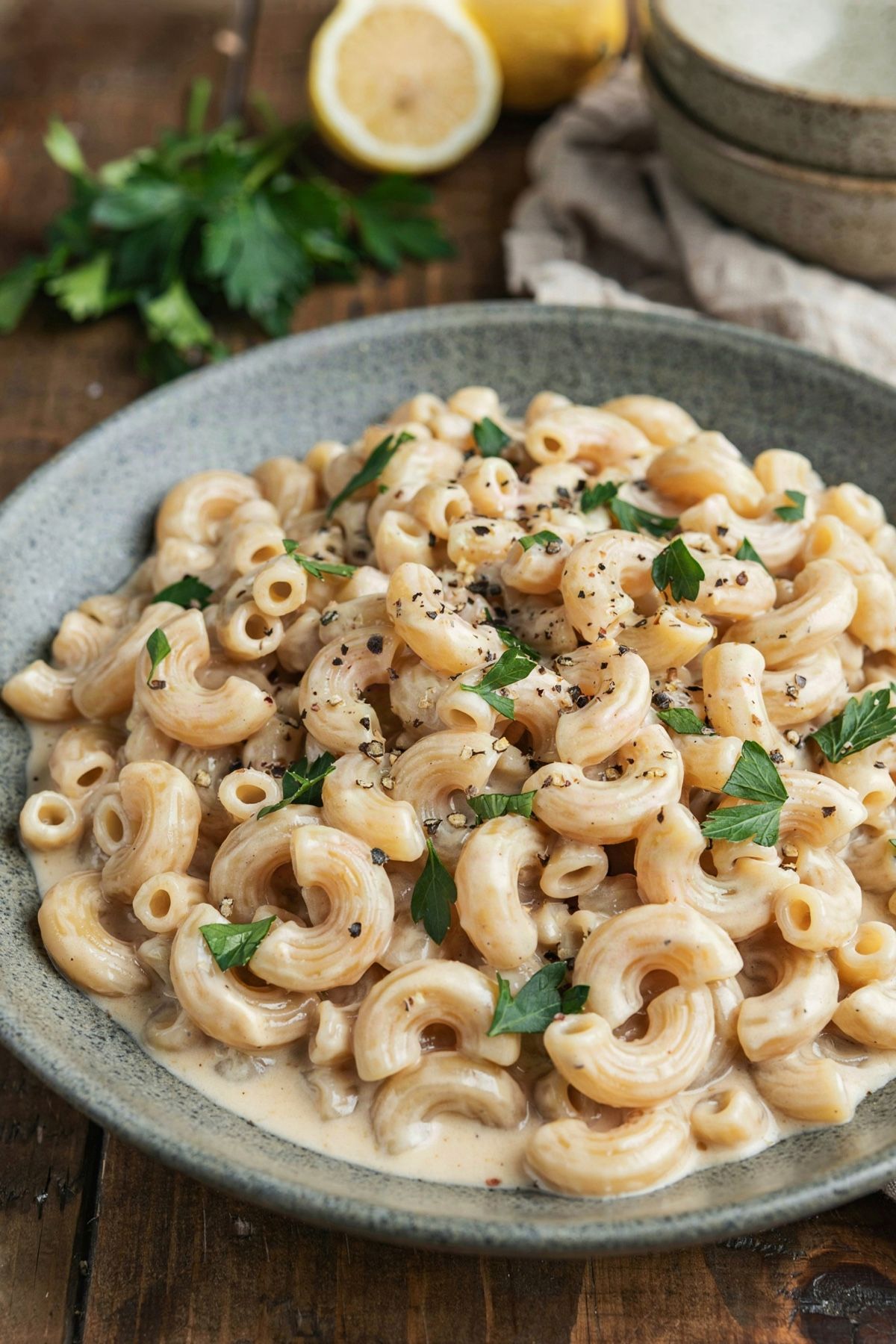
Why This Vegan Mac and Cheese Just Works
There’s something unbeatable about digging into a bowl of mac and cheese. Especially when it’s made with a creamy, dairy-free sauce that hits all those nostalgic notes. Over the years, I’ve tried plenty of vegan alternatives, but this one hits the mark for flavor, texture, and pure comfort.
The blend of cashew nuts and nutritional yeast is a game-changer. The sauce has a rich, tangy flavor with an afternote of cheese. Smoky paprika, garlic, and a touch of lemon give it a rich flavor in just a few steps.
Why is this recipe a total weeknight winner?
- Quick and easy, on the table in about 30 minutes
- No processed vegan cheese required, just real pantry staples
- Gluten-free friendly if you choose gluten-free pasta
- Leftovers reheat beautifully, so it’s meal-prep approved
Honestly, this is the mac and cheese I crave on chilly nights or whenever I want to show people how delicious plant-based comfort food can be. No one misses the dairy, promise!
The story
Vegan Mac and Cheese Was Invented on a Tennessee Commune
Macaroni and cheese has a clear paper trail. Elizabeth Raffald printed the first English recipe in 1769, and the version that entered American cooking came from James Hemings, the enslaved chef Thomas Jefferson had trained in Paris. Hemings’ macaroni pie was served at a presidential dinner in 1802, and the baked casserole Americans still argue about descends from his kitchen.
The vegan version you can date almost exactly. In 1975 a press on an intentional community in Summertown, Tennessee, put out The Farm Vegetarian Cookbook, compiled by Louise Hagler. It was the first cookbook published in the United States with no meat, eggs or dairy anywhere in it, and it carried a Macaroni and “Cheese” Casserole built on a nutritional yeast sauce. The Farm sold nutritional yeast by mail order as a B12 source. If there is a tub of yellow flakes in your cupboard, that is roughly where the habit started.
The original sauce was not a nut. Half a cup of nutritional yeast and half a cup of flour whisked into water with salt and garlic powder, cooked until it thickened, finished off the heat with margarine and a teaspoon of wet mustard. A roux, doing what a roux does. Cashew sauces came decades later and waited on a domestic blender strong enough to take a soaked nut past creamy and into smooth. The mustard survived, and it is below for the same reason it was there in 1975.
The substitution works for a reason beyond coincidence. Both foods are what is left when microbes take protein apart. Cheddar gets its depth from bacteria cleaving casein into free glutamates over months. Nutritional yeast is Saccharomyces cerevisiae grown on molasses, deactivated and dried, which leaves those same glutamates behind in days. The sauce is not imitating cheese from outside. It reaches the same compound by a shorter road.
What to buy
Ingredient Notes
Raw cashews
Raw is the word that matters. Roasting sets the cell walls and the sauce stays gritty however long you blend. Cashew pieces cost less than whole halves and blend identically. They are fatty enough to go rancid in a few months at room temperature, so keep the bag in the freezer.
Nutritional yeast
Three yellow powders sit near each other in health food shops. Nutritional yeast is deactivated and savory; brewer’s yeast is a brewing by-product and bitter; active dry yeast is alive and will only foam. Weigh the flakes if you can, because flake size varies enormously and a third of a cup of large flakes can weigh half what the fine stuff does.
Unsweetened almond milk
Unsweetened is load-bearing. Sweetened almond milk carries around seven grams of sugar a cup, and vanilla versions bring the vanilla too. Oat and soy work and give a heavier body. Skip rice milk, thin and sweet at once, and canned coconut unless you want the bowl to taste of coconut.
Dijon mustard
A bridge rather than a flavor. Mustard carries compounds that hold oil and water together, which stops the sauce separating as it warms, and its sharpness pushes nutritional yeast from nutty towards aged. A teaspoon disappears. American yellow works but brings turmeric color and harsher vinegar; wholegrain leaves seeds in a sauce that should be smooth.
Smoked paprika
Half a teaspoon, no more. This is what people reach for when the sauce tastes flat, and it is almost never the answer. Past half a teaspoon in four servings it stops reading as depth and starts reading as barbecue. Buy sweet pimentón rather than hot, and check the date, because paprika loses its smoke faster than most ground spices.
White miso paste
Optional, and the biggest upgrade on the list. A teaspoon of shiro miso adds a fermented savoriness nutritional yeast alone does not reach. Use white or yellow, not red, which is aged longer and tints the sauce brown. Add it before blending and taste before any more salt, since miso brings its own.
Elbow macaroni
The shape earns its place. Elbows catch sauce in the bend and most brands are ridged, which gives a thin sauce something to hold. Shells and cavatappi work the same way; smooth shapes like penne lisce let it slide off. Two cups of dry elbows is about eight ounces, and going above it is how this dish ends up dry.
Creamy Vegan Mac and Cheese
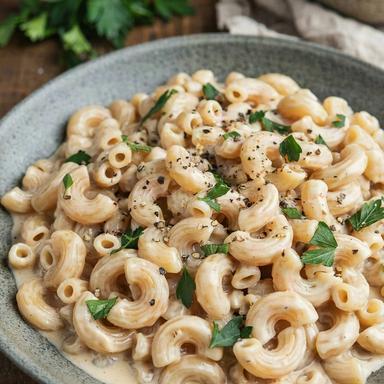
Creamy vegan mac and cheese built on a blended cashew and nutritional yeast sauce, loosened with starchy pasta water so it coats every piece. Dairy-free, on the table in half an hour.
Ingredients
Equipment
As an Amazon Associate I earn from qualifying purchases, at no extra cost to you.
Instructions
- 1
Soften the cashews
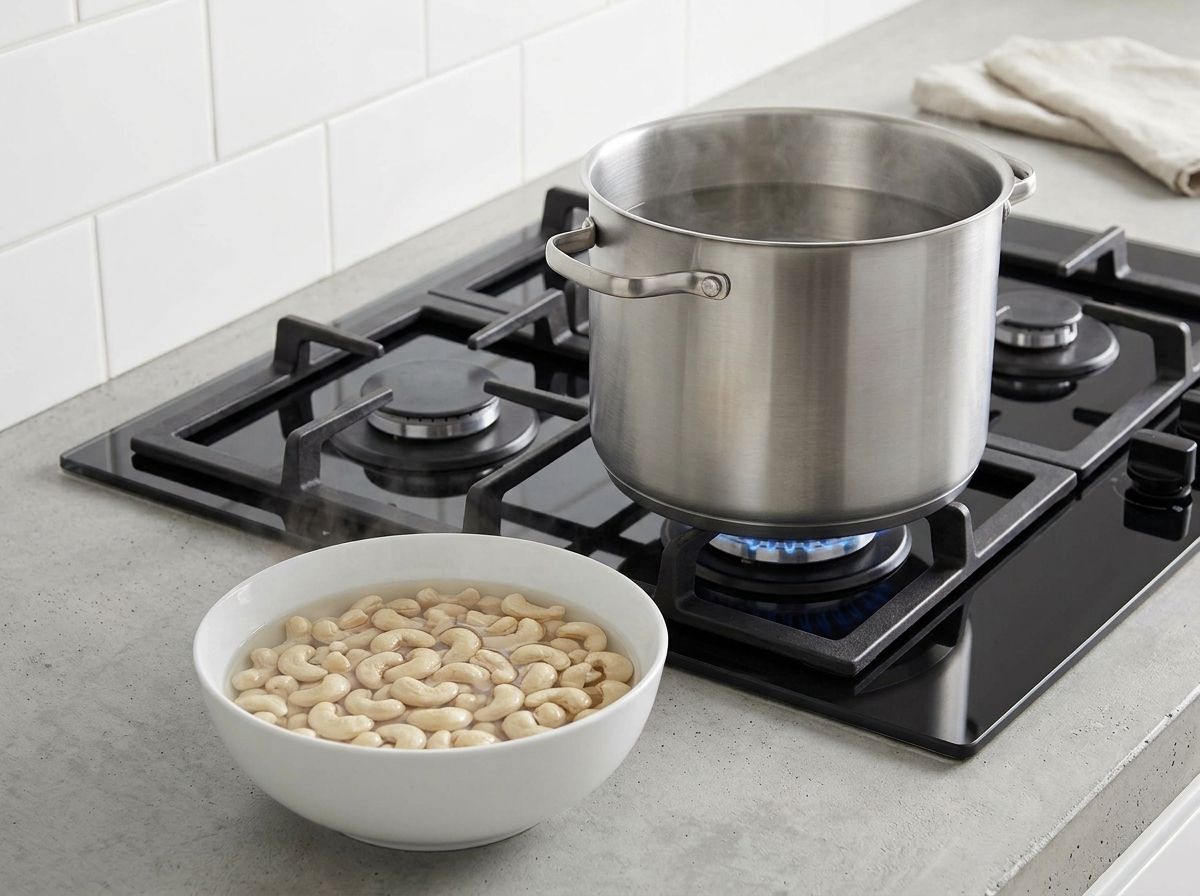
Put the cashews in a heatproof bowl and pour over boiling water to cover them by an inch. Leave them 15 minutes while you measure everything else and bring the pasta water up to the boil. Drain and rinse. The soaking water goes down the sink, not into the blender: it carries tannins leached from the skins that give the sauce a bitter edge. A cold soak of four hours or overnight does the same job.
- 2
Blend the sauce smooth
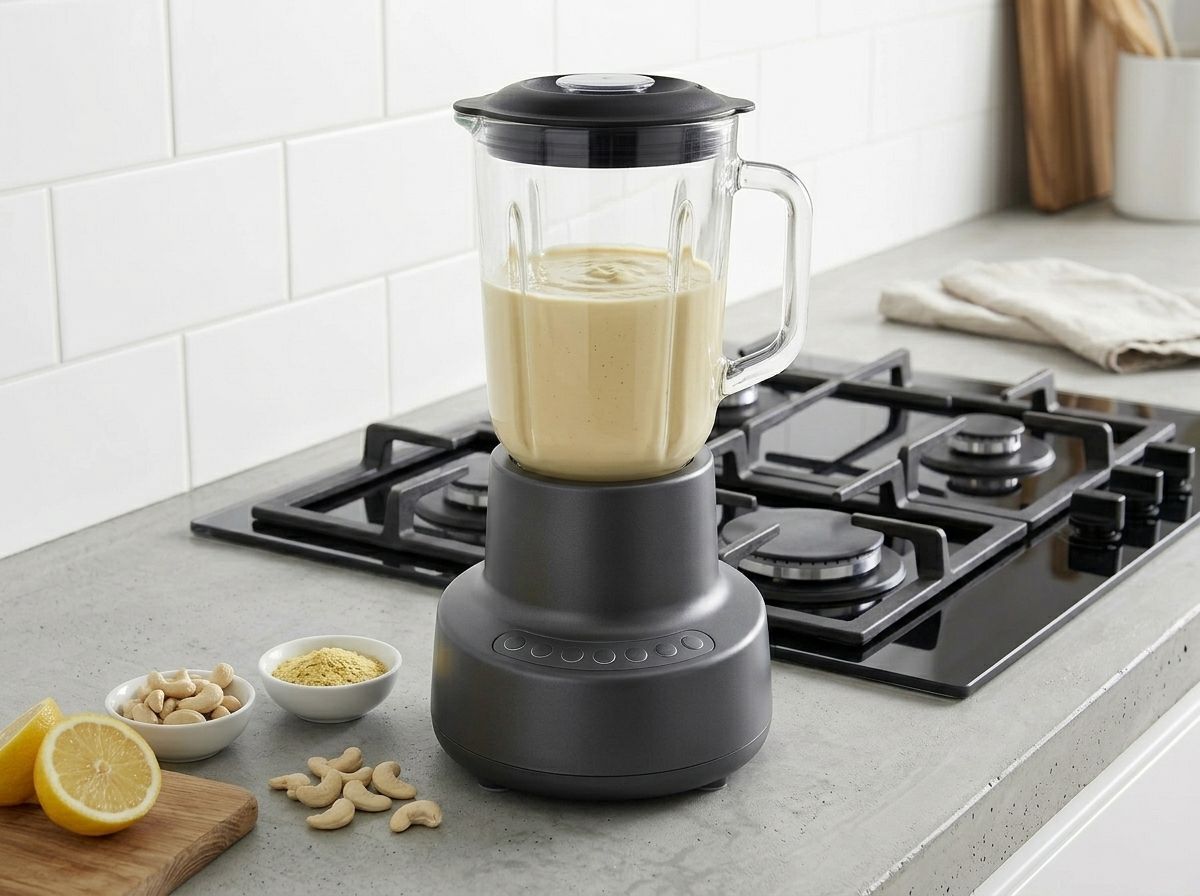
Blend the drained cashews with the nutritional yeast, almond milk, lemon juice, Dijon, garlic powder, onion powder, smoked paprika, salt, pepper and the miso if you are using it. Run it on high for a full 60 to 90 seconds, scraping down once. Judge it by touch: rub a drop between finger and thumb until you cannot feel any grain. It should pour like a thick batter and look thinner than you want the finished sauce, which is correct.
- 3
Cook the pasta a minute short
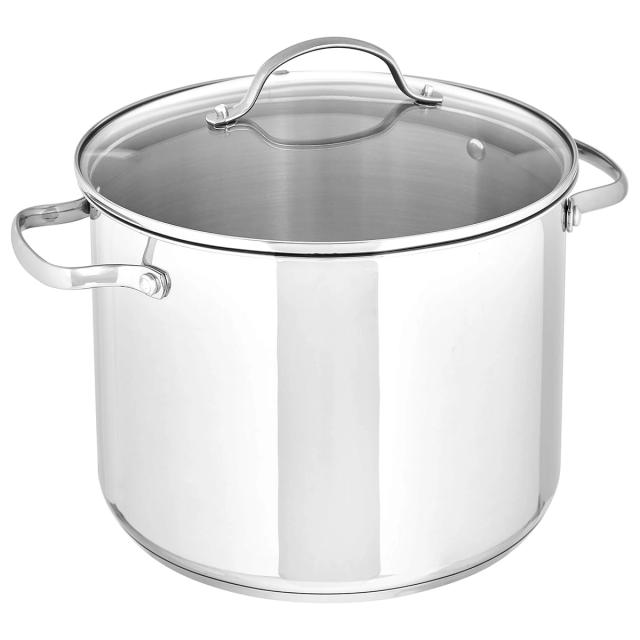
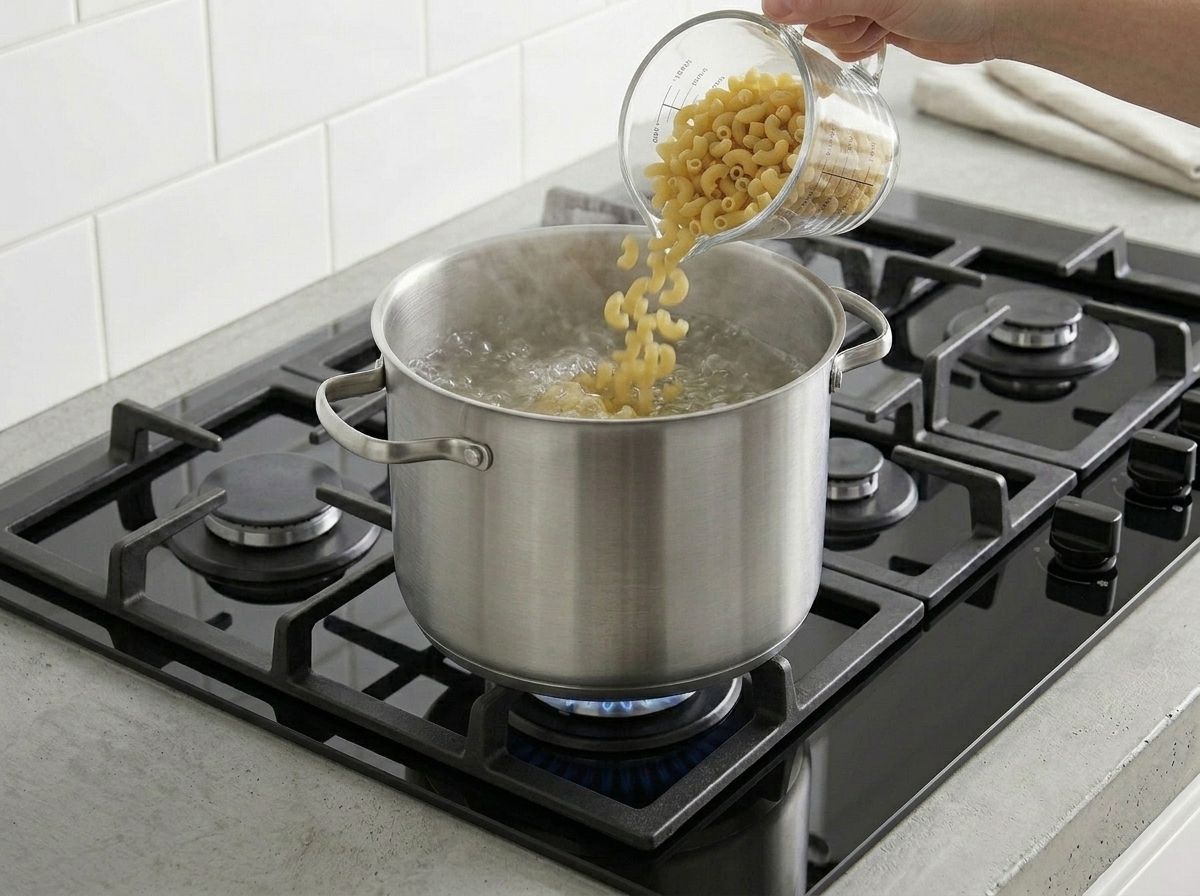
Salt the boiling water well, about a tablespoon for a large pot, then add the macaroni and cook it one minute less than the shortest time on the packet. It carries on softening once the sauce is on it, and pasta taken to full doneness first goes slack by the time it reaches the table.
- 4
Save a cup of pasta water
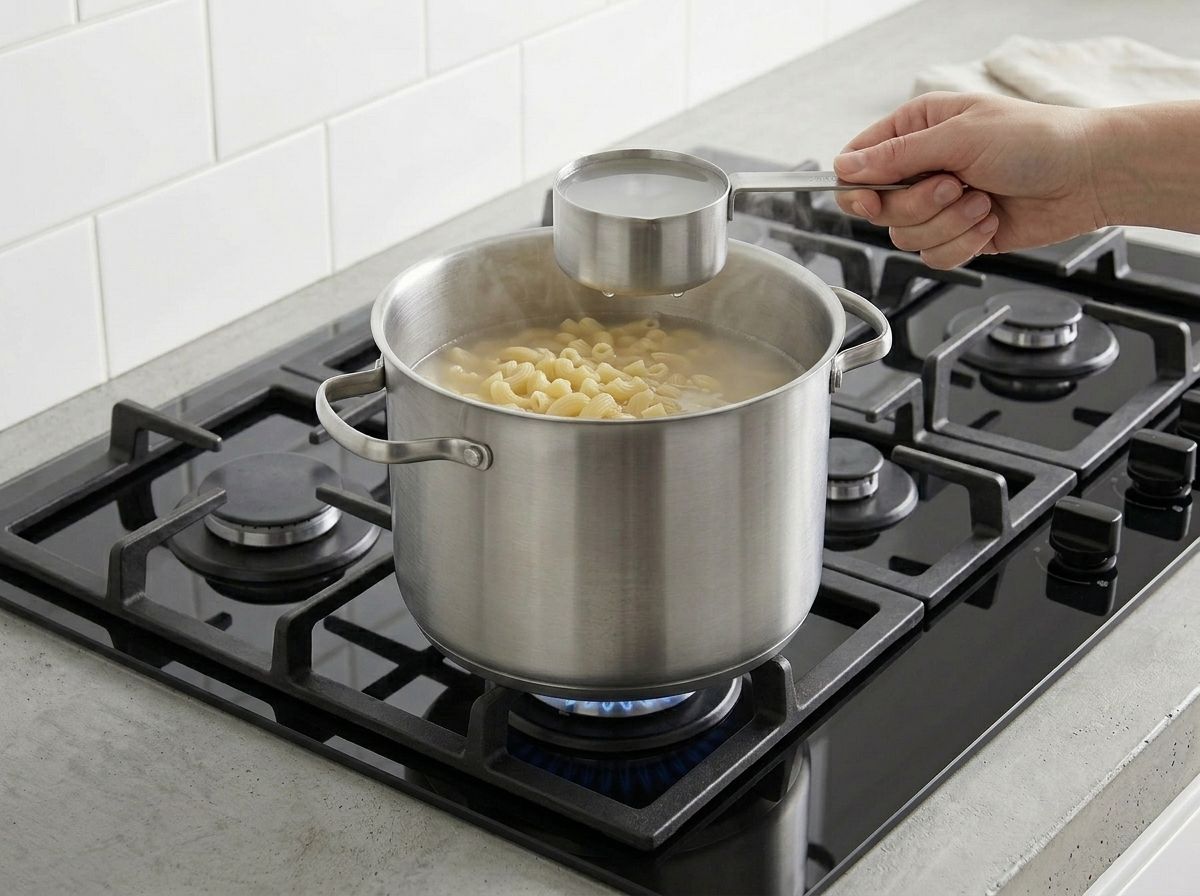
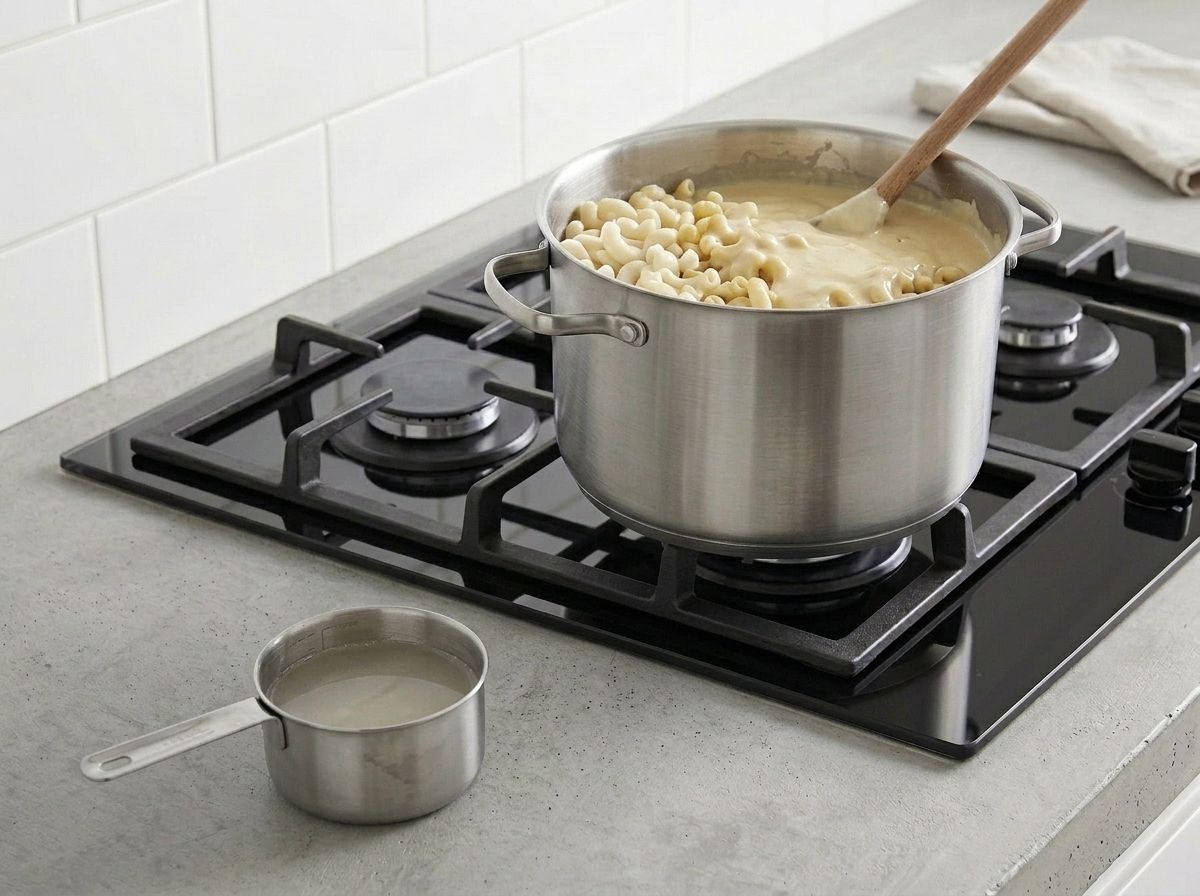
Before you go near the sink, dip a mug or a measuring cup into the pot and lift out a full cup of the cloudy cooking water. This is the step the dish turns on. The suspended starch loosens the cashew sauce without watering down the flavor and helps it grip the pasta rather than pooling in the bottom of the bowl. Drain the macaroni, and do not rinse it.
- 5
Toss it together off the heat
Return the pasta to the hot, empty pot with the heat switched off. Pour the sauce over, stir until every piece is coated, then loosen it with the reserved water a splash at a time, usually about half of what you saved. You want a sauce that slides rather than clumps. If the pot has gone cold, set it over the lowest flame for a minute, stirring constantly. Never let it near a simmer: cashew sauce catches on a hot base and turns grainy in seconds.
- 6
Season it properly, then serve
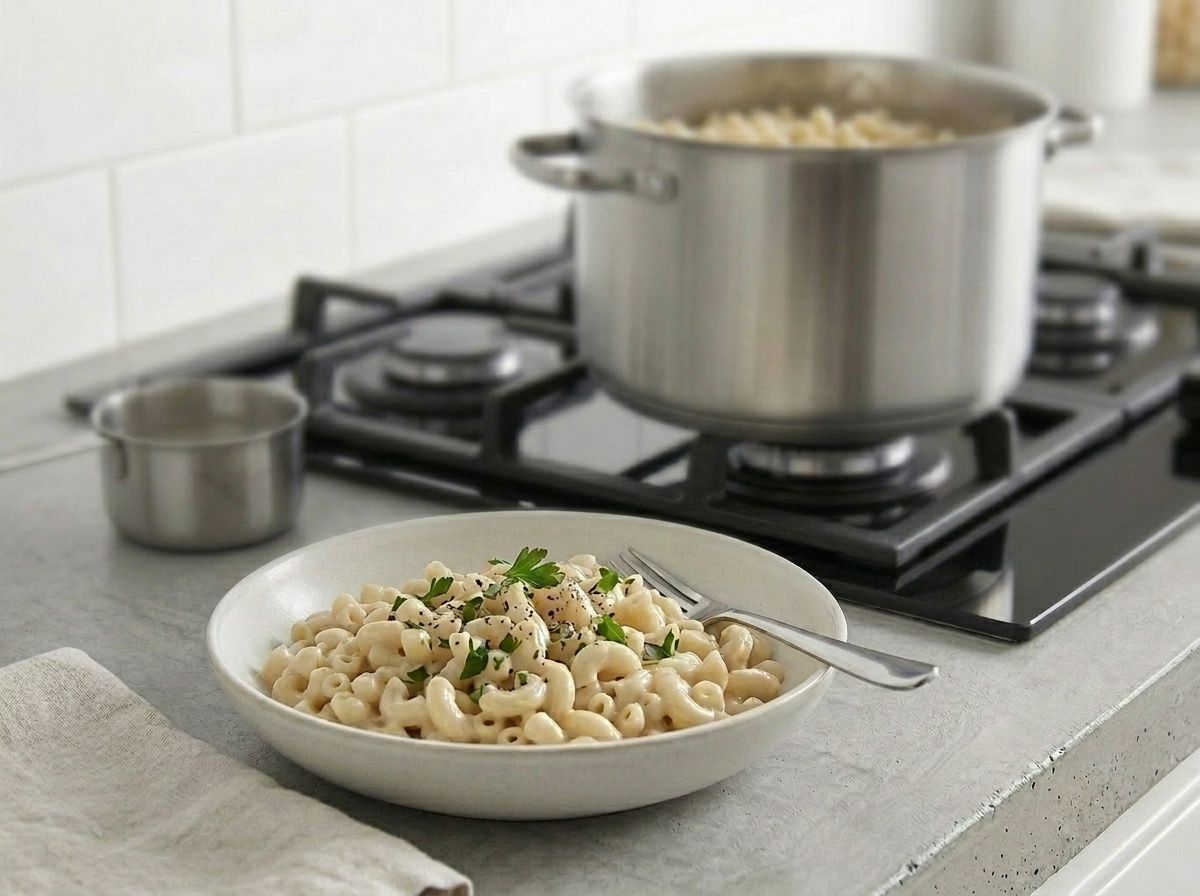
Taste, and expect it to want more salt than seems reasonable. The fat in a cup of cashews mutes salt, and under-seasoning is the commonest reason a cashew sauce reads bland rather than cheesy. Add a squeeze more lemon if it feels heavy. Serve straight away in warm bowls with the parsley over, because the sauce keeps thickening as it cools.
Notes
The sauce is meant to look too thin coming out of the blender. It tightens the moment it hits hot pasta, and again as the bowl cools.
Without a high-speed blender, soak the cashews overnight in cold water and blend in two batches so the blades stay covered.
To bake it, loosen the mac with all the remaining pasta water, tip it into an oiled dish, scatter over panko tossed with olive oil and bake at 400°F/200°C for 15 minutes.
Nutrition Facts
4 servings · 182 g per serving
- Calories
- 471 kcal
% Daily Value*
- Total Fat
- 16.3 g21%
- Saturated Fat
- 2.7 g14%
- Sodium
- 887 mg39%
- Total Carbohydrate
- 65.9 g24%
- Dietary Fiber
- 4.8 g17%
- Sugars
- 4.2 g—
- Protein
- 17.6 g35%
Recipe from veggierecipes.blog
When it goes wrong
Troubleshooting
The sauce is grainy and blending longer does not fix it
The cashews were not soft enough going in. Two hours in cold water makes a cashew feel soft without breaking down its cell walls, and once the blades have failed to burst them, running longer only heats the sauce. Fifteen minutes under boiling water beats two hours cold, because heat speeds up the pectin breakdown holding the cells together. Then give it a real 60 to 90 seconds, not the 20 it takes to look smooth.
It tastes nutty and bland rather than cheesy
Almost always salt, occasionally acid. A cup of cashews puts a lot of fat in, fat mutes salt perception, and a batch seasoned by instinct lands at about half what it needs. Taste again once the pasta is in, because the pasta takes some. If it is salty enough and still dull, the missing note is sharpness: another tablespoon of lemon, or a teaspoon of miso, beats another spoon of nutritional yeast.
It tastes smoky, like barbecue sauce
Too much smoked paprika, and older recipes are partly to blame, since a full teaspoon across four servings was common advice. You cannot take it back out, so dilute it: blend another half cup of soaked cashews with half a cup of plant milk and a pinch of salt, stir it through, and cook a little more pasta to match.
The sauce seized into a paste the moment it hit the pasta
Normal, and exactly what the reserved pasta water is for. Cashew sauce is a loosely held emulsion, and the heat of freshly drained pasta tightens it within seconds. Add cooking water a splash at a time until it slides again. If it went grainy rather than merely thick, it got too hot, which is why the two meet in a pot that is off the flame. Rescue a broken sauce with a few tablespoons of cold plant milk and a hard whisk.
The sauce is thin and slides into the bottom of the bowl
Either the pasta was rinsed or the sauce was loosened with plain water. Rinsing washes off the surface starch sauce grips onto, and plain water dilutes without putting any starch back. If it has happened, hold the pot over the lowest heat and stir for two or three minutes to drive off liquid.
It came out beige, not orange
Beige is the honest color of cashews and nutritional yeast. The orange in most vegan mac photographs comes from something else in the blender, usually boiled carrot or squash, sometimes annatto. Those are legitimate but they are coloring, not flavor, and carrot brings a sweetness working against the sharpness you have just built. If it bothers you, one small boiled carrot blended in will do it.
Before you serve
Serving & Storage
Serve it with something sharp, because on its own this is a monotone bowl. A serving carries around 470 calories and sixteen grams of fat, most of it cashew, and richness on that scale wants cutting rather than matching. A vinegary slaw, quick-pickled red onions, greens wilted with lemon or roasted broccoli with chile flakes all do it, and so does hot sauce on the table. In American practice mac and cheese is as often a side as it is dinner.
Eat it hot and soon. Cashew sauce is at its best in the first ten minutes and keeps tightening as it cools.
Making it ahead
The sauce is the part that keeps. Blended and cooled, it holds four days in a sealed jar, setting to something closer to paste than sauce. Loosen it with plant milk and a whisk before it meets pasta. It freezes on its own for three months, though it separates as it thaws and needs another spin in the blender.
What does not work is assembling the dish ahead. Cooked pasta sitting in cashew sauce absorbs it steadily, and by the next day you have soft macaroni and very little sauce. Cook the pasta when you plan to eat.
Storing leftovers
Leftovers keep three days airtight. They come out of the fridge solid enough to hold the shape of the tub, which is only cashew fat and pasta starch setting. Stir through a splash of plant milk first, then reheat in a pan over low heat or in the microwave in thirty second bursts with a stir between. Do not let it boil, which splits the sauce.
Do not freeze the finished dish. Pasta frozen in sauce thaws mealy and the emulsion breaks at the same time, so you get a grainy sauce on chalky macaroni.
Still wondering
Frequently Asked Questions
Is this vegan mac and cheese gluten-free?
Not as written, since the elbow macaroni is wheat, but the sauce already is. Swap in gluten-free elbows and check one thing: if you use the optional miso, buy a rice-based shiro rather than a barley one, because barley miso is not gluten-free and the front label rarely says. Then pull the pasta two minutes short rather than one, since corn and rice blends go from firm to collapsing quickly, and use about a third of a cup of cooking water rather than half, because they shed far more starch.
Can I make it nut-free?
Yes, with adjustments rather than a straight swap. Raw hulled sunflower seeds are closest: a cup and a quarter to the cashews’ one cup, soaked the same way, plus a teaspoon of maple syrup, because they carry a bitterness cashews do not. Blanched almonds work but never get quite as smooth. To skip seeds too, blend one medium potato and one small carrot, both boiled soft, with half a cup of cooking water and three tablespoons of olive oil in place of the nuts, then add an extra tablespoon of nutritional yeast.
Can I double it for a crowd?
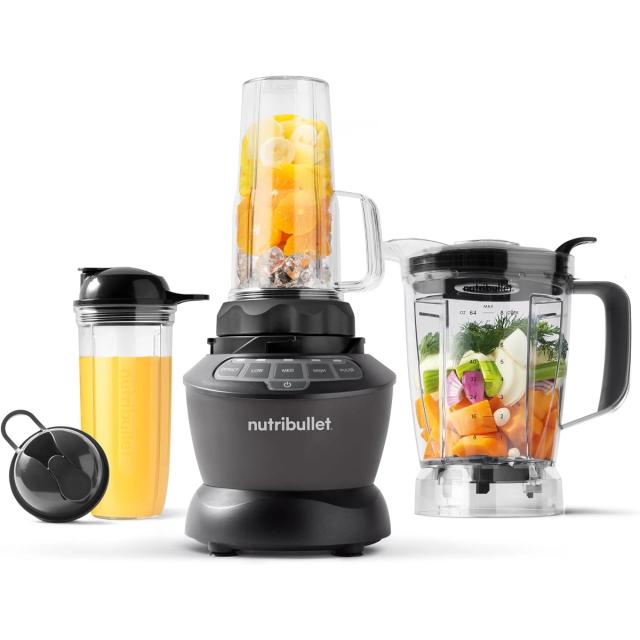
The pasta and sauce double straight, but the pasta water does not. Start with a cup and a quarter rather than two cups, since a bigger pot throws off more concentrated starch. Blend in two batches unless your jug takes more than six cups, because a full load of soaked cashews will not circulate and the top stays grainy. Combine in the largest pot you own with the heat off, adding the sauce in two goes.
Featured In These Collections
More Cozy Vegan Comfort Food
Made this?