
Vegan Pozole Recipe
Published · Updated
Pozole is named after its corn, not its meat, which is why this one loses the pork and loses nothing else.
Jump To Recipe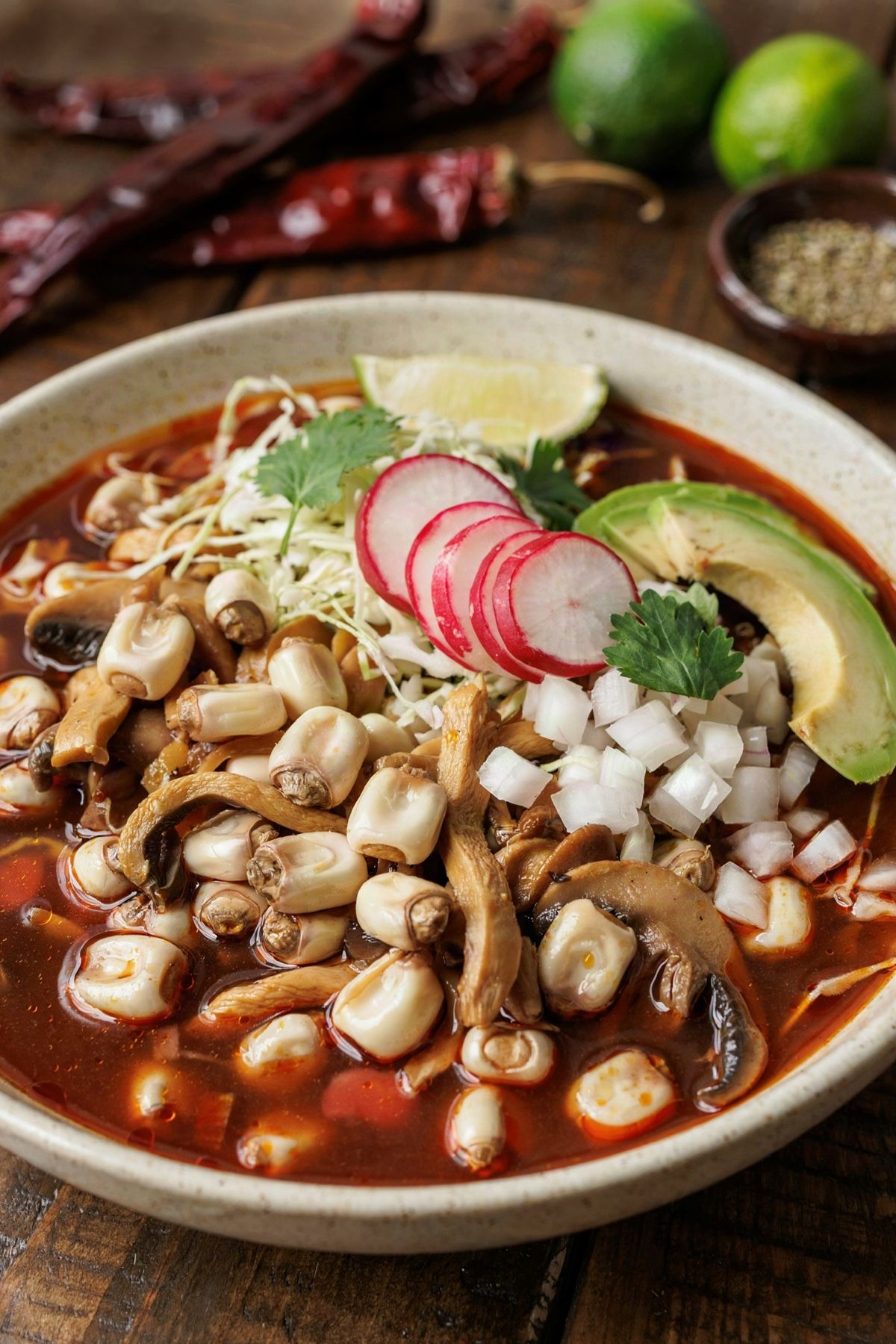
Why I Love This Vegan Pozole
The first pozole I made without meat was an apology for itself. It was hominy in vegetable broth with a spoon of chili powder stirred through, and it tasted like a soup that had heard about Mexico secondhand. What changed it was not a clever substitute for the pork. It was learning that the broth is a sauce, and that the sauce has to be fried.
So this version spends its effort where a pozoleria spends it, on eight dried chiles and the twenty minutes it takes to turn them into a sauce. The mushrooms are there for chew, but if you took them out you would still have pozole, because the corn is what the dish is named after.
What I like most about it is the last five minutes, which happen on the table rather than the stove. Everyone gets a bowl of the red broth and then wrecks it beautifully with cabbage, radish, raw onion and lime, in whatever proportion they like. It is the rare dinner where the cook stops working before the meal starts.
The story
Pozole Is Named After Its Corn, Not Its Pork
The word comes from the Nahuatl pozolli, and the translations argue with each other in a useful way. Some read it as hominy outright. Others read it as foamy or frothy, for the scum that rises off the pot as nixtamalized kernels swell and burst. Either way the name is about the corn. The variety grown for it is cacahuazintle, a landrace with kernels twice the size of ordinary white corn and a soft, floury starch that splits open under a long simmer into the shape Mexican cooks call a flower. The dish is named after that moment in the pot.
Maize was sacred to the Mexica, so pozole was a dish for particular days rather than any Thursday. Bernardino de Sahagun recorded it in the sixteenth century in the work now known as the Florentine Codex, and the ceremonial versions he describes were made with meat from human sacrifice, though historians still argue over how much of that was diet and how much was symbol. The Spanish banned the practice after the conquest and pork went into the pot in its place, reportedly because it was the closest thing available.
Which makes the pork the newest thing in a very old bowl. It arrived some five hundred years ago, into a dish whose corn and whose name predate it by centuries, and it arrived as a substitution in the first place. That is the argument for a vegan pozole that does not spend its time apologizing: nothing has to stand in for the pork, because the pork was already standing in for something else. What cannot be swapped out is the hominy and the chile.
The chile is what splits pozole into its three colors. Rojo, the Jalisco and Guerrero style this recipe follows, takes its deep red from dried guajillo and ancho pods that are toasted, soaked, blended and strained into a sauce. Verde, most associated with Guerrero, is built on tomatillos, pumpkin seeds and green chiles. Blanco is the oldest and plainest of the three: corn, broth, garnishes and nothing else. Get the red sauce right and the meat is not what you notice missing.
What to buy
Ingredient Notes
Guajillo and ancho chiles
These two do different jobs and the recipe needs both. Guajillo is the bright one, tangy and thin-skinned, and it supplies almost all of the red. Ancho is a dried poblano, dark and raisin-sweet, and it gives the broth its body. Three guajillos to every ancho is the ratio to keep if you scale the pot. Buy pods that still bend like leather: a chile that snaps when you fold it is old, and old chiles taste of dust however carefully you toast them.
Chili powder, which is not the same thing
The jar labeled chili powder in an American supermarket is a blend built for chili con carne, ground chile cut with cumin, garlic powder, oregano and usually salt. Half a teaspoon of it in six cups of broth is why so many vegan pozole recipes taste like vegetable soup wearing a hat. Pure ground chile is closer but still flat, because it lost the oils that toasting a whole pod releases.
Hominy
Field corn simmered in an alkaline solution until the hull slips off, which is nixtamalization and the reason hominy tastes of tortilla rather than sweetcorn. Canned is fully cooked and only needs warming, but rinse it hard: the canning liquid is starchy and salty and will cloud a broth you just strained clear. Dried takes about three hours and pays it back in bite. Frozen, from Latin markets, splits the difference at about forty minutes.
Mexican oregano
A different plant from the oregano in an Italian cupboard. Mexican oregano is Lippia graveolens, in the verbena family, and tastes of citrus and faint licorice. Mediterranean oregano is Origanum vulgare, a mint relative, piney and sweet. Use half the quantity of the Mediterranean kind if it is what you have, and expect the broth to lean herbal where it should lean bright.
Oyster mushrooms
Torn along the grain rather than sliced, they come apart into strands with the loose pull-apart texture the pork used to give, and they brown properly if the pan is hot and you leave them alone. King oysters hold their shape better. Two 20 oz cans of young green jackfruit in brine, boiled ten minutes and squeezed dry, are the other common route, and soy curls do the same job with more protein.
Vegetable broth
A bowl of this lands near 2,000 mg of sodium and almost none of it is the salt you add. It is the canned hominy and a standard salted broth stacking up. Low-sodium broth and a thorough rinse cut that close to half, which costs nothing since you season at the end anyway. Check the label either way if you are cooking this gluten-free.
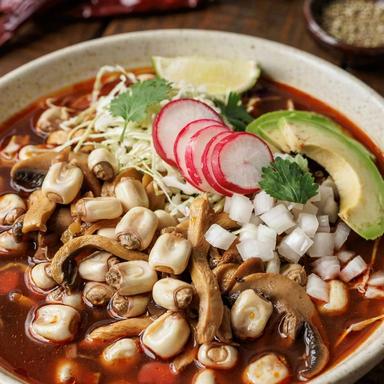
Vegan Pozole Rojo
Hominy simmered in a broth of toasted guajillo and ancho chiles, with browned oyster mushrooms and a tray of crunchy garnishes.
Ingredients
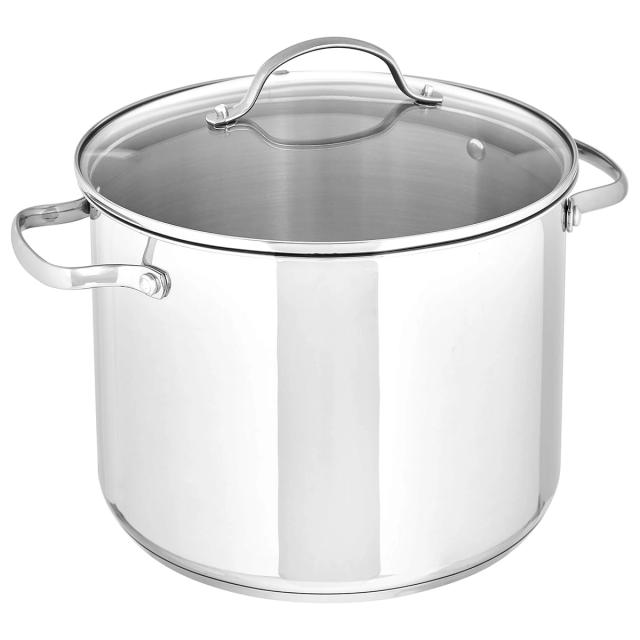
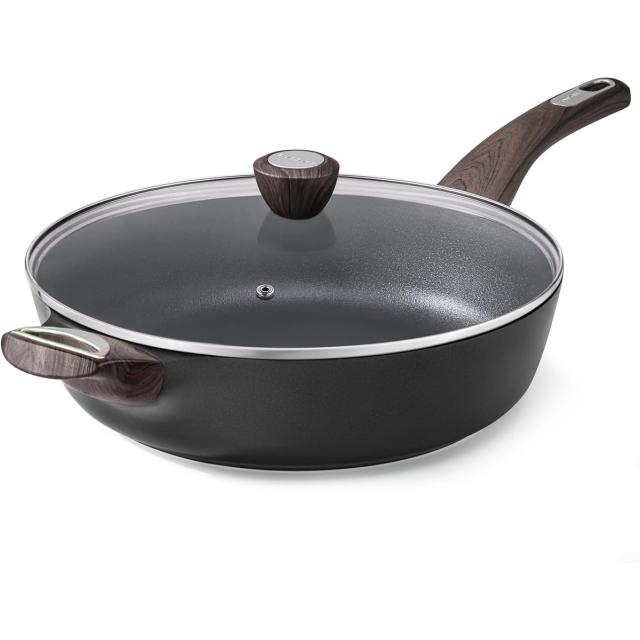
Equipment
As an Amazon Associate I earn from qualifying purchases, at no extra cost to you.

Instructions
- 1
Toast the dried chiles
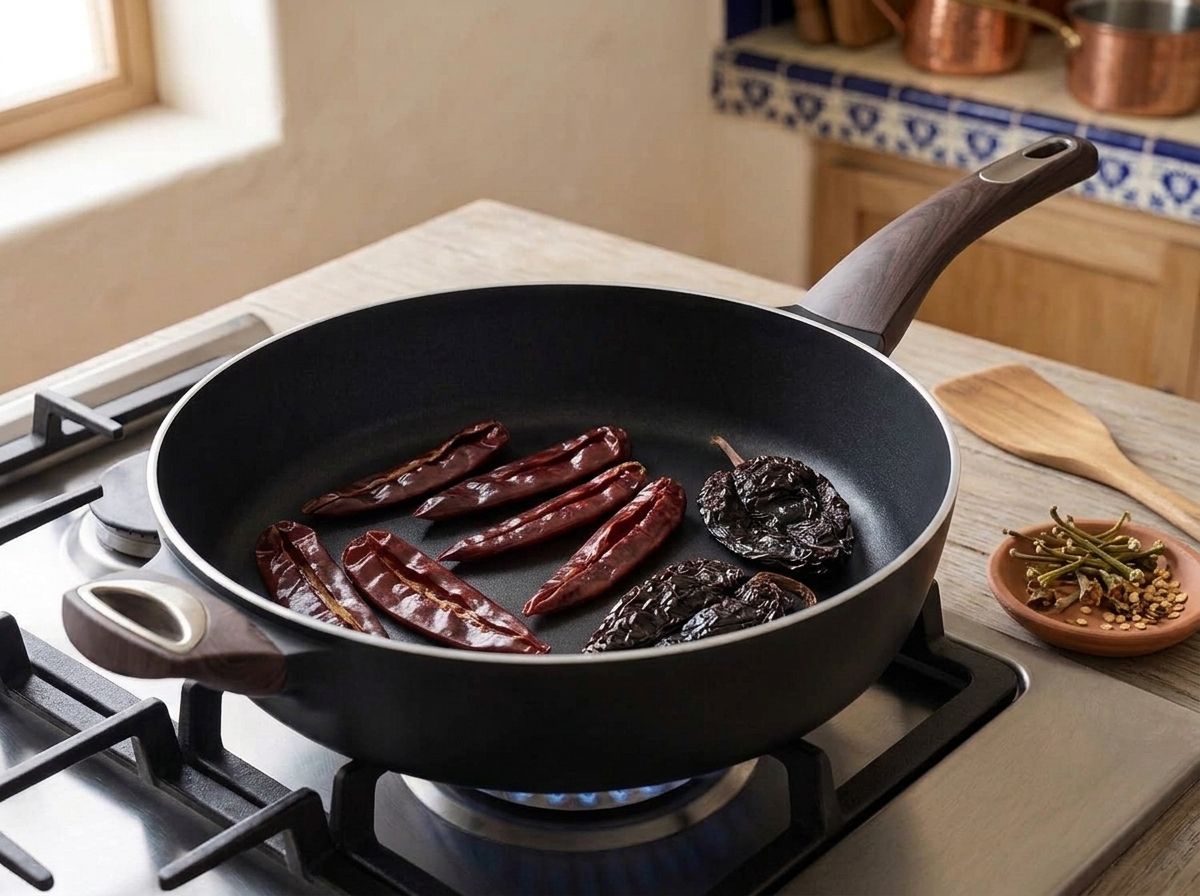
Pull the stems off the guajillo and ancho chiles, tear them open and shake out the seeds. Toast them in a dry skillet over medium heat, pressing them flat with a spatula, for 30 to 45 seconds a side, until they smell nutty and turn a shade darker. Lift them out the moment they puff, before any black appears.
- 2
Soak them soft
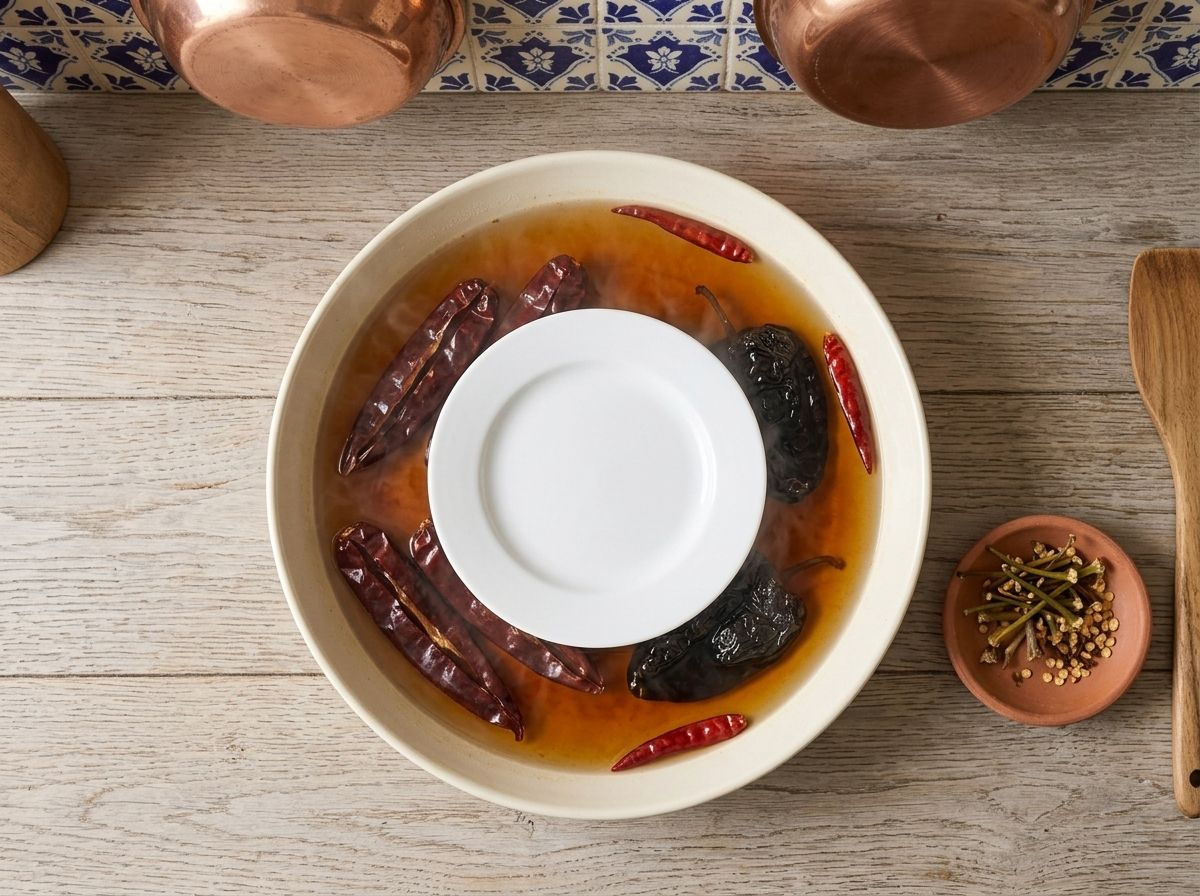
Put the toasted chiles in a heatproof bowl with the chiles de arbol if you want heat, pour over about 2 cups of just-boiled water and set a small plate on top to hold them under. Leave them 20 minutes while you get on with the mushrooms.
- 3
Brown the mushrooms
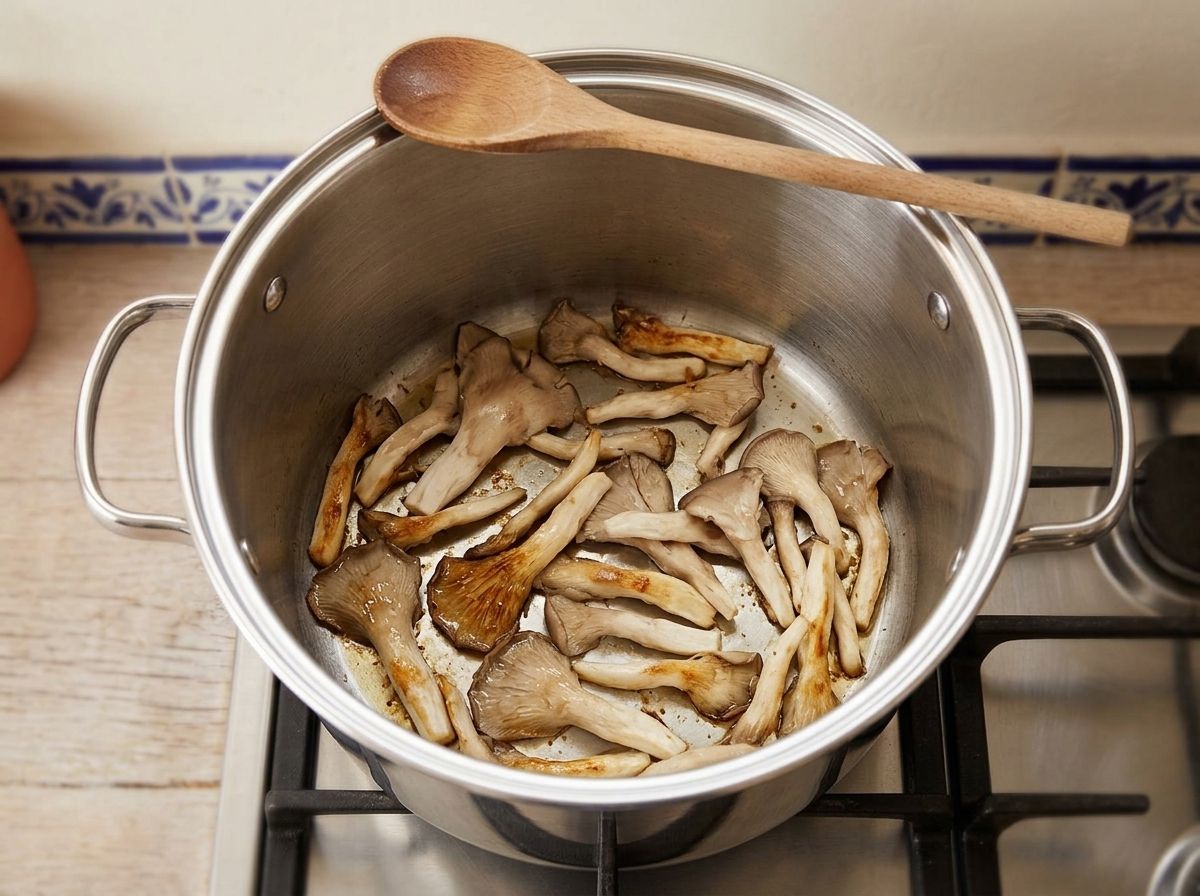
Tear the oyster mushrooms into thick strips. Heat 1 tablespoon of the oil in a large pot over high heat and lay the mushrooms in one layer. Leave them alone for 3 or 4 minutes, until the undersides are deep brown, then stir and cook 3 minutes more until the edges are crisp and they have shrunk by half. Tip them onto a plate.
- 4
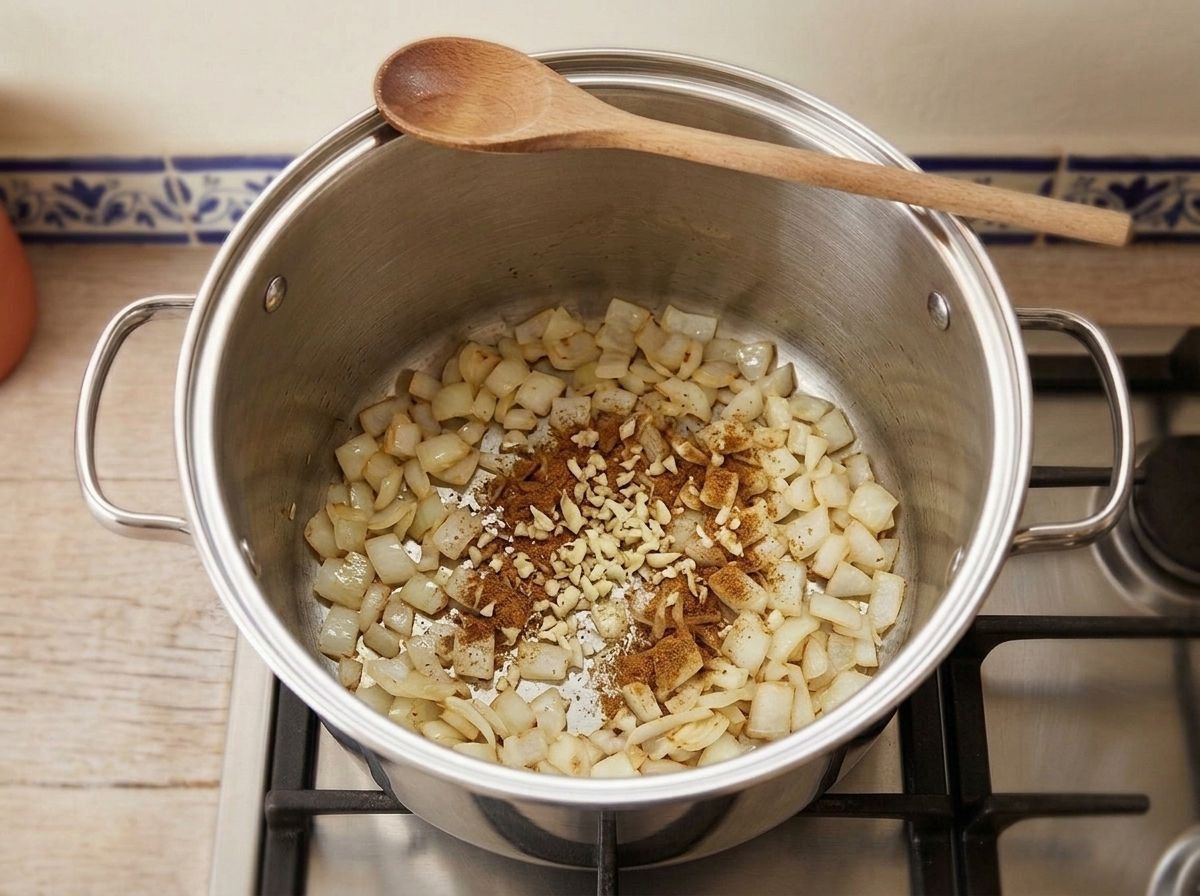
Soften the onion
Turn the heat to medium, add the rest of the oil and the chopped onion, and cook 6 to 8 minutes until soft and just starting to color. Mince 2 of the garlic cloves, stir them in with the cumin and 1 teaspoon of the oregano, and cook 1 minute more until fragrant.
- 5
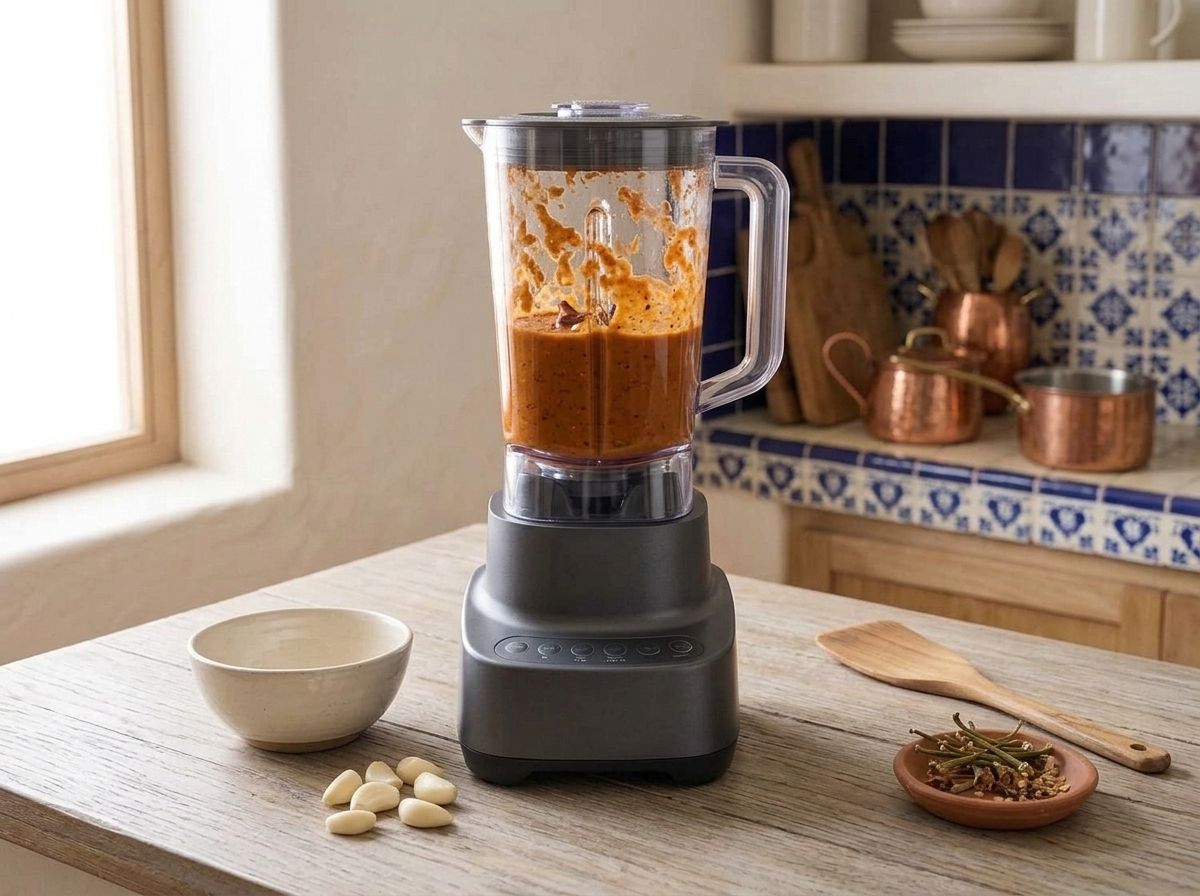
Blend the chile sauce
Lift the soaked chiles into a blender with the remaining 4 garlic cloves and 1 cup of their soaking water. Blend for a full 2 minutes, longer than feels necessary, until the sauce is as smooth as passata.
- 6
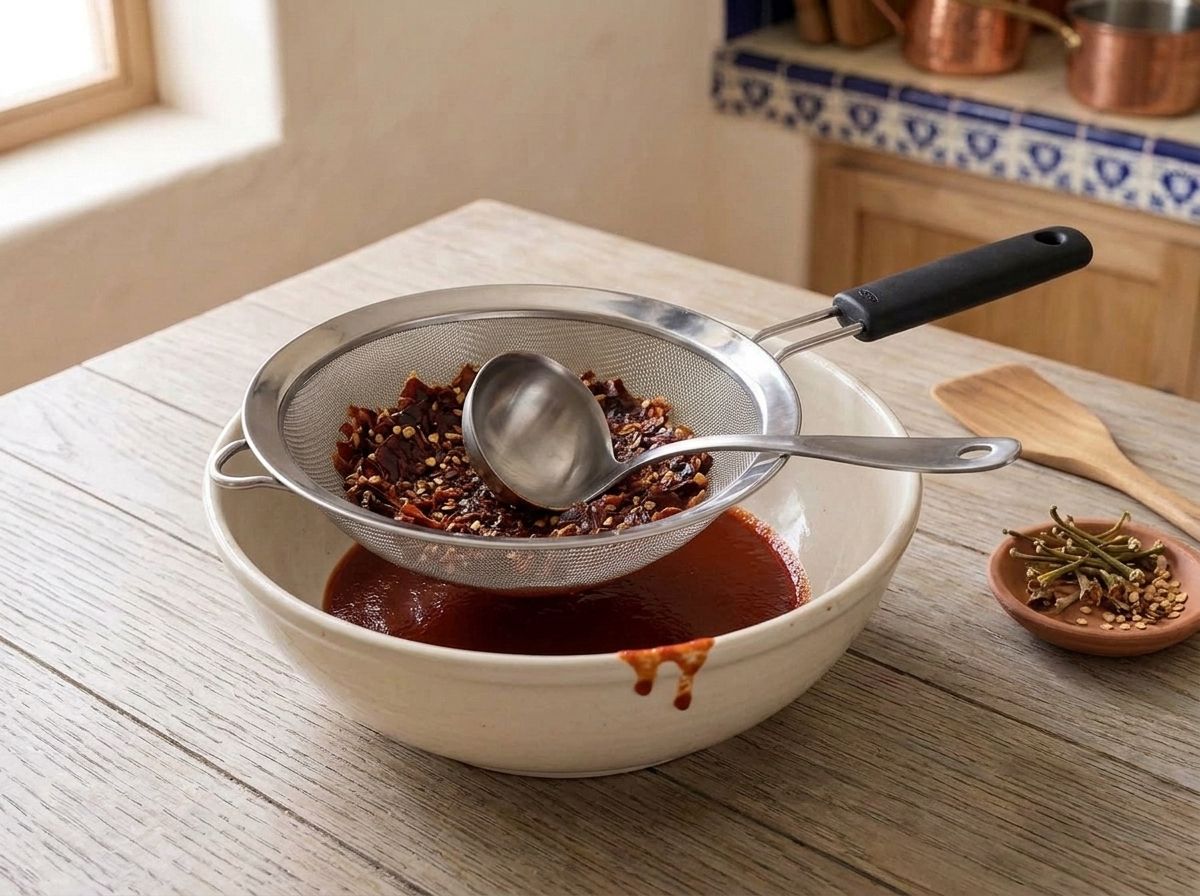
Strain out the skins
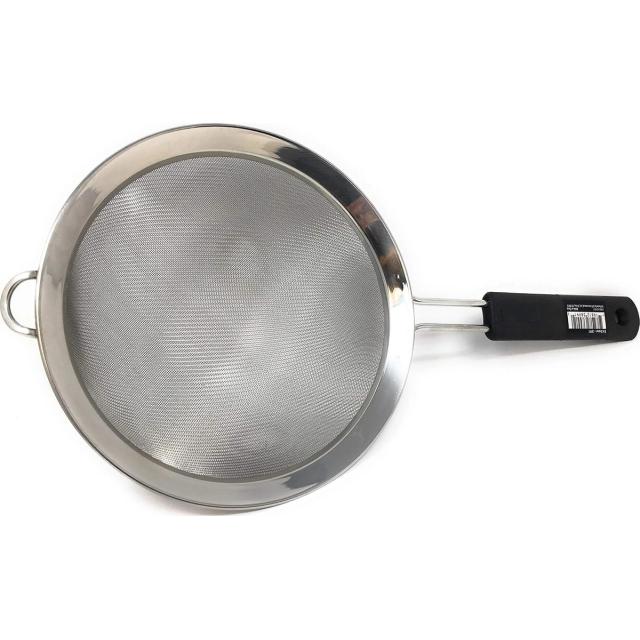
Pour the puree through a fine mesh strainer set over a bowl, working it through with a ladle and scraping what clings underneath. The skins left behind are what makes a homemade pozole broth gritty.
- 7
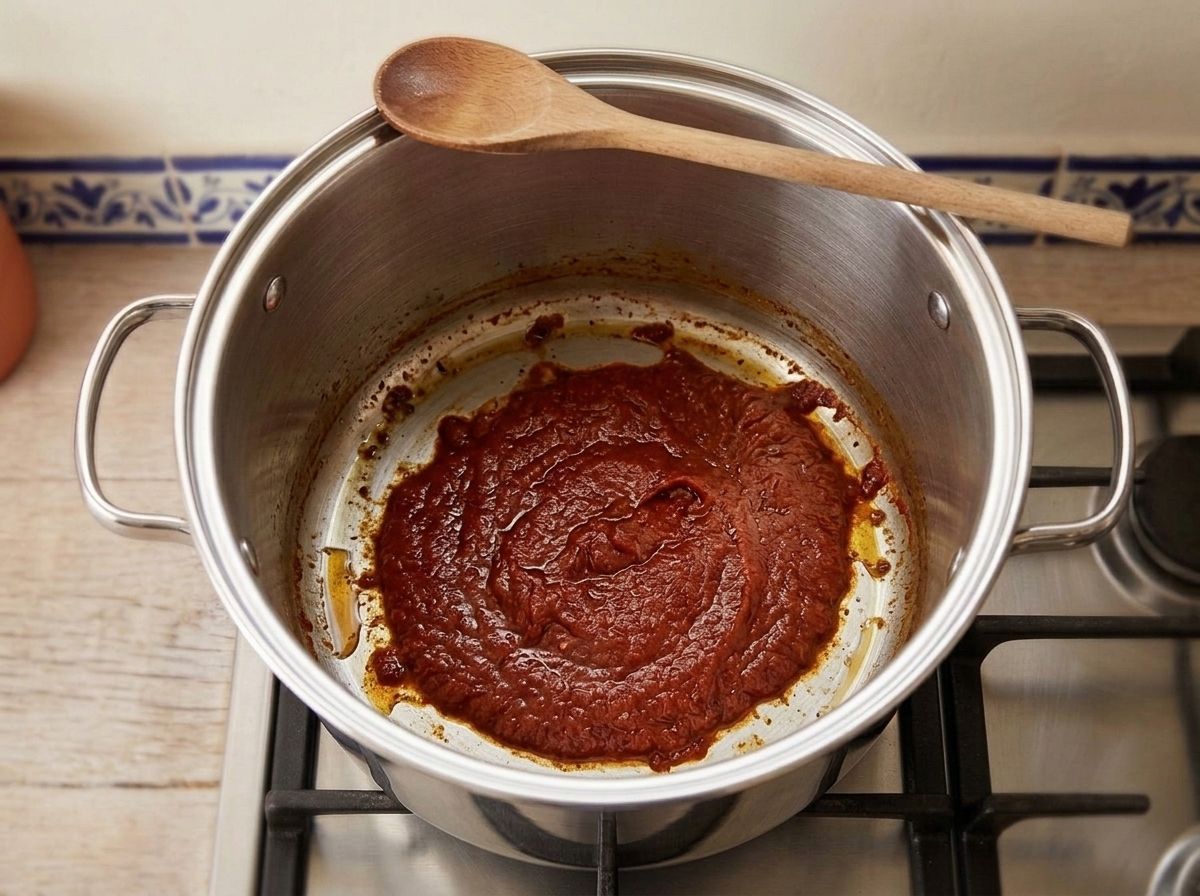
Fry the sauce
Pour the strained puree into the pot with the onion and cook over medium-high heat for 6 to 8 minutes, stirring often, until it darkens to brick red, thickens to a paste and smells toasted rather than raw. It will spit, so keep a lid handy.
- 8
Simmer with the hominy
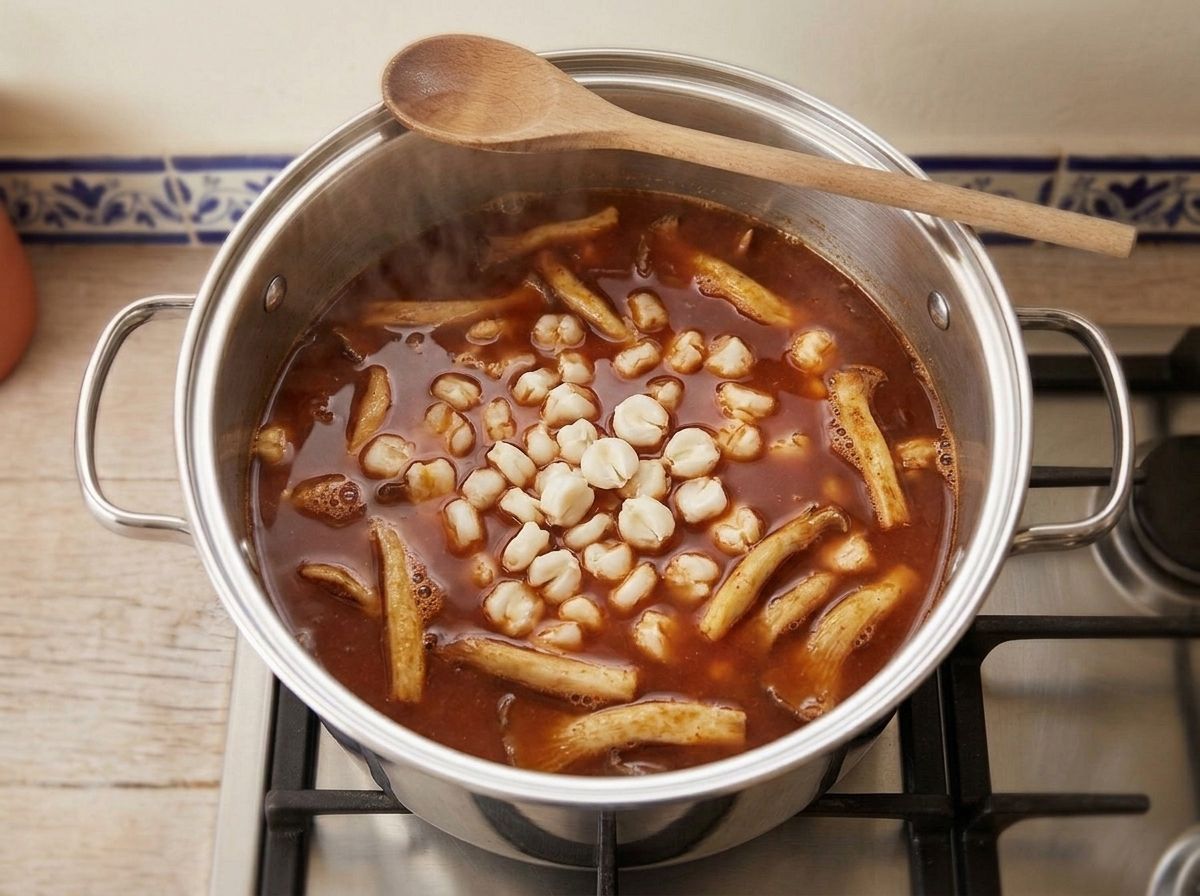
Add the hominy, the broth and the browned mushrooms. Bring to a boil, then drop to a bare simmer and cook uncovered for 30 minutes, until the broth is deep red and tastes rounded rather than sharp. Season with salt at this point, once the volume has settled.
- 9
Finish at the table
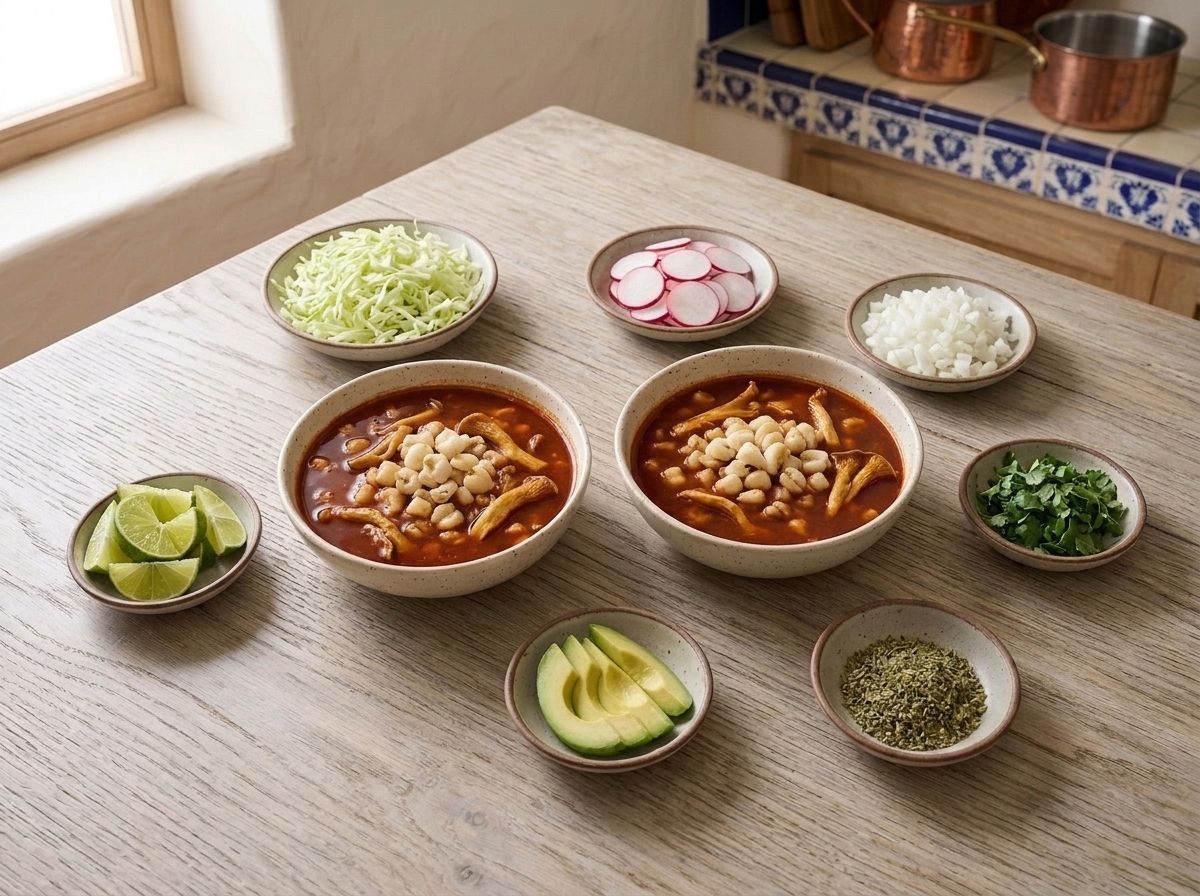
Off the heat, crush the last teaspoon of oregano between your palms and stir it in. Ladle into bowls and let everyone pile on their own cabbage, radish, onion, cilantro and avocado, with lime wedges to squeeze over. The lime goes in at the table, never in the pot.
Notes
Two 25 oz cans of hominy give about 30 oz drained. Three 15 oz cans work out the same.
Mexican oregano is a different plant from the Mediterranean kind and tastes of citrus rather than pine. Use half the amount of Mediterranean if it is all you have.
The chile puree freezes well on its own, so it is worth making a double batch while the blender is out.
Leave the chiles de arbol out entirely for a mild pot. The guajillo and ancho bring color and depth, not heat.
Nutrition Facts
6 servings · 656 g per serving
- Calories
- 316 kcal
% Daily Value*
- Total Fat
- 12.2 g16%
- Saturated Fat
- 1.7 g9%
- Sodium
- 1972 mg86%
- Total Carbohydrate
- 50.1 g18%
- Dietary Fiber
- 13.7 g49%
- Sugars
- 15.2 g—
- Protein
- 7.5 g15%
Recipe from veggierecipes.blog
When it goes wrong
Troubleshooting
The broth tastes thin and slightly dusty
The chile puree went in raw. Blended chile is a raw sauce, and stirring it into stock only dilutes it. Frying it in the pot for six to eight minutes first drives off the raw edge and concentrates what is left, and you can watch it happen: the color drops from bright red to brick and the smell turns from fruity to toasted. This is the step that separates a pozole from a red vegetable soup.
It came out bitter
Almost always the toasting. Dried chiles go from fragrant to acrid in about ten seconds, and a pod with black patches will poison the whole pot: thirty to forty-five seconds a side over medium heat, and pull them the moment they puff. The other causes are seeds and veins left inside, which carry most of the harshness, and boiling the chiles in their soaking water rather than steeping them off the heat. Bitter chile cannot be covered with sugar or salt. Start again.
The broth is gritty
Guajillo skins. They survive two minutes in a high-powered blender as flecks that never soften, and they settle as sediment at the bottom of the bowl. Pushing the puree through a fine mesh strainer takes two minutes and is not skippable. Scrape the underside of the strainer too, where a good spoonful of the smoothest sauce collects.
My hominy never opened into flowers like the photos
It cannot, and nothing you do to the pot will change it. Canned hominy was cooked through at the cannery, so it arrives at its final texture and simply warms up. The bloom, where the kernel splits and unfurls, happens to dried cacahuazintle over a three-hour simmer. Buy dried and start it the morning before if you want it. Canned is what most Mexican home cooks reach for on a weeknight.
It tastes heavy and one-note by the third spoonful
The garnishes are missing or too polite. Pozole is built to be unbalanced in the pot and corrected at the table, which is why it comes with a tray rather than a sprig. The cabbage is crunch, the raw onion is bite, the lime is the acid the long simmer flattened. A bare bowl of red broth and corn is two-thirds of the dish. Put more on than looks reasonable.
It is not spicy at all
That is the recipe working as intended. Guajillo runs about 2,500 to 5,000 Scoville units and ancho about 1,000 to 1,500, so both are there for color and depth rather than heat. Heat is a garnish in Mexico, added at the table from a dish of ground chile piquin. To build it in instead, toast four to six chiles de arbol with the others.
Before you serve
Serving & Storage
In Guerrero the dish has its own weekday. Jueves pozolero, pozole Thursday, empties offices into pozolerias in the afternoon and keeps families cooking a pot that feeds whoever turns up. The origin story local historians like best puts it at the Abrazo de Acatempan in 1821, when Agustin de Iturbide and Vicente Guerrero settled their differences on a Thursday and killed a pig to celebrate, which is a good story rather than a documented one. Pozole is also what Mexico eats on Independence Day and Christmas Eve, which is to say it is the dish for feeding a crowd.
Set the garnishes out in separate bowls and let people build their own: shredded green cabbage or lettuce, thinly sliced radish, finely diced raw white onion, lime wedges, dried oregano to crush over, and ground chile for anyone who wants heat. Avocado and cilantro are the additions Mexican-American kitchens made and they belong there now. Tostadas on the side, either spread with something creamy or broken into the bowl.
What does not work is putting any of it into the pot. Cabbage stirred into hot broth goes limp and gray in about four minutes, radish loses its snap and bleeds pink, and lime juice held at a simmer turns bitter. The garnish tray is not a serving suggestion, it is where a third of the dish lives.
Making it ahead
This is better on day two, once the chile stops tasting like a separate ingredient. Cook to the end of the simmer, cool, refrigerate, then reheat gently and finish with the oregano. The chile sauce alone keeps five days in the fridge and three months frozen, so doubling it while the blender is out turns the next pozole into a thirty-minute job. Cut the garnishes on the day, because shredded cabbage left overnight weeps and goes soft.
Storing leftovers
Four days in the fridge, kept in the broth rather than drained. The hominy goes on drinking, so a container that went in soupy comes out closer to a stew: loosen it with broth or water as it reheats and check the salt again afterward. It freezes for three months, with the mushrooms coming back softer than they went in. Never freeze it with the avocado or cabbage in the container.
Still wondering
Frequently Asked Questions
Is vegan pozole gluten-free?
Yes, with two things to check. Hominy is corn treated with slaked lime, so there is no wheat anywhere in the dish itself, and dried chiles, oregano and cumin are all naturally gluten-free. The risk sits entirely in what you buy: vegetable broth, which is frequently made with barley or wheat protein, and the tostadas on the side, which should be corn but occasionally are not. Read both labels and the pot is safe.
Can I make this in a slow cooker or an Instant Pot?
The simmer, yes. The chile sauce, no. Toast, soak, blend, strain and fry the sauce in a skillet as written, then move it to the slow cooker with the hominy, broth and mushrooms for three hours on low. A pressure cooker gains you nothing here, because canned hominy is already fully cooked and thirty minutes at a simmer is all it needs. If you are using dried hominy, that is where a pressure cooker earns its place: about forty minutes at high pressure instead of three hours on the stove.
Featured In

More Cozy Vegan Mexican-Inspired Soups
Made this?