
Veggie Salad Without Lettuce Recipe
Published · Updated
This lettuce-free veggie salad bursts with color and flavor, making it a refreshing side or light meal for any occasion.
Jump To Recipe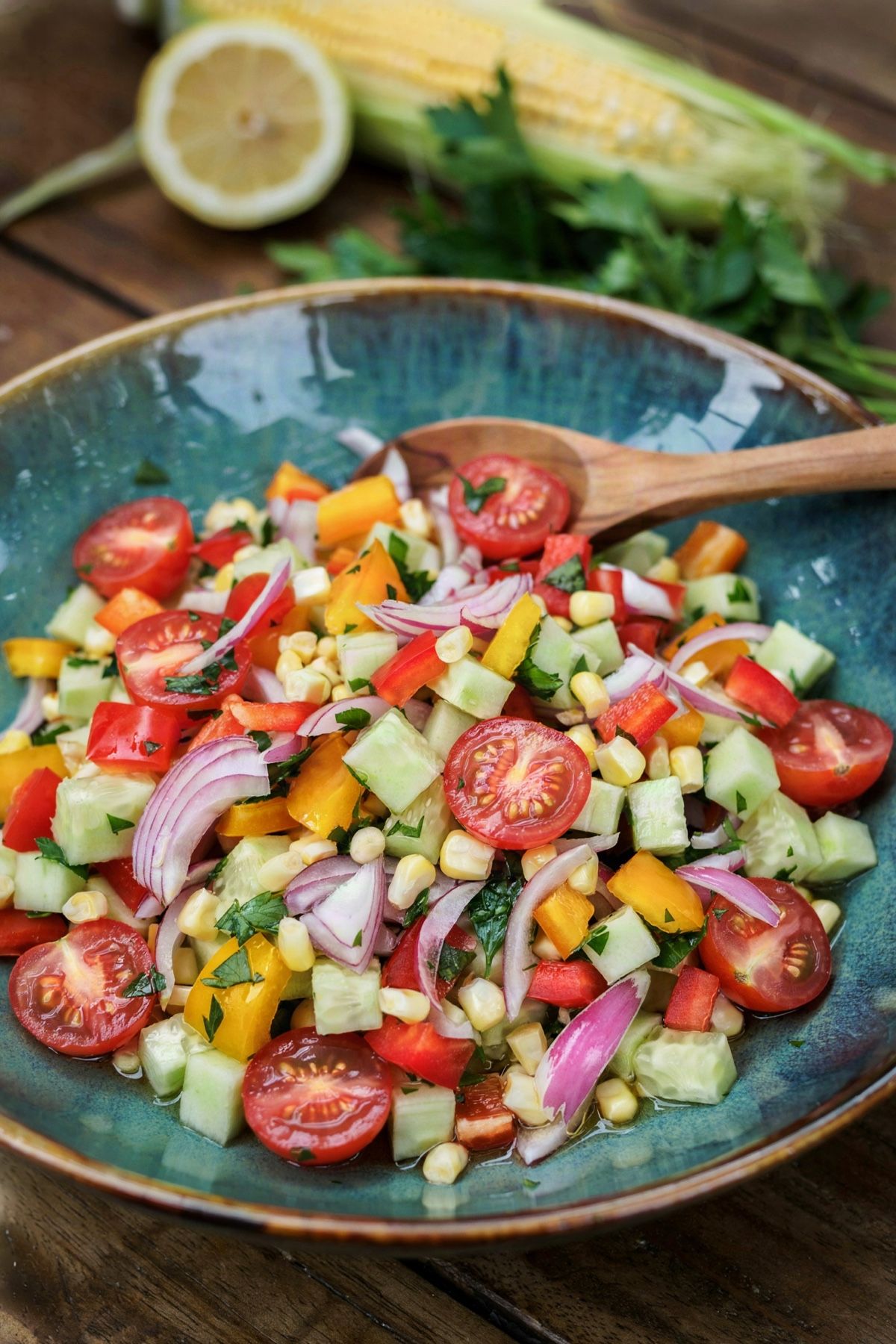
Why I Love This Lettuce-Free Salad
When I want something bright and fresh, I turn to this salad. The combination of tomatoes, cucumber, and bell peppers is a great way to break the monotony of regular lettuce salads. Each bite gives a sweet taste, along with a bit of zip from the red onion and lemon.
What really sets this salad apart is its texture. There’s no soggy bite here, just crunch, and it stays that way because the cucumber is seeded and the onion is tamed in the lemon before anything else goes in. It’s filling enough for a light lunch but works just as well on the side of something hot off the grill.
Some favorite pairings I recommend:
- Grilled halloumi or tofu
- Pita and hummus
- Chickpeas or beans for an extra protein kick
What I appreciate most is the versatility. If you’d like to get fancy, substitute in some extra vegetables or add some feta or avocado. Bringing this to a potluck beats another bowl of leafy salad that has gone limp by the time the lid comes off.
If you want a salad that still looks and tastes like something an hour after you dressed it, this is the one.
The story
A Salad Without Lettuce Is the Older Kind of Salad
The word salad comes from the Latin for salt, by way of herba salata, ‘salted greens’. That is the whole original definition: raw vegetables, salt, and something sharp to dress them. Nothing in it says lettuce. Lettuce became the default in northern kitchens and in American restaurants, where a salad means a leafy base with things on top, but around the Mediterranean and across the Middle East the everyday summer salad has never had a leaf in it.
The reason is agricultural rather than culinary. Lettuce is a cool-weather crop. In real summer heat it bolts and turns bitter, which is exactly when tomatoes, cucumbers, and peppers are at their peak. So the region’s summer salads are chopped from whatever is ripe. Turkey has çoban salatası, the shepherd’s salad: tomato, cucumber, onion, green pepper, parsley, lemon, and olive oil, chopped small enough to eat with a spoon. Greece has horiatiki, the village salad, which has never contained lettuce in Greece itself; the lettuce arrived with the diaspora restaurant version. Iran has salad Shirazi, with lime and dried mint, and Mexico’s pico de gallo is the same idea with chile and cilantro.
This recipe is closest to the Turkish shepherd’s salad, with one American addition: sweet corn. Corn in a chopped salad is a North American habit from the summer barbecue table, and it earns its place. Raw kernels cut straight off a fresh cob are crunchy and sweet enough to balance the lemon, and the yellow is one more color in a salad that is half about how it looks on the table.
One thing worth knowing about all these salads: the liquid that collects in the bottom of the bowl is not a mistake. In Turkey the juice from a shepherd’s salad is mopped up with bread, and in Greece the last piece of bread exists for the pool of tomato juice and oil under the horiatiki. The recipe below keeps the puddle small by seeding the cucumber, but it does not try to get rid of it. And the technique buried in the word salad, salting the vegetables, is the one it leans on: salting the onion in the lemon first is what turns a harsh raw onion into the best part of the dressing.
What to buy
Ingredient Notes
Cherry tomatoes
Cherry or grape tomatoes hold their shape after cutting far better than a sliced beefsteak, because a bigger share of each one is skin and wall and less is the watery jelly around the seeds. Keep them on the counter, not in the fridge, where the cold turns the flesh mealy and kills the flavor. If you only have large tomatoes, cut them in wedges, scoop out the seed jelly with your thumb, and dice the flesh.
Cucumber
An English (hothouse) or Persian cucumber has thin skin and small seeds and can go in as it is, though scooping the seeds is still worth doing. A standard supermarket slicing cucumber has thick, often waxed skin and a fat watery core: peel it, halve it lengthwise, and run a teaspoon down the middle to take the seeds out. The seeds and the jelly around them are where most of the water lives, so this one step is what keeps the salad from swimming. 130 g is about half an English cucumber or one and a half Persian ones.
Red onion
Raw onion is harsh because cutting it releases sulfur compounds, and the thinner the slice, the more of them are exposed. Ten minutes in lemon juice and salt tames them, turns the slices bright pink, and pulls out onion juice that becomes part of the dressing. A shallot does the same job more gently. Scallions or a sweet onion work if that is what you have, but they do not need the maceration and should go straight in with the vegetables.
Bell peppers
Green bell peppers are unripe. Raw, they taste grassy and a little bitter, which is fine cooked into a stew and not fine here. Red, yellow, and orange are the same pepper left on the plant to ripen, and they are sweet and crisp. Use two or three colors for the look, and dice them the same size as the cucumber so every forkful has a bit of each. One large pepper or two small ones is about 150 g.
Corn
In season, raw corn cut straight off a fresh cob is the best version: sweet, milky, and crunchy without any cooking. Out of season, canned corn works, but drain it and rinse it under the tap, because the brine is salty and tastes faintly of the tin. Frozen corn should be thawed and patted dry. For a smokier salad, tip the kernels into a dry skillet over high heat and leave them until they char in spots, then cool them before they go in.
Flat-leaf parsley
Flat-leaf (Italian) parsley has more flavor than curly and chops without turning into confetti. The thin stems are as good as the leaves, so chop them in and discard only the thick bottoms. The herb decides which country the salad leans toward: cilantro pushes it toward pico de gallo, mint and dill toward a Greek or Persian table, basil toward Italy. Any of them works at the same quantity.
Lemon and olive oil
Use a fresh lemon, not bottled juice, which has a cooked, flat taste that no amount of salt fixes. The ratio here is three parts oil to two parts lemon, which is sharper than the classic three to one for a vinaigrette, and that is deliberate: the corn and the tomatoes bring sweetness, and the salad sits for ten minutes, which softens the acid. Red wine vinegar can stand in for the lemon at the same amount. Use an olive oil you would eat on bread, because there is nothing to hide it behind.
Colorful Veggie Salad Without Lettuce
A crisp, colorful medley of bell peppers, tomatoes, cucumbers, corn, and red onion tossed in a zesty lemon and olive oil dressing.
Ingredients
Equipment
As an Amazon Associate I earn from qualifying purchases, at no extra cost to you.
Instructions
- 1
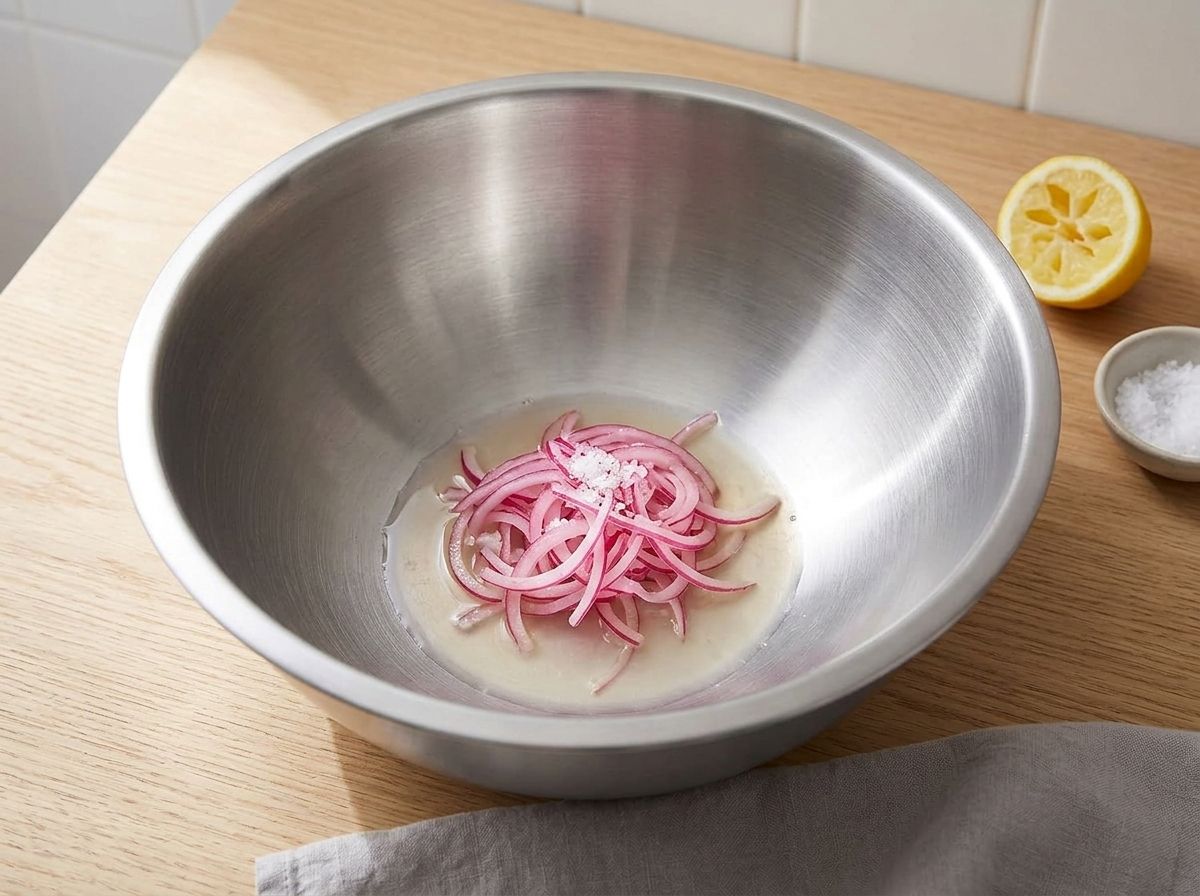
Tame the onion
Put the sliced red onion in your salad bowl with the lemon juice and 1/2 teaspoon of salt. Toss it and leave it while you chop everything else. Ten minutes in acid and salt takes the raw sulfur bite out of the onion, turns the slices bright pink, and the juice it gives up becomes part of the dressing.
- 2
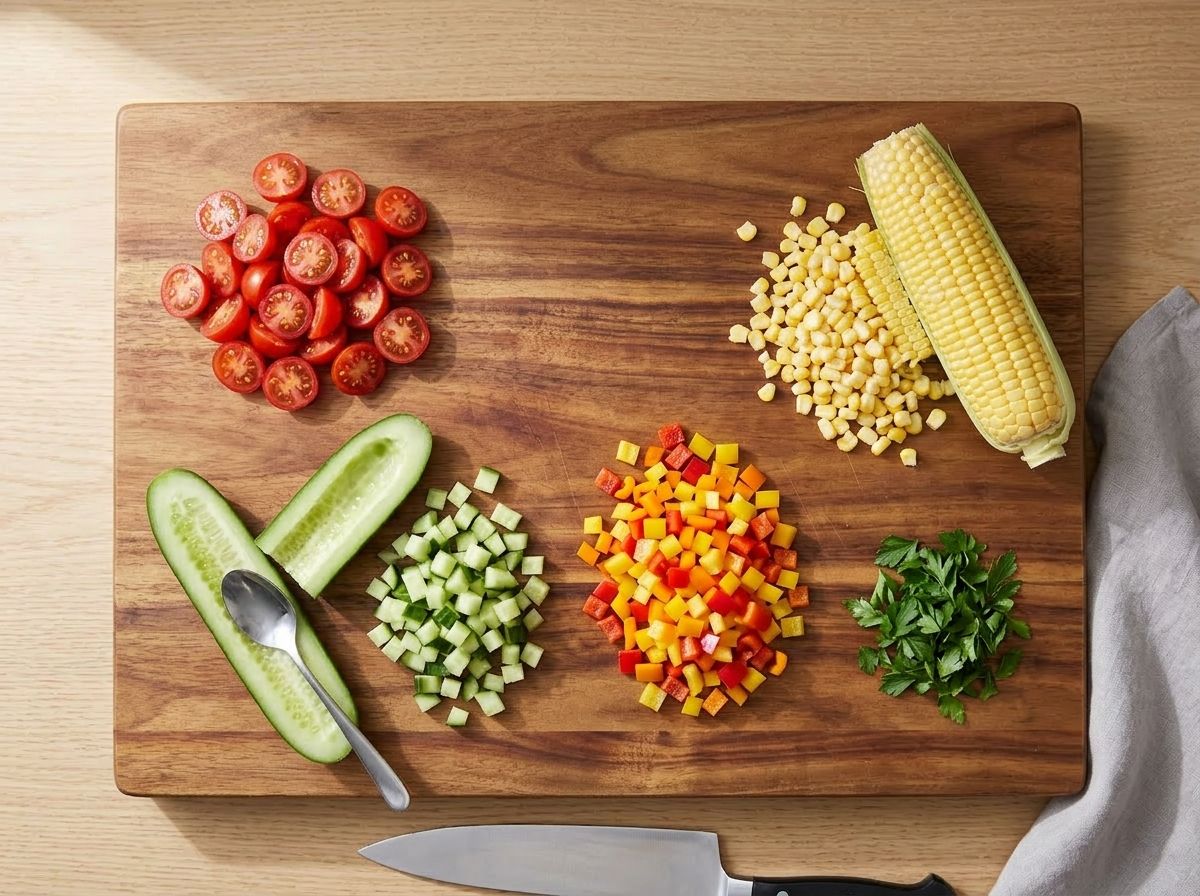
Chop the vegetables
Halve the cherry tomatoes. Halve the cucumber lengthwise, scrape out the watery seeds with a teaspoon, and dice the flesh. Dice the peppers to the same size as the cucumber, so every forkful gets a bit of each. If the corn is canned, drain and rinse it; if it is fresh, cut the kernels straight off the raw cob. Chop the parsley, thin stems included.
- 3
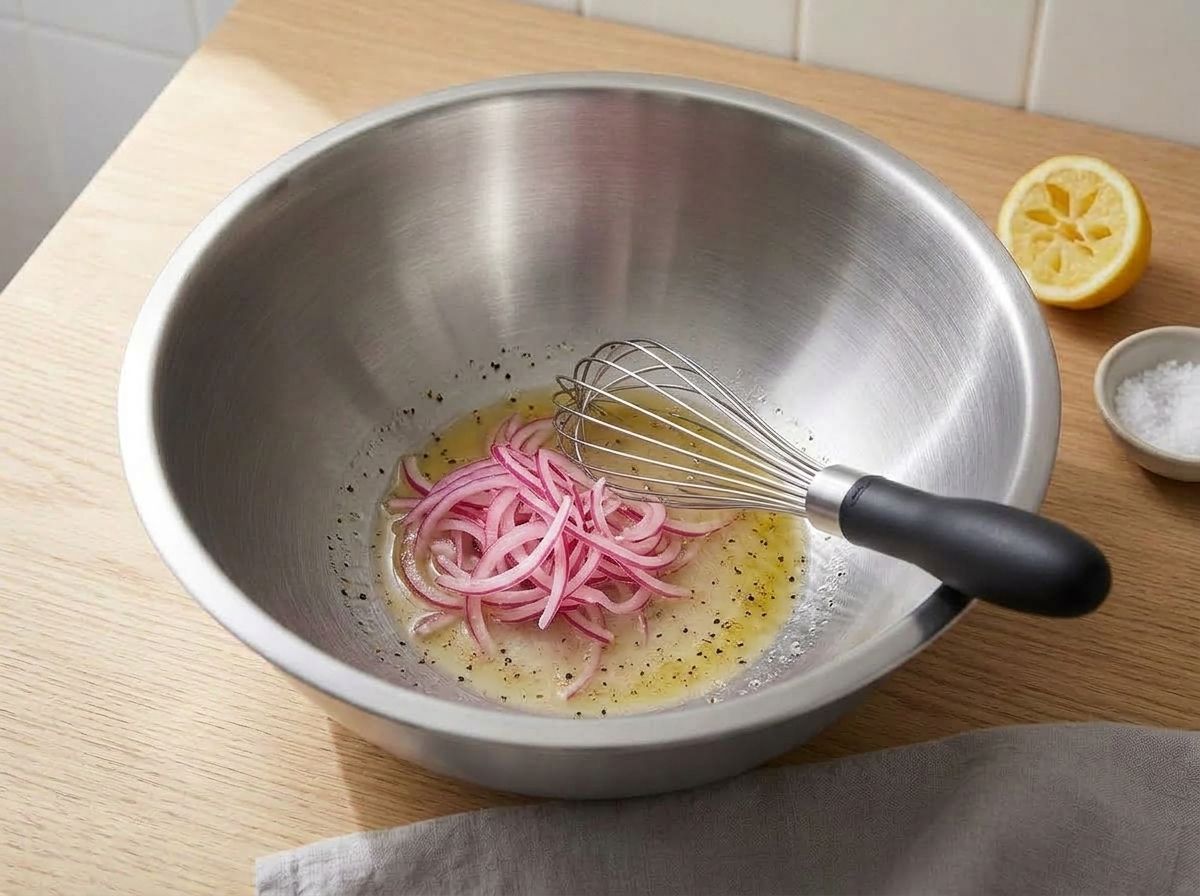
Finish the dressing
Add the olive oil and a few grinds of black pepper to the onion and lemon already in the bowl. Whisk until the dressing turns cloudy and the onion slices are coated.
- 4
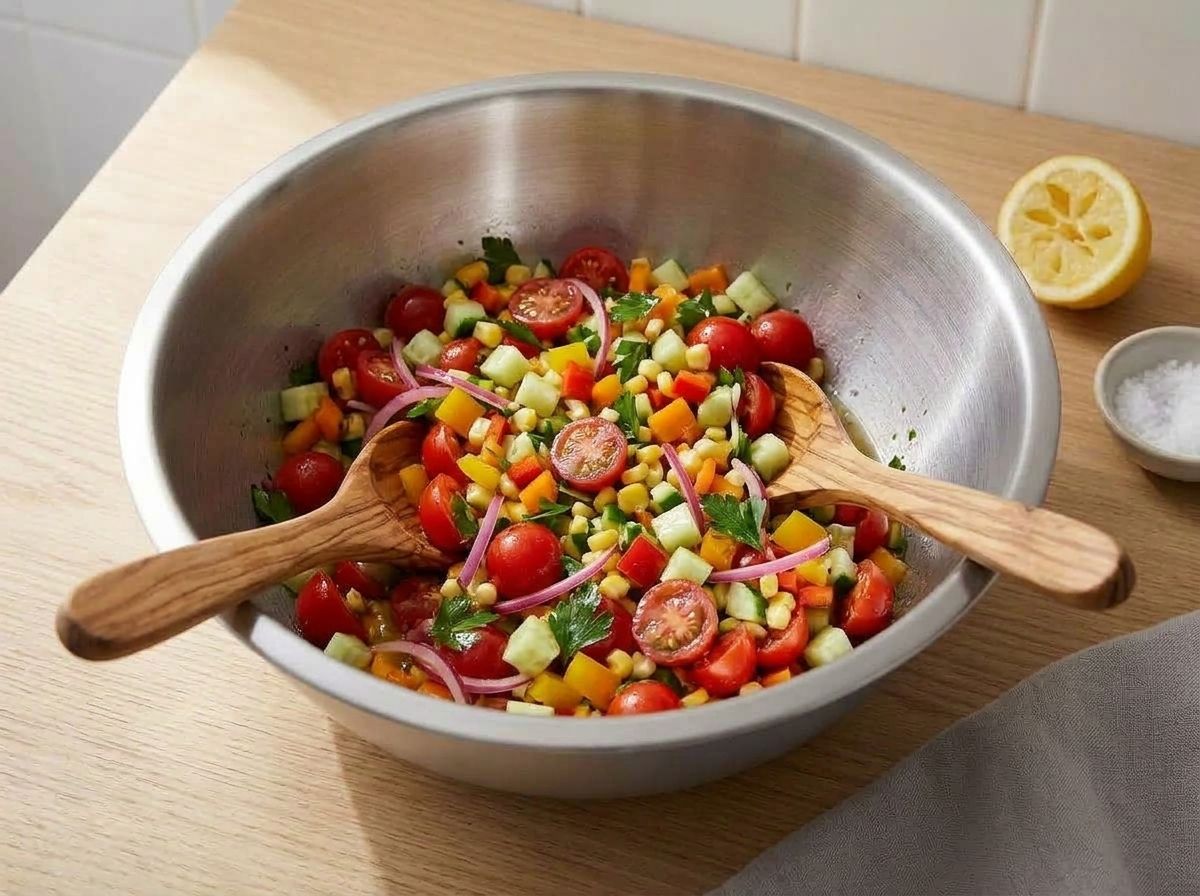
Toss, rest and season
Add the tomatoes, cucumber, peppers, corn, and parsley and toss gently with your hands or two spoons. Leave the salad for 10 minutes so the salt draws some juice from the tomatoes and cucumber into the dressing. Taste it, add salt or a squeeze more lemon if it reads flat, and serve with a spoon for the juices.
Notes
Chickpeas, white beans, or a diced avocado turn it into a lunch on its own. Add avocado at the end so it does not get crushed in the tossing.
Leftovers keep for a day. Pour off the juice that pools in the bottom before serving, or spoon it over bread.
Nutrition Facts
4 servings · 168 g per serving
- Calories
- 140 kcal
% Daily Value*
- Total Fat
- 11 g14%
- Saturated Fat
- 1.6 g8%
- Sodium
- 303 mg13%
- Total Carbohydrate
- 10.5 g4%
- Dietary Fiber
- 2.1 g8%
- Sugars
- 5.2 g—
- Protein
- 1.9 g4%
Recipe from veggierecipes.blog
When it goes wrong
Troubleshooting
There is a puddle in the bottom of the bowl
Tomatoes and cucumbers are about 95 percent water, and the salt in the dressing draws it out of them the moment they meet. Some liquid is expected and, in the salads this one descends from, welcome: Turkish and Greek tables mop it up with bread. If there is more than you want, the cucumber went in with its seeds. Halve it lengthwise and scoop the seedy core out with a spoon before dicing, dress the salad no more than 15 minutes before serving, and serve it with a slotted spoon so the juice stays behind.
All I can taste is raw onion
The onion went into the salad untamed. Sliced red onion needs ten minutes in the lemon juice and salt before anything else touches it, and the recipe puts that first so it happens while you chop. If you skipped it, soak the sliced onion in a bowl of cold water for ten minutes, drain, and pat dry; it will not be as good as the macerated version, but the harshness goes. Slicing thinner also helps, because thin slices tame faster.
It tastes flat even though it is dressed
It is under-salted. Raw vegetables need more salt than cooked ones, and a salad tasted straight after tossing is not the salad you will eat ten minutes later. Let it rest, then taste again. Add salt in pinches, tossing between each, before you reach for more lemon. If it is still dull once the salt is right, it wants acid, and a squeeze of lemon finishes it.
It is too sharp and sour
Lemons vary a lot. A large juicy one gives twice the juice of a small one, so if you squeezed by eye rather than measuring the two tablespoons, that is the cause. Stir in another tablespoon of olive oil first, which rounds the acid off, and if it still bites, a pinch of sugar.
The peppers taste bitter
A green bell pepper went in. Green peppers are picked unripe, and raw they carry a grassy bitterness that cooking would normally soften. Swap it for a red, yellow, or orange one, which is the same pepper left to ripen. If you are stuck with green, cut it smaller than the rest so no single bite is all pepper.
It went limp overnight
That is what dressed cucumber and tomato do after a night in the fridge. The salt keeps drawing water out of them, the water dilutes the dressing, and the crunch goes with it. It is still fine to eat for a day, drained and topped up with a little fresh parsley and a squeeze of lemon. If you know you are making it for tomorrow, keep the chopped vegetables and the dressing in separate containers and toss them ten minutes before serving.
Before you serve
Serving & Storage
In Turkey a shepherd’s salad arrives with bread and a spoon, not a fork, because the juice in the bottom of the bowl is part of the dish. Serve this the same way, with pita, a crusty loaf, or warm flatbread to mop with. It is at its best as the cold, sharp thing next to something hot and rich, which is why it sits so well beside grilled halloumi, marinated tofu off the barbecue, or a plate of falafel. Spooned over warm quinoa or bulgur, with the juice as the dressing, it makes a lunch on its own, and it is a chunkier stand-in for pico de gallo on tacos.
Two things it does not do well. Tossed through hot pasta the vegetables wilt and the corn goes squeaky, so if you want it with pasta, cool the pasta first. And it does not belong in a sandwich, where the juice soaks straight through the bread.
Making it ahead
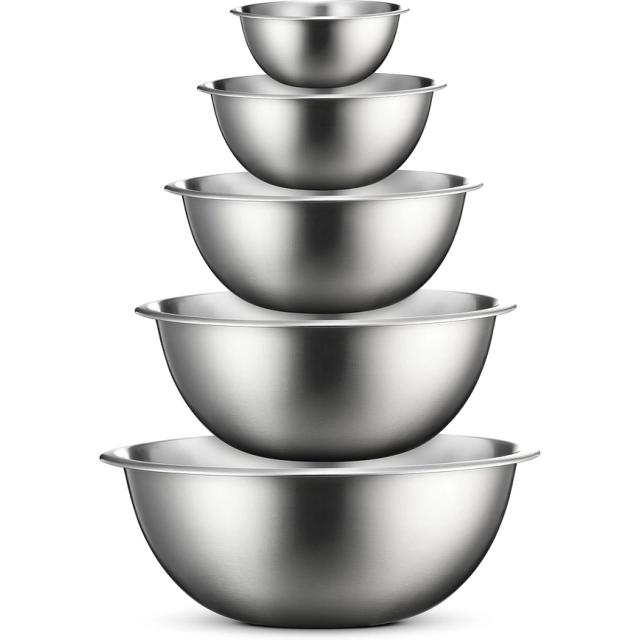
The onion can be sliced and left macerating in the lemon and salt for up to a day in the fridge, and it only improves. The tomatoes, peppers, corn, and parsley can be chopped the day before and kept covered. Keep the cucumber separate, seeded and diced, because it is the one that leaks. Ten to fifteen minutes before you eat, whisk the oil into the onion and lemon, tip everything in, and toss. For a potluck or a picnic, carry the vegetables in one container and the onion dressing in a jar, and combine them at the table; a bowl of five quarts or more gives you room to toss a double batch without throwing tomatoes over the side.
Storing leftovers
Covered in the fridge, the dressed salad keeps for a day. Before serving it again, pour off the liquid that has pooled, add a little fresh parsley and a squeeze of lemon, and it comes back most of the way. It does not freeze: the water in the cucumber and tomato cells expands, the walls burst, and what thaws is mush. If you have more than a day’s worth, the better use is to pulse the leftovers with a splash of water and a slice of stale bread into a rough gazpacho.
Still wondering
Frequently Asked Questions
Is this salad vegan and gluten-free?
Yes, as written, this salad is both vegan and gluten-free.
How much do I need for a crowd?
The recipe makes about 650 g, which is four generous side servings. At a barbecue or a buffet, where it is one of several dishes, plan on about 100 g a head, so the base recipe stretches to six. Double everything for twelve and triple it for eighteen; the dressing scales in the same proportion. Toss it in batches in your largest bowl rather than trying to turn 2 kg of vegetables in one go, and dress each batch only as it is about to go out.
Featured In
More Fresh and Hearty Salads
Made this?