
Butternut Squash Soup Recipe
Published · Updated
Velvety butternut squash soup with a hint of spice and cream, perfect for cozy nights or festive gatherings.
Jump To Recipe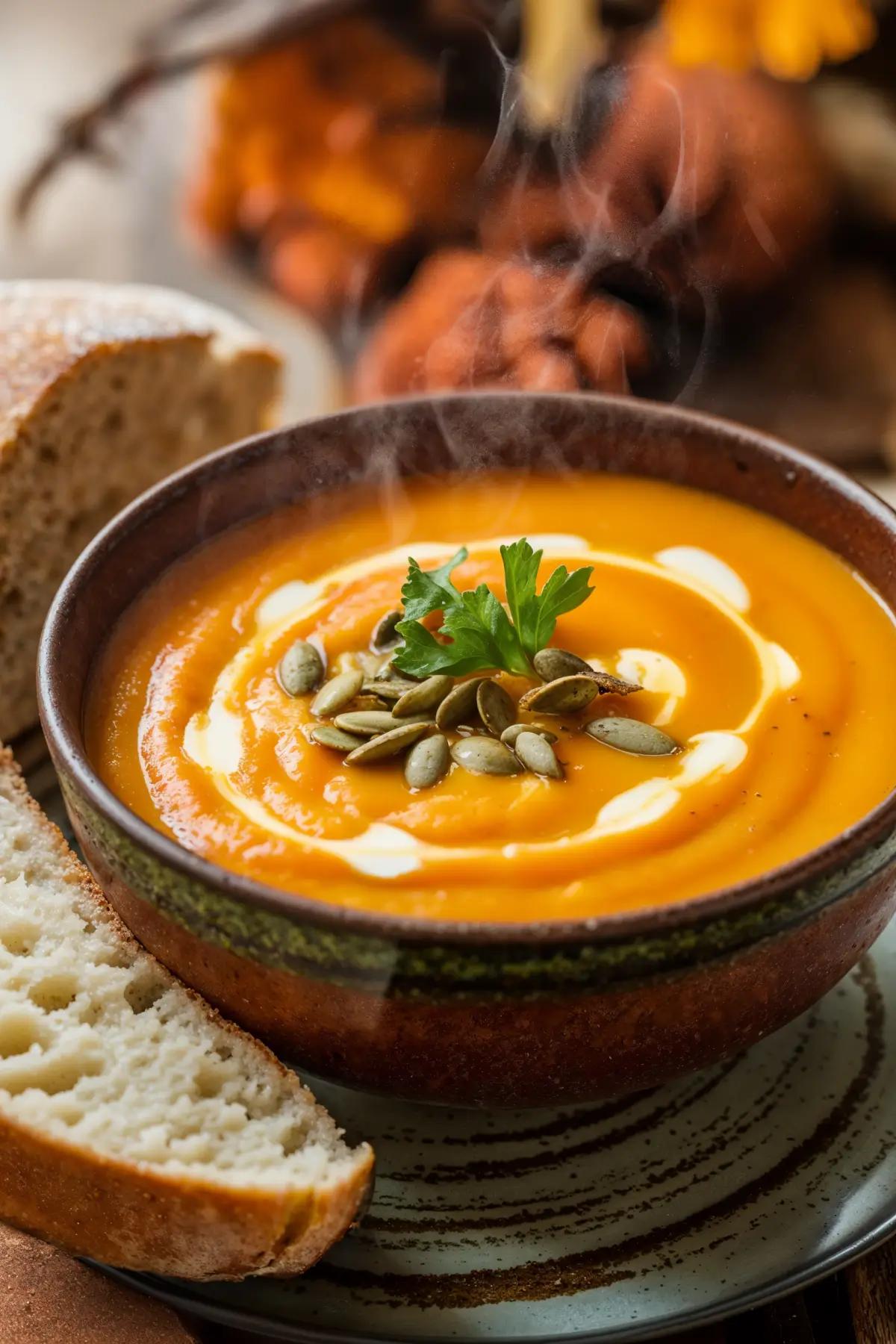
Why I Keep Coming Back to Butternut Squash Soup
Making a big pot of butternut squash soup is somehow very satisfying. Roasting the squash and smelling the sweet, caramelized scent is quite therapeutic in the fall. The velvety texture that blending roasted squash gives the soup, the warmth added by just the right amount of spice, and the creamy finish from coconut milk or cream tick all the boxes for me in a comforting soup.
This soup is a must-have in my kitchen at any time of the year. But, it is particularly great during the colder months. I like how it uses basic pantry staples, and it’s really easy to scale up in quantity when I have friends over. Garnishes such as fresh parsley, a drizzle of cream, and crunchy pumpkin seeds always feel a little fancy, even if it’s just for me.
What I like to pair with this soup:
- thick slices of crusty sourdough bread
- a sharp green salad with vinaigrette to balance the richness
- a crisp cider or a bold autumn beer
Whether you choose coconut milk to keep things dairy-free or a rich splash of cream for indulgence, you can’t go wrong. This soup is about enjoying the best of the season, with minimum effort and maximum comfort.
The story
The Butternut Squash Was Invented, and Not Long Ago
Most winter squash are ancient. Cucurbita moschata, the species butternut belongs to, has been cultivated in Mesoamerica for something like five thousand years. The butternut itself is not ancient at all. It was bred by one man in his backyard in Stow, Massachusetts, and it is younger than the ballpoint pen.
Charles Leggett was an officer at the John Hancock Life Insurance Company in Boston. In the late 1930s he bought a property in Stow with more than ninety acres attached, and he gardened on it as a hobby rather than a living. The squash a New England household cooked in those years was the Blue Hubbard: enormous, warty, and armored in a shell so hard that the standard advice was to drop it on a concrete floor or go at it with an axe. His wife Dorothy later described what he was after in plain terms. He wanted a squash with a compact, regular form and flesh that was easier to prepare.
He crossed a gooseneck squash with other varieties across several seasons, selecting for a small fruit with a long solid neck and a seed cavity confined to the bulb at the bottom. When he had it, he named it for how it ate: smooth as butter, sweet as a nut. He took his seed to the Waltham Field Station, where Robert E. Young of the Massachusetts College of Agriculture, now UMass Amherst, worked it into the stable variety sold ever since as Waltham Butternut.
It moved fast. By 1944 Massachusetts growers were dropping Blue Hubbard for it, and that December Leggett received an invitation to a growers meeting that named him the originator of the butternut squash. From there it traveled to New Zealand and South Africa, where it is known simply as butternut, and became the most widely grown squash in the United States. The land he bred it on is now the Butternut Farm Golf Course.
That history is worth knowing before you cook it, because almost every quality this soup depends on was put there deliberately. The flesh is dense and nearly free of the strings that plague other squash, which is why it purees to a smooth texture without straining. The neck is solid, which is why a well-shaped squash gives so much usable flesh per pound. And the sugar content is high enough to caramelize properly in a hot oven, which is where the flavor in this recipe actually comes from. The one problem the soup has is a consequence of the same breeding: butternut is sweet, and a bowl of sweet needs something sharp thrown against it or it collapses into blandness. Leggett gave us a squash designed for a home kitchen. The acid at the end of this recipe is the part he left to us.
What to buy
Ingredient Notes
Butternut squash
Buy it by the neck. The neck is solid flesh and the bulb is where the seed cavity sits, so a squash with a long neck and a modest bulb yields far more usable cubes per pound than a short squat one of the same weight. The skin should be matte, hard and an even tan. Gloss and green streaking mean it was picked early and never cured, and an uncured squash is starchy and watery instead of sweet, which is one of the commonest reasons a soup made carefully still tastes of nothing. The stem should be dry, corky and still attached. You need 2 lb (900 g) of cubes, which is about one medium squash of roughly 2¾ lb (1.2 kg) whole.
Low-sodium vegetable broth
Taste it on its own before it goes anywhere near the pot. A broth that tastes of celery and salt makes a soup that tastes of celery and salt, and squash is too mild to cover for it. Low-sodium matters because the recipe already salts the squash on the tray and the onion in the pot, and a standard broth on top of that lands the bowl somewhere near a teaspoon of salt per serving. There is no chicken broth in this recipe and it does not need one: the body comes from the weight of squash relative to liquid, not from the stock. That is also why it is 3 cups here rather than the 4 most versions call for. Keep the ratio high and thin it at the end if you want it looser.
Full-fat coconut milk or heavy cream
Coconut milk means the canned kind, not the cartoned drink sold beside the oat milk. Carton coconut milk is mostly water with stabilizers and will thin a soup you just spent an hour thickening. Shake the can, and if it has separated into a solid cap and a watery base, scrape in both. The two options are not interchangeable in flavor: coconut milk carries its own sweetness, so if you use it, expect to want the full tablespoon of acid and probably a little more. Heavy cream is close to neutral and mostly contributes body.
Nutmeg
Grate it from a whole nut. Ground nutmeg loses its volatile oils within a few months of being opened and what remains tastes faintly of sawdust, which is exactly why recipes keep inflating the quantity to compensate. A quarter teaspoon grated fresh is more nutmeg than half a teaspoon out of an old jar. This soup wants it as a warm background note. Past a certain point nutmeg turns medicinal and there is no taking it back out.
Ground cinnamon
Most supermarket cinnamon is cassia, which is hot and assertive; Ceylon cinnamon is paler, milder and more floral. Either is fine at a quarter teaspoon. What is not fine is letting cinnamon lead. At half a teaspoon and up, in a soup this sweet to begin with, the bowl stops tasting like dinner and starts tasting like pie filling.
Apple cider vinegar or fresh lemon juice
The ingredient most butternut squash soup recipes leave out altogether, and the one that makes the largest difference. Cider vinegar has a faint apple note that sits well with squash. Lemon is brighter and cleaner. Sherry vinegar is an excellent third option if you have it. Timing is the whole trick: added before blending it gets buried, and boiled it goes dull and slightly bitter. It goes in off the heat, after the cream, and you keep tasting and adding until the sweetness stops being the first thing you notice.
Olive oil
Three tablespoons, and it is divided for a reason. Two go on the squash, where the oil is what conducts heat into the surface of each cube and browns it; cut that back and you get pale, dry squash. The third goes in the pot to soften the onion. A single measure used twice, which is how many versions of this recipe are written, leaves you short in one place or the other.
Creamy Butternut Squash Soup
Butternut squash roasted hard for color, blended silky with bloomed spices, and finished with cream and a shot of acid so it tastes balanced rather than sweet.
Ingredients
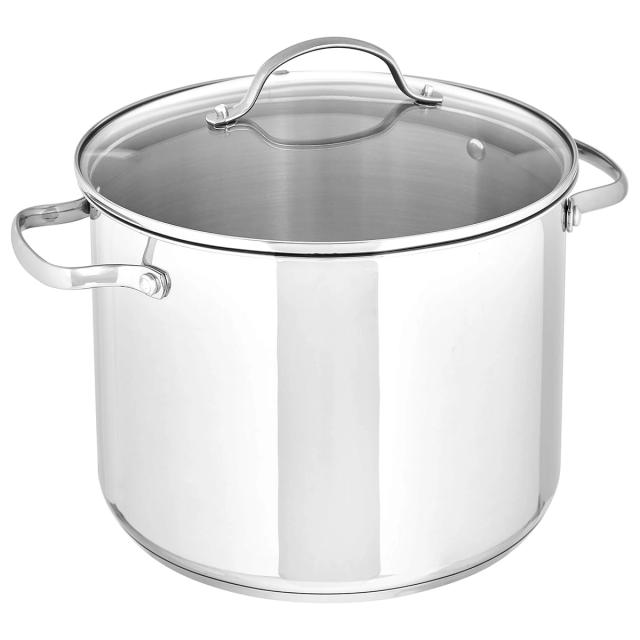
Equipment
As an Amazon Associate I earn from qualifying purchases, at no extra cost to you.
Instructions
- 1
Roast until the edges brown
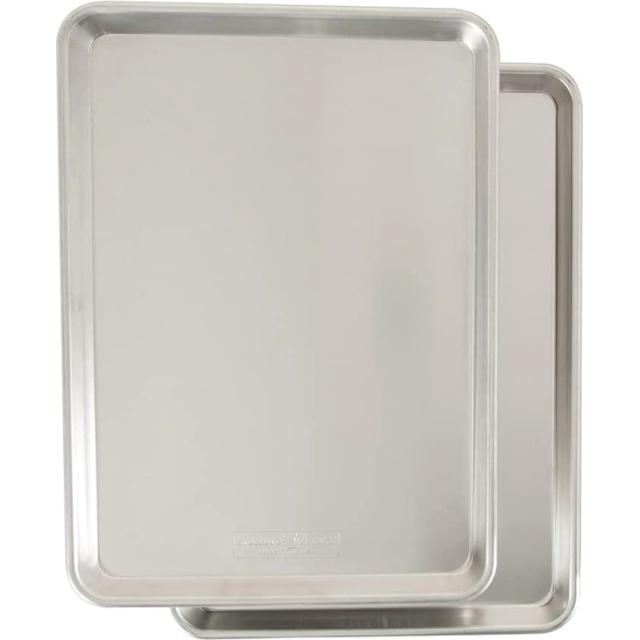
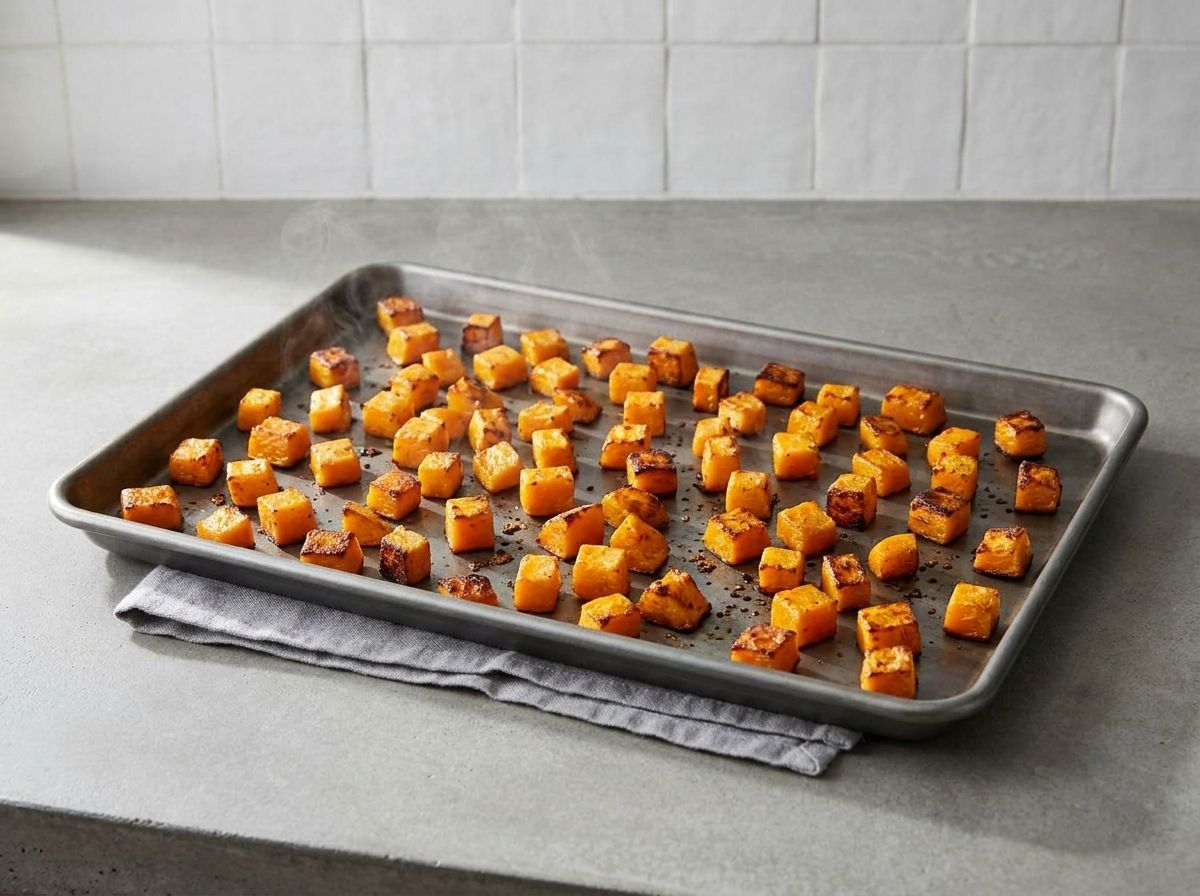
Heat the oven to 425°F (220°C). Toss the cubed squash with 2 tablespoons of the olive oil, ½ teaspoon of the salt and the black pepper. Spread it over a large baking sheet in a single layer, with space between the cubes: a crowded pan traps steam and the squash goes soft and pale instead of browning. Roast for 30 to 35 minutes, turning once halfway, until the edges are deep brown and a cube crushes easily against the pan.
- 2
Sweat the aromatics
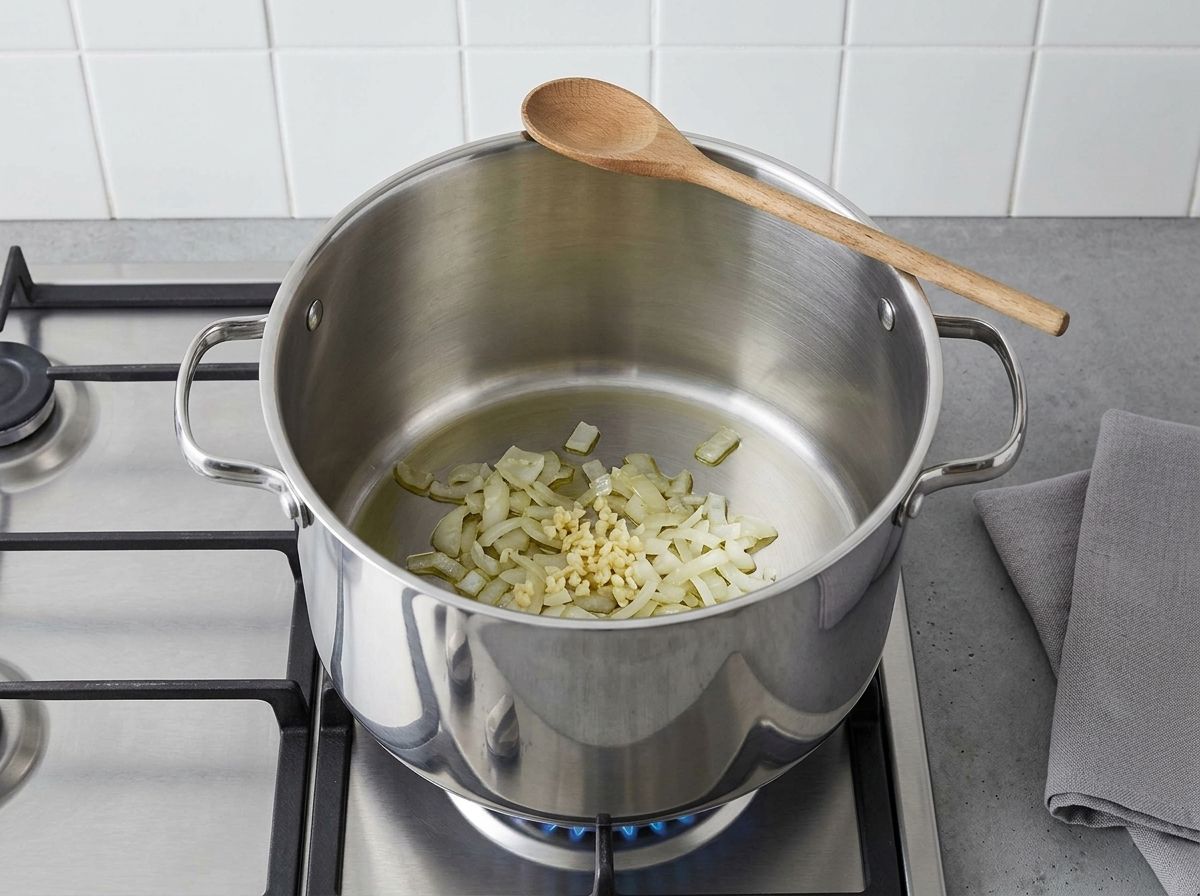
While the squash roasts, heat the remaining tablespoon of olive oil in a large pot over medium heat. Add the onion and the remaining ½ teaspoon of salt and cook for 8 to 10 minutes, stirring now and then, until soft and translucent but not colored. Add the garlic and cook for one minute more.
- 3
Bloom the spices
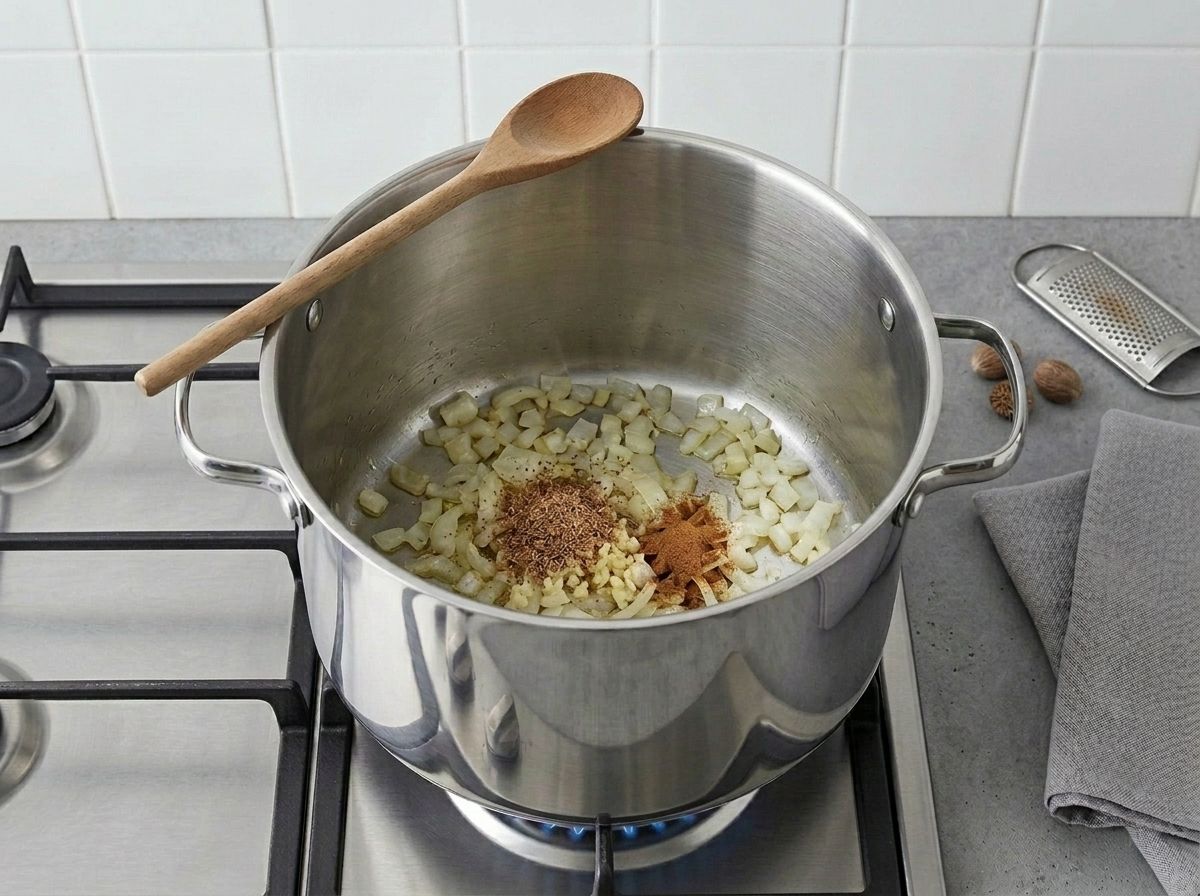
Stir the nutmeg and cinnamon into the onion and cook for 30 seconds, until you can smell them. Ground spices need fat and heat to open up. Stirred into the finished soup at the end, as many recipes have you do, they stay dusty and raw on the tongue.
- 4
Simmer, then blend
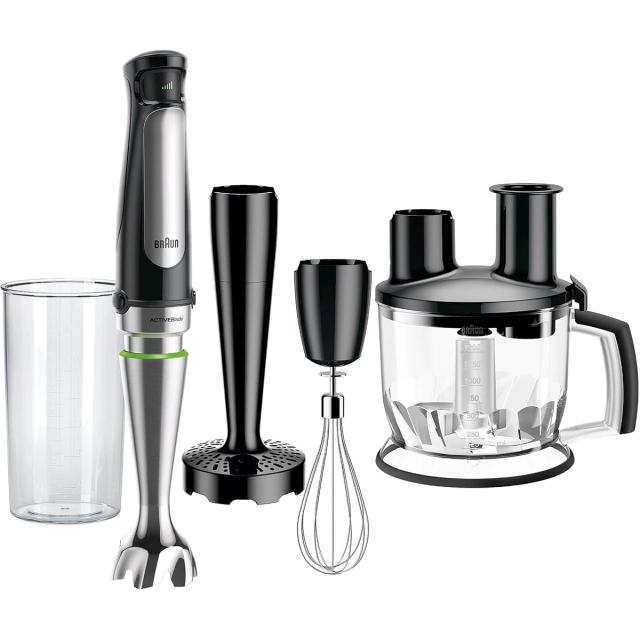
Add the roasted squash and the broth. Bring to a boil, then lower the heat and simmer for 10 minutes so the flavors settle together. Blend until completely smooth, either with an immersion blender in the pot or, for a genuinely silky texture, in batches in a countertop blender with the lid vented and a towel over the top.
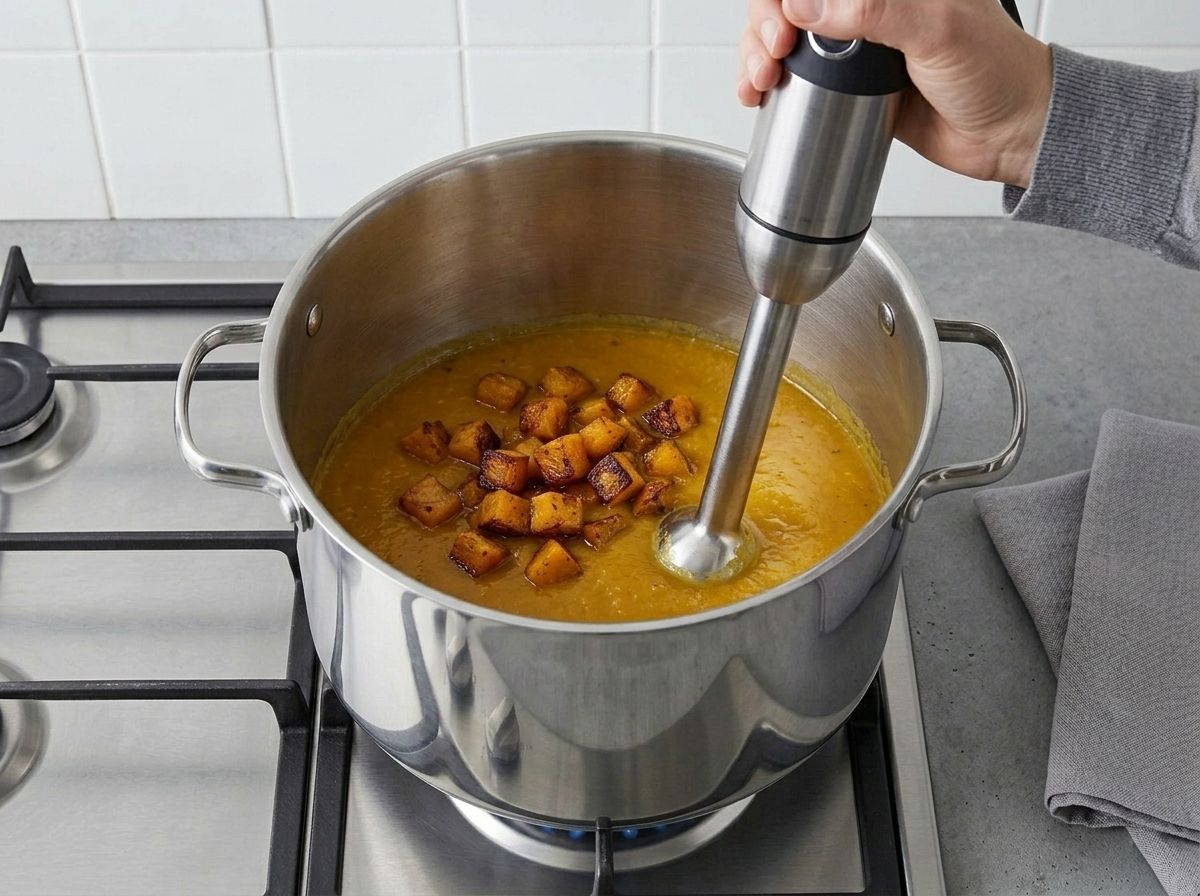
- 5
Finish with cream, then acid
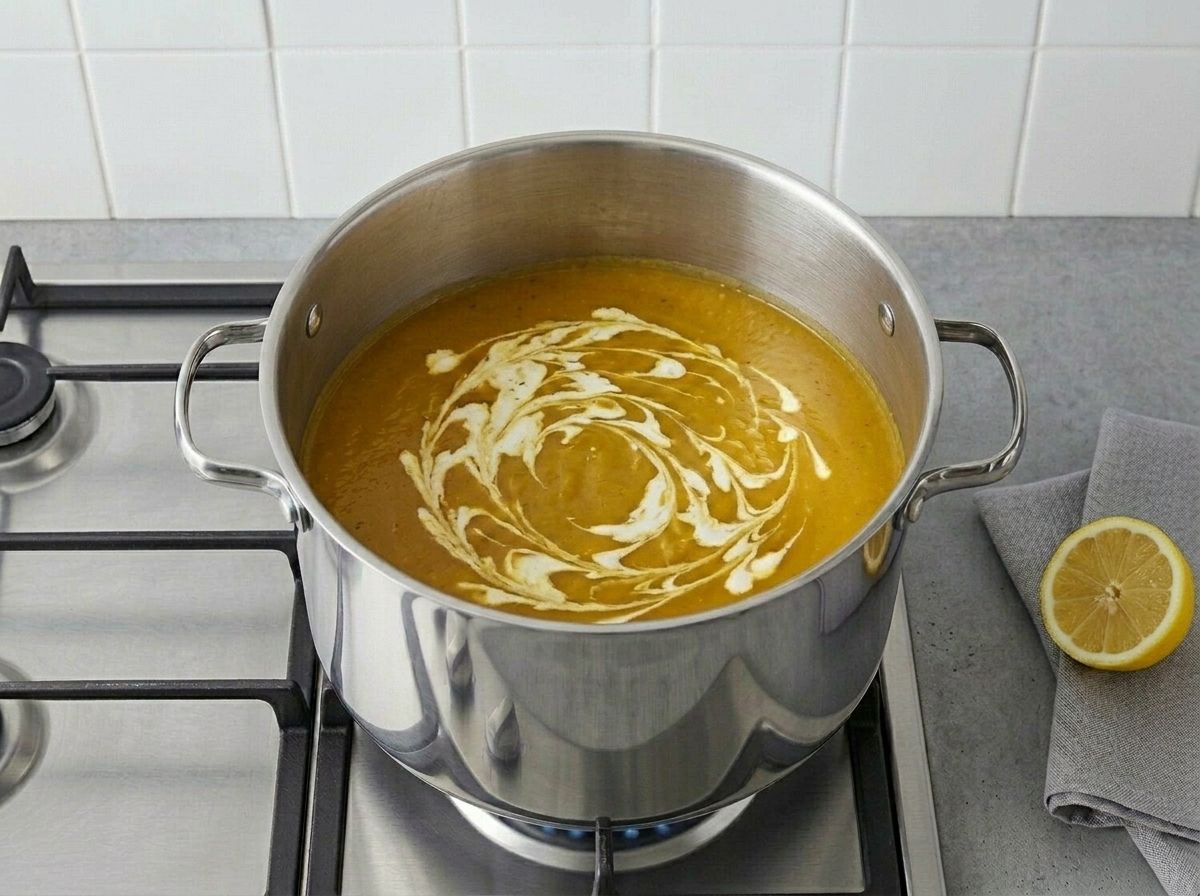
Stir in the coconut milk or cream and warm the soup through over low heat without letting it boil. Take the pot off the heat and stir in the vinegar or lemon juice. Now taste. Roasted squash is very sweet and the acid is what keeps the soup from reading flat and one-note. Add another teaspoon of acid, or more salt, until it tastes bright rather than sugary. Thin with extra broth if you want it looser.
- 6
Garnish and serve
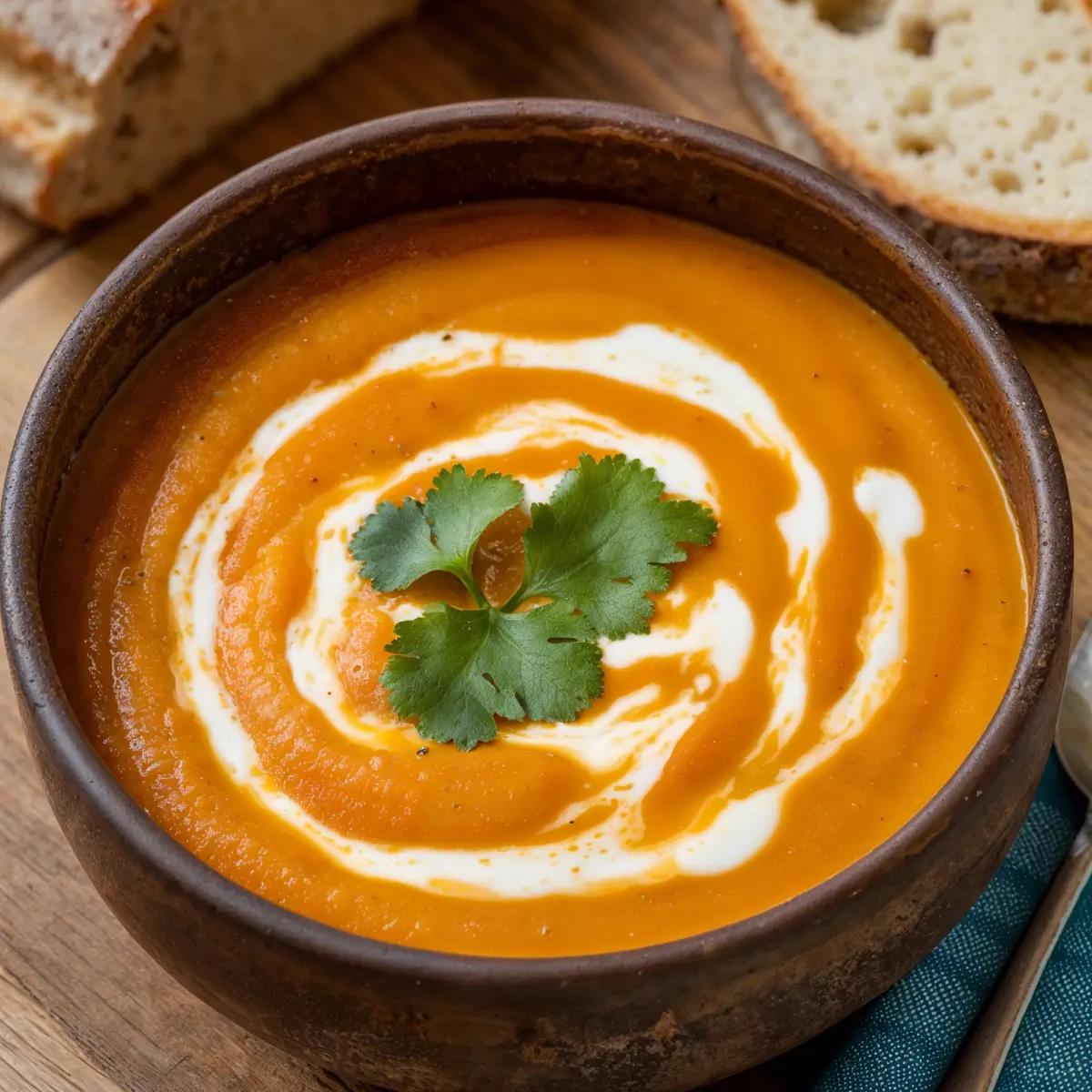
Ladle into warm bowls and top with chopped parsley, pumpkin seeds, or a swirl of coconut milk or cream.

Notes
For a vegan soup, use full-fat coconut milk in place of the cream and check the broth label.
The acid at the end is not optional seasoning. Skip it and the soup tastes flat and sugary.
For a thinner soup, add more broth a splash at a time after blending.
Freeze the base before the cream goes in; it keeps for up to 3 months.
Nutrition Facts
4 bowls · 505 g per serving
- Calories
- 310 kcal
% Daily Value*
- Total Fat
- 19.9 g26%
- Saturated Fat
- 9.6 g48%
- Sodium
- 598 mg26%
- Total Carbohydrate
- 34.6 g13%
- Dietary Fiber
- 6.2 g22%
- Sugars
- 7.4 g—
- Protein
- 4.5 g9%
Recipe from veggierecipes.blog
When it goes wrong
Troubleshooting
It tastes sweet, and then it just stops
It has no acid in it. This is the defining failure of butternut squash soup and it is why so many restaurant versions taste better than the one you made from a very similar recipe. Roasted squash, sweet onion, cream and warm spice are all pulling in the same direction, and nothing is pulling back. Off the heat, stir in a tablespoon of cider vinegar or lemon juice and taste again. If it is still flat, add another teaspoon, then a little more salt. You are not trying to make the soup taste sour. You are trying to reach the point where the sweetness reads as flavor rather than as sugar.
The squash never browned, it just went soft and wet
Three usual causes, all fixable. The pan was crowded, so the cubes released steam faster than it could escape and effectively boiled in place; use a second sheet rather than piling them up. The oven was too low, which is why this recipe calls for 425°F (220°C) rather than the 400°F you will see elsewhere. Or you thawed frozen squash first, which floods the tray with water before the oven gets a chance. Roast frozen cubes straight from the freezer on a preheated sheet.
It came out thin and watery
Usually too much liquid for the amount of squash. The fix is to keep simmering it uncovered until it reduces to where you want it, tasting as you go because it concentrates the salt too. If the squash itself was the problem, an uncured or previously frozen one carrying more water than it should, roasting another cup of cubes and blending them in rebuilds the body without diluting the flavor. Resist flour or cornstarch. They will thicken it and they will also flatten it, and you will end up reaching for more spice to cover the dullness.
It is smooth in places and gritty or stringy in others
Two different problems that feel like one. Grittiness means the squash was not fully cooked; a roasted cube should crush against the pan under the back of a spoon with no resistance, and no amount of blending will rescue one that is still firm at the center. Strings come from the seed cavity in the bulb end. Butternut was specifically bred to have very little of this, so if you are finding fibers, the cavity was not scraped out cleanly. A metal spoon and a firm hand take out more than a plastic scraper will. For a genuinely silky result, finish in a countertop blender for a full minute rather than an immersion blender, which never quite gets there.
All I can taste is spice
Cinnamon and nutmeg both climb quickly in a soup with no competing savory element. Half a teaspoon of each, which is a common measurement, is roughly double what four servings can carry. There is no way to remove it, so dilute: add more roasted squash and broth, then rebalance the salt and acid. For next time, a quarter teaspoon of each, and grate the nutmeg fresh so you are not compensating for a stale jar with volume.
It split or turned grainy when I reheated it
The dairy boiled. Cream and coconut milk both break when they are pushed past a simmer, and reheating on high or in a microwave at full power creates hot spots that do it even when the pot as a whole looks calm. Reheat over low heat, stirring, and take it off as soon as it steams. Coconut milk will usually come back together with thirty seconds of the immersion blender. Broken heavy cream will not, which is the reason this recipe tells you to freeze the base and add the dairy after thawing.
Before you serve
Serving & Storage
Butternut squash reached South Africa within a couple of decades of being bred, took the name of the vegetable rather than the variety, and butternut soup became a winter fixture there in a way it never quite did in the country that invented it. The South African version is usually thinner than this one, served in a mug as much as a bowl, and it makes a good argument for treating this soup as a starter or a light lunch rather than something that has to be the whole meal.
What you put beside it does real work. A bowl of pureed soup is a single texture and a single temperature, so the plate needs contrast: thick slices of crusty sourdough, a grilled cheese cut into fingers, or a sharp green salad with a mustard vinaigrette that echoes the acid already in the pot. A crisp cider or a bold autumn beer both hold up to it. Wine is harder; the sweetness fights most reds.
Treat the garnish as function rather than decoration, because it is your last chance to add the things the soup does not have. Toasted pumpkin seeds and sage leaves crisped in a little butter or oil give you crunch and salt. A spoon of yogurt or crème fraîche gives you tang. Chili oil gives you heat. Quick-pickled red onion gives you all three at once. Chopped parsley is the one on the ingredient list and it is the mildest of the options, so if the soup is going to guests, pick something with more to say.
Making it ahead
This is a better soup on day two. The roasted squash, the bloomed spices and the onion all settle into each other overnight in a way they have not quite managed by the time you first ladle it out. Make it up to four days ahead and keep it covered in the refrigerator. The one thing that does not survive is the acid, which dulls noticeably within a day, so taste after reheating and add a fresh squeeze of lemon or a splash of vinegar before it goes to the table. If you are cooking more than a day out, stop after blending and refrigerate the base without the cream. It reheats more reliably and takes thirty seconds to finish.
Storing leftovers
Four days in the refrigerator in a sealed container. It thickens as it sits, so loosen it with a splash of broth when you reheat rather than water, which costs you flavor. For the freezer, freeze the base before the dairy goes in: it keeps for three months and thaws overnight in the fridge, and you stir in the coconut milk or cream and the acid when you reheat it. Reheating happens over low heat on the stove, stirring, taken off the moment it steams. If it has to be the microwave, use half power and stir every thirty seconds.
What does not work
Freezing the finished soup with heavy cream already in it, which thaws grainy and will not come back together. Cooking it entirely in a slow cooker from raw, which skips the roasting, and the roasting is not a step in this recipe so much as the point of it. Thickening with flour or cornstarch, which trades body for dullness. And serving it barely warm, which mutes the spice and pushes the sweetness forward; this soup wants to be hot, and the bowls are worth warming.
Still wondering
Frequently Asked Questions
How can I make this soup vegan?
Use full-fat coconut milk in place of the heavy cream and check that your vegetable broth carries no dairy or honey. Nothing else in the recipe is animal-derived, so those two swaps are the whole job.
Can I use pre-cut or frozen butternut squash?
Pre-cut fresh squash works exactly like squash you cubed yourself. Frozen squash needs one change: roast it straight from frozen, do not thaw it first. Thawed cubes shed their water onto the pan and stew in it, so you lose the browning the whole recipe is built on. Spread frozen cubes on a hot preheated sheet, allow an extra 10 minutes, and expect a little less color than fresh.
Featured In These Collections


Three More Cozy Soups & Stews
Made this?