
Cabbage and Vegetable Soup Recipe
Published · Updated
A cabbage and vegetable soup that tastes like dinner rather than a regimen, built on a browned tomato paste base and finished with vinegar off the heat.
Jump To Recipe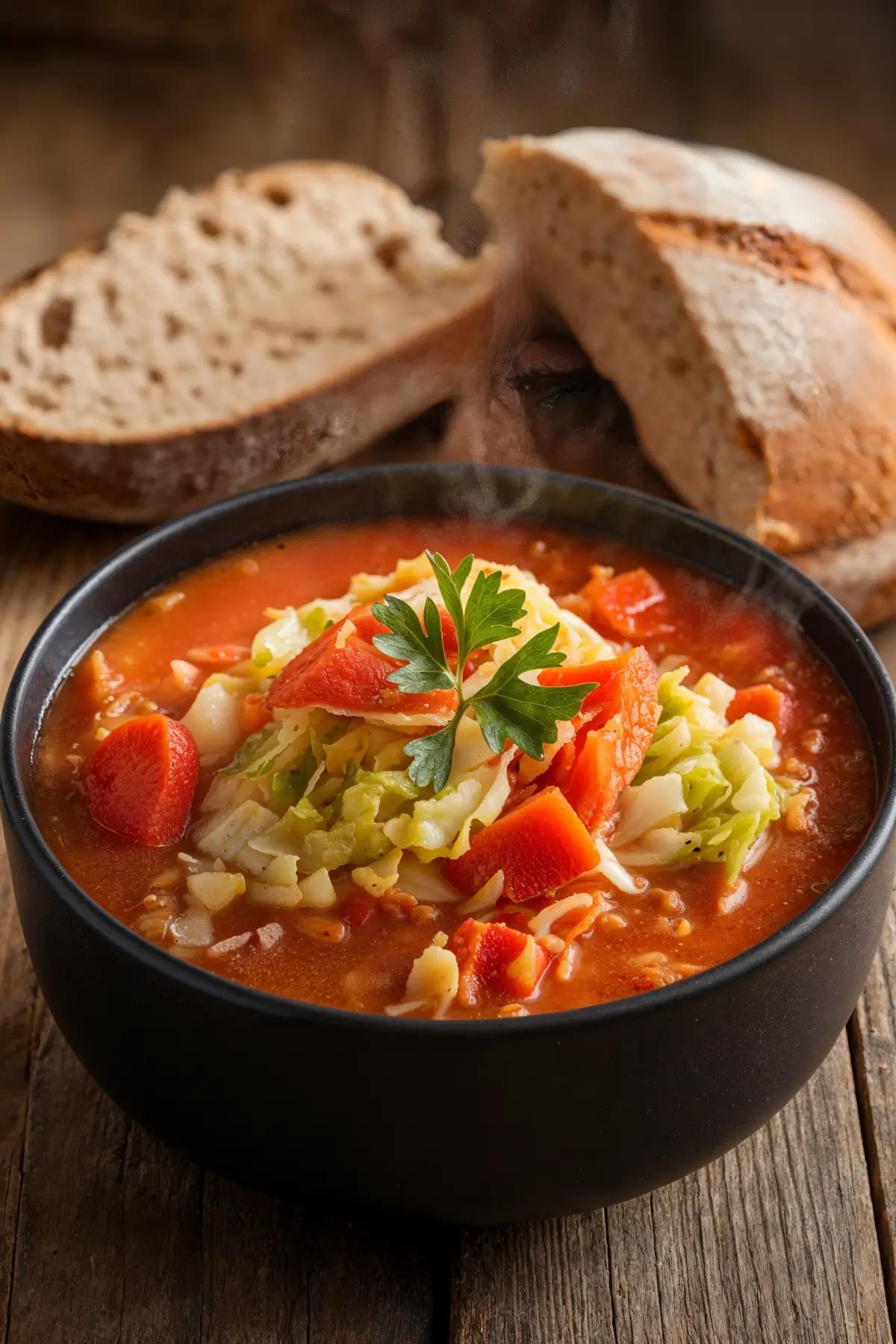
Why This Soup is My Go-To Comfort Meal
I always liked a good veggie soup, but cabbage soup is my favorite in the whole wide world. It is a straightforward, budget-friendly, and ideal way to incorporate vegetables without thinking too much. I feel like a warm pot of soup on the stove grounds me no matter how crazy the day has been.
A few things I love about this recipe:
- You can swap in or out just about any vegetable you’ve got lying around. It’s incredibly forgiving.
- It’s surprisingly filling, even without any grains or beans thrown in (though, go for it if you want!).
- It reheats well, so lunch is sorted for a couple of days.
On some occasions, I will go extra and add a thick slice of crusty whole grain bread or some sharp cheddar with it. But even on my own, it’s still satisfying and helps to reset my eating pattern when I am going lighter.
When it's chilly outside, or you want to enjoy something that tastes like a huge warm hug, this soup never fails.
The story
Cabbage Soup Was Sour Long Before It Was a Diet
Russians have been eating cabbage soup since around the tenth century, when cabbage reached the Rus through trade with Byzantium. It took hold for reasons with no romance in them: cabbage was cheap, it survived a winter in storage, and one pot fed a household. Shchi became so ordinary it stopped being a recipe. Travelers in the eighteenth and nineteenth centuries froze it in blocks over the winter and chipped off chunks with an axe to melt over a fire on the road.
What is worth borrowing is not the ingredient list, which changed constantly, but the one thing that never did. Shchi is soured: with sauerkraut and its brine, with sorrel, or with a spoonful of smetana stirred in at the table. Polish kapuśniak sours with sauerkraut too. Hungarian káposztaleves does the same and adds paprika. Cook enough cabbage and you see why they all arrived at the same answer independently. Cabbage on its own is sweet and faintly sulfurous, and acid handles both at once.
The cabbage soup most Americans have met has that acid stripped out. The Cabbage Soup Diet has no known author and no traceable first version. It spread on photocopies and fax machines through offices in the mid-1990s, ran in Cosmopolitan and GQ in 1995, and traveled under borrowed authority, usually credited to a hospital called Sacred Heart. Sacred Heart Medical Center eventually issued a written disclaimer saying the diet did not originate there and that its dietitians did not endorse it. Historians of popular culture file it as an urban legend.
That version treats cabbage soup as something to get through. The older one treats it as the meal you were glad to come home to, and the sour finish is what made it worth coming home to. It is why this recipe ends with vinegar off the heat rather than another pinch of salt. The meatless version is no modern concession either: Orthodox fasting covered a large share of the calendar, so postnye shchi, built on vegetables and mushrooms with no smetana on top, was the default for much of the year.
What to buy
Ingredient Notes
Green cabbage
Plain green cabbage, sometimes sold as white cabbage, is the one that works. Its leaves hold their shape through a simmer and still taste like something at the end. Savoy collapses faster and is better braised or raw, napa is gone inside five minutes, and red cabbage turns the broth a murky blue-gray as its pigments react to the acid in the pot. Half a large head is about 700 g, near eight cups chopped. Cut the core out and throw it away; it stays crunchy long after the leaves are done.
Low-sodium vegetable broth
The biggest number on the nutrition panel, decided before you taste anything. Standard carton broth runs roughly 500 to 900 mg of sodium per cup, and six cups of it puts this soup over 1,400 mg a serving before you add a grain of salt. Low-sodium sits nearer 140 mg a cup, which brings the same recipe down to about 480 and hands the seasoning back to you at the end, where it belongs.
Tomato paste
Two tablespoons is the difference between this and a pot of hot vegetable water, but it has to be cooked in the oil in the dry pot rather than stirred into the liquid later. Raw paste tastes tinny and thin. A minute against hot metal caramelizes its sugars and darkens it from bright red to brick. Tubes keep for months in the fridge, which matters when a recipe wants two spoonfuls.
Apple cider vinegar
The traditional sour in its least fussy form. Lemon juice works and tastes brighter, white wine vinegar works and tastes cleaner, and better than either, if you have a jar open, is a tablespoon of sauerkraut brine, which is what a Polish or Russian cook would have reached for and which brings a little funk with the acid. Skip balsamic. It is too sweet here and it muddies the color.
Dried thyme and bay leaf
Both go in early, unlike the parsley, and both need the full simmer to give anything up. Thyme is one of the few herbs as good dried as fresh over a long cook, so there is no reason to buy a bunch. One bay leaf is plenty for six servings, and it comes out before the soup reaches the table rather than being left for someone to find.
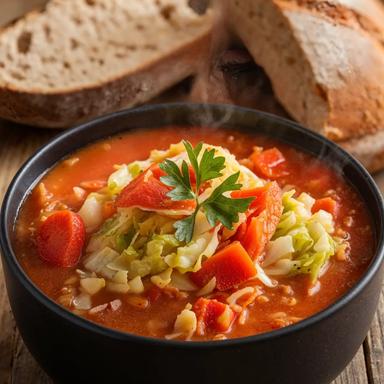
Hearty Cabbage and Vegetable Soup
A cabbage and vegetable soup with browned tomato paste for depth, the cabbage added in the last twelve minutes so it keeps its bite and its color, and a splash of vinegar stirred in off the heat.
Ingredients
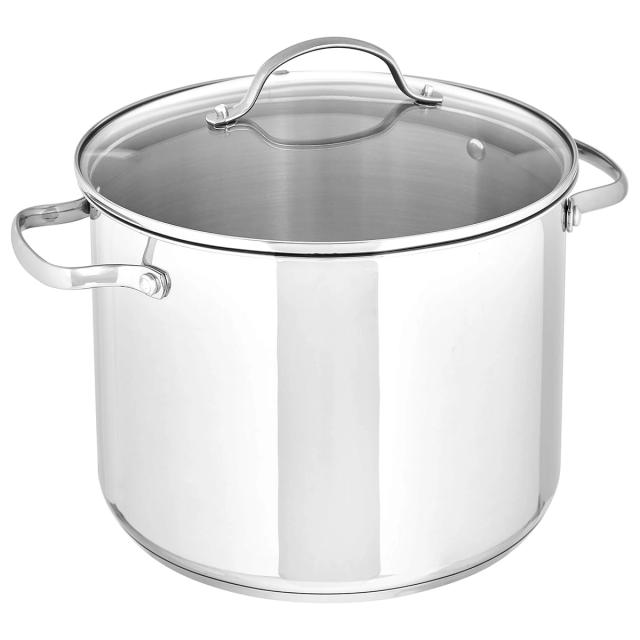
Equipment
As an Amazon Associate I earn from qualifying purchases, at no extra cost to you.
Instructions
- 1
Sweat the aromatics
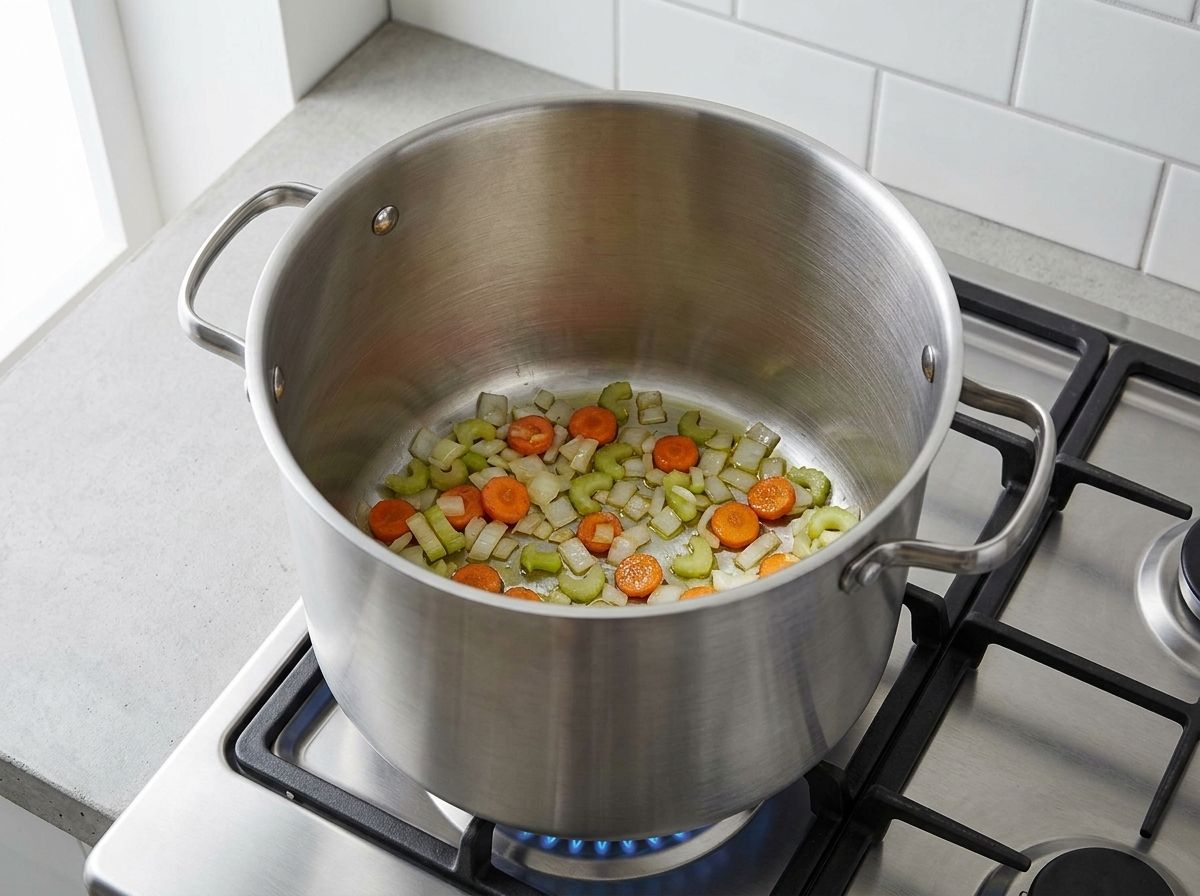
Heat the olive oil in a large pot over medium heat. Add the onion, carrots and celery and cook for 6 to 8 minutes, stirring now and then. You want the onion soft and translucent and the cut edges of the carrot just starting to take on color. The carrots will still be firm, which is correct at this stage.
- 2
Bloom the tomato paste
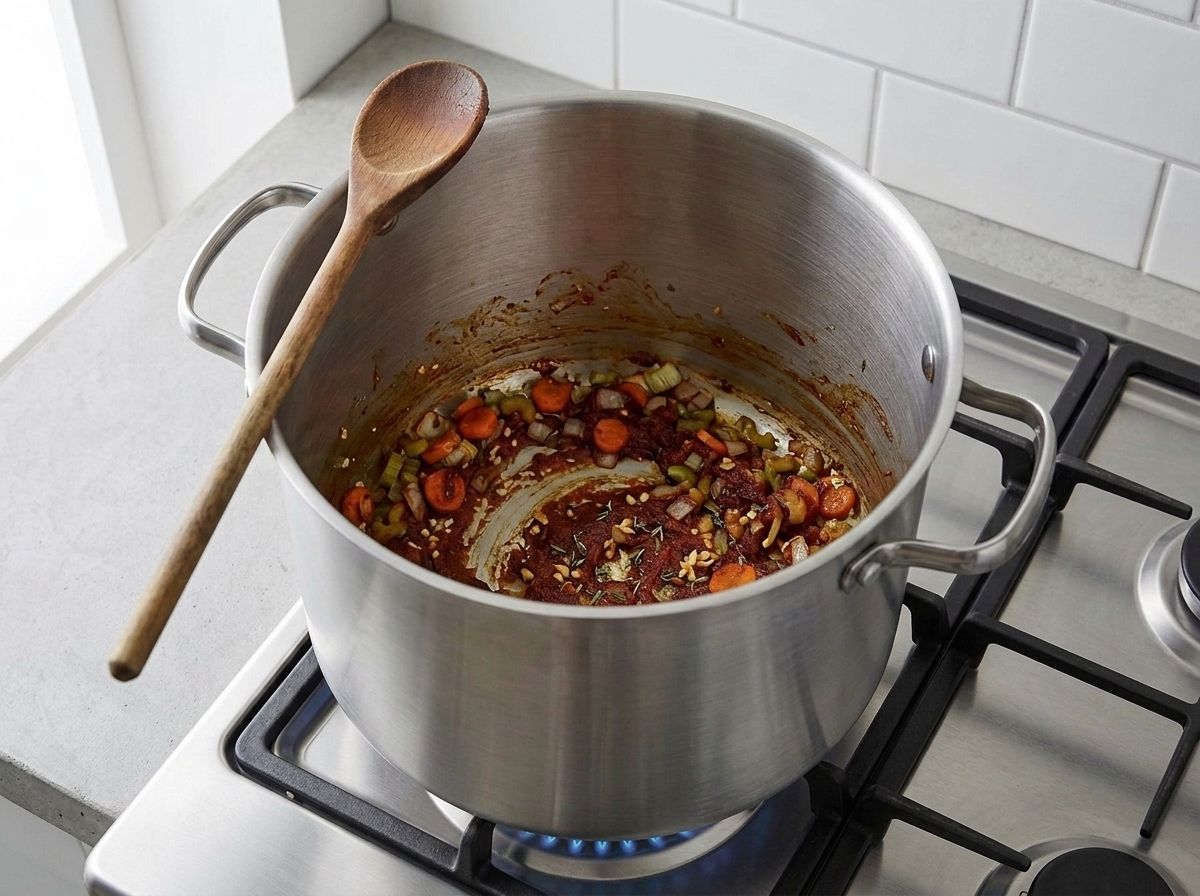
Stir in the garlic, tomato paste and thyme and cook for 1 to 2 minutes, pressing the paste against the bottom of the pot so it makes contact with the metal. It will darken from bright red to brick and smell sweet instead of raw. Most of the soup’s depth comes from this minute, so do not skip it.
- 3
Add the broth and tomatoes
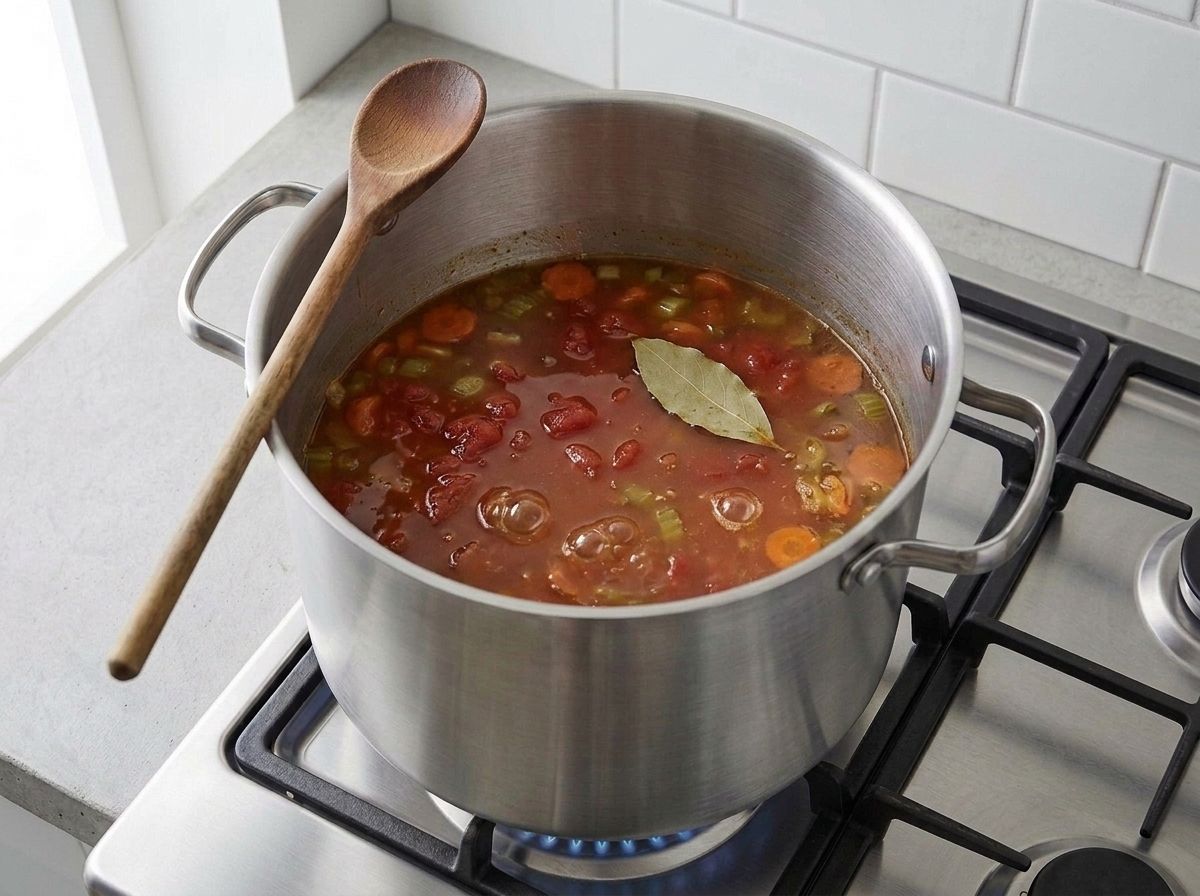
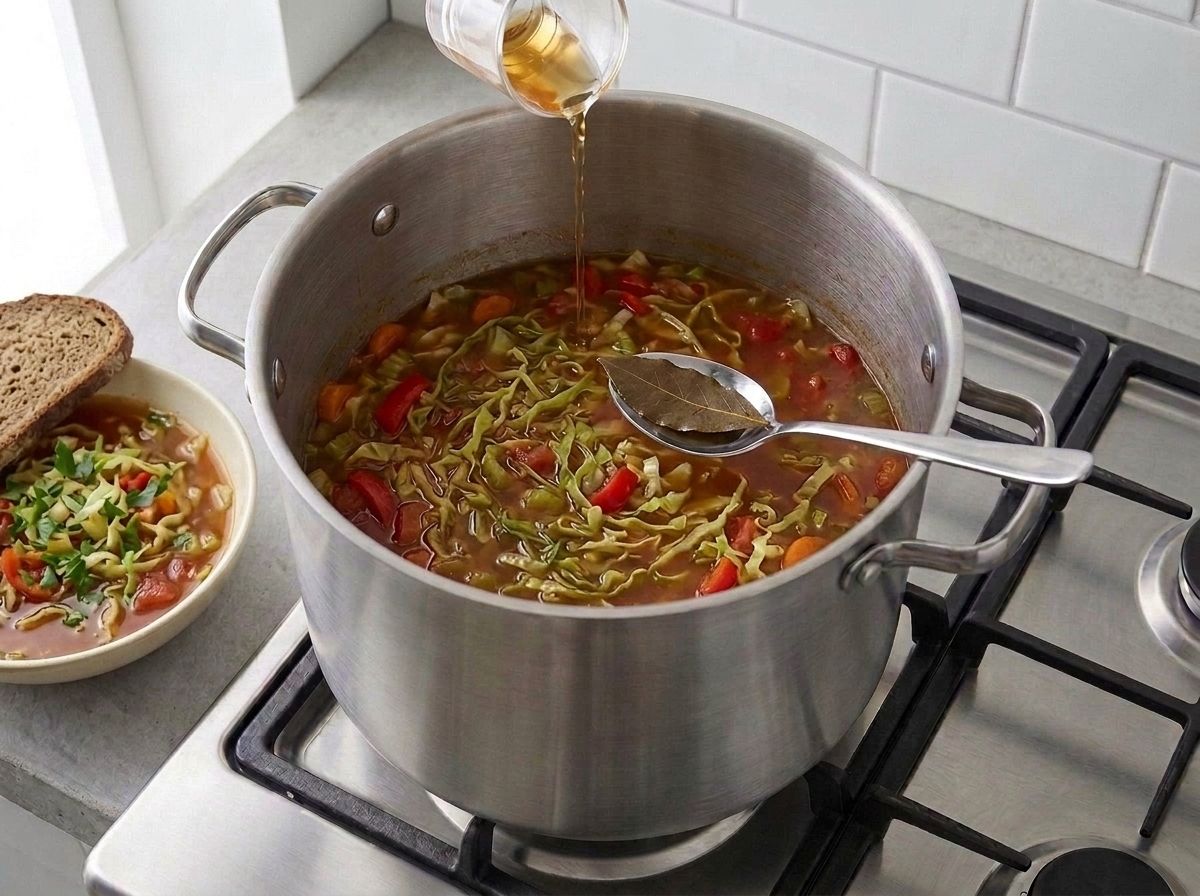
Pour in the vegetable broth and the canned tomatoes with their juice, drop in the bay leaf, and scrape the bottom of the pot to lift the browned paste into the liquid. Bring to a boil.
- 4
Give the carrots a head start
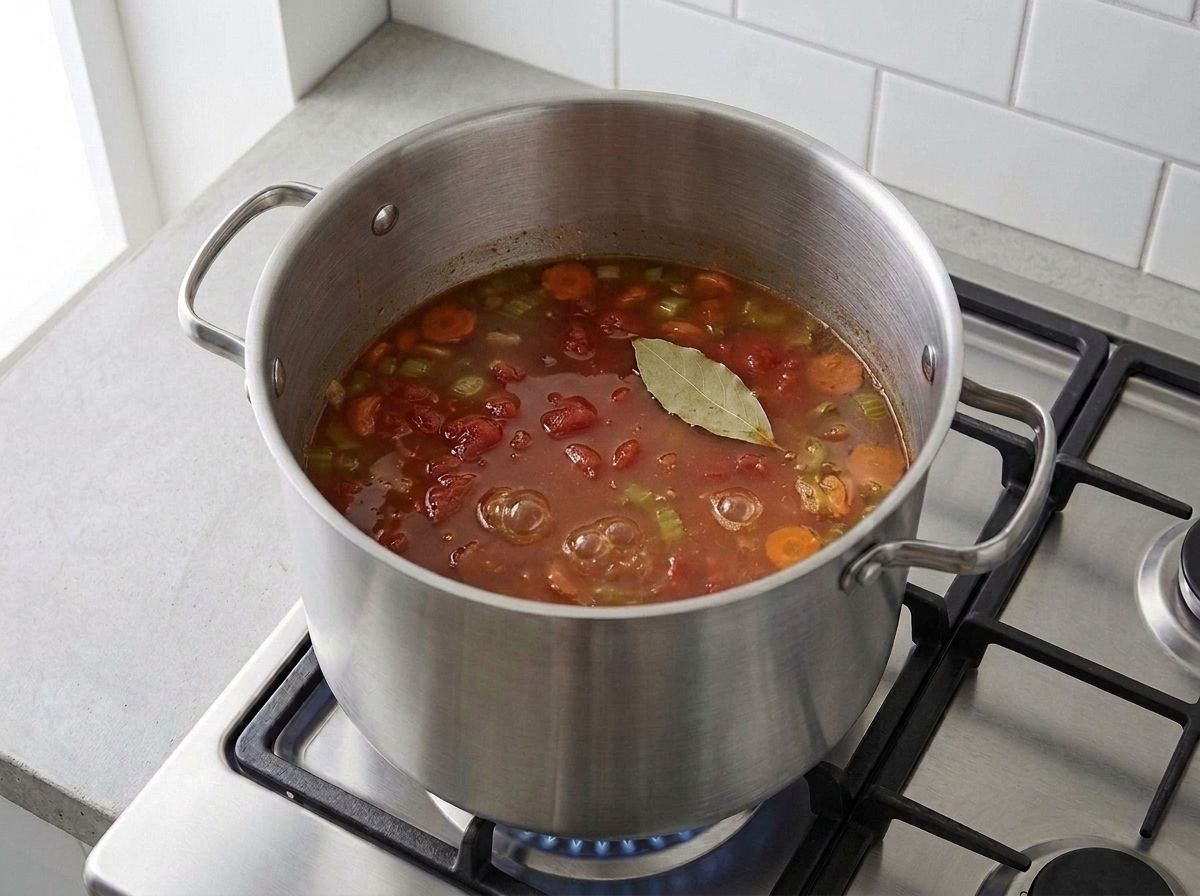
Lower the heat and simmer, uncovered, for 8 minutes. This is the change that makes the whole recipe work: the carrots and celery get their time now, so the cabbage does not have to sit in the pot waiting for them.
- 5
Add the cabbage last
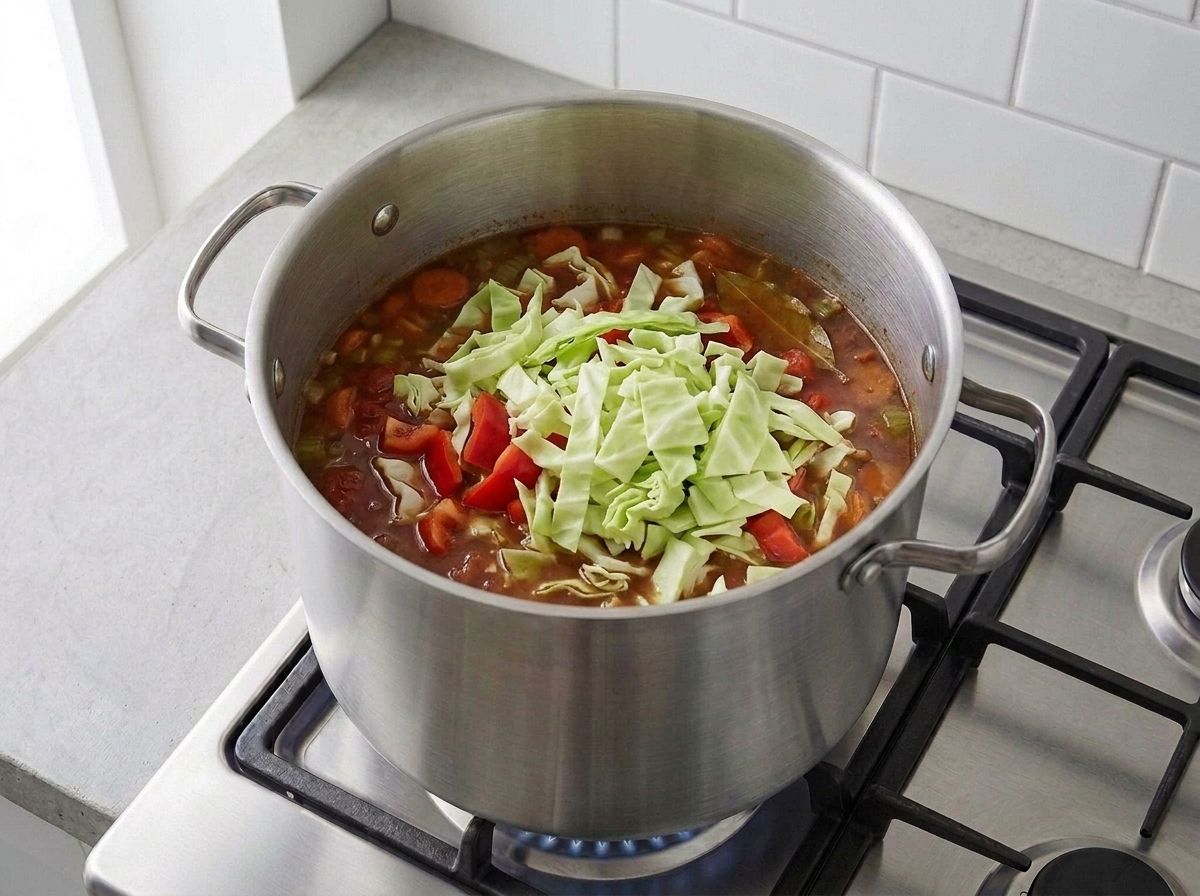
Stir in the cabbage and bell pepper and simmer for 10 to 12 minutes, until the cabbage is tender but still has a little bite to it. Stop there. Cabbage held at a simmer much past 15 minutes goes olive-drab, loses its texture and starts to smell sulfurous, which is the flaw people mean when they say they do not like cabbage soup.
- 6
Finish with vinegar off the heat
Take the pot off the heat and fish out the bay leaf. Stir in the vinegar first, then the salt and black pepper, then taste. If the soup reads flat rather than under-salted, add another teaspoon of vinegar before you reach for more salt. Ladle into bowls and scatter the parsley over the top.
Notes
Zucchini and green beans can go in with the cabbage for the last 10 minutes. Potatoes need longer than this pot runs, so add them already boiled.
Taste before you salt. Six cups of broth carry their own seasoning and brands vary widely.
Add more broth if you prefer a thinner soup or to stretch portions.
Nutrition Facts
6 servings · 509 g per serving
- Calories
- 128 kcal
% Daily Value*
- Total Fat
- 5.1 g7%
- Saturated Fat
- 0.8 g4%
- Sodium
- 480 mg21%
- Total Carbohydrate
- 19.2 g7%
- Dietary Fiber
- 6.5 g23%
- Sugars
- 9.9 g—
- Protein
- 4.1 g8%
Recipe from veggierecipes.blog
When it goes wrong
Troubleshooting
The kitchen smells of boiled cabbage and the cabbage has gone gray
It cooked too long, and the clock is tighter than most recipes admit. Harold McGee measured the hydrogen sulfide coming off boiling cabbage doubling between the fifth and seventh minute, and it keeps climbing after that. That is why the cabbage here goes in near the end and comes out at 10 to 12 minutes instead of riding the whole simmer. Keeping the lid off matters too, since a covered pot traps the sulfur compounds that would otherwise leave. If it has already happened, take the lid off and add extra vinegar; neither undoes it, but both help.
It tastes like hot vegetable water
Three causes, in the order worth checking. The tomato paste was not browned, or was left out, and that is where most of the body comes from. There is no acid in the pot. Or the broth was thin to begin with, in which case nothing downstream rescues it. Notice that salt is not on the list.
I keep adding salt and it still tastes flat
Flat and under-salted are different problems and salt fixes only one of them. Test it in a spoon rather than the pot: take a spoonful of soup, add one drop of vinegar, and taste. If it snaps into focus, the pot needs acid and no amount of salt was going to get there. This is the exact failure the diet-era cabbage soups are built on, and it is why every older tradition sours the pot.
The carrots are still hard but the cabbage has gone to mush
Everything went in at once. Carrots want about 20 minutes at a simmer and cabbage wants 10 to 12, so one pot timed for either is guaranteed to be wrong for the other. Step 4 exists purely to close that gap: the carrots and celery simmer alone for 8 minutes, and the cabbage joins a pot that is already partway done.
It set into a stew in the fridge
Not a fault. Cabbage keeps drinking liquid as it sits, so a soup that was loose on the night comes out thick the next day. Thin it with broth or water as you reheat, or hold a cup of broth back when you cook and stir it in then.
Before you serve
Serving & Storage
In Russia and Poland the pot arrives plain and gets finished at the table: a spoonful of smetana stirred into your own bowl, black bread alongside. It is worth copying in a vegan kitchen, where cashew cream or unsweetened coconut yogurt rounds off the acid the same way, and if you want neither, a second splash of vinegar in the bowl is closer to how a fasting-day pot was eaten anyway. The bread matters more than it sounds. Rye or a dense sourdough stands up to this; a soft dinner roll dissolves into it.
At 128 calories a serving this is a light lunch rather than dinner. To make a meal of it, stir a drained can of white beans in for the last five minutes, or spoon cooked barley or farro into each bowl. Cook the grain separately, because simmered in the pot it drinks the broth and by the second day you have porridge. A poached egg on top works, and so does sharp cheddar grated over.
Some additions fail reliably. Raw potatoes come out chalky or disintegrated, because the pot only runs about 20 minutes once the liquid is in; add them already boiled. Pasta cooked in the soup is fine on the night and bloated by the next day. Spinach vanishes into nothing, so if you want greens, use kale and add it with the cabbage.
Making it ahead
This is one of the few soups where the usual claim is literally true. Overnight the thyme, bay and tomato keep working on the broth and it is better on day two. The cabbage moves the other way, softening further every day, so if you are cooking ahead for people, pull the pot 3 or 4 minutes early and leave it somewhere to go.
Storing leftovers
Airtight in the fridge, 4 to 5 days. It freezes for up to 3 months with one honest caveat: freezing ruptures the cabbage’s cell walls and it thaws noticeably softer, so freeze it if you want soup and eat it fresh if you want texture. Reheat gently rather than at a rolling boil, which only restarts the sulfur clock on cabbage that has had its time. Add the parsley and a fresh splash of vinegar afterwards; both fade in storage and both come back for almost nothing.
Still wondering
Frequently Asked Questions
Is this soup gluten-free?
Yes, with one carton to check. Nothing in the recipe contains gluten, but vegetable broth is the usual hiding place: some brands use barley malt extract or a wheat-based flavor base, and neither is obvious from the front of the box. Read the ingredient list rather than trusting the word vegetable on the label. Bulking the soup out with barley or farro makes that portion no longer gluten-free.
Is this the cabbage soup diet soup?
No. The seven-day diet version is cabbage, broth and a packet of onion soup mix, eaten more or less to the exclusion of other food, and it is built to be unsatisfying. This one has olive oil, browned tomato paste and a vinegar finish, and it is meant to be dinner. At 128 calories a serving it happens to be light, but that is a side effect of being mostly vegetables rather than the point.
Can I double the recipe?
Yes, in an 8-quart pot or larger, with two things that do not scale straight. Leave the simmer times exactly as written, because a bigger pot does not need longer and the cabbage will punish you if it gets it. And start with about 1.5 times the broth rather than double: a larger pot has proportionally less surface area, so much less liquid boils away and a straight doubling comes out watery.
Featured In
More Cozy Vegetable Soups
Made this?