
Falafel Sandwich Recipe
Published · Updated
Chickpeas soaked raw overnight, ground coarse and fried until the shell shatters, packed into warm pita with lettuce, tomato, pickles and tahini whisked until it turns pale and pourable.
Jump To Recipe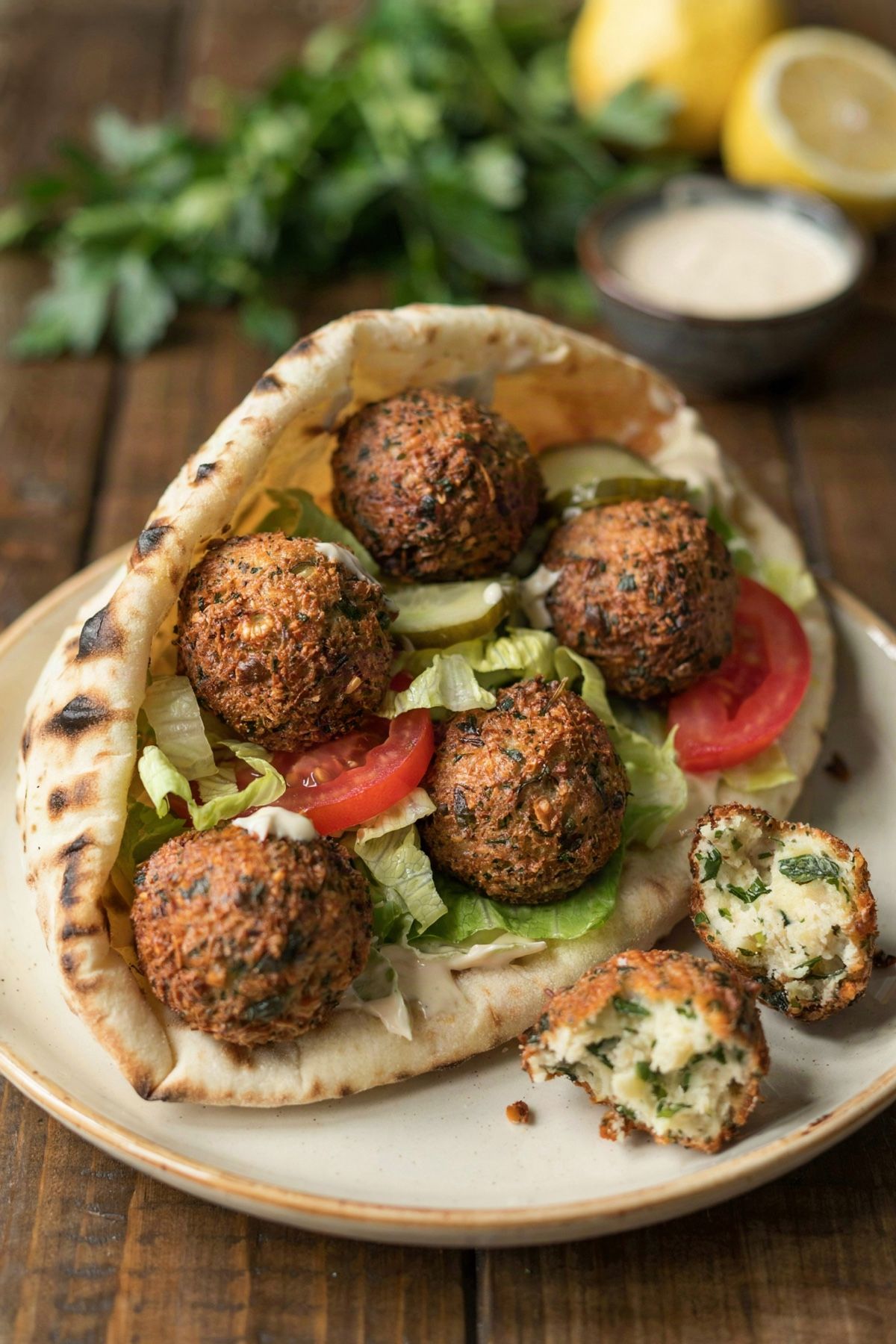
Why I Love a Proper Falafel Sandwich
It is magical to bite into a fresh falafel sandwich. The falafel’s exterior crunches, then reveals the tasty soft inside. Every mouthful is a crunch of lettuce, juicy tomatoes, and pickles. The tahini ties it all together with its nutty richness.
What stands out to me is the versatility: there’s no strict set of toppings required. Some of my favorite ways to enjoy a falafel sandwich include:
- Adding spicy zhoug for heat
- Stuffing in pickled turnips or red onions
- Drizzling extra tahini or feta dressing
Falafel sandwiches are my go-to lunch when I want something hearty but still fresh and healthy. I love that you can make a big batch of falafel ahead of time and build your sandwich however you want it, every time.
The story
Falafel Is Named After a Bean It No Longer Contains
The word almost certainly comes from fūl, the Arabic for fava bean, and the dish that carries the name started in Egypt, most likely in Alexandria, at some point in the nineteenth century. Fava beans were what grew there in quantity and what people ate. Chickpeas had nothing to do with it. Egypt still makes the original and still calls it ta’ameya: split dried fava beans ground with so much parsley, cilantro and dill that the inside comes out the color of a lawn, eaten for breakfast with bread and pickles rather than for lunch.
The chickpea version is the one that traveled. As the dish moved north into the Levant, where chickpeas were the cheaper and more familiar pulse, the bean was swapped and the name stayed put. That is the falafel most of the world now recognizes, sandier in texture and paler inside than its Egyptian parent. The story that Coptic Christians invented it as food for Lent gets repeated a great deal, and there is no evidence for it at all. Falafel is not a Coptic word.
The sandwich is younger than either version. For most of its life falafel was a plate of fritters, something you sat down to. It became a thing you hold in one hand in Israel in the 1950s, largely through Yemeni Jewish vendors who already had the pita, the pickles and the tahini and put the whole assembly together as street food. Within a decade the falafel stand had spread across the region and then out of it, and the format it fixed, sauce lining the pocket first and salad packed in around hot fritters, is the one this recipe follows.
There is one more thing worth saying about it on a vegetarian site. Almost every famous meatless street food is a substitution, a version of something else with the meat taken out and something standing in its place. Falafel is not. It never had meat in it, it is not pretending to be anything, and it lost nothing by being what it is. That is why it is one of the very few dishes you can order in a strange city without having a conversation first.
What to buy
Ingredient Notes
Dried chickpeas
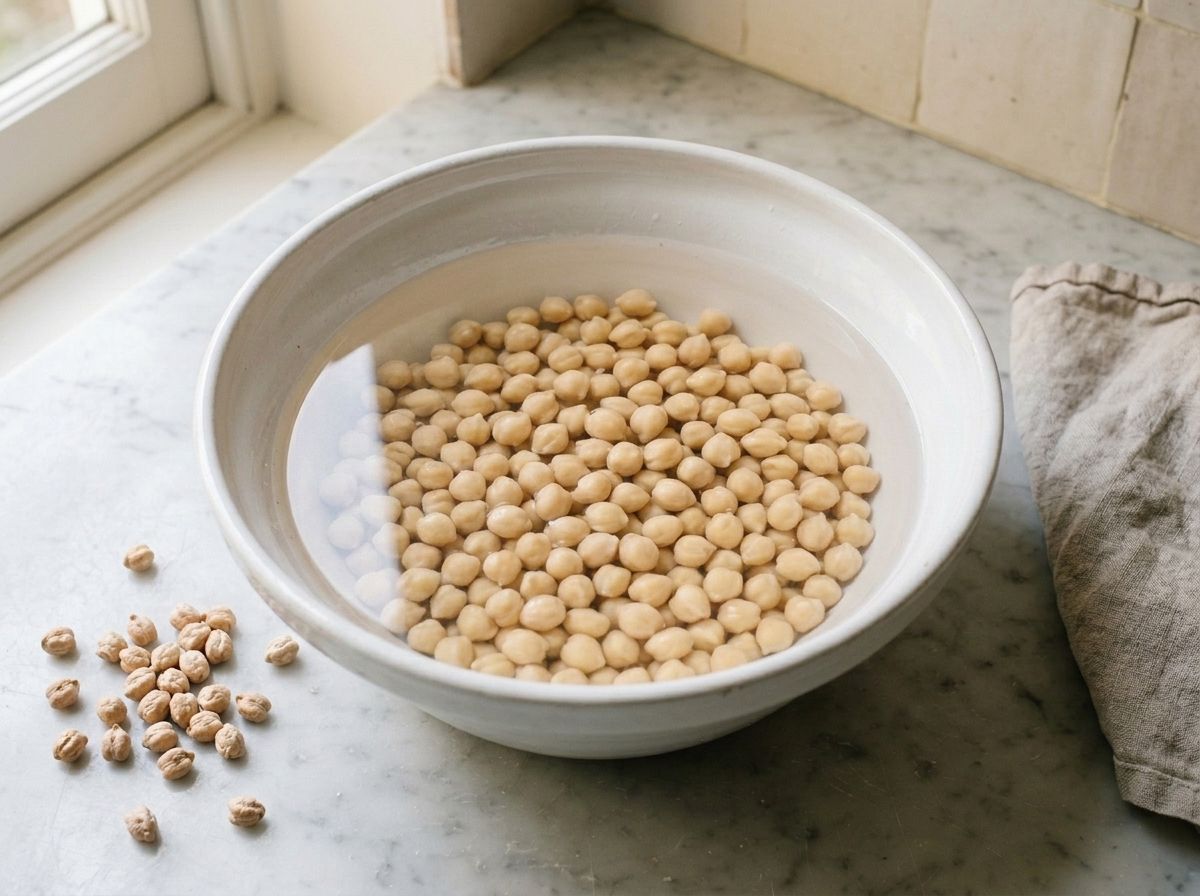
The one ingredient with no substitute. They go into the processor raw, swollen with water but never cooked, because the intact starch on every broken surface is the only thing binding the falafel together. A cooked chickpea has already spent that starch, which is why canned ones give a wet paste that disintegrates in the oil. Around 250 g dried comes back at roughly 550 g soaked. Give them 12 hours at minimum, closer to 24 if the bag has sat in the cupboard a while. A pinch of baking soda in the soaking water helps if yours are stubborn.
Parsley and cilantro
The quantity looks like a typo and is not. A packed cup of each, thin stems included, against a cup and a quarter of dried chickpeas is what makes the inside of a falafel green instead of beige. Herbs here are a bulk ingredient, not a seasoning, and recipes calling for a couple of tablespoons produce something the color of a hush puppy. If cilantro tastes of soap to you, replace it with dill rather than with more parsley. Dill is what Egyptian ta’ameya uses anyway.
Tahini
Buy it runny. Good tahini pours like thick cream at room temperature and tastes nutty with a faint bitterness behind it, not chalky and not harsh. Lebanese and Palestinian brands are the reliable buy. It separates hard in the jar, so stir the whole thing back together with a table knife before you measure, or you take loose oil off the top one week and something like cement off the bottom the next. Do not swap in the sesame paste sold for Chinese cooking, which is ground from heavily toasted seed and is far too strong for this sauce.
Ice water
A small detail that earns its line in the list. Tahini sauce whisked with ice water comes out noticeably paler and holds more air than the same sauce made with water from the tap, and it stays loose longer in the fridge. It is also the ingredient to add slowly: half the finished texture is in how gradually it goes in.
Pita
What you want is a pocket bread with a real cavity and some give left in it, not the dry discs sold for pizza bases. Pita from a Middle Eastern bakery is close to a different food from the supermarket version and it freezes well, so buy a stack when you find good ones. Warm it before you open it, because cold pita tears along the seam and then there is no pocket to fill.
Cayenne and sesame seeds (optional)
Both are optional because the sandwich is complete without either and neither is worth a special trip. Cayenne goes in with the ground spices and reads as a low warmth behind the cumin rather than as obvious chili heat. The sesame seeds go in at the end, with the baking powder, and toast a second time in the frying oil, which makes the crust taste more of sesame and ties it back to the tahini.
Crispy Falafel Sandwich with Fresh Toppings
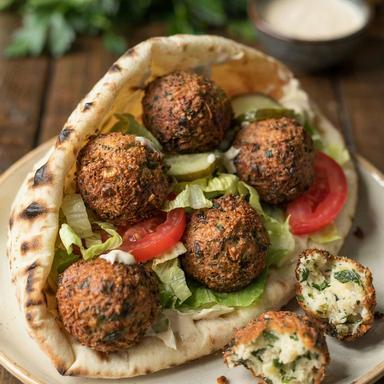
Falafel fried from raw soaked chickpeas, packed into warm pita with lettuce, tomato, pickles and a tahini sauce whisked from scratch. Start the chickpeas the night before.
Ingredients
Equipment
As an Amazon Associate I earn from qualifying purchases, at no extra cost to you.
Instructions
- 1
Soak the chickpeas overnight
Put the dried chickpeas in a large bowl and cover them with cold water by at least 3 inches (8 cm), because they roughly triple in volume. Leave them 12 to 24 hours at room temperature, or in the fridge in hot weather. They are ready when a thumbnail splits one cleanly and meets firm raw bean inside, never anything soft.
- 2
Dry them properly
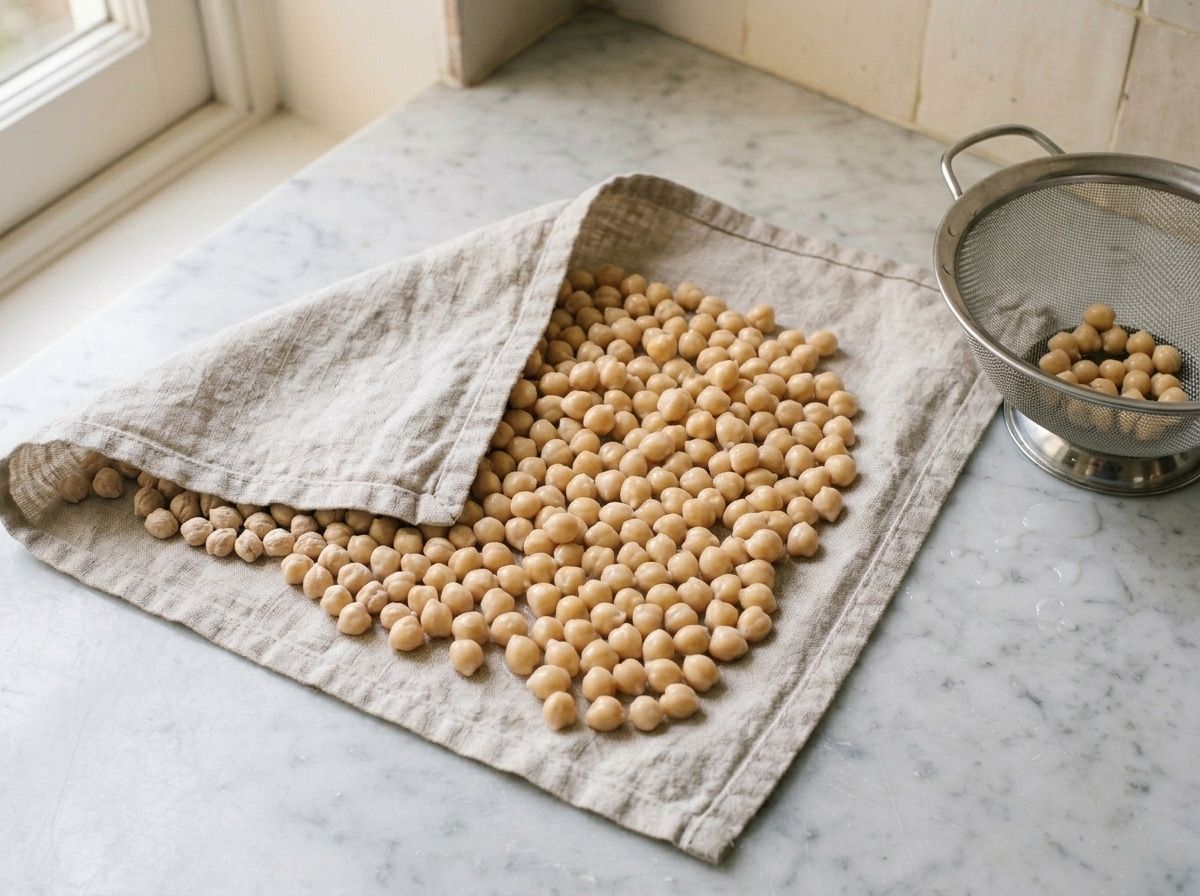
Drain the chickpeas, rinse them and spread them on a clean dish towel. Pat and roll them until the surface is dry to the touch, about five minutes. Surface water thins the mixture, and it is what makes hot oil spit later on.
- 3
Grind to a coarse crumb
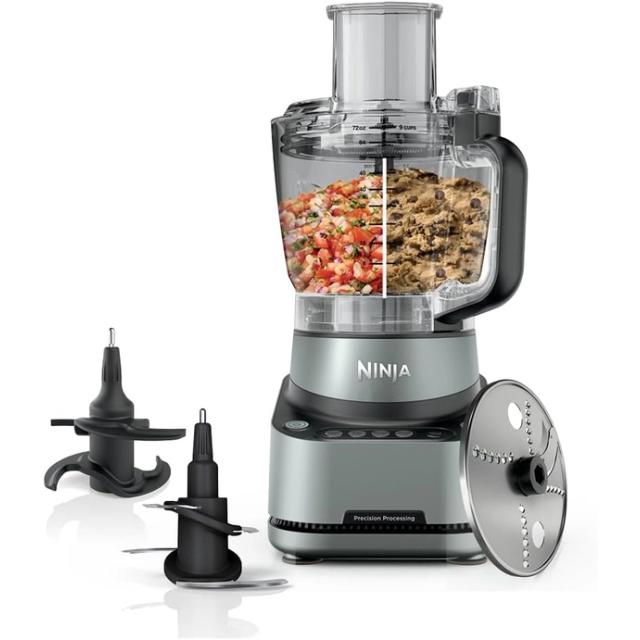
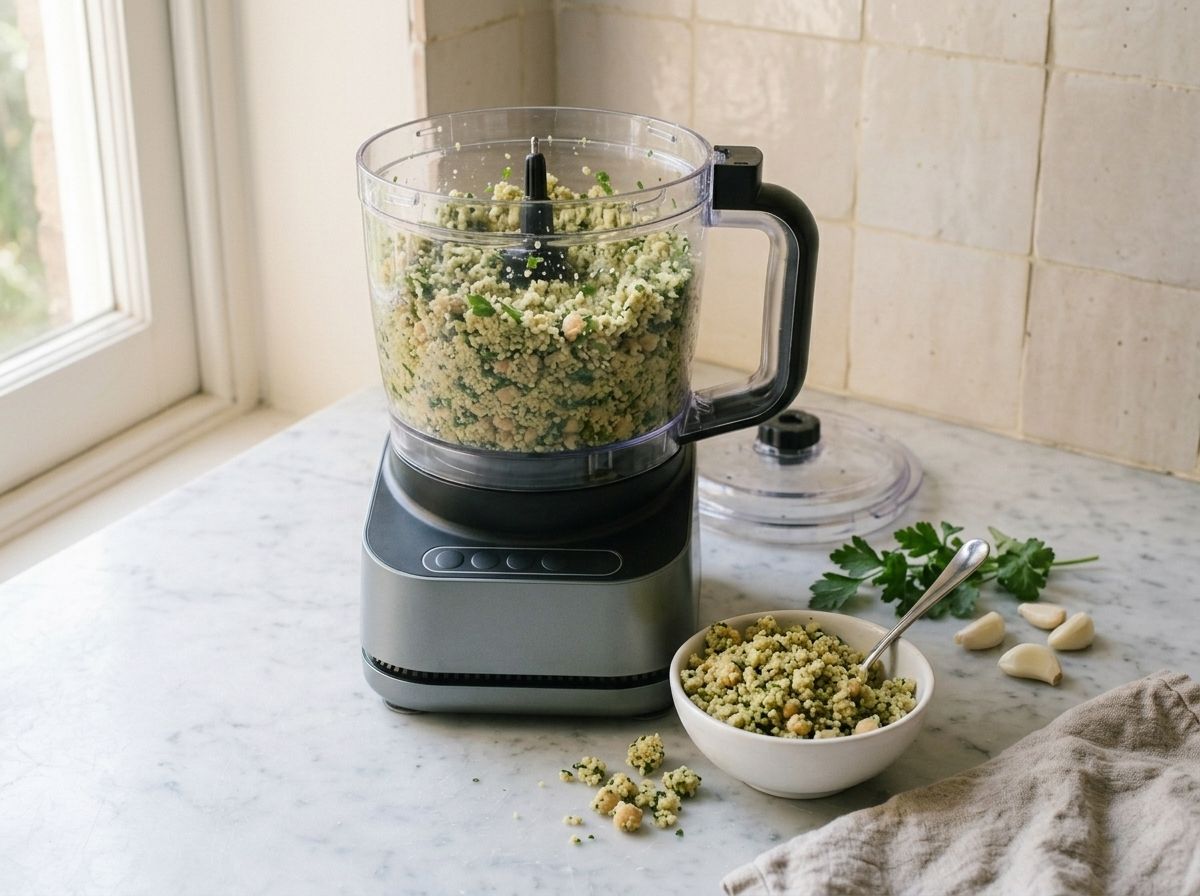
Put the chickpeas, onion, three of the garlic cloves, the parsley, cilantro, cumin, coriander, salt, black pepper and the cayenne if you are using it into a food processor. Pulse in short bursts, scraping the bowl down twice, until the mixture looks like damp couscous: grainy, flecked green, and just able to hold its shape when you squeeze a handful. Stop before it turns smooth. Work in two batches if the bowl is more than three quarters full.
- 4
Chill the mixture
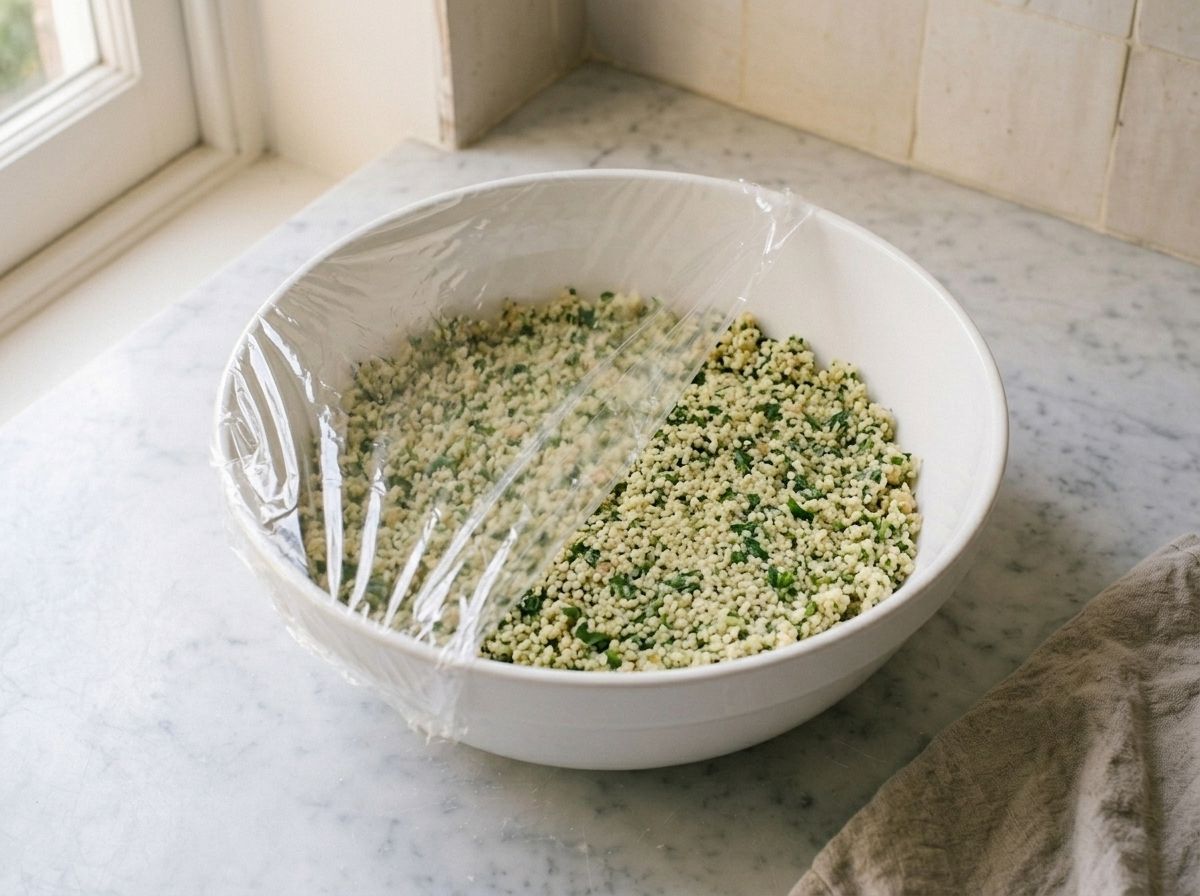
Scrape the mixture into a bowl, cover it and refrigerate it for at least an hour, or overnight. Chilling is what lets the raw chickpea starch hydrate and set, and that starch is the only thing binding the falafel, so do not shorten it.
- 5
Whisk the tahini sauce
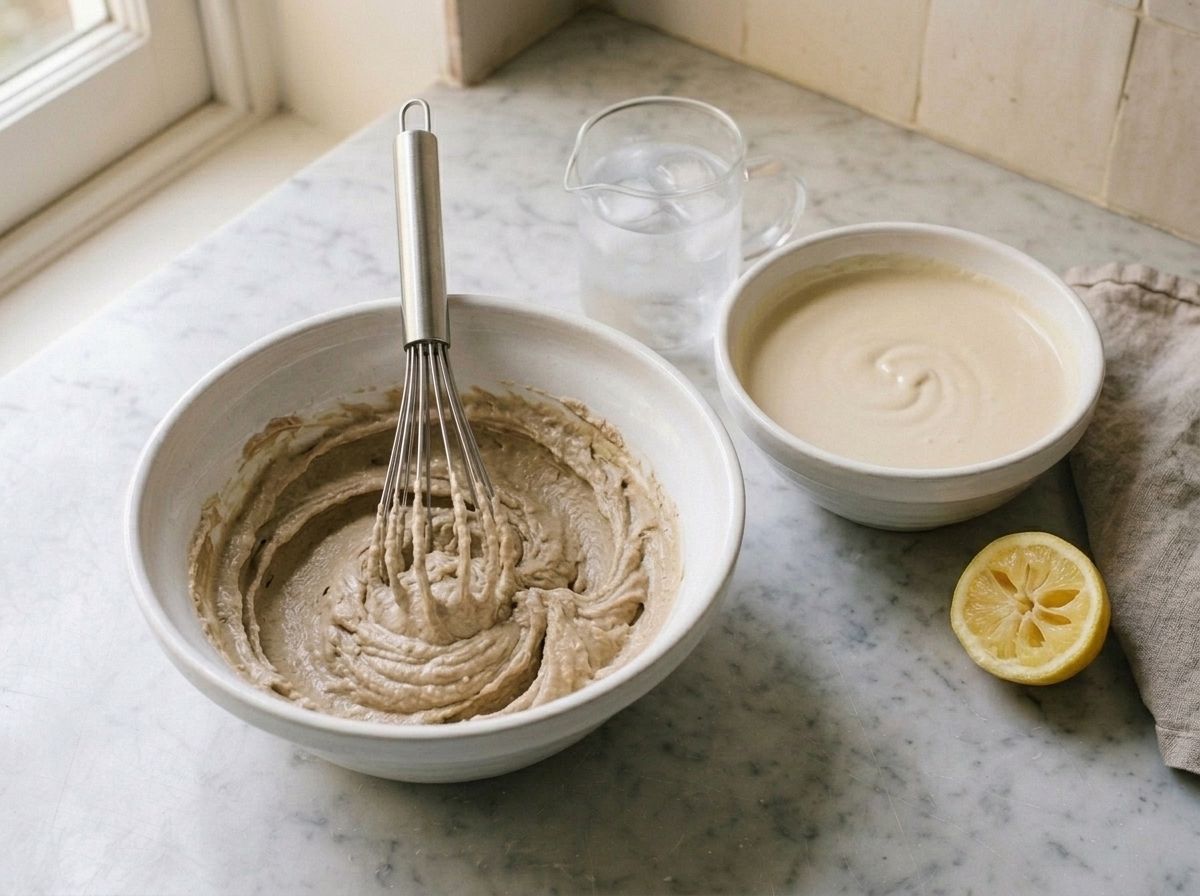
Stir the tahini in its jar until the separated oil is worked back in, then whisk it with the remaining garlic clove, grated, the lemon juice and a good pinch of salt. It will seize into a stiff pale paste almost at once, which is what it is meant to do. Add the ice water a tablespoon at a time, whisking after each one, until the sauce slackens and turns smooth, ivory and pourable, about the thickness of heavy cream.
- 6
Shape the falafel
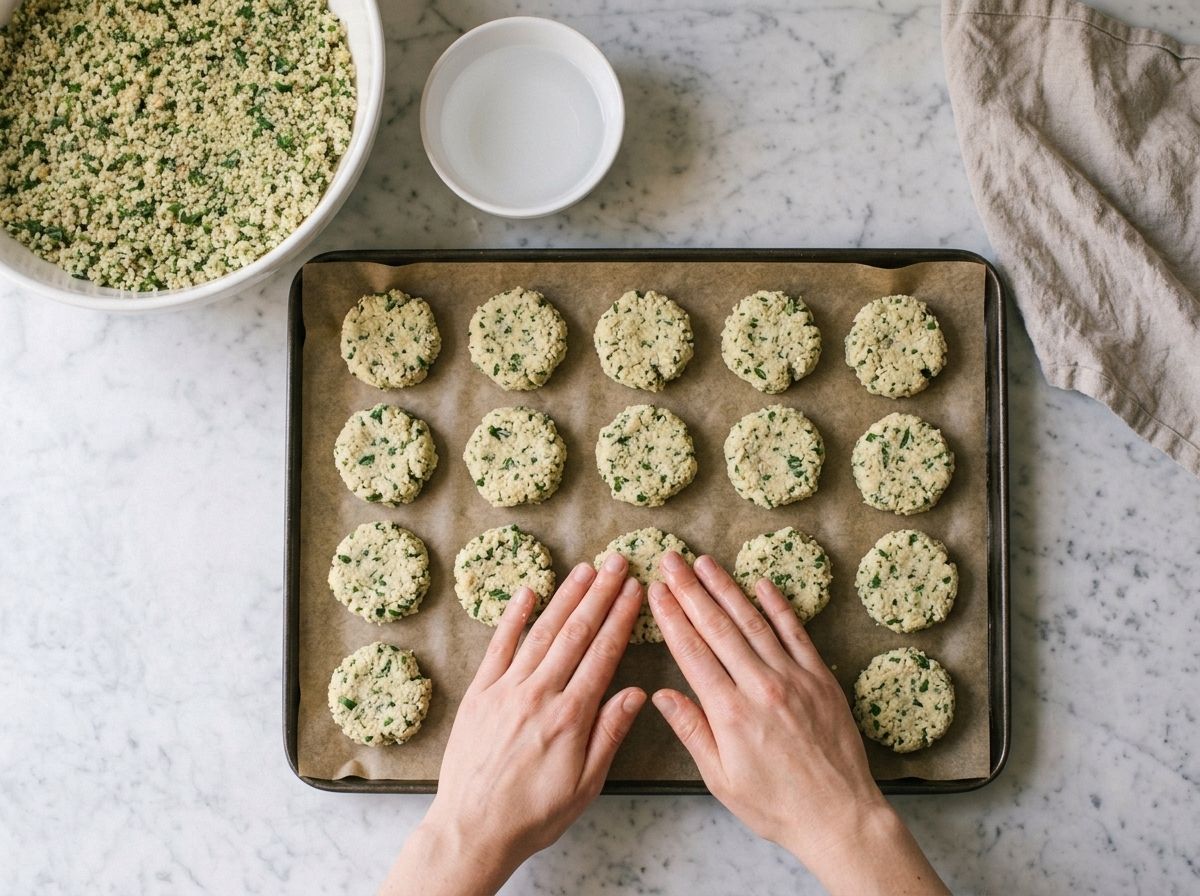
Stir the baking powder, and the sesame seeds if you are using them, into the chilled mixture, now rather than earlier so the lift is still working when the falafel meets the oil. With wet hands, roll walnut-sized balls of about 1 oz (30 g) and press each one into a thick disc. You should get around 20.
- 7
Fry at 350°F
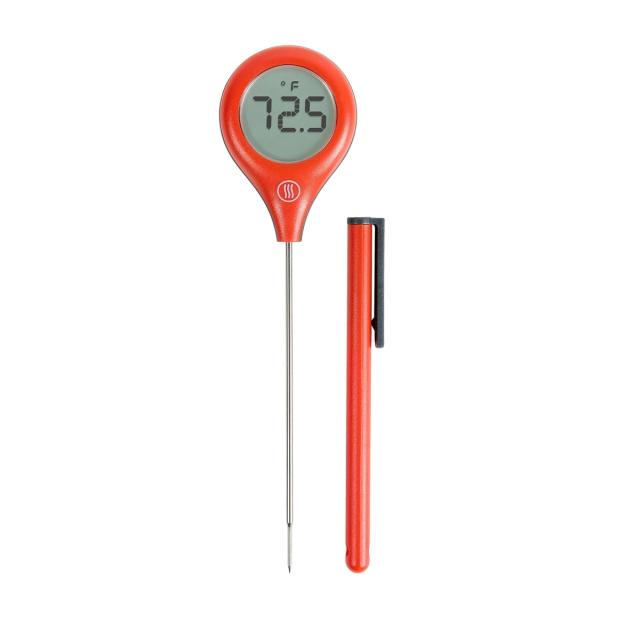
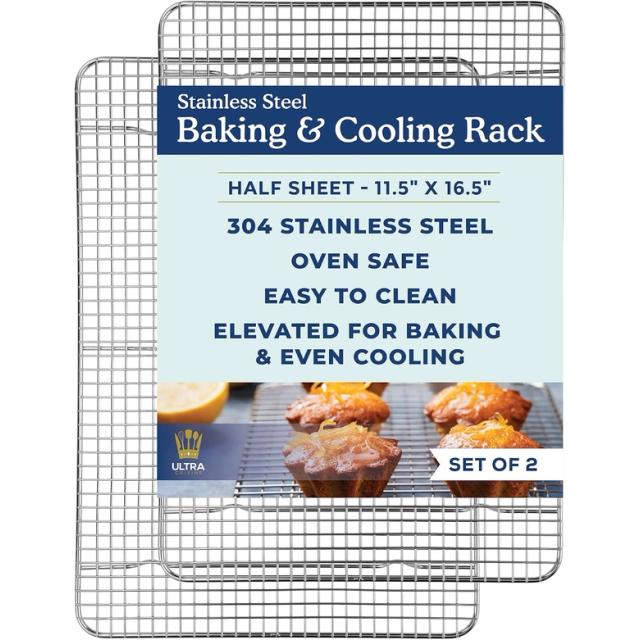
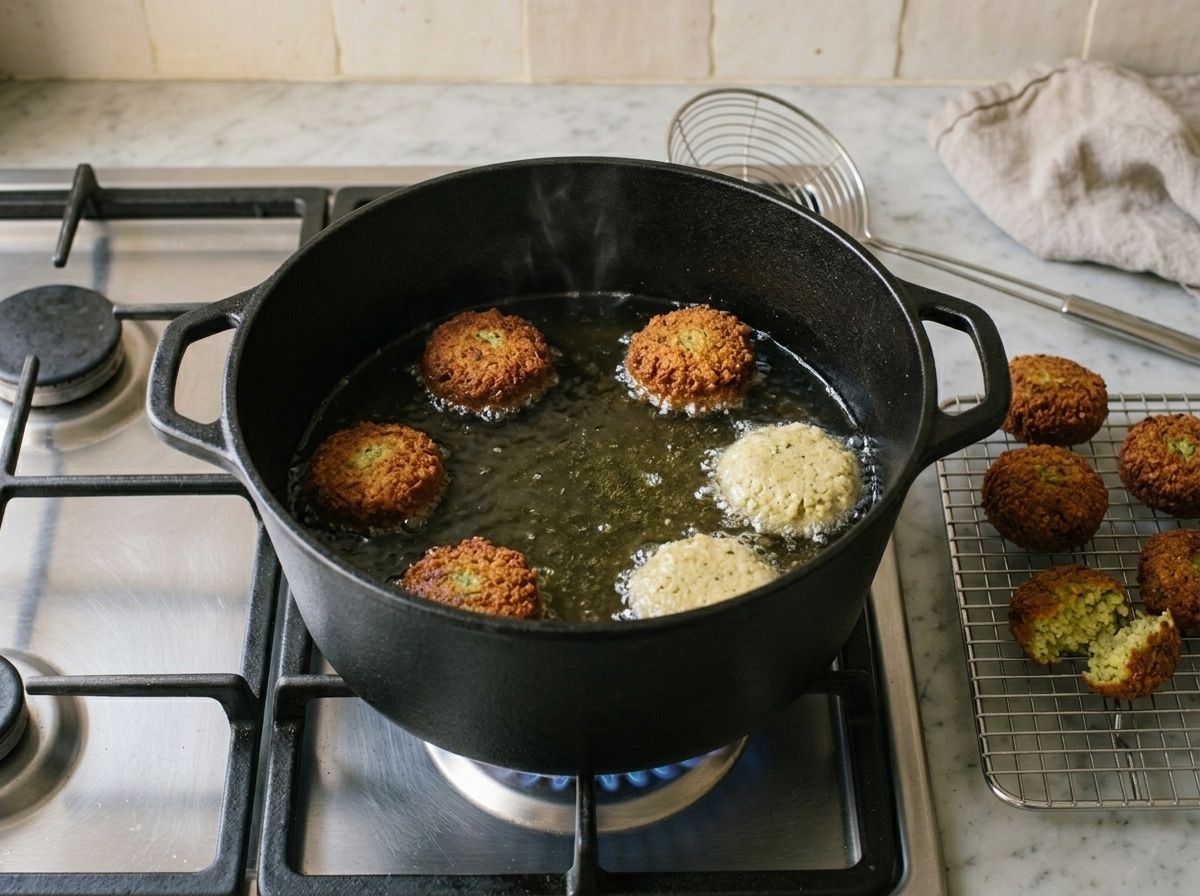
Pour the oil into a deep pot to a depth of 2 inches (5 cm) and heat it to 350°F (175°C) on a thermometer. Fry one falafel on its own first: it should sizzle straight away, float within a few seconds and keep its edges. Then fry the rest in batches of five or six for 3 to 4 minutes, turning once, until deep golden brown, letting the oil climb back to temperature between batches. Drain them on a wire rack rather than on paper.
- 8
Build the sandwich, sauce first
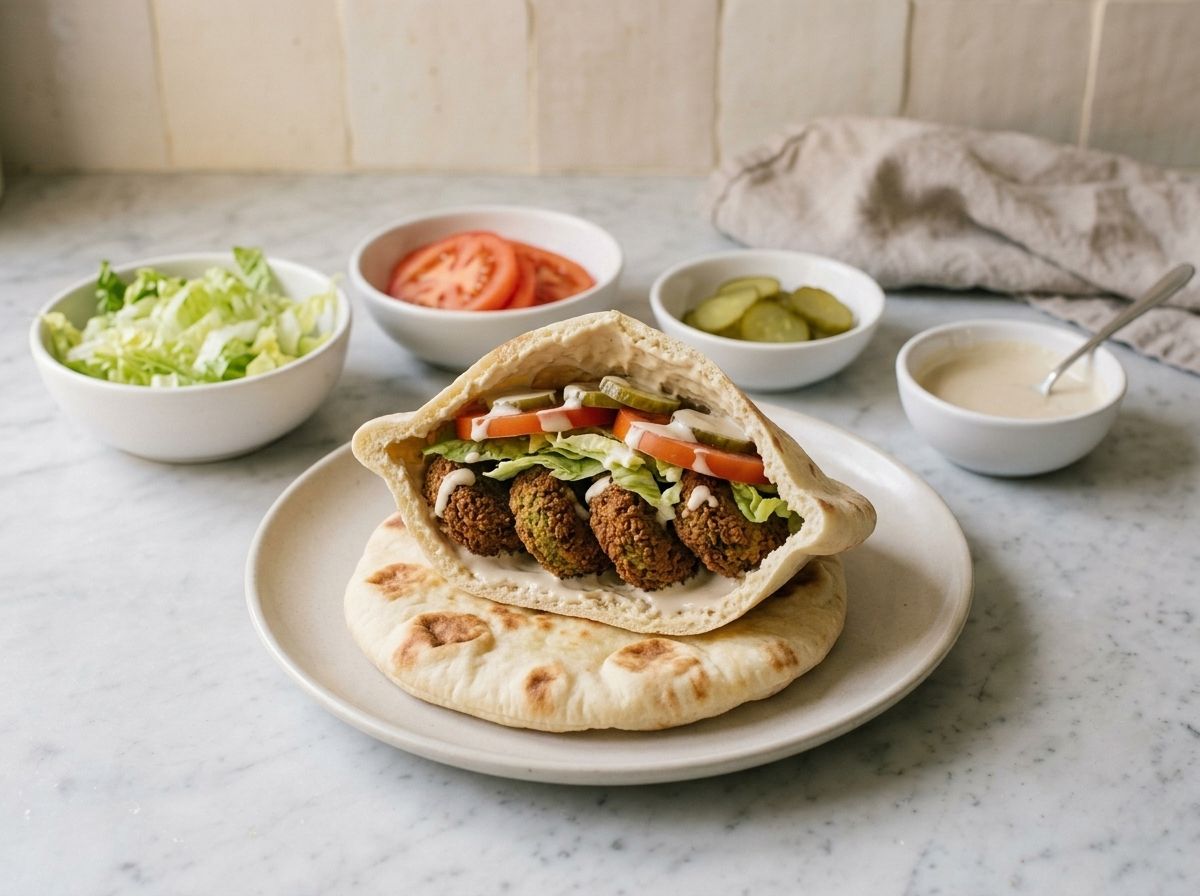
Warm the pitas in a dry pan or a low oven until they are soft and puffed, then cut a wide opening and spoon tahini sauce into the pocket first, spreading it up the inside walls. Add the hot falafel, crushing each one lightly against the bread so it opens up, then the lettuce, tomato and pickles. Finish with a little more tahini over the top.
Notes
Makes about 20 falafel, five to a pita. Worth making in full even for two people, because the extras are good cold in a salad or a grain bowl the next day.
Strain the frying oil once it is cool and keep it in a jar. It will fry two or three more batches before it starts to taste tired.
Nutrition Facts
4 sandwiches · 344 g per serving
- Calories
- 769 kcal
% Daily Value*
- Total Fat
- 40.2 g52%
- Saturated Fat
- 4.1 g21%
- Sodium
- 1322 mg57%
- Total Carbohydrate
- 84.5 g31%
- Dietary Fiber
- 16.6 g59%
- Sugars
- 10.1 g—
- Protein
- 24 g48%
Recipe from veggierecipes.blog
When it goes wrong
Troubleshooting
My falafel dissolved into the oil
Two causes, and both are about starch. Either the chickpeas were cooked or canned rather than soaked raw, in which case nothing will save the batch, or the mixture went into the pan without its hour in the fridge. Always fry one on its own before committing the rest: if the test falafel slumps or frays at the edges, put the bowl back in the cold for another thirty minutes and try again. If it still breaks up, pulse two tablespoons of the mixture to a smooth paste and stir it back through, which buys you more binder without putting flour in.
They came out greasy and heavy
The oil was too cool. Below about 325°F (160°C) the outside takes too long to set, so instead of sealing itself the falafel sits there drinking oil. A thermometer settles this in a way that watching the surface never does. The two things that pull the temperature down are crowding the pot and dropping in cold falafel straight from the fridge.
Dark outside, raw and pasty in the middle
Oil above about 375°F (190°C), or falafel rolled too thick. Pressed into discs, the center is never more than half an inch from the crust, which is the whole reason street falafel is a flattened shape. A batch that has already come out this way is not wasted: five or six minutes in a 350°F (175°C) oven will cook them through, and while they will not be as good, they will be food.
The texture is dense, like a bean paste
The food processor ran too long. You are aiming at damp couscous, coarse enough that individual pieces of chickpea are still visible, and short pulses with two scrape-downs get you there where one continuous blitz will not. Timing matters too: stir the baking powder in after the mixture has chilled, since an hour in a cold bowl spends most of its lift before the oil ever sees it.
The tahini sauce seized into a stiff paste
That is the sauce working, not failing, and it catches almost everyone the first time. Tahini is an emulsion of sesame oil and solids, and the first liquid you add makes it grab and tighten, sometimes stiffly enough that the whisk stands up in the bowl. Keep going. One or two more tablespoons of water and the emulsion inverts, and the paste slackens all at once into something pale and pourable. The way to lose it is to tip in all the water at once, which leaves a thin gritty liquid that will not come back together.
The sandwich went soggy at the bottom
Almost always assembly rather than a wet ingredient. Tahini poured over the top runs down the inside of the pocket and collects, so the last few bites are bread sitting in a puddle. Line the pocket with sauce first, pack the filling in against it, and finish with only a little more on top. Salting the tomato slices and letting them drain for a few minutes helps, as does taking the falafel off the wire rack rather than off a covered plate where they have been steaming themselves damp.
Before you serve
Serving & Storage
At a falafel stand the sandwich arrives half built. The vendor fills the pita and hands it over, and you finish it yourself at the counter from trays of pickled turnip stained pink with beet, chopped cucumber and tomato, harissa, sumac onions, and amba, the fermented mango pickle that people either love or cannot go near. Setting a table up the same way is the best thing to do with this recipe if you are feeding more than two: fry the falafel, warm the bread, put everything else out in bowls and let people build their own. Nobody agrees about the ratios and the arguing is half of it.
Away from the pita, the falafel go with anything sharp. Break them over a chopped salad of cucumber, tomato and lemon, sit them on a grain bowl with the tahini thinned a little further, or put them out alongside hummus and warm bread as one dish in a larger spread. French fries inside the sandwich itself sounds like a joke and is completely standard across much of the Middle East.
Making it ahead
The soaking and the grinding are the parts worth moving off the day itself. The raw ground mixture keeps two days in the fridge under a tight cover and is arguably better on the second, as long as the baking powder waits until you are ready to shape. Better still, shape the discs raw, freeze them in a single layer on a tray and bag them once they are solid. They fry from frozen at the same temperature and need about a minute longer, and they hold their shape rather better than fresh ones do.
The tahini sauce keeps five days and thickens noticeably as it sits. Loosen it with a spoonful of cold water and a fresh squeeze of lemon before it goes on the table. What genuinely does not work is frying ahead. Falafel are at their peak for about ten minutes and still good for an hour, and after that the shell softens and never fully comes back, whatever you do to it.
Storing leftovers
Cooked falafel keep three or four days in the fridge in a container with the lid left slightly loose. Sealing them tight traps the steam coming off them and turns the crust to sponge overnight. Reheat them dry, in a 375°F (190°C) oven or an air fryer, for five to seven minutes, until they are hot through and the outside has tightened up again. A microwave is faster and makes them worse.
Do not build sandwiches to store. An assembled falafel pita is a twenty minute food: the bread goes limp and the lettuce collapses long before the falafel give up. Keep the components in separate containers and put the thing together when you actually want to eat it.
Still wondering
Frequently Asked Questions
Can I bake or air-fry the falafel instead of frying?
You can, and the result is a different food rather than a slightly worse version of the same one. Shape the discs, brush or spray them generously with oil on both sides, then bake at 400°F (200°C) for about 25 minutes, turning them halfway, or air fry at 375°F (190°C) for 15 to 18 minutes. With no deep fat there is no sealed shell, so what comes out is drier and firmer all the way through, closer to a spiced chickpea patty than to street falafel. Pressing them thinner, around a third of an inch, narrows the gap.
Is this falafel sandwich vegan and gluten-free?
The falafel and the tahini sauce are both vegan and both naturally gluten-free. There is no egg, no dairy and no flour anywhere in either of them. The sandwich as written is not gluten-free, because pita is wheat bread, so swap in a gluten-free flatbread if you need to, or leave the bread out and serve the falafel over a chopped salad with the tahini poured across.
More Middle Eastern & Plant-Based Mains
Made this?