
Vegan Sausage Recipe
Published · Updated
Smoky lentil sausage links with no seitan and no steaming: firmed in the fridge, browned in a skillet, and good in a bun or sliced over sauerkraut.
Jump To Recipe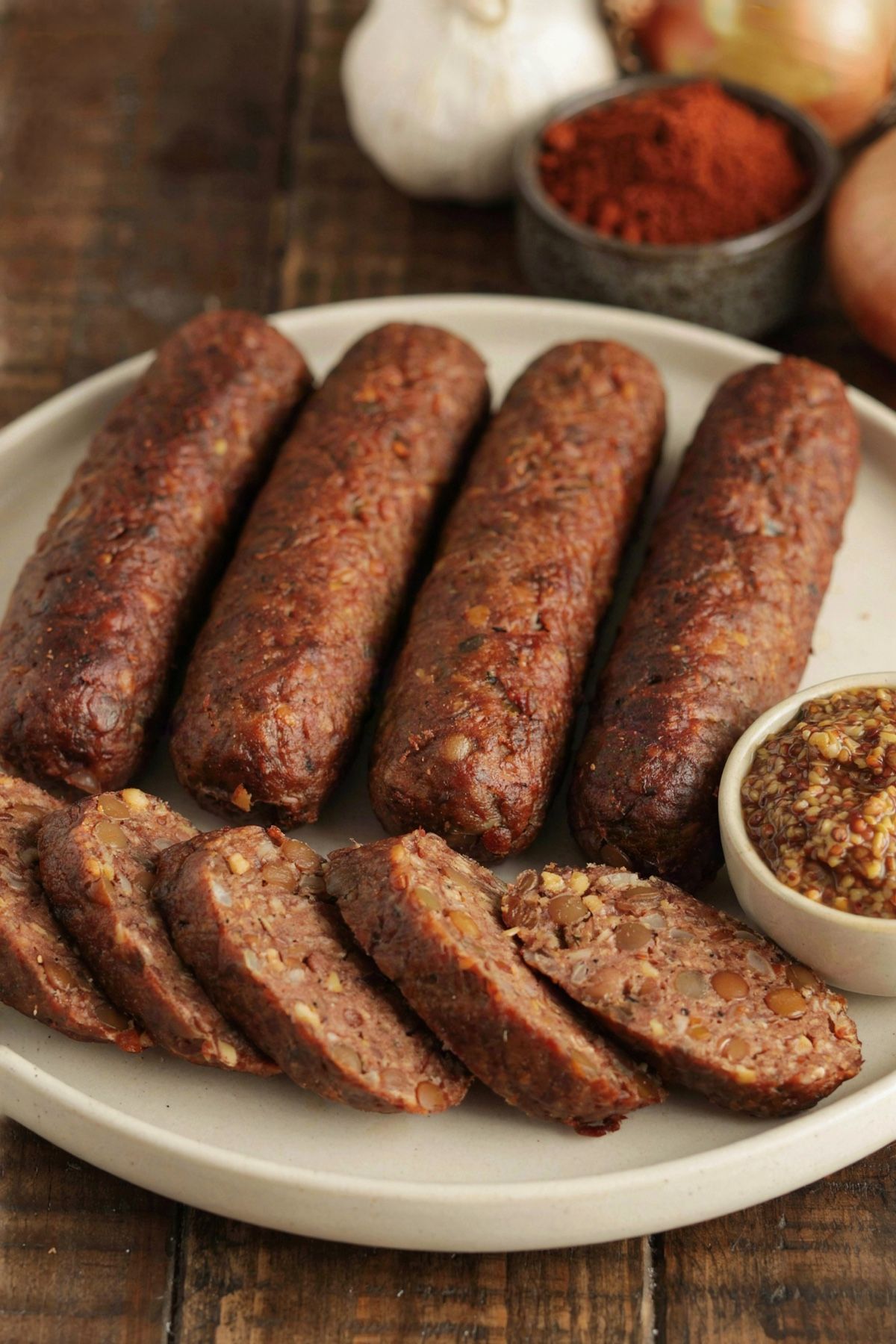
Why I Love Making Vegan Sausage at Home
Most homemade vegan sausages ask you to wrap seitan in foil and steam it for half an hour before it ever sees a pan. These don’t. They’re lentil links, bound with chickpea flour and breadcrumbs, firmed in the fridge and browned in a skillet, and they taste of smoke, black pepper and garlic rather than fennel.
A reader asked in the comments for exactly this: a smoky link, not another spicy Italian sausage. So I reworked the recipe around the seasoning of a classic smoked sausage, which is marjoram, mustard, plenty of black pepper and a little liquid smoke, and changed the method so the links hold a firmer shape.
One of the best parts is how versatile these sausages are. Here’s what I like to do with them:
- Slice them over sauerkraut and potatoes with a sharp mustard.
- Throw them in a crusty bun with mustard for a classic sausage experience.
- Slice them up and toss them into pasta for a protein boost.
Smoked paprika and liquid smoke do the heavy lifting on flavor, so measure the liquid smoke rather than pouring it. If you’re into extra heat, add the cayenne. And taste the mixture before the chickpea flour goes in, because that’s your one easy chance to get the salt right.
If you’re looking for a smoky vegan main without the steaming, or just want a handy, protein-rich meal prep option, I’d say give these a shot. They’re easier than they look and absolutely worth mastering.
The story
Why This Vegan Sausage Tastes Smoked Without a Smoker
Meatless sausage is older than the word vegan. In Wild Wales, published in 1862, George Borrow ate Glamorgan sausages for breakfast and judged them “not a whit inferior to those of Epping.” They were skinless rolls of cheese, leek and breadcrumbs bound with egg, and they came back into fashion during the Second World War, when meat was rationed. A sausage with no casing, held together by crumbs and shaped by hand, is a 160-year-old idea, not a modern compromise.
Most homemade vegan sausages took another route. They are made from vital wheat gluten, wrapped in foil and steamed for 30 to 40 minutes so the gluten sets into a springy, sliceable link. It works, and it is why so many recipes ask for a steamer and the better part of an hour. This one follows the Glamorgan model instead: lentils and breadcrumbs, bound with chickpea flour, which sets as it heats the way egg does, firmed in the fridge and cooked straight in a pan. The trade is the snap. A lentil link is tender rather than bouncy.
What makes a sausage taste smoked rather than Italian is mostly the seasoning, then the smoke. Italian sausage leans on fennel and chili. Polish kiełbasa, a word that simply means sausage, leans on garlic, black pepper and marjoram, and the American smoked sausage grew out of that tradition. So this recipe has marjoram, a full teaspoon of pepper and a little mustard, and no fennel or oregano at all.
The smoke comes from two places. Smoked paprika is made from peppers dried slowly over smoldering oak in the La Vera valley of western Spain. Liquid smoke was invented in 1895 by Ernest H. Wright, a Kansas City pharmacist who ran hickory smoke through a condenser and sold the result to farmers for curing meat. It is wood smoke caught in water, not a synthetic flavor.
Which is the vegetarian payoff. Plenty of supermarket links that say smoked on the front list smoke flavoring on the back, so the smoke in this lentil sausage is the same smoke, from the same kind of hickory fire, as a good share of the meat ones.
What to buy
Ingredient Notes
Lentils
Brown or green, and canned is fine: one 15-oz can drained gives about 250 g, which is the amount here. Cooking your own, ⅔ cup dry is enough; stop when they are just tender, before the skins split. French green lentils work and hold their shape better still. Do not use red or yellow lentils, which collapse into a purée that will not hold a log. Chickpeas or white beans can stand in by weight, but they are wetter, so dry them longer.
Chickpea flour
Also sold as besan or gram flour, and it is the binder that makes this work without steaming. Like egg, it sets as it heats, which is what firms the middle of each link during the fry. Raw, it tastes bitter and beany, which is why you season before adding it. The bitterness cooks out in the pan. Ground flaxseed binds too, but the links stay softer.
Liquid smoke
Hickory is the classic smoked-sausage flavor; mesquite is sharper and easier to overdo. Read the label: the best bottles are smoke and water, though some add molasses or vinegar, which is fine and still vegan. Half a teaspoon is enough for six links. If you cannot find it, add another teaspoon of smoked paprika and a pinch of smoked salt, and expect a gentler smoke.
Smoked paprika
Spanish pimentón comes sweet (dulce) or hot (picante). Use sweet; hot doubles up with the cayenne. Hungarian sweet paprika is not smoked and will give you color with no smoke at all. Open the tin and smell it: fresh smoked paprika smells like a bonfire, and a dull brown powder that smells of nothing has gone stale. Blooming it in the hot oil is what wakes it up.
Dried marjoram
This is the herb that makes it taste like kiełbasa rather than pizza. Marjoram is a gentler, sweeter cousin of oregano, and swapping in oregano pushes the whole sausage Italian. If you have none, half a teaspoon of dried thyme is the closest stand-in. The mustard powder alongside it adds warmth rather than heat; 1 tsp of Dijon stirred in with the soy sauce works too.
Breadcrumbs
Fine, dry and plain. Panko’s big flakes leave gaps, so the logs crack as they roll, and fresh breadcrumbs are too wet to absorb anything. For gluten-free, use gluten-free crumbs, or pulse quick oats to a coarse flour and use the same weight. Either way, the crumbs and chickpea flour together are what soak up the moisture during the chill.
Smoky Vegan Sausage Links
Smoky lentil sausage links seasoned like a classic smoked sausage, firmed in the fridge and browned in a skillet. No seitan, no steaming.
Ingredients
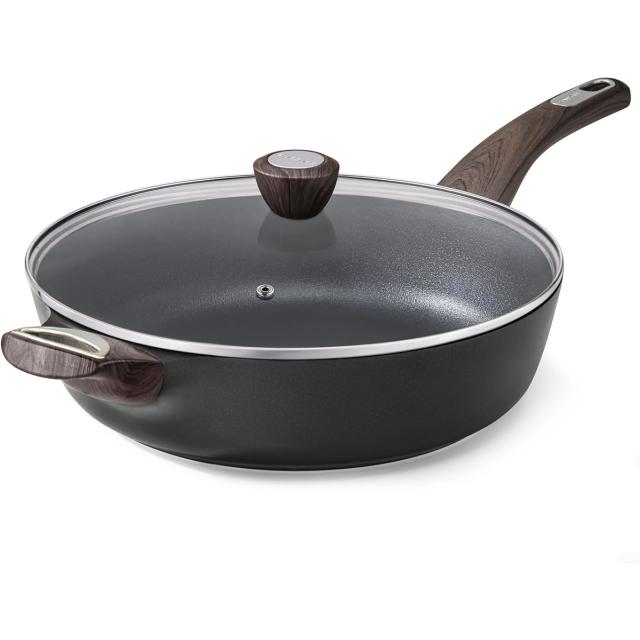
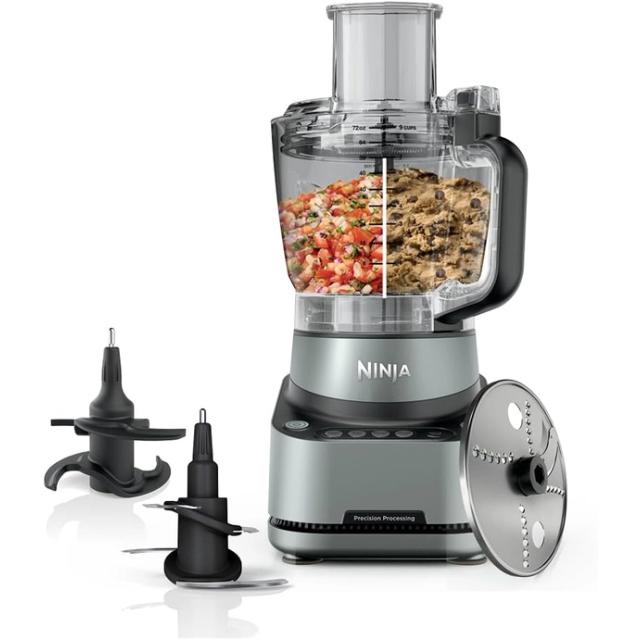
Equipment
As an Amazon Associate I earn from qualifying purchases, at no extra cost to you.

Instructions
- 1
Dry the lentils
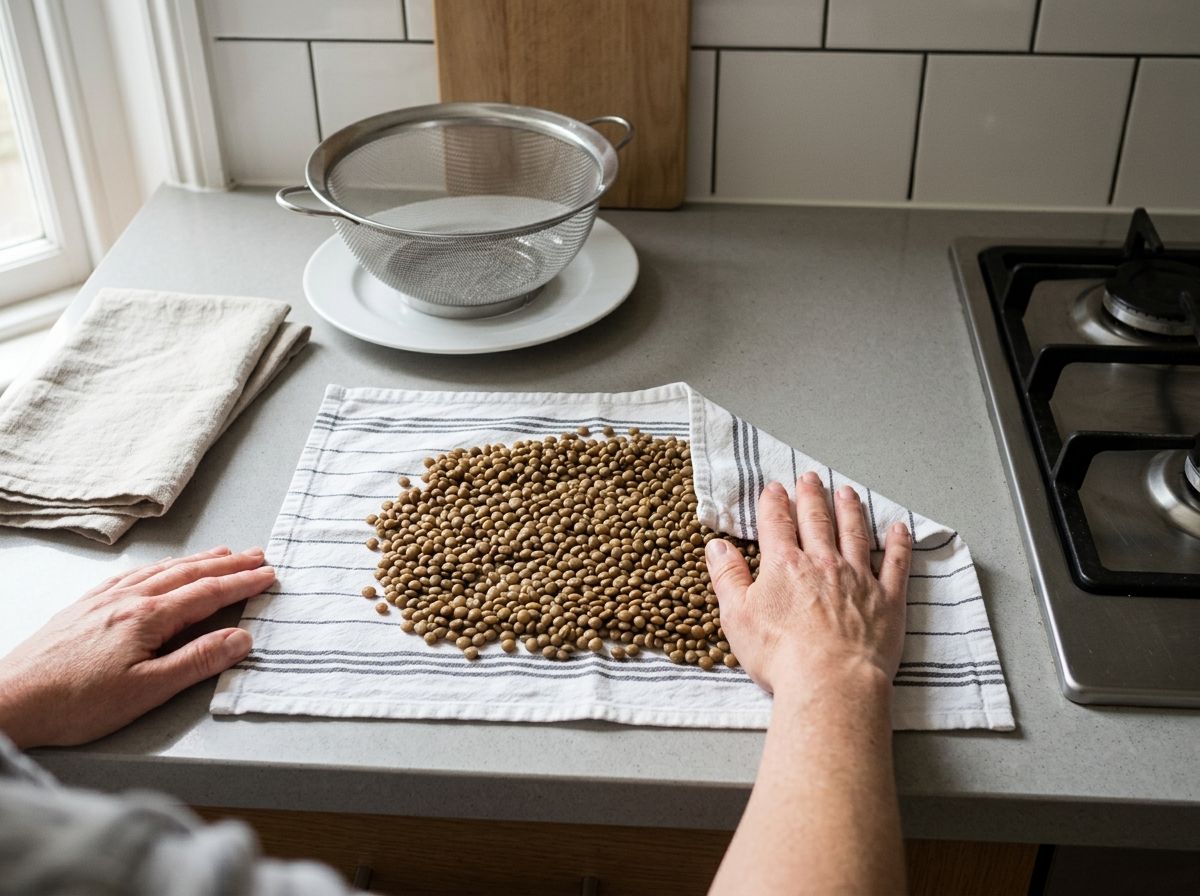
Drain the lentils, and rinse them if they came from a can. Spread them on a clean kitchen towel and pat the tops dry, then leave them there while you cook the onion. Wet lentils are the main reason a lentil sausage slumps in the pan, so do not skip this.
- 2
Soften the onion and bloom the spices
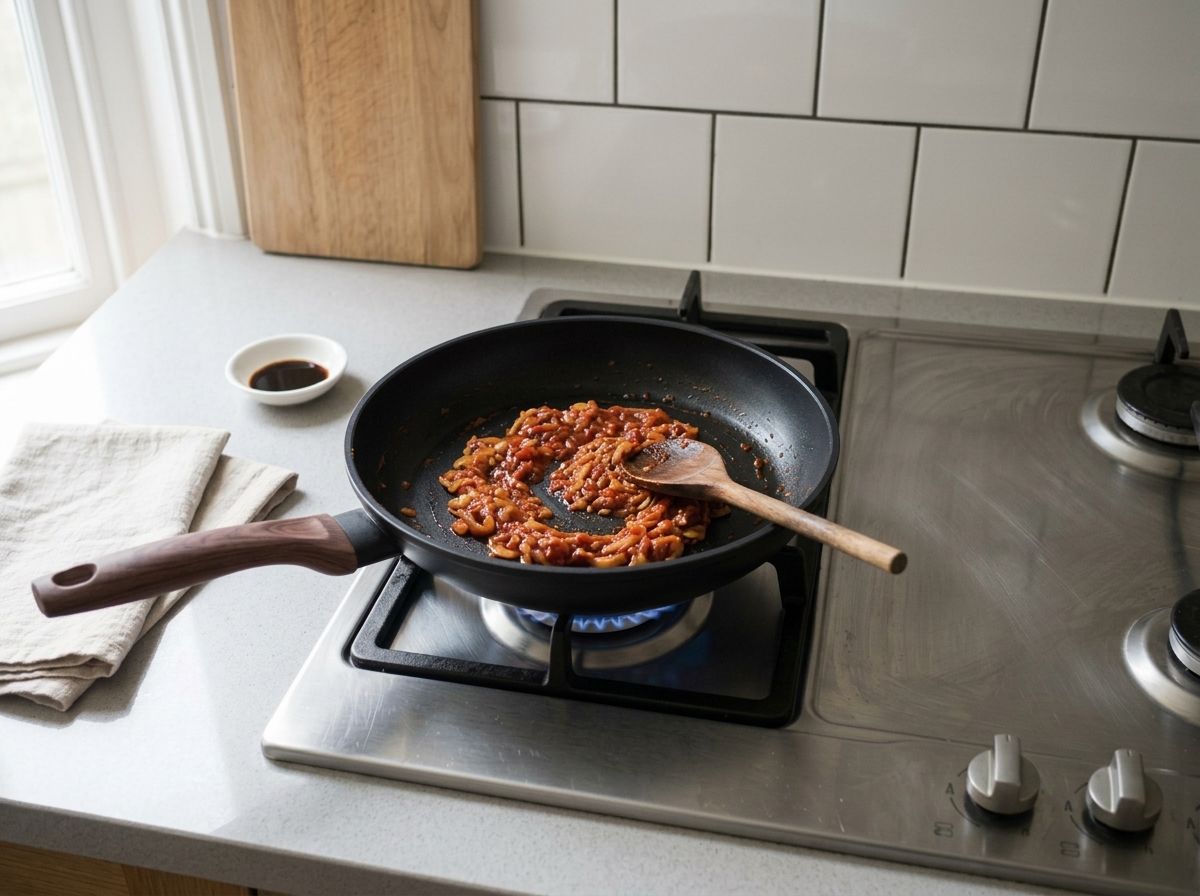
Heat 2 tbsp of the olive oil in the skillet over medium heat. Cook the onion for 5 to 6 minutes, stirring now and then, until soft and just turning gold at the edges. Add the garlic for 1 minute, then stir in the tomato paste, smoked paprika, marjoram, mustard powder, black pepper and cayenne, if using, for 30 seconds, until the paste darkens to brick red. Take the pan off the heat and stir in the soy sauce, maple syrup and liquid smoke.
- 3
Pulse half the lentils to a paste
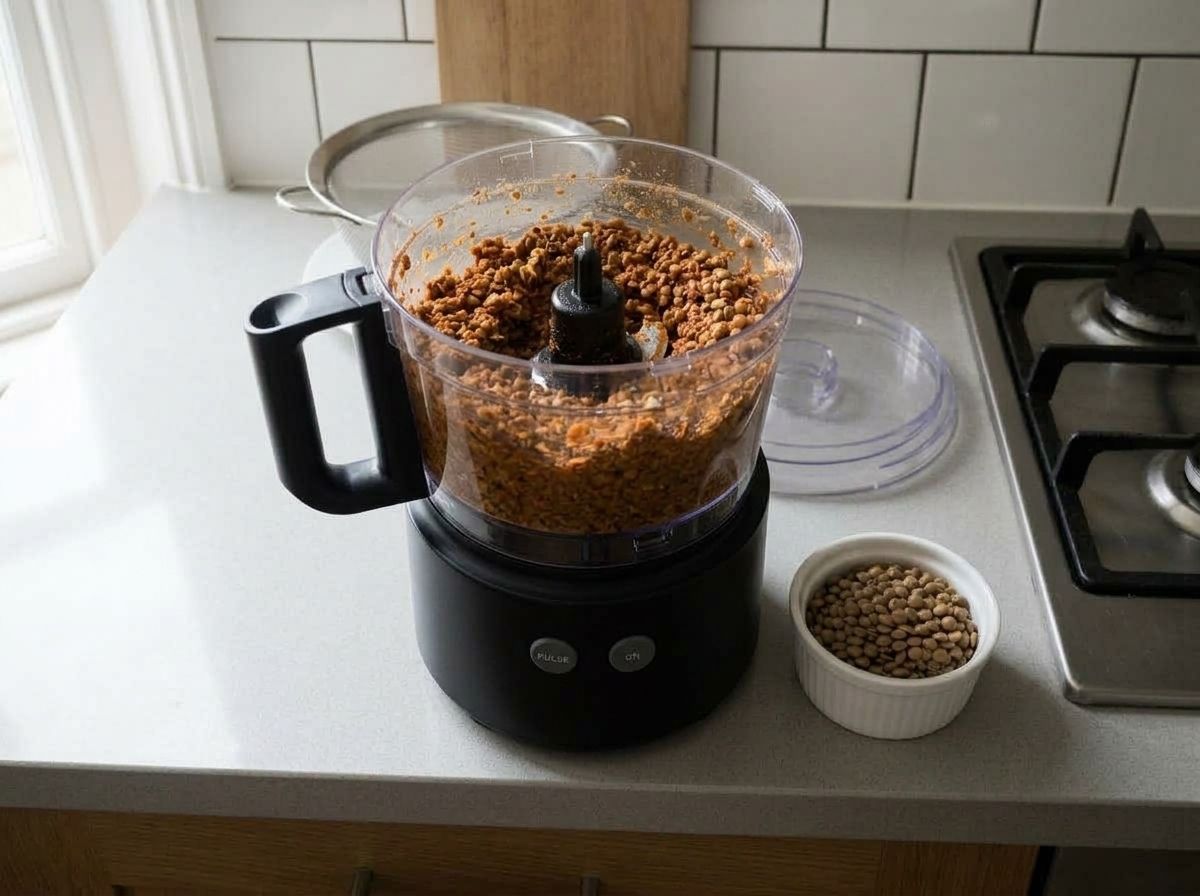
Tip half the lentils into a food processor and scrape in all of the onion mixture. Pulse to a thick, coarse paste, about ten 1-second pulses. Add the rest of the lentils and pulse 3 or 4 times more, just enough to crack them; the visible pieces are what give the sausage its bite. No processor: mash everything in a bowl with a potato masher, leaving about half the lentils whole.
- 4
Season, then knead in the binders
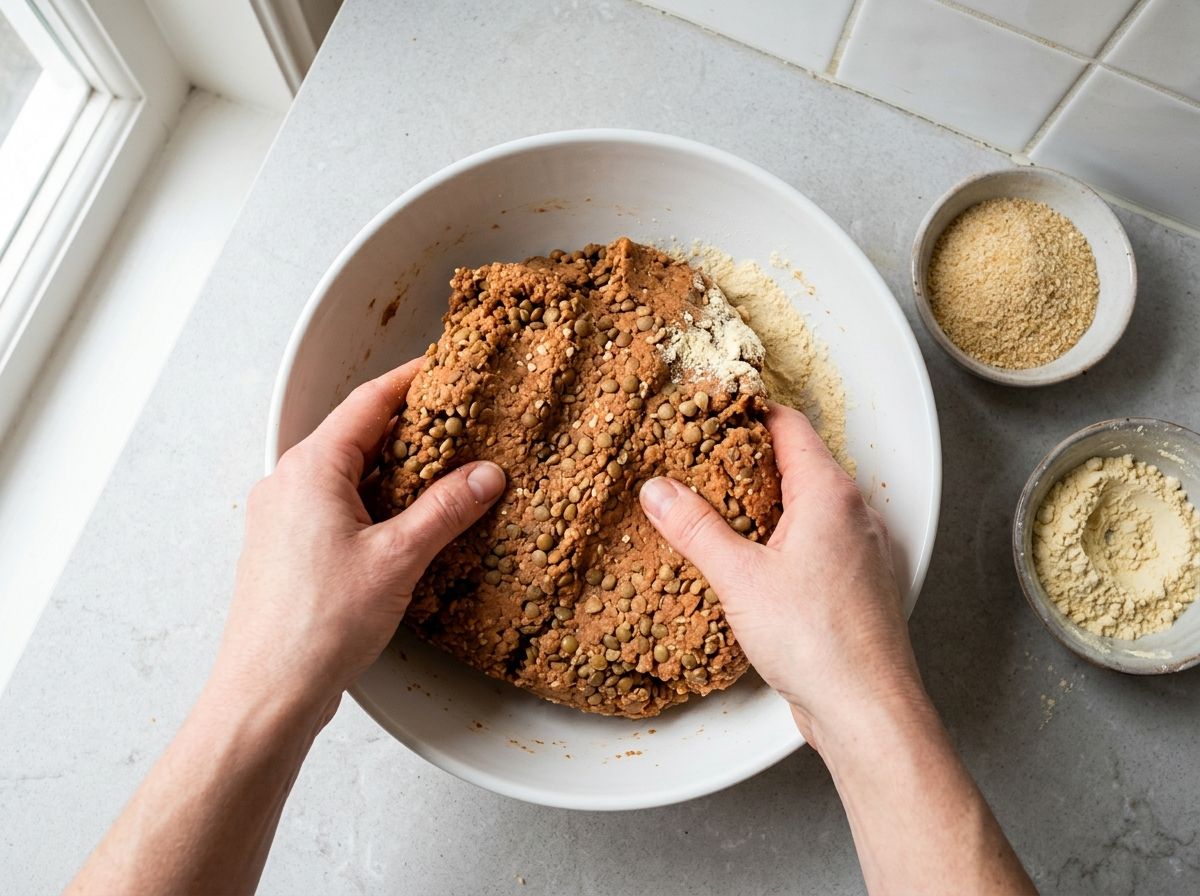
Scrape the mixture into a bowl and taste it now, before the chickpea flour goes in, adding salt if it needs it. Add the breadcrumbs, chickpea flour and nutritional yeast, if using, and knead with your hands for about a minute, until it holds together like a stiff dough and comes away from your palm cleanly. If it still sticks, work in another tablespoon of breadcrumbs.
- 5
Roll tight logs in parchment
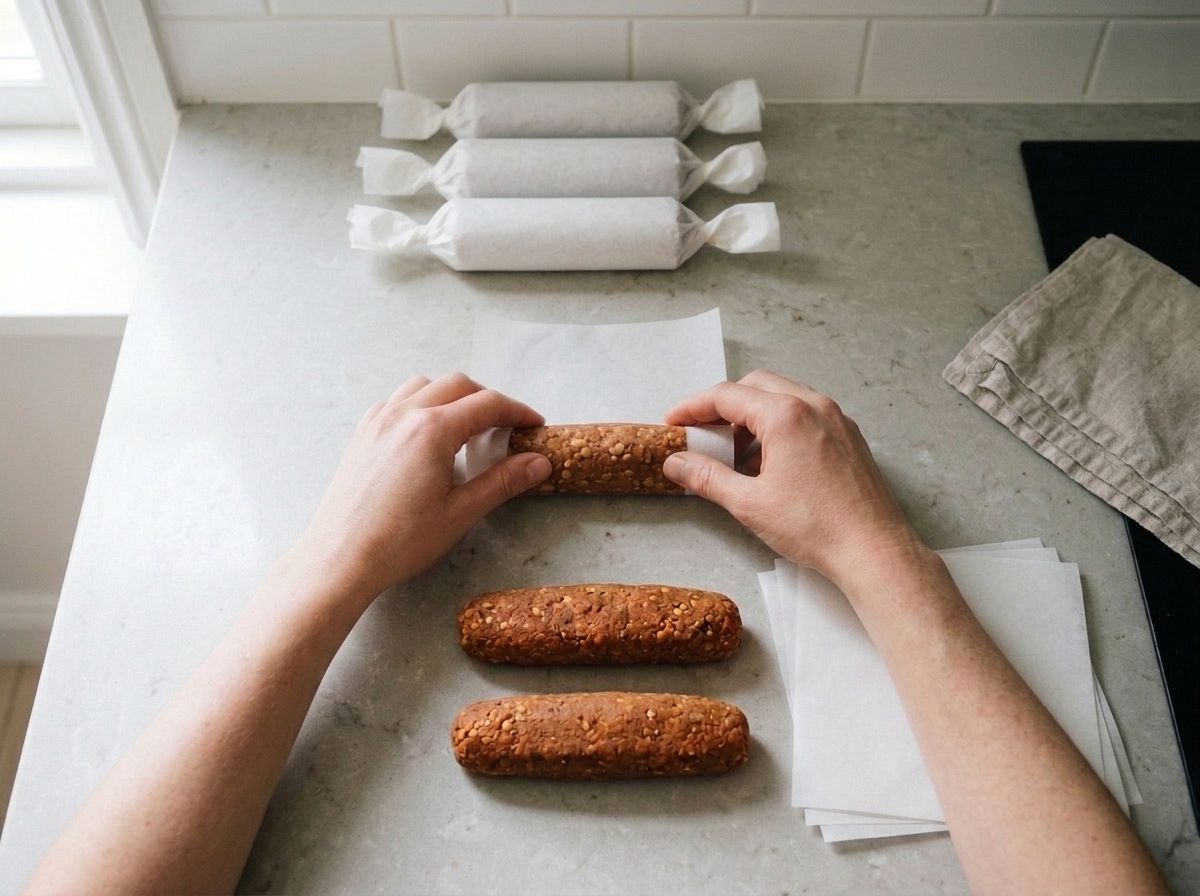
Divide the mixture into 6 equal pieces, about 75 g each. Roll each into a log about 12 cm (5 inches) long and 2.5 cm (1 inch) thick. Lay a log along the edge of a square of parchment, roll it up snugly and twist both ends like a candy wrapper, which squeezes the log tight and smooths its surface.
- 6
Chill to set
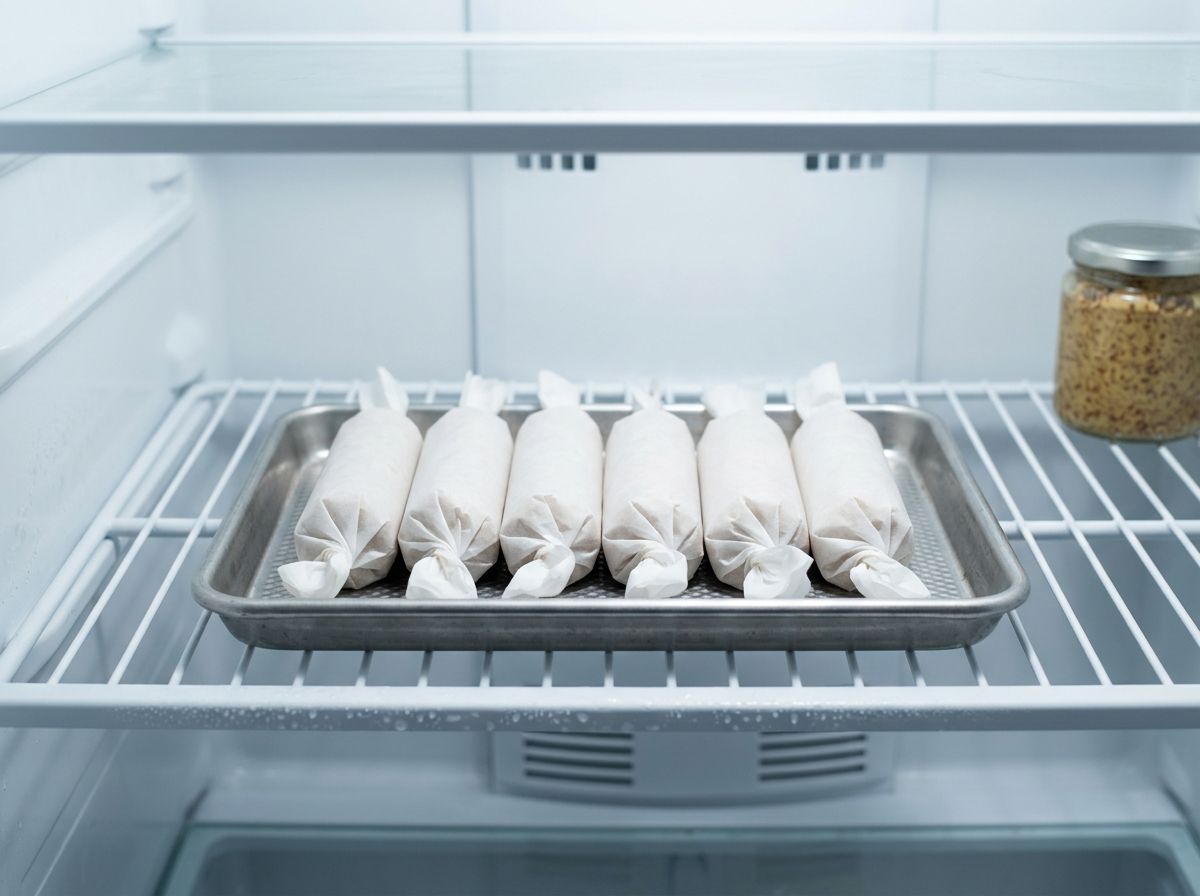
Refrigerate the wrapped logs for at least 30 minutes, or up to 2 days. The chickpea flour and breadcrumbs soak up the last of the moisture, and the logs go from soft to firm enough to turn with tongs.
- 7
Brown slowly, a quarter turn at a time
Wipe out the skillet, add the remaining 1 tbsp of olive oil and set it over medium heat. Unwrap the logs and lay them in the pan with space between them. Leave them alone for 2 to 3 minutes, then give each a quarter turn with tongs. Keep turning every 2 to 3 minutes, 12 to 14 minutes in total, until they are deep brown all the way round and firm when pressed in the middle.

- 8
Rest, then serve
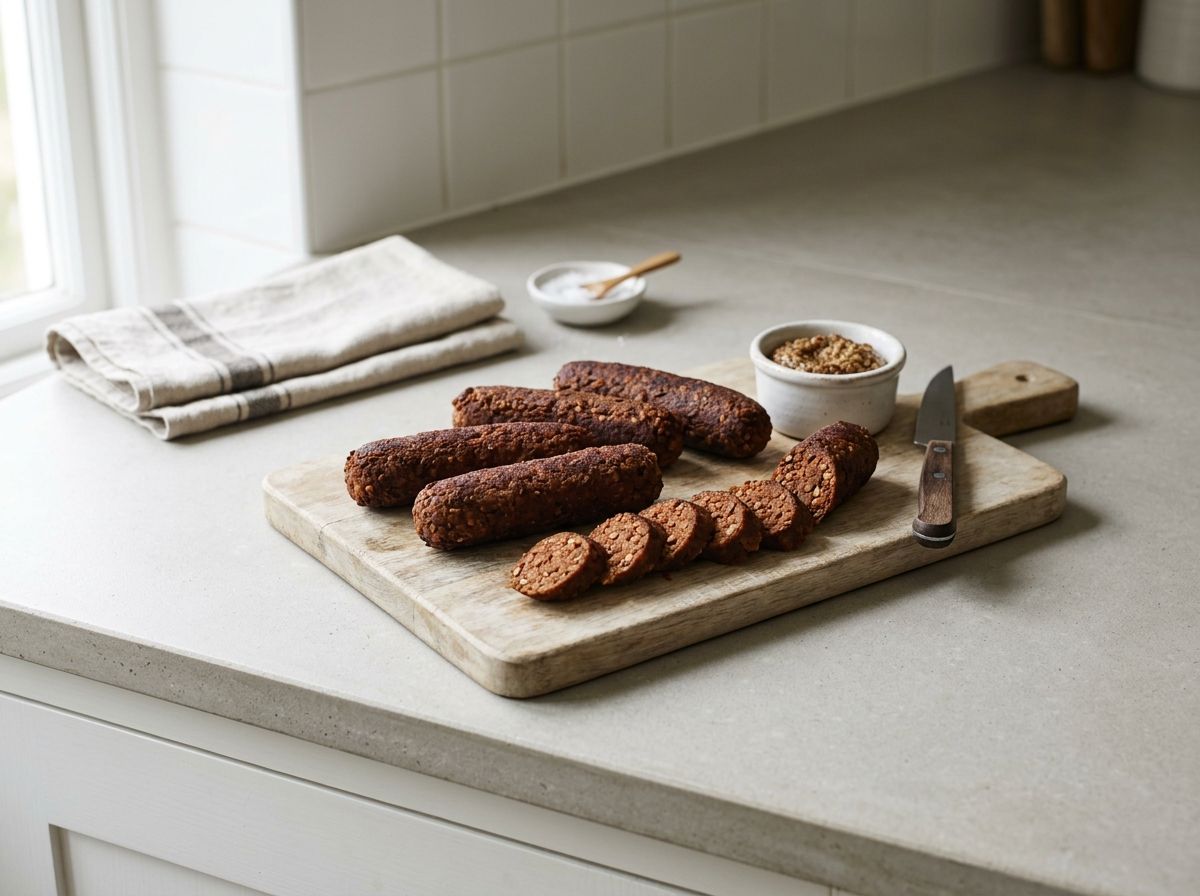
Move the sausages to a board and rest them for 2 to 3 minutes; they firm up as they cool slightly and slice cleanly after that. Serve them whole in buns with mustard, or cut them on the diagonal into thick coins for pasta, beans or a skillet of peppers and onions.
Notes
For grilling, brown the sausages in the skillet first, then give them 1 to 2 minutes a side over a hot, well-oiled grill for char marks. Raw logs laid straight on the grates stick and tear.
Gluten-free: use gluten-free breadcrumbs and tamari. Chickpea flour is already gluten-free.
For an herby, Italian-leaning version, swap the marjoram, mustard powder and liquid smoke for 1 tsp each of dried oregano and dried thyme, plus ½ tsp crushed fennel seeds.
Nutrition Facts
6 sausages · 100 g per serving
- Calories
- 206 kcal
% Daily Value*
- Total Fat
- 8.4 g11%
- Saturated Fat
- 1.2 g6%
- Sodium
- 624 mg27%
- Total Carbohydrate
- 24.9 g9%
- Dietary Fiber
- 6.2 g22%
- Sugars
- 4 g—
- Protein
- 8.9 g18%
Recipe from veggierecipes.blog
When it goes wrong
Troubleshooting
They fell apart in the pan
Almost always water. Canned lentils that went in wet, a chill cut short, or a link turned before its crust formed. Pat the lentils dry, give the logs the full 30 minutes in the fridge, and leave them untouched for the first 2 to 3 minutes in the pan. Turn them with tongs, a quarter turn at a time. A spatula pushed underneath shears the soft side off.
The inside is mushy, like hummus in a crust
The lentils were processed smooth. Only half go to a paste; the other half get 3 or 4 pulses to crack them, and those pieces are the texture. Red lentils cause the same thing, because they have no structure left once cooked. If your mixture already looks like dip, stir in a few tablespoons of extra breadcrumbs, chill it longer and accept a softer link.
It tastes like a bean patty, not a sausage
Under-seasoning. A sausage is saltier and more peppery than you would make a burger, and the place to fix that is the taste before the chickpea flour goes in. Check that the spices were bloomed in the hot oil, not stirred in cold, and that the pepper is coarse. A thin brown crust also tastes of very little, so cook to a deep brown all the way round.
Dark outside, raw-tasting in the middle
The heat was too high. The chickpea flour needs the full 12 to 14 minutes to cook through, and on a hot pan the outside burns long before that. Raw, it tastes bitter and slightly grassy. Keep the burner at medium, turn every 2 to 3 minutes, and press the middle of a link: firm means done. Logs thicker than 2.5 cm need a few minutes more.
The smoke tastes harsh, almost like an ashtray
Too much liquid smoke, usually poured from the bottle rather than measured. Half a teaspoon is the whole dose for six links, and mesquite reads harsher than hickory at the same amount. It cannot be cooked out. Serve the batch with sauerkraut and a sharp mustard, whose acid takes the edge off, and measure next time.
They don’t have the snap of a real sausage
That is expected, not a mistake. Snap comes from a casing and from a stretchy protein, meat or wheat gluten, and this link has neither, like the skinless Glamorgan sausage it borrows from. The bite comes from the crust instead, so brown it deeply and slice on the diagonal for more crust per mouthful. If snap matters most, a steamed seitan sausage is the right recipe.
Before you serve
Serving & Storage
In Polish-American kitchens, kiełbasa comes to the table with sauerkraut, boiled potatoes, a sharp brown mustard and often horseradish. These links take to all of it, and the sauerkraut does a real job: its acid sharpens the smoke and cuts the richness of the crust. They also work in a bun with mustard and fried onions, sliced into coins over pasta, or browned in a skillet with sweet peppers and onions.
For coins, rest the sausages first, then slice on the diagonal and give the cut sides a minute in the hot pan, which adds crust to every piece. In soups, beans and stews, add the coins in the last couple of minutes or lay them on top. Simmered for long, a lentil link softens and breaks apart, which is the one place it behaves nothing like a smoked meat sausage.
Making it ahead
The wrapped logs keep in the fridge for up to 2 days, and the longer chill only firms them. To freeze, leave them in their parchment, bag them and freeze for up to 2 months. Thaw them overnight in the fridge before frying. Cooked from frozen, the outside browns well before the middle is hot.
Storing leftovers
Cooked sausages keep for 3 days in an airtight container in the fridge. Reheat them in a lightly oiled skillet over medium-low heat for 5 to 6 minutes, turning, which brings the crust back. The microwave heats them through but leaves the crust soft. Cooked links can be frozen too, though they come back a little looser than links frozen raw.
Still wondering
Frequently Asked Questions
Is this vegan sausage high in protein?
Moderately. Each link has about 9 g of protein, from the lentils, chickpea flour and breadcrumbs, so two links make a meal at about 18 g, roughly what three eggs give you. A seitan sausage of the same size carries more than twice that, because wheat gluten is about three quarters protein. If protein is the point, serve these with beans or over lentils.
Can I bake them or use an air fryer?
Yes, once they have chilled. In the oven, brush the logs with the remaining oil and bake on a parchment-lined sheet at 200°C (400°F) for 20 to 25 minutes, turning halfway; they brown less evenly than in a pan and come out a little drier. In an air fryer, brush with oil and cook at 190°C (375°F) for 12 to 14 minutes, turning twice.
Can I shape the mixture into breakfast patties?
Yes. Shape it into 8 patties about 1 cm thick, chill them for 30 minutes on a parchment-lined plate, and fry for 3 to 4 minutes a side. For a breakfast flavor, swap the marjoram for 1 tsp rubbed sage, add a pinch of nutmeg and cut the liquid smoke to ¼ tsp, so the smoke sits behind the sage rather than over it.
More Plant-Based High-Protein Stars

Made this?