
Mango Sticky Rice Recipe
Published · Updated
Two coconut sauces, not one: the sweet one soaks into the rice and the salted one goes over the top, and that contrast is the whole reason Thailand calls this its national dessert.
Jump To Recipe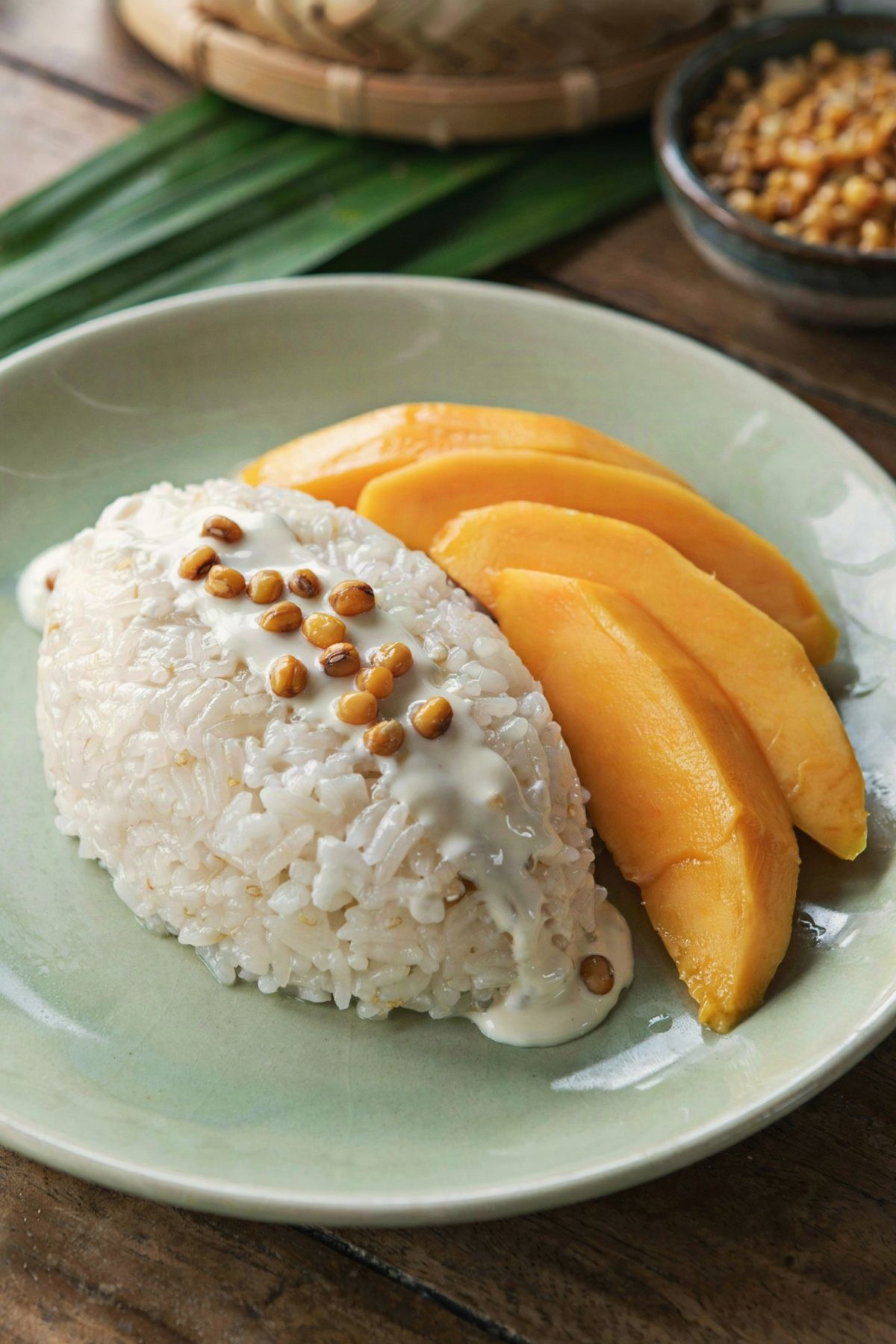
The Topping I Nearly Left Off
The first few times I made this at home I skipped the second sauce. It looked like a rounding error: a third of a cup of coconut milk with a quarter teaspoon of salt in it, poured over a dessert that already had half a cup of sugar folded into the rice. I could not see what it was for, so I stirred it into the sweet sauce and got on with my life.
What I made was fine. It was also, every single time, slightly boring by the fourth spoonful, and I put that down to the dish rather than to me. Sweet coconut rice, sweet mango, sweet sauce. It reads beautifully for two bites and then it flattens out.
Then I made the salted topping separately, tasted it on its own, and nearly poured it away. On a spoon it is genuinely unpleasant. It tastes like coconut milk somebody has ruined. Over the rice it does the only job it has, which is to stop the plate from being one note, and the difference is not subtle.
So that is the one thing I would push you on. Keep the two sauces apart. Everything else here is forgiving: the rice will survive an extra ten minutes of steam, the mango can be any decent variety, the sugar can move up or down by a spoonful. The salt is the part that is doing the work.
The story
Thailand’s National Dessert Is Built On A Northern Grain
Sticky rice is not the rice of Bangkok. Central Thailand eats jasmine rice, long and separate and fluffy, and has done for as long as anyone has been writing it down. Glutinous rice belongs to the north and the northeast, and to Laos on the other side of the Mekong, where it is the everyday grain rather than the special one. It gets steamed in a bamboo basket, tipped into a lidded one at the table, and eaten with the fingers: you pull off a lump, squeeze it into a ball, and use it to pick up whatever else is on the table. Laotians call themselves luk khao niao, children of the sticky rice. Thailand’s most famous dessert is built on somebody else’s daily bread.
The sweet half of the dish is older than the pairing that made it famous. Khao niao mun, sticky rice folded with sweetened coconut milk, is traced to the early Rattanakosin period and the late reign of Rama II, who died in 1824. Coconut and sugar were what a Thai kitchen had, and the rice took to both. Cooks served it alongside whatever fruit was ripe, and durian, banana and jackfruit all have a claim. Mango is the one that stuck, because ripe mango is soft in the same register as the rice while still being sharp enough to cut the coconut fat.
For most of its history this was a spring dish and nothing else. Nam Dok Mai and Ok Rong mangoes ripen from roughly March to May, which puts the season across Songkran, the Thai new year in mid-April. Ask a vendor for khao niao mamuang in November and you would once have got a strange look. Cold storage, greenhouse growing and imports have stretched the window, but the dish still tastes noticeably better in spring, and mango prices in Bangkok still swing hard with the harvest.
Its jump from Thai street food to a dessert people order in Ohio has a date on it. In April 2022 the Thai rapper Milli closed her Coachella set by sitting down on stage and eating a bowl of mango sticky rice. Within twenty four hours the delivery service Line Man reported orders up three and a half times. Nam Dok Mai mangoes that normally sold for 20 to 40 baht a kilo went to around 110. The prime minister publicly thanked her for the soft power, and Thailand has been pushing for UNESCO recognition of the dish ever since.
One more thing worth saying on a vegetarian site. Mango sticky rice is among the most famous desserts in the world and it contains no dairy, no eggs, no gelatin and nothing standing in for any of them. The coconut milk is not a substitute for cream. It is what the recipe has always been made with, and nothing here is a plant-based version of something else. That is rarer in the dessert canon than it sounds, and it is why the notes below are about which mango to buy rather than what to swap out.
What to buy
Ingredient Notes
Thai glutinous rice
Buy long-grain Thai glutinous rice, sold as sweet rice, sticky rice or khao niao, usually in a clear plastic sack in an Asian grocery. Nothing else substitutes. Jasmine rice has the wrong starch and will never go sticky, arborio goes creamy instead, and Japanese mochigome is a rounder, denser grain that steams into something closer to a rice cake. The name misleads a lot of people: glutinous comes from the Latin glutinosus, meaning gluey, and describes the texture. There is no gluten in it and never has been.
Full-fat coconut milk
One 13.5 oz can of full-fat canned coconut milk covers both sauces with a little to spare. The carton kind sold for drinking is mostly water and will not thicken or coat, and light coconut milk gives you a thin, sad topping. If the can has separated in the cupboard, that is a good sign rather than a fault: brands without added gums, such as Aroy-D or Chaokoh, separate readily, and the solid cream at the top is exactly what you want spooned into the salted topping.
Ripe mangoes
The Thai variety is Nam Dok Mai, slender and pale yellow, and vendors also use Ok Rong, an older cultivar that is more fragrant and more fibrous. Neither travels well, so in an American supermarket the closest thing is Ataulfo, sold as honey or champagne mango: small, flat, deep yellow, with almost no fiber. Kent and Keitt are acceptable. Avoid Tommy Atkins, the big red and green one stacked by the door, which is bred for shipping rather than eating and leaves strings in your teeth. Ripe means it yields to a gentle press and smells sweet right at the stem.
White sugar
This is the one Thai dish where palm sugar is not the better answer. Palm sugar browns the rice and pulls the flavor toward caramel, which fights the coconut instead of carrying it. Street vendors use plain white sugar to keep the rice pale and let the coconut taste like coconut. Half a cup for three hundred grams of rice sounds like a lot and is roughly what Bangkok uses; take it down by a tablespoon if you like, but not much further or the salted topping will overwhelm the plate.
Salt
There is salt in both sauces and the quantities are not typos. Three quarters of a teaspoon goes into the sweet dressing, where it stops the rice reading as flatly sugary, and another quarter teaspoon goes into the topping, which is meant to be properly salty. Use fine sea salt or table salt so it dissolves in the warm coconut milk. If you only have coarse kosher salt, use about half again as much by volume.
Split yellow mung beans (optional)
The garnish Thai vendors actually use, toasted dry in a pan until golden and nutty. Look for split mung dal in an Indian grocery or thua khiao lao pluak in a Thai one. They give a dry crunch that sesame does not, and they taste of almost nothing, which is the point: they add texture without adding a third flavor. Toasted sesame seeds are the usual substitute and they are good, but they do taste of sesame and they take the plate somewhere slightly different.
Rice flour
Half a teaspoon in the topping, whisked in cold before the pan goes on the heat. It is not there to make a sauce. It is there to give the coconut milk just enough body to cling to the rice instead of running straight to the edge of the plate. Cornstarch works in the same quantity and gives a slightly glossier finish. Leave it out entirely and the topping still tastes right, it just pools.
Mango Sticky Rice
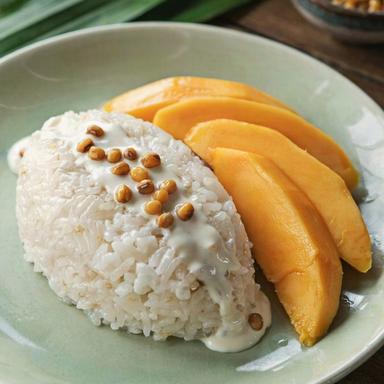
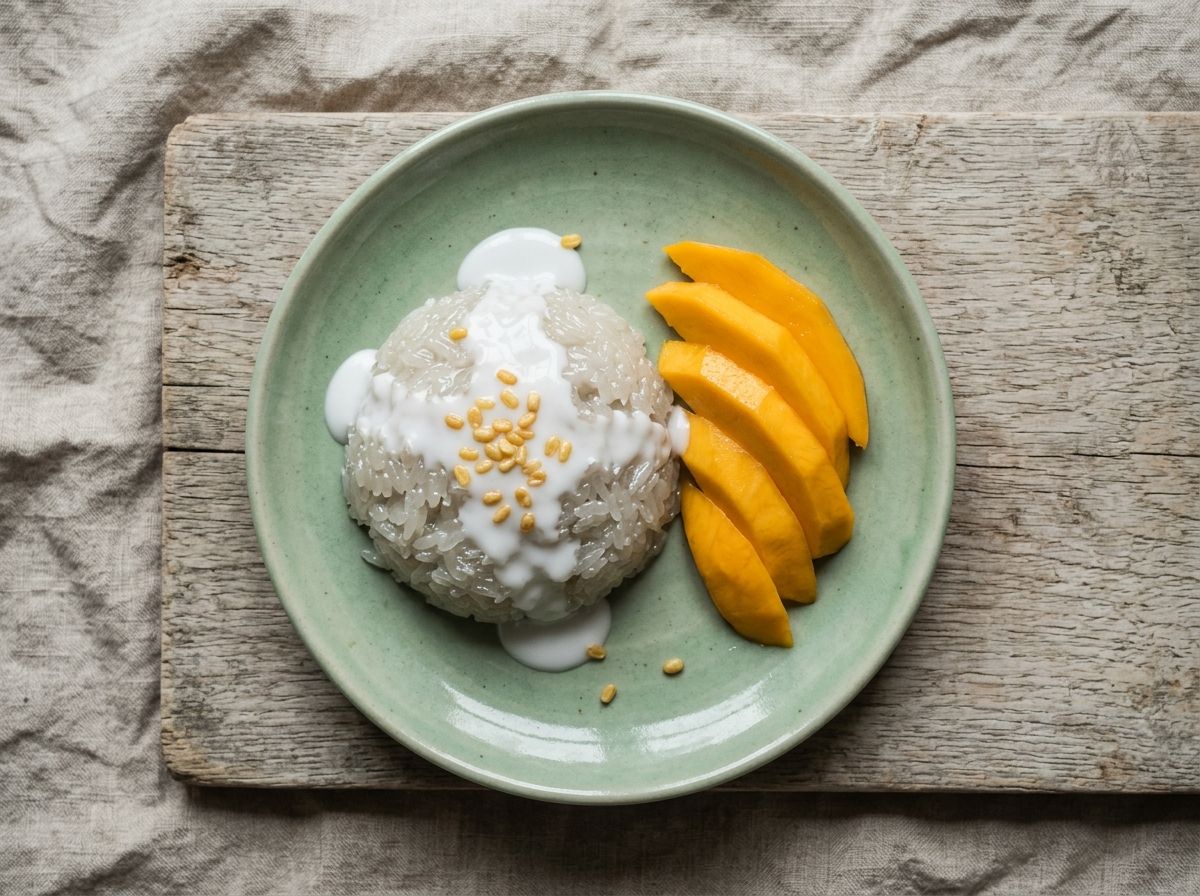
Thai mango sticky rice made the way street vendors make it: glutinous rice steamed rather than boiled, folded with a sweet coconut dressing, then served with cold ripe mango and a separate salted coconut cream poured over the top.
Ingredients
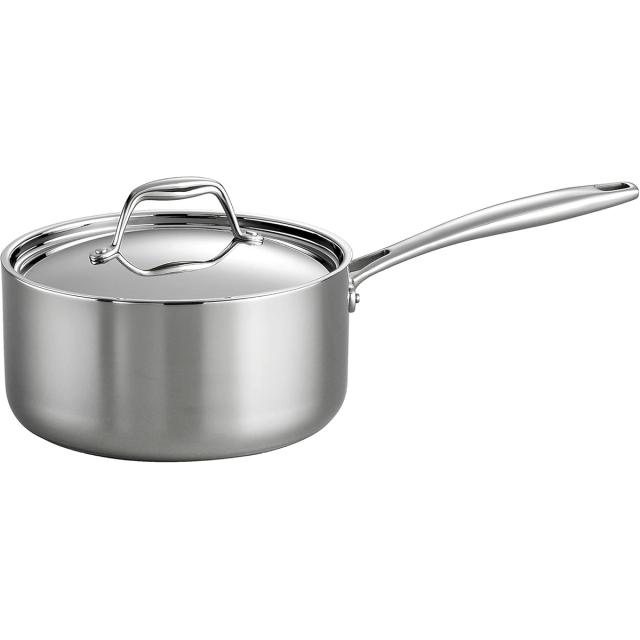
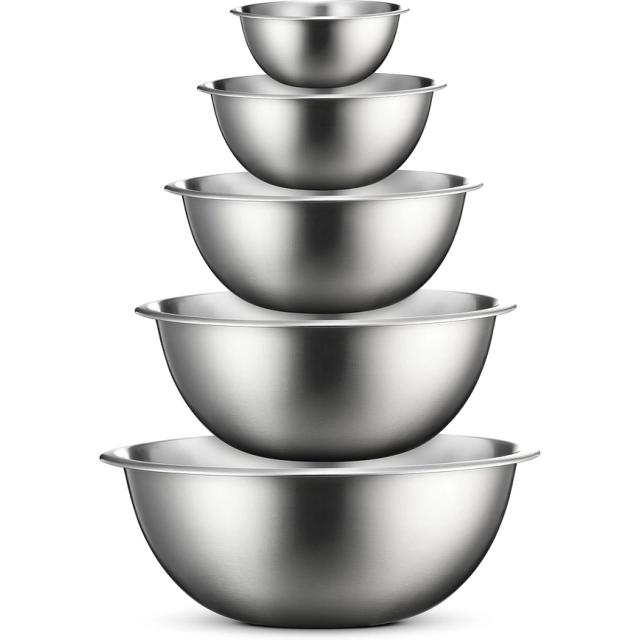
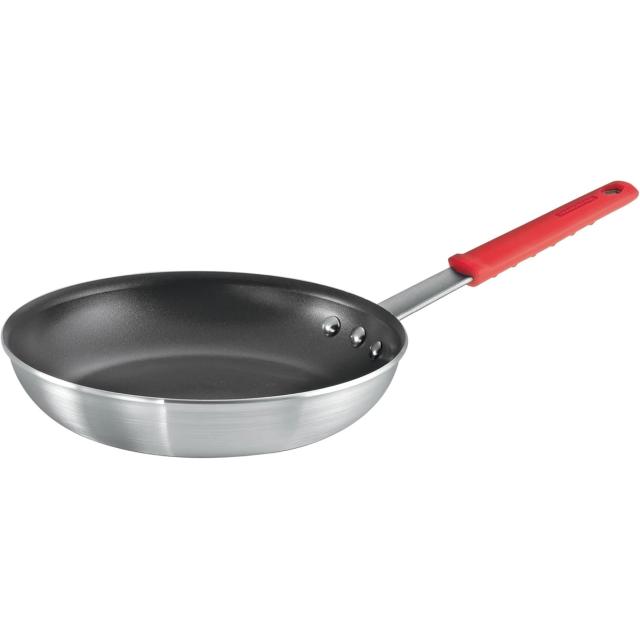
Equipment
As an Amazon Associate I earn from qualifying purchases, at no extra cost to you.


Instructions
- 1
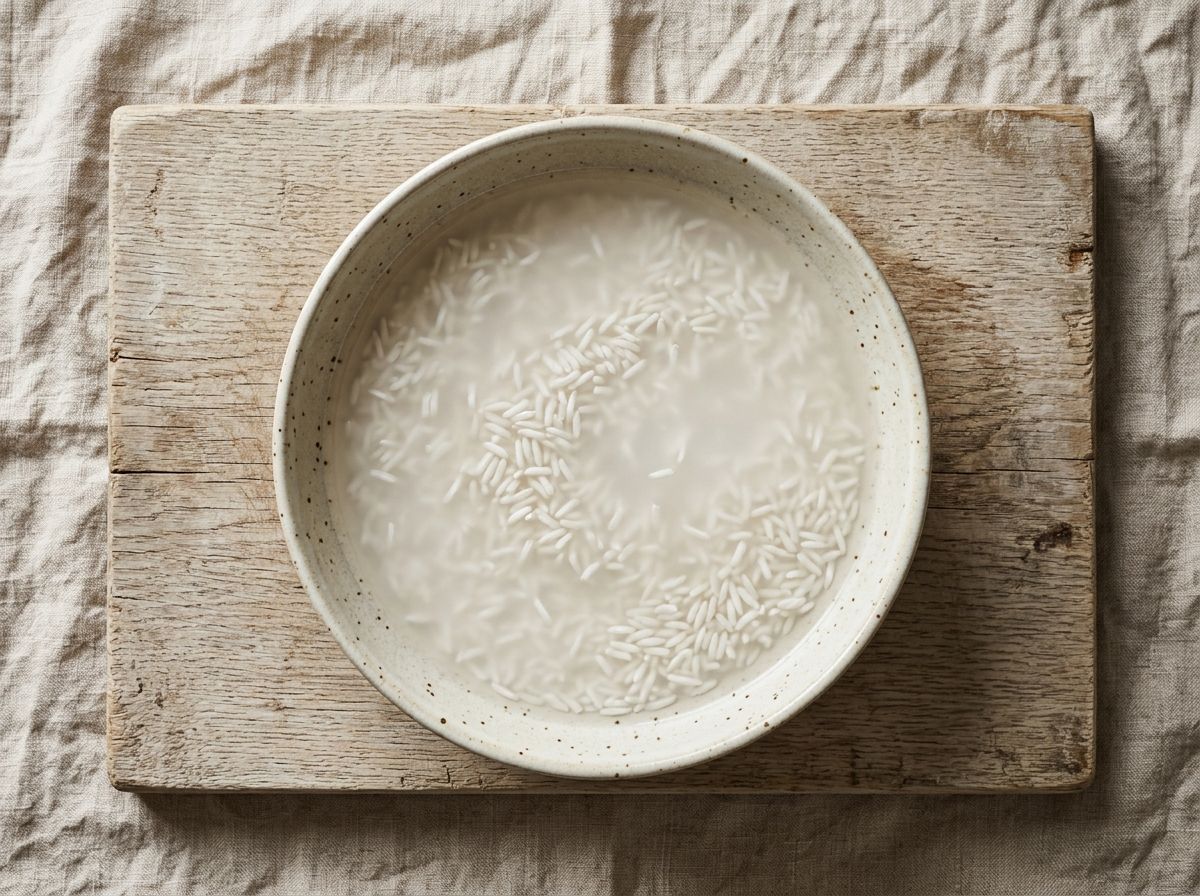
Rinse the rice until the water runs clear
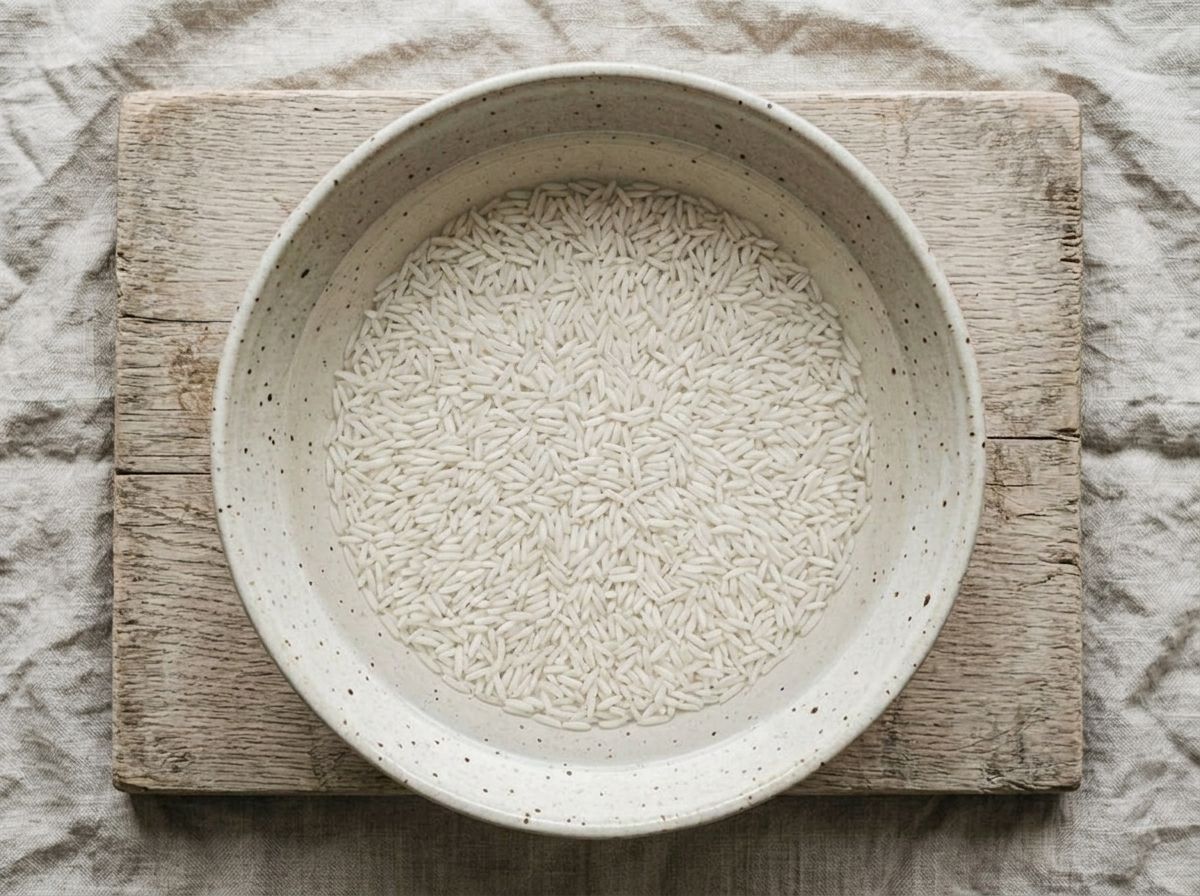
Put the glutinous rice in a bowl, cover it with cool water and swish it hard with your hand. Pour off the cloudy water and repeat five or six times, until what comes off is nearly clear. This loose surface starch is what turns steamed rice into paste.
- 2
Soak it for at least four hours
Cover the rinsed rice with about two inches of cool water and leave it on the counter for four hours, or overnight in the refrigerator. The grains should turn opaque white and crush easily between your fingernails. Skipping this is why sticky rice comes out chalky in the middle.
- 3
Spread the drained rice in a lined steamer
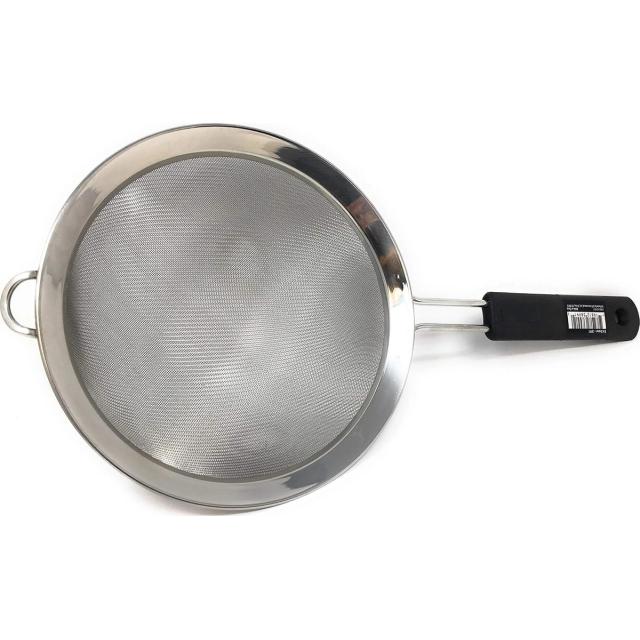
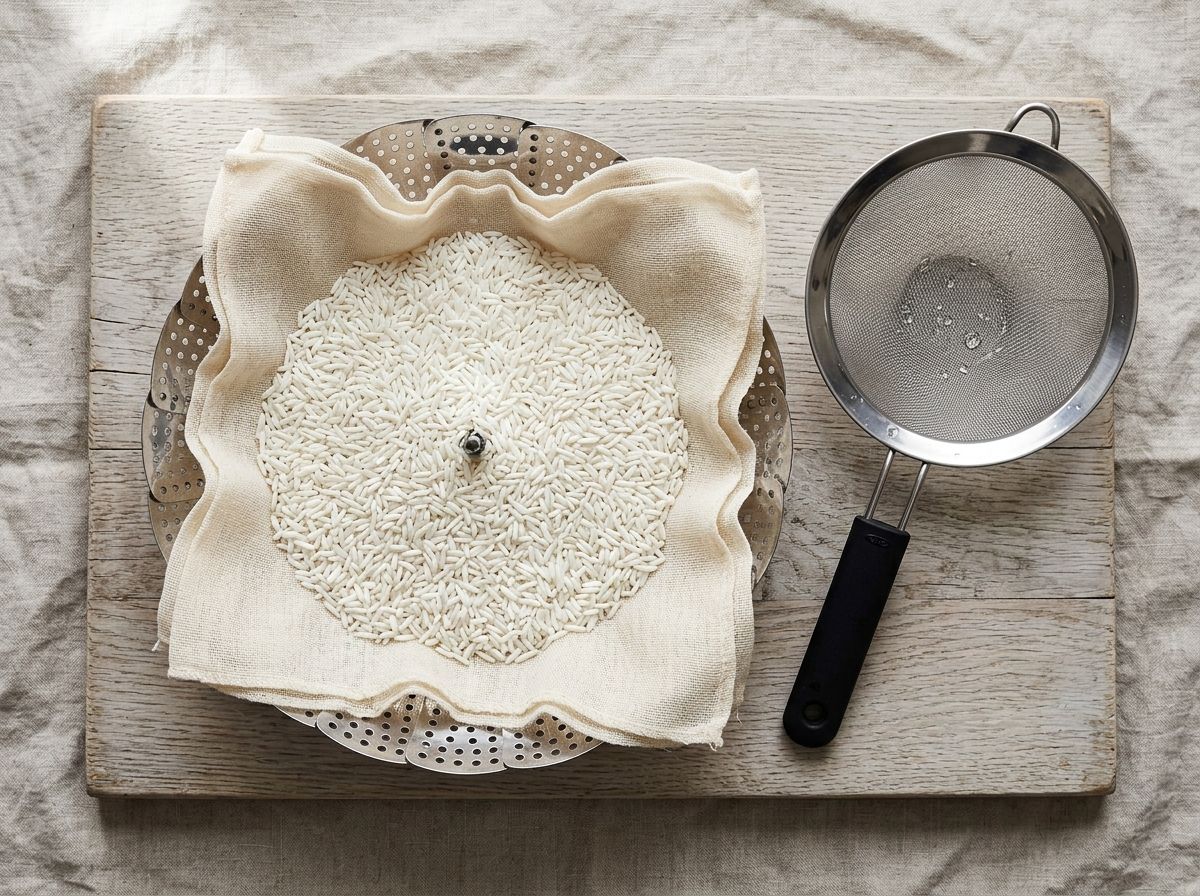
Drain the rice thoroughly in a fine mesh strainer. Line a steamer basket with a double layer of damp cheesecloth, tip the rice in and spread it into an even layer no more than an inch and a half deep, then fold the overhanging cloth loosely over the top.
- 4
Steam until the grains turn translucent
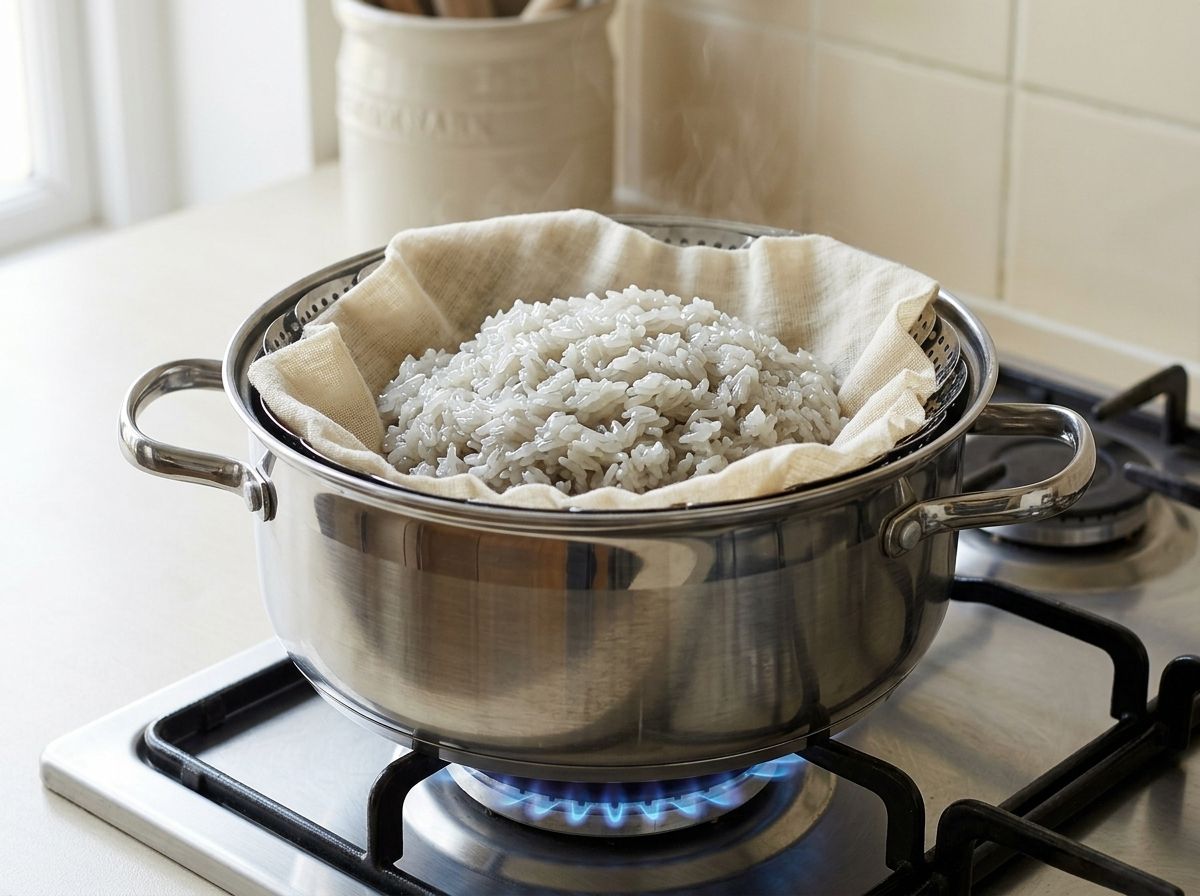
Set the basket over about an inch of boiling water, making sure the base stays clear of the water, cover and steam for 20 minutes. Lift the cloth, turn the whole mound over so the underside faces up, and steam for another 5 to 10 minutes. The rice is done when every grain is glossy and translucent and a grain squashes soft with no chalky core.
- 5
Warm the sweet coconut dressing
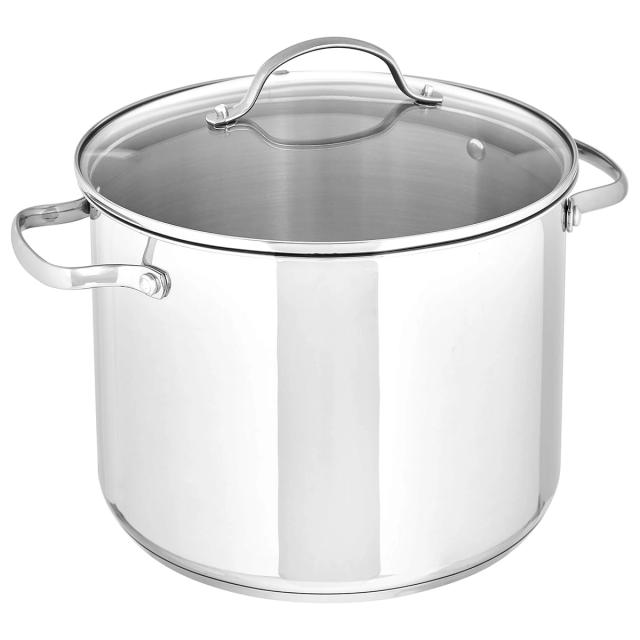
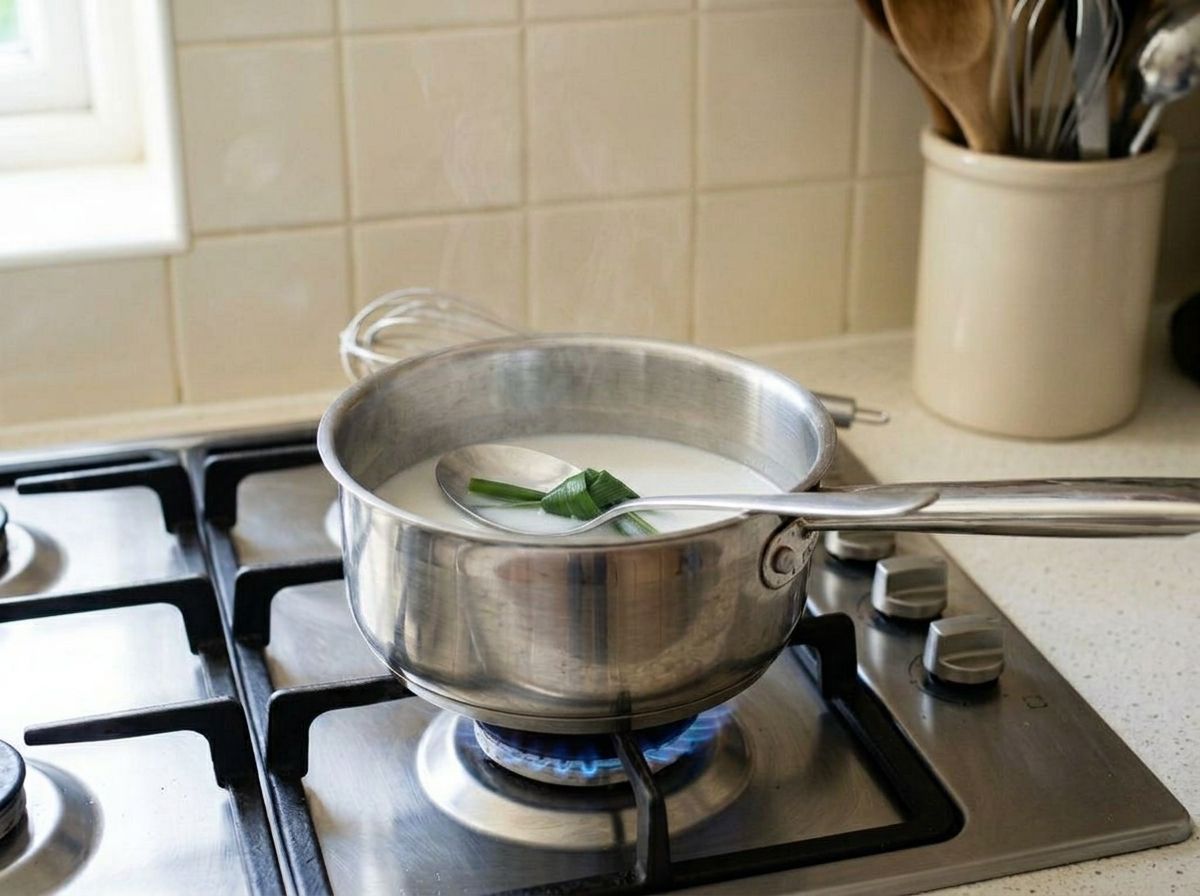
While the rice steams, put 1¼ cups of coconut milk, the sugar, ¾ teaspoon of salt and the knotted pandan leaf if you are using it in a saucepan. Warm over medium-low heat, stirring, only until the sugar has dissolved and the surface steams. Do not let it boil, or the coconut milk will split. Fish out the pandan leaf.
- 6
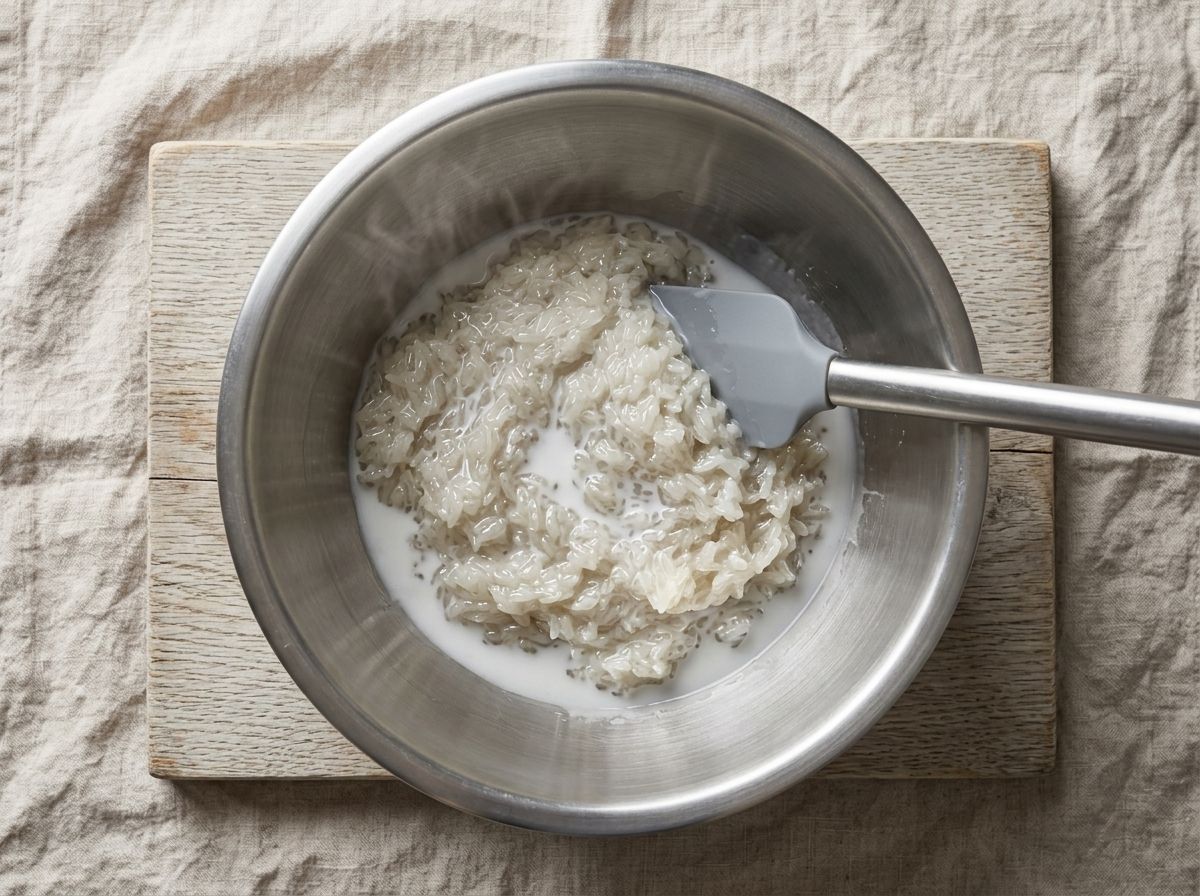
Fold the dressing into the hot rice and let it steep
Tip the steaming hot rice into a mixing bowl and pour the warm dressing over it in three or four additions, folding gently with a spatula after each one. It will look far too wet. Cover the bowl and leave it for 20 minutes; the rice drinks all of it and comes out glossy and separate.
- 7
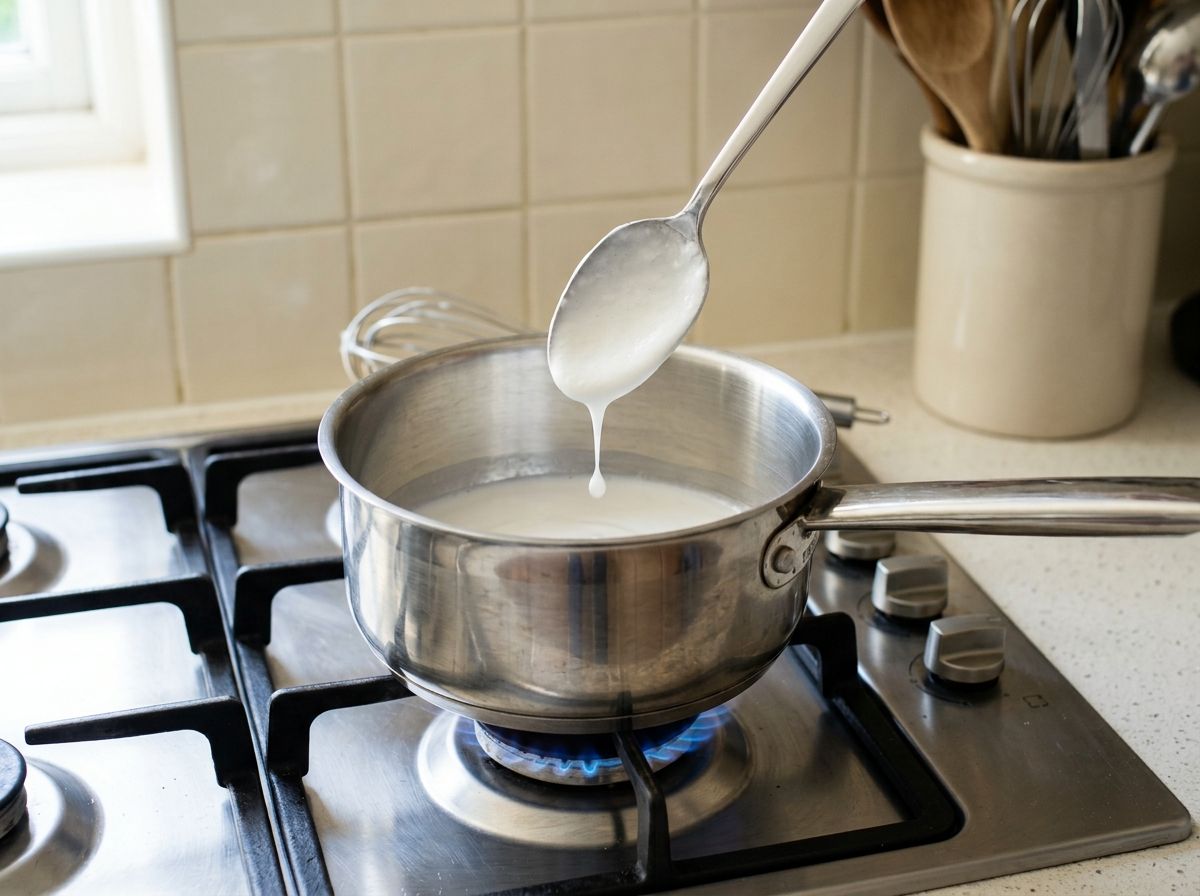
Make the salted coconut topping
Whisk the rice flour into the remaining ⅓ cup of cold coconut milk in a small saucepan until no lumps remain, then add ¼ teaspoon of salt. Warm over low heat, whisking, for 2 to 3 minutes, until it thickens just enough to coat the back of a spoon. Taste it: on its own it should read as too salty.
- 8
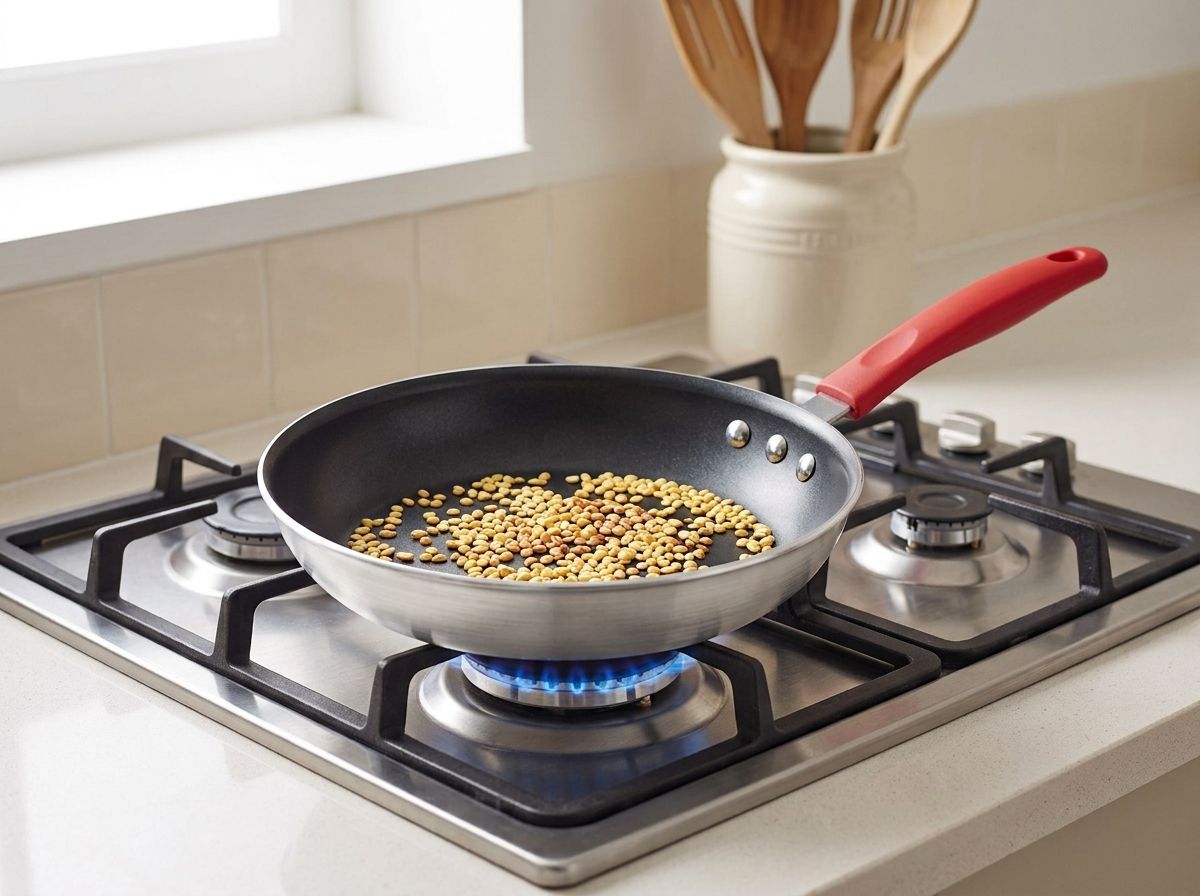
Toast the mung beans
If you are using them, put the split yellow mung beans in a dry skillet over medium-low heat and toss them every 30 seconds or so for 4 to 5 minutes, until they smell nutty and turn a light gold. Tip them straight out of the pan onto a cold plate so they stop cooking.
- 9
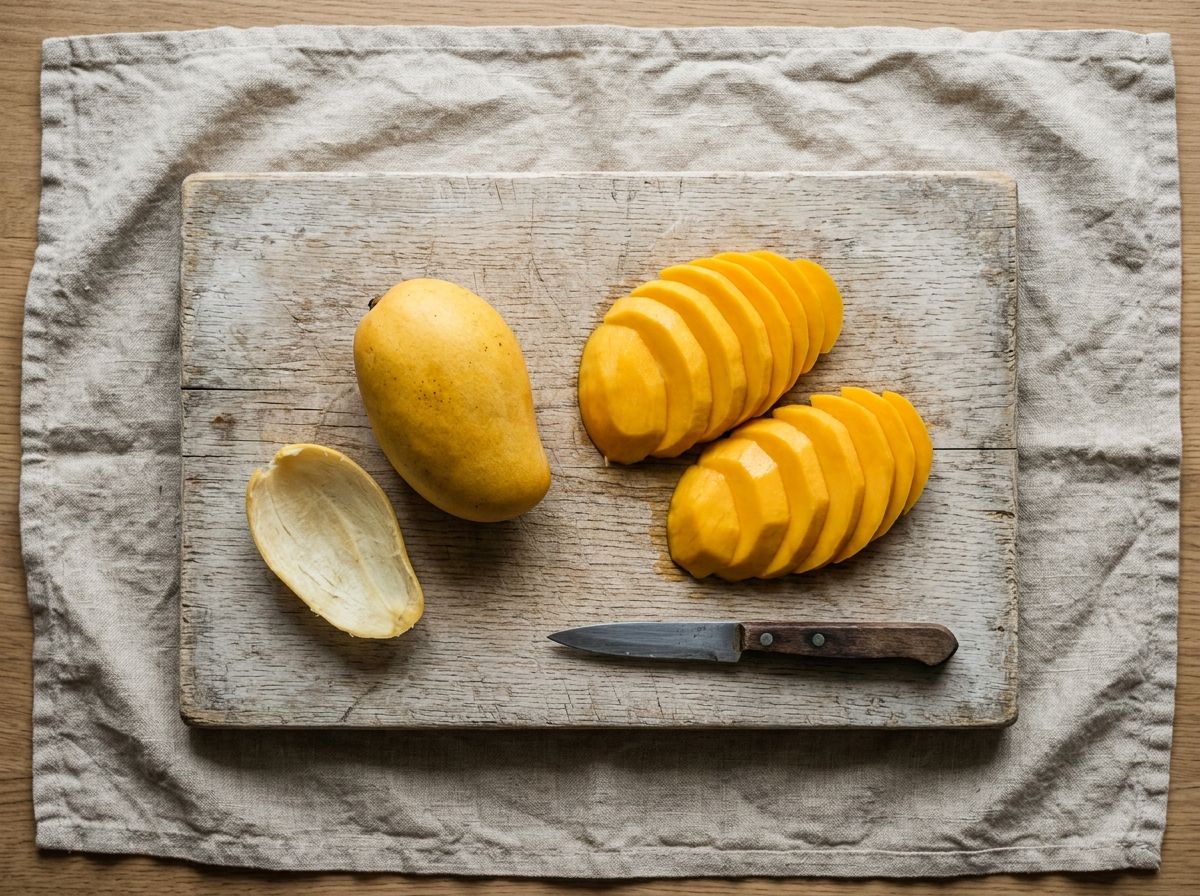
Slice the mangoes
Stand each mango on its end and cut down either side of the flat pit to take off two cheeks. Peel each cheek and lay it flat, then cut it into slices about a third of an inch thick. Keep them cold until the moment you serve.
- 10
Plate the rice, mango and sauce
Spoon a mound of the warm sticky rice onto each plate and fan the cold mango slices alongside it. Pour a generous spoonful of the salted topping over the rice, letting it run down the sides, and scatter the toasted mung beans over the top.
Notes
Start the soak the night before. Four hours is the minimum and overnight makes this a forty five minute recipe.
One 13.5 oz can of full-fat coconut milk covers both sauces with a little to spare.
Taste the salted topping on its own before you pour it. It should read as too salty by itself; over the sweet rice it lands exactly right.
Serve the rice warm and the mango cold. The temperature contrast is part of the dish.
Nutrition Facts
4 servings · 190 g per serving
- Calories
- 553 kcal
% Daily Value*
- Total Fat
- 21.5 g28%
- Saturated Fat
- 17.2 g86%
- Sodium
- 638 mg28%
- Total Carbohydrate
- 85.2 g31%
- Dietary Fiber
- 2.4 g9%
- Sugars
- 25 g—
- Protein
- 7.3 g15%
Recipe from veggierecipes.blog
When it goes wrong
Troubleshooting
The rice came out wet and gluey, more like porridge
It was boiled instead of steamed. Glutinous rice is over ninety percent amylopectin and has essentially no amylose, so it gelatinizes fast and grabs hold of itself hard. Sitting in water it simply collapses, and no amount of draining brings the grains back. It has to cook in steam, above the water and never in it. If your packet gave you a water ratio and a simmering time, the packet was written for a different grain.
The grains are still hard in the middle
It did not soak long enough. Steam cooks the outside of a dry glutinous grain into a shell before the center ever hydrates, so the water has to get in first. Four hours is the floor and overnight is easier to plan around. If you are already steaming and biting into chalky centers, sprinkle two tablespoons of water over the rice, put the lid back on and give it another ten minutes.
It tastes flatly sweet, like coconut rice pudding
The salted topping was skipped, or it was stirred into the sweet sauce. This is the single most common failure and it comes from recipes that collapse the two sauces into one. The dish is a salt and sugar contrast, not a sweet dish with a garnish. Make the topping separately, taste it on its own so you know it is properly salty, and pour it over at the table.
The mango was stringy and I got fibers in my teeth
That is the variety, not the ripeness, and no amount of waiting on the counter will fix it. Tommy Atkins, the large red and green mango that most American supermarkets stack by the door, has firm fibrous flesh because it was bred to survive a shipping container. Buy Ataulfo instead, the small flat yellow ones sold as honey or champagne mangoes, or Kent or Keitt if that is what the store has.
The coconut sauce split into oil and grainy bits
It boiled. A coconut milk emulsion breaks above a simmer, and the good brands without added gums break soonest, which is the price of buying them. Warm both sauces only until the sugar and salt have dissolved and the surface is steaming, then take the pan off. If one has already split, pull it off the heat and whisk hard; it usually comes back together as it cools.
It went hard and crumbly after a night in the fridge
Chilling any cooked rice sets off retrogradation, where the starch recrystallizes and the grains turn dry and firm. Sticky rice actually suffers less than jasmine, because amylose is the starch that retrogrades fastest and glutinous rice has almost none, but the refrigerator is still the wrong place for it. Keep it at room temperature under a cloth and eat it the same day. If it has already hardened, steam it for five minutes or microwave it covered with a damp paper towel and it comes most of the way back.
Before you serve
Serving & Storage
In Thailand this is street food rather than a course. It gets sold from a cart in a foam box or a plastic bag, with the rice on one side, the mango cheeks sliced on the other and the salted coconut in a separate corner-knotted bag so nothing goes soggy on the walk home. People eat it at eleven in the morning as readily as after dinner. If you want to serve it the way it is meant to be eaten, put the sauce in a small jug and let people pour their own.
Get the temperatures right and the dish does half the work itself. The rice should be warm or at most barely cool, loose and glossy rather than set into a block. The mango should be cold from the refrigerator. That contrast between warm starch and cold fruit is as much a part of it as the salt, and it is the thing most home versions lose by making everything hours ahead and serving it all at one temperature.
It follows a chili-heavy meal better than almost anything. Serve it after a green curry or a plate of pad thai and the coconut fat does something useful to your mouth. What it does not want is a second sweet thing on the table, or coffee; a pot of jasmine tea is the traditional partner and it earns its place by cutting the richness.
Making it ahead
The soak is the part worth planning: start it the night before and the recipe becomes a forty five minute job. Both sauces can be made a day ahead and kept covered in the refrigerator, then warmed gently before use. The rice itself should be steamed and dressed on the day you serve it, because it is at its best within a few hours of coming out of the steamer. Do not slice the mango in advance. It oxidizes at the cut edges and weeps liquid onto the plate within about an hour.
Storing leftovers
Room temperature, covered with a damp cloth or wrapped tight, and eaten the same day. The refrigerator is what ruins it. If you have to refrigerate, store the rice, the mango and the sauce in three separate containers, and bring the rice back with five minutes of steam or a covered spin in the microwave under a damp paper towel. Freezing is genuinely better than chilling for the rice alone: portion it into bags, freeze flat, and steam it straight from frozen. Mango does not survive a freezer in any form you would want on this plate, so slice that fresh.
Still wondering
Frequently Asked Questions
Can I make this without a steamer basket?
Yes. A metal colander or a large fine mesh strainer set over a pot of boiling water works as long as the base sits clear of the water and you can get a lid over the top; line it the same way with cheesecloth. What does not work is a rice cooker on its normal setting, which boils the rice in measured water and gives you the porridge problem. If your rice cooker has a dedicated steam tray, that is fine.
How do I scale this up for a crowd?
The sauces scale exactly, so double or triple them without thinking. The rice does not, because the limit is the steamer rather than the recipe. Glutinous rice steams evenly in a layer up to about an inch and a half deep and unevenly beyond that, with a gummy band at the bottom and chalky grains on top. For more than about three cups of dry rice, use a wider basket or steam in two batches and combine them in the bowl before you add the dressing.
Can I use frozen or canned mango?
Not for this. Half the dish is the texture of raw fruit against soft rice, and frozen mango thaws limp and watery while canned mango in syrup arrives already sweet and soft, which leaves you with sugar on sugar. Out of season you are better off keeping the coconut sticky rice and changing the fruit. Thai vendors pair the same rice with durian, ripe banana or jackfruit depending on the month, and any of those beats a bad mango.
Is mango sticky rice always vegan?
The traditional recipe is, and this one is. Rice, coconut milk, sugar, salt and fruit is the whole list. Two things are worth checking elsewhere, though. Some restaurants and most supermarket versions add sweetened condensed milk to the topping to thicken it cheaply, which is dairy, and a few shelf-stable coconut milks include sodium caseinate, a milk protein, as a stabilizer. Read the can and ask the kitchen.
Featured In

More Thai Recipes To Try

Made this?