
Mediterranean Roasted Vegetable Salad Recipe
Published · Updated
Roasted bell peppers, zucchini, and eggplant tossed in a tangy vinaigrette make this Mediterranean salad a vibrant, nutrient-packed meal or side.
Jump To Recipe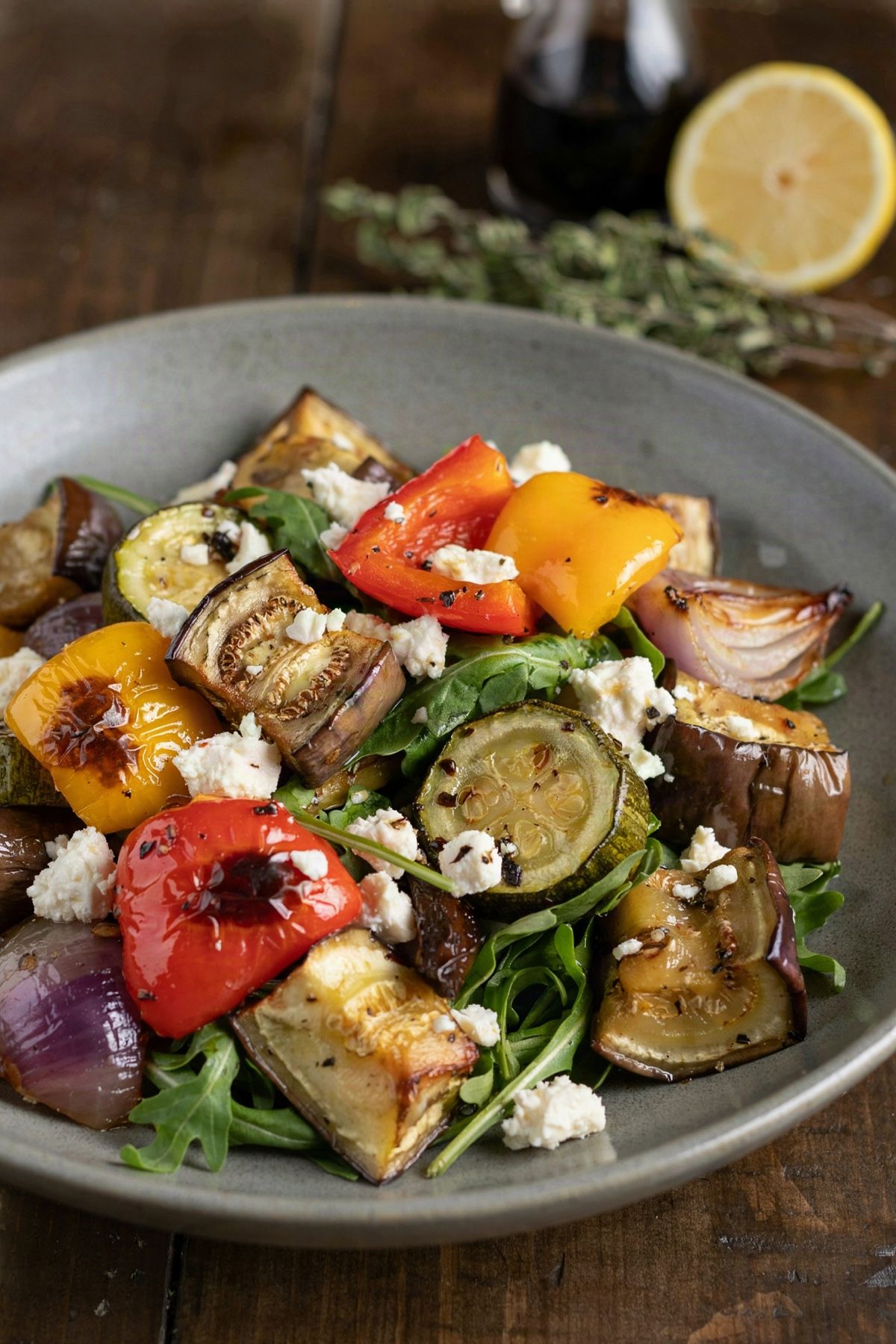
Why I Love This Mediterranean Roasted Vegetable Salad
Every time I roast a tray of colorful Mediterranean veggies, I’m reminded of how simple ingredients can pack so much flavor when brought together the right way. This salad is one of my favorites because it’s hearty enough to stand alone as a meal, but also perfect as a side at a summer barbecue or dinner with friends. The contrast of caramelized vegetables with the creamy tang of feta and the sharp pop of balsamic or lemon juice is just unbeatable.
What really works for me is how adaptable this recipe is. It’s great for:
- cleaning out the fridge at the end of the week
- meal prepping for quick lunches or dinners
- impressing guests with minimal effort (it looks way more complicated than it is)
Vegetable-wise, just about anything goes as long as you keep an eye on texture and roasting time. The feta is optional, but I love the extra richness it brings. Try adding a handful of toasted nuts, chickpeas, or even tossing in some cooked grains like farro or quinoa to bulk things up.
You can’t go wrong with this salad, whether you’re grabbing a bite solo or sharing the table with friends. Give it a shot. I think you’ll be hooked.
The story
Half of This Mediterranean Salad Comes from the Americas
There is no village anywhere on the Mediterranean that claims a roasted vegetable salad as its own, and that is not because the idea is new. It is because the idea is everywhere. Catalonia has escalivada, from escalivar, to cook in the embers: whole peppers, eggplants and onions buried in the ash of a dying fire, peeled once they are soft, torn into strips and dressed with nothing but olive oil and salt. Greece has briam, the same vegetables sliced and baked slowly in oil until they collapse. Sicily has caponata, the eggplant fried and then sharpened with vinegar and sugar. Provence has ratatouille. Turkey and the Balkans have a whole family of salads built on peppers and eggplant charred over coals. What this recipe does, roasting the vegetables hard in a hot oven and tossing them warm with an acid, is closest to escalivada, which was shepherd and farmhouse food, made from what was in the garden and the heat left in the hearth after the bread came out.
The odd part is that most of what is in the tray would have been unrecognizable to anyone cooking on that coast before the sixteenth century. Bell peppers are a New World plant, carried back to Spain after 1493 and spread around the Mediterranean within a few generations. Zucchini is newer still: squashes were domesticated in Mexico and Central America thousands of years ago, but the slim green marrow we call zucchini was bred in northern Italy in the late 1800s and first described in a Milan publication in 1901. Even the eggplant is an immigrant, native to South Asia, grown in Muslim Spain by the eighth century and treated with suspicion further north for a long time after. Medieval Italians called it mela insana, the mad apple, and a 1597 English herbal warned against the “madde or raging Apple”. Strip those three out and the traditional Mediterranean roasting tray is onions.
So “Mediterranean” here describes a way of cooking rather than a fixed list. The method is old and consistent across the whole sea: high dry heat until the vegetables char and sweeten, then olive oil, then something sour, then time to sit. What changes from coast to coast is only which vegetables were cheap that week, which is also why this salad forgives substitution so well. The vinegar and lemon at the end are not decoration. Roasting drives off water and concentrates sugar, and all of those older dishes rely on acid to bring the sweetness back into balance.
One thing worth taking from the old versions on a vegetarian site is that none of them was a side dish. Escalivada goes on bread with a slice of anchovy for those who eat it and without for those who do not; briam is a Lenten dish in Greece, cooked without meat or dairy for the fasting weeks and eaten as the whole meal with bread and olives. A tray of roasted vegetables was dinner long before it became something to put next to a chicken, and this recipe works best when you treat it that way.
What to buy
Ingredient Notes
Eggplant
Buy one that feels heavy for its size, with taut, glossy skin and a green cap that has not shriveled. A light, dull eggplant is old and full of dark seeds, and that is the bitter one; salting will not rescue it. Modern varieties do not need salting at all, since the bitterness the old salt-and-drain step was for has largely been bred out and a 425°F oven drives off the water anyway. Cut it bigger than instinct suggests, about 1 inch (2.5 cm), because eggplant shrinks by a third as it cooks and small dice turns leathery. It also drinks oil faster than anything else in the bowl, which is why this recipe uses four tablespoons rather than the usual three.
Zucchini
Smaller is better here: a zucchini around 6 inches (15 cm) long is firm and mostly flesh, while a large one is watery at the core and goes limp in the oven. Cut it into thick half-moons, not thin rounds. Zucchini is roughly 95 percent water and a thin slice has nothing left once that water is gone, whereas a chunky piece browns on the outside and stays intact within. If yours have always come out mushy, this is the reason.
Bell peppers
Red and yellow are ripe peppers and roast sweet. Green peppers are the same fruit picked early, and their grassy edge turns bitter under high heat, so avoid them in this salad even though they are cheaper. Do not bother peeling; the skin blisters and softens in a hot oven, and peeling is only worth it when peppers are roasted whole as they are for escalivada.
Olive oil
Extra virgin is fine at this oven temperature. The old warning about its smoke point is about the pan, not the oven: the surface of a roasting vegetable stays well below 425°F because it is wet, and the oil that coats it never gets hot enough to break down. What matters more is the quantity. Every piece has to be glossy before it goes on the sheet, since a dry patch does not brown, it dehydrates.
Dried oregano
Dried, not fresh, and Mediterranean rather than Mexican if you have the choice. Mediterranean oregano, the Greek and Italian kind, is sweeter and works with the vinegar; Mexican oregano is a different plant with a citrus and licorice edge that belongs in chili. Dried oregano goes on before roasting because the heat opens it up, while fresh oregano leaves scorch on the sheet and taste of nothing. Fresh herbs belong at the end, if at all.
Balsamic vinegar or lemon juice
These give you two different salads. Balsamic, even an ordinary supermarket one, is sweet and dark and leans into the caramelized edges of the vegetables. Lemon is sharper and brighter and lets the oregano and feta come forward. Whichever you choose, do not add it on the sheet before roasting. Vinegar and lemon both lose their brightness under heat and balsamic burns, so the acid goes on afterwards while the vegetables are warm enough to absorb it.
Feta
Buy it in a block in brine and crumble it yourself. Pre-crumbled feta is coated with anti-caking starch and has dried out in the tub, so it neither softens against warm vegetables nor tastes of much. Greek feta is made from sheep’s milk, sometimes with a little goat, and is tangier than the cow’s milk versions sold under the same name elsewhere. It is optional: the salad is complete without it, and a vegan feta or a handful of toasted almonds does the same job of adding salt and richness.
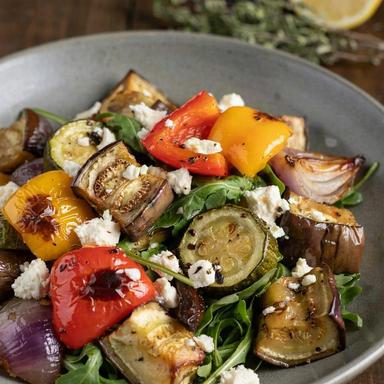
Mediterranean Roasted Vegetable Salad
A vibrant Mediterranean salad featuring roasted peppers, zucchini, eggplant, and red onion, tossed with greens, feta, and a tangy vinaigrette.
Ingredients
Equipment
As an Amazon Associate I earn from qualifying purchases, at no extra cost to you.
Instructions
- 1
Heat the oven
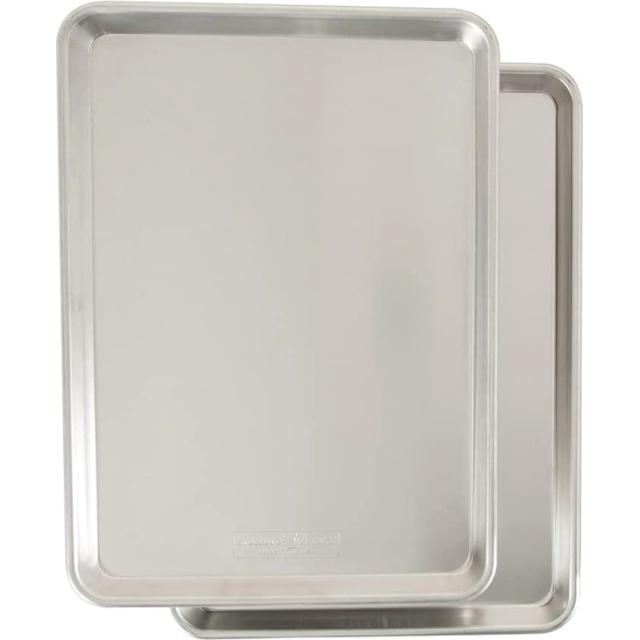
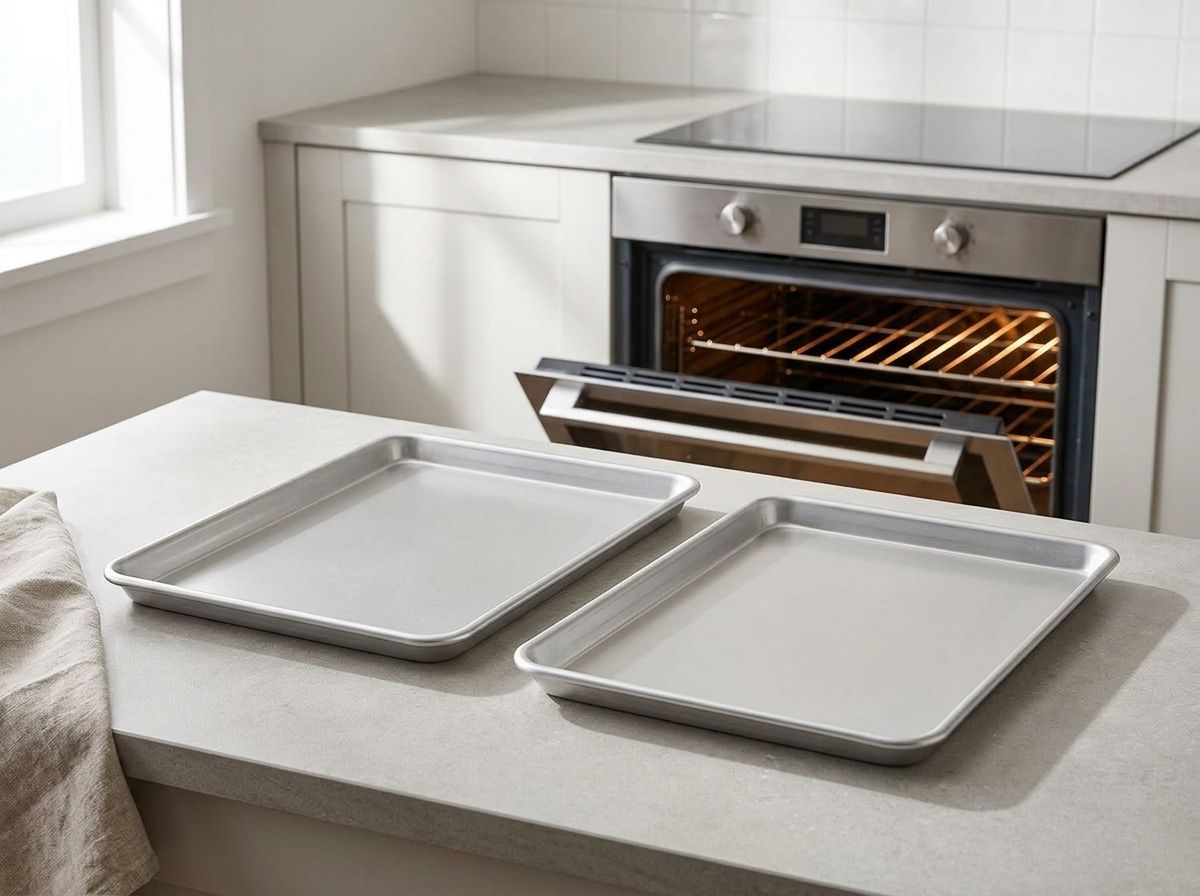
Preheat the oven to 425°F (220°C) with racks in the upper and lower thirds, and have two rimmed baking sheets ready. The vegetables need to lie in a single layer, and on one sheet they crowd together and steam instead of browning.
- 2
Cut everything to the same size
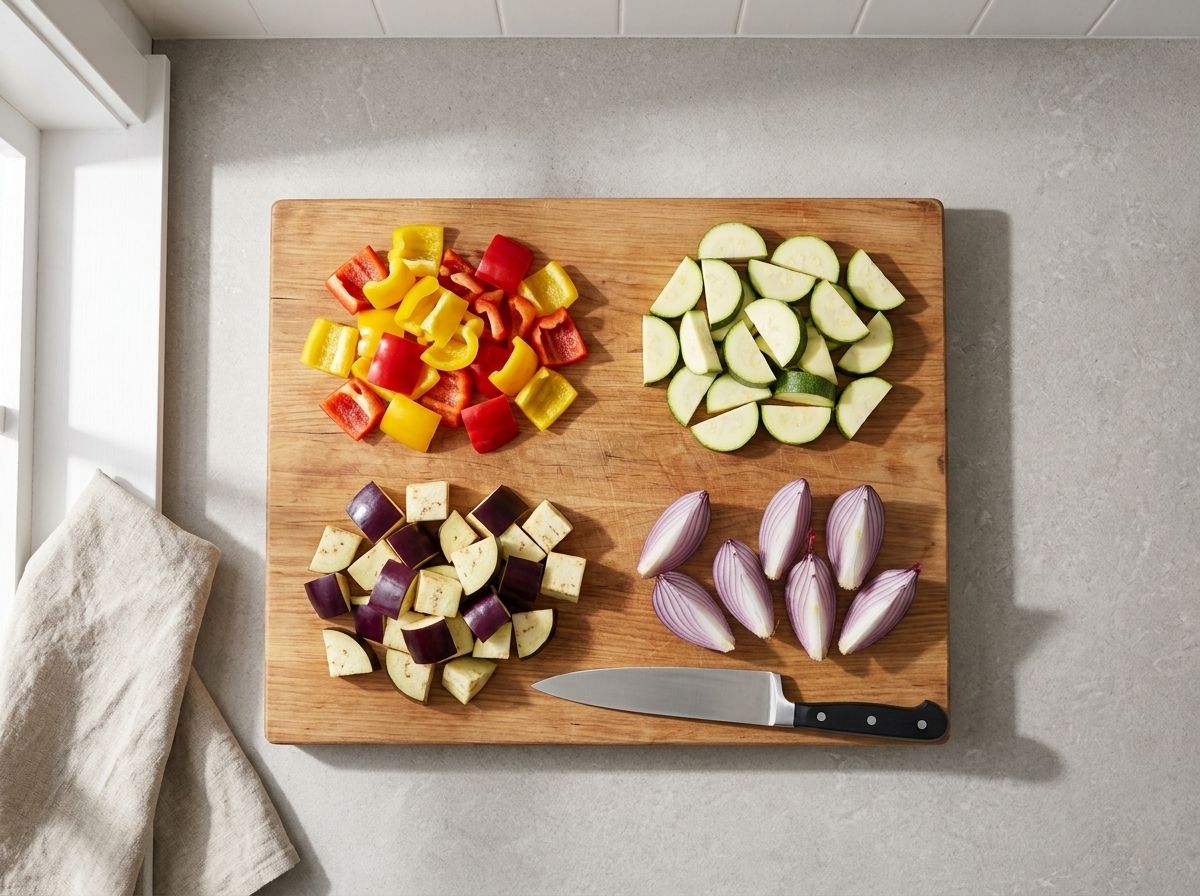
Cut the peppers and eggplant into 1-inch (2.5 cm) chunks, the zucchini into thick half-moons about 3/4 inch (2 cm) wide, and the red onion into wedges through the root so the layers hold together. Pieces this size all roast through in the same time; thin slices of zucchini collapse before the eggplant has softened.
- 3
Oil and season
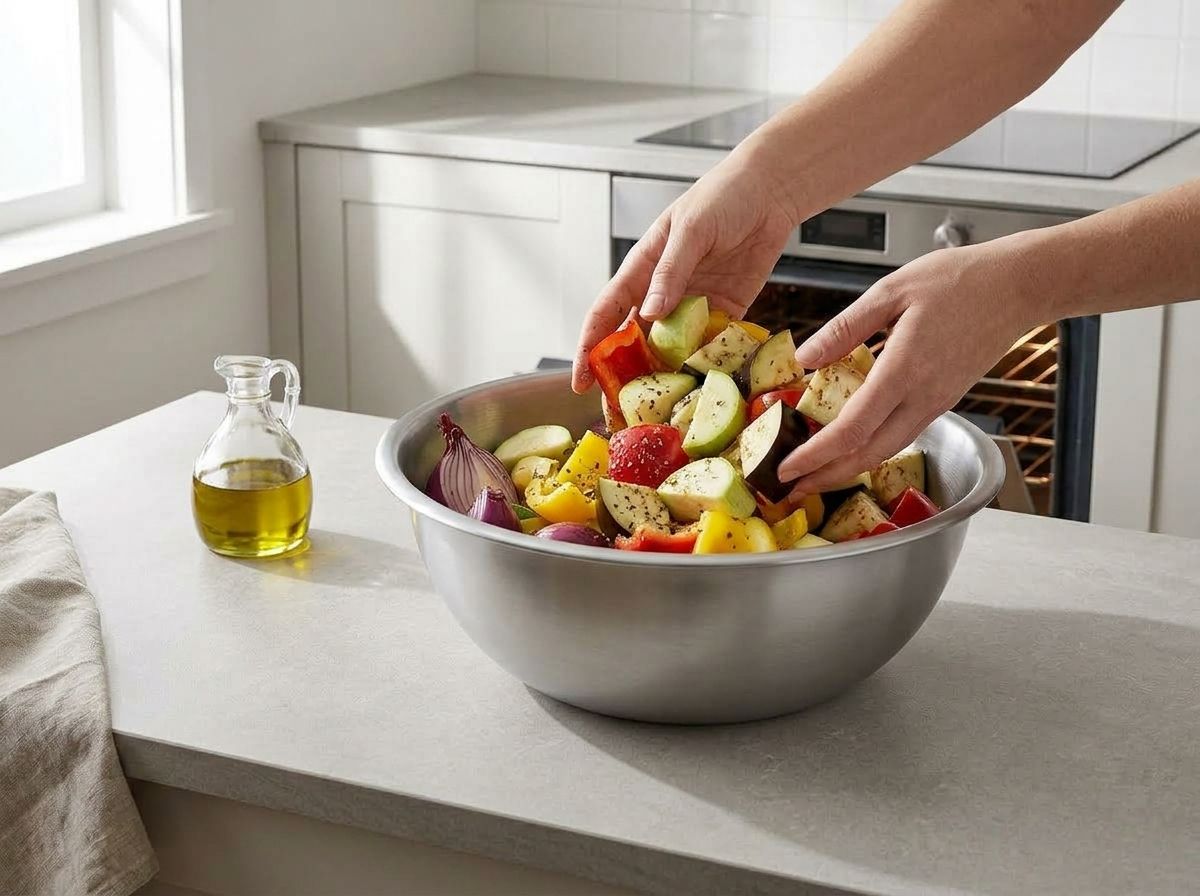
Put the vegetables in a large mixing bowl, pour over the olive oil and add the salt, pepper and oregano. Toss with your hands until every piece is glossy. Eggplant soaks up oil faster than the rest, so if some pieces still look matte after tossing, that is where the oil went; add another teaspoon rather than sending them in dry.
- 4
Roast until the edges brown
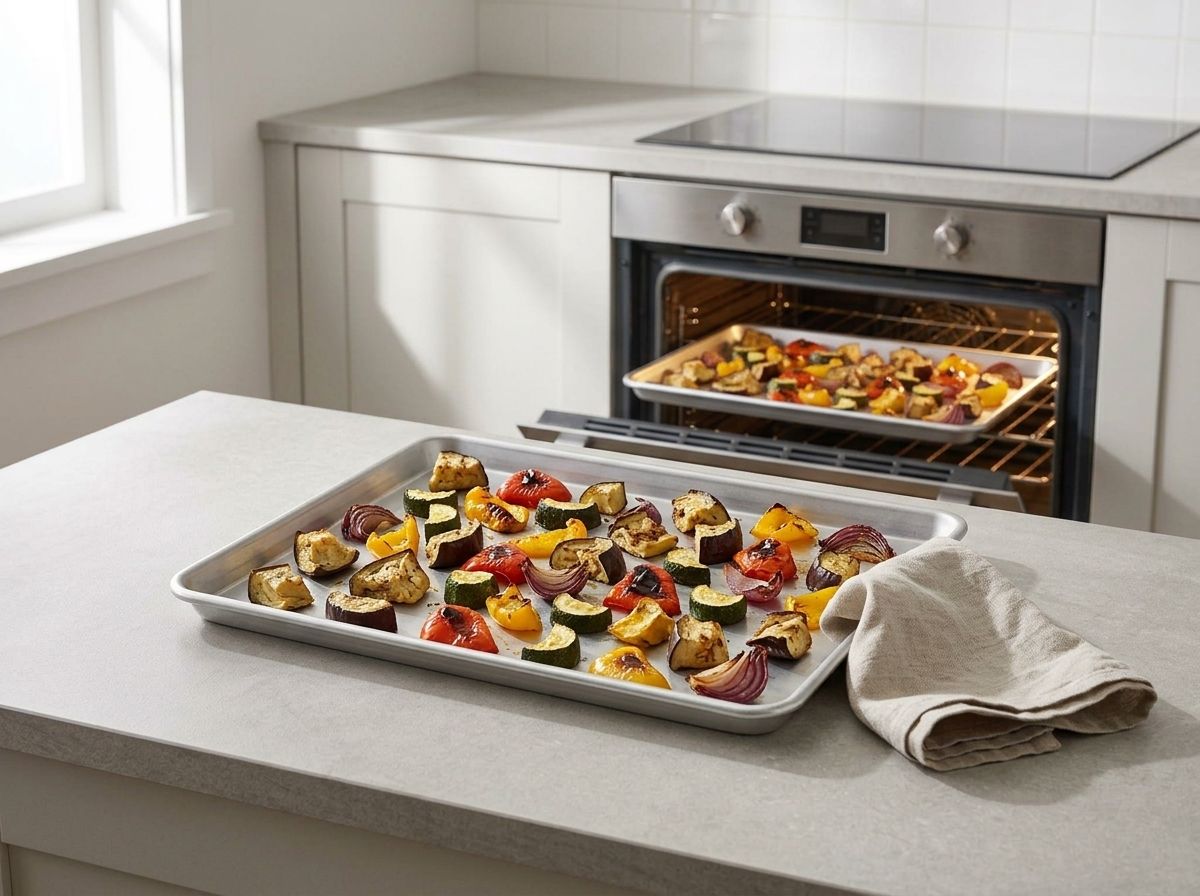
Divide the vegetables between the two baking sheets in a single layer with a little space around each piece. Roast for 25 to 30 minutes, turning the vegetables and swapping the sheets between the racks halfway, until the eggplant is creamy inside and the peppers and onion have browned edges.
- 5
Cool briefly and dress the vegetables
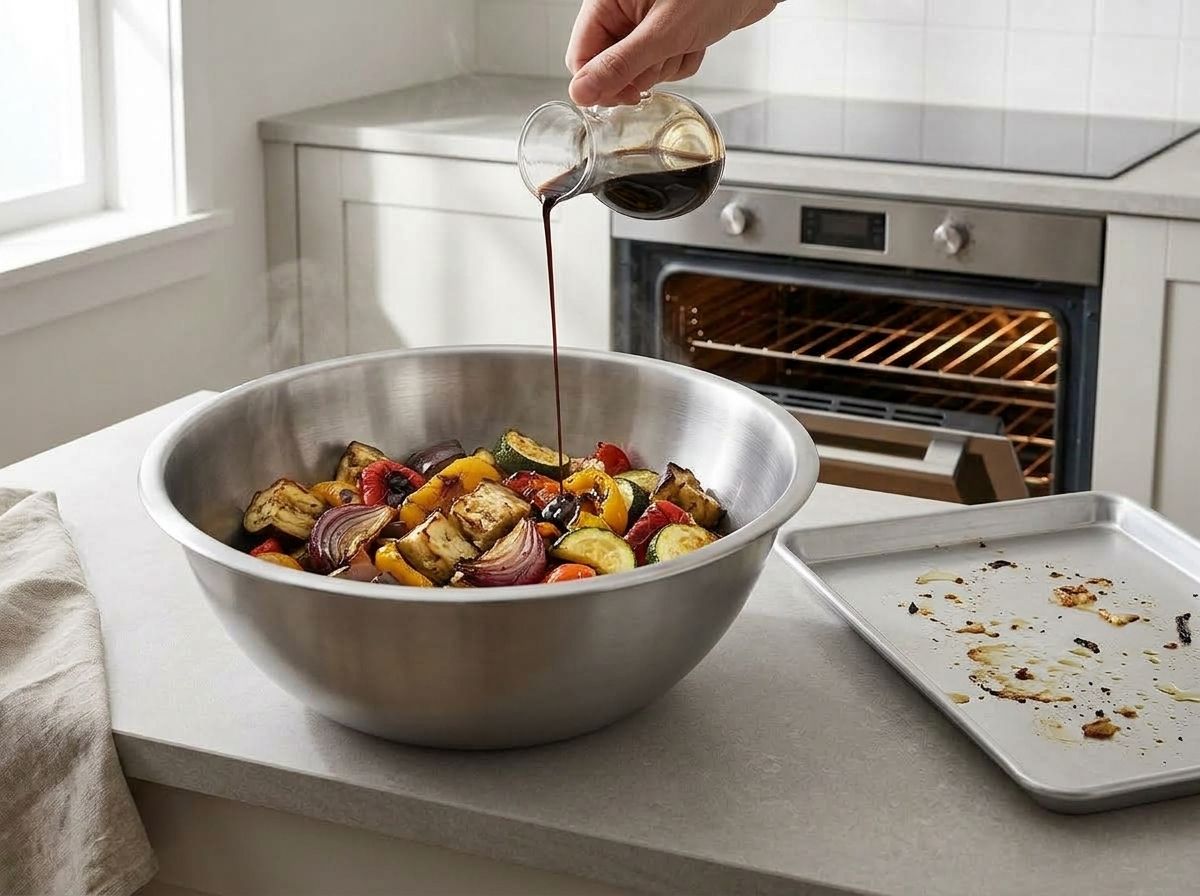
Leave the vegetables on the sheets for about 10 minutes. Tip them back into the mixing bowl while still warm, add the balsamic vinegar or lemon juice and toss. Warm vegetables absorb the acid; hot ones wilt the greens the moment they meet.
- 6
Add the greens and feta
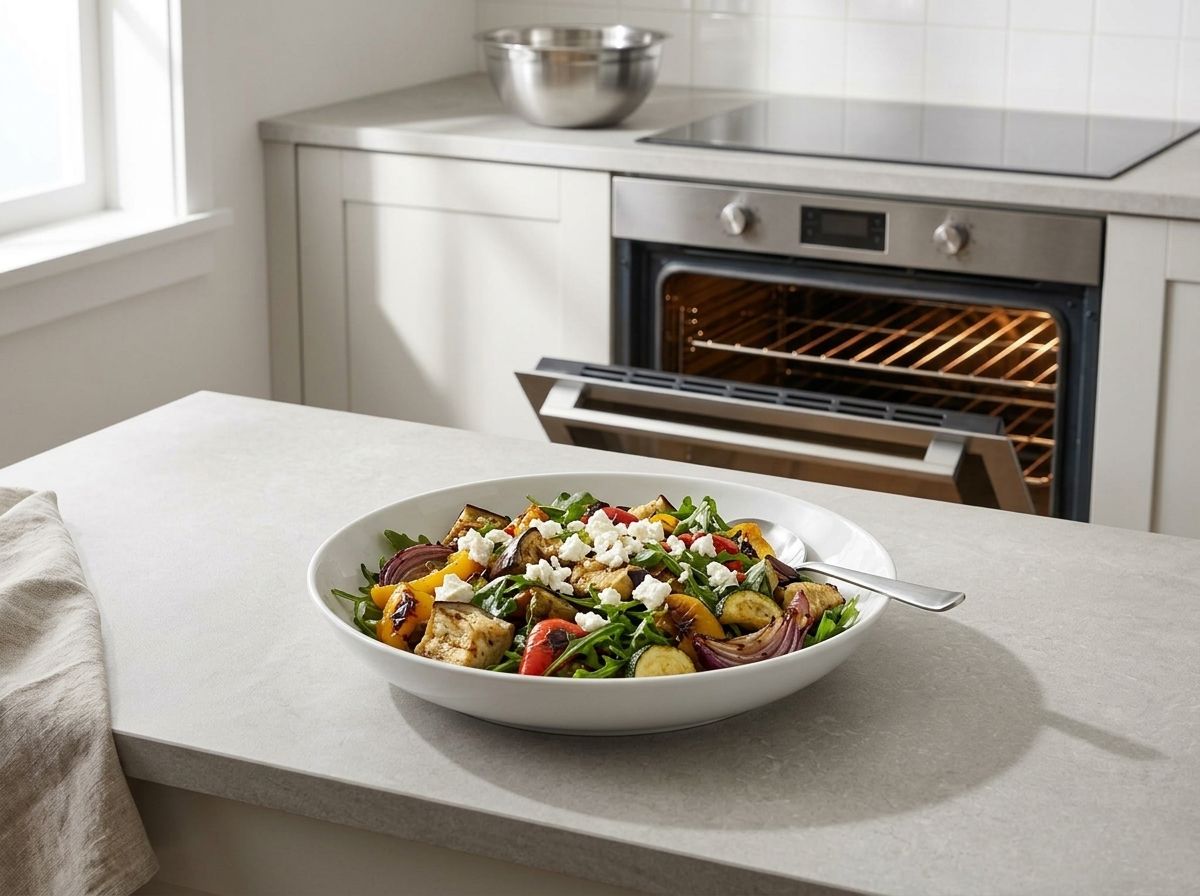
Just before serving, add the arugula or mixed greens to the bowl and fold them through gently so they stay crisp. Scatter the feta over the top and serve warm or at room temperature.
Notes
Everything cut to about the same size, and two baking sheets rather than one. Those two things decide whether the vegetables brown or steam.
Feta is salty, so taste the dressed vegetables before adding more salt at the end.
Nutrition Facts
4 servings · 304 g per serving
- Calories
- 225 kcal
% Daily Value*
- Total Fat
- 16.6 g21%
- Saturated Fat
- 3.3 g16%
- Sodium
- 705 mg31%
- Total Carbohydrate
- 17.4 g6%
- Dietary Fiber
- 5.6 g20%
- Sugars
- 8.9 g—
- Protein
- 4.3 g9%
Recipe from veggierecipes.blog
When it goes wrong
Troubleshooting
The vegetables came out soft and pale instead of browned
They steamed. Vegetables release a lot of water in the oven, and when they are packed close together on one sheet that water has nowhere to go, so the pieces sit in their own steam and never get hot enough at the surface to brown. Use two sheets, leave space around the pieces, and keep the oven at a full 425°F. If they look wet at the halfway turn, give them 5 more minutes at the end and do not open the door in between.
The zucchini turned to mush
It was cut too thin, or it went in at the same size as the eggplant when the eggplant was small. Zucchini is almost all water, so a thin round is empty once that water has cooked off. Cut it into half-moons at least 3/4 inch (2 cm) wide and it will hold. If you would rather keep the pieces smaller, add the zucchini to the sheets at the halfway turn and give it 15 minutes instead of 30.
The eggplant is dry and spongy
Either it went in without enough oil or it was cut too small. Eggplant flesh is a mass of air pockets, and it needs to take on some oil to turn creamy; dry pieces dehydrate into something like a bath sponge. Toss it until every piece is glossy, cut it at 1 inch (2.5 cm), and if the eggplant absorbed everything before the other vegetables got their share, add another teaspoon of oil to the bowl rather than skipping it.
The onion burned while the eggplant was still firm
The onion fell apart into single layers, which are thin and scorch quickly. Cut the onion in wedges through the root so each wedge stays attached at the base, and check whether everything else is really the same size. A tray of mixed sizes always cooks unevenly; the fix is the knife, not the oven.
The greens wilted into a wet heap
The vegetables went in hot. Arugula collapses on contact with anything much above warm, and the wilted leaves then hold the dressing like a sponge. Leave the roasted vegetables to stand for 10 minutes, dress them while warm, and add the greens as the last thing before the bowl reaches the table. If the salad is for later, keep the greens separate entirely.
It tastes greasy or flat
It is missing acid or salt, usually acid. Roasting concentrates the sugars in peppers and onion and the oil coats everything, and without something sour the whole bowl reads heavy. Add the vinegar or lemon while the vegetables are warm so they take it in, then taste before the feta goes on; feta is salty and often covers the last bit of seasoning the salad needs. If it is still flat, a squeeze of lemon on top of the balsamic is a legitimate move.
Before you serve
Serving & Storage
Roasted vegetables on the Mediterranean coast are eaten warm or at room temperature and almost never straight from the fridge. Escalivada is left to sit in its oil for an hour before it goes on the table, and a Greek briam is better the second day. This salad follows the same rule: it is at its best about 20 minutes out of the oven, when the vegetables have cooled enough to hold their shape and the dressing has soaked in, and it is still good two hours later on a buffet. Cold from the fridge, the oil sets and the eggplant firms up, so if you are eating leftovers, give them 20 minutes on the counter first.
As a side it goes with anything that comes off a grill. As a main for four, which is how it should be treated, it needs a bit of weight: a can of chickpeas, rinsed and tossed through with the warm vegetables, or a cup of cooked farro, freekeh or quinoa stirred in before the greens. Pile it on toasted sourdough rubbed with garlic, or spoon it over hummus with warm pita, and it becomes a meal without any more cooking. Halloumi seared in a dry pan and laid over the top is the other direction, and turns it into something closer to a Cypriot dinner than a salad.
Making it ahead
The vegetables can be roasted up to three days ahead. Dress them with the vinegar or lemon while they are still warm, because they absorb it best then, and refrigerate them in a covered container once cool. Keep the greens and the feta separate; both suffer from sitting in dressing overnight. On the day, bring the vegetables to room temperature, or warm them briefly in a 400°F (200°C) oven for 8 to 10 minutes, and fold the greens through at the last moment.
Storing leftovers
Undressed or dressed, the roasted vegetables keep for three to four days in the fridge. Once the greens are mixed in, the salad is a same-day thing: the leaves wilt within a few hours and turn slimy overnight, and the feta softens into the dressing. Pick the leaves out before storing if there are only a few, or accept that day-two leftovers are roasted vegetables rather than salad and use them that way, folded into pasta, spread on a flatbread, or blended with a spoon of tahini into a dip.
Do not freeze it. Zucchini and eggplant are mostly water, and they thaw into a puddle with the texture gone. Reheat leftovers, if you want them warm, on a baking sheet in a hot oven rather than in the microwave, which steams them soft and flat.
Still wondering
Frequently Asked Questions
Is this salad gluten-free or vegan?
It is gluten-free as written, with nothing to check beyond the balsamic label, since a few cheap balsamic vinegars use caramel coloring that may contain gluten. It is vegetarian but not vegan because of the feta. Leave the feta out and it is fully vegan with no other change, or use a vegan feta, which softens against the warm vegetables in the same way.
Can I double the recipe?
Yes, but the limit is oven space, not the bowl. Doubling means four baking sheets, and most ovens hold two at a time, so roast in two batches of 25 to 30 minutes rather than piling everything on. The first batch can sit dressed while the second cooks; the whole point of the salad is that it is fine at room temperature.
Is it a side or a main?
As written it serves four as a side. As a main it serves two, or four if you add a can of chickpeas or a cup of cooked grains. The nutrition figures above are per side-dish serving.
Featured In
More Mediterranean Salad Inspiration
Made this?