
Tofu Stir Fry Recipe
Published · Updated
A colorful, satisfying tofu stir fry loaded with fresh vegetables, where the tofu is dusted in cornstarch so it stays crisp under a glossy sauce. On the table in 40 minutes.
Jump To Recipe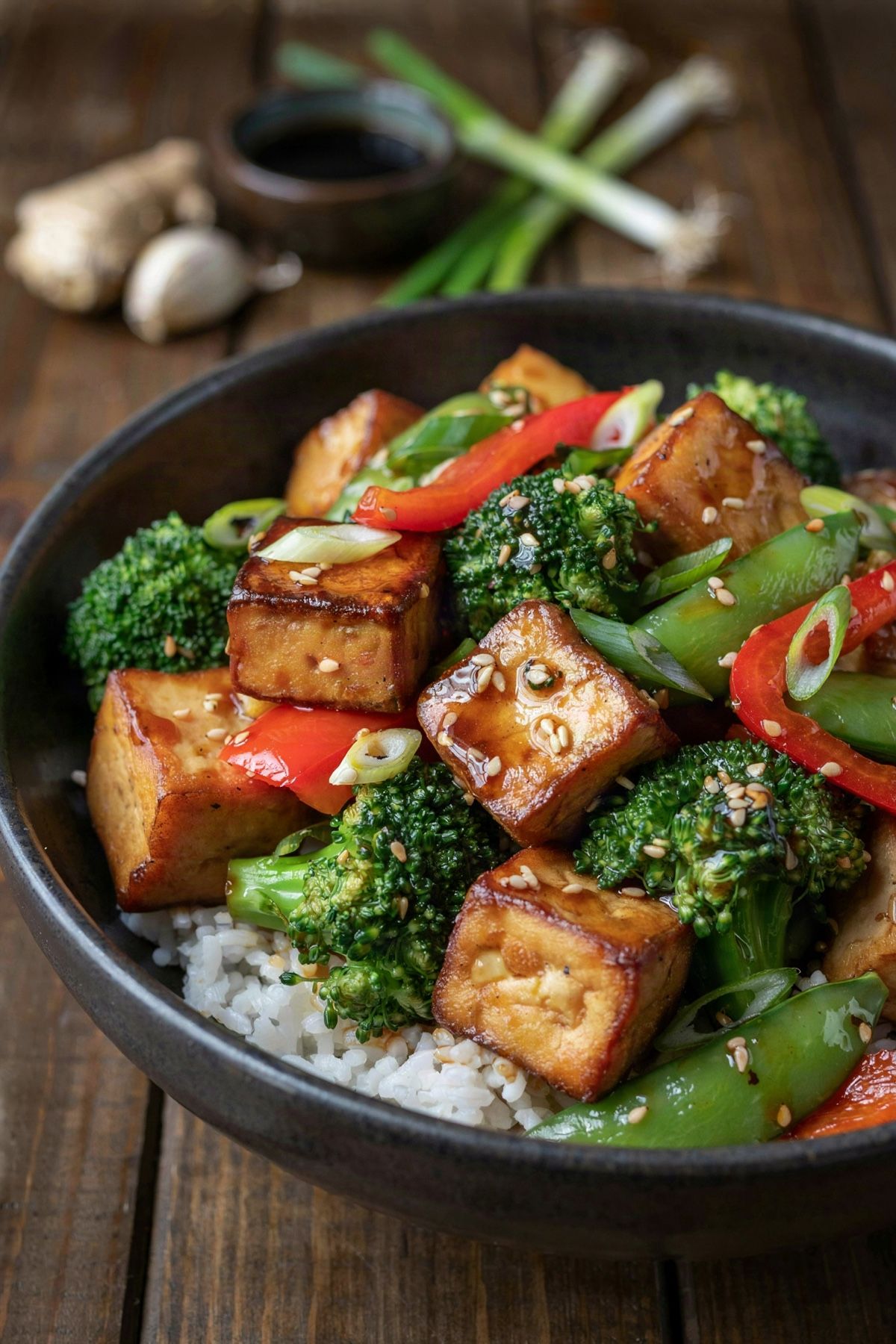
Why This Tofu Stir Fry Is My Go-To Quick Dinner
Whenever I want something healthy, full of flavor, and quick, so I don’t have to spend my whole evening making dinner, this tofu and vegetable stir fry is my go-to. The contrast of crispy golden tofu and crunchy bite vegetables never gets old. I enjoy every fresh bite of this tasty tofu.
What I love most about the stir fry is, of course, the versatility. I could have a million kinds of vegetables in the fridge and can easily swap them in. The dish will still come out looking fresh and tasting vibrant. The sauce is where the work is: soy sauce on its own tastes of salt, so it gets a splash of Shaoxing wine, a little sugar and a little vinegar, and enough cornstarch to make it cling to the tofu instead of running off it.
If you want to make this vegan or gluten-free, it’s easy. Use gluten-free tamari instead of soy sauce and dry sherry instead of the Shaoxing wine. If you like heat, add some red chili flakes.
What I reach for with this stir fry:
- Steamed jasmine or brown rice when I need something hearty
- Rice noodles for a quicker, lighter option
- Sometimes, toasted peanuts or cashews for extra crunch
Try this method when you’re craving a plant-based meal that hits the spot with delicious flavor and pleasing texture. You’ll see why it’s a staple in my kitchen.
The story
Tofu Is a Thousand Years Older Than the Stir Fry
The two halves of the name did not arrive together. Tofu is Han dynasty, more than two thousand years old, and Chinese tradition hands the invention to Liu An, a prince and amateur alchemist who died in 122 BCE, though nobody has ever proved it. Stir-frying is a thousand years younger. The character chao appears in Eastern Zhou bronze inscriptions but not about food, and its first use in a cooking sense is a scrambled egg recipe in the Qimin Yaoshu, a sixth-century farming manual. The wok only reached the shape you would recognize in the Ming.
What turned it from a technique into the technique was the price of fuel. In the late Ming, wood and charcoal near the cities got expensive, and stir-frying is the cheapest way there is to put heat into food. Everything is cut small so it cooks in three minutes, the pan is thin metal so it heats in one, and nothing simmers. What reads today as a flavor decision began as arithmetic about firewood, and it still explains the method.
Tofu reached the same wok on a different current. Buddhism carried it into the temple kitchens, where zhai cooking worked around meat as a matter of doctrine and tofu was the load-bearing protein rather than a stand-in for one. A tofu stir fry is not a vegetarian version of a meat dish.
One thing most pages on this dish leave out. The crisp golden cube is not really how Chinese kitchens treat tofu, which mostly goes into braises and sauces where the point is that it stays soft. It borrows its logic from the light starch coating a Chinese kitchen puts on sliced meat before it hits the oil, which is why the cornstarch below is not optional. Without it you get fried tofu, not crisp tofu.
What to buy
Ingredient Notes
Extra-firm tofu
Firmness decides the dish and brand labels are not consistent. You want a block sold sitting in water, marked firm or extra-firm; silken and soft will not survive being cubed. Super-firm or high-protein tofu is vacuum-packed with almost no water in it and needs no pressing at all. Otherwise press for at least 15 minutes and blot the cut faces, so the surface is tacky rather than wet.
Cornstarch
Two unrelated jobs, both load-bearing. On the tofu it is a dry dusting that pulls moisture off the surface and gives the pan something to brown, which is the difference between a crust and a skin. In the sauce it is the thickener, and it goes in cold and whisked, because starch tipped into a hot pan gelatinizes on the outside of each grain before water can get in. It sets only once the sauce boils.
Light soy sauce
Light soy is the salt and the savor. Dark soy is a different bottle, thicker and molasses-heavy, used by the spoonful for color; swap it in at 1:1 and you get a stir fry the color of gravy that still tastes underseasoned. Reckon on 900 to 1,000 mg of sodium per tablespoon. Tamari is the gluten-free swap and runs stronger, so start at 2½ tablespoons.
Shaoxing wine
The ingredient that separates this sauce from a soy-and-sugar glaze. An aged amber rice wine, nutty and fermented, close to dry sherry. In a stir fry with meat, oyster sauce supplies the savory depth; there is none here, and the wine fills that gap. The bottle labeled cooking wine in Western supermarkets has salt added so it can be sold off the liquor shelf, and drinking-grade bottles at a Chinese grocery cost no more. Dry sherry substitutes well. It contains wheat.
Toasted sesame oil
The dark, strongly scented oil pressed from toasted seeds, not the pale refined kind sold under the same name, which is a neutral cooking fat. Its smoke point is only about 350 to 400°F and a stir-fry pan runs hotter, so cooking it, which is what the older version of this recipe did, burns off the aroma you bought it for. Off the heat, at the end, two teaspoons for four.
Broccoli
Cut the florets no wider than an inch and slice the stem thin rather than binning it, since peeled stem is the sweetest part of the plant. This is the one vegetable that will not cook through in a dry pan in the time available, because the outside chars while the stem stays raw. Frozen broccoli is not a substitute: it arrives pre-blanched and full of water, so it floods the pan and turns gray.
Savory Tofu and Vegetable Stir Fry
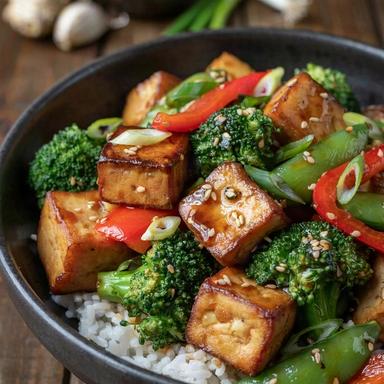
A tofu stir fry that actually stays crisp: cornstarch-dusted tofu, steam-fried broccoli and a glossy soy and Shaoxing sauce that clings instead of pooling.
Ingredients
Equipment
As an Amazon Associate I earn from qualifying purchases, at no extra cost to you.
Instructions
- 1
Press and cube the tofu
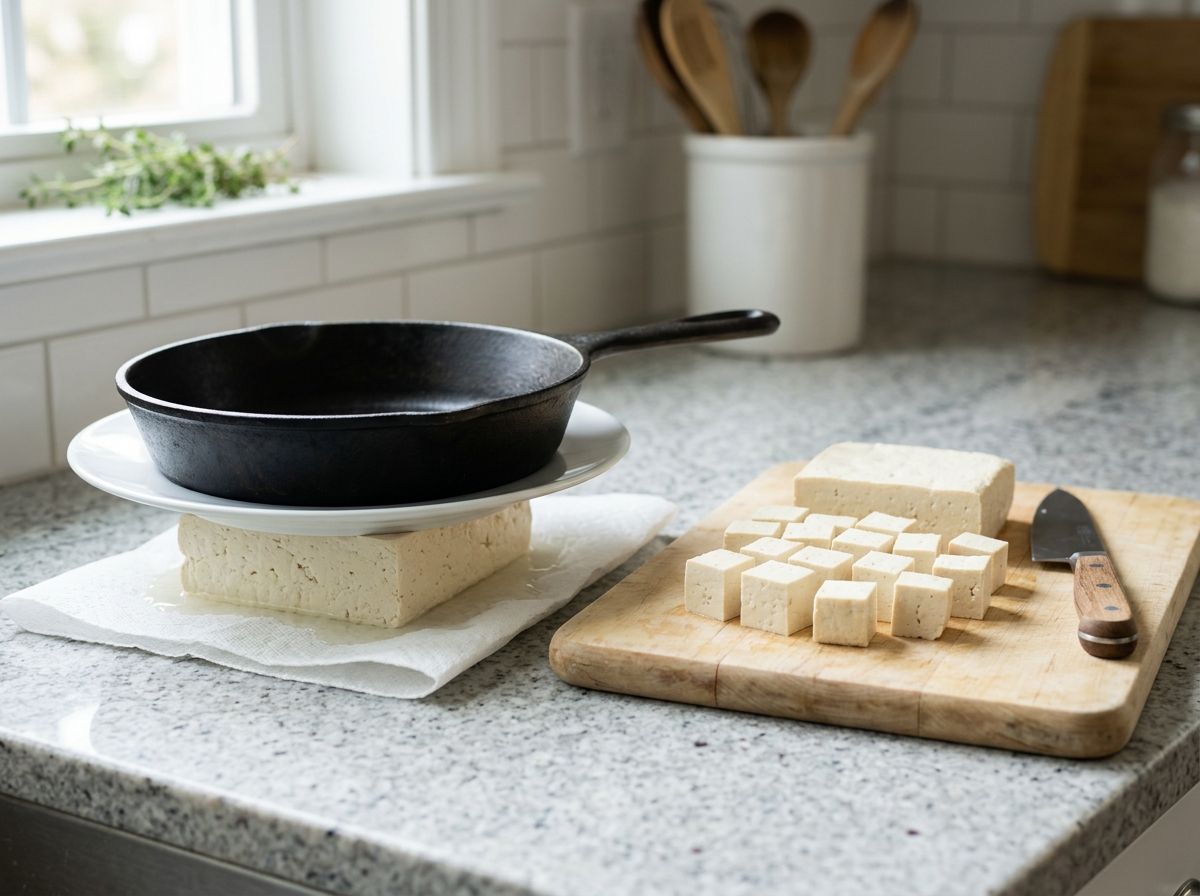
Drain the tofu and press it for at least 15 minutes, either in a tofu press or under a heavy pan set on a plate lined with paper towels. Cut it into 3/4 inch cubes and blot the cut faces. You want the surface tacky rather than wet, because that is what the cornstarch sticks to.
- 2
Mix the sauce cold
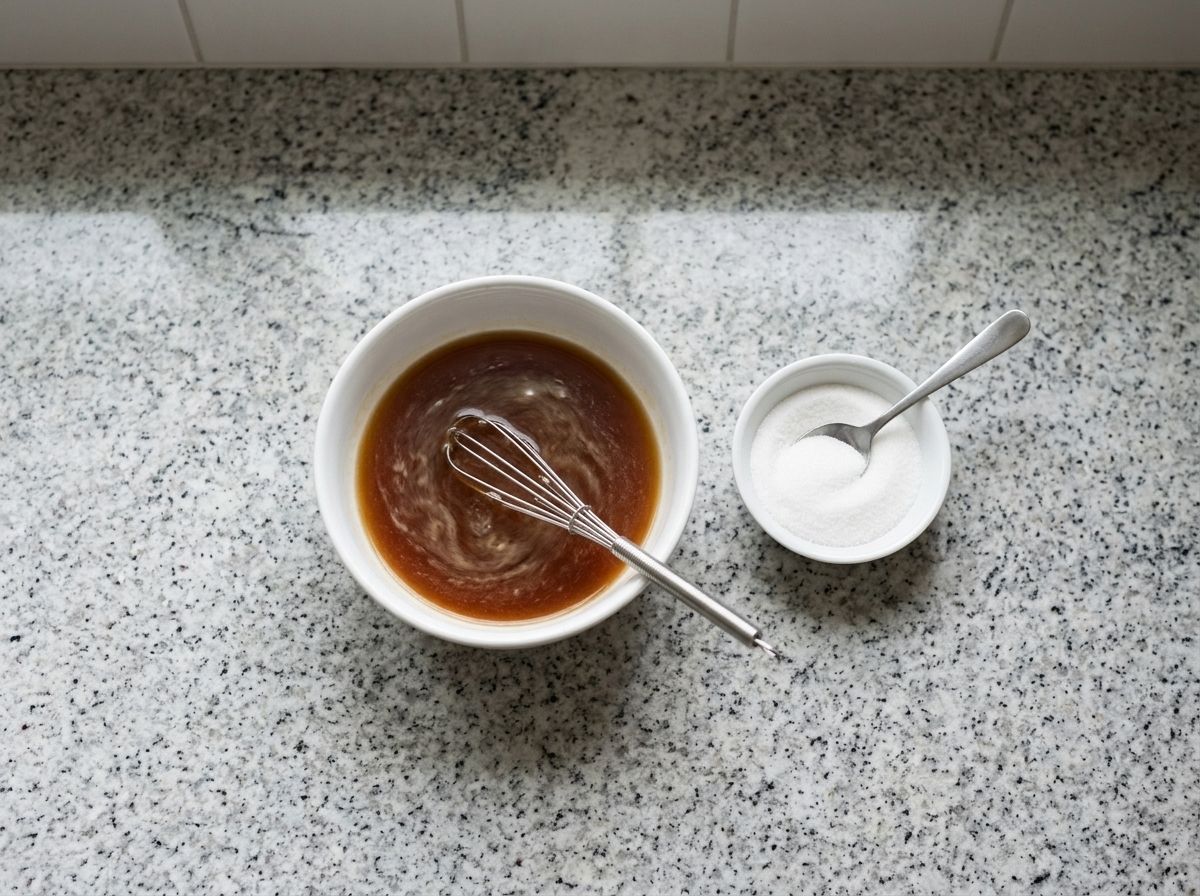
In a small bowl, whisk the soy sauce, Shaoxing wine, rice vinegar, sugar, stock and the 2 teaspoons of cornstarch until no grains are left in the bottom. Mixing it cold matters: cornstarch tipped straight into a hot pan seizes into lumps before it can disperse. Leave the toasted sesame oil out of this bowl, it goes in at the very end.
- 3
Dust the tofu in cornstarch
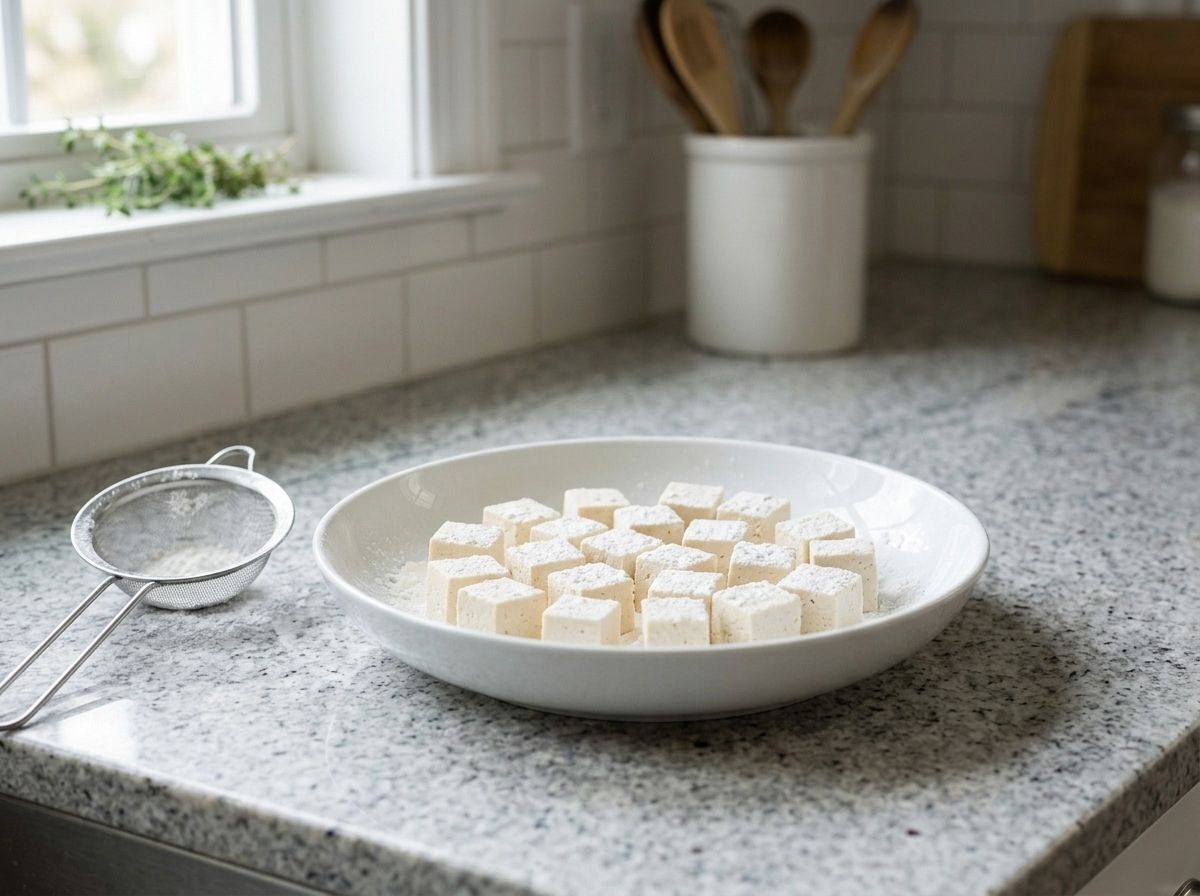
Put the tofu in a bowl, scatter the 2 tablespoons of cornstarch over it and turn the cubes gently until every face is dusted. Tip them into a sieve and shake it once or twice over the sink so the loose powder falls away. What stays behind is a thin dry film, not a batter.
- 4
Fry the tofu until it releases
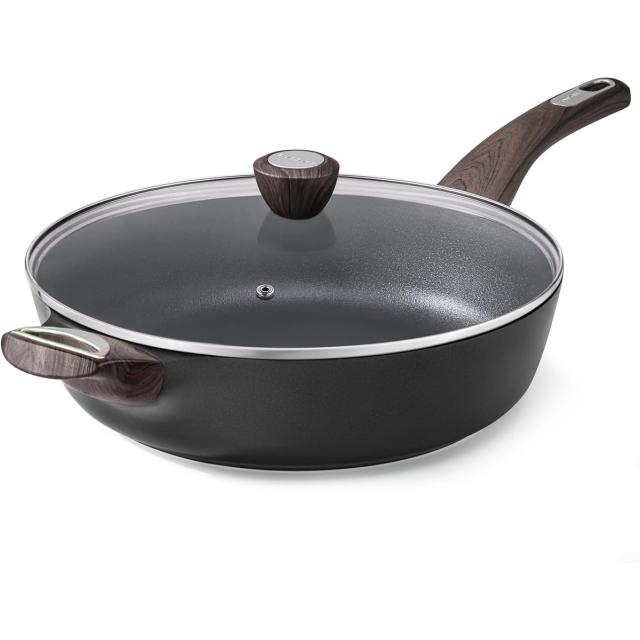
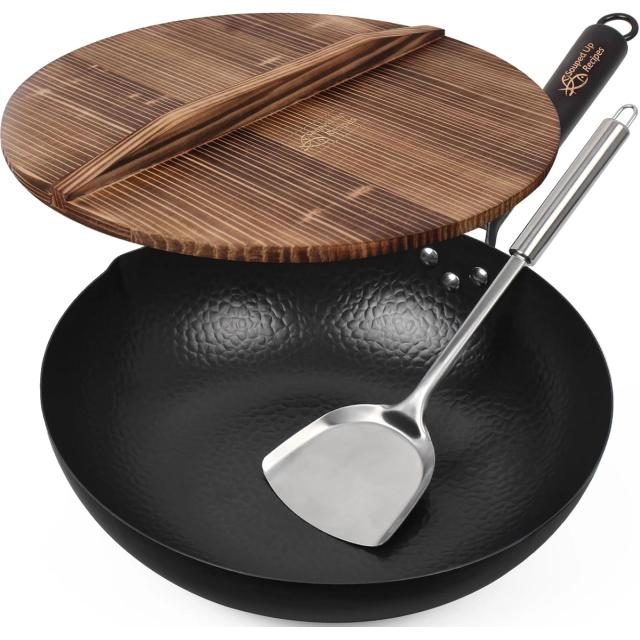
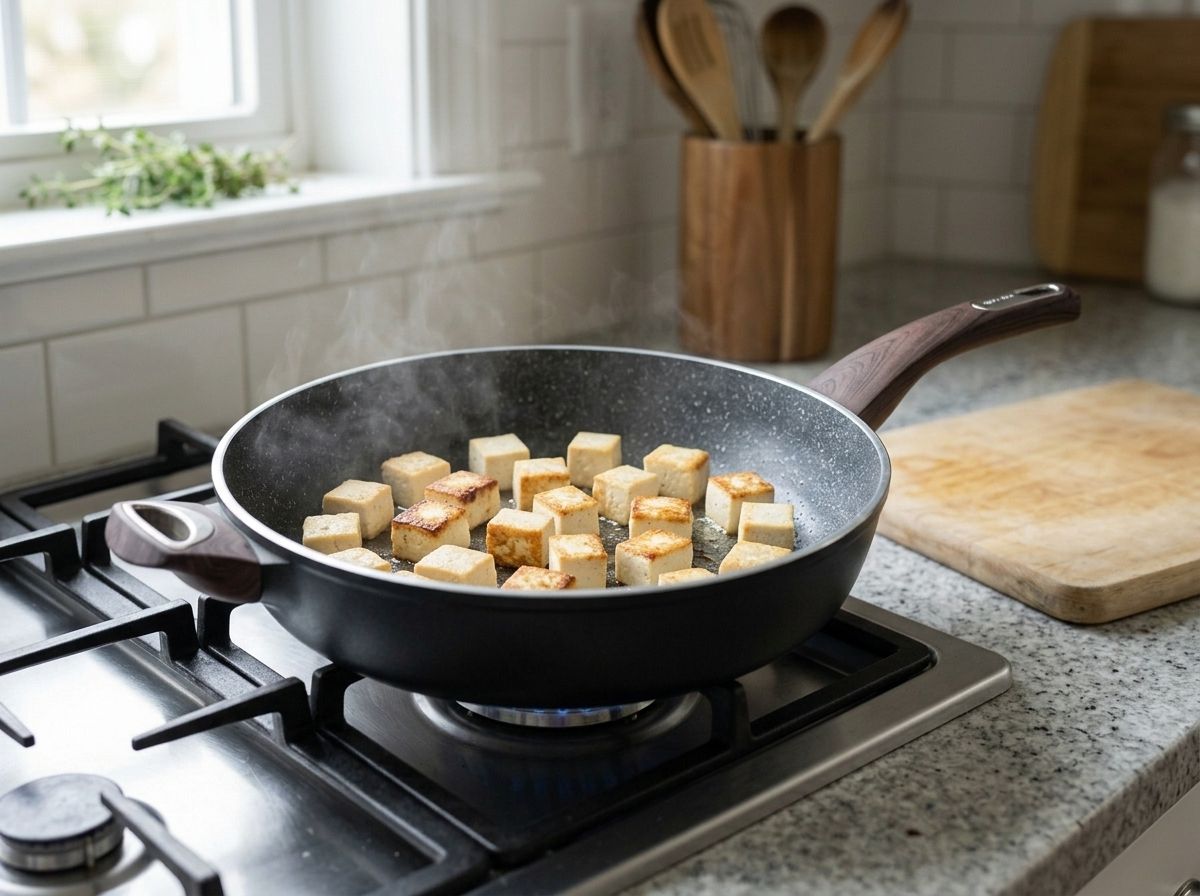
Heat 2 tablespoons of the oil in a large skillet or wok over medium-high until it shimmers. Lay the tofu out in a single layer with space between the cubes, then leave it alone for 3 to 4 minutes. Tofu releases itself once a crust has formed, and pushing at it before then pulls the coating off. Turn and fry the other faces, 8 to 10 minutes in total, until deep golden. Lift the cubes onto a plate.
- 5
Steam-fry the broccoli
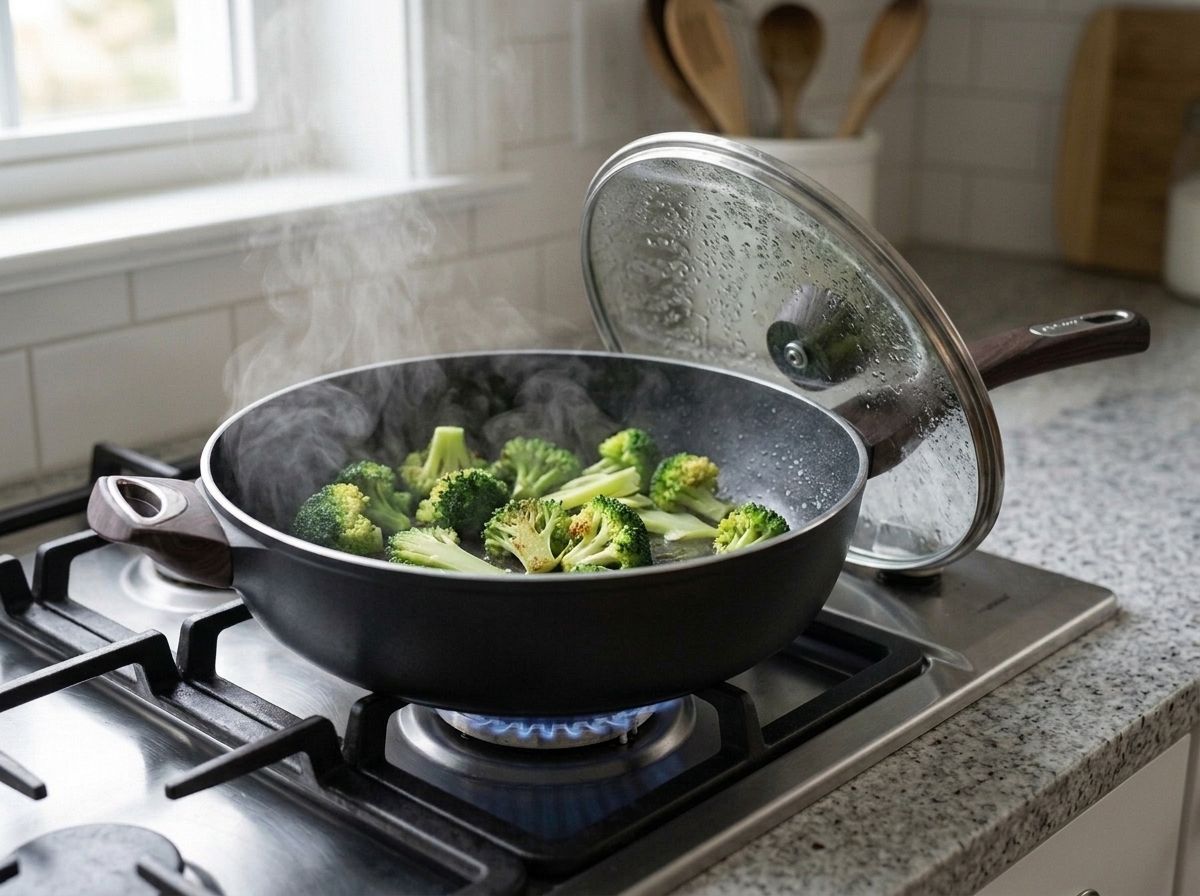
Add the last tablespoon of oil to the empty pan and tip in the broccoli. Stir-fry for a minute, then add 2 tablespoons of water and cover immediately. The steam cooks the stems through in about 2 minutes while the pan stays hot. Uncover and let the water boil off.
- 6
Add the quick vegetables
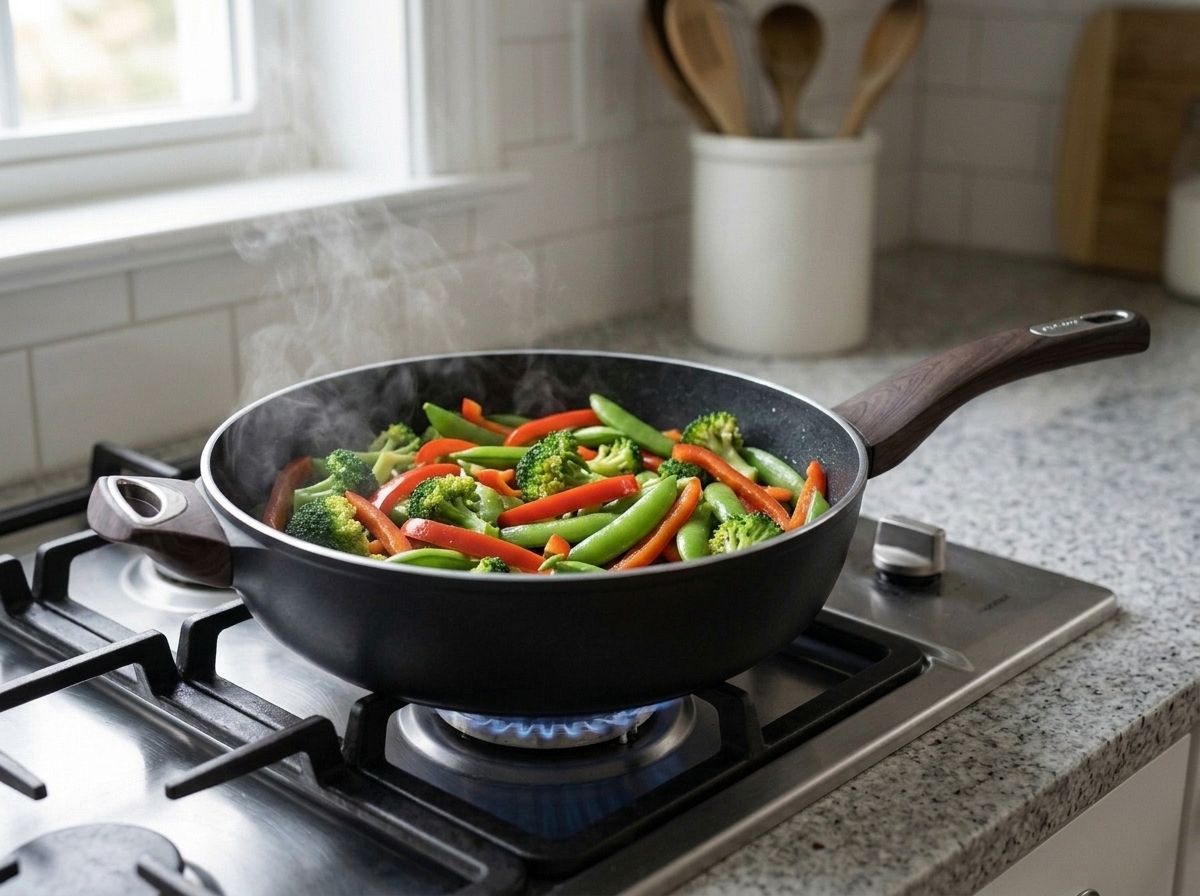
Add the bell pepper and the snap peas and stir-fry for 2 minutes. These two want to stay squeaky, so stop while the pepper still has an edge to it and the peas are bright green.
- 7
Garlic and ginger, 30 seconds
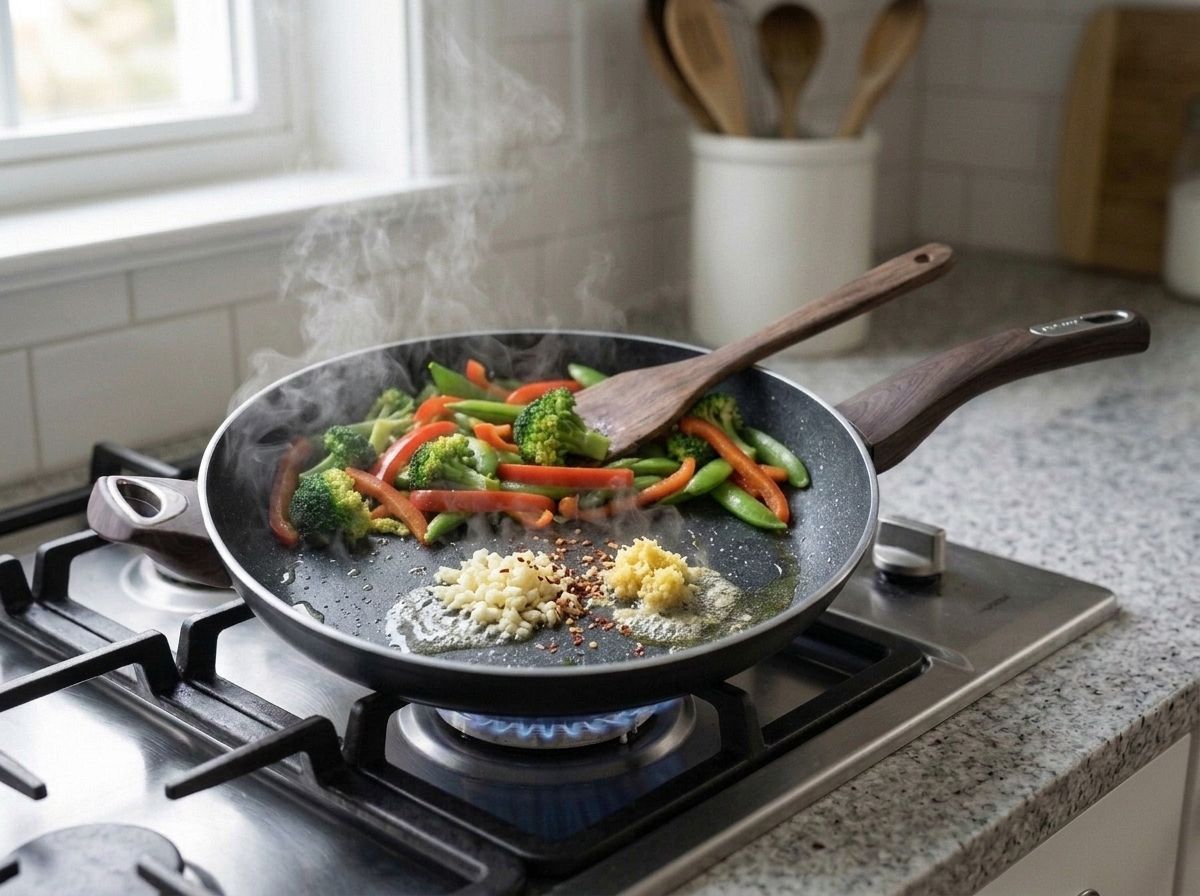
Push the vegetables to one side, drop the garlic and ginger onto the bare metal and stir for 30 seconds, no longer. Minced garlic goes from fragrant to bitter fast at this heat. Add the red pepper flakes here if you are using them.
- 8
Thicken and finish off the heat
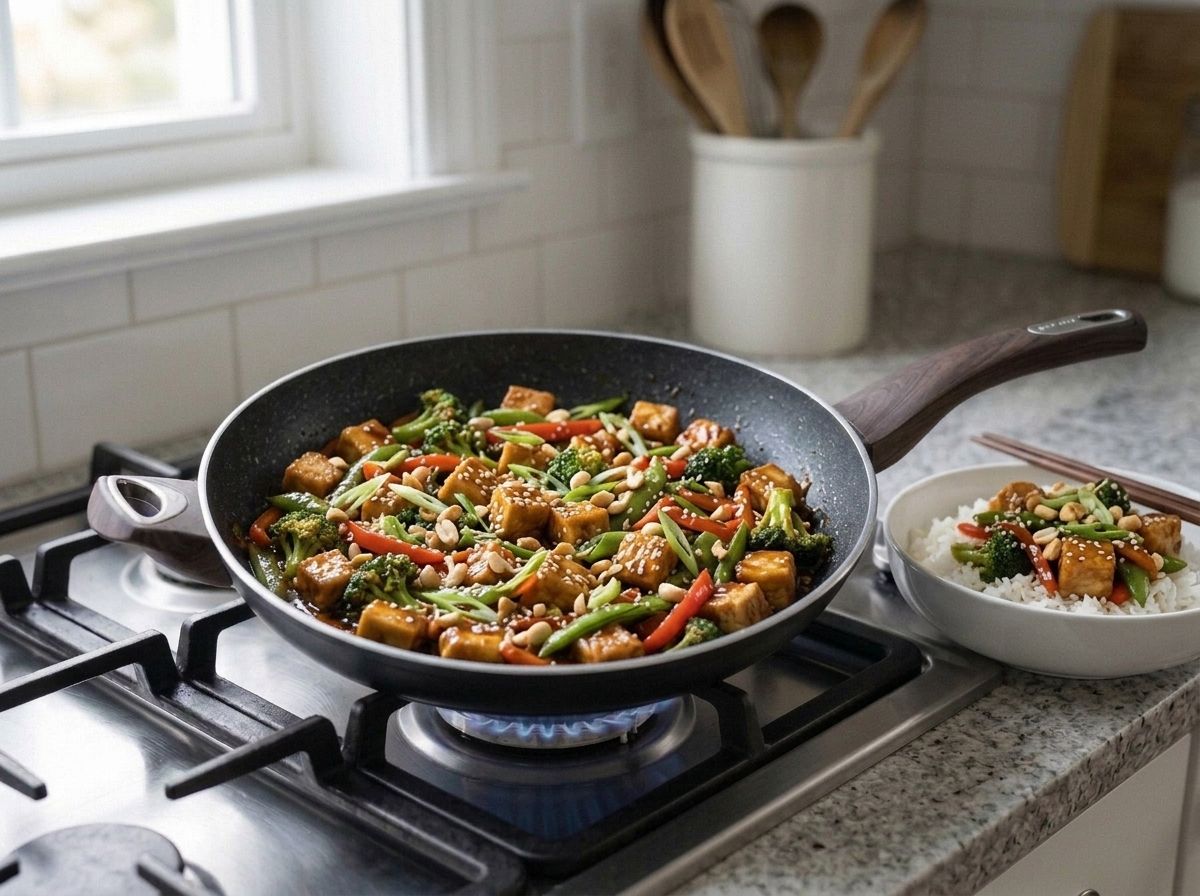
Whisk the sauce again to lift the settled starch, pour it in and return the tofu to the pan. Toss for about a minute, until the sauce turns glossy and clings instead of pooling. Take the pan off the heat, stir in the toasted sesame oil, and serve straight away over rice or noodles with the sesame seeds, scallions and nuts scattered over.
Notes
The cornstarch on the tofu is a dry dusting, not a batter. Shake the excess off before it goes in the pan.
Halve this in the same pan if you like, but do not double it. Crowding is what stops the tofu browning.
Nutrition Facts
4 servings · 405 g per serving
- Calories
- 422 kcal
% Daily Value*
- Total Fat
- 17.3 g22%
- Saturated Fat
- 2.5 g13%
- Sodium
- 964 mg42%
- Total Carbohydrate
- 48.1 g17%
- Dietary Fiber
- 7.2 g26%
- Sugars
- 6.8 g—
- Protein
- 21 g42%
Recipe from veggierecipes.blog
When it goes wrong
Troubleshooting
The tofu welded itself to the pan and the coating stayed behind
You moved it too early, or the pan was not hot enough, or both. Tofu releases itself once a crust has formed underneath, and that crust needs three or four uninterrupted minutes. Nudging a cube at two minutes tears the starch off and leaves it stuck to the metal, and then the next cube sticks to that. Wait for the oil to shimmer, then leave it alone.
The sauce is thin and pooling underneath everything
Either the cornstarch never made it into the sauce, which is what happens when a recipe calls it optional, or it went into the hot pan instead of the cold liquid and seized, or the pan never got hot enough to boil. Cornstarch does not thicken until it boils. The sauce goes from cloudy to glossy the moment it sets, so if you have not seen that happen, turn the heat up.
It tastes salty and flat, and somehow of nothing else
What a soy-only sauce does, and it was the fault in the older version of this recipe. Three tablespoons of soy sauce is close to 3,000 mg of sodium and not one other dimension. The sugar is not there to make it sweet and the vinegar is not there to make it sour. Both are there so the salt reads as savory instead of as salt.
I marinated the tofu for an hour and it still tastes of nothing inside
Not your fault and not fixable, so it is worth knowing rather than repeating. Tofu is a dense pressed curd, not a sponge. A marinade penetrates a few millimeters at most, and a water-packed block is already full of water with no room for anything else, so most of what you soaked it in washes off in the pan. That is why the seasoning here goes where it can reach: a starch coat that browns, and a sauce thick enough to stay on the surface.
The broccoli was black at the edges and still raw in the stem
A dry pan only cooks the surface and a floret is mostly stem, so the outside browns in under a minute while the inside is still hard, and longer only takes you further down the same road. The water and the lid turn the pan into a steamer for two minutes and cook the stem through without letting the pan cool.
Before you serve
Serving & Storage
A stir fry is not really a one-bowl meal in the tradition it comes from. On a Chinese table it is one dish among several, with plain rice at the center doing the work of a neutral background, and the seasoning is pitched for that. Taste the sauce straight from the pan and it is too strong. Taste it over rice and it is right.
Flat wheat noodles or thick udon hold the sauce as well as rice does, while thin rice vermicelli clumps and lets it slide off. Quinoa and couscous do not work at all, because a glossy cornstarch sauce sits on top of them and separates. If you want more on the table, keep it plain: smashed cucumber with vinegar and garlic, or a clear soup.
Making it ahead
Almost all the preparation can be done a day ahead and the dish is better for it, because the cooking itself is ten hurried minutes and chopping inside that window is how the garlic burns. Press and cube the tofu, cut every vegetable and mix the sauce, then keep the three in separate containers. What cannot be done ahead is frying the tofu: a crisp cube softens within about an hour even sitting dry on a plate, and reheating browns it further without bringing the crunch back.
Storing leftovers
Three to four days in an airtight container. The tofu goes dense and chewy overnight, which is a different texture rather than a bad one, while the broccoli turns olive and the snap peas lose their squeak. Reheat in a hot dry pan with a splash of water rather than the microwave, which steams the lot, and add a few drops of fresh sesame oil, because the original will have faded.
Do not freeze the finished dish: a cornstarch sauce weeps on thawing and the vegetables come out waterlogged. Freezing the tofu on purpose before you cook it is a different matter and a good idea. A block frozen solid, thawed and pressed comes out spongy, holds sauce far better, and crisps harder.
Still wondering
Frequently Asked Questions
Can I make this tofu stir fry gluten-free?
Two swaps rather than one, which is the part most versions miss: the soy sauce and the Shaoxing wine both contain wheat. The ingredient notes above cover what to use for each. Check the cornstarch box as well if you are cooking for celiac disease, because some brands are milled alongside wheat.
Can I use other vegetables, and how do I keep the timing right?
Yes, and the timing matters more than the list. Keep the total around 500 g for four and sort what you have into three groups: hard things get the water and the lid for 2 to 3 minutes, medium things go in dry for 2 minutes, and leaves go in for the last thirty seconds with the sauce. Mushrooms are the exception, since they shed a lot of water, so brown them alone in the empty pan first.
Is this recipe vegan?
Yes, as written. The thing to watch is the shortcut version rather than this one: most bottled stir-fry sauces and nearly every restaurant stir fry are built on oyster sauce, and hoisin is sometimes not vegan either.
Can I bake or air-fry the tofu instead of pan-frying it?
Both work. In an air fryer, dust the cubes as written, spray lightly with oil and cook at 400°F for 12 to 15 minutes, shaking twice. In the oven, use a lined sheet and a tablespoon of oil at 425°F for 25 to 30 minutes, turning once. Air-fried tofu is drier and chewier, oven tofu lands in between and takes three times as long. What you give up either way is the browned crust that only forms against hot metal.
More Flavorful Vegan Stir Fries & Asian Favorites
Made this?