
Vegan Pad Thai Recipe
Published · Updated
A colorful vegan Pad Thai that delivers chewy noodles, crispy tofu, and fresh vegetables in a tangy, unforgettable sauce. This easy recipe comes together fast for a satisfying weeknight meal.
Jump To Recipe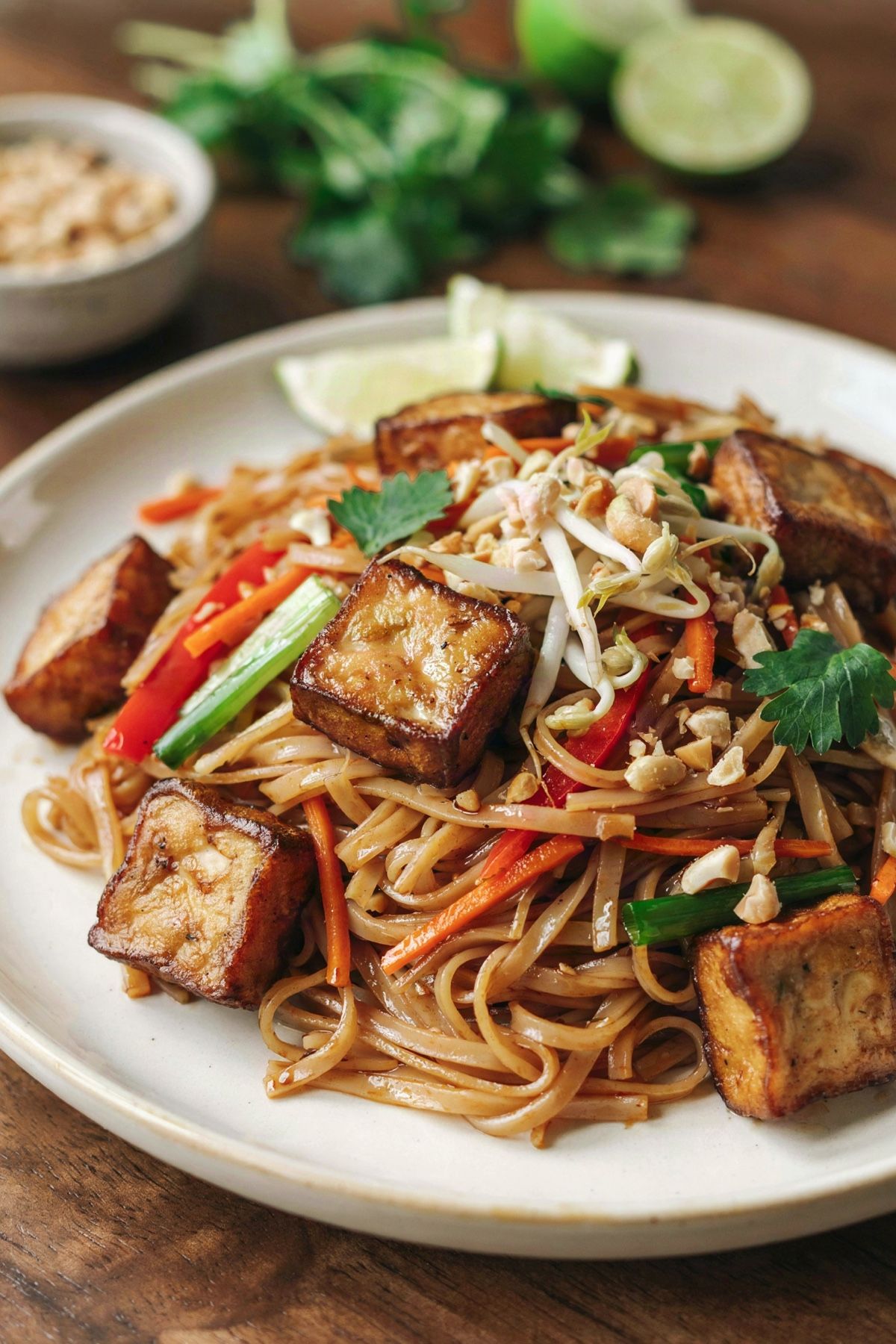
Why This Vegan Pad Thai Hits the Spot
As someone who loves rich and bold flavors without any compromise, I consider it pure gold to find a vegan Pad Thai that has the right texture and flavor. This dish is both filling and green, with a satisfying heartiness and an element of healthy greenness.
The sauce is really addictive. Tamarind, palm sugar, and soy sauce hit the perfect balance of sour, sweet, and salty. Add the chewy rice noodles and a pile of golden tofu and you get a hearty, flavorful meal you will never get tired of.
Here’s what I like best about this recipe:
- The tofu gets truly crispy. No soggy business.
- It’s endlessly customizable. Add any veggies on hand, or spice it up to your liking.
- Hands-on time is about 20 minutes. The noodles soak while you press the tofu and mix the sauce.
- No fancy ingredients. Everything on the list is easy to find.
Serve it straight from the pan, load it up with peanuts and cilantro, and keep an extra wedge of lime on hand. This plant-based dinner has all the substance and flavor of the takeaway version.
The story
Pad Thai Is Younger Than You Think
Pad Thai tastes like a dish with centuries behind it. It does not have them. The recipe is younger than the electric refrigerator, and it exists largely because a government decided it should.
In the late 1930s, Prime Minister Plaek Phibunsongkhram set about building a modern national identity for Thailand, and food was part of the plan. His government ran a campaign called Noodle Is Your Lunch. The Public Welfare Department handed out free noodle carts and distributed the recipe for a dish it wanted people to think of as unmistakably theirs.
There was a practical motive alongside the patriotic one. War and flooding in the early 1940s had squeezed the rice supply, and one bowl of rice makes roughly two bowls of rice noodles. Pushing noodles stretched the harvest.
The irony sits in the name. Stir-fried noodles had arrived in Thailand with Chinese traders long before any of this, and the original name of the dish, kway teow pad thai, borrows a Chinese word for rice noodles. Pad thai simply means Thai-style stir-fry. It was a label attached to something already on the street, and it stuck so thoroughly that most people now assume the dish is ancient.
That history is good news for anyone cooking without meat. Pad Thai was built to feed a country cheaply, and the ingredients carrying it are noodles, tofu, peanuts, and sprouts. The version below leaves out the egg and the dried shrimp a street cart would add. What remains is less a substitute for the real thing than the part of it that was always plant-based.
What to buy
Ingredient Notes
Flat rice noodles
Look for dried flat rice noodles about a quarter inch wide, sold as rice sticks, sen lek, or banh pho. Thin vermicelli collapses into paste and the wide ones stay stiff in the middle. Whatever you buy, ignore the cooking directions on the bag. They are written for noodles you are about to eat, not noodles you are about to stir-fry.
Tamarind paste
This is where most Pad Thai goes wrong, because three different products share the name. Thai jarred tamarind paste is a loose brown puree and is what this recipe is written for. Tamarind concentrate is thick, almost black, and around three times stronger, so start with a single tablespoon and taste. A block of pressed pulp gives the best flavor of the three but has to be soaked in hot water and pushed through a sieve first.
Palm sugar
The sugar is not there to make the dish sweet. It is there to hold the tamarind in check, and Pad Thai with too little of it tastes sour and hollow. Palm sugar carries a smoky caramel note that plain white sugar cannot reach. Maple syrup is the closest easy substitute, though it is sweeter by volume, so use two tablespoons where the recipe asks for three of palm sugar.
Firm tofu
Firm or extra firm, never silken. A block holds about as much water as a wet sponge, and that water is the reason tofu steams instead of browning. Press it, cut it, then pat the cut faces dry. If you want insurance, toss the cubes in a teaspoon of cornstarch before they hit the oil.
Preserved sweet radish (chai po)
Optional, and the single ingredient that most separates a real Pad Thai from a plain noodle stir-fry. It comes vacuum-packed from Asian grocers, shredded or in strips, and tastes salty and sweet and faintly funky, with a crunch that survives the pan. Buy the sweet kind rather than the salty kind. Two tablespoons, chopped, is plenty for the whole dish.
Garlic chives
Flat, wide, and darker than ordinary chives, with a mellow garlic flavor green onions do not quite reach. They go in at the very end so they wilt rather than cook. Green onions are the standard substitute and work perfectly well. If you do find garlic chives, cut them into two-inch lengths and use about half a cup.
Bean sprouts
Use them twice. Half go into the pan for the last thirty seconds, so they soften just enough to pick up sauce. The other half go on top raw, where they stay cold and snap. Sprouts cooked any longer than that turn limp and release water, which is how most home Pad Thai ends up wet.
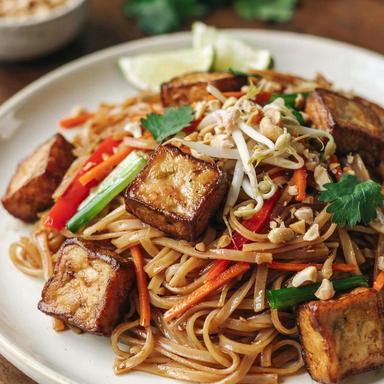
Flavorful Vegan Pad Thai
Chewy rice noodles tossed in a bold vegan Pad Thai sauce, with crispy tofu and colorful fresh vegetables.
Ingredients
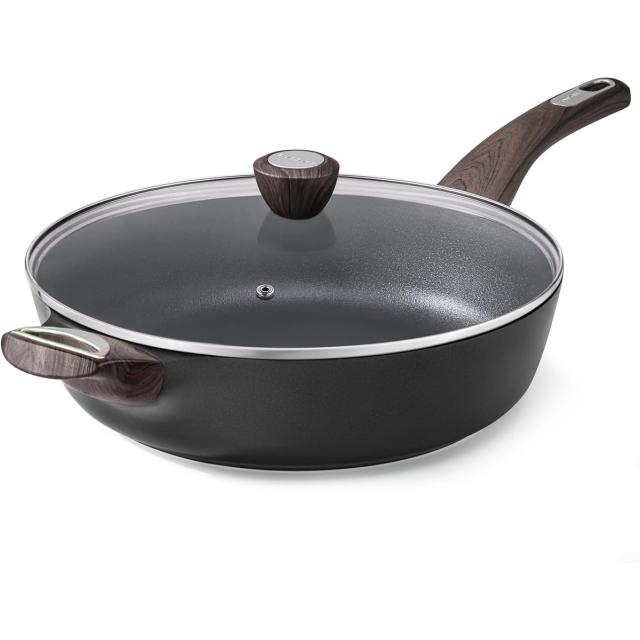
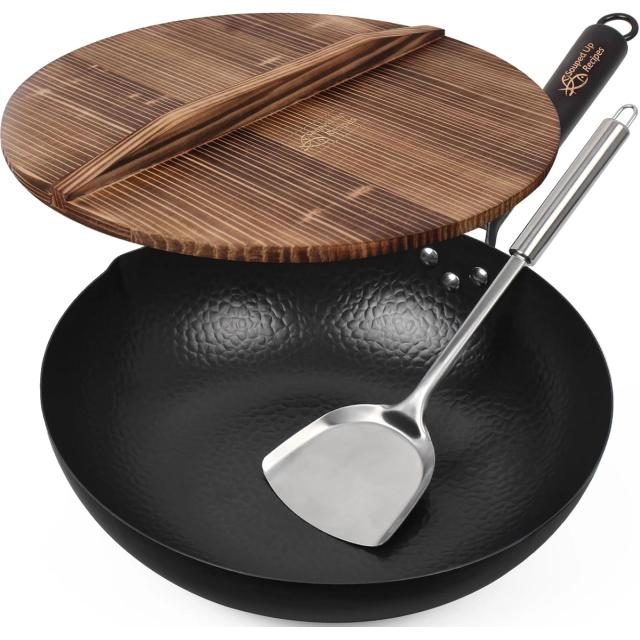
Equipment
As an Amazon Associate I earn from qualifying purchases, at no extra cost to you.
Instructions
- 1
Soak the noodles
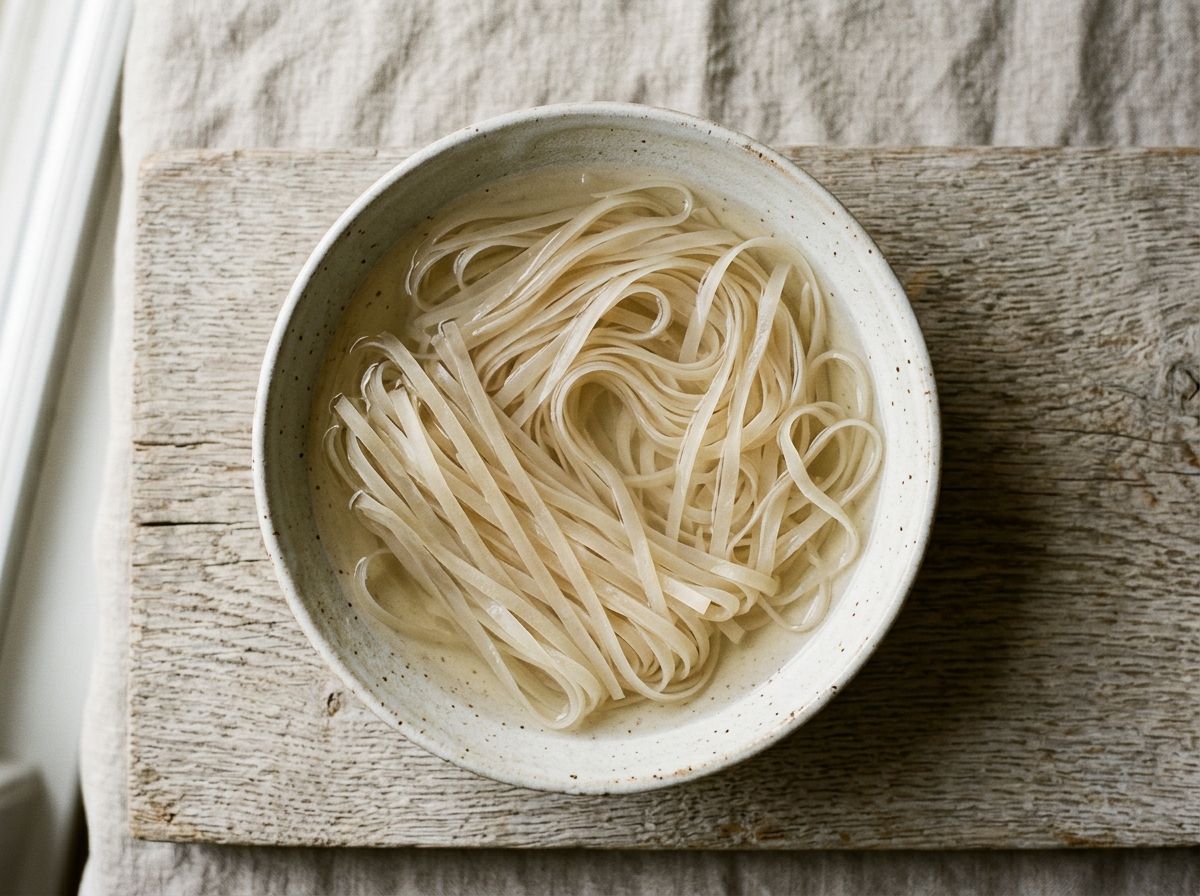
Put the rice noodles in a large bowl and cover them with hot tap water. Soak for 20 to 30 minutes, until they bend easily but still feel firm in the middle. Do not boil them. Drain, rinse under cold water to wash off the loose starch, and toss with a teaspoon of the oil.
- 2
Press the tofu
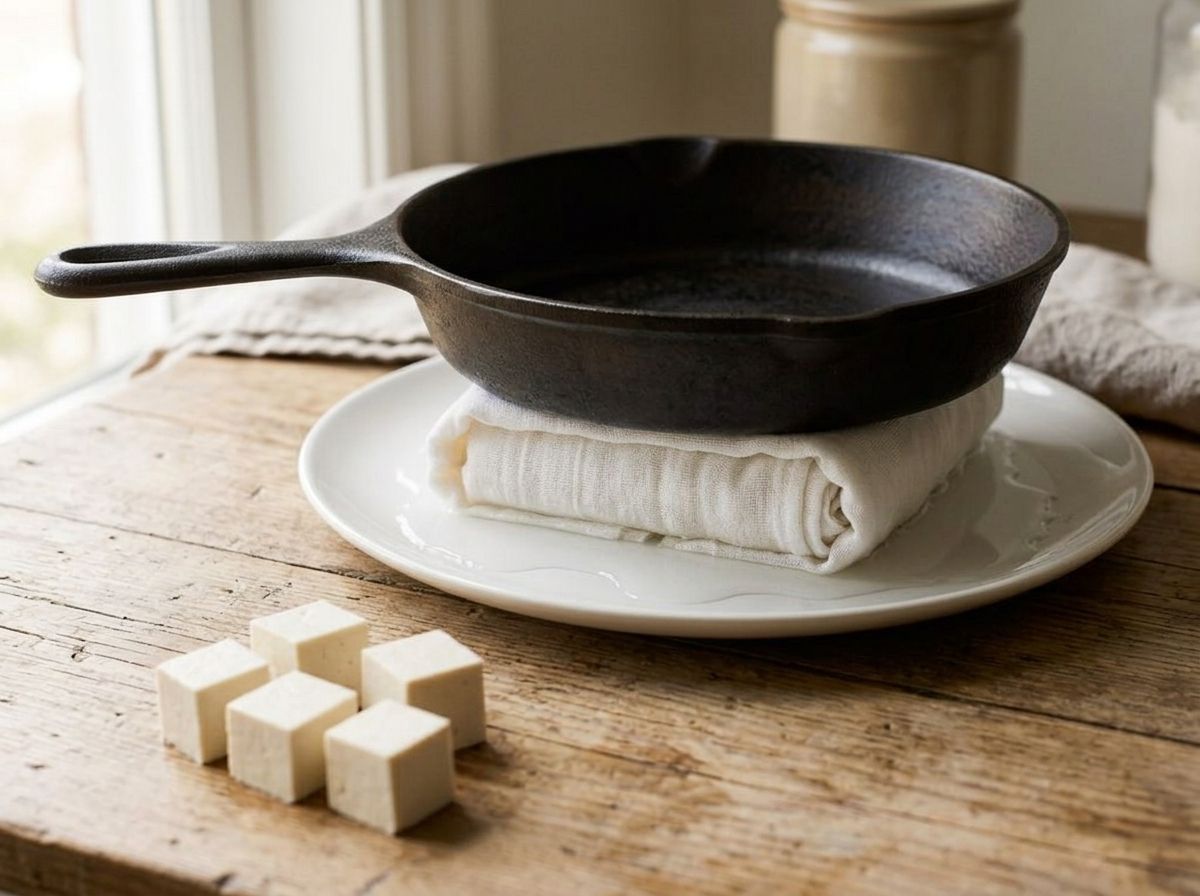
While the noodles soak, wrap the block in a clean towel and press it under something heavy for 15 minutes. Cut into 3/4-inch cubes and pat the cut faces dry.
- 3
Mix the sauce
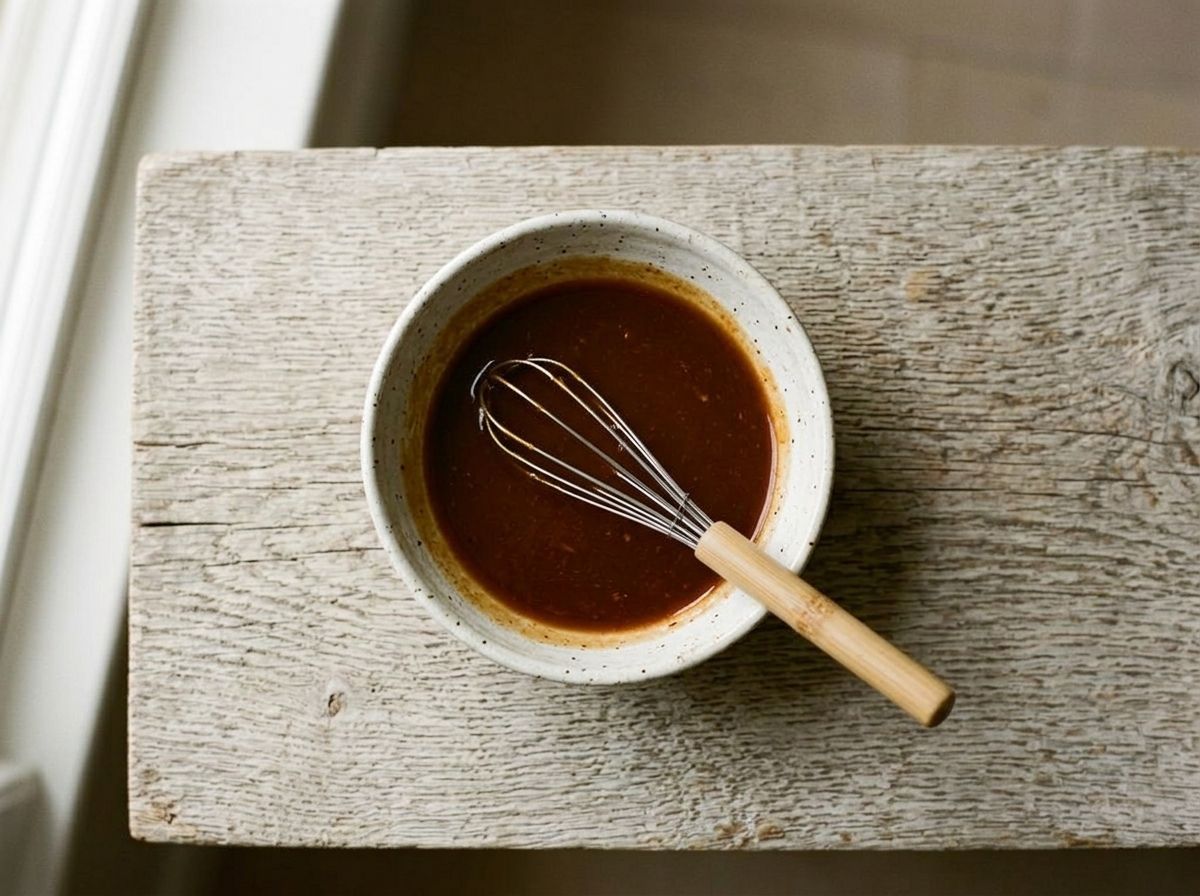
Whisk the tamarind paste, palm sugar, soy sauce, and water in a small bowl until the sugar dissolves. Taste it. It should read as equally sour, sweet, and salty. If it makes you wince, add sugar a teaspoon at a time.
- 4
Fry the tofu
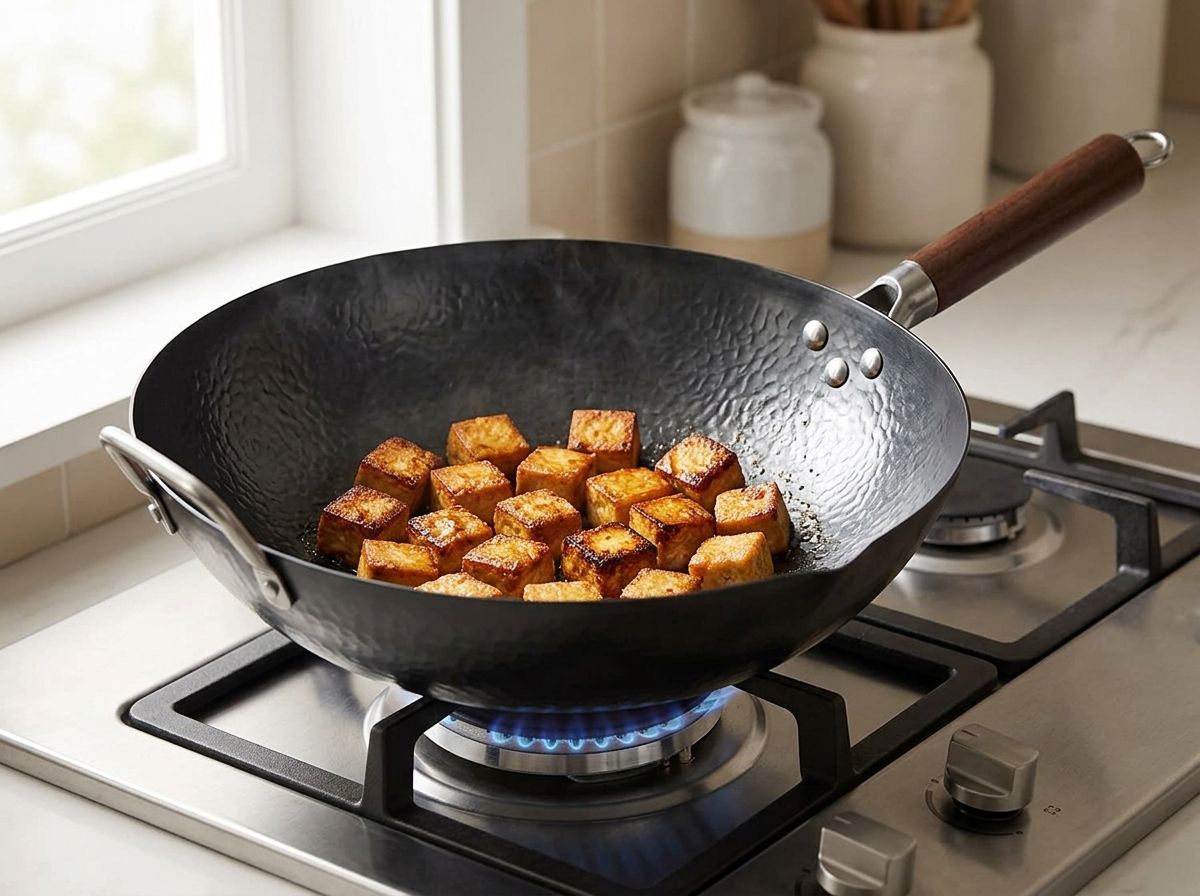
Heat 2 tablespoons of oil in a large skillet or wok over medium-high heat. Add the tofu in a single layer and leave it completely alone for 3 to 4 minutes, until a crust forms and the cubes release from the pan on their own. Turn and brown the other sides, then remove and set aside.
- 5
Cook the vegetables
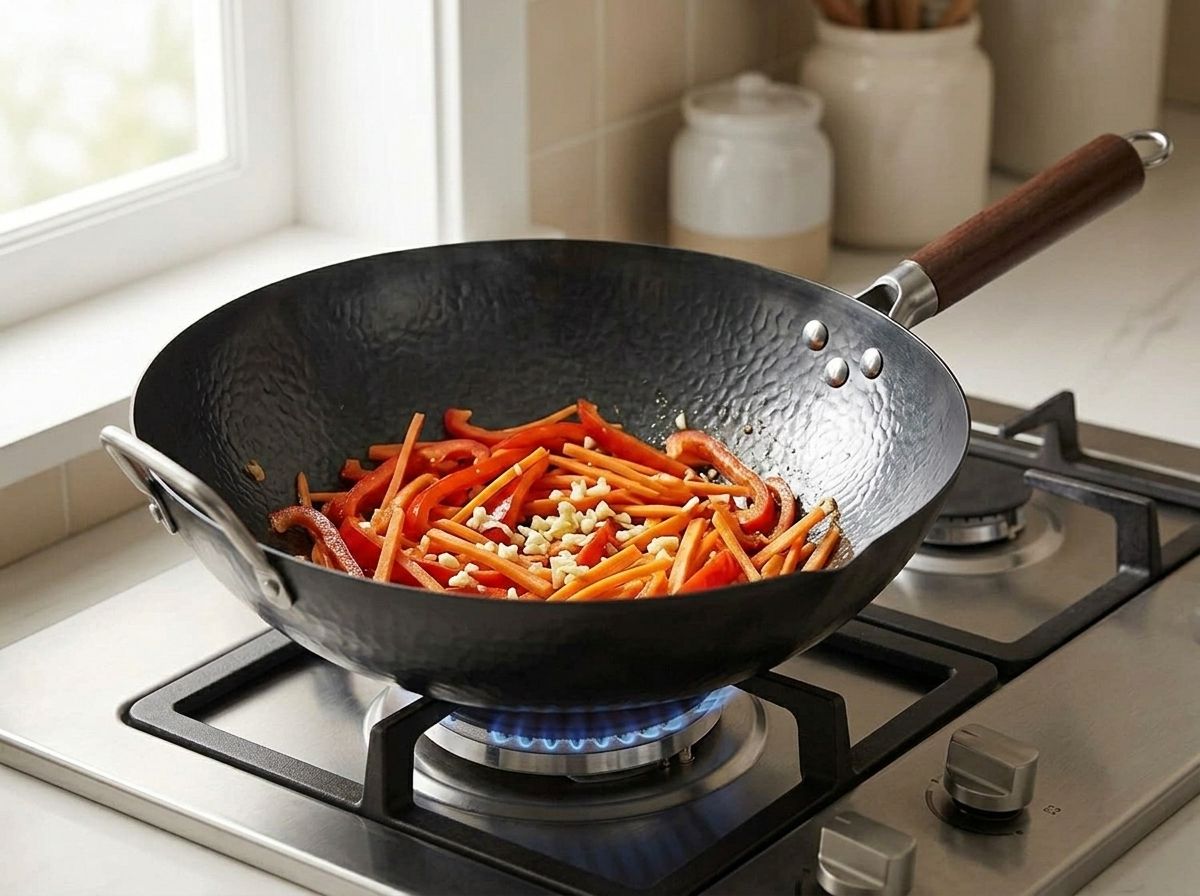
Add the remaining tablespoon of oil, then the garlic, bell pepper, carrot, and preserved radish if using. Stir-fry for about 2 minutes, until the vegetables are tender-crisp.
- 6
Add the noodles and sauce
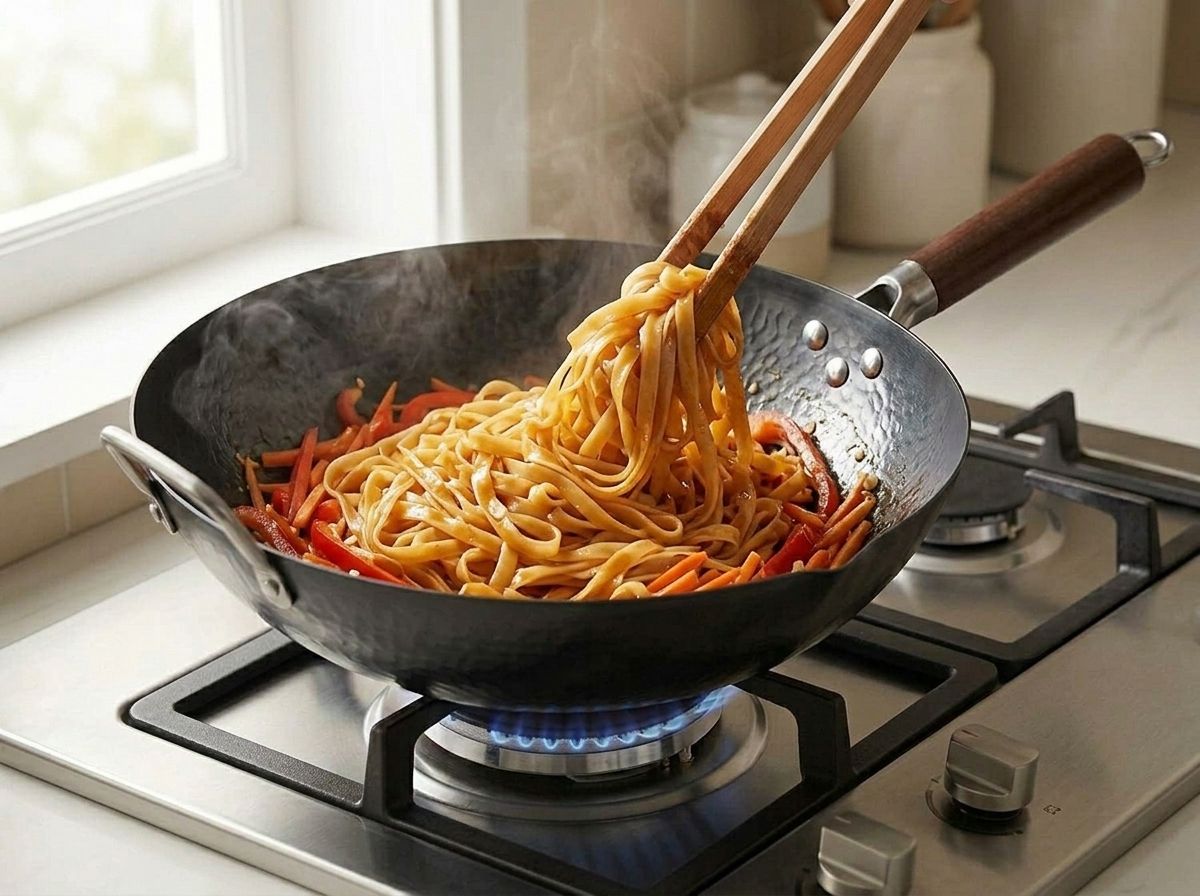
Add the drained noodles and pour the sauce over them. Toss constantly for 2 to 3 minutes, until the noodles have drunk up the sauce and turned glossy and orange-brown. If they still feel firm, add a splash of water and keep tossing.
- 7
Toss it all together
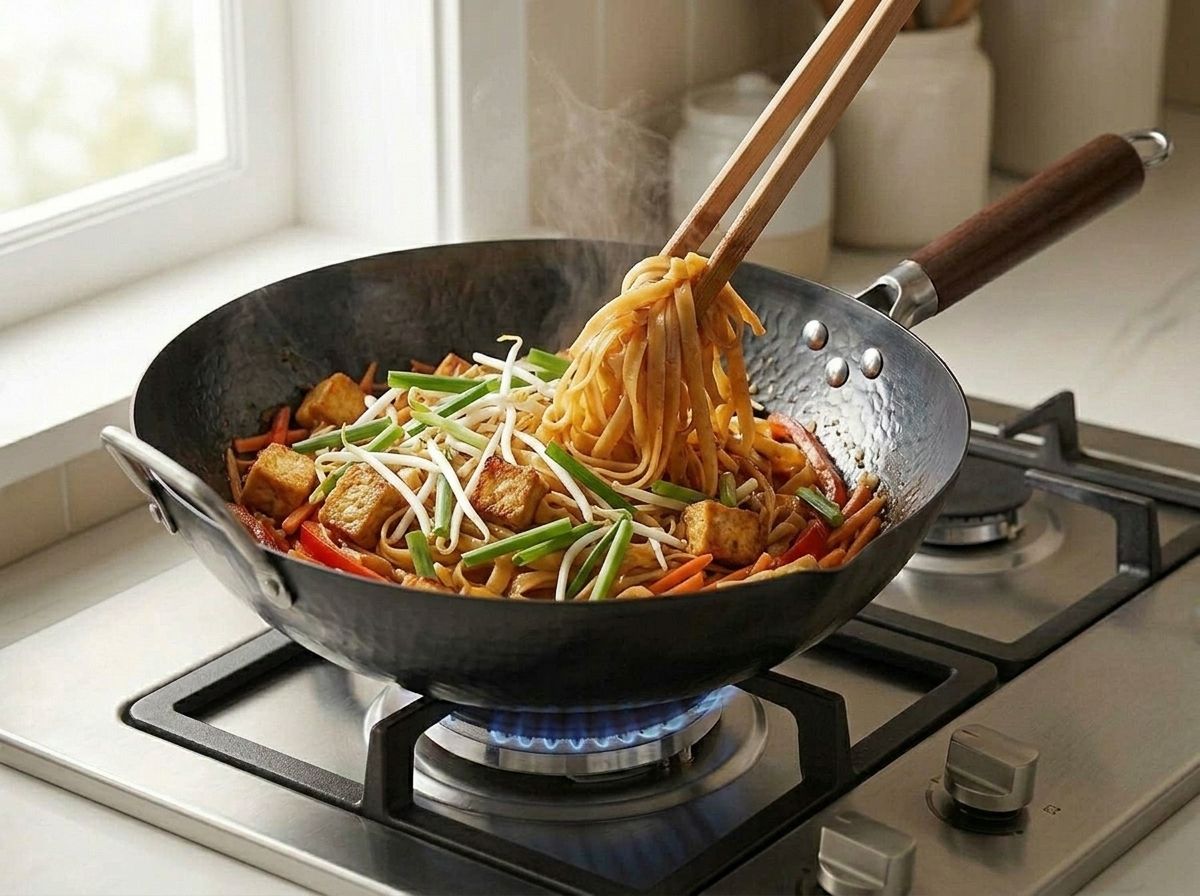
Return the tofu to the pan with half the bean sprouts and the green onions. Toss for 30 seconds, just long enough to heat through while the sprouts keep their snap.
- 8
Serve with lime wedges
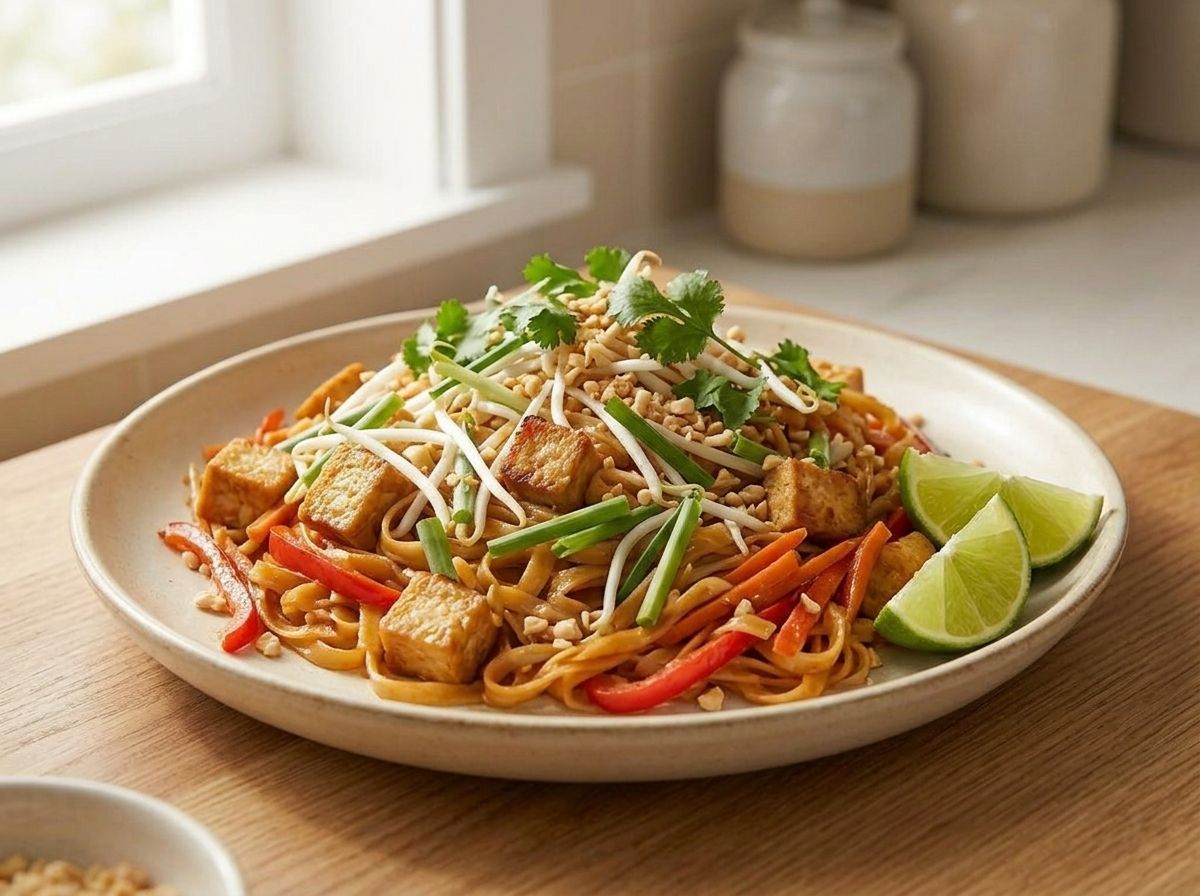
Divide between plates and top with the crushed peanuts, the remaining raw bean sprouts, and cilantro. Put the lime wedges on the table to squeeze over at the last moment.
Notes
Substitute tamari for soy sauce to make it gluten-free.
Tamarind concentrate is roughly three times stronger than tamarind paste. If yours is thick and almost black, start with 1 tablespoon and taste before adding more.
Preserved sweet radish and garlic chives are both optional. Neither is needed for a good plate of noodles, but both are worth picking up if you have an Asian grocer nearby.
Add extra chili, or swap in snap peas, broccoli, or mushrooms for the pepper and carrot.
Leftovers keep for up to 3 days. Reheat in a hot pan with a splash of water.
Nutrition Facts
4 servings · 350 g per serving
- Calories
- 548 kcal
% Daily Value*
- Total Fat
- 19.8 g25%
- Saturated Fat
- 2.9 g14%
- Sodium
- 634 mg28%
- Total Carbohydrate
- 78.5 g29%
- Dietary Fiber
- 6.3 g23%
- Sugars
- 19 g—
- Protein
- 16.9 g34%
Recipe from veggierecipes.blog
When it goes wrong
Troubleshooting
The noodles turned to mush
They were boiled instead of soaked. Rice noodles finish cooking in the pan, so they have to leave the water still firm in the middle. Soak them in hot tap water for 20 to 30 minutes and stop while they still offer some resistance. If the packet told you to boil them for eight minutes, the packet was answering a different question.
The noodles came out of the colander as one solid lump
Drained rice noodles glue themselves together within a couple of minutes. Rinse them under cold water to wash off the loose starch, toss them with a teaspoon of oil, and get them into the pan promptly. If they have already set into a block, run warm water over them and pull them apart with your fingers before they go anywhere near the heat.
The tofu stuck to the pan and fell apart
Three causes, usually all at once: the tofu was still wet, the pan was not hot enough, and it got moved too early. Dry the cubes, wait until the oil shimmers, then leave them completely alone for three or four minutes. Tofu releases itself once a crust forms. If you have to pry it loose, it was not ready.
It tastes sharp and sour and somehow flat
Not enough sugar. Tamarind is aggressive, and sweetness is what makes it read as balanced rather than merely sour. Taste the sauce in the bowl before it goes near the pan. It should make you want a second spoonful, not make you wince. Add sugar a teaspoon at a time until it does.
It looks dark brown and tastes like a generic soy noodle stir-fry
Too much soy sauce. Pad Thai is not a soy-driven dish. Its color comes from tamarind and its salt is meant to sit in the background, so the finished plate should be orange-brown rather than mahogany. Keep the soy to two tablespoons and let the tamarind lead.
Everything steamed and nothing browned
The pan was crowded. A skillet holding tofu, vegetables, and noodles all at once drops below frying temperature, and the food sits and stews in its own liquid. Fry the tofu first and take it out. If you are doubling the recipe, cook it in two batches. Pad Thai is a fast dish and it punishes a full pan.
Before you serve
Serving & Storage
Pad Thai arrives at a Thai table deliberately unfinished. Street stalls send it out slightly under-seasoned alongside a caddy of condiments called khrueang phrung, and the final round of seasoning belongs to whoever is eating.
Set out four things and let people build their own plate: dried chili flakes for heat, sugar for sweetness, rice vinegar with sliced chilies for sharpness, and lime wedges. Add a small pile of raw bean sprouts and garlic chives on the side. Anyone who wants their noodles hotter or sourer will take them there themselves, which works better than trying to please the whole table from the pan.
Making it ahead
The sauce is the part worth batching. Whisked together it keeps in a jar in the fridge for a week, and with it ready the whole dish becomes a fifteen minute job. Tofu can be pressed and cubed a day ahead and the vegetables sliced in the morning. Leave the noodles until you are actually ready to cook.
Storing leftovers
Leftovers keep in an airtight container for up to three days. Reheat them in a hot pan with a tablespoon of water rather than in the microwave, which dries the noodles at the edges and leaves them cold in the middle. Freezing does not work. Rice noodles come out of the freezer grainy and they never quite recover.
Still wondering
Frequently Asked Questions
What can I substitute for tamarind paste if I don't have it?
Nothing matches it exactly, but lime juice with an extra teaspoon of palm sugar gets you a sour-sweet sauce in the right territory. Note that tamarind concentrate is not a substitute so much as a stronger version: it is around three times as potent, so use a third of the amount.
How do I make my tofu extra crispy?
Press the block for 15 minutes, pat the cut faces dry, and give it room in a hot pan. Then leave it alone for three or four minutes. Tofu releases from the pan by itself once a crust forms. Tossing the cubes in a teaspoon of cornstarch first makes the crust even sturdier.
More Vegan Noodle & Stir Fry Favorites
Made this?