
Traditional Papadzules Recipe
Published · Updated
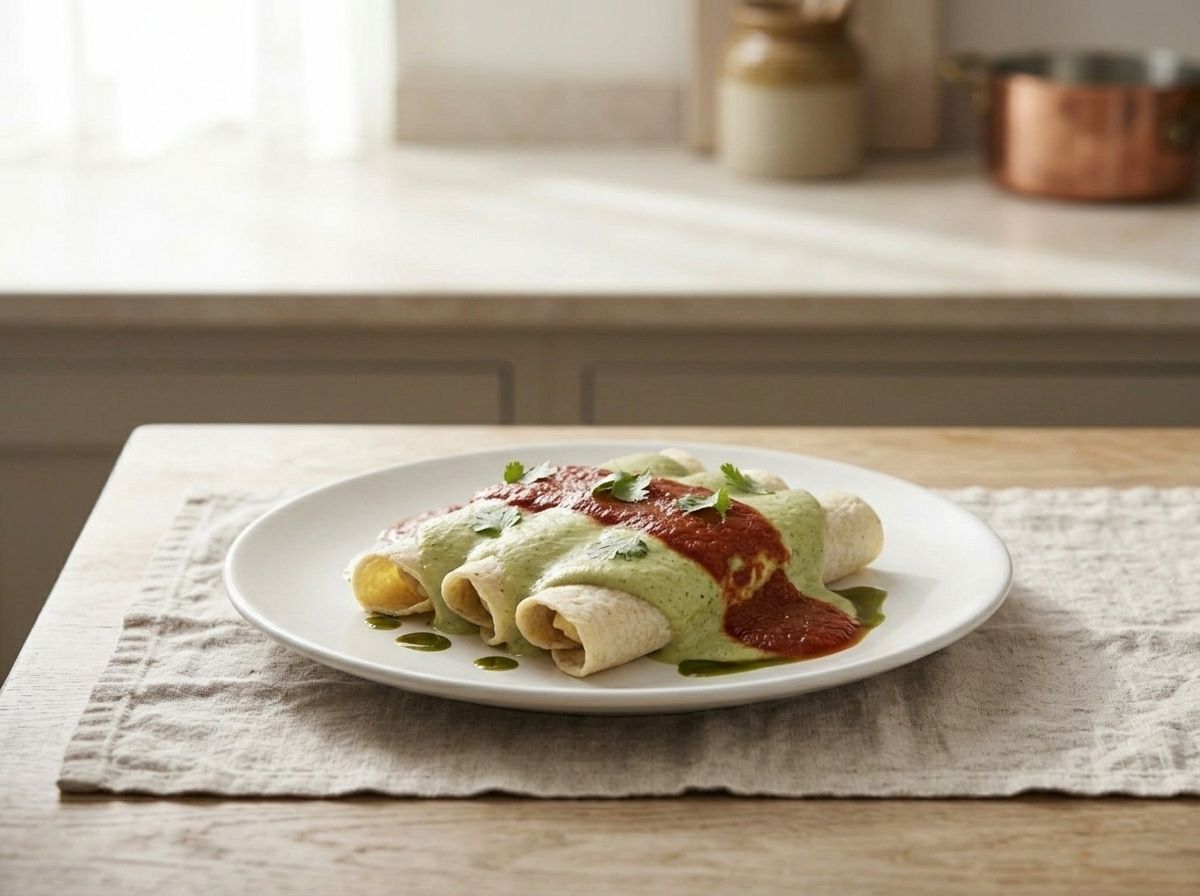
Creamy pumpkin seed sauce over corn tortillas filled with chopped eggs. Papadzules are a true Yucatecan classic and so easy to make at home!
Jump To Recipe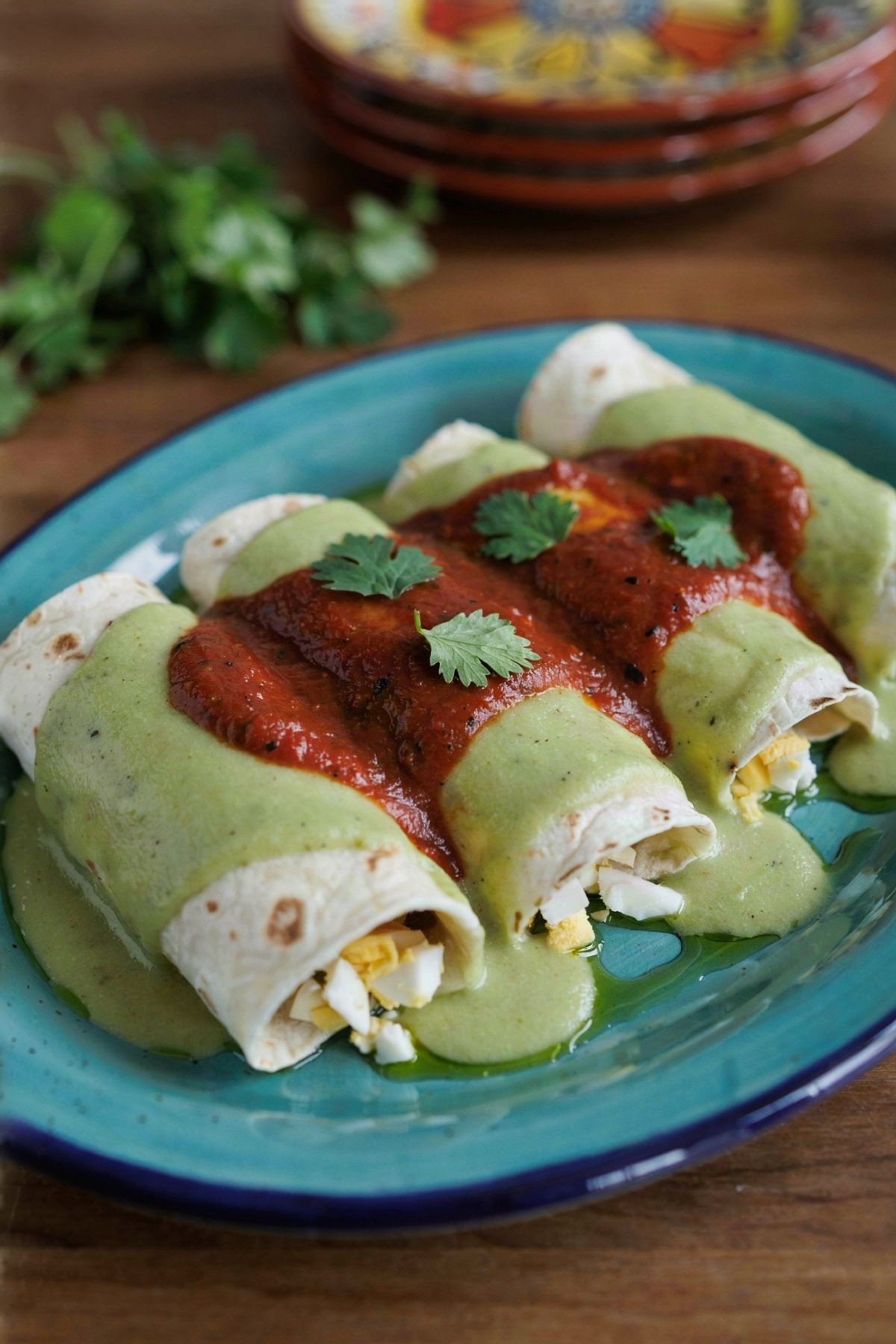
Why I Love Papadzules
There’s something special about classic recipes that have stood the test of time, and papadzules are just that. When I want to explore bold flavors with fairly simple ingredients, this dish delivers every time. The combination of eggs and a rich, nutty pumpkin seed sauce is unique and surprisingly filling.
What makes papadzules a go-to for me is how versatile they are. You can serve them for breakfast, lunch, or even dinner, and they always stand out from the crowd of typical Mexican dishes. Here’s what sets them apart for me:
- The pumpkin seed sauce isn’t just flavorful. It’s packed with healthy fats and a satisfying texture.
- Tortillas are easy to keep on hand and work great here; they’re the foundation of so many Mexican favorites.
- It’s naturally vegetarian and surprisingly wholesome, something I really appreciate when I want a hearty meal without being heavy.
If you’re looking for something different that’s still rooted in tradition, you have to try papadzules. They’re simple, honest, and a perfect way to bring a bit of Yucatan culture to your kitchen.
The story
What Does “Papadzules” Mean?
Papadzules are among the oldest dishes in Yucatecan cooking, and the name is Mayan rather than Spanish. What it actually translates to is still argued over.
The version you will hear most often is “food of the lords”, recorded by the cookery writer Diana Kennedy, along with the story that the dish was served to the Spanish when they arrived. It is a good story, though the evidence for it is thin.
The more literal reading comes straight from the Mayan: papak’, to smear or anoint, and sul, to soak or drench. Smeared and drenched. That describes the method rather than the audience, and once you have made them it is obviously the better name. Every tortilla is dipped bodily into the pumpkin seed sauce before it is filled, then drenched again on the plate.
That dipping is also what separates papadzules from enchiladas, which they otherwise resemble. An enchilada is filled and rolled, then sauced. A papadzule is coated first, so the sauce is inside the roll as well as over it. The sauce itself predates the Spanish arrival entirely: ground squash seed loosened with a herb broth, with no dairy, no tomato in the sauce, and no chilli heat at all in the traditional version.
What to buy
Ingredient Notes
Pumpkin seeds (pepitas)
Buy them raw, hulled and unsalted, and toast them yourself. Pre-roasted salted seeds will not give you the same sauce and you lose control of the seasoning. In Yucatán the traditional seed is pepita gruesa, from a native squash, which is fatter and more strongly flavored than the slim green seeds sold everywhere else. Ordinary pepitas work perfectly well. Toast them in a dry pan until they puff and pop, then stop. Once they take on color, the sauce turns bitter.
Epazote
This is the herb that makes the sauce taste Yucatecan rather than merely nutty. It is pungent and hard to pin down, somewhere between lemon, mint and camphor, and here it is used to flavor the broth the seeds are blended with. Look for it fresh at a Latin grocer, or dried in the spice aisle, where it keeps for months. If you can find neither, Mexican oregano is the closest easy substitute. It is a different flavor, but it pulls in the same herbal, citrusy direction.
Corn tortillas
Use 100% corn, both because it is traditional and because it is what keeps the dish gluten free. Freshness matters more here than in most recipes, because every tortilla gets dipped in sauce and rolled. Warm them until they are soft and flexible before you start, and work with them hot. A cold or stale tortilla splits down the middle the moment you roll it.
Habanero
Habaneros are fiercely hot, but they are also floral and fruity, with notes of mandarin and apricot that no other chilli gives you. In the chiltomate it earns its place as much for that perfume as for the heat. Traditional papadzules are not a spicy dish, so char it whole, and if you want the aroma without the burn, discard the seeds and the white membrane, or leave it out altogether.
Hard-boiled eggs
Roughly chopped, this is the classic filling and the reason the dish is sometimes sold as Mayan egg enchiladas. Boil them just to set, around nine minutes, so the yolks stay tender rather than chalky. Chop them while they are still slightly warm and season them, because the filling is otherwise plain against a rich sauce.
Traditional Papadzules
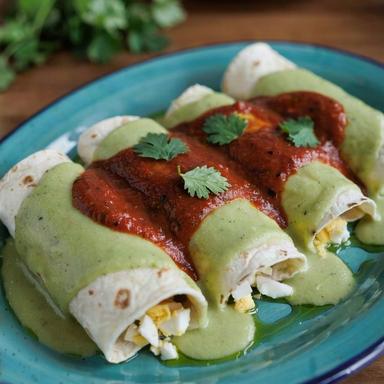
Soft corn tortillas filled with chopped eggs, topped with a creamy pumpkin seed sauce, a Yucatan classic.
Ingredients
Equipment
As an Amazon Associate I earn from qualifying purchases, at no extra cost to you.
Instructions
- 1
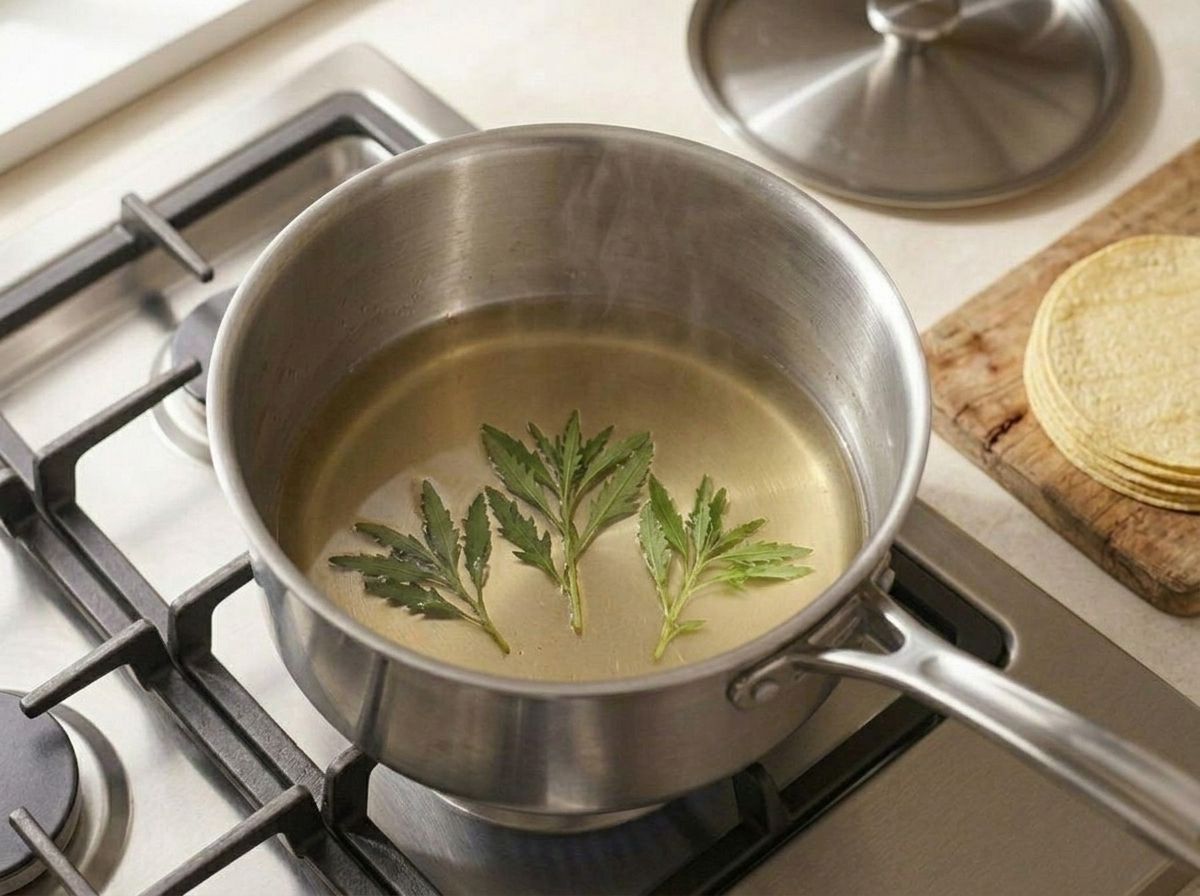
Make the epazote broth
Bring the vegetable broth to a gentle simmer with the epazote. Simmer for 10 minutes, then take it off the heat and let it steep while you toast the seeds. This broth is what gives the sauce its traditional flavor.
- 2
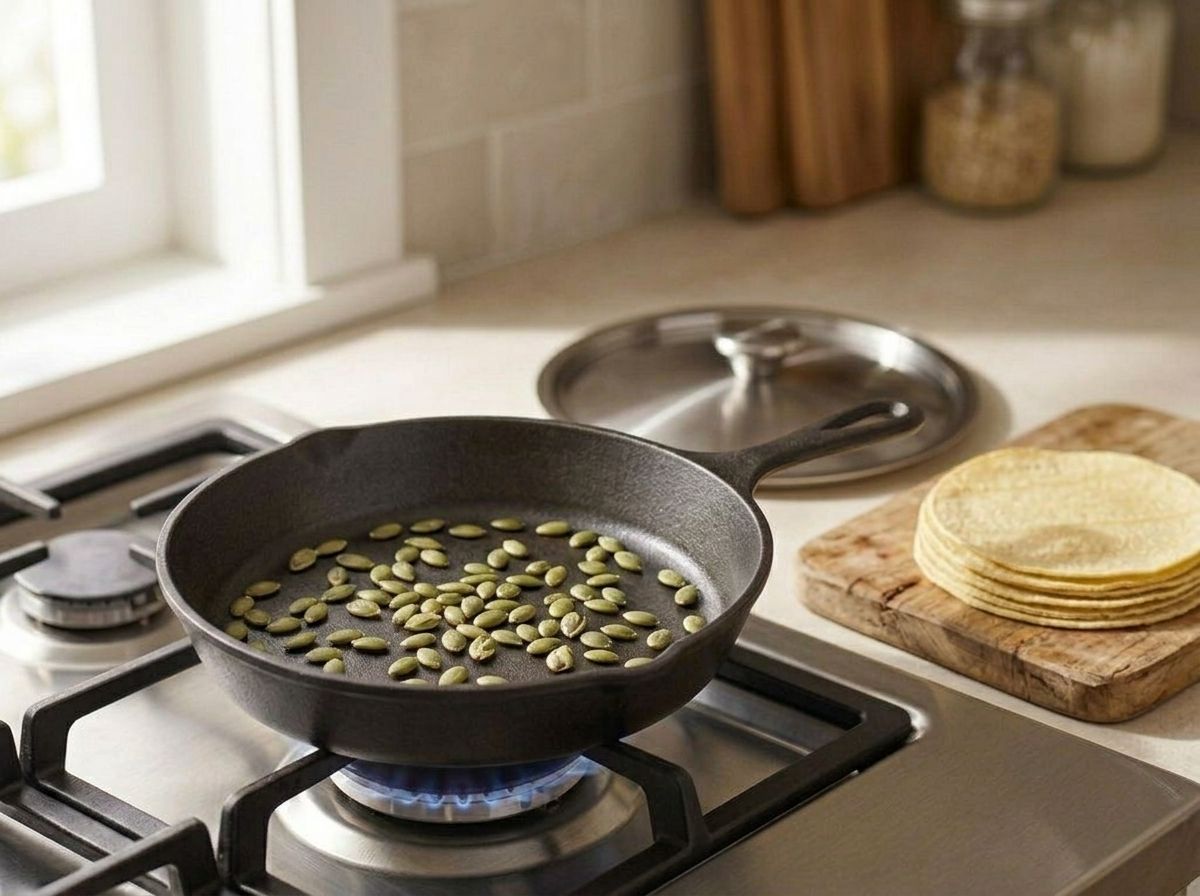
Toast the pepitas
In a dry skillet over medium heat, toast the pumpkin seeds, stirring constantly, until they puff and begin to pop, about 5 minutes. Don't let them brown or the sauce turns bitter. Let them cool slightly.
- 3
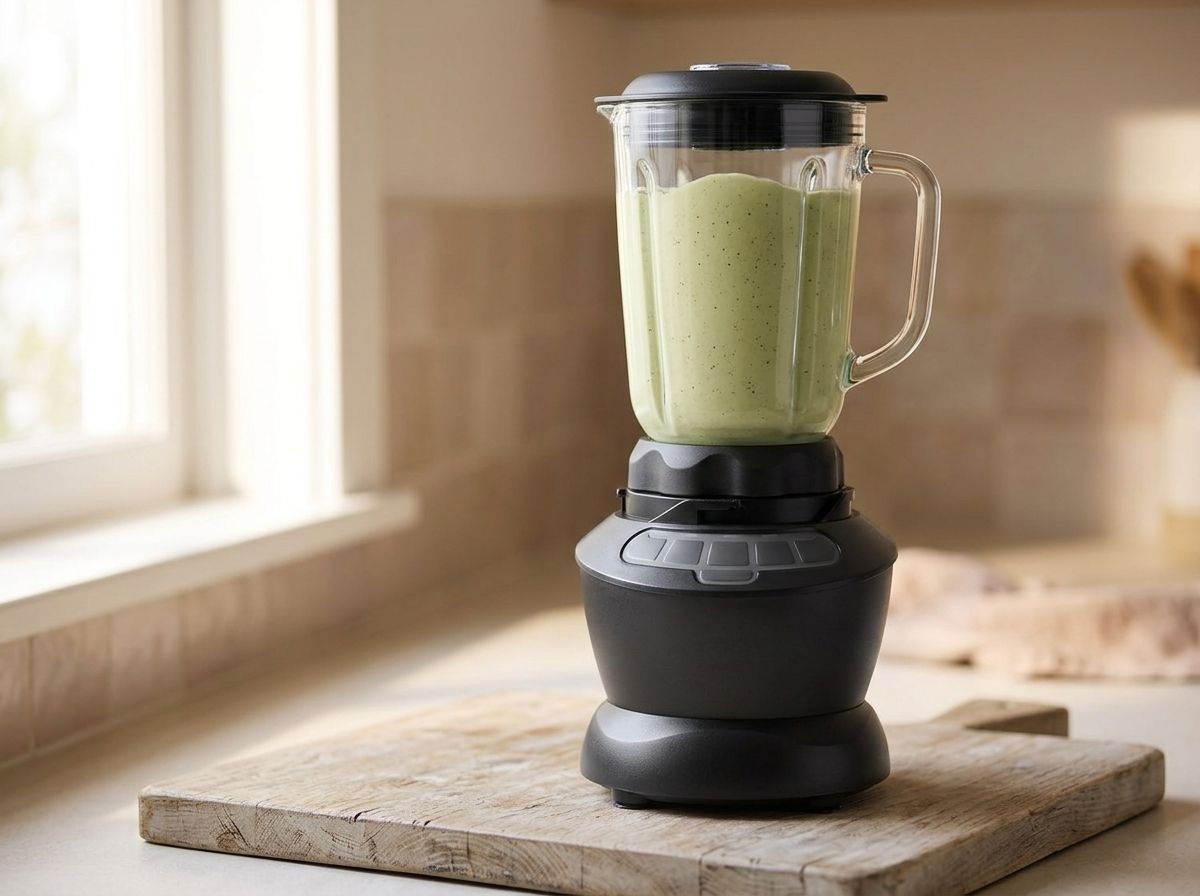
Blend the sauce
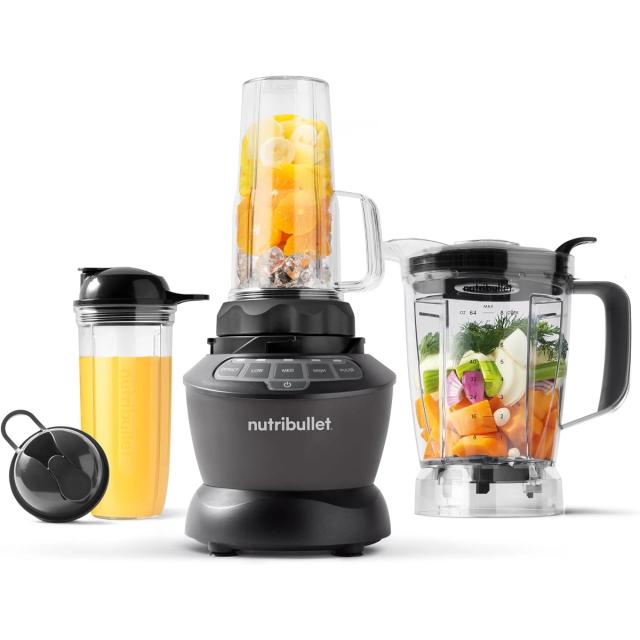
Lift out the epazote sprigs. Combine the toasted pumpkin seeds, garlic, cumin and the warm broth in a blender and blend until completely smooth, 1 to 2 minutes. Season with salt.
- 4
Make the chiltomate
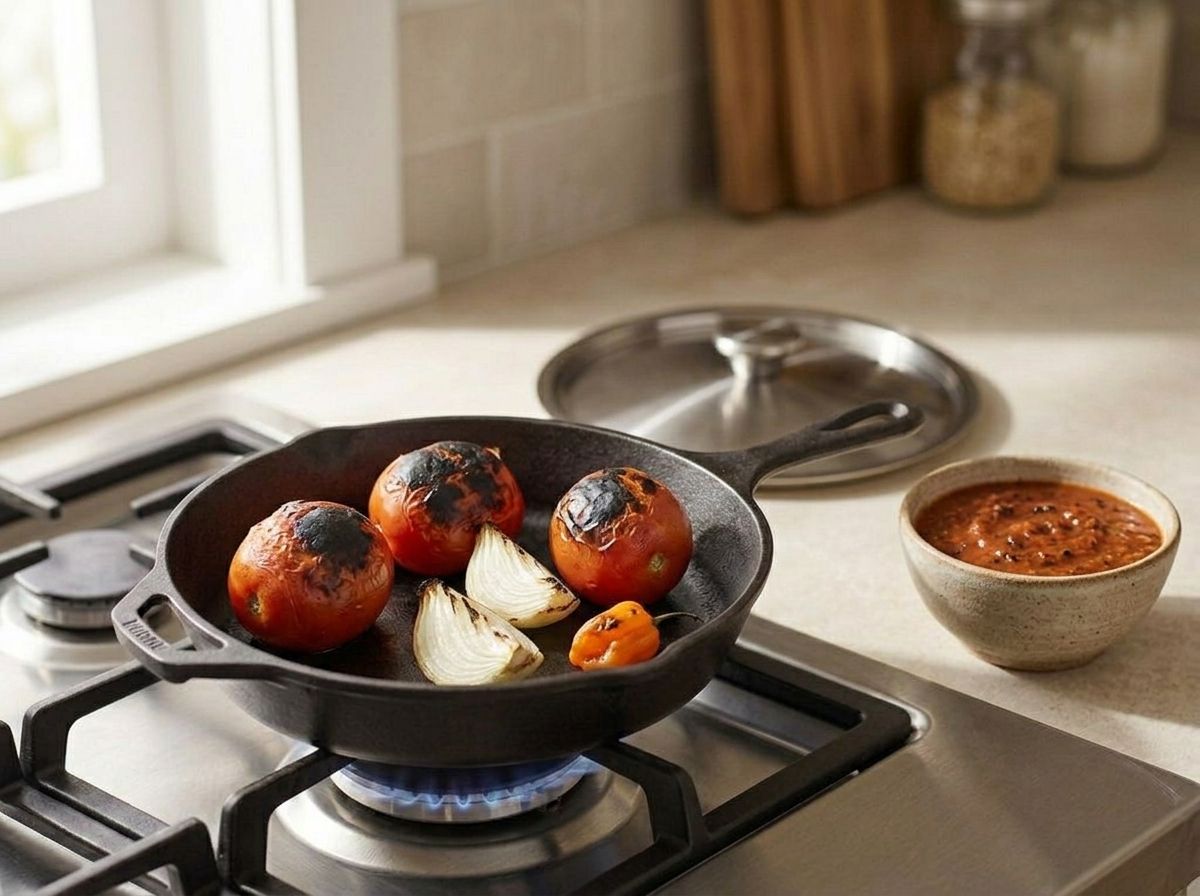
Char the tomatoes, onion and habanero in a dry skillet over high heat until blackened in spots and softened, 8 to 10 minutes, turning often. Blend to a loose sauce with a pinch of salt. Leave the habanero out for a mild version.
- 5
Warm the sauce
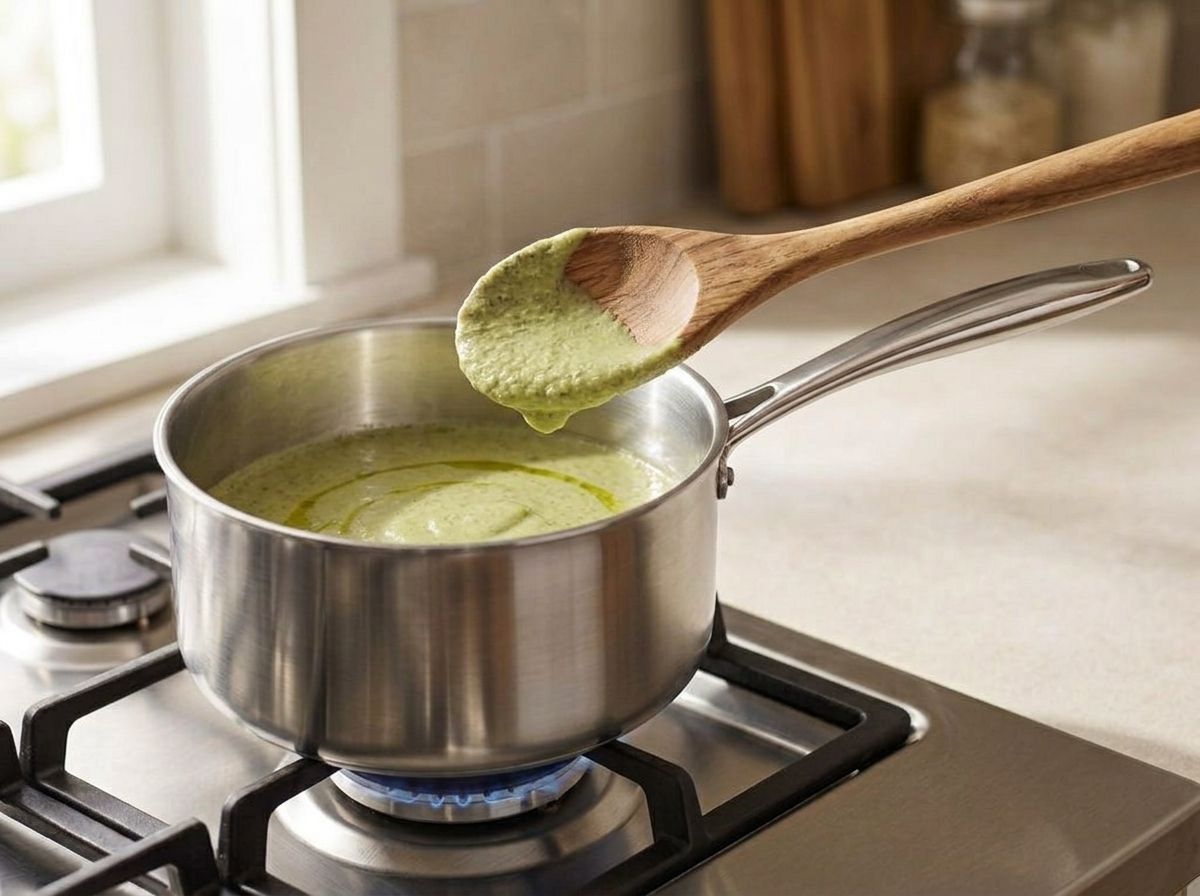
Pour the pumpkin seed sauce into a saucepan and warm it over low heat, stirring, until it thickens enough to coat the back of a spoon. Keep the heat low, as boiling makes the sauce split.
- 6
Warm the tortillas
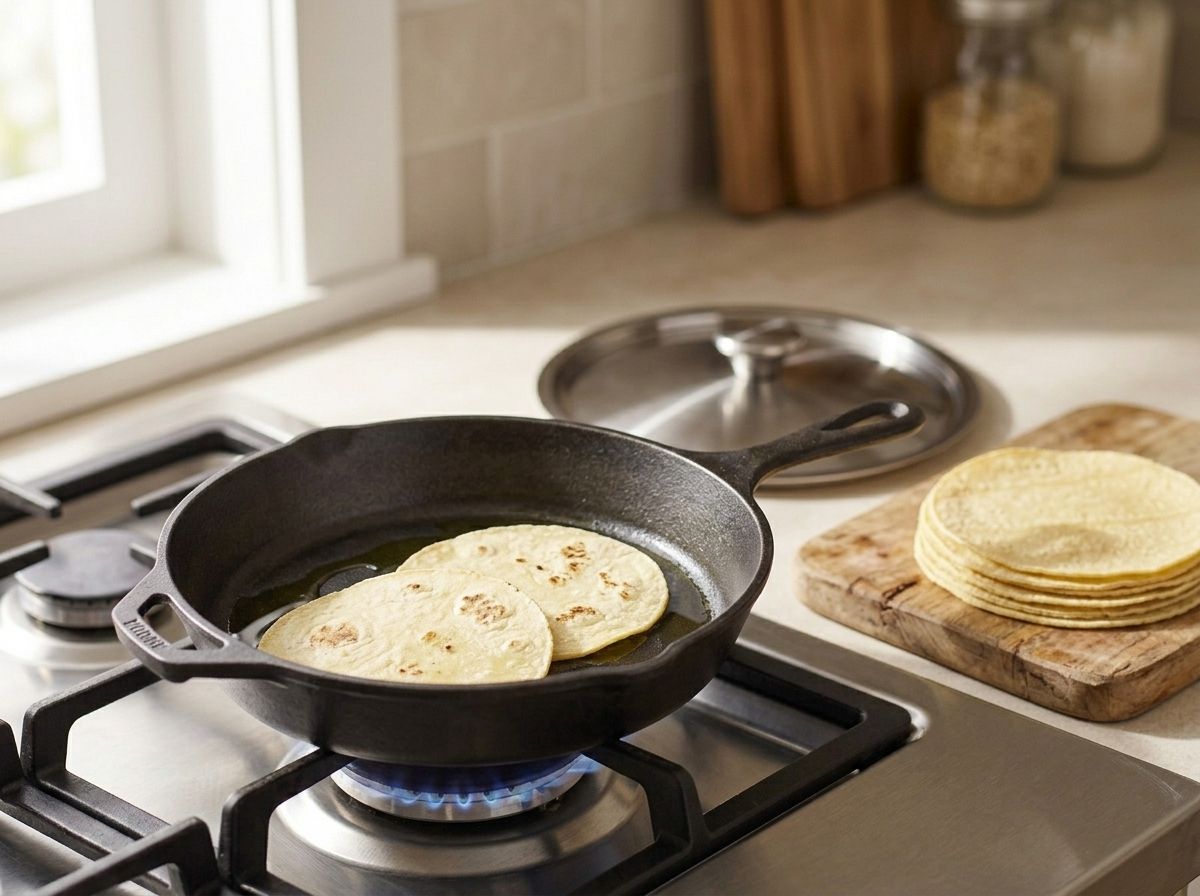
Heat the olive oil in a skillet and warm the corn tortillas briefly on both sides, until soft and pliable enough to roll without cracking.
- 7
Dip, fill and roll
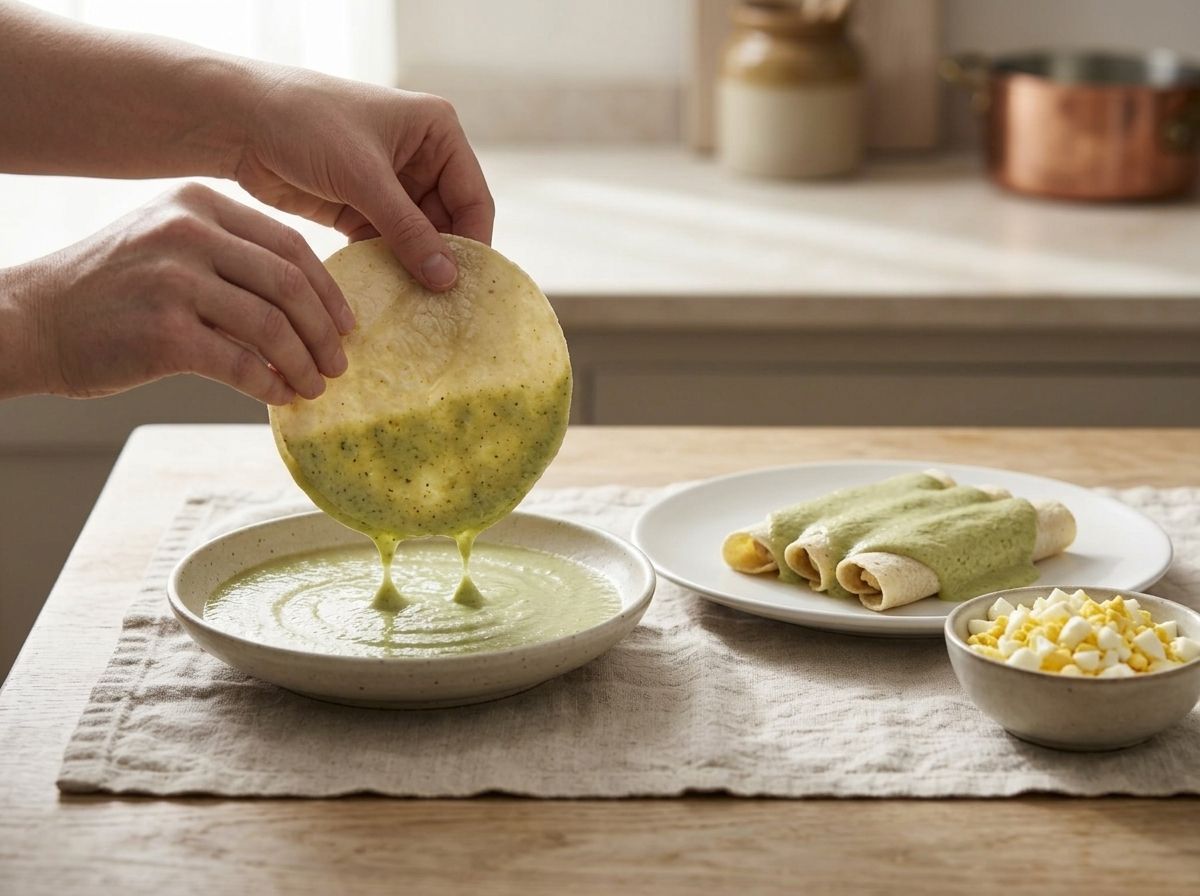
Dip a warm tortilla into the pumpkin seed sauce so it is coated all over, lay it flat, spoon chopped egg down the middle and roll it up. Place seam-side down on the plate and repeat. This dipping step is what makes them papadzules rather than enchiladas.
- 8
Sauce and serve
Spoon the remaining pumpkin seed sauce over the rolls, then the chiltomate over the top. Scatter with cilantro if you like and serve straight away, while the sauce is still warm.
Notes
Use 100% corn tortillas to keep the recipe gluten free.
Fresh epazote is traditional and worth seeking out at a Latin grocer. Dried works too; at a push, Mexican oregano gives a different but pleasant herbal note.
Keep the pumpkin seed sauce below a simmer. If it gets too hot it splits and the oil separates out.
Traditional papadzules are not spicy. The habanero in the chiltomate is there for aroma as much as heat, and can be left out entirely.
For a vegan version, replace the eggs with a firm tofu scramble.
Nutrition Facts
4 servings (3 papadzules each) · 533 g per serving
- Calories
- 515 kcal
% Daily Value*
- Total Fat
- 27.6 g35%
- Saturated Fat
- 5.7 g29%
- Sodium
- 1038 mg45%
- Total Carbohydrate
- 48.9 g18%
- Dietary Fiber
- 8.6 g31%
- Sugars
- 8.2 g—
- Protein
- 22.9 g46%
Recipe from veggierecipes.blog
When it goes wrong
Troubleshooting
The sauce split and there is green oil on top
This is normal, and traditionally it is the whole point. Ground pepitas release their own oil, and old Yucatecan recipes deliberately squeeze it out of the paste and reserve it to drizzle over the finished plate. If you would rather have a smooth sauce, whisk in a splash of warm broth off the heat and it will come back together. If it split because the pan got too hot, keep it below a simmer from there on.
The sauce tastes bitter
The seeds went too far in the pan. Pepitas are ready when they puff and start popping, which happens before they take on much color. Any browning past that point turns bitter, and there is no rescuing it afterwards, so it is worth toasting a fresh batch.
The sauce is too thick, or thickens as it stands
Ground seed keeps absorbing liquid, so a sauce that was right in the blender will be stiff ten minutes later. Loosen it with warm broth, a spoonful at a time, until it coats the back of a spoon again. Do it off the heat, and resist thinning it with water, which flattens the flavor.
The tortillas crack when I roll them
They are too cold or too dry. Warm them properly first, in oil or on a dry comal, until they flex without resistance, and keep the stack wrapped in a clean tea towel while you work. Dip and roll one at a time rather than lining them all up.
It tastes flat
Almost always salt, or a missing epazote. The sauce is mild and rich, and it needs more salt than you would expect to stop it tasting like plain ground seed. Season it in the blender, taste it, then season again once it has warmed through.
Before you serve
Serving & Storage
Papadzules are rich, and almost everything traditionally served alongside them is there to cut through that. Pickled red onions are the classic, and worth making the day before. Refried black beans, sliced avocado and a squeeze of lime turn it into a full plate. In Yucatán this is as likely to be breakfast or lunch as it is dinner.
To drink, an agua fresca does more for the dish than anything heavier. Hibiscus or lime both work, and the acidity does the same job as the pickled onions.
Making them ahead
The two sauces are the work, and both keep. The chiltomate is happy in the fridge for three days and arguably improves. The pumpkin seed sauce can be made a day ahead, but it thickens considerably as it sits, so reheat it gently and loosen it with warm broth until it coats a spoon again. Do not let it boil.
Storing leftovers
Assembled papadzules do not keep well, because the dipped tortillas soften into the sauce overnight. Roll only what you are going to eat and store the components separately. If you do end up with leftovers, they are fine for a day in the fridge, and come back better in a low oven than in a microwave.
Still wondering
Frequently Asked Questions
What are papadzules?
Papadzules are a traditional Yucatecan dish of corn tortillas dipped in a creamy pumpkin seed sauce, filled with chopped hard-boiled eggs and rolled, then finished with a charred tomato sauce called chiltomate. The dipping is what separates them from enchiladas, which are filled first and sauced afterwards.
Can papadzules be made vegan?
Traditional papadzules are not vegan, because the filling is hard-boiled egg. Everything else in the dish already is, so swapping the eggs for a seasoned firm tofu scramble gives you a vegan version without changing either sauce.
What do papadzules taste like?
Rich, savory and nutty from the ground pumpkin seed, with a herbal, faintly citrusy note from the epazote simmered into the broth. The dish is mild rather than hot: any heat comes from the chiltomate spooned over the top, and traditional papadzules are not a spicy dish.
More Vegetarian Mexican Favorites
Made this?