
Vegan Broccoli Casserole Recipe
Published · Updated
The block of Velveeta in the classic was never really cheese, and the trick it was invented to perform in 1918 is the same one a vegan sauce has to pull off.
Jump To Recipe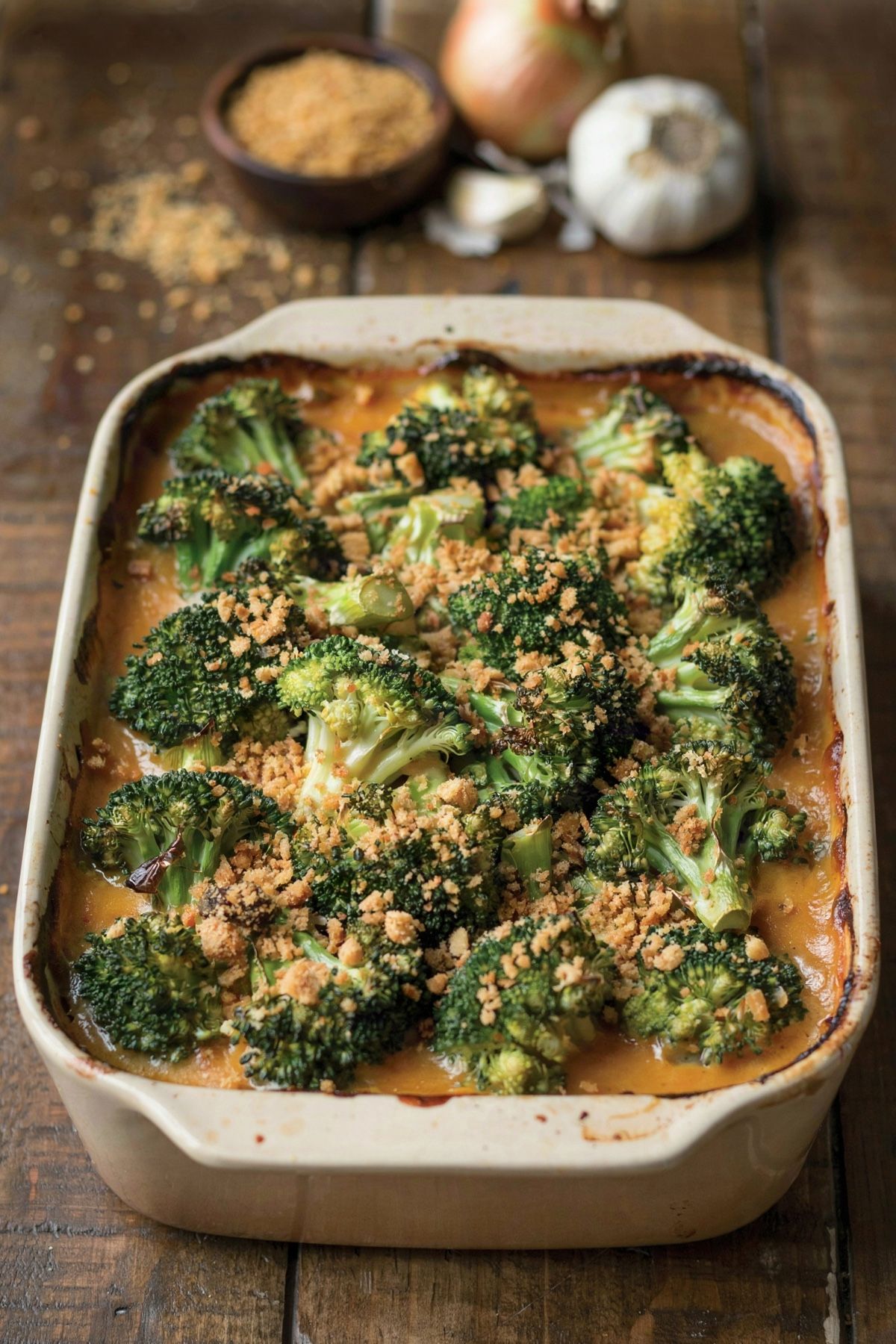
The Year I Brought A Puddle To Thanksgiving
I made this for a friend’s table the first year I was asked to bring something, and I made it the way every recipe told me to. Frozen broccoli, thawed in a colander while I did other things. Half the vegan cheese stirred through, half scattered over the top. It went in looking like a casserole and it came out looking like soup with a lid on it.
Nobody said anything, which was worse. The dish came back to me at the end of the night with a ring of pale green water around the edge and a sheet of cheese on top that had gone tight and rubbery instead of melting, and I spent the drive home working out which part I had got wrong. It turned out to be both parts, and they had the same cause: I had followed the shape of the classic recipe without understanding what the two ingredients I had replaced were actually doing.
So I read about Velveeta, which is a strange way to spend an evening. The orange block is in that recipe for a specific technical reason, and once I knew what it was, the fix for the cheese was obvious and took one line of the method. The water took longer. I tried draining harder, I tried salting the broccoli first, I tried baking it uncovered for an extra fifteen minutes, and all of that helped a little. Roasting the broccoli first fixed it completely, and it is the only version I have made since.
I still think it is the best of the casseroles on that table, and it is the one people come back to the kitchen about. It just needed me to stop copying the outline of a recipe built around two products I was not using.
The story
The Cheese In Broccoli Casserole Was Never Cheese
Broccoli casserole is one of the youngest dishes on an American Thanksgiving table, and the reason is the vegetable rather than the recipe. Broccoli is old, Roman even, but it was barely eaten in the United States before the 1920s. It arrived as a Sicilian crop carried by Sicilian immigrants, and it stayed in Italian American kitchens for a generation because everyone else regarded it as foreign.
Two brothers changed that. Andrea and Stefano D’Arrigo emigrated from Sicily in 1904 and 1911, and by 1923 they were selling produce in Boston. On a trip west in 1925 Stefano saw the growing country around what is now San Jose and planted a packet of broccoli seed he had brought from home. In 1926 he loaded a refrigerated railcar of it and sent it across the country to his brother, and eight days later the broccoli arrived in Boston in good condition, which at the time was close to unbelievable. They trademarked the crop as Andy Boy in 1927, after Stefano’s two year old son, and it became the first branded fresh vegetable in the United States. Then they did the thing nobody had done for a vegetable: they bought radio and newspaper advertising and sold it. A casserole built on broccoli cannot be much older than the 1930s, because before that there was no broccoli to build it on.
What the dish was built on instead is a pair of industrial products, and the second one is the interesting half. Every classic broccoli casserole runs on a can of condensed soup and a block of Velveeta or a jar of Cheez Whiz. The soup is the part people notice. The process cheese is the part that makes the recipe work, and it is not really cheese.
Emil Frey invented Velveeta in 1918 in Monroe, New York, and he was not trying to invent a food. He was trying to solve a waste problem: broken and misshapen wheels that could not be sold. His answer was to blend the offcuts with whey and an emulsifying salt, and the salt is the whole invention. Sodium citrate rearranges casein, the main protein in cheese, into a form that will hold fat and water together in one stable mixture even when it is hot. Ordinary cheddar cannot do that. Heat a sharp cheddar in a sauce and the protein tightens into strings while the fat leaks out, which is the grainy, oily result everyone has had once.
So the orange block in your grandmother’s recipe is not there out of laziness. It is there because the recipe was engineered around a product that was itself engineered to melt into a smooth sauce and stay there, and a good aged cheddar would genuinely make the dish worse.
Which is where a vegan version gets an advantage nobody expects. Shredded vegan cheddar has no casein in it at all, so it has nothing to break, but it also cannot melt into anything on its own: it is mostly starch and coconut or sunflower oil, and left on top of a casserole it softens into a tight rubbery skin rather than flowing. Give it a hot, starch thickened sauce to dissolve into and it disappears completely. That is why every gram of cheese in the recipe below goes into the sauce and none of it goes on top. It is the same trick Frey was doing in 1918, run with different chemistry.
One footnote worth knowing if you cook for vegetarians. A large share of classic broccoli casserole recipes call for condensed cream of chicken rather than cream of mushroom, and the two are used interchangeably in family recipes without comment. Nothing in the name of the dish warns you, so broccoli casserole is one of the likeliest things on a holiday table to fail vegetarian quietly.
What to buy
Ingredient Notes
Fresh broccoli
Fresh, and roasted before it goes anywhere near the sauce. Broccoli is about 90 percent water and that water is the entire reason this dish has a reputation for going soupy. Frozen broccoli is worse again, because the freezing ruptures the cell walls and it sheds everything it has the moment it thaws. Two pounds is two large heads or three small ones. Do not throw the stems away: peel the tough outer layer off with a vegetable peeler, cut them into coins, and roast them alongside the florets, where they turn sweet and stay firm.
Shredded vegan cheddar
All of it melts into the sauce and none of it goes on top, which is the opposite of what most recipes tell you. Vegan shreds are starch and oil with no casein, so they have nothing to seize, but they need a hot liquid to dissolve into. Scattered over a casserole they set into a rubbery sheet. Brands vary more than any other ingredient here: the ones sold as melting or shredded for cooking behave, the firmer slicing blocks do not. Violife, Follow Your Heart and Daiya cheddar shreds all dissolve cleanly in a béchamel.
Unsweetened oat milk
Oat milk has more body than almond or rice and browns properly in a roux, which makes it the closest thing on the shelf to the evaporated milk this style of sauce really wants. Read the carton rather than the front of it. Sweetened, vanilla and barista blends all turn up in the same chiller, and a vanilla oat milk in a cheese sauce is not a mistake you can season your way out of.
Nutritional yeast and white miso
These two do the job the can of condensed soup used to. Between them they supply the glutamate and the savory depth that a from-scratch sauce is missing and that most people read as “it tastes like nothing”. The miso goes in off the heat, because boiling it flattens the flavor you added it for. Yellow miso works, red is too assertive for a mild dish.
Buttery round crackers
Ritz is the traditional choice and the labeling is worth a look. Ritz Original lists no dairy ingredient and carries no milk allergen warning, only wheat and soy, so it reads as vegan on the panel, though the unspecified “natural flavor” means no vegan certification body will confirm it. The rest of the Ritz range is a different story: Ritz Bits, Ritz Sandwich Crackers and Ritz Toasted Chips all contain milk outright. Store brand buttery crackers frequently add whey. Read whichever box you pick up.
Vegan mayonnaise
Three tablespoons, and it is not a substitution for anything. Southern broccoli casserole has had mayonnaise in it for as long as it has existed, alongside the soup and the cheese, and it is there for the acidity and for fat that is already emulsified. Leave it out and the sauce tastes heavier and flatter. It goes in off the heat with the cheese.
Vegan butter
Divided, and the two halves do different jobs. Four tablespoons build the roux, where the salt and the small amount of water in the butter both help. Two more are melted into the cracker crumbs, which is what makes the topping brown rather than just dry out. Olive oil works in the roux and does not work in the topping.
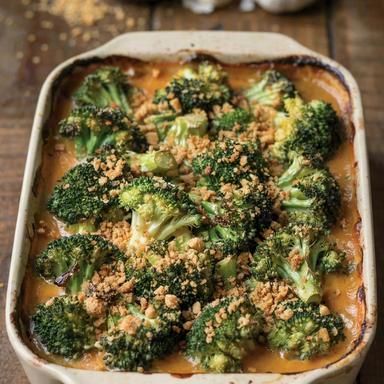
Vegan Broccoli Casserole
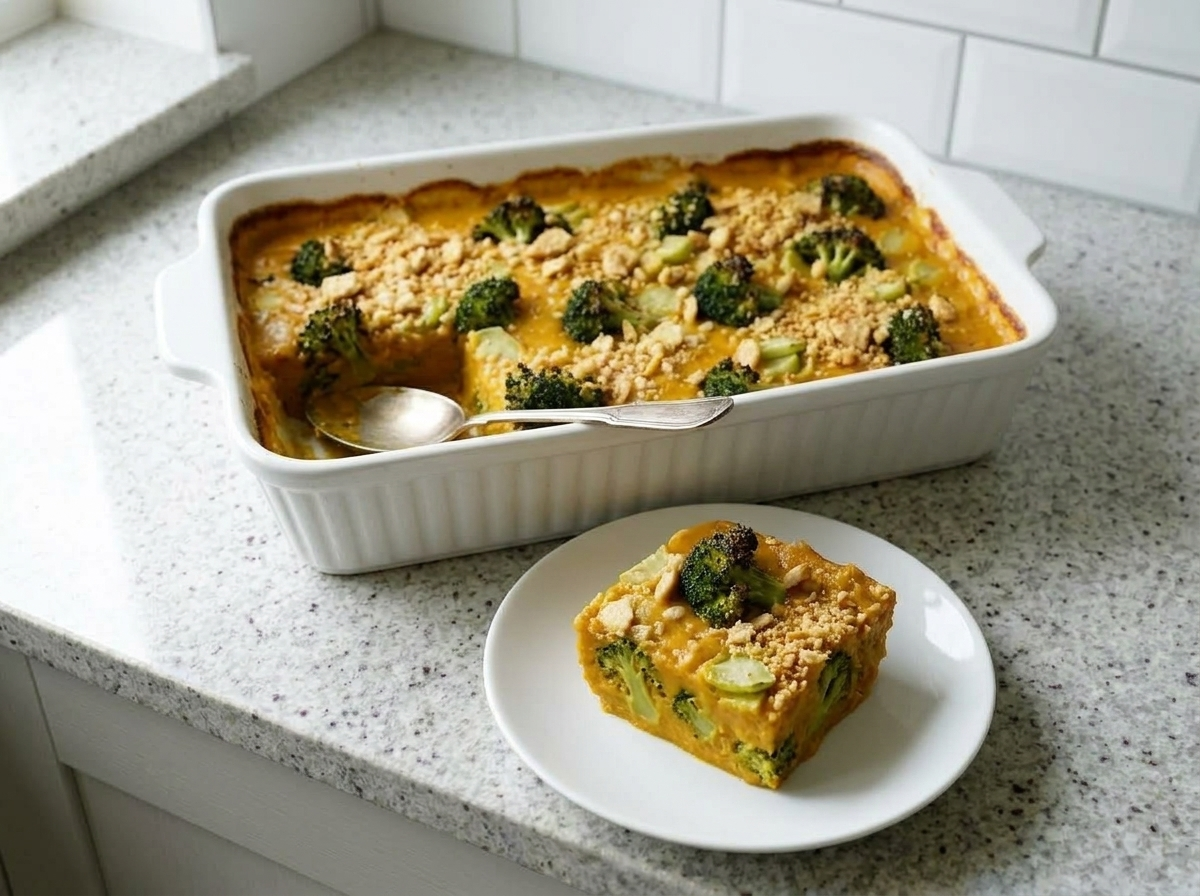
Roasted broccoli folded through a from-scratch vegan cheddar sauce and baked under a buttery cracker crust.
Ingredients
Equipment
As an Amazon Associate I earn from qualifying purchases, at no extra cost to you.
Instructions
- 1
Heat the oven and cut the broccoli
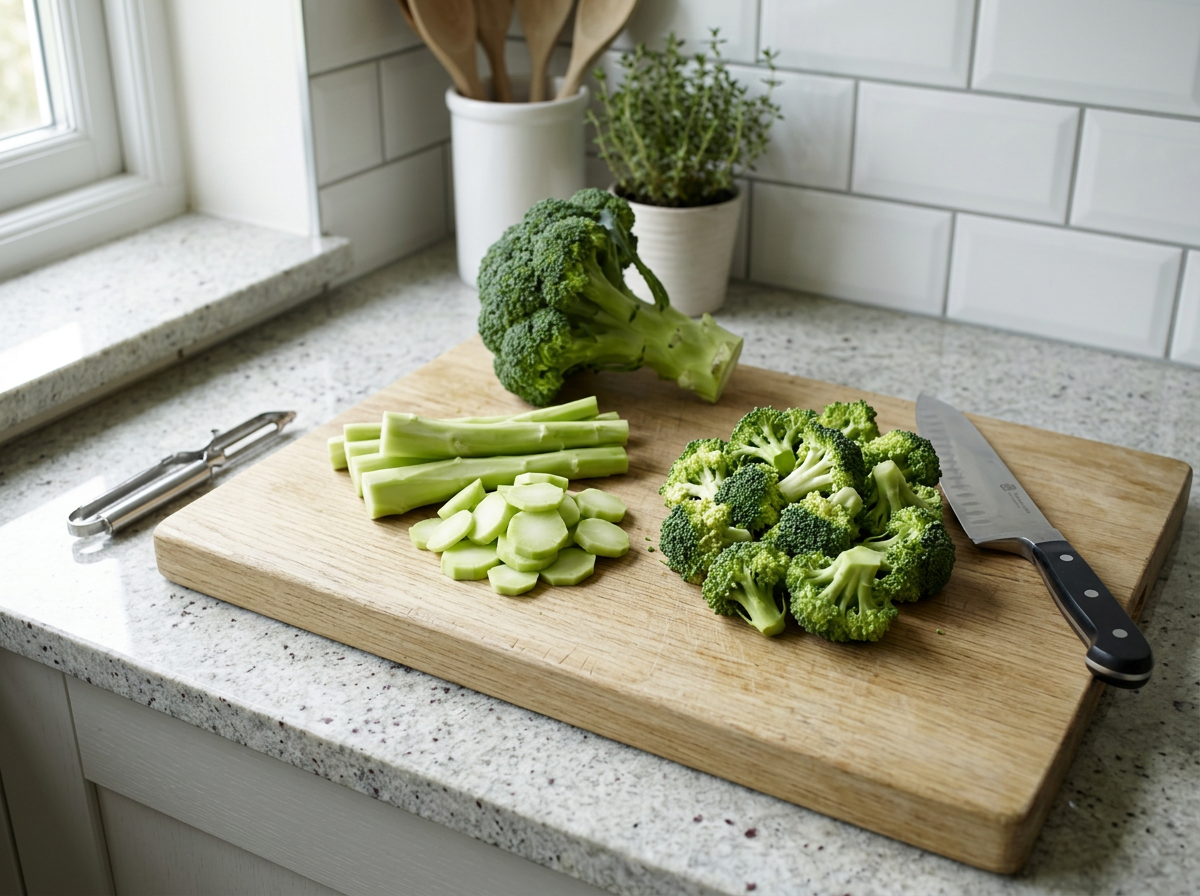
Heat the oven to 400°F (200°C). Cut the broccoli into florets about 1 1/2 inches across, which is larger than looks right, then peel the tough outer layer from the stems and slice them into coins.
- 2
Roast the broccoli
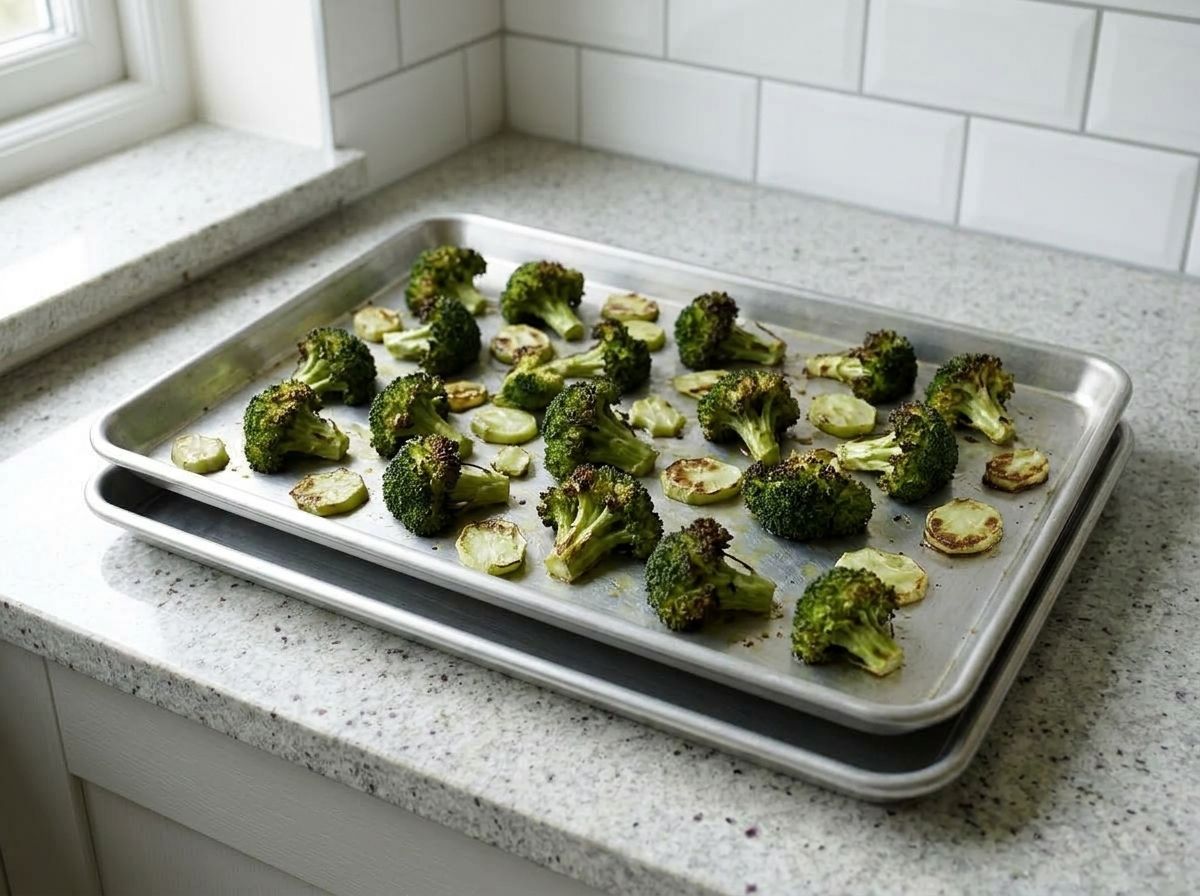
Toss the broccoli and the stem coins with the olive oil and a good pinch of salt, spread them over a baking sheet in a single layer, and roast for 18 minutes, until the edges have browned and a floret still gives some resistance in the middle. Leave the oven on.
- 3
Soften the onion
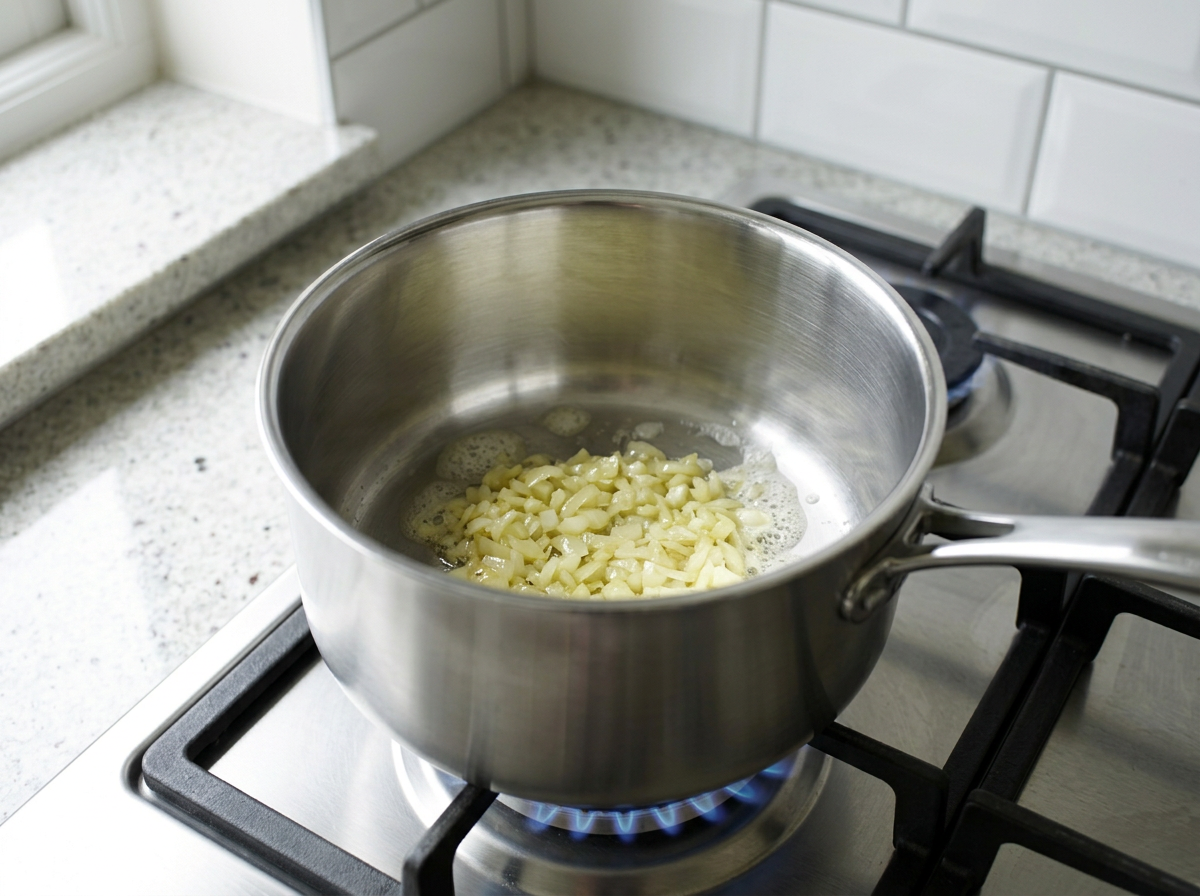
While the broccoli roasts, melt 4 tablespoons of the vegan butter in a saucepan over medium heat. Add the onion and cook for 5 to 6 minutes, until soft and translucent, then stir in the garlic and cook for 30 seconds more.
- 4
Cook out the flour
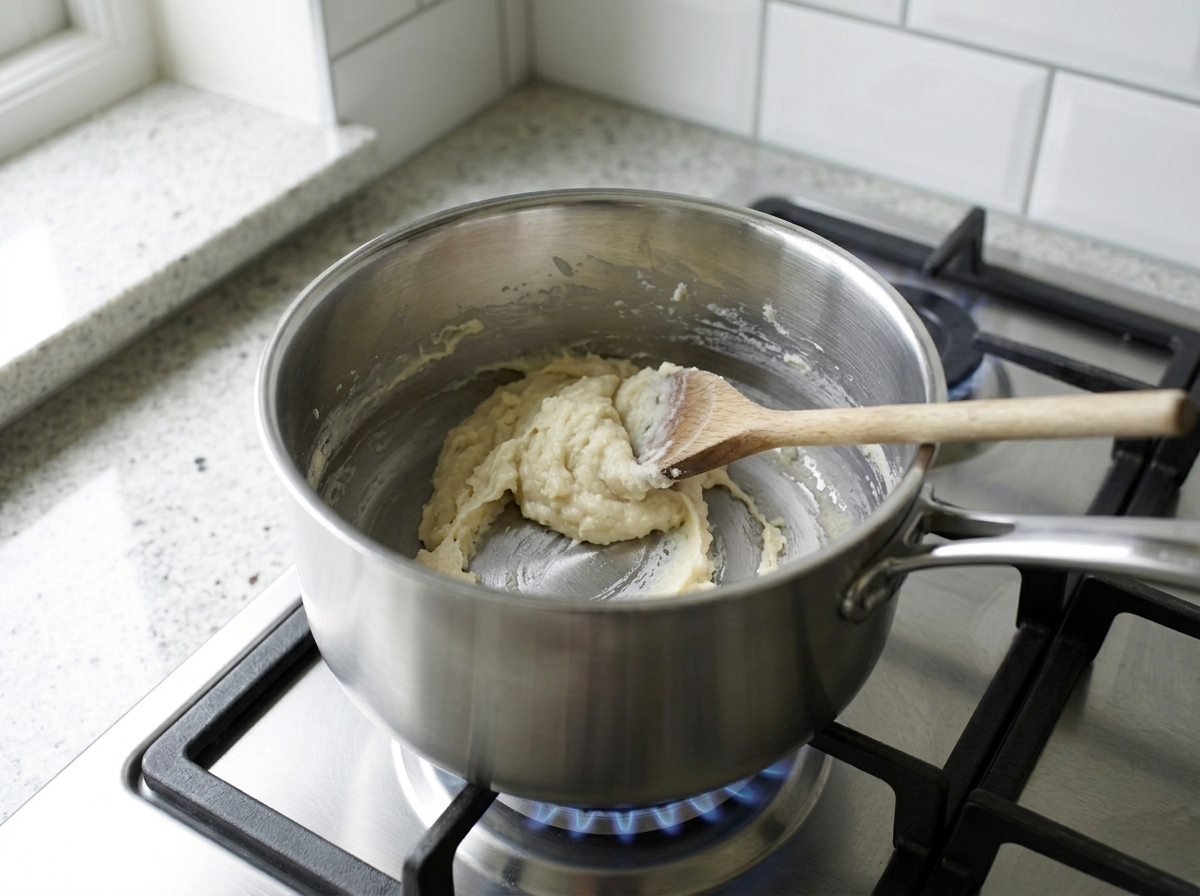
Scatter the flour over the onion and stir constantly for 1 to 2 minutes. It will form a thick paste that pulls away from the base of the pan, and it should smell nutty rather than raw.
- 5
Whisk in the liquid
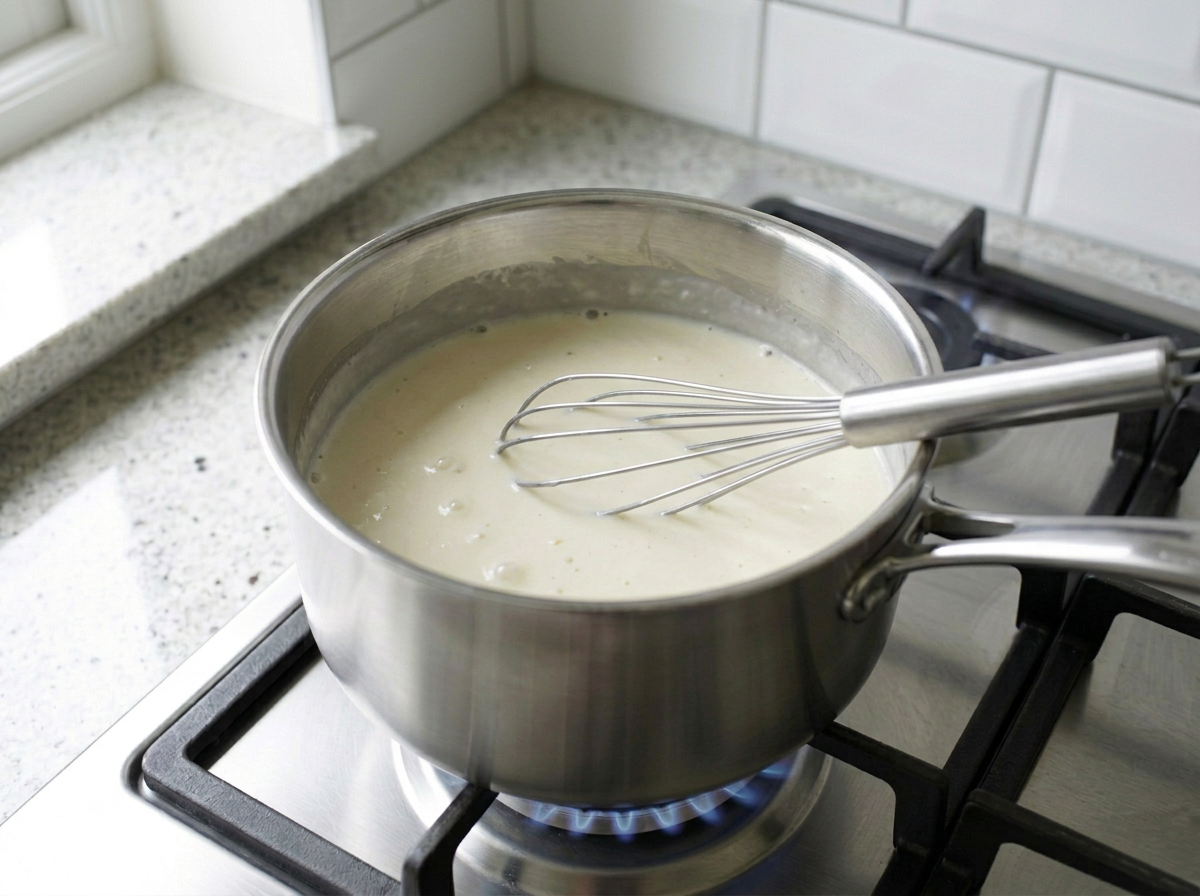
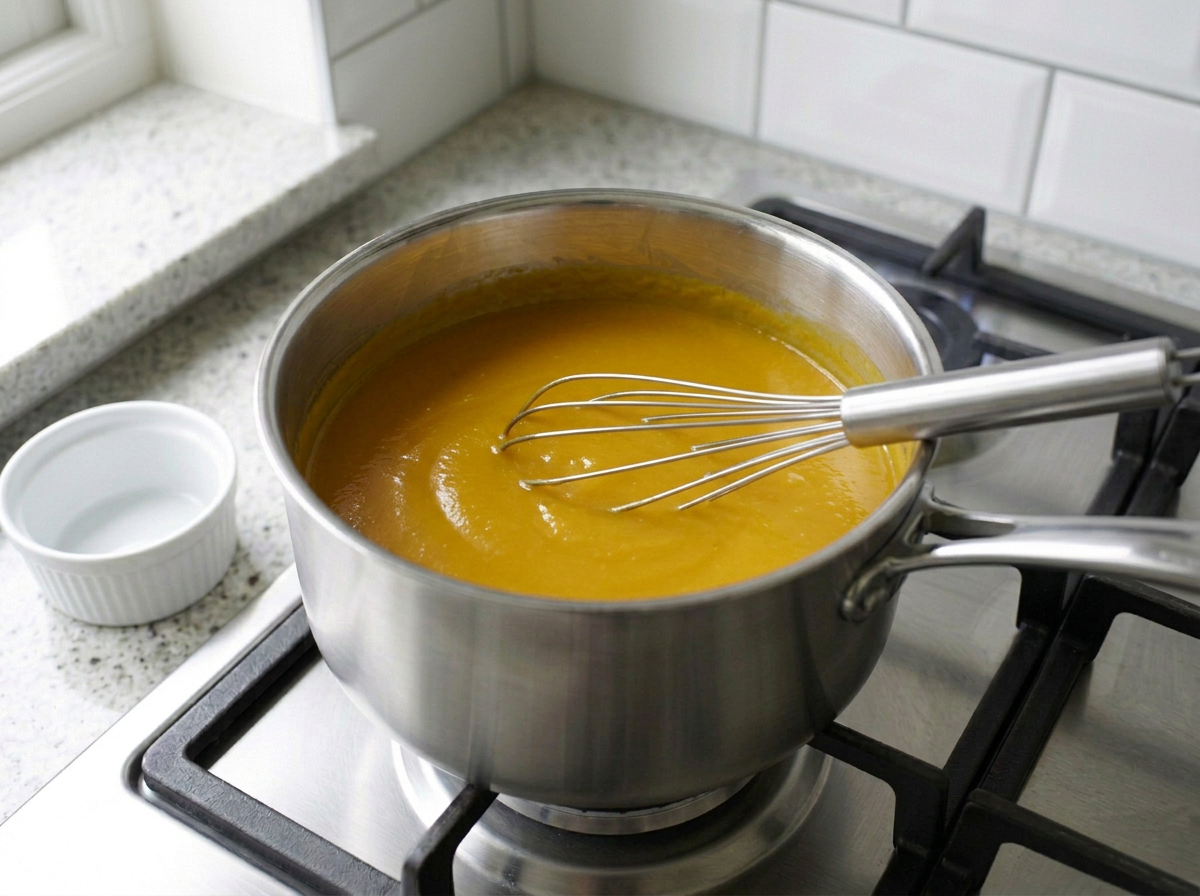
Pour in about a third of the oat milk and whisk hard until it becomes a smooth thick paste, then add the rest of the oat milk and the vegetable broth. Bring it to a gentle simmer, whisking, and cook for 4 to 5 minutes until it coats the back of a spoon.
- 6
Melt the cheese in off the heat
Take the pan off the burner. Add the vegan cheddar, the nutritional yeast, the miso, the mustard, the mayonnaise and the black pepper, and whisk until the cheese has completely disappeared into the sauce, about a minute. Taste it and salt it until it is slightly too savory to eat on its own.
- 7
Fold the broccoli through the sauce
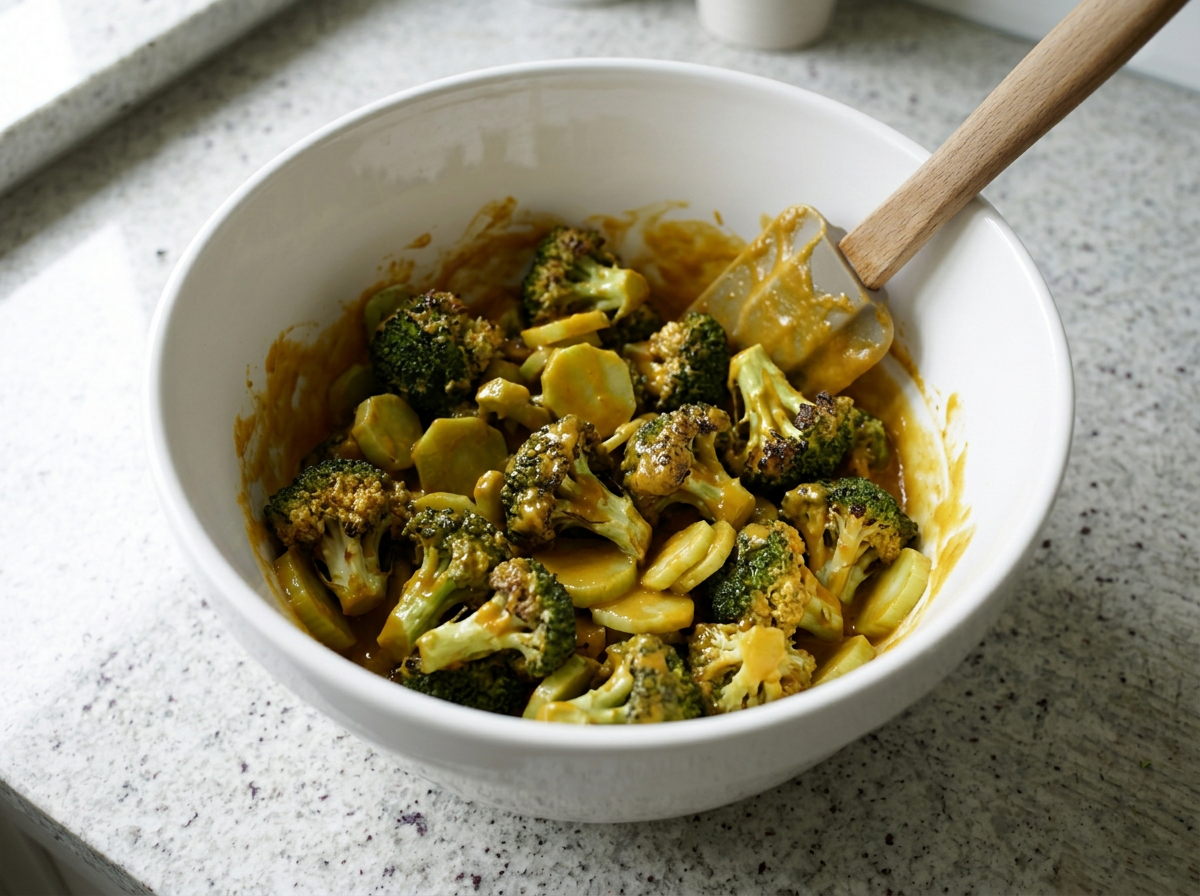
Tip the roasted broccoli into a large mixing bowl, scrape in all of the sauce, and fold with a spatula until every piece is coated. The sauce should look too thick at this point, because the broccoli still gives up water in the oven.
- 8
Make the cracker topping
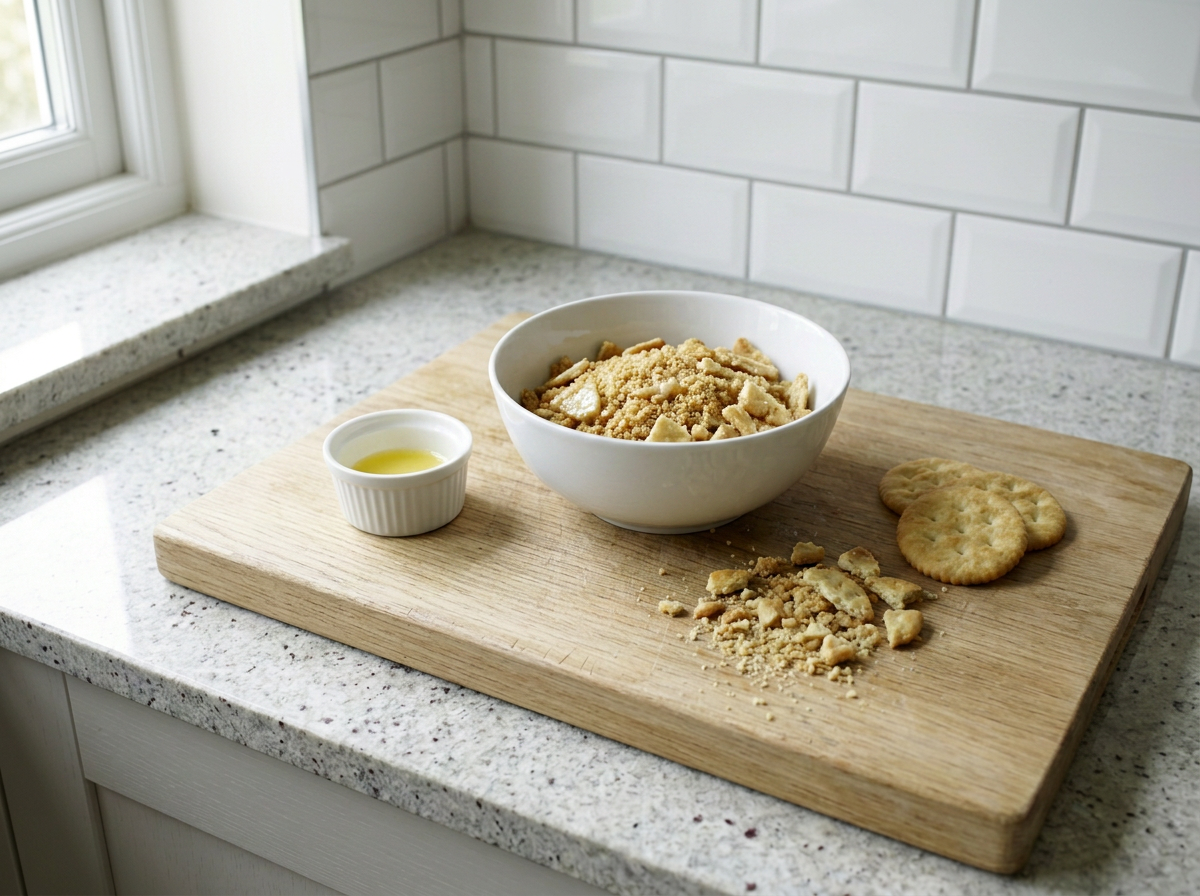
Melt the remaining 2 tablespoons of vegan butter. Crush the crackers into coarse crumbs with some pieces left whole, and toss them with the melted butter and the slivered almonds, if you are using them, until the crumbs are evenly damp.
- 9
Assemble and bake
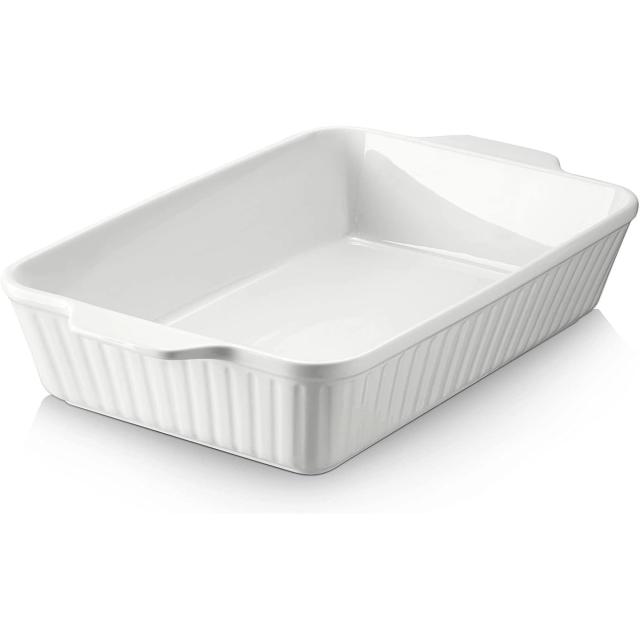
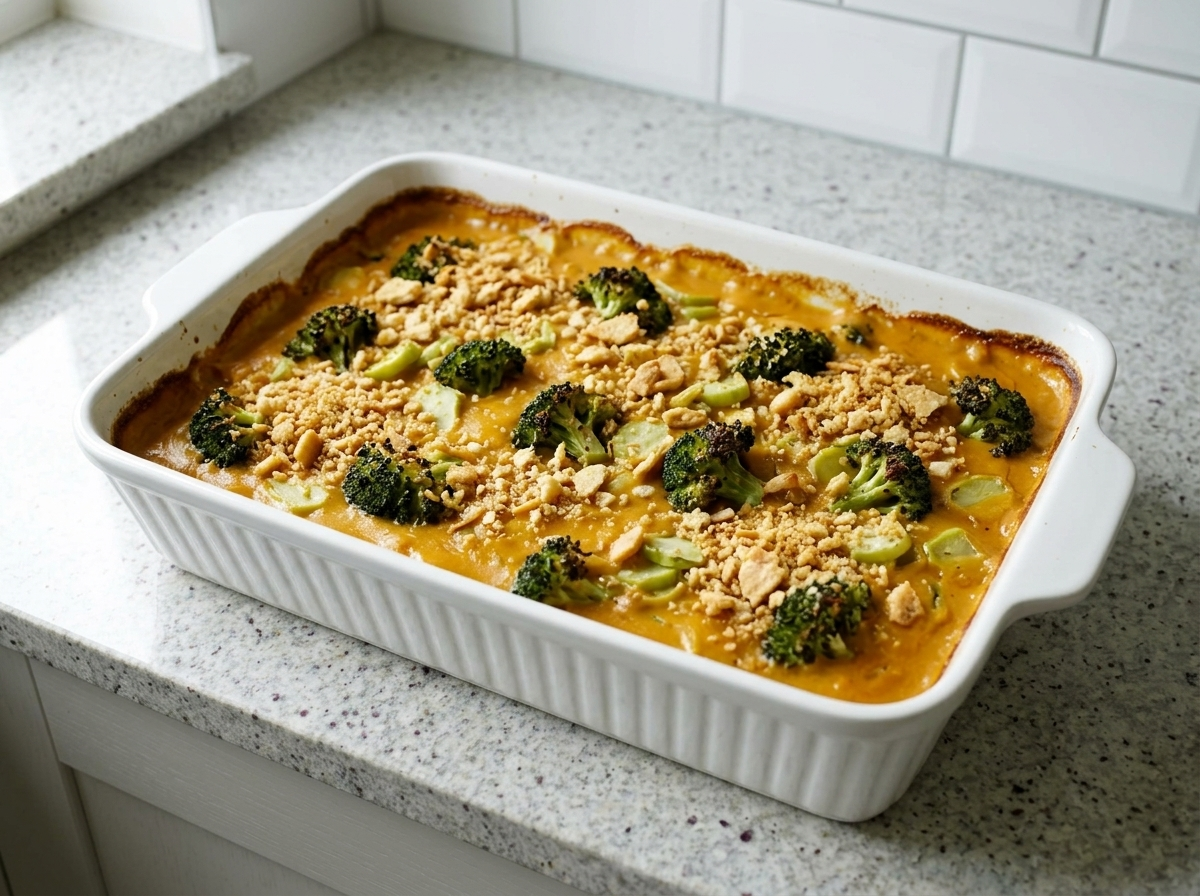
Transfer the broccoli and sauce to a 9x13 baking dish and level the top. Scatter the buttered crumbs evenly over the surface and bake for 25 minutes, until the sauce is bubbling around the edges and the topping is deep golden.
- 10
Rest before serving
Let the casserole stand for 10 minutes before serving, which is what lets the sauce set enough to hold a spoon shape. Scatter the chives over the top, if you are using them.
Notes
The sauce should look too thick when it goes into the dish. Roasted broccoli still gives up water in the oven and it thins out to exactly right.
All of the cheese melts into the sauce and none goes on top. Vegan shreds cannot flow in dry heat and set into a rubbery sheet if you scatter them over the surface.
For a gluten-free version use a measure-for-measure gluten-free flour blend in the roux and gluten-free crackers on top. Nothing here relies on gluten.
Frozen broccoli works only if you thaw it completely, press it dry between towels and roast it anyway. Skipping the roast is what makes this dish watery.
Nutrition Facts
8 servings · 272 g per serving
- Calories
- 364 kcal
% Daily Value*
- Total Fat
- 20.4 g26%
- Saturated Fat
- 4.2 g21%
- Sodium
- 882 mg38%
- Total Carbohydrate
- 37.1 g13%
- Dietary Fiber
- 6.7 g24%
- Sugars
- 8.6 g—
- Protein
- 9.5 g19%
Recipe from veggierecipes.blog
When it goes wrong
Troubleshooting
There is a puddle of water in the bottom of the dish
The broccoli was not cooked before it was assembled, or it was steamed, or it was frozen. All three put you in the same place. Broccoli is around 90 percent water and a covered casserole gives it nowhere to go, so it collects under the sauce and thins it out from below. Roasting is the fix and it is not a small improvement: eighteen minutes in a hot oven on an open sheet drives off the surface water and a good deal of what is inside the florets, and it browns the cut faces while it does it. If you only have frozen broccoli, thaw it completely, press it dry between towels, and roast it anyway.
The cheese went rubbery instead of melting
It was on top. This is the single most common way a vegan casserole goes wrong and almost every recipe online tells you to do it, because that is what the dairy version does. Dairy cheese on top of a casserole melts and browns; vegan shreds have no casein and cannot flow, so dry heat sets them into a tight skin. Melt all of it into the hot sauce instead, where it dissolves in about a minute, and put nothing on top but the crackers.
The sauce turned grainy or split
The cheese went in over direct heat and was then held there. Take the pan off the burner before the shreds go in. The sauce is at about 190°F when it comes off and that is more than enough to melt them, but sitting on a live flame afterwards drives the oil back out of suspension. If it has already happened, a hard whisk with a splash of cold oat milk usually brings it back together.
It tastes flat, like a white sauce with broccoli in it
Under-seasoned, and the amount it needs surprises people. A can of condensed soup brings roughly 800 mg of sodium along with a large dose of glutamate, and a from-scratch sauce salted the way you would salt a béchamel replaces neither. Season the sauce until it tastes slightly too savory on its own, before the broccoli goes in. Two pounds of unsalted vegetables will pull it straight back to the middle.
The topping was dark before the middle was hot
Crushed crackers and vegan butter brown fast, and they are the last thing that needs cooking rather than the first. If your dish is deep, or the casserole went in cold from the fridge, lay a sheet of foil loosely over the top for the first fifteen minutes and take it off for the last ten. The casserole is ready when the sauce is bubbling at the edges, not when the top looks right.
The broccoli came out army green and soft
It got cooked twice to the same point. Roast it until the edges are browned and a floret still has resistance in the middle, around eighteen minutes, and no further, because another twenty five minutes under a hot sauce is coming. Cutting the florets too small does the same thing: bite size here means about an inch and a half, larger than looks right in the bowl.
Before you serve
Serving & Storage
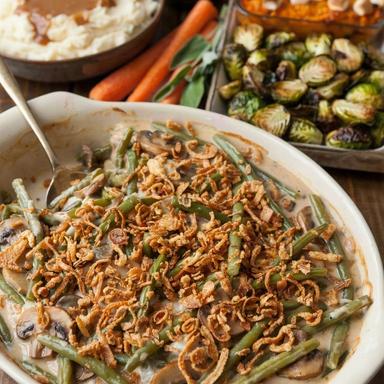
This goes on the table as a vegetable, not as a starch, which matters when you are working out what else to cook. It sits naturally beside a green bean casserole and a tray of stuffing without competing with either, and it is the dish on that table most likely to be eaten by someone who says they do not like broccoli. Serve it with a spoon straight from the dish. It holds a shape but it is not something you cut.
Because it is rich and soft the whole way through, it wants something sharp within reach: a cranberry sauce, a vinegary slaw, or just a lemon wedge on the side of the plate. Outside November it is a weeknight dinner on its own with a baked potato, and it is very good the morning after with a fried egg on it if you eat them.
Give it the ten minutes of rest. Straight out of the oven the sauce is still loose and it will run across the plate and carry the topping with it. Ten minutes on the counter and it holds together under a spoon.
Making it ahead
The sauce and the broccoli both keep, separately, and that is how to break this up. Roast the broccoli up to two days ahead, cool it completely and refrigerate it uncovered for the first hour so it does not steam itself in the container. Build the sauce through the seasoning step, cool it and keep it up to three days; it sets very firm in the fridge and comes back over low heat with a splash of oat milk. Crush the crackers and toss them with the melted butter on the day.
What does not work is assembling the whole thing the night before and baking it cold from the fridge. Roasted broccoli sitting in salted sauce for twelve hours goes limp and gives back the water you spent eighteen minutes driving out of it, and the topping softens into the sauce before the oven ever sees it. If you have to assemble ahead, do it without the topping, no more than four hours out, and add forty five minutes to the bake to bring it up from cold.
Storing leftovers
Four days in the fridge in a covered container. The topping will not stay crisp and there is no trick that saves it, so reheat in a 350°F oven for twenty minutes uncovered and accept that it is softer the second time, or crush a few fresh crackers over it in the last five minutes if you care. The microwave is fine for a single portion and terrible for a whole dish.
It does not freeze well and it is worth being blunt about why. The sauce is starch thickened and starch gels weep when they thaw, so what comes out is a grainy sauce sitting in its own water, on top of broccoli that has now been cooked three times. Cook it the day you want it.
Still wondering
Frequently Asked Questions
Can I make this as a broccoli rice casserole instead?
Yes, and it is the version a lot of people grew up with. Cook 1 cup of long grain white rice to just under done, about 14 minutes rather than 18, and fold it into the sauce with the broccoli. Add another 1/2 cup of oat milk when you do, because the rice keeps absorbing liquid in the oven and a sauce that looked right in the bowl will be dry by the time it comes out. It fills a 9x13 dish properly at that point and serves ten rather than eight. Keep the bake at 25 minutes.
How do I scale this down to a 9x9 dish?
Two thirds of everything: 1 1/4 lb of broccoli, 1 1/3 cups of vegan cheddar, and a sauce built on 3 tablespoons of flour with 1 1/3 cups of oat milk and 1/3 cup of broth. That serves five. Keep the oven at 400°F and the bake at 25 minutes, because the layer ends up about the same depth and depth is what sets the timing, not the footprint.
Can I use a homemade cashew sauce instead of store-bought vegan cheese?
You can, and it changes the timing more than the taste. Boil 1 cup of raw cashews for 15 minutes, drain them, and blend with the 1/2 cup of vegetable broth, 3 tablespoons of nutritional yeast, the miso, the mustard and 1 1/2 cups of the oat milk until completely smooth, then use that in place of both the milk and the cheese, stirring it into the roux. It is thicker, so hold back 1/4 cup of the milk until you see it. What you lose is the specific tang of a cultured cheddar, which cashews do not have; a teaspoon of apple cider vinegar off the heat gets you most of the way there.
Featured In
More Sides For The Holiday Table
Made this?