
Vegan Mashed Potatoes Recipe
Published · Updated
The first printed recipe for mashed potatoes, from 1747, pours the milk in before the butter, which is the exact order that turns a vegan mash into glue.
Jump To Recipe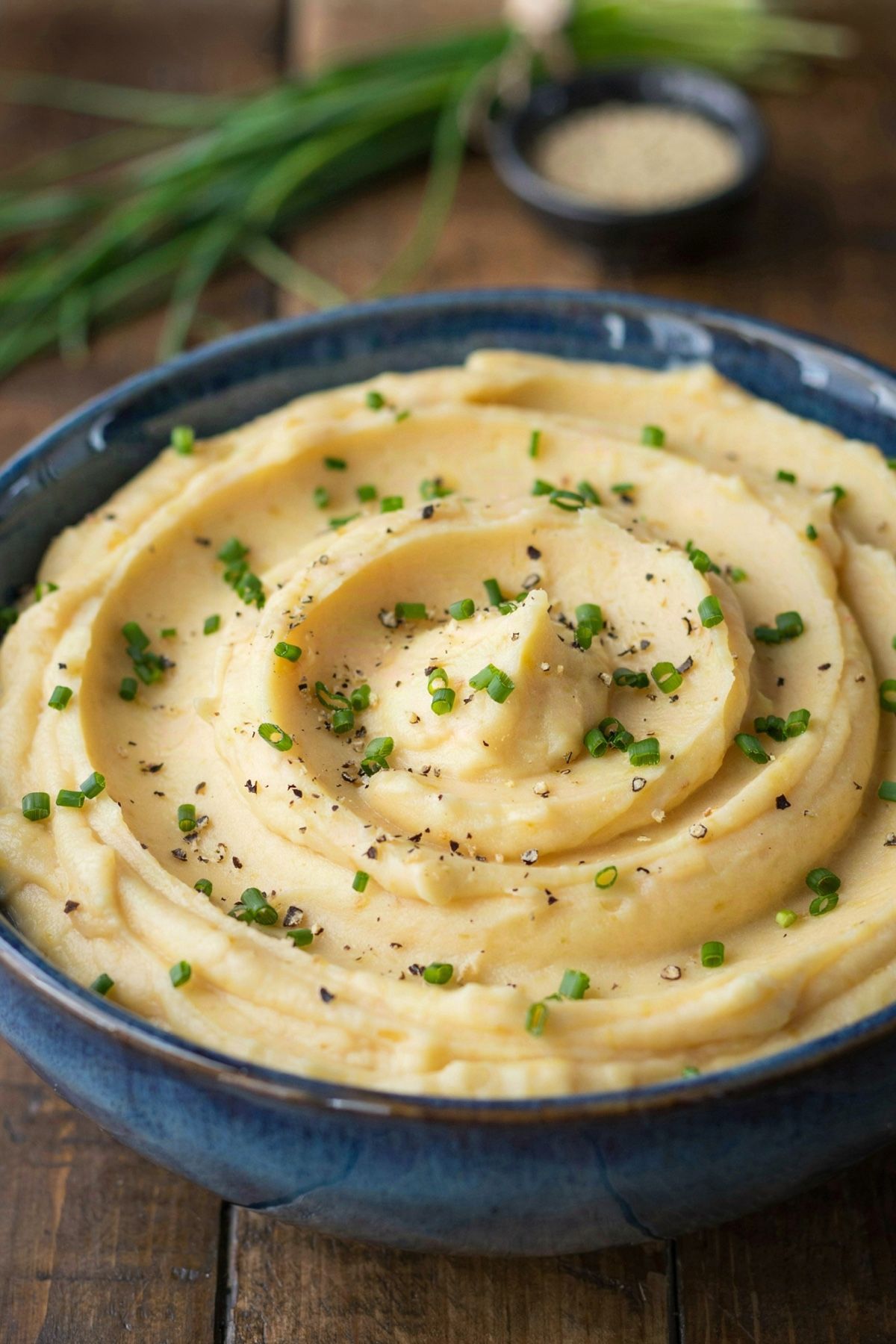
I Blamed The Oat Milk For Three Years
Every Thanksgiving for about three years I made mashed potatoes that came out stretchy. Not lumpy, not thin, stretchy, the kind that pulls back off the spoon in a sheet. I decided it was the plant milk. So I worked through them. Almond went watery and tasted faintly of almond. Soy went beany and split when I added lemon to the leftovers. Canned coconut milk made a side dish that argued with the gravy. Oat was the best of them and still, every year, stretchy.
It was never the milk. It was that I was pouring it in first, out of a jug, straight from the fridge, and then working the cold potatoes hard to get them smooth again. I had inherited that order from watching people make dairy mash, where there is enough butterfat in play to cover the mistake. There is not enough in a vegan one. The year I put the block of vegan butter in on its own and mashed it until it vanished before a drop of oat milk went near the pot, the problem stopped, permanently, and I have not had a gluey batch since.
The white miso came later and for a different reason. Even once the texture was right the mash tasted like potato and salt and not much else. Dairy is not only fat, it is also lactose and milk solids, and taking it out leaves a savory hole that more salt does not fill. Two teaspoons of shiro miso dissolved in the warm milk fills it. Nobody has ever guessed it is in there. They just eat more.
The one thing I will not do is leave the skins on. Skin-on mash is a good dish and it is not this dish: the skins keep the mash from ever going properly smooth, and smooth is the entire point of the exercise. Peel them. It takes eight minutes and it is the difference between a mash and a smash.
The story
Mashed Potatoes Did Not Start Out As A Dairy Dish
The potato is a South American crop, domesticated in the Andes thousands of years before anyone in Europe saw one, and the oldest way of mashing it has no dairy in it anywhere. Peruvian causa is mashed yellow potato worked with oil, chili and, since the colonial period, lime juice, then pressed into layers and served cold. Its name comes from the Quechua kausay, meaning sustenance or simply food. The pre-Columbian version was yellow potatoes kneaded with crushed ají, and the lime arrived later, during the Viceroyalty, along with the shape the dish still has today.
So the butter and the milk are a northern European addition, bolted onto a South American vegetable maybe two hundred years ago. You can watch it happen in print. The earliest known English recipe is in Hannah Glasse’s The Art of Cookery Made Plain and Easy, published in 1747, and it runs to two sentences: “Boil your Potatoes, peel them, and put them into a Sauce-pan, mash them well: To two Pounds of Potatoes put a Pint of Milk, a little Salt, stir them well together, take care they don’t stick to the Bottom, then take a quarter of a Pound of Butter, stir in and serve it up.”
Two things in that are worth stopping on. The first is the ratio. A pint of milk to two pounds of potatoes is roughly three times the liquid this recipe uses, and a quarter pound of butter to two pounds of potatoes is half again as rich as anything below. Glasse was writing for a table that wanted mashed potato closer to a sauce than a side.
The second is the order, and it is the whole reason this page exists. Glasse puts the milk in first and the butter in last. That is backwards, and we now know why. Potato cells are packed with starch granules, and when they meet free water those granules swell and leak amylose, which bonds to itself and turns the mash into the stretchy, gluey thing everyone recognizes. Fat gets in the way of that. It coats the granules and keeps the water off them, which is why the modern rule is butter first, liquid second.
That rule matters more without dairy, not less. Dairy butter is regulated: to be called butter it has to be at least 80 percent fat, and in practice it runs about 82 percent fat to 16 percent water. Vegan butter is regulated by nobody and lands anywhere between 60 and 80 percent fat, with the tub spreads at the bottom of that range and the wrapped blocks at the top. Plant milks are leaner too. Oat milk carries around 2 grams of fat per 100 milliliters against whole milk’s 3.25, and almond milk about 1. Add it up and a vegan mash arrives at the pot with more water and less fat than a dairy one. The same mistake costs you more. Getting the order right is not a vegan workaround, it is the original technique applied where it actually counts.
What to buy
Ingredient Notes
Yukon Gold potatoes
Medium starch, which is the useful middle ground: floury enough to break down smoothly, waxy enough to forgive a little extra mashing. Russets go fluffier but drink far more liquid and punish you harder when you overwork them. Red potatoes stay too waxy and go slick rather than creamy. Yukons also matter more here than in a dairy recipe for a reason nobody mentions: their flesh is yellow, and with no butter in the pot that yellow is the only thing keeping the finished mash from looking gray on the plate.
Vegan butter, block not tub
Buy the wrapped block, not the spread in the tub, and this is the single most consequential thing on the list. Dairy butter is legally at least 80 percent fat. Vegan butter has no such floor and ranges from about 60 to 80 percent, with soft tub spreads at the bottom, which means a spread can be close to 40 percent water. Water is the exact thing this recipe spends eight steps trying to keep away from the starch. Use a block and you are adding fat. Use a spread and you are adding fat and a quarter cup of hidden liquid at the worst possible moment.
Unsweetened oat milk
Oat is the right plant milk here on three counts: it is the fattest of the common ones at roughly 2 grams per 100 milliliters, its beta-glucan gives it real body rather than the thinness of almond, and it is faintly sweet in a way that reads as dairy rather than as itself. Soy works but can taste beany against plain potato. Canned coconut milk is rich enough and tastes of coconut, which fights gravy. Check the carton says unsweetened and unflavored: vanilla oat milk is sold in near-identical packaging and it will ruin the dish in a way you cannot correct.
White miso paste
Two teaspoons, dissolved into the warm milk so it never hits the pot as a lump. This is doing the job that milk solids and the diacetyl in dairy butter do in the original: glutamate and salt and a background savoriness that stops the mash tasting hollow. Use shiro, the pale sweet one; red or brown miso is far stronger and will announce itself. If gluten matters to you, read the label, because some miso is fermented with barley koji rather than rice. Rice miso is the common form and the one to buy.
Kosher salt, in the cooking water
A tablespoon in the pot, and it is not optional seasoning you can defer. Potatoes take salt up through the whole chunk while they cook, so water salted at the start gives you potato that is seasoned inside. Salt added only at the end sits on the outside of the mash and tastes like it. Most of the tablespoon goes down the drain with the water.
Chives (optional)
Raw, scattered at the end, for a sharp green note against something very soft and very rich. Add them to the pot and they go khaki and taste of nothing. Resist the urge to reach for garlic powder or onion powder instead: they read as processed against a dish this plain, and the miso is already carrying the savory end.
Vegan Mashed Potatoes
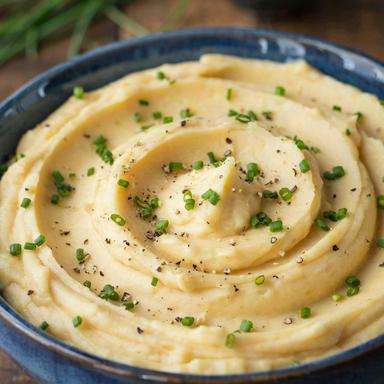
Smooth, rich vegan mashed potatoes made with Yukon Golds, a block of vegan butter and warm oat milk seasoned with white miso. The fat goes in before the liquid, which is what keeps them from turning gluey.
Ingredients
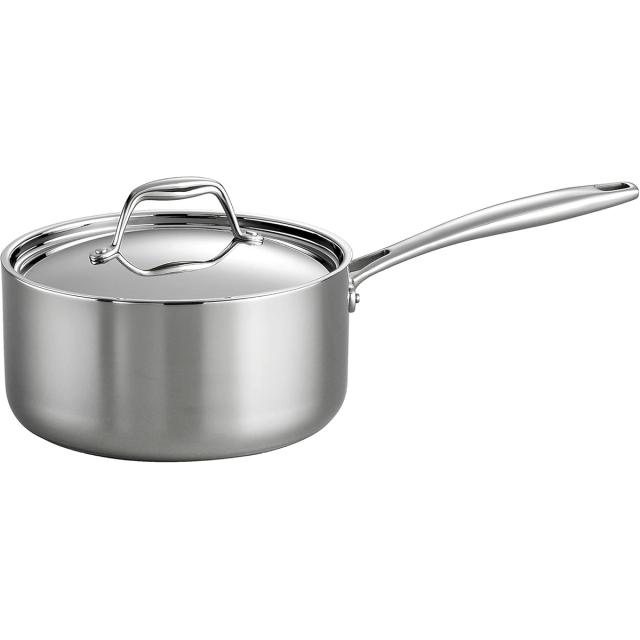
Equipment
As an Amazon Associate I earn from qualifying purchases, at no extra cost to you.
Instructions
- 1
Cut them all the same size
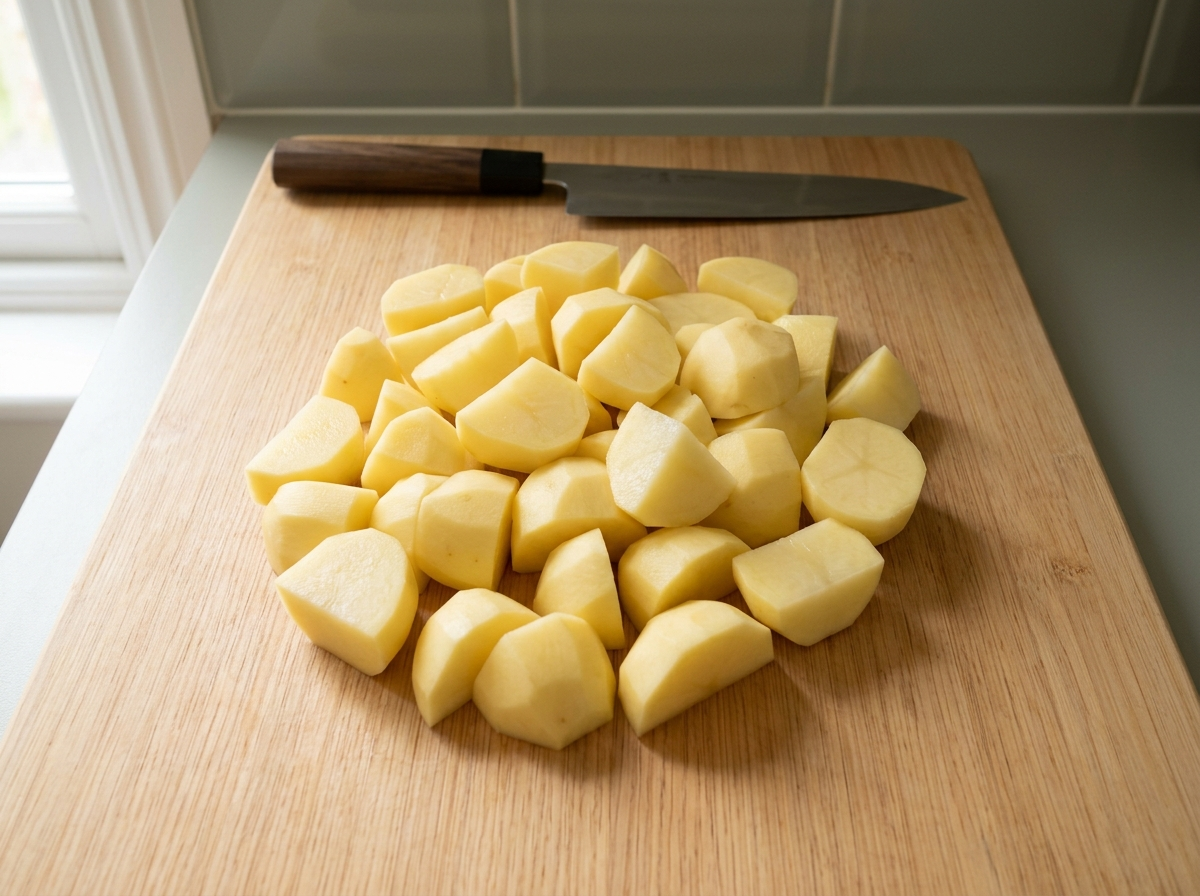
Peel the potatoes and cut them into even 1½-inch chunks. Evenness matters more than the exact size. A pot of mixed pieces gives you blown-out edges and raw centers at the same moment, and a raw center is a lump you cannot mash out later.
- 2
Start them in cold salted water
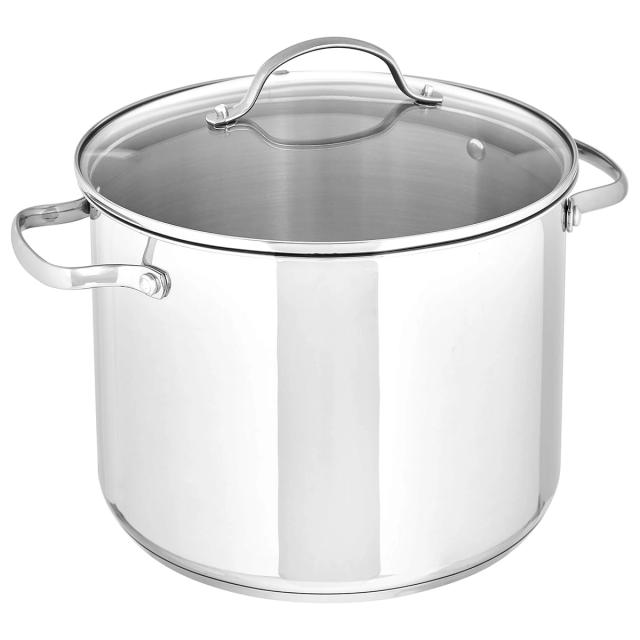
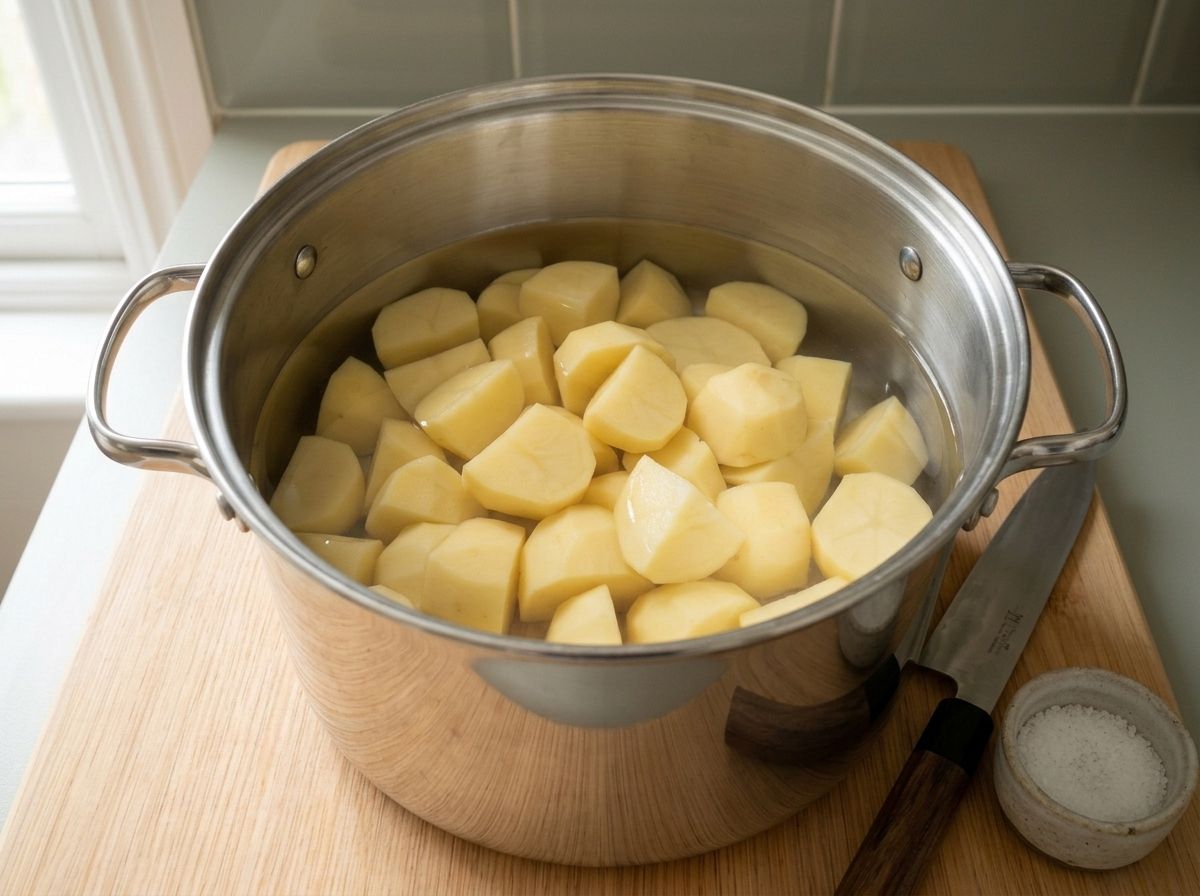
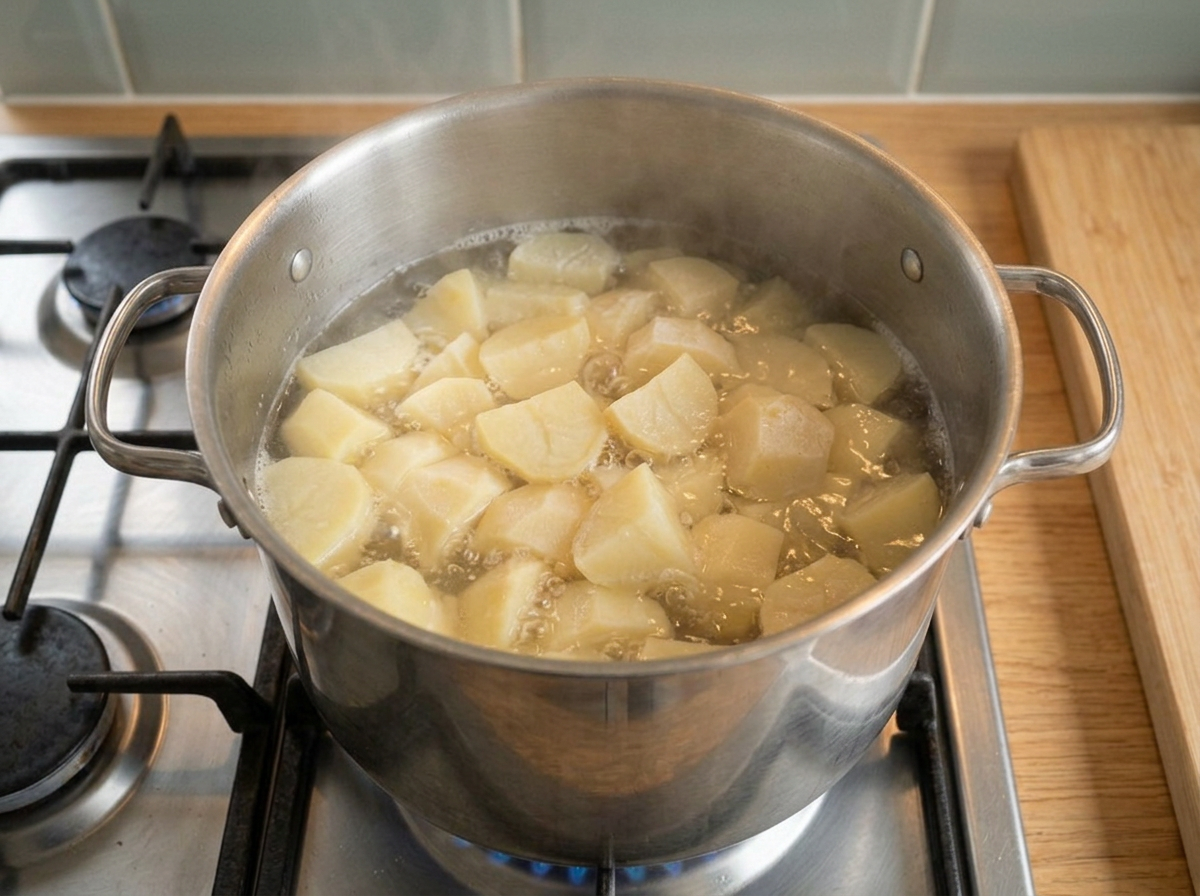
Put the potatoes in a large pot and cover them with cold water by about an inch, then add the kosher salt. Coming up to temperature slowly lets the outside and the inside cook together. Potatoes dropped into already boiling water collapse at the edges long before the middles give in.
- 3
Simmer until a knife meets no resistance
Bring to a boil, lower the heat to a steady simmer, and cook for 15 to 18 minutes. They are ready when a knife slides into a chunk and the chunk falls off the blade under its own weight. If you are unsure, give them the extra two minutes.
- 4
Warm the oat milk with the miso
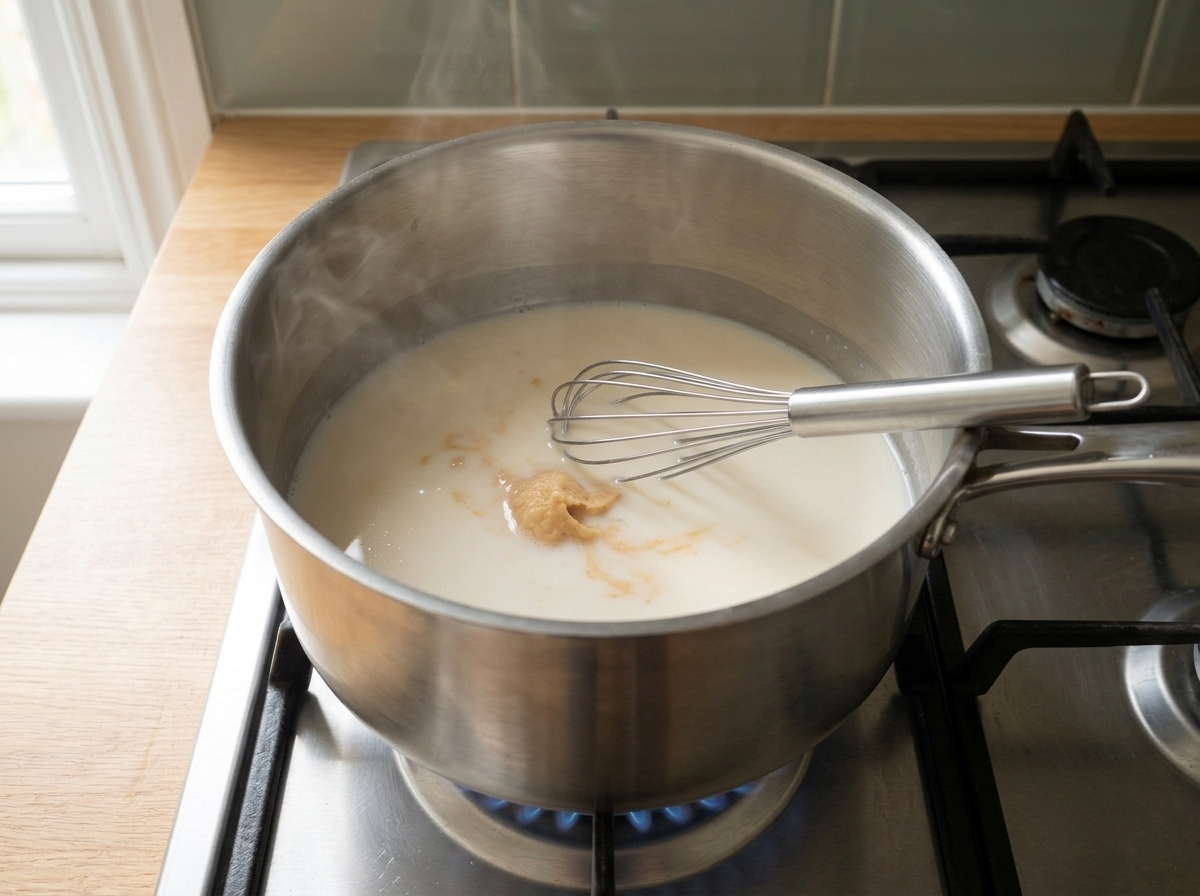
While the potatoes cook, whisk the white miso into the oat milk in a small saucepan and warm it over low heat until it steams. Do not let it boil. Cold liquid poured into hot potatoes drops the temperature of the whole pot and stiffens the mash, which is what makes people beat it.
- 5
Dry them in the empty pot
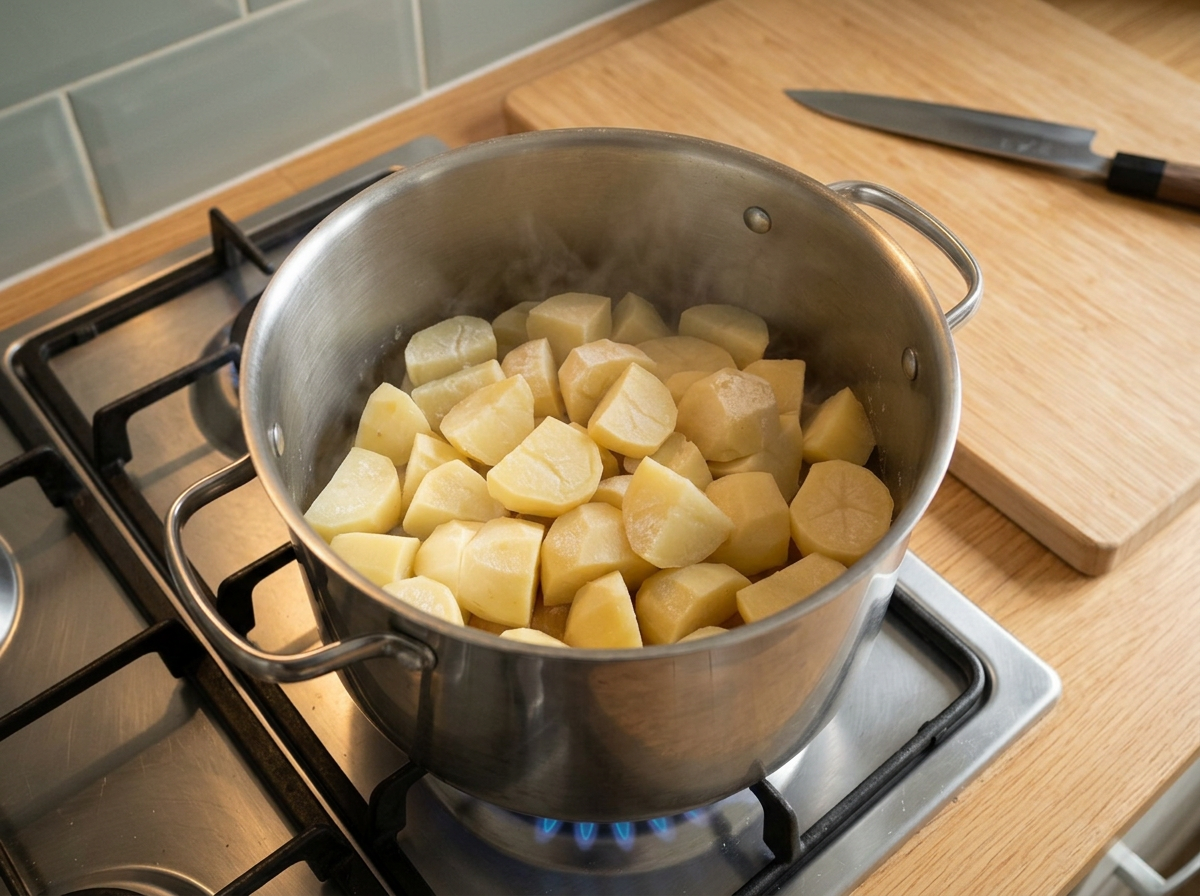
Drain the potatoes well and tip them straight back into the hot, dry pot. Set it over low heat for a minute or two, shaking occasionally, until the surfaces turn chalky and matte and no more steam comes off. You are driving out cooking water to make room for fat.
- 6
Work the fat in before any liquid
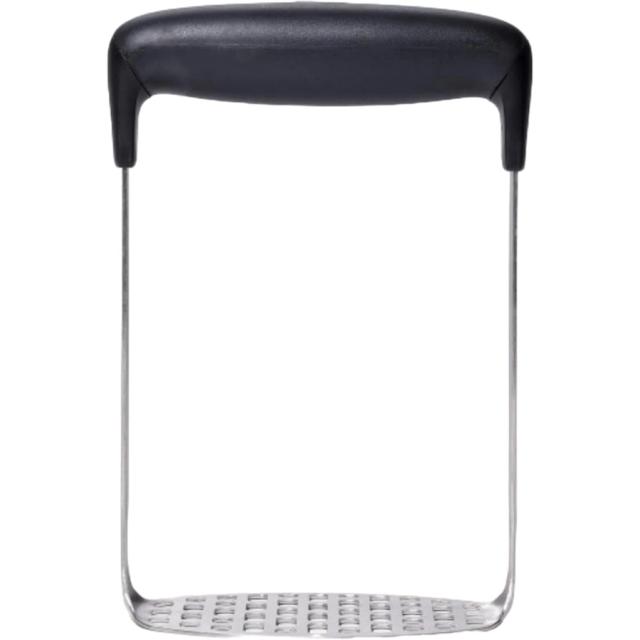
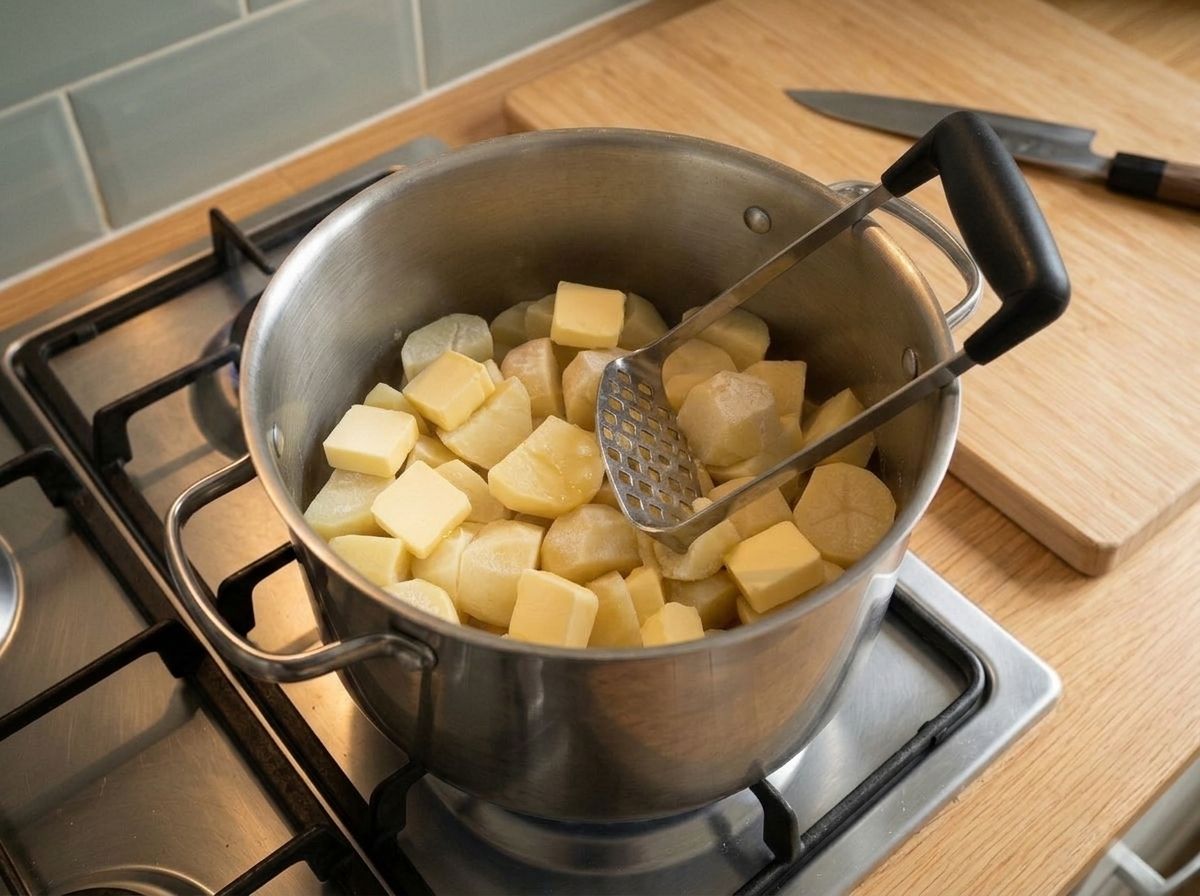
Take the pot off the heat, scatter the cubed vegan butter over the potatoes, and mash until the butter has completely disappeared. This is the step that decides the texture. Fat gets between the starch granules and keeps water away from them, so it has to arrive first.
- 7
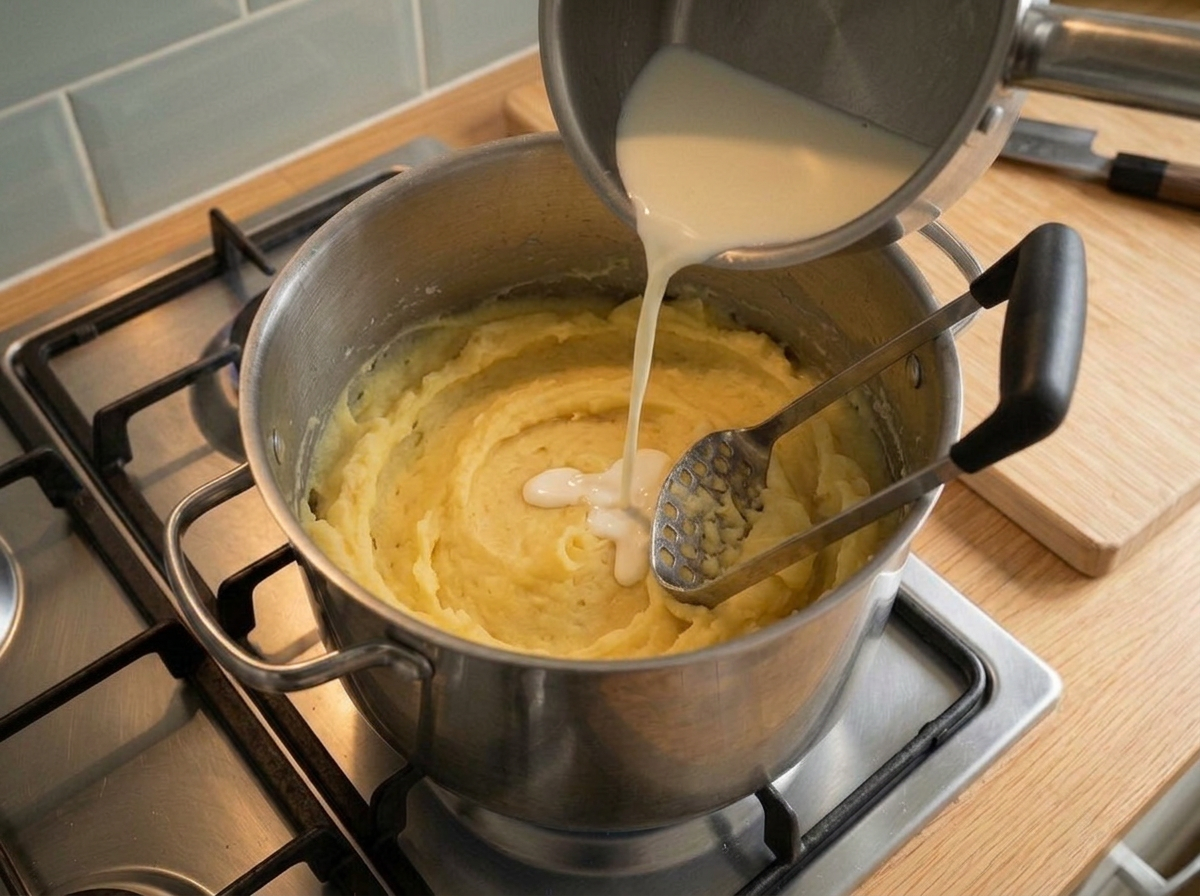
Fold the milk in, do not beat it
Add the warm miso milk in two additions, folding it through in slow strokes. Stop the moment it looks even. Every extra stroke tears open more potato cells and releases the free starch that makes a mash stretchy.
- 8
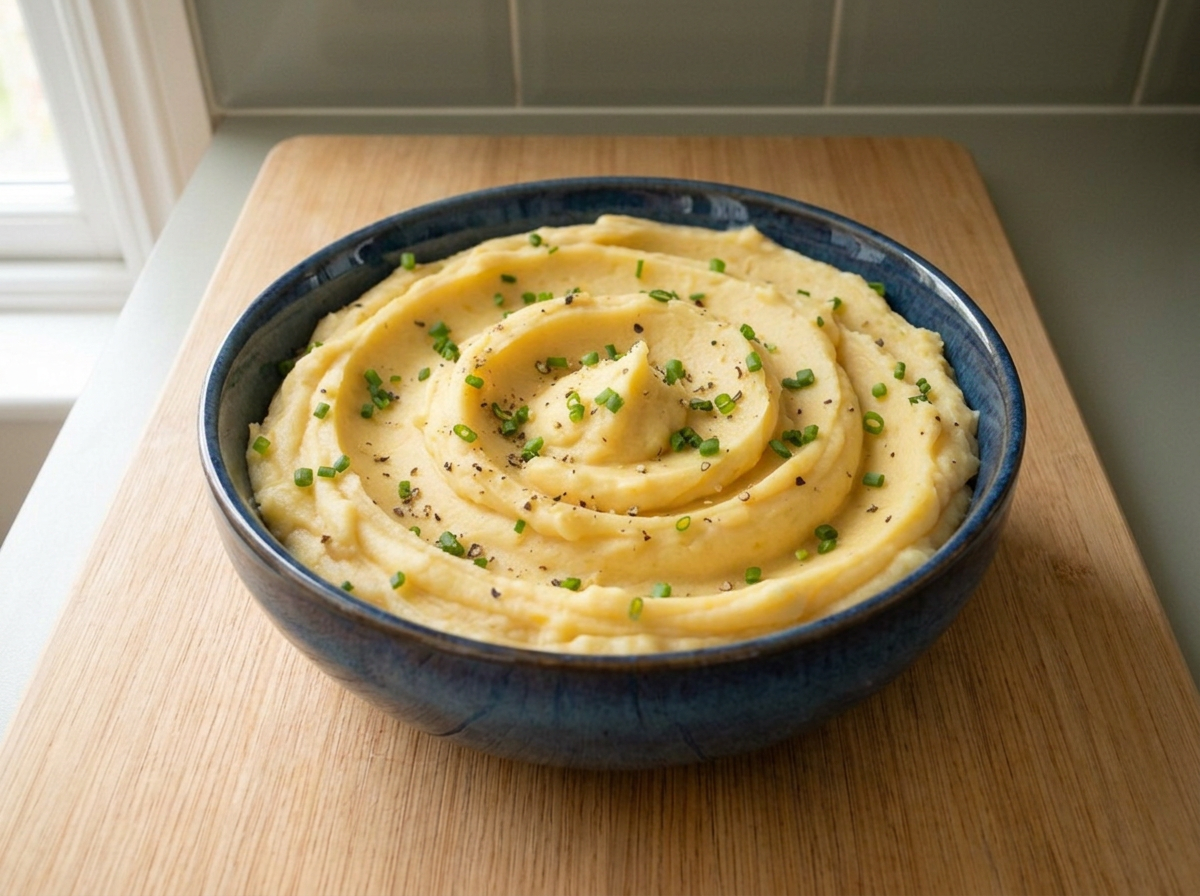
Taste and season
Season with black pepper and fine sea salt, remembering that the miso has already brought salt of its own. Scatter the chives over if you are using them, and serve hot in a warmed dish.
Notes
A potato ricer is the upgrade if you make this often. It extrudes the flesh without grinding it, so the cells stay intact and the mash comes out lighter than a masher can manage. Rice the potatoes into the pot, then carry on from the butter step.
Hold back about a third of the oat milk and add it only if the mash needs loosening. Larger potatoes carry more water and take less.
For a richer mash closer to the 1747 original, take the vegan butter up to 10 tablespoons. It is not subtle and it is very good.
Warm the serving dish. Mashed potato has a lot of surface area and a cold bowl takes the heat out of it faster than anything else on the table.
Nutrition Facts
6 servings · 279 g per serving
- Calories
- 329 kcal
% Daily Value*
- Total Fat
- 15.7 g20%
- Saturated Fat
- 2.9 g14%
- Sodium
- 612 mg27%
- Total Carbohydrate
- 43.3 g16%
- Dietary Fiber
- 5.4 g19%
- Sugars
- 4.2 g—
- Protein
- 5.4 g11%
Recipe from veggierecipes.blog
When it goes wrong
Troubleshooting
They came out gluey and stretchy
Free starch. Potato cells are full of starch granules, and when water reaches them before fat does they swell and leak amylose, which bonds to itself into a stretchy network. Two things cause it. Either the milk went in before the butter, or the mash was worked too long after it was already smooth. Fix both: mash the vegan butter in on its own until it has completely disappeared, then fold the warm milk through in slow strokes and stop the second it looks even. Never use a blender, food processor or immersion blender on potatoes. They will produce wallpaper paste in about eight seconds, and there is no recovery from it.
They taste flat, like potato and not much else
Almost always the cooking water was unsalted or barely salted, and salt added at the end cannot reach the inside of the potato anymore. The other half is that you have taken out lactose and milk solids and put nothing in their place, so there is no savory floor under the fat. Salt the water properly next time, and stir the white miso into the warm milk. If it is already on the table, a little more salt and a squeeze of lemon will lift it further than more vegan butter will.
It went cold and stiff before it reached the table
Cold oat milk straight from the fridge into a hot pot. It drops the temperature of the whole mash at once, the fat firms up, and the mash tightens, at which point people beat it to loosen it and make it gluey instead. Warm the milk until it steams before it goes anywhere near the potatoes. Serving into a warmed dish rather than a cold one buys you another ten minutes.
There are lumps I cannot mash out
Because they are not lumps of unmashed potato, they are pieces that never cooked through, and no amount of mashing will fix a raw center. It comes from chunks cut to different sizes, or from starting the potatoes in boiling water so the outsides collapsed while the middles were still firm. Cut everything to the same 1½ inches, start in cold water, and test by sliding a knife into a chunk: it is done when the chunk falls off the blade under its own weight.
It is soupy and I have already added the milk
You cannot take water back out, so do not try to fix it with more potato, which means cooking a second batch and usually overworking the first while you wait. Set the pot over the lowest heat and stir gently for a few minutes to drive some moisture off as steam, then add another spoon or two of vegan butter. More fat will not thin it further and it will bring the body back. Next time hold back a third of the milk and add it only if the mash needs it.
Hot it was perfect, cold from the fridge it set like a brick
This one is genuinely a vegan problem and not a mistake you made. Vegan butters are built on coconut and palm fractions that are more saturated than dairy butterfat and set considerably harder at fridge temperature, so leftover vegan mash goes firmer than leftover dairy mash. It is not broken. Reheat it gently in a pan with a splash of warm oat milk, stirring as little as you can get away with, and it comes back.
Before you serve
Serving & Storage
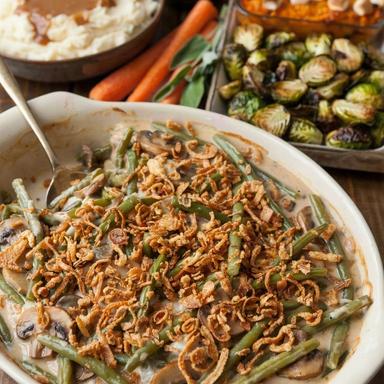
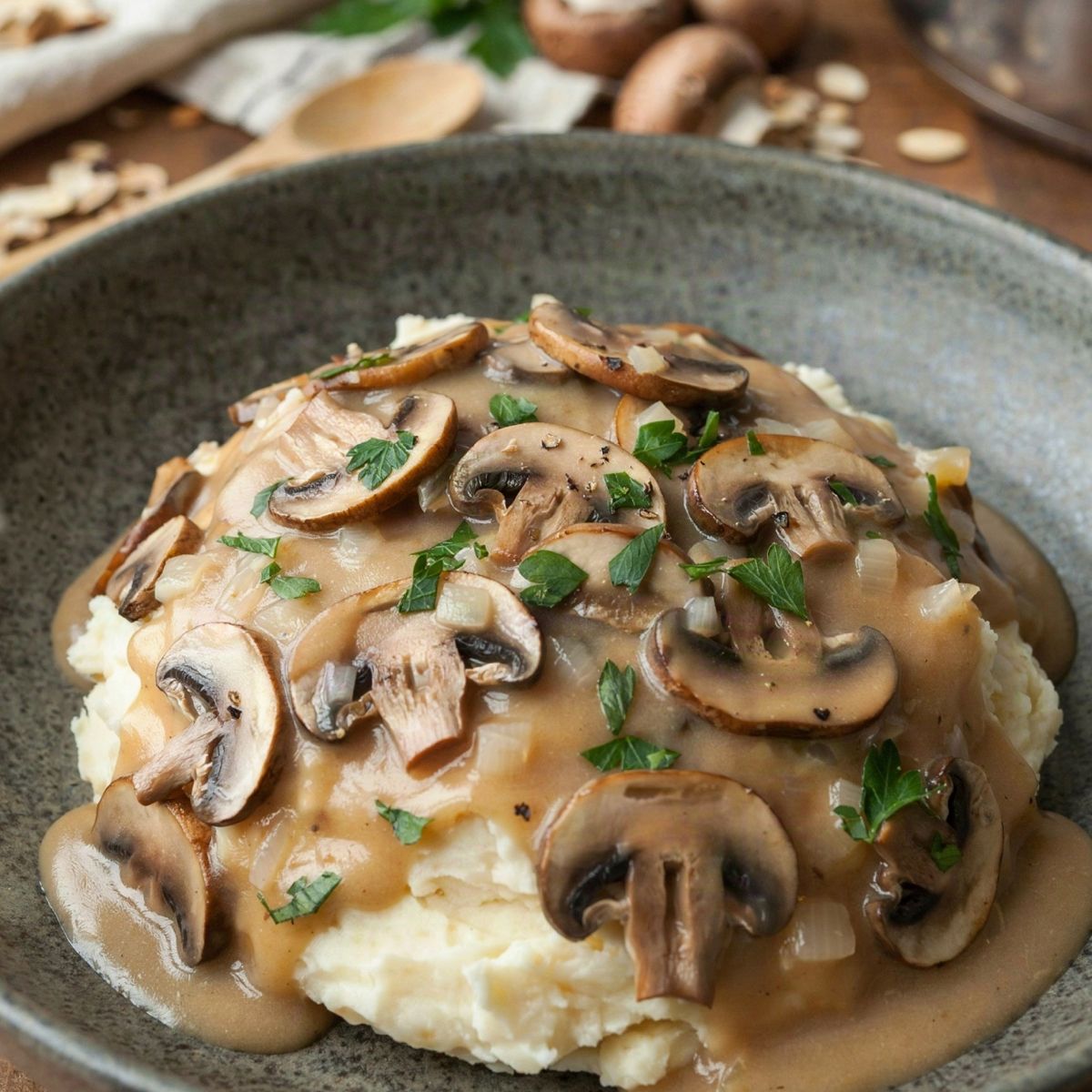
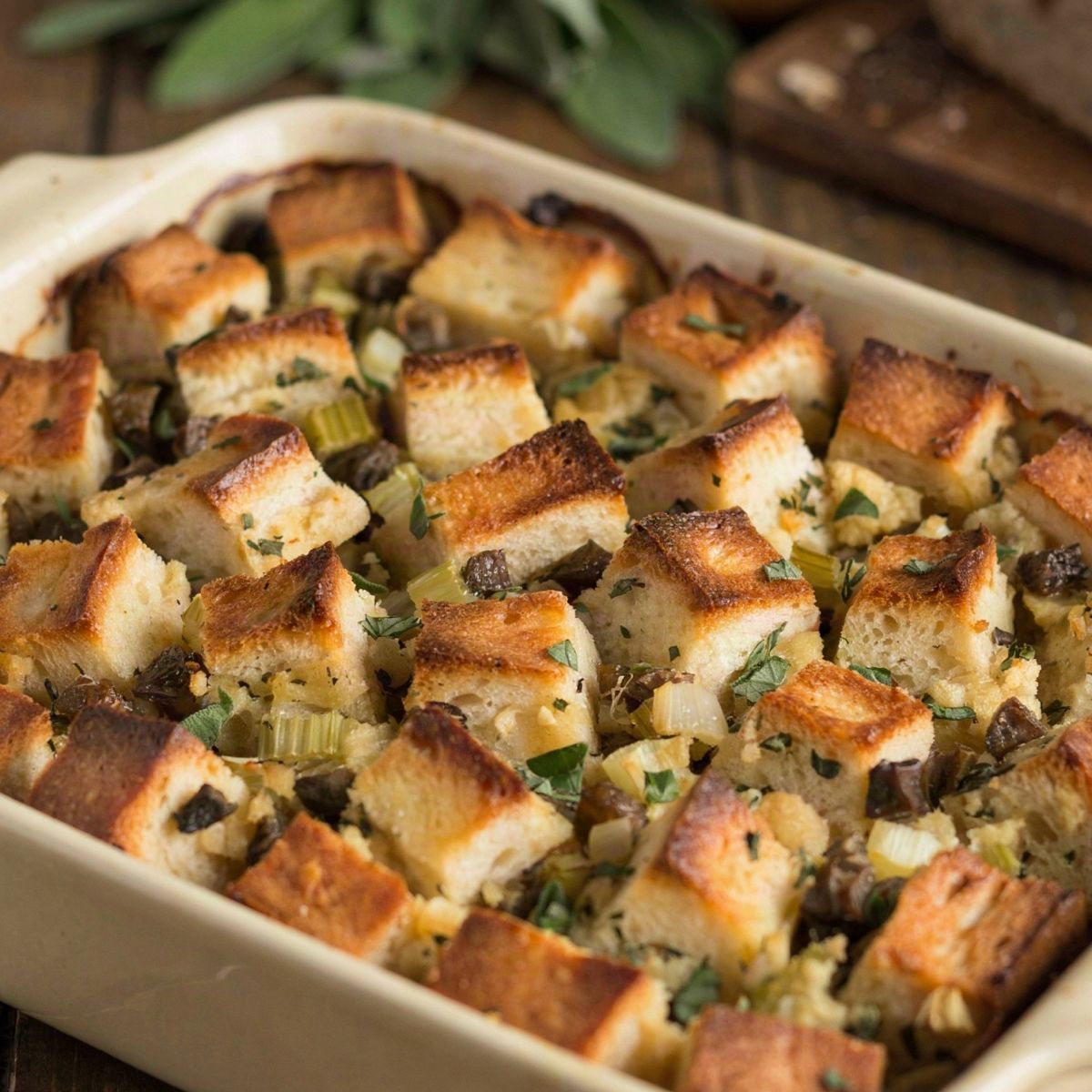
Gravy is the obvious partner and the one this recipe was built alongside, so make the mushroom gravy and pour it into a well in the middle. Beyond that it is the anchor of a Thanksgiving plate: stuffing on one side, green bean casserole on the other, cranberry sauce doing the cutting through. Year round it sits under braised lentils, under mushrooms cooked hard in a dry pan, or beside roasted carrots with the pan juices poured over.
Worth borrowing from the Andes: causa is served cold, deliberately, pressed into layers with avocado and lime. If you have leftovers, that is permission to stop thinking of cold mashed potato as a failure state.
Making it ahead
It holds for about two hours if you keep it warm rather than let it cool and reheat it. A heatproof bowl over a pan of barely simmering water, covered, is the reliable way, and it is how restaurants do it. Stir it once every half hour or so and expect to loosen it with a little warm oat milk before it goes out.
What does not work is making it fully the day before and reheating from cold in the microwave. It comes back grainy and tight and the fat separates in patches. If you need to break the work up, do the peeling and cutting a day ahead instead and hold the raw chunks submerged in cold water in the fridge, which also rinses off surface starch and does the mash a small favor.
Storing leftovers
Four days in an airtight container in the fridge. It will set firm, which is the coconut fat in the vegan butter behaving normally rather than anything going wrong. Reheat in a saucepan over low heat with a splash of warm oat milk, stirring only enough to bring it together, or covered in a low oven with a knob of vegan butter on top.
It freezes better than dairy mash does, for once to our advantage: there is no milk protein to curdle on thawing, and the high fat content protects the texture. Freeze in a flat layer for up to three months, thaw overnight in the fridge, and reheat as above. Cold leftovers also make the best potato cakes of the year, patted into rounds, floured and fried until the outside cracks.
Still wondering
Frequently Asked Questions
How much potato do I need per person?
Half a pound of raw potatoes each, so 3 pounds serves six, when the mash is one side among several on a loaded plate. Push it to three quarters of a pound each if it is the main starch of the meal or if the crowd is one that goes back for seconds, which for mashed potatoes it usually is. Scale the butter and the milk in proportion, but add the last third of the milk by eye rather than by measurement: bigger potatoes hold more water and need less.
Are these actually gluten free?
The potatoes, the vegan butter and the oat milk are all gluten free, so the dish is, with two labels worth reading. Some miso is fermented with barley rather than rice, and oats are routinely processed on equipment that also handles wheat, so an oat milk made from certified gluten-free oats is the safer buy if you are cooking for celiac disease rather than a preference. Rice miso and certified oat milk make this entirely gluten free with no change to the method.
Can I leave the skins on?
You can, but you will have made a different dish. Skins do not break down, so they stay as flecks of chew running through something whose whole appeal is being uniformly smooth, and they carry enough moisture to work against the drying step. Skin-on mash is properly a smashed potato, best made with red potatoes, mashed roughly, and finished with olive oil instead of vegan butter. If that is what you want, make that. This recipe is aiming at the smooth one.
Featured In These Collections
More For The Thanksgiving Table
Made this?