
Vegetarian Stuffing Recipe
Published · Updated
Most vegetarian stuffing just swaps the stock and hopes for the best. This one replaces all three of the things the turkey drippings were actually doing.
Jump To Recipe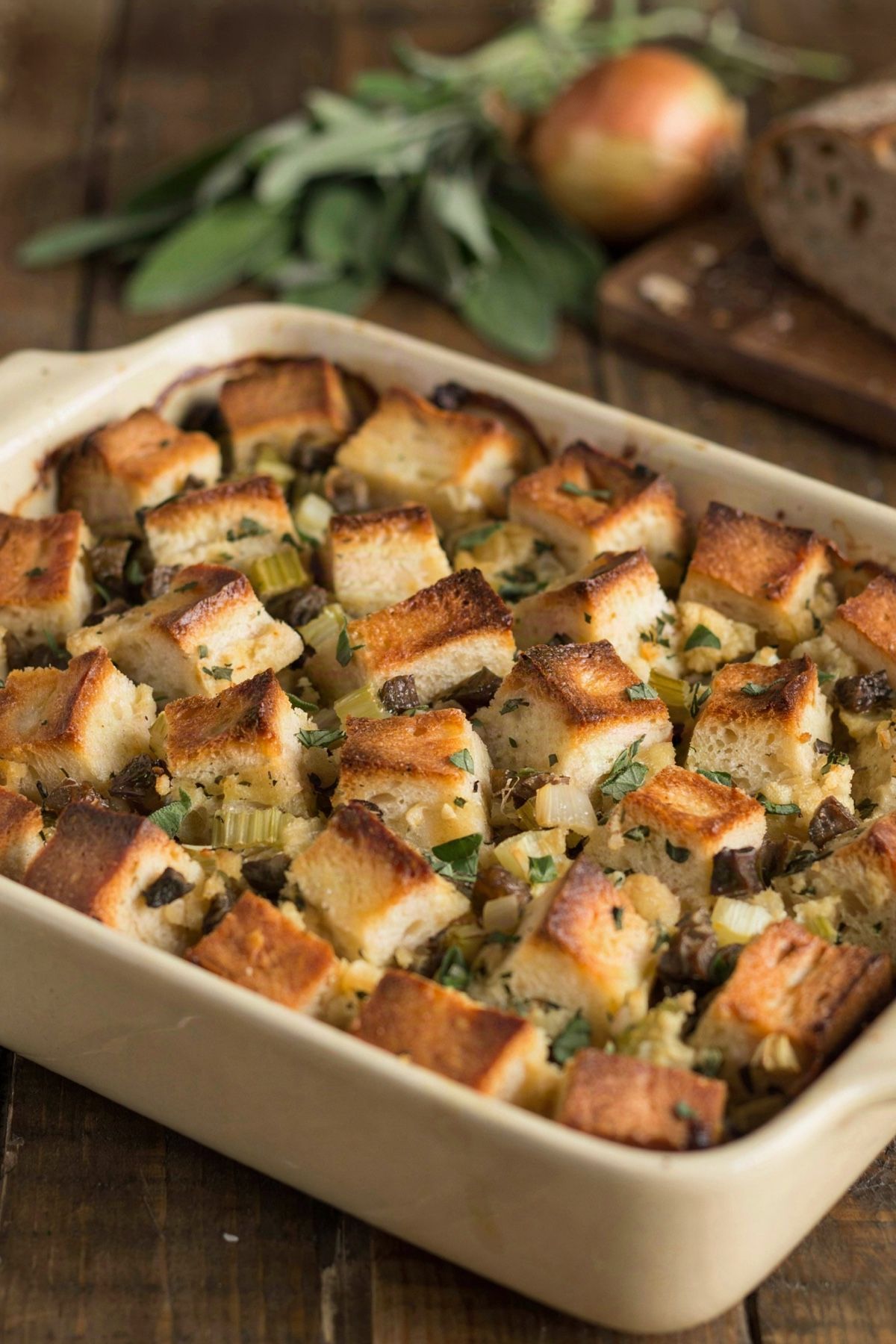
The Year I Stopped Making Two Pans
For years I made two pans. A big tray of the real thing for everyone else, and a small dish of something vegetarian off to one side, which I thought of privately as the consolation pan. It was always fine and it was never the thing anybody went back for.
The year I stopped doing that was the year I worked out that I had been solving the wrong problem. I had been trying to make stuffing without turkey, when what I needed to do was work out what the turkey had been contributing and then put it back by other means. Once the mushrooms got browned properly and the miso went into the stock, the small dish stopped being the consolation pan.
It got finished first that year, by people who eat meat, before the tray it was sitting next to. I have not made two pans since.
The story
Vegetarian Stuffing Lost Nothing When The Turkey Left
Stuffing a bird is old enough that the Romans wrote it down. Apicius, the recipe collection compiled around the fourth century, describes cavities packed with grain, herbs and forcemeat before roasting. The technique spread because it solved two problems at once: it stretched an expensive animal with cheap bread or barley, and it kept the meat from drying out while it cooked.
The two names are a question of where it cooks. Packed into the cavity it is stuffing. Baked in its own dish it is dressing. Both words describe the same mixture, and the split has more to do with region and habit than with any real difference in the recipe. Southern cooks tend to say dressing, and often mean something built on cornbread rather than white bread, which genuinely is a different dish.
The base was always whatever was cheap and local, which is worth knowing because it undercuts the idea that there is one correct stuffing to deviate from. The Chesapeake and much of New England put oysters in it, because oysters were cheaper than bread within living memory. The South built it on cornbread. Parts of Europe used chestnuts, and the upper Midwest used wild rice. None of those is a variation on some canonical version. They are all just what was to hand. A cook changing the base is doing the ordinary thing that everybody making this dish has always done.
What changed is that almost nobody cooks it in the bird now. The USDA recommends baking stuffing separately, in a dish, and the reason is arithmetic rather than squeamishness. The stuffing sits at the cold center of a large mass of meat, so it lags a long way behind the bird. Waiting for the center of the stuffing to reach 165°F means holding the turkey in the oven well past the point where the breast is done. One of the two has to be sacrificed, and the recommendation is not to put yourself in that position at all.
So the dish on almost every table today is dressing wearing the word stuffing, and the vegetarian version is not a departure from a tradition everyone else is still keeping. The bird was abandoned by everybody. What the vegetarian cook actually has to replace is not the cavity, it is the fat and the stock that came off the turkey, and that is a flavor problem rather than a structural one.
It is worth being precise about what those drippings were doing, because “use vegetable broth instead” is the advice you will find everywhere and it is the reason so much vegetarian stuffing disappoints. Turkey stock brought three separate things. Salt, which vegetable stock has less of. Gelatin, which gives the finished dish body and holds it together as something you can cut rather than spoon. And the roasted, savory depth of browned meat, which nothing in a carrot and onion broth supplies. Most vegetable stocks are built on carrot and tomato, so they are faintly sweet, and swapping one for the other does not leave a gap so much as tilt the whole dish in the wrong direction. This recipe replaces all three on purpose: browned mushrooms and miso for the savory depth, soy sauce for the salt, and an egg custard doing the binding work the gelatin used to do.
What to buy
Ingredient Notes
Sourdough or sturdy white bread
Soft sandwich bread collapses into paste the moment the stock hits it. You want an open, chewy crumb with some structure: sourdough, a country white loaf, ciabatta or a good baguette. Leave the crust on, it is most of what gives the finished dish its texture. A one pound loaf cut into 3/4 inch cubes comes out at roughly twelve cups, which is the right volume for a 9x13 dish.
Cremini mushrooms
Finely chopped and browned hard, these are the single biggest reason this tastes like stuffing rather than like herbed bread. Cremini, sold as chestnut mushrooms outside the US, have more flavor than white button, though button will do. Chop them small, about the size of a pea, so they disappear into the mixture instead of reading as pieces of mushroom. Do not crowd the pan or they steam and stay pale.
White miso paste
Two teaspoons, whisked into the stock. It is not there to taste of miso and at this quantity it does not. It supplies the glutamate that browned meat would have brought, which is exactly what a vegetable stock is short of. White miso is mild and slightly sweet; red miso is stronger and will make itself known, so use half as much if that is what is in the fridge.
Vegetable stock
Buy low sodium if you can, because the soy sauce and the miso are both bringing salt and a standard stock on top of them will overshoot. Given a choice, a mushroom stock beats a general vegetable one. What you want to avoid is a sweet, carrot forward stock, which is what most supermarket cartons are. If that is all you have, the miso and the soy matter more, not less.
Fresh sage
Sage is what makes stuffing taste like stuffing, and it is the one herb here worth buying fresh. Two tablespoons chopped sounds like a lot and is not. Dried sage works at about a third of the volume, but it is dustier and flatter, so add it with the garlic where the heat can wake it up rather than stirring it in at the end.
Unsalted butter
Six tablespoons is a lot of butter and it is not negotiable. In a traditional stuffing a good share of the fat comes off the bird, and removing that without putting anything back is why some vegetarian versions taste lean and dusty. The butter is also what carries the sage, which is fat soluble and will not project on its own. Brown it first if you like, before the mushrooms go in, and watch it closely, because browned butter goes from nutty to burnt in about thirty seconds. Plant butter swaps in at the same weight.
Eggs
Two eggs turn a pan of damp bread into something that sets and slices. They are doing the job the gelatin in turkey stock used to do. Whisk them into the stock once it has cooled to warm rather than pouring them into hot liquid, or you will get threads of scrambled egg through the mixture. For a vegan version leave them out and drop the stock by about half a cup; the result is looser but it is not wet.
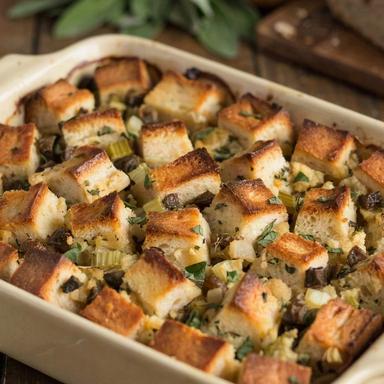
Vegetarian Stuffing
A make ahead vegetarian stuffing built on browned mushrooms, white miso and plenty of sage, baked in a dish for crisp edges and a soft, custardy middle.
Ingredients
Equipment
As an Amazon Associate I earn from qualifying purchases, at no extra cost to you.

Instructions
- 1
Dry the bread
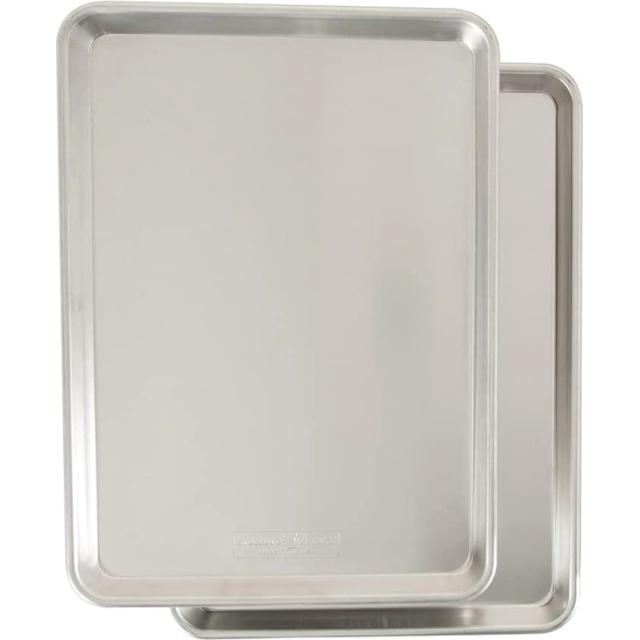
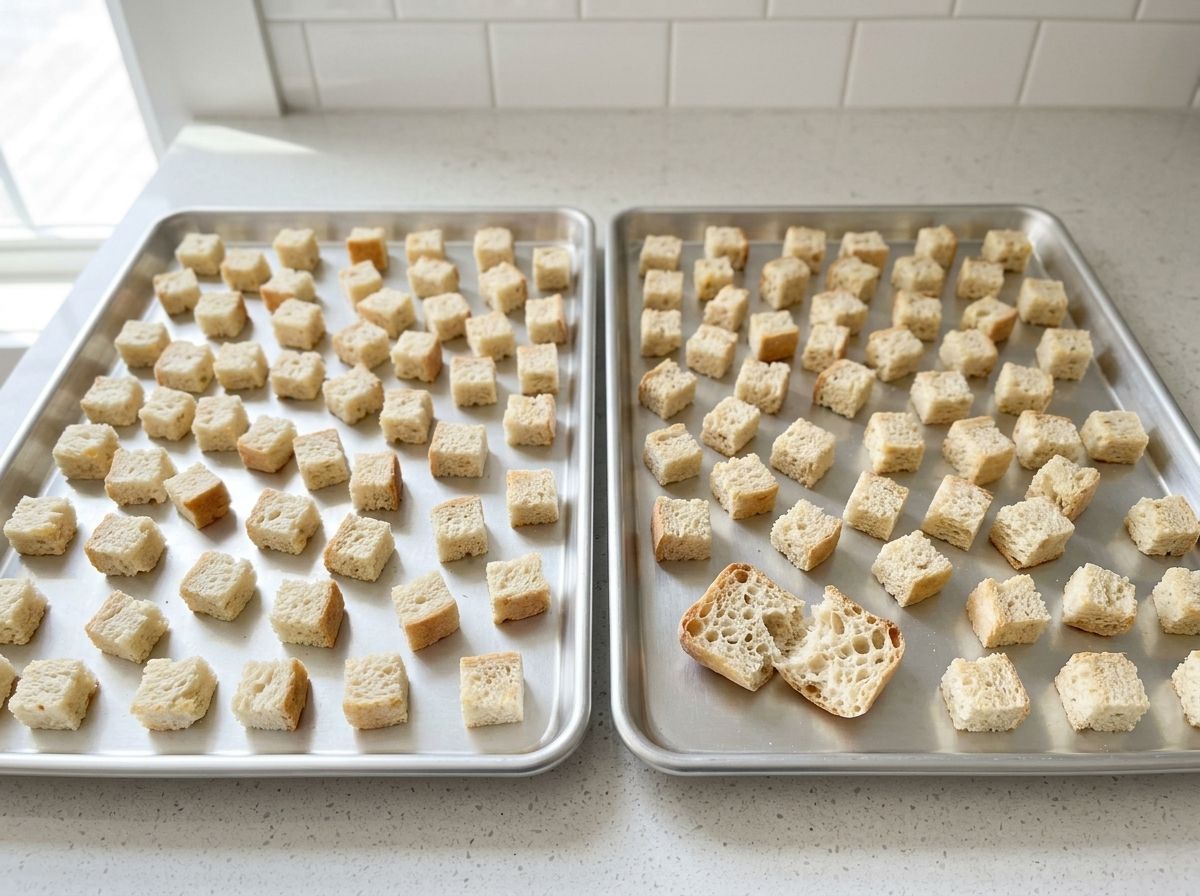
Heat the oven to 275°F (135°C). Spread the bread cubes over two baking sheets in a single layer and bake for 40 minutes, tossing them once halfway through, until they are crisp the whole way through rather than just dry on the surface. Break one open to check. Leave them to cool and turn the oven up to 350°F (175°C).
- 2
Brown the mushrooms
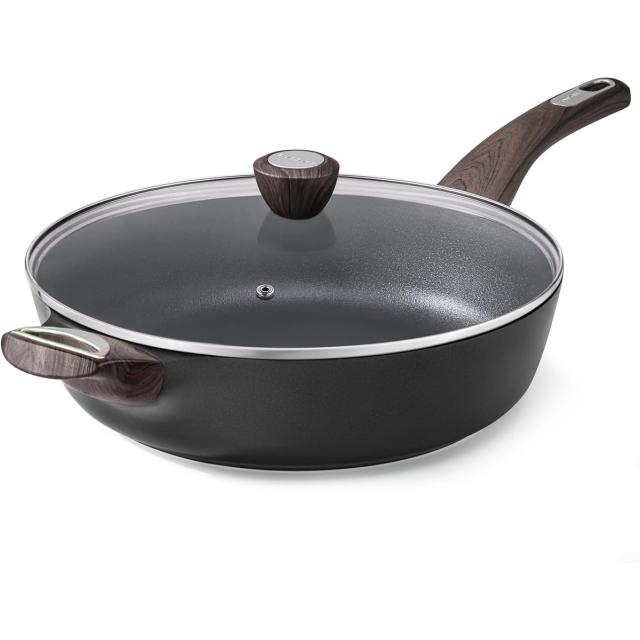
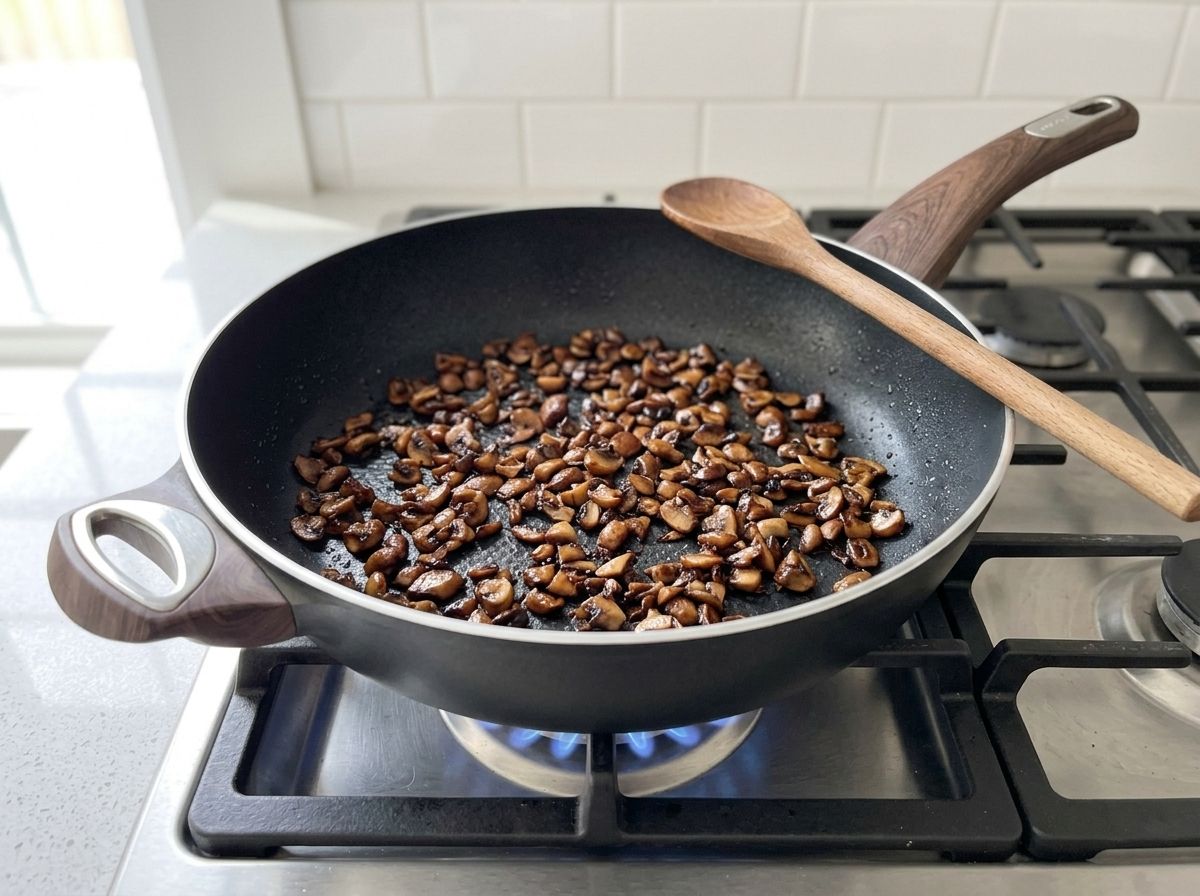
Melt 2 tablespoons of the butter in a large skillet over medium-high heat. Add the chopped mushrooms in an even layer and leave them alone. They will release their liquid, which needs to boil off before anything browns. After about 8 minutes they will be dry, shrunken and well colored.
- 3
Soften the onion and celery
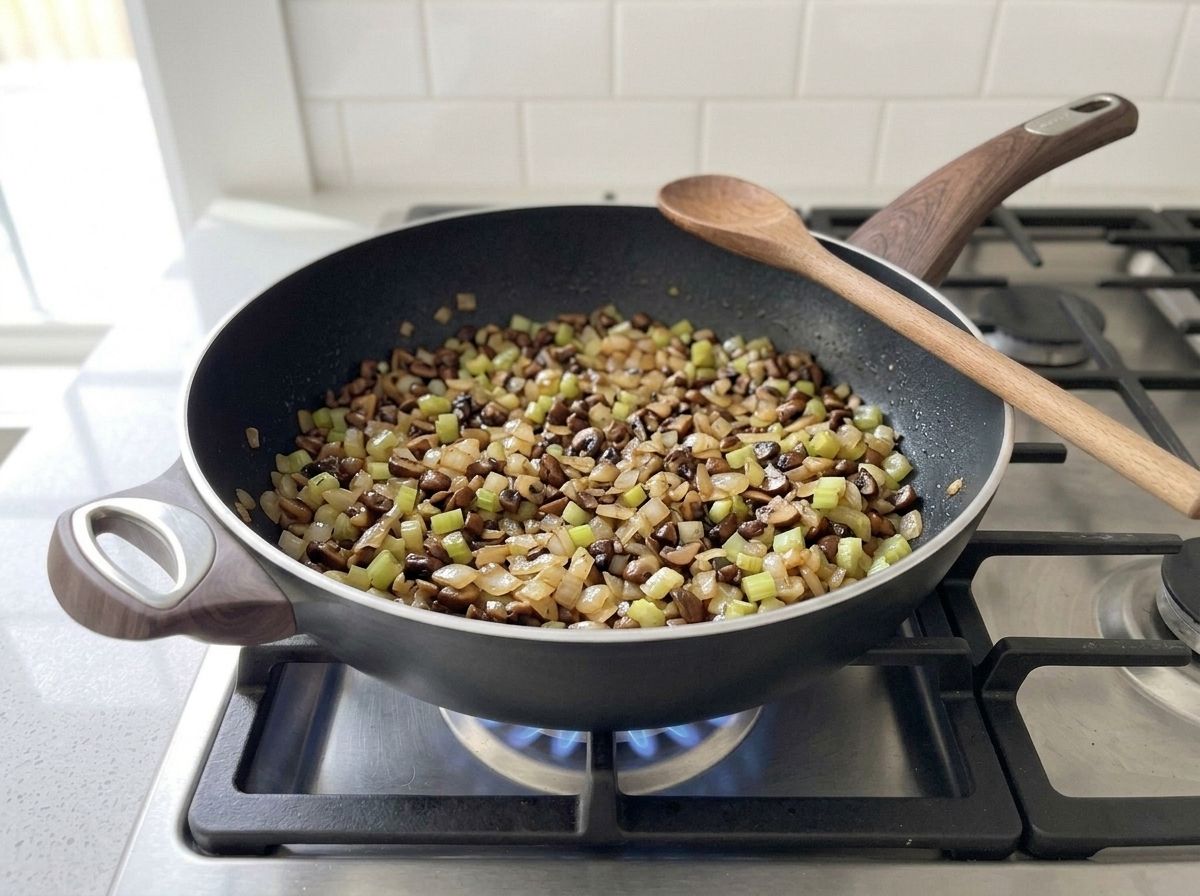
Add the remaining butter, then the onion and celery. Cook for 8 minutes over medium heat, stirring now and then, until the onion is translucent and the celery has lost its squeak.
- 4
Wake up the garlic and herbs
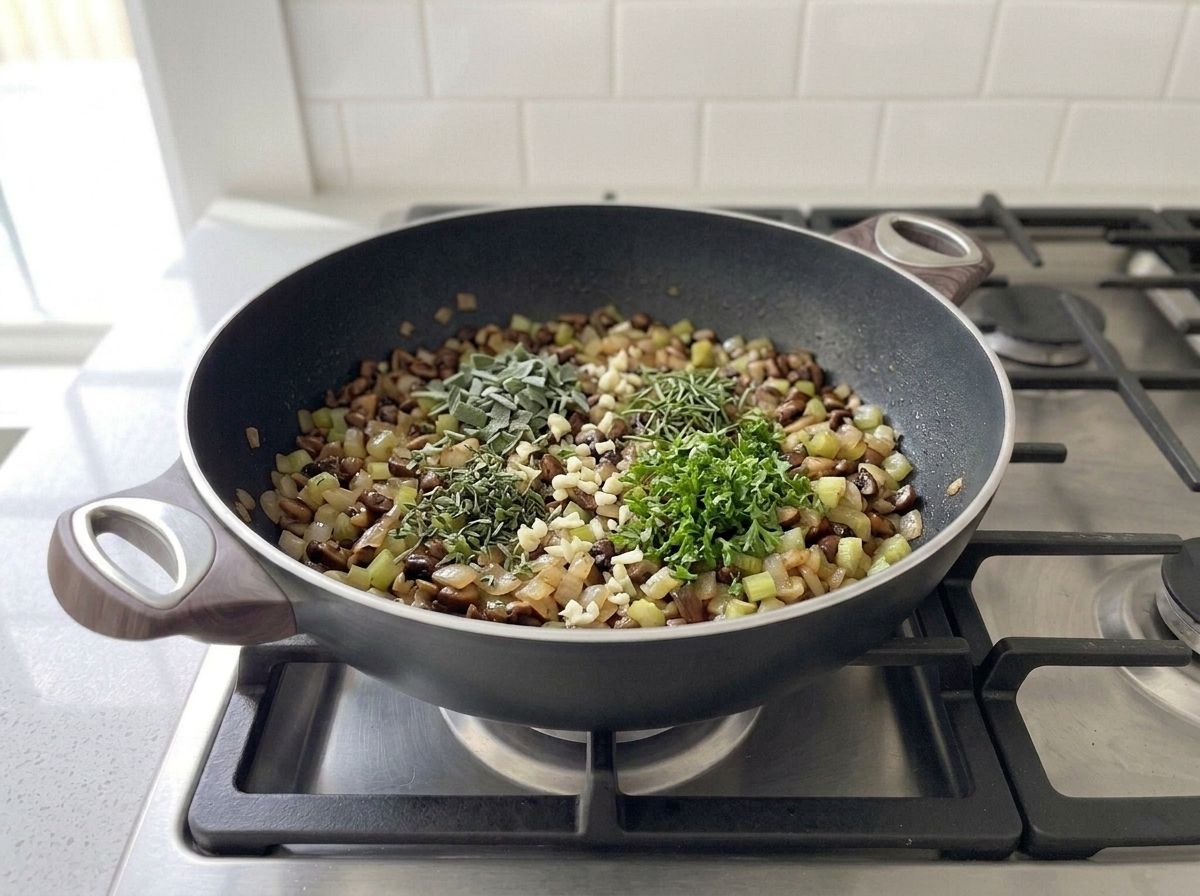
Stir in the garlic, sage, thyme and rosemary and cook for 1 minute, until the pan smells strongly of sage. Take it off the heat and stir through the parsley, salt and black pepper.
- 5
Build the savory stock
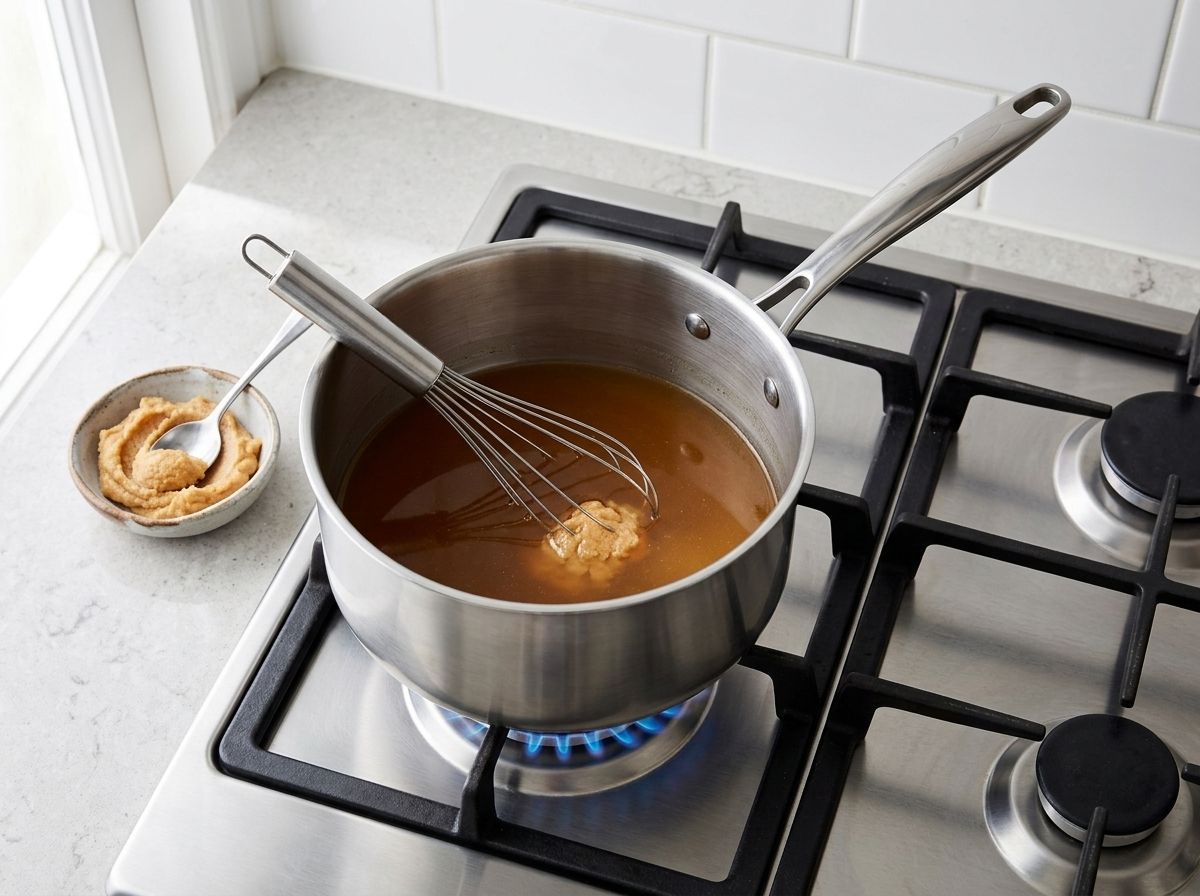
Warm the vegetable stock in a saucepan until it steams, then whisk in the miso paste and the soy sauce until the miso has completely dissolved with no lumps left. Take it off the heat and let it cool for 5 minutes, until it is warm rather than hot.
- 6
Whisk in the eggs
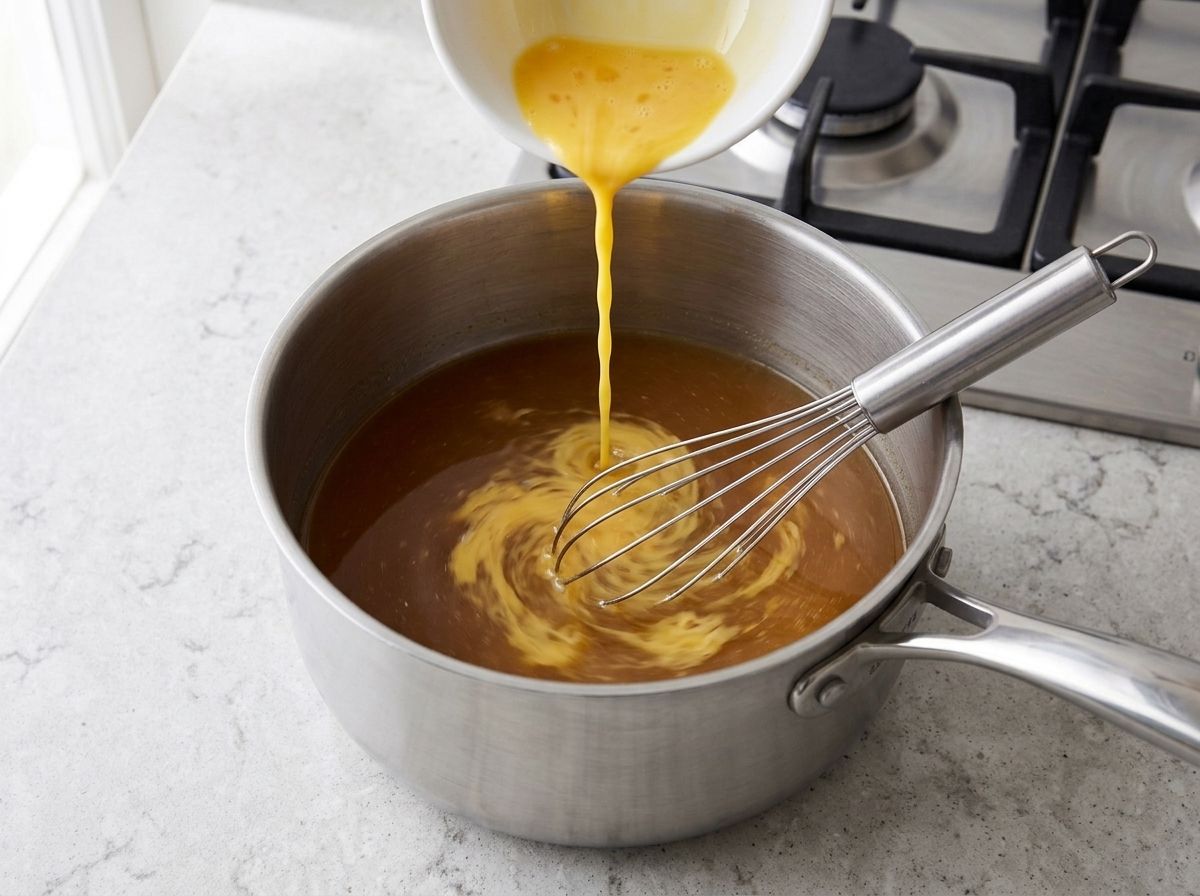
Beat the eggs in a small bowl, then pour them into the warm stock in a thin stream, whisking constantly. The stock must not be hot enough to set them, or you will get threads of cooked egg through the finished dish.
- 7
Combine everything
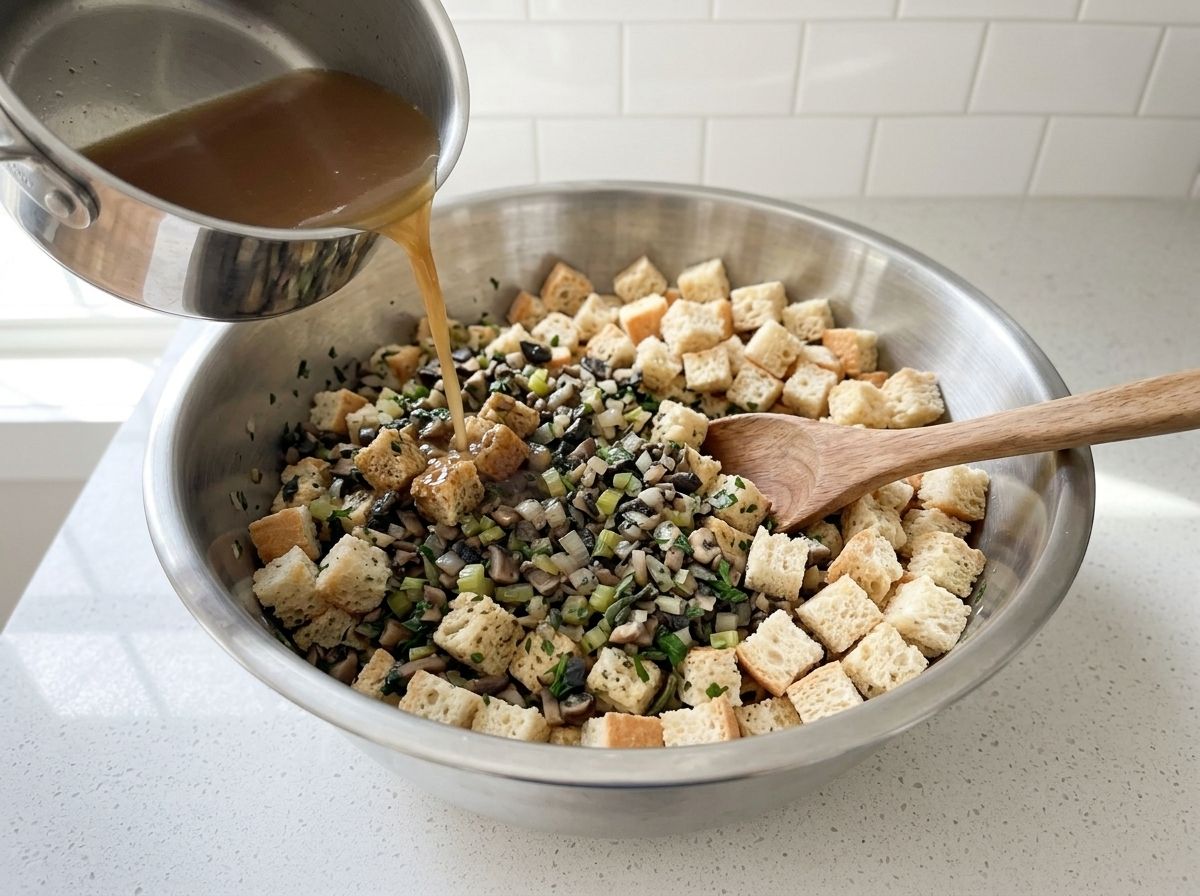
Tip the dried bread into your largest mixing bowl, add the vegetable mixture and toss until it is evenly distributed. Pour the stock over in three or four additions, folding between each one, then leave it to stand for 5 minutes. Squeeze a handful: it should hold its shape and feel evenly damp, with no liquid pooling at the bottom of the bowl.
- 8
Fill the dish
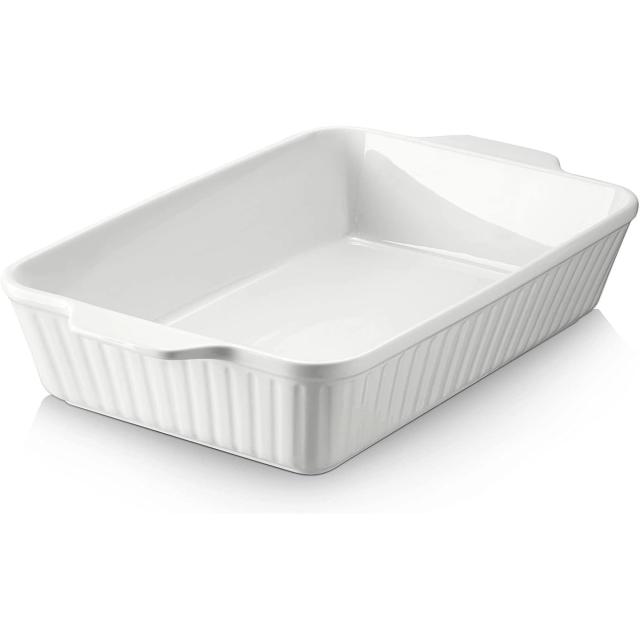
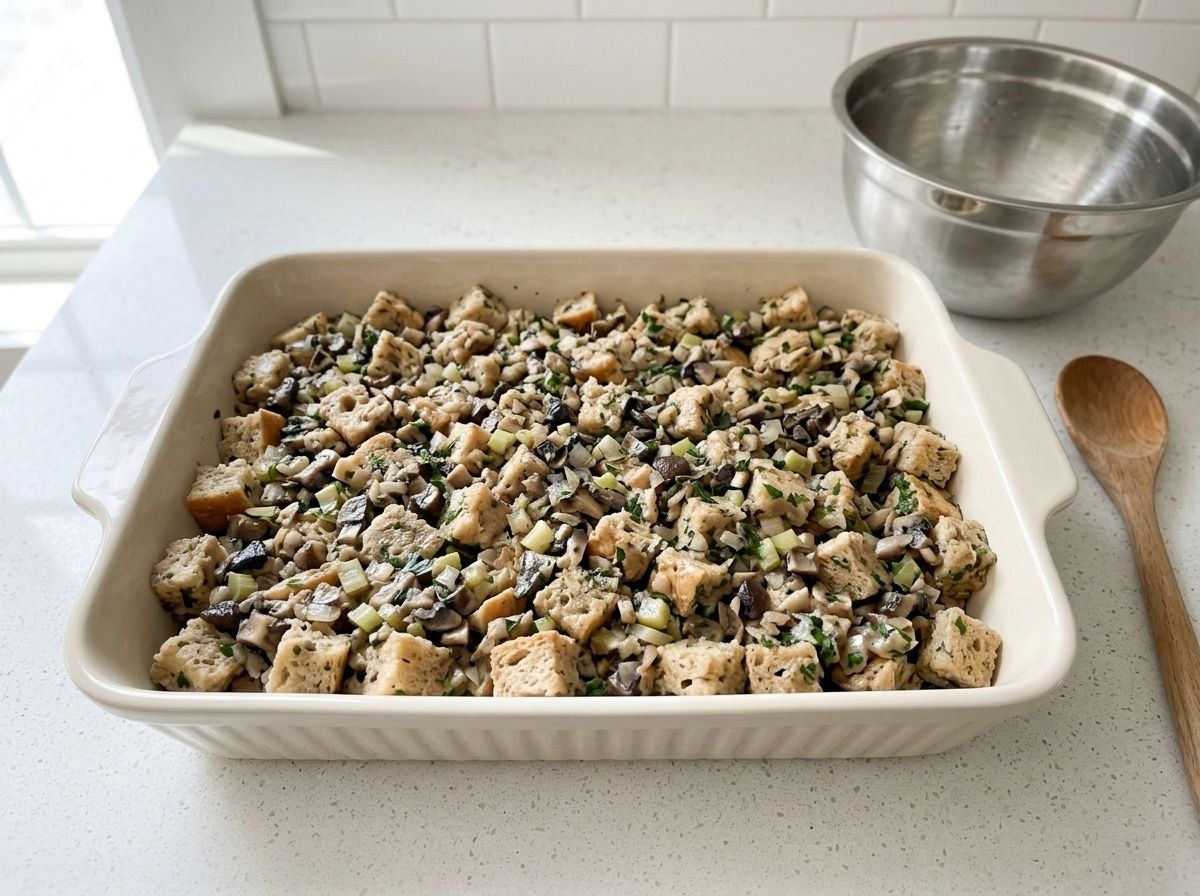
Butter a 9x13 baking dish and pile the mixture in loosely. Do not press it down, because the air pockets are what let the top crisp. Scatter over the pecans and cranberries if you are using them.
- 9
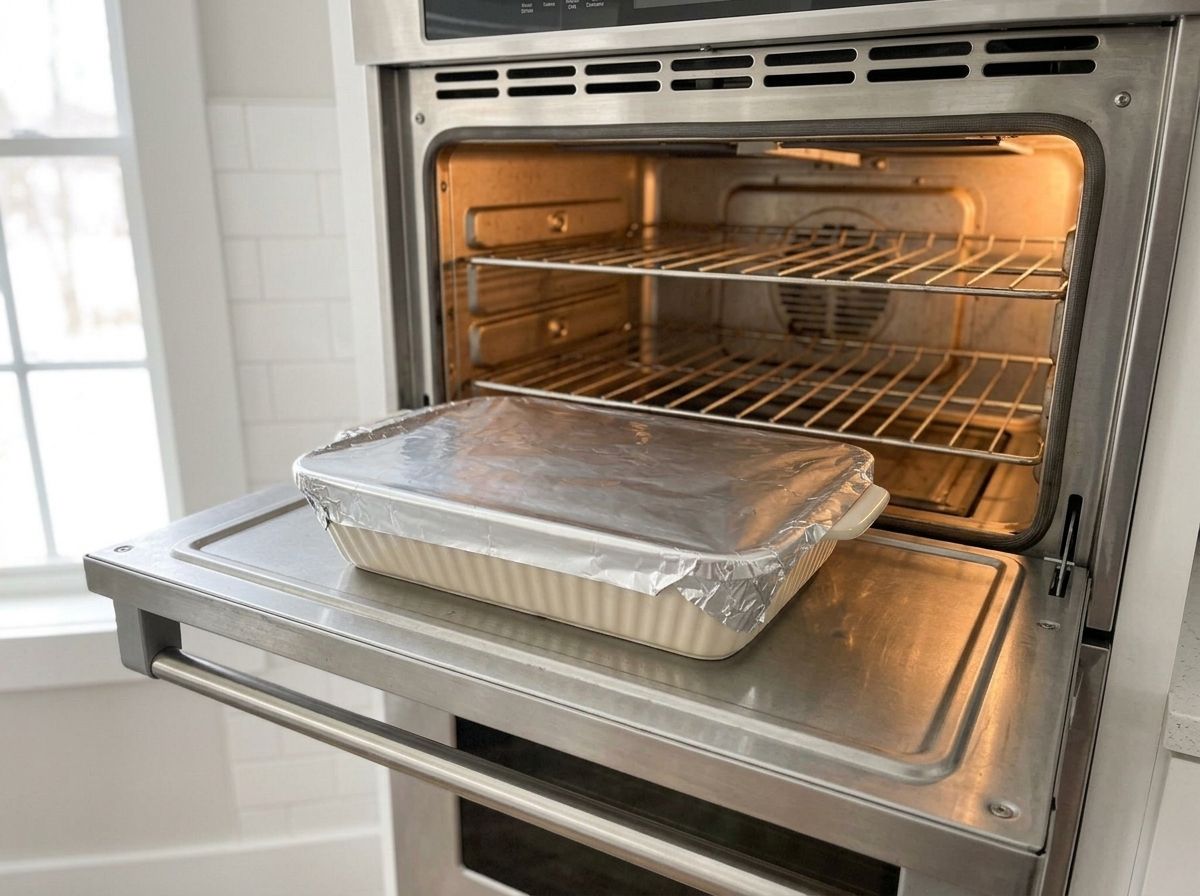
Bake it covered
Cover the dish tightly with foil and bake at 350°F (175°C) for 25 minutes. This stage steams the dish and sets the egg through the middle.
- 10
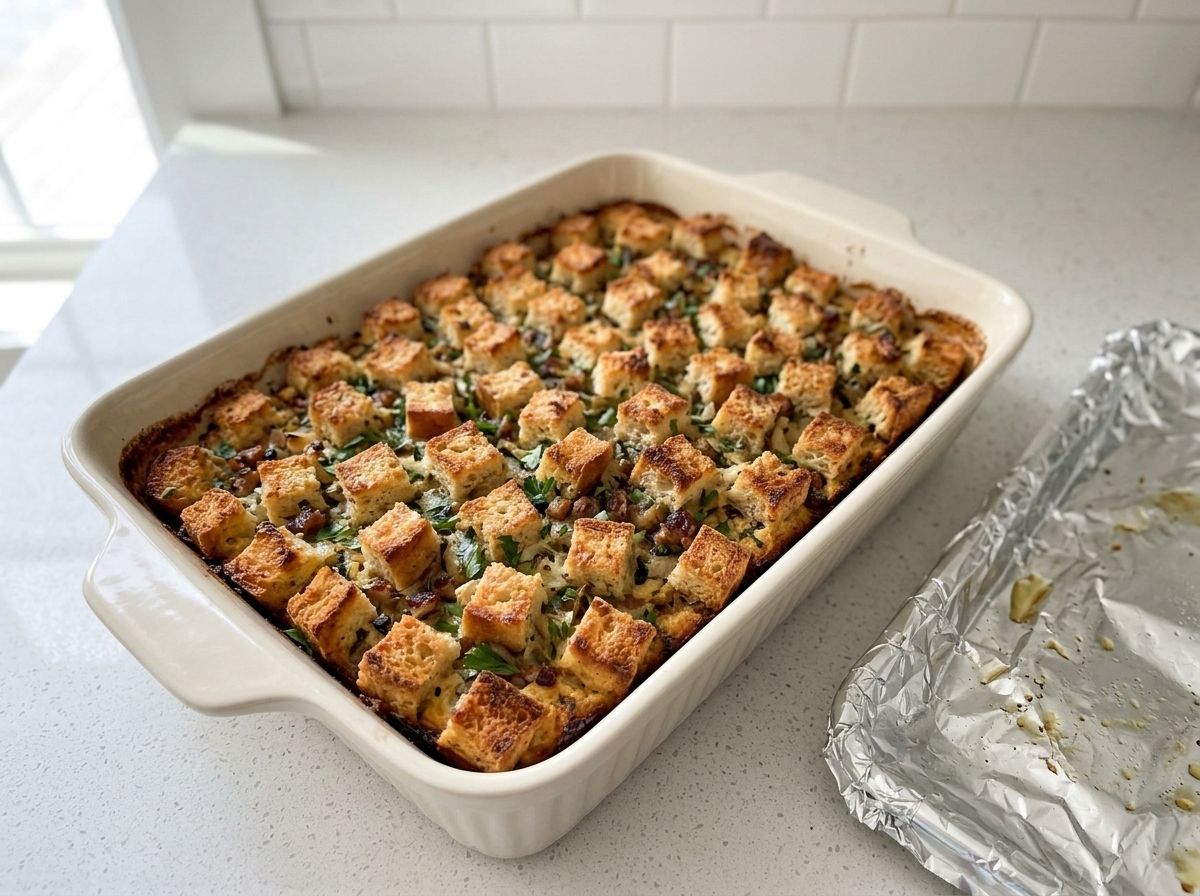
Brown the top
Take the foil off and bake for another 20 to 25 minutes, until the top is deeply golden and crisp and the edges have pulled slightly away from the sides of the dish.
- 11
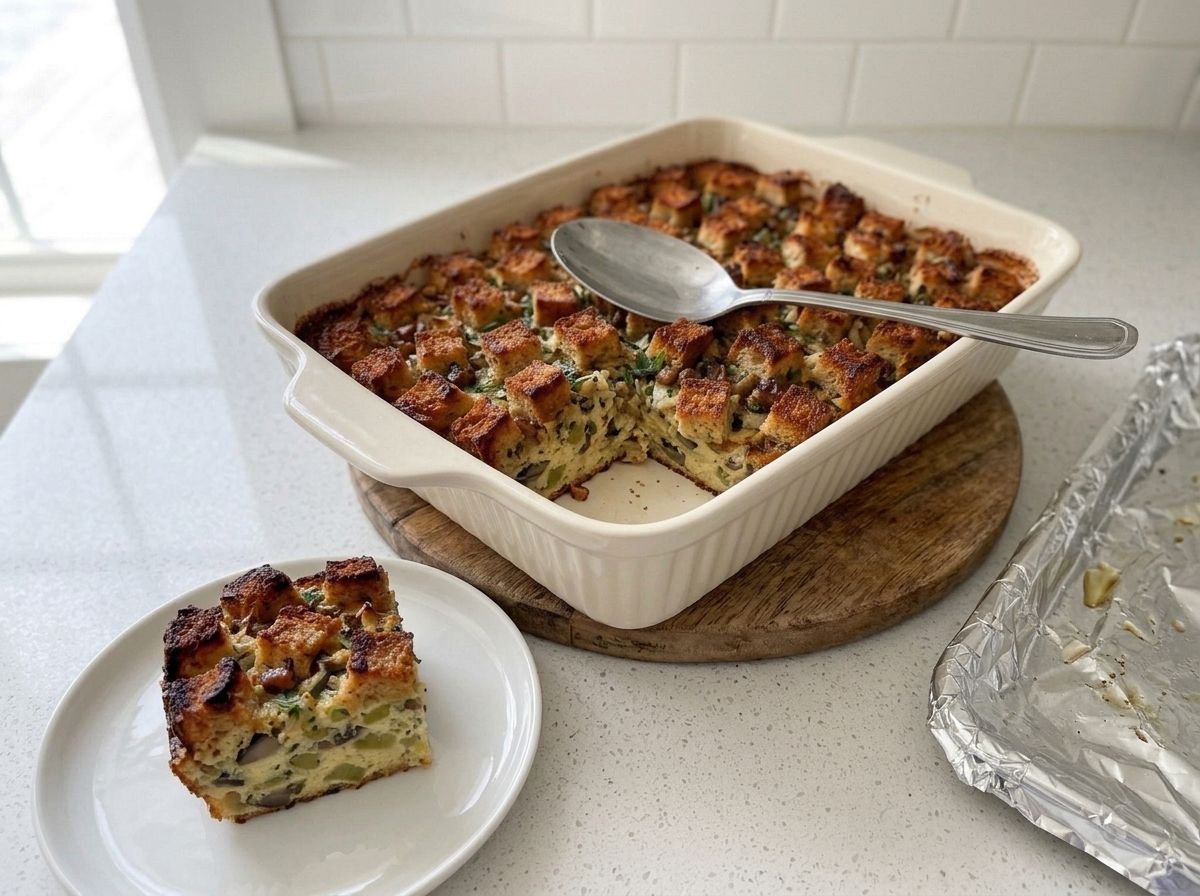
Rest before serving
Leave it to stand for 10 minutes before serving. The custard finishes setting as it cools, and stuffing cut straight out of the oven falls apart on the spoon.
Notes
The bread can be dried up to three days ahead and kept in a paper bag. A sealed container makes it go soft again.
Two teaspoons of miso is not enough to taste of miso. It is there for savory depth, not for a flavor of its own.
For a vegan version, leave the eggs out, use a plant butter and reduce the stock by about half a cup.
If the only stock you have is a sweet, carrot forward one, the soy sauce and miso matter more, not less.
Nutrition Facts
8 servings · 264 g per serving
- Calories
- 344 kcal
% Daily Value*
- Total Fat
- 16.7 g21%
- Saturated Fat
- 6.8 g34%
- Sodium
- 1076 mg47%
- Total Carbohydrate
- 41 g15%
- Dietary Fiber
- 3.8 g14%
- Sugars
- 10.2 g—
- Protein
- 9.6 g19%
Recipe from veggierecipes.blog
When it goes wrong
Troubleshooting
It came out soggy in the middle
Almost always the bread. Fresh or under dried bread is already full of water, so it cannot absorb the stock and it collapses instead. Drying the cubes in a low oven until they are genuinely crisp the whole way through, not just dry on the outside, is the fix, and it matters more than anything else in this recipe. If the bread was properly dry, then there was too much liquid: the mixture should be evenly damp and hold its shape when you squeeze a handful, not pool at the bottom of the bowl.
The top is brown but the inside is still wet
It went into the oven uncovered. The foil is not optional. Covered, the dish steams and the egg sets all the way through; uncovered from the start, the surface seals and browns while the center is still liquid. Cover for the first twenty five minutes, then take the foil off for the browning.
It tastes sweet, which is not what I wanted
Your vegetable stock. Most supermarket cartons are built on carrot and tomato and carry a distinct sweetness that chicken or turkey stock does not have. This is the most common complaint about vegetarian stuffing and it is not a fault in your seasoning. Add the soy sauce and the miso if you left them out, and if it is already baked, a squeeze of lemon over the top pulls it back further than you would expect.
It tastes flat, like herby bread
The mushrooms were not browned properly. If they went in and came out gray and soft they steamed rather than browned, and none of the savory depth developed. Get the pan properly hot, give them room, and leave them alone until the liquid they release has boiled off and they start to color. That takes eight minutes or so and it cannot be hurried.
It is dry and crumbly
Under liquid rather than overbaked, usually. Dried bread drinks more than people expect, and how much depends on how dry the loaf got. Squeeze a handful before it goes into the dish: it should hold together. If you are already past that point, pour another quarter cup of warm stock over the top, cover, and give it ten more minutes.
The edges have gone hard
That is not a fault, it is the best part, and it is the whole reason this is baked in a dish rather than in a bird. Crisp edges against a soft middle is the texture the dish is aiming at, and it is the one thing in-bird stuffing can never produce. If they are genuinely burnt rather than crisp your oven runs hot, so drop it to 325°F for the uncovered stage.
Before you serve
Serving & Storage
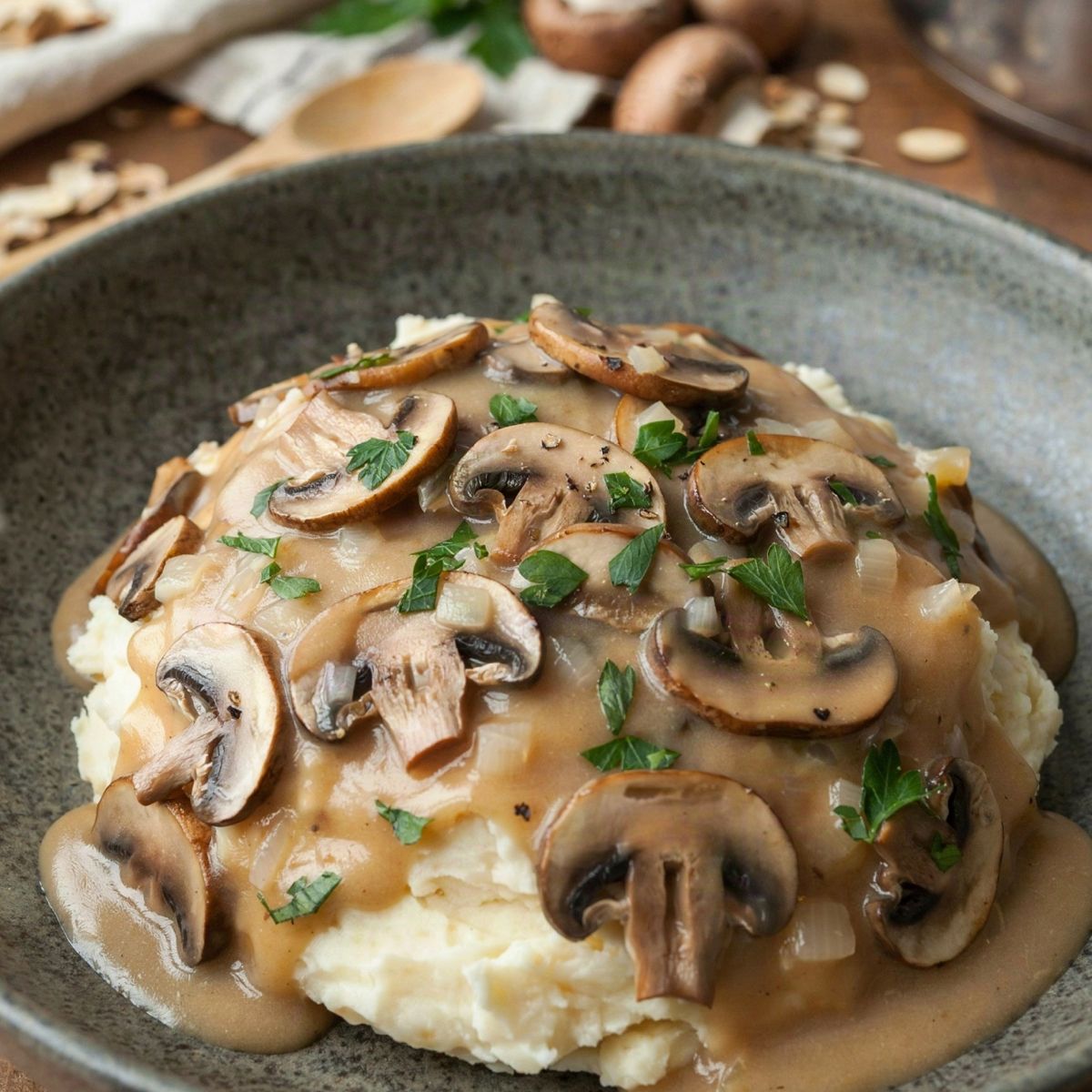
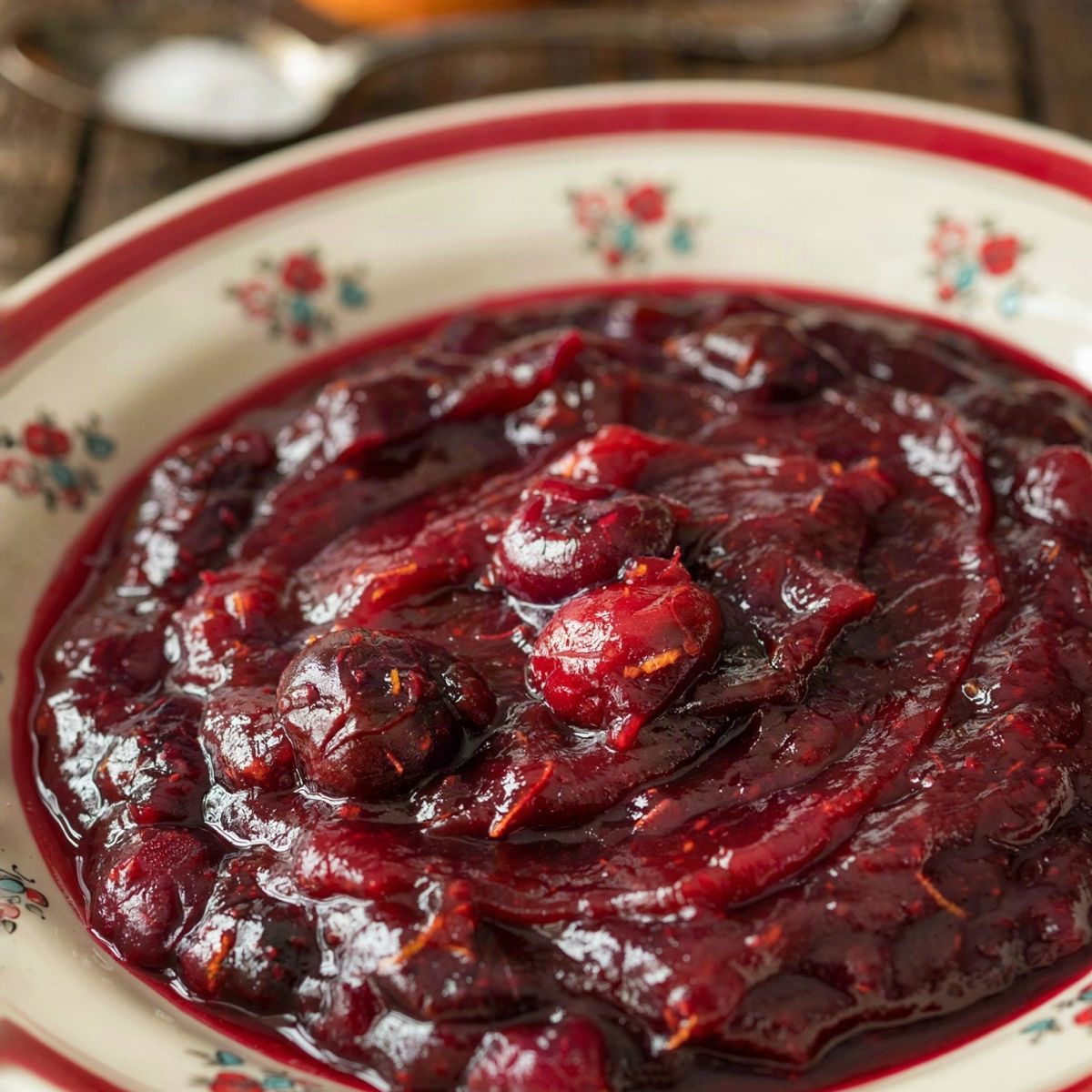
Stuffing is a supporting dish that most people treat as the main event, and it is worth serving it accordingly: in the dish it baked in, with the crisp top intact, rather than scooped into a bowl where the edges soften on the way to the table. It wants gravy. Mushroom gravy is the obvious partner, and a spoonful of something sharp alongside, cranberry sauce or a pickle, cuts the richness.
It is a side dish, but a generous pan of it with gravy and a green vegetable makes a perfectly good dinner in its own right in the week afterwards, which is a large part of why it is worth baking a full 9x13 rather than a cautious small one.
Outside November it is worth remembering the dish exists at all. It goes with anything roasted, and a square of it reheated under a fried egg is one of the better uses of a Saturday morning. What it does not do is travel. If you are taking it to somebody else’s table, bake it there if you possibly can, or do the covered stage at home and the uncovered browning in their oven. Stuffing carried across town under foil arrives steamed, and the crisp top is the entire point of baking it in a dish.
Making it ahead
This is the make ahead dish on the table, which is most of its value on a day when the oven is contested. Dry the bread up to three days in advance and keep it in a paper bag at room temperature; in a sealed container it softens again. The vegetable mixture can be cooked up to two days ahead and refrigerated.
Assemble the whole thing up to a day ahead, cover it, and refrigerate it unbaked. Take it out an hour before it goes in, because a fridge cold dish adds fifteen to twenty minutes to the covered stage and the times below assume it is not. What does not work is assembling it further ahead than that: the bread keeps drinking, and by the second day it has gone from damp to pasty.
Storing leftovers
Covered in the refrigerator it keeps for three to four days. Reheat it in the oven at 350°F, covered for ten minutes and uncovered for another ten, which brings the top back. The microwave works and produces something uniformly soft, with none of the contrast that makes the dish worth eating.
Baked, it freezes well in portions for up to three months and reheats from frozen in a covered dish at 350°F in about forty minutes. Freezing it unbaked does not work: the egg custard separates as it thaws and the bread turns to mush.
Still wondering
Frequently Asked Questions
Is boxed stuffing mix like Stove Top vegetarian?
Usually not, and the flavor name on the box is not a reliable guide. The chicken and turkey varieties of Stove Top contain cooked chicken and chicken broth, and a number of supermarket own brand herb stuffing mixes carry chicken fat or beef extract even when nothing on the front of the packet suggests meat. Formulations also change and differ between countries, so the ingredient list is the only thing worth trusting. Plain bagged seasoned bread cubes are the safer shortcut, because they are bread and herbs and nothing else, and you supply the stock and the fat yourself, which is exactly where the meat tends to hide.
Can I cook this inside the turkey for the rest of the table?
You can, but it stops being vegetarian the moment you do, which is worth saying plainly because it catches people out every year. Stuffing packed into a cavity absorbs the drippings, and that is the entire point of cooking it there. For a mixed table the practical answer is to bake this pan on its own and let anyone who wants to spoon turkey gravy over their own plate do that. It also sidesteps the food safety problem described above, which is real and is why the USDA stopped recommending the practice in the first place.
How much stuffing do I need per person?
This makes a full 9x13 dish, which is eight generous side portions, or twelve if the table is crowded with other dishes. The usual planning figure is about three quarters of a cup per person, and stuffing is the side most likely to run out, so most people scale up rather than down. The recipe doubles cleanly, but two 9x13 dishes do not bake in the same time as one: add about ten minutes to the covered stage and swap their shelves halfway through.
Can I make it gluten free?
Yes, with two adjustments. Use a sturdy gluten free loaf rather than a soft sandwich one, and dry it more gently, around thirty minutes instead of forty, because gluten free bread starts drier and goes to crumbs if you push it. Then cut the stock back by roughly half a cup, since those loaves are denser and absorb less than they look like they should. Use tamari in place of the soy sauce, and check the miso, which is usually gluten free but is occasionally made with barley.
Featured In
More For The Thanksgiving Table
Made this?