
Vegan Oatmeal Cookies Recipe
Published · Updated
Naturally sweetened, perfectly chewy, and totally vegan, these oatmeal cookies are the treat you’ll want on rotation all year round.
Jump To Recipe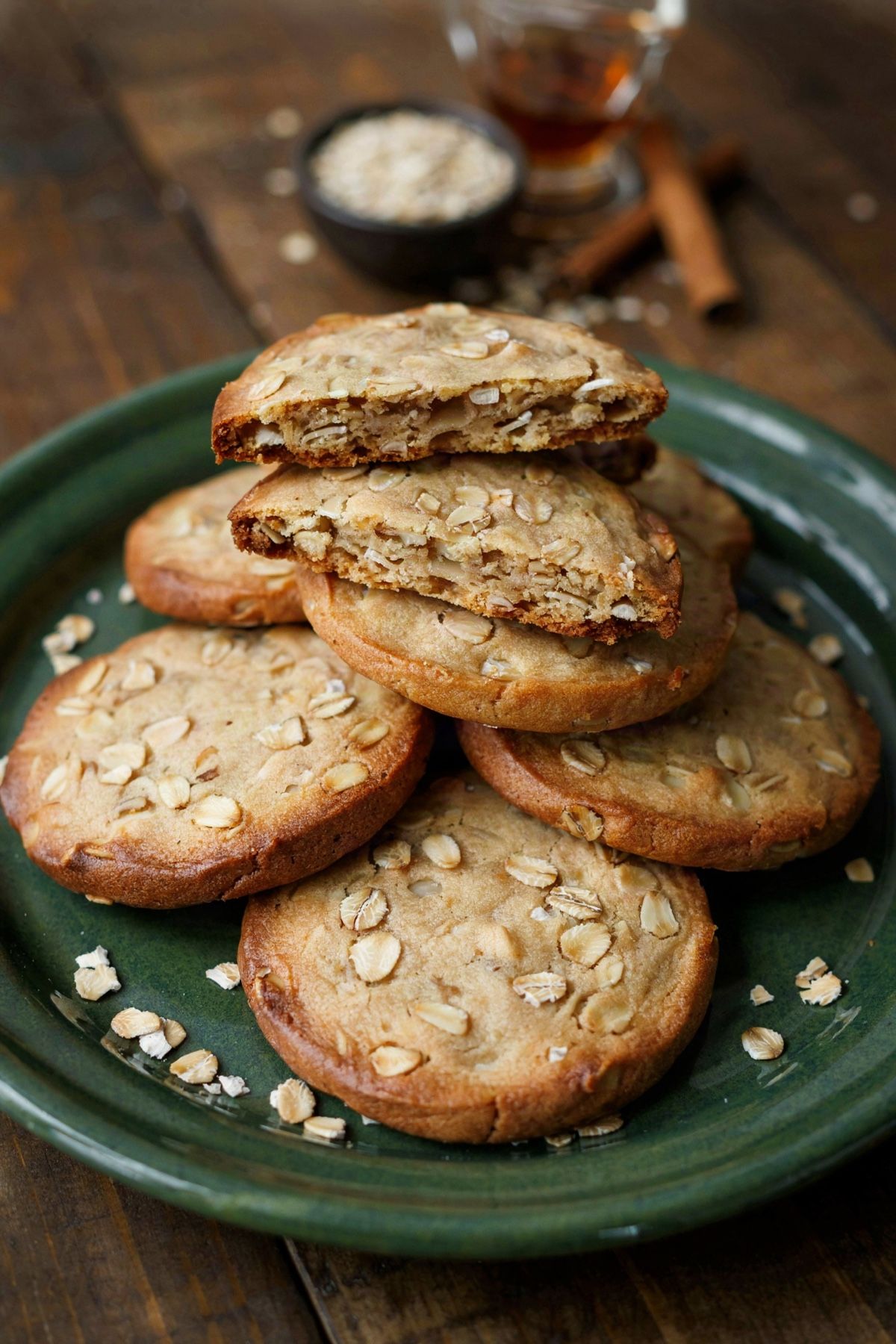
Why These Vegan Oatmeal Cookies Win Every Time
I’ve always been a fan of the classic oatmeal cookie. Getting that same chew out of a vegan one took me far longer than I expected, and the answer turned out to be half an hour of doing nothing: the dough sits on the counter while the oats drink up the maple syrup, and that is most of the trick. Everything else about it is simple, which is the other reason it stays in rotation. Most days I want cookies that are quick, easy, and made from real ingredients I can actually find in my cupboard.
What makes these cookies a regular in my line-up?
For starters, the vanilla and maple syrup bring the right amount of sweetness. It's nothing overpowering, just a subtle, nostalgic vibe. Coconut oil keeps the cookies moist and soft without being greasy. And if I’m in the mood to mix things up, chocolate chips, raisins, or walnuts make great add-ins for a bit of variety.
Here’s what I love about them:
- Easy ingredient swaps: use what you have.
- Totally plant-based, but you’d never guess it when you taste them.
- Flexible texture: add crunch with nuts or keep it classic.
- Perfect for meal prepping, these cookies stay tasty for days.
If you want a dessert that is as good with morning coffee as it is for an after-dinner treat, this vegan oatmeal cookie recipe truly delivers. Simple, honest, and always satisfying.
The story
Vegan Oatmeal Cookies Have an Older Ancestor Than You Think
The oatmeal cookie looks like an heirloom and is not one. The first published version appeared in the 1896 Boston Cooking-School Cook Book, where Fannie Farmer called for fine oatmeal rather than rolled oats, no raisins and no spice, and had you roll the dough out on a floured board and cut it into shapes. It was closer to a biscuit than to anything on a bakery counter today.
One detail in it is worth noticing: Farmer leavened her cookie with baking powder. The soda-heavy oatmeal cookie is a later habit that arrived with brown sugar, and this recipe goes back to Farmer’s choice, for the reason set out in the ingredient notes below.
Farmer’s 1912 A New Book of Cookery is where the cookie starts to look familiar. Her Nut Oatmeal Cookies use rolled oats, raisins, nuts and cinnamon, the same shortlist sitting at the bottom of this ingredient list as optional add-ins more than a century later. From there it spread through the oat industry rather than through home cooks. Quaker Oats printed an oat cake recipe on the box in 1908, among the earliest recipes to travel on American packaging.
Behind all of it is the Scottish oatcake: oats, fat, salt and water, with no egg and no dairy required. The American oatmeal cookie spent the twentieth century adding creamed butter, eggs and brown sugar, and got rich and chewy in the process. A vegan version does not so much strip that back as land near where the thing started, held together by the oats themselves. That is why the 30 minute rest carries so much weight here, and why this dough behaves nothing like a butter cookie’s.
What to buy
Ingredient Notes
Rolled oats
Old-fashioned rolled oats, not instant and not steel-cut. Instant oats are pre-cooked and cut fine, so during the rest they collapse into paste and you lose the flakes that make this an oatmeal cookie at all. Steel-cut never soften and leave hard grit behind. Quick oats sit in between and give a softer, more uniform crumb. 1 1/2 cups is 135 g: older versions of this recipe used less oats than flour and were really flour cookies with oats stirred through.
All-purpose flour
125 g measured on a scale, because a cup scooped straight from the bag can weigh 145 g and that is enough to dry this dough out. Whole wheat works and suits maple, but it absorbs more liquid, so use 115 g and expect a denser, nuttier cookie.
Coconut oil
Refined coconut oil is neutral; virgin tastes of coconut, which is pleasant against oats but is a flavor choice rather than a technical one. Either has to be melted and then cooled until it is only just warm. Any neutral liquid oil substitutes directly and is easier to handle because it cannot seize. The trade is structure: coconut oil is solid below about 76°F (24°C), so it sets as the cookies cool and is what holds them together without an egg. With sunflower oil, expect a softer cookie that needs longer on the sheet.
Maple syrup
Real maple syrup, not pancake syrup, which is corn syrup with flavoring and is thinner and sweeter. It has to be at room temperature: straight from a cold cupboard it will set melted coconut oil into hard flecks on its own. Grade A dark carries more flavor. Agave, date syrup and coconut nectar all swap in cup for cup, and all are near-neutral in the same way maple is, so the leavening stays put.
Baking powder and baking soda
Both, and this is the fix most maple-sweetened cookie recipes miss. Baking soda needs an acid to do anything, and in a conventional cookie that acid is the molasses in brown sugar. There is no brown sugar here, and maple syrup sits at roughly pH 6.5 to 7.0, so half a cup of it neutralizes about an eighth of a teaspoon of soda. Call for half a teaspoon, as this recipe used to, and most of it goes unreacted. That is the faint soapy, metallic aftertaste people tend to blame on the oats. The baking powder brings its own acid and does the lifting; the quarter teaspoon of soda that is left handles browning and spread.
Salt
Half a teaspoon, double what this recipe used to call for. Maple and oats are both mild, and under-salted they read as vaguely sweet instead of as maple and oats. Cut it to a quarter teaspoon if you are folding in salted nuts.
Raisins (optional)
Soak raisins in hot water for 10 minutes and drain them well before folding them in. Dried fruit going into a dough with this little free liquid takes what it needs from the cookie around it, and you get a dry ring and a raisin that is still tough. Chocolate chips have no such problem, though plenty of dark chips contain milk fat, so read the label.
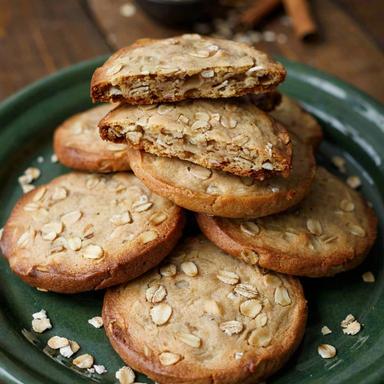
Delicious Vegan Oatmeal Cookies
Soft and chewy vegan oatmeal cookies sweetened with maple syrup for a satisfying, wholesome anytime treat.
Ingredients
Equipment
As an Amazon Associate I earn from qualifying purchases, at no extra cost to you.
Instructions
- 1
Stir the dry ingredients
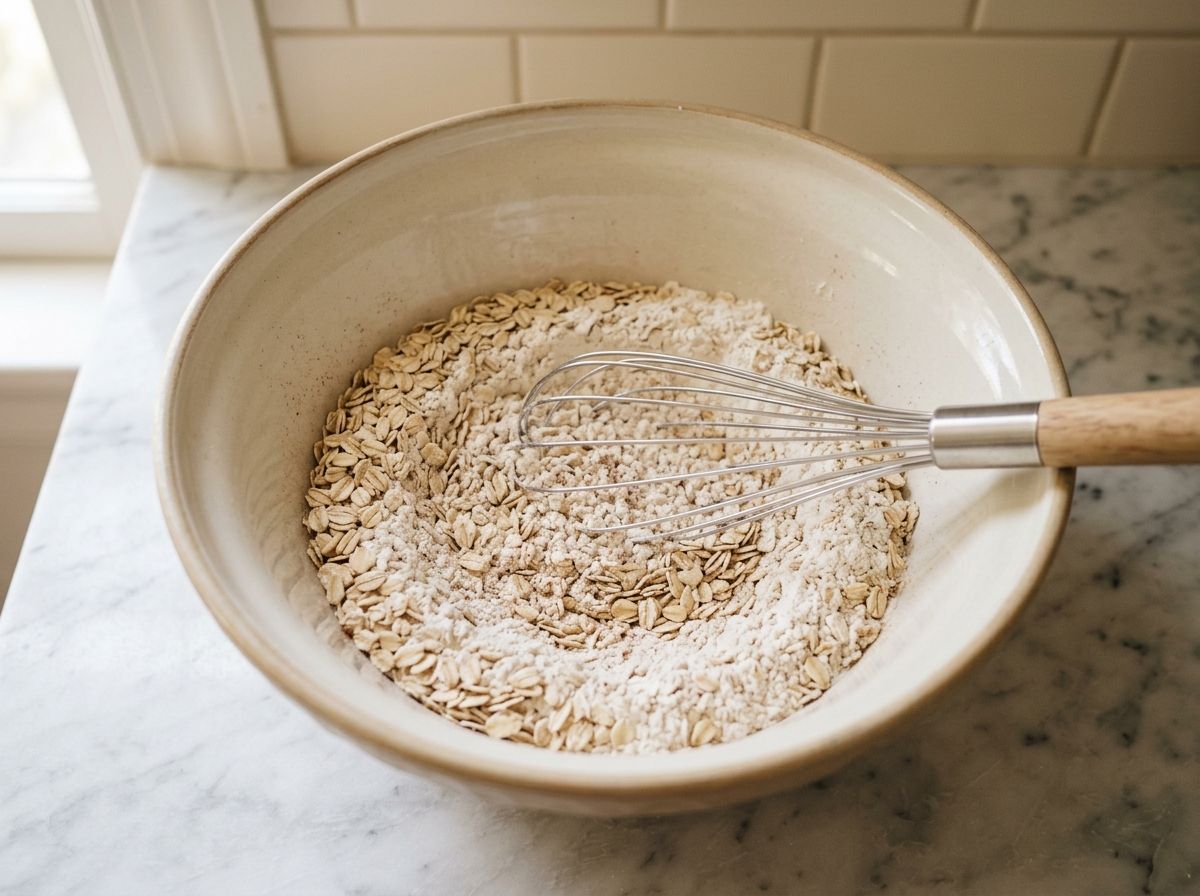
In a large bowl, whisk the rolled oats, flour, cinnamon, baking powder, baking soda and salt together. Whisk rather than stir, so the two leaveners spread evenly through the flour; the oats get in the way of that more than you would expect.
- 2
Whisk the oil and syrup smooth
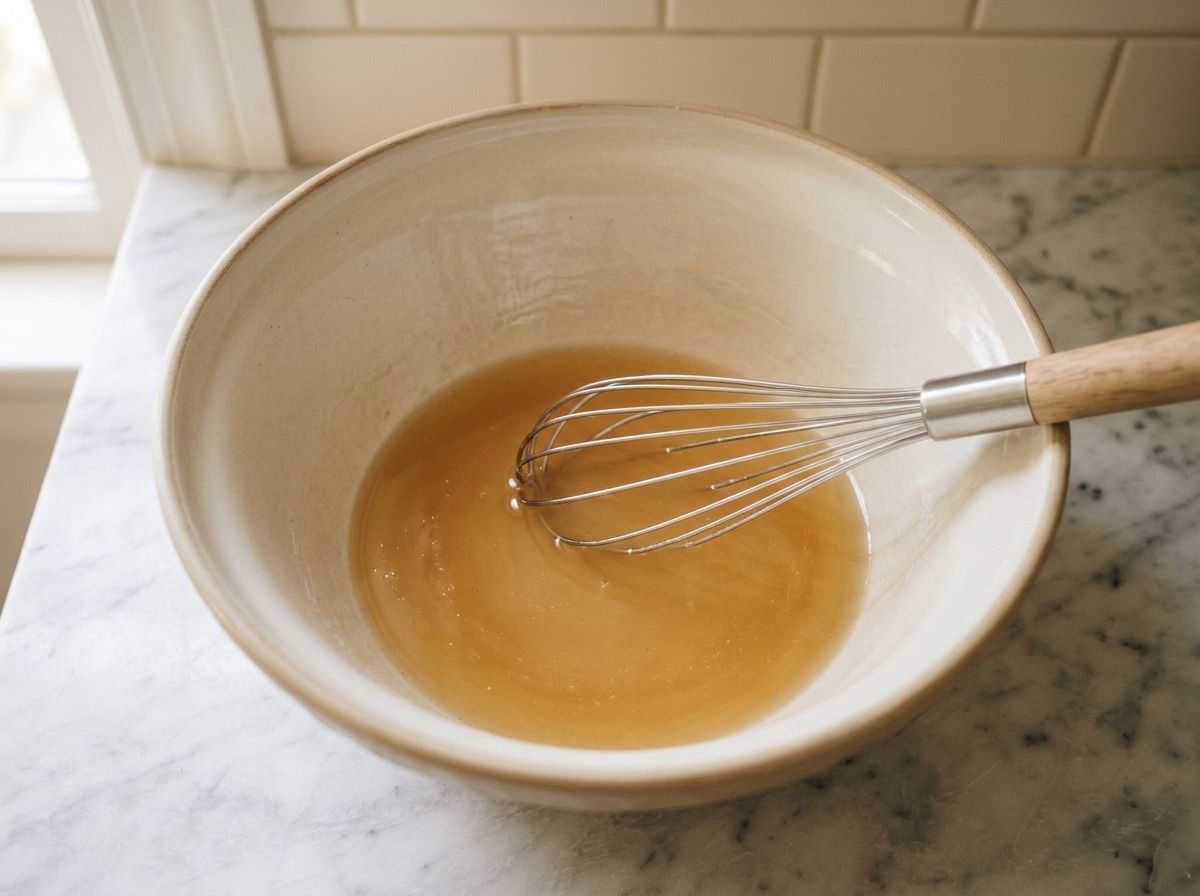
Melt the coconut oil and leave it to cool until it is barely warm. The maple syrup has to be at room temperature too, because cold syrup hitting melted coconut oil sets the oil into hard white flecks that never mix back in. Whisk the oil, syrup and vanilla until the mixture is smooth and slightly thickened, with no beads of oil floating on top.
- 3
Bring the dough together
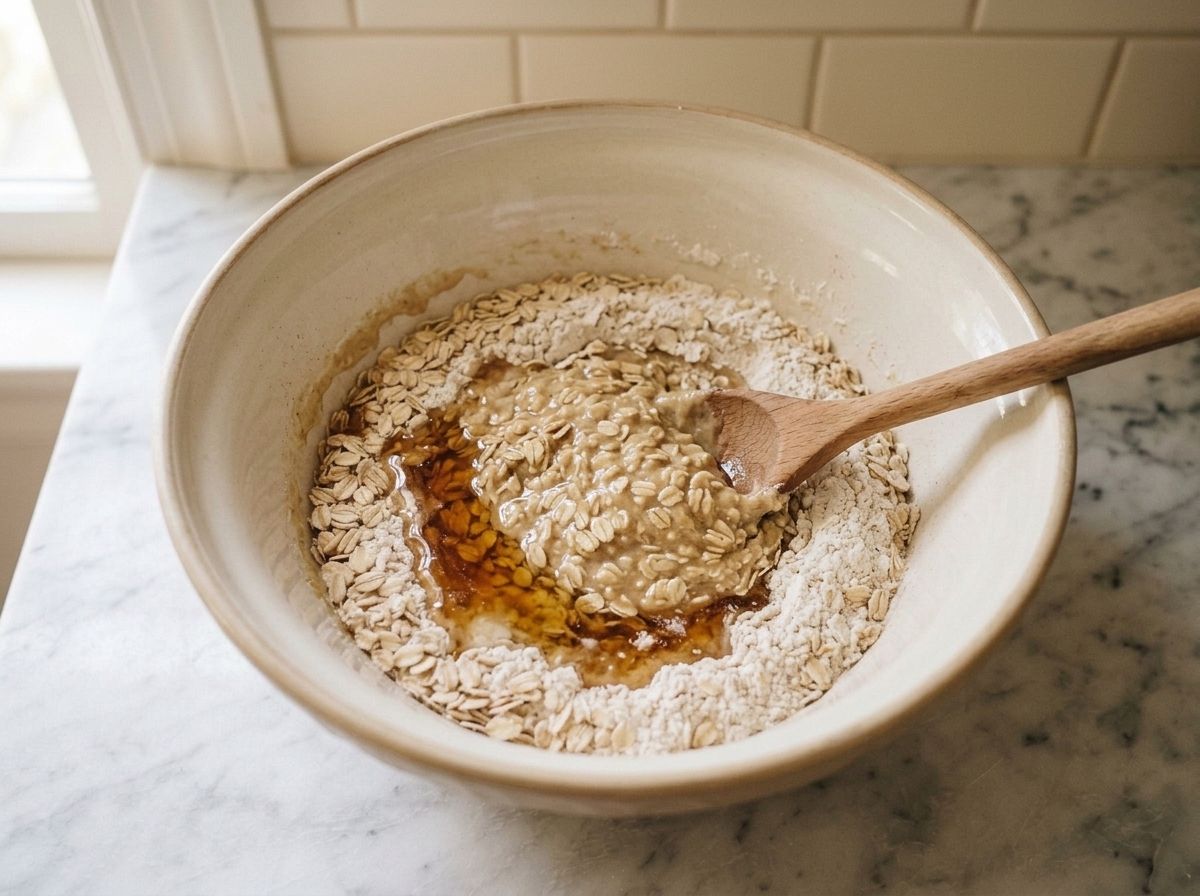
Pour the wet mixture into the dry and fold until no dry flour is left, then fold in the raisins or chocolate chips and the nuts if you are using them. The dough will look looser and wetter than a butter cookie dough, which is right.
- 4
Rest the dough for 30 minutes
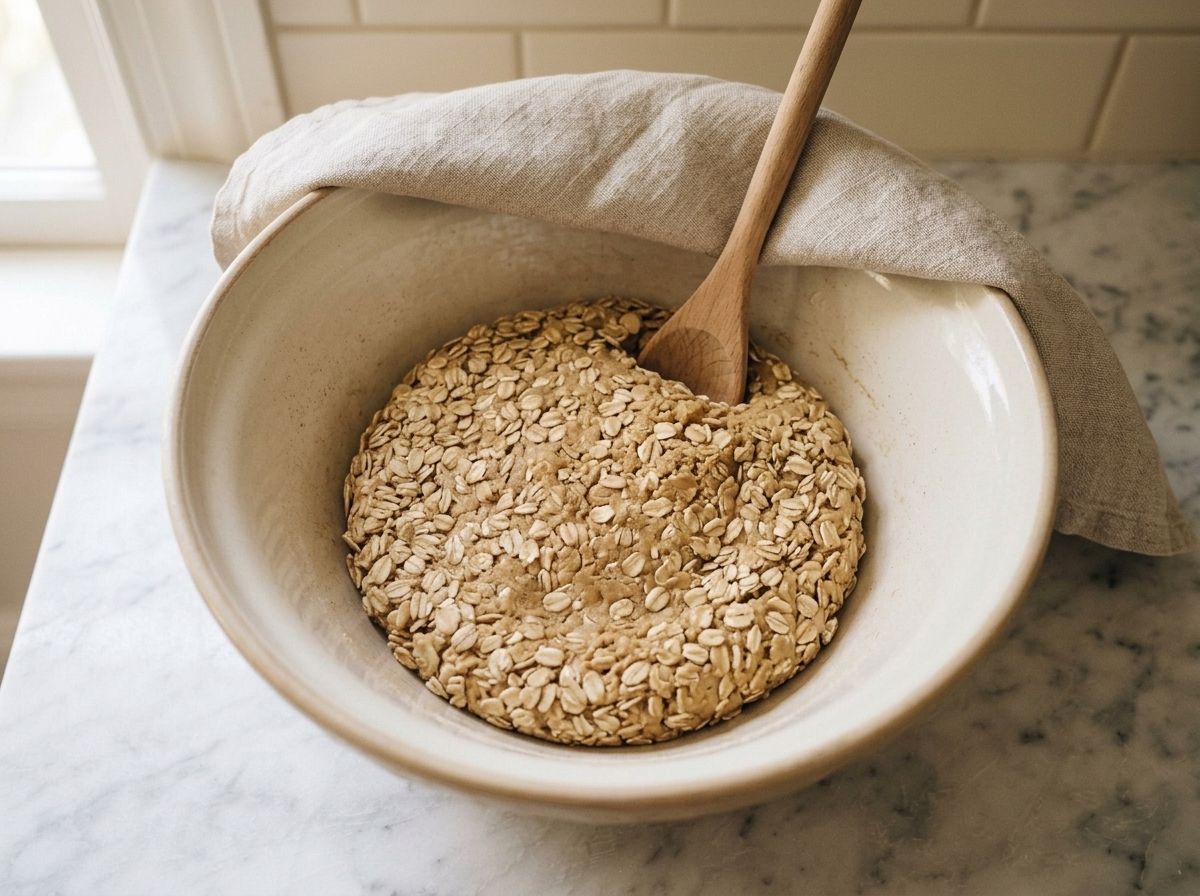
Cover the bowl and leave it on the counter for 30 minutes. The oats drink up the loose liquid and the coconut oil firms, turning a slack, oily mixture into a scoopable dough. Skip it and the oats take their moisture from the cookie in the oven instead, and you get something sandy.
- 5
Heat the oven
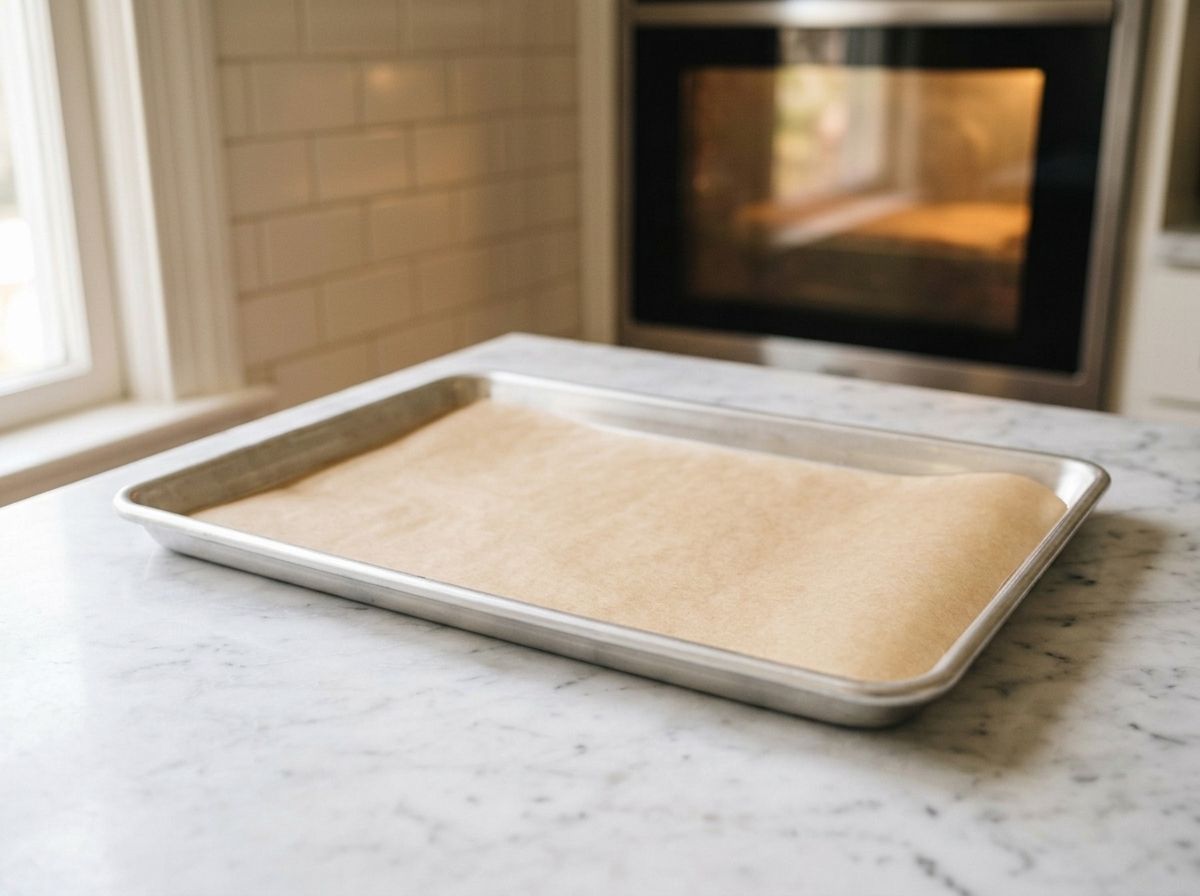
Twenty minutes into the rest, heat the oven to 350°F (175°C) and line a baking sheet with parchment paper.
- 6
Scoop and press flat
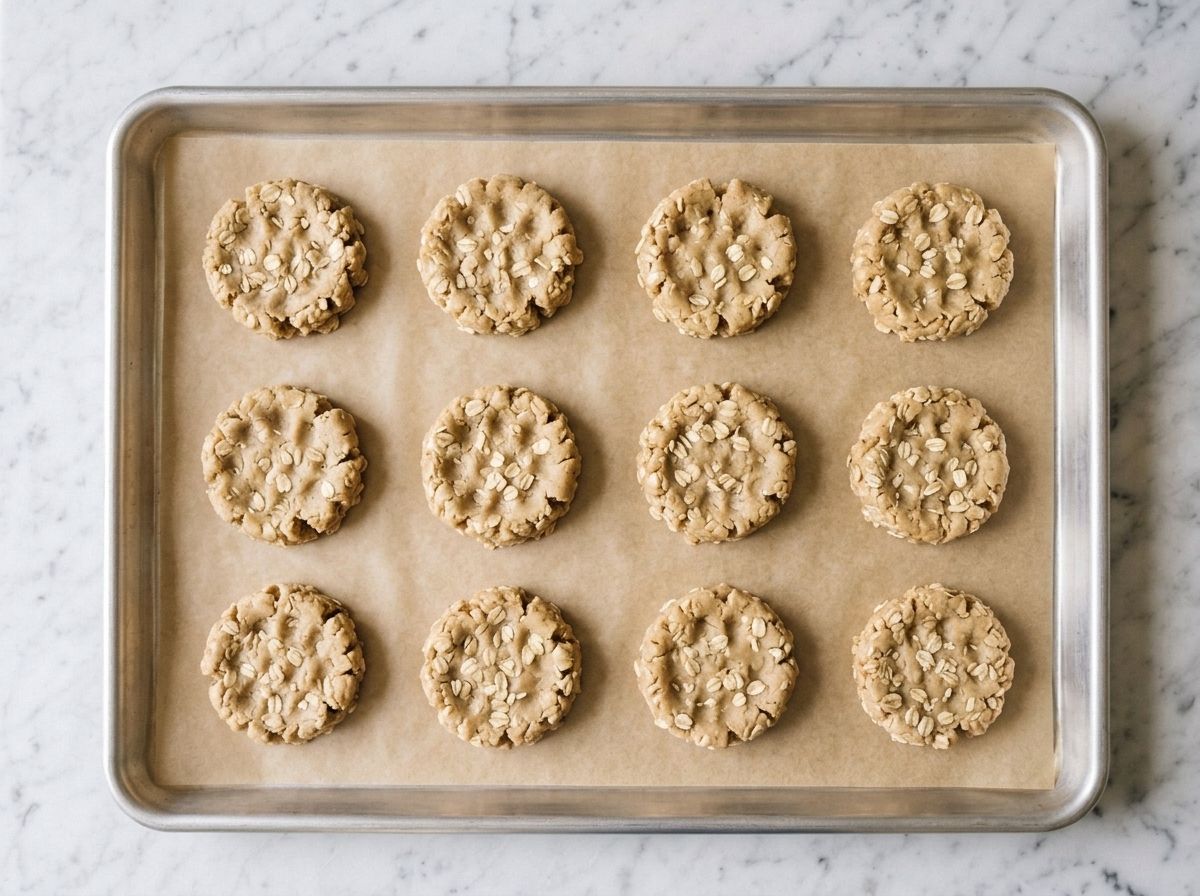
Scoop twelve mounds of dough onto the sheet, about 1 1/2 inches apart, and press each one down to roughly 1/2 inch thick with damp fingers. This dough barely spreads, so a ball goes into the oven as a ball and comes out as one.
- 7
Bake until the edges set
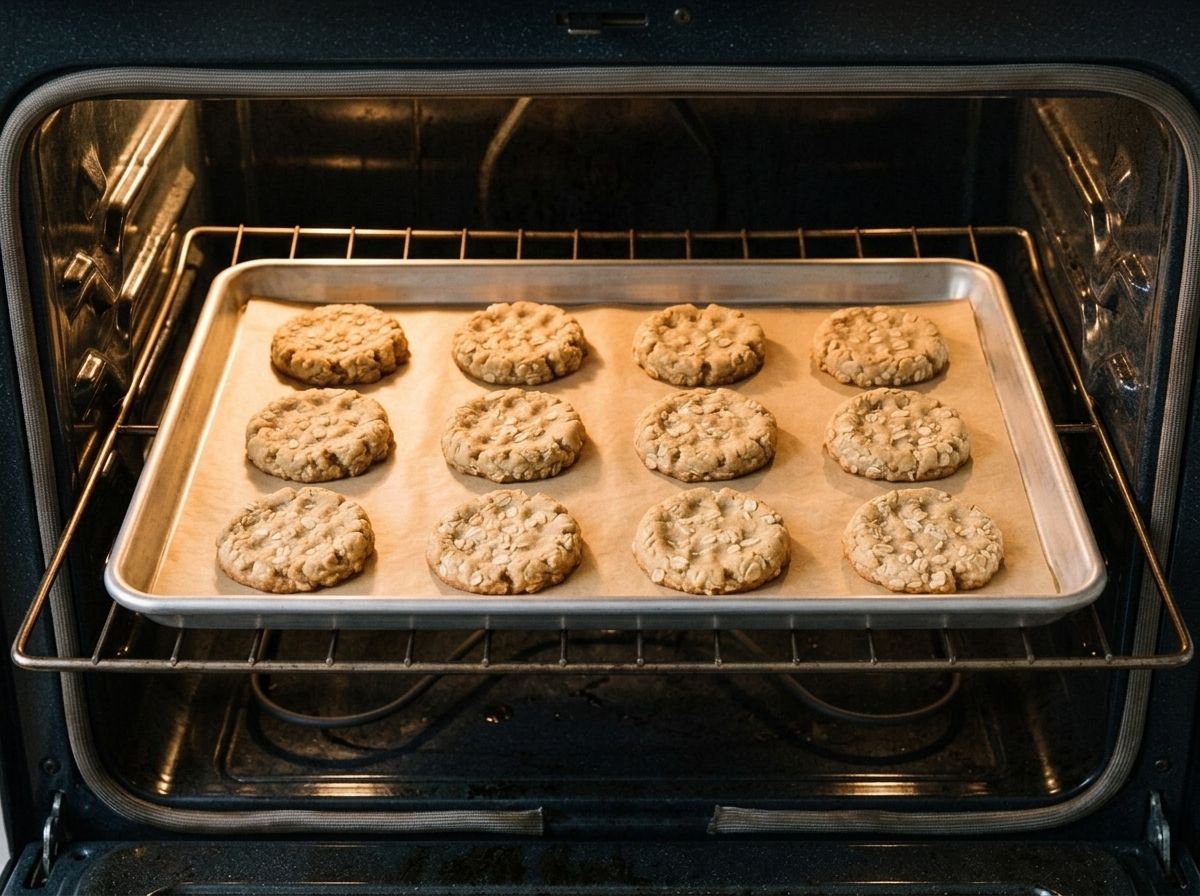
Bake for 10 to 12 minutes, until the edges are golden and the centers still look soft and a little underdone. Pulling them here is what keeps them chewy; baked until the middle looks done, they cool crisp.
- 8
Cool on the sheet
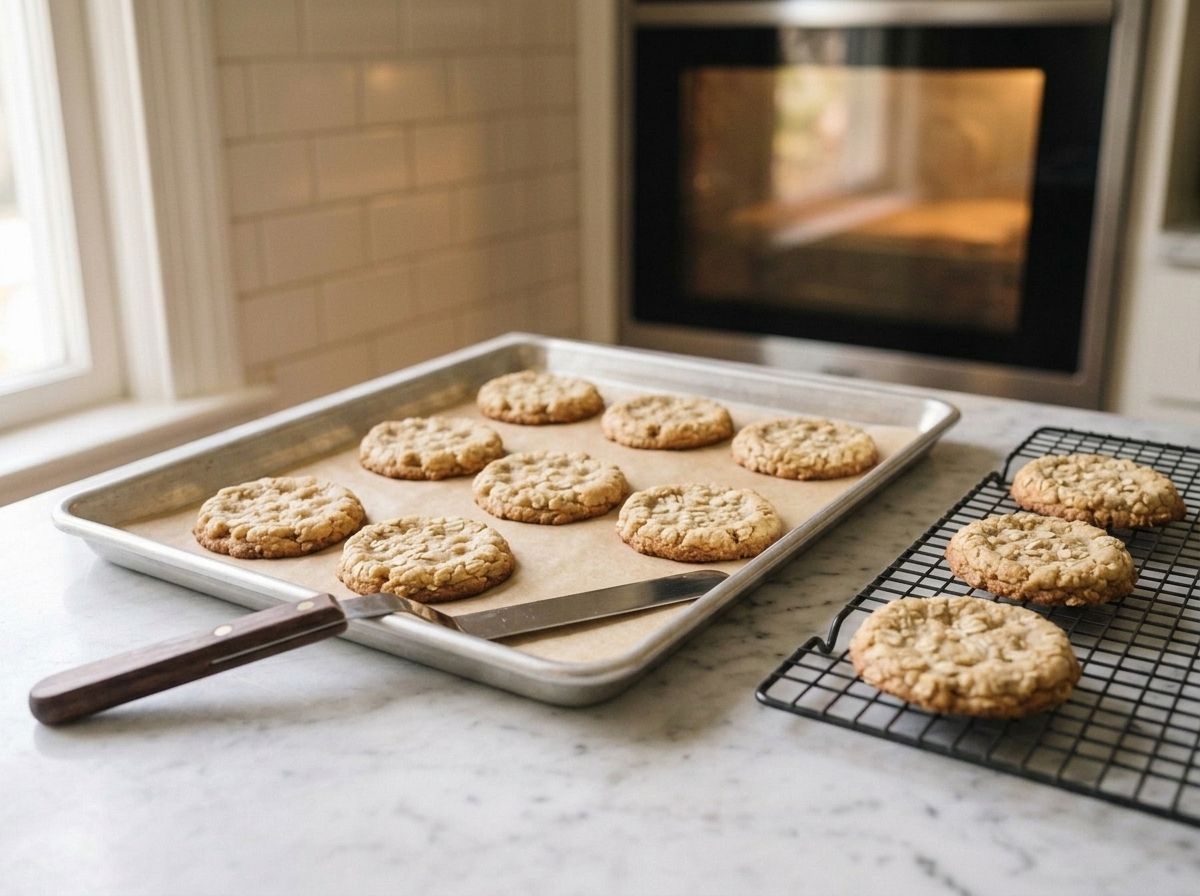
Leave the cookies on the hot sheet for 10 minutes before you move them. There is no egg holding these together, so the coconut oil has to set first. Then lift them onto a wire rack to finish cooling.
Notes
Mix and match add-ins. Dried cranberries, chopped dates and pumpkin seeds all work in place of the raisins.
The dough must rest for the full 30 minutes. It is what makes these chewy rather than sandy.
Nutrition Facts
12 cookies · 51 g per serving
- Calories
- 216 kcal
% Daily Value*
- Total Fat
- 10.6 g14%
- Saturated Fat
- 6.7 g34%
- Sodium
- 140 mg6%
- Total Carbohydrate
- 28.9 g11%
- Dietary Fiber
- 2.4 g9%
- Sugars
- 12.5 g—
- Protein
- 3.2 g6%
Recipe from veggierecipes.blog
When it goes wrong
Troubleshooting
The cookies spread into one big sheet
Too much fat, or a warm kitchen and no rest. Older versions of this recipe used half a cup of oil against two cups of dry ingredients, which is a batter rather than a dough. A third of a cup is right. And if your kitchen is above 77°F (25°C) the coconut oil will never firm on the counter, so rest the bowl in the fridge for 20 minutes instead.
There are hard white flecks through the wet mixture
The melted coconut oil hit something cold and set, almost always the maple syrup. Sit the bowl over a pan of warm water and whisk until it goes smooth again. Caught at the wet stage this costs you nothing; left in, the flecks melt in the oven and leave greasy pockets behind them.
They came out as balls, not cookies
This dough has no creamed butter and no egg, so there is almost no spread in it, and whatever shape goes onto the sheet is the shape that comes off it. Press each mound down to about half an inch with damp fingers, and keep them damp, because dry fingers lift the dough straight back up.
They fell apart when I moved them
They were moved too early, and this is less a fault than how an eggless cookie works. The coconut oil is the binder, and at 350°F it is still liquid. Give them 10 full minutes on the hot sheet before the rack, or 15 if you swapped in sunflower oil, which stays liquid at room temperature.
There is a faint soapy or metallic aftertaste
Unreacted baking soda, for the reason set out in the leavening note above. If you have baked this recipe before with half a teaspoon of soda and no baking powder, that is what you were tasting, and it was never the oats.
They are dry and sandy instead of chewy
Usually two things at once. The rest was skipped, so the oats pulled their moisture out of the crumb during baking rather than out of the bowl beforehand. And they went a minute or two long. Pull them while the centers still look wet; they carry on setting on the hot sheet.
Before you serve
Serving & Storage
These are one of the few cookies that is honestly good at breakfast, and that is the oatcake ancestry showing rather than a marketing line: a cup and a half of oats across twelve cookies is a bowl of porridge divided twelve ways. Eight seconds in the microwave softens the coconut oil again, which is the best thing you can do to a three-day-old one.
They are too soft to dunk, though. A cookie held together by coconut oil rather than egg comes apart in hot coffee in about two seconds. If dunking is the point, bake them the full 12 minutes and give them an extra five on the rack.
Making it ahead
The dough is the thing to make ahead, not the baked cookies. It keeps covered in the fridge for 3 days, and the first day of that improves it as the oats carry on hydrating. It comes out firm, so leave it on the counter for 15 minutes before scooping. You can also scoop and flatten the whole batch, freeze the discs on a tray and bag them once solid: bake from frozen at the same temperature and add 2 minutes. What does not work is resting the dough at room temperature much beyond an hour. Past that the oats have taken everything they are going to take, and the raw dough starts to taste flat.
Storing leftovers
Airtight at room temperature, 4 to 5 days. Unlike a butter cookie these get softer rather than harder as they sit, because the maple syrup holds onto water, so by day three they are closer to a soft-baked cookie than to what came out of the oven. Baked cookies freeze for 2 months and are best thawed at room temperature, not in the microwave, which drives moisture out of the oats. The fridge is the one place not to put them: coconut oil goes hard and brittle at fridge temperature, so the cookie crumbles instead of bending, and the cold flattens the maple.
Still wondering
Frequently Asked Questions
Can I make these cookies gluten-free?
Yes, and more reliably than with most cookies. Swap the flour for a 1:1 gluten-free baking blend at the same 125 g, and buy oats labeled certified gluten-free. Oats contain no gluten themselves; the problem is that they are almost always milled and shipped alongside wheat. The swap works here because the 135 g of oats carry a good share of the structure, so less rides on the flour than in a cookie made mostly of flour.
Can I double the batch?
Yes, and it doubles straight, including the leavening: a full teaspoon of baking powder against 250 g of flour is still in range. The rest stays at 30 minutes rather than doubling, since it is the oats hydrating and not a quantity-dependent step. Bake the 24 cookies one sheet at a time on the middle rack. Both trays in at once gives you a pale top batch and a dark bottom one.
Can I make these without any oil?
You can, but you are making a different cookie. Replacing the 80 ml of coconut oil with the same volume of applesauce or mashed banana gives a soft, cakey, muffin-top texture rather than a chewy one, because fat is what shortens the gluten strands and keeps a cookie tender. Smooth nut butter at 80 g is the closer swap since it brings fat of its own, though it takes over the flavor. Either way, give the cookies 15 minutes on the sheet instead of 10.
Featured In
More Sweet Vegan Bakes
Made this?