
Vegan Primavera Pasta Recipe
Published · Updated
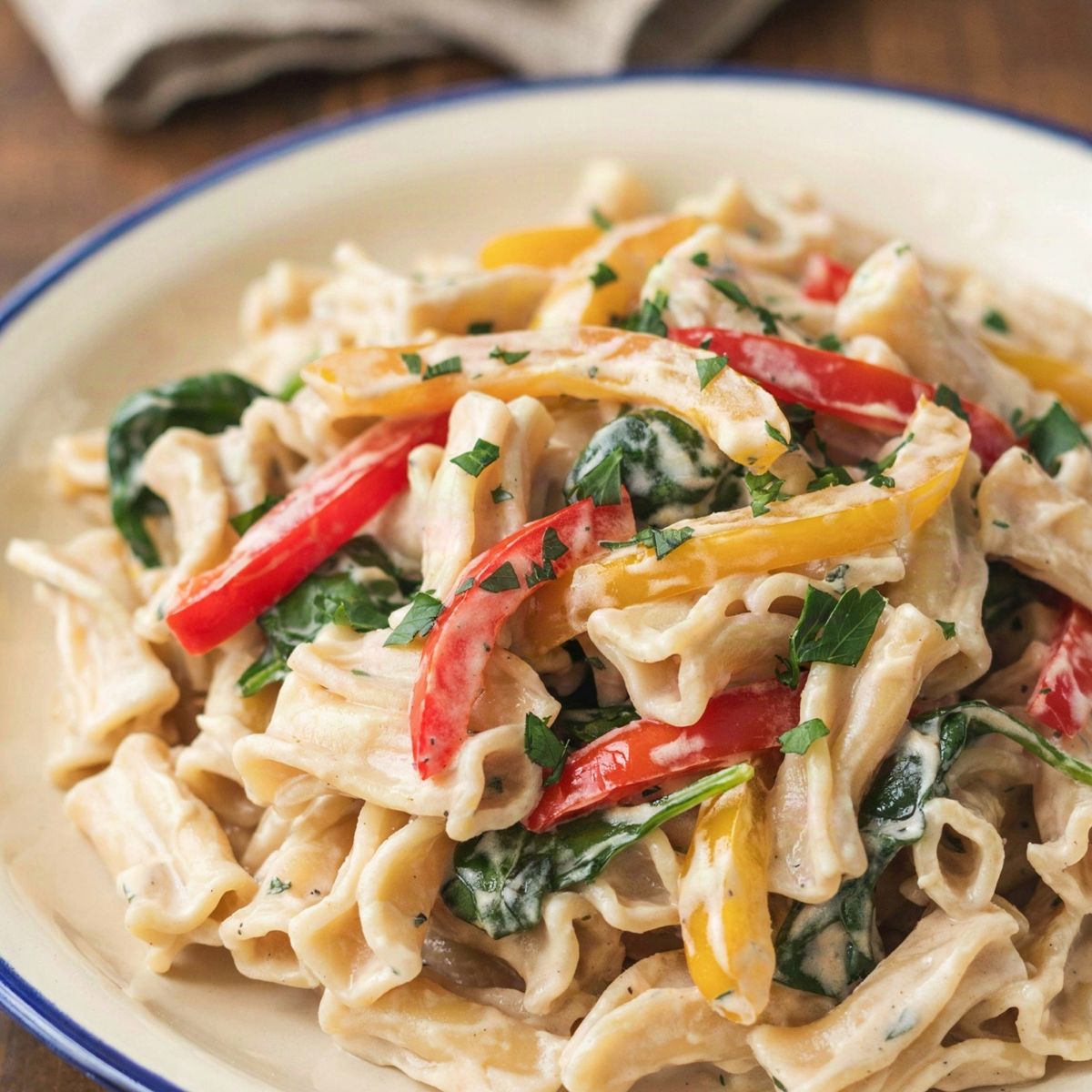
This vibrant vegan primavera pasta is loaded with fresh vegetables for a quick, healthy weeknight dinner. Enjoy a burst of color and flavor in every bite!
Jump To Recipe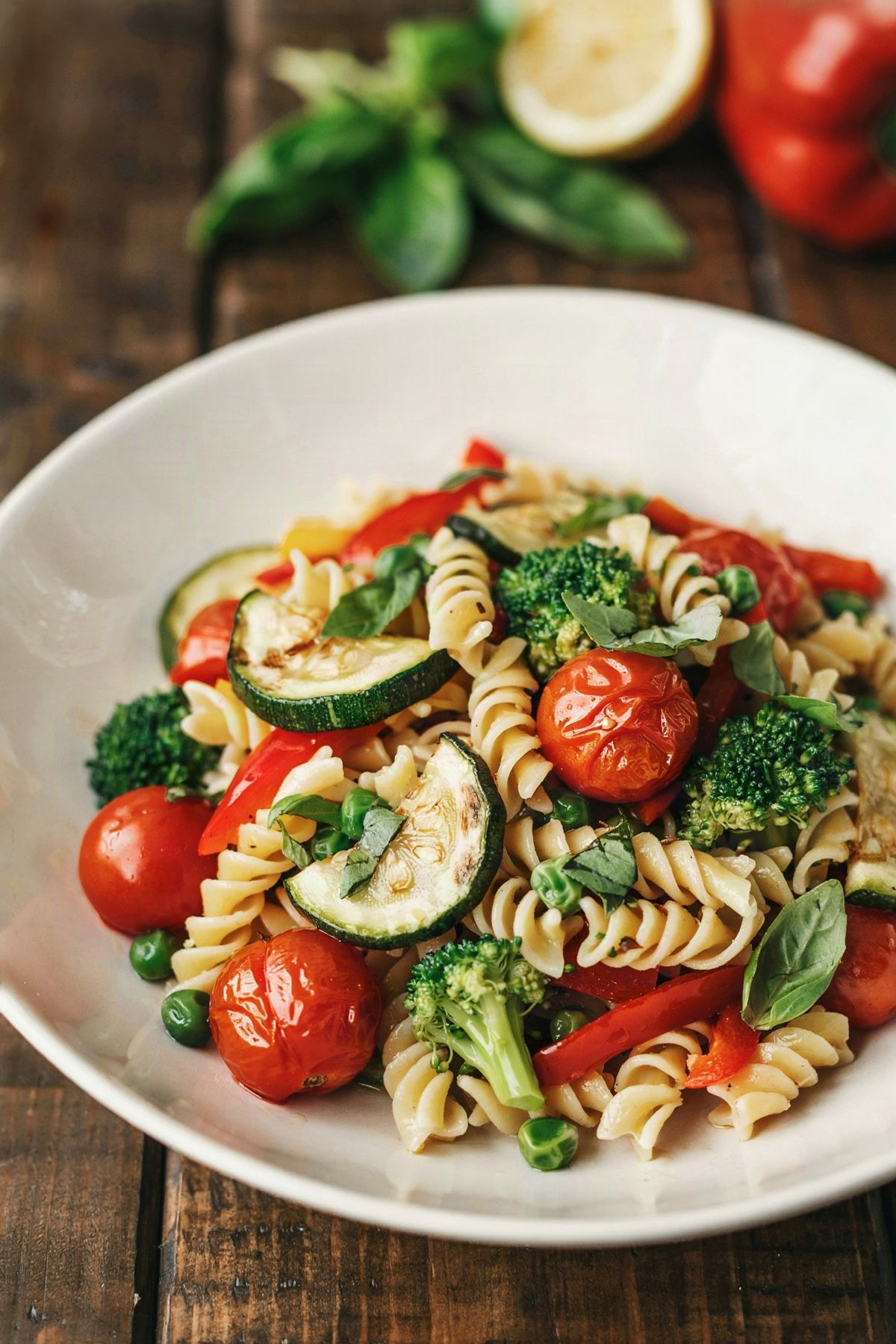
Why I Love This Vegan Primavera Pasta
There’s something really rewarding about making a plant-based meal that feels both vibrant and satisfying. Vegan primavera pasta checks those boxes: it’s quick to make, easy to customize, and it never feels heavy yet keeps you full.
For me, primavera pasta is all about the vegetables. When you get that right balance of crisp-tender zucchini, sweet bell pepper, and juicy cherry tomatoes, every forkful tastes like summer. I especially like finishing the dish with fresh basil. The aroma alone is worth making the recipe for.
What I recommend for the best experience:
- Switch up the veggies for whatever is in season or in your fridge. Think asparagus, snap peas, or even spinach.
- Finish with plenty of fresh basil, and don’t skip the nutritional yeast or a vegan parmesan if you want that cheesy kick.
- For a little extra heartiness, add cooked chickpeas, white beans, or a handful of toasted pine nuts.
You get a fresh, easy dinner on the table in half an hour. Can’t beat that after a long day, or before heading out for an evening walk.
The story
Primavera Pasta Was Born in a Restaurant Hallway
The name is Italian, the dish is not. Pasta primavera was invented in 1975 by Sirio Maccioni, the owner of Le Cirque in New York, while he was a guest at Baron Carlo Amato’s ranch on Roberts Island, Nova Scotia. The party had eaten game and fish for days and asked for something different, so Maccioni tossed pasta with whatever vegetables the kitchen had and bound it with butter, cream and Parmesan.
Back in Manhattan it ran into a problem. Le Cirque’s head chef, Jean Vergnes, was French, and he refused to let pasta be cooked in his kitchen. So the restaurant set up a pot in a hallway, boiled the pasta there, and had the waiters finish the plates in the dining room, out of the chefs’ sight. In 1977 Craig Claiborne and Pierre Franey printed the recipe in The New York Times and called it, by far, the most talked-about dish in Manhattan. Two other cooks, Ed Giobbi and Franco Brigandi, have since claimed they made it first.
Their version is the one most people mean by primavera: spaghetti with zucchini, asparagus, broccoli, green beans, peas and mushrooms, each blanched separately in boiling water, a quick sauté of tomatoes, garlic and basil, pine nuts, and a sauce of cream, butter and a lot of cheese. Primavera means spring, but the vegetables were never seasonal, which is why zucchini and tomatoes, both summer crops, sit in a dish named for spring.
For a plant-based cook that history is good news. Strip out the cream, butter and cheese and what remains, pasta with vegetables in olive oil and garlic, is closer to what Italians actually eat than the New York original ever was. The cream was mostly there to stop the pasta going dry, and starchy pasta water with good olive oil does that job as well. What is worth keeping from Le Cirque is the technique nobody copies: the firm vegetables were cooked in the water, not the pan. This recipe does the same with the broccoli and the peas, which is why they come out bright green and the tomatoes never cook long enough to collapse.
What to buy
Ingredient Notes
Pasta
Any shape works, but the shape decides how the vegetables sit. Fusilli and penne trap the peas and catch the sauce in their ridges; spaghetti gives the Le Cirque look, with the vegetables on top. Buy a bronze-die pasta if you can: its rough, matte surface holds far more of the oil and pasta water than the glossy kind. Cook it a minute short of the packet time and never rinse it.
Olive oil
Three tablespoons looks like a lot next to the one most quick recipes call for, and it is the change that matters most. There is no cream or cheese to coat the pasta, so the oil is the sauce, not the frying medium. Tossed with half a cup of starchy pasta water over heat, it thickens into a glossy coating. Use extra virgin: its pepperiness does the work cheese would otherwise do.
Broccoli and peas
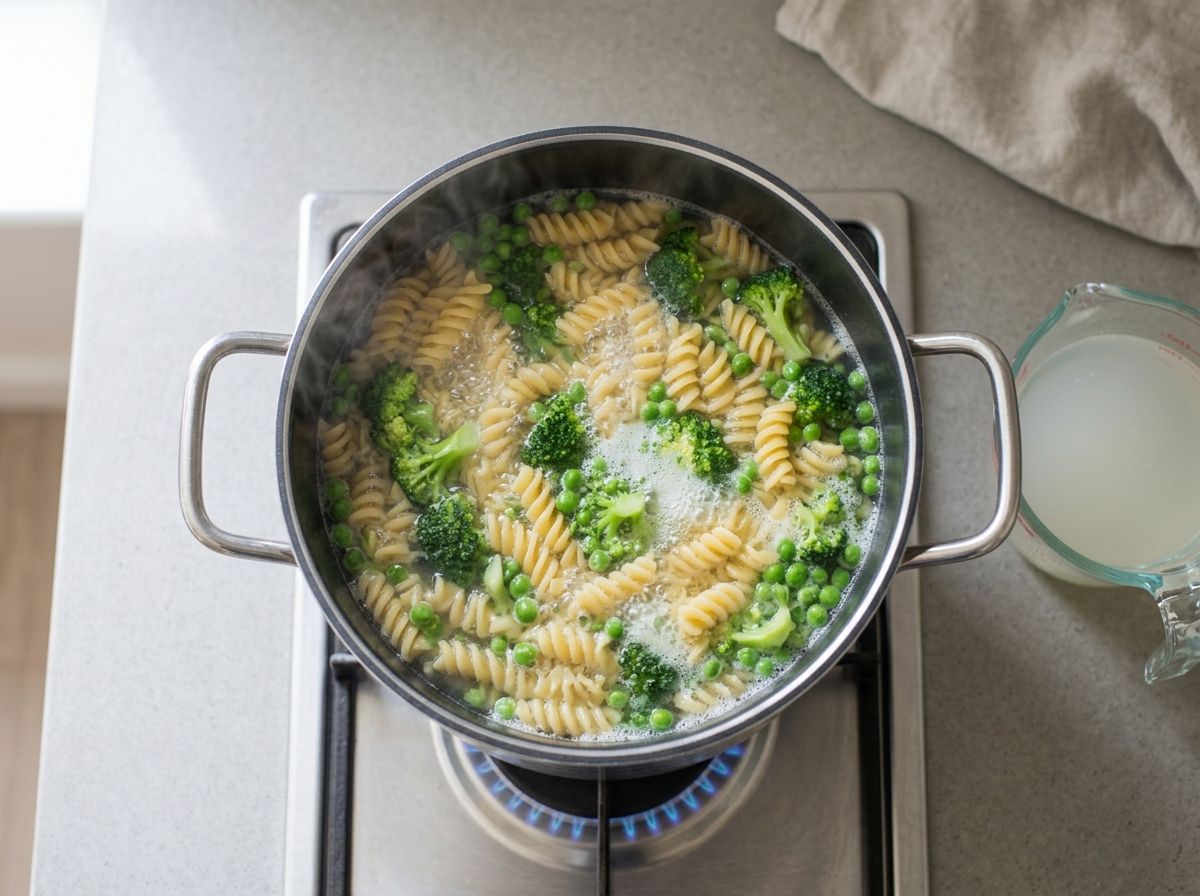
These go into the pasta pot, not the skillet. Cut the broccoli into florets about the size of a walnut and drop them into the boiling water three minutes before the pasta is done; the peas go straight from the freezer into the same pot for the last minute. Both come out bright green and just tender, and both were in the 1977 recipe, blanched exactly this way. Frozen peas beat fresh here, because they were frozen within hours of picking.
Zucchini and bell pepper
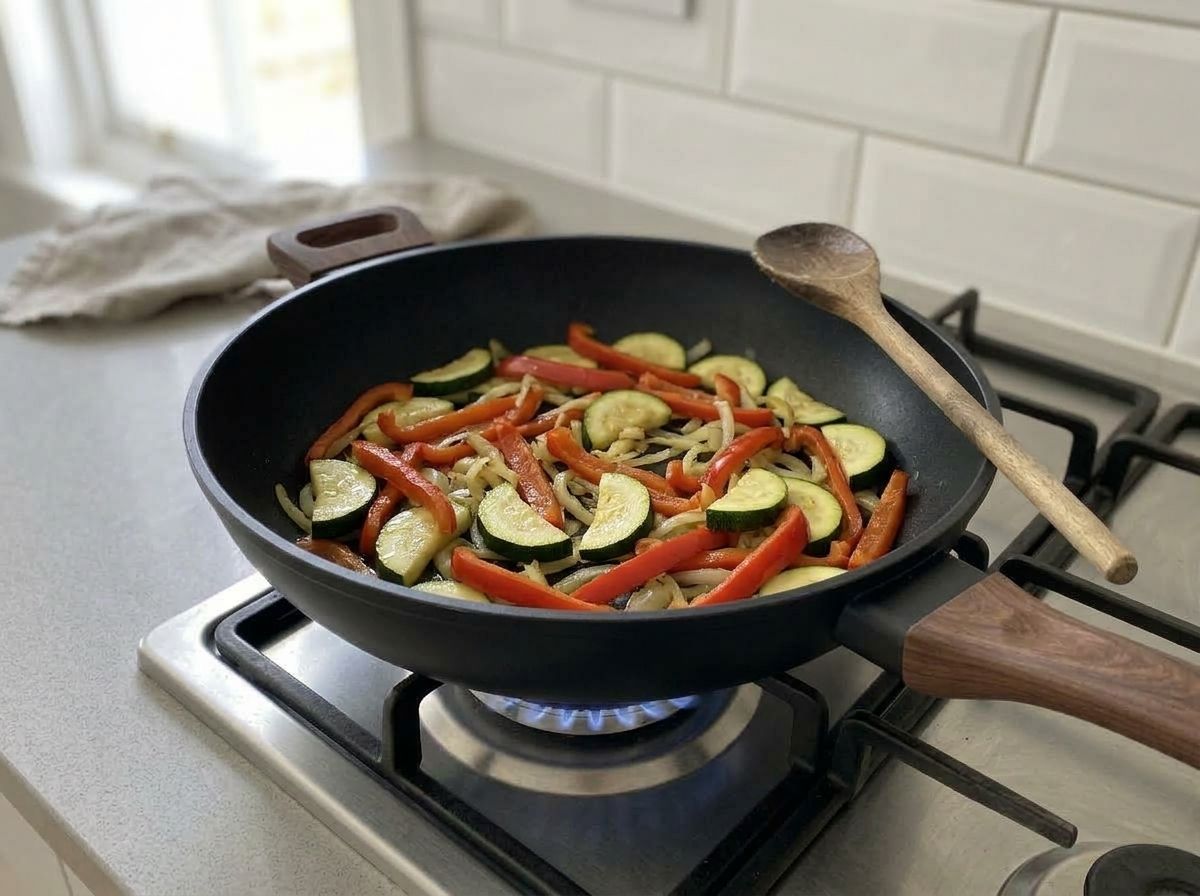
The skillet vegetables. Halve the zucchini lengthwise and cut it into half-moons about a centimeter thick, thick enough to brown before it softens. Red, orange and yellow peppers are sweeter than green, which stays a little bitter. Both need a hot pan, a single layer and two minutes without stirring. A crowded pan on medium heat steams them, and steamed zucchini goes limp and gray.
Cherry tomatoes
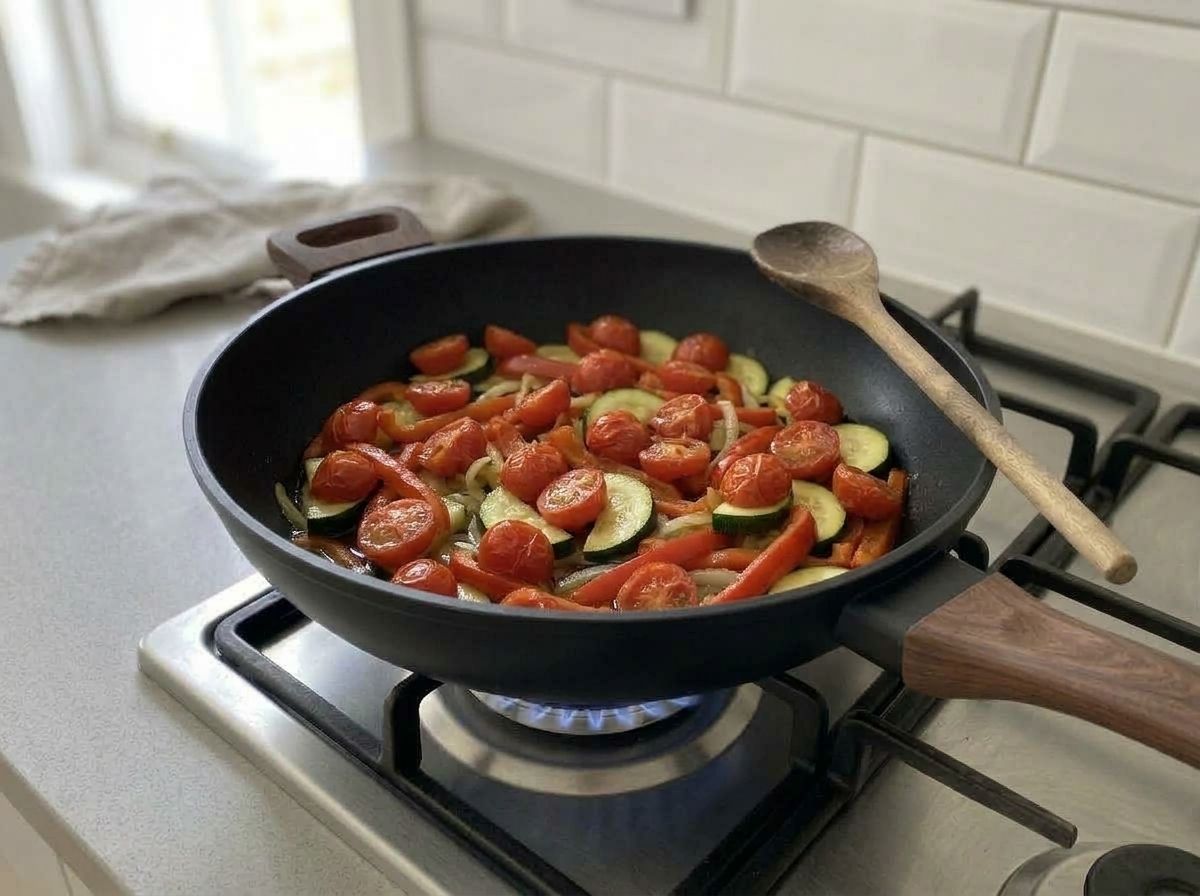
Halved, added cut side down, and cooked for a minute or two only. You want the skins wrinkled and just splitting and the flesh softened but whole, so each half still reads as a tomato on the plate. Any longer and they slump into a watery sauce and turn the whole dish pink. They are the one vegetable here that is reliable all year, because the small varieties are bred for sugar.
Italian seasoning
A dried blend of oregano, basil, thyme, rosemary and marjoram. Dried herbs only release their flavor into fat, so it goes into the oil with the garlic for thirty seconds, never over the finished pasta, where it tastes dusty. Without a blend, half a teaspoon of dried oregano and a quarter teaspoon of dried thyme cover it.
Lemon juice and basil
Both go in off the heat. The lemon stands in for the sharpness Parmesan gives the original, and a tablespoon lifts the dish without making it taste of lemon. Cooked in the pan, lemon juice goes bitter. The basil is torn rather than chopped, because a knife bruises the leaves and blackens the edges, and it goes on last so its perfume is the first thing you smell.
Vegan Primavera Pasta
Al dente pasta tossed with sautéed spring vegetables and fresh basil, for a light and vibrant plant-based dish.
Ingredients
Equipment
As an Amazon Associate I earn from qualifying purchases, at no extra cost to you.
Instructions
- 1
Boil the pasta and blanch the greens
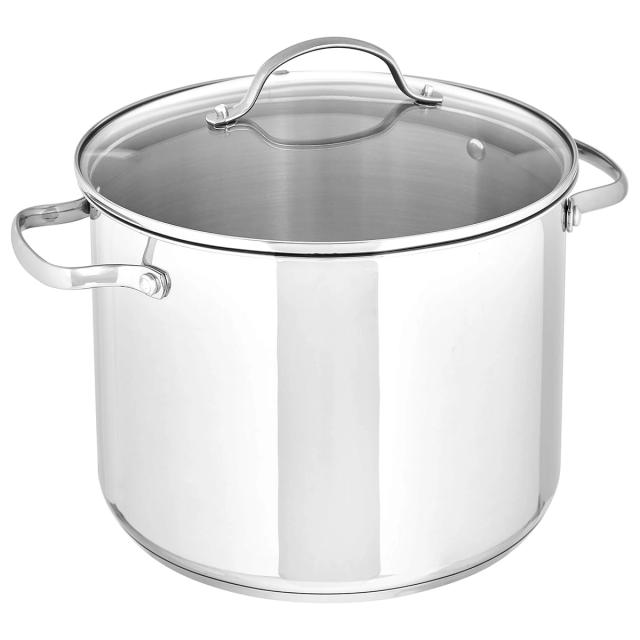
Bring a large pot of generously salted water to a boil and cook the pasta, stopping a minute short of the packet time because it finishes in the skillet. Three minutes before the pasta is done, drop the broccoli florets into the same pot. One minute before, add the frozen peas. Scoop out a cup (240 ml) of the cooking water, then drain the pasta and vegetables together. Do not rinse.
- 2
Soften the onion
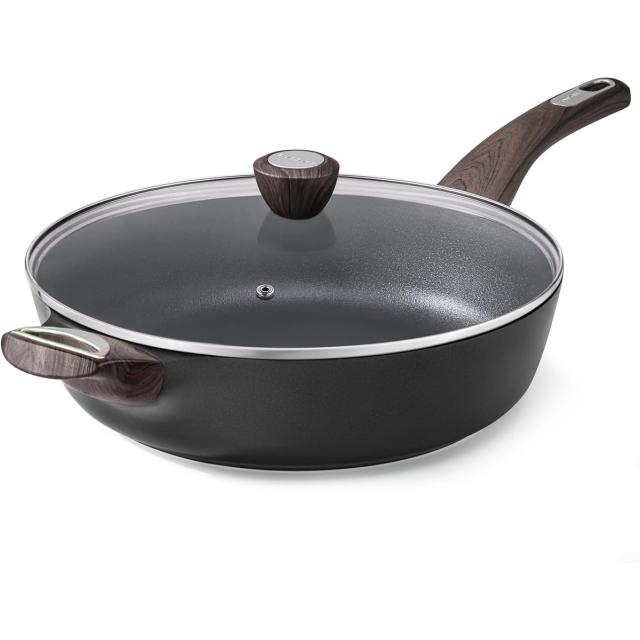
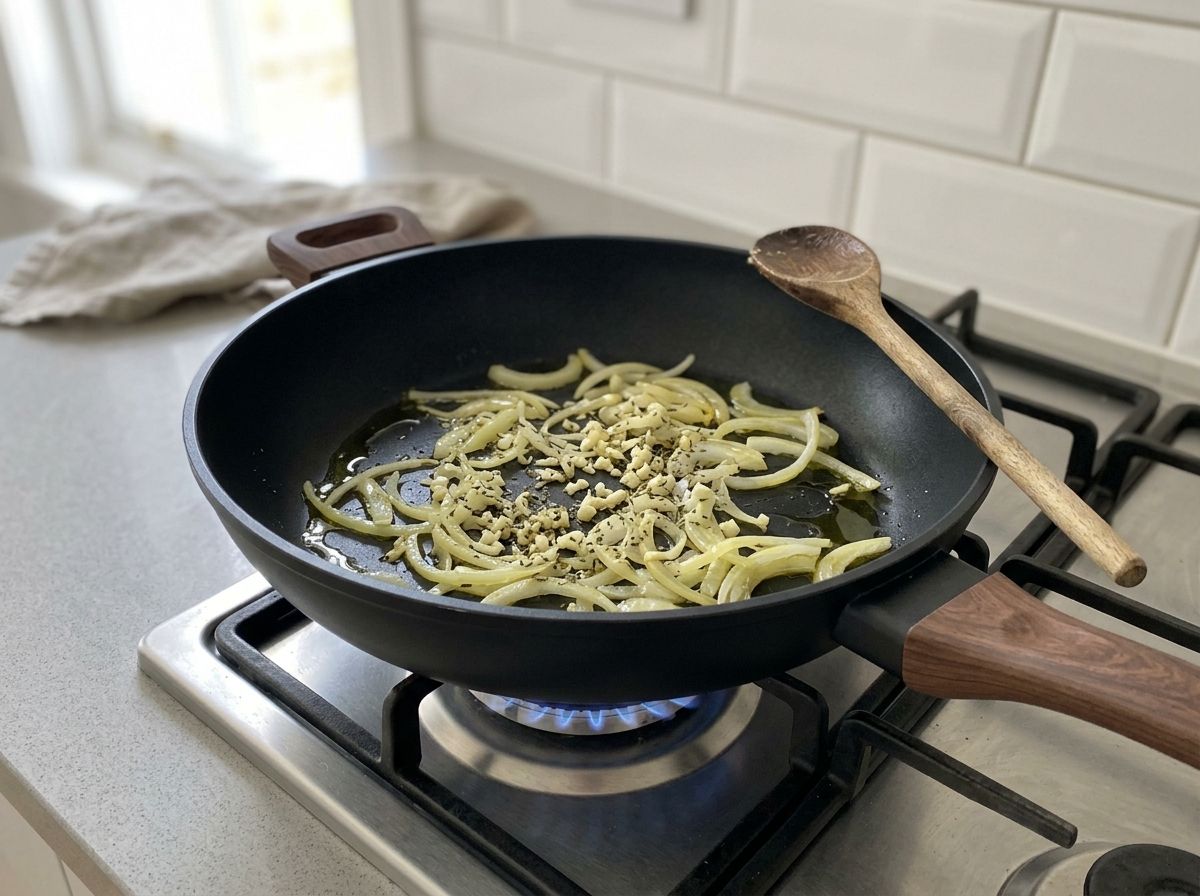
Start the skillet as soon as the pasta goes into the water. Heat the olive oil in a large skillet over medium heat, add the onion with a pinch of salt and cook for 4 minutes, until soft and translucent but not browned. Add the garlic and the Italian seasoning and stir for 30 seconds, until the garlic smells sweet rather than raw.
- 3
Cook the pepper and zucchini
Turn the heat up to medium-high and add the bell pepper and zucchini in a single layer. Leave them alone for 2 minutes so they take on some color, then stir and cook for 2 to 3 minutes more, until crisp-tender: a knife slides in but the zucchini still holds its shape.
- 4
Blister the tomatoes
Add the cherry tomatoes cut side down and cook for 1 to 2 minutes, until their skins wrinkle and just begin to split. They should soften and release a little juice without collapsing into sauce.
- 5
Toss with the pasta water
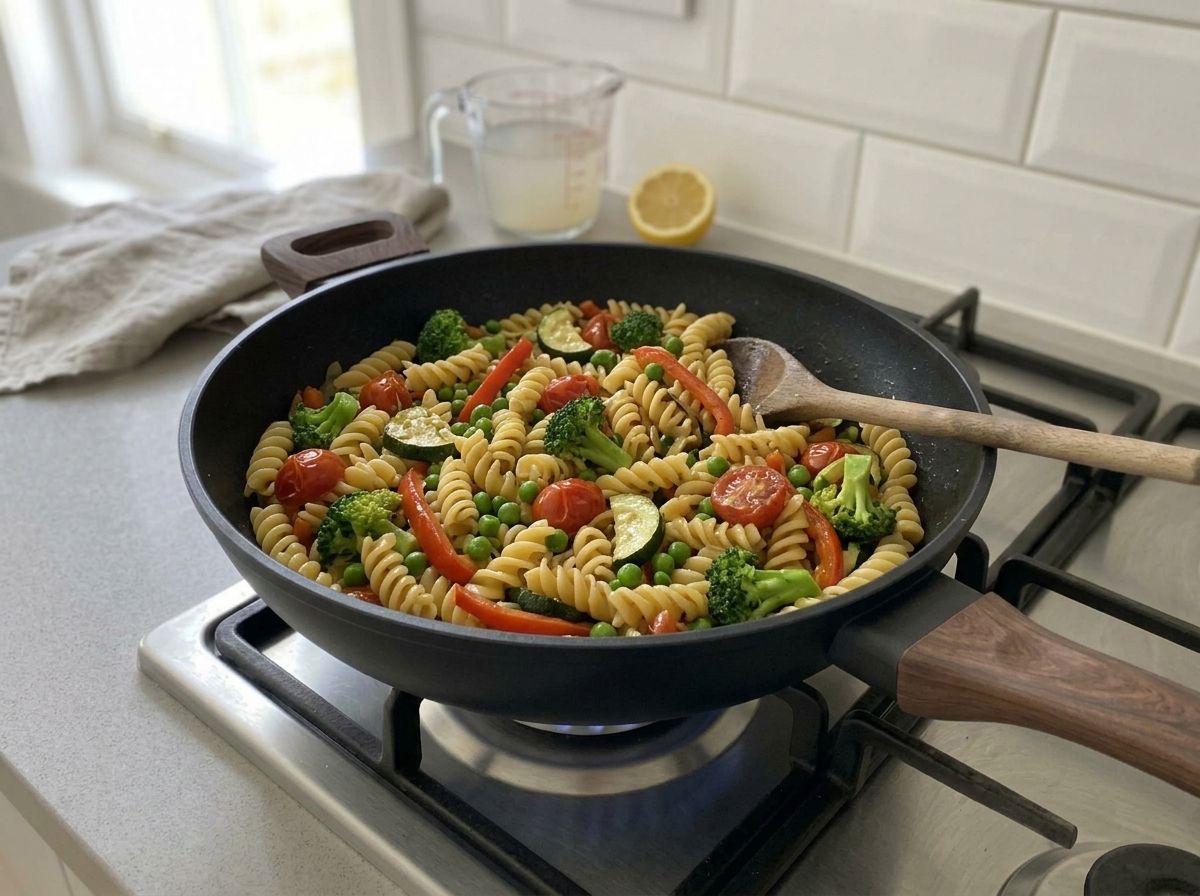
Add the drained pasta, broccoli and peas to the skillet with half a cup (120 ml) of the reserved pasta water. Toss over medium heat for a minute or two, until the water and oil come together into a glossy coating that clings to the pasta. Add more pasta water a splash at a time if it looks dry. Take the skillet off the heat, stir in the lemon juice and season with salt and pepper.
- 6
Finish with basil
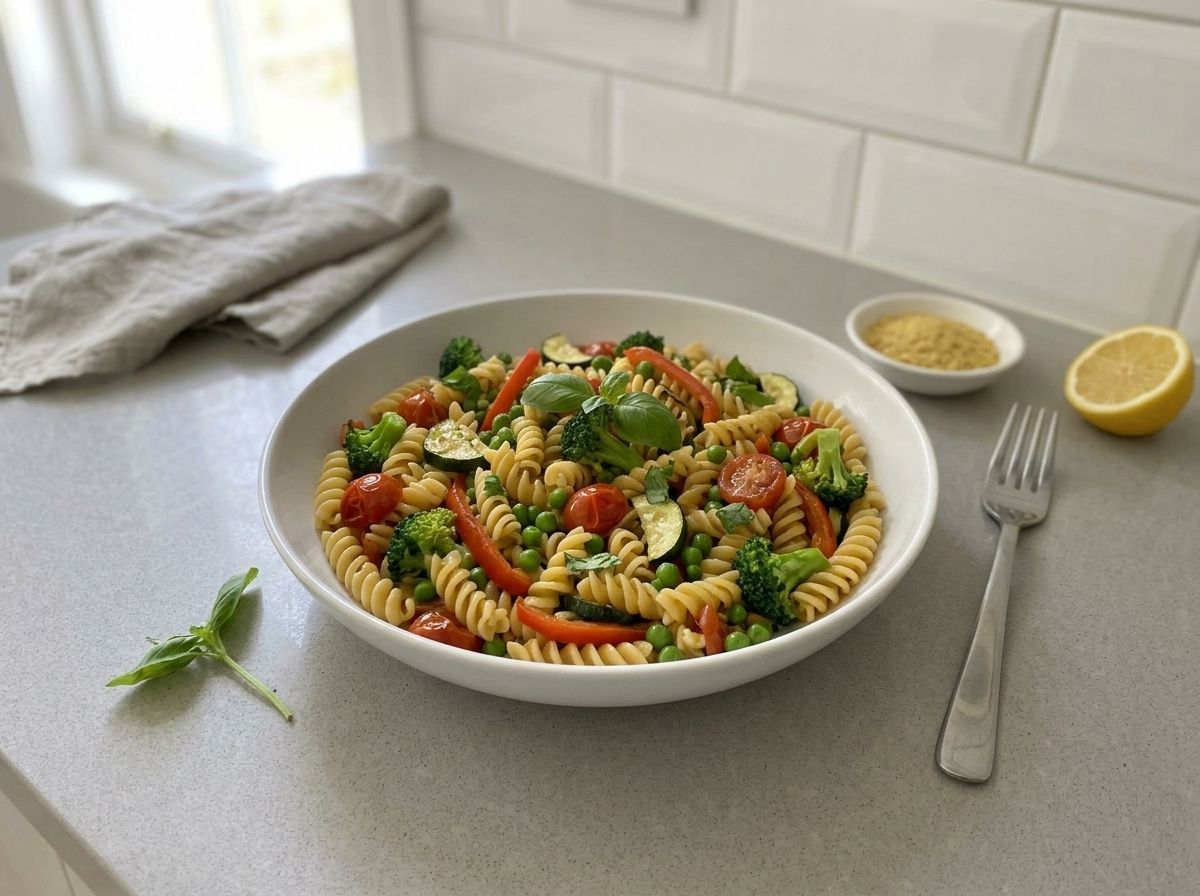
Tear the basil over the top, toss once and serve straight away, with nutritional yeast or vegan parmesan on the table for anyone who wants it.
Notes
Do not rinse the pasta and do not leave it sitting drained: the starch on its surface is what turns the oil and pasta water into a sauce.
Firm vegetables go into the pasta water, tender ones into the skillet. Asparagus and green beans join the broccoli; spinach, snap peas and asparagus tips go into the skillet with the tomatoes.
Nutrition Facts
4 servings · 304 g per serving
- Calories
- 483 kcal
% Daily Value*
- Total Fat
- 12.4 g16%
- Saturated Fat
- 1.8 g9%
- Sodium
- 219 mg10%
- Total Carbohydrate
- 78.6 g29%
- Dietary Fiber
- 7.4 g26%
- Sugars
- 9.4 g—
- Protein
- 15.4 g31%
Recipe from veggierecipes.blog
When it goes wrong
Troubleshooting
The pasta is dry and sticks together in clumps
The pasta was drained and left standing while the vegetables cooked, so its surface starch set and glued the pieces together, and it was then tossed with oil alone, which coats without binding. Time the pasta to finish as the tomatoes go in, and toss it with half a cup of the cooking water: the starch in that water is what turns oil into a sauce.
The broccoli is still raw but the tomatoes have turned to mush
They went into the skillet together, which is how most quick primavera recipes are written, and no single time suits both. Broccoli needs three or four minutes to lose its rawness; cherry tomatoes collapse after two. Cook the broccoli in the pasta water and add the tomatoes to the skillet last, for a minute or two only.
The zucchini went limp and watery
The pan was crowded, the heat was too low, or it was stirred constantly. Zucchini is mostly water, and if it cannot brown it steams in its own juice. Use a wide skillet over medium-high heat, lay the pieces in a single layer and leave them for two full minutes before the first stir. If your skillet is small, cook the pepper and zucchini in two batches.
The garlic tastes bitter
It went in with the onion and then cooked for another eight or nine minutes while the vegetables followed. Minced garlic burns in about a minute once the pan is hot. Soften the onion on its own, then add the garlic for thirty seconds just before the pepper and zucchini.
It tastes flat, like plain pasta with vegetables on it
Three things were probably missing: salt in the pasta water, acid at the end, and enough oil. The water should taste noticeably salty, because it is the only chance to season the pasta itself. The lemon juice, added off the heat, is the difference between vegetables in oil and a dish. And one tablespoon of oil for 340 g of pasta is not a sauce. If it is still flat, a spoonful of nutritional yeast adds the savory depth the original got from cheese.
The peas are wrinkled and khaki-colored
They cooked far too long. Frozen peas are already blanched, so they need a minute in boiling water to heat through, and they turn drab within another two. Add them to the pasta pot for the final minute only, and never put them in the skillet.
Before you serve
Serving & Storage
At Le Cirque the pasta was finished in the dining room, the waiter tossing the vegetables and cream through it at the table. The home version is to bring the skillet to the table and put the finishing touches out for people to add themselves: nutritional yeast or vegan parmesan, a pepper mill, and lemon wedges for anyone who wants it sharper. A handful of toasted pine nuts, which were in the 1977 recipe, is worth the extra minute.
It is a full meal for four, but a light one. For something more substantial, warm a drained can of white beans or chickpeas in the skillet with the tomatoes, or serve it beside roasted tofu. A green salad with a sharp mustard dressing and a loaf of crusty bread are the only sides it needs.
Making it ahead
The finished dish does not hold, because pasta keeps absorbing sauce as it sits and the vegetables lose their bite. What can be done ahead is everything up to the heat: slice the onion, pepper and zucchini, halve the tomatoes and cut the broccoli in the morning, and keep them covered in the fridge. Leave the basil on its stem until the last moment, because torn basil blackens within an hour. To get further ahead, cook the skillet vegetables through the tomato step, cool them, and reheat them while the pasta boils.
Storing leftovers
Leftovers keep for three days in an airtight container in the fridge. Reheat them in a skillet with a splash of water, tossing until the pasta is hot and glossy again, and add fresh basil, because the old leaves will have gone dark. Cold, it makes a good pasta salad the next day with a spoonful of olive oil and a squeeze of lemon. Do not freeze it: the zucchini and tomatoes turn to water on thawing and the pasta goes soft.
Still wondering
Frequently Asked Questions
Can I make this gluten-free?
Yes, with two adjustments. Chickpea and lentil pastas throw off a thick, cloudy cooking water that thickens the sauce fast, so start with a quarter cup instead of half; rice and corn pastas give thin water and need the full half cup. Gluten-free pasta also softens faster in the skillet, so pull it two minutes short of the packet time rather than one.
Is Parmesan vegetarian?
No. Parmigiano-Reggiano must be made with calf rennet under its protected designation rules, so it is neither vegan nor vegetarian, and the same applies to Grana Padano and most cheese sold as Italian hard cheese. Vegetarian hard cheeses made with microbial rennet exist and are labeled as such. Nutritional yeast and cashew-based vegan parmesan keep this dish fully plant-based.
Can I double the recipe?
Yes, but the skillet is the limit, not the pot. Double the vegetables will not brown in a single layer in a 30 cm skillet, so cook the pepper and zucchini in two batches. Do the final toss in the emptied pasta pot, which has the room a skillet does not, and reserve two cups of pasta water rather than one.
More Plant-Based Pasta Dinners
Made this?