
Vegetarian Baked Ziti Recipe
Published · Updated
Layers of pasta, marinara, and bubbling cheese make this vegetarian baked ziti an instant family favorite. Simple, satisfying, and perfect for any gathering.
Jump To Recipe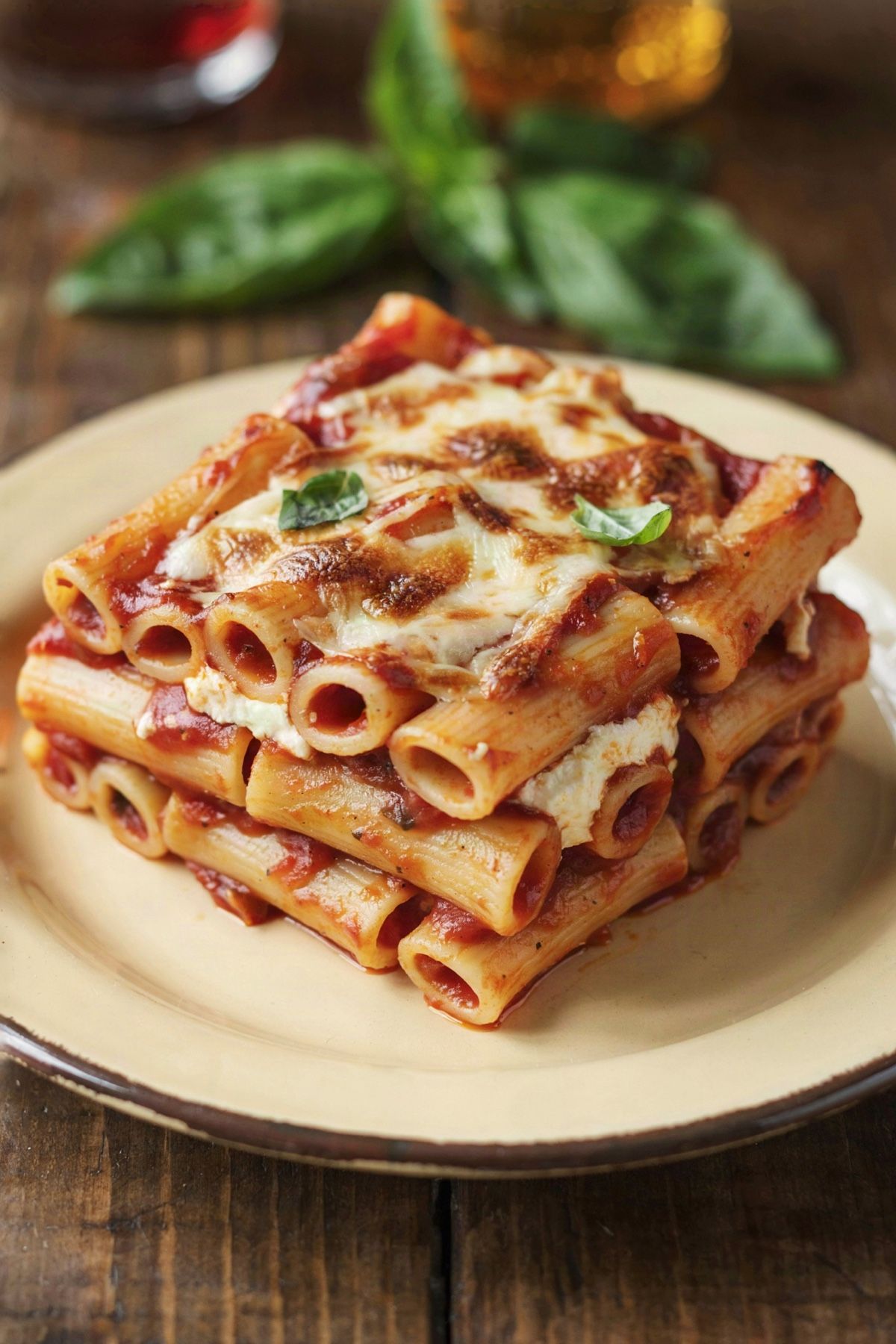
Why I Keep Coming Back to Vegetarian Baked Ziti
Some dishes just have a way of bringing comfort with every single bite, and vegetarian baked ziti does that in spades. I find there's something especially satisfying about a pan of bubbling cheese, tender pasta, and savory tomato sauce pulled hot from the oven.
I've made this recipe for weeknight dinners, Sunday meal preps, and even gatherings with friends. It always disappears fast. No one ever complains that it's meatless. It's just that good, with the blend of three cheeses (ricotta, mozzarella, and parmesan) carrying every forkful.
What I love about this baked ziti:
- Easily made in advance, just assemble, refrigerate, and bake later.
- Crowd-pleasing, works for vegetarians and even staunch meat eaters.
- Pairs well with a simple salad and a glass of red, classic comfort.
The mix of Italian seasoning with creamy ricotta and tangy marinara is just unbeatable, and the melted mozzarella on top seals the deal for me every time. I’m convinced that once you try this, you’ll find yourself coming back to it just as often as I do.
The story
Baked Ziti Was Wedding Food Long Before It Was Weeknight Food
The name gives it away. Ziti is a plural of zito, and its feminine form zita means bride in the dialects of southern Italy. This was the bride’s pasta, cooked for the wedding feast, and the shape carried the occasion around with it. Giuseppe Pitrè, the Sicilian folklorist who spent the back half of the 19th century writing down what people actually did rather than what cookbooks said, recorded tubular pasta as more or less inevitable at a Sicilian wedding table, in poor households and rich ones alike.
The tubes were longer than the ones you buy. In Campania, zite still come as smooth tubes about ten inches long, snapped by hand into shorter pieces before they go into the water. The snapping was part of preparing for a feast, a job handed to whoever was standing near the table. American shelves sell them pre-cut, which is convenient and quietly removes the part of the ritual that involved other people’s hands.
When southern Italians carried the dish to America the occasion loosened. Baked ziti became the pan you take somewhere: to the church hall, to the new neighbors, to the door of a family that has just lost someone. It went from once in a lifetime to once a month, and somewhere along the way it picked up a layer of ricotta that Naples would not recognize.
That ricotta layer is exactly why a meatless baked ziti is not a compromise. In Naples the richness came from a ragù that had been on the stove since morning. In the Italian-American version, the ricotta quietly took over that job. So when you leave the sausage out of an American baked ziti, you are not knocking out a load-bearing wall. The load was already being carried by cheese.
What to buy
Ingredient Notes
Ziti pasta
Smooth tubes, no ridges, is the traditional shape; the sauce clings inside rather than outside. Rigatoni works and holds more filling because it is wider. Penne works, but the cut points sit proud of the sauce and dry into hard tips. Whatever you use has to be a tube: shapes with no hollow give the sauce nowhere to sit and the dish bakes dry.
Whole milk ricotta
Part-skim carries more water and lets it go in the oven, which is how a ricotta layer ends up grainy and sitting in a puddle at once. Whole milk has the fat to stay smooth. If liquid is standing on the tub, drain it in a fine sieve for 10 minutes. Full-fat cottage cheese substitutes well, but drain and pulse it smooth or you get visible curds through the dish.
Vegetarian parmesan
Parmigiano Reggiano is made with animal rennet, and not by habit: its protected-origin rules allow only milk, salt and calf rennet, so the real thing is never vegetarian. Grana Padano and Pecorino Romano are the same story. Look for a hard Italian-style cheese whose label says vegetarian or microbial rennet, which BelGioioso and several own-brands print plainly. Under this much mozzarella the flavor difference is small. The difference to a vegetarian reader is not.
Low-moisture mozzarella
Buy the block and shred it yourself. Pre-shredded mozzarella is dusted with cellulose or potato starch to stop it clumping, and that coating also stops it melting into a sheet, leaving a chalky top that browns unevenly. Fresh mozzarella packed in water is the wrong cheese here: more than half water by weight, and it gives most of it to the dish.
Marinara sauce
Three cups is more than most versions of this recipe use, and deliberate. Baked pasta absorbs sauce for the whole 40 minutes it is in the oven, so a dish that looks correctly sauced going in comes out dry. A standard 24 ounce jar falls short of 3 cups; buy the 32 ounce size. If yours tastes thin, warm it five minutes with olive oil, a smashed garlic clove and salt first.
The egg
It is doing structural work, not enriching anything. As the ricotta heats the egg sets and binds the proteins; without it the ricotta releases its water and the layer collapses into something soupy. One large egg is right for 15 ounces. Two makes the layer firm and faintly custardy, which slices more neatly.
Italian seasoning
A dried blend, usually oregano and basil with thyme, rosemary and marjoram; without it, 1 teaspoon each of dried oregano and dried basil gets you close. Keep it dried. Fresh basil stirred into the filling and left in a 375°F oven for 40 minutes goes black and tastes of nothing. Fresh herbs finish this dish, they do not cook in it.
Vegetarian Baked Ziti
Bubbling baked ziti layered with a trio of cheeses and tangy marinara sauce, an easy, classic vegetarian comfort dish.
Ingredients
Equipment
As an Amazon Associate I earn from qualifying purchases, at no extra cost to you.
Instructions
- 1
Boil the ziti short
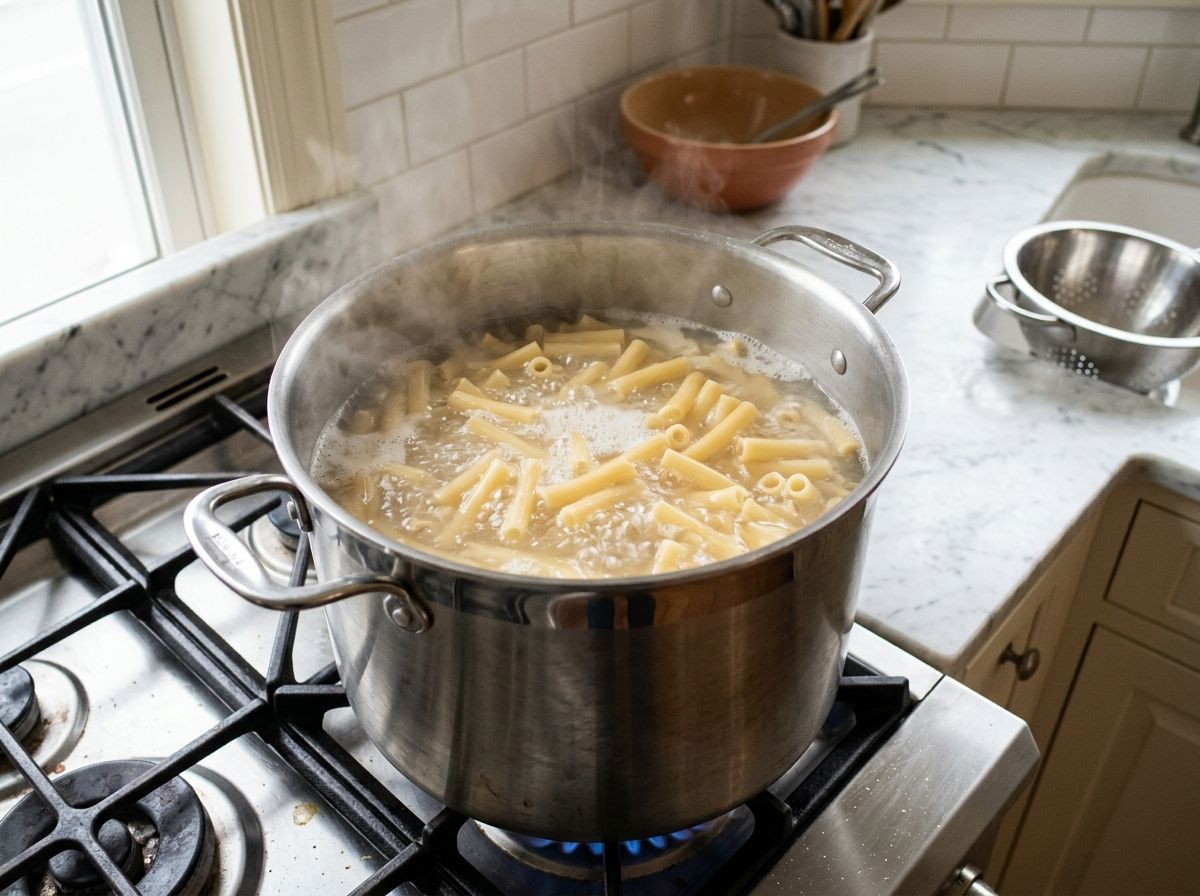
Heat the oven to 375°F (190°C). Bring a large pot of water to a rolling boil and salt it well, about 1 tablespoon for every 4 quarts. Cook the ziti for 3 minutes less than the package time for al dente. Bite one: it should still be stiff and chalky at the center. Scoop out 1 cup of the cooking water, then drain the pasta.
- 2
Mix the ricotta filling
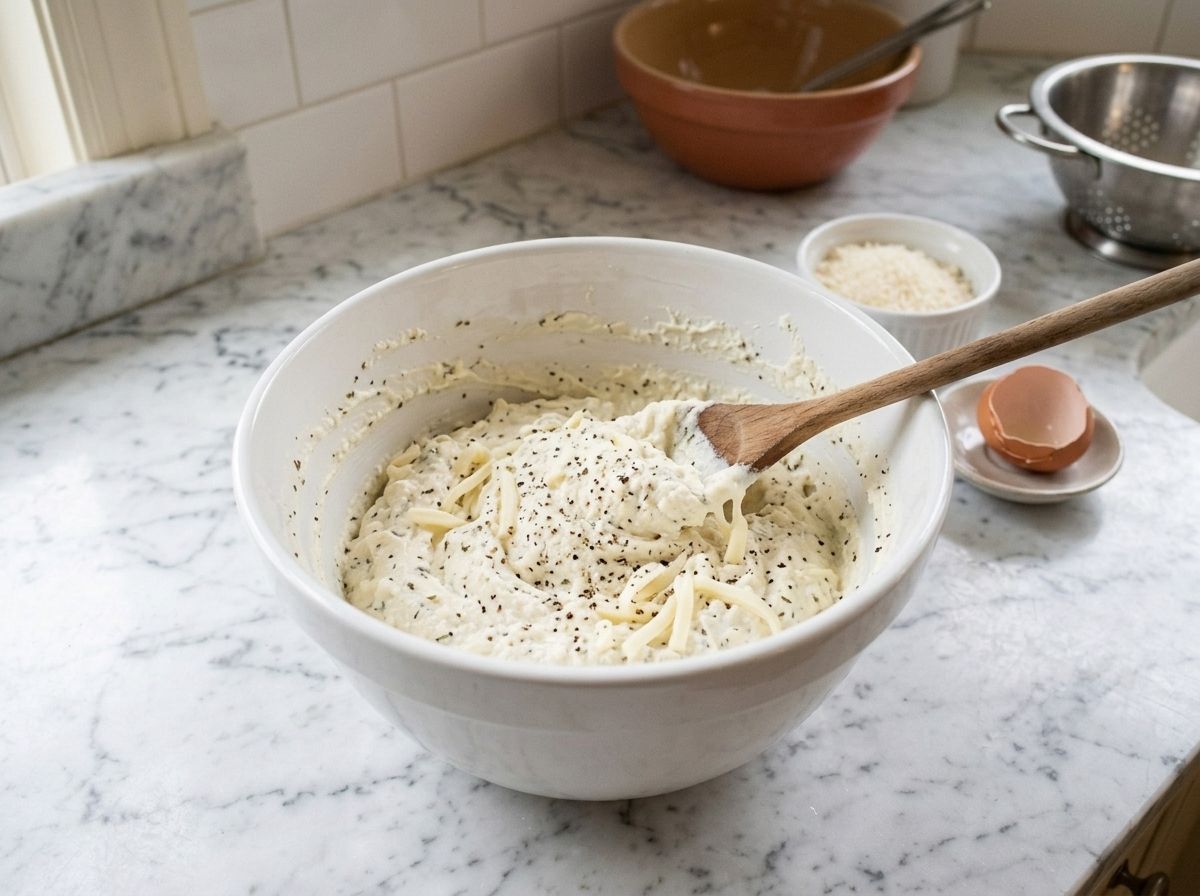
In a large bowl, stir the ricotta together with 1 cup of the mozzarella, the parmesan, the egg, the Italian seasoning, ½ teaspoon salt and several grinds of pepper. Loosen it with 2 to 3 tablespoons of the reserved pasta water until it drops off the spoon instead of sitting on it. That splash is what keeps it creamy rather than chalky after 40 minutes in the oven.
- 3
Coat the pasta in sauce
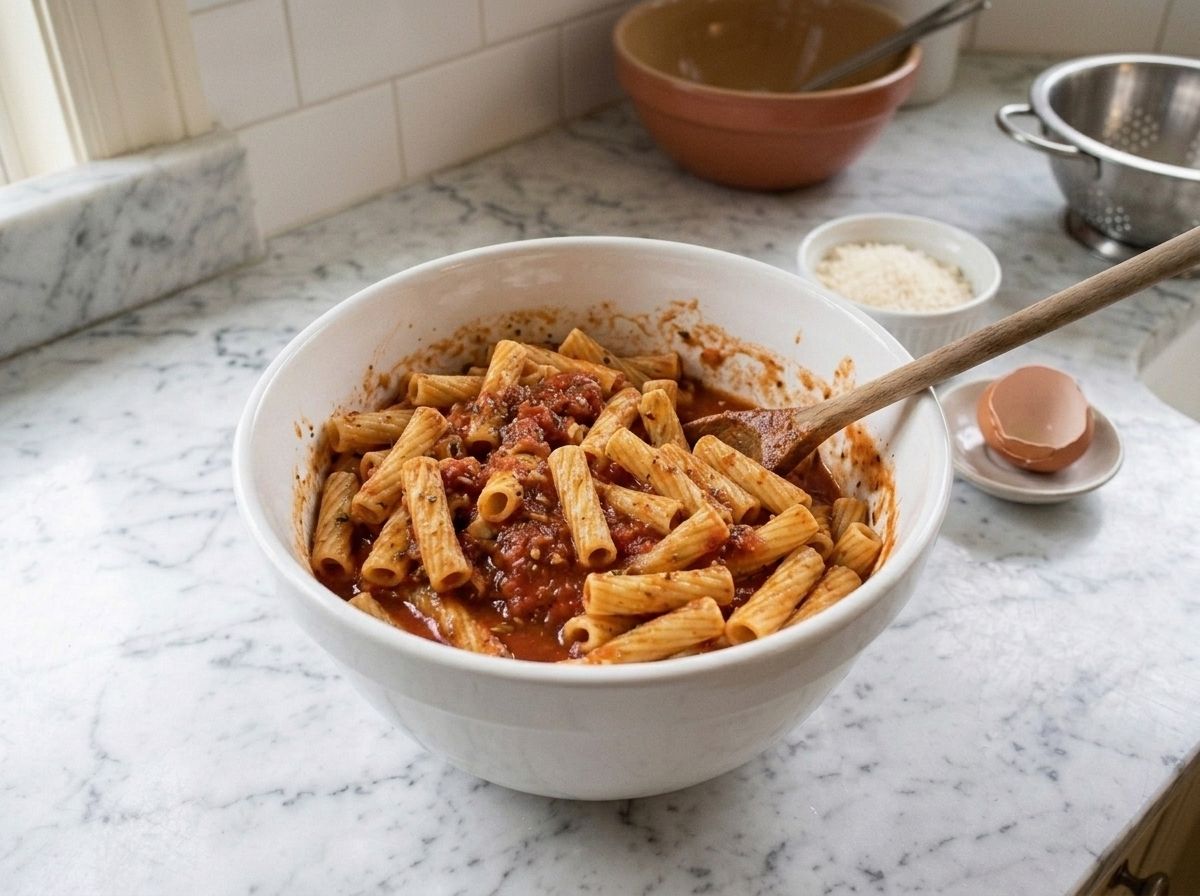
Tip the drained ziti into a large bowl with 2 cups of the marinara and turn it until every tube is coated inside and out. It will look wetter than a finished pasta should. Leave it that way. The undercooked pasta drinks that liquid in the oven, and this is the only liquid it gets.
- 4
Layer the dish
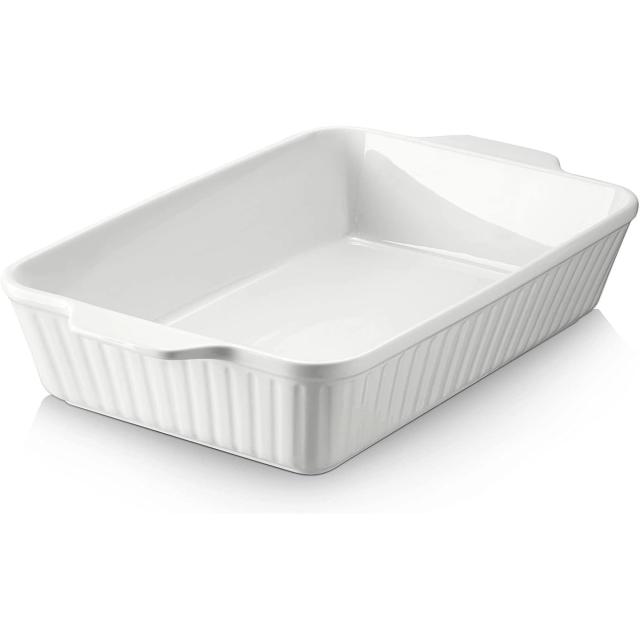
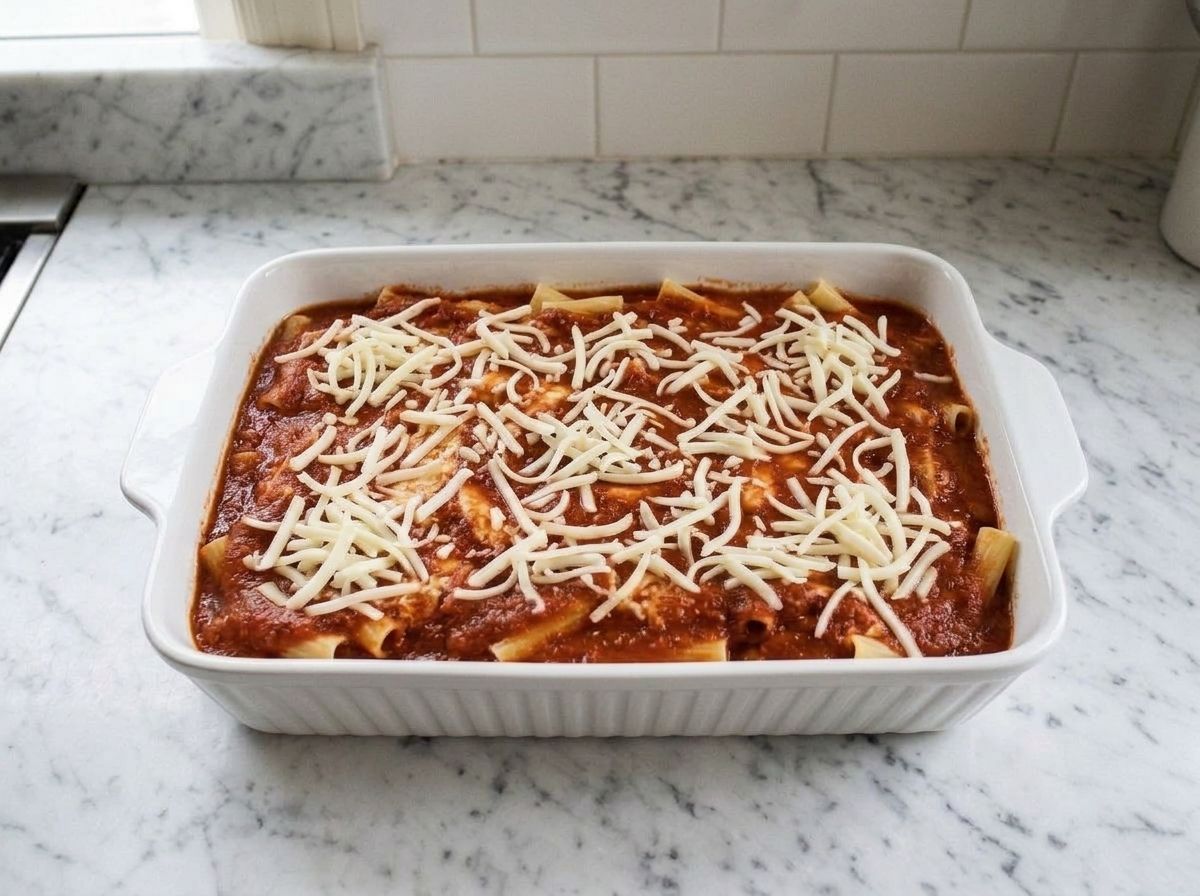
Spread ½ cup of the remaining marinara across the base of a 9×13 inch baking dish. Add half the pasta, drop the ricotta mixture over it in spoonfuls and spread it roughly level, then add the rest of the pasta. Spoon the last ½ cup of marinara over the top and nudge it into the gaps so that no bare pasta is left facing the heat. Scatter the remaining mozzarella over everything.
- 5
Bake covered, then uncovered
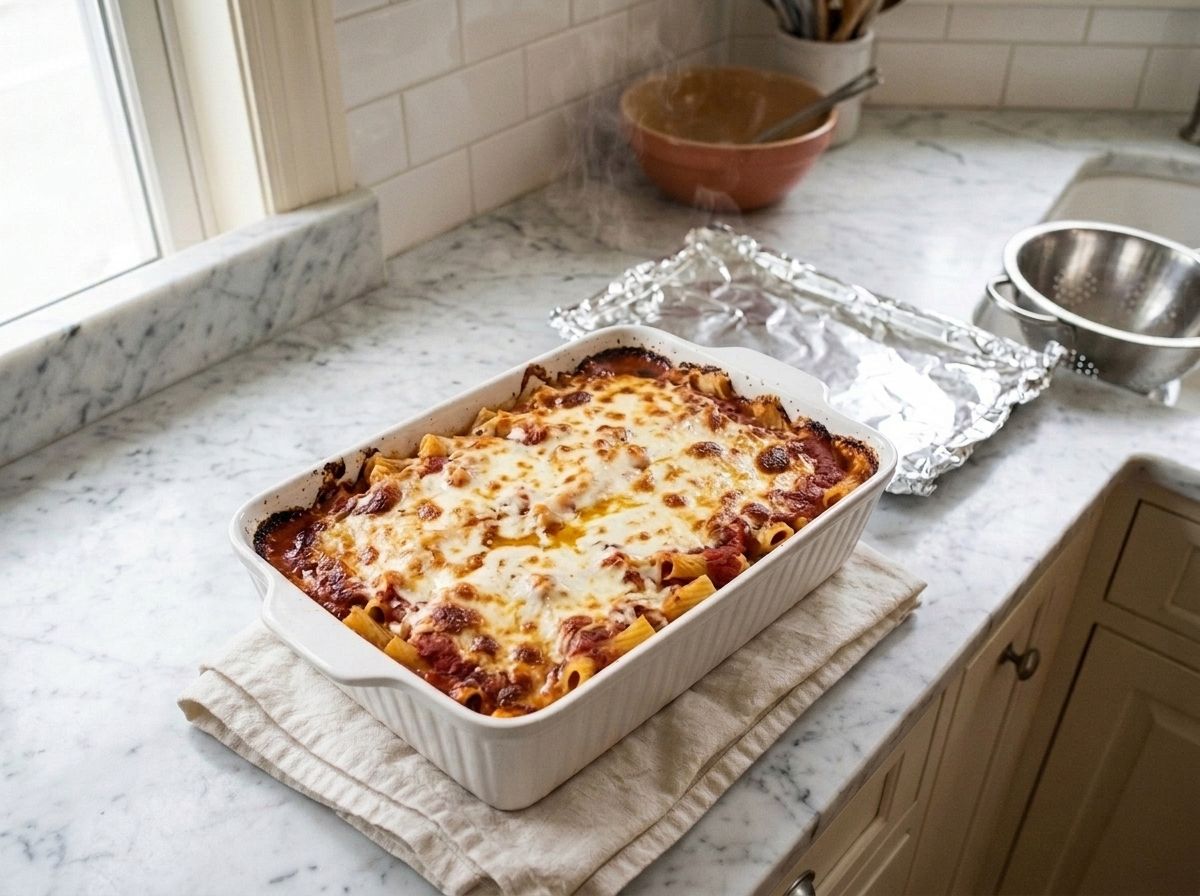
Cover the dish tightly with aluminum foil and bake for 25 minutes. Take the foil off and bake for another 15 to 20 minutes, until the cheese has browned in patches and the sauce is bubbling at the edges of the dish, not only in the middle.
- 6
Let it set before cutting
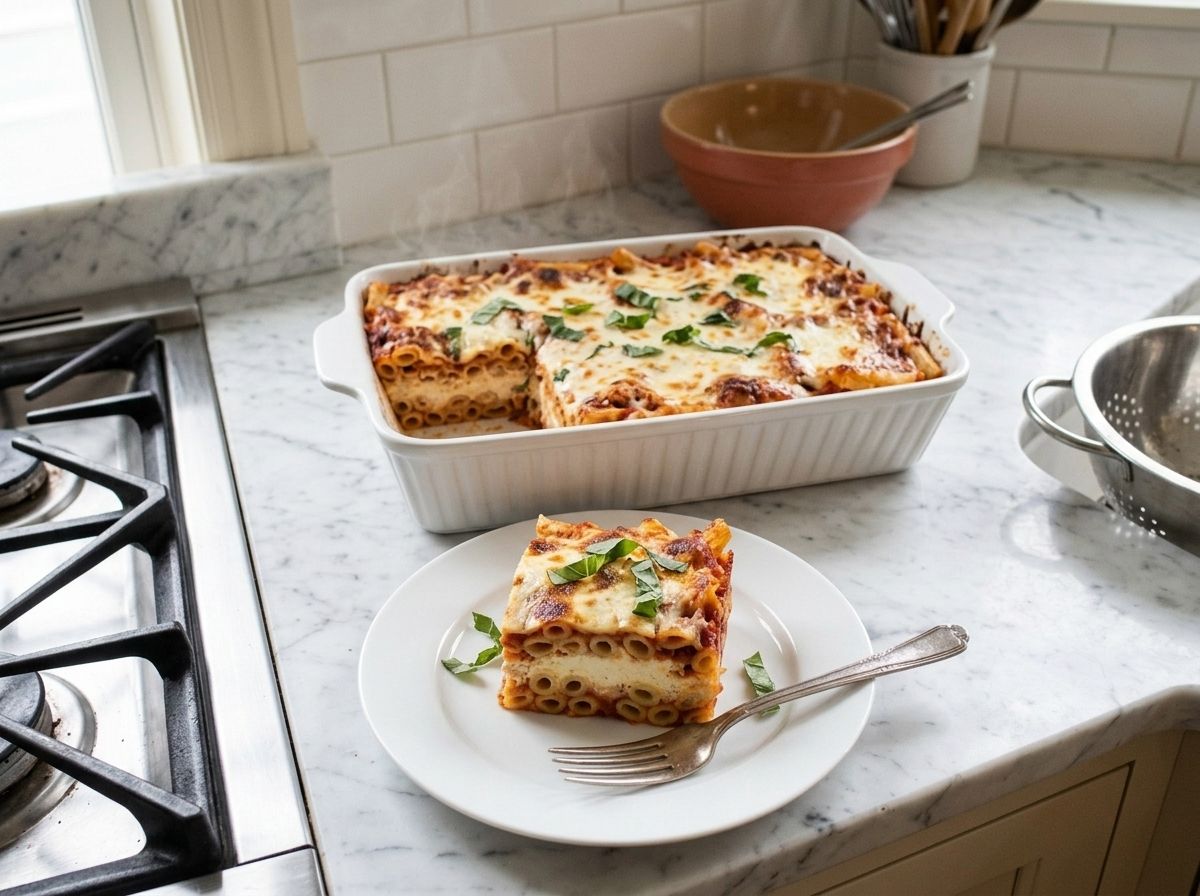
Let the dish stand for 15 minutes before you cut into it. Straight from the oven the layers slide apart on the spatula; a quarter of an hour lets the ricotta and the starch in the sauce firm up enough to lift a square that holds its shape. Scatter with basil or parsley and serve from the dish.
Notes
Boil the ziti 3 minutes short of the package al dente. It finishes cooking in the oven, and there is no way back from mushy.
Sautéed spinach, mushrooms or roasted zucchini fold in at the sauce step. Squeeze cooked spinach dry in a clean towel first, or it waters the dish down.
If the top has melted but not browned by the end of the bake, run it under the broiler for 2 minutes and do not walk away.
Nutrition Facts
6 servings · 305 g per serving
- Calories
- 504 kcal
% Daily Value*
- Total Fat
- 19.3 g25%
- Saturated Fat
- 11.5 g57%
- Sodium
- 1214 mg53%
- Total Carbohydrate
- 52.8 g19%
- Dietary Fiber
- 3.9 g14%
- Sugars
- 6.6 g—
- Protein
- 30 g60%
Recipe from veggierecipes.blog
When it goes wrong
Troubleshooting
The pasta turned to mush
It was boiled to al dente before it went in. Ziti keeps cooking and keeps drinking sauce for the whole 40 minutes it sits in the oven, so the boil has to stop while the center is still stiff and chalky. Three minutes off the package time, and bite one rather than trusting the clock. Pasta that is soft going in has nowhere to go but softer.
The top layer baked hard and the tube ends went like shards
Bare pasta facing an uncovered oven does not bake, it fries. This happens when all the sauce is stirred through the pasta and none is left for the surface, which is how most versions of this recipe are written. Spoon half a cup of marinara over the final layer and push it into the gaps before the mozzarella.
The ricotta baked into a dry, grainy slab
Three causes that usually arrive together: part-skim ricotta, which separates as it heats; a filling mixed stiff with nothing to loosen it; and ricotta spread as one solid sheet with no sauce touching it. Use whole milk, slacken it with 2 to 3 tablespoons of reserved pasta water until it drops off the spoon, and dollop rather than trowel it flat.
There is a pool of watery liquid in the bottom of the dish
Usually fresh mozzarella, the sort packed in water, which is more than half water by weight and gives most of it back in the oven. Use low-moisture from a block. The other culprits are undrained ricotta and vegetables added wet: cooked spinach has to be wrung out in a towel, and a bag of it will surrender a startling amount.
It fell apart on the spatula and would not hold a square
This is a fault in the waiting, not the cooking. Straight from the oven the ricotta is still liquid and the starch in the sauce has not set, so the layers slide. Fifteen minutes on the counter fixes it, and it will still be too hot to eat comfortably. Cut down with a knife rather than dragging a spoon through.
It tastes of tomato and not much else
Almost always salt, in two places at once. Unsalted pasta water leaves 12 ounces of pasta with no seasoning of its own, a third of the dish by weight tasting of nothing, and an unseasoned ricotta layer is a bland stripe through the middle. Salt the water properly, about a tablespoon per 4 quarts, and put half a teaspoon into the ricotta.
Before you serve
Serving & Storage
In the neighborhoods where this dish landed, baked ziti is often not eaten at home at all. It is the pan you carry somewhere: to the church hall, to the potluck table, to the door of someone who has had a bad week. Serve it from the dish it baked in, cut into squares, and let people fight over the corners, where the sauce has caught and the cheese has gone brown and chewy.
It is rich and soft the whole way through, so what it wants alongside is bitter and sharp: escarole, radicchio or chicory with a vinaigrette heavy on the vinegar. What does not work is a creamy dressing or a second rich side, both of which extend the same note. For wine, acid rather than weight, so Chianti, Barbera or a young Aglianico.
Making it ahead
Assemble the whole thing without baking it, cover, and refrigerate for up to 24 hours. Pull it out while the oven heats and add 10 to 15 minutes to the covered part of the bake. Do not stretch that window. The pasta goes on absorbing sauce in the fridge, and after much more than a day it is soft before it ever sees the oven, which is the mushy problem again by a different road.
To freeze, freeze it unbaked. Wrap the assembled dish twice, keep it up to 3 months, then thaw overnight in the fridge and bake as written with an extra 15 minutes under the foil. Freezing it after baking works, but the pasta has then been through three rounds of cooking and comes out woolly.
Storing leftovers
Airtight in the fridge for 4 days. Reheat covered, with a tablespoon or two of water or extra sauce spooned over the top, at 350°F (175°C) for about 20 minutes. Reheating uncovered is what turns leftover ziti into a brick, and the microwave does the same thing faster unless you put a spoonful of sauce on the portion and cover it.
One leftover is worth planning for. Fry a cold square in a small pan with olive oil until the base crusts and the cheese at the edges goes crisp and lacy, then turn it and do the other side. It is arguably better than it was on the day.
Still wondering
Frequently Asked Questions
How do I stop gluten-free ziti from falling apart?
Boil it 1 minute short of the package time rather than 3. Corn and rice pasta has no gluten holding it together, so it goes from firm to disintegrating in a much narrower window and cannot absorb sauce for 40 minutes the way wheat ziti can. Everything else stays the same. Check the marinara label too, since a few jarred sauces are thickened with wheat starch.
Can I make it vegan?
Yes, with one thing to expect. Vegan ricotta, mozzarella and parmesan all work, and a flax egg or commercial replacer binds the filling. What suffers is browning: most vegan mozzarellas melt without taking on any color, so the top stays pale however long the foil is off. Cashew-based ricotta gets closest to the real texture; tofu-based versions bake drier and want an extra splash of pasta water.
Does 12 ounces of pasta really fill a 9×13 inch dish?
It fills it about three quarters deep, which is what you want, because a pan filled to the rim boils over the sides. That is six generous servings of roughly 300 grams each. To feed eight, go to a full pound of ziti and 4 cups of marinara and leave the cheese exactly as it is; it is already at the upper limit the dish carries without turning greasy.
More Cozy Vegetarian Pasta Bakes
Made this?