
Vegan Spaghetti Carbonara Recipe
Published · Updated
Carbonara without the egg, made the way carbonara is actually made: off the heat, with pasta water, toasted black pepper and a cashew sauce that clings.
Jump To Recipe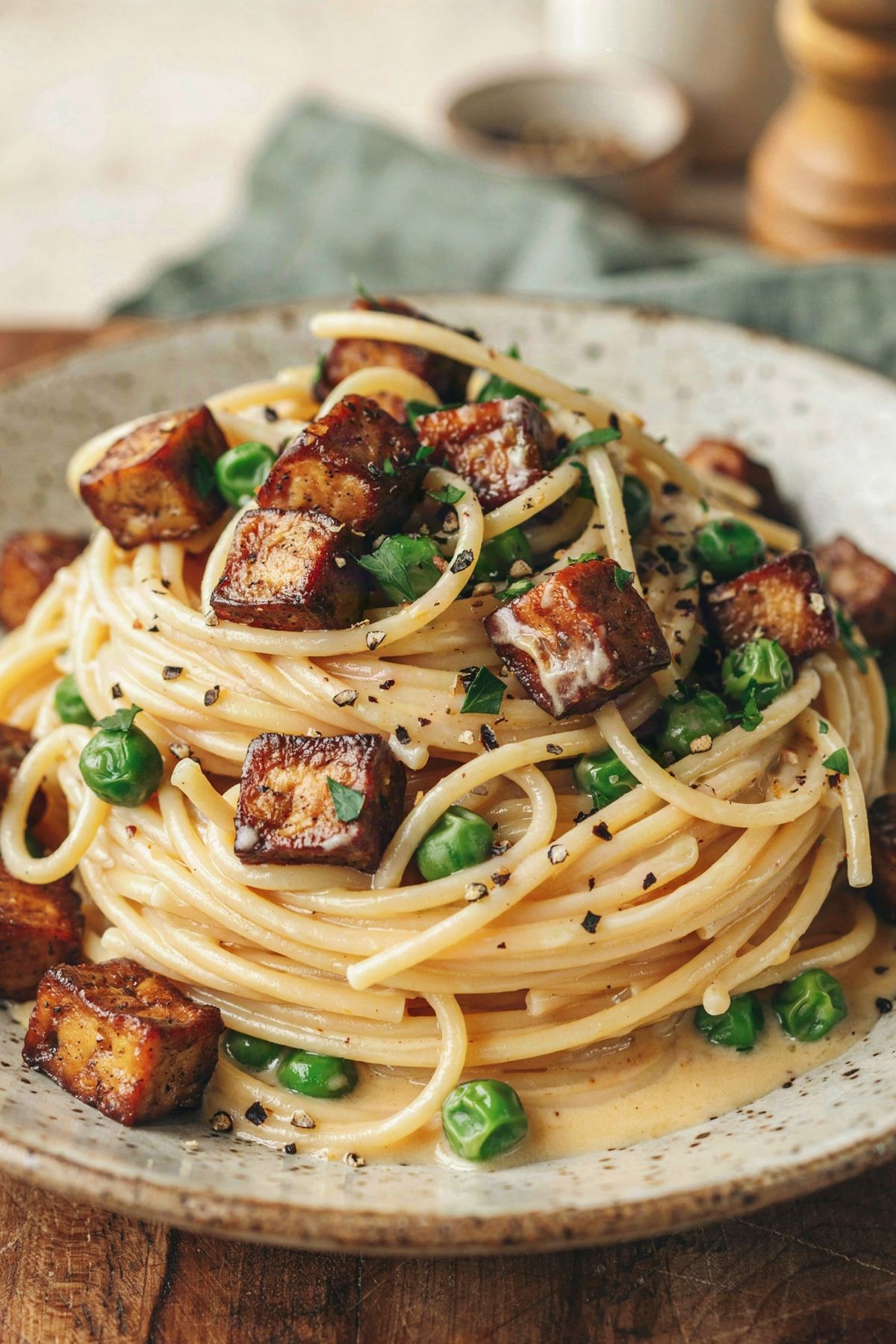
Why I Love Vegan Carbonara
Most vegan carbonara is cashew cream on spaghetti with a dusting of smoked paprika, and it is fine, but it is not carbonara. What makes carbonara carbonara is an emulsion pulled together off the heat with starchy pasta water, a lot of black pepper toasted in fat, and that faint sulfurous note of a barely set yolk.
Two ingredients do the work here. Soaked cashews blended with vegetable broth, nutritional yeast and a spoonful of white miso give the body and the aged-cheese tang. Kala namak, the sulfurous Indian black salt, gives the egg. It goes in off the heat at the very end, because its aroma is volatile and a hot pan drives it straight off.
A few things I personally love about this dish:
- it comes together in about 40 minutes, most of it hands-off soaking
- the smoked tofu browns hard and stays chewy, which is the part paprika alone cannot do
- the sauce is forgiving as long as you keep the pan off the burner
Everything except the black salt is a pantry staple, and a small bag of kala namak lasts years and costs very little. If you have made a vegan carbonara before and found it pleasant but somehow beside the point, this is the version that fixes it.
The story
Carbonara Is Younger Than the Rules About It
Everyone knows the story. Charcoal burners, the carbonari, worked the Apennine forests for weeks at a stretch, carrying dried pasta, cured pork and pepper because none of it spoils, and cooked over their own coals. The black pepper is supposed to be the coal dust. It is a good story, and there is not a single document behind it. No cookbook, no trattoria menu, no letter or diary mentions carbonara before the Second World War.
The earliest written trace anyone has found turned up in an unlikely place: a Dutch provincial newspaper. On 23 August 1939, a correspondent for De Koerier named Nora Koch Berkhuijsen described spaghetti alla carbonara being eaten in the trattorias around Piazza Santa Maria in Trastevere, prepared, she wrote, the way the coalman’s wife makes it. One line, no recipe. That is the whole of the pre-war record.
After that the trail runs through the war. The Italian cook Renato Gualandi spent decades saying he invented the dish in Riccione in 1944, for a dinner of American and British officers, out of their rations of bacon, cream and powdered egg. It is a tidy origin, and carbonara does not appear on the menu he reprinted in his own memoir. The first recipe actually in print is not Italian at all. Patricia Bronté published one in a Chicago restaurant guide in 1952.
Italy’s first printed carbonara ran in the August 1954 issue of La Cucina Italiana, and it would get a modern Roman thrown out of the kitchen: spaghetti, egg, bacon, Gruyère and garlic. Guanciale does not appear until 1960, in Luigi Carnacina’s La grande cucina, which also calls for cream. Cream then stayed in Italian carbonara recipes for roughly the next three decades, quietly, in the same books now cited as authorities.
The orthodoxy people defend online is newer than any of that. Carbonara Day, 6 April, was invented in 2017 by the Italian pasta industry’s trade association and its international counterpart, in direct response to a French video from 2016 showing carbonara made with cream and onions. The Italian press called it Carbonara-Gate. The outrage and the tradition were manufactured in the same year, by the same people, as a hashtag campaign.
None of which is an argument that anything goes. It is an argument that carbonara has never been a fixed recipe. It has been a fast, improvised plate of pasta assembled from whatever fat, cheese and egg were in the kitchen, and it has been reinvented about once a decade by whoever happened to be cooking it. Trading Gruyère for pecorino was a bigger change than trading egg for cashews and black salt. What has stayed constant is the method: starchy pasta water, coarse pepper toasted in fat, and an emulsion built off the heat. Keep those three and you are cooking carbonara, whatever is in the sauce.
What to buy
Ingredient Notes
Kala namak (Indian black salt)
This is the ingredient that decides whether you have made carbonara or a cashew cream pasta. It is a kiln-fired rock salt, pink-gray rather than black once it is ground, and it smells powerfully of sulfur, which happens to be the same note that makes a barely set yolk smell the way it does. Buy it finely ground. Its aroma is volatile, so it goes in off the stove at the very end, and it fades in the jar after a couple of years. Start at ¾ teaspoon. Overdo it and the dish reads as boiled egg rather than carbonara.
Raw cashews
Raw, not roasted and not salted. Roasted cashews will not blend completely smooth and they taste assertively of cashew, when what you want here is body and very little flavor of its own. Whole nuts and pieces work identically and pieces cost less. Soak them even if you own a powerful blender. Fifteen minutes in boiling water is enough, and the point is water driven into the nut rather than softness you can feel with a fingernail. Raw sunflower seeds are the nut-free swap; they need a longer soak and taste faintly green.
Smoked tofu
Standing in for guanciale, whose job in carbonara is about two-thirds rendered fat and one-third chew. Smoked tofu comes firm and dry enough to brown rather than steam, and the smoke is fermented through the block instead of dusted on afterwards. Buy the vacuum-packed smoked blocks sold near the plain tofu, not silken, and not plain extra-firm, which needs pressing and still tastes of nothing much. Cremini mushrooms browned hard, or cubed tempeh, both work in its place; add ¼ teaspoon of liquid smoke with the paprika if you go that way.
White miso paste
Pecorino Romano is sharp, salty and slightly funky, and nutritional yeast on its own only delivers savory. A tablespoon of white miso supplies the fermented tang that makes the sauce taste aged rather than merely creamy. Use white miso, sometimes labeled shiro, which is mild and a little sweet. Red or brown miso will tint the sauce a muddy color and bully the black salt out of the way. Read the label if you are cooking gluten-free, because some miso is fermented with barley rather than rice.
Black pepper
Carbonara is a pepper dish before it is a cheese dish, and 1½ teaspoons will look like a typo when you measure it. Grind it coarse, on the widest setting the mill has, so the flecks give a little crunch instead of dissolving into dust. Pre-ground pepper has already lost the volatile oils that toasting is meant to release, so this is one of the few dishes where owning a grinder genuinely changes the result. Thirty seconds in the hot oil, before the garlic, is all it needs.
Peas
Not Roman, and no cook in Rome would put them anywhere near a carbonara. They arrived with the British and American versions in the 1960s and 70s and stayed, which is why the dish most people picture when they say vegan carbonara has them in it. They are here for that reason and you can leave them out for something closer to the Roman plate. Frozen beat fresh here: they go into the pasta water for the last two minutes, and fresh peas at that size want longer than that.
Spaghetti, and the water it cooks in
The cloudy water is an ingredient rather than waste. Its dissolved starch is what binds the fat and the cashew purée into something that clings, and without it the sauce slides off and gathers at the bottom of the bowl. Salt the water like soup, use slightly less water than the package suggests so it comes out starchier, and pull the spaghetti a minute early because it finishes cooking in the pan. Reserve more than you think you need. Two cups sounds excessive and you will use most of one.
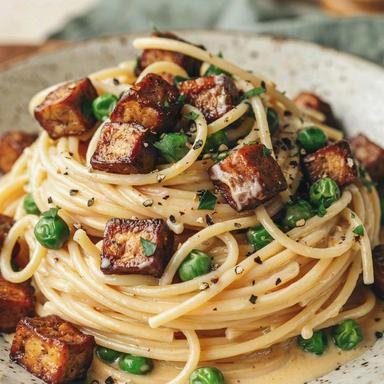
Vegan Spaghetti Carbonara
Creamy vegan carbonara built the way the real thing is: a cashew and black salt sauce emulsified off the heat with pasta water, smoked tofu browned hard in its place, and a lot of toasted black pepper.
Ingredients
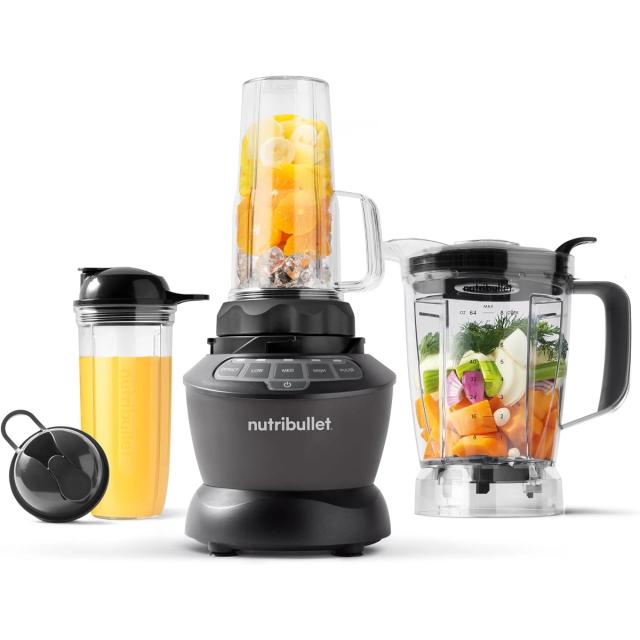
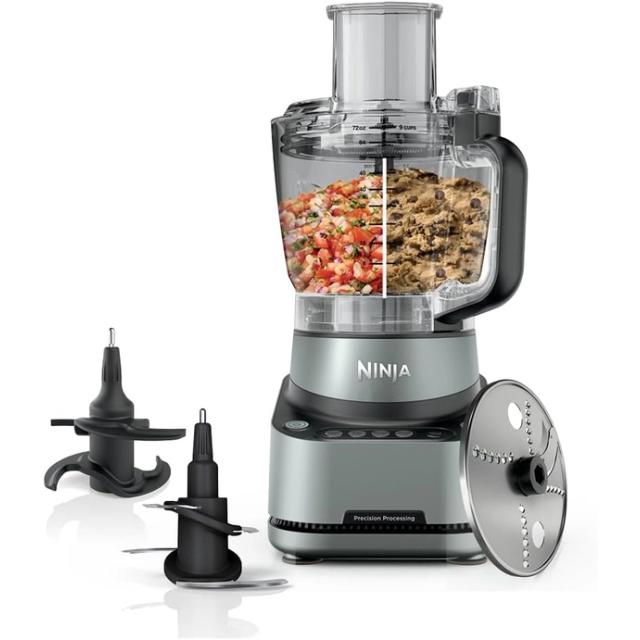
Equipment
As an Amazon Associate I earn from qualifying purchases, at no extra cost to you.
Instructions
- 1
Soak the cashews
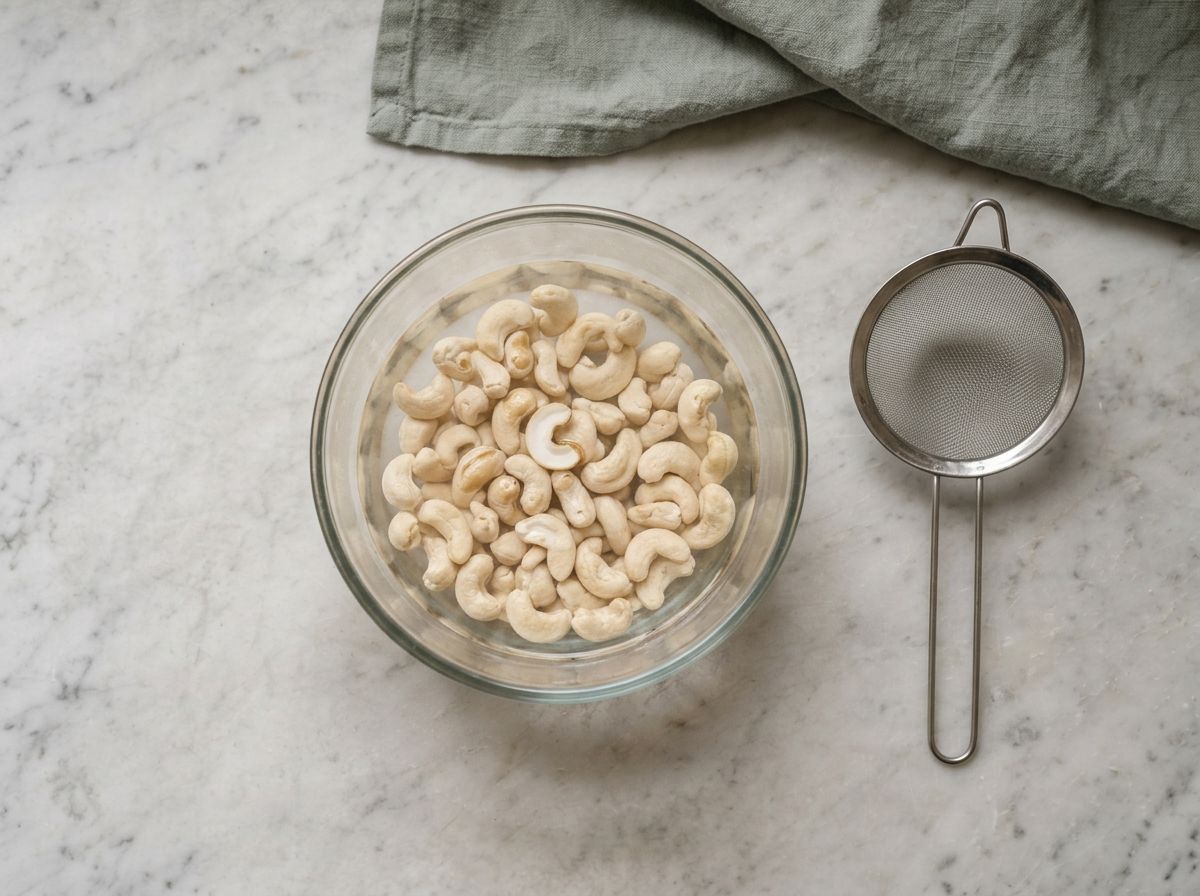
Put the cashews in a heatproof bowl, cover them with boiling water and leave them for 15 minutes. If you have longer, cold water for 2 to 4 hours gives a silkier result. Drain and throw the soaking water away.
- 2
Blend the sauce
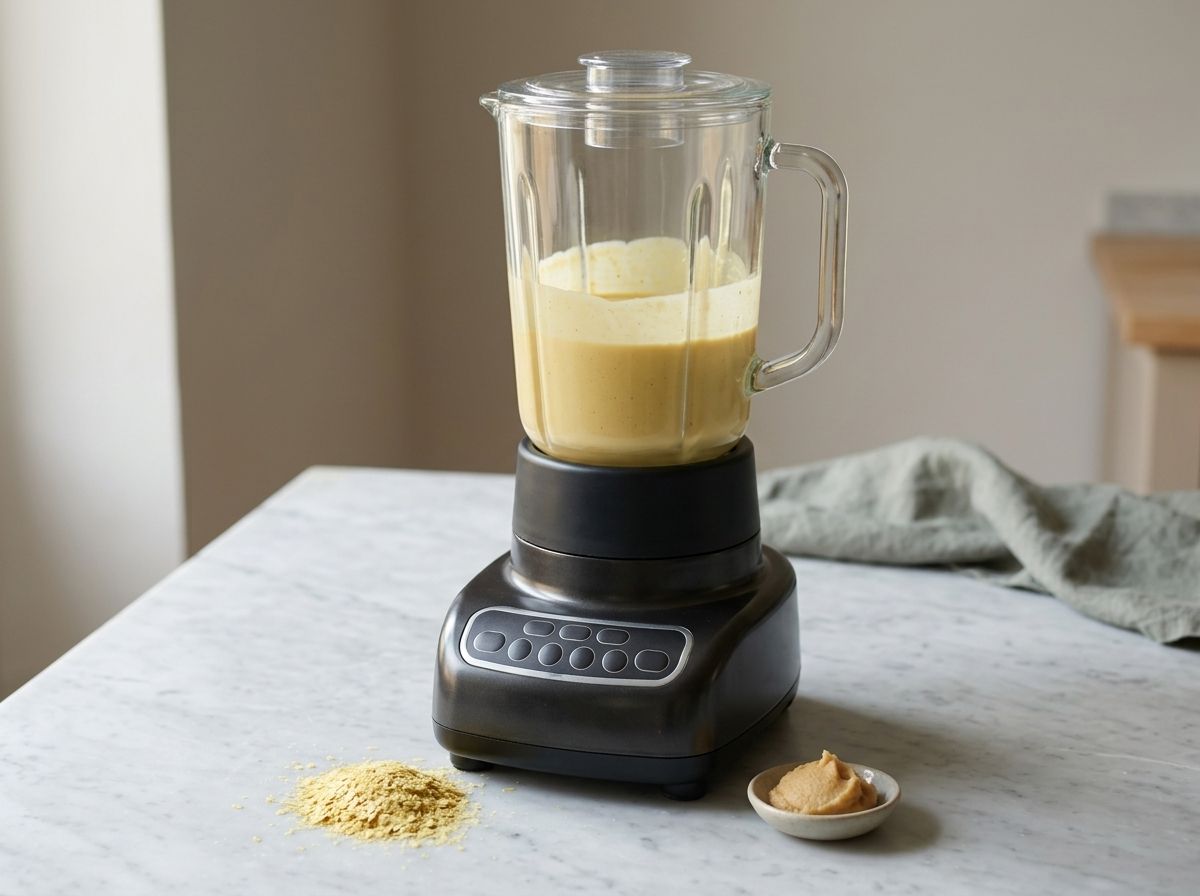
Put the drained cashews, nutritional yeast, miso and turmeric in a blender with the vegetable broth. Blend for a full 60 to 90 seconds, stopping once to scrape down the sides, until there is no grain left at all. Hold the kala namak back; it goes in at the very end. Set the sauce aside.
- 3
Brown the smoked tofu
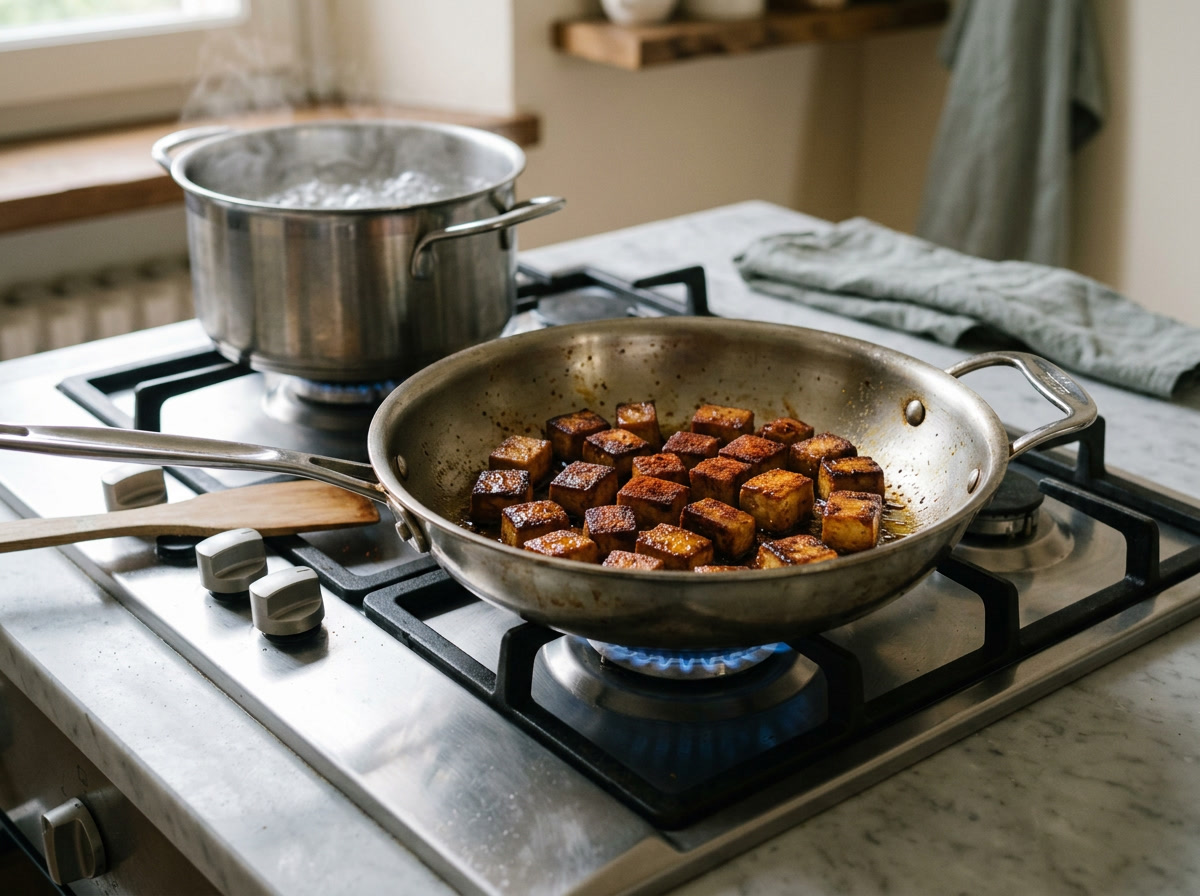
Put a large pot of well-salted water on to boil. Meanwhile, cut the tofu into ½ inch (1 cm) cubes and heat 1 tablespoon of the olive oil in a large skillet over medium-high heat. Add the tofu in a single layer and leave it alone for 3 to 4 minutes, until the undersides are deep gold. Toss and repeat until it is browned on most sides, about 8 minutes in all. Sprinkle over the smoked paprika, toss for 30 seconds, then tip the tofu onto a plate and leave the pan on the stove.
- 4
Toast the pepper and garlic
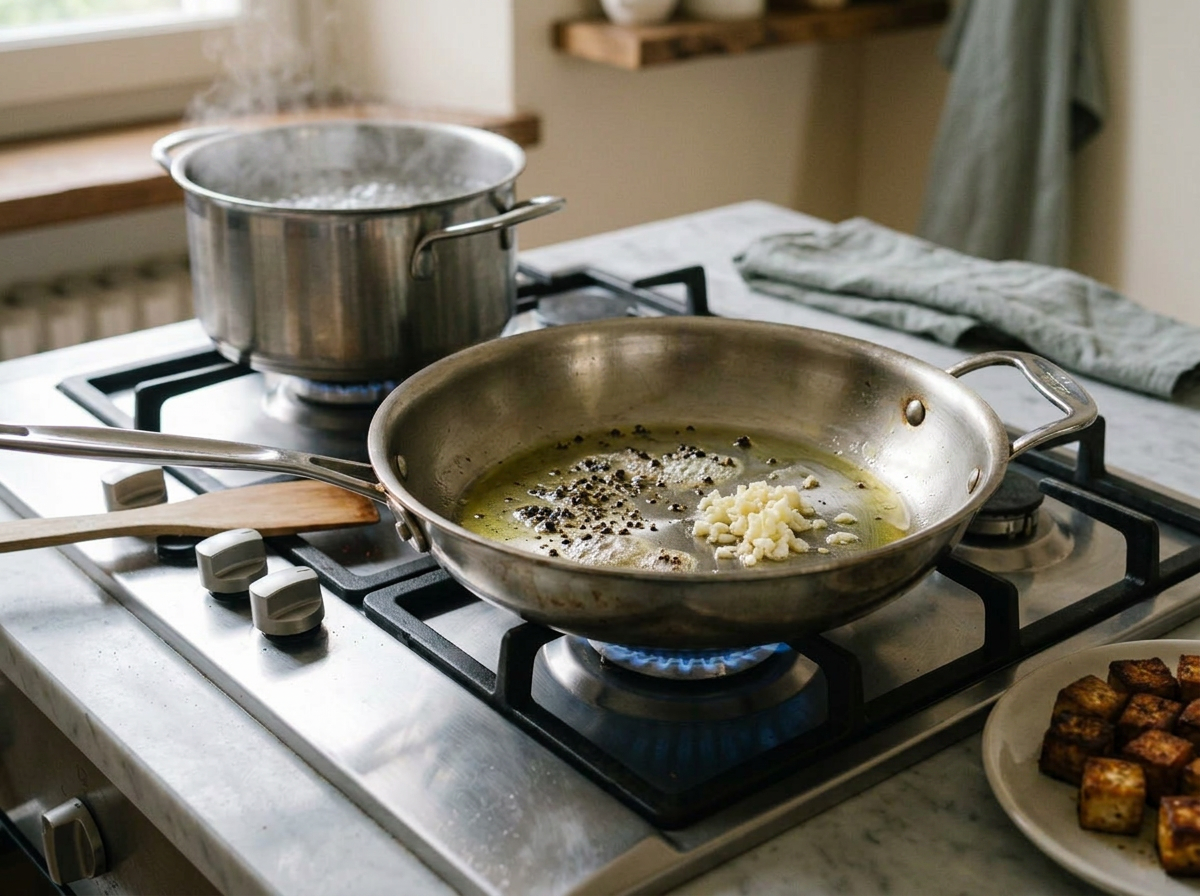
Turn the heat to low, add the second tablespoon of oil to the same pan and let the black pepper sizzle in it for about 30 seconds, until it smells sharp and floral. Add the garlic, cook 30 seconds more until it is fragrant but has taken no color, then lift the pan off the heat. Toasting pepper in fat is where carbonara gets its bite. Stirred in raw at the end it tastes dusty.
- 5
Cook the spaghetti and peas
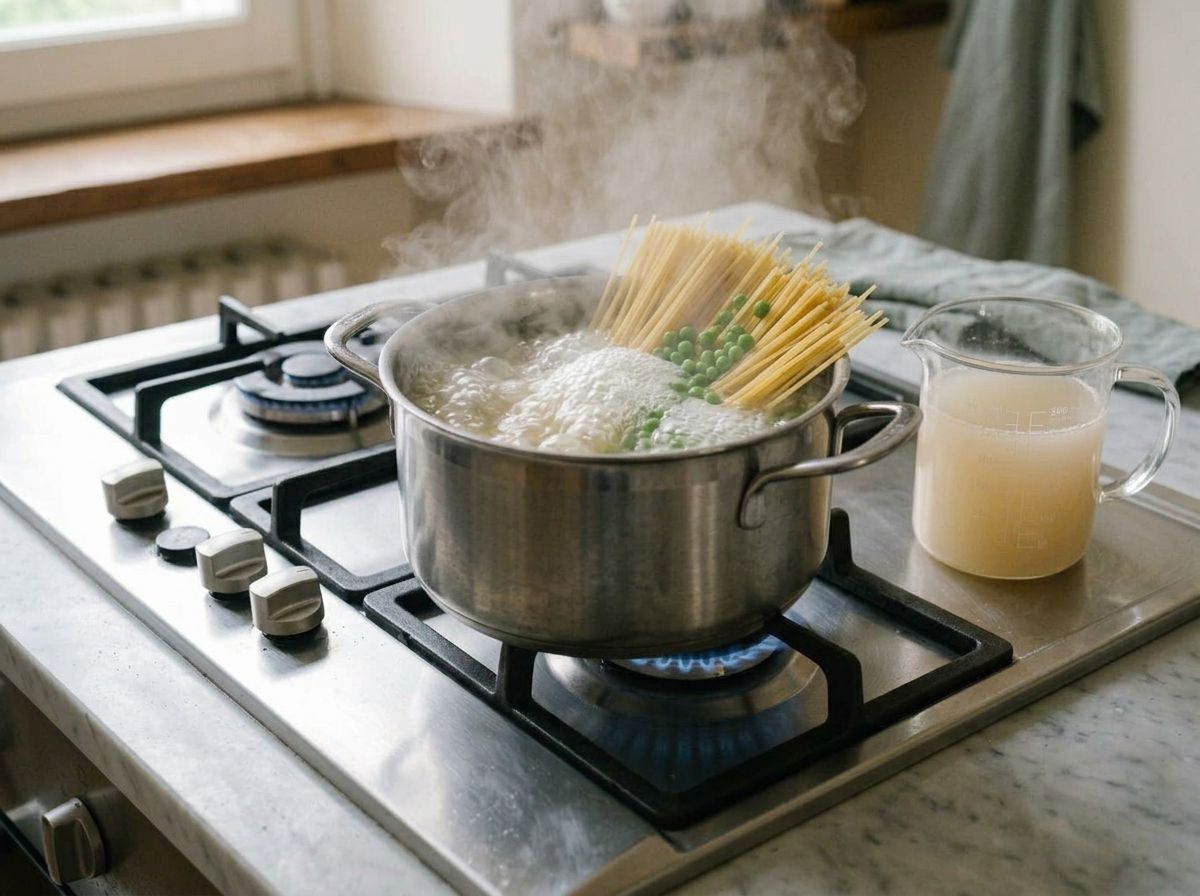
Cook the spaghetti in the boiling water until al dente, about a minute short of the package time, adding the peas for the last 2 minutes. Scoop out about 2 cups (500 ml) of the pasta water, then drain.
- 6
Toss it off the heat
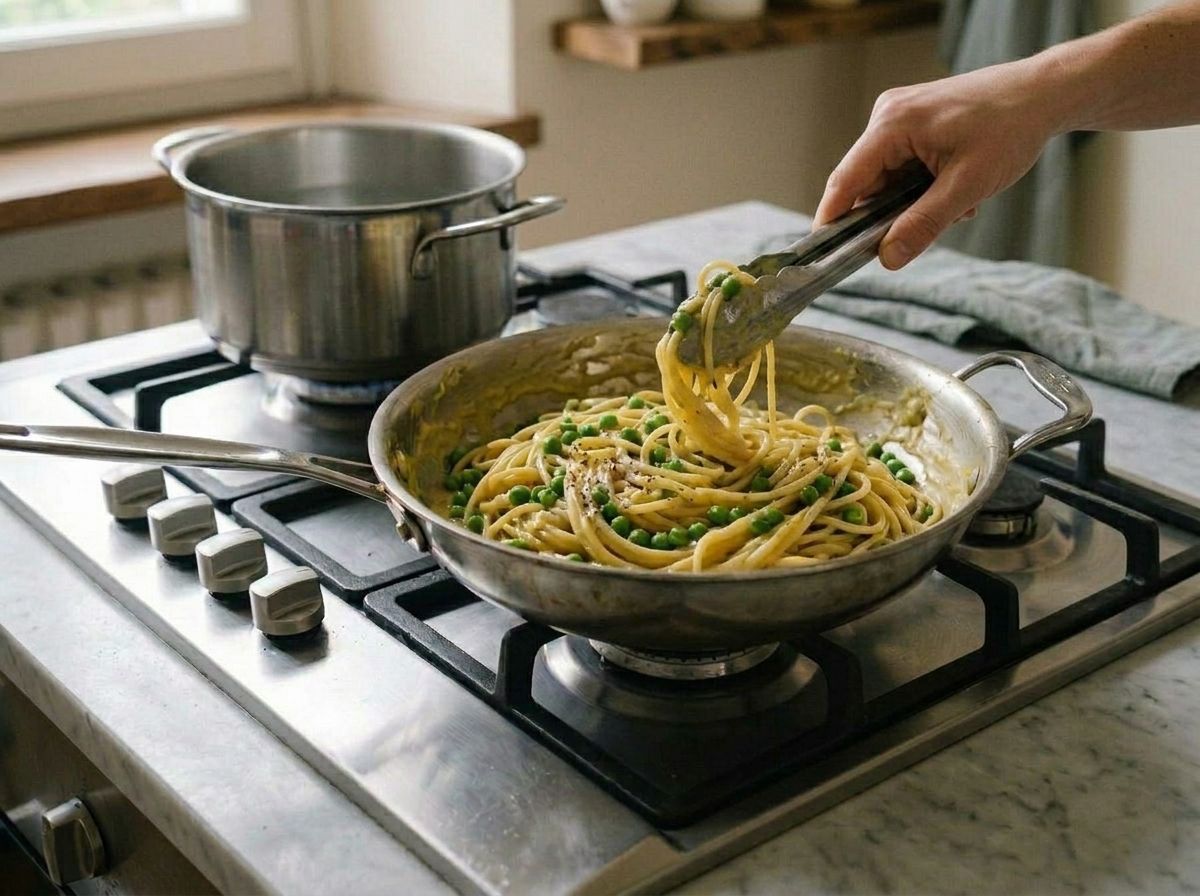
Tip the spaghetti and peas into the skillet with the peppery oil, off the heat, and toss to coat. Pour in the cashew sauce and about ½ cup (120 ml) of the pasta water, then toss hard for a minute, until the sauce clings to the strands instead of sitting under them. Loosen it with more pasta water a splash at a time. Do not put the pan back on the burner: a cashew sauce that reaches a simmer turns thick and pasty and will not come back.
- 7
Season and serve
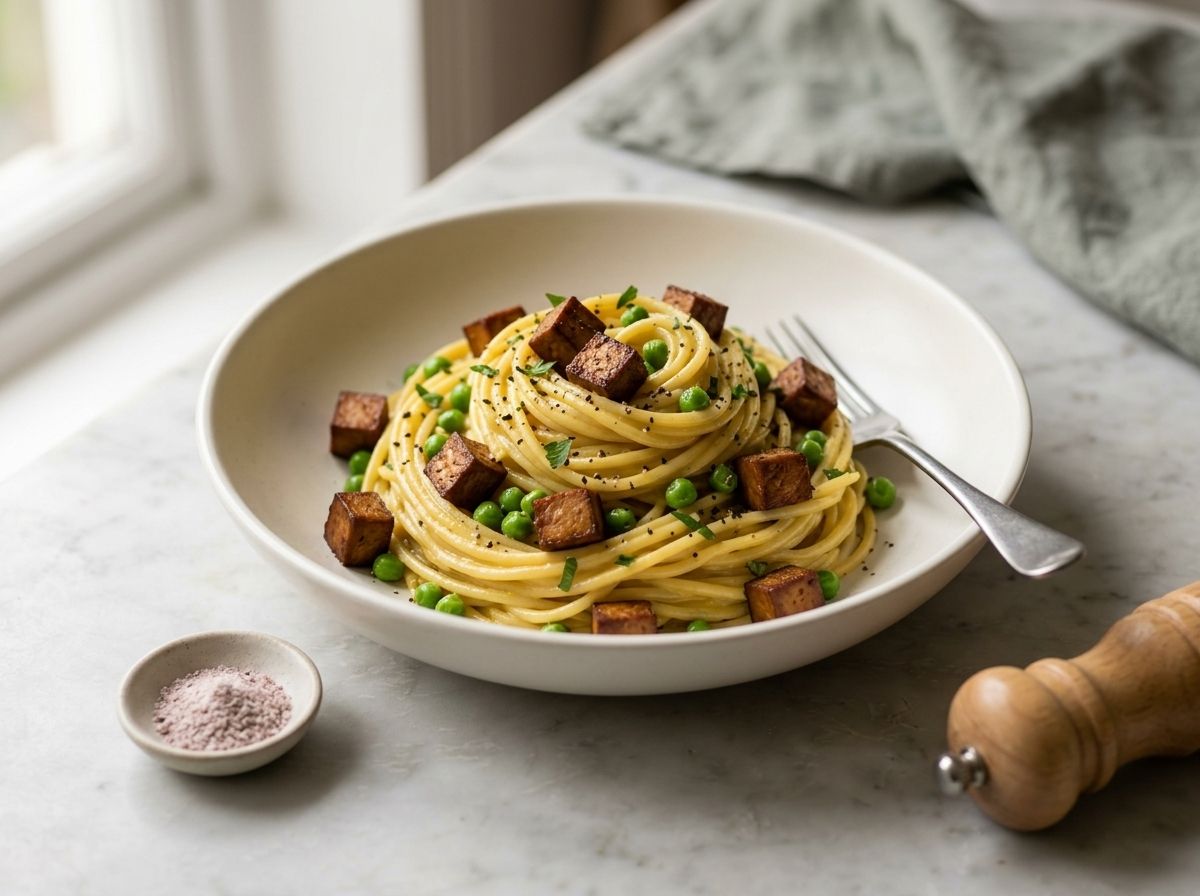
Stir in the kala namak and most of the tofu, then taste and add salt and pepper. Black salt loses its eggy aroma to heat, which is why it goes in last and off the stove. Serve straight away in warmed bowls, topped with the rest of the tofu, the parsley and a final grind of pepper.
Notes
Kala namak, sold as Indian black salt, is what supplies the sulfurous egg note. Without it this is a good creamy pasta but it is not carbonara.
Soak the cashews even if you own a high-powered blender. Fifteen minutes in boiling water is the difference between silky and faintly gritty.
The sauce keeps in the refrigerator for up to 3 days. It thickens as it sits, so loosen it with broth or water before it meets the pasta.
For a gluten-free version use gluten-free spaghetti and check that your miso is made without barley.
Browned cremini mushrooms or fried tempeh work in place of the smoked tofu. Add ¼ teaspoon of liquid smoke with the paprika if you use them.
Nutrition Facts
4 servings · 515 g per serving
- Calories
- 654 kcal
% Daily Value*
- Total Fat
- 25.2 g32%
- Saturated Fat
- 4 g20%
- Sodium
- 419 mg18%
- Total Carbohydrate
- 83.8 g30%
- Dietary Fiber
- 7.6 g27%
- Sugars
- 7.2 g—
- Protein
- 25.5 g51%
Recipe from veggierecipes.blog
When it goes wrong
Troubleshooting
The sauce went thick and pasty the second it hit the pan
Heat did that. A cashew purée behaves like a starch-thickened sauce: bring it anywhere near a simmer and the emulsion tightens into a paste, and no amount of pasta water will coax it back to silky. Lift the skillet off the burner before the spaghetti goes in and leave it off for good. The pasta and the peas come out of the pot carrying more than enough residual heat to bring the sauce up to temperature.
It tastes creamy and pleasant but nothing like carbonara
This is the black salt, either missing or added too soon. The sulfur compounds in kala namak are volatile, so a pinch stirred into a pan still sitting on the heat is largely gone by the time the bowl reaches the table. Add it at the very end, off the stove, taste, and add more if the egg note is not there. If you left it out altogether, what you have is a decent cashew pasta, and there is no way to turn it into carbonara after the fact.
The sauce is gritty
Either the cashews were not soaked long enough or the blender was not run long enough, and the second is far more common. Fifteen minutes in boiling water plus a full 60 to 90 seconds of blending, with one stop to scrape the sides down, is the floor for an ordinary jug blender. A grain you can only just detect when you taste the raw sauce off a spoon becomes unmistakable once it is spread over a plate of pasta. If it is already gritty, push it through a fine sieve. That fixes it and costs you some volume.
The garlic tastes raw and harsh
This is the flaw in most vegan carbonara recipes, which drop raw garlic straight into the blender. Blending ruptures every cell at once and floods the sauce with allicin, and nothing cooks it out afterwards because the sauce is never heated. Sizzle the garlic in the oil for 30 seconds instead, until it smells sweet rather than sharp, and stop before it takes any color. Browned garlic goes bitter, which is the same problem from the other direction.
The sauce slid off and pooled at the bottom of the bowl
Not enough pasta water, or not enough tossing, and usually both. The dissolved starch is the emulsifier; without it the oil and the cashew purée never join and gravity takes care of the rest. Add ½ cup, then toss hard and without stopping for a full minute, which is considerably longer than it feels reasonable to keep tossing. If you already tipped the water down the sink, a teaspoon of cornstarch whisked into a cup of hot water is a poor but workable stand-in.
My sauce is beige rather than yellow
Real carbonara takes its color from yolks and cashews are pale, which is the entire reason turmeric is on the ingredient list. A pinch is the whole instruction: an eighth of a teaspoon tints it convincingly, a quarter teaspoon starts to taste of curry, and there is not much room between the two. The smoked paprika contributes some warmth as well once it has been toasted with the tofu, so judge the color after everything is in the pan rather than at the blender.
Before you serve
Serving & Storage
Carbonara does not wait. In Roman trattorias it travels from pan to table in one movement, and the reason is mechanical rather than ceremonial: the emulsion holds at its best for about ninety seconds, after which it begins to set and tighten. This version behaves the same way, slightly faster if anything, because cashew sauce firms as it cools. Warm the bowls under the hot tap while the spaghetti drains. It is a trivial thing to do and it buys back most of that minute.
Keep the rest of the meal out of its way. This is a rich plate, and Rome would send out a puntarelle salad or nothing at all. Bitter leaves dressed sharply, chicory or escarole or radicchio, cut the fat better than anything warm can. Bread is welcome. Garlic bread is not, because the garlic in the sauce is deliberately gentle and a loaf of it steamrolls the whole balance. Skip any parmesan-style topping too; the sauce is already carrying as much savory as it can hold, and more just makes it taste flat.
Making it ahead
The sauce is the part that keeps, and it keeps well. Blended and without the black salt, it holds for 3 days in the refrigerator and freezes for 2 months. It sets firm as it chills, so whisk in broth or water until it pours properly again before it goes anywhere near the pasta. You can cube and brown the tofu a day ahead as well; it will have given up its crisp edges by then but kept the chew, which is most of what it is doing in the dish.
Assembling ahead does not work, and there is no technique that rescues it. Spaghetti sitting in sauce keeps drinking, the emulsion has nothing left to hold on to, and what you reheat the next day is pasta in a thick coating rather than pasta in a sauce. If you are cooking for a crowd, make the sauce and the tofu in advance and boil the pasta at the last minute. That is a five minute job.
Storing leftovers
Leftovers go into an airtight container and keep for 3 days. Reheat them in a skillet over low heat with a splash of water or plant milk, tossing until the sauce loosens, and take the pan off while the pasta is still only just hot rather than steaming. A microwave will do if you work in 30-second bursts and stir between each one. Run it to boiling and the cashew sauce turns grainy in a way nothing reverses. The black salt fades overnight, so a small pinch at the table puts the egg note back where it was.
Do not freeze the finished dish. Cooked spaghetti comes out of the freezer soft all the way through and the sauce comes out separated, and unlike the gritty-sauce problem there is no sieve that fixes it. Freeze the sauce on its own instead, in a jar with a couple of inches of headroom, and thaw it overnight in the refrigerator before you whisk it back together.
Still wondering
Frequently Asked Questions
There is no egg in this. Can it really be called carbonara?
The egg in carbonara does two things: it thickens the sauce and it contributes a faint sulfurous smell. Blended cashews handle the first, and kala namak handles the second, because the black salt is sulfurous in exactly the way a barely set yolk is. What matters more is the technique. Carbonara is an emulsion made off the heat with starchy pasta water, and this recipe is built the same way.
What can I use instead of cashews for the sauce?
Raw sunflower seeds are the best nut-free swap. They need a longer soak and a longer blend, and they taste slightly greener, so add a little extra nutritional yeast. Silken tofu is quicker but thinner, so start with half the broth and add more only if you need it.
More Creamy Vegan Pasta Comforts
Made this?