
Vegetarian Pot Pie Recipe
Published · Updated
A golden, flaky crust over a creamy medley of vegetables in this comforting vegetarian pot pie. It’s a hearty, crowd-pleasing meal perfect for cozy evenings.
Jump To Recipe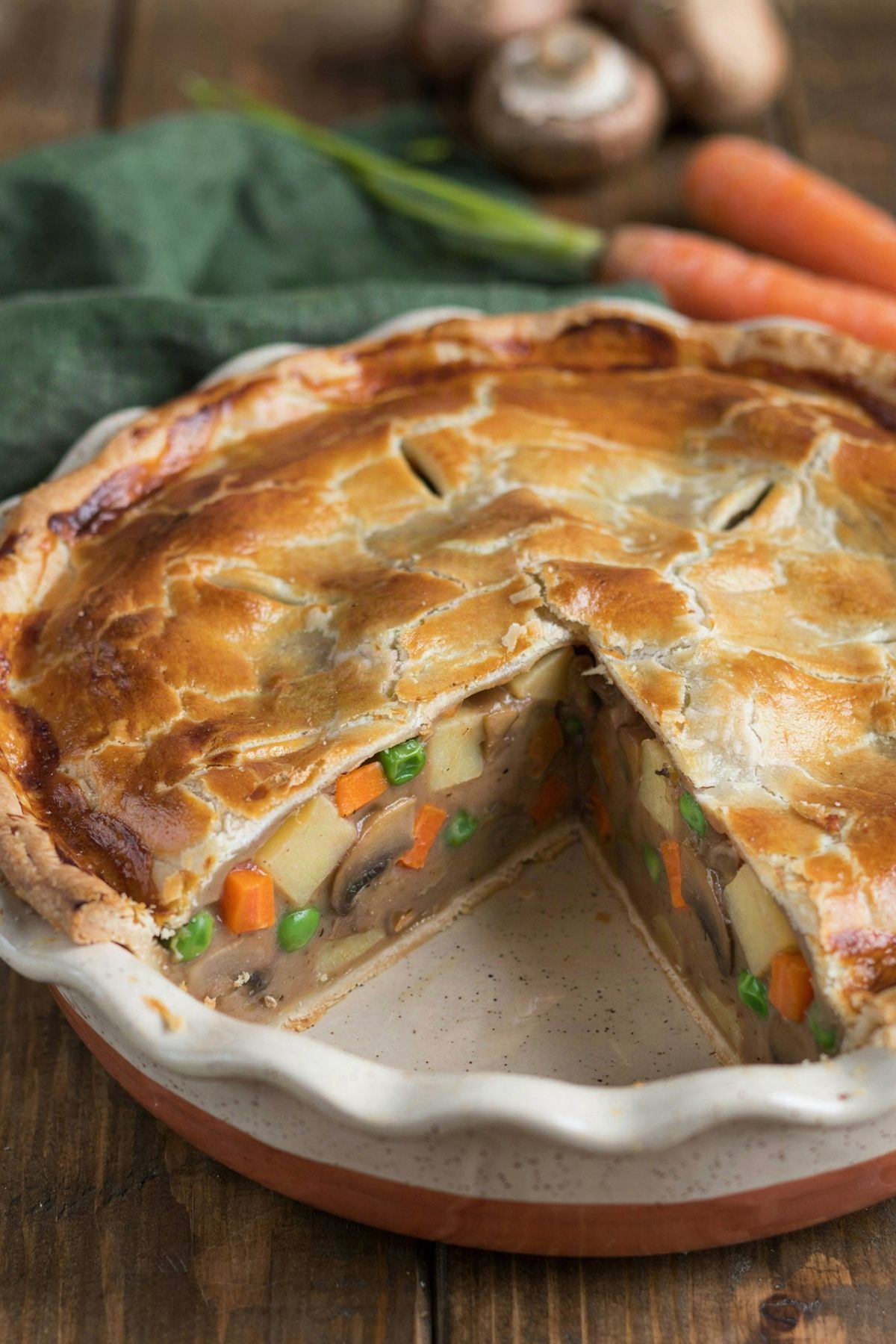
Why I Love Making This Vegetarian Pot Pie
There’s just something about cracking through a perfectly golden crust and being greeted by the steam of a thick, creamy medley of vegetables that never gets old for me. It’s like comfort in a dish, no matter the time of year.
I like that this recipe is endlessly customizable: the base delivers that classic creamy, savory flavor, but you can swap in whatever vegetables you have on hand, or even give it a spicy kick with a dash of hot sauce. The joy is in experimentation.
Here’s why this has become a regular in my kitchen:
- It’s easy to make and feels special enough for guests.
- You can use store-bought or homemade pastry (no judgment either way).
- Leftovers reheat beautifully, making lunch the next day a breeze.
However you make it, once you pull this vegetarian pot pie from the oven and catch that rustic aroma, you’ll be glad you did.
The story
The Pot Pie Was a Pot Before It Was a Pie
For most of its history the pastry on a pot pie was not the point of it. Medieval English cooks built a “coffyn”, a stiff case of flour and water that stood up on its own, and used it the way we use a lidded box. It held the food, it travelled with the food, and where the baker cut a hole in the lid and poured melted fat through it, the seal kept what was inside edible for weeks without cold storage. Most of the time nobody ate the case.
The pot was a real pot, too. Sea pie, which British sailors ate through the 18th century and New England households after them, was built by lining a saucepan with pastry, layering in whatever meat or fish and vegetables were on hand, laying more pastry over the top and cooking it on the fire rather than in an oven. When Amelia Simmons published “American Cookery” in 1796, the first cookbook written by an American for Americans, she gave recipes for Sea Pie, Stew Pie and Chicken Pie. The name described the vessel and the method. It said nothing about what had to be inside.
What fixed pot pie in the American mind as a chicken dish was the freezer aisle. In 1951 the Swanson company, fresh from supplying poultry for wartime rations, put out the first frozen pot pie: chicken, gravy, green peas and red pepper under a pastry lid, in a single serving tin. It beat the company’s famous TV dinner to market by a few years and it sold enormously. Two generations learned what a pot pie was from that tin, and the answer the tin gave was chicken.
That answer is not even universal within one state. Order pot pie in Lancaster County, Pennsylvania, and what arrives may have no pastry anywhere in it. Pennsylvania Dutch “bott boi” is squares of rolled noodle dough dropped into broth with meat and vegetables, closer to chicken and dumplings than to anything in a pie dish. It was a way of turning Sunday’s leftovers into Monday’s dinner, it kept the old name, and it is still what half the county means by the words.
So a vegetarian pot pie is not a chicken pot pie with the chicken removed. Filling a crust with root vegetables and gravy is the older and far more ordinary arrangement, and the two things that actually make a pot pie a pot pie are a gravy thick enough to hold a cut edge and pastry over the top of it. Leaving the meat out costs you one thing only, the fat and gelatin and long-simmered savor that a bird gives its gravy for free, and the recipe below is built around paying that back.
What to buy
Ingredient Notes
Cremini mushrooms
Half a pound looks like too many for one pie and is not. They lose better than half their weight in the pan, and they are the main source of savory depth in a filling with no meat in it. Cremini have more of it than white button, and a handful of dried porcini, soaked and chopped with the soaking liquid used as part of the broth, has more again. Brown them alone in a hot pan first. Tipped into a crowded medium-heat pan with the carrots and potatoes they release their water, boil in it, and taste of very little.
Soy sauce or tamari
The one ingredient here that looks like it belongs in a different recipe, and the one that earns its place fastest. It stands in for the salt and glutamates that chicken and chicken stock would have brought. A tablespoon in three cups of filling reads as depth rather than as soy sauce, and nobody at the table identifies it. Two teaspoons of white miso whisked into the milk does the same job if that is what is open.
All-purpose flour and butter
Six tablespoons of flour against two and a half cups of liquid sounds like a lot and is the point of the recipe. A medium white sauce runs two tablespoons per cup and a thick one runs three, and a pot pie has to land between them, because the filling is not a sauce on a plate, it is the structure holding a cut slice together. The butter is matched to it by weight, so the roux comes out near one to one, which is what lets the flour disperse instead of seizing.
Waxy potatoes
Yukon Gold, red potatoes or any other waxy variety. Russets and other floury potatoes fall apart over a 15-minute simmer followed by half an hour in the oven, and they do not vanish quietly: they dissolve into the gravy and turn it pasty and dull. Cut them around half an inch so they are done by the time the sauce is, rather than holding the whole pan hostage.
Pie crust or puff pastry
One sheet, over the top only. Puff pastry rises higher and eats lighter on the night, and goes limp fastest in the fridge. Shortcrust is sturdier, cuts more cleanly and reheats far better the next day, so if leftovers are the plan rather than an accident, start there. What does not work is a bottom crust: raw pastry under three cups of hot gravy steams rather than bakes, and no amount of blind baking rescues it.
Frozen peas
Frozen rather than fresh, and in at the very end off the heat. Peas are blanched before they are frozen, so they arrive already cooked, and every minute in a hot pan after that is a minute spent going from green to olive.
Hearty Vegetarian Pot Pie
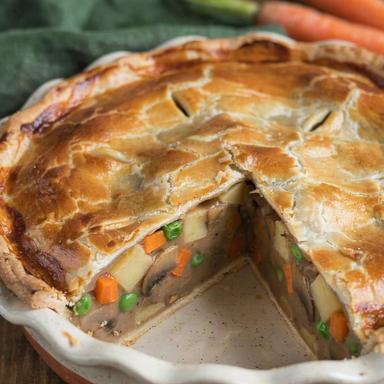
A golden-crusted vegetarian pot pie with a creamy, savory medley of veggies like carrots, peas, potatoes, and mushrooms.
Ingredients
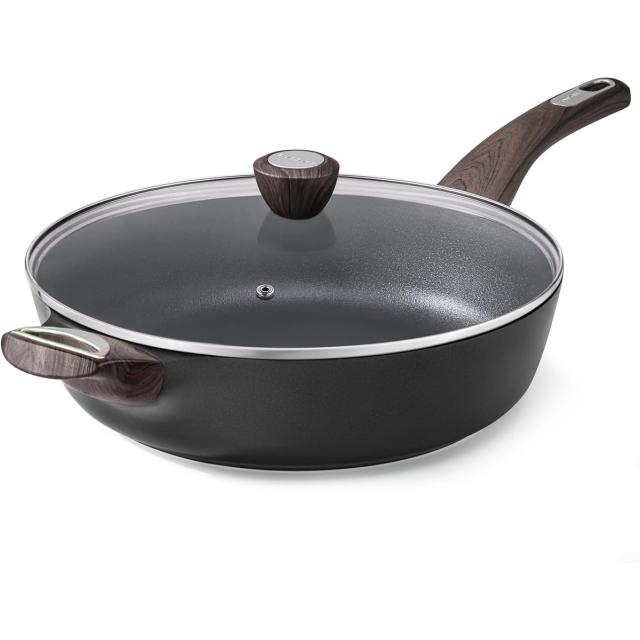
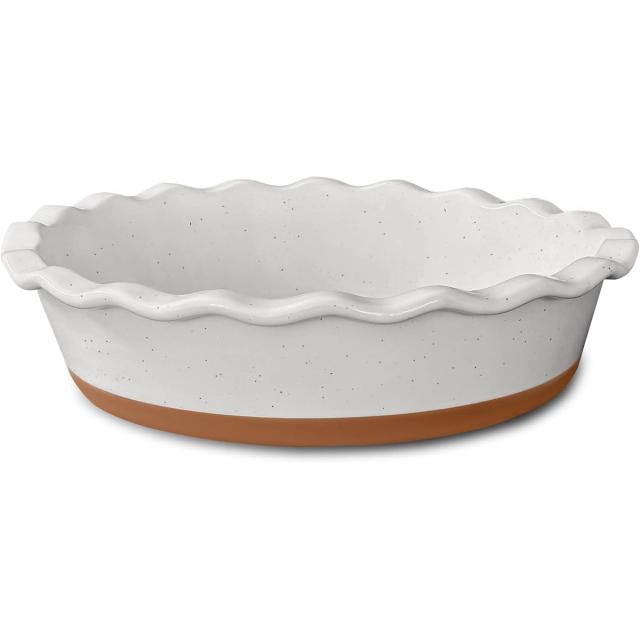
Equipment
As an Amazon Associate I earn from qualifying purchases, at no extra cost to you.
Instructions
- 1
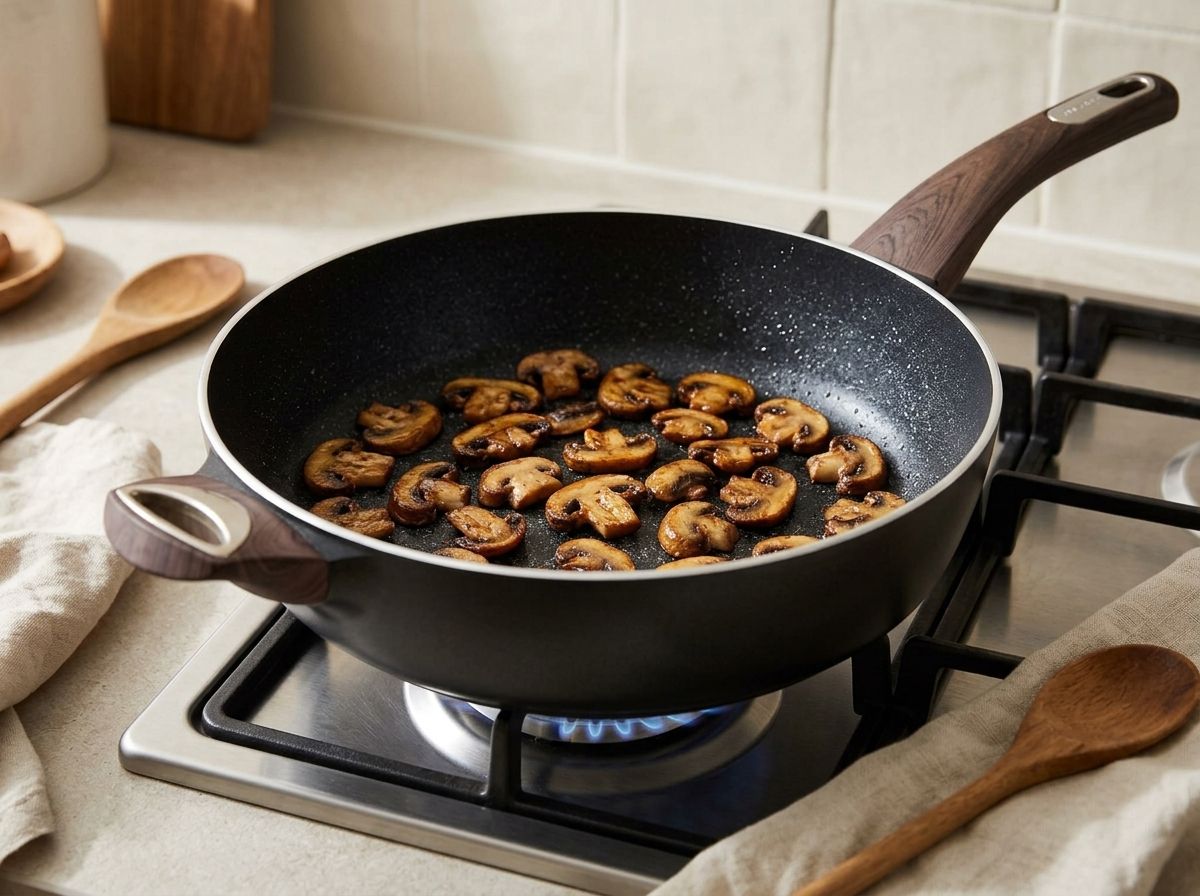
Heat the oven and brown the mushrooms
Heat the oven to 400°F (200°C) now, so it is ready when the filling is. Set a large skillet over medium-high heat with the olive oil and add the mushrooms in a single layer. Leave them alone until they have given up their water and it has boiled off, then keep going until they are browned at the edges, about 5 minutes in all. Tip them into a bowl and keep them there.
- 2
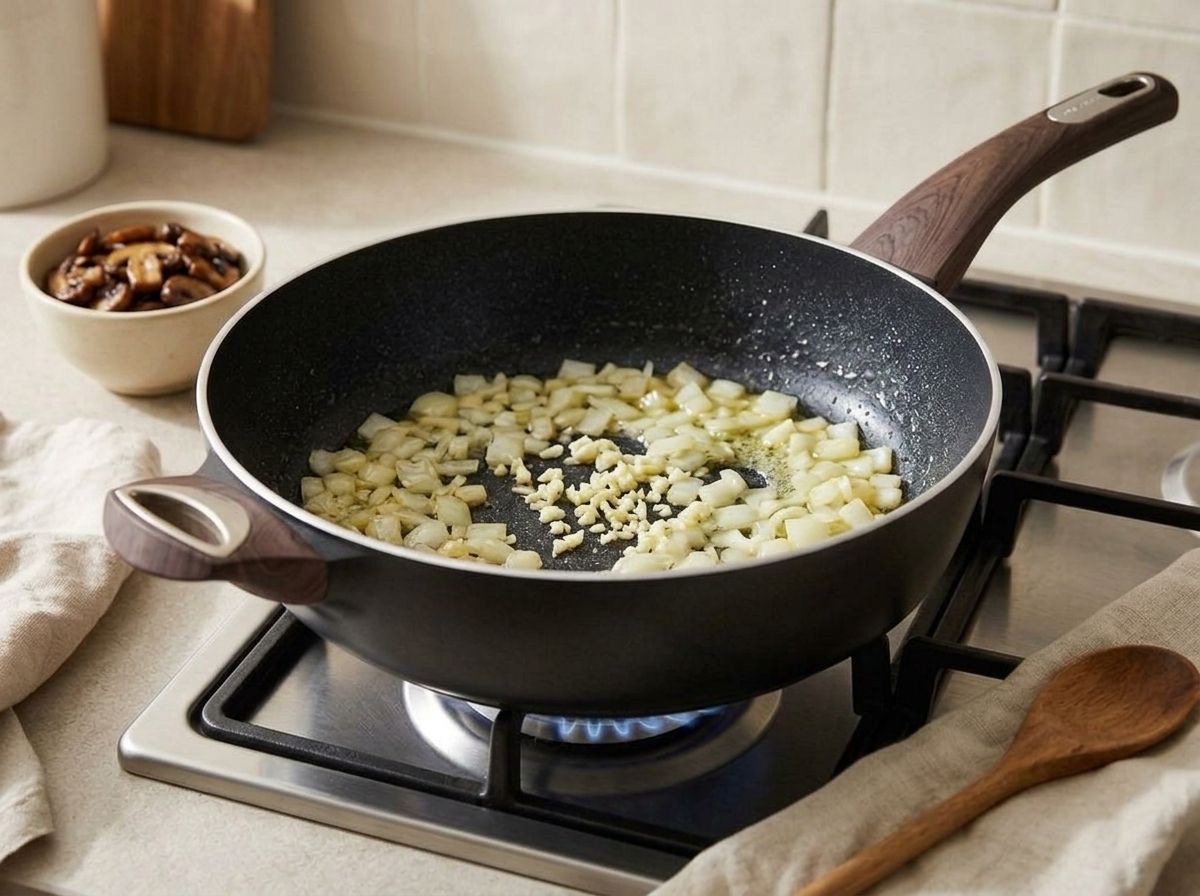
Soften the onion and garlic
Turn the heat down to medium and melt the butter in the same pan. Add the onion and cook until it is soft and translucent, about 4 minutes, then stir in the garlic and give it 30 seconds more.
- 3
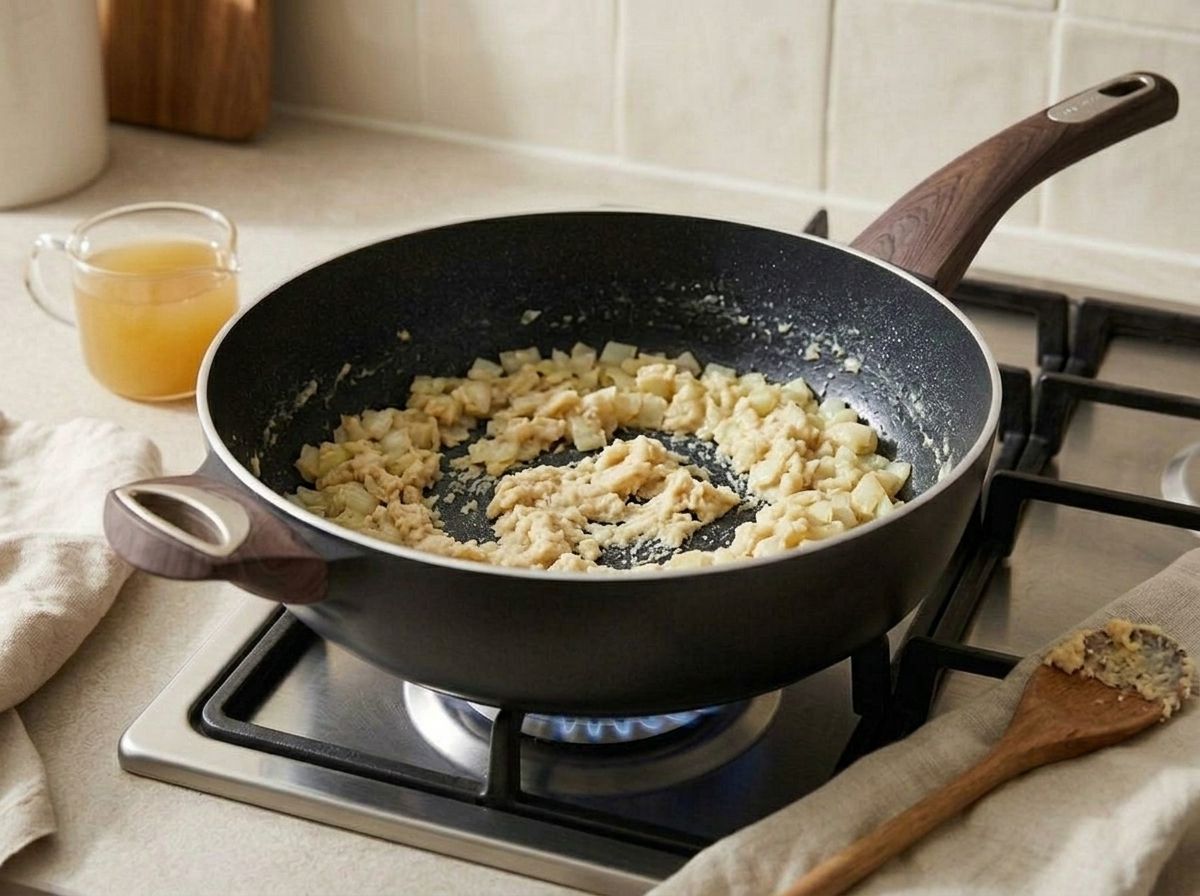
Cook out the flour
Sprinkle the flour over the onion and stir it into the butter. Keep it moving for a full 2 minutes, until it smells nutty rather than raw and looks like wet sand. Pour in the broth a splash at a time, stirring each addition smooth before the next one goes in.
- 4
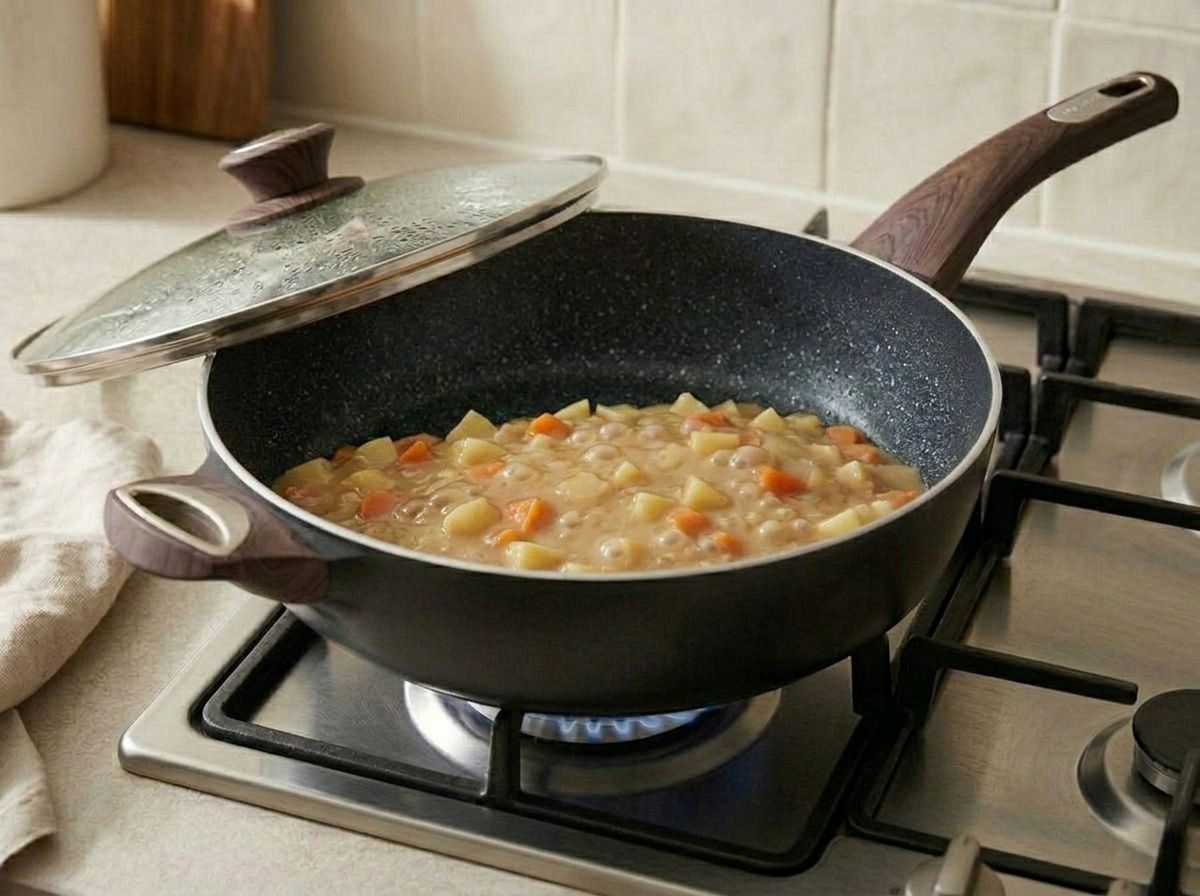
Simmer the carrots and potatoes
Add the carrots and potatoes, bring the pan to a gentle simmer and cover it. Cook for 12 to 15 minutes, stirring every few minutes so the bottom does not catch, until a knife slides into a piece of potato with no resistance at all. They will not soften any further once they are sealed under pastry.
- 5
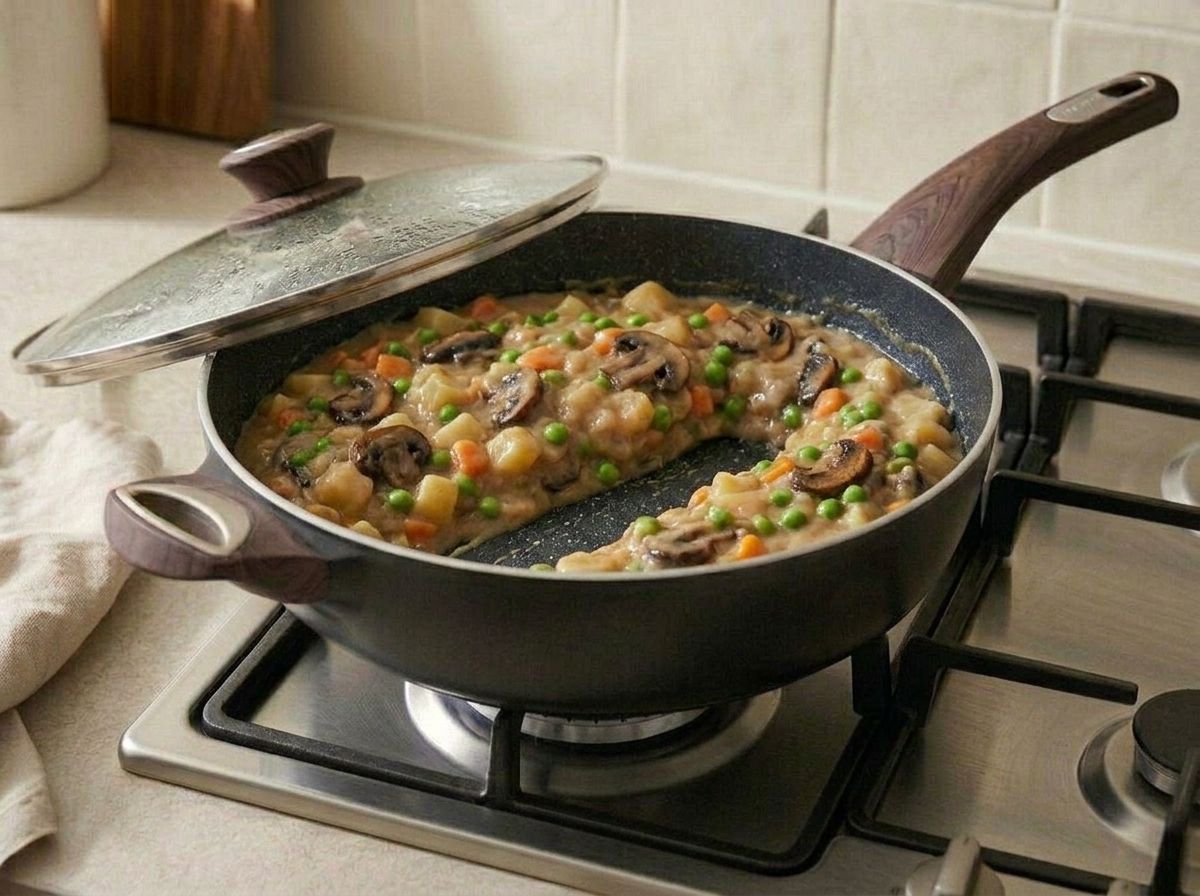
Finish the sauce
Stir in the milk, thyme, soy sauce, pepper and the browned mushrooms, and let it simmer for 2 minutes. It should be thick enough to hold the line when you drag a spoon across the bottom of the pan. Take it off the heat, stir in the frozen peas, then taste and add the salt in pinches. The broth and the soy sauce have already brought their own.
- 6
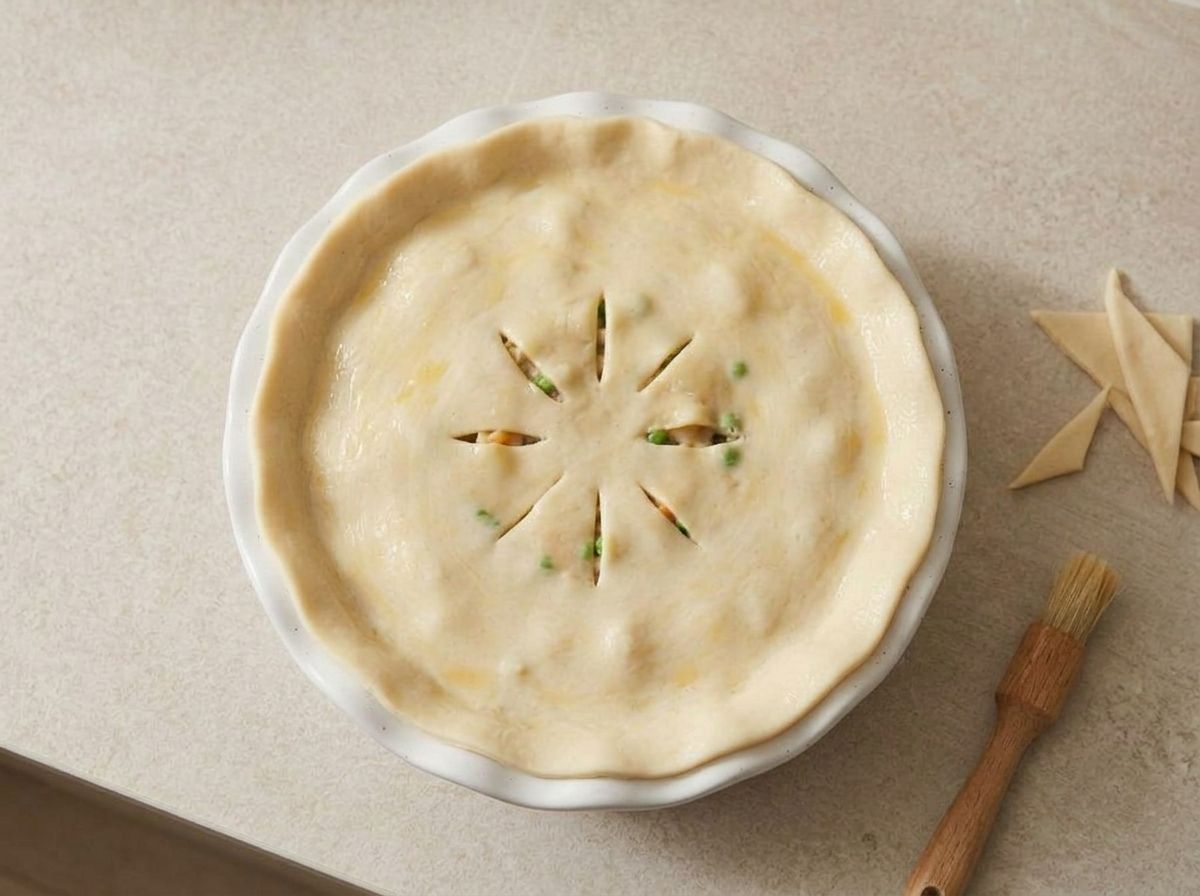
Cool the filling, then top it
Scrape the filling into a 9-inch pie dish and leave it for about 15 minutes, until it is warm rather than hot. Lay the pastry over the top, trim it to roughly half an inch beyond the rim, and press the overhang firmly onto the dampened edge of the dish. Cut three or four slits in the middle. Brush with the beaten egg if you are using it.
- 7
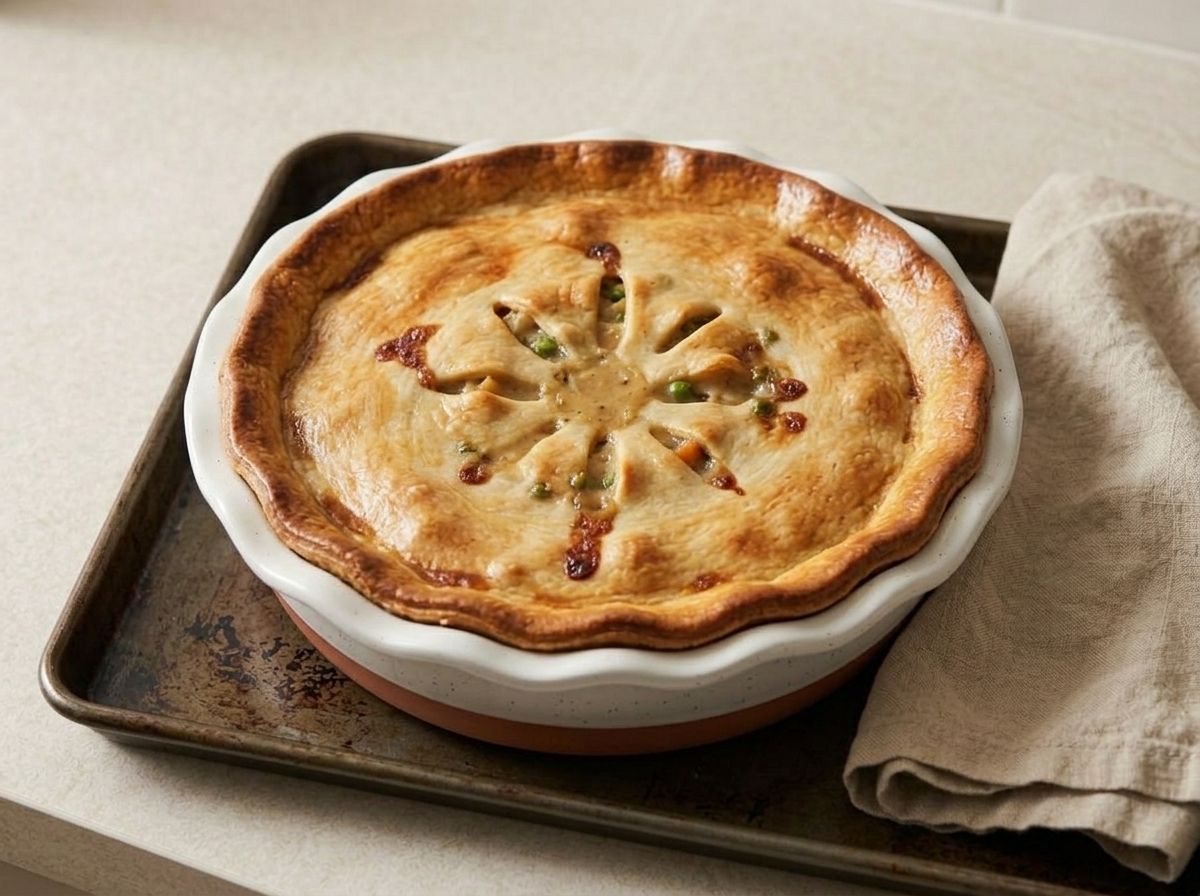
Bake until the filling bubbles
Set the dish on a baking sheet and bake for about 30 minutes, until the crust is deep golden and you can see filling bubbling through the slits. Bubbling matters more than color: a pale crust means it needs longer, and a browned crust over a still filling means the middle has not heated through. If the edges darken first, lay a strip of foil over them.
- 8
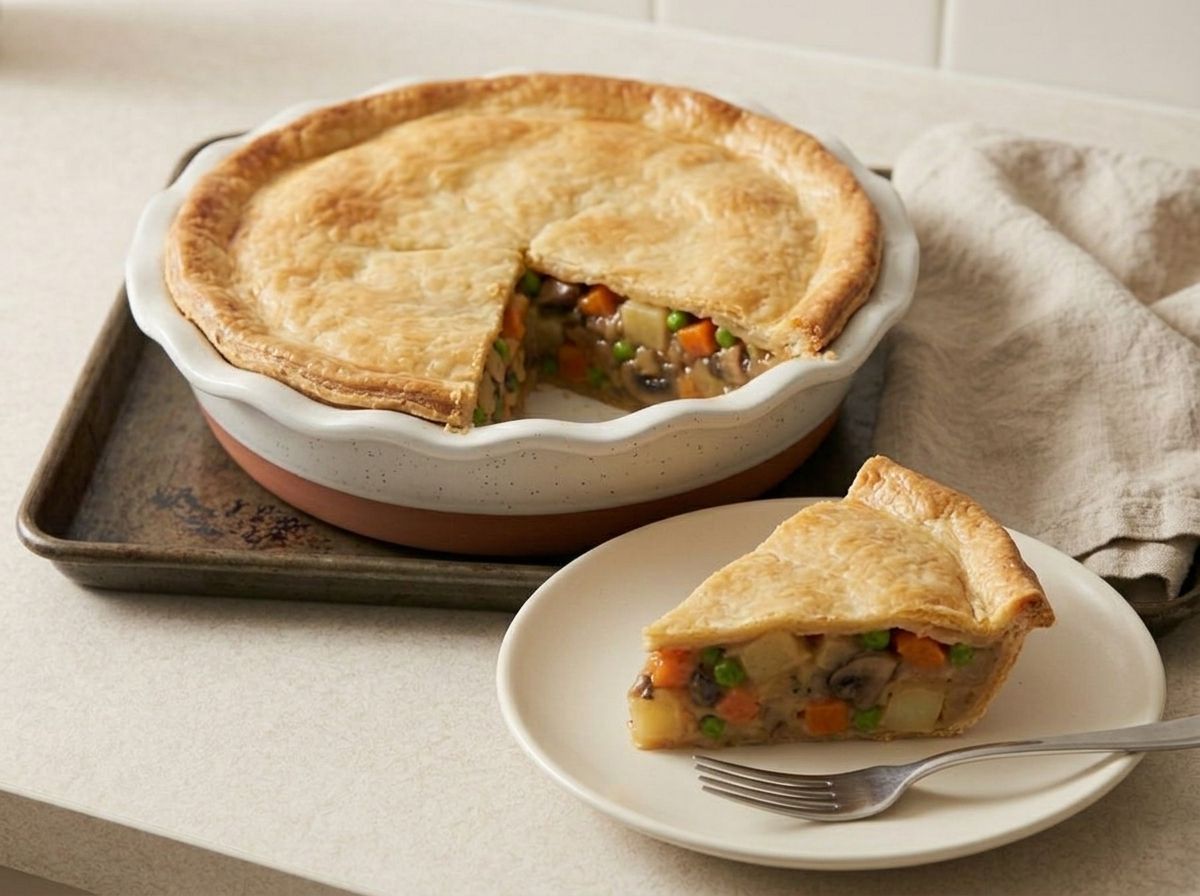
Rest before cutting
Let the pie stand for 10 minutes before you cut it. Straight from the oven the sauce is thinner than it will be, and the first slice runs across the plate; ten minutes is enough for it to set up and hold a clean edge.
Notes
Swap vegetables freely, but match them to the step they belong in: anything as dense as a carrot goes in to simmer, green beans and corn go in with the peas, and spinach or kale wilts into the finished sauce off the heat.
To make it vegan, use olive oil or vegan butter in place of the butter, a plant-based milk, a vegan pastry, and either a plant-milk wash or none at all.
The filling can be made a day ahead and refrigerated. Assemble and bake it just before serving, because pastry sitting on wet filling in the fridge goes soft.
Nutrition Facts
6 slices · 327 g per serving
- Calories
- 438 kcal
% Daily Value*
- Total Fat
- 24.9 g32%
- Saturated Fat
- 8.2 g41%
- Sodium
- 819 mg36%
- Total Carbohydrate
- 46 g17%
- Dietary Fiber
- 5 g18%
- Sugars
- 6.1 g—
- Protein
- 9.4 g19%
Recipe from veggierecipes.blog
When it goes wrong
Troubleshooting
The filling ran out across the plate the moment I cut it
Either there was not enough flour or the pie was cut too soon, and usually both. Cutting the flour back because the pan looks thick on the stove is the commonest reason a homemade pot pie runs, because a hot roux-thickened sauce is always looser than the same sauce ten minutes later. Then let the baked pie stand its full 10 minutes. It sets as it cools and there is no shortcut.
The potatoes and carrots are still crunchy
They went under the pastry before they were done. It is easy to assume the oven will finish them, and it will not: sealed under a crust and buried in a thick starchy sauce that conducts heat badly, a raw potato barely moves in 30 minutes. Test with a knife tip rather than the clock, and look for no resistance at all rather than almost.
The crust is golden on top and pale and soft underneath
The filling was still hot when the pastry went on. Steam rising off it softens the fat in the pastry and wets the underside before the oven can set it, so the crust slumps instead of puffing. Fifteen minutes in the dish takes it from hot to warm. Baking on a preheated sheet helps too, because it drives heat up through the base of the dish.
There is no bottom crust, did I miss a step
No, and that is how a pot pie is supposed to be built. A top crust only is the standard rather than a shortcut, and it is the reason the dish works at all. If you want pastry underneath as well, bake a round of it separately and lay it in the bowl, or make hand pies, where nothing sits in liquid for half an hour.
It tastes like creamed vegetables rather than pot pie
Nothing got browned and nothing replaced the meat. Vegetables simmered gently in stock and milk taste sweet and mild, and the savory backbone a chicken pot pie gets for free from the bird has to be built by hand here. Brown the mushrooms in one layer, past the point where they look done, and do not skip the soy sauce. A spoon of tomato paste cooked in with the flour is worth adding if it still reads flat.
The sauce is gluey and tastes faintly of raw flour
The roux was rushed. Flour needs a full two minutes in the fat before any liquid arrives, long enough for the smell to turn from raw to nutty. The texture half of it comes from adding the broth all at once, which lets the flour seize into lumps that no amount of stirring undoes. A splash at a time, smooth before the next.
Before you serve
Serving & Storage
Americans mostly picture a pot pie as a single-serving object, one per person in its own little dish, and that is the frozen aisle talking. The older way to serve one is the way this recipe makes it: a single pie in a shared dish, brought to the table whole and cut there, so everyone gets the sound of the crust breaking.
What goes next to it needs thinking about, because the pie is already starch, vegetables and gravy on one plate. It does not want potatoes and it does not want bread. It wants something raw and sharp to cut the richness: a green salad dressed hard with lemon or cider vinegar, quick-pickled red onions, or a spoonful of cranberry sauce if it is that time of year. Anything creamy alongside is one creamy thing too many.
Making it ahead
The filling is the part that keeps. Make it through to the peas, cool it and refrigerate it for up to two days. It sets almost solid in the cold, so warm it through with a splash of broth to loosen it before it goes into the dish, because a fridge-cold filling leaves the crust done long before the middle is hot.
What does not keep is an assembled raw pie. Pastry left sitting on wet filling overnight is soft before it ever sees the oven and bakes pale and heavy. To get further ahead than the filling, go all the way and freeze it: assemble unbaked, freeze uncovered until firm, then wrap. Bake straight from frozen at 400°F (200°C) with foil over the top for the first 20 minutes, 55 to 65 minutes in total.
Storing leftovers
Cover the dish and keep it in the fridge for three or four days. Reheat slices uncovered in a 350°F (175°C) oven or an air fryer for 15 to 20 minutes, which is long enough to bring the filling up to temperature and dry the crust back out. The microwave heats the filling faster and turns the pastry into wet paper.
A baked pie can be frozen and it will be edible, but the sauce goes grainy on thawing. Freezing it before the bake gives you a far better pie for the same work.
Still wondering
Frequently Asked Questions
Is this vegetarian pot pie vegan?
No, because of the butter, the milk and most butter pastries, but the swaps in the recipe notes cover it and cost you very little. The part worth knowing is the pastry: much of the puff pastry sold in supermarkets is made with vegetable oil rather than butter and is vegan already, so read the label instead of assuming either way. The one thing you genuinely lose is the browning of butter’s milk solids, so lean harder on the mushrooms and keep the soy sauce.
Can I make this in individual dishes instead of one big pie?
Yes, and you get more crust per serving, which is the real reason to do it. Divide the filling between four to six ramekins or oven-safe bowls, cut pastry rounds about half an inch wider than each rim and press them onto the dampened edges. Bake at the same 400°F (200°C) but start checking at 20 minutes rather than 30, because a shallower filling heats through faster. Go by filling bubbling at the slits, not by the clock.
Can I make it gluten free?
The filling and the crust are two separate problems. For the filling, use tamari and swap the flour for a measure-for-measure gluten-free blend, which behaves close enough in a roux to need no other change. Cornstarch works too but not in the same way: it has roughly twice the thickening power, so you want 3 tablespoons rather than 6, and it cannot be cooked in the butter as a roux at all. Whisk it into a little cold broth and stir that in at the end instead. For the crust, buy a gluten-free pastry sheet and roll it between two pieces of parchment, because it tears far more easily than the wheat kind.
Featured In
More Cozy Vegetarian Comforts
Made this?