
Vegetarian Sandwich Recipe
Published · Updated
A vibrant vegetarian sandwich filled with crisp veggies, creamy spreads, and hearty whole grain bread, an easy, irresistible meal for any time of the day.
Jump To Recipe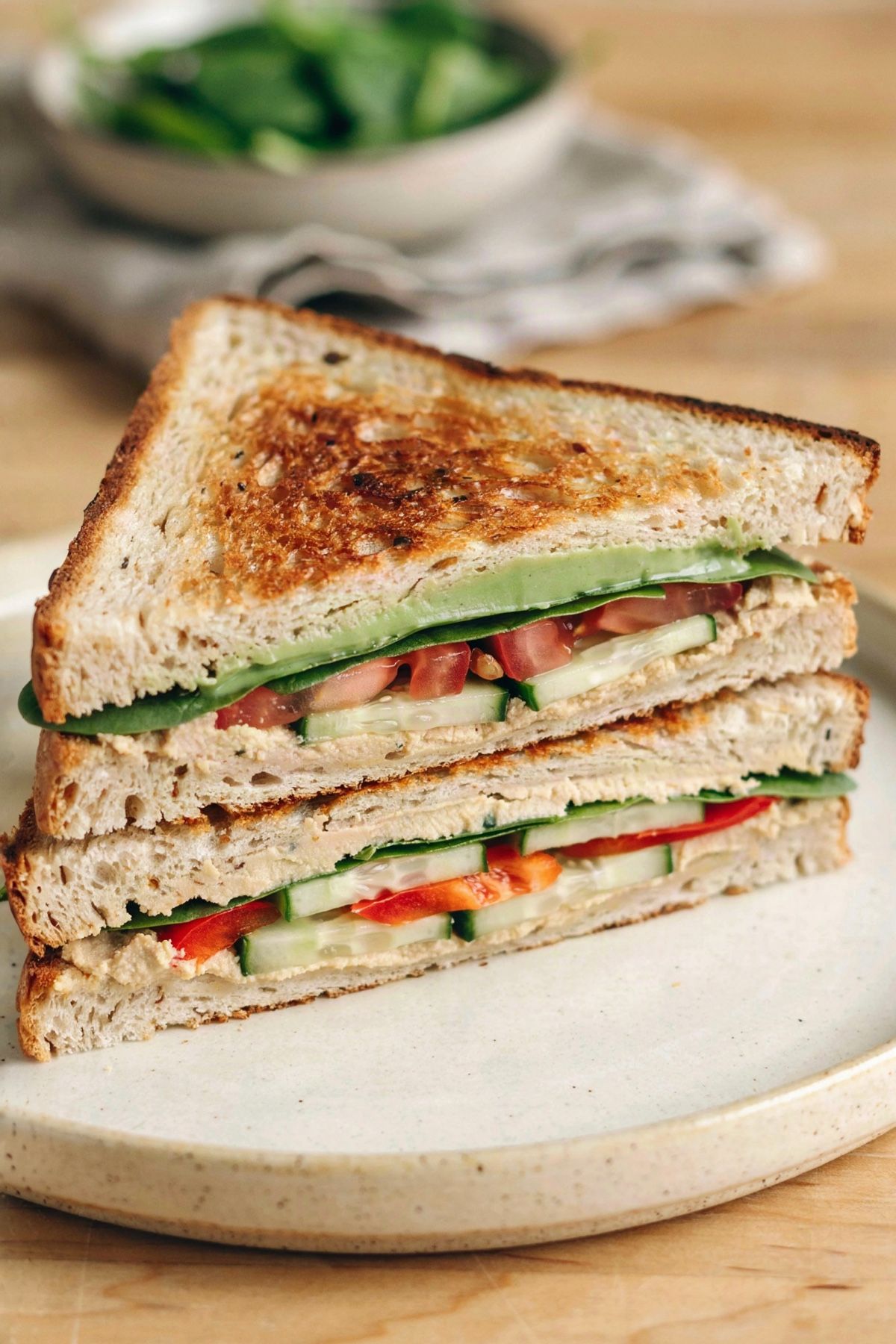
Why I Love Hearty Vegetarian Sandwiches
Eating a sandwich full of crisp vegetables and rich creams feels satisfying in every bite. It is a source of happiness for many people. It has so many varieties that it can easily cater to every taste bud.
To me, the perfect vegetarian sandwich needs a good balance of flavors and textures. A little earthiness from whole grain bread, some richness from a layer of mashed avocado, and the pleasant, juicy crunch of cucumber and bell pepper.
This is the sandwich I eat when I need something quick, energizing, and adaptable. After an intense workout or lengthy hike, I often desire something filling. I also want it to be fresh, light, and tasty.
What I like to do when building this sandwich:
- Toast the bread just enough for a crisp bite.
- Layer in lots of greens, spinach or even arugula for a peppery kick.
- Don’t skimp on the spreads, a generous swipe of hummus or even a tangy mustard makes a difference.
- Add red onion or sprouts whenever I want an extra punch of flavor or crunch.
Whether I’m eating it for lunch or packing it up for a trail snack, this vegetarian sandwich really hits the spot. Plant-based eating never felt so easy or so satisfying.
The story
Vegetarian Sandwiches Were Engineered Before They Were Health Food
The sandwich takes its name from John Montagu, fourth Earl of Sandwich, and a card table in 1762. The vegetarian sandwich has a narrower and more recent history than that, and a more useful one, because the people who worked it out were solving the exact problem that a pile of wet vegetables between two slices of bread creates.
By the 1880s the crustless tea sandwich was standard at ladies’ luncheons on both sides of the Atlantic: thin bread, crusts cut away, buttered, filled with cucumber. It reads today as fussy, an artifact of a world with too much time on its hands. It was nothing of the kind. Almost every detail of it is a direct response to the fact that a cucumber is about ninety-six percent water and bread is a sponge.
The explicitly vegetarian version came through the health movement rather than the tea room. John Harvey Kellogg ran the Battle Creek Sanitarium from 1876 on a strictly vegetarian diet, and the nut butters he promoted were pitched as replacements for animal foods, butter among them. At vegetarian luncheons, peanut butter went onto the bread where butter would have gone. Nineteenth century vegetarian periodicals record tea parties held partly as demonstrations of the diet, with sandwich recipes printed to match.
What those cooks understood, and what has largely been forgotten since, is that the spread was structural. Butter is roughly four fifths fat, it repels water, and a layer of it across the face of a slice is a seal rather than a seasoning. Peanut butter did the same job for anyone avoiding dairy. Cutting the crusts away and slicing the bread thin meant there was less bread there to go soft in the first place.
This recipe is that idea with a different shopping list. The mashed avocado and the hummus are not on the bread only because they taste good together. They are the waterproofing, and that is the reason both slices get sealed out to the crust instead of one getting a decorative swipe through the middle. A hundred and forty years of vegetarian sandwiches agree on this one point, even where they agree on nothing else.
What to buy
Ingredient Notes
Whole grain bread
The crumb matters more than the flour. A tight, close-textured sandwich loaf resists water far better than an open artisan crumb, where the holes give the moisture somewhere to sit and the slice collapses around them. Whole grain also brings enough of its own flavor to stand up to hummus, which a soft white slice does not. If you buy unsliced bakery loaves, check that your toaster slots take a hand-cut slice before you commit to the sandwich.
Avocado
Buy it a day early. An avocado that yields evenly under your thumb mashes into a smooth layer; one that is still firm tears the bread as you spread it, and one that has gone past mashes into water. Mash it rather than slicing it. Slices look better and behave worse, because they slide against the bread on the first bite and take the rest of the filling with them.
Hummus
Thickness is the spec here. The loose, pourable kind sold as a dip runs at room temperature and will not hold a seal, so look for one you could stand a spoon in, or drain a wetter one in a sieve for ten minutes. Because it is doing structural work rather than decorative work, a plain hummus is often better than a flavored one; the roasted red pepper versions in particular carry extra water.
Tomato
The main source of the water this sandwich has to manage, and the choice of tomato changes how much. A plum or roma tomato has firmer flesh and much less of the seed gel than a beefsteak, so it gives up less. Whichever you use, scoop the seeds and the gel out before slicing. That is where most of the liquid is, and it contributes almost nothing to the taste.
Cucumber
Around ninety-six percent water, which makes it the ingredient most likely to ruin the sandwich and, oddly, the one worth keeping. Nothing else gives that cold snap. Slice it thin, salt it with the tomato and dry it properly. Leaving the skin on helps, because the skin holds the slice together and slows the water coming out of the cut faces.
Spinach or lettuce
These are the second barrier, not the salad. Baby spinach lies flat and packs tightly, which makes a better seal; romaine or iceberg gives more crunch but sits unevenly and can prop the sandwich open. Either way the leaves go against the sealed bread rather than in the middle, where they would do nothing. Dry them well, since wet leaves defeat the point of the layer.
Bell pepper
The only ingredient here that adds crunch without adding much water, which is why it earns its place over other raw vegetables that would taste just as good. Slice it thin and lengthways so it bends with the sandwich instead of levering the top slice off. Red and yellow are sweeter than green and better suited to a cold sandwich.
Hearty Vegetarian Sandwich
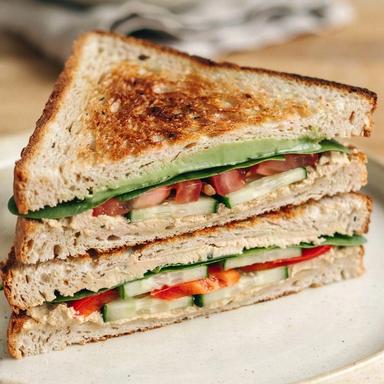
A wholesome vegetarian sandwich stacked with fresh veggies, creamy avocado, and flavorful spreads on whole grain bread.
Ingredients
Equipment
As an Amazon Associate I earn from qualifying purchases, at no extra cost to you.

Instructions
- 1
Salt the wet vegetables first
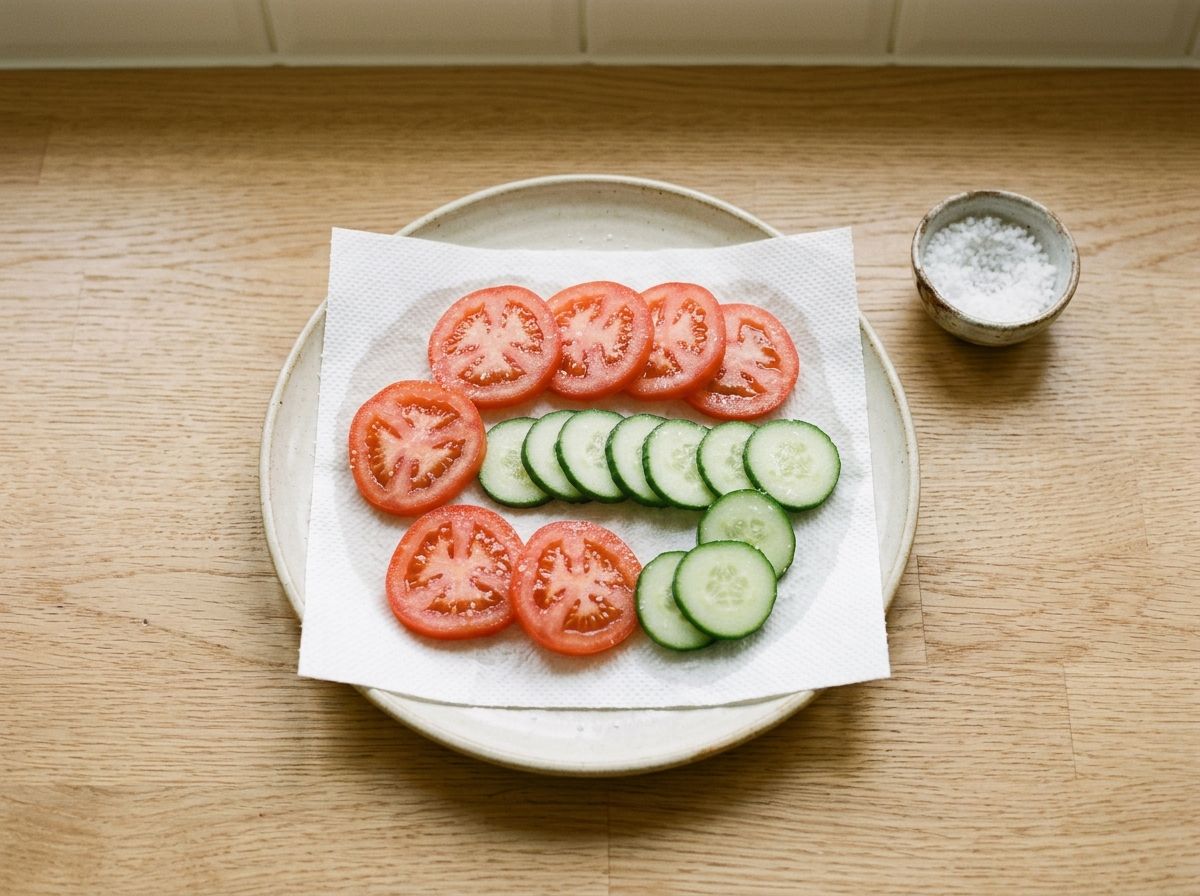
Lay the tomato and cucumber slices on a plate lined with paper towel, salt them lightly and leave them for ten minutes. Salt pulls water out of both, and this is the only chance it gets to leave. Pat the slices dry before they go anywhere near the bread.
- 2
Toast the bread and let it cool
Toast the slices of whole grain bread to the color you want. Stand them on a rack or against each other for a minute before building, because bread that goes into a sandwich hot steams itself soft from the inside.

- 3
Seal both slices, edge to edge
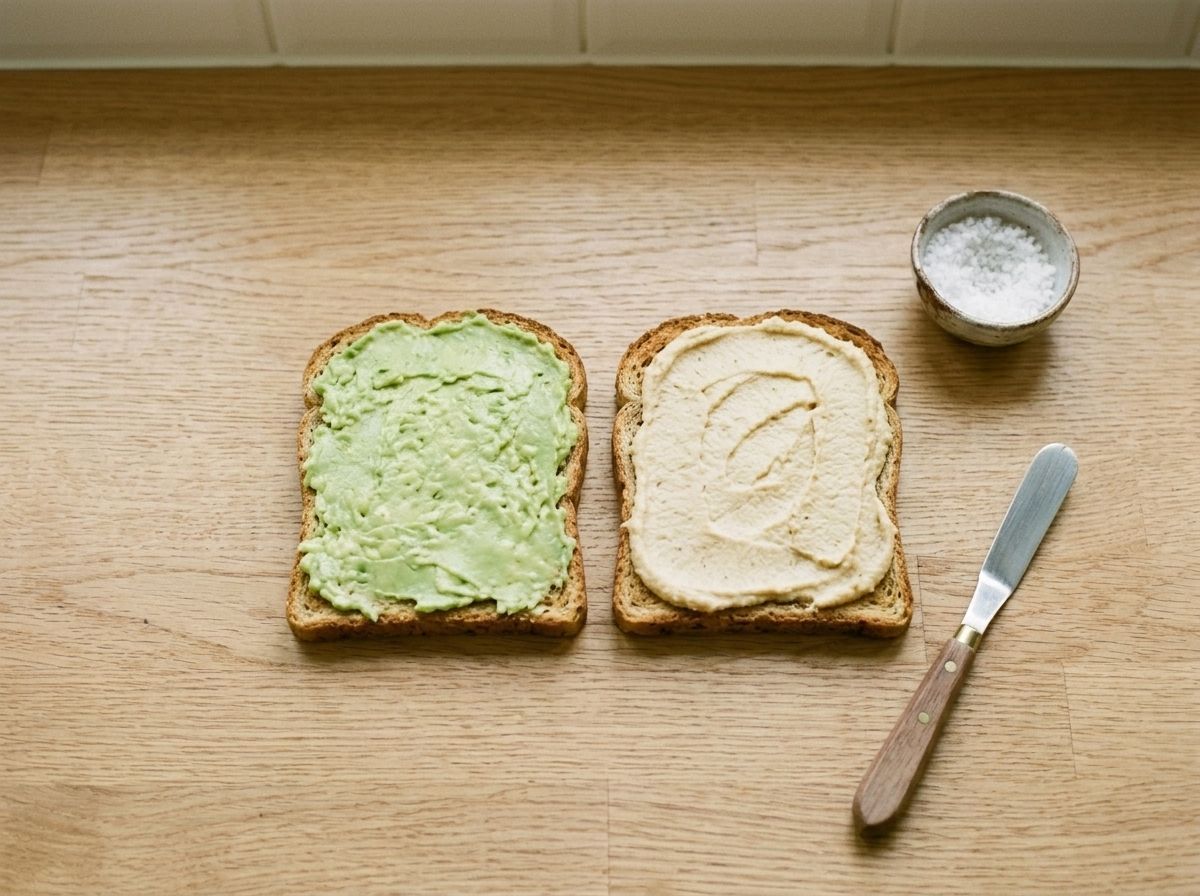
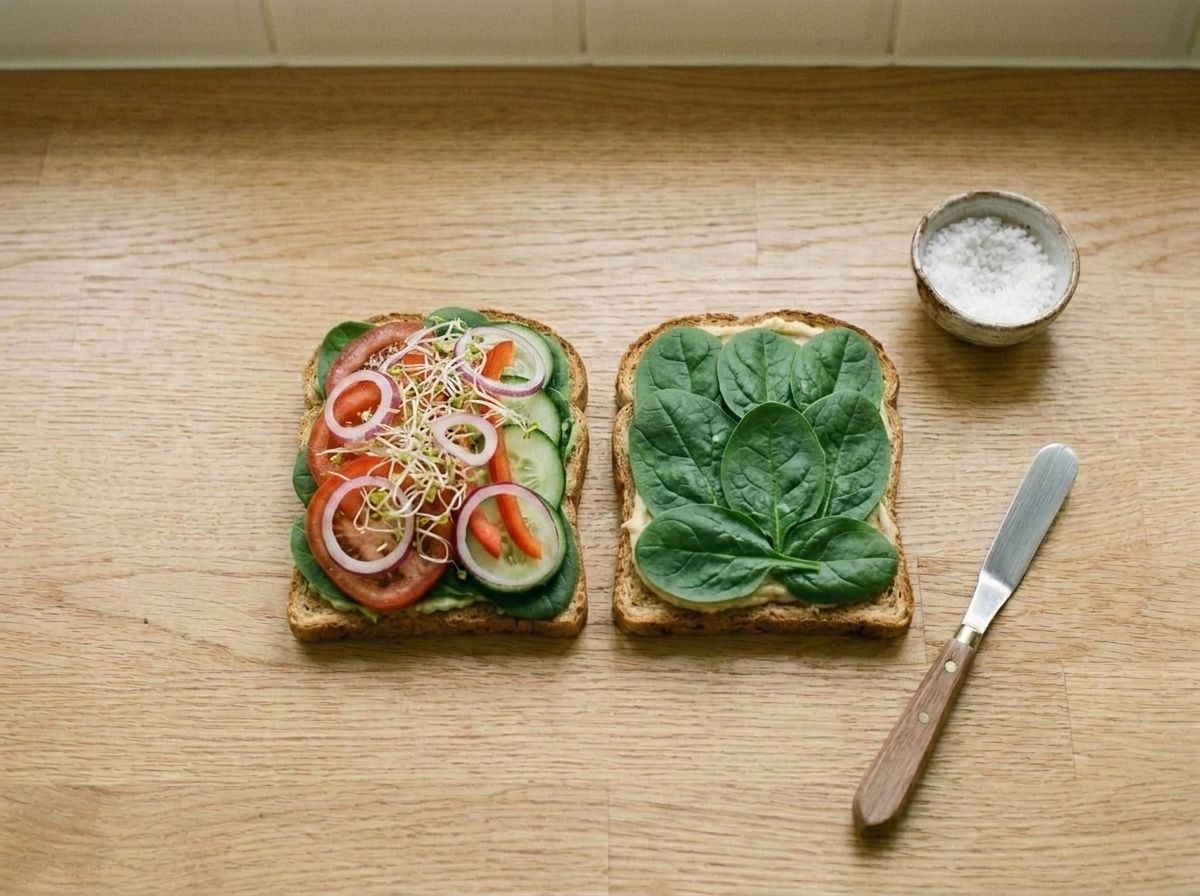
Spread the mashed avocado over one slice and the hummus over the other, right out to the crusts. These are the waterproofing rather than the flavoring, and a bare patch in the middle is where the first soggy spot appears.
- 4
Build with the greens against the bread
Lay the spinach or lettuce down first, on both sealed faces, then the drained tomato, cucumber and bell pepper in the middle. The leaves are a second barrier, and they hold their crunch even when they sit against a tomato. Grind over black pepper now. Scatter over the red onion or the sprouts if you are using them.
- 5
Close it and press
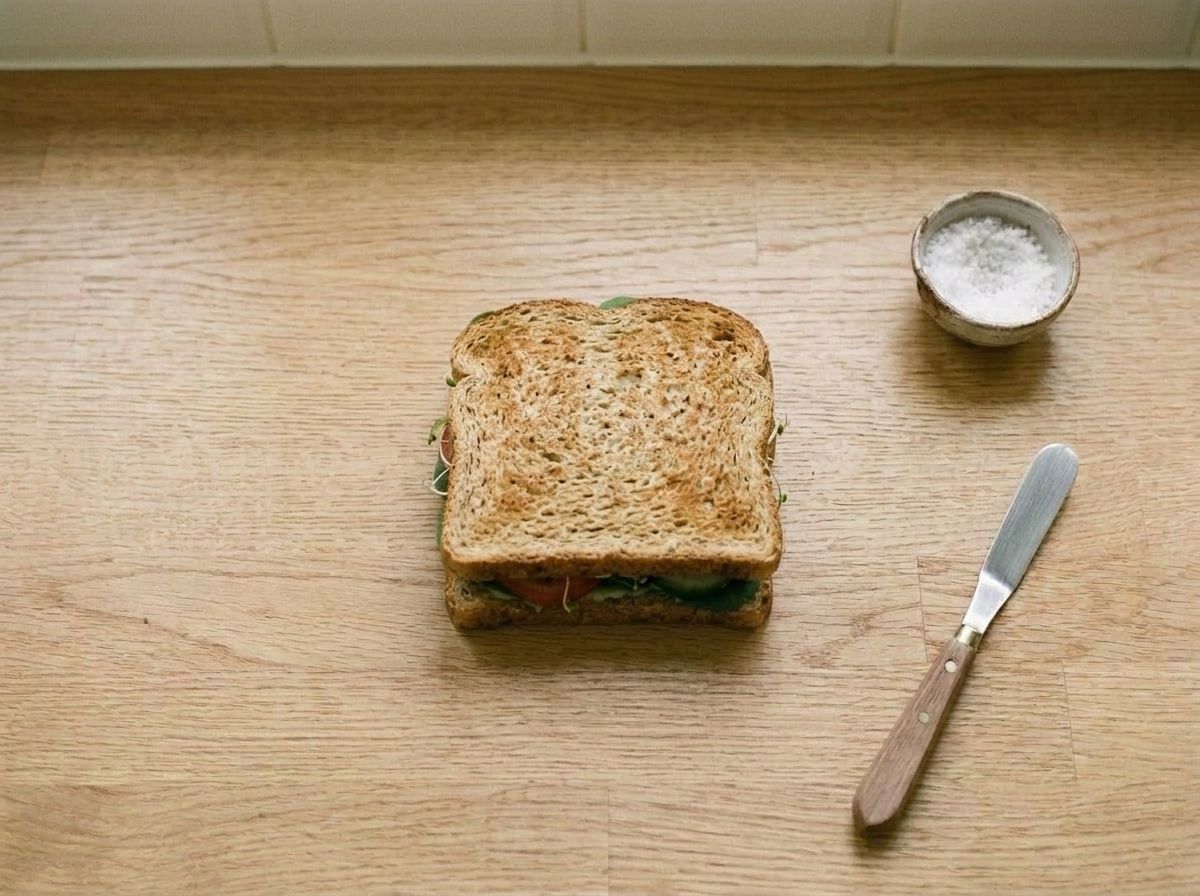
Put the second slice on top, hummus side down, and press the whole sandwich firmly with your palm for a few seconds. Pressing is what makes the layers cut cleanly instead of sliding apart.
- 6
Cut and serve
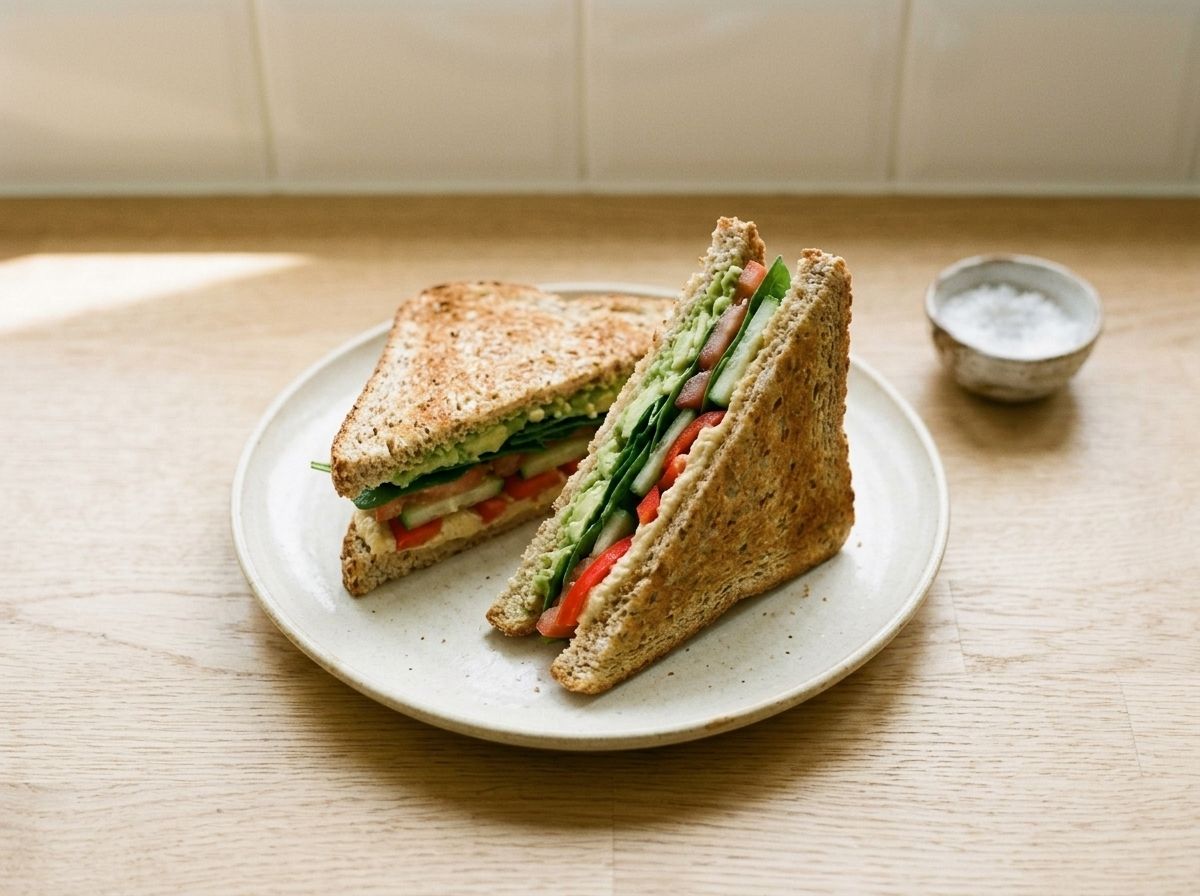
Cut it in half corner to corner and eat it, or wrap it tightly in paper for later.
Notes
The ten minutes the tomato and cucumber spend salting is when to toast the bread, so the sandwich still comes together in under twenty minutes.
Adjust the vegetable quantities to the size of your bread. A slice that is thin at the edges cannot carry a thick middle.
Adding a slice of cheese is a good sandwich but no longer a vegan one.
Nutrition Facts
1 sandwich · 445 g per serving
- Calories
- 399 kcal
% Daily Value*
- Total Fat
- 20.2 g26%
- Saturated Fat
- 3.1 g16%
- Sodium
- 599 mg26%
- Total Carbohydrate
- 46.3 g17%
- Dietary Fiber
- 15.2 g54%
- Sugars
- 8.8 g—
- Protein
- 13.9 g28%
Recipe from veggierecipes.blog
When it goes wrong
Troubleshooting
It was fine when I made it and soggy by lunchtime
The tomato and cucumber were not drained. Between them they can give up a tablespoon or more of water over a few hours, and it has nowhere to go except into the bread. Salting the slices on paper towel for ten minutes and patting them dry pulls most of that out while it can still evaporate. A drained sandwich holds four to six hours; an undrained one is soft in about ninety.
I salted the vegetables and it made it worse
Then the salting happened in the wrong place, and this is the single most common way to get this backwards. Salt draws water out of a tomato whether the tomato is on a plate or inside a closed sandwich. On a plate the water runs off and you throw it away. Inside the sandwich it has one destination. Salt is the fix and the fault depending entirely on when you reach for it.
The bread went soft even though I ate it immediately
The toast went into the sandwich hot. Bread coming out of a toaster is releasing steam for a minute or two afterwards, and if you cap it with a spread and a cold slice of tomato that steam condenses back into the crumb. Stand the slices on edge for a minute first. It is the difference between toast that stays crisp and toast that was crisp.
Everything slid out of the first bite
Usually one of three things. Sliced avocado rather than mashed, which gives the filling a frictionless plane to move along. No press, so nothing bound the layers together. Or the greens in the middle rather than against the bread, which leaves the wettest and most slippery items in direct contact with the slice. Mash, press for a few seconds with a flat palm, and put the leaves down first.
It tastes like bread and vegetables and not much else
Almost always under-seasoning, and the drained tomato is a red herring. The salt you put on the tomato in step one leaves with the water it drew out, so it is doing structural work rather than seasoning work. Season the spreads instead: salt and pepper stirred through the mashed avocado, or a squeeze of lemon into the hummus, put the seasoning somewhere it cannot drain away from.
The avocado turned brown and gray at the edges
Oxidation, and it starts within about half an hour of the flesh meeting air. Mash a squeeze of lemon or lime juice into it, which slows the reaction and is worth doing for the taste regardless. Beyond that, the layer is thin and sealed under leaves and a second slice, which is a fairly hostile environment for oxygen. Browning in a wrapped sandwich usually means the spread never reached the crusts.
Before you serve
Serving & Storage
The tea room habit of cutting sandwiches into small pieces was not only about delicacy. A sandwich cut into quarters is easier to eat without the filling escaping, because each piece is short enough that the layers cannot slide very far. Cutting corner to corner rather than straight across does the same job on a full-size sandwich, and it puts the thickest part of the filling at the point you bite first.
What goes alongside is worth a thought, because this is a wet sandwich in a way a cheese sandwich is not. Something dry and crisp beside it works better than something else soft: kettle chips, a handful of nuts, carrot sticks, a pickle that lives in its own liquid rather than sharing the plate. A soup is a good lunch and a poor companion here, since the sandwich has to sit somewhere while you drink it.
Making it ahead
Built as written, with the tomato and cucumber drained and both slices sealed, it will hold four to six hours. That covers a sandwich made at breakfast and eaten at lunch, which is the case this recipe is really for.
Wrap it in greaseproof paper or a beeswax wrap rather than plastic or a sealed box. Paper lets the small amount of water still coming out of the vegetables escape as vapor; plastic holds it against the bread and undoes the draining. If you need longer than six hours, carry the tomato separately in a small tub and add it at the table. Everything else survives fine.
Storing leftovers
There is no good way to keep a built sandwich overnight, and it is worth saying plainly rather than pretending otherwise. Refrigerating one does two things at once: the starch in the bread retrogrades and goes stale, while the vegetables keep releasing water into it. You get bread that is simultaneously dry and soggy, which is a worse result than either on its own.
Store the components instead. Sliced and drained vegetables keep a day in a covered container, hummus keeps as long as its tub says, and mashed avocado with lemon through it lasts overnight with plastic pressed directly onto its surface. Assembly takes about two minutes once everything is prepped, which is less time than most people spend deciding what to have.
Still wondering
Frequently Asked Questions
Is this sandwich vegan?
Yes, as written. Everything in the ingredient list is plant-based, and hummus and avocado do the job that butter and mayonnaise usually do. Adding cheese is a good sandwich but not a vegan one, which is why the cheese sits in the notes rather than in the recipe.
How can I make the sandwich gluten-free?
Simply use your favorite certified gluten-free bread in place of whole grain bread.
What other vegetables work well in this sandwich?
Try shredded carrots, roasted zucchini, marinated artichokes, or sliced radishes for different texture and flavor. Mix and match according to what you enjoy.
Can I add protein for a more filling sandwich?
The sandwich already carries about fourteen grams from the bread, hummus and avocado. To push it higher, a layer of white beans crushed into the hummus, sliced marinated tofu or a spoon of chickpea salad all work and all stay vegan. A sliced hard-boiled egg works too, though that makes it vegetarian rather than vegan. Keep anything wet, such as a marinated tofu, in the middle with the drained vegetables rather than against the bread.
More Wholesome & Hearty Vegetarian Lunches
Made this?