
Cranberry Orange Sauce Recipe
Published · Updated
Fresh cranberries, orange juice and zest simmered just long enough to burst, then left to set on their own. No pectin, no can, and the orange stays where you can taste it.
Jump To Recipe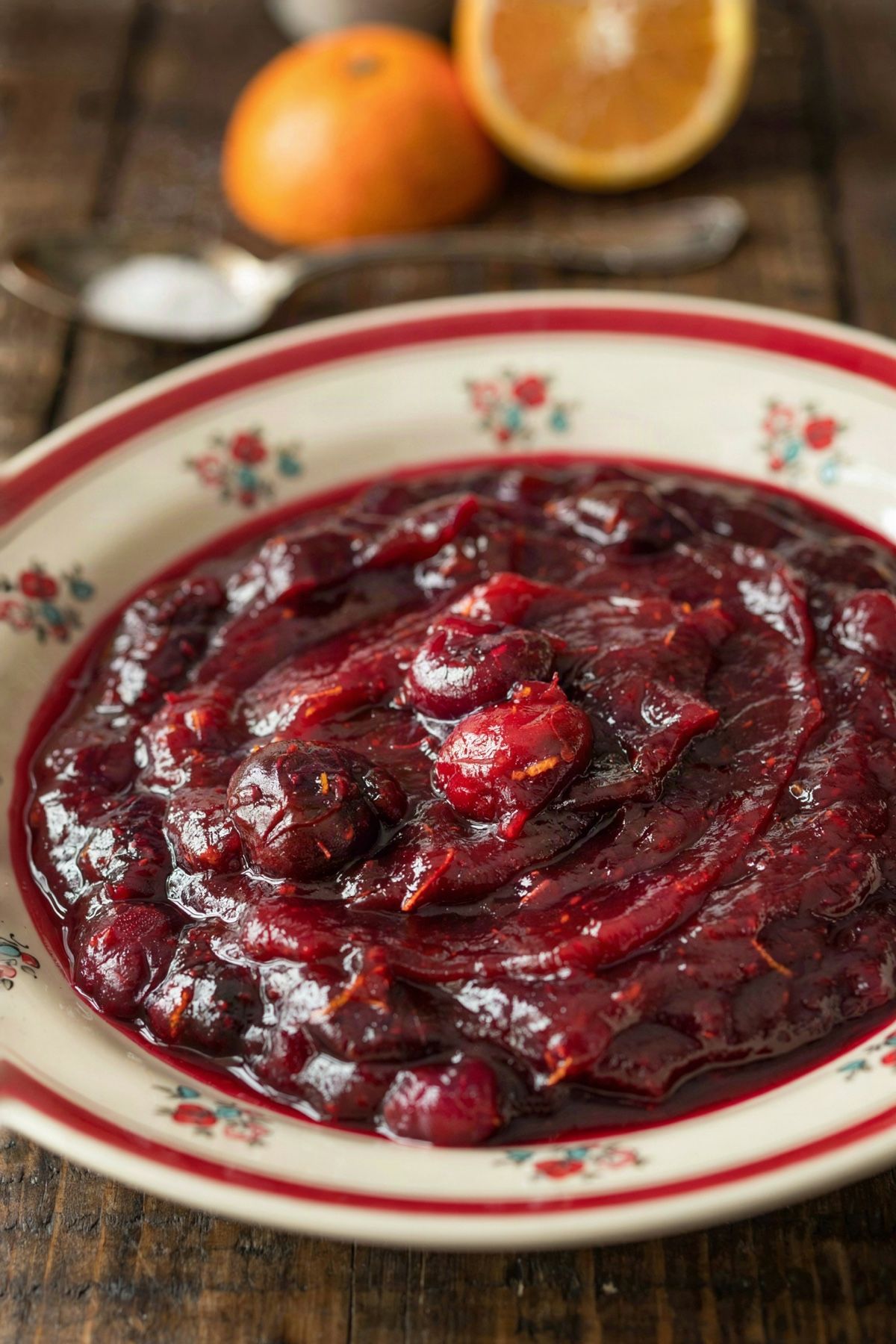
Why I Never Skip Homemade Cranberry Orange Sauce
Homemade cranberry orange sauce beats the can, though not for the reason people usually give. The can is not bad. It is fixed: one sweetness, one texture, and no orange in it at all. Twenty-five minutes at the stove buys you a say in how tart it stays and how much citrus comes through, and on a table where everything else has been in the oven since morning, it is the only thing that tastes fresh.
It is genuinely easy. One pan, one boil, one simmer. The only part that asks anything of you is patience, because the sauce looks alarmingly thin when it comes off the heat and does not set until it is cold.
Make it once and the can stops looking like an option. It keeps for a week and tastes better on the second day, which is why it has stopped being a once-a-year thing here.
The story
The Cranberry Almost Missed Thanksgiving 1959
The cranberry is one of a very short list of commercially farmed fruits native to North America. English settlers called it the craneberry, because the flower droops on a thin stem with the stamen jutting forward and looks uncannily like the head and bill of a sandhill crane. The name wore down, and the crane went with it.
Cranberries also do not grow underwater, whatever the harvest photographs suggest. The vines sit on drained sandy beds from April to November, and the bog is flooded for a night at harvest only because each berry holds four hollow chambers that make it float. Those same air pockets make a good cranberry bounce, which a New Jersey grower named John Webb worked out in 1880 by tipping his harvest down the packing-house stairs rather than carrying it. Sorters built on that principle are still in use.
The can came later. Marcus Urann started canning surplus fruit at his bog in Hanson, Massachusetts in 1912, and in 1930 folded the business into a cooperative with John Makepeace and Elizabeth Lee. That cooperative is Ocean Spray, and by 1941 its jellied sauce was national. The ridged cylinder is not a design flourish: the can is filled upside down so an air bubble sits trapped in the rounded end, and that bubble is what lets the log slide out.
Then, on 9 November 1959, two and a half weeks before Thanksgiving, the Secretary of Health, Education and Welfare announced that cranberry shipments had tested positive for aminotriazole, a weedkiller cleared in 1953 for use after harvest but sprayed before it in Oregon and Washington. A 1958 amendment to the food law banned any quantity at all of a substance shown to cause cancer in animals, so there was no safe threshold to fall back on. Fresh cranberry sales collapsed by 73 percent. Eisenhower served applesauce.
The residues turned out to be trivial, but the lesson stuck: a crop sold in one week of the year could be wiped out by one sentence at a podium. Ocean Spray spent the next decade making the cranberry something you buy in March, with juice cocktail, then Cranapple in 1963, then Cran-Grape and Cran-Orange. The pairing on this page is far older than the marketing, but the fact that you can buy cranberry orange anything in July traces back to a scare that nearly finished the crop.
One last thing, on a vegetarian site. Nearly every dish on the American holiday table has a substitute version for the people who do not eat meat. Cranberry sauce never needed one.
What to buy
Ingredient Notes
Cranberries, fresh or frozen
Buy them firm and deep red, and shake the bag: good berries rattle. Pick them over and discard anything soft, shriveled or brown, because one fermenting berry gives the whole batch a musty edge. Pale ones are just underripe and read more tart, which is no fault. Frozen berries need no change to the weight, method or timing, but do not thaw them; a thawed berry has already ruptured, so it slumps instead of bursting and you get a smooth jam with nothing whole in it.
Orange juice, freshly squeezed
Squeeze it. You need an orange for the zest anyway, so the juice costs two minutes. Carton juice has been pasteurized, which drives off the same aromatics this method works to keep, and most of it is blended from juice stored for months with flavor added back at the end. Blood oranges give a darker sauce and taste excellent.
Finely grated orange zest
The flavor is all in the colored outer layer, which is mostly limonene; the white pith beneath is bitter and contributes nothing. A microplane takes the first without the second; a box grater and a peeler both drag pith along. Zest before you cut the orange, because zesting a squeezed half is near impossible. Splitting it is the point of this recipe: limonene is volatile, so half in the pan builds a cooked orange background and half stirred in off the heat puts the fresh top note back.
Granulated sugar
Structure here, not just sweetness. Cranberry pectin needs acid and sugar to set, because the sugar ties up free water and lets the pectin strands link into a network. Cut it hard and you get a thin sauce, not merely a tart one. Three quarters of a cup is the balance point once the juice brings its own sweetness; a full cup gives the firmer, sweeter set most people grew up with. Brown sugar and maple syrup both bury the citrus, and honey is not vegan.
Fine sea salt
A quarter teaspoon, and it is the difference between tart and sharp-but-hollow. Cranberry sauce is the least seasoned thing on the holiday table, which is why so much of it tastes like sweetened acid. Salt does not make it salty, it makes the orange audible.
Ground cinnamon (optional)
Off the heat, and no more than a quarter teaspoon. Ground spices simmered in a red fruit sauce go dusty in flavor and dull in color, and cinnamon will take over the orange entirely given ten minutes to do it. Leave it out and nothing is missing.
Zesty Cranberry Orange Sauce
Fresh cranberries simmered with orange juice and zest just long enough to burst, then cooled so they set on their own. No pectin, no can.
Ingredients
Equipment
As an Amazon Associate I earn from qualifying purchases, at no extra cost to you.
Instructions
- 1
Zest and juice the oranges
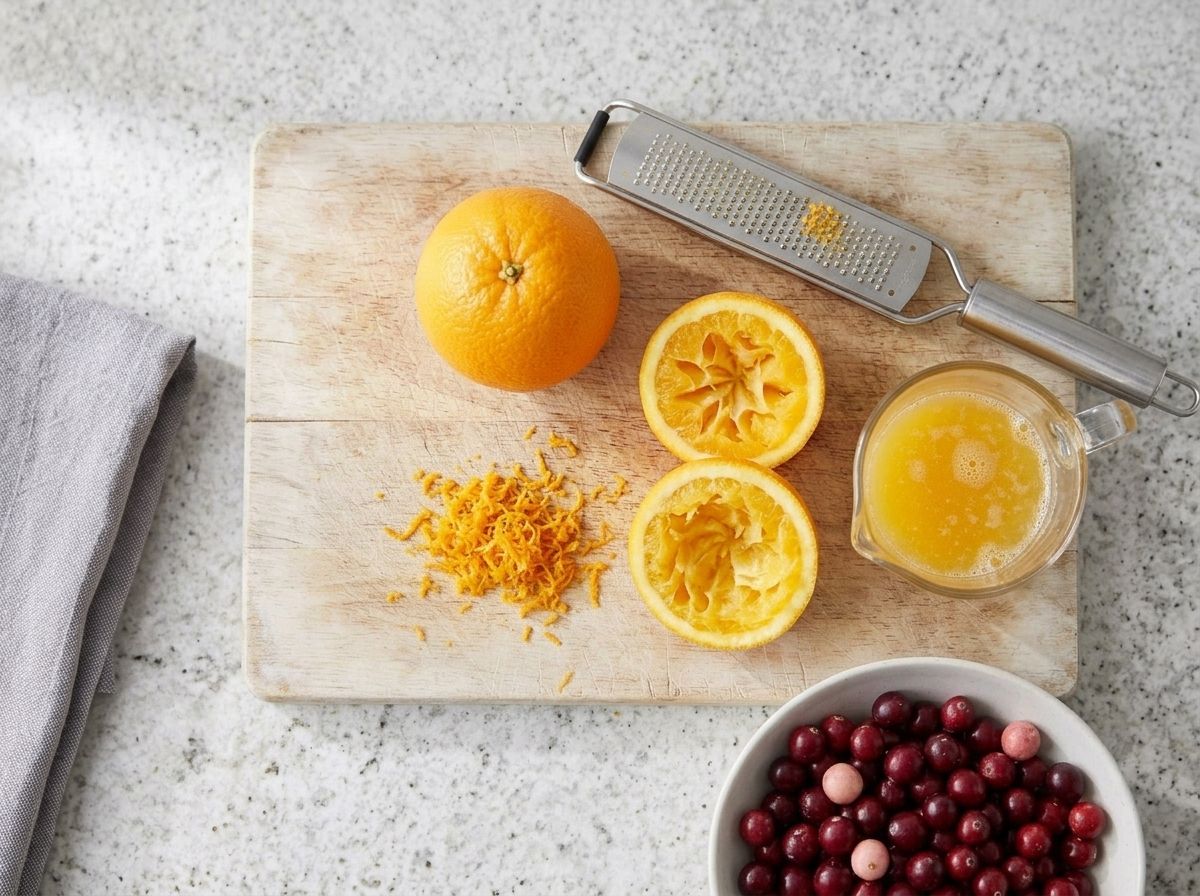
Zest 1 large orange on a fine grater, taking only the colored outer layer and stopping at the white pith underneath, which is bitter. Set the zest aside. Squeeze enough oranges to give 1 cup (240 ml) of juice, usually 2 or 3 depending on size.
- 2
Start the sauce
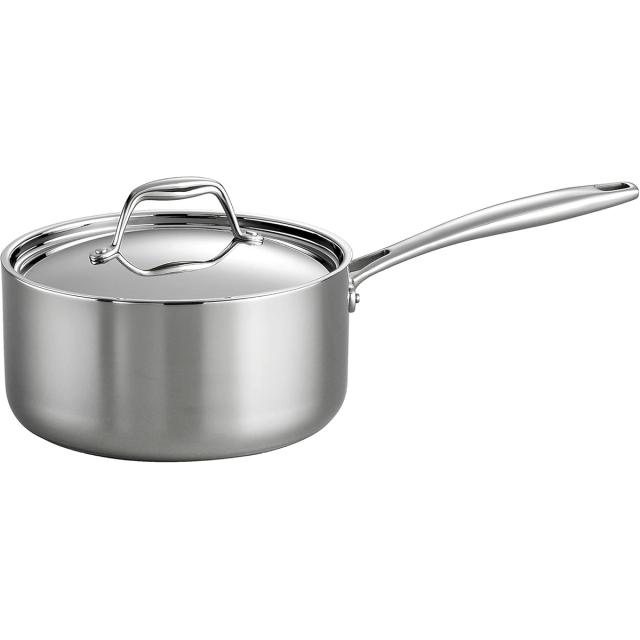
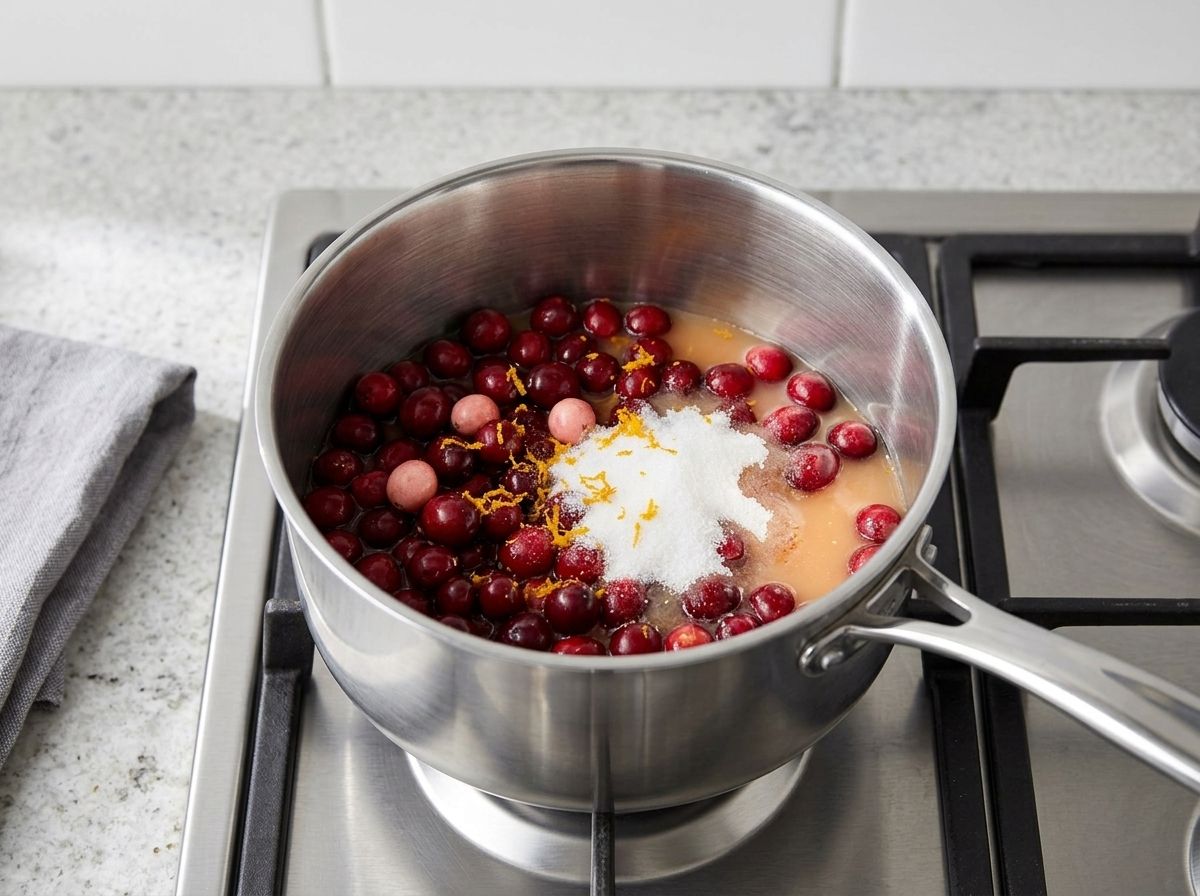
Tip the cranberries into a medium saucepan with the orange juice, sugar, salt and half the orange zest. Stir once so the sugar is wet rather than sitting in a dry heap on top of the fruit.
- 3
Bring it to a boil
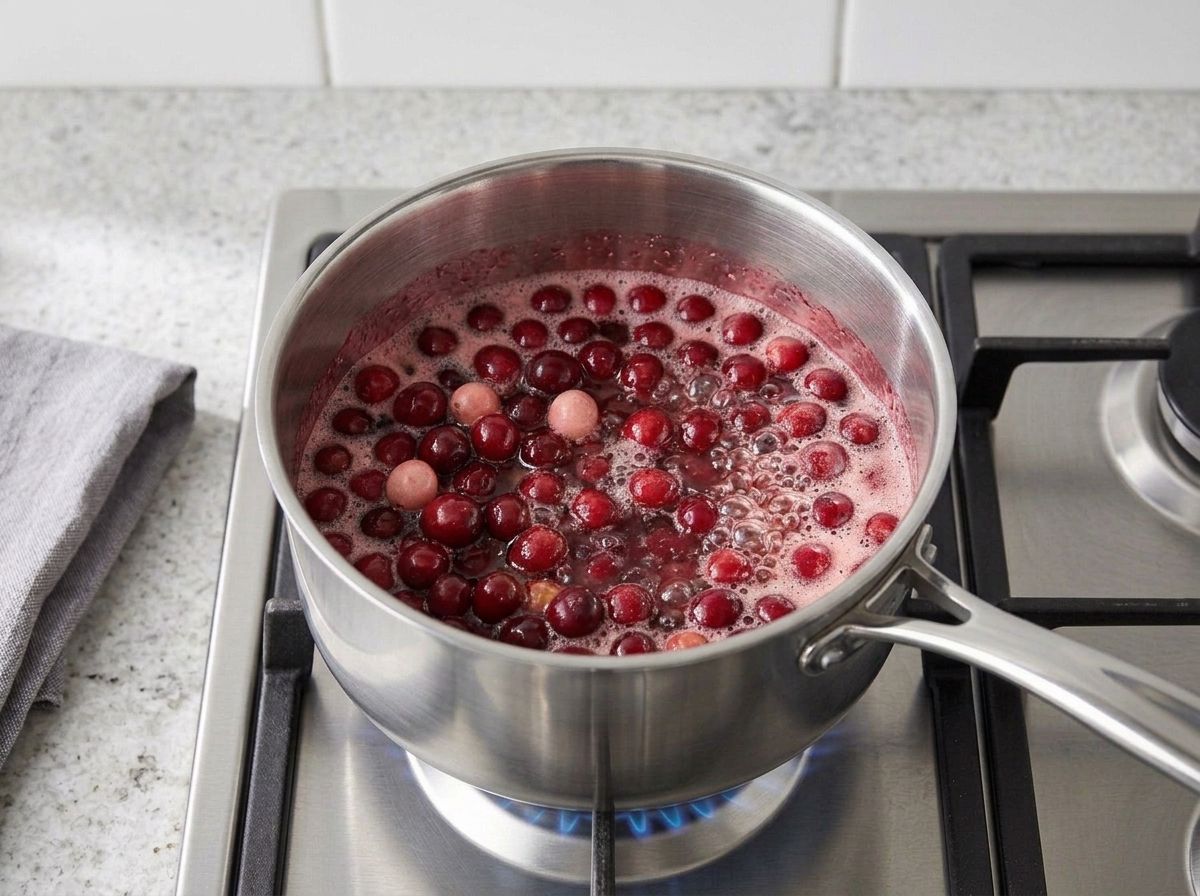
Set the pan over medium heat and bring it to a boil, stirring now and then. Getting the sugar dissolved before the berries start popping keeps it from catching on the bottom.
- 4
Simmer until the berries burst
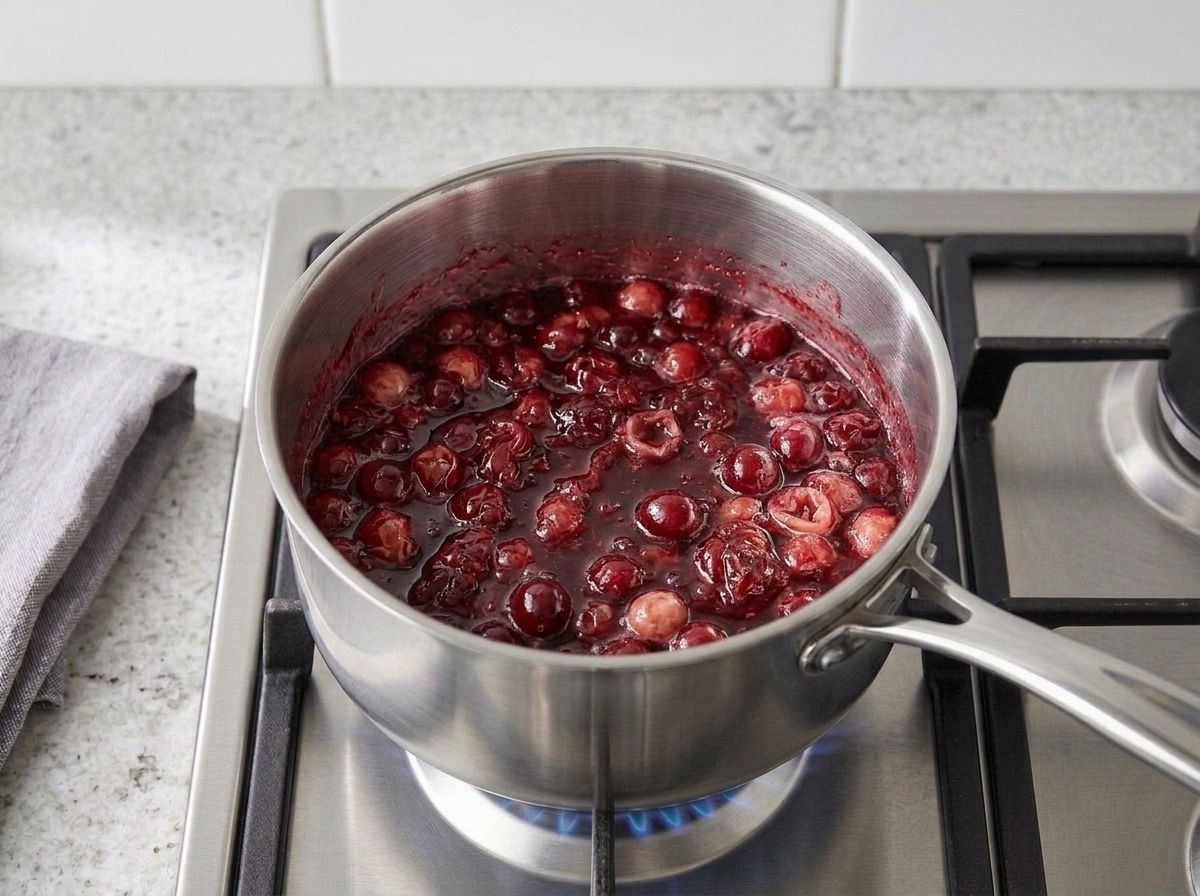
Lower the heat to a steady simmer and cook for 8 to 10 minutes, until most of the berries have split open and the liquid between them looks syrupy. A few whole ones left in are good for texture. The sauce will still be loose in the pan and that is correct, so do not keep simmering to thicken it.
- 5
Finish off the heat
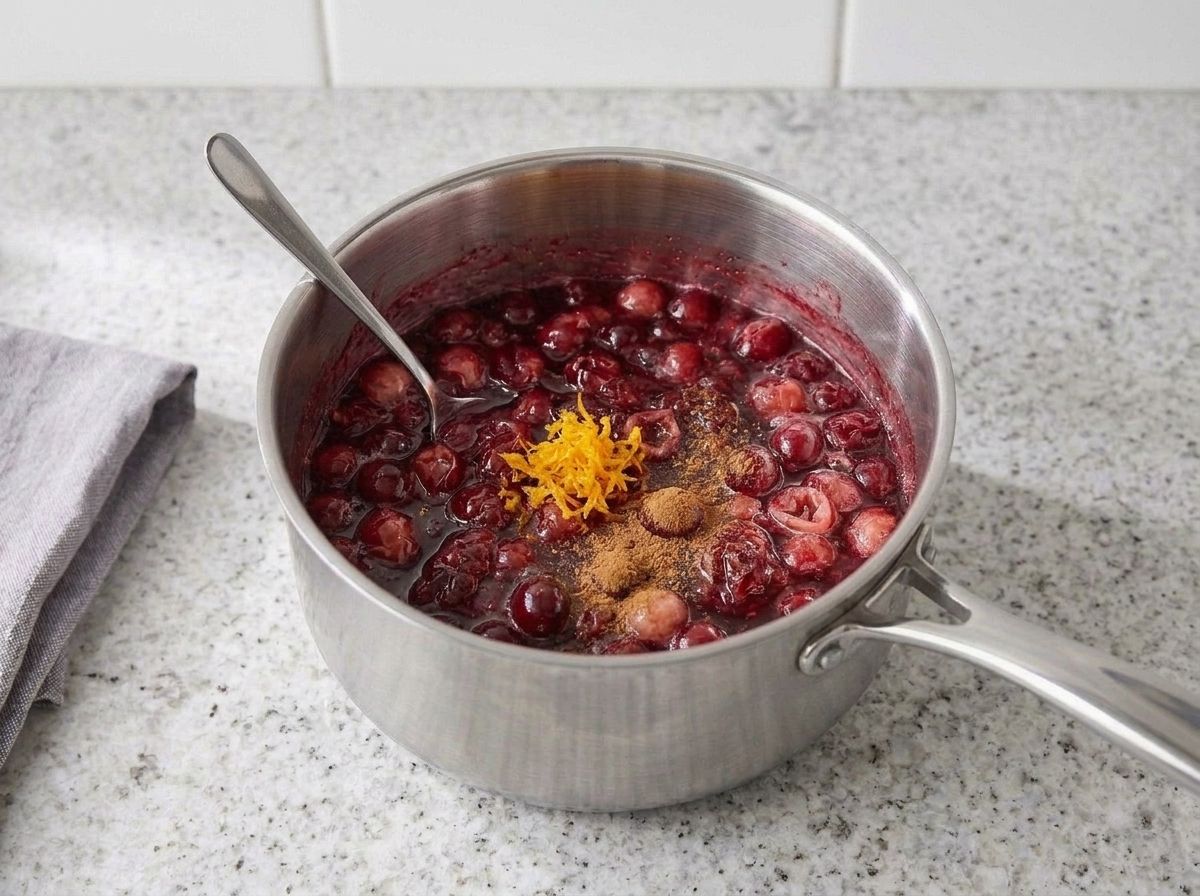
Take the pan off the heat and stir in the remaining zest, plus the cinnamon if you are using it. Taste it now. Add another tablespoon of sugar only if the tartness is genuinely uncomfortable, because it reads sweeter once cold.
- 6
Cool it to set
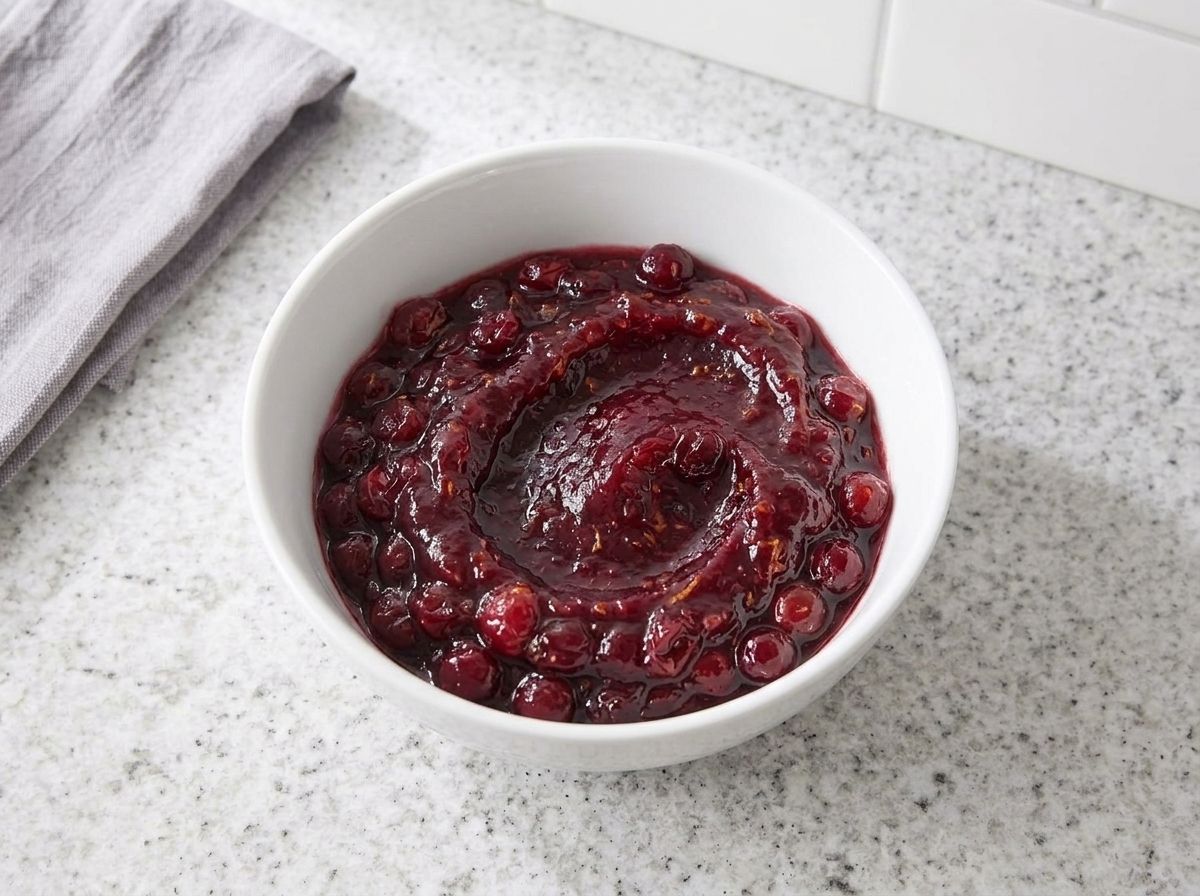
Scrape the sauce into a bowl and leave it uncovered until it stops steaming, then cover and let it cool completely, about 2 hours. It sets as it cools. Serve cold or at room temperature.
Notes
The sauce is supposed to look loose and syrupy in the pan. It thickens to a spoonable set only once it is cold, so judge the consistency after two hours in a bowl, never on the stove.
Half a split vanilla pod, a star anise or a strip of orange peel dropped in with the juice all work, as long as you fish them out before the sauce cools.
A tablespoon of Grand Marnier, Cointreau or port is the classic addition. Stir it in off the heat along with the reserved zest, so the alcohol does not cook away.
Nutrition Facts
8 servings · 93 g per serving
- Calories
- 107 kcal
% Daily Value*
- Total Fat
- 0.2 g0%
- Saturated Fat
- 0 g0%
- Sodium
- 74 mg3%
- Total Carbohydrate
- 27.2 g10%
- Dietary Fiber
- 1.7 g6%
- Sugars
- 23.1 g—
- Protein
- 0.4 g1%
Recipe from veggierecipes.blog
When it goes wrong
Troubleshooting
It came out runny and never set
Nine times in ten you judged it in the pan. The sauce is loose while hot and sets only as it cools, when the pectin from the burst berries links up. Give it two hours at room temperature and an hour in the fridge before deciding anything. If it is genuinely soupy cold, either the sugar went well below three quarters of a cup or too few berries burst. Both are fixable: back in the pan, three or four more minutes, cool again.
It set like a brick and I cannot spoon it
The opposite problem, and why this recipe stops you at eight to ten minutes rather than telling you to cook until it thickens. Every extra minute at a simmer pulls more pectin out of the fruit, and the set carries on tightening in the fridge, so a sauce that looked right warm can be sliceable by morning. Beat orange juice into the cold sauce a tablespoon at a time.
It tastes bitter
Pith, almost always. The white layer under the zest is where bitterness lives, and a box grater or a peeler brings it along however careful you are. It cannot be taken back out, so add sugar to mask it and use a microplane next time.
It just tastes like cranberry sauce, I cannot find the orange
All the zest went in at the beginning. The compounds that make citrus smell like citrus are volatile, so ten minutes at a simmer sends most of them into the air and leaves you with sugar and acid, which is a plain cranberry sauce that cost you three oranges. Half at the start, half once the pan is off the heat, and it is a different sauce.
It is sweet but flat, like fruit syrup
Either the salt was skipped or there is too much sugar for the fruit. Stir a quarter teaspoon of fine salt into the cold sauce and taste again after a minute; if it is still one-note, add a teaspoon of lemon juice or a splash of cider vinegar.
Some of the berries stayed whole
Not a failure. That is whole-berry cranberry sauce doing what it is named after, and if every last one has collapsed you cooked it too long. If you want it smooth, blitz half the batch cold and stir it back through, rather than going back to the stove and over-extracting the pectin.
Before you serve
Serving & Storage
The American table has been split into two camps over this for eighty years: the jellied cylinder turned out of the can in one piece, ridges intact and sliced into discs, against whole-berry sauce made from fruit. Households take it seriously, and plenty serve both to keep the peace. If yours is a can household, put this out alongside rather than instead of it, at least the first year.
On a vegetarian table it belongs next to whatever is playing centerpiece: a nut roast, a whole roasted squash, a mushroom Wellington, a head of cauliflower roasted until the outside is dark. Its job is to cut through everything rich and starchy on the plate, so keep it near the mashed potatoes rather than off in a corner. It is also the best thing that happens to a cheese board, particularly against a hard sheep's cheese. Once the holiday is over it becomes a jar of something good in the fridge: swirled through porridge, spread on toast under peanut butter, layered into a sandwich with sharp cheddar.
Making it ahead
This is the rare holiday dish that is better made early. The set finishes tightening over about twenty-four hours and the orange settles into the fruit rather than sitting on top of it, so sauce made on Tuesday tastes more like itself on Thursday. Make it up to a week ahead and you free a burner on the day. Take it out of the fridge half an hour before serving, because straight from cold it is stiff and the citrus barely registers.
Storing leftovers
Airtight in the fridge, up to ten days; sugar and cranberry acid are both preservatives, which is why it outlasts nearly everything else you have left over. Use a clean spoon every time, since what spoils it is almost always something introduced from a plate. It has gone when it fizzes, smells faintly of alcohol, or grows anything on top.
Freezing
It freezes for three months and comes back weeping, with water separating out of the gel. A hard stir pulls it together well enough to cook with, but it never looks clean again, so freeze the portion you plan to stir into porridge and keep the serving batch in the fridge. Thaw overnight in the fridge, not in the microwave, which melts the set unevenly.
What does not work
Serving it hot: it has no set at all above room temperature and reads as sweet fruit soup, so cool it properly even if that means twenty minutes in the freezer. And making it with dried cranberries, which have already been cooked, sweetened and infused with juice, so they will not burst and have no pectin left to set anything.
Still wondering
Frequently Asked Questions
Is this sauce vegan and gluten-free?
Gluten-free without qualification. Vegan too, with one caveat that catches people out: a good deal of granulated cane sugar sold in the United States is filtered through bone char, which is not an ingredient and never appears on the label, so strict vegans use organic cane sugar or beet sugar instead. Both behave identically here.
How much do I need per person, and how do I scale it up?
Plan a quarter cup a head, which is how this is portioned: one 12 oz bag gives roughly 2 cups of finished sauce, or 8 servings. For sixteen, double everything. The one thing that does not scale is the pan. Twice the fruit in the same saucepan sits twice as deep, so the bottom overcooks long before the top bursts and the set turns tough. Use a pan wide enough to keep the fruit about two inches deep, add two or three minutes, and stir more often.
Is this a cranberry sauce or a cranberry relish?
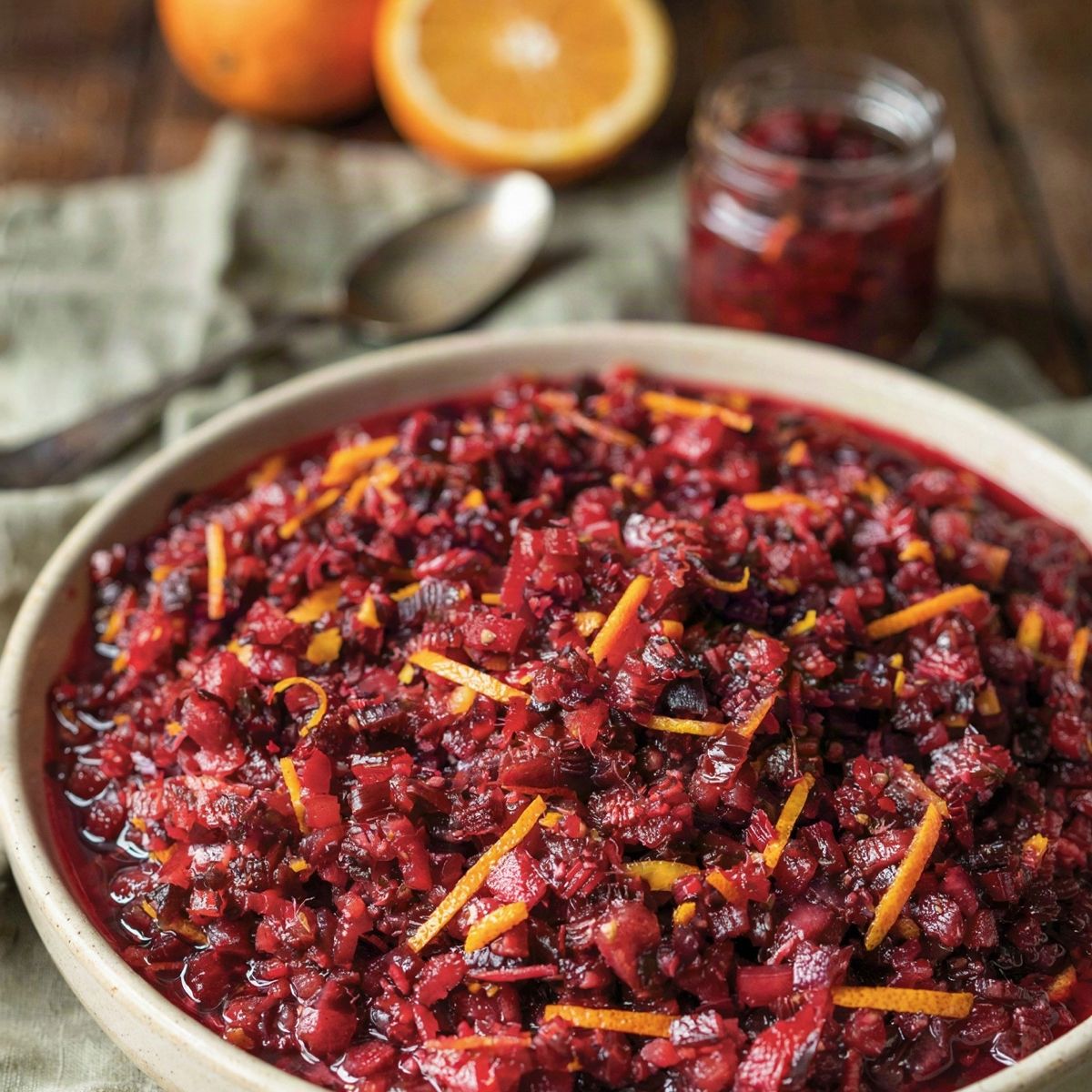
A sauce, because it is cooked. Relish is the raw version: whole cranberries and a whole orange, peel and all, pulsed in a food processor with sugar and left to sit a day. It is coarse, crunchy and much sharper, and it never sets, because nothing has released its pectin. Different dishes that share two ingredients, and there is no reason not to put both on the table.
Featured In These Collections
Sweet & Tangy Holiday Sidekicks
Made this?