
Vegetarian Vindaloo Curry Recipe
Published · Updated
A vegetarian vindaloo built the Goan way, on a ground paste of vinegar, garlic and Kashmiri chilies. Sour, warm and deep rather than simply hot.
Jump To Recipe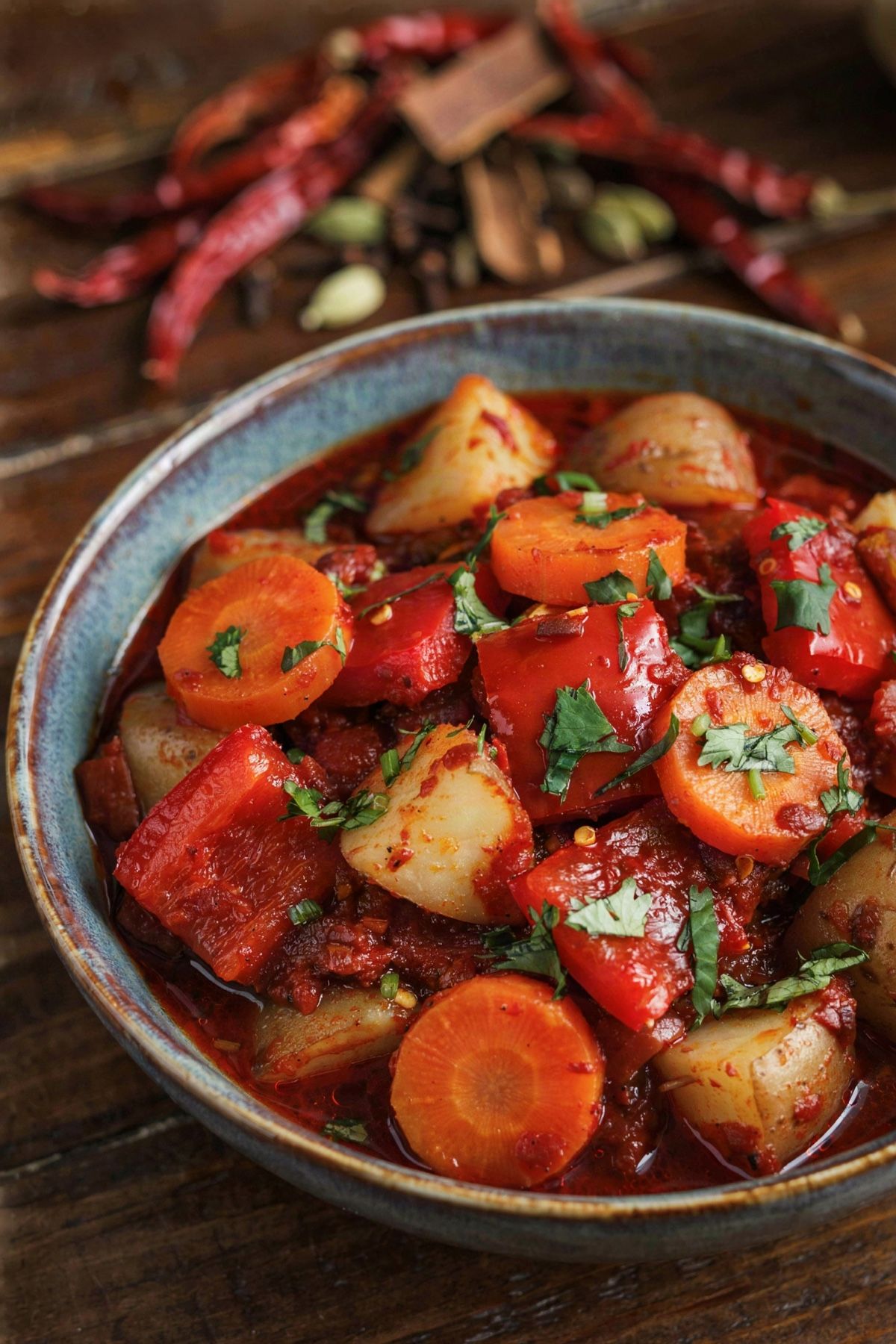
Why Vegetarian Vindaloo Is My Go-To for Big Flavor
Vindaloo has a reputation in Britain as the hottest thing on the menu, which is a shame, because the Goan original is a sour dish before it is a hot one. This version keeps that balance: a vinegar-and-garlic paste ground from soaked Kashmiri chilies, cloves, cinnamon and peppercorns, fried until the oil splits, then loaded up with potatoes, carrots and peppers.
What sets it apart for me is the sourness working on two levels. Most of the vinegar goes into the paste and cooks for the best part of an hour, where it turns round and mellow. A last tablespoon goes in raw, off the heat, and that is what makes the pot taste alive rather than stewed.
For best results, I love pairing it with:
- steaming hot basmati rice for soaking up all the spicy, tangy sauce
- toasty warm naan, perfect for grabbing every last bite
- a cold beer or a glass of lassi if you want to mellow out the spice
Kashmiri chilies give color and only gentle warmth, so as written this lands around a medium. For the fiery version, swap two or three of them for arbol or byadgi in the paste rather than shaking chili powder over the finished curry. Either way it tastes better on day two.
The story
Vindaloo Has Nothing to Do With Potatoes
The name is Portuguese, not Hindi. Vindaloo is a worn-down carne de vinha d’alhos, meat in wine and garlic, from Madeira and the Azores, and it was less a recipe than a preservation method. Pork went into a barrel with red wine, a great deal of garlic and salt, and the acid kept it edible for the weeks a sailing ship needed to reach India.
Goa became a Portuguese colony in 1510. Wine did not survive the voyage in any quantity, so Goan cooks used what the coast already made: toddy vinegar, fermented from palm sap, softer than wine vinegar and slightly sweet. They added the chilies the Portuguese had themselves carried over from the Americas, and the cloves, cinnamon and peppercorns of the spice trade the colony existed to control. Vinha d’alhos slurred into vindalho, then into vindaloo.
The potatoes arrived later, and by accident. Aloo is Hindi for potato, the syllables lined up, and British curry houses took the hint. They also swapped the vinegar for lemon juice, multiplied the chilies and sold the result as the hottest thing on the menu. That version is why most people think vindaloo means heat. In Goa it means sour.
Which raises a fair question for a vegetarian kitchen: if the point was preserving pork, what is left once the pork goes? The vinegar and garlic stopped being preservatives the day refrigeration arrived, and what survived them was the flavor, which lives entirely in the paste. The one thing a meat vindaloo has that vegetables cannot copy is the overnight marinade, because acid works its way into pork and does almost nothing to a potato. So this recipe moves that job into the pan. The paste is fried until the oil splits, and a last raw tablespoon of vinegar goes in off the heat to restore the brightness a long soak would have given.
And the potatoes, the ingredient Goan purists will tell you does not belong: keep them. Pork carried the sauce on its own rendered fat. Vegetables have nothing to hold it with, and a starchy chunk that has simmered twenty minutes in the paste is the best carrier on the table. The etymology is nonsense. The cooking is sound.
What to buy
Ingredient Notes
Dried Kashmiri chilies
They run about 1,000 to 2,000 Scoville, roughly a hot paprika, and their job is the deep red color rather than the heat. Ten of them is not ten hot chilies. Indian grocers sell them by the bag and they keep a year in a sealed jar; byadgi is the closest alternative. Failing both, 2 tablespoons of sweet paprika plus ½ teaspoon of cayenne beats American chili powder, which is cut with cumin, oregano and garlic.
Cider vinegar
Goa uses toddy vinegar, fermented from coconut palm sap, softer than wine vinegar and faintly sweet. Distilled white vinegar, which many vegetable vindaloo recipes still call for, is the worst stand-in there is: all acetic bite and no body. Cider vinegar is the best supermarket option. The two teaspoons of sugar in the paste replace the sweetness palm vinegar would have brought, so they are not optional.
Whole cloves, cinnamon and black peppercorns
The Portuguese half of the spice bill, and the line between a vindaloo and any other hot curry. Black pepper carried the heat here for centuries before chilies reached India, and the sweet spices give the sauce its dark, almost mulled quality under the sourness. Buy them whole, since ground cloves oxidize fast and turn soapy. Six cloves reads like a lot next to a pot of vegetables, and you will notice if you use three.
Garlic
Eight cloves is not a typo and not the place to economize, since garlic is in the name of the dish. It goes in raw, fries five minutes in the paste and simmers half an hour, which leaves it sweet rather than sharp. Skip the pre-minced kind in jars, packed in acid, which reads as sour on top of vinegar.
Waxy potatoes
Yukon Gold, Charlotte, or any red-skinned potato. Floury bakers such as russets or Maris Pipers break down over half an hour of simmering and thicken the sauce towards mash. Cut them into chunks of about 3 cm (1¼ inches), big enough to survive and small enough to cook through in the twenty minutes the carrots need.
Jaggery or light brown sugar
A corrector, not a sweetener. Two teaspoons across four servings cannot taste sweet; what it does is stop the vinegar sitting on top of everything else, the same job a pinch of sugar does in tomato sauce. Jaggery, sold as gur in Indian shops, is unrefined cane sugar with a smoky caramel edge. Light brown sugar is a fair swap.
Spicy Vegetarian Vindaloo
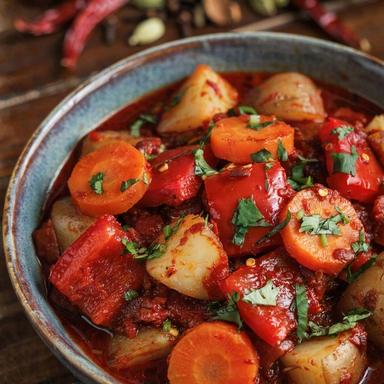
A Goan vindaloo built on a proper vinegar-and-Kashmiri-chili paste, with potatoes, carrots and peppers simmered in it until the sauce turns deep and glossy.
Ingredients
Equipment
As an Amazon Associate I earn from qualifying purchases, at no extra cost to you.
Instructions
- 1
Soak the chilies
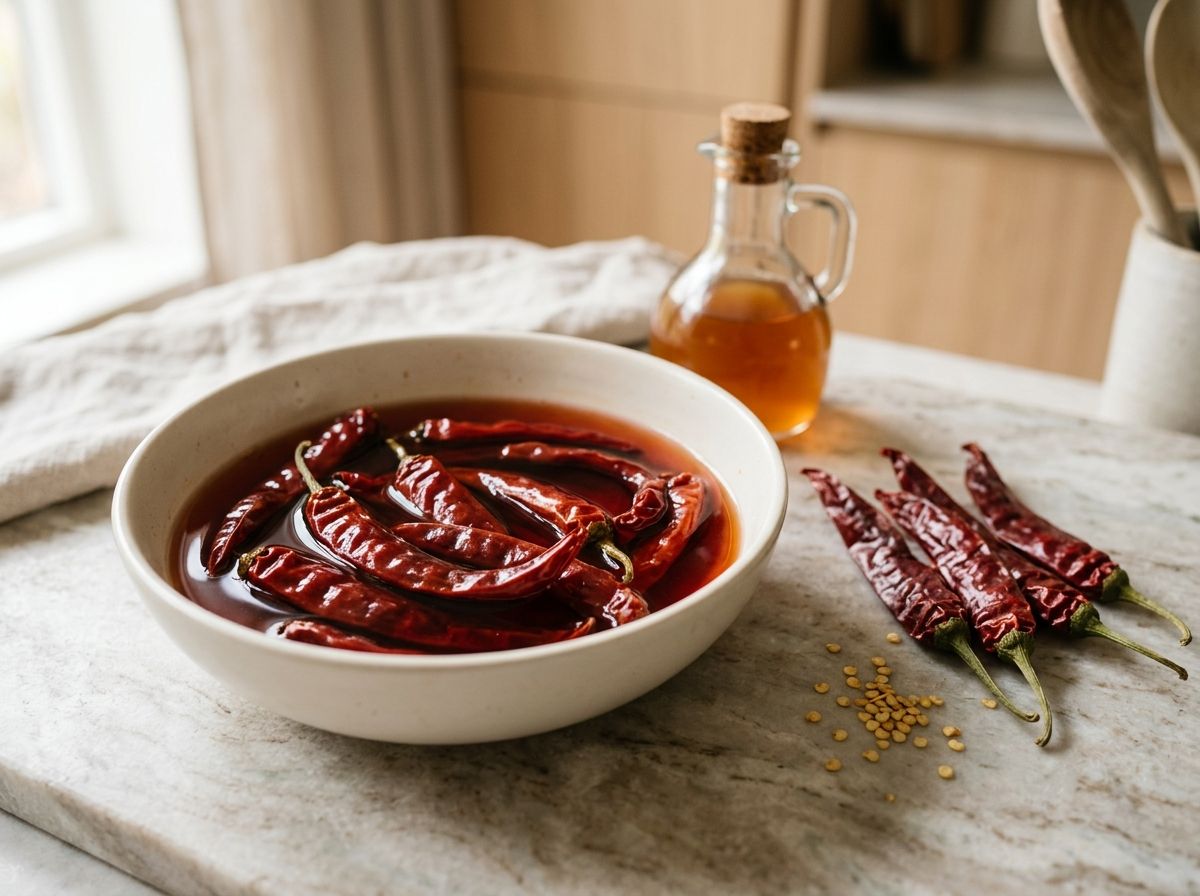
Snap the stems off the Kashmiri chilies and shake out most of the seeds. Put them in a small bowl with 60 ml (¼ cup) of the cider vinegar and 4 tablespoons of just-boiled water, pressing them under. Leave 20 minutes, until they are leathery rather than brittle. Chop the vegetables while they soak.
- 2
Toast the whole spices
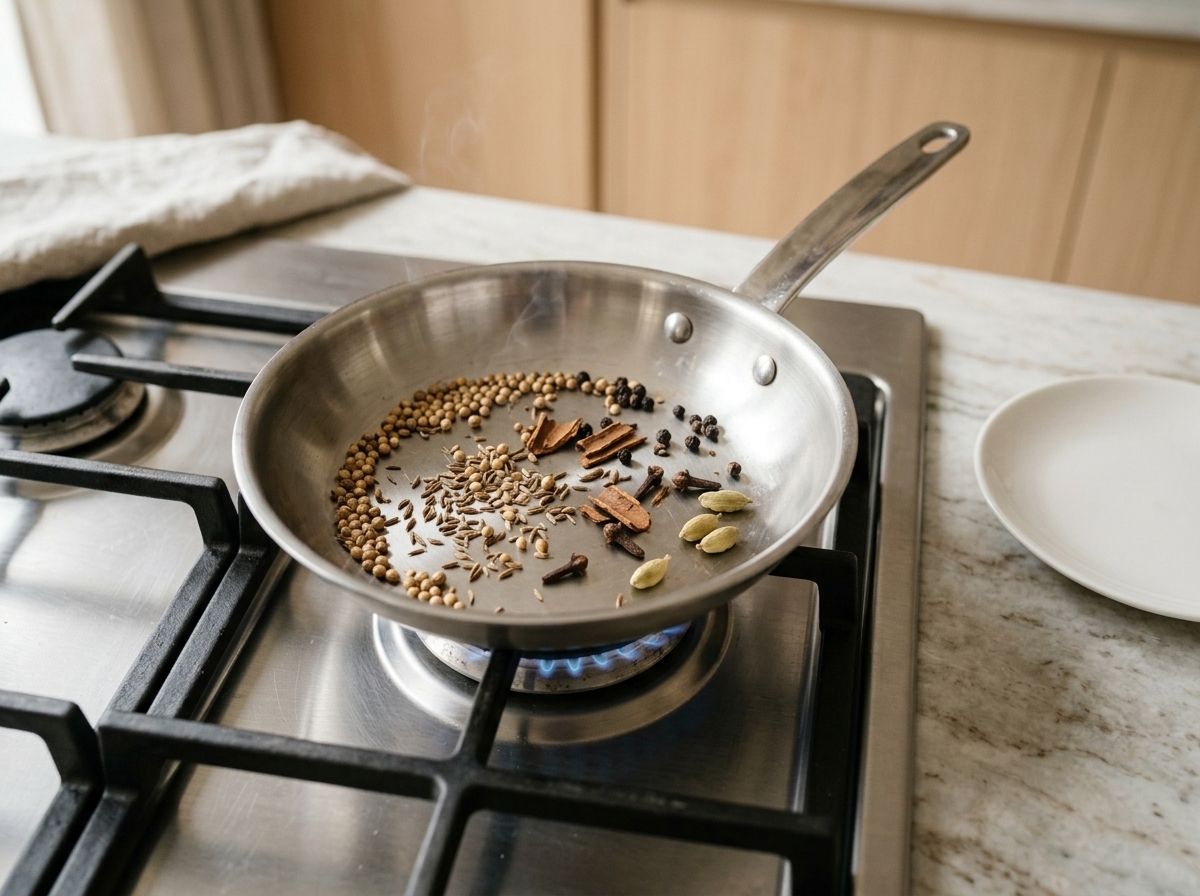
Toast the coriander seeds, 1 teaspoon of the cumin seeds, the peppercorns, cloves, cinnamon and cardamom in a dry pan over medium heat for about 2 minutes, until they smell nutty and the cumin has darkened a shade. Tip them straight onto a cold plate, because they keep browning in a hot pan.
- 3
Grind the vindaloo paste
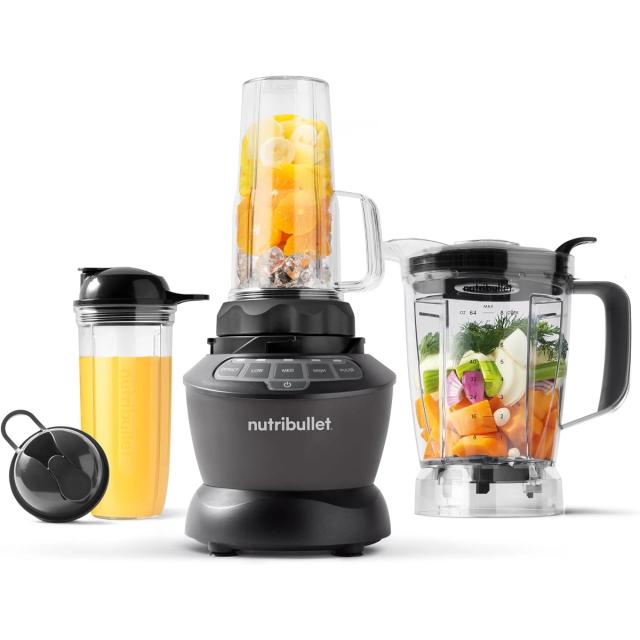
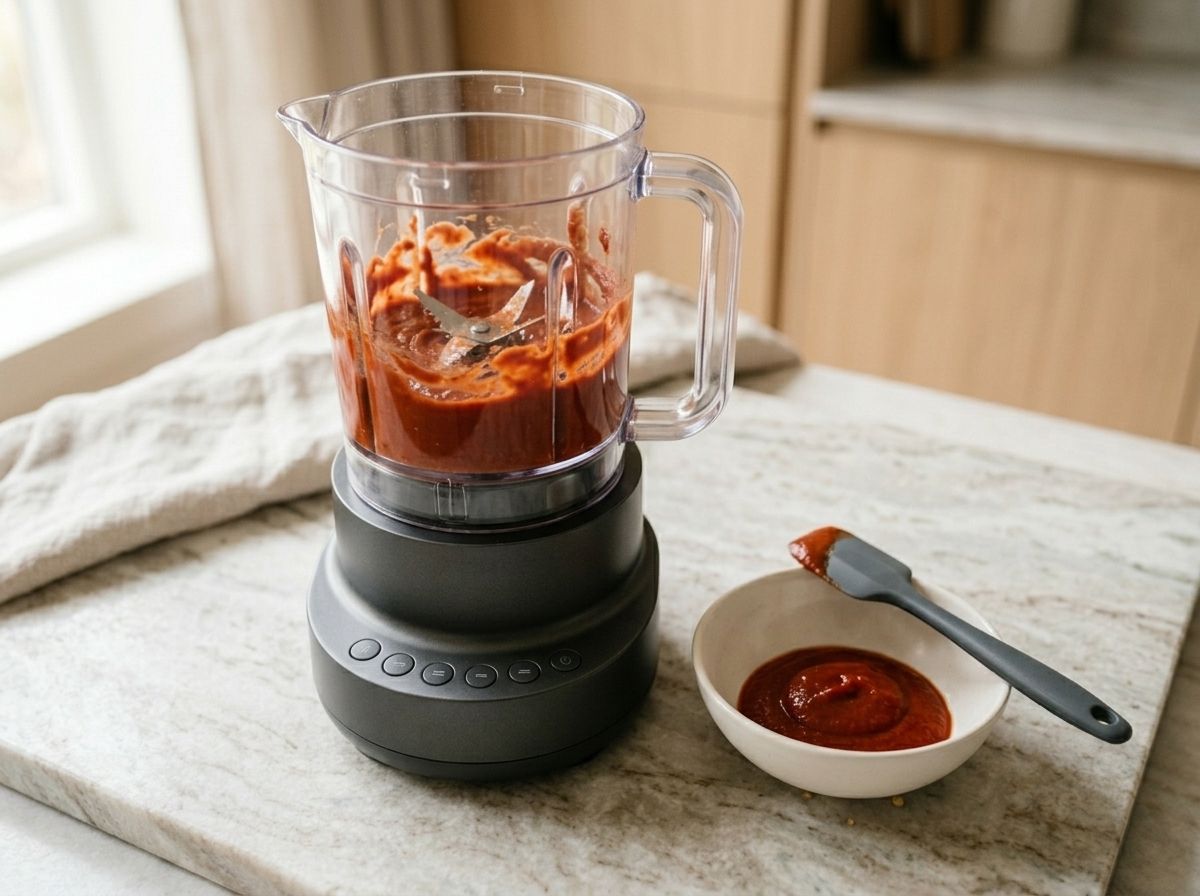
Tip the chilies and all their soaking liquid into a blender with the toasted spices, garlic, ginger, turmeric, sugar and ½ teaspoon salt. Blend for a full 2 minutes, scraping down twice, until the paste is smooth brick red with no gritty flecks of clove left. Add a tablespoon of water only if the blades stall.
- 4
Pop the seeds
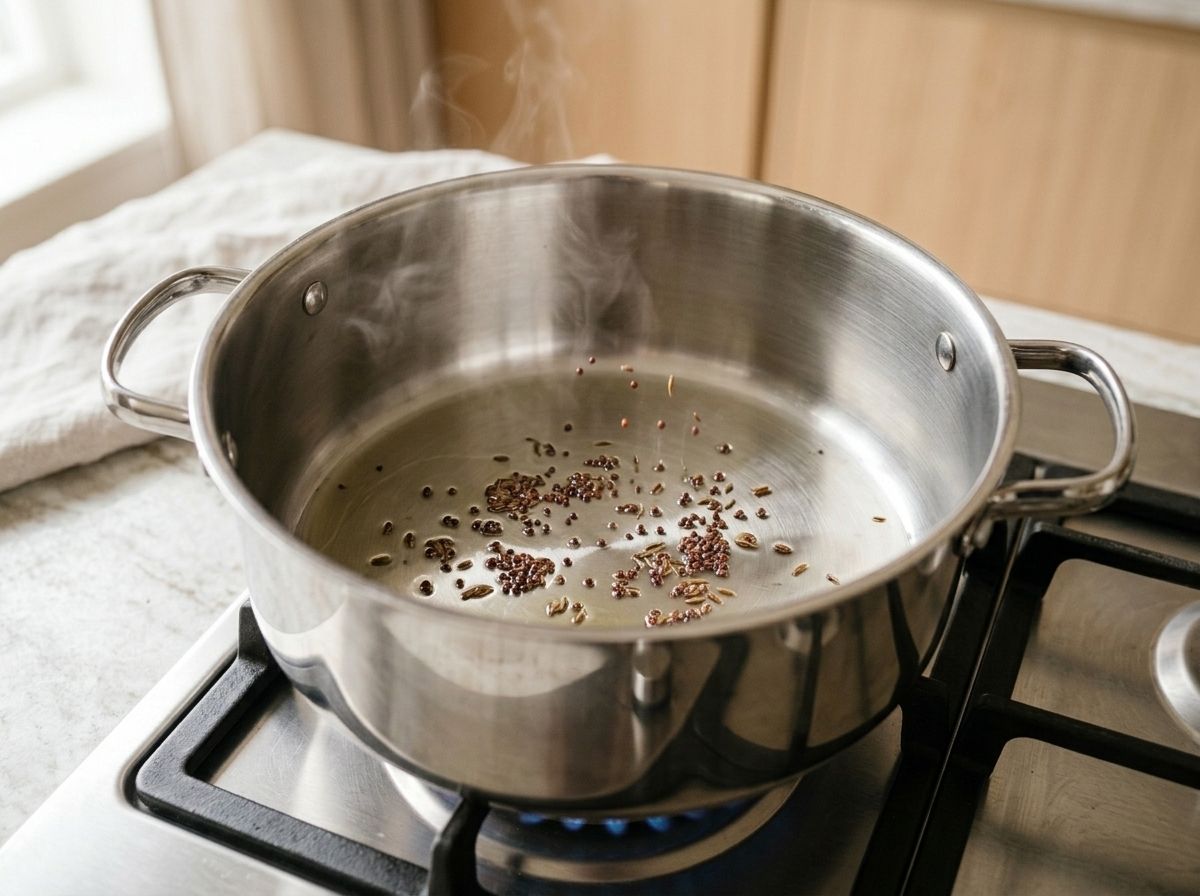
Heat the oil in a large pot over medium-high heat. Add the mustard seeds and the remaining 1 teaspoon of cumin seeds and cover loosely. When the popping slows, after about 30 seconds, move on.
- 5
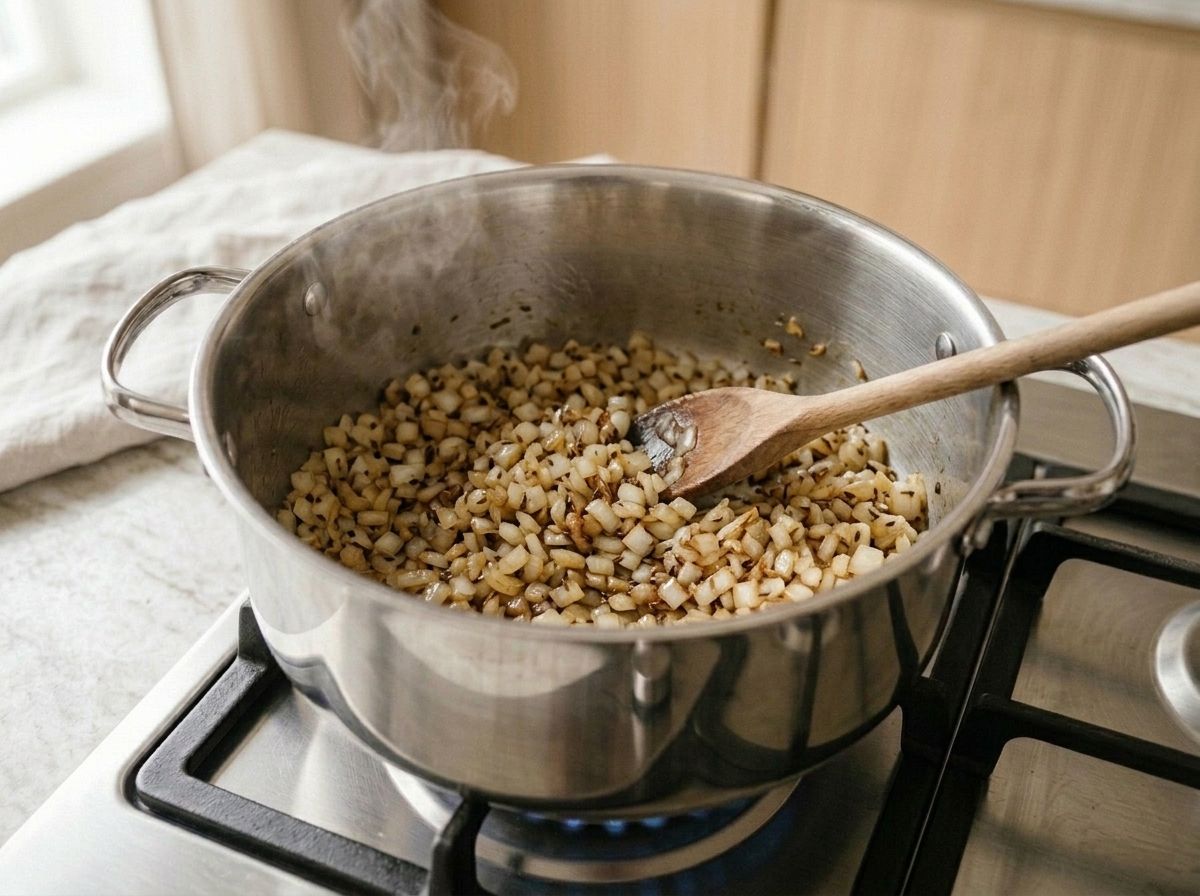
Brown the onions
Add the onions and cook for 8 to 10 minutes, stirring now and then, until they are properly golden at the edges. Translucent is not far enough: the sweetness the browning builds is what stands up to the vinegar later.
- 6
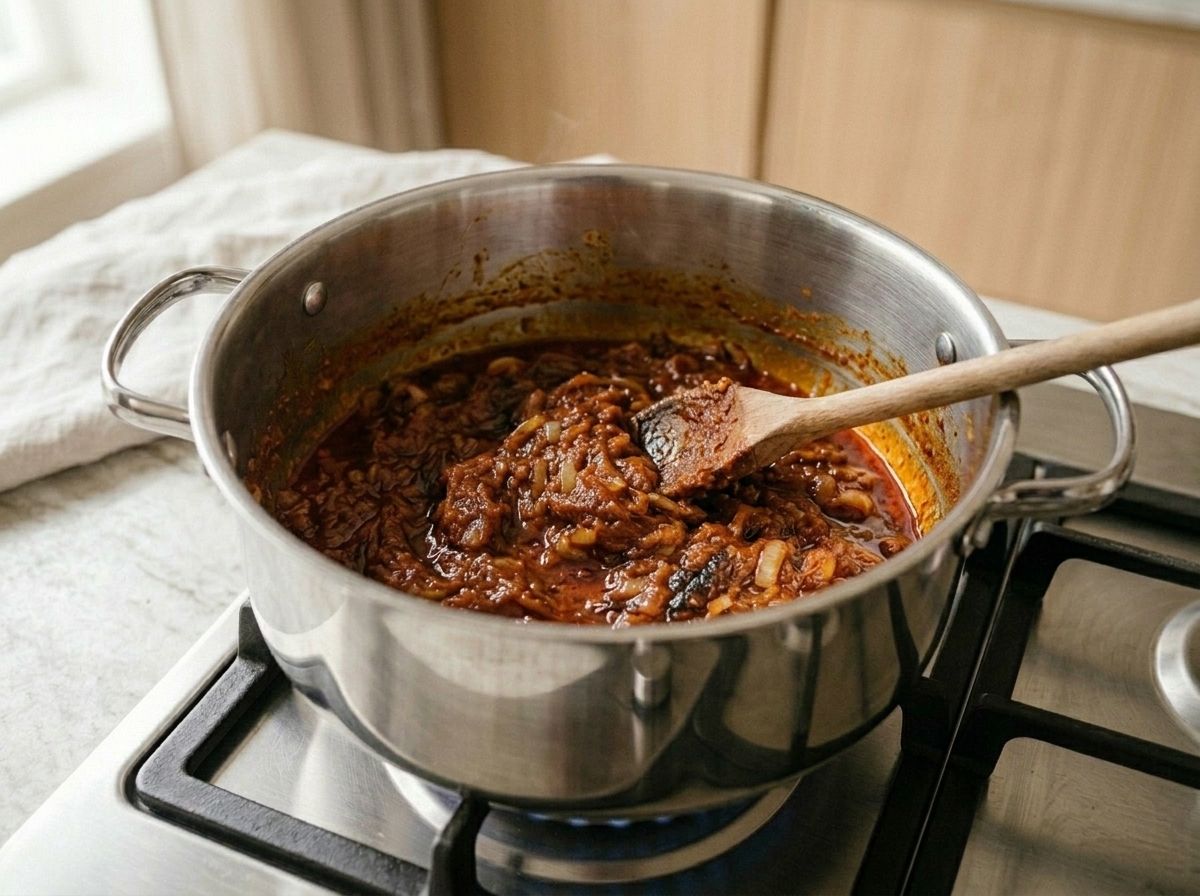
Fry the paste until the oil splits
Scrape in all of the paste, turn the heat to medium and fry for 5 minutes, stirring almost constantly so it does not catch. It will darken from brick red to a deep rust and oil will bead out around the edge. That split is the signal that the raw garlic and vinegar have cooked off.
- 7
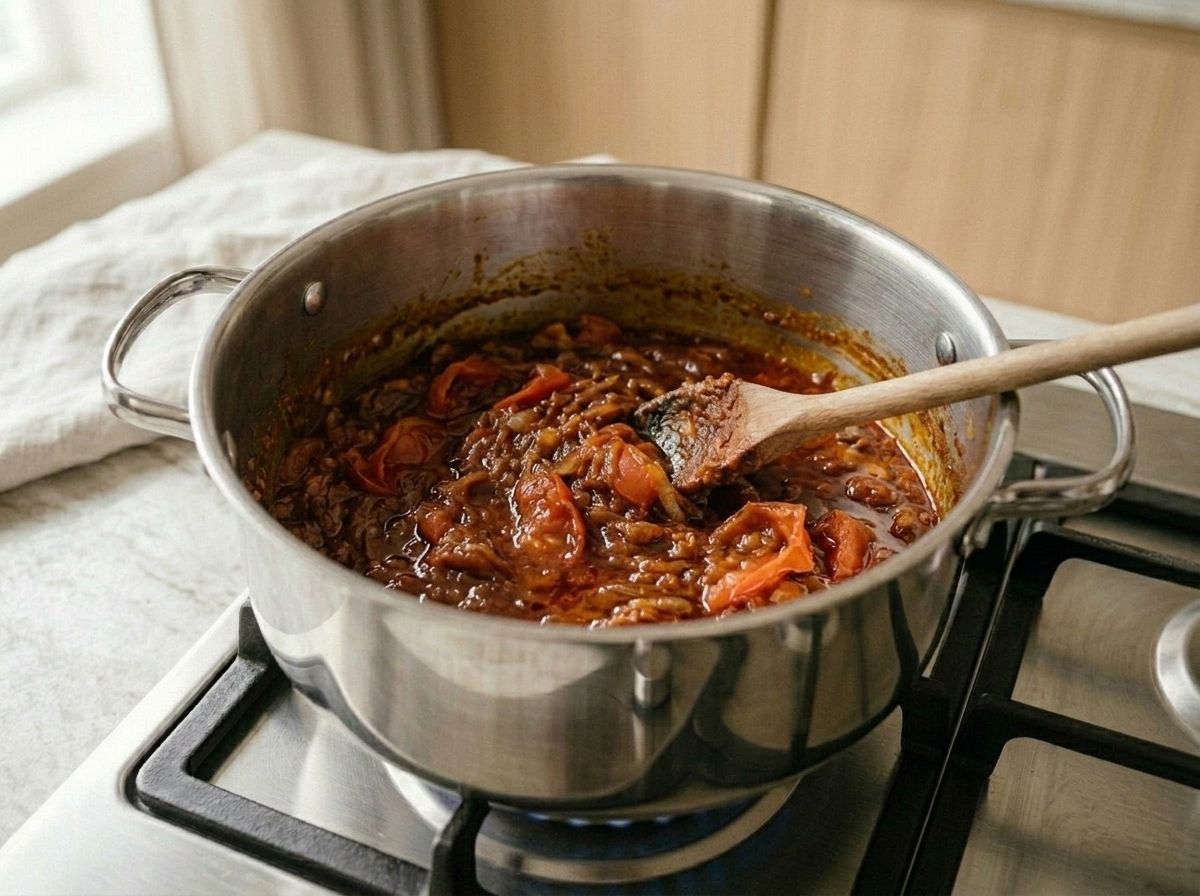
Cook down the tomatoes
Add the tomatoes and ½ teaspoon salt. Cook for 5 to 6 minutes, mashing them against the side of the pot, until they collapse into the paste and the oil separates again.
- 8
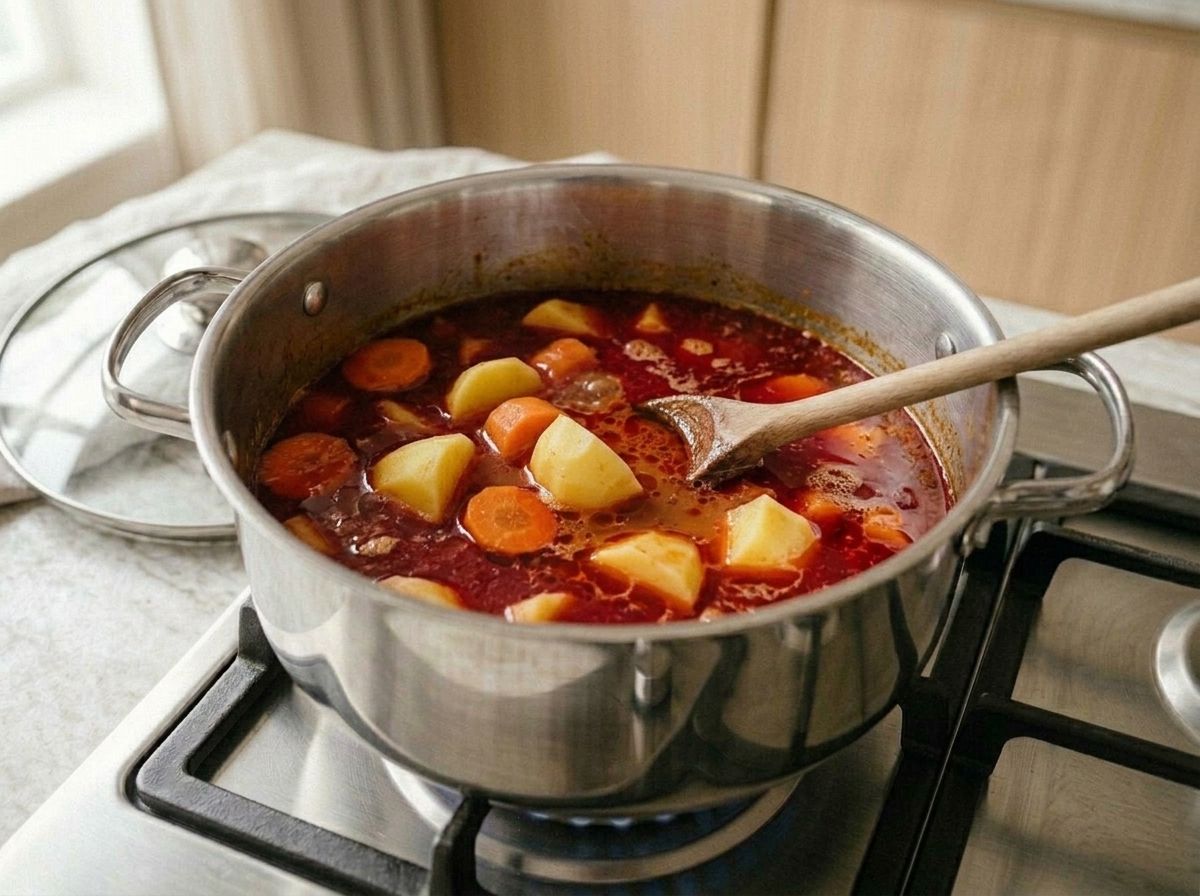
Simmer the potatoes and carrots
Stir in the potatoes and carrots, then pour in 250 ml (1 cup) water. Bring to a boil, turn the heat to low, cover and simmer for 18 to 20 minutes, until a knife slides into a potato with only slight resistance. The timing assumes chunks of about 3 cm (1¼ inches).
- 9
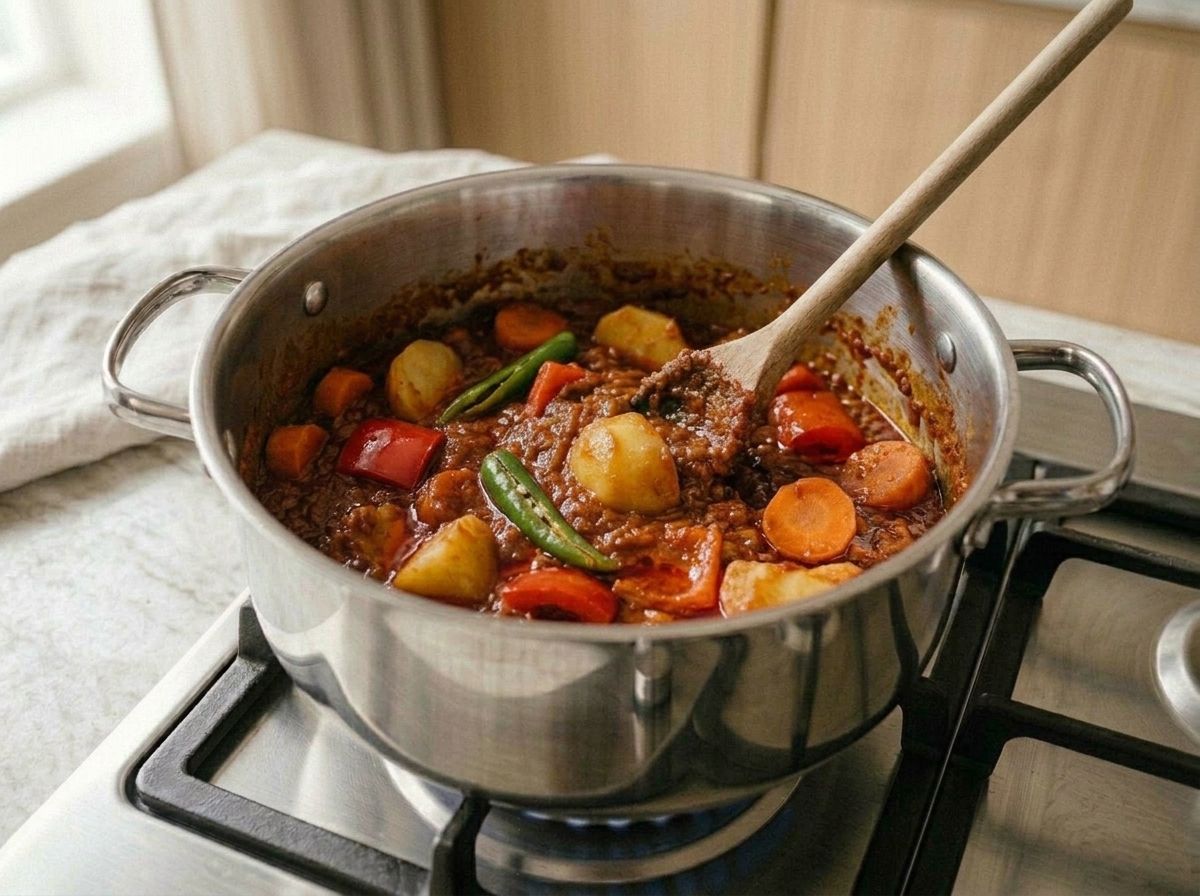
Add the pepper and reduce
Stir in the bell pepper, and the green chilies if you are using them. Leave the lid off from here and cook at a steady simmer for 6 to 8 minutes more, until the pepper is tender but still holds its shape and the sauce has reduced to a thick gravy that clings to the vegetables instead of pooling around them. Red oil rising to the surface is the sign it is there.
- 10
Finish with raw vinegar and rest
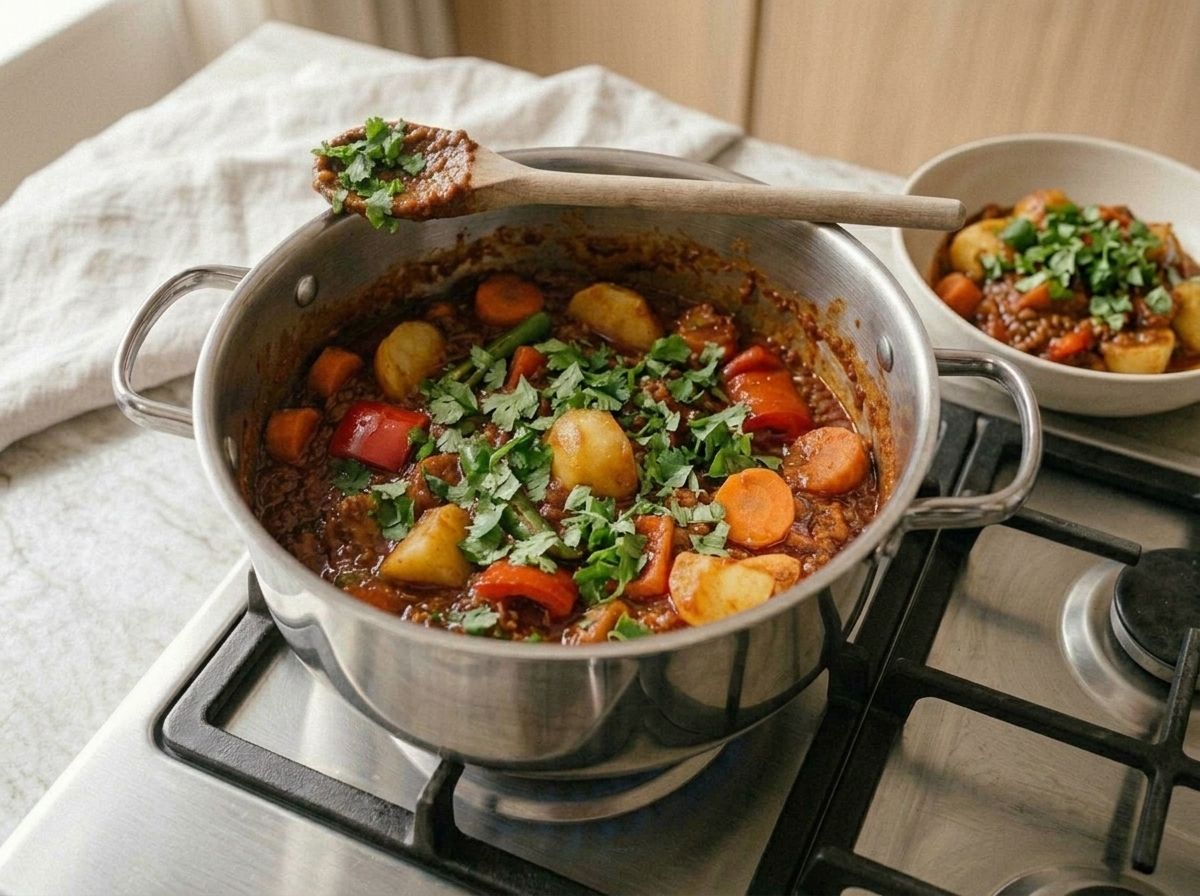
Off the heat, stir in the last tablespoon of cider vinegar. Taste for salt, and add another teaspoon of sugar if the sourness sits too far forward. Leave it 5 minutes, during which it thickens a little further, then scatter over the cilantro and serve.
Notes
Kashmiri chilies give the color and only mild heat. For a fiery vindaloo, swap two or three for arbol or byadgi rather than adding chili powder, which muddies the paste.
The paste keeps two weeks in the fridge under a film of oil, or freezes in an ice cube tray. Make a double batch while the blender is out.
A drained 400 g can of chickpeas, stirred in with the bell pepper, turns this from a vegetable side into a main course.
Nutrition Facts
4 servings · 472 g per serving
- Calories
- 316 kcal
% Daily Value*
- Total Fat
- 11.9 g15%
- Saturated Fat
- 1.8 g9%
- Sodium
- 333 mg14%
- Total Carbohydrate
- 50.3 g18%
- Dietary Fiber
- 9.5 g34%
- Sugars
- 17 g—
- Protein
- 7.1 g14%
Recipe from veggierecipes.blog
When it goes wrong
Troubleshooting
It tastes sharp and raw, like vinegar with spices floating in it
The paste did not fry long enough. Raw garlic and raw vinegar need time in hot fat before they become a sauce, and five minutes over medium heat with near-constant stirring is the minimum. Watch for the color to move from brick red to a deeper rust and for oil to bead out at the edge of the pan. That split means the paste is frying rather than stewing. If the tomatoes are already in, cook them down until the oil separates a second time.
The curry came out brown instead of red
Either the chilies were not Kashmiri, in which case the color was never coming, or the heat was too high. The paste carries sugar, from the jaggery and from the browned onions under it, and above a medium flame those sugars scorch and turn the sauce brown and faintly bitter in under a minute.
This is nowhere near as hot as the vindaloo at my local curry house
Correct, and deliberate. What British curry houses sell is a heat contest that dropped the vinegar for lemon juice and piled the chilies in. The Goan dish it is named after is sour first and warm second, and as written this sits at a medium. To take it up, swap two or three of the Kashmiri chilies for arbol or byadgi, or add the optional green chilies. Do it in the paste rather than stirring chili powder into the finished pot, which only makes the sauce dusty.
The bell pepper turned khaki and collapsed
It went in too early. Peppers want six to eight minutes and potatoes want twenty, and the usual mistake is tipping everything in together and simmering until the hardest thing is done. Everything else here improves with a long simmer. The pepper is the one thing that does not.
It came out soupy, more like a stew than a curry
The lid stayed on to the end. Nothing evaporates under a lid, and the onions and tomatoes give up their own liquid on top of the water you added, so the sauce has to reduce uncovered before it is finished. Take the lid off, raise the heat a little and let it bubble until the sauce coats the vegetables and red oil rises to the top. Five to ten minutes usually does it. A vindaloo is a thick curry, not a broth.
The potatoes are still hard and the sauce has cooked away
The lid was not sealing or the simmer was too vigorous. On low heat under a proper lid this pot loses very little liquid in twenty minutes, so drying out means the heat is too high and the outsides are cooking faster than the middles. Add 100 ml of hot water, seat the lid and drop the heat further.
The paste is gritty and I keep biting into pieces of clove
Domestic blenders struggle with whole hard spices in a small amount of liquid, because the mixture is too thick to circulate past the blades. Grind the toasted spices dry first, in a spice grinder or a mortar, then blend the wet ingredients and stir the powder in afterwards.
Before you serve
Serving & Storage
In Goa this is not a weeknight curry. It comes out at Christmas and at weddings, cooked in a big pot the day before because the vinegar makes it better with age. It goes with sannas, the steamed rice and coconut cakes that soak up sauce like a sponge, or with pav, the soft bread rolls the Portuguese also left behind. Naan is a north Indian bread and no part of Goan cooking, though nobody at your table will object to it.
With rice, keep it plain and steamed: a pilau carrying its own whole spices only competes with a sauce this concentrated. One cooling side beats a second hot dish, so cucumber in yogurt, or coconut yogurt to keep the meal vegan. A dry vegetable such as a cabbage foogath earns the extra pan, because everything in this pot is soft and coated.
Making it ahead
Cook it a day early if you can. Here that is the recommendation rather than a compromise, because the vinegar keeps working on the potatoes overnight. Stop two steps short: leave out the bell pepper and the finishing vinegar, cool the pot and refrigerate it, then bring it back to a simmer, give the pepper its six to eight minutes and finish with the raw vinegar as written.
Make the paste in a double batch while the blender is already dirty. It keeps two weeks in the fridge under a film of oil and freezes for three months in an ice cube tray.
What does not work is building this in a slow cooker from raw paste. The frying step, where the paste darkens and the oil splits, cannot happen in a moist covered pot at low temperature, and you get a sour, dusty stew instead. Fry the paste in a pan first, then move everything across.
Storing leftovers
Cool it and refrigerate for up to five days, longer than most curries manage and no coincidence, since vinegar is the reason this dish exists. The flavor peaks on day two.
It freezes for three months with one caveat: the sauce comes back perfectly and the potatoes do not, because freezing ruptures their cells and they thaw grainy. If a batch is going into the freezer, hold the potatoes back and boil fresh ones to stir through on the day.
Reheat gently in a pan with a splash of water rather than in a microwave, which overheats the edges and slumps the peppers. Add a few drops of vinegar and fresh cilantro at the end, because both fade in storage and both come back for nothing.
Still wondering
Frequently Asked Questions
Can I swap the vegetables?
Yes, as long as you add them by cooking time rather than tipping everything in together. Cauliflower, green beans and mushrooms want 10 to 12 minutes and go in halfway through the covered simmer. Peas, spinach and the bell pepper want six minutes or less, at the end. Sweet potato, squash and eggplant take 18 to 20 minutes like the potatoes, though the last two soften into the sauce rather than holding their shape. A drained 400 g can of chickpeas needs five minutes and turns this into a main course with real protein in it.
Is this recipe vegan?
Yes as written, and unusually for an Indian curry it needs no substitutions at all. Restaurant vindaloo is another matter: many kitchens finish it with ghee or a spoonful of cream to soften the acidity, so it is worth asking when you order.
Is vindaloo gluten free?
This one is, and so is a traditional Goan one, but there is a trap. Malt vinegar is brewed from barley and is not gluten free, and it is a common choice in Goan-British kitchens and in several bottled vindaloo pastes. Cider vinegar and palm vinegar are both fine. Check the label on asafoetida too if you add any, since it is usually cut with wheat flour.
Three More Spicy & Hearty Vegetarian Dinners
Made this?