
Vegan Thai Green Curry Recipe
Published · Updated
Vibrant veggies, aromatic Thai spices, and rich coconut milk come together in this speedy and satisfying vegan Thai green curry.
Jump To Recipe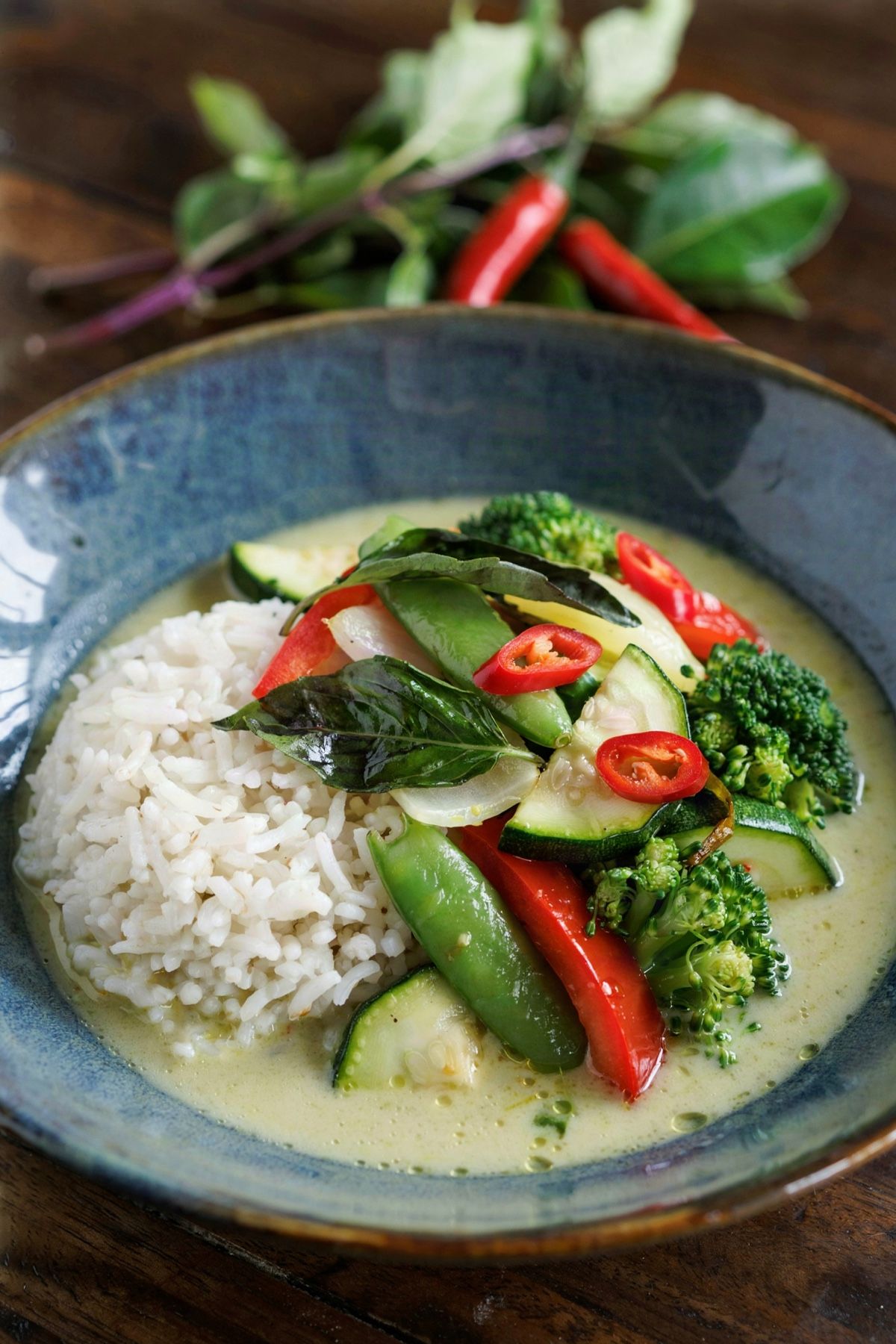
Why I Keep Coming Back to Thai Green Curry
When I think about the ultimate comfort food that doesn’t weigh me down, Thai green curry is always at the top of my list. What draws me to this vegan version is its balance of creamy coconut milk, punchy fresh vegetables, and the fiery brightness of green curry paste. That first fragrant steam when you lift the lid is unbeatable.
Cooking this curry is all about versatility. It’s a fantastic way to use up extra vegetables (and let’s be honest, every fridge is hiding a random zucchini or some broccoli). No matter what you throw in, it comes together into something greater than the sum of its parts.
Here's what works best with this curry:
- Jasmine rice for soaking up all that gorgeous juice
- A handful of fresh herbs, basil or cilantro at the end lifts everything
- Extra lime wedges if you like things really zesty
For anyone new to making Thai curries at home, don’t overthink it. If you keep coconut milk and curry paste in your pantry, a great meal is only minutes away, especially when you want maximum flavor with minimal effort. It’s a recipe I never get tired of, and I can pretty much guarantee you won’t either.
The story
The Sweet in Thai Green Curry Is a Color, Not a Taste
In Thai the dish is kaeng khiao wan, which translates as sweet green curry. The obvious reading is wrong. Wan here does not describe the flavor. It describes the green itself, a soft, milky, pale shade, the color fresh green chilies turn once they meet coconut milk. That is worth knowing before you cook, because it tells you what you are aiming for. Real green curry is not emerald. It is creamy and pale, and it is usually the hottest of the Thai curries, since its heat comes from fresh green bird’s eye chilies rather than dried red ones.
It is also younger than it tastes. Green curry does not appear in the landmark Thai cookbook published in 1908, and its first known appearance in print is in a cookbook from 1926. That places its rise in the reigns of Rama VI and Rama VII, which makes it a newer dish than many of the European recipes it now sits beside on restaurant menus.
For a vegetarian cook, the useful part of the story is that Thailand already has its own plant-based kitchen. Jay cooking comes from Chinese Buddhist practice and is most visible during the Vegetarian Festival each autumn, when food stalls hang yellow flags marked เจ to show that nothing on the menu came from an animal. A jay green curry drops the shrimp paste and the fish sauce and salts the pot with soy sauce, which is exactly what this recipe does. Strict jay cooking also leaves out garlic and onion, and this version keeps both, so it is jay in spirit rather than to the letter.
What to buy
Ingredient Notes
Green curry paste
This is where a vegan green curry quietly stops being vegan. Most Thai-made pastes contain shrimp paste, listed as kapi or shrimp, and Mae Ploy is one of them. Aroy-D and Thai Kitchen both make green pastes without it, but formulas change, so read the label every time. Strength varies too. Thai Kitchen is mild, and you will want 4 tablespoons of it rather than 3.
Coconut milk
Buy full-fat coconut milk in a can and do not shake it. The thick cream that settles at the top is what the paste fries in, and it only separates if the can has sat still. Light coconut milk makes a thin, watery curry, and the cartons sold for drinking are thinner still. The best cans list only coconut and water. Guar gum and other stabilizers stop the cream from splitting.
Thai basil
Thai basil, horapha, has purple stems, pointed leaves and a clear anise note that ties the curry together. It also holds its shape in hot liquid better than Italian basil does. Italian basil is a fair substitute, as long as it goes in at the very last moment. Do not confuse either with holy basil, krapao, which is peppery and belongs in stir-fries, not in green curry.
Makrut lime leaves
Optional, but they are the citrus perfume that makes the pot smell like a Thai kitchen rather than a coconut soup. The leaves grow as glossy double lobes. Tear them, or strip out the tough central rib, and fish them out before serving if you like. They freeze perfectly, so a bag from an Asian grocer lasts months. Grated lime zest is a distant stand-in. You will also see them sold as kaffir lime leaves.
Palm sugar
The small amount of sugar is not there to make the curry sweet. It rounds off the salt and chili so the heat reads as warm rather than harsh, and a green curry without any tastes thin and sharp. Palm sugar comes in hard discs that are easiest to shave off with a knife. Light brown sugar or coconut sugar work just as well at the same quantity.
Soy sauce
In a Thai kitchen the salt comes from fish sauce. Soy sauce is the jay replacement, and it does the job, but it is darker and saltier than you expect. Start with a single tablespoon, because the curry paste and the broth are both salted already, and add more only after tasting. Tamari keeps the dish gluten-free. A vegan fish sauce made from seaweed is closer still, if you have one.
The vegetables
Broccoli, bell pepper, zucchini and snap peas are a Western set, chosen because they are easy to find and cook quickly. In Thailand the classic additions are Thai eggplant, round and green-white and about the size of a golf ball, and tiny pea eggplants, both slightly bitter against the rich sauce. If you find Thai eggplant, quarter it and add it with the broccoli, since it needs the longest.
Spicy Vegan Thai Green Curry
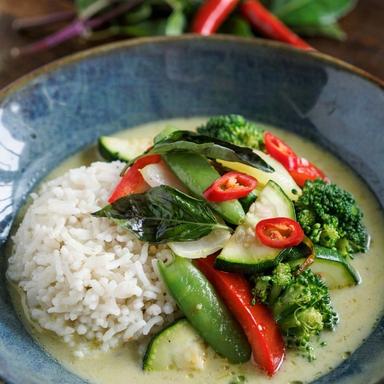
A fragrant, spicy Thai green curry made the traditional way: curry paste fried in cracked coconut cream, vegetables added in stages so they keep their bite, and Thai basil stirred in at the end.
Ingredients
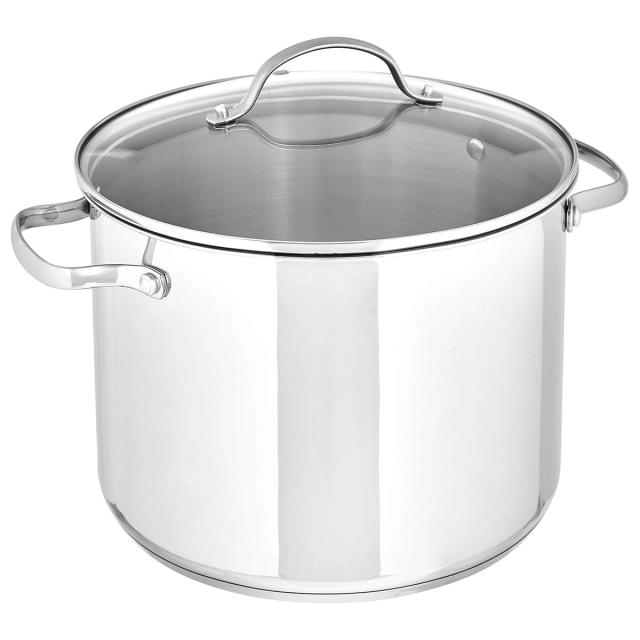
Equipment
As an Amazon Associate I earn from qualifying purchases, at no extra cost to you.
Instructions
- 1
Soften the aromatics
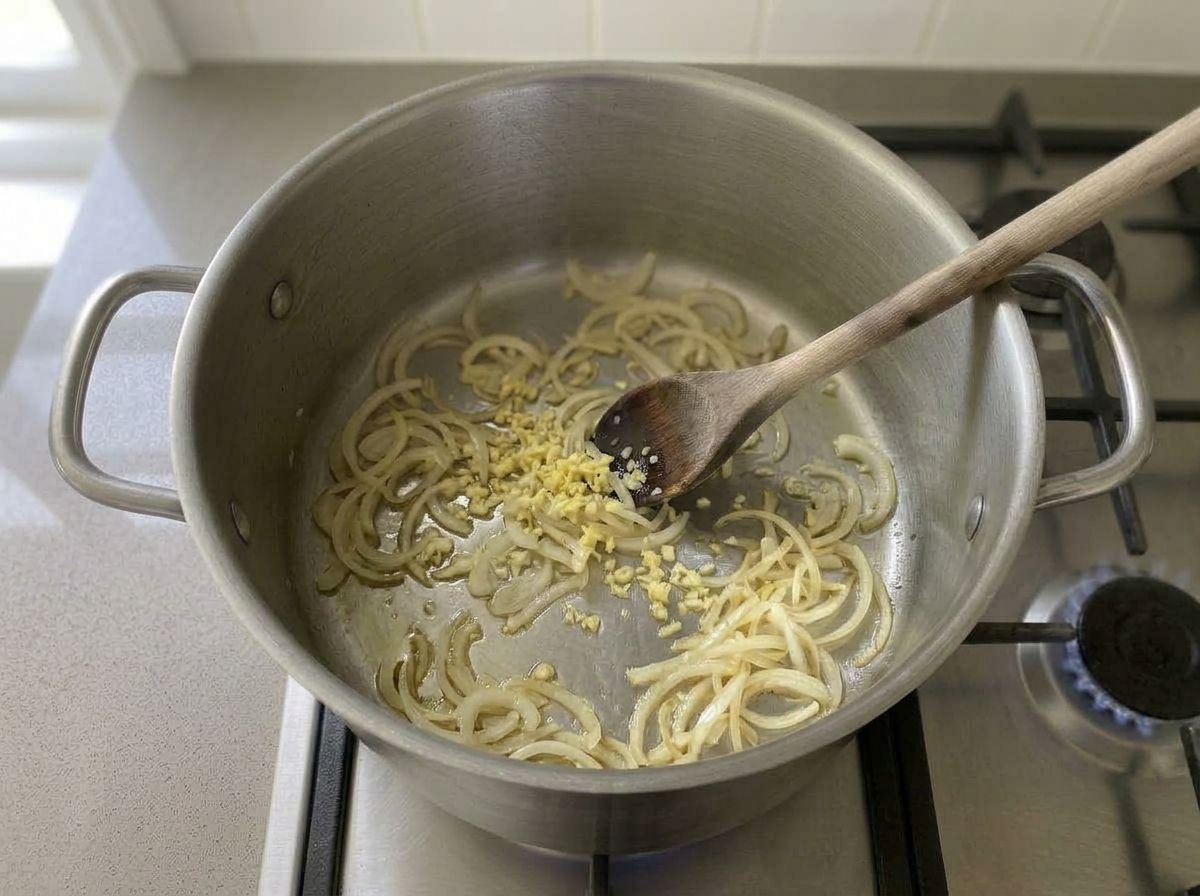
Heat the coconut oil in a large pot over medium heat. Add the onion and cook for about 4 minutes, until soft and translucent. Stir in the garlic and ginger and cook for 1 minute more, until fragrant.
- 2
Crack the coconut cream
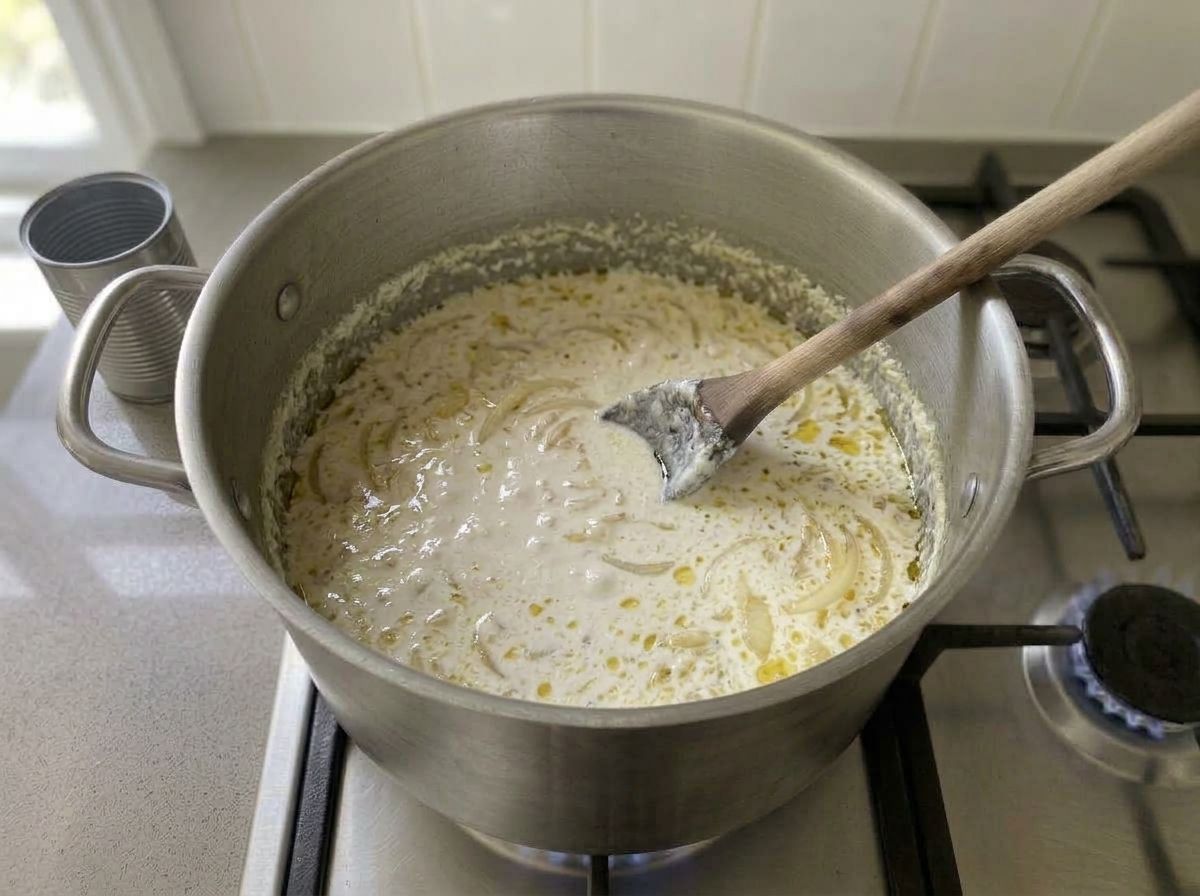
Open the can without shaking it and spoon the thick cream off the top, roughly half the can, into the pot. Let it bubble, stirring now and then, for 3 to 5 minutes, until it thickens and small beads of oil start to appear on the surface. Keep the thin milk left in the can for later.
- 3
Fry the curry paste
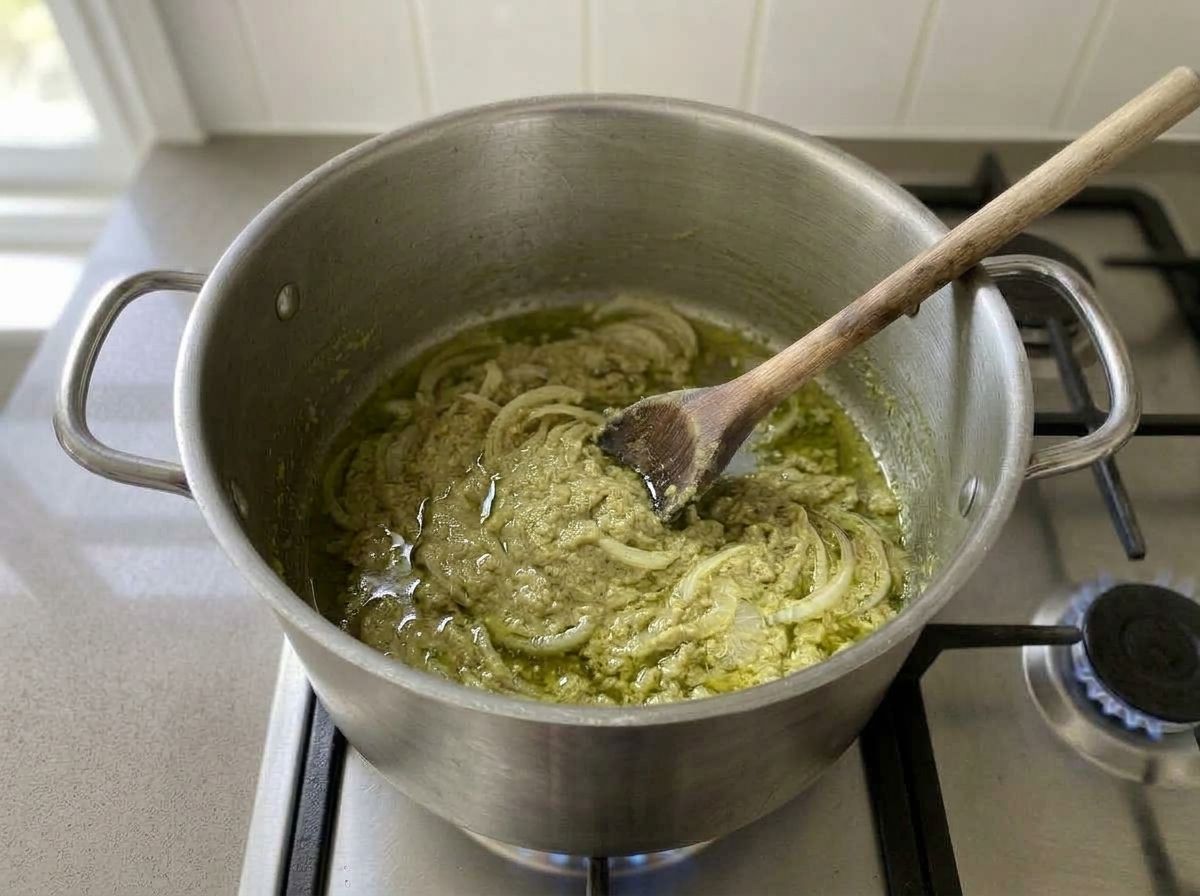
Add the curry paste and stir it into the cream, pressing out any lumps. Fry for about 2 minutes, stirring often, until it smells strongly of lemongrass and chili and the oil around the edges turns green. Lower the heat if it starts to catch.
- 4
Add the liquid and season
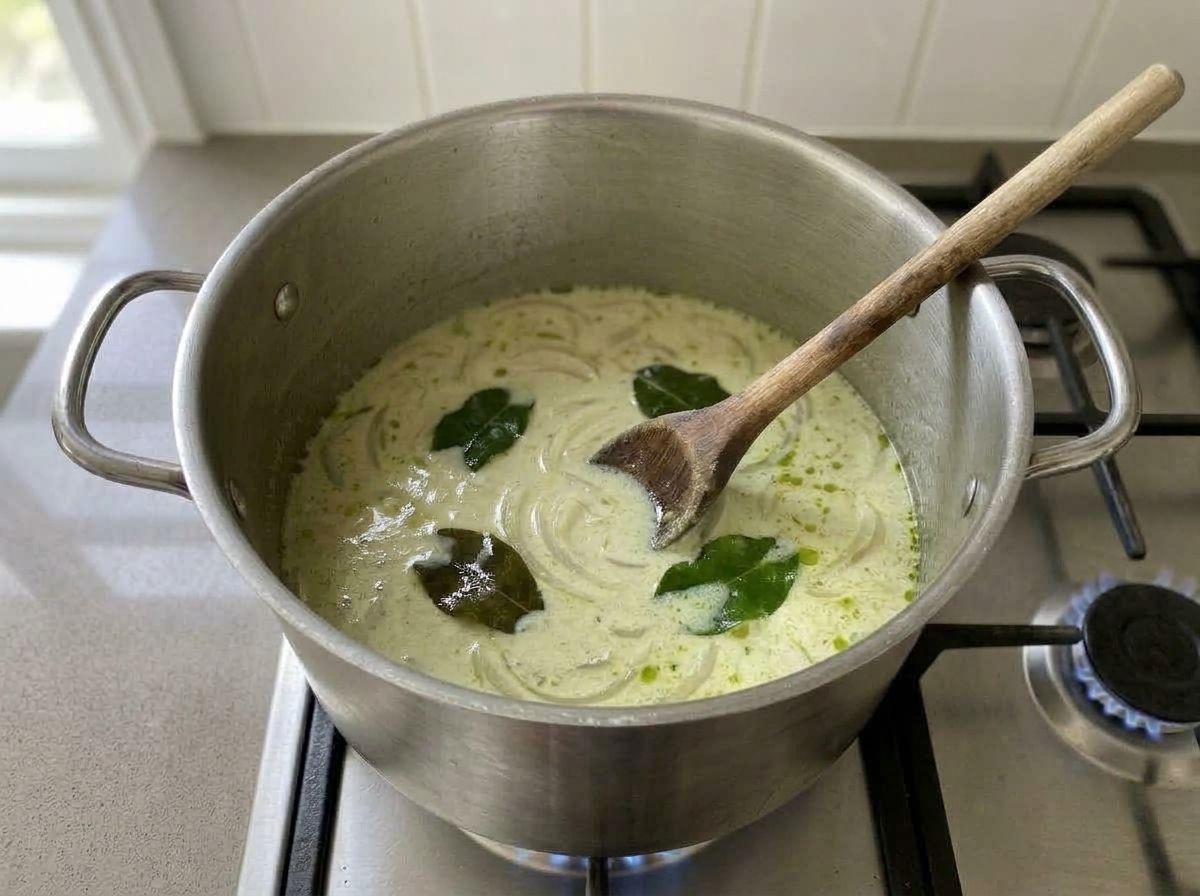
Pour in the rest of the coconut milk and the broth. Add the lime leaves if using, the sugar, and the soy sauce. Bring to a gentle simmer and cook for 3 minutes so the leaves can release their flavor.
- 5
Add the vegetables in stages
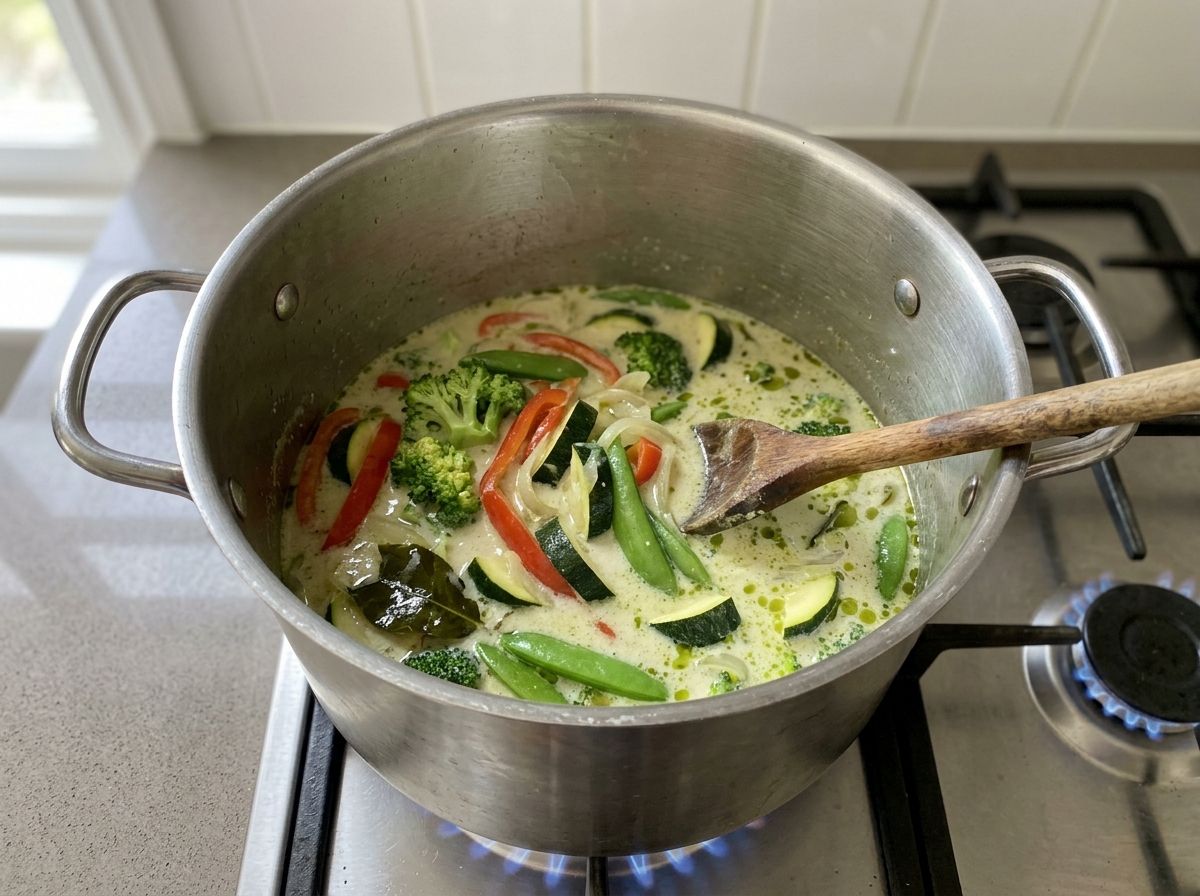
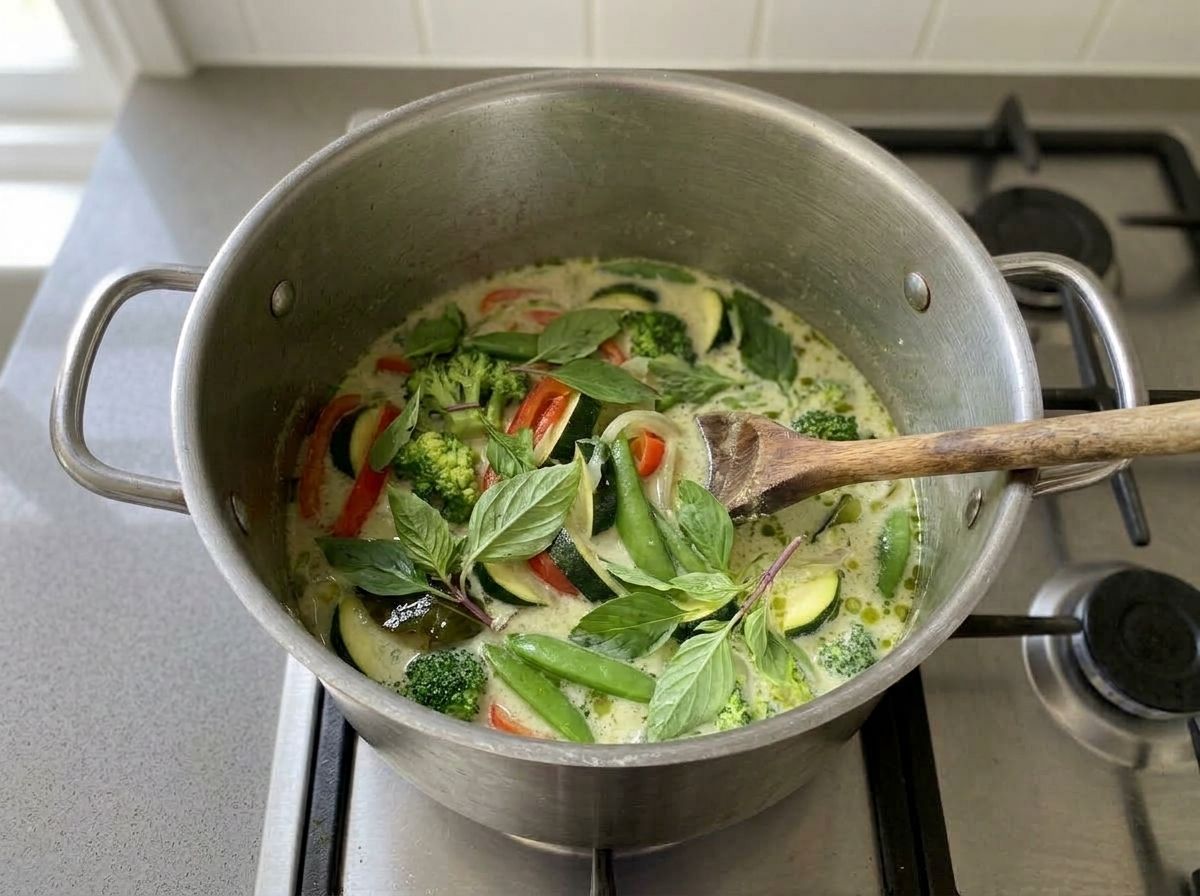
Add the broccoli and simmer for 2 minutes. Add the bell pepper and zucchini and simmer for 2 minutes more. Add the snap peas last and give them 1 minute. Every vegetable should still have some bite.
- 6
Taste, then add the basil
Take the pot off the heat and taste. It should be salty first, then gently sweet, with the heat building behind. Add more soy sauce or sugar a little at a time until it is, then the lime juice if you want it sharper. Stir in the basil, which wilts in seconds.
- 7
Serve over jasmine rice
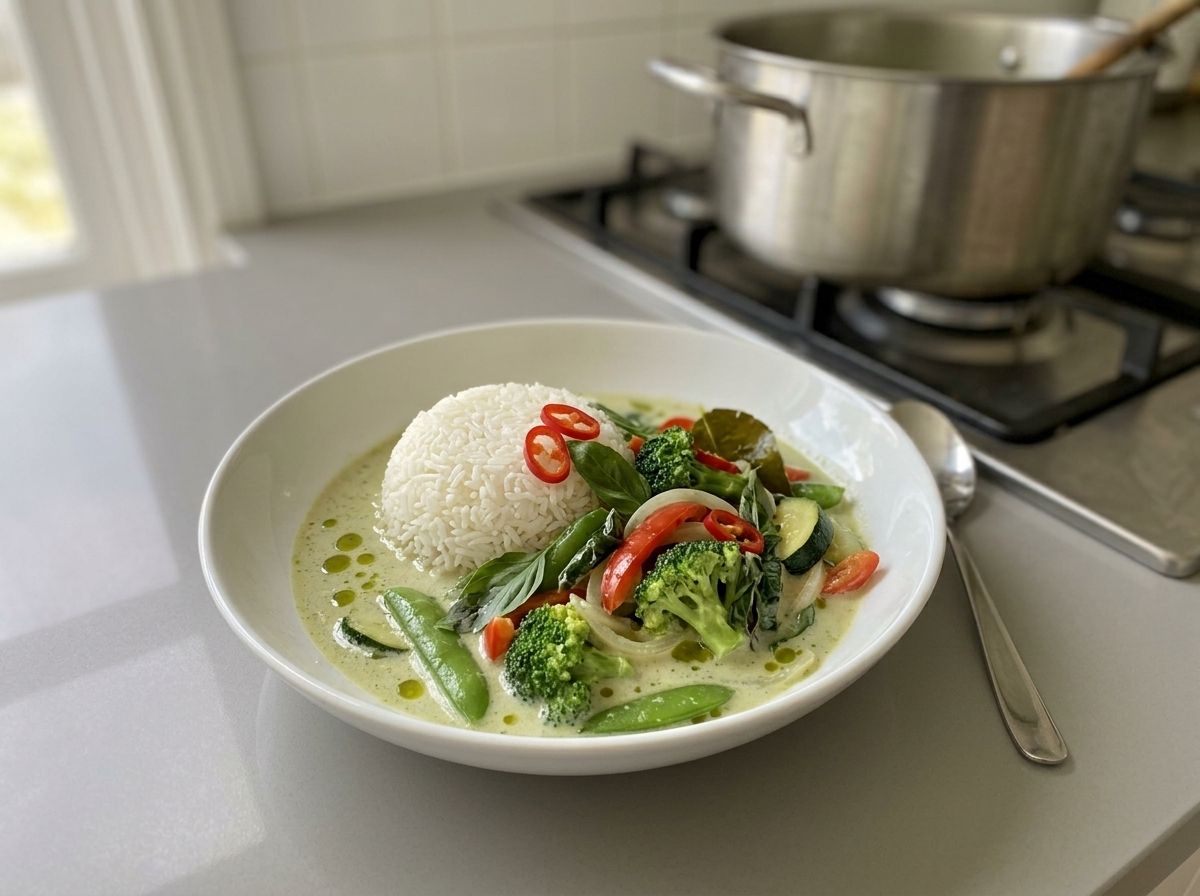
Ladle the curry over bowls of jasmine rice, making sure everyone gets some of the green oil from the surface. Top with sliced red chili if you like more heat.
Notes
Add cubed firm tofu or a drained can of chickpeas with the bell pepper for extra protein.
For a fully gluten-free curry, use tamari and check the curry paste label.
Store-bought pastes vary a lot in strength. Start with 3 tablespoons and add more next time if it was too mild.
Any quick-cooking vegetable works. Add the firmest ones first and the most tender ones last.
Nutrition Facts
4 bowls · 344 g per serving
- Calories
- 303 kcal
% Daily Value*
- Total Fat
- 26.1 g33%
- Saturated Fat
- 22.2 g111%
- Sodium
- 516 mg22%
- Total Carbohydrate
- 17.2 g6%
- Dietary Fiber
- 3.4 g12%
- Sugars
- 8.4 g—
- Protein
- 5.5 g11%
Recipe from veggierecipes.blog
When it goes wrong
Troubleshooting
The coconut cream never split and no oil appeared
The can almost certainly contains a stabilizer such as guar gum, which is there to stop exactly the separation you are waiting for. It is not fatal. After 5 minutes, add the paste anyway. The tablespoon of oil from the first step is enough to fry it. Next time look for a can that lists only coconut and water, or one with a Thai label.
It came out pale, more beige than green
That is the dish. Green curry is meant to be a soft, milky green, which is what the wan in its name describes. Store-bought paste is paler than fresh paste to begin with, and coconut milk lightens it further. The vivid emerald curries in some photos are usually colored with blended herbs or spinach. The green oil on the surface is the sign it went right.
It tastes flat, like spicy coconut milk
Usually the paste was not fried long enough, or the curry is underseasoned. Paste that goes straight into liquid never develops its aroma. Taste for salt and sugar first, adding soy and sugar a little at a time. If it still needs more curry flavor, fry an extra tablespoon of paste in a little oil in a small pan and stir it in. Raw paste added late just tastes raw.
It is thin and soupy, not thick like a sauce
That is also traditional. Kaeng means a soupy dish, and a Thai green curry is spooned over rice a little at a time rather than served as a thick gravy. If you prefer it thicker, cut the broth to half a cup. Do not thicken it with cornstarch, which turns the coconut milk gluey and dulls the flavor of the paste.
The vegetables went soft and army green
They went in together, or they sat in the pot too long. Broccoli needs about twice as long as snap peas, which is why the vegetables are added in stages. Take the pot off the heat while everything still has some bite, because the curry keeps cooking for a few minutes as it sits. If you are making it ahead, leave the vegetables out entirely until you reheat it.
The basil turned black and limp
It was cooked. Basil leaves wilt in seconds and darken if they simmer, and Italian basil darkens faster than Thai basil. Stir the leaves in off the heat, right before serving. If you are reheating leftovers, add a fresh handful then rather than relying on the basil that went in the first time.
Before you serve
Serving & Storage
In Thailand green curry is rarely a meal on its own. It arrives as one of several shared dishes, spooned over rice a little at a time, beside something mild to cool the heat, such as a plate of cucumber, a stir-fried green vegetable, or plain crispy tofu. The other classic way to eat it is over khanom jeen, soft fermented rice noodles, which turns it into a one-bowl lunch.
For a weeknight, jasmine rice is the right partner. Its faint floral note matches the lime leaves, and its softness soaks up the thin curry without turning to paste. Thin rice vermicelli is the easiest stand-in for khanom jeen. Flaky roti works too, and Thai-Muslim shops serve green curry that way. Brown rice is filling but its nuttiness competes with the basil.
Making it ahead
Cook the curry through step 4, the paste, coconut milk and seasoning, and stop. That base keeps in the fridge for 3 days and freezes for up to 3 months. When you want to eat, bring it back to a simmer and add the vegetables in stages as if it were the first time. That takes about 6 minutes and the vegetables stay crisp. Once curry paste is opened, freeze the rest in tablespoon portions.
Storing leftovers
Finished curry keeps for up to 3 days in an airtight container. Reheat it gently on the stove until it is just steaming, rather than boiling it hard, and stir in a fresh handful of basil at the end. Do not freeze it with the vegetables in. Zucchini and snap peas come out of the freezer watery and limp, and no amount of reheating brings them back.
Still wondering
Frequently Asked Questions
How spicy is vegan Thai green curry?
Green curry is usually the hottest of the Thai curries, but at home the heat is set almost entirely by the paste. With 3 tablespoons of a mild supermarket paste it lands around medium. For a milder curry, use 2 tablespoons and serve extra rice alongside. For more heat, add one or two sliced green bird’s eye chilies to the pot with the paste.
Is the green curry at a Thai restaurant vegan?
Usually not, even when it is listed with tofu and vegetables. Restaurant kitchens tend to make one batch of paste with shrimp paste in it and season with fish sauce. Ask whether the paste itself contains shrimp, not just whether there is meat in the dish. In Thailand, asking for jay food gets you a curry made without any animal products.
More Cozy Vegan Curries & Soups
Made this?