
Veggie Orzo Pasta Recipe
Published · Updated
Orzo simmered in vegetable broth with sweet pepper, zucchini and spinach, then finished off the heat with lemon zest and juice. One pan, and nothing goes down the drain.
Jump To Recipe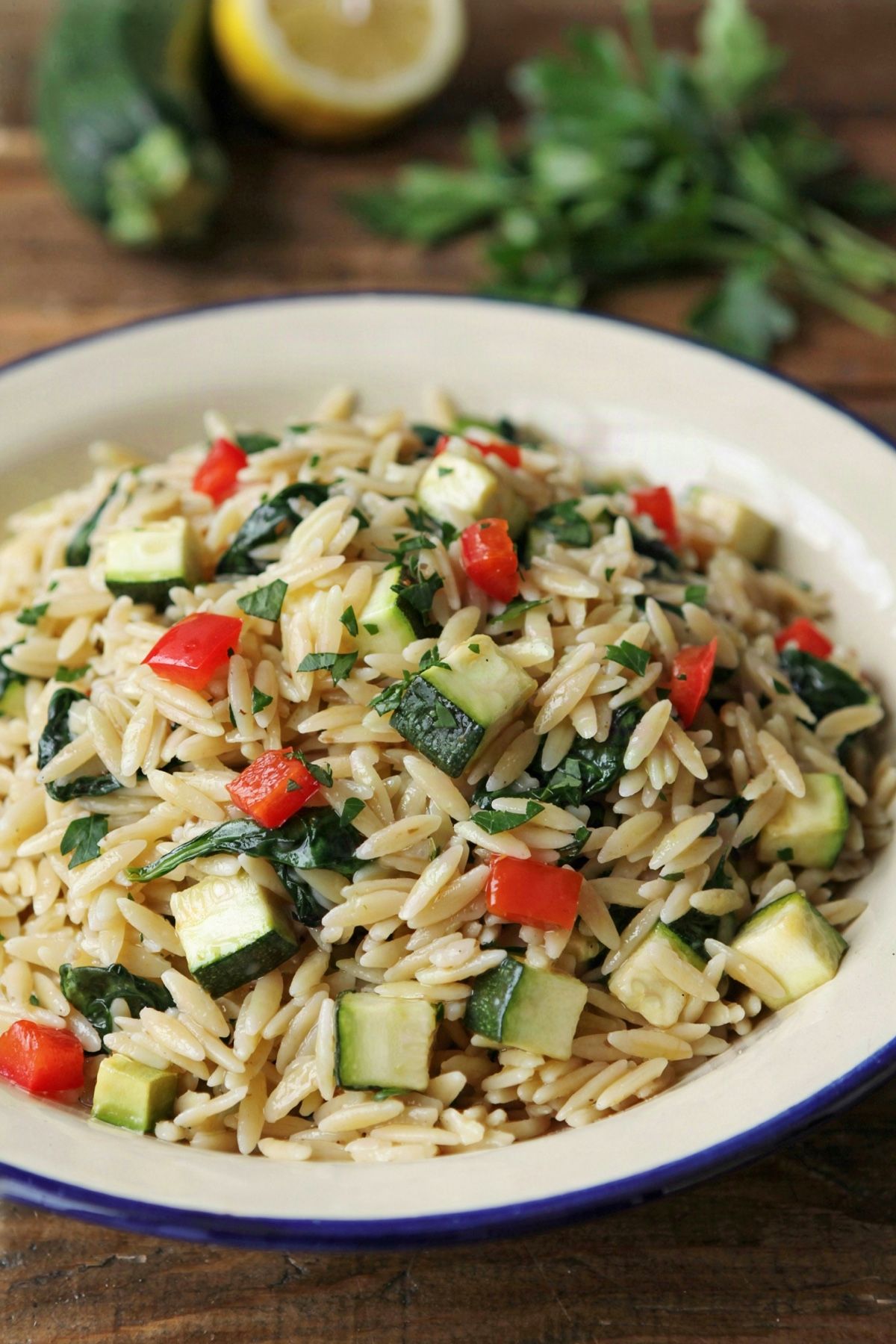
Why I Love This Vegetable Orzo Pasta
There’s something incredibly satisfying about a bowl of orzo that’s loaded with fresh veggies and just the right amount of bright flavor. Whenever I’m looking for a meal that’s light but still leaves me fueled, this vegetable orzo is at the top of my list.
It’s a dish that really lets you get creative. Don’t have zucchini on hand? Swap it for eggplant or mushrooms. Feel like dialing up the flavor? Add some sun-dried tomatoes, or go for a creamy finish with crumbled feta.
When I want a meal that hits all the right notes, quick to prepare, easy to customize, and solid nutrition, this is what comes together on my stovetop.
A few ways I like to enjoy it:
- as a light main course with a crisp green salad
- at room temperature the next day, loosened with a little olive oil and lemon
- as a side for a grill night, goes great next to veggie skewers
If you love meals that are as bright as they are satisfying, this one is definitely for you.
The story
Orzo Is Named After a Grain It Does Not Contain
Orzo is Italian for barley. The word comes straight from the Latin hordeum, and it is the ordinary word an Italian would use at a grain merchant. There is no barley in orzo. It is durum wheat semolina, the same flour as spaghetti, pressed through a die that makes something the size of a fat grain of rice.
Almost every language made the same mistake. Greek cooks call it kritharaki, "little barley". Turkish calls it arpa şehriye, "barley noodle". Italians who do not say orzo say risoni, "big rice", or puntalette. Spanish went with piñones, pine nuts, on the strength of the shape alone. Four languages reached for barley, rice or a nut, and not one named it after the wheat it is made of. The confusion runs both ways: an Italian orzotto is a risotto of real pearl barley, with no pasta in it at all.
The names matter because they describe how orzo behaves at the stove. Everyone who looked at it saw a grain, and the cuisines that named it cook it like one. Greek giouvetsi bakes it in tomato broth until it swells. Avgolemono simmers it in soup. Manestra is orzo as a soup in its own right. Turkish and Greek pilafs toast it in fat before any liquid goes near it. None of those methods involves a big pot of boiling water and a colander. In every one, the orzo cooks in the liquid it will be eaten with.
Boiling and draining is the packet method, and it is why so many vegetable orzo dishes taste of almost nothing. Orzo is small, so a portion carries an enormous amount of surface for its weight, and all of it gets rinsed in plain water and poured away along with the starch that should have made a sauce. Cook it in vegetable broth instead and the seasoning ends up inside every piece. That matters more on a vegetarian plate than anywhere else, because no meat juice or bone stock is arriving later to make up the difference. The broth is the entire seasoning strategy, which is why nothing here goes down the drain.
What to buy
Ingredient Notes
Orzo
Plain durum wheat semolina orzo is what this is written for. Brands vary more than you would expect, from something close to a grain of rice down to something nearer a wheat berry, so trust the packet time over the clock and start tasting a minute early. There is no drain step here to rescue you. Whole wheat orzo works but drinks more: add another 1/2 cup / 120 ml of broth and two or three minutes.
Vegetable broth
Not a background ingredient but the seasoning for the whole dish, since all four cups end up inside the orzo. Water gives you plain pasta with vegetables sitting next to it. Salt levels vary wildly between brands, and a cube-based broth carries enough on its own that the extra teaspoon tips the pan over, which is why that teaspoon is conditional. Warm the broth first. Cold liquid drops the pan temperature and leaves the orzo sitting in tepid water, which is where gluey texture comes from.
Zucchini
It goes in for the last five minutes, not at the start with the onion. Zucchini is around 95 percent water, and twelve minutes under a lid turns it to pulp while flooding a pan whose liquid you have carefully measured. Dice it at about 1/2 inch / 1 cm so it keeps some bite. Eggplant and mushrooms need the opposite treatment: brown them before the orzo goes in, because neither gives up any flavor by steaming.
Baby spinach
Four cups looks absurd and cooks down to a few tablespoons, which is why the earlier half-quantity version of this recipe left barely a trace of green. It goes in off the heat. Simmered under a lid, spinach turns army green and leaks water at exactly the point you want the sauce thickening. Frozen spinach is fine squeezed properly dry, and a disaster otherwise.
Lemon
Buy a whole lemon rather than reaching for the bottle, because the zest does more work here than the juice. The aromatic oils sit in the yellow skin, while juice alone brings only sourness. Both go in after the pan leaves the heat. Held at a simmer, lemon juice loses its perfume within a minute and turns flat, which is the usual way a bright lemon dish ends up tasting of nothing. The last tablespoon of olive oil goes in at the same moment, for the same reason: oil that has cooked for twenty minutes no longer tastes of olives.
Fine sea salt
The teaspoon assumes an unsalted or low-sodium broth. In an absorption dish every grain you add stays in the pan, where boiled pasta lets you pour most of the seasoning down the sink. That forgiveness is gone here, and an over-salted pan of orzo cannot be fixed afterwards. With a standard supermarket broth, leave the salt out and season at the very end.
Vegetable Orzo Pasta
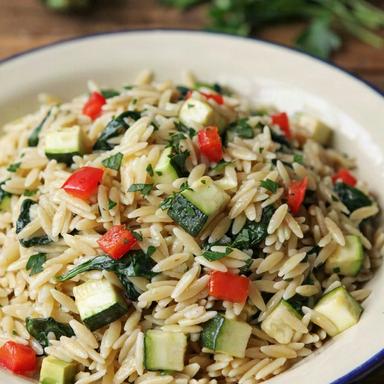
Orzo toasted with onion and pepper, then simmered in vegetable broth until it drinks the lot. Zucchini goes in late, spinach and lemon go in off the heat, all in one skillet.
Ingredients
Equipment
As an Amazon Associate I earn from qualifying purchases, at no extra cost to you.
Instructions
- 1
Soften the onion and pepper
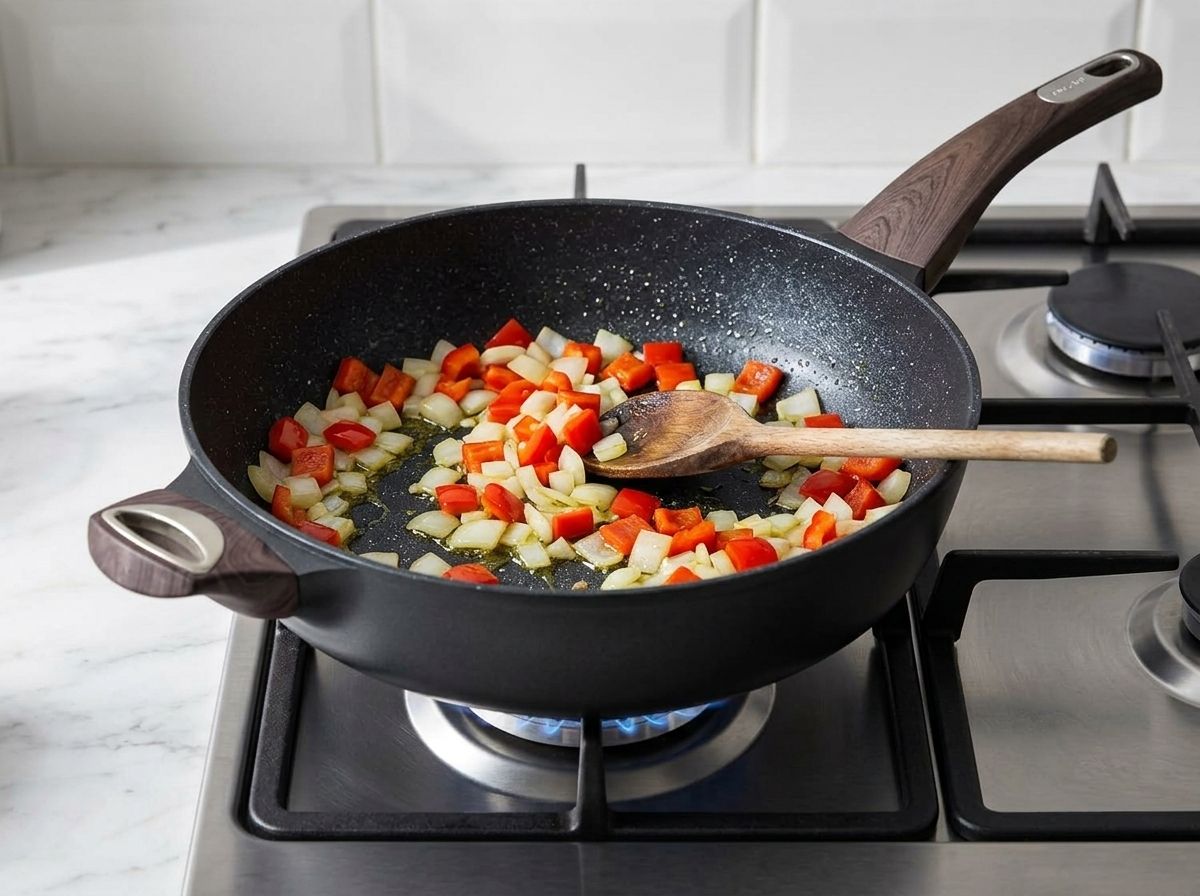
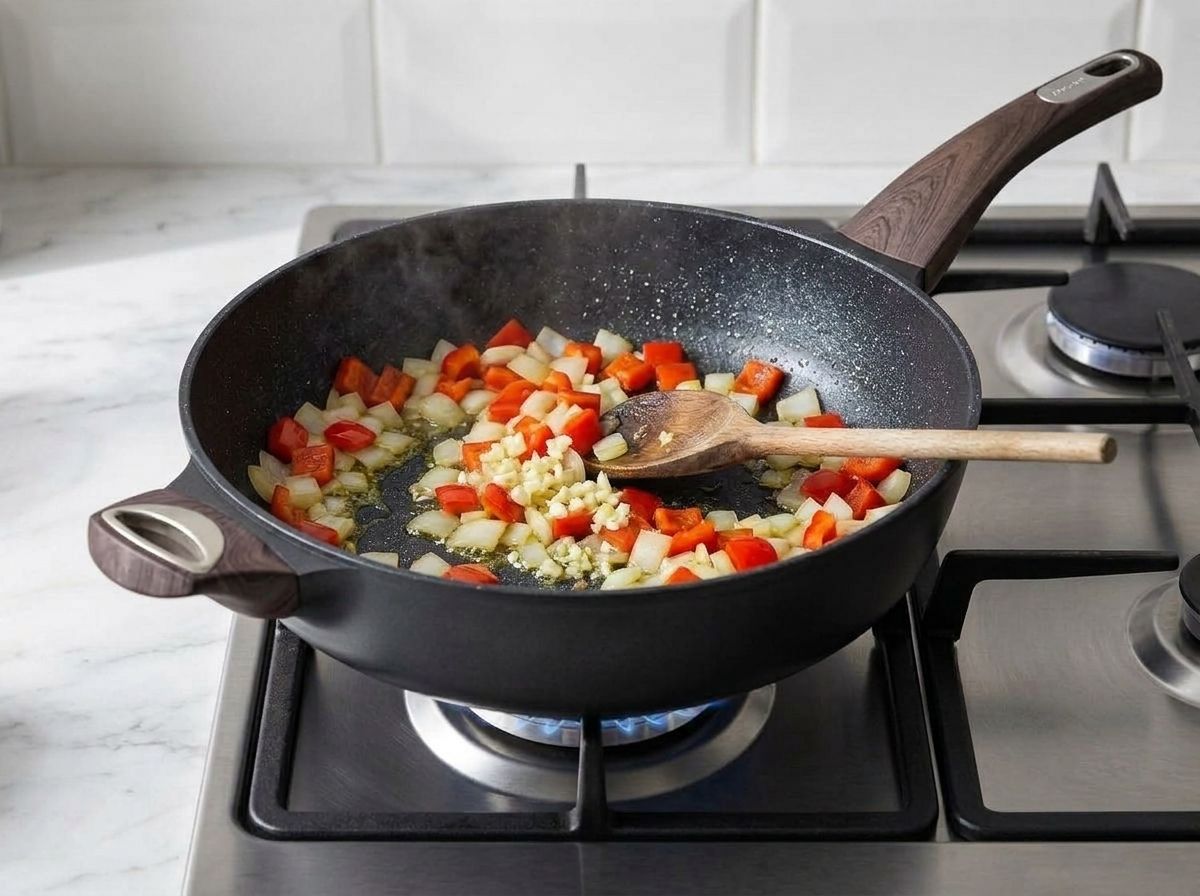
Heat 2 tablespoons of the olive oil in a large skillet over medium heat. Add the diced onion and bell pepper and cook for 5 to 6 minutes, stirring now and then, until the onion is translucent and the pepper has lost its raw crunch.
- 2
Bloom the garlic
Stir in the minced garlic and cook for about 30 seconds, until it smells sweet rather than sharp. Garlic added later, once there is liquid in the pan, only steams and keeps its raw edge.
- 3
Toast the orzo
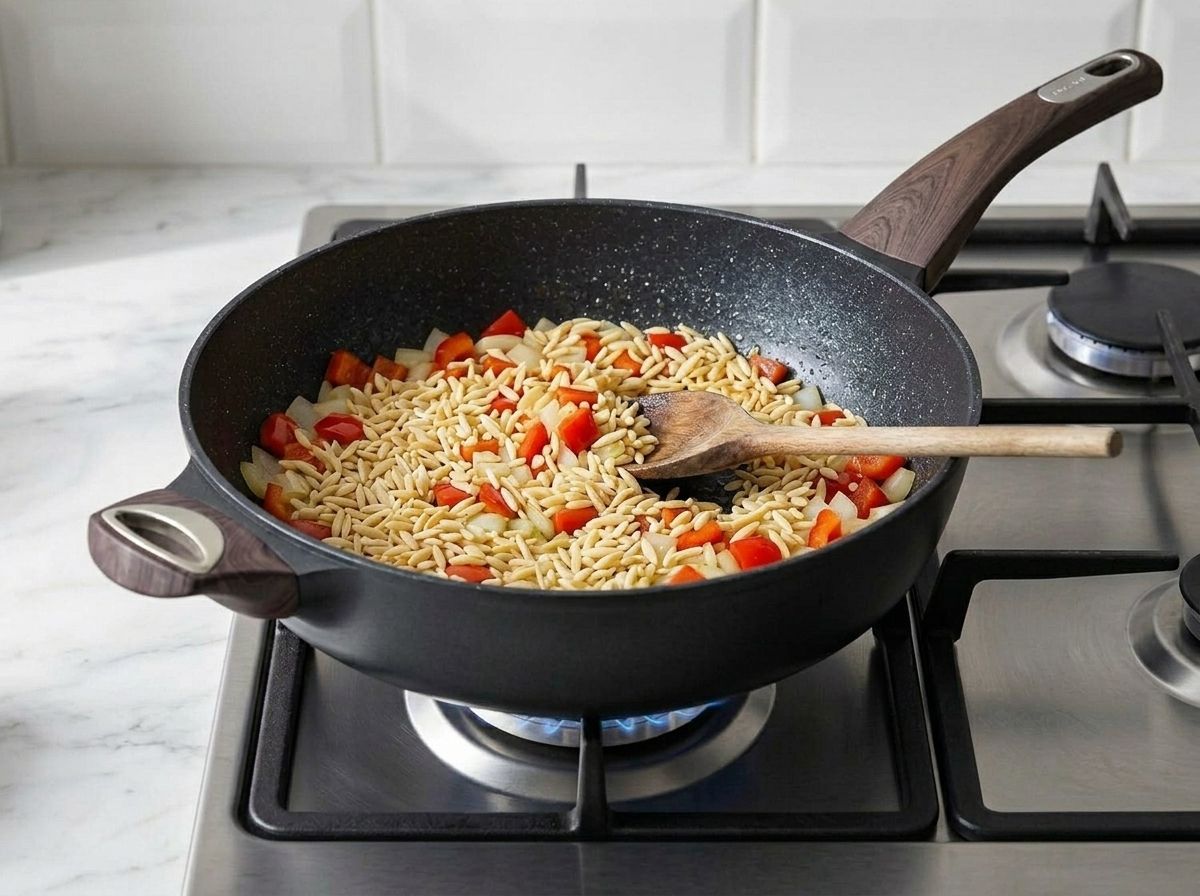
Tip in the dry orzo and stir it through the vegetables over medium heat for 2 to 3 minutes. It will not color as evenly as orzo toasted in a dry pan, and it does not need to. You are after the nutty smell, which is the point at which the surface has set and the grains will stay separate instead of gluing themselves together.
- 4
Simmer in the broth
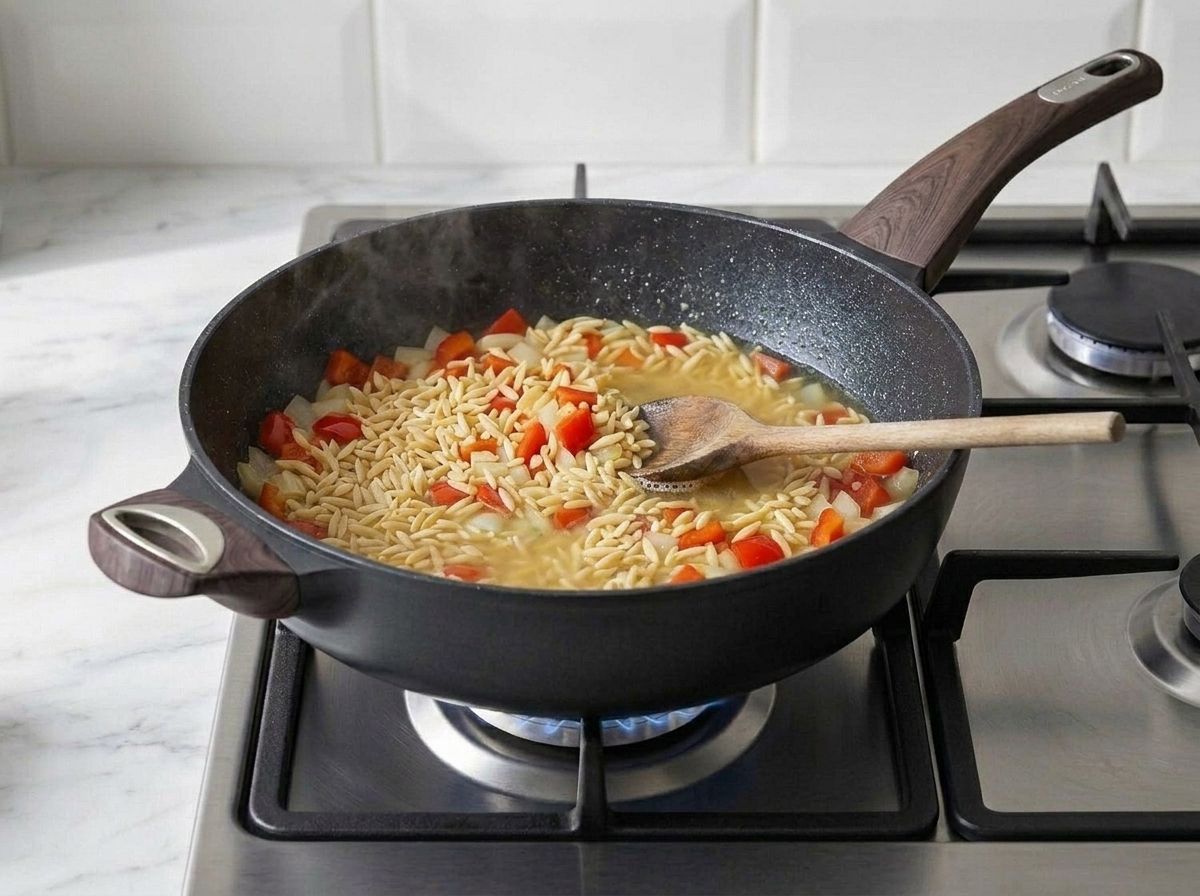
Pour in the hot vegetable broth, and add the salt only if the broth is unsalted. Bring it to a simmer, cover, and cook for 8 minutes, stirring twice to lift any orzo off the base of the pan. Orzo sinks, and what sinks sticks.
- 5
Add the zucchini
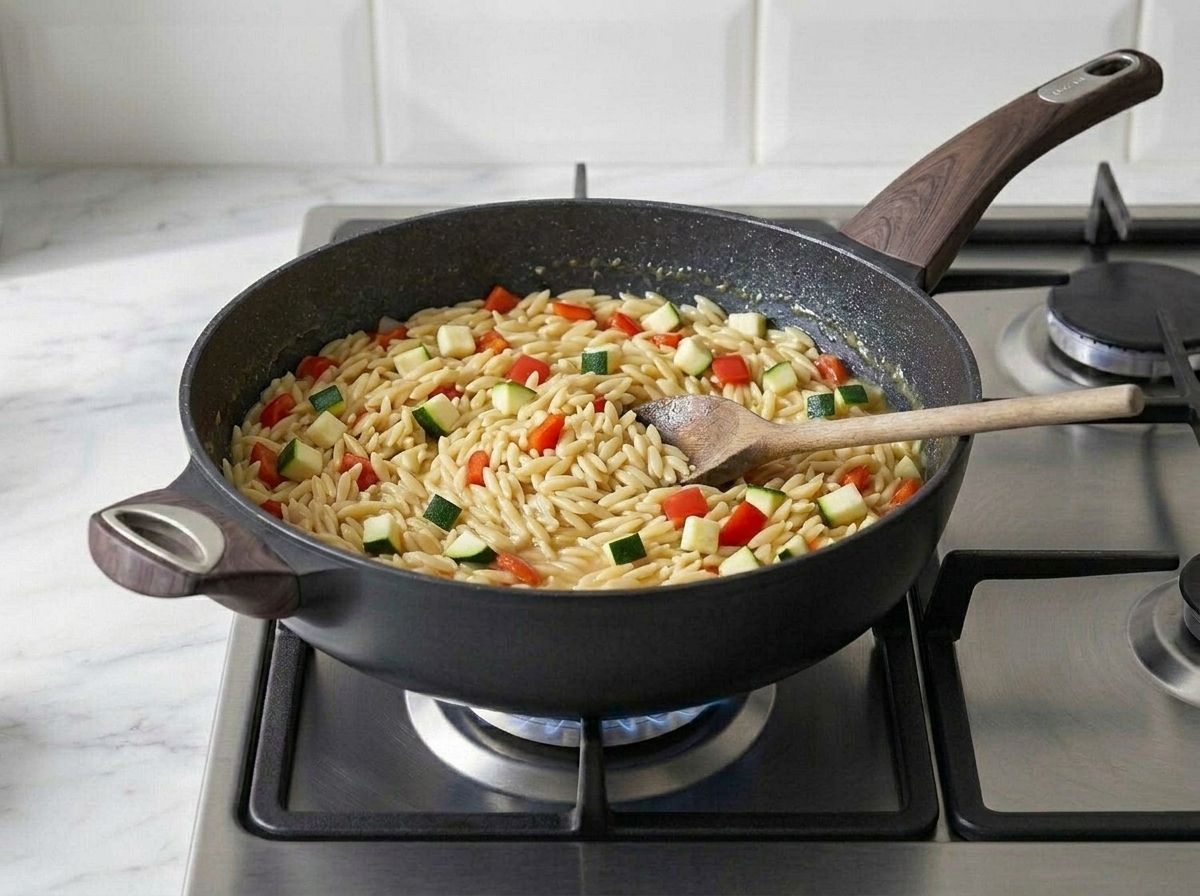
Uncover, stir in the diced zucchini, and cook for 4 to 5 minutes more, stirring often, until the orzo is tender with a little bite left and most of the broth has gone. If the orzo is still chalky in the middle and the pan already looks dry, add hot water a splash at a time and turn the heat down.
- 6
Finish it off the heat
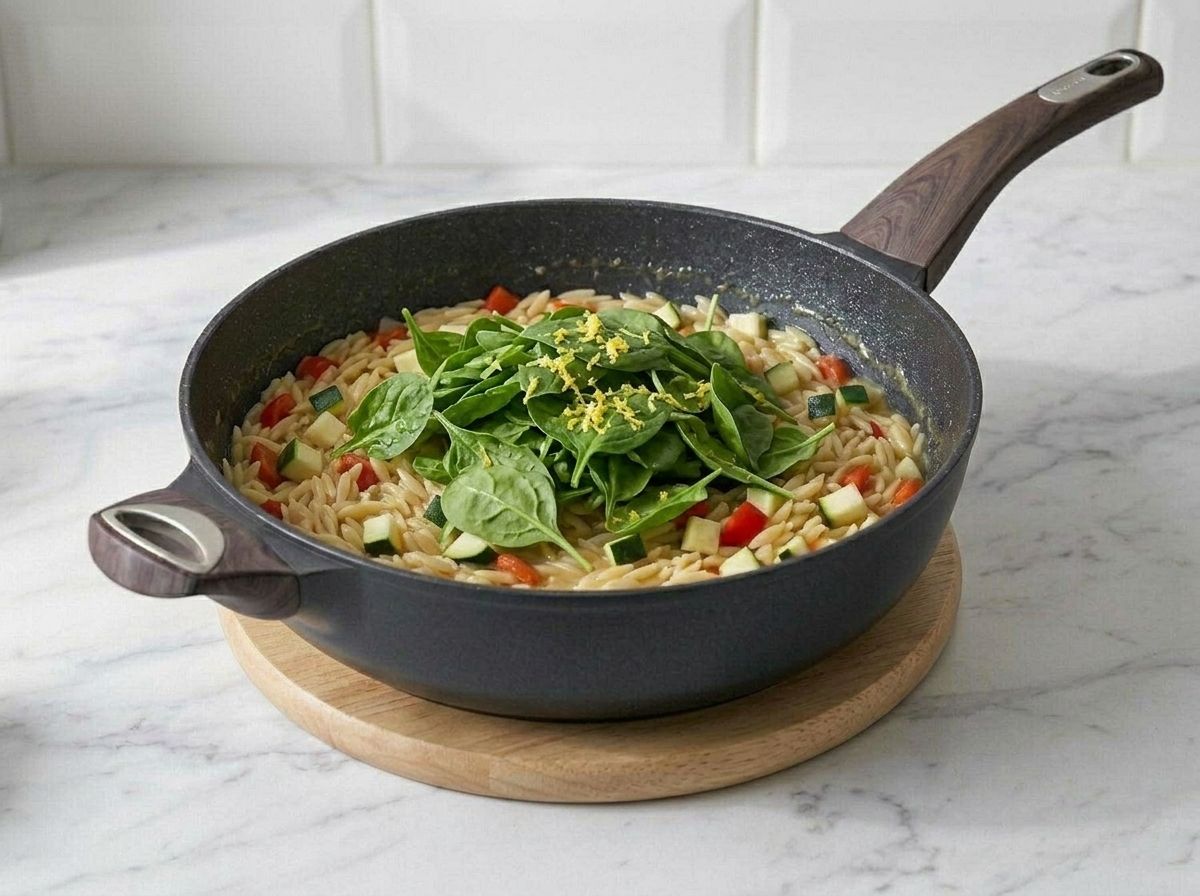
Take the pan off the burner. Stir in the spinach, the lemon zest and juice, the black pepper and the last tablespoon of olive oil. Cover and leave it for 2 minutes. The residual heat is enough to wilt the spinach without turning it gray, and the lemon stays bright because it never boils.
- 7
Loosen it, then serve
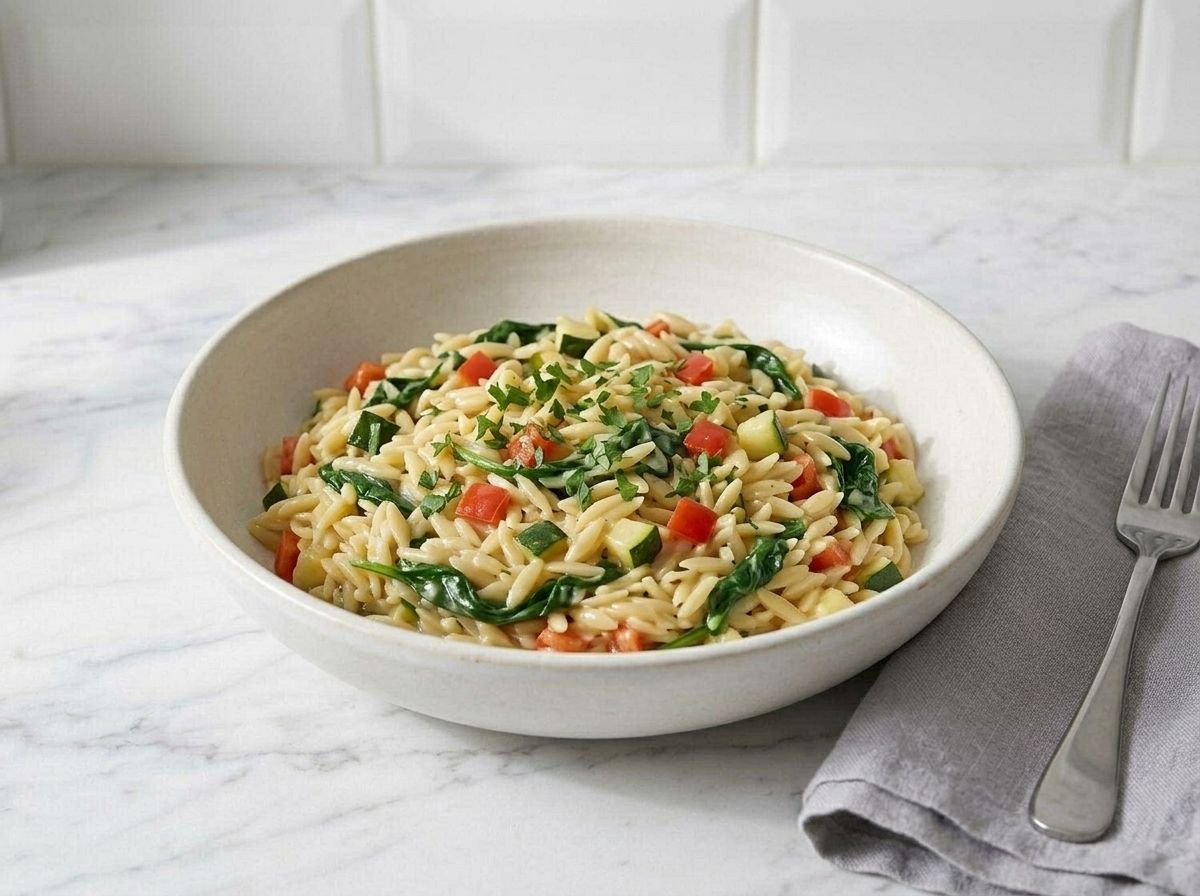
Give it a final stir and taste it, adding salt if your broth was unsalted. Scatter with parsley if you are using it and serve warm. Orzo keeps drinking as it stands, so if it tightens up before it reaches the table, stir in a spoonful of hot water.
Notes
For a protein boost, stir in a drained 14 oz / 400 g can of chickpeas or white beans along with the zucchini, and add another 1/2 cup / 120 ml of broth. They soak some up.
Toasting the orzo a shade darker gives a nuttier, more pilaf-like result. It will need an extra minute or two to turn tender.
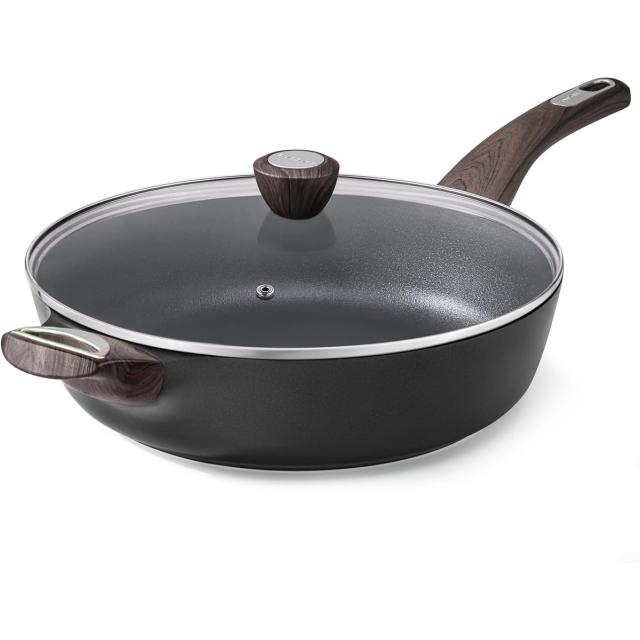
A wide, straight-sided skillet beats a deep one here. The orzo wants a shallow layer so it cooks evenly rather than steaming the pieces at the bottom.
Nutrition Facts
4 servings · 464 g per serving
- Calories
- 422 kcal
% Daily Value*
- Total Fat
- 12.1 g16%
- Saturated Fat
- 1.8 g9%
- Sodium
- 1558 mg68%
- Total Carbohydrate
- 67.2 g24%
- Dietary Fiber
- 5 g18%
- Sugars
- 7.9 g—
- Protein
- 12.1 g24%
Recipe from veggierecipes.blog
When it goes wrong
Troubleshooting
The orzo came out as one solid lump
Either it was boiled, drained and left to sit, which is what the old version of this recipe did and what most packet instructions still say, or it was not stirred during the covered simmer. Orzo is dense enough to sink, and what sinks welds itself to the pan. Stir twice under the lid. If it has already clumped, a splash of hot water and a firm stir over low heat breaks it up.
It is soupy, more like a risotto than a pilaf
Either the broth was measured generously or the vegetables gave up more water than usual, and a large zucchini easily holds a full cup. Put it back on medium heat uncovered and stir for two or three minutes. Do not leave the lid on hoping it absorbs, because orzo keeps drinking after the heat goes off and you will overshoot into stodge.
It went stiff and dry between the pan and the table
Expected, not a mistake. Orzo carries on absorbing for several minutes after cooking stops, so a pan that looks right on the stove is noticeably tighter by the time everyone sits down. Cook it looser than you want to eat it and hold back 1/4 cup / 60 ml of broth to stir through at the last second. The same trick rescues leftovers.
It tastes like plain pasta with vegetables in it
Almost always water instead of broth, or salt added only at the end. The liquid ends up inside the orzo, so seasoning the liquid is the only way to season the pasta itself. Salt scattered over the finished pan sits on the outside and reads as salty rather than seasoned. The other culprit is skipping the toasting, which is where the nutty background comes from.
The lemon tastes bitter rather than bright
Either the juice went in while the pan was still on the heat, or the zest went too deep. Heat drives off the aromatics and leaves the sourness behind, so lemon has to be a finishing move. Zest with a microplane and stop the moment you see white. The pith is where the bitterness lives, and it does not cook out.
The orzo is still chalky in the middle but the pan is dry
The heat was too high or the lid was not sealing, so the broth boiled off before the starch inside the orzo could hydrate. Add hot water two tablespoons at a time, drop the heat to a bare simmer, and give it another two or three minutes. Hot water, not cold, which stalls the pan and overcooks the outside while you wait for the middle.
Before you serve
Serving & Storage
In Greece, kritharaki mostly arrives as giouvetsi, still bubbling in the clay dish it baked in, and the finishing is left to whoever is eating it. Grated mizithra or kefalotyri goes over at the last moment and is never stirred in during cooking. The instinct is worth borrowing even though this pan version is nothing like a giouvetsi: put lemon wedges, parsley, the pepper grinder and a bowl of something salty and grated on the table, and let people finish their own bowl. Keeping it vegan, toasted pine nuts or a spoonful of capers do the same job.
It feeds four as a main or six alongside something else. Whatever goes with it should bring acid or crunch, because the dish is soft the whole way through: a tomato and red onion salad, charred broccoli, olives and radishes. What does not work is a second soft, starchy thing beside it, or a creamy dressing. Garlic bread is the obvious trap.
Making it ahead
You can dice the vegetables, mince the garlic and measure the broth the day before, which is most of the work. What does not survive is the orzo. Cook it in the morning and reheat it for guests and you get a dense block, because it spends the intervening hours absorbing whatever liquid is left. If you have no choice, stop two minutes early, spread it on a tray so the carryover heat stops, and finish it in the pan with hot broth just before serving.
Storing leftovers
Airtight in the fridge for three days. It sets solid, which is the starch behaving normally rather than a sign anything went wrong. Reheat in a pan over low heat with about 1/4 cup / 60 ml of water or broth per portion, stirring until it loosens. A microwave dries the edges before the middle is warm. Grate fresh lemon zest over it afterwards, because the first lot fades overnight and that is usually what makes day-old orzo taste tired. Left out for twenty minutes and loosened with olive oil and lemon it works cold as a lunch, though straight from the fridge the oil has congealed and it is heavy going. Freezing is the one thing to avoid: the orzo survives it, but the zucchini collapses on thawing and floods the container.
Still wondering
Frequently Asked Questions
Is this orzo dish vegan?
Yes, as written. The broth, the oil and the vegetables are all plant-based, and dried orzo is normally just durum wheat and water. Two things to check: the packet, since a few brands sell an egg-enriched orzo, and your vegetable broth, which is occasionally made with butter. The traditional Greek finish of grated mizithra or kefalotyri is the only dairy anywhere near this dish, and it is added at the table.
Can I make this gluten-free?
Not by swapping the orzo one for one, which is the usual advice and does not survive this method. Gluten-free orzo is corn and rice, and in a covered pan with four cups of broth it sheds far more starch than wheat orzo and sets into paste. Cook it separately: boil it in salted water, drain, rinse under cold water to strip the loose starch, and meanwhile reduce the broth in the skillet down to about 1 cup / 240 ml with the vegetables before stirring the orzo through. You lose the seasoned-through quality, so be heavier with the lemon and salt at the end.
Can I double the recipe?
Not in the same pan. Doubling doubles the depth of orzo, so the bottom layer steams in the liquid while the top sits above it, and half overcooks while half stays chalky. Use a wide Dutch oven or a 12 inch pan and add three or four minutes to the covered simmer, or cook two batches. Halving is easier: halve everything but keep the broth at slightly over half, about 2 1/4 cups / 530 ml, because a smaller pan loses proportionally more to evaporation.
More Bright & Veggie-Packed Pasta Dishes
Made this?