
Vegetable Soup Recipe
Published · Updated
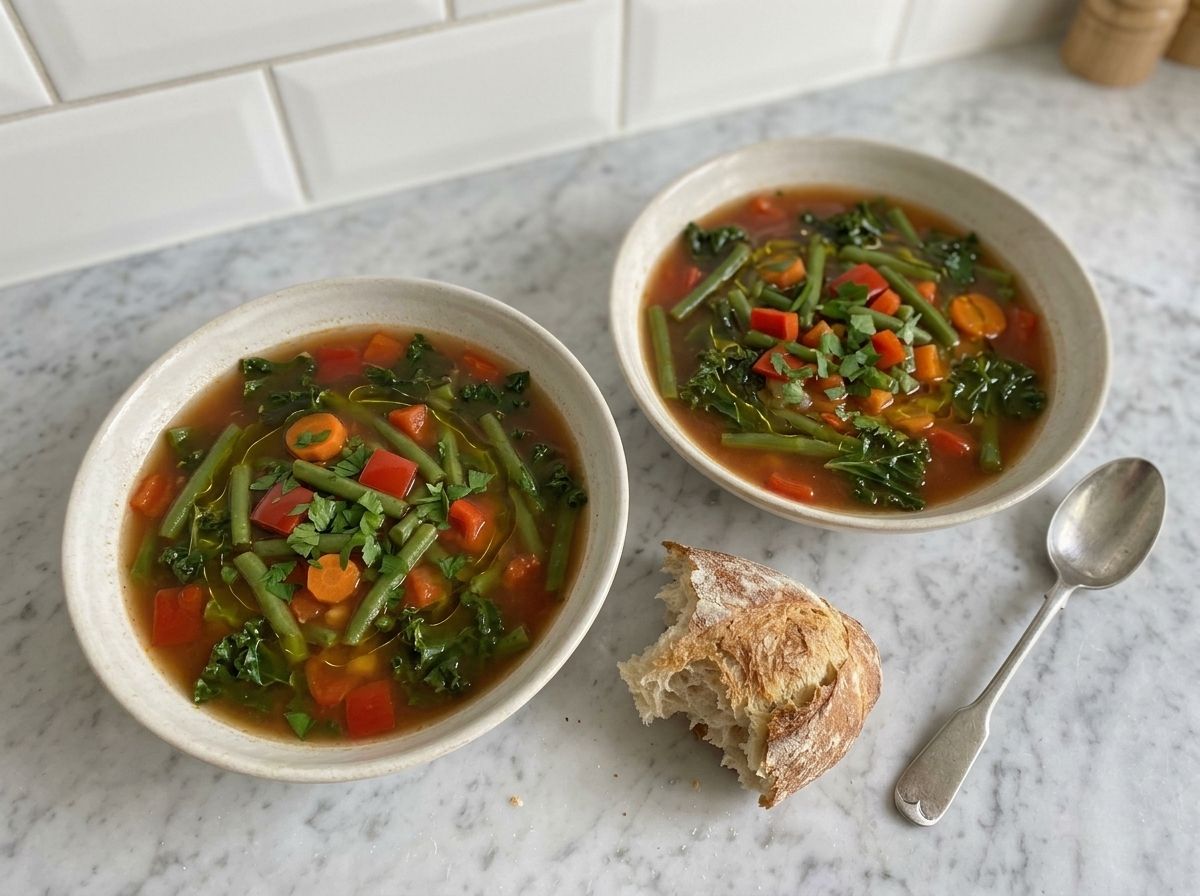
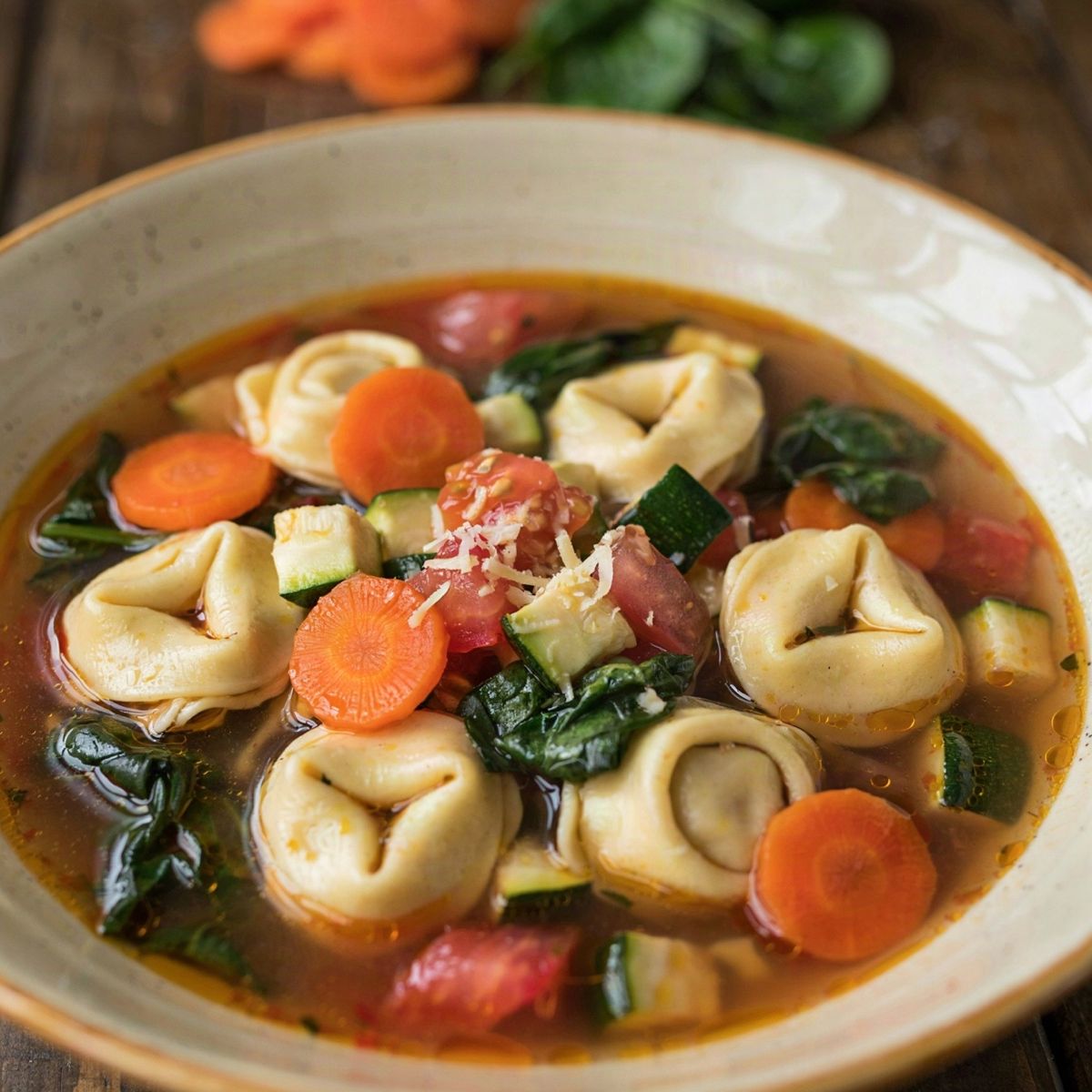
A brothy vegetable soup that tastes of more than warm water: browned tomato paste underneath, green beans still green, and lemon at the end. It is light on purpose, so put bread on the table with it.
Jump To Recipe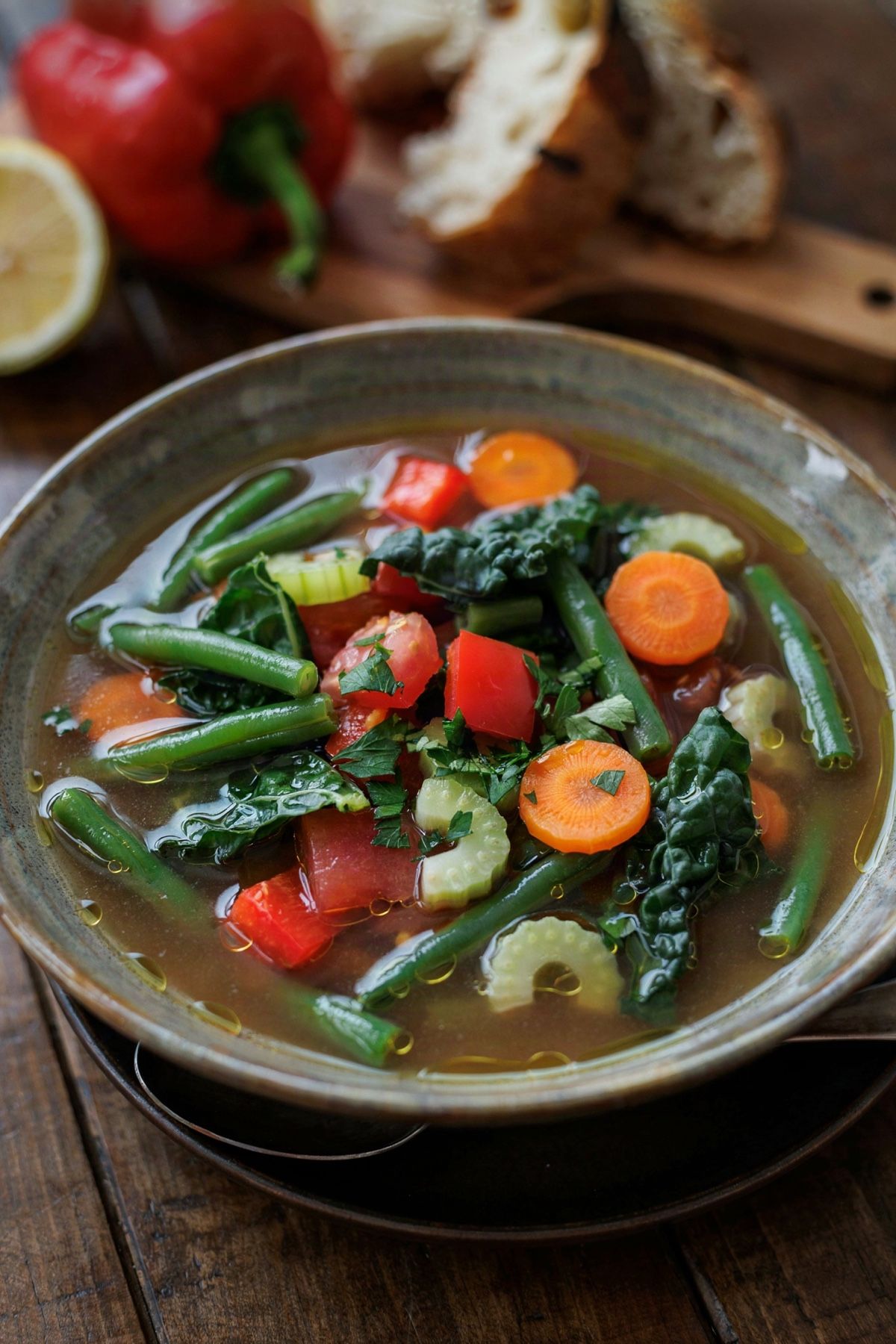
Why I Keep Coming Back to This Vegetable Soup
This is the soup I make when the drawer at the bottom of the fridge has got away from me. It takes whatever is in there, and unlike most fridge-clearing cooking it does not taste like a compromise, provided the base underneath it is built properly.
What I want out of it is a clear, savory broth with vegetables that still taste like themselves: green beans that snap a little, pepper that has not dissolved into the liquid, greens stirred in at the last minute. The whole pot takes about an hour, and most of that is the soup sitting on the stove doing the work without me.
It is not a heavy soup and I have stopped pretending it is. Some nights that is exactly the point, and on the others I add something to it rather than change the recipe.
Usually that means a handful of pearl barley, which I prefer to pasta here because it holds its bite in the leftovers instead of swelling up and drinking the broth.
Some ways I love enjoying this soup are:
- With crusty bread for mopping up the broth.
- Topped with a sprinkle of fresh parsley for a flavorful finish.
- With a side of simple salad when I want an extra-healthy hit.
Try this vegetable soup, and you’ll see why it’s a staple for me, any time of year.
The story
The Word Soup Originally Meant the Bread
The English word soup comes from the Old French soupe, and in Old French it did not mean the liquid. It meant a piece of bread soaked in liquid. Behind it sits an unrecorded late Latin verb suppare, to soak, borrowed from the same Germanic root that gave English sup and supper. The broth was named after the bread that went under it, not the other way around.
That is close to a literal description of how the dish was eaten for most of its life. Medieval pottage was the everyday food of nearly everyone in northern Europe, and the peasant version was whatever was in the ground that month boiled in stock: leeks, peas, turnips, cabbage, kale. It was usually meatless, not on principle but because meat was for feast days. And it was often ladled over a trencher, a thick slab of stale bread that served as the plate and got eaten at the end. The vegetables carried the flavor. The bread carried the meal.
Somewhere between the trencher and the modern recipe card the bread left and nothing replaced it, which explains the one thing people find disappointing about a from-scratch vegetable soup. A bowl of this one is about 100 calories and 3 grams of protein. Nothing has gone wrong. The versions of this dish that still eat like dinner are the ones that kept a starch: minestrone holds on to its pasta and beans, and Tuscan ribollita is named for being reboiled with yesterday’s loaf until the bread and the soup stop being two separate things.
The recipe below is deliberately the light one, with no potato or pasta in the pot, because that is the version that lets the vegetables taste like vegetables. What it asks in return is that you put something on the table beside it. If a bowl ever tastes like it is missing something, check the salt first, and then consider that the missing thing may be the bread the dish was named after.
What to buy
Ingredient Notes
Tomato paste
Two tablespoons is the entire savory foundation here, and it does nothing unless you cook it. From the tube it tastes flatly of tin. Fried in the oil with the garlic it darkens from bright red to brick and turns sweet, and that color change is the cue rather than the clock. Go past three tablespoons in four cups of broth and you have made a thin tomato soup with vegetables in it.
Low-sodium vegetable broth
This moves the finished soup more than anything else in the list. Analysed with a standard carton, a bowl came out at 893 mg of sodium; with low-sodium broth it comes out at 266 mg, which is the figure in the nutrition panel. The catch is that you now put the salt back yourself at the end. Taste the broth neat first, because one you would not drink does not improve by being simmered with carrots.
Spinach or kale
Listed as alternatives, as in most recipes, but they are not interchangeable and giving them the same time ruins one of them. Kale wants 4 to 5 minutes of real simmering and its stems stripped out first, since they never catch up with the leaves. Spinach wants about a minute off the heat. Pick spinach to eat now, kale to cook for the week, because kale is still recognizably a leaf on day three.
Green beans
Bend one before you buy: a fresh bean snaps, and one that folds over limply will go slack in the pot however carefully you time it. Cut them to about 2.5 cm so a bean fits on a spoon with some broth. They get 8 to 10 minutes and no more, and the cue is a bean tender the whole way through while still clearly green.
Red bell pepper
It goes in with the green beans rather than at the start. Half an hour of simmering reduces bell pepper to sweet orange shreds that flavor the broth and give you nothing to chew, where ten minutes leaves it distinct. Red rather than green is worth insisting on, because green pepper is grassy and assertive and this is a delicate broth for it to sit in.
Olive oil for finishing
The two tablespoons at the start are for cooking and are not the ones that matter. A teaspoon of raw, decent oil swirled into each bowl at the table is what gives this soup body, and a broth with no potato, cream or pasta water in it has no other source of that. It is the standard finish on Italian and Provençal vegetable soups, and skipping it leaves the soup thinner in a way more salt will not fix.
Vegetable Soup
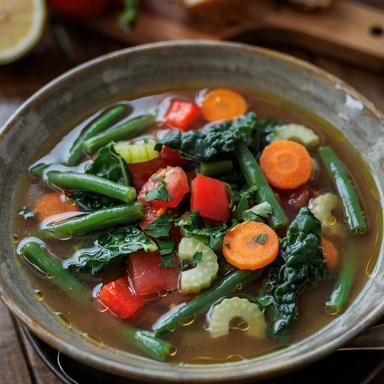
A light, brothy vegetable soup built on browned tomato paste and finished with greens, lemon and a swirl of raw olive oil.
Ingredients
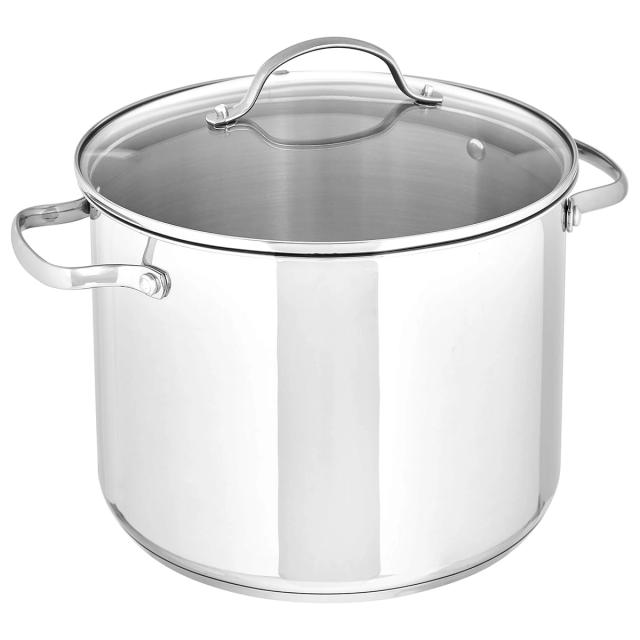
Equipment
As an Amazon Associate I earn from qualifying purchases, at no extra cost to you.
Instructions
- 1
Soften the aromatics
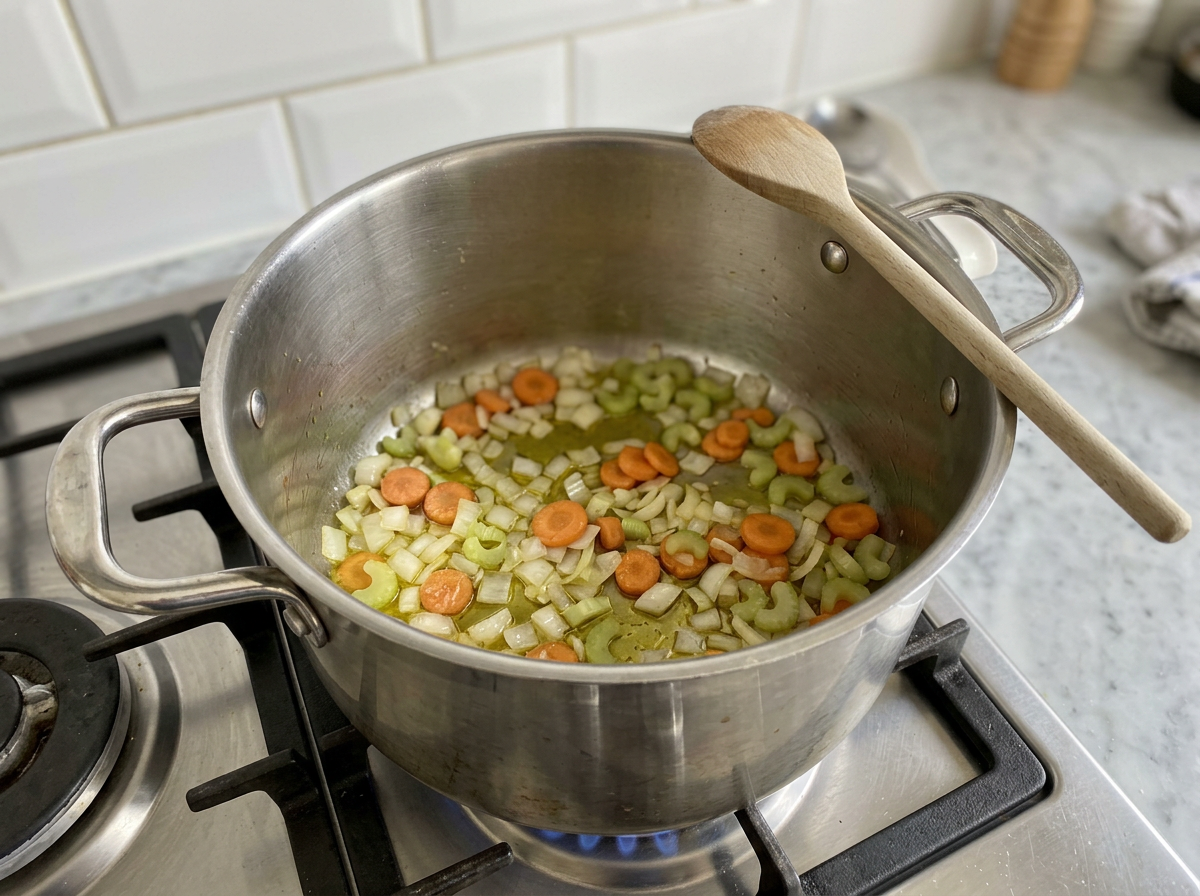
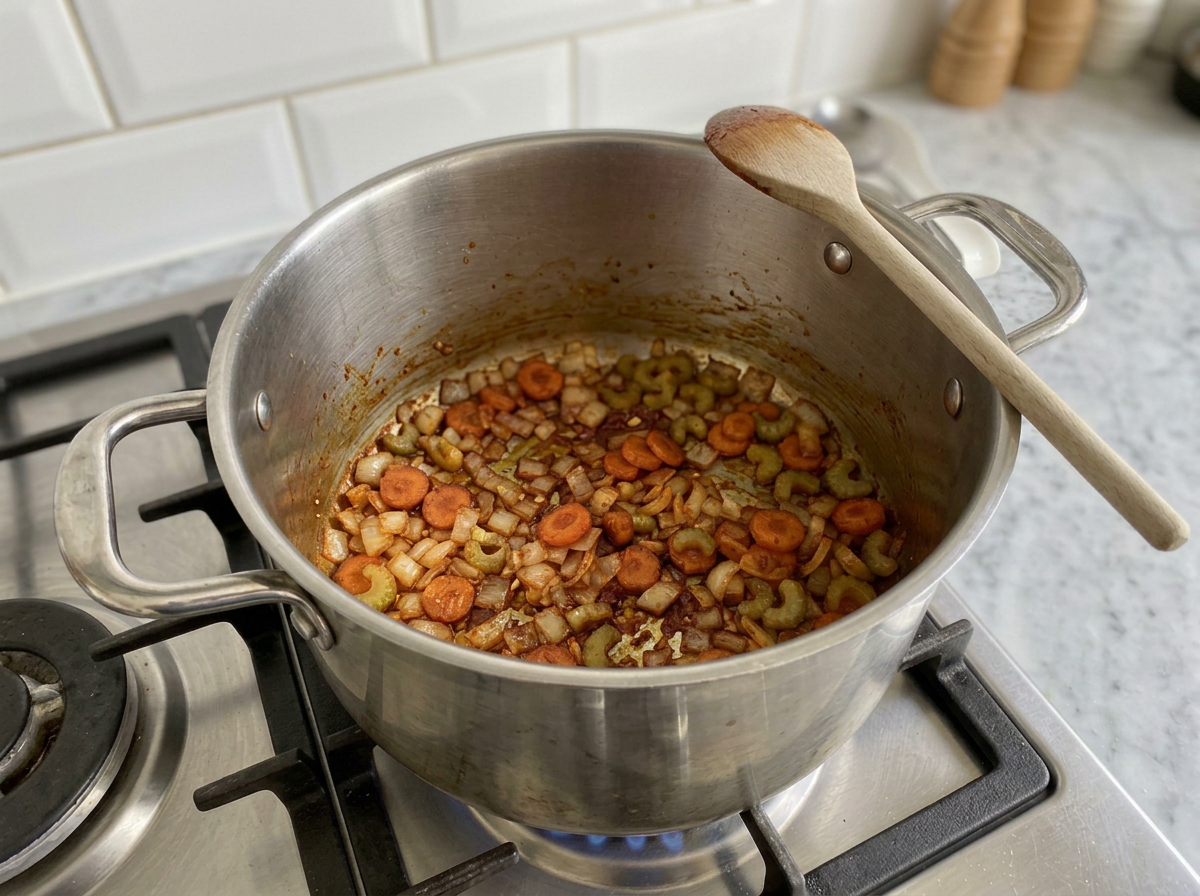
Heat 2 tablespoons of the olive oil in a large pot over medium heat. Add the onion, carrots and celery with a good pinch of salt and cook for 8 to 10 minutes, stirring now and then, until the onion is translucent and the carrots have lost their raw edge. Three or four minutes buys you none of the sweetness that ten does.
- 2
Brown the tomato paste with the garlic
Stir in the garlic and the tomato paste and cook for 1 to 2 minutes, until the paste darkens from bright red to brick and smells sweet instead of tinny. The garlic goes in here rather than at the start because minced garlic scorches in about two minutes over this heat.
- 3
Build the broth
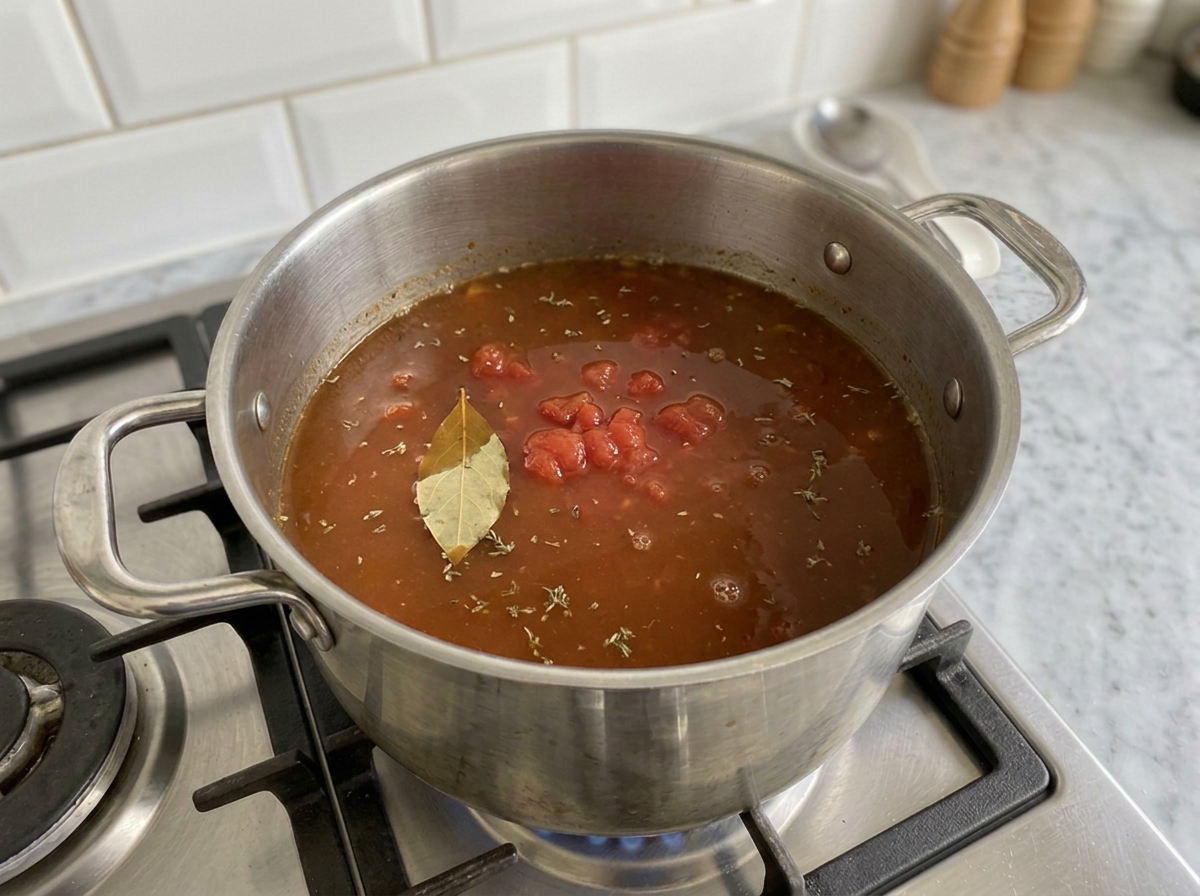
Add the vegetable broth, the diced tomatoes with their juice, the dried thyme and the bay leaf. Bring to a boil, then lower the heat until the surface is barely moving and simmer uncovered for 10 minutes.
- 4
Add the green beans, pepper and basil
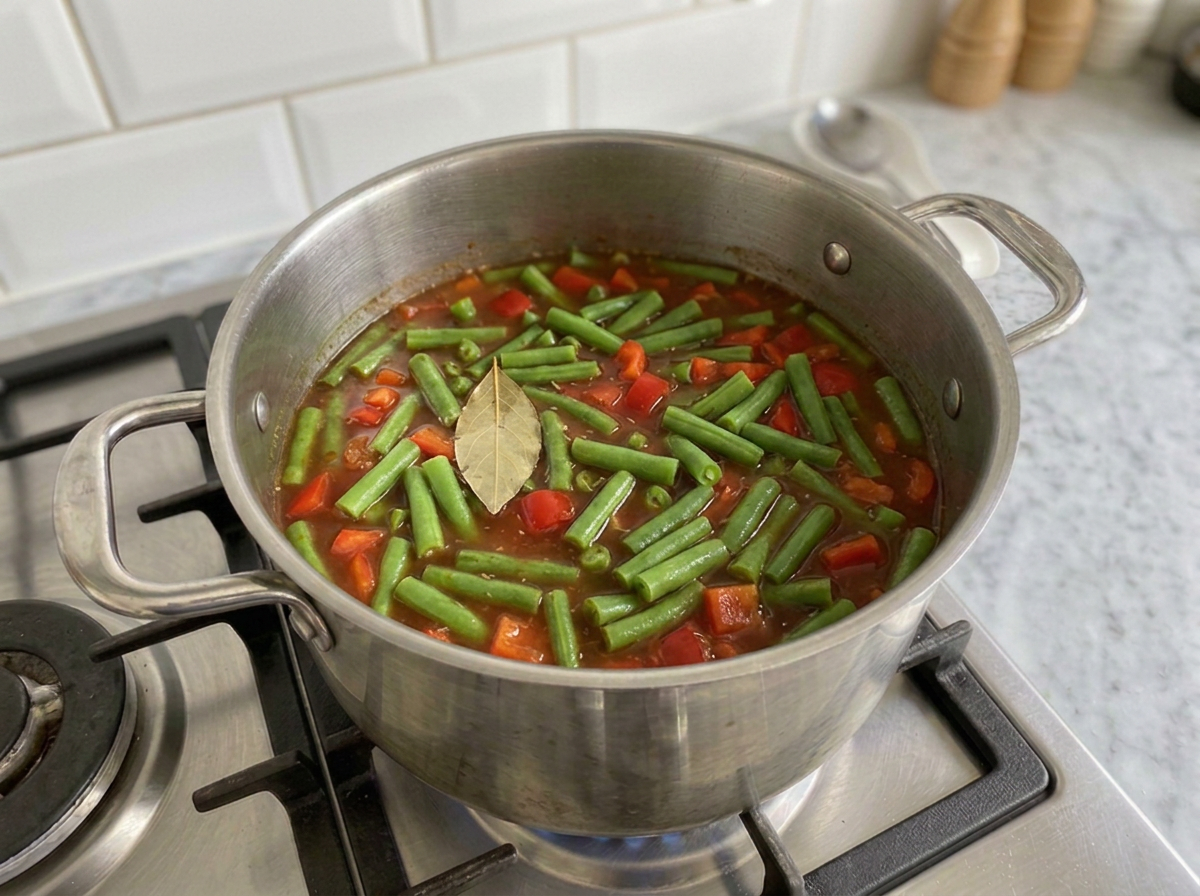
Stir in the green beans, the red bell pepper and the dried basil. Simmer for 8 to 10 minutes, until a bean is tender the whole way through but still bright green. Eight minutes is all the cooking green beans get in this soup, which is why they do not go in with the broth.
- 5
Wilt the greens
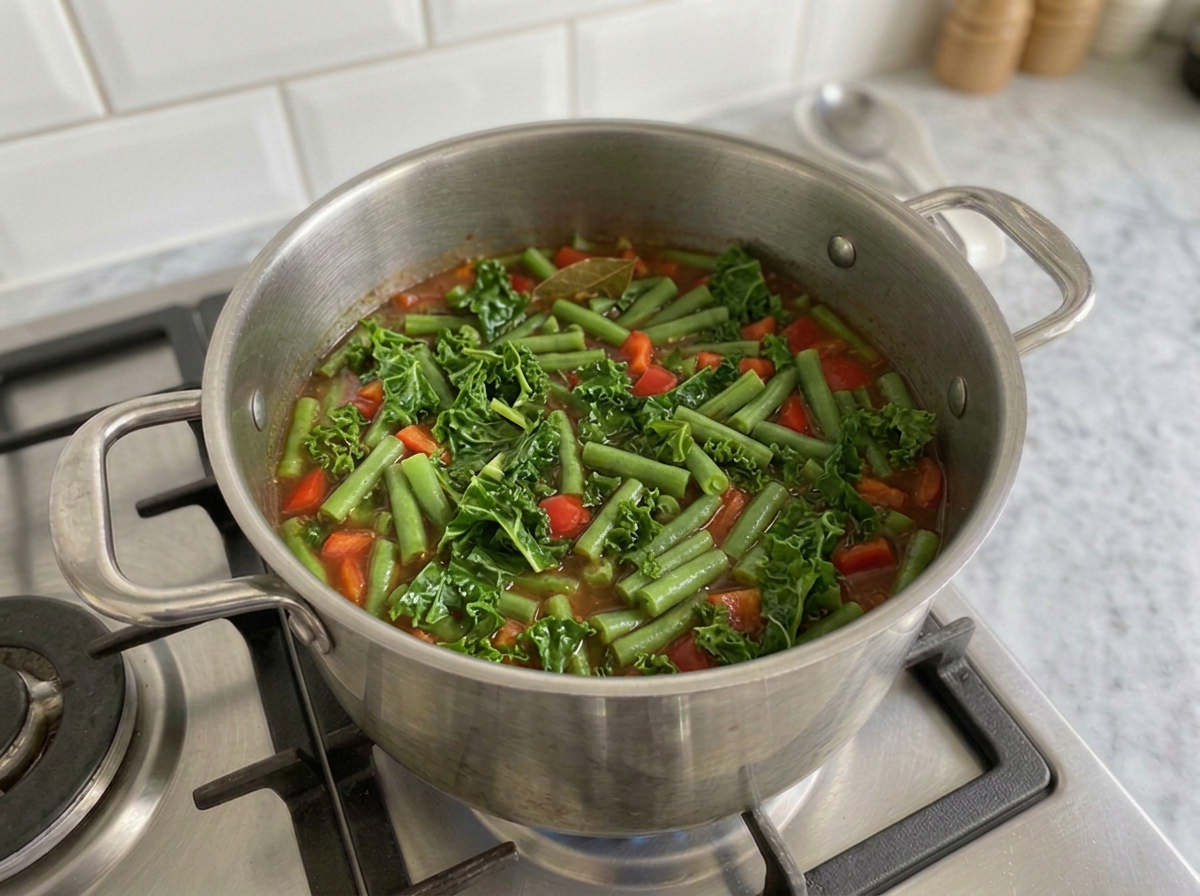
If you are using kale, stir it in and simmer for 4 to 5 minutes, until it is tender enough to cut with the side of a spoon. If you are using spinach, stir it in, count to sixty and take the pot off the heat. Spinach wilts almost on contact and turns slippery and gray-green if it keeps cooking.
- 6
Season, sharpen and finish
Fish out the bay leaf and stir in the lemon juice. Season with salt and pepper, adding the salt a pinch at a time and tasting after each one, until the soup stops tasting like vegetables in water. Ladle into bowls, swirl a teaspoon of raw olive oil over each serving, and scatter with parsley.
Notes
Zucchini, peas, corn and asparagus all stand in for the green beans. Add them at the same late stage rather than with the broth, or they will be mush by the time the soup is ready.
No tomato paste in the house: use 2 tablespoons of sun-dried tomato paste, or double the canned tomatoes and simmer 5 minutes longer to cook off the extra liquid.
The soup is thin on purpose. For body without turning it into a stew, blend one ladleful and stir it back into the pot.
The broth is the biggest variable in the recipe. Taste it on its own before it goes in, because a thin or oversalted one cannot be corrected once the soup is built.
Nutrition Facts
6 bowls · 336 g per serving
- Calories
- 102 kcal
% Daily Value*
- Total Fat
- 5.1 g7%
- Saturated Fat
- 0.7 g3%
- Sodium
- 266 mg12%
- Total Carbohydrate
- 13.2 g5%
- Dietary Fiber
- 4 g14%
- Sugars
- 6.5 g—
- Protein
- 3 g6%
Recipe from veggierecipes.blog
When it goes wrong
Troubleshooting
I made it with low-sodium broth and it tastes like a diet
You almost certainly did not salt it at the end. Low-sodium broth takes roughly 600 mg of sodium a serving out of the pot, which is the point of using it, but that salt has to come back under your control at step 6. Add it a pinch at a time and taste between each one. The moment the soup stops tasting like separate vegetables in water is much later than most people expect. If salt does not get you there, the tomato paste was not browned long enough.
The spinach turned into slippery dark threads
It cooked for minutes instead of seconds. Spinach is water held in cells that oxalic acid breaks down almost on contact with heat, which is why a huge pile collapses to a handful in front of you. Once wilted it is done, and what follows is texture being destroyed and a faint metallic edge coming forward. Stir it in, count to sixty, take the pot off the burner.
The kale is still tough and chewy
The opposite failure, usually with two causes at once. The stems were left in, and kale stems stay fibrous long after the leaves are tender, so run your hand down the stem to strip the leaf off. And it did not get long enough: kale needs 4 to 5 minutes at a real simmer, not the sixty seconds that suits spinach. Baby kale behaves like spinach and wants about two minutes.
There are curls of red skin floating on the surface
That is bell pepper skin letting go of the flesh once it softens, and it is normal rather than a mistake. If it bothers you, dice the pepper smaller so the pieces are too small to notice, or use a jarred roasted red pepper cut into strips and stirred in at step 5, which has been skinned already.
It was lovely and I was hungry again an hour later
Nothing has gone wrong, and this is the honest limit of the dish. A bowl is about 100 calories with 3 grams of protein and 4 grams of fiber, which fills your stomach and then leaves. It was built to be eaten with bread. If you need it to be the meal, a drained can of cannellini beans at step 5 adds roughly 7 grams of protein a serving, and the serving notes carry the rest.
It was good on the first day and dull by the third
The broth is not the problem and improves overnight as the thyme and tomato settle into each other. The vegetables are. Beans and greens keep softening in the fridge and there is no starch here to hide behind, so the contrast that made it good on day one goes first. Cooking on purpose for later in the week: stop after step 3, chill the base, and do steps 4 to 6 fresh.
Before you serve
Serving & Storage
Put bread on the table. This is not a garnish suggestion, it is the structural half of the dish that the recipe card leaves out. Anything with an open crumb and a real crust works, because you want something that soaks without disintegrating: sourdough and focaccia are both very good, sliced sandwich bread turns to paste. If the loaf is a day or two old, tear it into chunks, toss them in olive oil, toast them hard, then put them in the bottom of the bowl and ladle the soup over. That is roughly what a trencher was and it is still the best version of this meal.
Turning it into supper
Two things work and one does not. A drained can of cannellini, butter or borlotti beans stirred in at step 5 adds around 7 grams of protein a serving without changing the broth. Pearl barley is the other, about 100 g simmered separately for 25 minutes and spooned into the bowls, and it has to stay out of the soup pot because barley drinks broth greedily and thickens the whole thing into a stew overnight. What does not work is cooking pasta in the soup: it clouds a broth this clear and leftovers become swollen tubes in damp vegetables. Boil it separately.
Grated hard cheese is the traditional finish and worth a label check, since Parmigiano-Reggiano and most pecorino are made with animal rennet and are not vegetarian whatever the deli counter says. Several brands now sell a vegetarian Italian-style hard cheese instead. A spoonful of pesto stirred into each bowl is the other classic move, and it takes this very close to soupe au pistou.
Making it ahead
The broth base is better made in advance and the vegetables are not, so split the recipe where the two part company. Cook to the end of step 3, cool and refrigerate for up to 4 days, then bring it back to a simmer and run steps 4 to 6 in the ten minutes before you eat. The beans, pepper and greens are all fast, so this costs nothing on the night.
Storing leftovers
Finished soup keeps 4 days covered in the fridge. Reheat gently in a pan rather than in bursts in the microwave, which boils the edge of the bowl while the middle is still cold, and taste again for salt and lemon before serving. Cold blunts your perception of both, so a soup seasoned correctly yesterday can read flat today.
Freezing is one place this recipe beats the potato versions of vegetable soup, because there is no potato in it to turn mealy on thawing. It keeps 3 months. The beans and greens still come back softer than they went in, so if you are freezing on purpose, freeze the step 3 base and add them fresh on reheating.
Still wondering
Frequently Asked Questions
Is this soup gluten-free?
As written, yes. Everything in the pot is naturally gluten-free, which means the only route in for gluten is the broth, and it gets in more often than people expect: some vegetable bouillon cubes and stock concentrates use wheat as a carrier, and others add barley malt extract for savory depth. Read the carton rather than assuming. One thing on this page is not gluten-free and it is easy to miss: the pearl barley suggested for making the soup into a meal is a wheat relative and contains gluten. Use the canned beans instead, which do the same job.
Is this soup vegan?
The recipe as written is vegan. The two things that quietly break it are both optional extras rather than the soup itself. Grated hard cheese at the table is the obvious one. The less obvious one is the broth, since a number of supermarket stock pots and concentrates are finished with butter or milk solids. Jarred pesto is worth checking for the same reason, because traditional pesto is made with cheese.
Featured In
More Cozy and Nourishing Soups
Made this?