
Vegetarian Banh Cuon Recipe
The sheet is steamed by the lid, not fried by the pan, and once you treat a non-stick skillet as a steamer the rolls come out as thin as the ones in Hanoi.
Jump To Recipe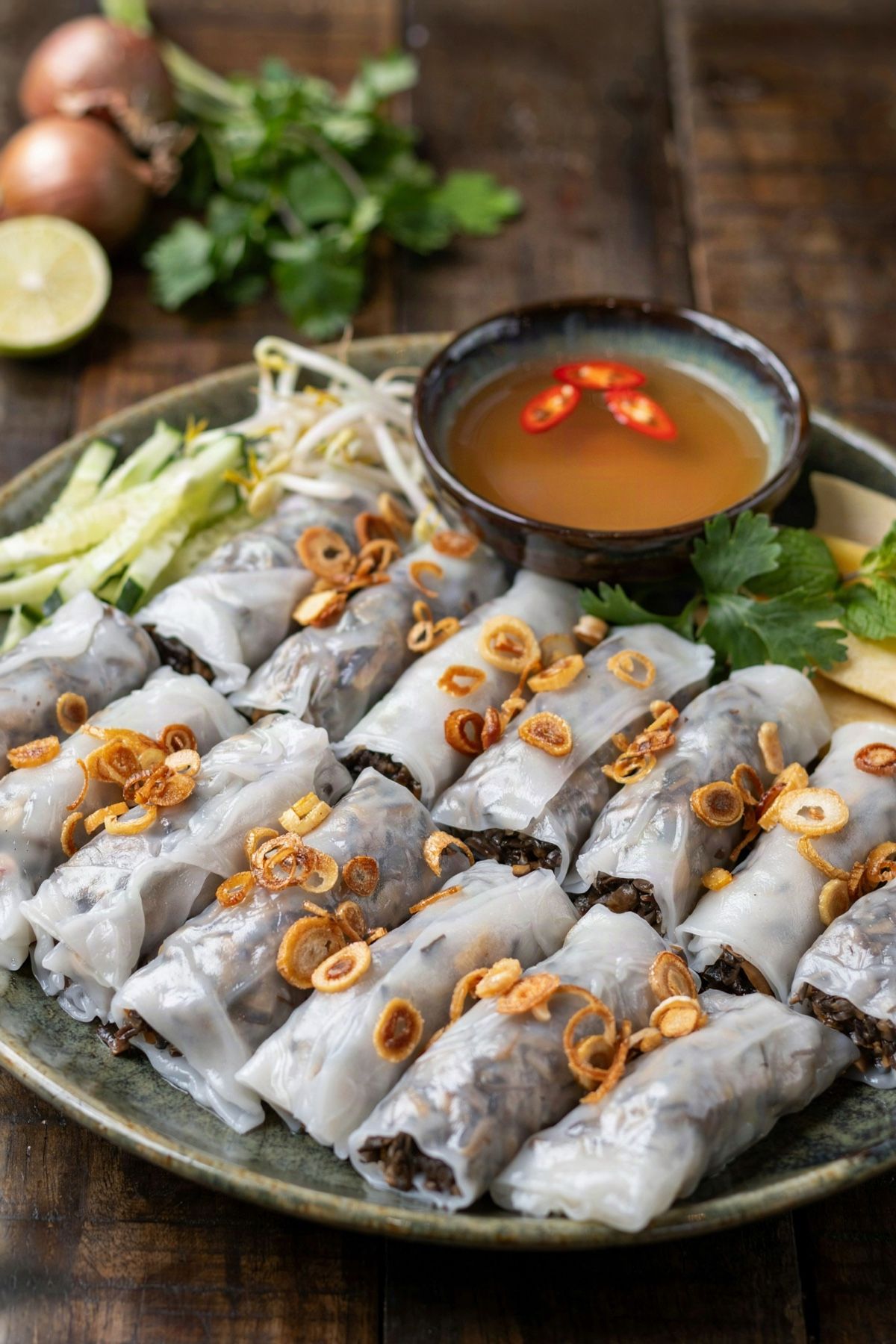
I Made Crepes For A Year Before I Made Banh Cuon
For about a year I thought I was making bánh cuốn and I was making crepes. Rice flour crepes, admittedly, thin enough to see the spatula through, and I rolled them around mushrooms and served them with the right sauce and nobody complained. But they were not the thing I had eaten on a plastic stool in Hanoi, which slid off the plate and tore if you looked at it and tasted mostly of steam and fried shallot.
The difference turned out to be water. My batter was the consistency of crepe batter, because that was the only batter I knew, and a bánh cuốn batter is closer to milk. When I finally weighed it out against a Vietnamese recipe I had three parts water to one part flour and it looked wrong in the bowl, like something that could never set. It sets. It sets in forty seconds under a lid, and the sheet that comes out is the one I remembered.
The other thing nobody had told me is that the first sheet tears. It tears for the women who have made this every morning for thirty years, and they scrape it off and throw it away and pour the next one without a flicker. Once I knew that I stopped taking the first sheet personally, and once I stopped taking it personally I stopped adding flour to fix it, which was the actual mistake. So this recipe tells you to throw the first one away. Consider it part of the method.
The story
Banh Cuon Started Out With Nothing Inside
Bánh cuốn means rolled cake, and the rolling is the newer half of the name. The dish belongs to Thanh Trì, an old village on the bank of the Red River that is now a district of southern Hanoi, and the Thanh Trì version has no filling at all. The sheets are steamed one at a time on a cloth stretched over a pot of boiling water, lifted off with a bamboo stick, folded loosely onto a plate and finished with fried shallots, shallot oil and a bowl of dipping sauce. The sheet is the whole dish. It is judged on how thin it is and on whether it holds together while being that thin, and the cooks who make it are judged the same way.
The village story is that the land along that stretch of river was poor for rice, so the people of Thanh Trì turned what rice they had into something they could carry into the city and sell every morning. The craft was added to Vietnam’s list of national intangible cultural heritage in 2025, which says how much Hanoi values it and how few people still make it the old way. The stretched cloth takes years to learn, so most of the trade has moved to filled rolls, bánh cuốn nhân, which forgive a thicker sheet and are filled with minced pork and wood ear mushroom cooked with shallots. It is a breakfast food in both forms, sold from six in the morning and gone by ten, because the sheets are only at their best while still warm from the steamer.
The vegetarian version is not a modern accommodation. Bánh cuốn chay is on the menu of every chay kitchen in Hanoi, cooked for the first and fifteenth of the lunar month when much of the city eats meat-free, and the filling those kitchens use is mushrooms and wood ear with shallots, seasoned exactly as the pork would be. A rice sheet never had egg or dairy in it, so there is nothing to substitute there, and the only thing that changes in the dipping bowl is the fish sauce, which the chay shops replaced long ago with soy sauce or nước mắm chay, a vegetarian fish sauce made from pineapple and salt.
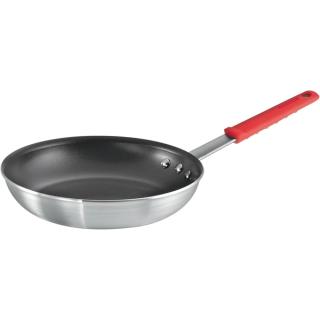
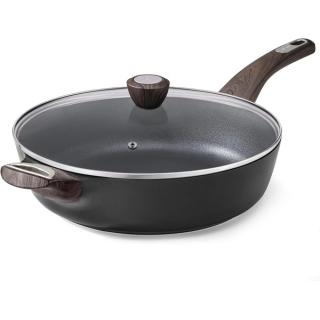
What the home version changes is the steamer. A lidded non-stick skillet does the cloth’s job in a way that is much easier to learn, provided you understand that it is not frying anything. The batter is poured onto the hot pan, swirled thin, and the lid goes on; the water in the batter turns to steam, the lid holds it there, and the sheet cooks from the top down in under a minute. The rest of the technique follows from that: the batter has to be thin because steam has to get through it, the lid has to fit because steam has to stay in, and the heat stays at medium because a hotter pan dries the bottom before the top has set.
What to buy
Ingredient Notes
Rice flour
Plain rice flour, milled from ordinary long-grain rice and sold in Asian groceries as bột gạo. Do not use glutinous rice flour, also labeled sweet rice flour, which is a different grain and makes a sticky, chewy sheet that will not release from the pan. The two bags sit side by side and look nearly identical, so read the front. Supermarket rice flour from the gluten-free aisle works too, but it is milled coarser and wants the overnight rest.
Tapioca starch
This is what lets a sheet that thin stretch around a filling instead of cracking. Rice flour alone sets brittle. The ratio here, roughly two and a half parts rice flour to one part tapioca by weight, gives a sheet that is soft and just slightly elastic. More tapioca makes it chewier and gummier and starts to taste like a rice paper wrapper. Cornstarch is not a substitute; potato starch is, in the same amount.
Dried wood ear mushrooms
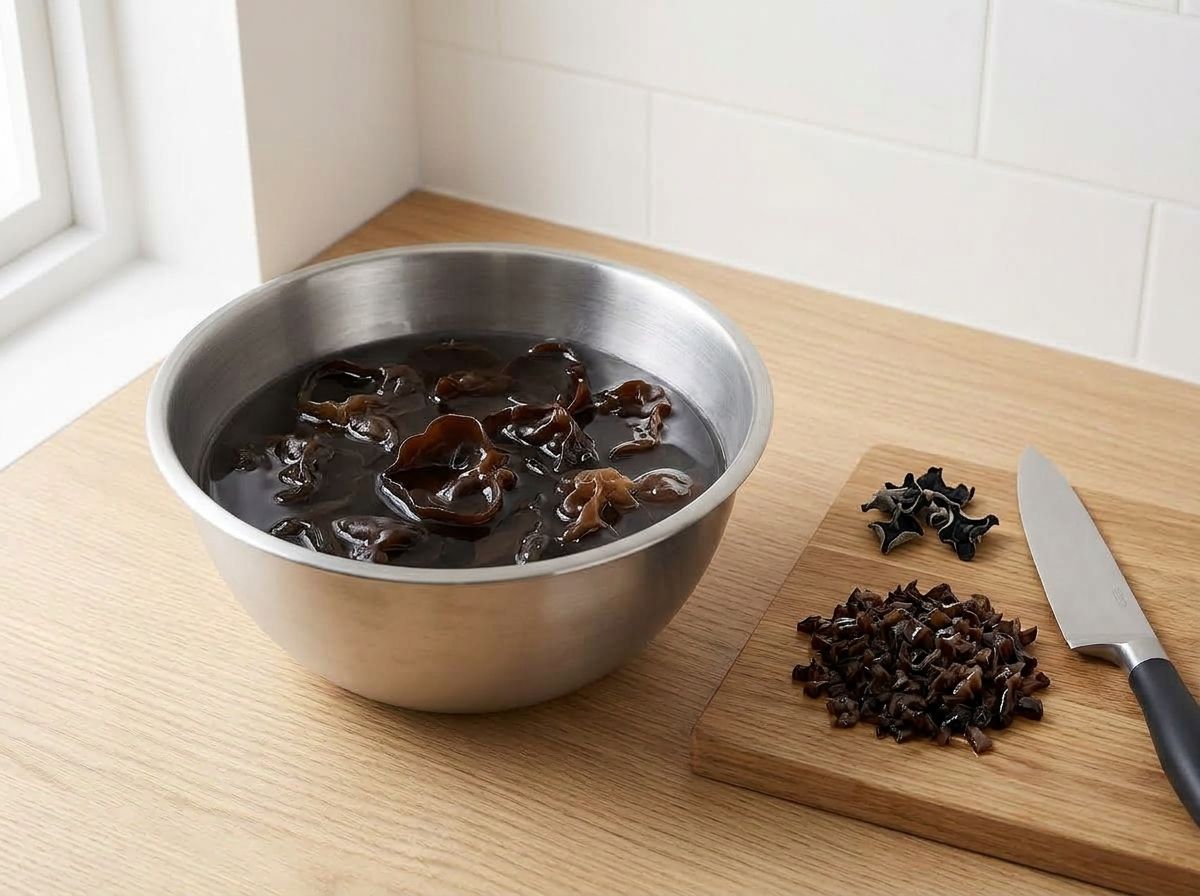
Sold as black fungus, mộc nhĩ or cloud ear, in bags of dry black curls that look like nothing. They rehydrate to several times their size in fifteen minutes of hot water, and what you are buying is texture: a clean, crunchy snap that survives cooking and is the signature of the filling. They taste of almost nothing on their own. Trim off the hard knob where the mushroom joined the tree before mincing, it never softens.
Cremini mushrooms
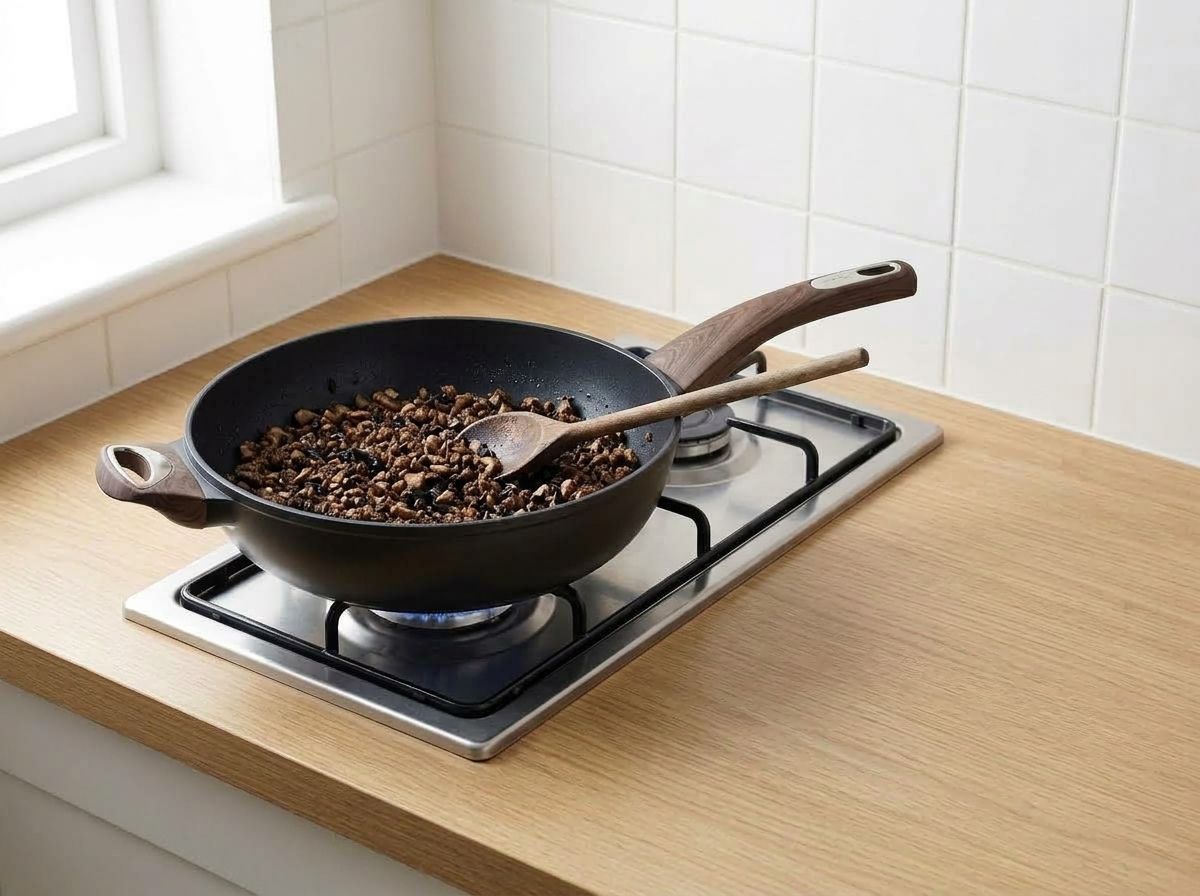
These are doing the pork’s job, and they only manage it if they are chopped fine and cooked until dry. Chop them to about the size of a lentil, then cook them past the point where they release their water and on until the pan is dry and they are starting to brown. That takes eight minutes or so and it concentrates them into something savory and dense. Fresh shiitake are more aromatic and are what a Hanoi chay kitchen would reach for; use them if you can get them and take the stems off first.
Shallots
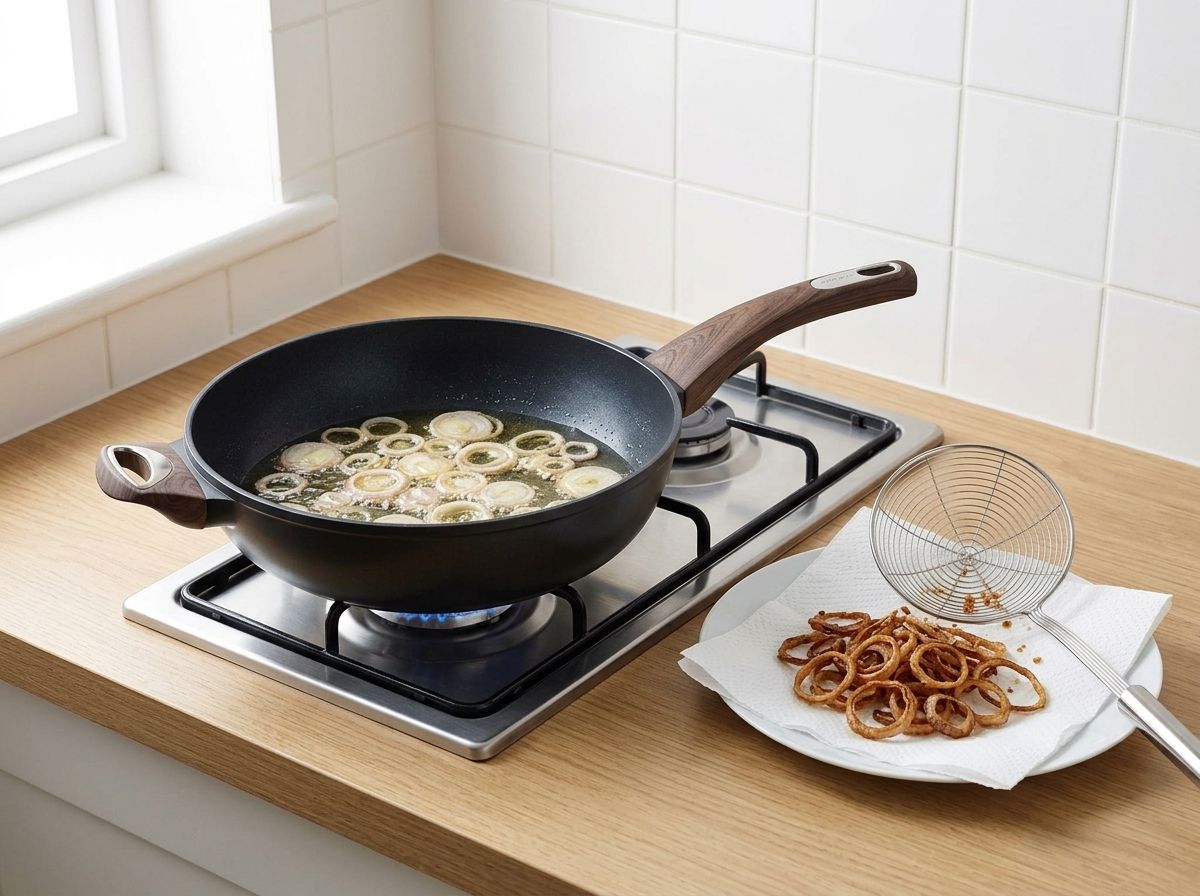
They serve twice. The fried rings go over the finished rolls, and the oil they were fried in brushes the pan, the tray and the rolls, so the whole dish tastes of shallot. Slice them evenly and thin, about a sixteenth of an inch, and pull them from the oil when they are pale gold, not brown, because they keep cooking on the paper and go bitter past amber. The small reddish Asian shallots fry crisper than the large French kind.
Soy sauce and vegetarian fish sauce
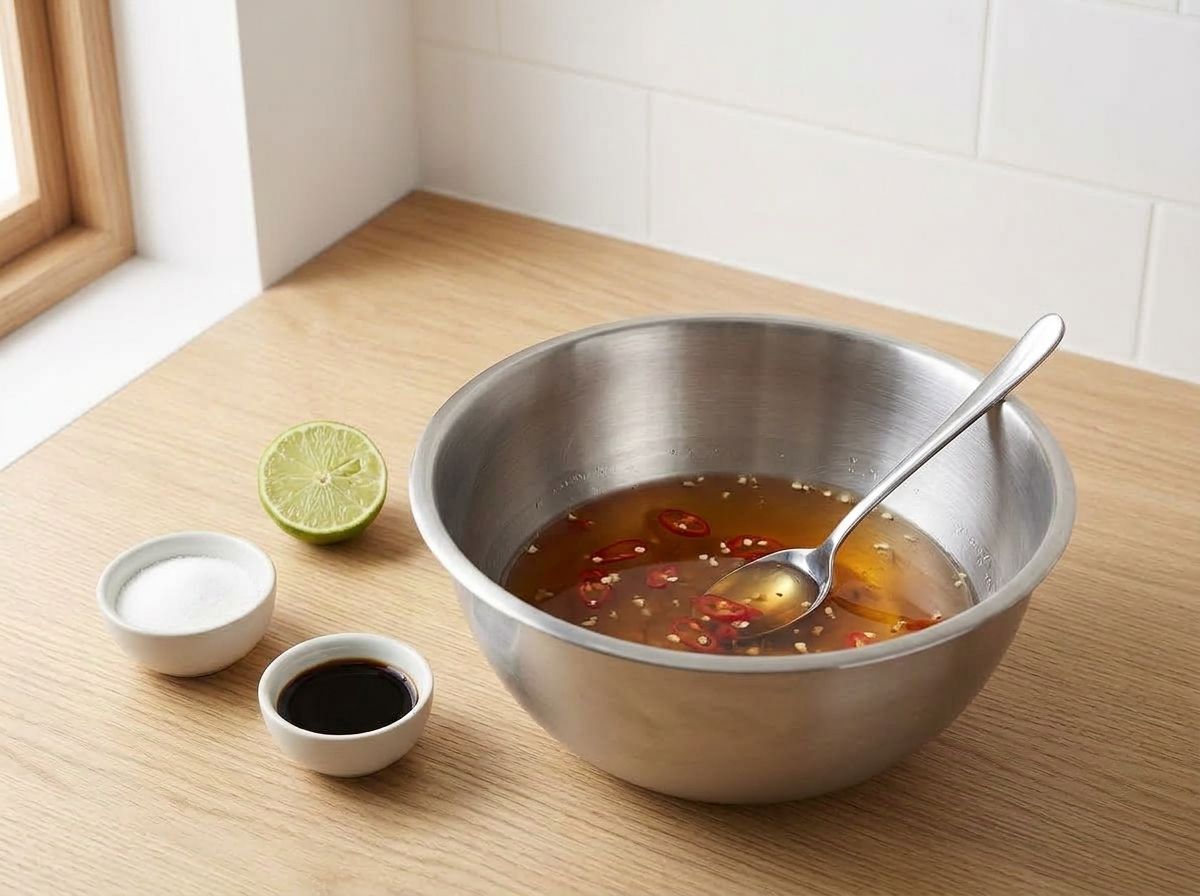
The dipping sauce is the seasoning for the whole plate, since the rolls themselves are barely salted. Light soy sauce gives a clean, slightly sweet bowl. If your shop has nước mắm chay, the vegetarian fish sauce sold in the same aisle as the real thing, use it instead of the soy sauce in the same amount for the closest match to what the chay shops serve. Either way the sauce should taste a little too sweet and too sharp on its own, because it is going onto a sheet that tastes of nothing but rice.

Vegetarian Banh Cuon
Vietnamese steamed rice rolls made in a lidded non-stick skillet, filled with mushrooms and wood ear, finished with fried shallots and shallot oil and served with a soy and lime dipping sauce.
Ingredients
Equipment
As an Amazon Associate I earn from qualifying purchases, at no extra cost to you.
Instructions
- 1
Mix and rest the batter
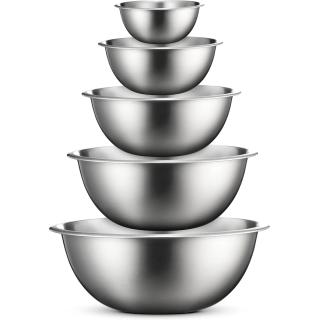
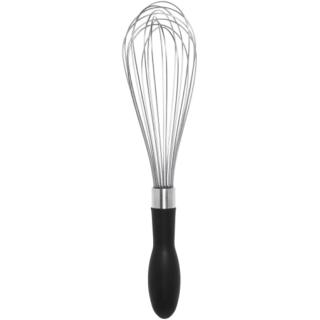
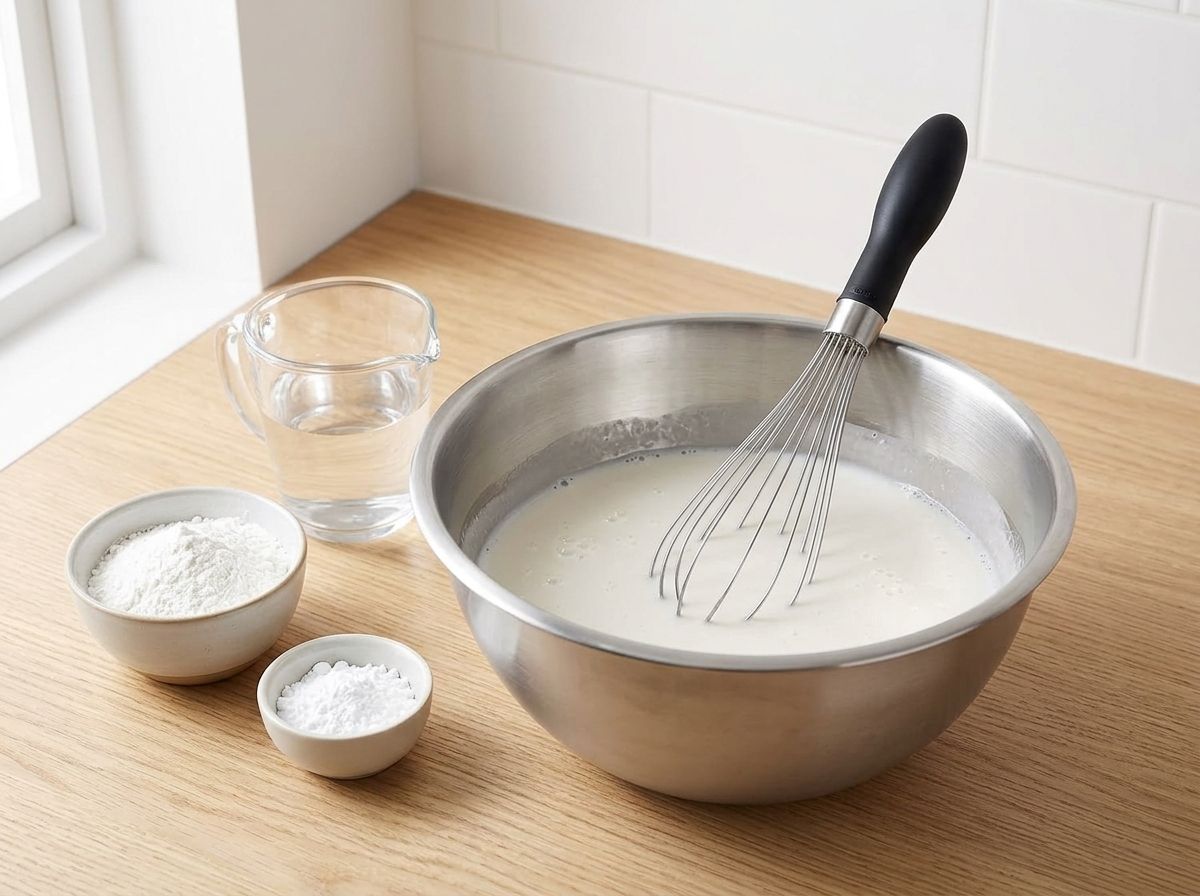
Whisk the rice flour, tapioca starch and ½ teaspoon of salt together in a large bowl, then whisk in the water and 1 tablespoon of oil until there are no lumps. It will look far too thin, about the consistency of milk, and that is right. Leave it to rest for at least 30 minutes, or cover it and refrigerate overnight.
- 2
Soak the wood ear
Put the dried wood ear in a small bowl, cover with hot water from the tap and leave for 15 minutes until they have swelled to several times their size and feel like soft rubber. Drain, cut off any hard knobs, and mince them finely.
- 3
Fry the shallots
Put the sliced shallots and ¼ cup of oil into a large skillet over medium-low heat, starting from cold. Cook, stirring often, for 8 to 10 minutes, until the rings are pale gold and the bubbling has slowed. Lift them out with a slotted spoon onto a paper towel, where they will crisp and darken a shade as they cool. Pour the shallot oil into a small bowl and keep it.
- 4
Cook the filling
Return the skillet to medium heat with 1 tablespoon of the shallot oil. Add the garlic for 30 seconds, then the chopped cremini. Cook, stirring now and then, for about 8 minutes: they will flood the pan with liquid, the liquid will boil off, and they will start to brown and stick. At that point stir in the minced wood ear, 1 tablespoon of soy sauce, ½ teaspoon of sugar and the white pepper, cook for 1 minute more, then take it off the heat and stir in the sesame oil.
- 5
Make the dipping sauce
Stir 2 tablespoons of sugar into ½ cup of warm water until it dissolves, then add 2 tablespoons of soy sauce, the lime juice, the rice vinegar, the remaining garlic and the sliced chili. Taste it. It should be sweet, sour and salty in roughly equal measure and a little too strong to drink, since the rolls themselves are barely seasoned.
- 6
Set up to steam
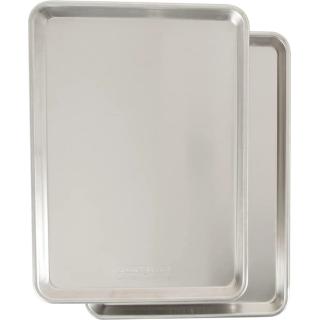
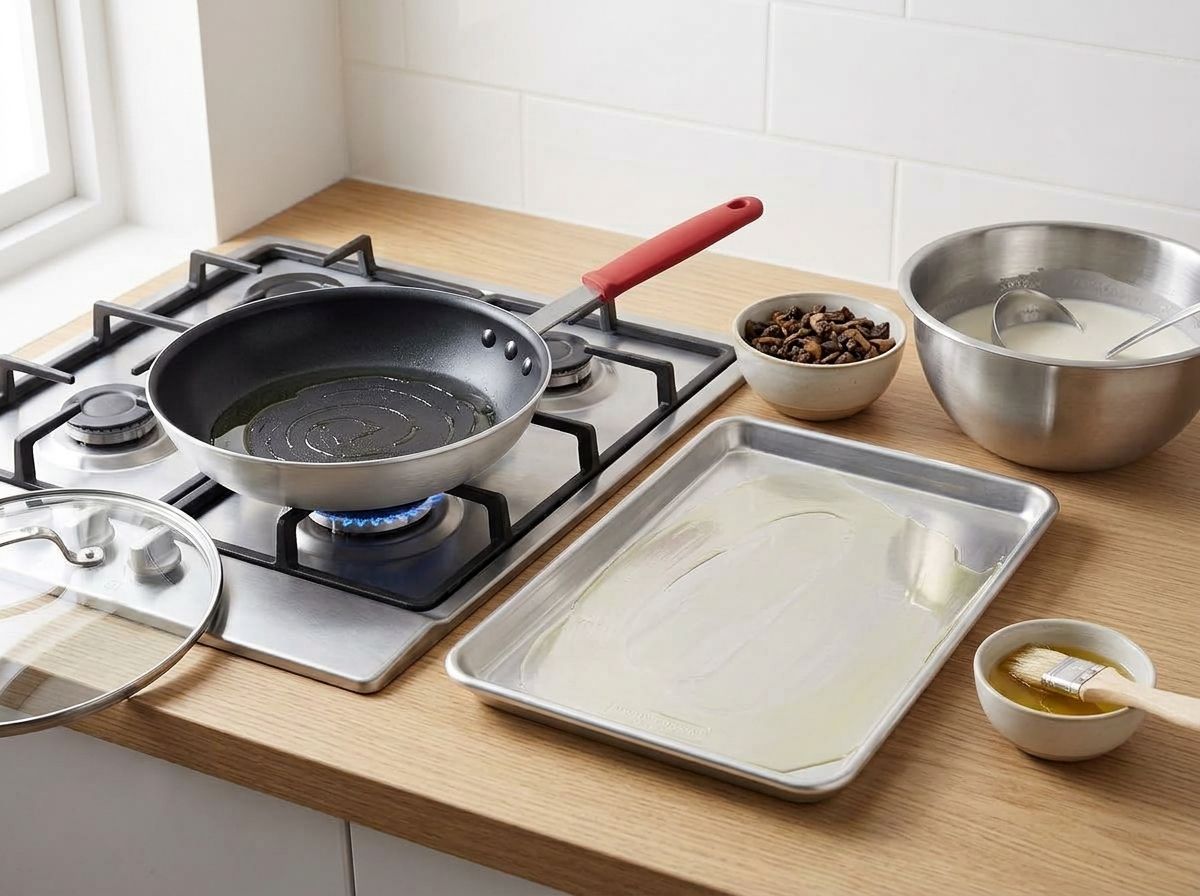
Brush a baking sheet with shallot oil and set it next to the stove with the filling, a pastry brush in the bowl of shallot oil and a serving plate. Stir the batter hard from the bottom, because the flour will have sunk. Heat a 10-inch non-stick skillet over medium heat until a drop of water dances on it, then brush it lightly with shallot oil.
- 7
Steam a sheet
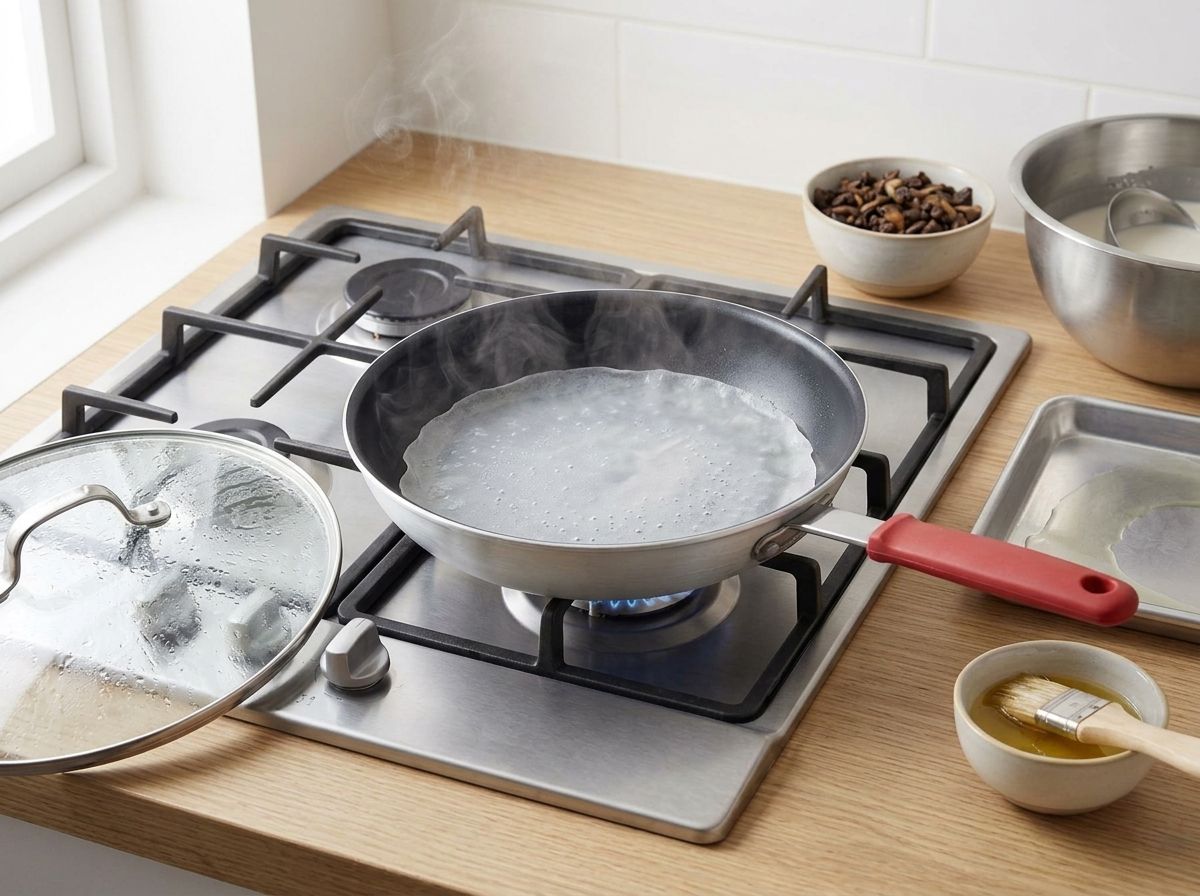
Stir the batter again, pour a scant ¼ cup into the middle of the pan and immediately tilt and swirl the pan so the batter runs into a thin, even circle right to the edges. Put the lid on and leave it for 45 to 60 seconds. The sheet is done when it has turned from white to translucent all the way across, the surface is dotted with tiny bubbles and the edge lifts freely. Throw the first one away: it always tears.
- 8
Turn the sheet out
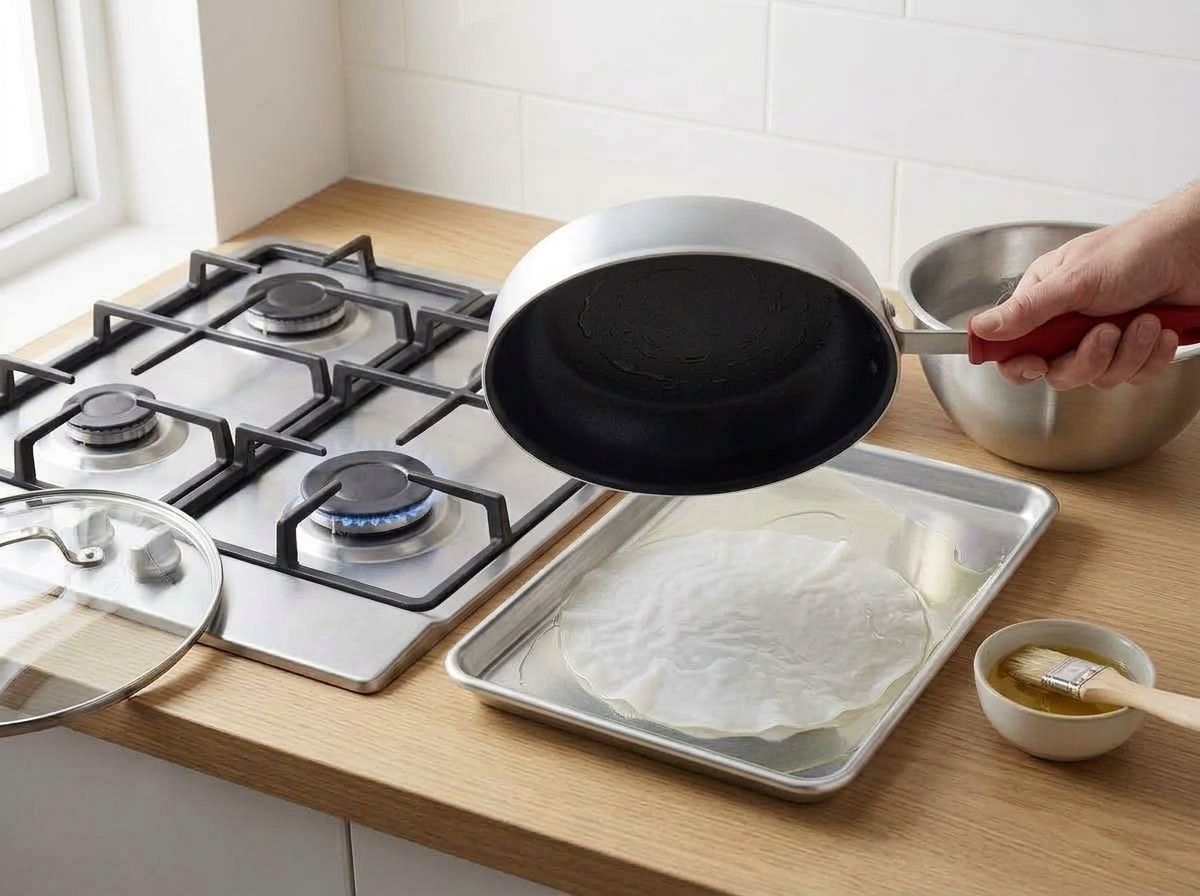
Take off the lid, hold the pan an inch or two above the oiled baking sheet and turn it upside down in one quick movement so the sheet drops out flat. Brush the pan with oil again, pour and swirl the next sheet and cover it, then fill the one on the tray while it steams. Stir the batter before every pour.
- 9
Fill and roll
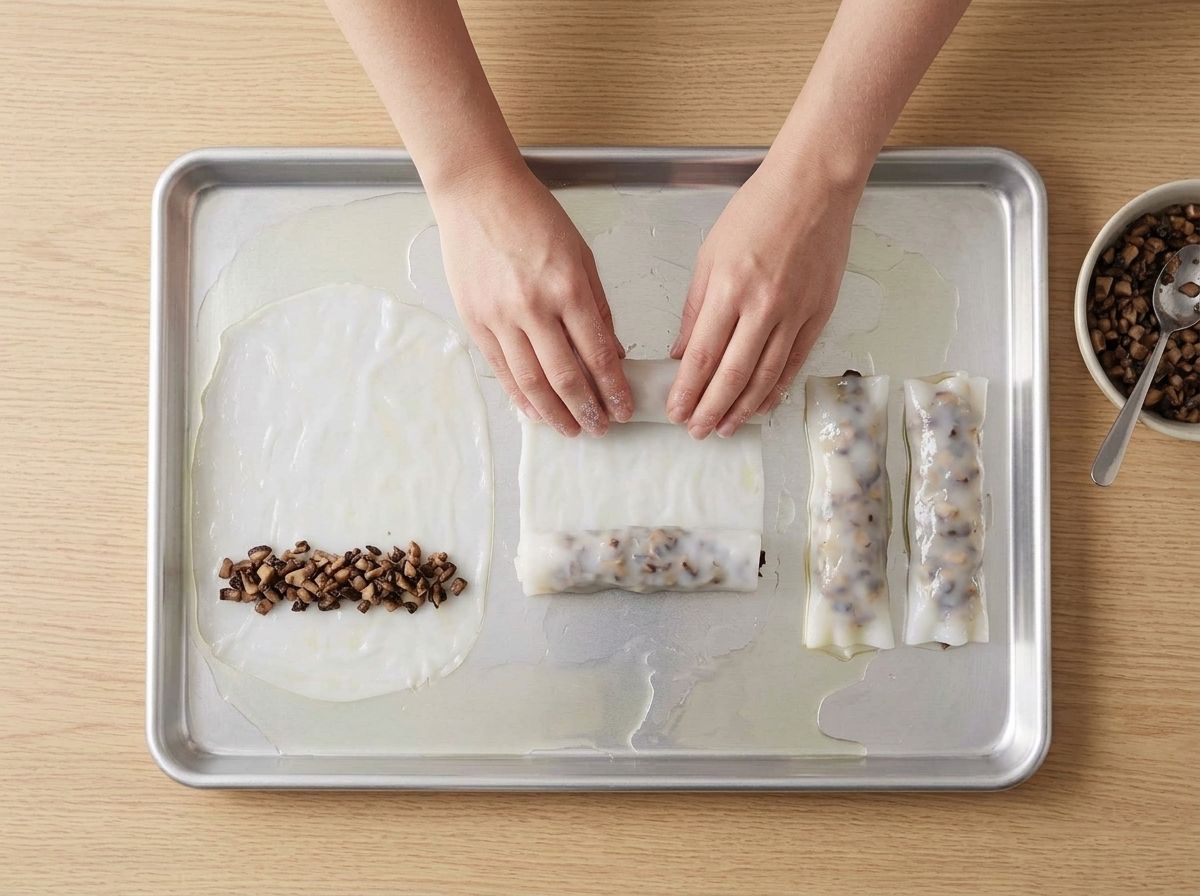
Spoon 1 tablespoon of filling in a thin line across the lower third of the sheet, leaving a border at each end. Fold the two ends in over the filling, then roll it up loosely away from you into a cylinder about 4 inches long. Move it to the serving plate, brush it with shallot oil, and keep going until the batter is used up, which will be about 20 rolls.
- 10
Serve
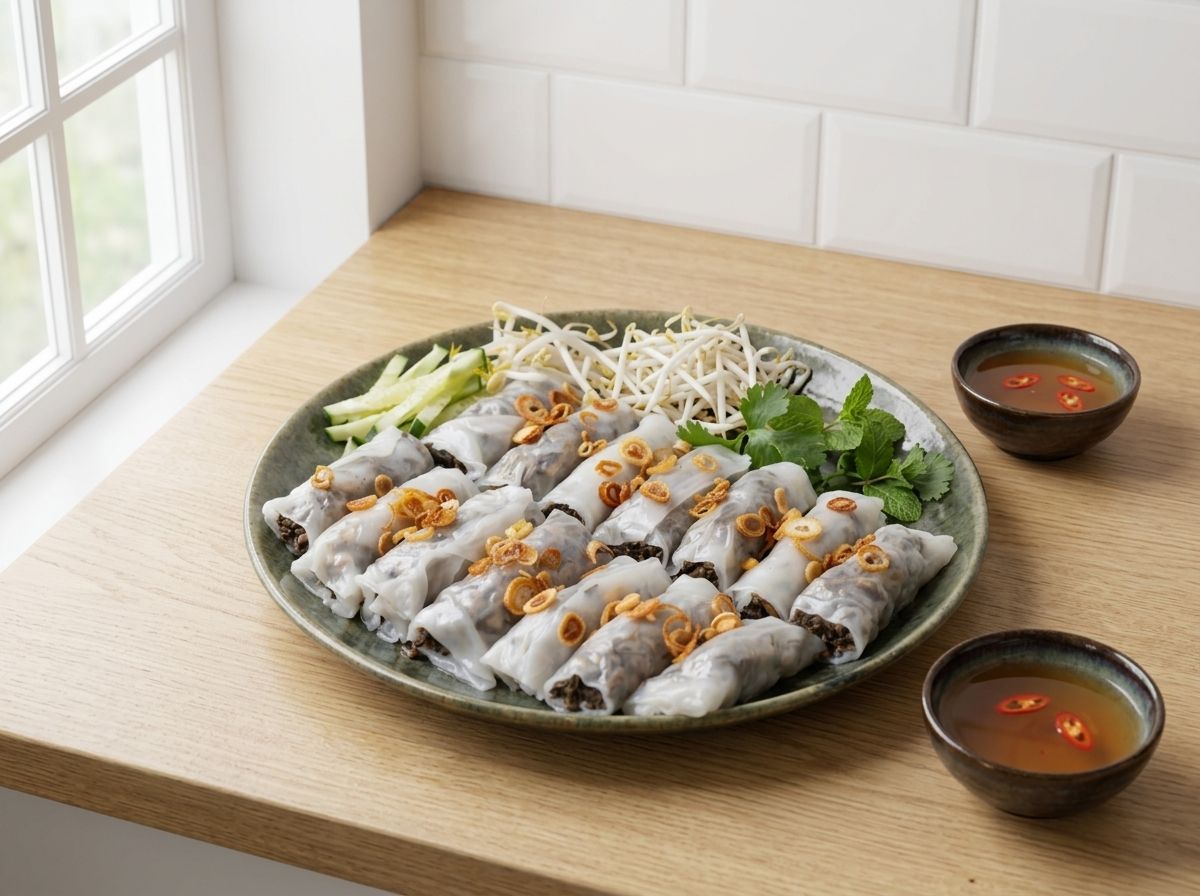
Cut the rolls into halves if you like, scatter the fried shallots over the top and arrange the cucumber, bean sprouts and herbs alongside. Divide the dipping sauce between four small bowls and serve right away, while the rolls are still warm.
Notes
The skillet needs a lid that fits. The lid is what steams the sheet, so a pan without one is a pan that will not make banh cuon. A lid from a different pan of the same size is fine.
Packets labeled bột bánh cuốn, sold in Vietnamese groceries, are a premixed rice and tapioca blend. Use one in place of the two flours, mixed with water according to the packet, and the rest of the recipe is unchanged.
The batter separates within a minute of standing. Stir it from the bottom before every single sheet, or the last rolls will come out twice as thick as the first.
For the dipping sauce, vegetarian fish sauce (nước mắm chay) in place of the soy sauce, in the same amount, is what a chay shop in Hanoi would serve.
Nutrition Facts
4 servings · 515 g per serving
- Calories
- 455 kcal
% Daily Value*
- Total Fat
- 19.1 g24%
- Saturated Fat
- 3 g15%
- Sodium
- 1069 mg46%
- Total Carbohydrate
- 66 g24%
- Dietary Fiber
- 3.8 g14%
- Sugars
- 13.1 g—
- Protein
- 8 g16%
Recipe from veggierecipes.blog
When it goes wrong
Troubleshooting
The first sheet came out in rags
That is the first sheet doing what first sheets do. The pan is not yet evenly hot and the oil has not spread into every pore of the coating, so the sheet grips in patches. Every bánh cuốn cook in Vietnam throws the first one away, and you should too, without changing anything. The second one is the one to judge. If the second and third tear as well, the pan is too hot: back it off to medium and give it a minute.
The sheets are thick and rubbery, more like a pancake
Three causes, usually two at once. The batter was not stirred before the ladle went in, so the flour that had sunk went into the pan as paste. There was too much batter for the pan. Or the pan was not swirled the instant the batter hit it, so it set where it landed. Stir from the bottom before every sheet, use a scant quarter cup for a 10-inch pan, and swirl in the same motion as pouring. If they are still thick after all that, the batter itself is: stir in cold water a tablespoon at a time.
The sheet will not come off the pan
Either it was pulled too soon or there was not enough oil. A sheet is ready when it has gone from white to translucent all the way to the middle, the surface is beaded with tiny bubbles, and the edge lifts off the pan when you nudge it. Before that it is glue. Give it another fifteen seconds under the lid. And brush the pan with oil before every sheet, not just the first: the batter takes the oil with it when it leaves. A non-stick pan with a scratched or worn coating will fight you no matter what, so use the best one you own.
It folded over on itself when I flipped it out
The flip was hesitant. Hold the pan an inch or two above the tray and turn it over in one decisive movement so the sheet drops flat; from higher up it falls in a curl. If flipping makes you nervous, loosen the edge with a thin silicone spatula, lift the sheet by its edge with your fingers and lay it on the tray. It is warm, not hot.
The rolls burst or split when I rolled them
Too much filling, or the filling was still wet. One tablespoon per roll is the amount, laid in a thin line, and it looks like too little until you roll it. The sheet is only as thick as a sheet of paper and it cannot hold a heaped spoonful. Roll loosely, too, since the filling is already cooked and there is nothing to seal in. If the filling is wet, it went into the rolls before the mushrooms had cooked dry; put it back in the pan for a few minutes.
The rolls stuck to each other on the plate
They were not oiled. A bare rice sheet welds itself to the next bare rice sheet within a minute, and prising them apart tears both. Brush each roll with shallot oil as it goes onto the plate, and lay them side by side rather than stacked. This is also why the tray gets oiled before any sheet lands on it.
Before you serve
Serving & Storage
In Hanoi this is breakfast, and it comes to the table in stages. The rolls are cut into pieces the length of a finger, scattered with fried shallots and laid on a plate, and the sauce arrives in a small bowl with a few slices of chili floating in it. You either dip each piece or, if you are eating fast, tip the whole bowl over the plate and eat it with a spoon. The cucumber, the bean sprouts and the herbs sit on the side and go in a few at a time so every mouthful has something cold and green in it against the warm, slippery sheet. A slice or two of chả lụa chay, the vegetarian version of Vietnamese ham, is the usual extra if your grocery stocks it.
Eat them warm and eat them soon. The texture that makes a rice sheet worth the trouble lasts about an hour, so have the toppings and the sauce on the table before the first sheet goes into the pan, and carry the rolls straight from the stove.
Making it ahead
Everything except the sheets can be made ahead, and the batter is better for it. Mixed the night before and left in the fridge, it hydrates fully and the sheets come out smoother and more translucent than from a batter rested for half an hour. Stir it hard before using, since it will have separated into water on top and paste on the bottom. The filling keeps three days in the fridge and should be warmed through before rolling, because cold filling in a warm sheet is unpleasant. The dipping sauce keeps a week. The fried shallots keep two weeks in an airtight jar once completely cool, and the shallot oil keeps a month.
The rolls themselves do not make ahead. Rolled and left, even for an afternoon, they firm up and dry at the edges and lose the thing that makes them worth the trouble.
Storing leftovers
Leftover rolls keep two days in the fridge in a covered container, brushed with oil so they do not stick together. They will be leathery cold and should not be eaten that way. Steam them for three or four minutes in a steamer basket, or put them on a plate under a damp paper towel and microwave for a minute, and they soften back to something close to fresh. Store the herbs, cucumber and sprouts separately, and do not freeze the rolls: the sheet turns grainy and splits as it thaws. Leftover batter keeps three days in the fridge, so the better plan is to store batter rather than rolls and steam a fresh few sheets the next morning.
Still wondering
Frequently Asked Questions
What is the difference between banh cuon and banh uot?
The same steamed rice sheet, presented differently. Bánh cuốn is rolled, usually around a filling, and is the northern form from Hanoi. Bánh ướt, literally wet cake, is the southern form: the sheets are left flat or folded, cut into wide ribbons, and eaten unfilled with the same fried shallots, cucumber and dipping sauce, often with a slice of chả alongside. If you make the batter in this recipe and skip the filling and the rolling, you have bánh ướt.
Is banh cuon gluten-free?
The sheets are, since rice flour and tapioca starch contain no gluten, and so is the filling apart from its tablespoon of soy sauce. The dipping sauce is the same story. Use tamari in both places, in the same amounts, and the whole plate is gluten-free. Check the label on any fried shallots or vegetarian ham you buy rather than make, since both are sometimes dusted with wheat flour.
Can I double the recipe?
Double every ingredient and nothing about the method changes except the time at the stove, which doubles too: forty rolls is most of an hour of steaming one sheet at a time. Two lidded non-stick pans of the same size going side by side halves that, with one sheet steaming while you turn out and roll the other.
More Vietnamese Dishes To Try
Made this?