
Tofu Banh Mi Recipe
Published · Updated
Almost every vegetarian banh mi drops the pate, which is exactly why they taste fresh, crunchy and somehow empty.
Jump To Recipe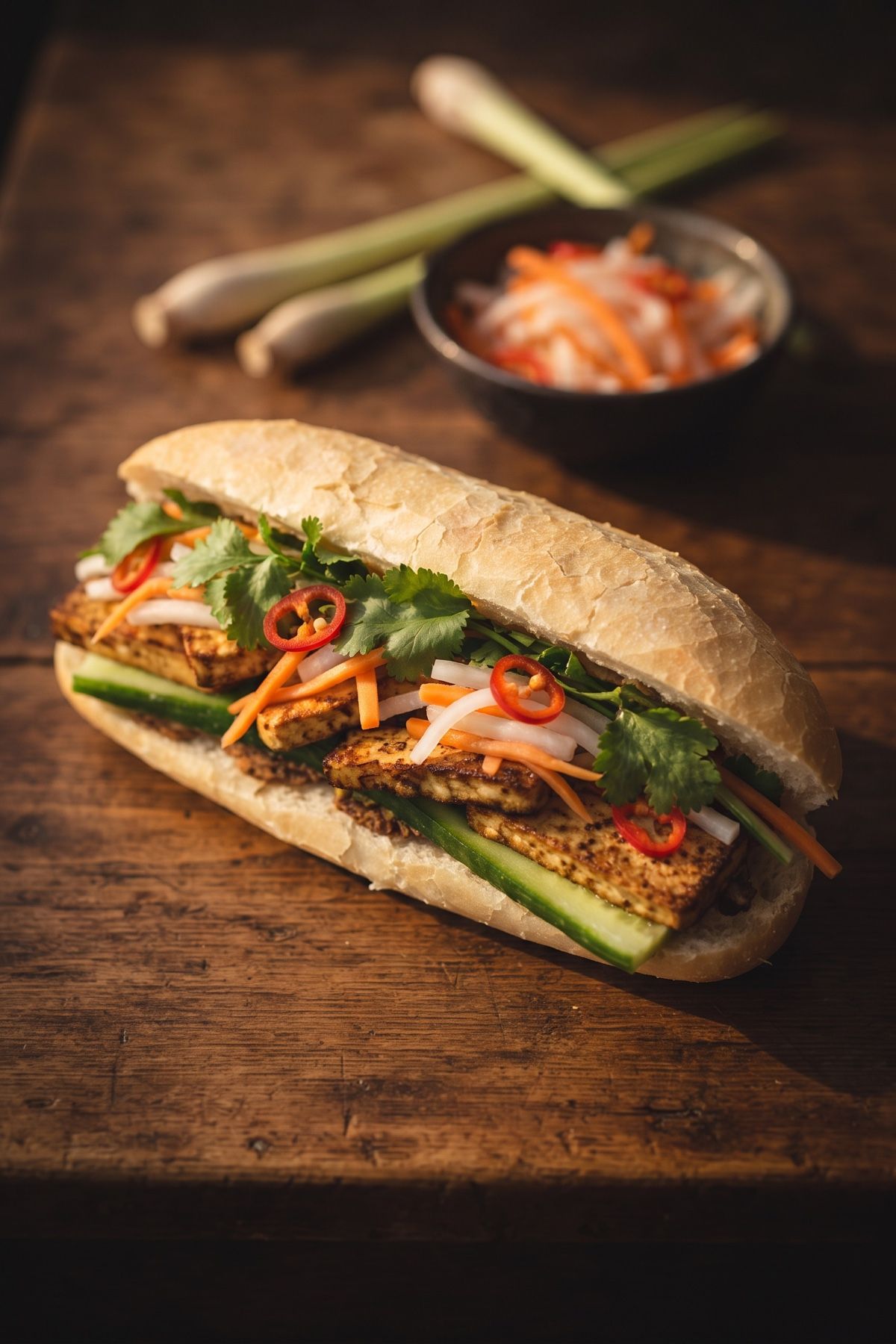
The Sandwich I Kept Getting Wrong
For about two years I made a vegetarian banh mi roughly once a month and was quietly disappointed every single time. It was never bad. It was crunchy and sharp and fresh, the tofu was decently marinated, and I could not work out why it kept feeling like a rehearsal for a sandwich rather than the thing itself.
I assumed the problem was the tofu. So I tried harder marinades, longer marinades, smoked tofu, fried tofu, tofu pressed until it squeaked. None of it moved the needle, which should have told me the tofu was not the variable.
What finally fixed it was a banh mi from a Vietnamese bakery in a city I was visiting, eaten about four minutes after it was handed over, and paying attention for once. Underneath the mayonnaise there was a dark layer I had never once put in mine. Every version I had made was missing the bottom of the sandwich, and I had spent two years adjusting the top of it.
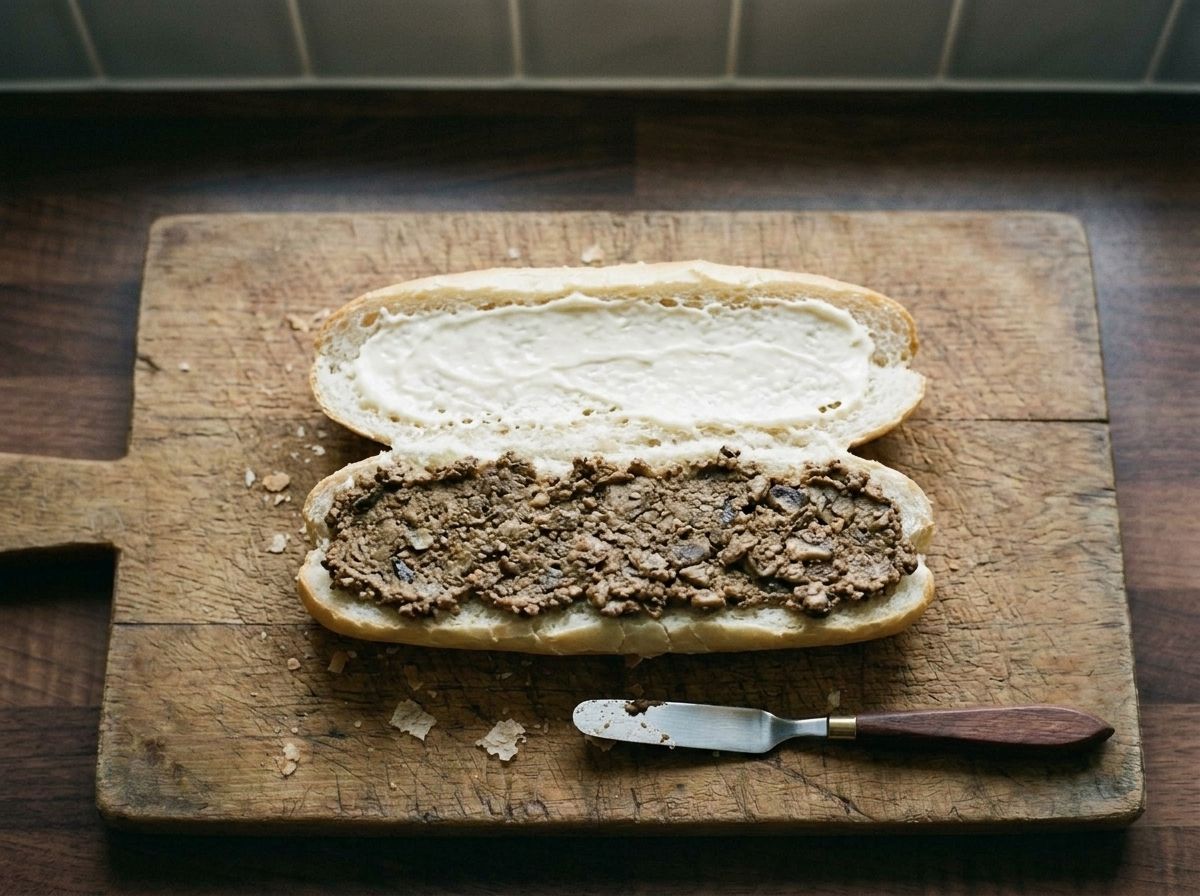
The mushroom and walnut pate here is not trying to taste like liver. It is trying to occupy the same position, dark and fatty and savory under everything else, and once it is there the pickles suddenly have a job to do. It was the difference between a good sandwich and the right one.
The story
Why Most Vegetarian Banh Mi Tastes Thin
Banh mi is what happened when a French colonial baguette met a Vietnamese kitchen and lost the argument. The bread arrived with the French in the nineteenth century and stayed expensive and foreign for decades. What turned it into a national sandwich was the period after 1954, when Vietnamese bakers in Saigon started making the loaf their own: shorter, lighter, and baked in fierce heat with steam so the crust came out as thin as an eggshell and the inside close to hollow.
That bread is the reason a banh mi works, and it is the first thing people get wrong at home. A French baguette has a thick chewy crust and a dense crumb. Bite into a sandwich built on one and the filling squeezes out the far end while the crust cuts the roof of your mouth. The Vietnamese loaf is engineered to give way: it shatters, it compresses, and it holds a huge quantity of filling in a roll you can actually close your jaw around.
There is a persistent myth attached to this, worth clearing up because it sends home bakers down a dead end. The lightness is often credited to rice flour in the dough. Vietnamese bakers and bakery scientists both say otherwise: modern banh mi dough is wheat, and the texture comes from a low-protein flour, a dough improver, hard gluten development and a great deal of steam in a very hot oven. Rice flour swapped in at any real proportion tends to make the loaf denser, not lighter. If you are buying rather than baking, and you should be, this matters only in that it tells you what to look for: weight, not ingredients. A banh mi roll of a given size should feel implausibly light in the hand.
The filling followed the same logic of adaptation. A classic banh mi thit carries several pork products at once: a slice of cha lua, some grilled thit nuong, cold cuts, and a layer of liver pate underneath the mayonnaise. Then it is loaded with do chua, the pickled carrot and daikon, cucumber, cilantro and chili. The structure is fat and salt underneath, acid and freshness on top.
Which brings us to why this page exists. A vegetarian banh mi is not a modern invention or a Western concession. Banh mi chay is sold from carts across Vietnam, particularly around the Buddhist observance days on the first and fifteenth of the lunar month, when a great many people eat vegetarian and the chay version is simply what is for sale. Tofu, seitan, mushroom and the same pickles.
But most vegetarian banh mi recipes written in English are missing a layer, and it is always the same one. They keep the pickles, the herbs, the chili and the mayonnaise, they swap the pork for marinated tofu, and they quietly drop the pate. What is left is fresh and sharp and crunchy and somehow thin, a very good salad sandwich that does not taste like banh mi. The pate is doing structural work: it is the dark, funky, savory base that everything acidic on top is cutting against. Take it out and there is nothing for the vinegar to push back on.
So this recipe puts it back, as a mushroom and walnut pate that takes ten minutes in a food processor. Mushrooms bring the glutamate and the earthiness, toasted walnuts bring the fat and the slight bitterness that liver has, and a spoonful of soy and balsamic bring the funk. It is not an imitation of liver pate and it does not need to be. It occupies the same place in the sandwich, and that turns out to be the whole job.
What to buy
Ingredient Notes
Banh mi rolls
The single biggest variable, and worth a detour to an Asian bakery for. You are looking for a roll about eight inches long that feels far too light for its size, with a crust that flakes when you squeeze it. Vietnamese and Chinese bakeries sell them for well under a dollar. If you cannot get one, choose the lightest, airiest white roll your supermarket has and pull out some of the interior crumb to make room. What does not work is sourdough, ciabatta or a proper French baguette: all three have the chew and density that make a banh mi hard to eat.
Daikon
Buy it firm and heavy, with smooth unwrinkled skin. It is about 95 percent water, which is the whole reason the recipe salts it before pickling, and a limp one has already lost enough moisture to go woolly in the brine. One medium daikon is plenty. It also smells assertive while you are cutting it and that fades entirely in the pickle, so do not be put off.
Lemongrass
Use fresh stalks, not the paste in a tube. Peel away the dry outer layers until you reach the pale tender core in the bottom three or four inches, and mince that finely. The top two thirds of the stalk is woody and will stay woody no matter how long you cook it. If you can only find it frozen, that works; if all you can find is dried, use a strip of lime zest instead, which is a different flavor but a better one than dust.
Extra-firm tofu
Extra-firm here, not silken and not medium. This tofu gets pressed, marinated and seared hard, and anything softer falls apart at the searing stage and waters down the marinade before that. Press it properly: half an hour under something heavy, or fifteen minutes if you have a press. Wet tofu steams in the pan instead of browning, and the browning is where the flavor is.
Cremini mushrooms and walnuts, for the pate
Cremini rather than white button, because the darker mushroom gives a browner, deeper pate. Toast the walnuts before they go in: three minutes in a dry pan until they smell nutty is enough, and untoasted walnuts taste faintly of cardboard. Cook the mushrooms until they have given up their water and started to catch on the pan, which is much longer than looks necessary. A wet mushroom mixture makes a pate that slides off the bread.
Rice vinegar
Plain unseasoned rice vinegar, not the seasoned kind for sushi rice, which already contains sugar and salt and will throw the balance out. Distilled white vinegar works if you cut it slightly with extra water, since it is sharper. Cider vinegar is too fruity and reads as wrong here.
Vegan mayonnaise
Not a health tax, an actual requirement. Banh mi mayonnaise in Vietnam is rich and eggy and applied generously, and the fat is what carries everything else. Use a full-fat vegan mayonnaise rather than a light one, and use more than feels sensible. If you are vegetarian rather than vegan, ordinary mayonnaise is closer to the original.
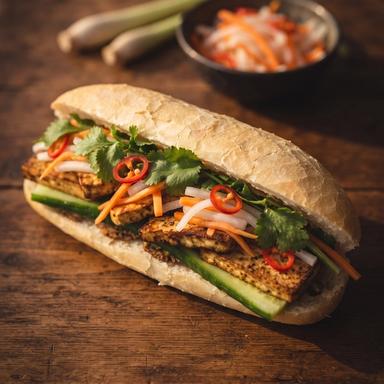
Tofu Banh Mi
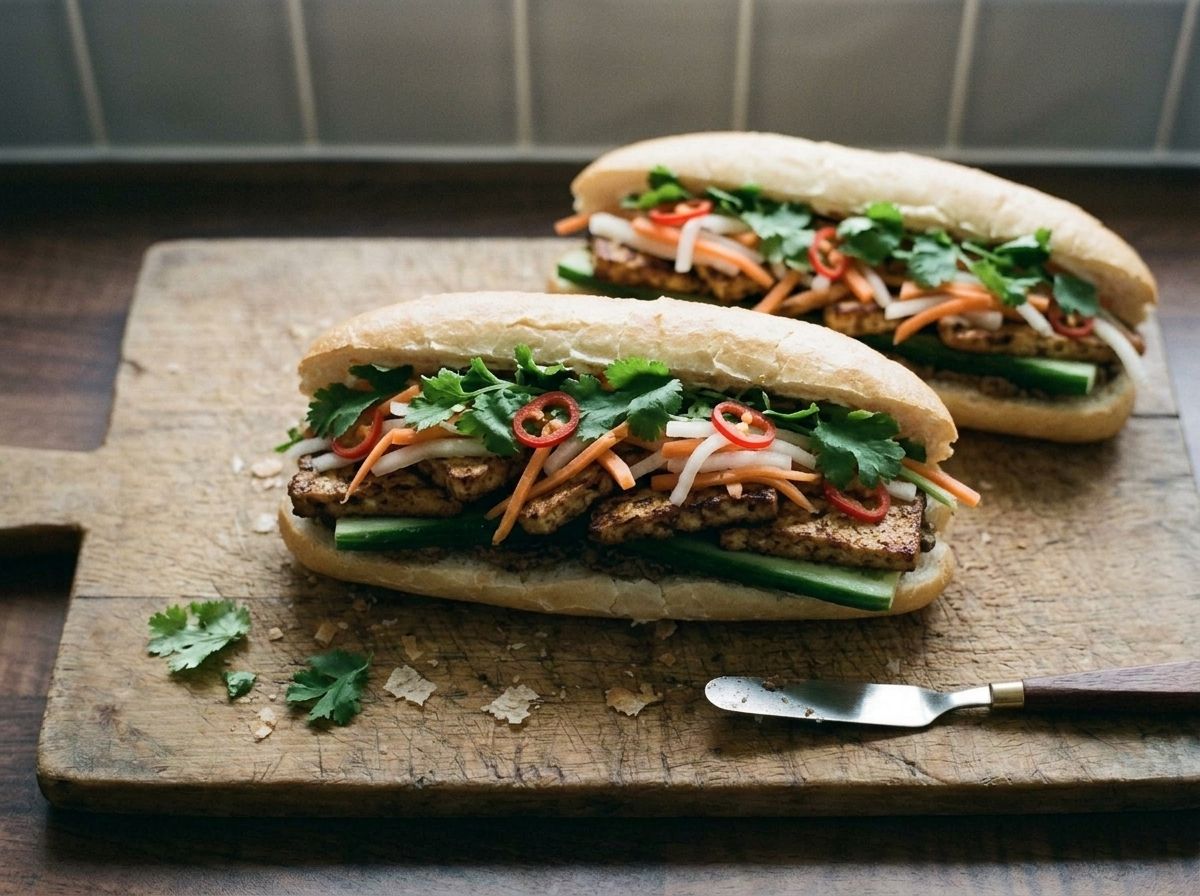
A Vietnamese tofu sandwich with lemongrass marinated tofu, pickled carrot and daikon, cucumber and cilantro, built on a mushroom and walnut pate.
Ingredients
Equipment
As an Amazon Associate I earn from qualifying purchases, at no extra cost to you.

Instructions
- 1
Salt the daikon and carrot
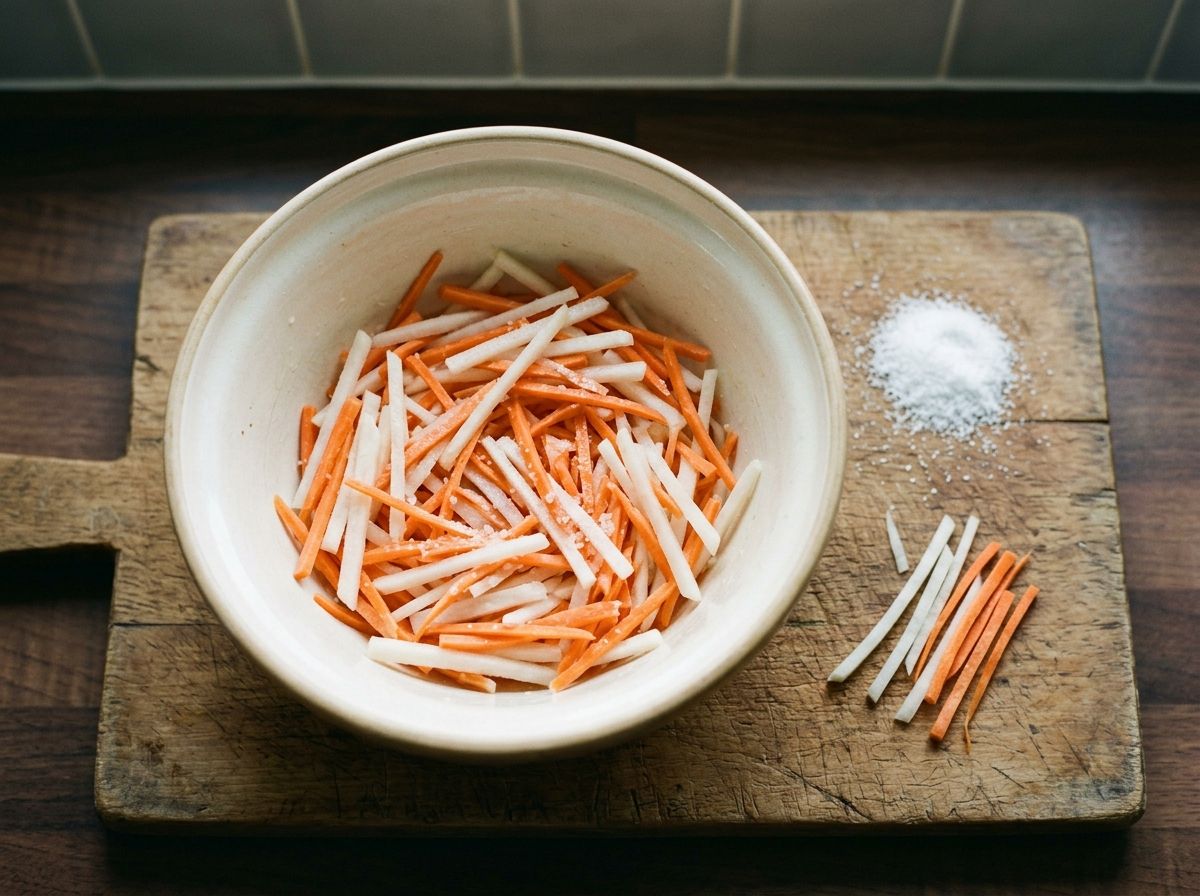
Toss the daikon and carrot matchsticks with the fine salt and a pinch of the sugar in a bowl. Leave for 15 minutes, until a strand bends right over without snapping. Squeeze them firmly in your hands and pour off the liquid. Skipping this is why home pickles come out watery.
- 2
Pickle them
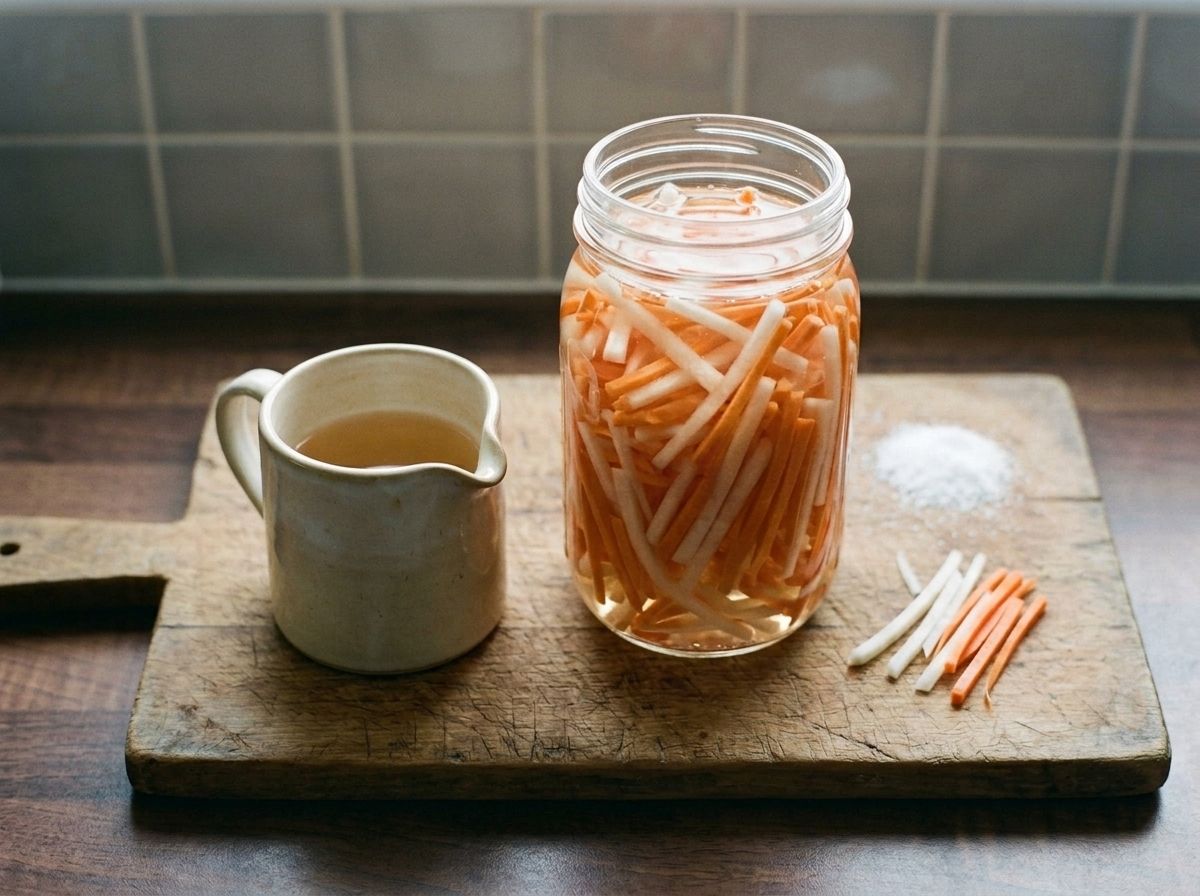
Stir the rice vinegar, sugar and warm water together until the sugar dissolves, then pour it over the squeezed vegetables in a jar or bowl. Press them under the surface and leave at least 1 hour at room temperature. They are better the next day and keep three weeks refrigerated.
- 3
Press and slice the tofu
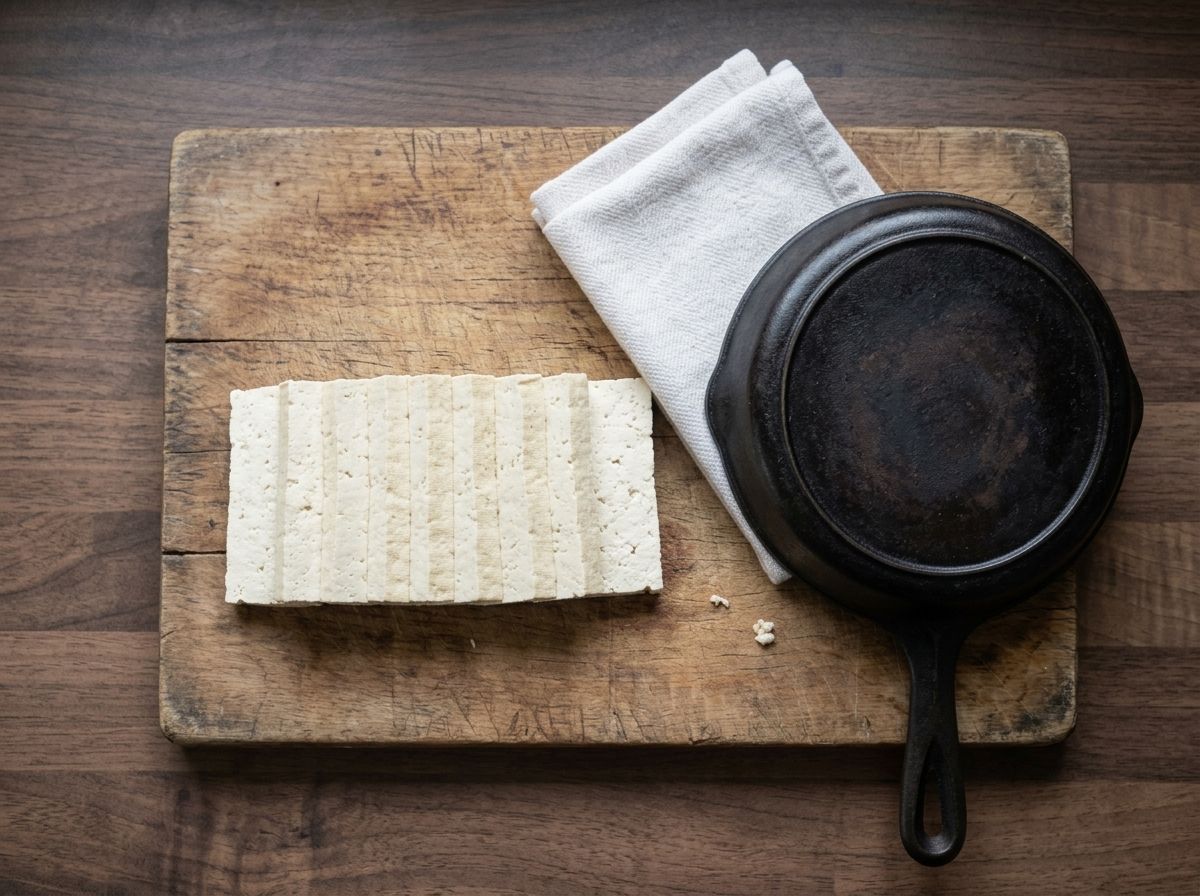
Wrap the tofu block in a clean towel, set a heavy pan on top and leave it 30 minutes. Unwrap and cut it into 8 slabs about half an inch thick, which gives more surface for browning than cubes do.
- 4
Marinate the tofu
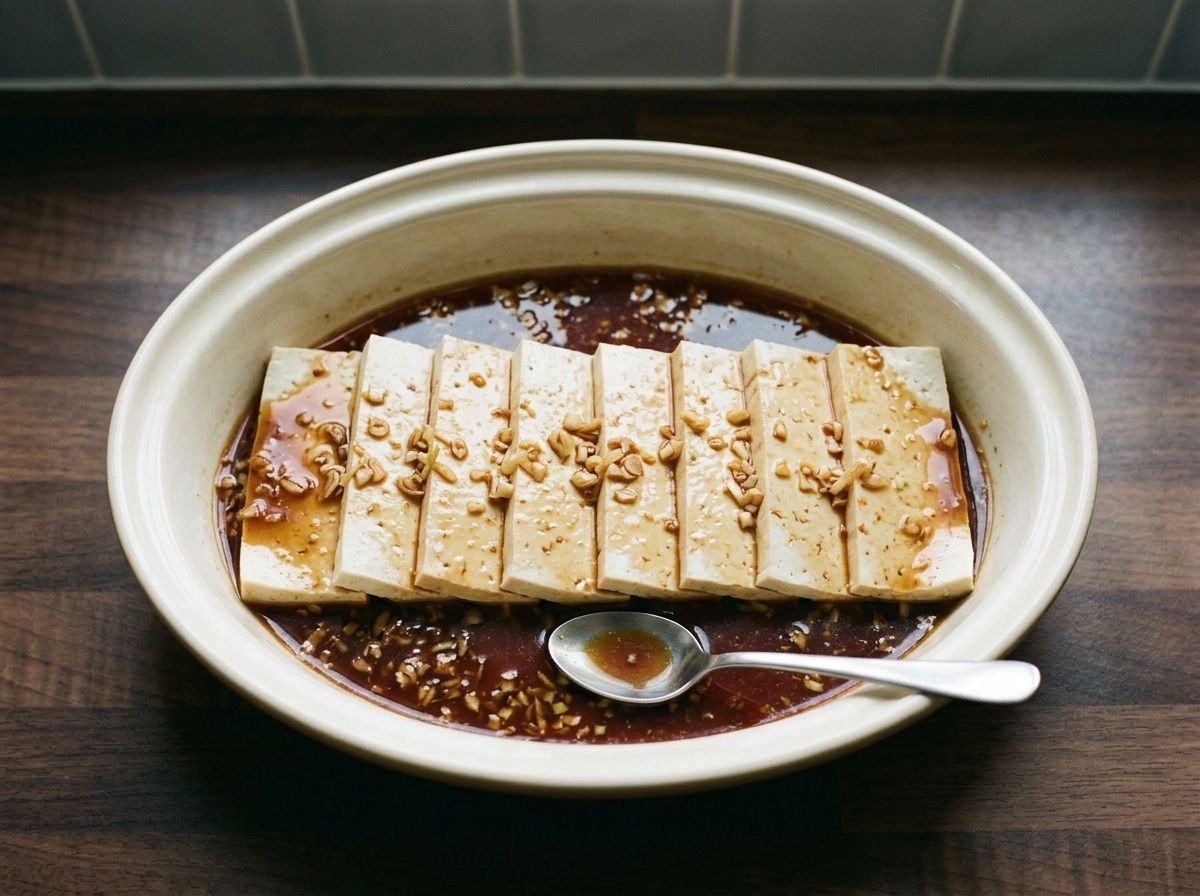
Whisk the minced lemongrass, garlic, soy sauce, brown sugar, 1 tablespoon of the neutral oil, the sesame oil and a good grind of black pepper in a shallow dish. Turn the tofu slabs through it and leave 20 minutes, or overnight in the fridge.
- 5
Cook down the mushrooms
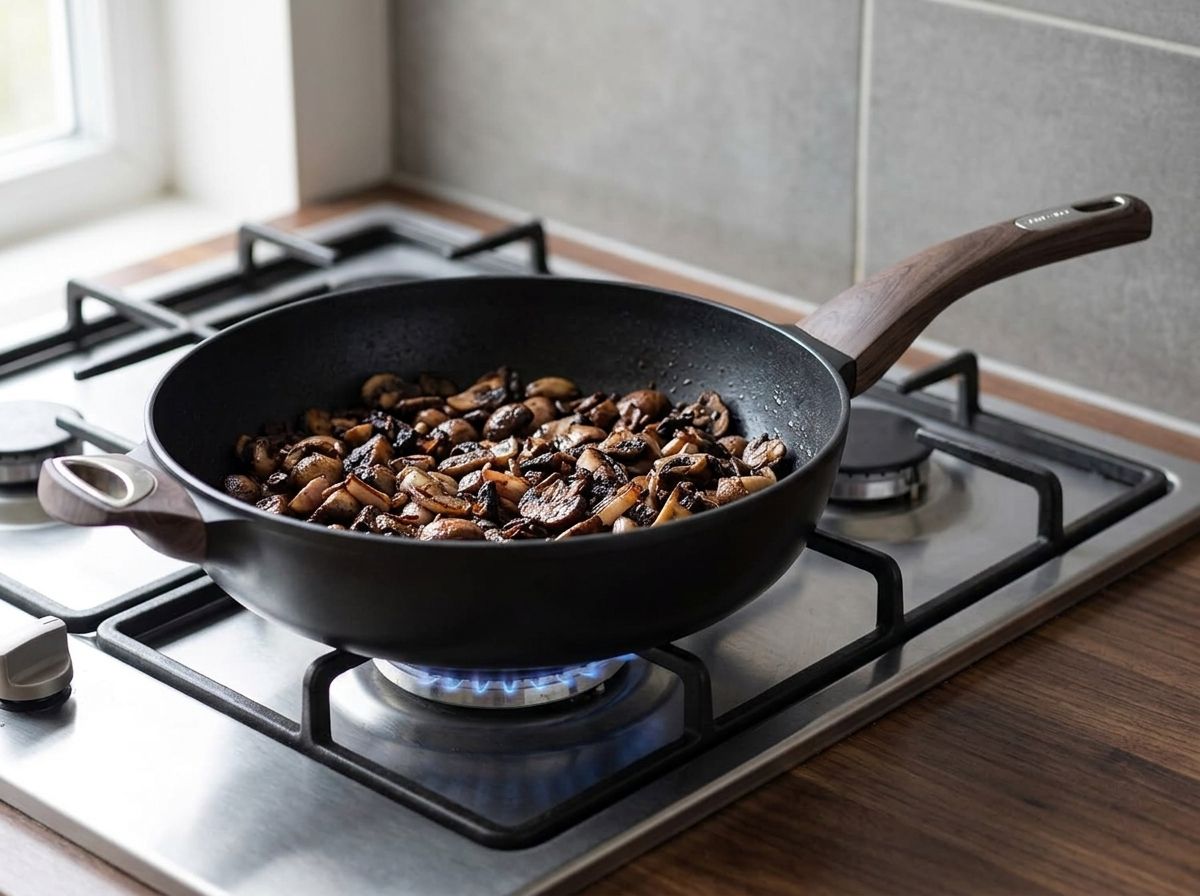
Heat the olive oil in a skillet over medium-high heat and cook the mushrooms and shallot for 8 to 10 minutes. Keep going past the point where they look done: you want the water gone and the edges catching, because a wet mixture makes a pate that will not spread.
- 6
Blend the pate
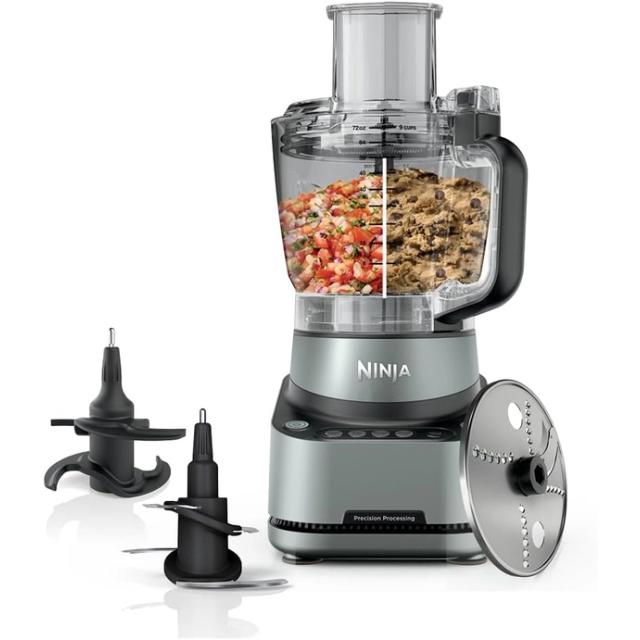
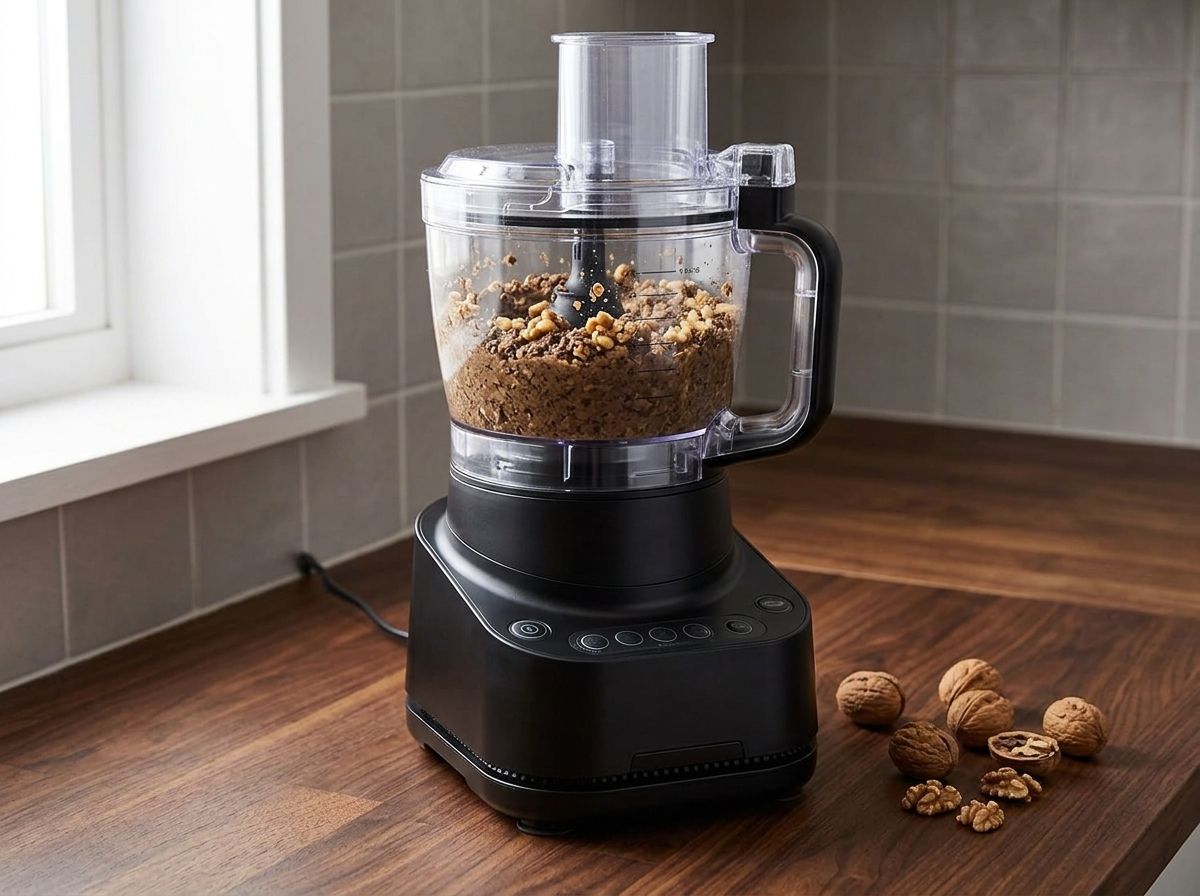
Tip the mushrooms into a food processor with the toasted walnuts, the balsamic, 1 tablespoon of the soy sauce and plenty of black pepper. Blend to a coarse, spreadable paste, stopping while it still has some texture. Taste and add salt.
- 7
Sear the tofu
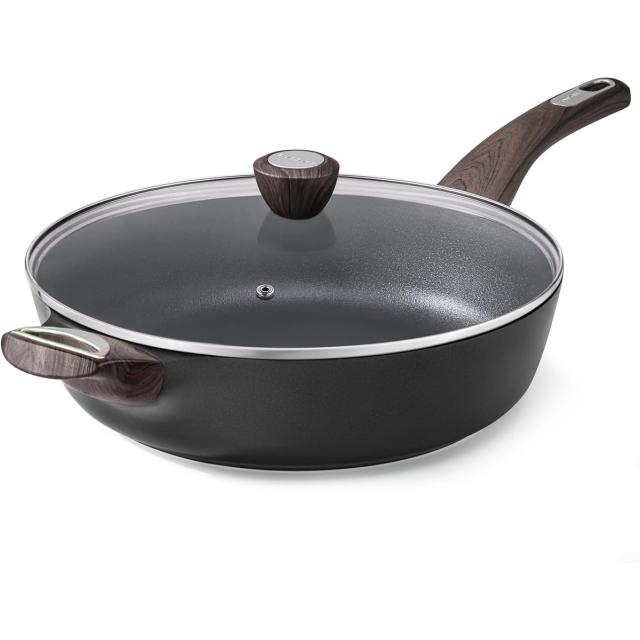
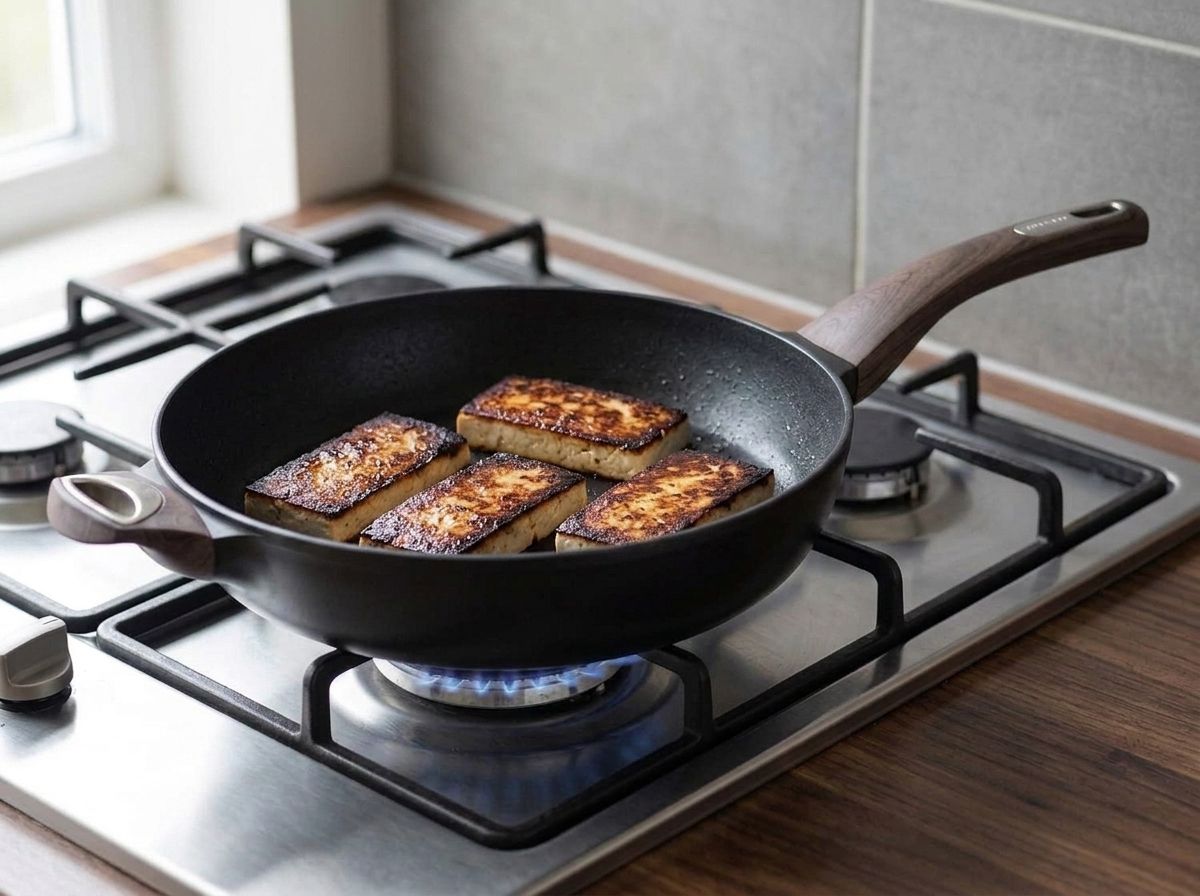
Wipe out the skillet, heat the last tablespoon of oil over medium-high heat, and lay in the tofu slabs. Leave them undisturbed for 3 to 4 minutes until deeply browned, then turn once and brown the other side. Moving them around stops a crust forming.
- 8
Warm and open the rolls
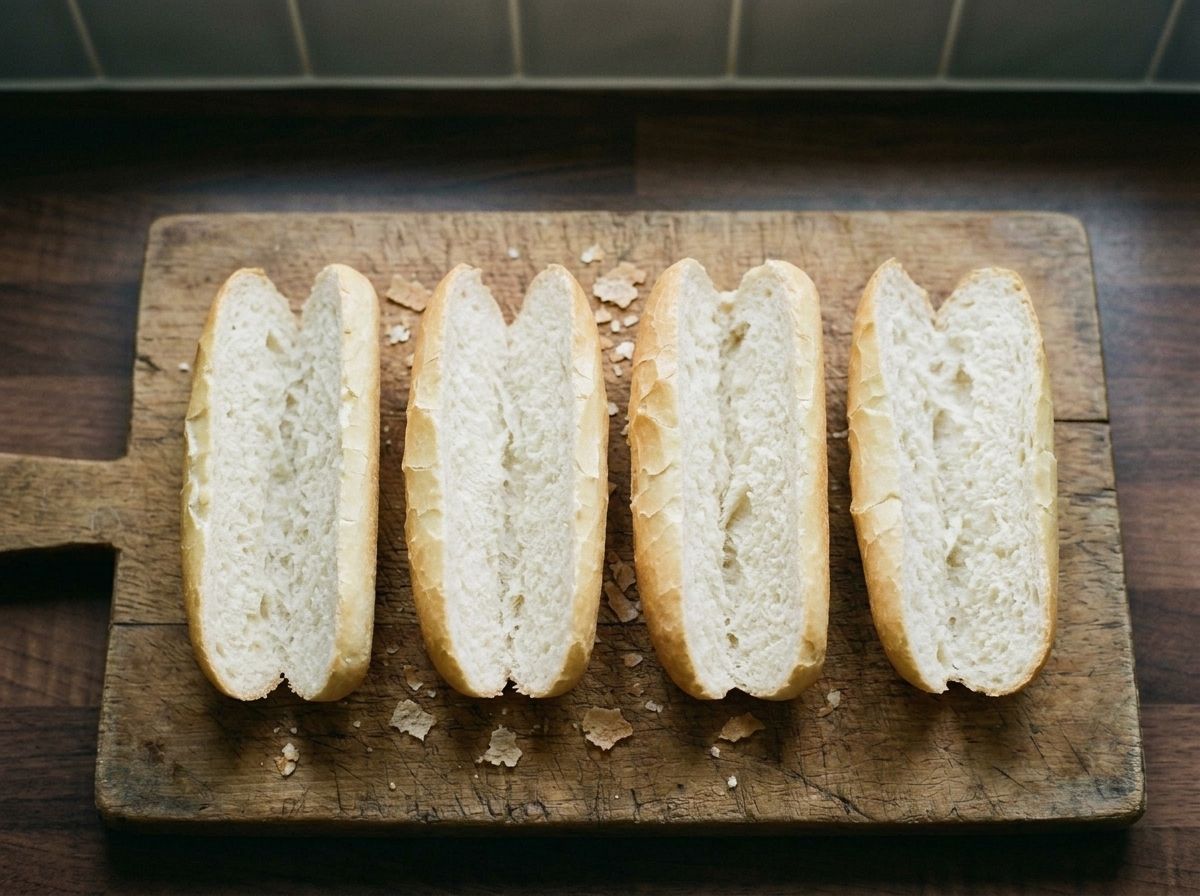
Warm the rolls in a hot oven for 3 to 4 minutes, until the crust crackles when squeezed. Split each one along its length without cutting all the way through, and pull out a little of the soft interior if the roll is a dense one.
- 9
Build the base
Spread vegan mayonnaise generously over both cut faces, then a thick layer of the mushroom pate along the bottom half. The mayonnaise is glue as much as flavor, and the pate is the layer that makes this taste like banh mi.
- 10
Fill and finish
Lay in the seared tofu, then cucumber spears, then a heavy handful of drained pickles and plenty of cilantro. Add chile if using, finish with a few drops of Maggi or soy directly onto the filling, press the sandwich closed and eat straight away.
Notes
The pickles are better on day two and keep three weeks, so make a double batch.
Do not skip the pate. It is the layer that separates this from a salad sandwich.
Squeeze the salted daikon hard before brining or the pickle comes out weak.
Build and eat within a few minutes; the bread starts softening on contact.
Nutrition Facts
4 servings · 532 g per serving
- Calories
- 718 kcal
% Daily Value*
- Total Fat
- 40.1 g51%
- Saturated Fat
- 4 g20%
- Sodium
- 1209 mg53%
- Total Carbohydrate
- 70.2 g26%
- Dietary Fiber
- 6.7 g24%
- Sugars
- 26.9 g—
- Protein
- 21.1 g42%
Recipe from veggierecipes.blog
When it goes wrong
Troubleshooting
It tastes fresh and crunchy but sort of empty
You have made the classic vegetarian banh mi and left out the pate. This is the most common fault in the whole category and it is a missing layer rather than a seasoning problem, so no amount of extra soy or chili will fix it. The pate is the dark savory base that the pickles and herbs are supposed to cut against; without it there is nothing for the acid to work on. Ten minutes in a food processor solves it.
The pickle came out watery and tastes weak
The daikon was not salted first. It is almost entirely water, and if that water goes into the brine rather than out of the vegetable, you have diluted the vinegar and sugar by a third or more. Toss the julienned daikon and carrot with salt and a little sugar, leave them fifteen minutes until they bend without snapping, then squeeze them firmly and discard the liquid before the brine goes on.
The sandwich falls apart or squirts out the end
Nearly always the bread. A dense baguette will not compress, so biting down forces the filling out sideways instead of squeezing the sandwich shut. Get a proper light banh mi roll if you possibly can. If you are stuck with a heavier loaf, pull out a good handful of the soft interior before you fill it, which both makes room and lets the roll collapse the way it should.
The tofu is pale and rubbery instead of browned
Two causes and usually both. It was not pressed long enough, so it was still releasing water into a hot pan and steaming itself, and the pan was not hot enough to begin with. Press for a full thirty minutes, get the pan properly hot before the tofu goes near it, and then leave it alone: turning it every thirty seconds prevents a crust from forming at all.
Everything slid out when I picked it up
The layers are in the wrong order. Spread the mayonnaise on both cut faces first, because it is glue as much as it is flavor, then the pate on the bottom half, then the tofu, then the drained pickles and herbs on top. Wet pickles straight onto bare bread will make the crumb soggy and give the filling nothing to grip.
Mine tastes nothing like the one from the Vietnamese bakery
Assuming the bread and the pate are right, the missing thing is almost always salt at the very end. Banh mi in Vietnam is finished with a few drops of Maggi seasoning or soy directly onto the filling, and it is not optional seasoning so much as the final note. The other candidate is quantity: a real banh mi is loaded far more heavily with pickles and cilantro than looks reasonable.
Before you serve
Serving & Storage
Banh mi is street food and it is meant to be eaten within a few minutes of being assembled, standing up, wrapped in paper. The bread starts softening from the moment the mayonnaise touches it, so the window between building it and eating it is genuinely short. If you are feeding several people, set the components out and let everyone build their own rather than making four sandwiches and carrying them to the table.
That is also the easiest way to scale this past four. Everything except the searing can sit out on the counter: a bowl of pickles, the pate, the cucumber spears, a pile of cilantro, the chile, the mayonnaise and a basket of rolls. Sear the tofu in batches as people work through it, since it is much better warm than at room temperature, and let everyone decide their own ratio of pickle to herb. It turns a fiddly sandwich into a very low-effort way to feed eight, and it solves the softening problem by construction.
It needs nothing beside it, but if you want a drink to go with it the traditional pairing is Vietnamese iced coffee, which is strong and very sweet and cuts the salt in the same way the pickles do. Iced tea works. So does a cold lager.
Making it ahead
Almost all of this improves for being made in advance, which makes it a much better weeknight sandwich than it looks. The pickles are better on day two than day one and keep for three weeks in the fridge, so make a double batch and use them on everything. The pate keeps five days covered and is easier to spread cold. The tofu can be marinated overnight and seared in five minutes.
What you cannot do is build the sandwich ahead. A banh mi made in the morning is a wet sandwich by lunchtime, because the pickles keep releasing liquid into the crumb no matter how well they are drained. If you need to take one to work, carry the bread and the fillings separately and put it together there. It takes about ninety seconds.
Storing leftovers
There are rarely leftovers of the assembled sandwich, and if there are, eat them the same day and accept that the bread will have gone soft. The components store much better than the whole: pickles three weeks, pate five days, seared tofu three days in the fridge and good cold straight from it. The pickles in particular are worth keeping on hand for their own sake, and go on rice bowls, noodle salads and fried eggs quite happily.
Do not freeze the pickles, which turn to mush, or the assembled sandwich. The pate freezes acceptably for a month if you press a sheet of parchment onto the surface first, though it loses a little of its texture and is worth making fresh given how quickly it comes together.
Still wondering
Frequently Asked Questions
Is this vegan, and what changes if I am only vegetarian?
As written it is vegan: the mayonnaise is vegan, the pate is mushroom and walnut, and there is no fish sauce anywhere. If you eat eggs and dairy, use ordinary full-fat mayonnaise instead, which is what a Vietnamese bakery uses and is slightly richer. Nothing else needs to change. It is not gluten free, and cannot easily be made so, because the roll is the dish.
Can I buy the pate instead of making it?
Yes, and it is a reasonable shortcut, but read the label rather than trusting the shelf. Most jarred vegetarian pate sold in Western supermarkets is a mushroom or lentil spread and works fine here. Tinned pate labelled pate chay from a Vietnamese grocery is closer still. What does not work is a smooth French-style vegetable pate, which is usually sweet and herbal rather than savory and earthy, and reads as the wrong flavor entirely.
How much does this make, and does it scale?
Four generous sandwiches, and the components scale cleanly with one exception. The pickle recipe makes about three cups, which is roughly twice what four sandwiches need, and that is deliberate because it keeps for three weeks. If you are cooking for eight, double the tofu and the pate but the single batch of pickles will still cover it.
More Vietnamese Cooking To Try
Made this?