
Vegetarian Pho Recipe
Published · Updated
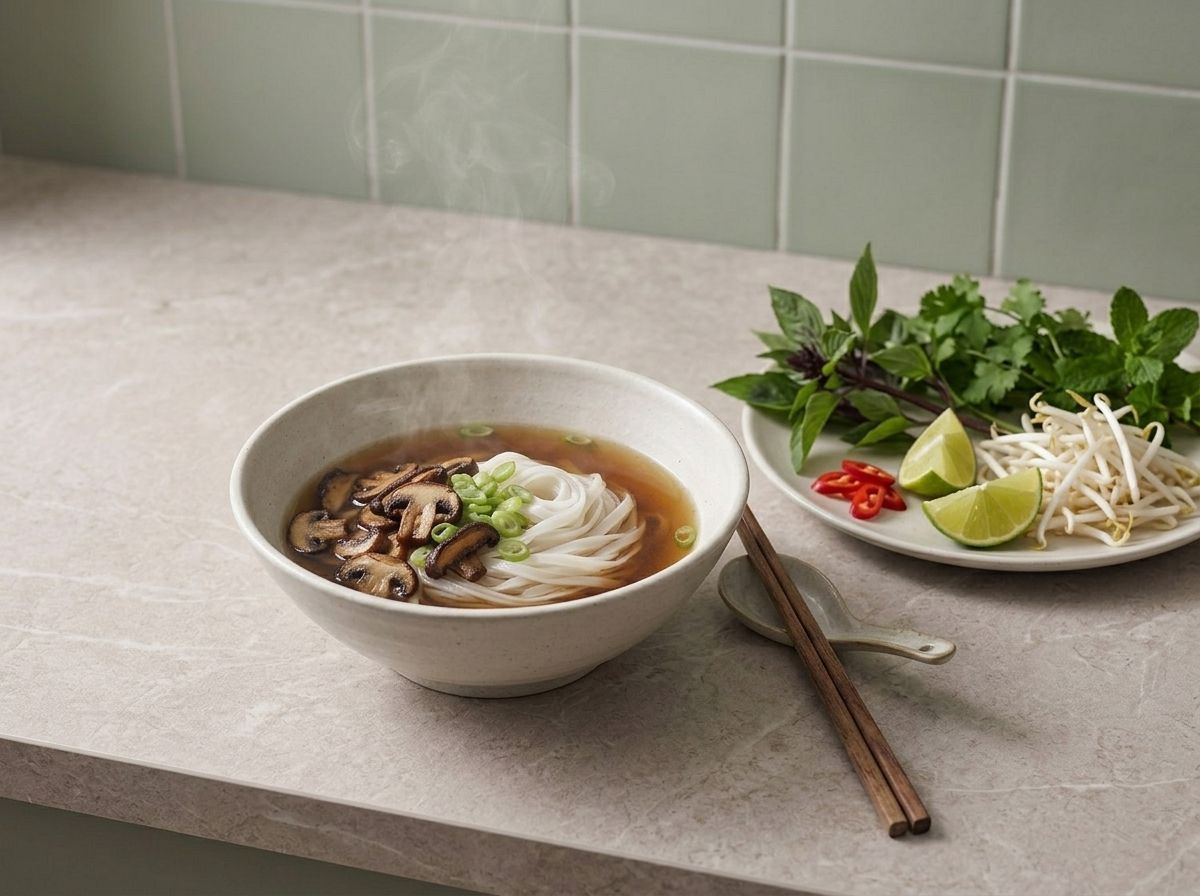
A steaming bowl of vegetarian pho in aromatic broth with vibrant toppings. Comforting, healthy, and bursting with flavor!
Jump To Recipe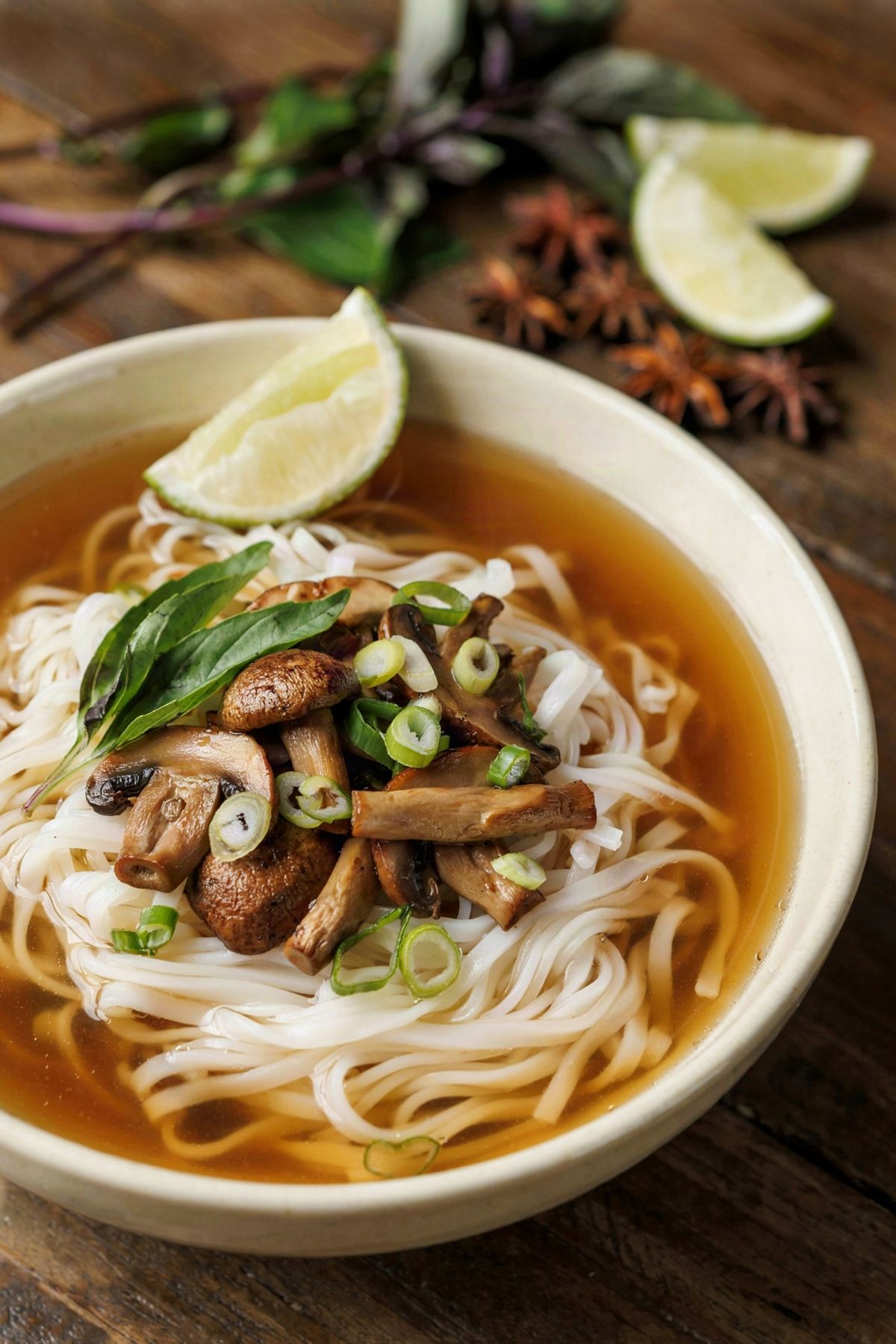
Why Vegetarian Pho Is My Go-To Comfort Soup
There’s something almost meditative about making (and eating) a bowl of vegetarian pho. The slow simmer of aromatics like star anise, cinnamon, and ginger pulls you right into the kitchen. For me, this dish is comfort food at its finest, but it's also fresh enough to enjoy year-round.
What I love most about this recipe is how easy it is to make it your own. Once you have your broth and noodles, you’re free to go wild with toppings and add-ins. I’m a fan of plenty of fresh herbs and a generous squeeze of lime, with heaps of mushrooms and sprouts for texture.
Here’s how I like to customize my bowl:
- Extra mushrooms for earthiness
- A handful of bean sprouts for crunch
- Chili slices for that perfect, lingering heat
- Tons of herbs (basil, cilantro, mint, you can’t overdo it)
For anyone looking for a way to keep dinners interesting, vegetarian pho is a fantastic choice. It’s restorative, surprisingly filling, and honestly just fun to eat. Highly recommend grabbing some chopsticks and diving in.
The story
Vegetarian Pho Is Not Beef Pho With the Beef Taken Out
Pho is younger than the cars on the street it was first sold on. It appears in northern Vietnam somewhere between 1900 and 1907, around Nam Định, a textile town southeast of Hanoi, in the middle of the French colonial period. Nobody inherited it from anywhere. It was assembled out of what was already being cooked in the same few streets: ngưu nhục phấn, the beef and rice noodle dish Cantonese immigrants were selling; xáo trâu, a Vietnamese buffalo soup eaten with rice vermicelli; and pot-au-feu, the boiled beef the French mill workers ate.
The name is still argued over. One camp hears the feu of pot-au-feu, pot on the fire. The other hears the Cantonese word for the flat noodle. There is no settled answer, and the unsettledness is the useful part: this dish was put together in public, within living memory, and what got fixed as its identity was never the animal.
What got fixed was a method for the broth. Onion and ginger blackened whole over a flame until the cut faces are carbon, then dropped into the pot. A small closed set of whole spices, toasted dry first: star anise, cassia, clove, coriander and black cardamom, with fennel joining the southern version after the country split in 1954. None of that has anything to do with beef. It is smoke and it is seed, and it does the same work in a pot of water as it does in a pot of bones.
The sweetness is the same story. A pot of pho broth in Vietnam almost always has yellow rock sugar in it, and very often daikon, both put there on purpose because bones by themselves do not make the broth taste the way it is supposed to. Andrea Nguyen’s beef pho offers rock sugar or three quarters of a pound of daikon and treats them as doing one job between them. So the two ingredients that make a pho broth taste round rather than sharp are already vegetables. Take the beef out and they stay exactly where they were.
What genuinely goes missing is body: the faintly sticky, mouth-coating weight that hours of bones give a broth and nothing else quite does. Chay kitchens answer it with dried mushrooms rather than anything clever, whole caps rehydrated in the pot, plus a longer and gentler extraction of the spices. It does not counterfeit collagen and it is not trying to. It puts enough savory weight under the spice to carry it, which is the actual job.
Phở chay is not a Western workaround either. Vietnamese chay cooking runs on the Buddhist calendar and is heaviest on the first and the fifteenth of each lunar month, and the chay shops that fill up on those two days have been ladling out a meatless pho for as long as anyone has been asking for one.
All of which is worth knowing because of what most vegetarian pho recipes look like: a carton of vegetable stock, three spices, thirty minutes with the lid on. That gives you star anise floating on celery, which is what carton vegetable stock tastes of. This one is built the way a chay kitchen builds it. Water, char, toasted whole spice, daikon and dried shiitake, uncovered for forty-five minutes, then strained clear.
What to buy
Ingredient Notes
Yellow onion and ginger
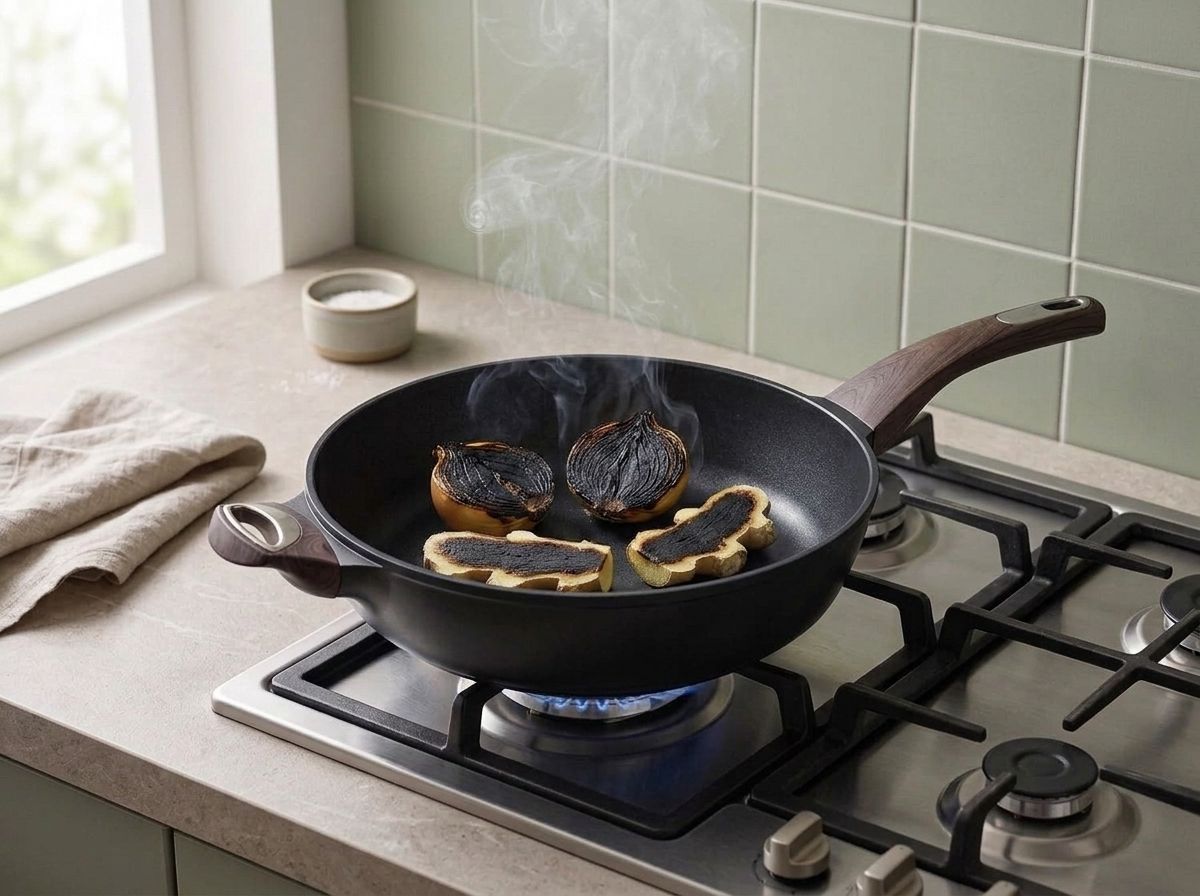
The char is not browning and it is not optional. You want the cut faces actually black, with the smell of a barbecue coming off them, which takes 6 to 8 minutes face down in a dry pan on high heat or about 10 minutes under a broiler. Dry, never oiled: oil smokes and turns acrid long before an onion blackens. When they come out, knock off any loose carbon and rinse the ginger. Loose flakes in the pot make the broth bitter and gray, while the black fused to the cut face is the whole point.
The spice set
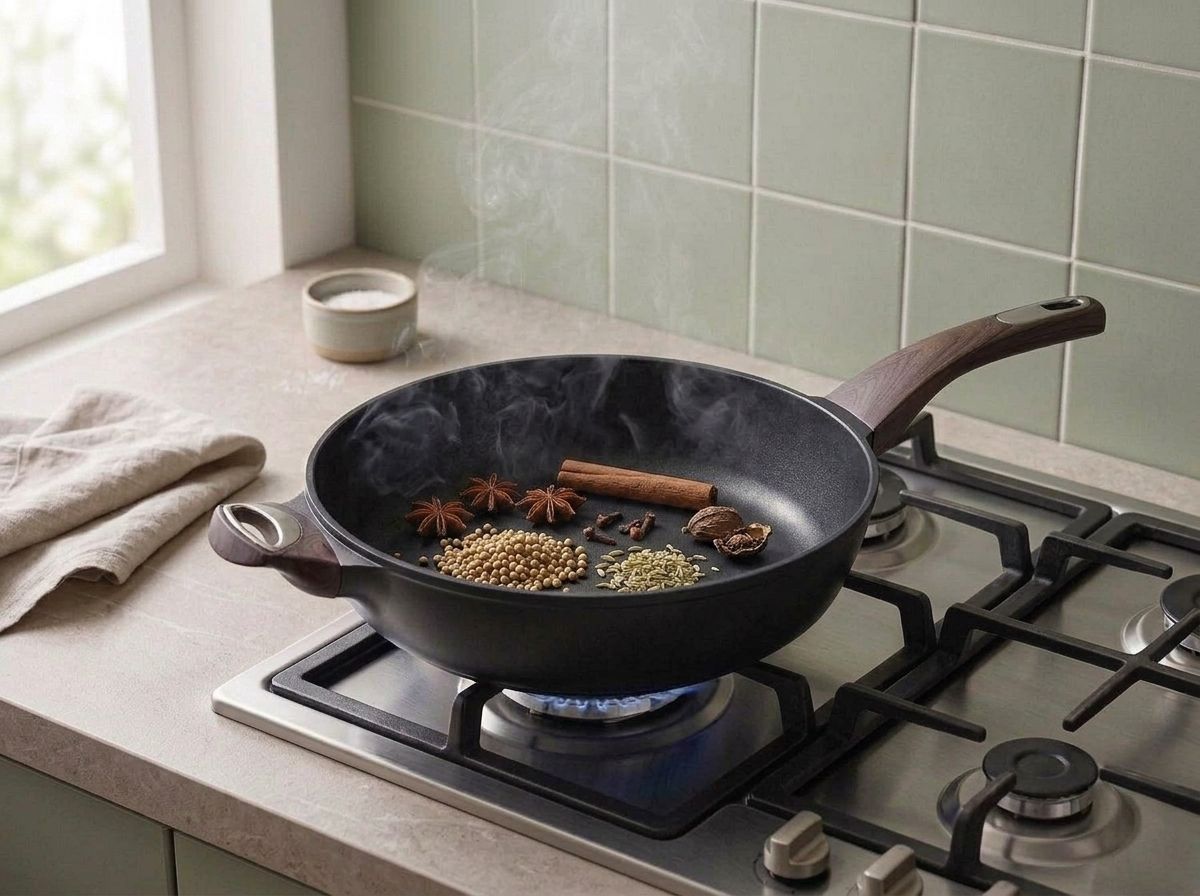
Star anise, cassia, clove, coriander and fennel, whole and never ground. Ground spice will not strain out and leaves the broth dusty and clouded. Saigon cassia is what pho is usually made with; it is sweeter and more assertive than Ceylon cinnamon and the stick is thick enough to be hard to snap. Four star anise to ten cups of liquid is the ceiling, and past it the bowl stops being pho and starts being licorice. Fennel and clove are the southern half of the profile: northern Hanoi broths often skip both, so leave them out if you want the more austere version and let the anise and cassia carry it.
Black cardamom (thảo quả)
This is the one that separates a real pho broth from a merely spiced one. Big wrinkled pods about an inch long, dark brown, dried over wood fires, which is where the smoke and the faint camphor come from. Green cardamom is a different plant doing a different job and swapping it in makes the broth taste of chai. Look in Vietnamese and Chinese groceries under thảo quả or tsao-ko, or buy a packaged pho spice blend, usually the cheapest way to get hold of one. Crack the pod before it goes in the pan. It is marked optional here because plenty of shops do not stock it, not because it does not matter.
Daikon
Doing structural work rather than filling out the pot. It is where the round, faintly sweet bottom note of a pho broth comes from, and it is in traditional beef pho for exactly the same reason. Peel it, because the skin is where the sulfur sits, and cut it into coins about an inch thick so it holds together through the simmer instead of breaking down and clouding the liquid. Do not push it much past an hour. Daikon simmered too long goes from sweet to distinctly cabbagey and there is no rescuing a pot once it has.
Dried shiitake
The savory weight that would otherwise have come off bones. Buy whole caps rather than the pre-sliced bags, which are made from the broken ones. They go into this pot dry and rehydrate in it, so nothing is lost to a soaking bowl. If you would rather soak them first, tip the soaking water into the broth as well and stop before the last spoonful, which is where the grit settles.
Flat rice noodles (bánh phở)
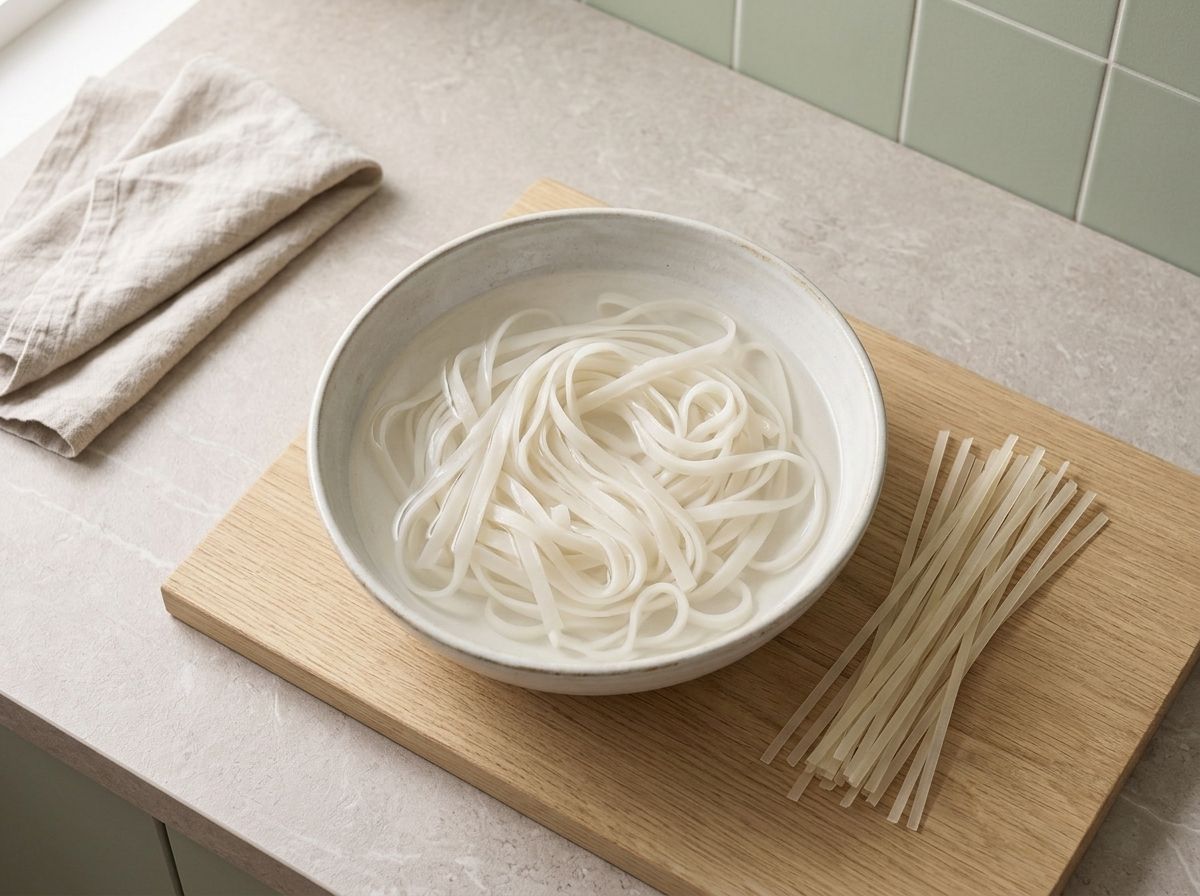
Sold dried in flat nests or straight sticks, usually labeled rice sticks with a size on the packet. Size M, roughly 3 to 5 millimeters wide, is the pho width. The thin ones are meant for stir-fries and the wide ones go slimy in soup. Read the ingredients: it should say rice flour and water and very little else, because a few brands add wheat starch or tapioca for chew, which changes the texture and, in the case of wheat, means the bowl is no longer gluten-free. Fresh noodles from a refrigerated case are excellent and skip the soak entirely, needing only the ten second dip.
Yellow rock sugar (đường phèn)
Amber lumps sold by the bag in Asian groceries, and what pho broth is traditionally sweetened with. Gram for gram it is less sweet than white sugar and reads cleaner, so it rounds the broth off without making it taste sugary. Twenty grams into ten cups is the balance point, and you should not be able to name it in the finished bowl, only notice its absence. Light brown sugar at the same weight is the nearest substitute and darkens the broth a little. Plain white sugar works at about two thirds of the weight.
Vegetarian Pho
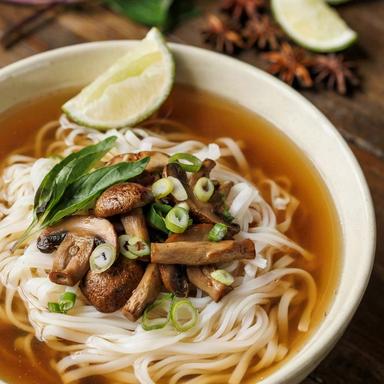
A broth built on charred onion, ginger and toasted whole spices, strained clear and ladled over rice noodles, with a plate of herbs, sprouts and lime to finish each bowl at the table.
Ingredients
Equipment
As an Amazon Associate I earn from qualifying purchases, at no extra cost to you.
Instructions
- 1
Char the onion and ginger
Set the onion halves and the ginger cut side down in a dry skillet over high heat, or on a foil-lined sheet under the broiler. Leave them until the cut faces are properly blackened, 6 to 8 minutes in a pan or about 10 under a broiler, turning the ginger once. You are after black, not golden. Scrape off any loose charred flakes and rinse the ginger under the tap.
- 2
Toast the spices
Wipe the skillet out and set it over medium heat. Add the star anise, cinnamon stick, cloves, coriander seeds, fennel seeds and the cracked black cardamom if you have it. Toast, shaking the pan, until they smell warm and sweet rather than dusty, 2 to 3 minutes. Tip them out of the pan straight away, because left in it they keep cooking and turn bitter.
- 3
Simmer the broth
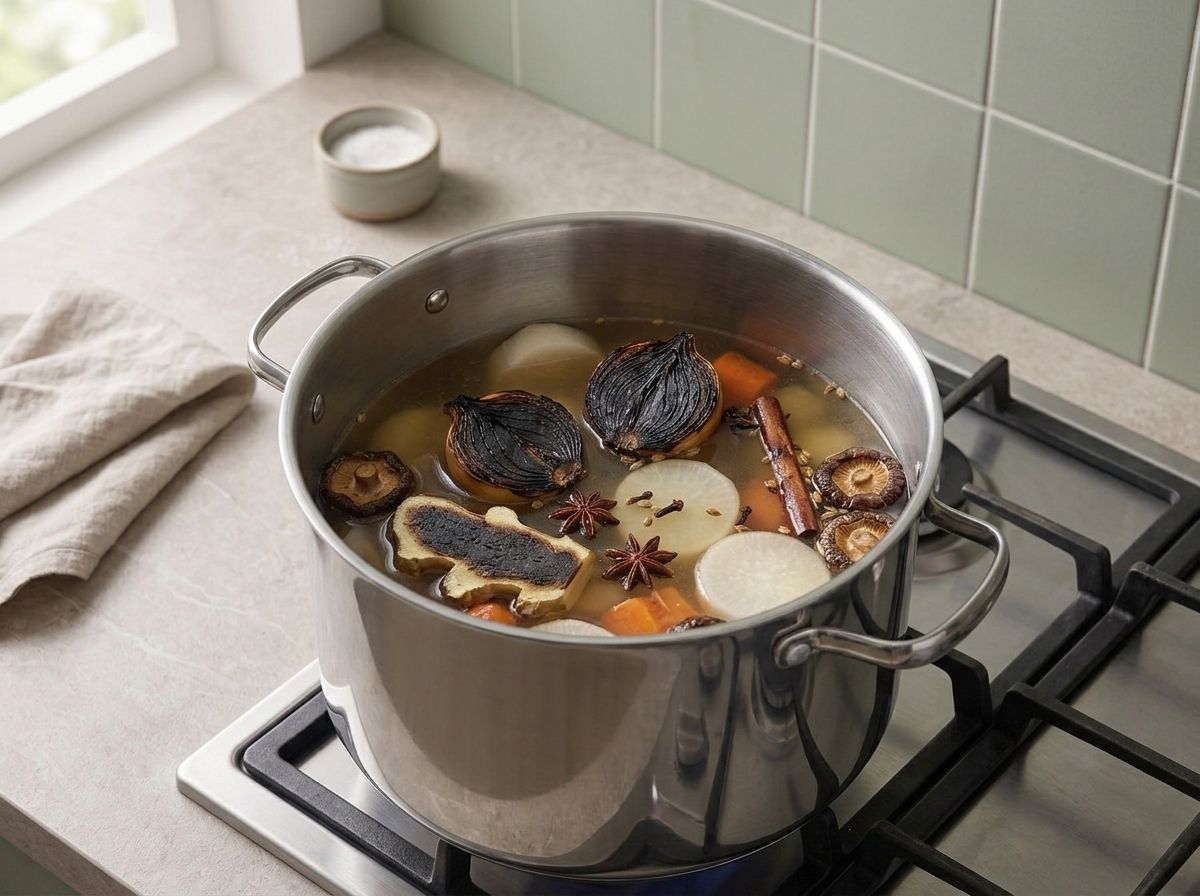
Put the charred onion and ginger, the toasted spices, the dried shiitake, daikon and carrot into a large pot with the water. Bring it up slowly and hold it at a bare simmer, the surface barely moving, for 45 minutes. Skim the foam off in the first ten minutes. Do not let it boil hard; that is what turns the broth cloudy.
- 4
Soak the noodles
While the broth simmers, put the rice noodles in a large bowl and cover them with warm tap water. Leave them 30 minutes, until they are opaque white and floppy but still firm when you bite one. Do not boil them yet. Drain them and leave them in the colander.
- 5
Sear the mushrooms
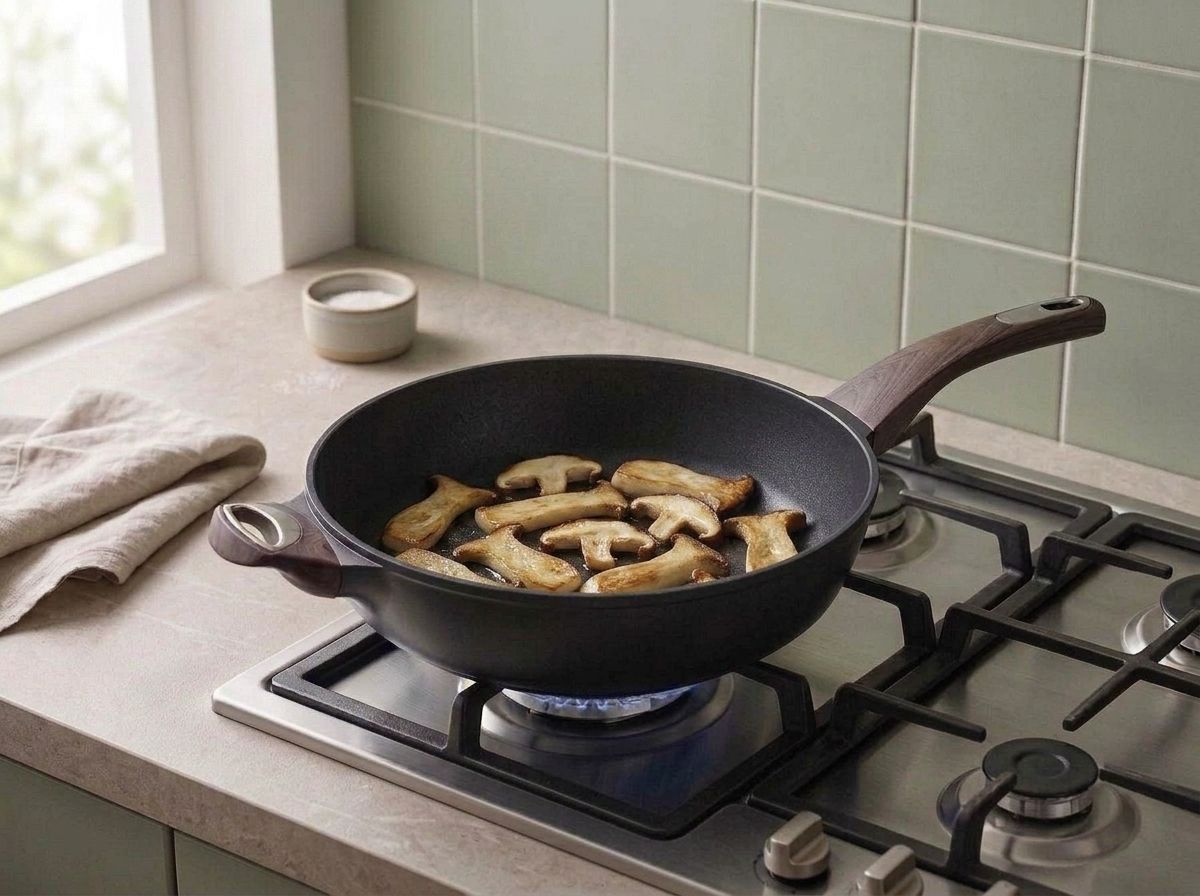
Heat the oil in the skillet over medium-high heat and lay the fresh mushrooms out in a single layer. Leave them alone until the undersides are browned, 3 to 4 minutes, then toss them and give them 2 minutes more. Season with a pinch of salt. Brown the tofu alongside them if you are using it.
- 6
Strain and season the broth
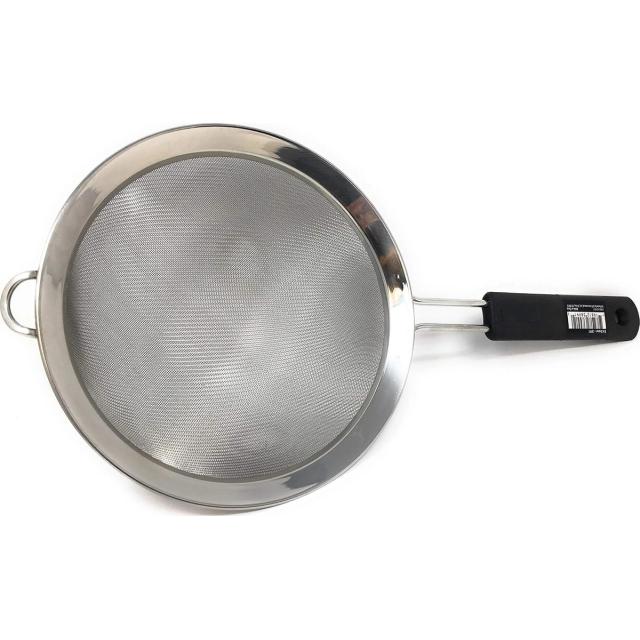
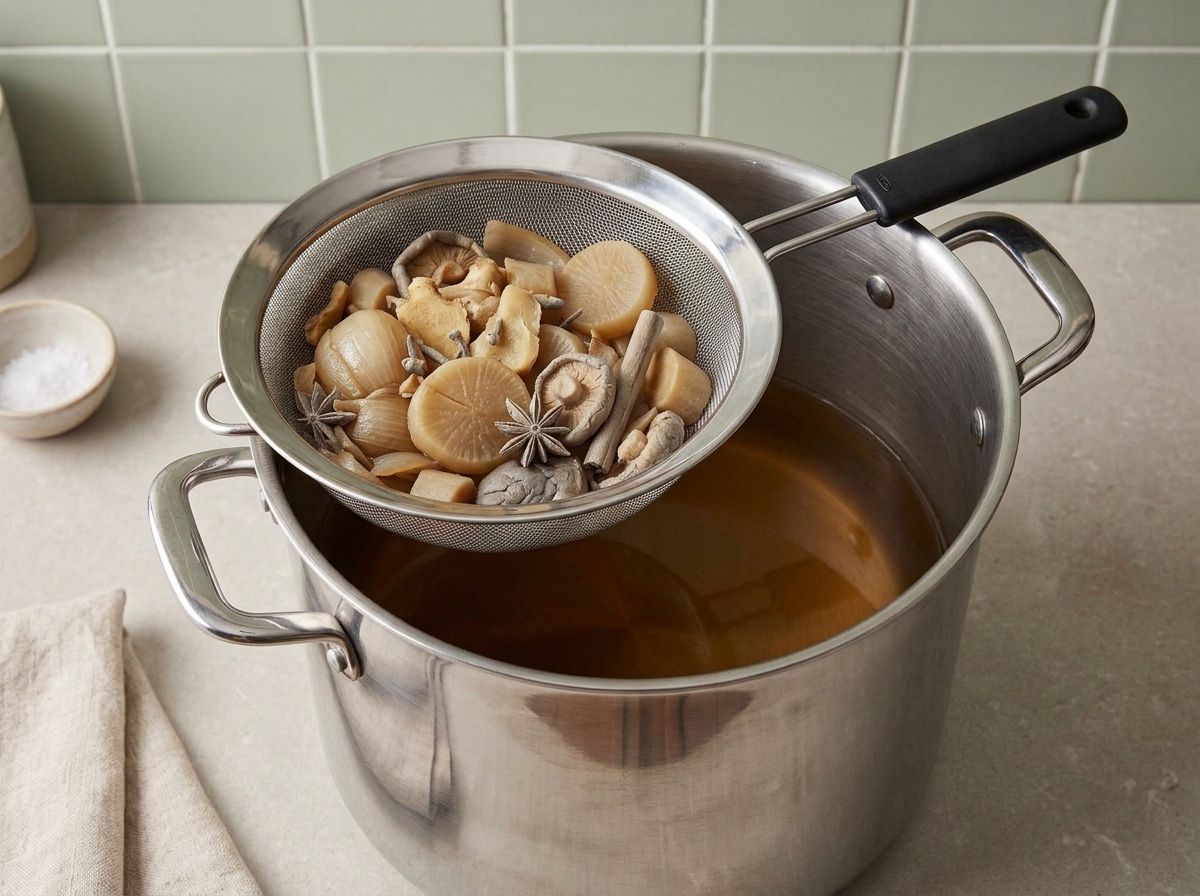
Strain the broth through a fine mesh strainer into a clean pot and discard the solids without pressing them. Set it over low heat and stir in the soy sauce, rock sugar and salt. Taste it. It should read savory first with the sweetness sitting behind, and slightly stronger than you would want to drink on its own, because the noodles dilute it. Hold it just under a simmer.
- 7
Blanch the noodles bowl by bowl
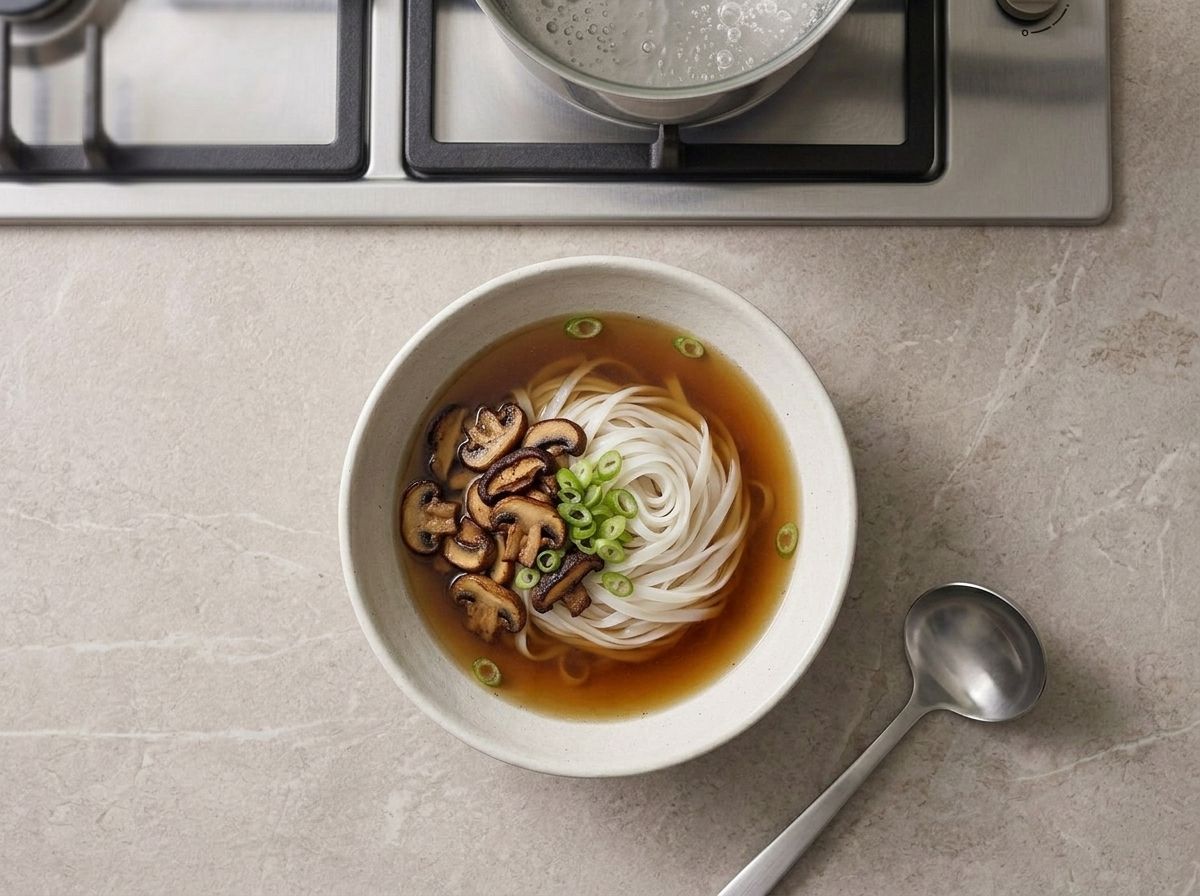
Bring a separate pot of water to a rolling boil. One portion at a time, drop the soaked noodles in for 10 to 20 seconds, until they are just tender, then lift them out, shake them dry and drop them into a warmed bowl. Pile the mushrooms, tofu and scallions on top and ladle the hot broth over.
- 8
Finish at the table
Serve straight away, with the herbs, bean sprouts, lime wedges and chili on a plate beside the bowls and the hoisin and sriracha alongside if you want them. Everyone tears in their own herbs and squeezes their own lime, a handful at a time rather than all at once.
Notes
Tamari in place of the soy sauce keeps this gluten-free. Check the noodle packet too: most bánh phở is rice flour and water, but a few brands cut in wheat starch.
Water rather than stock is deliberate. Store-bought vegetable broth carries celery, tomato and dried herbs that fight the pho spices, and you end up tasting two soups at once. If you would rather use it, buy the plainest low-sodium one you can find and halve the added salt.
Without black cardamom the broth loses its smoky, faintly camphor-like top note, and nothing else on the shelf supplies it. Char the onion and ginger a shade harder to claw some of it back.
Nutrition Facts
4 bowls · 820 g per serving
- Calories
- 318 kcal
% Daily Value*
- Total Fat
- 4.3 g6%
- Saturated Fat
- 0.7 g3%
- Sodium
- 2076 mg90%
- Total Carbohydrate
- 63 g23%
- Dietary Fiber
- 4.2 g15%
- Sugars
- 4.1 g—
- Protein
- 7.9 g16%
Recipe from veggierecipes.blog
When it goes wrong
Troubleshooting
It tastes of star anise and not much else
The spice had nothing underneath it. That is what happens when the broth is essentially water plus spices: there is no base holding them down, so the loudest one takes the whole bowl. The base here is three things and all three are load-bearing, the char, the daikon and the dried shiitake. The other cause is time. Whole spices give up their pleasant aromatics in roughly the first forty minutes and their bitter, medicinal ones after that, so a broth held for two hours to make it stronger comes out worse instead. Forty-five minutes, then strain.
The noodles came out as one solid lump
They were boiled. Package instructions for dried rice sticks are written for stir-fries and leave you with noodles cooked all the way through, which then set into a block as they cool in the colander and cook a second time when boiling broth lands on them. Soak them in warm water instead until they are floppy but still firm to bite, about half an hour, which fits inside the time the broth is simmering. Then blanch each portion for 10 to 20 seconds immediately before its bowl gets built.
The broth is cloudy and gray instead of clear
Three causes, in order of likelihood. It boiled: a rolling boil emulsifies the solids into the liquid and no amount of straining afterwards brings the clarity back, so hold it where the surface only trembles. The foam was not skimmed off in the first ten minutes. Or the solids were pressed against the strainer on the way out, which pushes precisely the particles you were straining for through the mesh. Tip the pot and let it drain on its own.
It smells wonderful and tastes of nothing
Almost always salt, and how much it takes surprises people. Pho broth has to taste slightly too strong on its own, because by the time a bowl reaches the table it is roughly half noodles and garnish and every bit of that dilutes the liquid. Season the broth after straining, taste it hot off a spoon, and keep going in quarter teaspoons until it stops tasting like a suggestion. Temperature is the other half of it: pho is served close to boiling, and broth that has cooled to comfortable reads as flat no matter how well it was made.
Mine tastes burnt rather than smoky
Loose carbon went into the pot. Blackening the cut faces is right. The flakes that shed off the onion’s papery layers and the ginger skin are not, and they turn the broth acrid and dark within the first ten minutes. Scrape the charred bits off, rinse the ginger under the tap, and leave the black that is fused to the cut surface exactly where it is.
I have to add hoisin and sriracha before it tastes of anything
Worth knowing that this is an argument rather than a fault. In Hanoi, reaching for the hoisin is read as a comment on the kitchen, because the broth is supposed to stand up by itself. In Saigon the bottles arrive at the table unasked and nobody thinks twice. So if you prefer it that way you are simply eating southern. But if the bowl is genuinely unbearable without them, the broth is under-salted or under-sweetened, and the fix is the salt and the rock sugar rather than a sauce poured over the top.
Before you serve
Serving & Storage
A bowl of pho is finished by the person eating it, and how much finishing there is to do depends on where the bowl thinks it comes from. In Saigon it arrives with a plate beside it: Thai basil, sawtooth herb, bean sprouts, lime wedges, sliced chili, and bottles of hoisin and sriracha already on the table. In Hanoi you get sliced scallion, perhaps a saucer of chili and a bottle of garlic vinegar, and that is the lot. This recipe is written for the southern plate, because the herbs are what make a bowl smell like pho while you are eating it. Put it in the middle and let people add a handful at a time, so the last mouthful does not taste like the first.
Of the herbs, Thai basil is the one that matters. Purple stems, small pointed leaves, tasting of anise, and it is not interchangeable with sweet Italian basil, which is all clove and pepper and reads wrong in the bowl. Sawtooth herb, ngò gai, sold as culantro, is the second one worth hunting for: long serrated leaves and a much louder version of cilantro. Bean sprouts go in raw for the crunch, or get pushed under the surface for thirty seconds if you would rather they were soft. Lime goes in last, after tasting, never before.
Making it ahead
The broth is the part worth making in advance and it is better on the second day, once the spices have settled into one another. Strain it, cool it, and keep it 4 days in the fridge or 3 months in the freezer. Reheat it to just under a boil and make everything else fresh on the day.
Noodles do not make ahead in any form. Soaked ones will sit in cold water for a couple of hours and no longer; blanched ones have a life measured in minutes. The mushrooms can be seared a few hours early and warmed through in the broth, and the herbs should be washed early but not picked over until the bowls are going out.
Do not reduce the broth to save freezer space. Boiling it down concentrates the star anise faster than the salt, and what comes back after you dilute it is a bitter, aggressively aniseed liquid rather than the broth you started with. Freeze it at full strength or not at all.
Storing leftovers
Store the parts apart, always. Broth in one container, noodles and toppings in another, herbs not at all. Three days in the fridge for the assembled parts and four for broth on its own. Never keep a made-up bowl: rice noodles left sitting in warm broth go on drinking it, and by the next morning they are bloated and pasty and a third of the liquid has disappeared into them.
To reheat, bring the broth to a hard simmer and use it to warm everything else in the bowl. A microwave does the broth adequately and nothing else well, because it heats unevenly and a noodle that catches a hot spot turns gluey in one place while staying cold in another. If you have broth left but the noodles are gone, twenty minutes of soaking and a ten second blanch gets you a fresh bowl.
Still wondering
Frequently Asked Questions
Is this recipe gluten-free?
The noodles usually are and the soy sauce usually is not, which is the reverse of what most people check. Bánh phở should be rice flour and water; read the packet anyway, because a handful of brands add wheat starch for chew. The gluten in this recipe is the 3 tablespoons of soy sauce, so swap it for tamari at the same volume and the bowl is gluten-free. If hoisin is going on the table, check that bottle too, because most hoisin is thickened with wheat flour.
Is this actually vegan?
Yes, the whole way through, including the optional condiments, and it is worth stating because restaurant vegetarian pho very often is not. A kitchen running one stockpot will ladle beef broth over vegetable toppings and call it chay, and even a genuinely meatless broth is usually finished with fish sauce, which is the default seasoning in most Vietnamese kitchens. If it matters to you, ask about the broth and the fish sauce specifically rather than whether there is meat in the bowl.
Can I double this for a crowd?
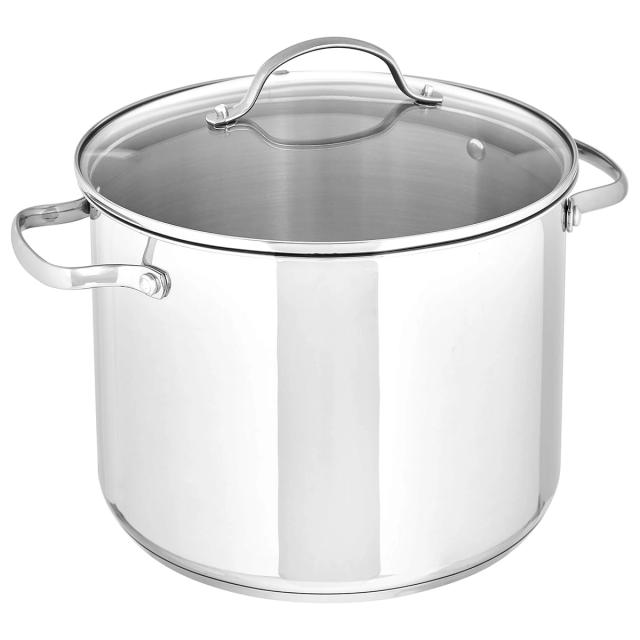
Yes, and the broth is the only part that needs thinking about. Double the water, the vegetables and the mushrooms straight across, but use one and a half times the spice rather than twice, because the extraction is not linear and a doubled spice load in a bigger pot comes out noticeably more medicinal. Ten cups of water gives four bowls after evaporation, so twenty cups gives eight and wants a pot of at least 8 quarts to simmer uncovered without slopping. Everything after the strainer scales one for one.
More Asian Noodle Soup Inspiration
Made this?