
Bean and Vegetable Soup Recipe
Published · Updated
A vibrant and wholesome bean and vegetable soup that’s both nourishing and irresistibly delicious. Perfect for a cozy, healthy meal any day of the week.
Jump To Recipe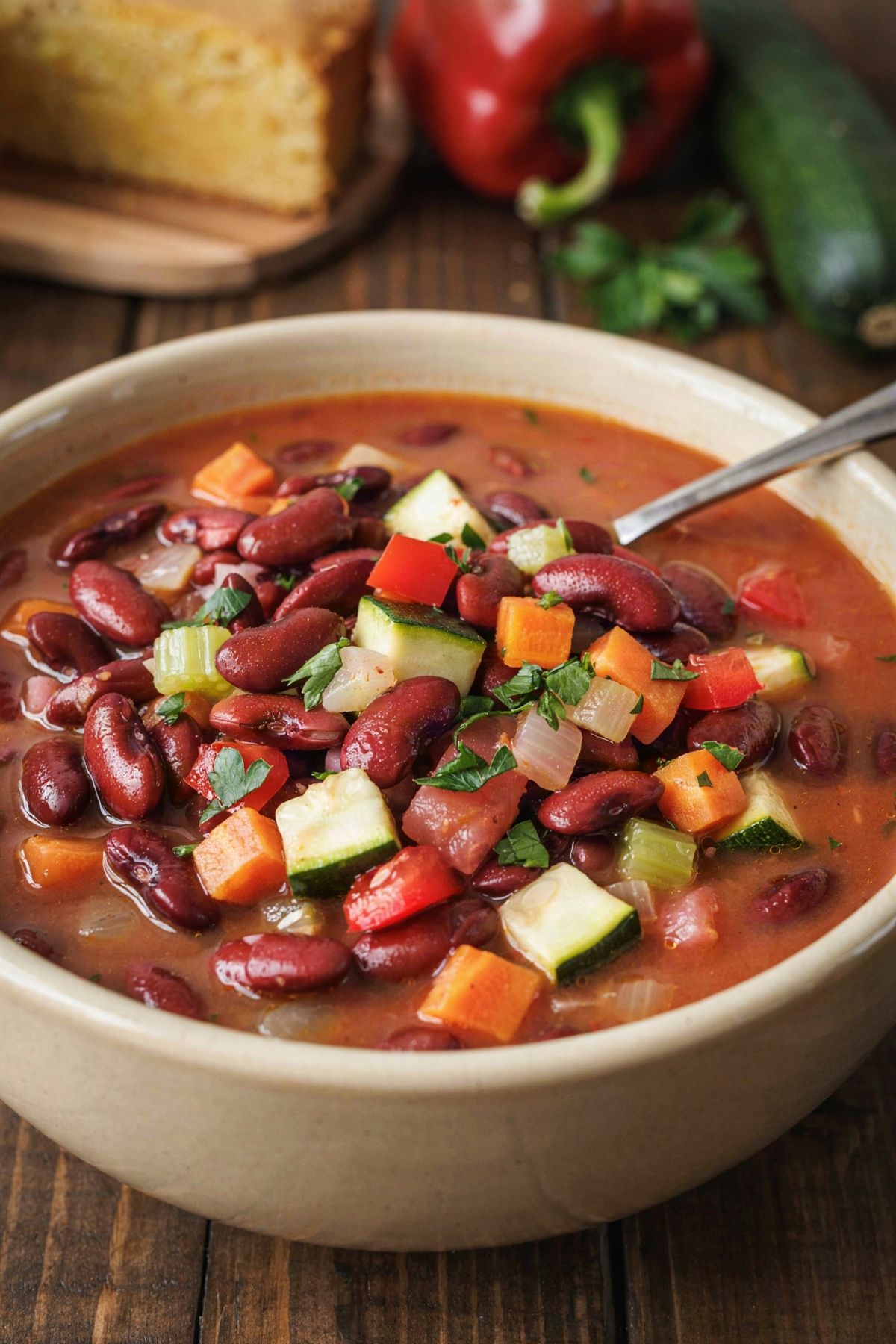
Why I Love Making This Bean and Vegetable Soup
There’s something truly satisfying about cooking up a big pot of bean and vegetable soup. I enjoy how the kitchen fills with a comforting aroma as everything simmers together. The process is genuinely therapeutic: prepping colorful ingredients, stirring the pot, and watching flavors develop into a hearty, nutritious meal.
I often customize this soup depending on what’s in my pantry or fridge, swapping in different types of beans or vegetables to keep things interesting. It’s an easy way to up my daily veggie intake without overthinking it, and I appreciate how satisfying and filling the final result is, perfect after a long day or even for meal prep.
Some ways I love to enjoy or boost this soup:
- with a slice of crusty sourdough
- topped with a sprinkle of grated vegan cheese or nutritional yeast
- paired with a fresh green salad
This soup is not only budget-friendly and incredibly adaptable, but also packed with nutrients and fiber. The best part is, it really does keep you full and energized. Whether it’s a weeknight dinner or you’re feeding a crowd, this is a staple in my kitchen that never disappoints.
The story
Most of This Bean and Vegetable Soup Comes From the Americas
Take the onion, carrot, celery and garlic out of this pot and almost everything left came from the Americas. The kidney bean, the zucchini, the bell pepper and the tomato are all New World plants, and none of them was cooked in Europe, Asia or Africa before the sixteenth century. Every bean soup in the Old World before then was made with fava beans, chickpeas, lentils, peas or cowpeas.
Beans and squash had been grown and cooked together for thousands of years by then. Squash seeds from Guilá Naquitz, a cave in Oaxaca, are around 10,000 years old, which makes squash one of the first crops domesticated anywhere in the Americas. The common bean, the single species that covers kidney, pinto, black and navy beans, was domesticated twice, once in Mexico and once in the Andes. Across Mesoamerica the two were planted in the same field as corn, a system called the milpa, and the Haudenosaunee to the north called the same trio the Three Sisters. The beans climb the corn, the squash leaves shade out the weeds, and the beans fix nitrogen that feeds the other two.
The beans crossed the Atlantic quickly and spread through southern European kitchens in the 1500s, which is why Tuscan bean soups are built on an American plant. The zucchini took much longer. It is a summer squash bred in northern Italy in the late nineteenth century, and Italian immigrants carried it back to North America under its Italian name. The pairing in this pot went to Europe and came home.
There is a vegetarian footnote. In 1971 Frances Moore Lappé’s Diet for a Small Planet told a generation of vegetarians to combine beans with grains at the same meal to make a “complete” protein, much as the milpa pairs beans with corn. By the 1981 edition she had withdrawn the advice, writing that getting enough protein without meat was much easier than she had thought. A bowl of this soup carries about 12 grams of protein, and the cornbread on the side is there because it is good, not because the beans need it.
What to buy
Ingredient Notes
Dried red kidney beans
Buy them from a shop that sells a lot of them, because age matters more than brand. Beans more than a year or two old can simmer for hours and never soften, and since packages carry no harvest date, a dull, wrinkled or cracked look is the warning. Pinto beans swap in at the same weight and cook in about the same time. Avoid black beans here: their skins dye the tomato broth a murky gray-purple.
Canned diced tomatoes
Almost every brand adds calcium chloride to keep the dice firm, and calcium firms bean skins in exactly the same way. Add the tomatoes’ acid and you have the reason they wait until the beans are tender. Put in at the start, as an earlier version of this recipe did, they can leave beans chalky after two hours. Fire-roasted diced tomatoes are a straight swap and add a little smoke.
Vegetable broth
Use a regular-strength broth rather than low-sodium. The beans spend over an hour absorbing whatever they cook in, and broth seasons them from the inside in a way salt stirred in at the end cannot. The 3 cups of water are there so the long simmer does not reduce it to something too salty. If you use bouillon or concentrate, make it up at the weaker end of the label.
Ground cumin
One teaspoon is enough to make the soup taste savory without tipping it toward chili. Bloom it in the oil for a minute before any liquid goes in, which turns it from dusty to toasty. Ground cumin fades within about six months of opening. If the jar smells of little it will taste of less, and doubling the amount only adds bitterness.
Zucchini
Cut it a little larger than the other vegetables, into ½-inch (1 cm) dice, because it is mostly water and shrinks as it cooks. It goes in for the last 8 minutes only. Simmered for the full time it falls apart into the broth, which costs the soup nothing in flavor and all of its green. Yellow summer squash cooks the same way.
Red wine vinegar
One tablespoon stirred in off the heat is what stops a pot of beans tasting heavy. You should not be able to taste vinegar, only notice that the soup has brightened. Lemon juice works too. It goes in at the very end for the same reason the tomatoes wait: acid stops beans softening.
Hearty Bean and Vegetable Soup
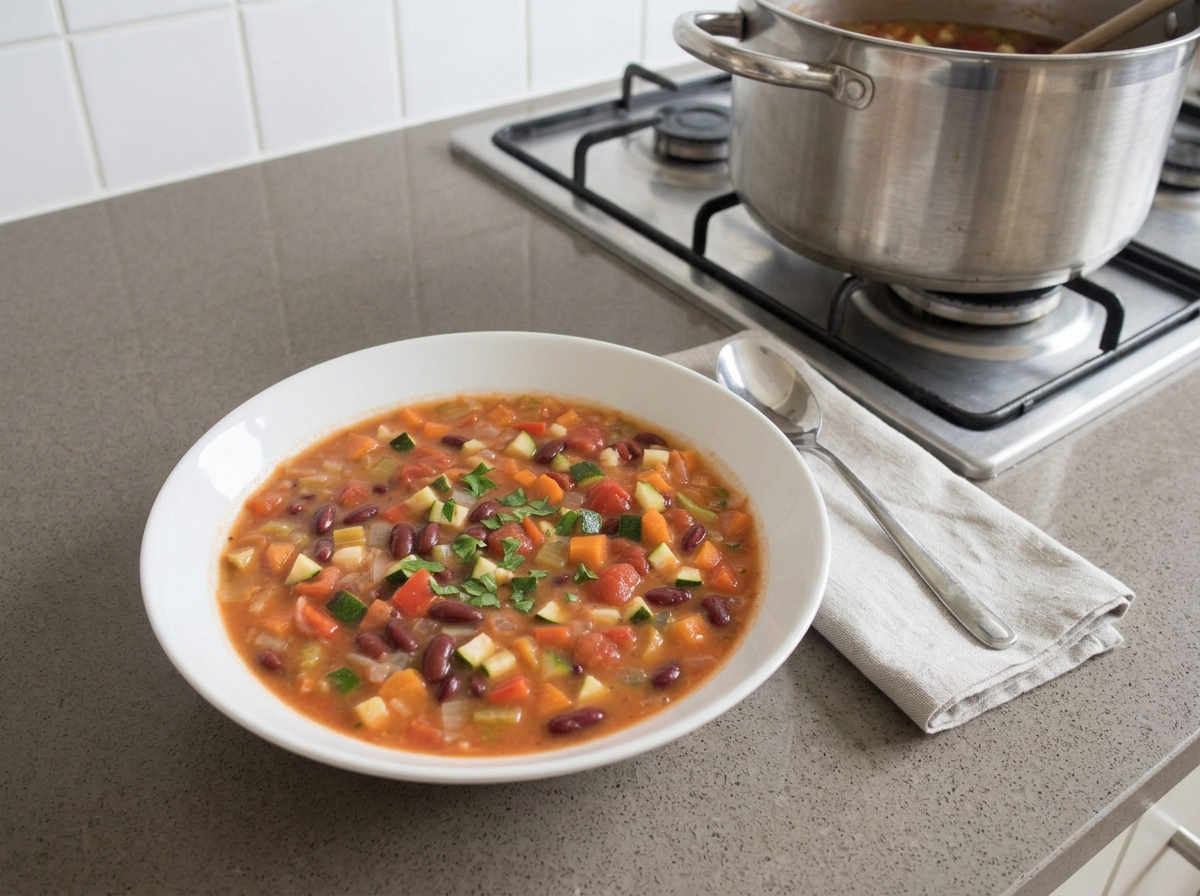
A hearty bean and vegetable soup made from dried kidney beans cooked in their own broth, with carrots, peppers and zucchini added late so they keep their shape.
Ingredients
Equipment
As an Amazon Associate I earn from qualifying purchases, at no extra cost to you.
Instructions
- 1
Soak the beans
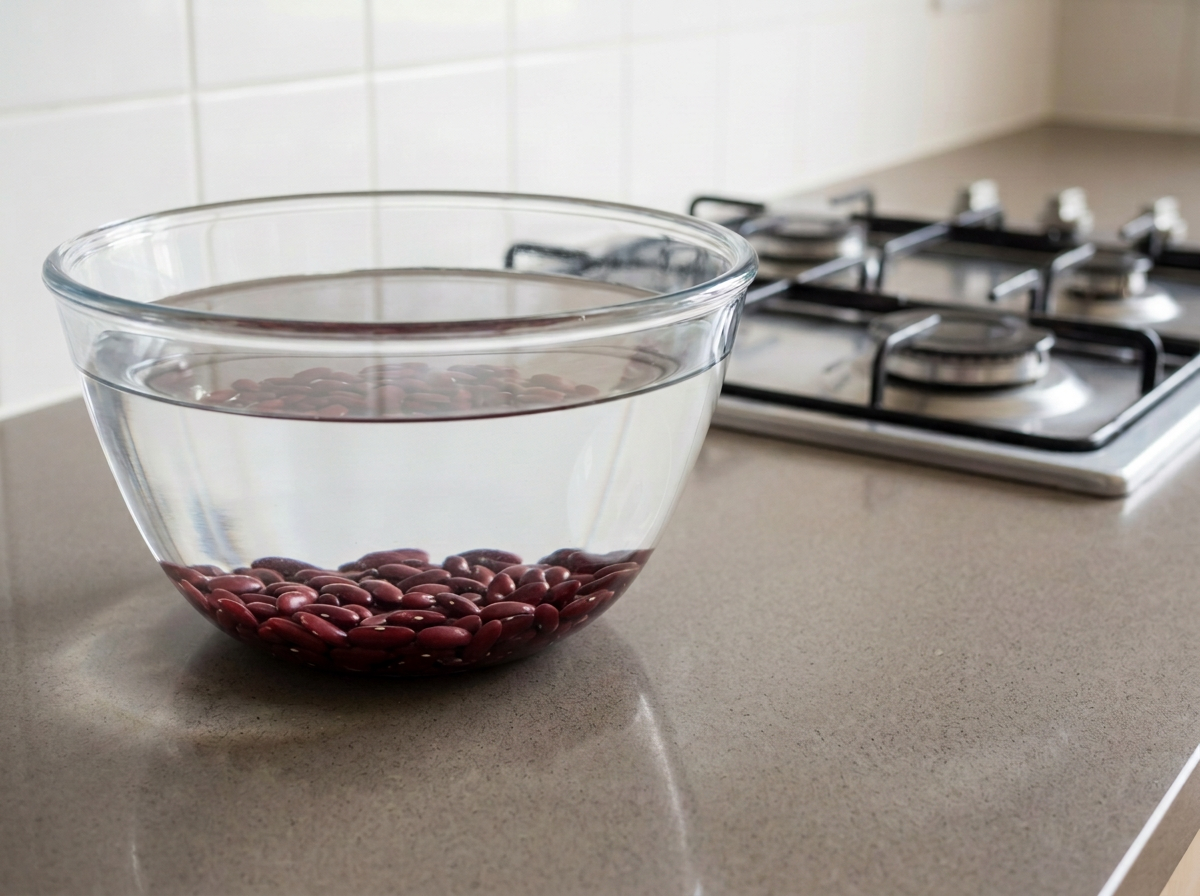
The night before, tip the beans into a large bowl, pick out any stones or shriveled beans, and cover with at least 3 inches (8 cm) of cold water, because they roughly double in size. Leave for 8 to 12 hours, then drain, rinse and throw the soaking water away.
- 2
Soften the onion and celery
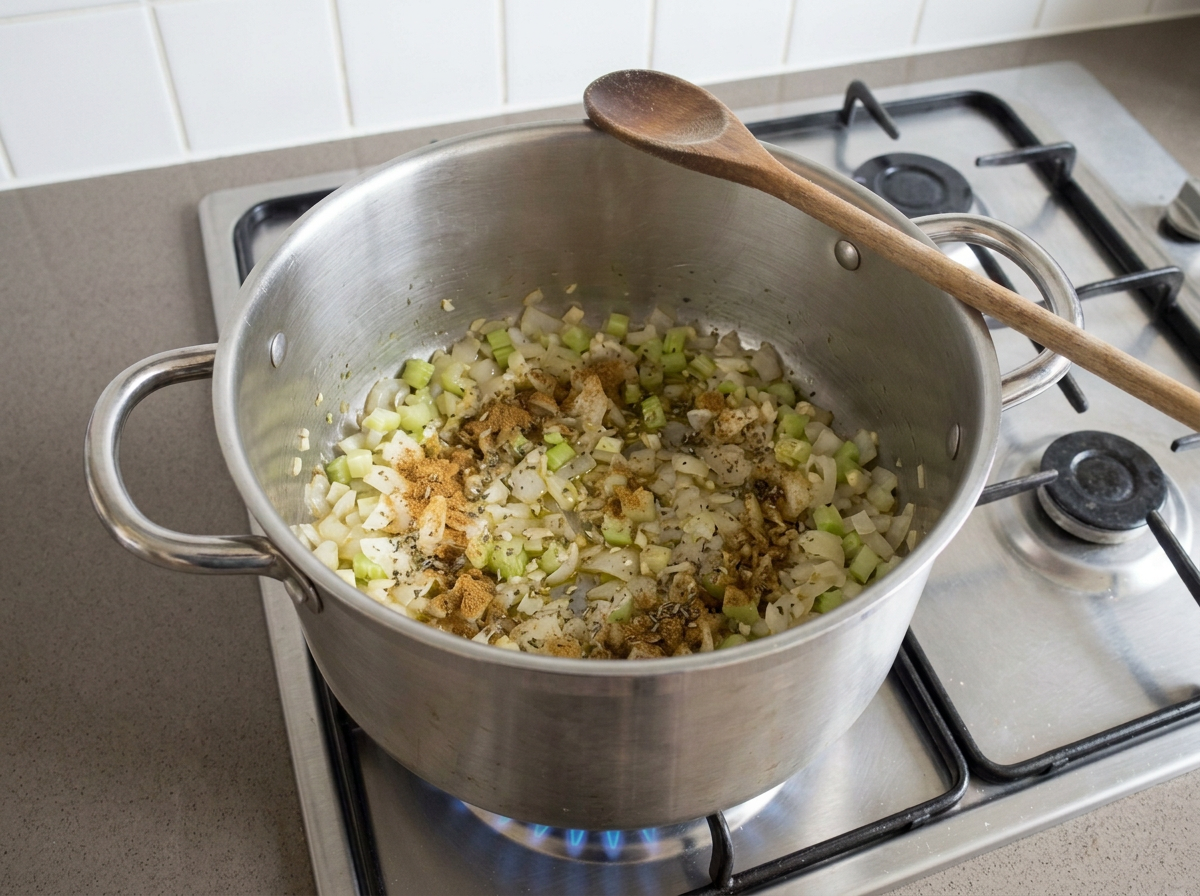
Heat the olive oil in a large pot over medium heat. Add the onion, celery and a pinch of salt and cook, stirring now and then, for 6 to 8 minutes, until soft and translucent but not browned. Stir in the garlic, cumin and oregano and cook for 1 minute, until the cumin smells toasty.
- 3
Boil hard, then simmer the beans
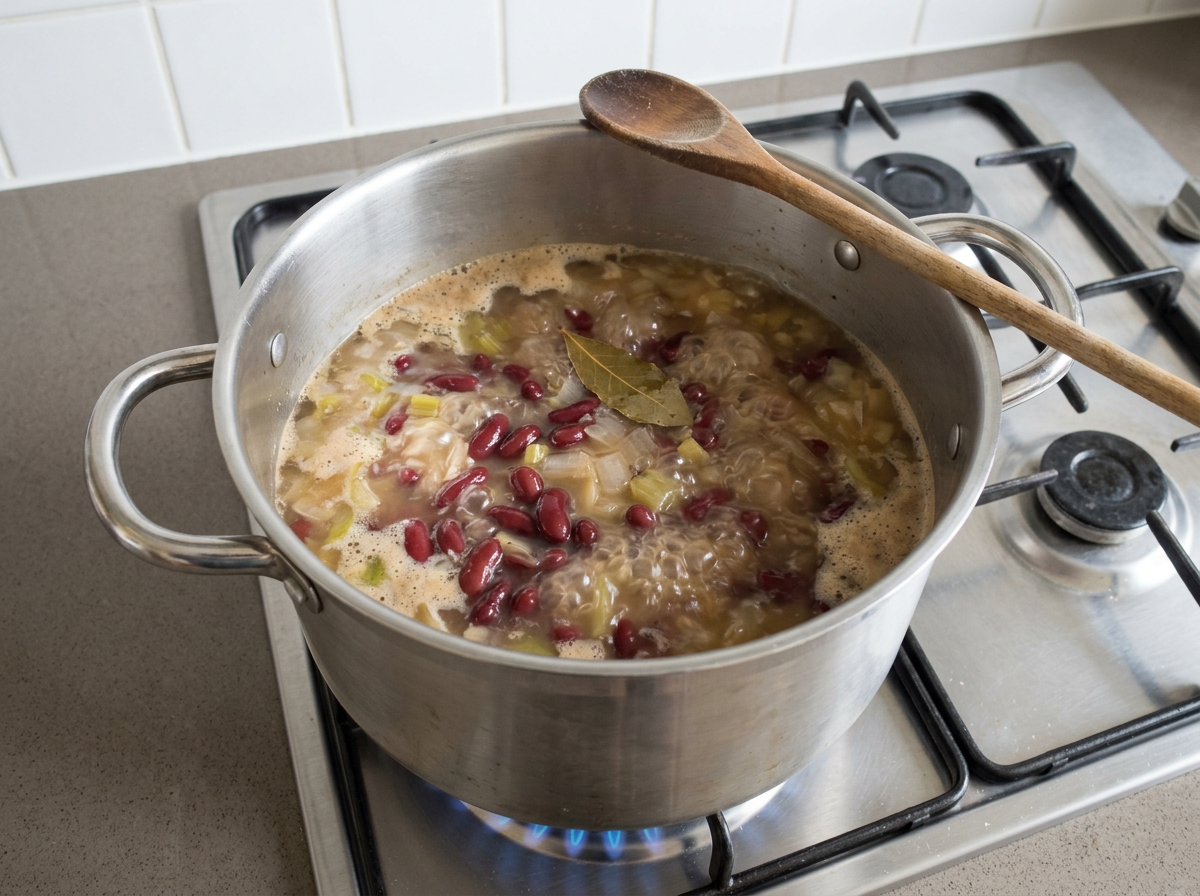
Add the drained beans, broth, water and bay leaf. Bring to a full rolling boil and keep it there for 10 minutes, skimming off the foam. Kidney beans have to boil this long to be safe to eat. Then lower the heat to a gentle simmer, set the lid ajar and cook for 60 to 75 minutes, until five beans in a row squash easily against the roof of your mouth with no chalky center.
- 4
Add the carrots, tomatoes and pepper
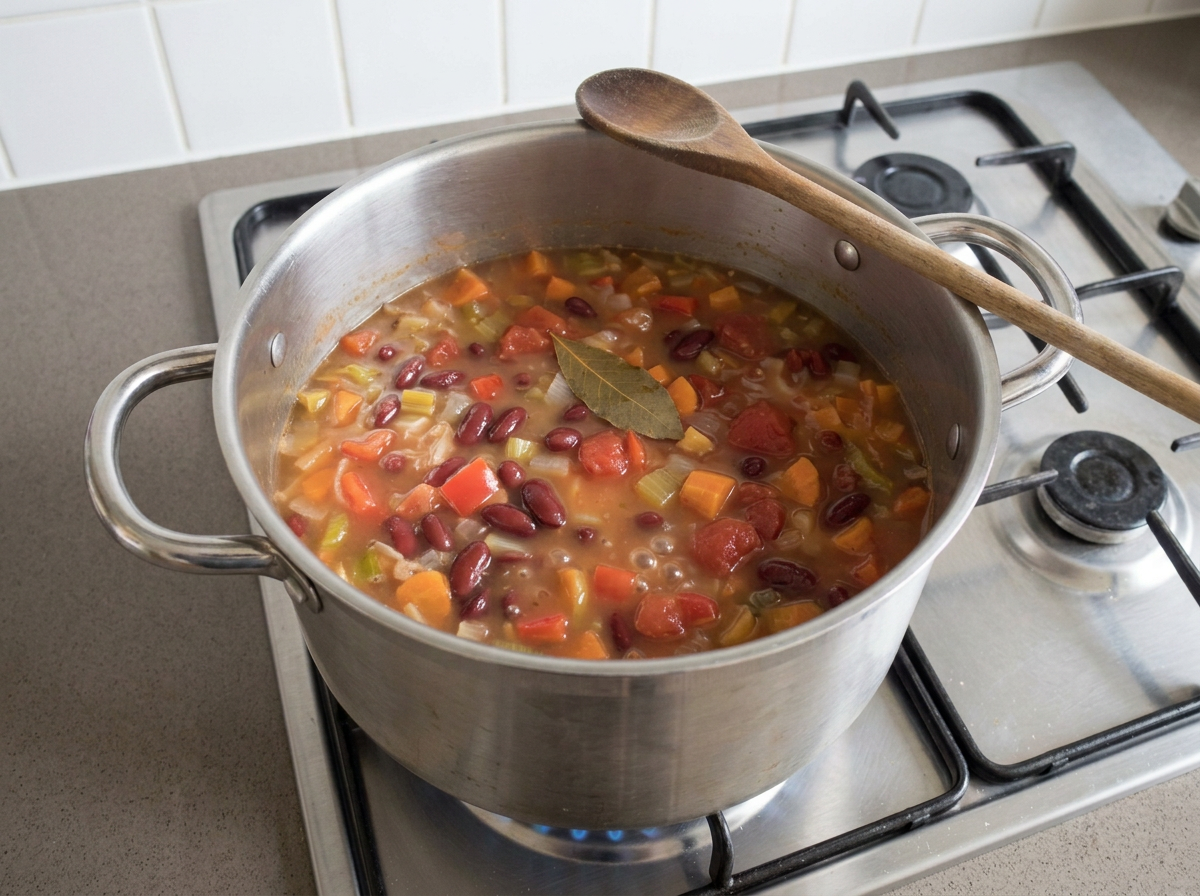
Only once the beans are fully tender, stir in the carrots, the tomatoes with their juice and the bell pepper. Simmer with the lid ajar for 12 minutes, until the carrots are nearly tender. The tomatoes wait until now because their acid stops beans from softening any further.
- 5
Add the zucchini and thicken
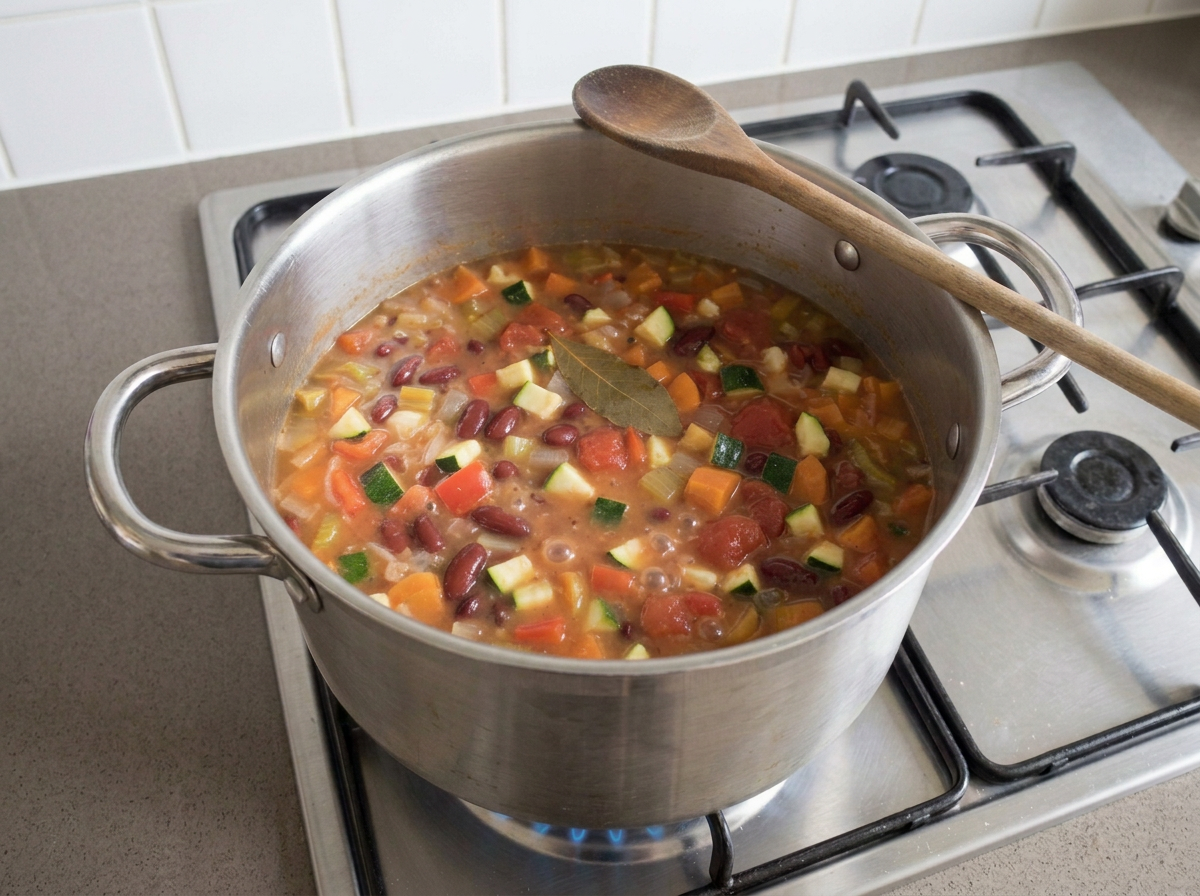
Add the zucchini and simmer for 8 minutes more, until just tender but still holding its shape. Press a ladleful of beans against the side of the pot with the back of a spoon and stir them through to give the broth body. If it is thicker than you like, loosen it with a splash of water.
- 6
Season and serve
Take the pot off the heat and remove the bay leaf. Stir in the vinegar, then season with salt and pepper, tasting as you go, because the beans soak up more salt than you expect. Ladle into bowls and scatter with parsley if using.
Notes
No time to soak: cover the beans with water, boil for 2 minutes, then leave them covered off the heat for 1 hour and drain. Cook as written from step 2.
Using canned beans: use three 15-ounce (425 g) cans of kidney beans, rinsed and drained. Cut the water to 1 cup (250 ml), skip the 10-minute boil and simmer the beans in the broth for 15 minutes before step 4.
Add kale with the zucchini, or a few handfuls of spinach in the last minute.
Make it spicy with a pinch of chili flakes added with the cumin, or a diced jalapeño added with the bell pepper.
Nutrition Facts
6 bowls · 492 g per serving
- Calories
- 247 kcal
% Daily Value*
- Total Fat
- 5.6 g7%
- Saturated Fat
- 0.8 g4%
- Sodium
- 950 mg41%
- Total Carbohydrate
- 39.7 g14%
- Dietary Fiber
- 9.5 g34%
- Sugars
- 7.4 g—
- Protein
- 12.1 g24%
Recipe from veggierecipes.blog
When it goes wrong
Troubleshooting
The beans are still hard but the vegetables have gone to mush
This is what the old version of this recipe produced, and it has two causes. Soaked kidney beans need 60 to 75 minutes at a simmer, not 30. And the tomatoes went in with the raw beans, so their acid and added calcium firmed the bean skins before they could soften. Once that has happened, extra time helps only slowly. Lift out what vegetables you can, simmer the beans until tender, then return them. Next time, beans first and tomatoes after.
Everyone who ate it felt sick a few hours later
With red kidney beans the likely cause is undercooking. Raw kidney beans contain a lectin, phytohaemagglutinin, and the FDA reports that as few as four or five undercooked beans can cause severe vomiting and diarrhea within a few hours. A 10-minute rolling boil destroys it. Heat that never reaches a full boil, the way a slow cooker on low runs, may not, and can make the beans more toxic than raw. Most people recover within hours; see a doctor if it does not settle.
The beans burst and the skins are floating loose
The pot kept boiling after the first 10 minutes. A hard boil tumbles the beans against each other and splits them, and once the skins go, the beans collapse. After the safety boil, turn the heat down until only a few bubbles break the surface, and keep the lid ajar rather than shut, since a closed lid builds back to a boil. Beans cooked in salted liquid split less, which is one reason the broth goes in from the start.
It is thin, like vegetables floating in tomato water
Two things give this soup body, and both happen near the end. The beans release starch into the broth only once they are fully tender, so undercooked beans leave it thin. And the ladleful pressed against the pot in step 5 is what turns broth into soup. Mash a second ladleful if it still looks thin, or simmer uncovered for 10 minutes. Skip flour, which dulls the flavor.
It tastes muddy and earthy, and more salt only makes it salty
Beans are starchy and mild, and past a point salt cannot lift them. Check three things. The vinegar went in at the end, off the heat; if it did, add another teaspoon and taste again. The cumin was bloomed in the oil, because stirred straight into liquid it stays dusty and reads as muddy. And the bay leaf went in, which gives the long simmer a savory background the beans absorb.
It foamed up and boiled over during the first boil
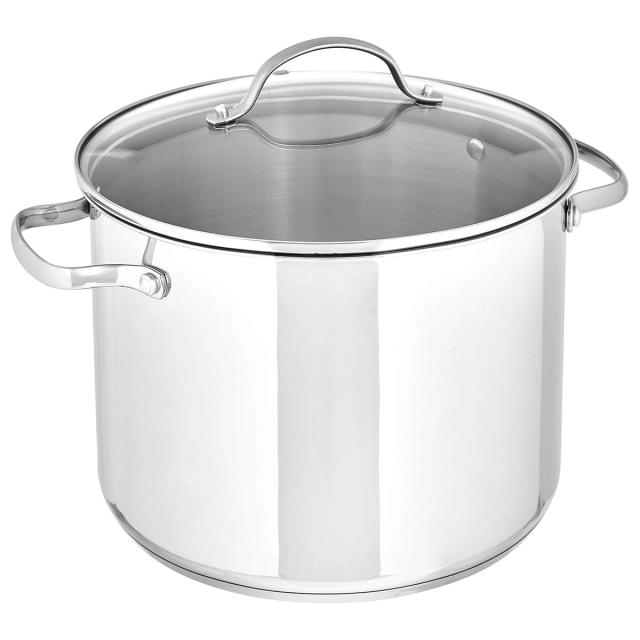
The gray foam is protein and starch from the beans and it is harmless, but it rises hardest in the first minutes of boiling, which is exactly when this recipe asks for a rolling boil. Use a pot with room to spare, at least 5 quarts (5 liters), keep the lid off for those 10 minutes and skim the foam with a spoon as it builds. The oil already in the pot helps it settle.
Before you serve
Serving & Storage
Serve it the way the milpa would, with something made from corn. Warm corn tortillas or a wedge of cornbread complete the old trio of beans, squash and corn, and cornbread holds up to dunking better than most bread. Crusty sourdough works too. Set out lime wedges, hot sauce and chopped raw onion so people can sharpen their own bowl, and add sliced avocado if you have one.
What does not work is cooking rice or pasta in the pot. Both drink the broth overnight and leave you with bean stew. Cook them separately and spoon them into each bowl.
Making it ahead
The beans are the slow part and they keep well. Cook steps 1 to 3 up to three days ahead, cool the beans and refrigerate them in their liquid, which stops the skins drying and splitting. On the day, bring them back to a simmer and carry on from step 4, and the soup is ready in 25 minutes. Finished soup tastes better on day two, but the zucchini softens overnight, so if you are cooking for later, leave it out and add it when you reheat.
Storing leftovers
Cool and refrigerate within two hours, and it keeps for 4 days. The beans keep absorbing broth, so add a splash of water when you reheat, and taste for salt and vinegar again, since both fade. It freezes for up to 3 months, best before the zucchini goes in, because thawed zucchini turns soft and watery. Thaw overnight in the fridge and reheat on the stove until it bubbles throughout.
Still wondering
Frequently Asked Questions
Is this soup vegan and gluten-free?
Yes to both, as written. Every ingredient is a plant, and nothing contains gluten except possibly the broth, since some bouillon cubes and concentrates use wheat-based flavorings, so check the label. The toppings keep it vegan as long as you skip dairy cheese and sour cream.
Can I make it in a slow cooker?
Yes, but not from soaked raw kidney beans. A slow cooker on low never reaches a boil, and that is not enough to destroy the lectin in kidney beans. Do steps 1 and 2 on the stove and the 10-minute rolling boil in step 3, then move everything to the slow cooker and cook on low for 6 to 8 hours or high for 3 to 4, until the beans are tender. Add the tomatoes, carrots and pepper for the last hour on high, and the zucchini for the last 20 minutes.
Can I use a different kind of dried bean?
Yes, at the same weight, but the simmer in step 3 changes. Pinto beans take about the same 60 to 75 minutes. Cannellini and navy beans are quicker at around 45 to 60 minutes and turn creamier. Chickpeas need 90 minutes or more. Every common bean carries some of the same lectin, red kidney beans the most, so keep the 10-minute boil whichever you use.
More Cozy Veggie Soups
Made this?