
Vegan Minestrone Soup Recipe
Published · Updated
This vegan minestrone soup is packed with nourishing veggies, beans, and pasta for a cozy meal that’s sure to satisfy. The soup simmers in one pot and the pasta cooks separately, so leftovers stay soup instead of turning into a bowl of swollen noodles.
Jump To Recipe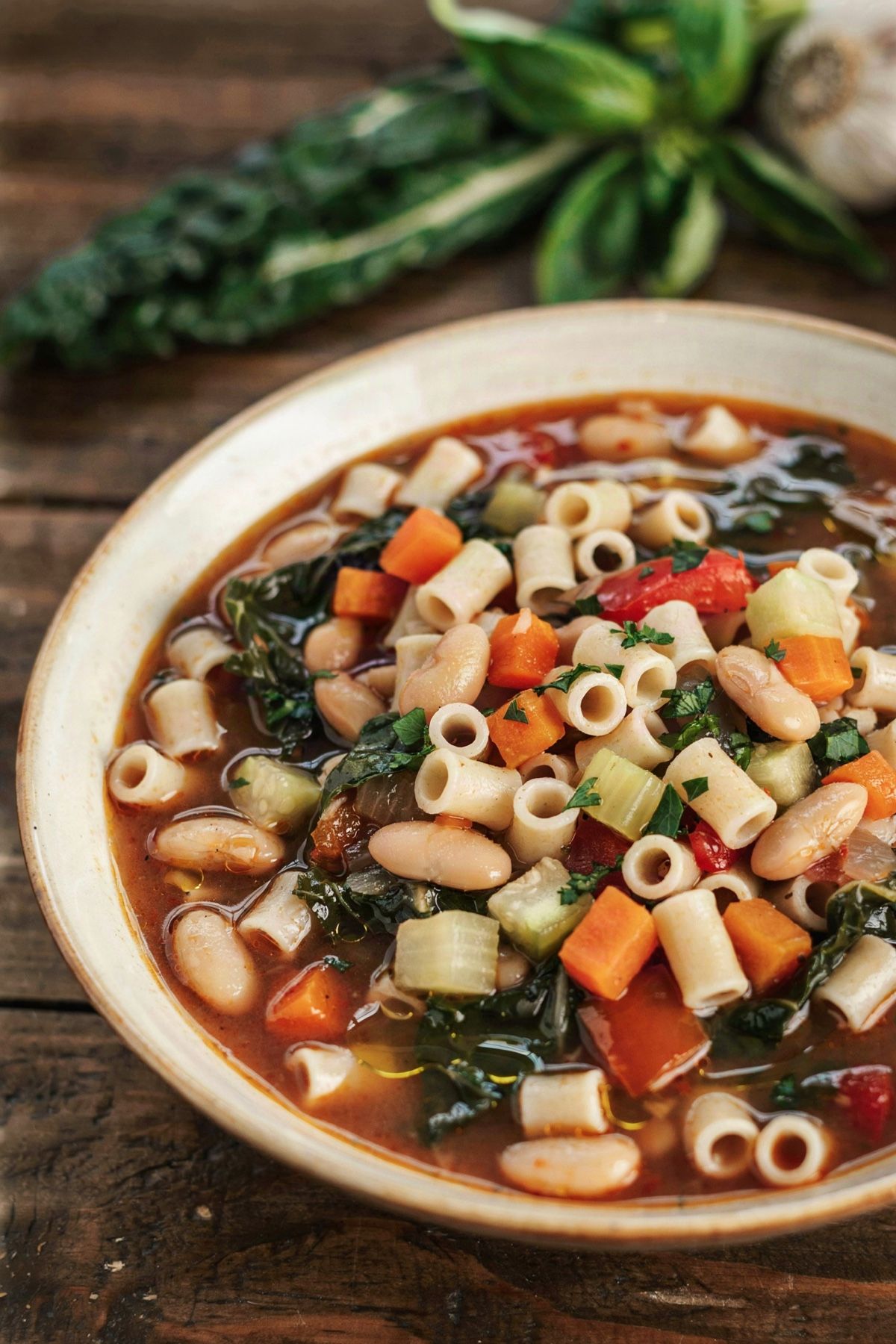
Why I Love Making Vegan Minestrone Soup
Whenever I want a meal that’s both comforting and genuinely good for you, I turn to minestrone. There’s something about combining a ton of hearty vegetables with beans and pasta that just hits the spot.
This recipe is a go-to for a few huge reasons:
I can clear out the last of my fridge veggies with this soup, and no matter the combo, it always delivers big flavor. Giving the onion, carrot and celery a slow, gentle sauté before anything else goes in is what builds a rich, satisfying broth without any meat or dairy.
What I find great about this minestrone:
- Customizable with any vegetables I have.
- Protein-rich with beans and hearty with pasta.
- One pot for the soup, one small pan for the pasta.
- Makes awesome leftovers, and the flavors get even better the next day.
Throw some crusty bread on the side, and this is a meal that keeps me full and energized. If you’re not a fan of cannellini beans or you’re out of zucchini, just swap them. This soup is truly flexible, so give it a try and make it your own.
The story
Vegan Minestrone Is Closer to the Original Than the Version With Cheese
Minestrone is not a recipe. It is a category, and the name says so. “Minestra” comes from the Latin minestrare, to serve or to dish out, which is what you did with the pot in the middle of the table. Add the Italian augmentative ending and minestrone is literally the big one, the substantial soup, the one that was dinner rather than a course before it. Nobody named a list of ingredients. They named a size.
The dish behind the name is genuinely old. Before Rome was an empire the everyday meal was pulte, a porridge of spelt flour cooked in salted water with whatever came out of the ground stirred through it: onions, broad beans, lentils, cabbage, turnips, garlic. Apicius records a version around 30 AD built on farro, chickpeas and fava beans. Histories of the period describe that diet as vegetarian by necessity, which is a polite way of saying meat was for people who could afford it.
Now look at what a modern minestrone is supposed to contain. Tomatoes, cannellini, borlotti, potatoes. Every one of those crossed the Atlantic after 1492, which means that for the great majority of its life this soup had none of the ingredients people now treat as essential. That is the real reason there is no canonical minestrone and why arguing about the correct one is a waste of an afternoon. The soup has always been defined by the pot, the season and the household, not by a list.
There is one modern ingredient that is close to non-negotiable, though, and it is the awkward one. Italian cooks drop a Parmigiano Reggiano rind into the simmering pot and grate more over the bowl. Parmigiano Reggiano DOP is made with calf rennet, so despite being a cheese in a vegetable soup it is not vegetarian, and neither is the pecorino in a classic pesto. This matters more than it sounds. The rind is not a garnish, it is the savory backbone, and pulling it out leaves a hole that most vegan minestrone recipes simply do not fill. That is what the cooked-down tomato paste and the spoonful of miso in this version are doing. The soup underneath them is closer to the two-thousand-year-old original than the one with the rind in it ever was.
What to buy
Ingredient Notes
Cannellini beans
Cannellini and borlotti are the Italian choices; kidney beans are a North American substitution that works fine but tastes more assertive. A 15 oz can gives about 250 g drained. Whichever you use, keep the mashing step, since that released starch is how minestrone gets body in a cuisine that never put cream in it. If you cook dried beans, save a cup of the cooking liquid to use in place of some of the broth.
White miso
White miso, sometimes labeled shiro miso, is mild and slightly sweet, and it supplies the free glutamate a Parmesan rind would have given the pot. Red or hatcho miso will bulldoze everything else. Check the label too, since some misos are made with bonito and are not vegan. A tablespoon across six bowls reads as depth rather than as miso.
Tomato paste
Three products share versions of this name, and the wrong one gives you a watery soup. You want the dark concentrate sold in a tube or a small can, called tomato paste in the US and tomato purée in the UK. American tomato purée is a thin pourable sauce and passata is thinner still. If it does not squeeze out like toothpaste, it is the wrong one.
Small pasta
Ditalini, tubetti and small elbows are all correct, and the test is whether a piece will sit on a spoon beside a bean and a cube of carrot. Skip long shapes and anything fresh or egg-enriched, which is not vegan. Gluten-free shapes shed far more starch than wheat ones, so cooking them apart from the soup stops being optional.
Zucchini
Buy small and firm. A large zucchini is mostly water and seed, and it is the fastest way to dilute a soup you spent forty minutes building. One medium zucchini is around 200 g. Cut it the same size as the carrot dice so the bowl looks deliberate.
Kale or spinach
Cavolo nero, the dark strap-leaved Tuscan kale, is traditional and holds its shape best. Curly kale is a fine stand-in, but strip the stems, which stay tough long after the leaf has gone soft. Timing differs more than people expect: kale wants two minutes, spinach about thirty seconds and it will be slimy at two. Frozen spinach works if you squeeze it dry first.
Vegetable broth
Use low-sodium if you can find it. This soup already carries a lot of salt from the broth and the canned beans together, and starting from a salty broth leaves you no room to season at the end, which is where seasoning actually counts. Rinsing the beans properly removes a surprising amount of it.
Hearty Vegan Minestrone Soup
A cozy vegan minestrone packed with vegetables, cannellini beans and pasta, built on a slow soffritto and finished with basil and a spoonful of miso.
Ingredients
Equipment
As an Amazon Associate I earn from qualifying purchases, at no extra cost to you.
Instructions
- 1
Start the soffritto slowly
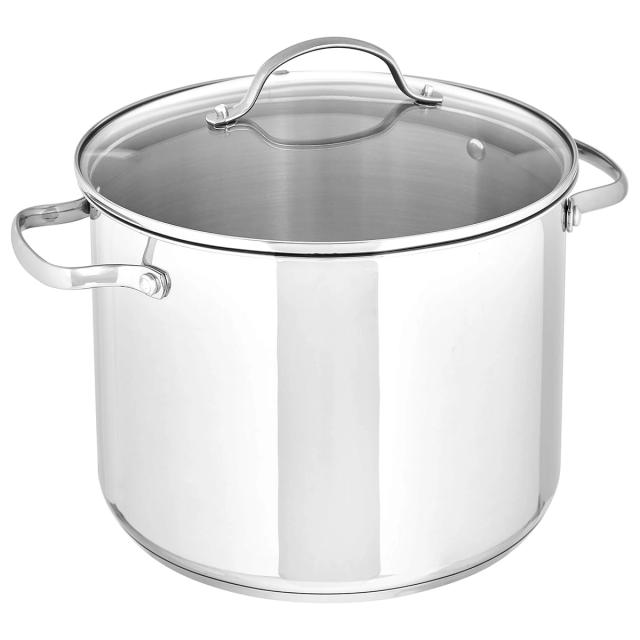
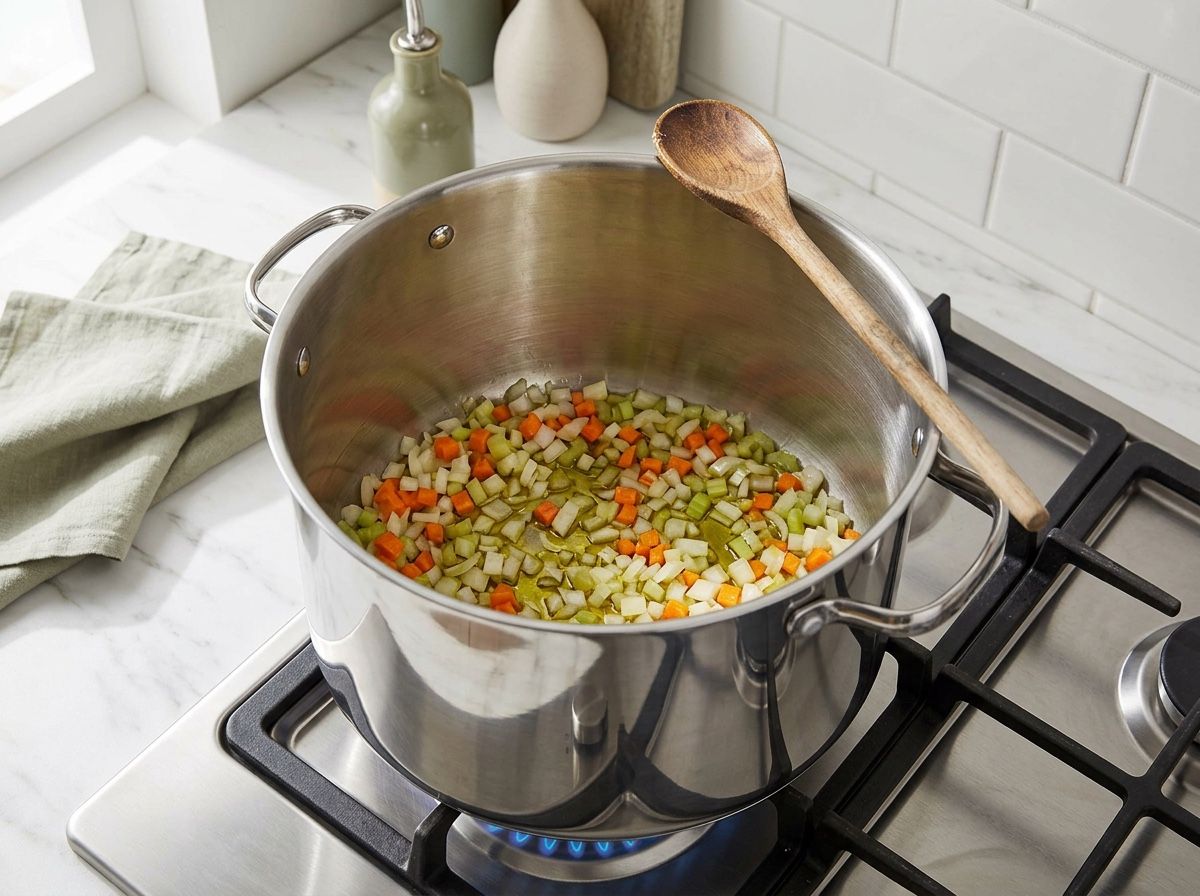
Heat the olive oil in a large pot over medium-low heat. Add the onion, carrots, celery and a good pinch of salt, and cook gently for 10 minutes, stirring now and then, until everything is soft and smells sweet. Do not let it brown.
- 2
Cook the garlic and tomato paste
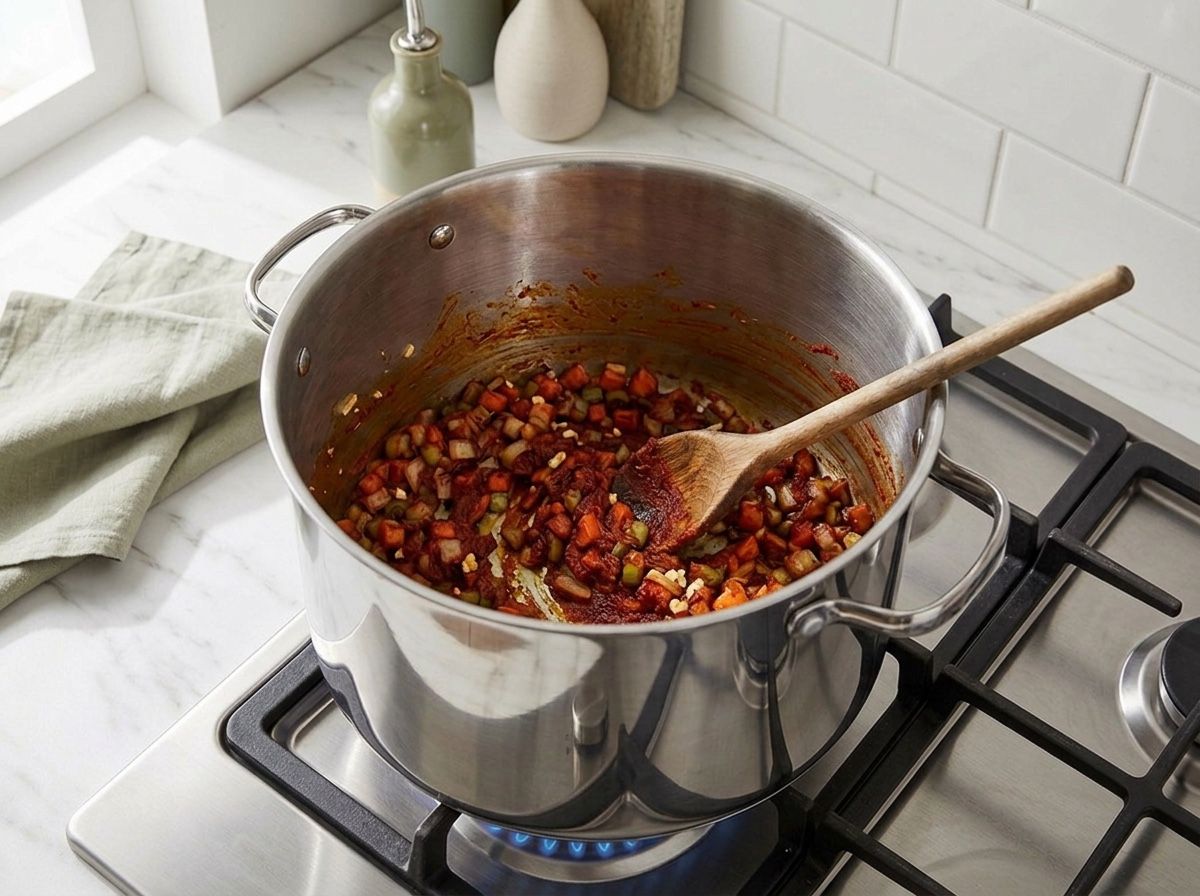
Stir in the garlic and cook for 1 minute, just until you can smell it. Add the tomato paste and keep stirring for 2 minutes, until it darkens from bright red to brick and coats the vegetables.
- 3
Simmer the base
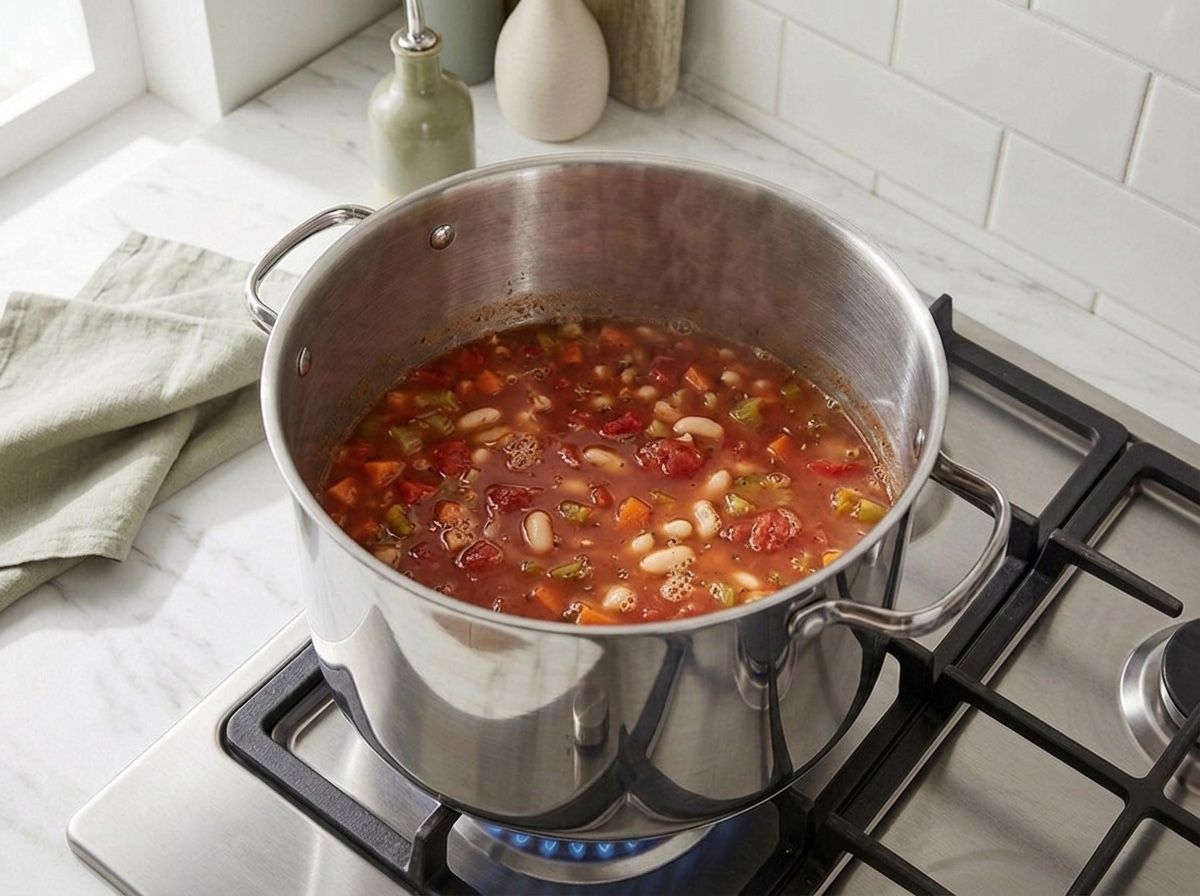
Add the diced tomatoes, vegetable broth, cannellini beans, bell pepper and dried oregano. Bring to a boil, then turn the heat down to a steady simmer and cook uncovered for 20 minutes, until the carrots are tender.
- 4
Mash a few beans to thicken
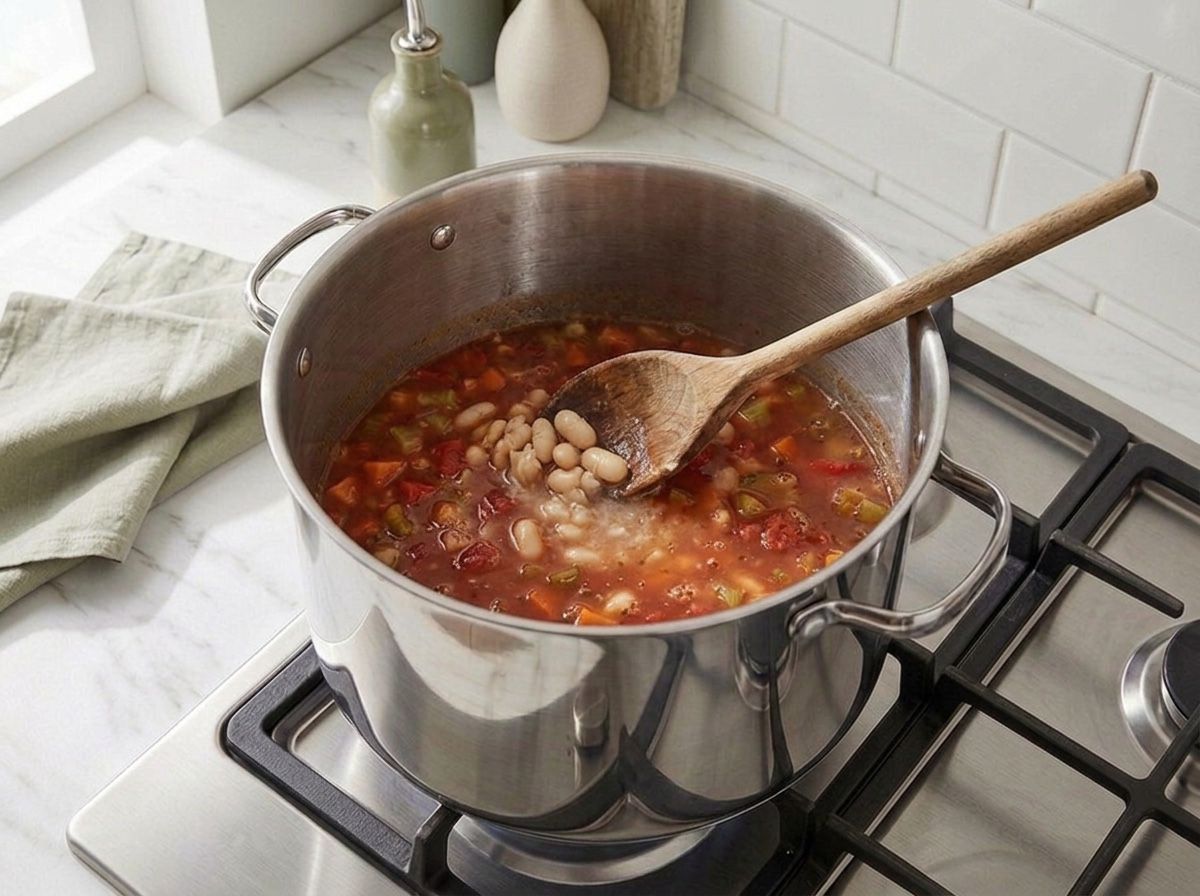
Press about a quarter of the beans against the side of the pot with the back of a spoon. The starch they release thickens the broth and gives the soup its body.
- 5
Add the tender vegetables last
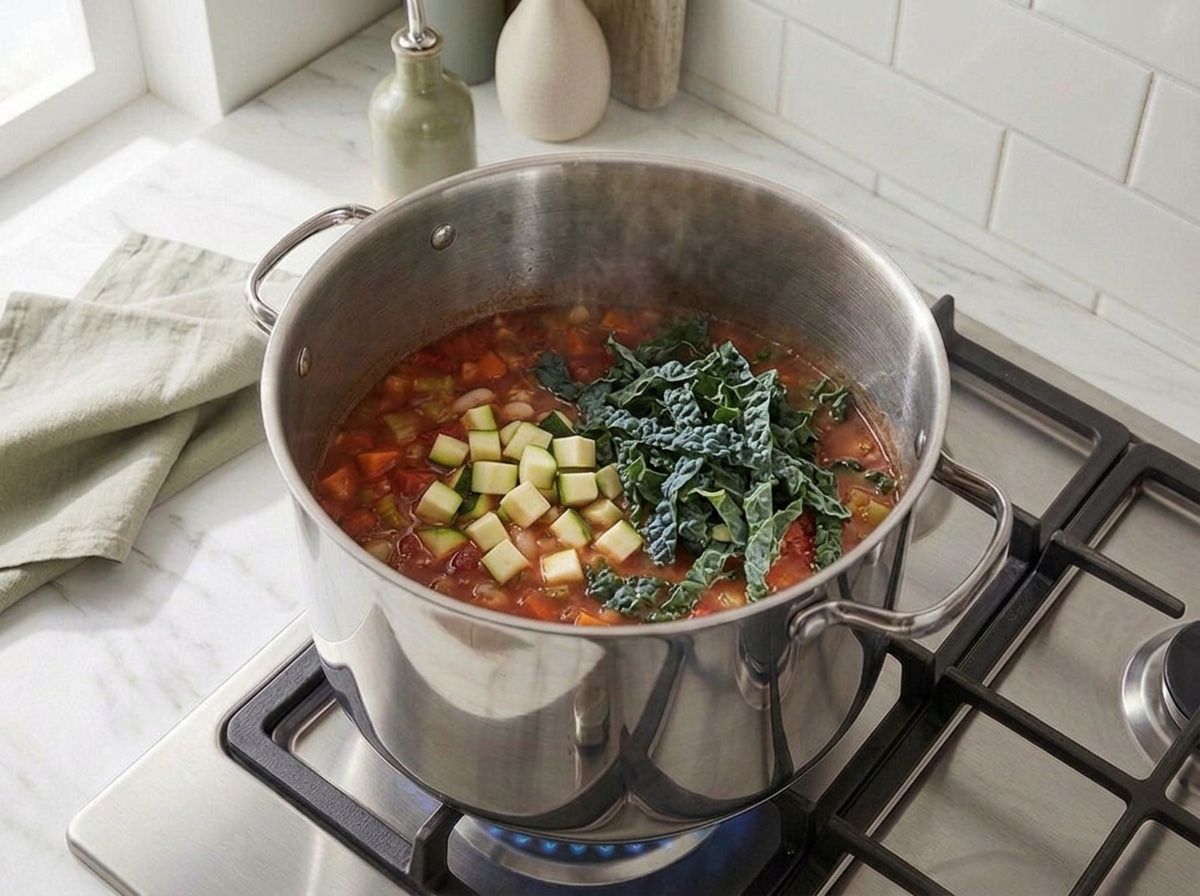
Stir in the zucchini and simmer for 6 minutes, then add the kale and cook for 2 minutes more, just until it wilts.
- 6
Boil the pasta in its own pan
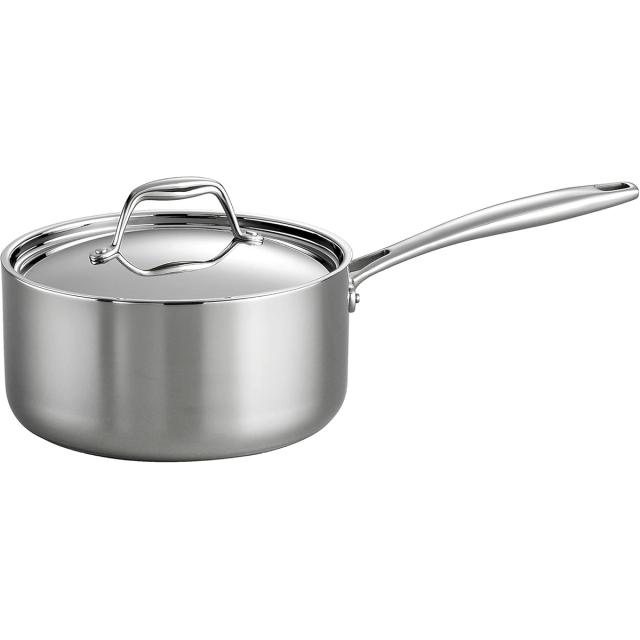
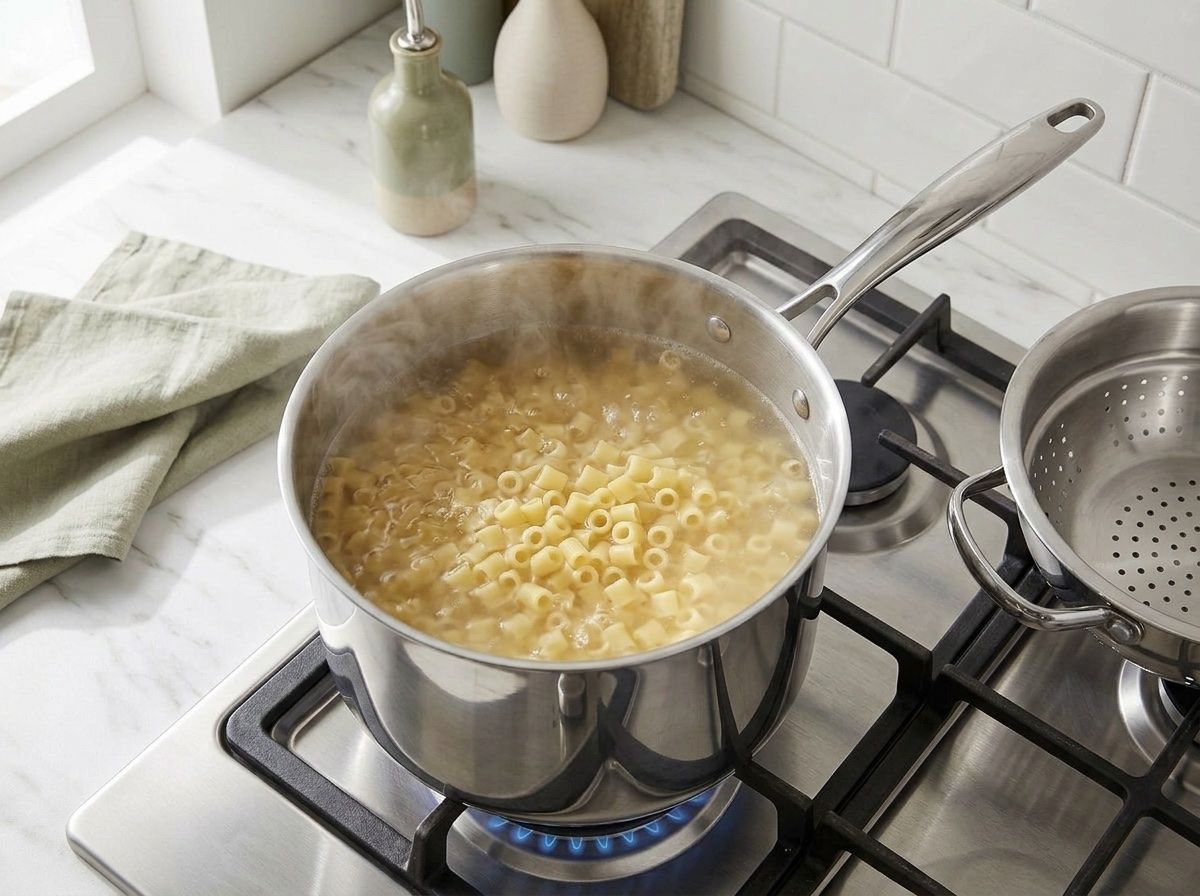
While the soup simmers, cook the pasta in a separate pan of well salted water until just al dente, then drain and toss it with a little olive oil. Keep it out of the soup.
- 7
Finish off the heat
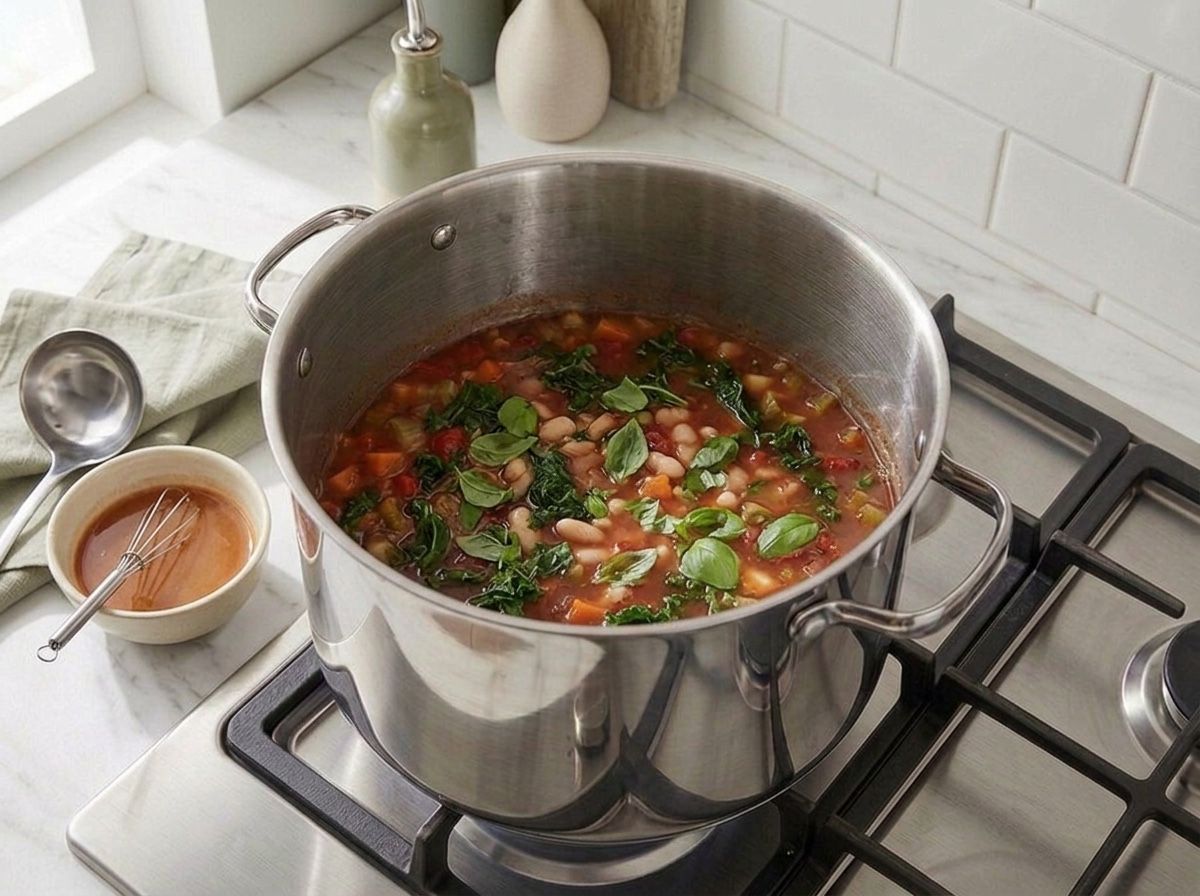
Take the pot off the heat. Whisk the miso into a ladleful of the hot broth until smooth, stir it back into the pot, then add the torn basil. Taste and season with salt and pepper.
- 8
Serve over the pasta
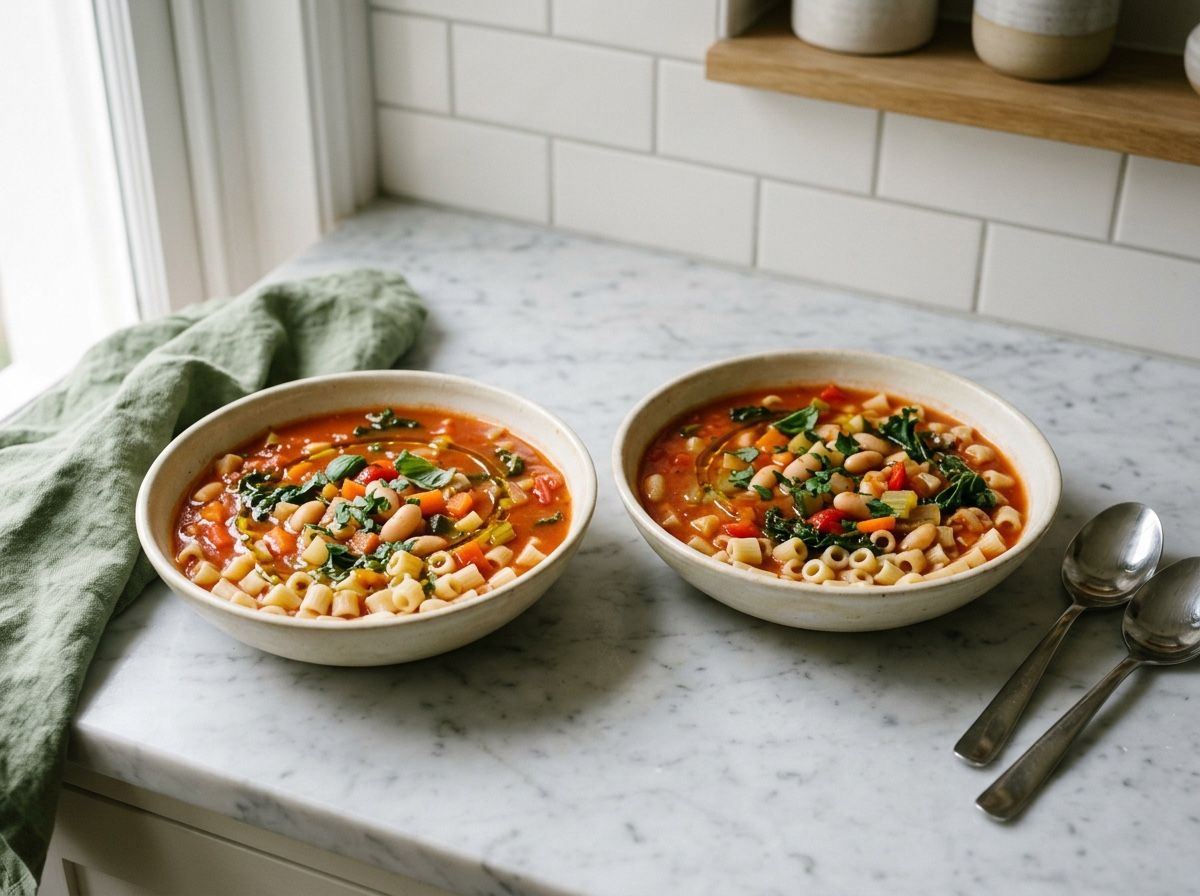
Put a spoonful of pasta in the bottom of each bowl and ladle the soup over it. Finish each bowl with a drizzle of olive oil and a little parsley if you like.
Notes
Cannellini are traditional, but borlotti, kidney or garbanzo beans all work. Keep the mashing step whichever you use.
For a gluten-free soup, use gluten-free pasta or swap it for a diced potato added with the broth.
No miso? Use 1 tablespoon nutritional yeast plus 1 teaspoon soy sauce, stirred in at the same point.
The soup thickens as it sits because the beans keep releasing starch. Loosen it with a splash of broth when reheating.
Nutrition Facts
6 bowls · 446 g per serving
- Calories
- 259 kcal
% Daily Value*
- Total Fat
- 5.7 g7%
- Saturated Fat
- 0.8 g4%
- Sodium
- 1157 mg50%
- Total Carbohydrate
- 45.2 g16%
- Dietary Fiber
- 7.6 g27%
- Sugars
- 8.2 g—
- Protein
- 10.4 g21%
Recipe from veggierecipes.blog
When it goes wrong
Troubleshooting
It tastes thin and watery, like hot vegetable water
Almost always the soffritto. Onion, carrot and celery need a slow ten minutes over medium-low heat to soften and sweeten; three or four minutes on higher heat only makes them hot. The other half is the tomato paste, which adds acidity stirred in raw and depth once it has cooked down to brick. Both steps look skippable and neither is.
The zucchini turned to gray threads
It went in too early. Zucchini is well over ninety percent water and collapses after about ten minutes of simmering, so joining the carrots at the start means half an hour in the pot. Add it in the last six minutes, cut no smaller than the carrots.
The next day it was more like a pasta salad than a soup
The pasta was cooked in the pot and kept working overnight. It does not stop absorbing when the heat goes off; sitting in warm broth it drinks for hours, so it swells and the liquid disappears. Cook it in its own pan, store it in a separate box tossed with oil, and add it to the bowl at the last moment.
Something is missing and I can’t work out what
It is the savory undertone, and its absence is the defining problem of vegan minestrone rather than a mistake you made. A traditional pot has a Parmesan rind simmering in it supplying glutamate, and removing the cheese removes that without anyone writing it down. A tablespoon of white miso whisked in off the heat replaces it; nutritional yeast plus a teaspoon of soy sauce is a cruder version of the same fix.
The basil went black and tasted of nothing
Fresh basil that meets a boiling pot oxidizes within a minute or two, which is also why the dried basil older recipes call for contributes so little. Tear it rather than chopping it, since a blade bruises the leaf, and stir it in after the pot is off the heat. Dried oregano is the opposite case and belongs in the simmer.
Mine came out thick enough to stand a spoon in
That is not a fault, that is minestrone. The thin brothy bowl most people picture is the canned American interpretation. In Tuscany the soup is deliberately dense, and left overnight it becomes ribollita, thickened further with stale bread and reheated, which is a celebrated dish rather than a leftover. Loosen it with broth in the bowl if you want, but do not mash fewer beans; that thickening is doing structural work.
Before you serve
Serving & Storage
In Liguria the bowl is finished at the table with a spoonful of pesto stirred in off the heat, and minestrone alla genovese is worth making once because basil suspended in hot broth tastes nothing like basil stirred through pasta. Use a cheese-free pesto, since classic pesto genovese contains both Parmigiano and pecorino and neither is vegetarian. A tablespoon per bowl is plenty.
The finish Italians reach for far more often is a hard drizzle of the best olive oil you own over each bowl on the way out. Raw oil tastes nothing like the oil the soffritto cooked in, and it is the cheapest upgrade this soup has. Serve crusty bread alongside, and if yours is a day past its best, put a slice in the bottom of the bowl and ladle over it, which is the Tuscan habit and better than toasting it.
Making it ahead
The base genuinely improves overnight, so build it a day early if you can. Take it through the twenty minute simmer and the bean mashing, then stop and refrigerate. Hold back the zucchini, greens, miso and basil and add all four during the ten minute reheat. Those are exactly the four things a second cooking ruins, so the reheated pot tastes fresher than one made start to finish and left to sit.
Cook the pasta on the day. It takes nine minutes and no version of doing it in advance improves anything.
Storing leftovers
The soup keeps four days in the fridge, the pasta three in a separate box tossed with oil so it does not weld into a brick. Reheat gently on the stove rather than in the microwave on full power, which bursts the beans and leaves the middle cold. It will have thickened, because the beans go on releasing starch; a splash of broth brings it back.
It freezes for three months with two conditions. Freeze the base only, never with pasta in it, which comes out with the texture of wet paper. And freeze it before the zucchini and greens go in, since both turn limp and dark after thawing. Thaw overnight in the fridge, reheat, and finish it like a make-ahead pot.
One thing that does not work at all is blending leftovers smooth. It sounds like a sensible way to use the last two portions and it produces something the color of dishwater, because minestrone is a mixture of things that taste better in pieces. Turn it into ribollita instead, or stir the last of it through the leftover pasta and eat it as a thick sauce.
Still wondering
Frequently Asked Questions
What vegetables can I use in minestrone soup?
Almost anything, but the useful question is when it goes in rather than whether. Firm aromatics that need to sweeten join the onion, carrot and celery at the start: leek, fennel, parsnip. Anything that wants a full simmer goes in with the broth: potato, green beans, cabbage, winter squash. Anything watery or leafy goes in during the last six minutes: zucchini, peas, kale, chard, spinach. Sort a substitution into one of those three groups and the soup works whatever is in it.
Is minestrone soup healthy?
A bowl of this version runs about 259 calories with 10 g of protein and 7.6 g of fiber, most of it from the beans, so it fills you up without being heavy. The number worth watching is sodium, at roughly 1,157 mg per serving, which is around half a day’s allowance, and nearly all of it arrives in the vegetable broth and the beans’ canning liquid rather than from the salt you add. Low-sodium broth and a proper rinse of the beans cut that substantially, and you can season to taste at the end instead.
Featured In
More Cozy Vegetable Soups

Made this?