
Vegan Potato Soup Recipe
Published · Updated
A bowl of creamy vegan potato soup is pure comfort. Thick, savory, and worth the ten minutes it takes to sweat the onion properly. It’s the perfect, simple meal for any time of year!
Jump To Recipe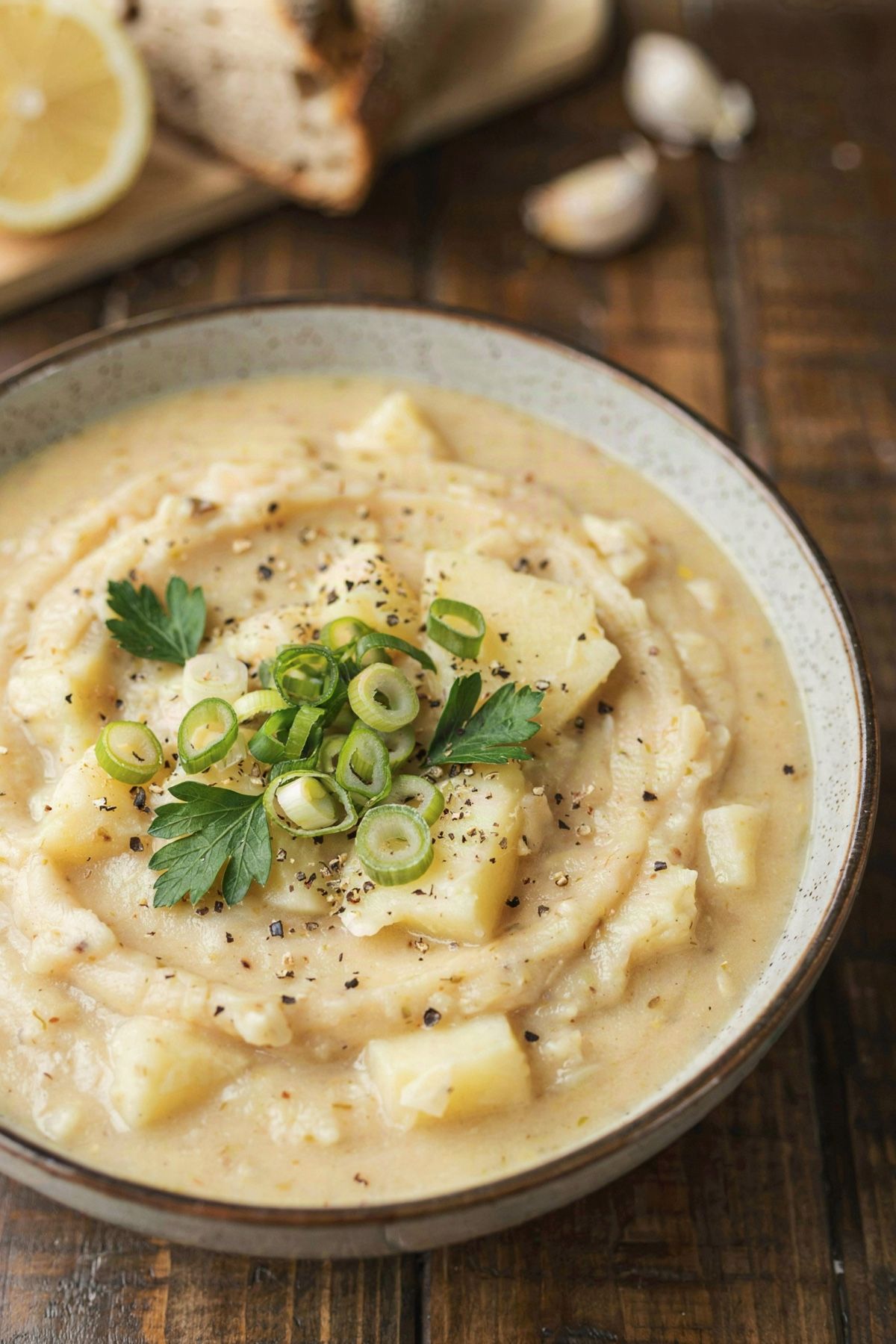
Why I'm Always In The Mood For Vegan Potato Soup
I never get tired of a good, creamy bowl of potato soup, especially when it’s vegan and still manages to check all the boxes for warmth, richness, and pure comfort. There’s something about the way half the potatoes collapse into the broth while the rest stay in soft pieces that feels like a reward at the end of a long day.
What stands out most for me is how simple ingredients can make something deeply satisfying. The combination of onions for sweetness, potatoes for body, and a splash of plant-based milk takes less than an hour but delivers layers of flavor that surprise me every time.
For me, a bowl of this next to a thick slice of crusty bread is about as good as it gets. It’s the sort of meal that always feels right, whether I’m on my own or inviting someone over for a casual, comforting dinner. Highly recommend you add this to your regular rotation!
The story
Potato Soup Was Dairy-Free For Its First Two Centuries
The potato reached Europe in the late 1500s and then spent a long time being distrusted. Across much of central Europe it was grown as an ornamental before anyone grew it to eat, and it took until the middle of the 1700s to be accepted as something you fed people rather than something you looked at. The soup arrived with it. A cookbook printed in Linz in 1621 carries what is usually cited as the first written potato soup recipe, under the name Erdäpfelsuppe, earth apple soup, and the German Kartoffelsuppe that grew out of it stayed a broth dish for generations.
That history makes the vegan version the older one. For most of potato soup’s life the fat in the pot was whatever was to hand and the liquid was water or broth, because cream on a farm was worth more sold than stirred into supper. Cream came late. The version most American cooks picture, loaded baked potato soup heavy with cream cheese and bacon, is younger still: it grew out of casual dining chains like Steak & Ale and Bennigan’s, and by most accounts it began as an answer to the question of what to do with last night’s leftover baked potatoes.
So this is not a dairy soup with the dairy removed. The body in a good potato soup never came from cream in the first place. It came from the potato’s own starch, released by breaking the cooked pieces up in the pot, and a cup of plant milk here is doing what a splash of milk did in a German farmhouse: taking the edge off. That is why the method below is far fussier about how the potatoes get mashed than about what you pour in at the end. Get the mashing wrong and no amount of cream, dairy or otherwise, will rescue the texture.
What to buy
Ingredient Notes
Yukon Gold potatoes
The variety changes this soup more than anything else on the list. Yukon Golds are medium-starch, so they break down enough to thicken the pot while some pieces hold their shape, which is the split this recipe wants. Russets are high-starch: thicker and fluffier, but they collapse completely and go gluey fastest if a blade gets near them. Waxy reds and new potatoes hold together so well the soup never thickens. With Russets, use 700 g instead of 800 g and mash lightly.
Unsweetened, unflavored plant milk
Read the carton twice, because most oat and almond milk on the shelf is sweetened, and sweetened milk gives a savory soup a faint breakfast note that is hard to place and impossible to remove. Vanilla is worse. Oat is the best match, being thickest and already starchy; soy is second and adds the most protein; almond is thin and can look slightly split in hot soup.
Vegetable broth
Four cups is most of the liquid and almost all of the sodium: with standard broth this lands near 1,535 mg a serving. Low-sodium broth roughly halves that, lets the potato through, and leaves the salting to you. Whatever you buy, taste it on its own first, because a broth that is aggressively carroty or tomato-forward takes the whole pot with it.
Garlic, fresh rather than powder
Four cloves sweated with the onion give a rounded sweetness powder cannot reach, because powder is a drier, toasted note from a different part of the same ingredient. If powder is all you have, use 1 teaspoon and add it with the paprika so it gets its minute in the hot oil. Stirred into finished soup it stays gritty on the tongue.
Lemon juice
The addition most potato soup recipes leave out, and the one that changes the most. Potato, onion and plant milk are all soft, round, low-acid flavors, and together they read as heavy rather than rich. Two teaspoons is well below the point where anyone tastes lemon; what they notice is that the soup has edges. Cider vinegar does the same job with a rounder finish.
Smoked paprika (optional)
Optional because it is the one item here you may not own, and the soup is complete without it. What it does is stand in for the smoke that bacon or ham gave the European versions. Half a teaspoon sits in the background; a full teaspoon makes this a smoked potato soup, which is good but is a different dish. Use sweet smoked pimentón, not hot.
Creamy Vegan Potato Soup
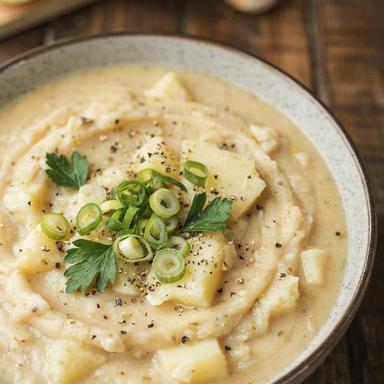
Creamy, heartwarming vegan potato soup made with potatoes, onion, and plant milk. Hearty, easy, and perfect for cozy meals.
Ingredients
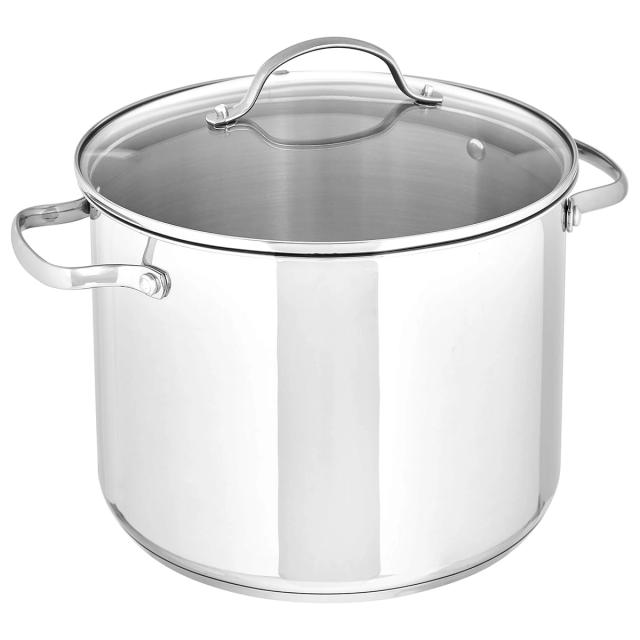
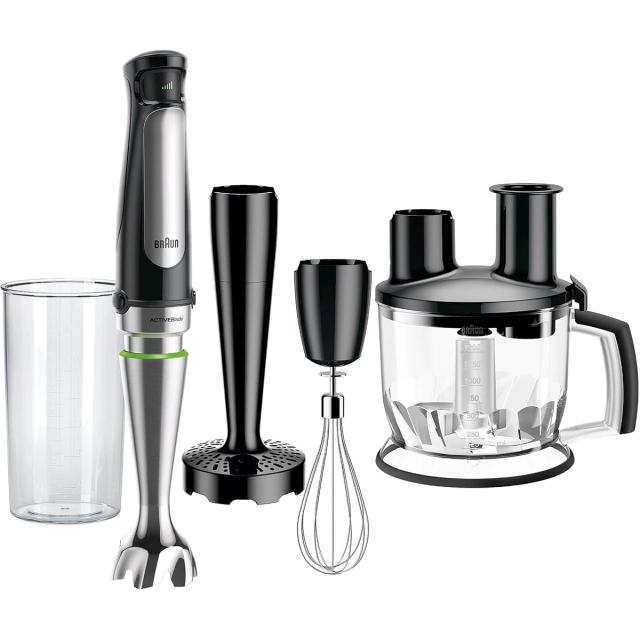
Equipment
As an Amazon Associate I earn from qualifying purchases, at no extra cost to you.

Instructions
- 1
Cut the potatoes last
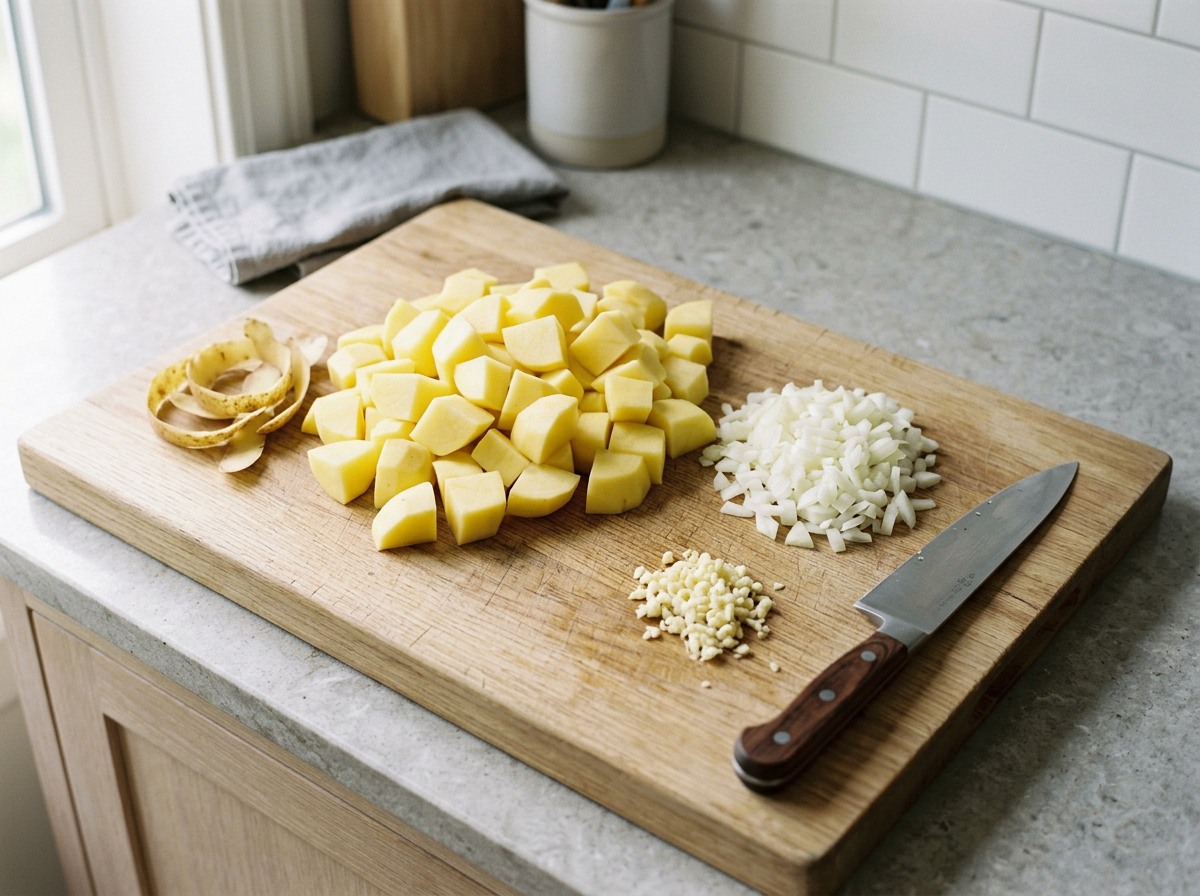
Peel the potatoes and cut them into even 3/4 inch chunks, then finely chop the onion and mince the garlic. Do not hold the cut potatoes in a bowl of water: that rinses off the surface starch this soup relies on for body.
- 2
Sweat the onion until it smells sweet
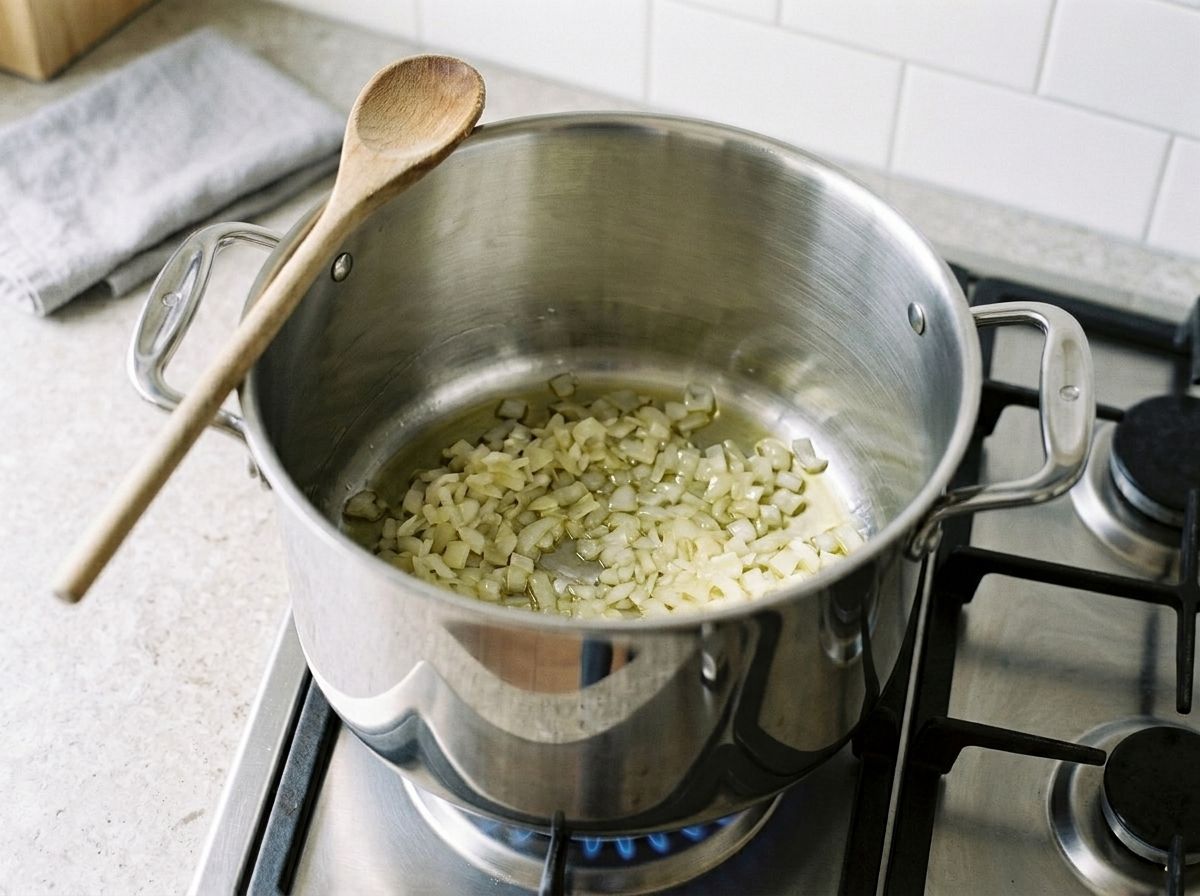
Heat the olive oil in a large pot over medium-low. Add the onion and a pinch of the salt and cook for 8 to 10 minutes, stirring now and then, until it is soft, translucent and smells sweet rather than sharp. Do not cut this short.
- 3
Bloom the garlic and paprika
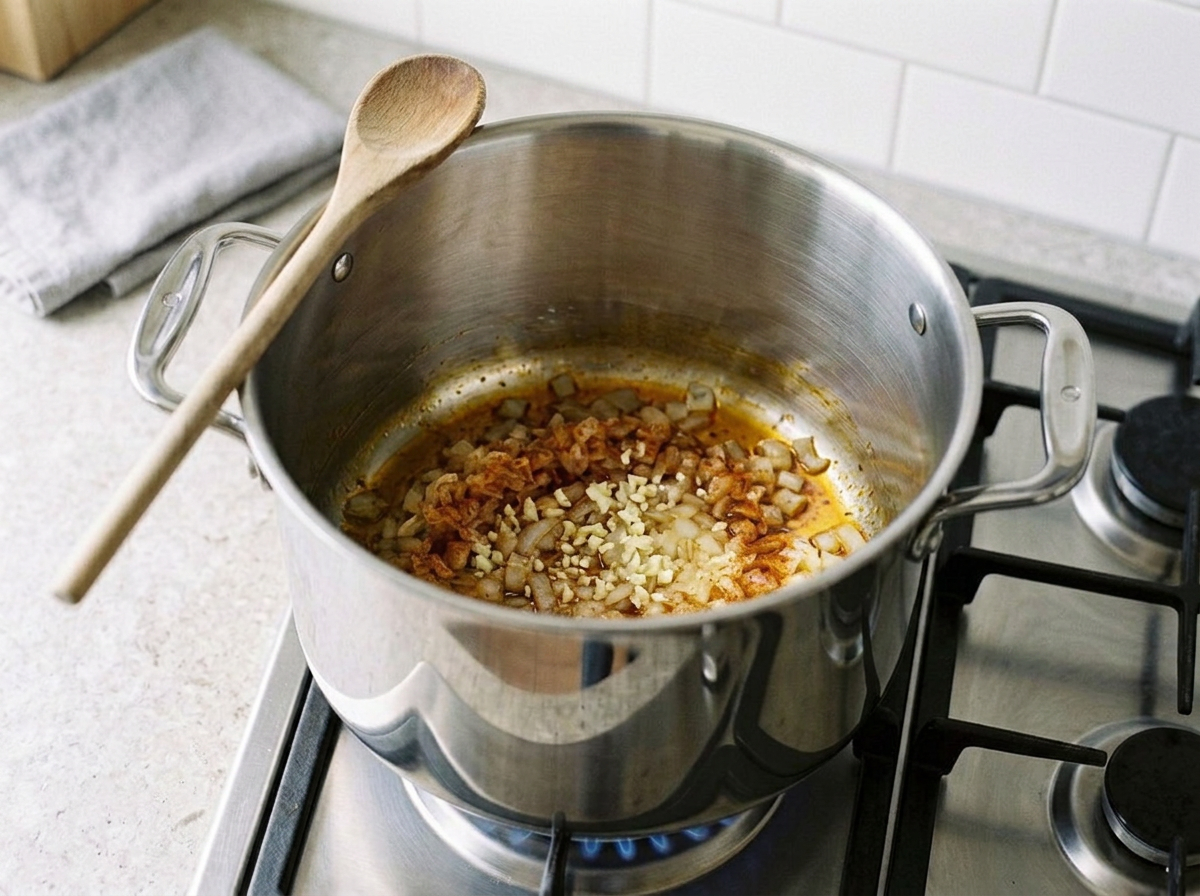
Add the garlic, and the smoked paprika if you are using it, and cook for 1 minute more, stirring constantly, until the garlic smells cooked and the paprika colors the oil. Do not let the garlic take on color of its own.
- 4
Simmer the potatoes to no resistance
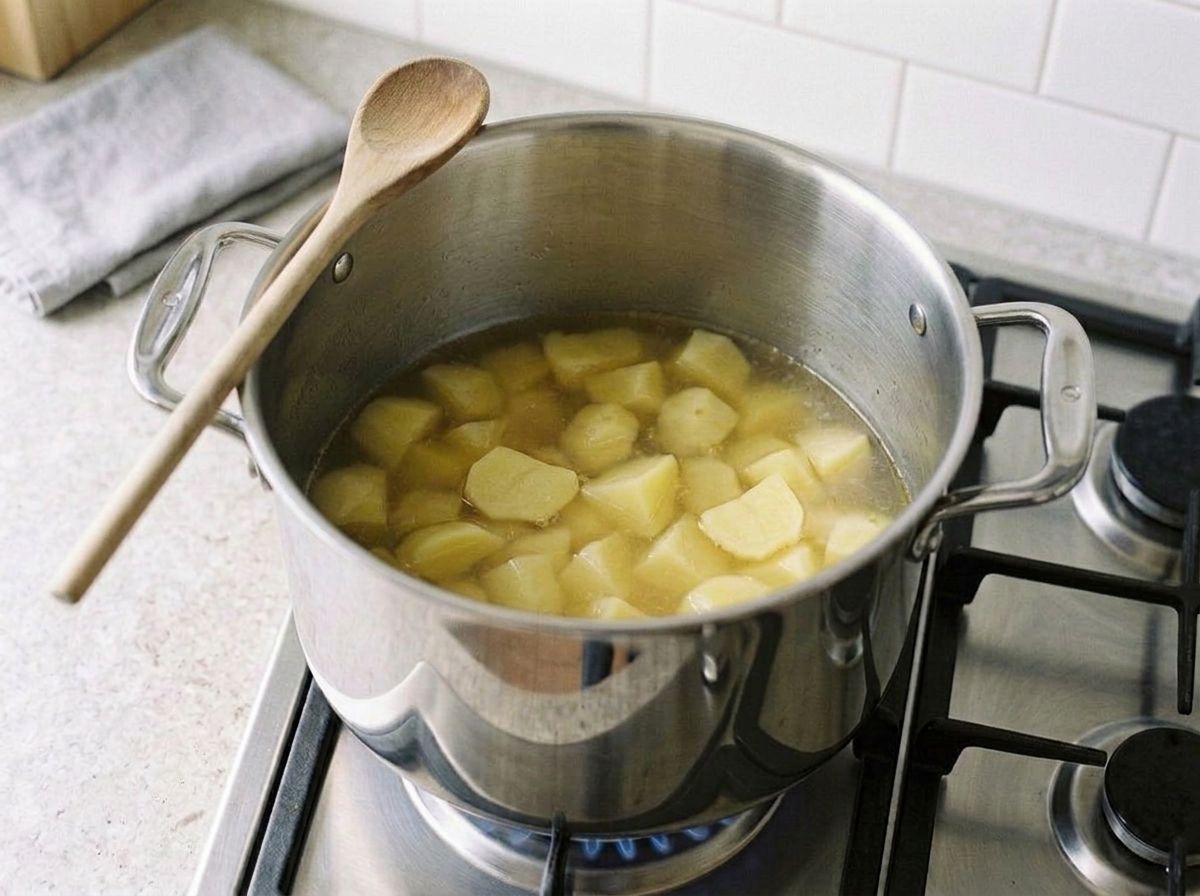
Add the potatoes, the broth and the rest of the salt. Bring to a boil, then turn down to a bare simmer and cook, partly covered, for 15 to 18 minutes, until a knife slides into a chunk with no resistance at all. Nearly done is not done.
- 5
Mash it, do not blend it
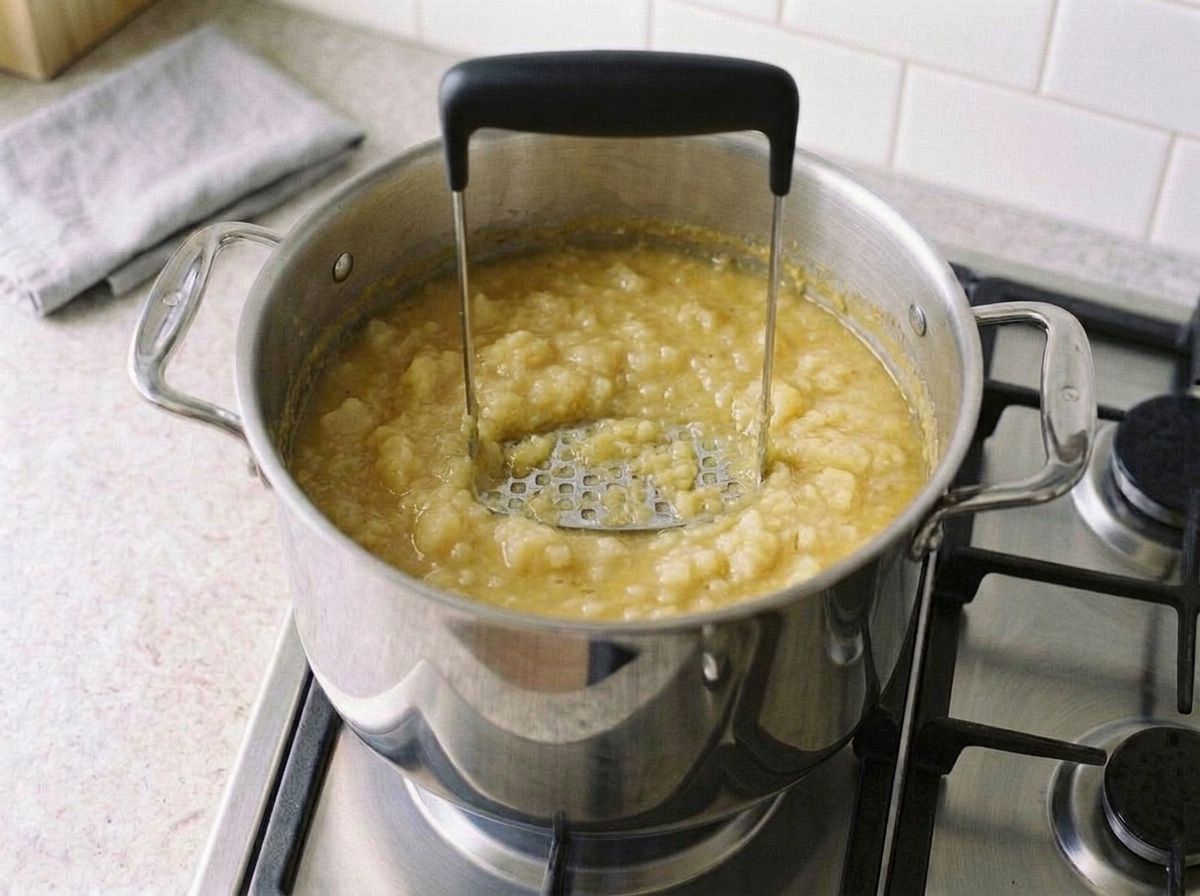
Take the pot off the heat and mash in it with a potato masher, roughly 20 strokes, until about two thirds has broken down into a thick base and the rest is still in pieces. Do not tip potato soup into a standing blender, and use an immersion blender only in two or three short pulses. A blade floods it with free starch and sets it into a gluey paste that cannot be undone.
- 6
Add the milk off the boil, then the acid
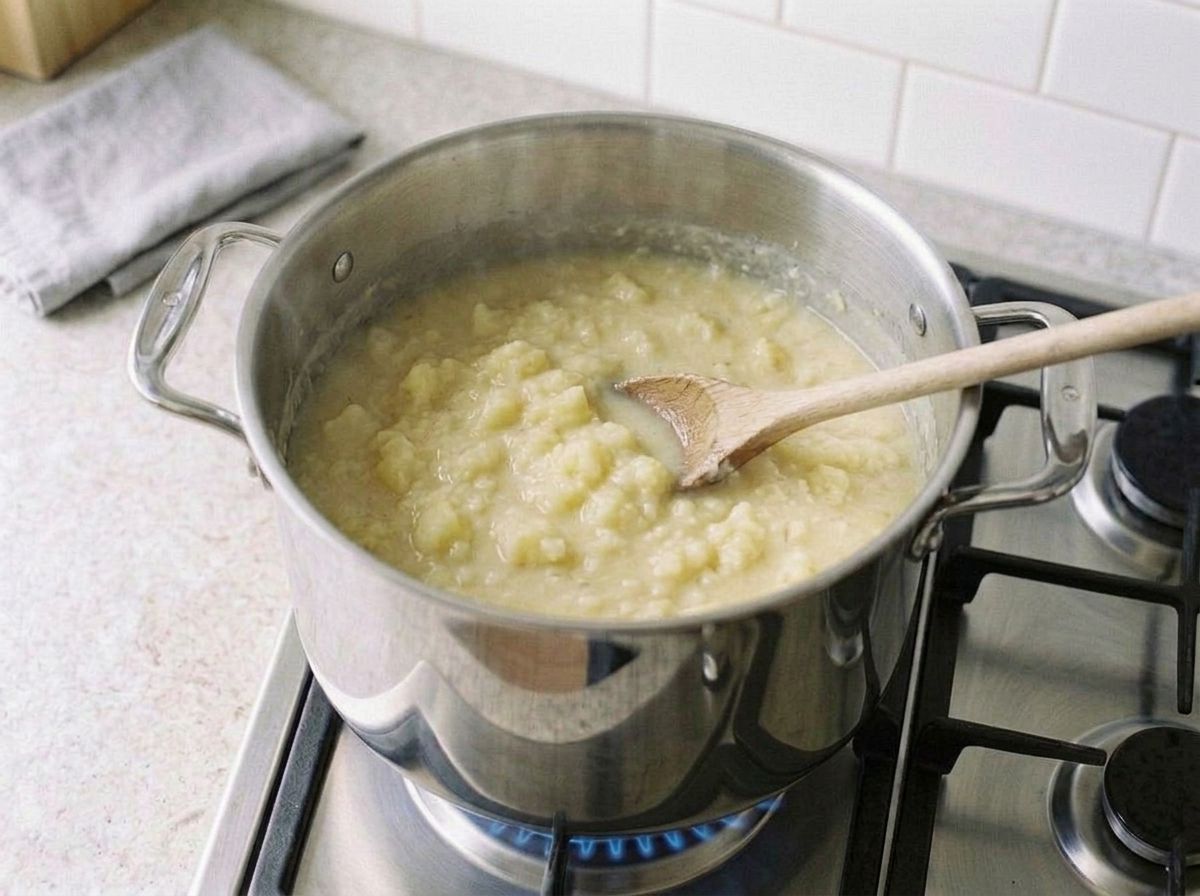
Stir in the plant milk and warm the soup over low heat until it steams, without letting it boil. Take it off the heat, stir in the lemon juice, then taste and add the black pepper and more salt. The lemon goes in off the heat so it keeps its lift.
- 7
Serve while it is thick
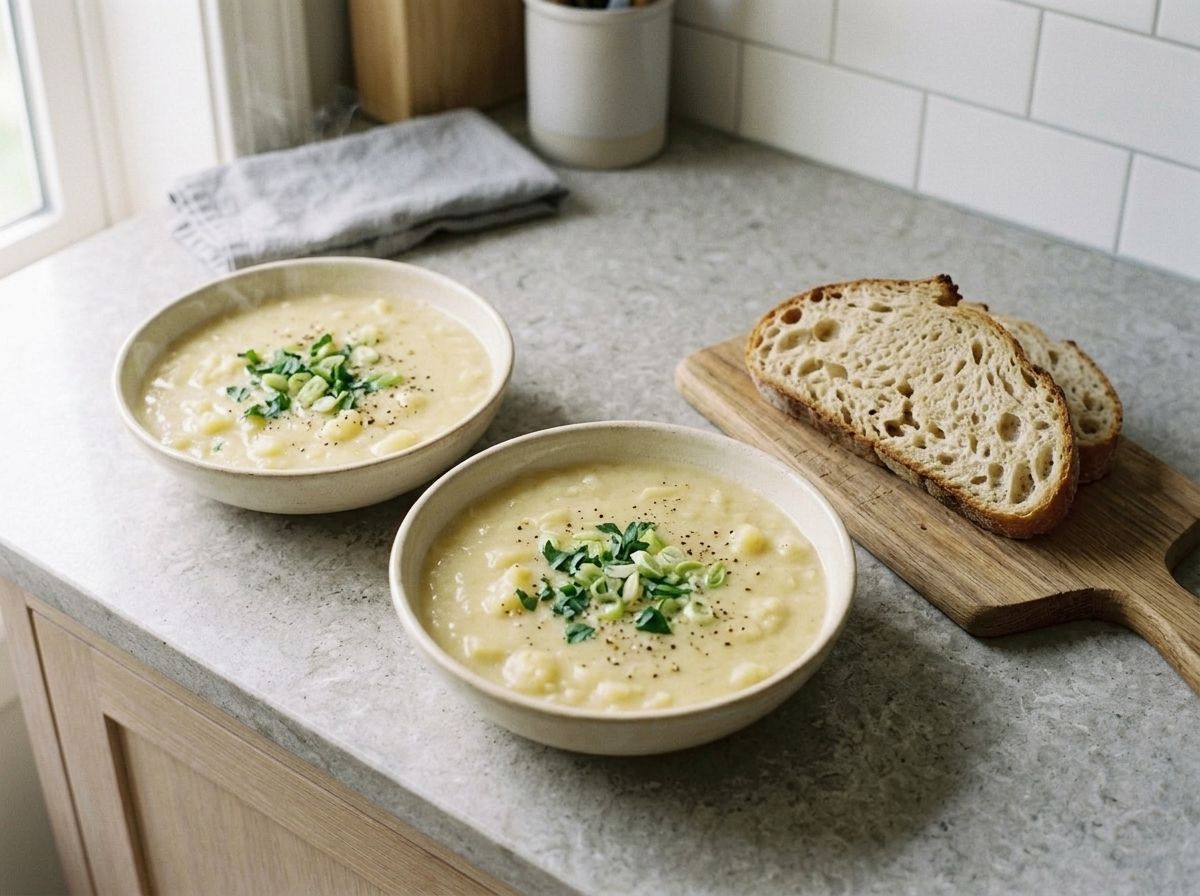
Ladle into warm bowls and scatter over the green onions or parsley. Serve straight away with crusty bread. The soup keeps thickening as it stands, so it is at its best in the first ten minutes out of the pot.
Notes
To keep it oil-free, sweat the onion in a splash of the broth instead, and give it an extra two or three minutes to soften.
A tablespoon of white miso stirred in with the plant milk adds savory depth without making the soup taste of miso.
Nutrition Facts
4 servings · 471 g per serving
- Calories
- 228 kcal
% Daily Value*
- Total Fat
- 7.3 g9%
- Saturated Fat
- 1 g5%
- Sodium
- 1535 mg67%
- Total Carbohydrate
- 38 g14%
- Dietary Fiber
- 5.1 g18%
- Sugars
- 5.3 g—
- Protein
- 4.2 g8%
Recipe from veggierecipes.blog
When it goes wrong
Troubleshooting
It went gluey, like wallpaper paste
Almost always a blender. Potato starch granules swell as they cook, and a spinning blade bursts them and releases amylose, which links into an elastic network that traps the liquid. It is the same starch sold commercially as an adhesive, and the change is permanent: thinning it with broth only gives you thin glue. Mash by hand, and pulse an immersion blender rather than running it. There is no rescue after the fact, only a note for next time.
It is thin and watery
Either the potatoes came off the heat before they were fully soft, so they broke into pieces instead of dissolving, or they sat in a bowl of water after cutting and the surface starch went down the drain. Simmer uncovered for another 10 minutes and mash harder. Do not reach for cornstarch, which gives a slick, coated texture that reads as thickened rather than creamy.
It tastes flat, and more salt is not helping
This is the acid, not the salt. When salt stops improving a soup and starts making it taste salty, what is missing is nearly always sourness. Add the lemon a teaspoon at a time with the pot off the heat, tasting between each one, and be more generous with the black pepper than feels right.
The onion still tastes raw and sharp
It was in the pot for two or three minutes, which is long enough to heat an onion and not long enough to change one. Sweating means low heat and 8 to 10 minutes, until the pieces are floppy and translucent right through. There is no catching up later, because once the broth goes in the pot sits at a simmer and the onion stops developing.
It looks curdled or grainy after the milk went in
The plant milk boiled. Soy in particular splits under heat and acid together, and this soup has both. Keep it below a simmer once the milk is in, and add the lemon after the pot comes off the heat. If it has already split, a short pulse with an immersion blender will pull it back together.
The reheated leftovers are grainy
Not a mistake, and not entirely fixable. Cooked potato starch reorganizes as it cools, a process called retrogradation, and squeezes water back out of the gel it set into. Reheat slowly, stir constantly, and add a splash of broth as it loosens.
Before you serve
Serving & Storage
In Germany and Austria the pot rarely arrives plain, and the finishing herb is worth borrowing. Kartoffelsuppe is seasoned with dried marjoram, which is most of what makes it taste German rather than generic, and the Austrian Erdäpfelsuppe versions lean on caraway and celery leaf instead. Add dried marjoram in the last minute of the simmer, since dried herbs need heat and liquid to open up. Fresh dill is the exception: stir it in off the heat and it stands up to the potato without any cooking at all.
The soup itself has nothing to chew, so the meal needs texture from somewhere else. Crusty sourdough or rye is the obvious answer and earns the place, but croutons fried in olive oil, crisp-fried onions, or toasted pumpkin seeds do the same job inside the bowl. A sharp green salad with a vinegary dressing beats another soft side.
Making it ahead
This soup does not reward being made in advance: it is at its best within ten minutes of the pot and stiffens noticeably after that. What works is doing the slow part early. Sweat the onion and garlic, leave the covered pot off the heat for an hour or two, then pick up at the potatoes. If the whole thing has to be made ahead, stop before the plant milk goes in, refrigerate the base, and finish with the milk and lemon on the day.
Storing leftovers
Sealed in the fridge it keeps three or four days, thickening to something close to a purée overnight. Loosen it with broth or water over low heat, stirring, and taste for salt and lemon again, because both fade in the cold.
Freezing deserves an honest answer: potato soup is one of the poorer candidates. Freezing ruptures what is left of the potato cells and the starch retrogrades as it thaws, so it comes back grainy and looser than it went in. A fully smooth soup survives better than a chunky one, because there is less intact potato left to turn mealy. If you are going to freeze it, blend the batch smooth first, keep it to a month, and thaw overnight in the fridge.
Still wondering
Frequently Asked Questions
Is this soup gluten-free?
Yes, with one thing to check. Nothing in the recipe contains gluten, but the vegetable broth is the usual culprit: some brands, and bouillon cubes and powders in particular, use wheat as a carrier or contain barley malt extract. Read the label rather than assuming. The soup is also nut-free if you use oat or soy milk, and soy-free if you use oat.
Can I add other vegetables without wrecking the texture?
Yes, within limits, because the potato has to stay the clear majority of the solids or the soup stops thickening. Up to about 200 g of extra vegetable is safe in a batch this size: two carrots, two celery sticks, or half a small cauliflower, going in with the onion if hard and with the potatoes if soft. Leeks are worth swapping in rather than adding, and 200 g of sliced leek in place of half the onion is an improvement. Zucchini and spinach thin the pot, so add them at the very end.
Can I double the recipe?
Yes, with two adjustments. Use a wide pot rather than a tall one so the onion still sweats in close to a single layer, because piled up it steams instead and you lose the sweetness. And hold back about a cup of the broth: a doubled batch loses less to evaporation over the same 18 minutes, so it comes out thinner than a single one. Stir the reserved broth in at the end only if it needs it.
Featured In

More Cozy Vegan Soups and Comforts

Made this?