
Brussels Sprouts Recipe
Published · Updated
Crispy, caramelized Brussels sprouts drizzled with a luscious balsamic glaze. These are the Brussels sprouts people can’t stop raving about!
Jump To Recipe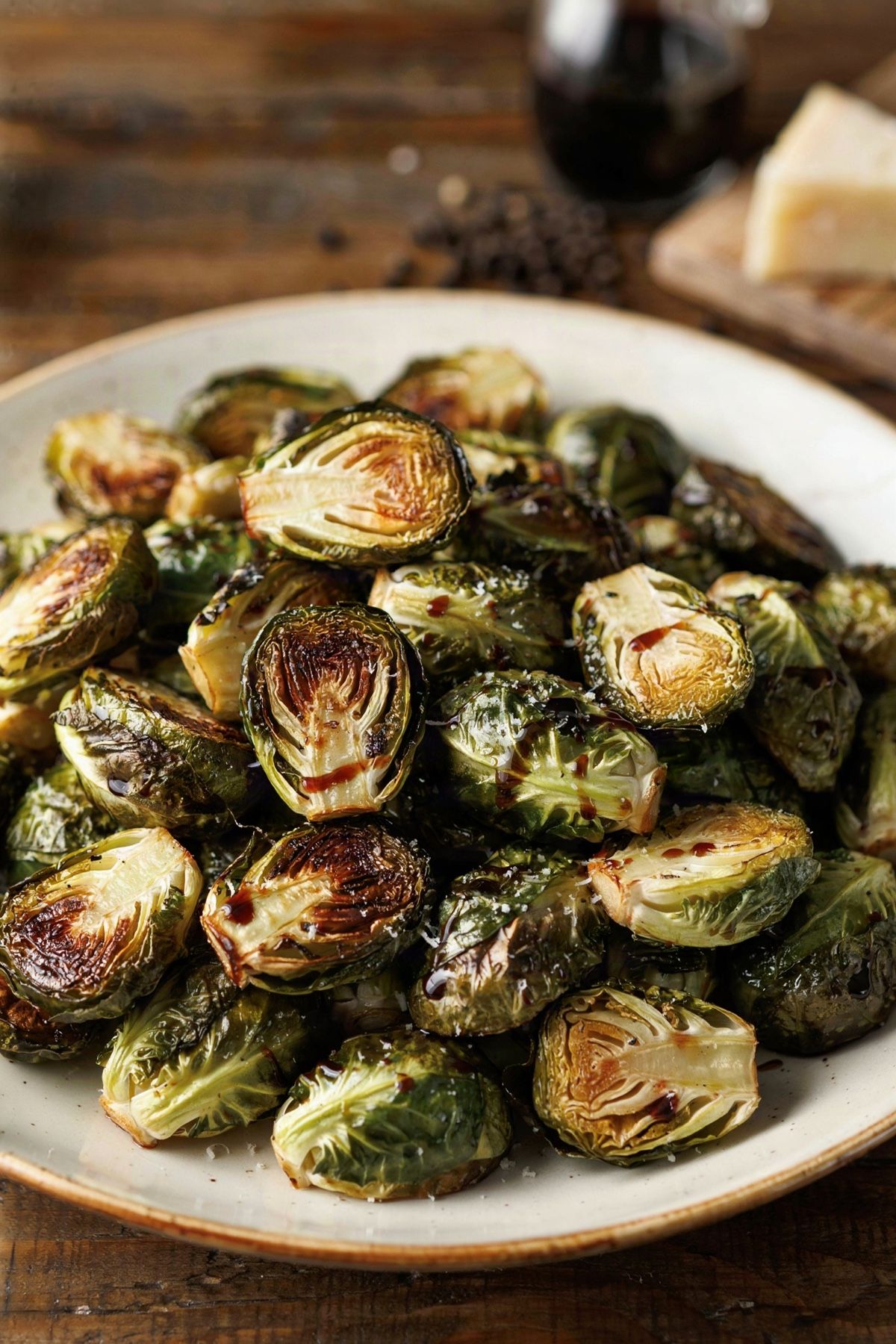
Why Roasted Brussels Sprouts Are So Addictive
Once you roast Brussels sprouts, they’re a whole new beast. The hot temperature crisps each leaf up, leaving slightly burnt, golden, crispy edges that are irresistible. When you toss them in a balsamic glaze at the end, it gives them a little tang and sweetness that takes them up a notch.
I serve roasted Brussels sprouts at dinner parties and when I’m cooking dinner during the week. This hearty dish has a quick preparation time without fancy ingredients. Plus, they look as impressive as they taste.
A couple of reasons why I keep coming back to this dish:
- Incredible flavor with just a handful of ingredients
- They pair well with almost any main: roast, stew, or hearty grain dish
- That balsamic glaze gives it the wow factor
Don’t skip the Parmesan at the end. It’s not necessary, but well worth it for the salty creaminess!
Try them once and you will see what Brussels sprouts skeptics convert to!
The story
The Sprouts You Hated Were Bred Out of Existence
The name is honest. Brussels sprouts turn up in market regulations for the Brussels area in 1213, and by the 16th century they were a staple across the Low Countries and northern France. The crop found its real home much later on the California coast, where a fog belt through San Mateo, Santa Cruz and Monterey counties still grows almost the entire American harvest.
None of which explains how a vegetable with eight centuries behind it spent the back half of the 20th century as a punchline. The answer is chemistry. Sprouts carry glucosinolates, the sulfur compounds the cabbage family uses to make itself unpleasant to eat, and two in particular, sinigrin and progoitrin, are what people mean when they say sprouts taste bitter.
In the 1990s a Dutch scientist named Hans van Doorn, working at the seed company Novartis, ran taste trials across several growing seasons and pinned the bitterness on those two compounds. His 1998 paper laid it out plainly: how much people liked a sprout tracked its sinigrin and progoitrin content almost directly. Seed banks held hundreds of older varieties naturally low in both, abandoned long before because they were low-yielding and slow to mature. Dutch breeders spent years crossing those old lines back into modern cultivars until they had a sprout mild enough to like and productive enough to sell.
That is why a Brussels sprout bought today is not the vegetable your parents boiled. What sits in supermarkets now descends from that program and is measurably less bitter. When somebody says they hate Brussels sprouts, they are almost always reporting on a plant that has been quietly replaced.
It also explains why roasting suits them now. An older, sharper sprout needed something to fight: cream, bacon, long braising, anything to bury the bitterness. These need heat and a little acid and nothing else, which is the whole of this recipe.
What to buy
Ingredient Notes
Brussels sprouts
Buy them loose rather than bagged where you can. Size matters more than looks, and a bag is usually a mix of golf balls and marbles that will never cook evenly. Look for tight, bright green heads, and check the cut stem: pale and moist rather than dried and brown. A dry stem means the sprout has been off the plant a while, and every day off the plant is more sugar turned to starch. Still attached to the stalk in autumn, they keep noticeably longer.
Balsamic vinegar
Three products share the shelf and only one belongs here. Ordinary balsamic vinegar of Modena is wine vinegar with grape must, and it costs very little: buy that one, because reduction is exactly what it is for. Aceto balsamico tradizionale, sold in small squat bottles for a great deal of money, is already syrupy after twelve years in barrels, and boiling it wastes both the money and the vinegar. Ready-made balsamic glaze is fine too, in which case skip the reduction and drizzle it from the bottle.
Honey or maple syrup
Not a garnish, and not optional in the way the old version of this recipe implied. As balsamic reduces the acetic acid concentrates, and a supermarket bottle taken down by half with nothing to balance it turns sharp and faintly acrid. The sweetener is what makes it read as glaze rather than hot vinegar. Maple does the identical job and keeps the dish vegan, but use the real thing; pancake syrup reduces to something gluey.
Olive oil
Two tablespoons for a pound sounds generous and it is the minimum. The oil carries heat from the pan into the cut face, and an underoiled sprout does not brown slowly, it dries out and goes leathery. Use plain everyday olive oil rather than a peppery extra virgin, whose flavor largely burns off at 425°F anyway.
Parmesan
Worth knowing on a vegetarian site: real Parmigiano-Reggiano is made with calf rennet and is not vegetarian, however the block is marketed. Look for an Italian-style hard cheese labeled suitable for vegetarians, which most supermarket own-brands now are. Grate it yourself and grate it finely, because the ready-grated stuff is dusted with cellulose or potato starch to stop it caking in the tub, and that coating stops it melting cleanly too. Add it after the sprouts come out; cheese put on before roasting burns long before they are done.
Salt
Season immediately before the sprouts go on the pan, not while the oven heats. Salt pulls water to the surface, and twenty minutes in a bowl undoes the drying you just did. Go lighter than feels right, too, because the glaze concentrates as it reduces and the cheese brings its own. Correct at the table with flaky salt.
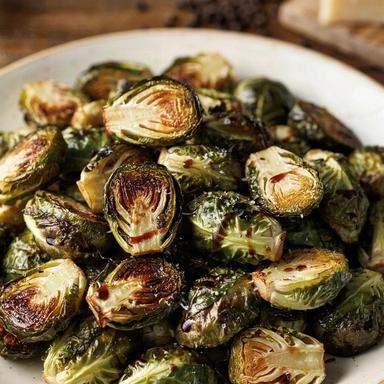
Roasted Brussels Sprouts with Balsamic Glaze
Brussels sprouts roasted cut side down on a preheated sheet until the flat faces go mahogany, finished with a balsamic glaze pulled off the heat before it sets.
Ingredients
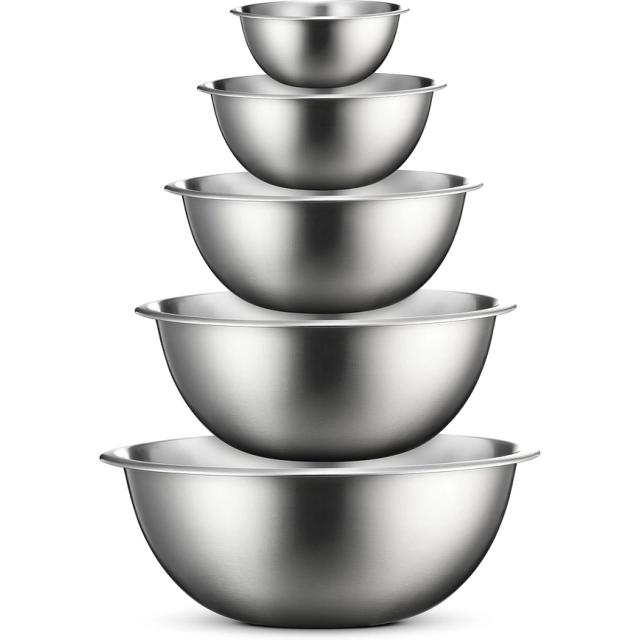
Equipment
As an Amazon Associate I earn from qualifying purchases, at no extra cost to you.
Instructions
- 1
Heat the oven and the pan
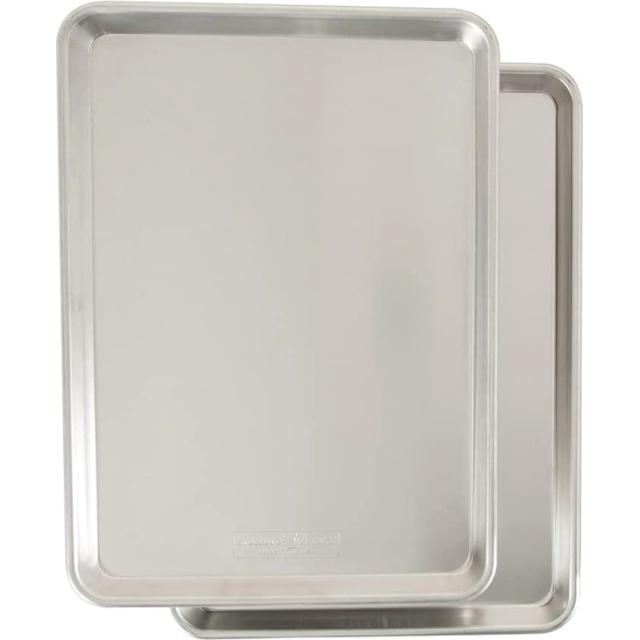
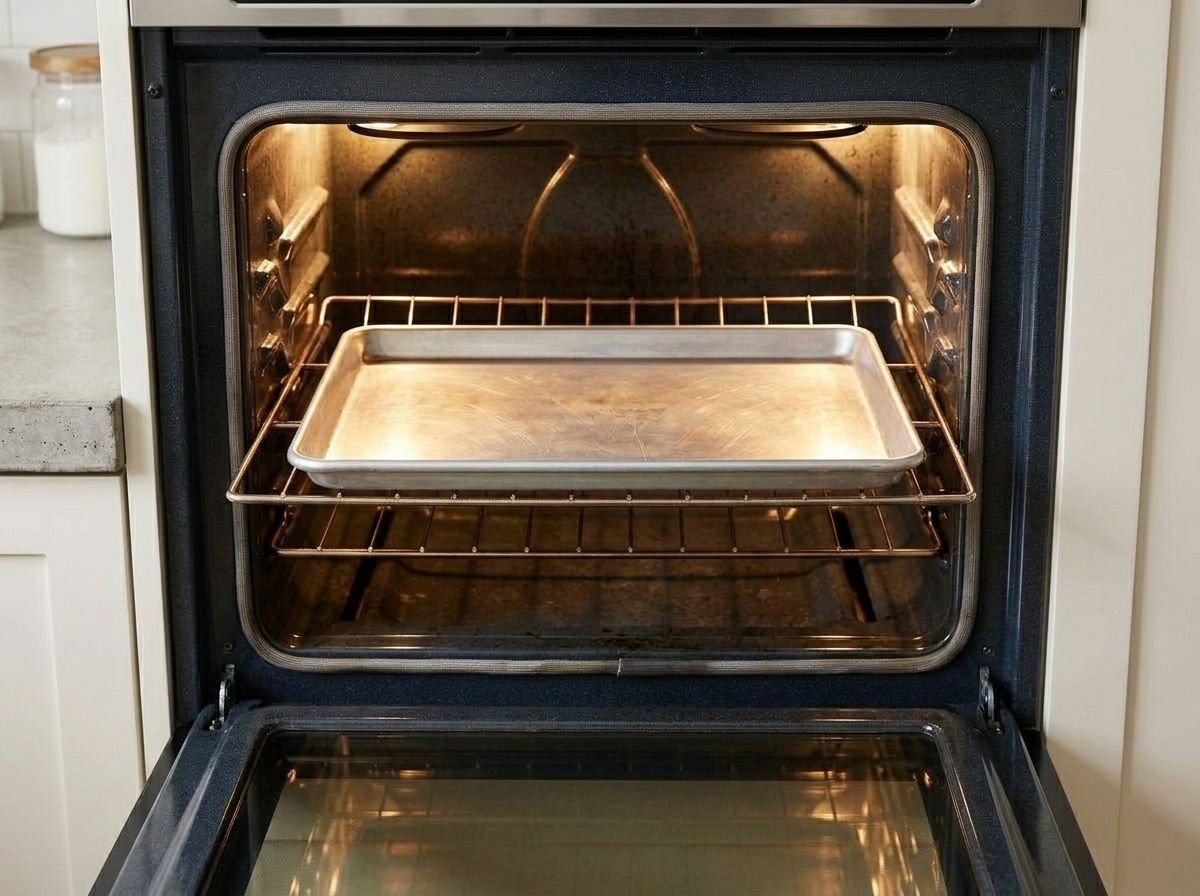
Heat the oven to 425°F (220°C) and slide a rimmed baking sheet in to heat with it. Sprouts that land on hot metal start browning on contact, and that head start is most of the difference between crispy and merely roasted.
- 2
Trim, halve and dry
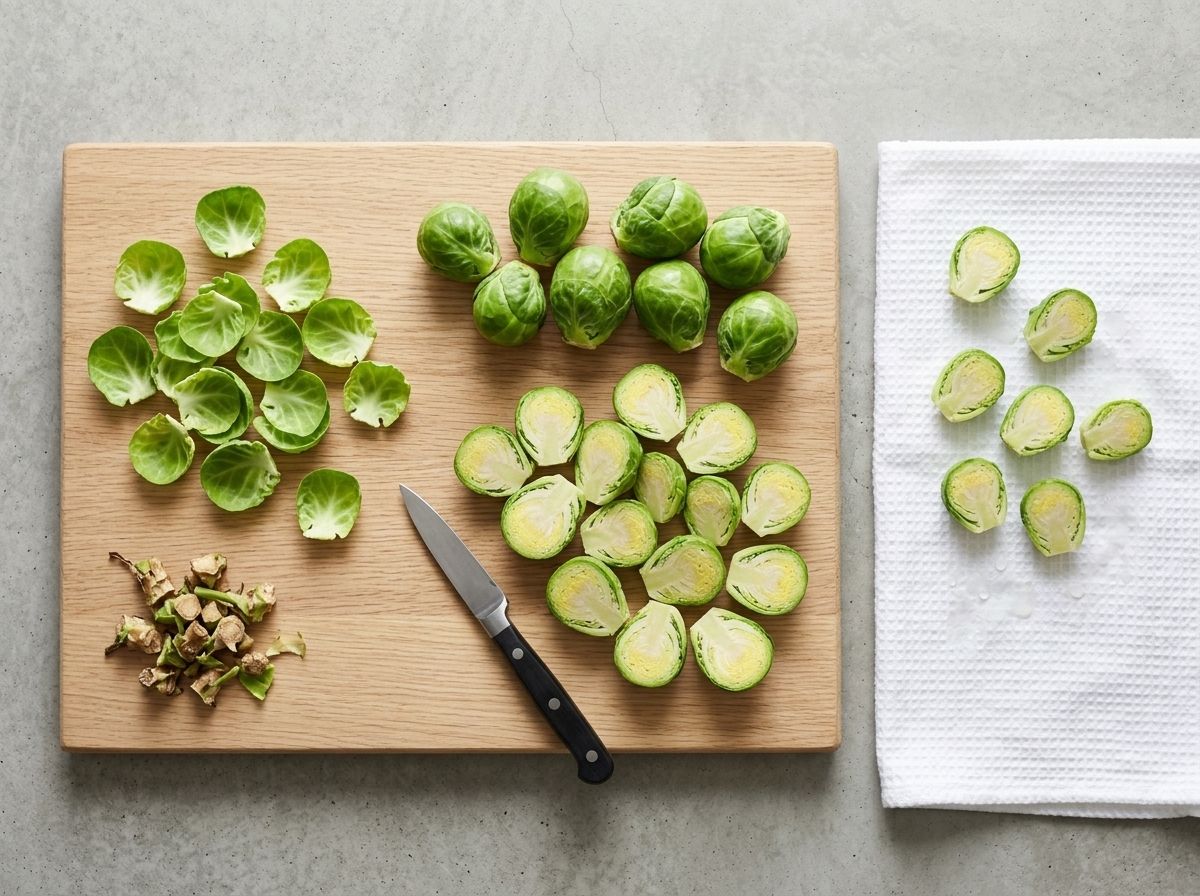
Trim the dry stem end off each sprout and cut it in half through the root. Keep every loose leaf that falls away, they crisp into the best thing on the pan. Spread the sprouts and the leaves on a clean towel and pat them thoroughly dry, because wet sprouts steam instead of browning.
- 3
Oil and season
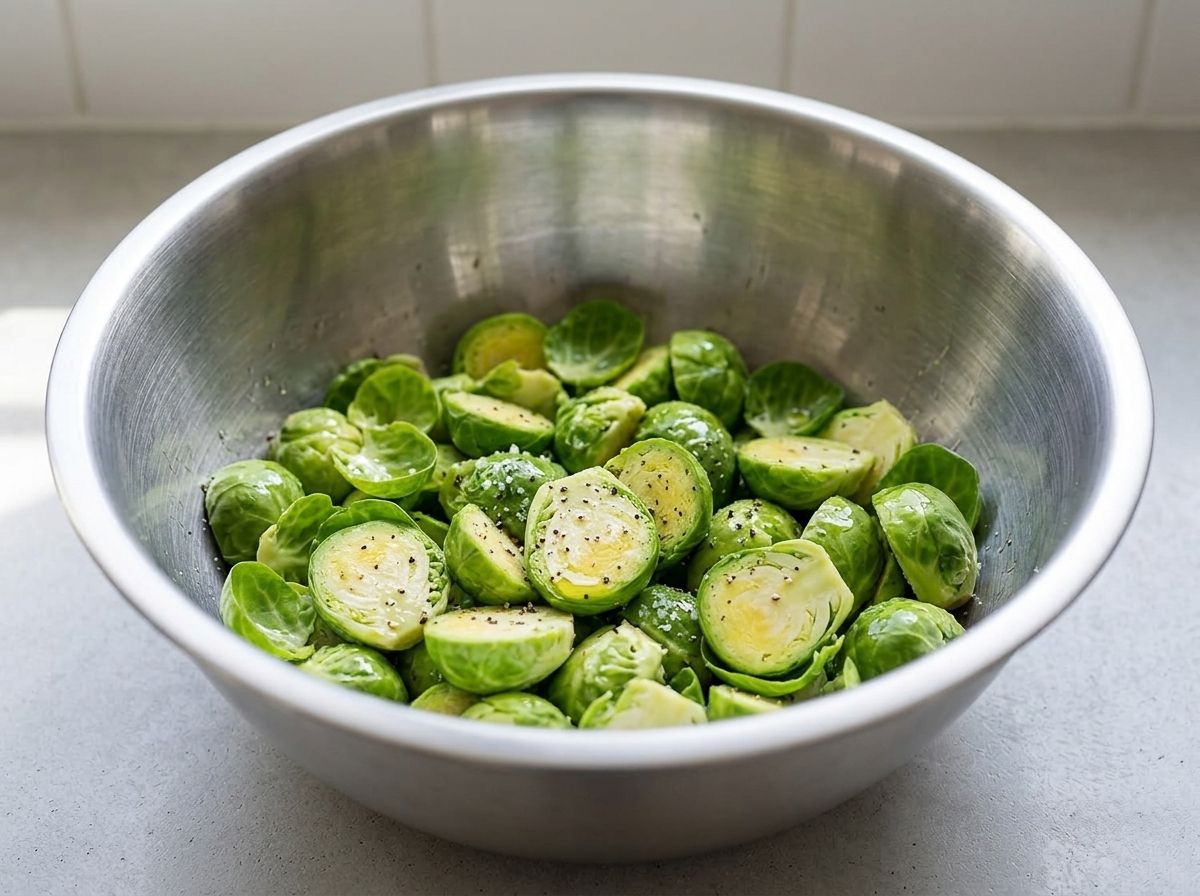
Toss the sprouts and loose leaves in a large bowl with the olive oil, a good pinch of salt and plenty of black pepper, until every cut face is slick.
- 4
Arrange them cut side down
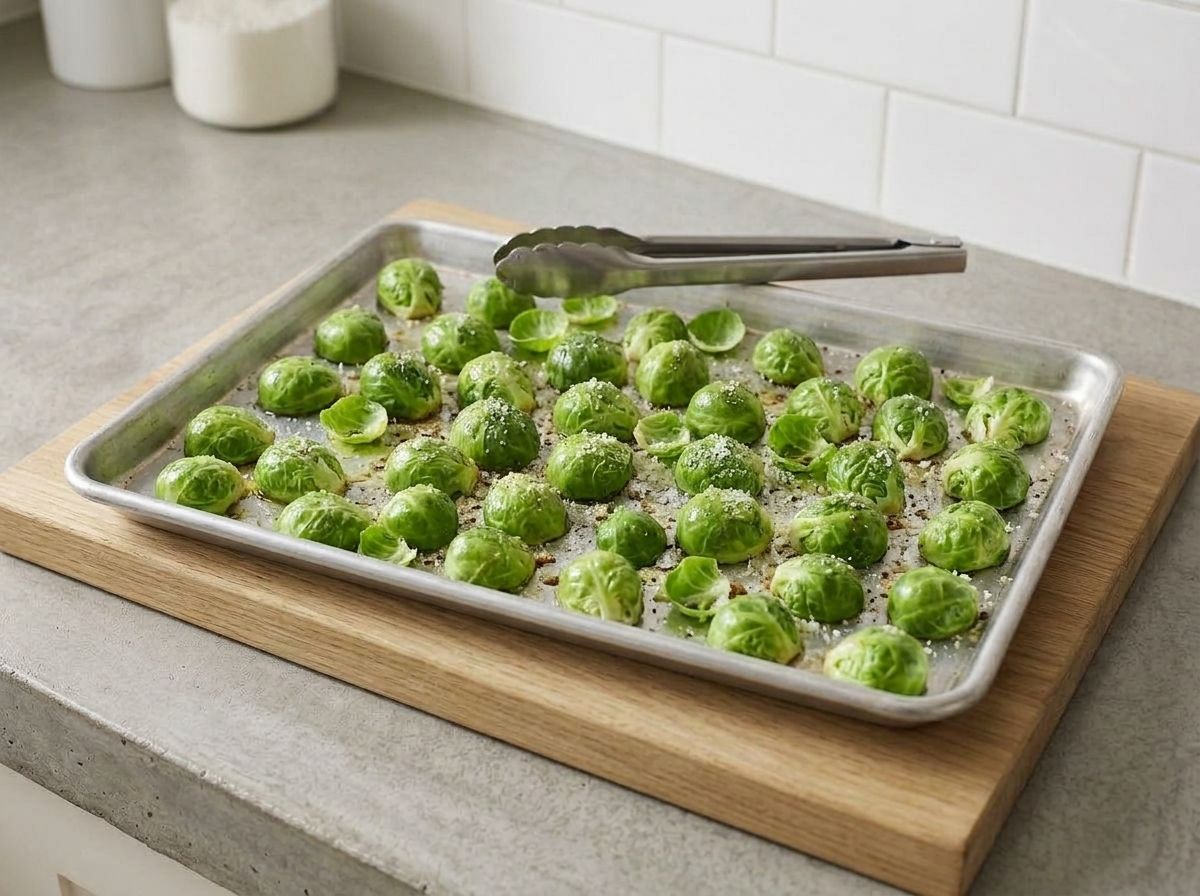
Pull the hot sheet out and tip the sprouts onto it, then turn each one cut side down in a single layer with a little space around it. Scatter the loose leaves into the gaps.
- 5
Roast without stirring
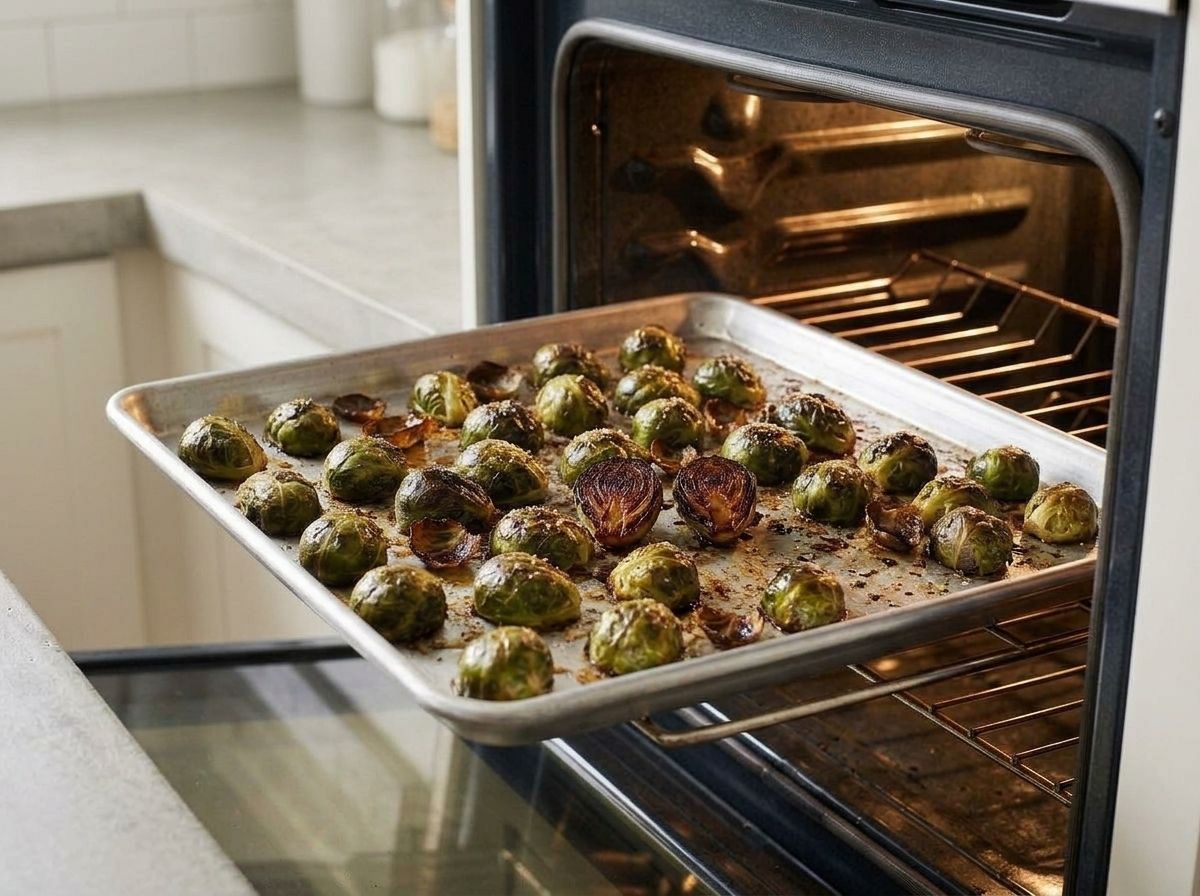
Roast for 20 to 25 minutes and leave them alone. Sprouts build a crust only where the flat face stays pressed against the metal, so stirring halfway trades that crust for even color. They are ready when the cut faces are deep brown, close to mahogany, and a knife slides into the thickest sprout without resistance.
- 6
Reduce the glaze
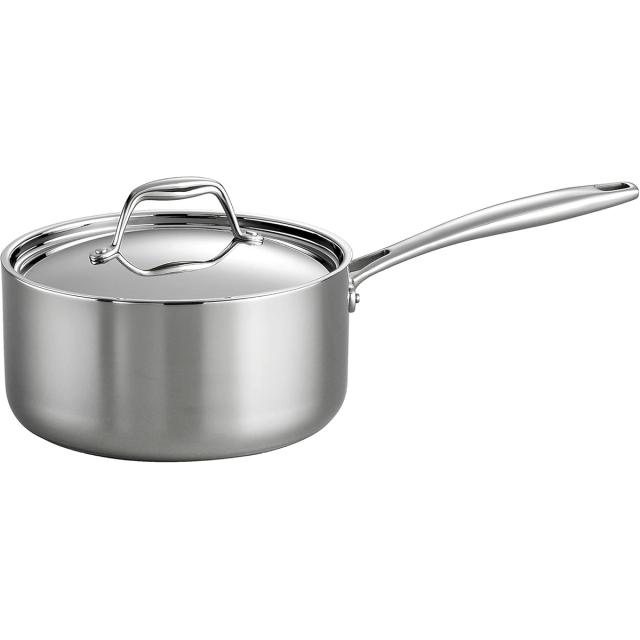
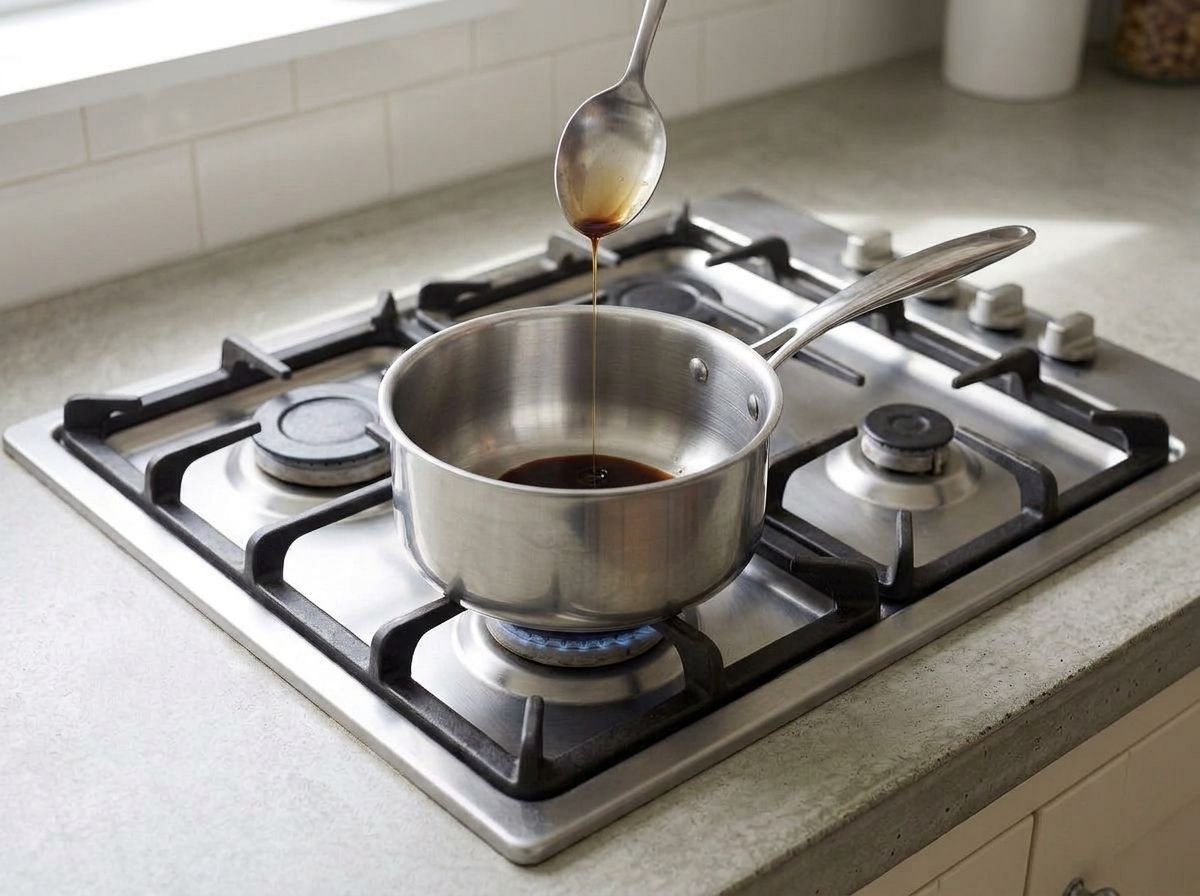
While the sprouts roast, bring the balsamic vinegar and honey to a simmer in a small saucepan, then turn the heat low. Cook for 4 to 6 minutes, until it coats the back of a spoon in a thin, even film. Take it off the heat while it still looks slightly too thin, because balsamic keeps thickening as it cools.
- 7
Glaze and serve
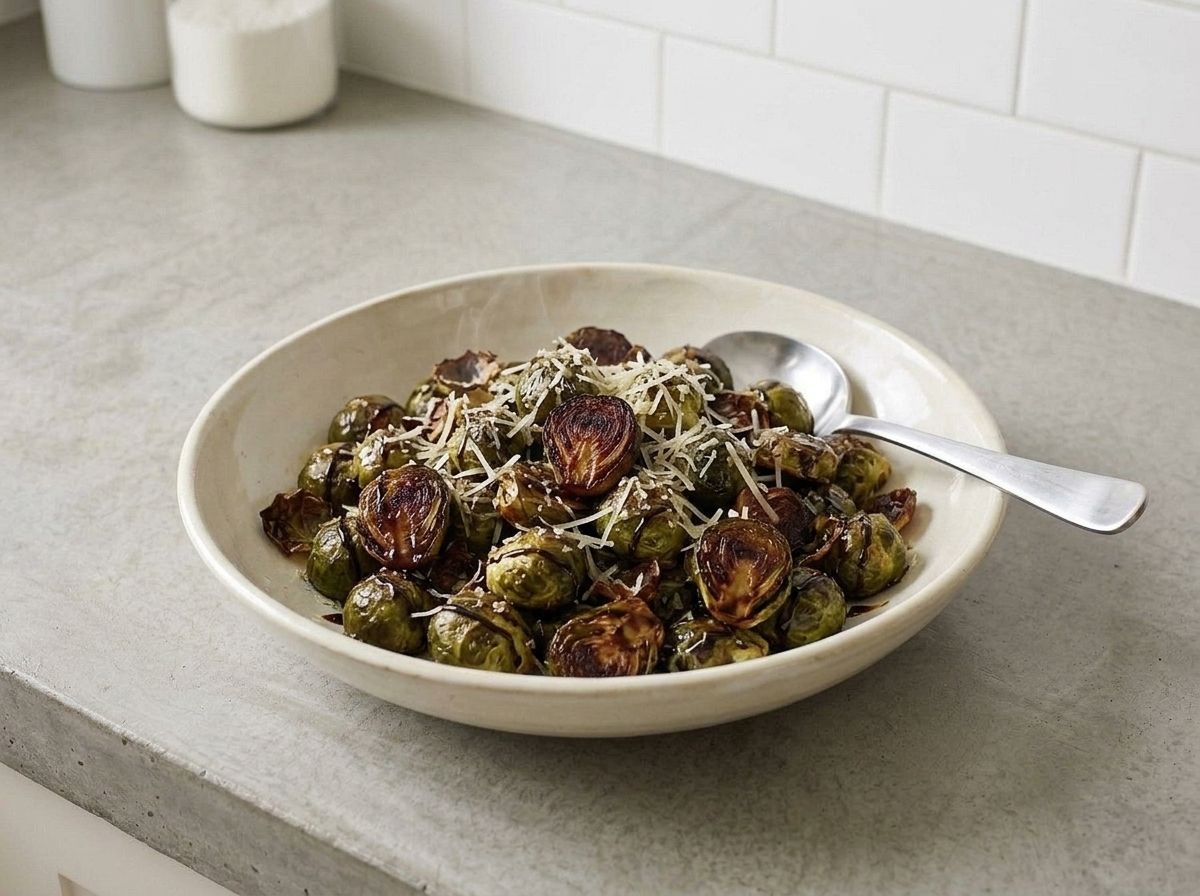
Tip the sprouts into a warm serving dish, drizzle the glaze over and toss once, quickly. Shower with Parmesan and take it straight to the table. Glazed sprouts left standing under a lid soften within a few minutes.
Notes
Use maple syrup in place of the honey and leave off the Parmesan to make the dish vegan.
Halve sprouts through the root so each half holds together, and quarter anything wider than a walnut.
If your only baking sheet is small, roast in two batches rather than crowding one pan. Crowded sprouts steam each other.
Nutrition Facts
4 servings · 148 g per serving
- Calories
- 163 kcal
% Daily Value*
- Total Fat
- 8.9 g11%
- Saturated Fat
- 2.1 g11%
- Sodium
- 327 mg14%
- Total Carbohydrate
- 16.4 g6%
- Dietary Fiber
- 4.3 g15%
- Sugars
- 7.9 g—
- Protein
- 6.2 g12%
Recipe from veggierecipes.blog
When it goes wrong
Troubleshooting
They came out soft and pale instead of crispy
Three usual causes, in the order they usually turn out to be it. The pan was crowded, so the sprouts steamed in each other's moisture instead of browning; every sprout needs air around it, and two sheets beat one full one. The sprouts went on wet, which does the same thing from the inside. Or the oven was not the temperature the dial claimed, which is very common. Home ovens routinely run 25°F cool, and a thermometer settles it for the price of a coffee.
The glaze set like toffee in the bowl
It was reduced too far. Balsamic looks much thinner hot than it will be cold, because sugar syrups thicken as they cool, so by the time it looks right in the pan it has gone past. Pull it while it still coats a spoon in a film thin enough to run. If it has already set hard it is entirely recoverable: back on low heat with a tablespoon of water or fresh vinegar, stirred until it loosens.
The outsides burned before the middles were tender
The sprouts were too large, or too uneven. A golf-ball sprout needs more time at its core than its cut face can survive at 425°F, and a pan holding both marbles and golf balls guarantees one of them is wrong. Quarter the big ones, halve the medium ones, leave the very small ones whole. Aim for pieces of one thickness rather than one count.
Half the leaves fell off and went dark on the pan
Those are meant to be there and meant to go dark. Loose leaves roast into something close to a kale chip and they are the best thing the recipe produces, which is why the method says to keep them rather than sweep them off the board. What to avoid is bare leaves on naked metal with no oil on them, which burn rather than crisp. Toss them in the bowl with everything else, then tuck them between the sprouts instead of around the rim of the pan, where it runs hottest.
They still taste bitter
Check first that you are tasting burn rather than bitterness. Ashy black patches taste acrid and people reliably file that under sprout bitterness; deep brown is the target, matte black is not. If it genuinely is the vegetable, some people are simply wired to notice: a version of the TAS2R38 gene makes glucosinolates register much more strongly, and no amount of technique helps. More acid does, though, not more sugar. A squeeze of lemon over the finished dish, or a splash of the vinegar unreduced.
Before you serve
Serving & Storage
This is a side that behaves rather like a condiment. Salty, sweet and sharp all at once, so what it wants beside it is something plain: roast potatoes, a nut roast, a lentil loaf, a mushroom pie. Put it next to anything else glazed or heavily spiced and the two spend the meal arguing.
It is also a short step from being dinner. Spoon the sprouts over farro or barley with a spoonful of ricotta, or over white beans cooked down with garlic, and add toasted hazelnuts for something to chew against the soft middles. A fried egg on top is traditional nowhere and works completely, the yolk doing much the same job as the glaze.
In Belgium and across northern Europe sprouts are a winter vegetable rather than a Christmas one, usually treated more plainly, braised with butter and nutmeg or cooked with chestnuts. There is no reason to save this for December.
Making it ahead
The glaze is the part that keeps. Reduce it up to a week ahead and refrigerate it in a jar; it sets firm in the cold, so warm it with a splash of water first. The sprouts can be trimmed, halved and dried a day in advance, in a container lined with a paper towel.
The roasting does not survive a delay and no technique makes it. What works, if you need it off the critical path, is stopping short: roast about 15 minutes, until the faces have colored but nothing is crisp, then pull the sheet out and leave it. Back into a 425°F oven for 8 to 10 minutes when you want them. Roasting fully in the morning and reheating at dinner does not work, which is worth knowing before a holiday timetable depends on it.
Storing leftovers
They keep three days in the refrigerator and they will not be crispy again. Easier to accept that and put them where texture is beside the point: through a grain salad, folded into an omelet, on toast under the broiler with cheese. If you do want some crispness back, a dry skillet does far more than an oven and enormously more than a microwave. Cut side down, no extra oil, three or four minutes over medium-high heat.
What does not work
Do not freeze them cooked. They come back watery, the leaves separate, and the browning you spent 25 minutes building is gone. Frozen raw sprouts are a poor start too, holding far too much water to brown however hot the pan is. If frozen is what you have, roast from frozen without thawing at 450°F and expect tender rather than crisp.
Still wondering
Frequently Asked Questions
How do I make this vegan?
Swap the honey for the same quantity of maple syrup, which changes nothing else, and leave the Parmesan off rather than replacing it. Most vegan hard cheeses do not melt and turn waxy on hot glazed vegetables. If you want that salty finish, two tablespoons of coarse breadcrumbs fried in olive oil with a teaspoon of nutritional yeast stirred through off the heat does the job better, and adds crunch the cheese never did.
How much should I buy, and how do I scale it up?
A pound of raw sprouts loses roughly a third of its weight in the oven, so four servings is about 100 g cooked each. That is a side portion next to two or three other dishes; if sprouts are the only vegetable, treat this as two to three servings and buy double. Scaling up means scaling pan area, not the pile. Two pounds needs two sheets on two racks, swapped top to bottom halfway, plus three or four minutes to pay for the heat lost opening the door. Do not scale the glaze at the same rate: a third of a cup of vinegar with a tablespoon and a half of honey is plenty for two pounds, and doubling it makes the dish taste of vinegar.
Do I really need to preheat the baking sheet?
No, and they will still be good without it, but the difference is real rather than fussy. Sprouts tipped onto a cold sheet spend the first five minutes bringing the metal up to temperature, so browning starts late and you either accept a paler face or roast longer and lose the tender middle. Use it cold if your sheet is thin enough to buckle when hot, or if tipping oiled sprouts onto 425°F metal makes you nervous, and add five minutes. What you should not do is turn the oven up to compensate, which browns the tops without doing anything for the faces.
Featured In These Collections
More Crowd-Pleasing Holiday Sides
Made this?