
Sweet Potato Casserole with Marshmallows Recipe
Published · Updated
Lusciously creamy sweet potatoes meet caramelized marshmallows in this classic comfort casserole, perfect for festive tables!
Jump To Recipe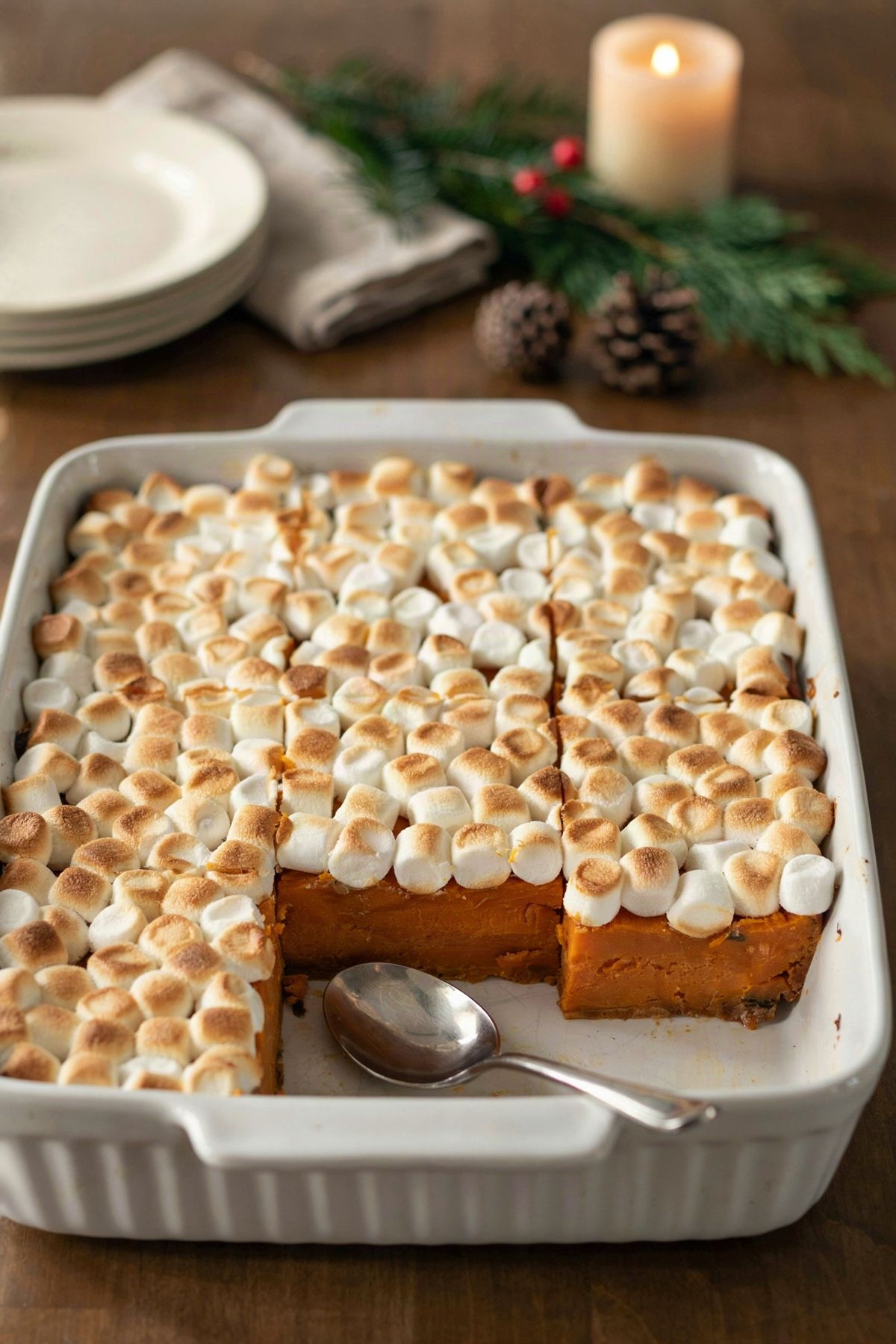
Why This Sweet Potato Casserole is My Holiday Staple
This sweet potato casserole with marshmallows is one of those dishes that embodies holiday comfort. The silky, buttery taste of the sweet potato wins every time. Plus, the chewy marshmallows make it even better. The crisp and caramelized top layer makes me think of family gatherings.
Sweet potato casserole is a crowd pleaser, and it’s always the first empty dish on the table. Whether it’s Thanksgiving, Friendsgiving, or just a proper Sunday dinner. This recipe nails that perfect balance between sweetness and comfort food satisfaction.
Here’s why I keep coming back to this dish:
- Roasting the potatoes whole instead of boiling them concentrates their own sugar, so half a cup of brown sugar is all it takes and the potato still tastes like potato.
- Spices like cinnamon and nutmeg add warmth and depth; I couldn't skip these even for a classic.
- The marshmallow topping isn’t just nostalgia; it creates a contrast of textures that makes every bite interesting.
Pro tip: the base reheats well, the marshmallow does not. Scrape the old topping off, warm the casserole through, and toast a fresh handful on top.
If you’re looking to impress with minimal effort at your next get-together or celebration, you can’t go wrong with this dish. It might earn you the title of holiday legend.
The story
A Marshmallow Company Invented This Dish in 1917
In 1917 the makers of Angelus Marshmallows had a problem. People bought marshmallows as candy, ate them, and did not think about them again until the next time they wanted candy. So the company hired Janet McKenzie Hill, who had founded the Boston Cooking School Magazine two decades earlier, to write a booklet of recipes that used marshmallows as an ordinary pantry ingredient. Among the fudge and the hot cocoa was a recipe for mashed sweet potatoes baked under a marshmallow topping. That is the first documented appearance of this dish anywhere. It was an advertisement.
Which explains something that is otherwise hard to account for: nobody cooking their way through a sweet potato would arrive at marshmallows. The topping did not evolve out of the kitchen, it was placed there by a marketing department. Angelus, later renamed Campfire, kept at it, printing sweet potato casseroles in its 1930 and 1950 booklets, and somewhere in those decades the recipe stopped being an ad and became a thing families argued about every November instead.
The other piece of marketing baked into this dish is the word on the bag. Sweet potatoes are not yams. Yam is a West African word, nyami, and enslaved Africans in the American South applied it to the local sweet potato because it stood in for the true yam they had grown at home. In the early 1930s an LSU researcher named Julian C. Miller bred a moist, deep-orange sweet potato, and Louisiana growers borrowed that word to sell it, marking it out from the pale, dry sweet potatoes already on the shelves. The USDA formalized the confusion in 1973 by ruling that anything labeled a yam must also say sweet potato. A real yam is a different plant from a different continent, and most American shoppers have never seen one.
There is one more thing worth saying on a vegetarian site. This is the Thanksgiving side everybody assumes is safe for the vegetarian at the table, and usually it is not. Marshmallows are set with gelatin, which is boiled out of animal skin and bone. The potatoes are fine, the butter and milk and eggs are fine, and then the topping, the only reason the dish exists at all, is the one thing on the plate that came from an animal. The fix is a straight swap rather than a compromise, but a vegetarian marshmallow does not behave in the oven the way a gelatin one does, and the rest of this page is written around that.
What to buy
Ingredient Notes
Sweet potatoes
Buy the moist orange-fleshed kind: Beauregard, Jewel or Garnet, which is what the bin labeled yams in an American supermarket almost always holds. Avoid the pale, dry varieties, meaning Japanese, Hannah and the white-fleshed types. They cook up mealy like a baking potato and no amount of butter rescues the texture. Buy by weight rather than by count, because four large sweet potatoes can vary by a kilo between one store and the next. 1.4 kg raw gives you roughly the 1.1 kg of roasted flesh this recipe is built on.
Vegetarian mini marshmallows
The one ingredient that needs checking. Most marshmallows are set with gelatin, so look for Dandies, Trader Joe’s, Yummallo or anything marked vegan; the word vegetarian on its own is rare enough on a marshmallow bag that vegan is the more reliable thing to search for. They are usually set with carrageenan or another seaweed gel, which is exactly why they brown without collapsing. Use minis rather than the big ones: they have more surface for their volume, so they color and warm through in the same few minutes.
Fine sea salt
The ingredient most versions of this recipe leave out altogether, which is why they manage to taste sugary and flat at the same time. Three quarters of a teaspoon in the base is nowhere near enough to register as salt. It is enough to make the potato taste like potato and the brown sugar taste like caramel. Using kosher salt instead, that is a rounded teaspoon of Diamond Crystal or the same three quarters of a teaspoon of Morton.
Large eggs
Two eggs are structure, not richness. Without them you have mash with a topping on it, and a serving spreads across the plate; with them the base sets just enough to hold a scoop with its edges intact. They have to go into a mash that has cooled to warm, or they cook on contact and leave threads. Cooking without eggs, 2 tablespoons of cornstarch whisked into the milk does most of the same job.
Brown sugar
Half a cup for 1.1 kg of potato is deliberately restrained, because roasting has already done most of the sweetening for you. Recipes that boil the potatoes need more sugar to make up for what the water took out, and that is how this dish drifts towards dessert. Light and dark both work. Dark carries more molasses and pushes the flavor closer to the pecan-topped Southern version.
Whole nutmeg
Worth grating fresh here more than almost anywhere else, because there are only two spices in the whole dish and the nutmeg is doing half the work. Pre-ground nutmeg loses its volatile oils within a few months of opening and settles into a vague woody note in the background. A quarter teaspoon is about a dozen strokes on a microplane.
Whole milk
Only 60 ml of it, and its job is to loosen the mash rather than to enrich it. Cream makes the base heavier without making it taste better, since the butter is already carrying plenty of fat. Any plant milk stands in fine, but pick an unsweetened one. Sweetened oat milk on top of half a cup of brown sugar and three cups of marshmallows tips the whole thing over.
Sweet and Creamy Sweet Potato Casserole with Marshmallows
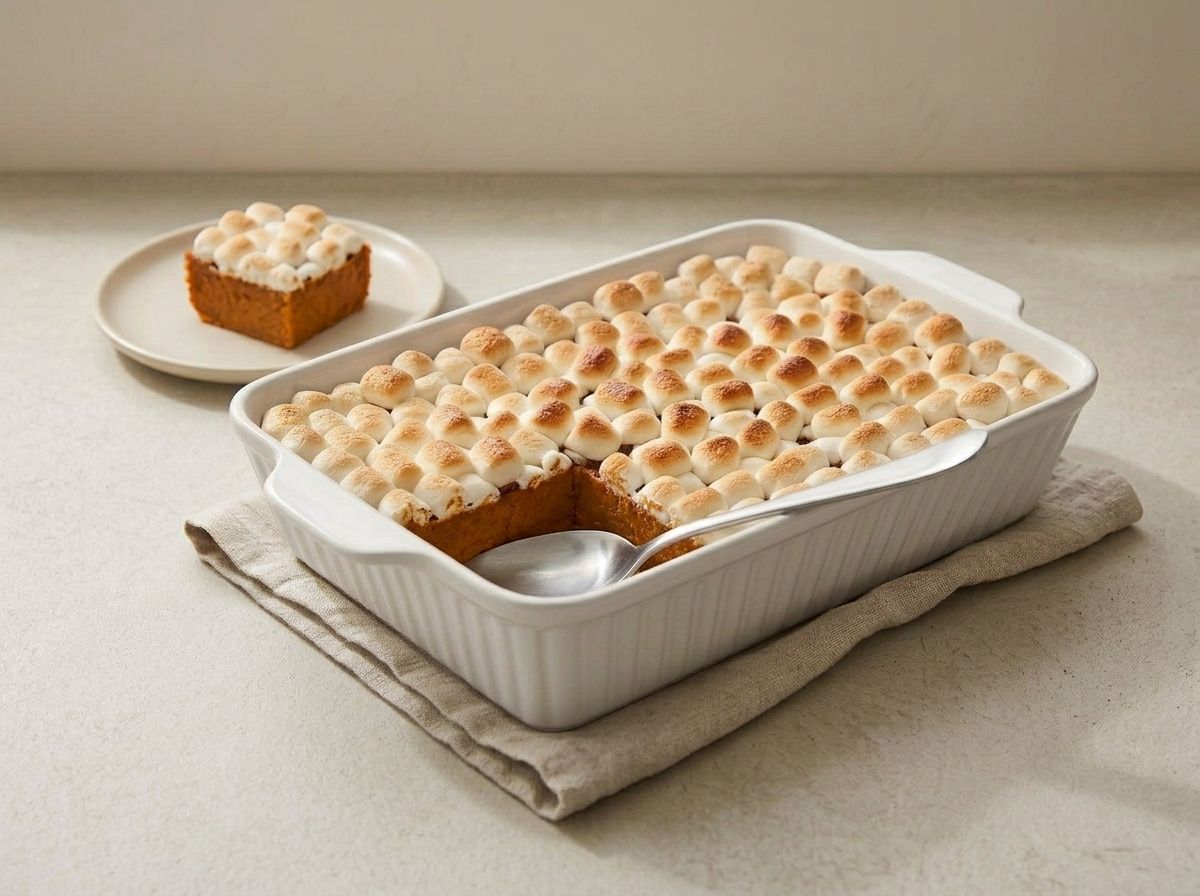
Sweet potatoes roasted whole so their own sugar concentrates, mashed with butter and warm spices, baked until it sets, then finished under marshmallows toasted in the last few minutes.
Ingredients
Equipment
As an Amazon Associate I earn from qualifying purchases, at no extra cost to you.

Instructions
- 1
Roast the sweet potatoes whole
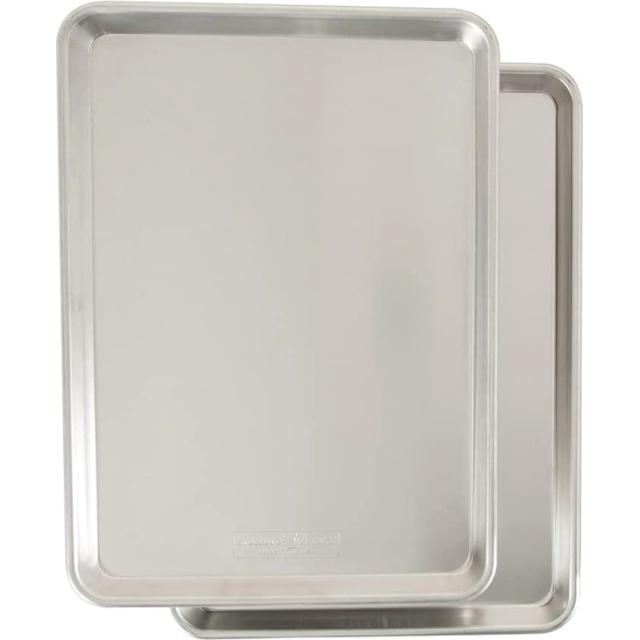
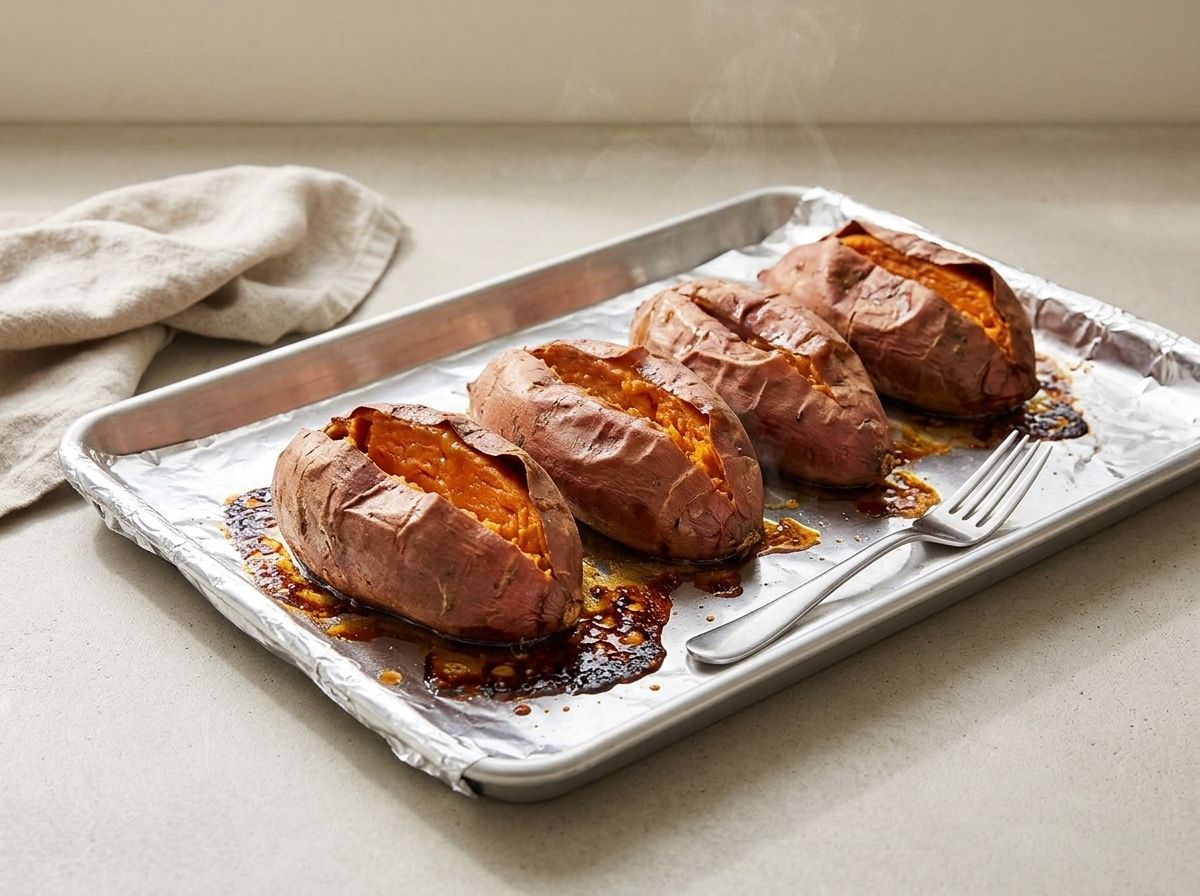
Heat the oven to 400°F (200°C). Prick each sweet potato in several places with a fork, set them on a foil-lined baking sheet and roast for 55 to 70 minutes, until a skewer meets no resistance and syrup has bubbled out onto the foil. Do not peel and boil them. Roasting whole holds the flesh for much longer in the temperature band where the potato’s own enzymes turn starch into sugar, and it keeps the water out.
- 2
Scoop out the flesh
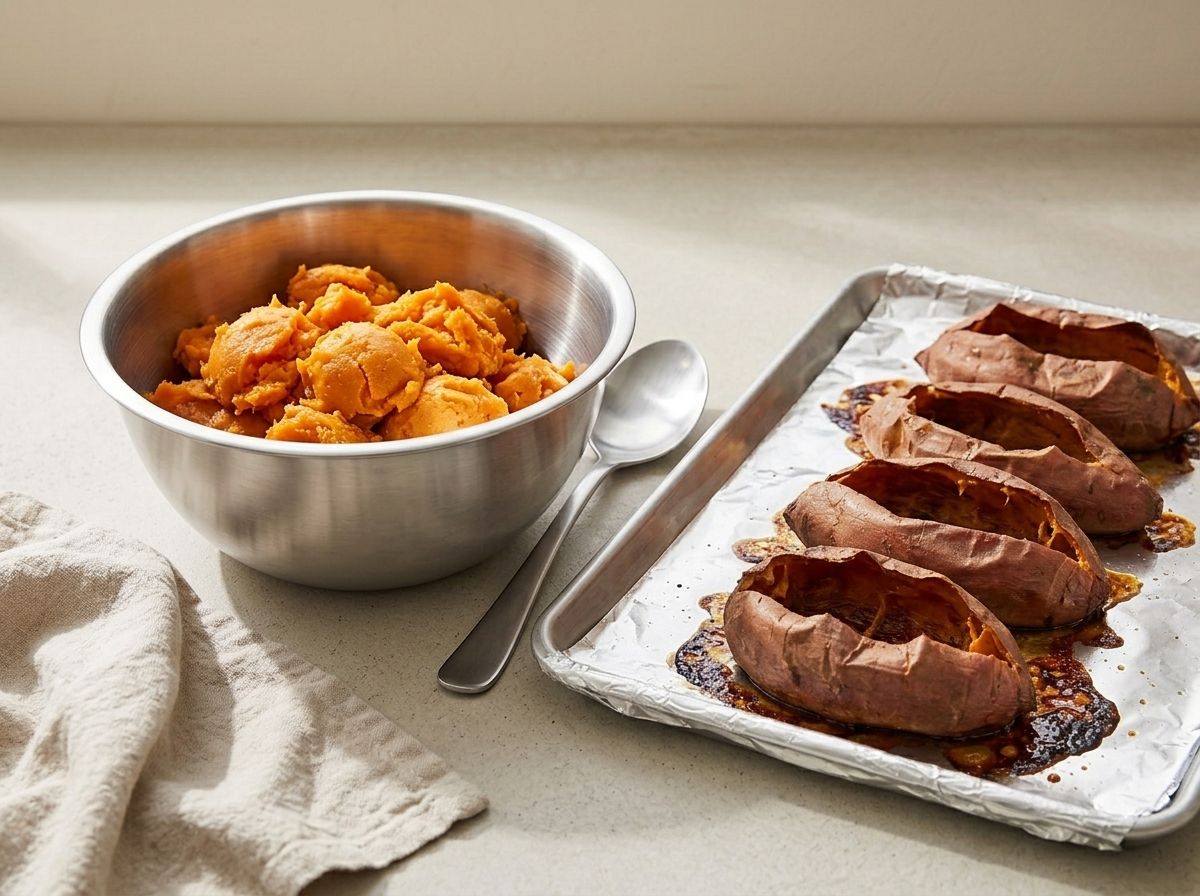
Split each potato lengthwise and scoop the flesh into a large bowl, leaving the skins behind. You want about 1.1 kg, near enough 4 packed cups. Turn the oven down to 350°F (175°C).
- 3
Mash while it is still hot
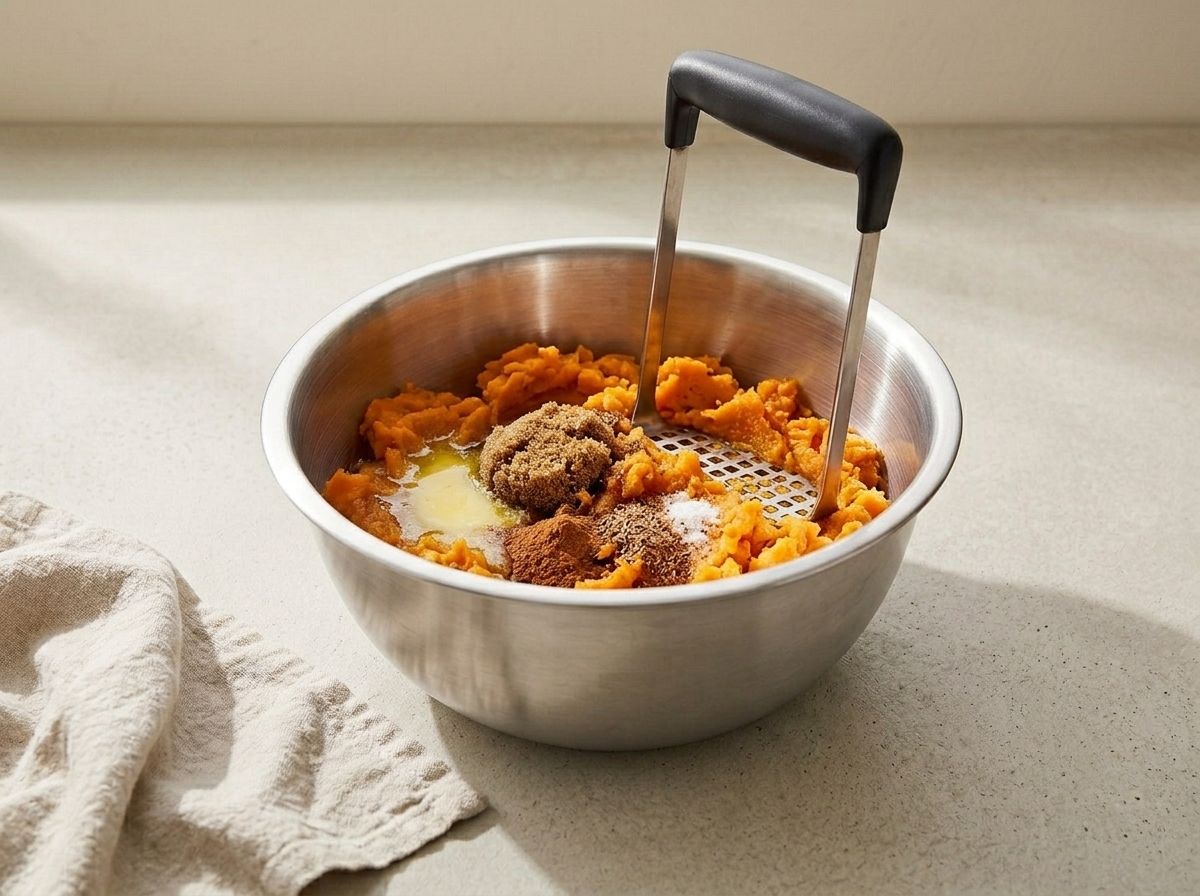
Add the butter, brown sugar, cinnamon, nutmeg and salt, and mash until smooth. Doing this while the potato is hot melts the butter in and dissolves the sugar, so nothing stays grainy. Sweet potato has little of the starch that turns white potato gluey, so a hand mixer on low is safe here and gives a silkier result than a masher.
- 4
Beat in the eggs last
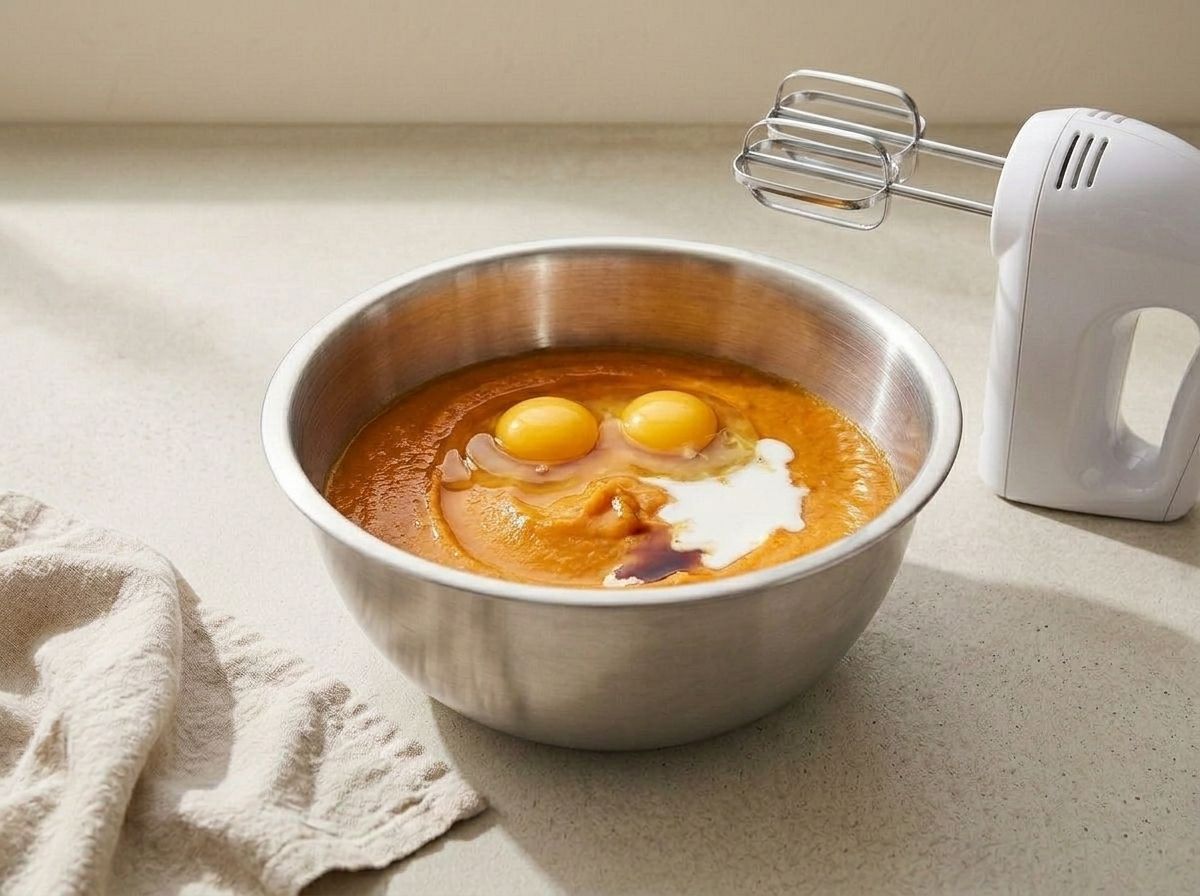
Let the mash cool for about 10 minutes, until it is warm rather than hot, then beat in the milk, vanilla and eggs. Added to a hot mash, the eggs scramble into visible threads. Taste it at this point. It should taste seasoned, not only sweet, and if it reads flat it wants salt rather than more sugar.
- 5
Bake the base until it sets
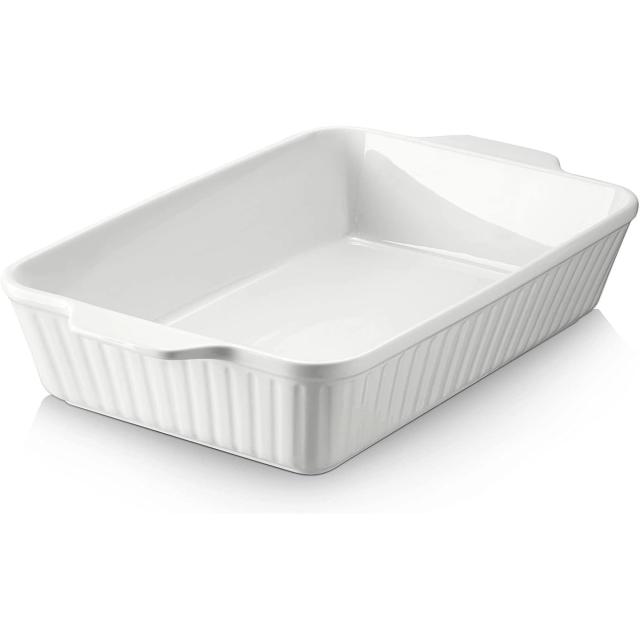
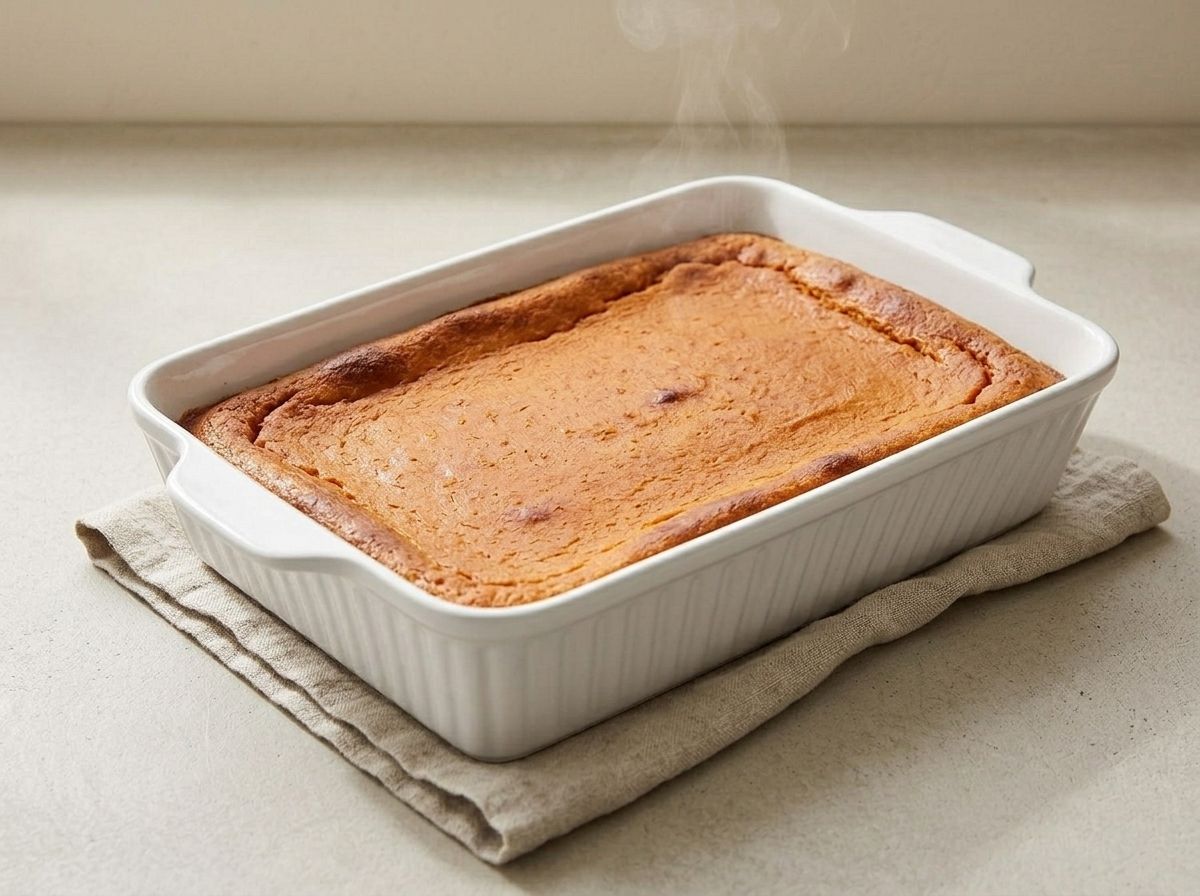
Spread the mixture in a buttered 9x13 inch (23x33 cm) dish and level the top. Bake at 350°F (175°C) for 25 to 30 minutes, until the edges are puffed and set and the middle no longer wobbles when you nudge the dish. No marshmallows yet.
- 6
Toast the marshmallows
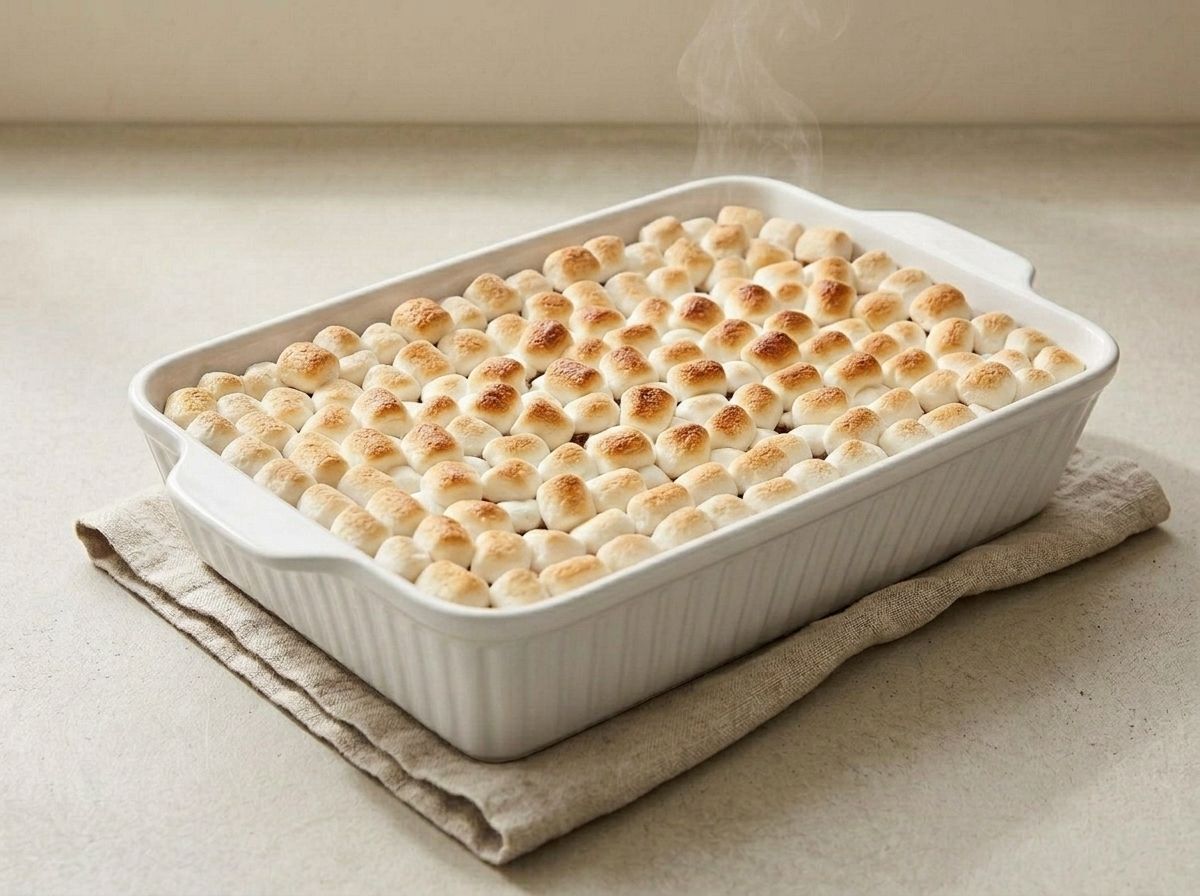
Scatter the marshmallows over the hot casserole and return it to the oven for 5 to 8 minutes, until they are puffed and golden. Stay by the oven for this. Marshmallow goes from pale to brown to black inside a minute, and the 25 minutes that most versions of this recipe give it melts the topping into a flat sticky sheet long before that.
- 7
Rest before serving
Let the casserole stand for 15 minutes. Straight from the oven the base is still loose and the marshmallow is molten, so a spoonful slumps across the plate. Those 15 minutes are the difference between a scoop that holds its shape and a puddle.
Notes
Most marshmallows are set with gelatin, which is not vegetarian. Look for a brand labeled vegetarian or vegan, or this casserole is not vegetarian despite everything else in it.
Vegan marshmallows behave differently in the oven. With no gelatin in them they hold their shape rather than melting into a sheet, so they brown while still looking like marshmallows. Give them the same 5 to 8 minutes and judge by color, not by how far they have spread.
In a hurry, halve the sweet potatoes lengthwise, lay them cut side down on a lined sheet and roast at 425°F (220°C) for 40 to 45 minutes. You give up a little sweetness against the slow whole roast, far less than boiling costs you.
For a dairy-free version use a plant milk and a vegan butter block. The eggs are doing structural work rather than adding richness, so if you drop them, whisk 2 tablespoons of cornstarch into the milk instead of simply leaving them out.
The base can be made up to two days ahead and refrigerated in its dish. Bake it from cold for 40 to 45 minutes, then add the marshmallows for the last 5 to 8.
Nutrition Facts
8 servings · 231 g per serving
- Calories
- 334 kcal
% Daily Value*
- Total Fat
- 7.3 g9%
- Saturated Fat
- 4.2 g21%
- Sodium
- 352 mg15%
- Total Carbohydrate
- 63.7 g23%
- Dietary Fiber
- 5.3 g19%
- Sugars
- 31.8 g—
- Protein
- 4.9 g10%
Recipe from veggierecipes.blog
When it goes wrong
Troubleshooting
It came out watery and every spoonful leaves a puddle
Nearly always the potatoes were boiled. Sweet potatoes take water on in the pot and hand it straight back in the baking dish, which is also why boiled versions taste washed out. Roast them whole instead. If you have already boiled them, tip the drained chunks back into the dry hot pan over low heat and stir for two or three minutes until the surfaces look dull and floury before you mash. The other cause is serving it straight from the oven, so give it the full 15 minutes to set.
The marshmallows melted into a flat sticky sheet
They were in the oven for the whole bake. Marshmallow needs 5 to 8 minutes at 350°F (175°C) and the base needs 25 to 30, so the two cannot go in together, which is what almost every version of this recipe tells you to do. Bake the base until it sets, then scatter the topping on and stay by the oven. Once it has happened there is no rescue on the night, though it still tastes right.
The marshmallows burned on top and were cold underneath
Either large marshmallows instead of minis, or an oven rack sitting too close to the top element. A big marshmallow has to brown through a lot of sugar before the heat reaches its middle, so the outside is black by the time the inside gives way. Snip large ones in half with scissors if they are all you have, and move the rack to the middle of the oven.
I used vegan marshmallows and they did not melt
That is not a fault, it is what they do, and it is the single most common surprise on this dish. Gelatin is what makes a conventional marshmallow slump and spread; the carrageenan and agar used in vegan ones set more firmly and hold their shape right through the heat. They will puff slightly and brown properly. Judge them by color rather than by how far they have spread, and pull the dish when the tops are the shade of a toasted marshmallow.
There are stringy threads running through the mash
Two different causes that look alike. Fine threads of cooked egg mean the eggs went into a mash that was still too hot, which is why the recipe waits ten minutes. Coarser strands that pull like celery are the potato itself, and they are worse in older roots and towards the ends. A hand mixer on low breaks those down, or push the roasted flesh through a ricer before anything else goes in.
It tastes like a dessert rather than a side dish
It was designed to, so this is a matter of pulling it back rather than fixing a mistake. Cut the brown sugar to a third of a cup, make sure the salt actually went in, and grate the nutmeg fresh, then taste the base before it goes anywhere near the dish. If it still reads sweet, the topping is the real lever: two cups of marshmallows instead of three leaves gaps of bare potato that brown at the edges, which is a better plate of food anyway.
Before you serve
Serving & Storage
This is a side dish that behaves like a dessert, so what sits next to it matters more than usual. Give it sharp and salty company and it settles into its place on the plate: a green bean dish with lemon in it, brussels sprouts with mustard, a bitter leaf salad, anything with vinegar. Put it out surrounded by other soft sweet things and half the table leaves a third of their portion.
The other thing worth knowing before you serve it is that the marshmallow question is a real regional divide rather than a matter of taste. Plenty of Southern cooks grew up with a pecan streusel on top and regard the marshmallow version as exactly the advertisement it began as. Running one topping down each half of a 9x13 dish is not a cop-out. It is the only way to find out which one your family actually eats.
Making it ahead
The base is the make-ahead part and the topping never is. Take the recipe as far as spreading the mixture in its dish, cover it and refrigerate for up to two days, or wrap it tightly and freeze it for up to three months. Bake it straight from the fridge at 350°F (175°C) for 40 to 45 minutes rather than 25 to 30, and thaw a frozen one overnight before you start. The marshmallows go on for the last 5 to 8 minutes either way. What does not work is assembling the whole thing the night before. The marshmallows draw moisture out of the potato and by morning they have dissolved into a tacky skin.
Storing leftovers
Cover the dish and refrigerate for up to four days. Reheat it at 325°F (165°C) under foil for 20 to 25 minutes. The base comes back well. The marshmallow does not, and that is worth being blunt about, because a great many recipes promise the whole thing reheats beautifully. Baked marshmallow that has spent a night in the fridge goes rubbery and weeps a thin sugar syrup down into the potato. Scrape the old topping off before it goes in the oven, then scatter a fresh handful over the hot casserole and give it five more minutes. Freezing leftovers is not worth attempting at all: the potato survives it, the topping thaws into a film.
A better use for the last of it
A cup or two of leftover base makes a considerably better breakfast than a second helping of casserole does. Loosen it with a splash of milk and it is a pancake filling, or fold it into a muffin batter in place of mashed banana. At that point it freezes cleanly too, which the finished dish never will.
Still wondering
Frequently Asked Questions
What can I use instead of marshmallows?
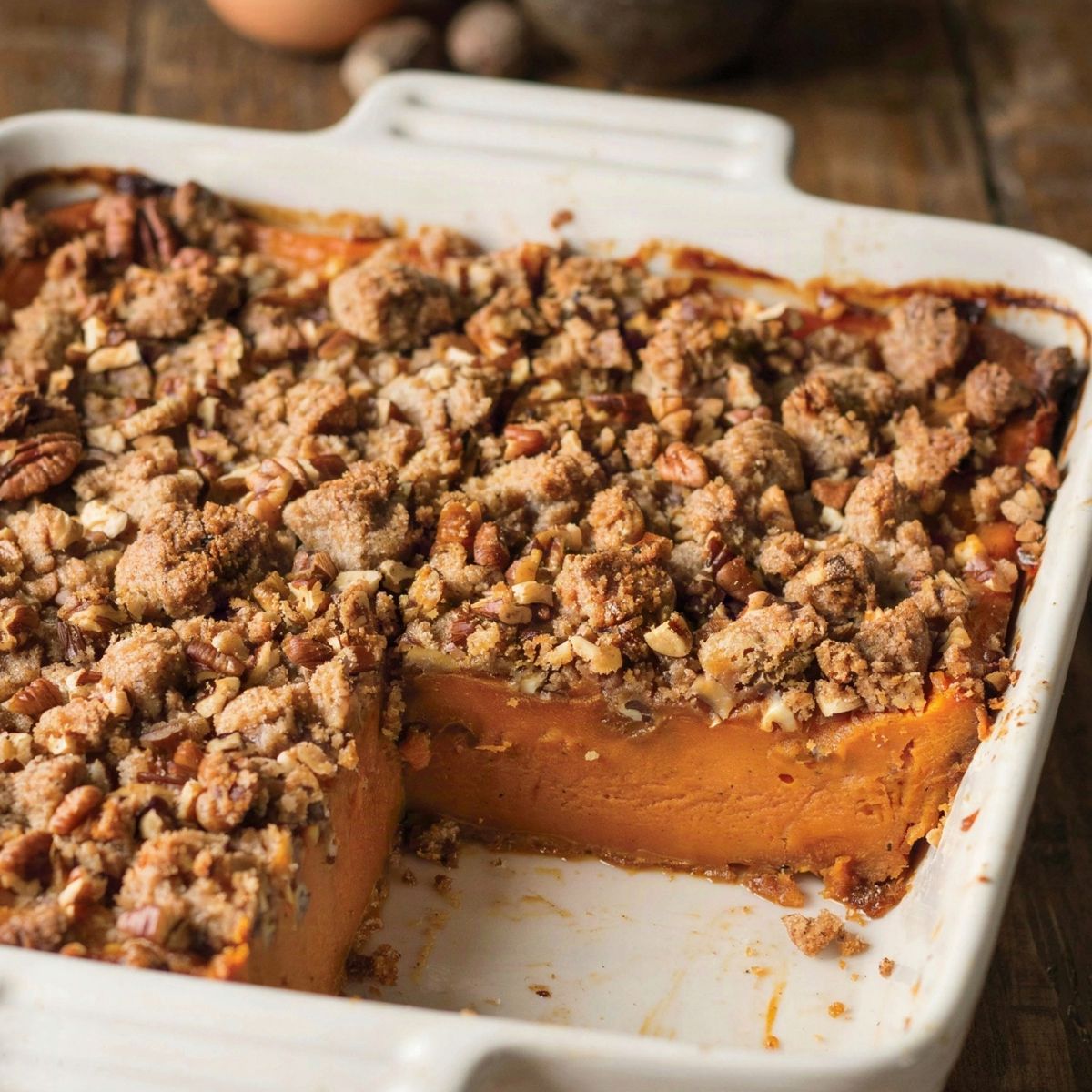
A pecan streusel is the other traditional topping, and plenty of Southern cooks will tell you it is the real one: 100 g pecans, 50 g brown sugar, 30 g butter and a pinch of salt rubbed together, scattered on for the last 20 minutes rather than the last 8. You can also run marshmallow down one half of the dish and streusel down the other, which settles the annual argument without a vote.
Is this sweet potato casserole gluten-free?
Everything in the recipe is naturally gluten-free, but marshmallows are the one thing to check. They are dusted with starch to stop them sticking, usually corn but not always, and a few brands use wheat-derived glucose syrup. Read the packet if you are cooking for someone with celiac disease.
Do I need the eggs?
Not to make the dish edible, but they are what turns a bowl of mash into something that holds a scoop. Two eggs set the base just enough that a serving keeps its edges on the plate. Leave them out and it is still good, only looser. If you want the structure without eggs, whisk 2 tablespoons of cornstarch into the milk before it goes in.
Can I use canned sweet potatoes?
You can, and it is the fastest route, but drain them hard and expect a looser, sweeter result. Canned sweet potatoes are packed in syrup or water and carry a lot of both, so press the drained flesh in a sieve and cut the brown sugar to 50 g. Four 15 oz (425 g) cans, well drained, come to roughly the 1.1 kg of roasted flesh this recipe is built on.
Featured In These Collections
More Sweet and Savory Holiday Sides
Made this?