
Rainbow Carrots Recipe
Published · Updated
A rainbow bunch scrubbed rather than peeled, roasted until the cut faces brown, then glazed with honey late enough that it stays glossy instead of burning.
Jump To Recipe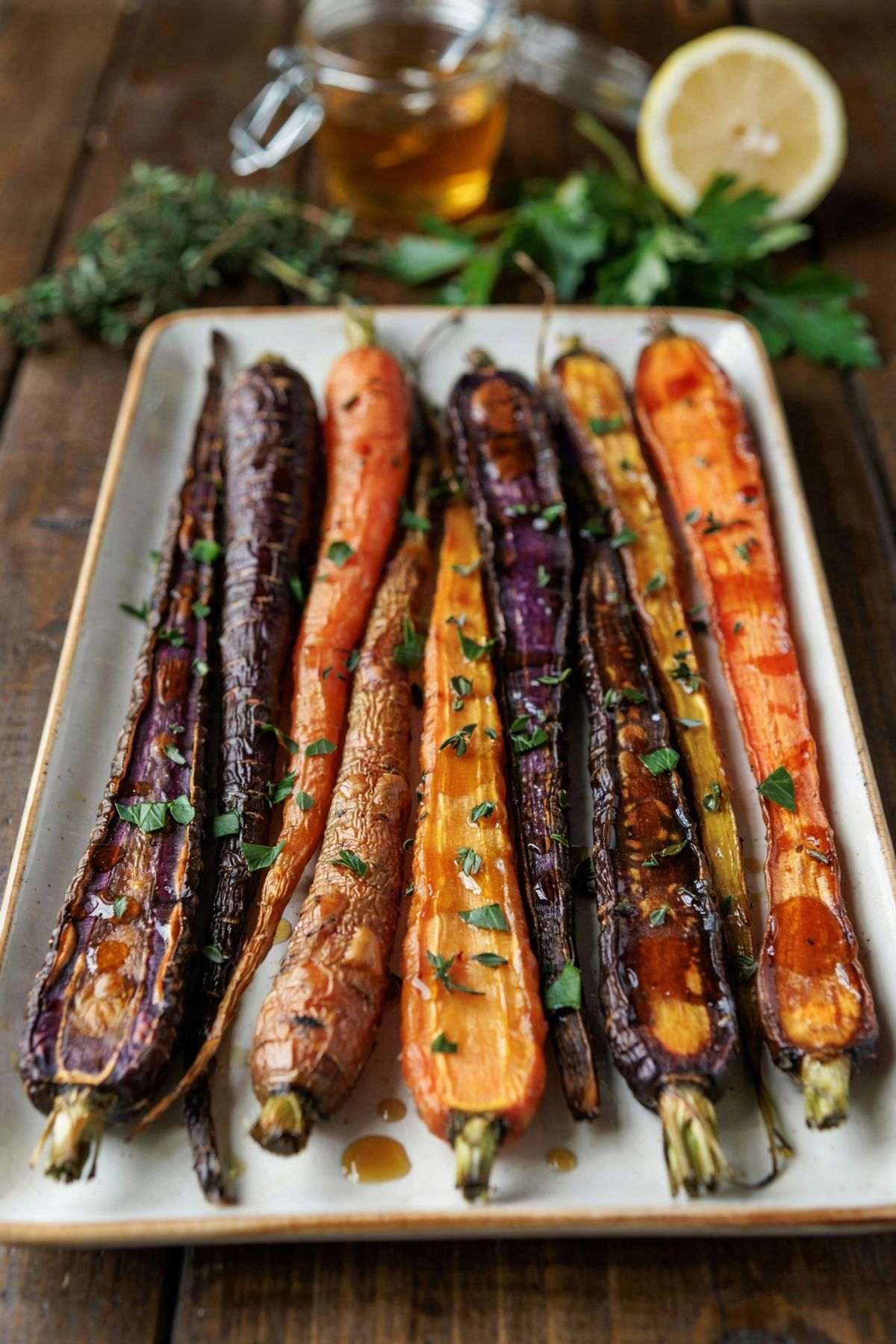
Why Roasted Rainbow Carrots Stand Out
I’ve tried a lot of roasted veggies, but nothing catches the eye (and the appetite) quite like these rainbow carrots. Their spectrum of colors, from deep purple to vibrant orange and sunny yellow, makes any meal look restaurant-ready with nearly no effort.
The honey goes on at the end, not the start. Give it the full half hour at 425°F and it blackens into bitter specks; give it the last eight minutes and it becomes the glossy, just-sticky coating the carrots are supposed to have. A squeeze of lemon and a handful of chopped herbs off the heat stop the whole thing reading as dessert.
Here’s why this recipe has become a staple for me:
- Super easy to prep, no need for fancy equipment or techniques.
- Brightens up any plate, especially great next to roasted mains or grains.
- The olive oil is doing more than helping them brown. Carrot carotenes are fat-soluble, so roasting in oil gets more of them into you than eating the same carrots raw.
Fifteen minutes of hands-on work, and the tray comes out looking like it took an hour. Scrub instead of peel, keep the purple ones at one end, and glaze late. That is the whole recipe.
The story
Rainbow Carrots Are the Original, Orange Is the Newcomer
The carrot was domesticated in Central Asia, around what is now Afghanistan and Iran, somewhere near the tenth century, and the roots that came out of the ground were purple and yellow. Not orange. Arab traders carried them west, and medieval Iberian records describe purple and yellow carrots growing side by side. A rainbow bunch is a closer picture of a market stall in 1300 than a bag of orange batons is.
Orange is the late arrival. Dutch growers in the sixteenth and seventeenth centuries selected hard from yellow stock for roots that were sweeter and less woody, and the trait that rode along was a heavy load of carotene, which is orange. Every seed packet will tell you they did it to honor William of Orange. John Stolarczyk, who curates the World Carrot Museum, has chased that claim for years and points out that no contemporary source says any such thing, and that orange carrots appear in Spanish records generations before William led a revolt against anybody. The Dutch bred a better carrot. The national color got attached afterwards.
Orange then won so completely that the other colors retreated to regional cooking and seed banks. Purple carrots stayed on in Turkey, where they still go into salgam suyu, the salty fermented drink sold on every corner in Adana, and red ones stayed in northern India, where the winter carrot for gajar ka halwa is red rather than orange. Everywhere else, a carrot was orange and that was the end of it.
Two things brought the rest back. Seed companies in the early 2000s bred multicolored blends uniform enough to ship, which turned a mixed bunch into a product. At the same time the food industry went hunting for a plant pigment tough enough to survive being made into a soft drink, and purple carrots turned out to be it. Their anthocyanins are acylated, carrying an extra fatty acid group that makes them far more stable to heat, light and pH than the ones in blueberries or grape skin. Black carrot concentrate is now a standard industrial replacement for carmine, the red dye made by crushing cochineal insects. Where a label reads vegetable juice for color and used to read carmine, a purple carrot is often doing the work.
What to buy
Ingredient Notes
Rainbow carrots
Buy them with the tops on where you can, because limp greens are the fastest freshness read there is, then cut the greens off at home so they stop drawing moisture from the root. Look for a bunch matched in width; one thumb-thick purple among four pencil-thin yellows will cook unevenly whatever you do. Supermarket bags are a bred F1 blend, which is why they are uniform. Market bunches are more likely heirlooms, better tasting and far more variable.
Purple carrots
Cut one crossways and you will usually find a violet ring around an orange or white core. The anthocyanin sits in the outer few millimeters and almost nowhere else, which is why this recipe scrubs rather than peels. They taste different too: earthier and a little more bitter, because anthocyanins are mildly astringent. That is what the honey and the lemon are balancing.
Honey
A thin, mild honey drizzles evenly over a hot tray. Clover, acacia and orange blossom all work; a stiff set honey lands in blobs and a buckwheat will bulldoze the carrots. Honey is roughly 40% fructose, and fructose caramelizes from about 230°F, nearly 200 degrees below this oven, so it has no margin across a full roast. That is why it goes on at the end.
Olive oil
Extra virgin is fine at 425°F despite the smoke point warnings, because roasting is not frying and the carrot surface stays well below the oven's air temperature while it is still giving off moisture. Butter is the traditional choice here, but the milk solids brown fast and it takes the dish out of dairy-free. Do not cut the fat back: carotenes are fat-soluble, and the oil is what makes the beta-carotene absorbable.
Lemon juice
Two teaspoons is not enough to taste as lemon. It is enough to stop the honey reading as flat sugar, which is the difference between a side dish and a dessert that lost its way. It also does something visible: anthocyanins behave like a pH indicator, red in acid and blue-gray in alkali, so the squeeze at the end pulls the purple back from where the oven left it.
Fresh herbs
Thyme reads as roast dinner, dill leans Scandinavian and is excellent wherever there is yogurt on the plate, parsley never fights anything. All go on off the heat; even thyme, sturdy enough to roast, scorches to black flecks during the glazing stage.
Fine sea salt
Half a teaspoon, not the full teaspoon most roasted carrot recipes ask for, which is about double what roasting wants. Fine sea salt also packs denser than kosher, so the same spoon carries more sodium than a spoon of Diamond Crystal. Salt at the start to draw surface moisture out, then taste again after the honey.
Roasted Rainbow Carrots with Honey Glaze
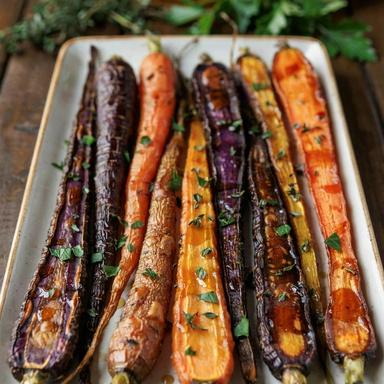
Rainbow carrots roasted cut face down until the undersides brown, glazed with honey only in the last ten minutes so it cannot scorch, then finished with lemon and fresh herbs.
Ingredients
Equipment
As an Amazon Associate I earn from qualifying purchases, at no extra cost to you.
Instructions
- 1
Heat the oven
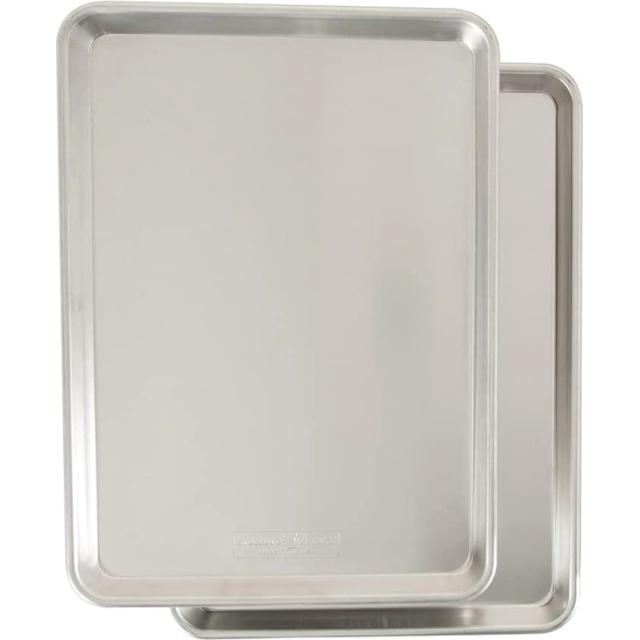
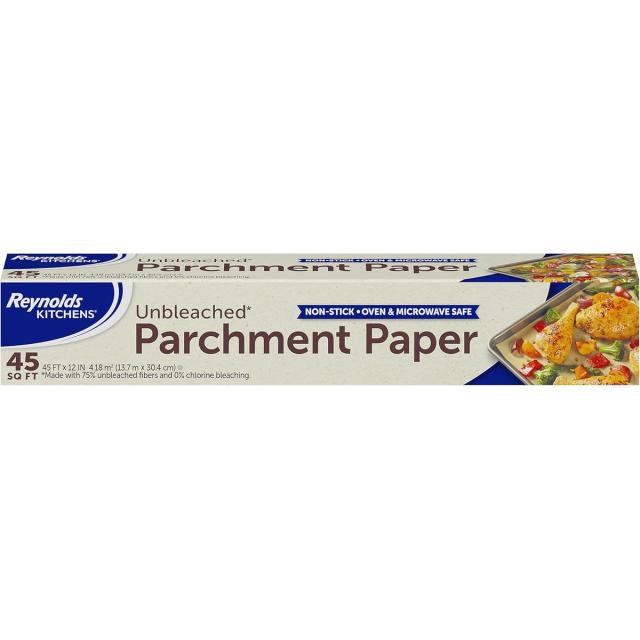
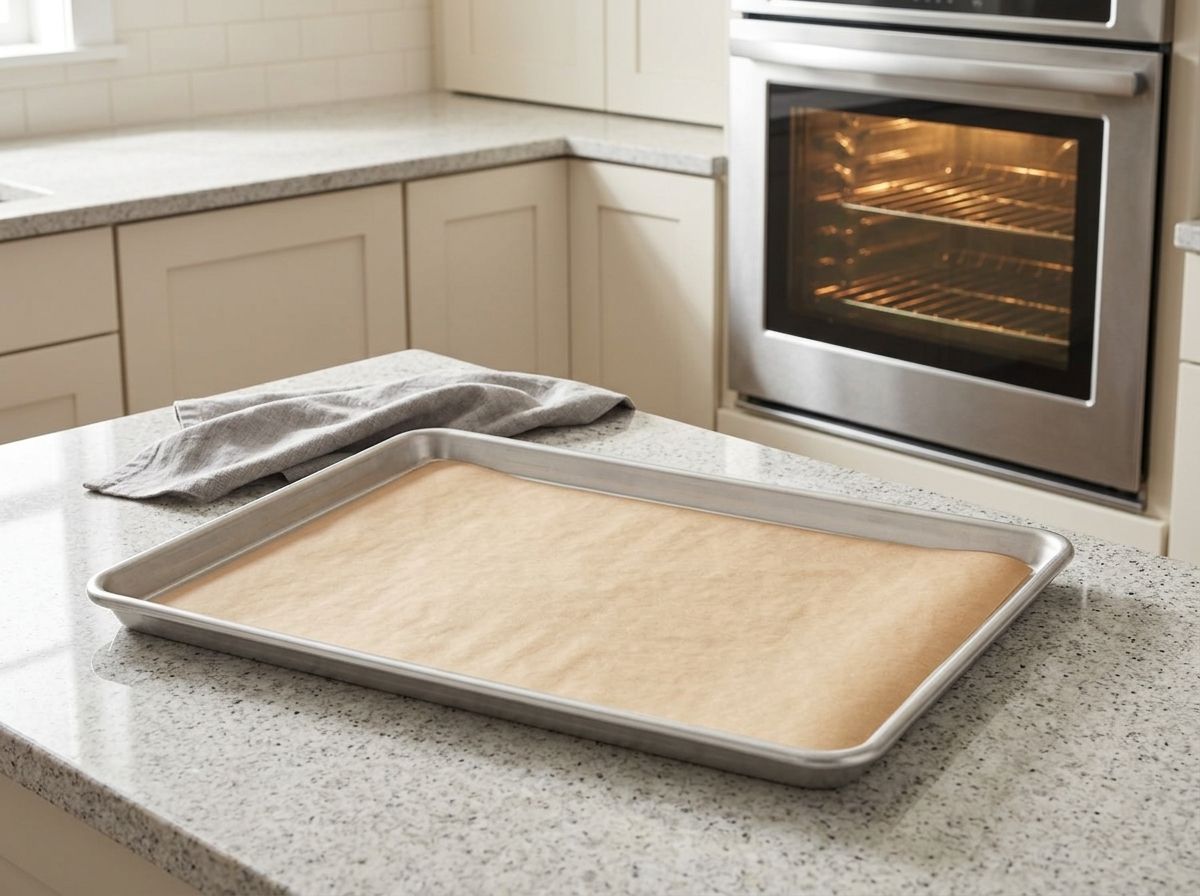
Heat the oven to 425°F (220°C) and line the largest rimmed baking sheet you own with parchment paper. Carrots that touch each other steam instead of browning, so size matters here.
- 2
Scrub, do not peel
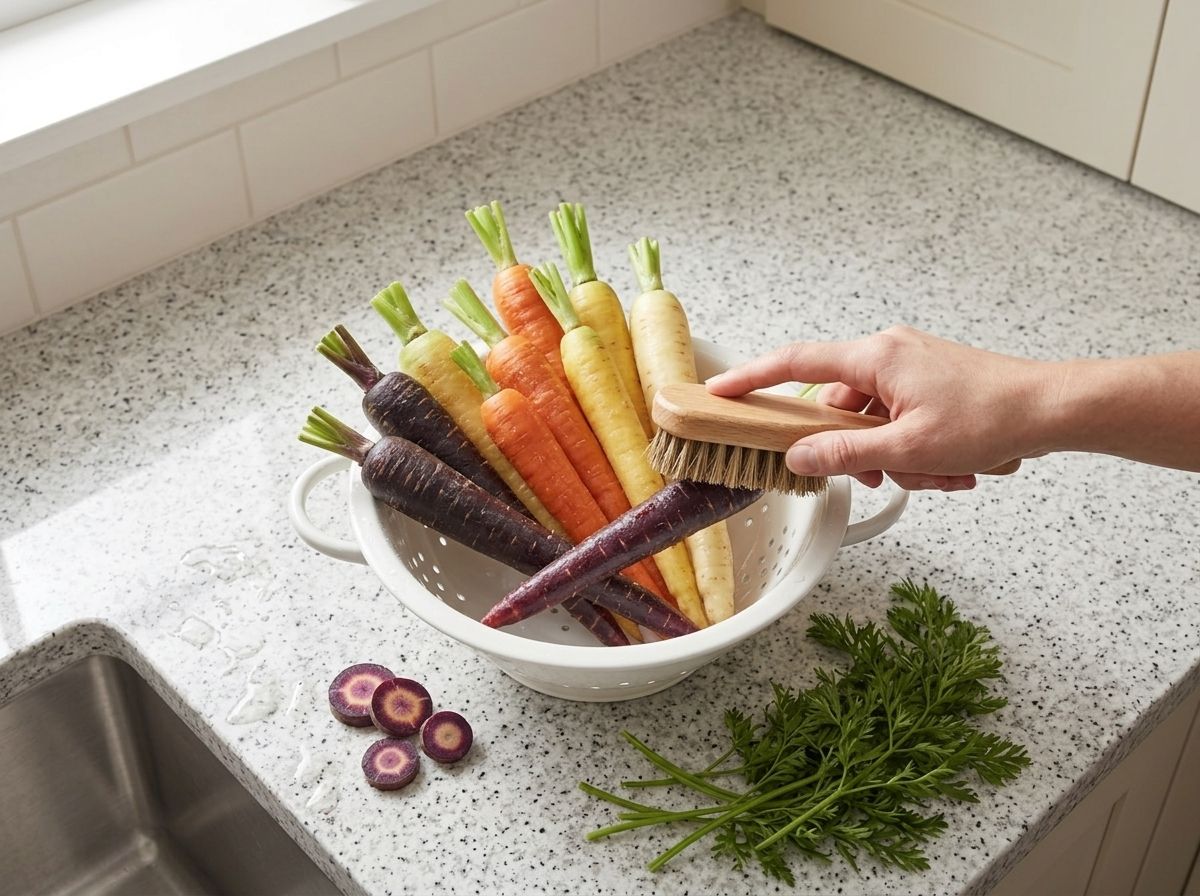
Scrub the carrots under cold water with a vegetable brush and trim the leafy tops back to about ½ inch (1 cm). Leave the skins on: on a purple carrot nearly all the color sits in the outer few millimeters, and peeling hands you back an ordinary orange carrot.
- 3
Cut everything to one thickness
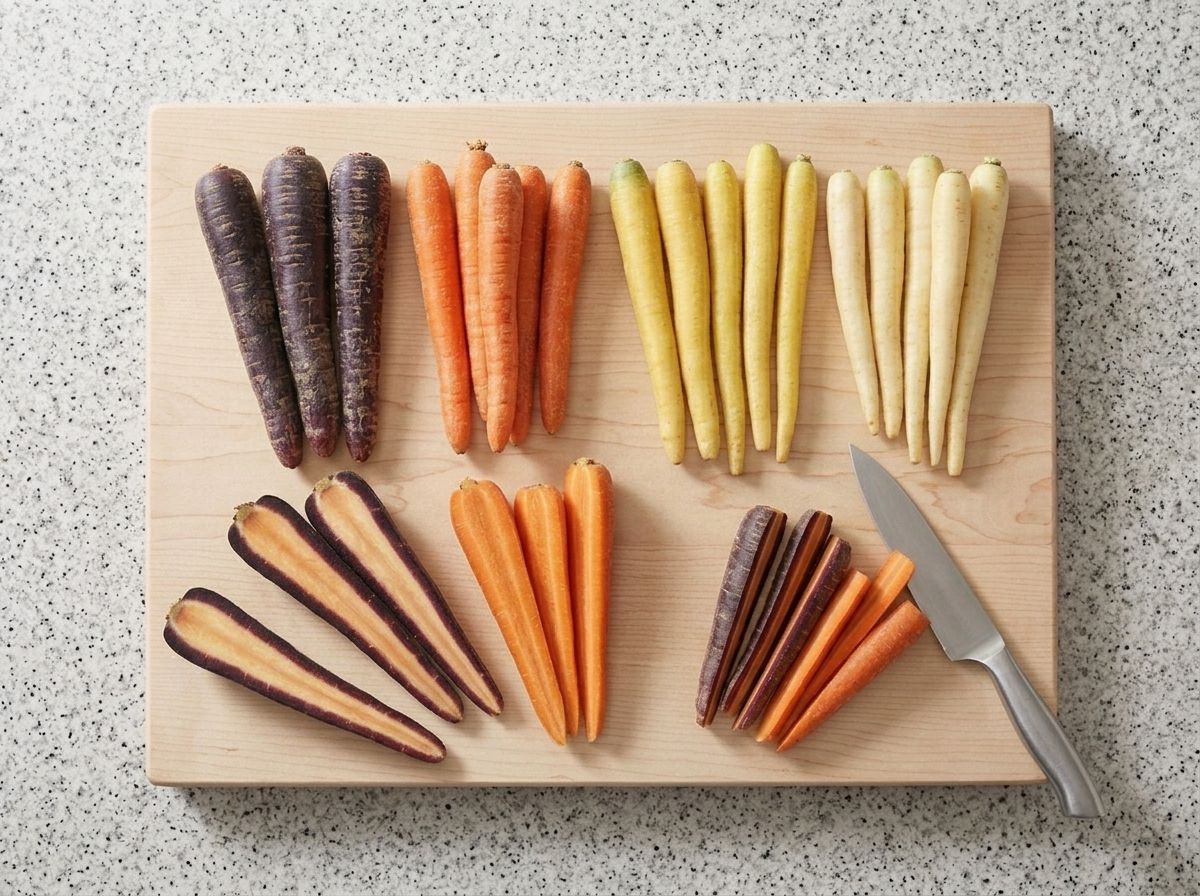
Sort the carrots by width at the shoulder. Halve anything thicker than ¾ inch (2 cm) lengthways and quarter anything over 1¼ inches (3 cm), leaving the slim ones whole. Pat them all thoroughly dry.
- 4
Oil and season, purple kept apart
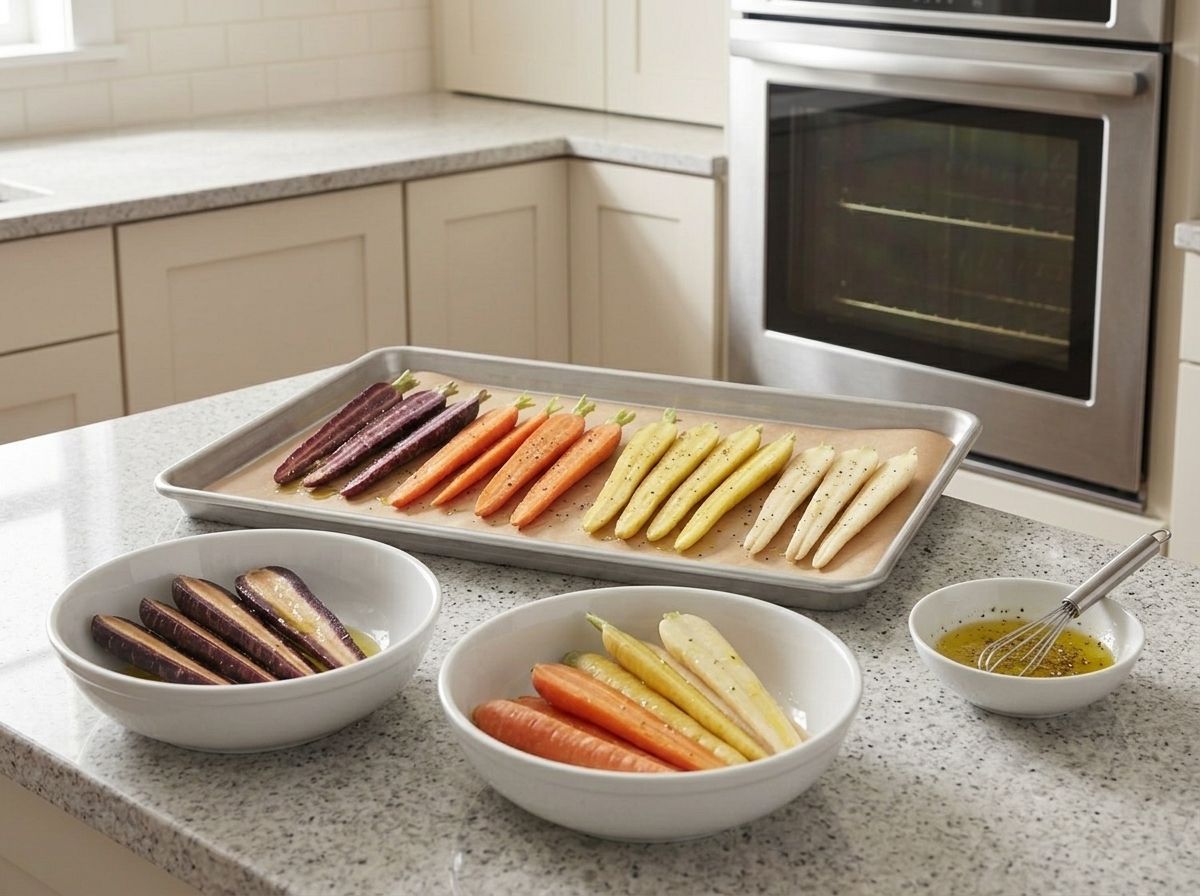
Whisk the olive oil, salt and pepper in a small bowl, holding the honey back. Toss the carrots in the oil, keeping the purple ones in their own bowl so they do not bleed onto the pale ones, then lay everything on the sheet in a single layer, cut faces down, purple grouped at one end.
- 5
Roast without turning them
Roast for 22 to 25 minutes, until the undersides carry dark brown patches and a knife slides into the thickest carrot with slight resistance. Do not turn them; the face against the hot sheet is the one that browns.
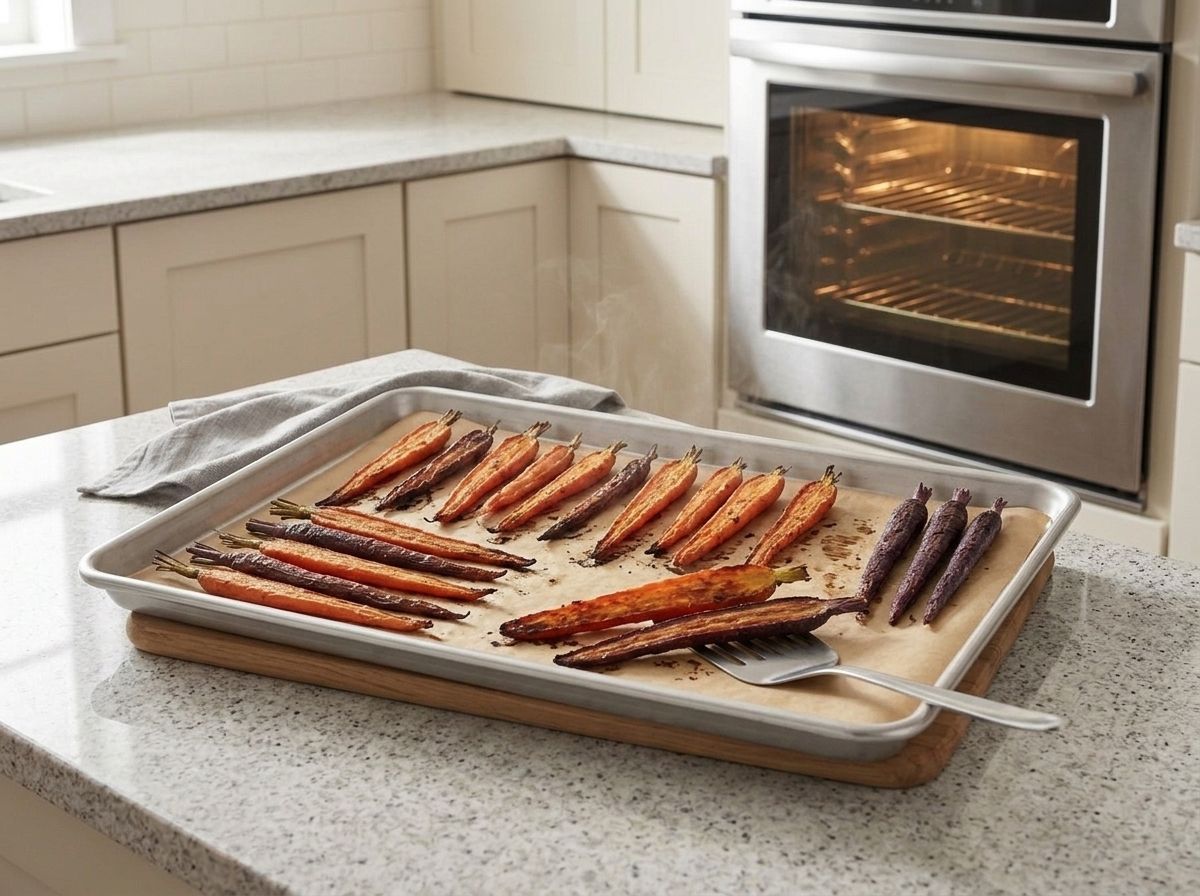
- 6
Glaze in the last ten minutes
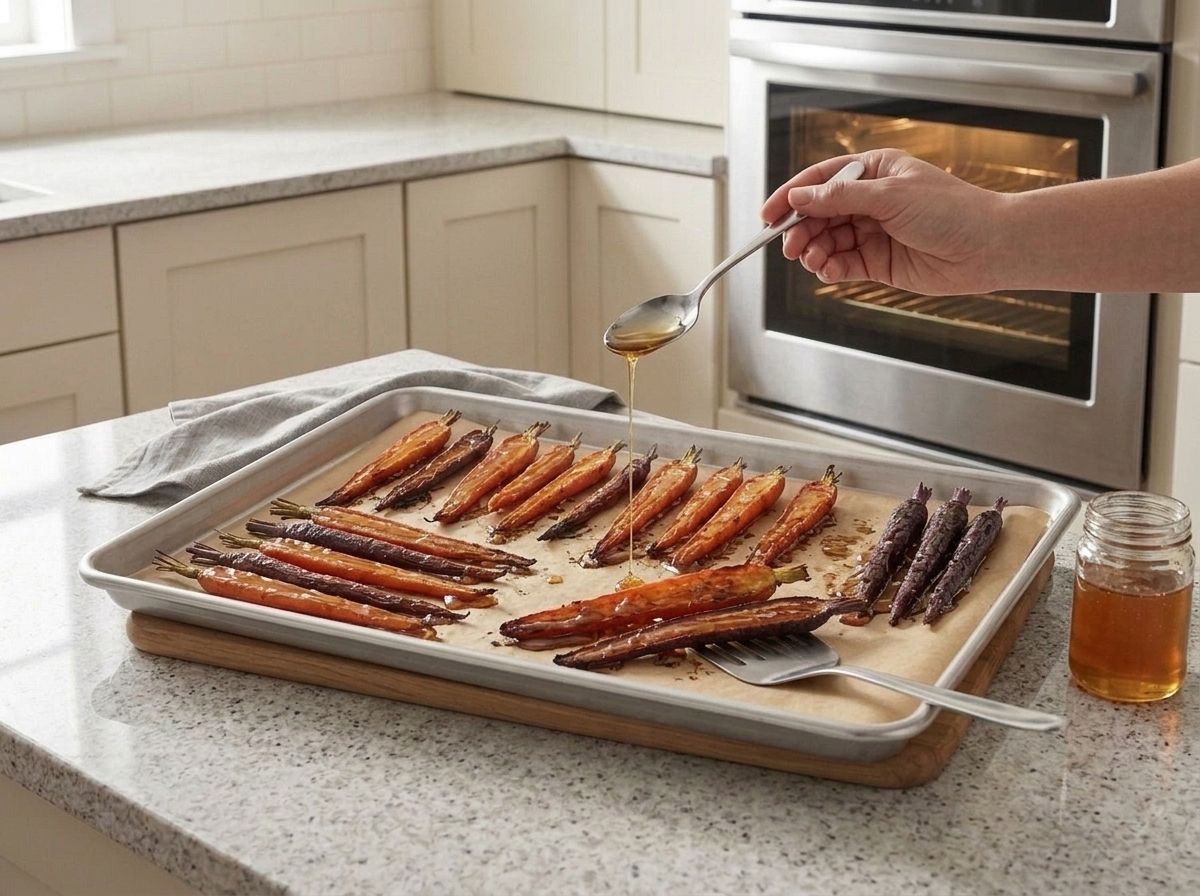
Drizzle the honey over the carrots, turn them to coat, and return the sheet to the oven for 8 to 10 minutes, until the glaze is glossy and clinging rather than pooling. Watch it, because honey burns far faster than sugar does.
- 7
Finish with lemon and herbs
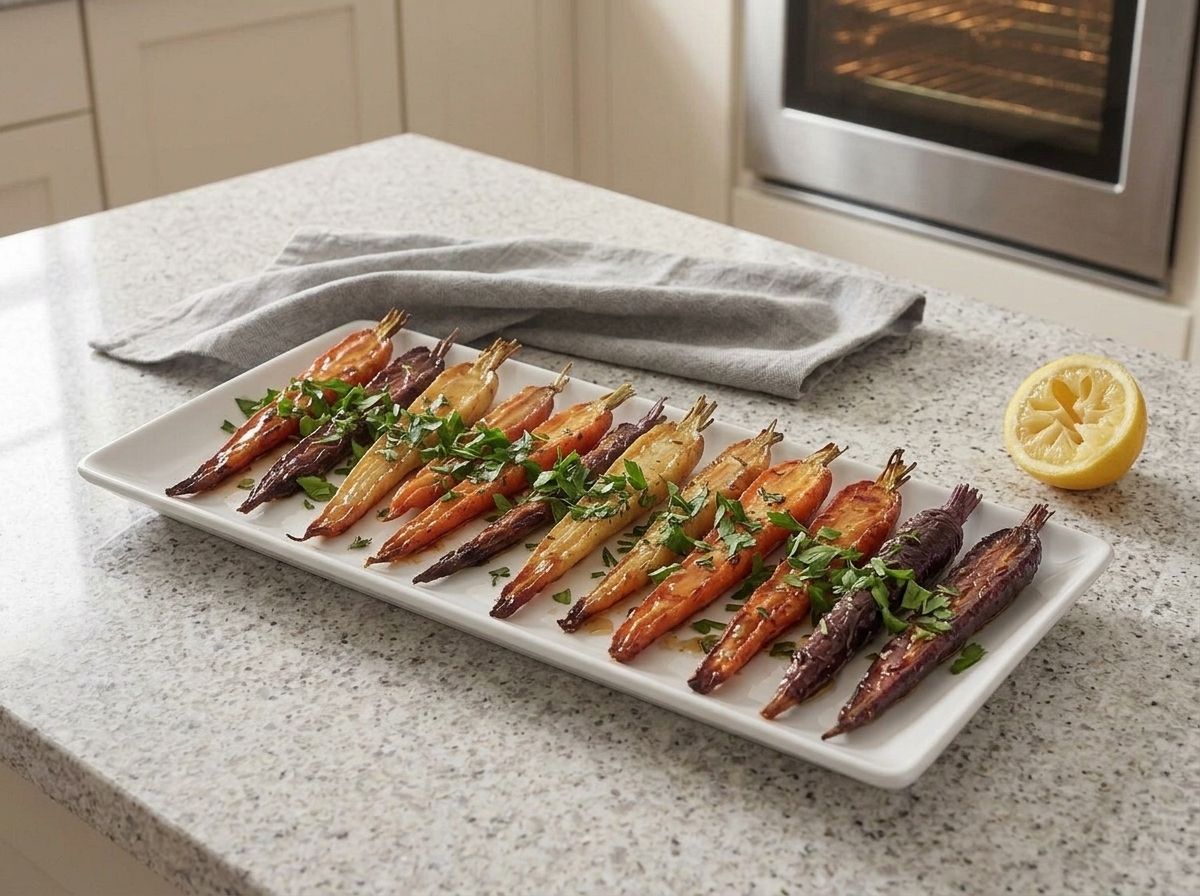
Off the heat, squeeze the lemon juice over the hot carrots and scatter the chopped herbs. Taste and add salt if it wants it. The acid lifts a glaze that is otherwise flatly sweet, and it pulls the purple carrots back toward purple.
Notes
Do not crowd the sheet. Carrots packed edge to edge steam each other and never brown. Two half-full sheets beat one heaped one.
Maple syrup makes this vegan and behaves the same way in the oven, so it also goes on in the last ten minutes rather than at the start.
Carrot tops are edible. Blitz them with olive oil, garlic and toasted nuts for a rough pesto rather than binning them.
Nutrition Facts
4 servings · 138 g per serving
- Calories
- 145 kcal
% Daily Value*
- Total Fat
- 7.3 g9%
- Saturated Fat
- 1 g5%
- Sodium
- 370 mg16%
- Total Carbohydrate
- 20.6 g7%
- Dietary Fiber
- 3.7 g13%
- Sugars
- 14.1 g—
- Protein
- 1.3 g3%
Recipe from veggierecipes.blog
When it goes wrong
Troubleshooting
My yellow and white carrots came out pink
The purple ones bled onto them. Anthocyanins are water-soluble and travel wherever there is moisture, which means the tossing bowl and any two wet cut faces pressed together. Dry the carrots after scrubbing, toss the purple ones separately, and group them at one end of the sheet. It does not wash off and it changes nothing about the taste, so it is a looks problem rather than a dinner problem.
The glaze burned and everything tastes bitter
The honey went in too early, which is what most recipes online tell you to do. Fructose starts caramelizing near 230°F and carries straight on to burnt, so over 25 minutes at 425°F it passes through glossy without stopping. Roast with nothing but oil and seasoning, then add the honey for the last 8 to 10 minutes.
The purple carrots went gray and dull
Heat breaks anthocyanins down and no version of roasting leaves them as vivid as they looked raw. Two things narrow the gap: do not overcook, because every extra five minutes costs color, and add the lemon at the end, because acid shifts anthocyanins back toward red.
Some are mush and others are still hard
A knife problem, not an oven problem. A rainbow bunch is far less uniform than a bag of orange carrots, and the purple varieties in particular run thick. Sort by width, halve or quarter anything fat, and the tray finishes together. If it is already roasting, lift the thin ones onto a plate and give the rest another ten minutes.
They went soft but they never browned
Both causes are water. Either the sheet was crowded, so the carrots steamed each other, or they went in wet from scrubbing. Use the largest sheet you own, leave visible metal between the pieces, and dry them first. The other culprit is the instruction to turn them halfway, which nearly every version of this recipe includes; the face against the hot sheet is the one that browns, and flipping early trades one good surface for two pale ones.
It tastes sweet and nothing else
There is no acid in it. Carrots are sweet to begin with, roasting concentrates that, and the honey adds more on top, so a glaze with no counterweight lands flat and faintly cloying. The lemon at the end is the fix. If it still needs lifting, reach for flaky salt and fresh pepper at the table rather than more lemon, which past a tablespoon starts to taste like salad dressing.
Before you serve
Serving & Storage
Serve them long and whole on a narrow platter rather than heaped in a bowl, where the colors overlap and read as brown from two feet away. You went to some trouble to keep them purple, so give them a shape that shows it.
They belong at the roast dinner end of the table, next to a nut roast, a mushroom wellington or braised puy lentils. On a weeknight the more useful move is to give them something creamy and sour to sit on. Spread thick yogurt, labneh or whipped feta across the plate and lay the hot carrots over it, or pour a lemony tahini around them. The temperature contrast does most of the work, and with flatbread it stops being a side dish.
Making it ahead
Everything up to the oven holds. Scrub, trim and cut the carrots up to two days ahead and keep them covered in the fridge under a damp towel, or the cut faces dry out and go chalky white. Do not oil and salt them in advance: the salt draws water to the surface, and roasting wet carrots is the one thing this method exists to avoid.
What does not work is roasting them fully ahead and reheating for guests. A glazed roast carrot holds for about fifteen minutes and then slumps, with the glaze turning tacky. If you need the oven free, split the recipe: roast them plain in the morning, leave them on the sheet, and do the honey stage in the last ten minutes before everyone sits down.
Storing leftovers
Airtight in the fridge for three days. They soften a little each day and the glaze goes sticky, so use them as a cold ingredient rather than trying to rebuild the original dish: chopped into a grain salad they bring their own dressing, blitzed with stock and ginger they make a fast soup. If you do want them hot, two minutes in a dry pan beats the microwave, which only steams them limp. Freezing is not worth attempting, because roasted carrots come out waterlogged and stringy with the glaze washed off.
Still wondering
Frequently Asked Questions
Can I use regular carrots instead of rainbow carrots?
Yes, and the method gets easier, because a bag of orange carrots is already uniform in width so the sorting step largely disappears. You lose the two things this recipe is built around: there is no reason to scrub rather than peel once no purple is involved, and nothing bleeds onto anything. Roast them the same way and keep the late glaze, which has nothing to do with color.
What can I use instead of honey to make this vegan?
Maple syrup is the closest. It is thinner than honey and slightly less sweet, so use the same 2 tablespoons and expect it to spread more easily. Agave works too, but at 80 to 90% fructose against honey's 40% it browns faster still and wants about 6 minutes in the oven rather than 10. All three burn, so the late timing does not change for any of them.
Can I double the recipe?
Yes, but across two sheets, never one heaped one. Crowding is the main reason roasted carrots come out pale. Two trays on two racks need swapping positions when you add the honey, and a fuller oven recovers heat more slowly, so give the first roast about 5 extra minutes.
Featured In These Collections
More Colorful Vegetable Side Dishes
Made this?