
Cranberry-Orange Relish Recipe
Published · Updated
This cranberry-orange relish adds a vibrant, tangy-sweet kick to your festive spread. Bursting with fresh color and citrusy aroma, it’s the ultimate no-fuss condiment your table needs.
Jump To Recipe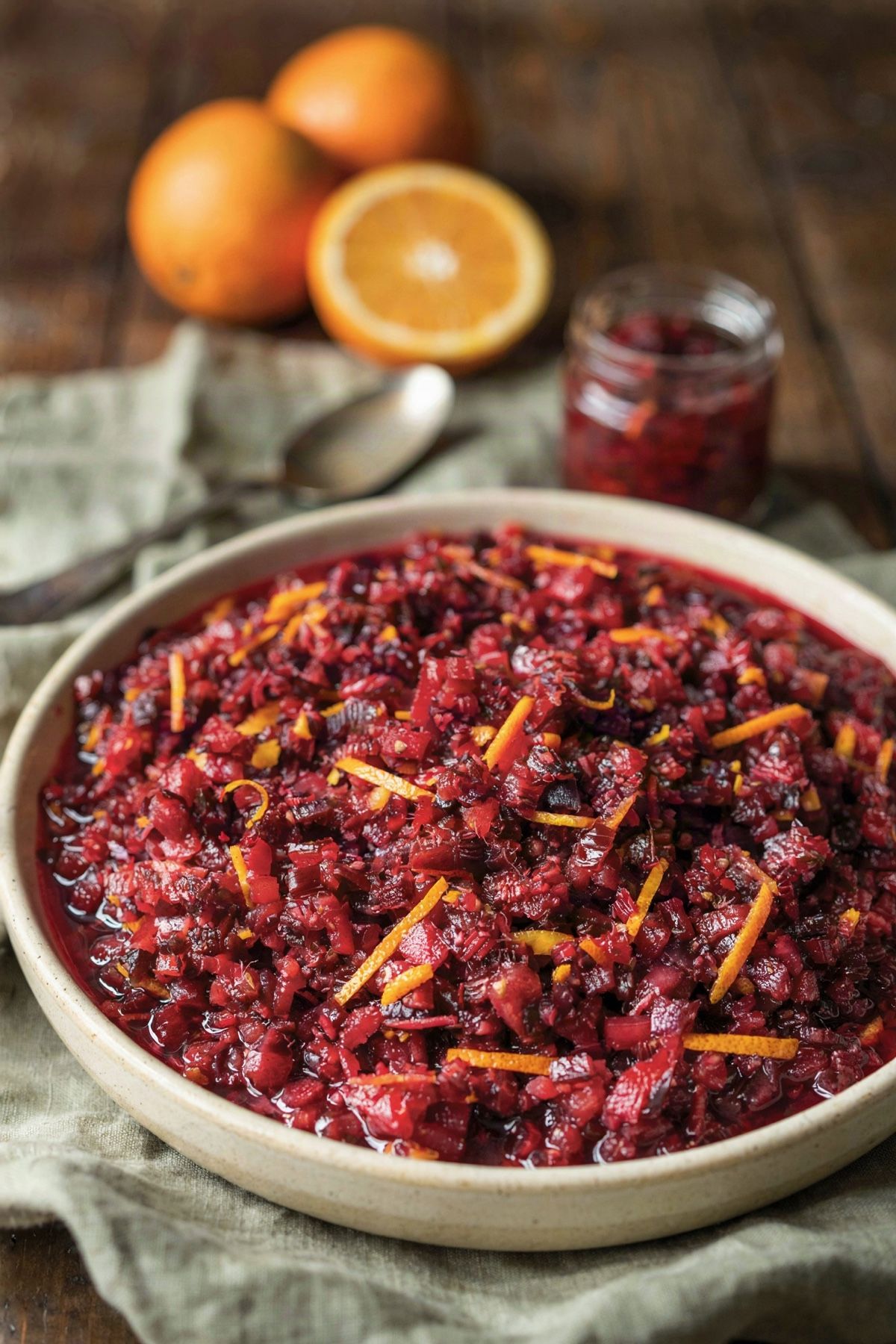
Why I Love This Zesty Relish
Cranberry sauce at the holiday table always brought back memories for me, but let’s be honest, sometimes the old-fashioned stuff just doesn't cut it. This cranberry-orange relish, though, that’s a game changer. It’s bright, fresh, and has just the right mix of tart and sweet for my taste.
One reason I keep coming back to this recipe is its versatility. It’s not just a November thing that sits beside the roast. Here are a few reasons this relish deserves a spot at your table any time of year:
- Pairs well with savory mains (think: roast cauliflower, plant-based loaf)
- Makes a killer topping for oatmeal, pancakes, or Greek yogurt
- A bold mix-in for grain salads, or simply spread onto toast
Pro tip: when I’m feeling adventurous, tossing in cinnamon or some crunchy walnuts levels up the whole dish. There’s a lot to love about something this simple and bold.
The story
The Relish Lost Thanksgiving to a Can Opener
The only thing separating cranberry sauce from cranberry relish is heat. Sauce is cooked: berries, sugar and water in a pan until the skins burst and the pectin sets it. Relish is raw, the fruit ground with sugar and left in the cold to come together. Menus use the two words as though they were interchangeable. They are not, and everything else about this recipe follows from the fact that nothing in it is ever warmed.
That is also why the sauce won. In 1912 a Boston lawyer turned cranberry grower named Marcus Urann began cooking cranberry sauce in the packing house on his farm and sealing it in cans, which he sold under the name Ocean Spray. Until then a cranberry was a fresh product with a season of roughly two months. The can gave it a year, and by 1941 the jellied log that slides out with the ridges still on it was in production.
The relish could not follow it into the can, because the heat of processing is exactly the thing a relish is defined by not having. Cook it to make it shelf stable and you have made an inferior sauce. So it waited for home freezers to become ordinary, and Ocean Spray only put out a frozen cranberry-orange relish in the 1950s, four decades behind the can and long after the can had become the picture of Thanksgiving in most people’s heads. The older and brighter version of the dish lost on packaging, not on taste. It kept its believers: Susan Stamberg has read her mother-in-law’s raw ground relish on NPR almost every Thanksgiving since the early 1970s, and nobody has built a fifty-year radio tradition around the contents of a can.
On a vegetarian table it earns more than the token spoonful it usually gets. Nearly every other Thanksgiving side needs rewriting for this site and this one needs nothing: no dairy, no gelatin, no stock, and no oven on the one day of the year when the oven is the bottleneck. Its real job is chemical. A plate of roast squash, mashed potato, stuffing and gravy is soft, starchy and fat-heavy from edge to edge, and the relish is the only thing on it carrying acid and bitterness. Which is the argument for using the whole orange, skin and all.
What to buy
Ingredient Notes
Fresh cranberries
The standard American bag is 12 oz, which is 340 g, and one bag is one batch. Buy them firm and glossy, and give the bag a squeeze: a good cranberry is hollow inside and springy, which is not a folk test but the actual grading method, where berries are dropped down a stepped board and only the ones that bounce over the barriers get sold. Every bag holds a few soft or shrivelled ones that taste musty, so pick them out. Frozen are the sensible option outside the short autumn season, but use them straight from the freezer. A fully thawed berry has already leaked its juice and collapses under the blade instead of chopping.
Orange, with the skin on
The ingredient the recipe is named after, and it goes in whole. The peel carries the aromatic oils, which is where the orange smell actually comes from, and the pith carries a mild bitterness that keeps three quarters of a cup of sugar from tasting like candy. Peel it and you are left with juice and pulp, which dilutes the relish and makes it sweeter and duller in one move. Buy a small to medium thin-skinned navel and scrub it, since the skin is going in the bowl; unwaxed or organic is worth it here. Cara Cara works and is a little sweeter. Avoid the big thick-skinned oranges, which carry too much pith for one batch, and skip clementines, whose skin is so thin it disappears. Orange juice replaces none of this.
Granulated sugar
The sugar is structural, not just sweet. It draws the juice out of the cut fruit over the hours in the fridge, and that juice is what turns a dry heap into something spoonable. Below about half a cup you get a relish that stays dry and tastes harsh, which is a different problem from being too tart. Three quarters of a cup is already restrained next to the full cup most old recipes call for. Liquid sweeteners are a poor swap: maple syrup and honey add wetness without pulling out any of the fruit’s own juice, so the result is thin rather than glossy, and honey takes the recipe out of vegan. Brown sugar works but mutes the red into something browner.
Fine sea salt
A quarter teaspoon, and the ingredient nearly every version of this recipe leaves out. It is nowhere near enough to taste salty. What it does is stop the relish reading as one flat sweet-and-sour note, the same way a pinch of salt in a fruit salad makes the fruit taste more like itself. Using kosher salt instead, that is a scant half teaspoon of Diamond Crystal.
Ground cinnamon (optional)
Raw ground spice is dusty for the first hour or two in a cold wet mixture because nothing has hydrated it, so cinnamon goes in before the chill and never at the table. Half a teaspoon is the ceiling; past that it stops reading as warmth and starts reading as a scented candle. It also pushes the relish towards the dessert end of its range, which suits it better on yogurt or oatmeal than beside a savory main.
Walnuts, toasted (optional)
Toast them 8 to 10 minutes at 350°F or 175°C until they smell of walnut rather than of nothing, then chop them roughly. Untoasted nuts have no defense against a wet acidic relish and go soft inside an hour. Pecans are sweeter and work well. Making this days ahead for a crowd, leave the nuts out of the bowl entirely and put them alongside in a small dish.
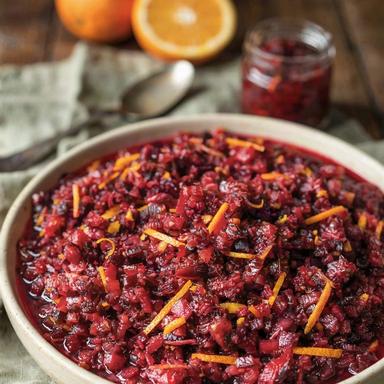
Zesty Cranberry-Orange Relish
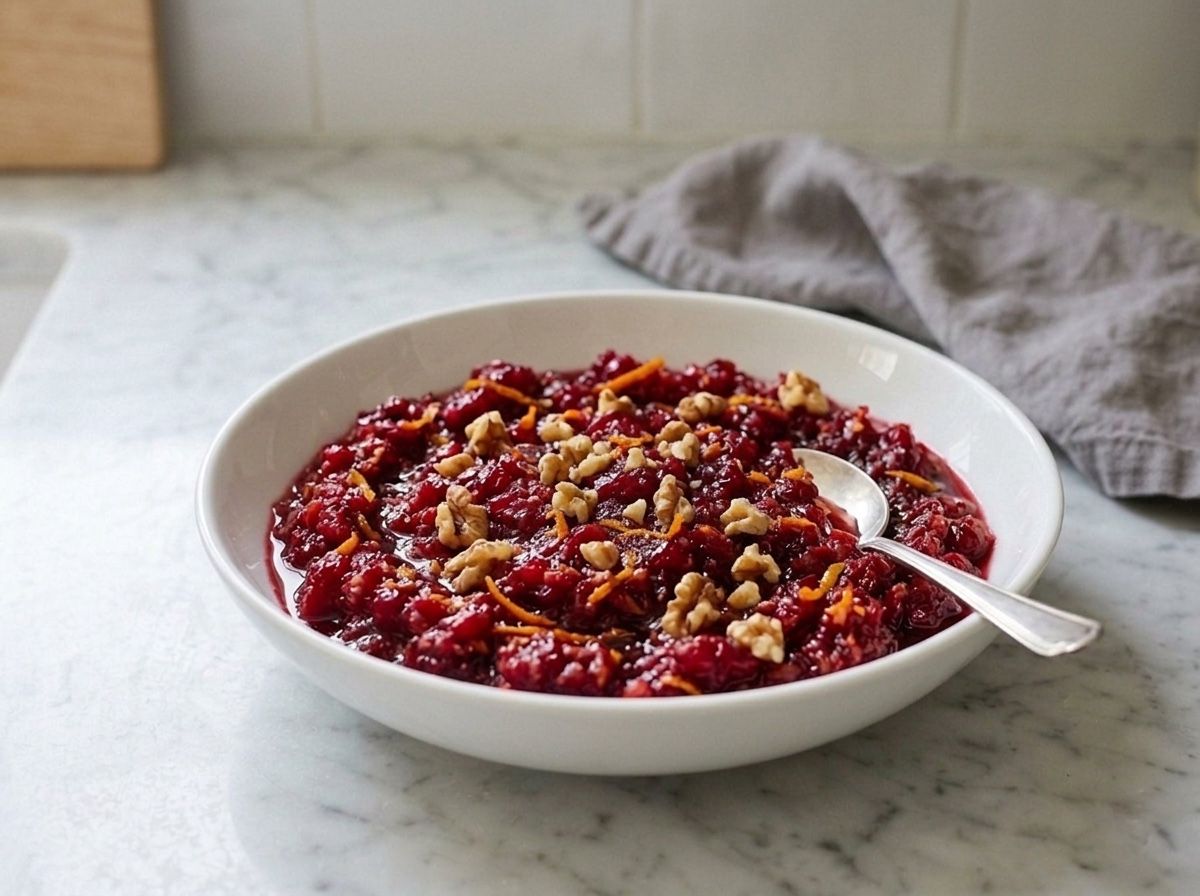
Raw cranberries and a whole orange, skin and all, ground with sugar and left to chill. No cooking, and it gets better the day after you make it.
Ingredients
Equipment
As an Amazon Associate I earn from qualifying purchases, at no extra cost to you.
Instructions
- 1
Trim the orange, skin and all
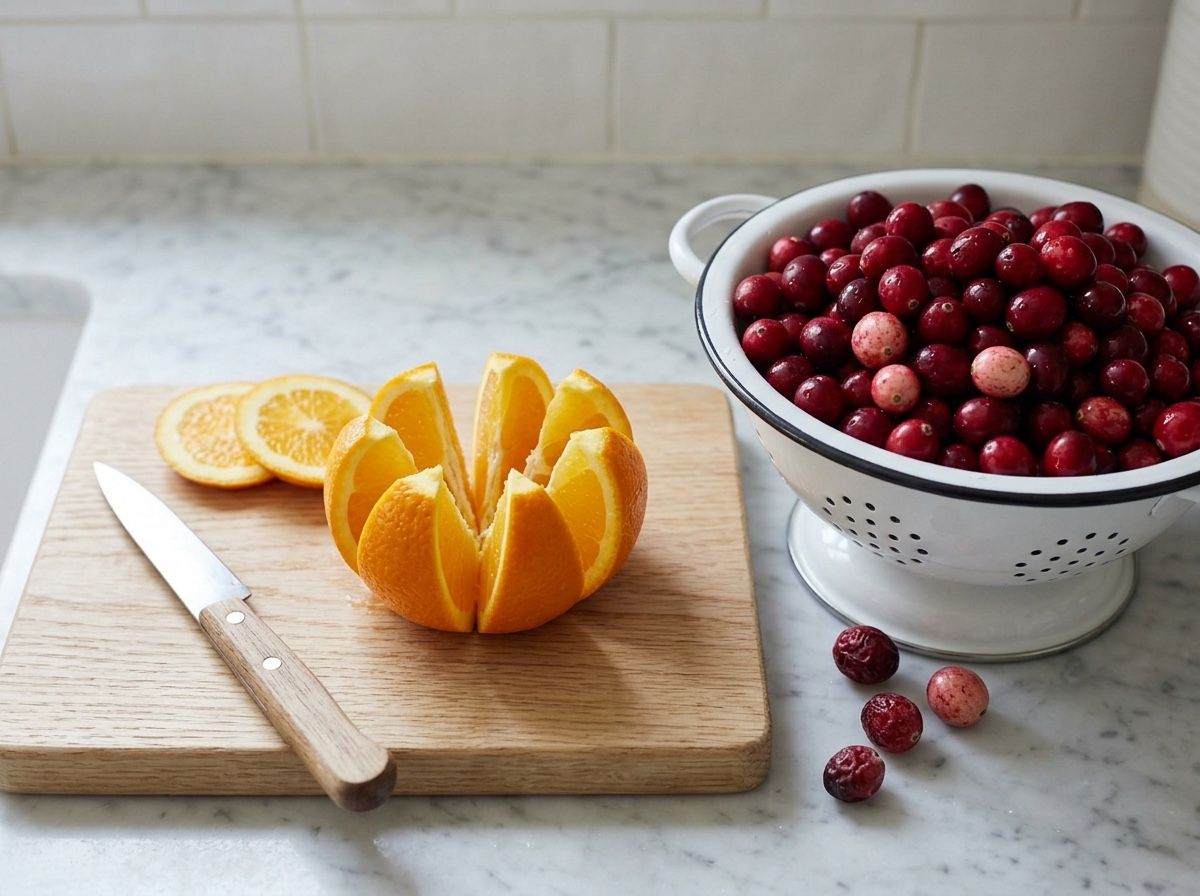
Scrub the orange under warm water and dry it, because the skin is going into the bowl. Trim a thin slice off each end, cut it into eight wedges without peeling it, and flick out any seeds. Tip the cranberries into a colander, rinse them, and pick out any that are soft or shrivelled.
- 2
Break down the peel first
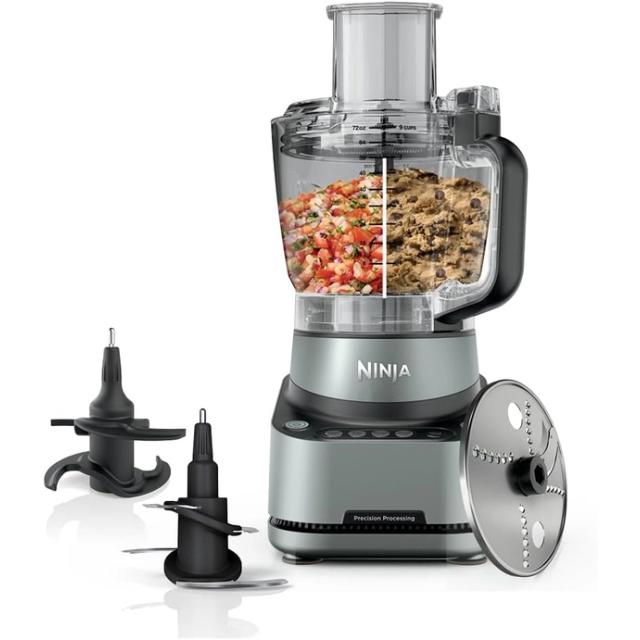
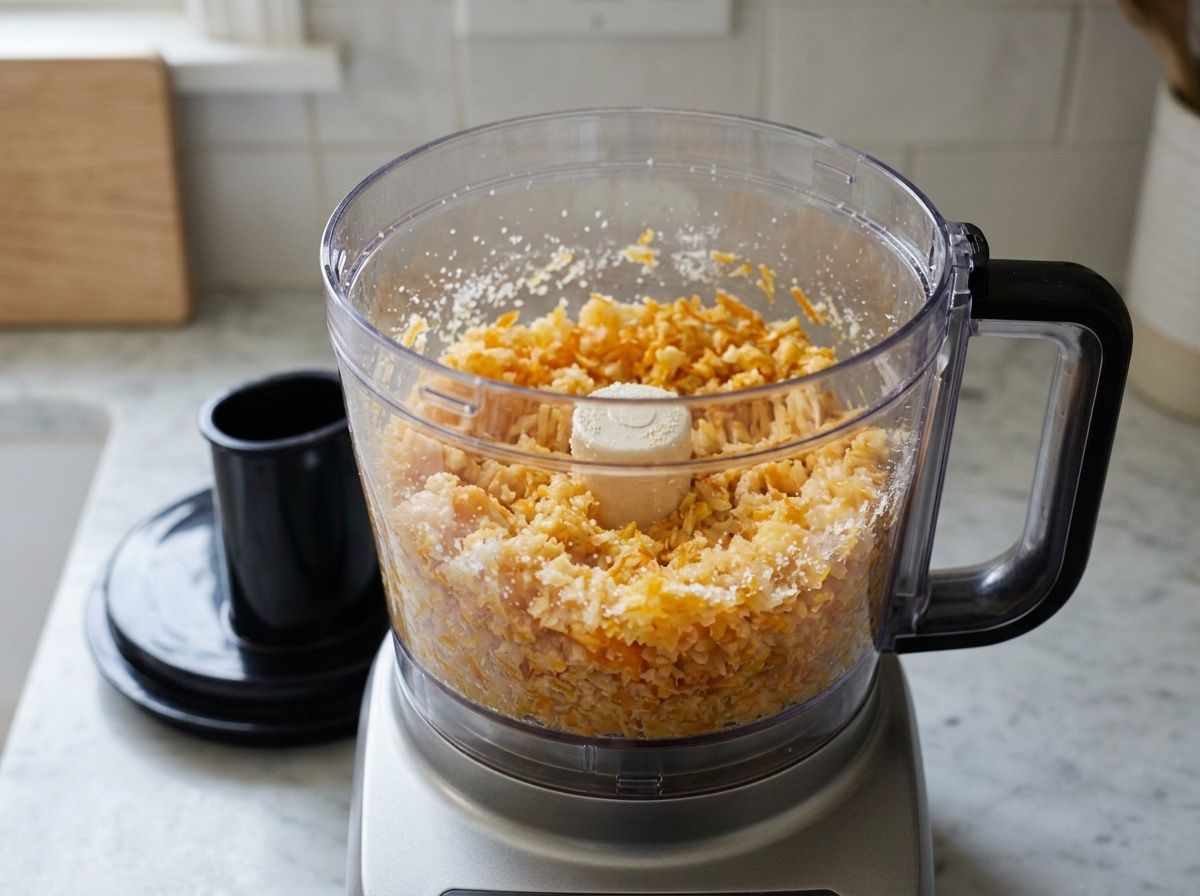
Put the orange wedges and the sugar in a food processor and pulse eight to ten times, until the peel is in pieces no larger than a grain of rice. Peel is far tougher than a cranberry and needs the head start.
- 3
Pulse in the cranberries
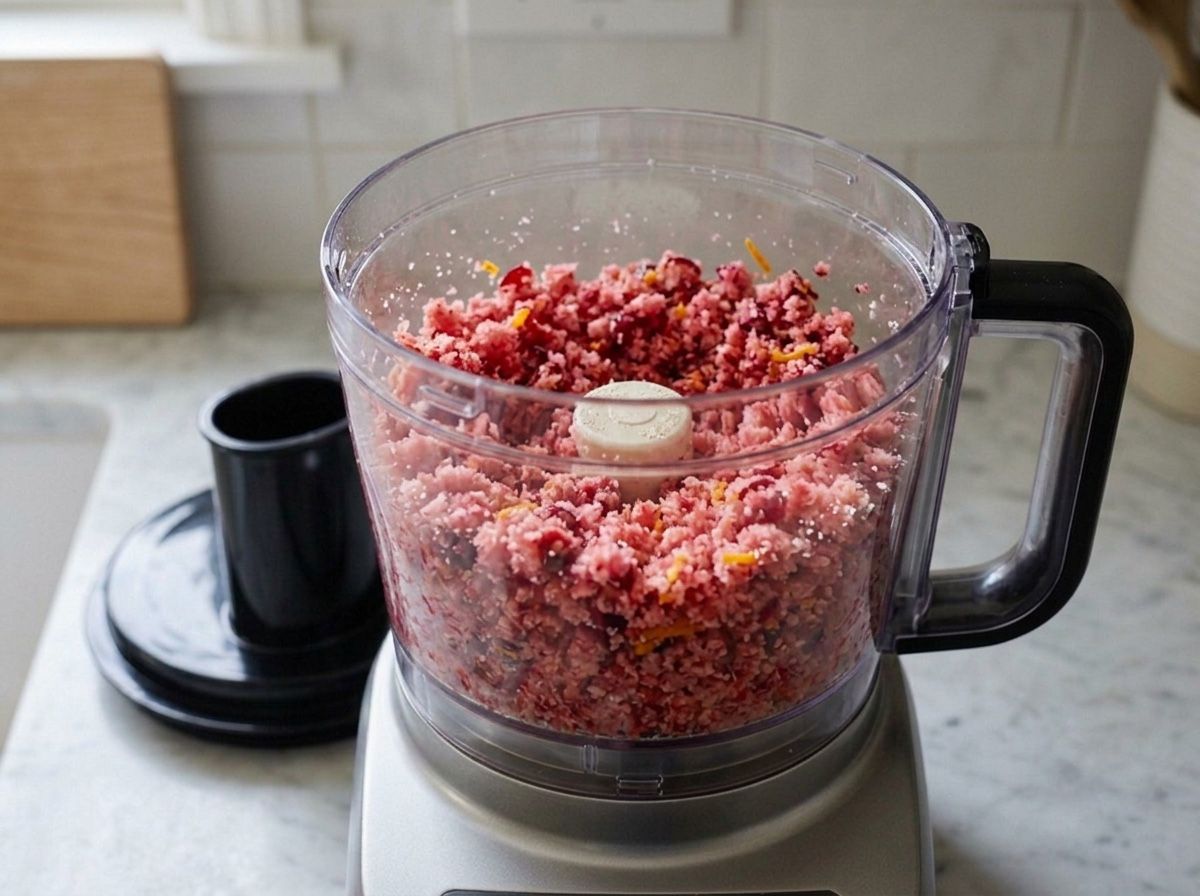
Add the cranberries and the salt, then pulse in short bursts, six to eight times, scraping the bowl down once. Stop while the pieces are still distinct, roughly the size of coarse breadcrumbs. If you are using cinnamon, add it now.
- 4
Chill until it loosens
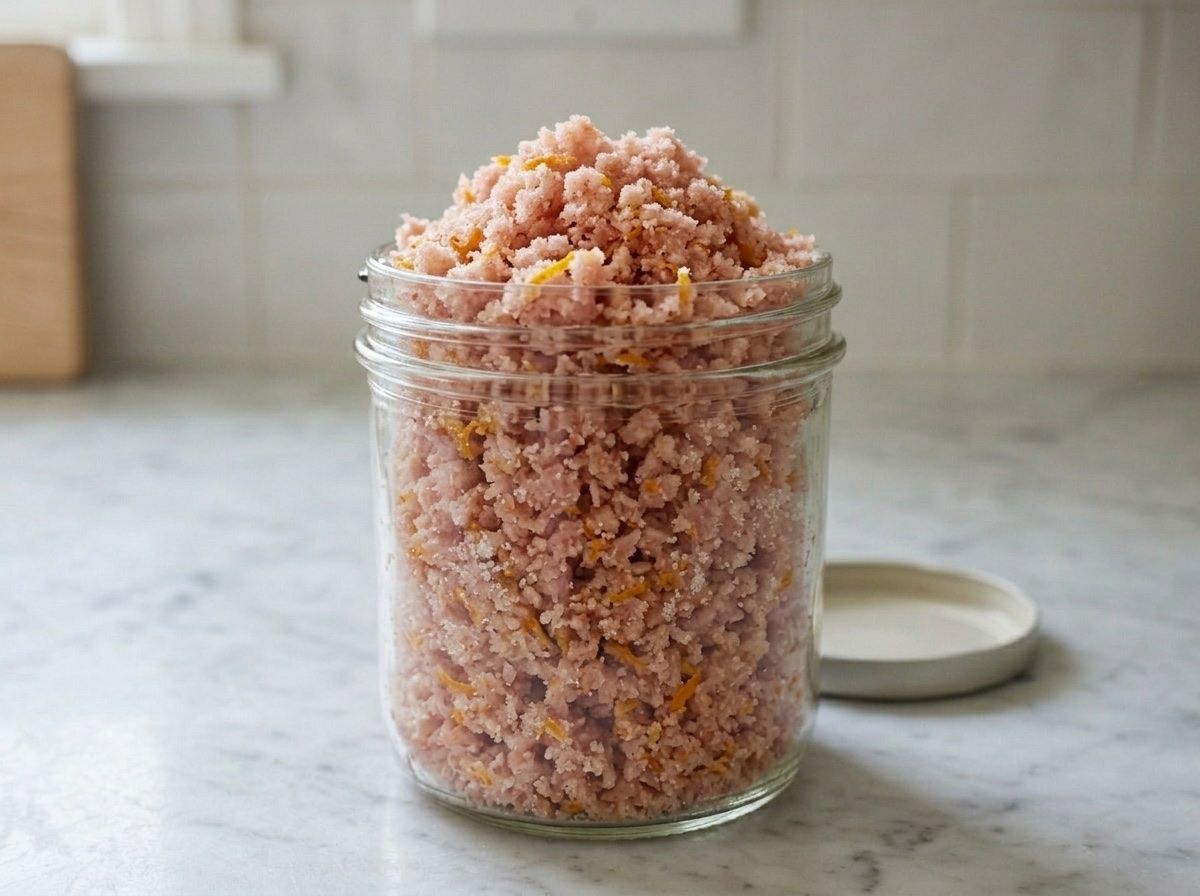
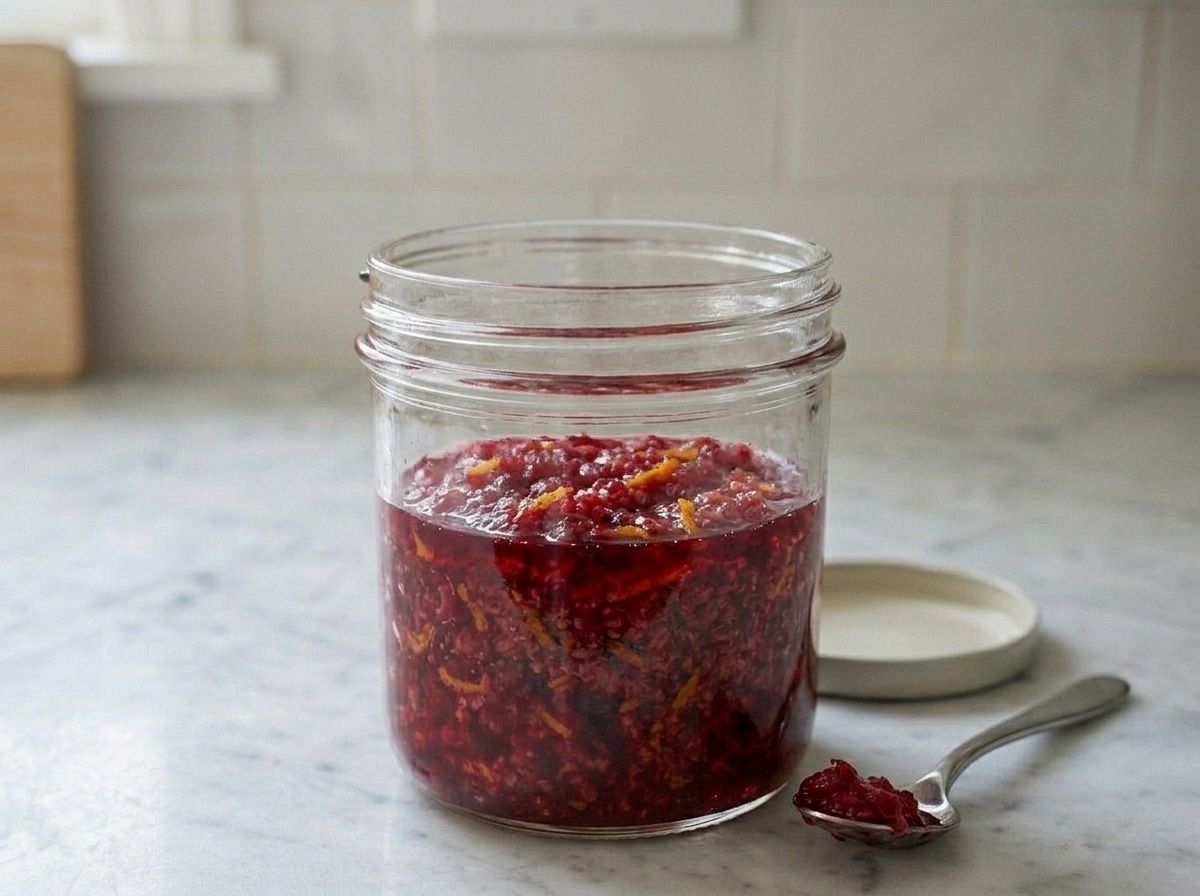
Scrape the relish into a bowl or a jar, cover it, and refrigerate for at least 4 hours, ideally overnight. It looks dry and sits high in the bowl at this point. Over the next few hours the sugar draws the juice out of the fruit, and it settles, loosens and deepens from pink to red.
- 5
Taste after the chill, not before
Only judge the sweetness once it has chilled, because it reads far harsher at the start than it will at the table. To sweeten it, stir in more sugar a tablespoon at a time and give it 30 minutes to dissolve before tasting again.
- 6
Add the nuts at the last minute
If you are using walnuts, stir them through just before the bowl goes out rather than before the chill. Serve cold, straight from the fridge.
Notes
Best made a day ahead. It needs 4 hours in the fridge at the very least, and a night is noticeably better: the sugar finishes dissolving and the peel loses its raw edge.
Keeps for up to 2 weeks in a sealed jar in the fridge. The color darkens and the texture loosens over the first few days, which is the relish improving rather than going off.
No food processor, use the coarse plate of a meat grinder, which is what this recipe was originally made on, or chop everything by hand and expect to spend 20 minutes on it.
Nutrition Facts
8 servings · 82 g per serving
- Calories
- 124 kcal
% Daily Value*
- Total Fat
- 2.5 g3%
- Saturated Fat
- 0.2 g1%
- Sodium
- 74 mg3%
- Total Carbohydrate
- 26.3 g10%
- Dietary Fiber
- 2.2 g8%
- Sugars
- 22.2 g—
- Protein
- 0.9 g2%
Recipe from veggierecipes.blog
When it goes wrong
Troubleshooting
It came out as a purple slush
Everything went into the processor at once. Orange peel is several times tougher than a cranberry, so while the machine is still working on the skin the berries have already been reduced to liquid. Pulse the orange and sugar alone first, then add the berries for six to eight short bursts. Pulse rather than run: holding the button down is what produces slush. There is no way back, but it still tastes right, so serve it as a sauce and call it that.
It tastes bitter
Some bitterness is the point and is what stops the sugar being cloying, so give it the full overnight chill before treating it as a fault. Bitterness mellows more over those hours than anything else in the bowl. If it is genuinely too much, the cause is a large thick-skinned orange carrying far more pith per batch than a small navel, or over-processing, which grinds the pith fine enough to spread it through everything instead of leaving it in identifiable flecks.
It is dry and sitting up in a heap, not spoonable
That is what it looks like at hour zero, and it is not finished. Cover it, refrigerate it, and by hour four it will have settled by about a third. Do not add water to fix it, which is the most common wrong instruction in circulation for this dish. Water thins it permanently and gives you a soupy relish that never develops the syrupy gloss the fruit’s own juice does.
It is so tart it makes your mouth pucker
Almost always because it was tasted straight out of the processor, when the sugar is still undissolved crystals sitting alongside raw acid rather than a syrup that has soaked into the fruit. Chill it, then taste. Note the trap in going the other way: cutting the sugar also cuts the liquid it produces, so a deliberately low-sugar version needs a splash of orange juice to make up the volume even though a full-sugar one never should.
The nuts went soft and the color turned muddy
The walnuts were stirred in before the chill instead of after it. Hours in an acidic, sugary liquid soften them and leach out enough tannin to dull the red. The same applies to anything else crunchy, including toasted seeds and pomegranate.
There is a pool of red liquid at the bottom of the jar
That is the recipe working, not failing. The fruit keeps releasing juice for days and it settles out under its own weight, so by day three there is usually a layer of loose syrup at the bottom. Stir it back through. The only version worth worrying about is a watery relish on day one, which means either water was added or the frozen cranberries were thawed and drained before they went in.
Before you serve
Serving & Storage
Serve it cold, straight from the fridge, in a small bowl with a small spoon. A tablespoon per person is the real portion and this batch makes roughly 2½ cups, enough for eight to ten people alongside everything else. Put it near the heaviest thing on the table rather than off at the end, because the point of it is the mouthful after the gravy.
Where it does its best work is against salt and fat rather than starch. A spoonful next to an aged cheddar or a firm goat cheese beats anything it does on a Thanksgiving plate, and it is the reason to make a batch in a month with no holiday in it. Otherwise: stirred through thick yogurt, spooned over oatmeal or pancakes, on toast with cream cheese, folded into a grain salad with feta and toasted seeds, or served with a nut roast or roast squash, where it does the same job it does with turkey on everyone else’s table.
Making it ahead
This is not a recipe that merely tolerates being made ahead, it is one that requires it. Four hours is the minimum before it is worth eating, a full night is better, and a relish made three days before the meal is better again than one made that morning. Keep the cinnamon at the start of that window and the nuts at the very end of it.
Storing leftovers
It keeps for up to two weeks in a sealed jar in the fridge, a long life for something raw and down to the acid and the sugar between them. Use glass rather than metal, since a raw cranberry mixture is acidic enough to pick up a tinny edge over a week. Expect the liquid to separate, and stir it back in.
Freezing works for two to three months, but ice crystals rupture the fruit, so a thawed relish is looser and the peel softer. Thaw it overnight in the fridge and use it on yogurt or oatmeal rather than as the sharp thing on a dinner plate. What does not work at all is canning it. Water-bath processing takes it past the point where it is still a relish, and you end up with a mediocre cooked sauce in a jar that has to live in the fridge once opened anyway.
Still wondering
Frequently Asked Questions
Is cranberry-orange relish vegan?
Yes, as written, and gluten-free too. The one thing worth checking is the sugar. Some cane sugar sold in the United States is filtered through bone char, which is not disclosed on the label and is why strict vegans buy beet sugar, organic cane sugar or anything marked vegan. Every other ingredient here is fruit, salt and spice.
Can I double the recipe for a crowd?
Yes, but process it in two separate batches rather than one big one. A standard 9-cup food processor stops circulating its contents somewhere above one and a half bags of cranberries, so the orange peel ends up sitting on top in large pieces while the berries underneath turn to liquid. Grind the two batches separately, then combine them in the bowl you are chilling it in. A double batch covers about twenty people as a condiment, with enough left over to keep a jar back.
Featured In

More Festive Sides & Cranberry Creations
Made this?