
Sweet Potato Casserole with Pecan Streusel Recipe
Published · Updated
Creamy spiced sweet potatoes meet a golden, nutty pecan streusel in this cozy, crowd-pleasing casserole. No marshmallows, just comfort and crunch.
Jump To Recipe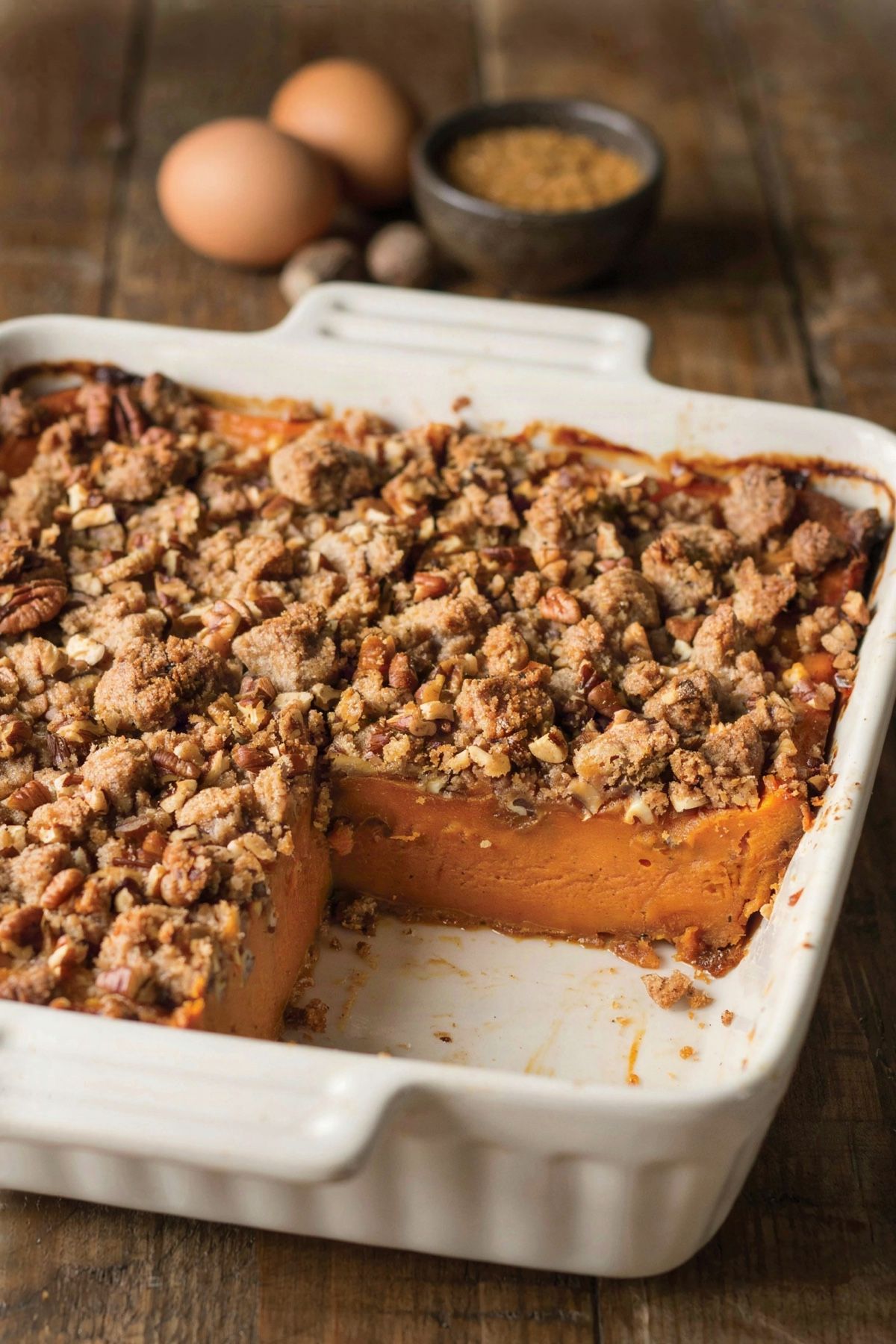
Why Ditch the Marshmallows? My Take on Sweet Potato Casserole
I feel that sweet potato casseroles with marshmallows feel too much like dessert. I’m not saying I don’t love sweets like anyone else, but what I want around the holidays is something comforting with a bit more depth. That’s exactly what this less sugary version delivers.
The thick, spiced sweet potato base of this dish is sweet enough to produce comfort-food vibes. And the crunchy, buttery pecan streusel on top packs in a lot of flavor, unlike the typical marshmallows.
This food is a real game-changer on any holiday table or potluck. The orange filling is beautiful against the golden, crunchy topping, which makes it as enjoyable to eat as it is to look at.
Enjoy it alongside roasted vegetables or your favorite savory mains. It also reheats nicely, which makes it great for leftovers (though, usually not, as there is none left after everyone digs in).
What do I love about this casserole?
- The texture contrast is outstanding.
- Pecans and a touch of spice bring out the best in sweet potatoes.
- It's easy to prep ahead and just as good the next day.
Give this one a shot. Your guests will thank you, and you might just discover a new favorite.
The story
Sweet Potato Casserole Was Invented to Sell Marshmallows
The dish is younger than it feels, and the part everyone argues about was an advertisement. In 1917 the makers of Angelus Marshmallows hired Janet McKenzie Hill, founder of the Boston Cooking School Magazine, to write a booklet that would get Americans eating marshmallows somewhere other than over a fire. One of her recipes was mashed sweet potatoes baked under a marshmallow topping, the first documented appearance of the casserole as we know it. The campaign worked well enough that the company, later renamed Campfire, kept reprinting it in the 1930 and 1950 editions until it stopped reading as marketing and started reading as heritage.
Sweet potatoes on the American holiday table are far older than that. Candied sweet potatoes simmered in sugar syrup were a Southern staple long before Hill was commissioned, drawing on West African cooking traditions carried into Southern kitchens. The marshmallow is the graft, not the root, so leaving it off is not a modern edit of an old family dish. It returns the casserole to the part of itself that was there first.
Something still has to go on top, because the contrast is the point. Marshmallow goes from pale to scorched in about ninety seconds and adds sugar to a dish that has plenty already. Pecans bring fat, a little bitterness from the skins, and a crunch that survives being spooned onto a plate. Pecan-topped versions run through Southern community cookbooks from the middle of the last century onward, and in many households they are the real recipe, the one the marshmallow version gets measured against.
There is a payoff here for a vegetarian table. At a meal built around a bird, the sweet potato dish is the one nobody expects to do any work. Roasted rather than boiled, set with egg and carrying a cup of pecans, this version has enough protein and fat to sit in the middle of a plate rather than at the edge of it.
What to buy
Ingredient Notes
Sweet potatoes
Buy by weight, not by count. Four medium sweet potatoes can mean anything from 2 lb to 4 lb depending on the store, and this recipe is built on 3 lb (1.4 kg) raw, which scoops down to about 2 lb (900 g) of flesh. Use orange-fleshed varieties: Beauregard, Garnet or Jewel. Japanese and Hannah sweet potatoes are drier and taste of chestnut, and make a pale, stiff casserole. A US label reading yam is almost certainly a sweet potato; a true yam is a different plant, dry and starchy, and will not work.
Pecans
Buy halves and chop them yourself. Pieces are the broken debris left from grading the halves, they carry far more cut surface, and pecan oil turns rancid quickly, so pieces are much likelier to taste stale and faintly of paint. That flavor does not bake out. Store what you do not use in the freezer, not the cupboard.
Eggs
These turn baked mash into a casserole. Two large eggs in roughly 900 g of flesh set the filling firmly enough to cut into squares; one gives a softer, spoonable set. They have to go into filling that is warm and not hot. Above about 70°C the white cooks the instant it touches the potato and leaves yellow threads through the orange that cannot be mixed back out.
Butter for the streusel
Softened, not melted and not fridge-cold. Softened butter rubs into flour as damp clumps that bake into clusters; melted butter makes a paste that spreads into one sheet, and cold butter refuses to combine and leaves dry flour behind. Four tablespoons looks like a lot against a quarter cup of flour, and it is deliberate: this topping is mostly pecans, so there is very little flour for the fat to bind. Cut it back and the streusel stays loose sand.
Heavy cream or whole milk
Cream adds body without adding water, which matters because the whole method is about keeping water out of the filling. Whole milk works and runs slightly looser. Skim milk and most plant milks are mostly water and quietly undo what the roasting achieved. For dairy-free, full-fat canned coconut milk is the one that behaves like cream, and the coconut is barely detectable under the spices.
Whole nutmeg
Grate it fresh. Pre-ground nutmeg loses its volatile oils within months of opening, which is much of why spiced dishes taste generically festive rather than of anything specific. A whole nutmeg costs little, keeps for years, and a quarter teaspoon takes fifteen seconds on a microplane. Smallest change on this list, largest return.
Sweet Potato Casserole with Pecan Streusel (No Marshmallows)
Roasted sweet potatoes with warm spices under a buttery pecan streusel, no marshmallows needed.
Ingredients
Equipment
As an Amazon Associate I earn from qualifying purchases, at no extra cost to you.
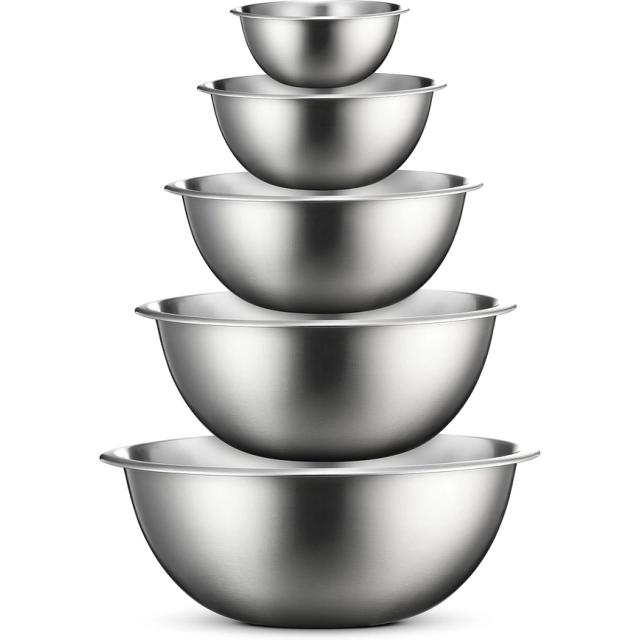
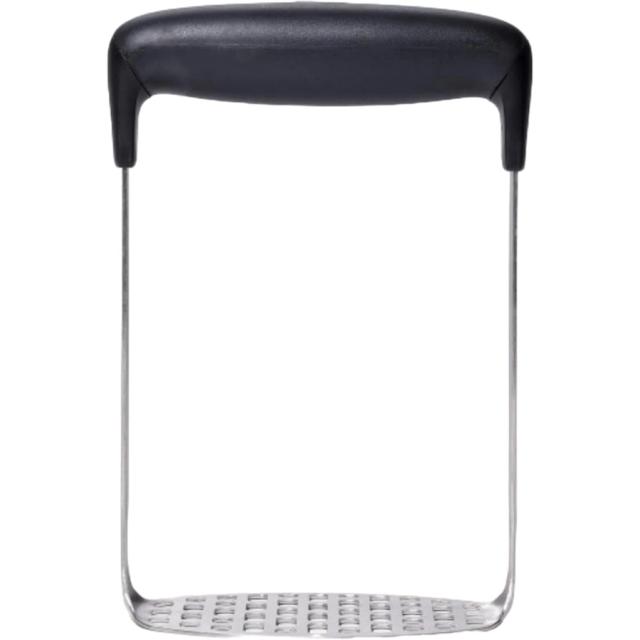
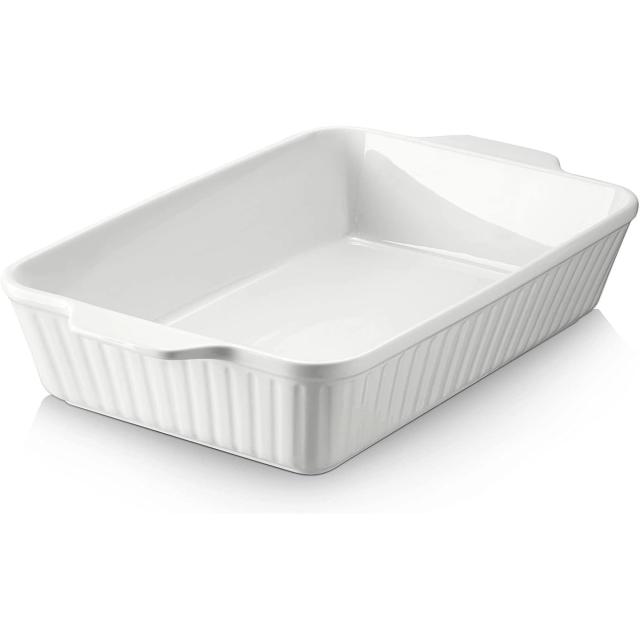
Instructions
- 1
Roast the sweet potatoes whole
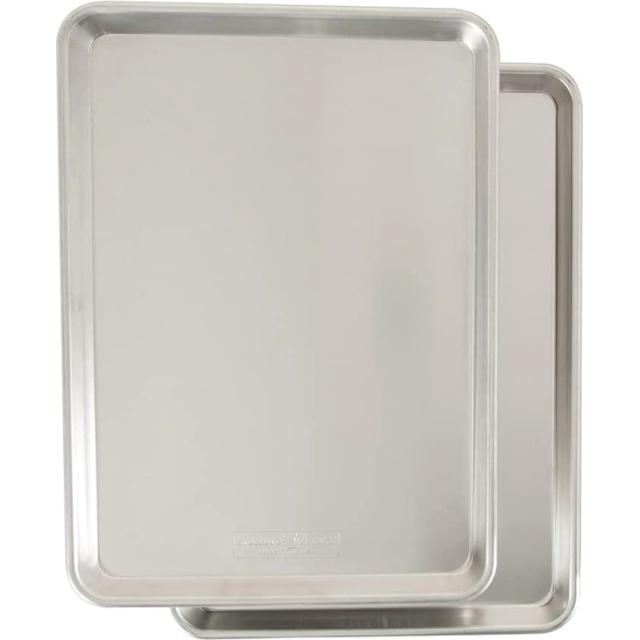
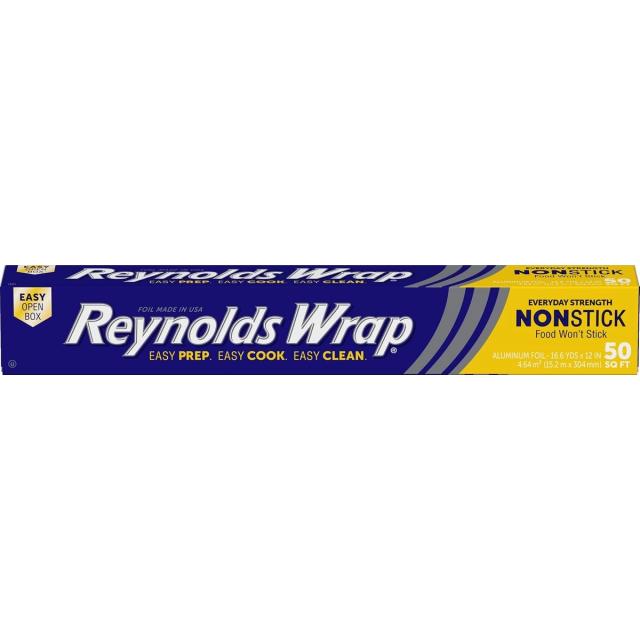
Heat the oven to 400°F (200°C). Prick each sweet potato four or five times with a fork and set them straight on a foil-lined baking sheet. Roast for 55 to 70 minutes, until a knife slides into the thickest part with no resistance and dark syrup is bubbling out of the holes. Do not peel, cube or boil them first.
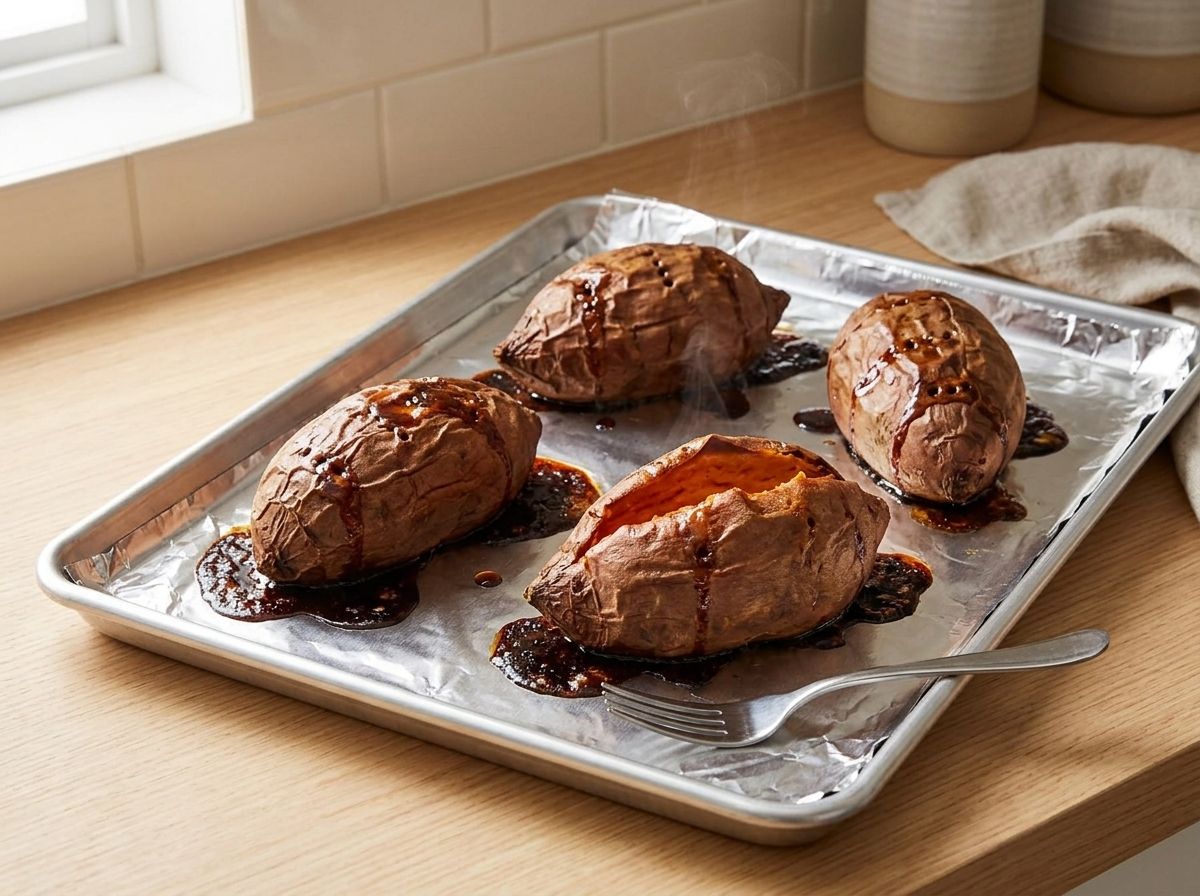
- 2
Cool them enough to handle
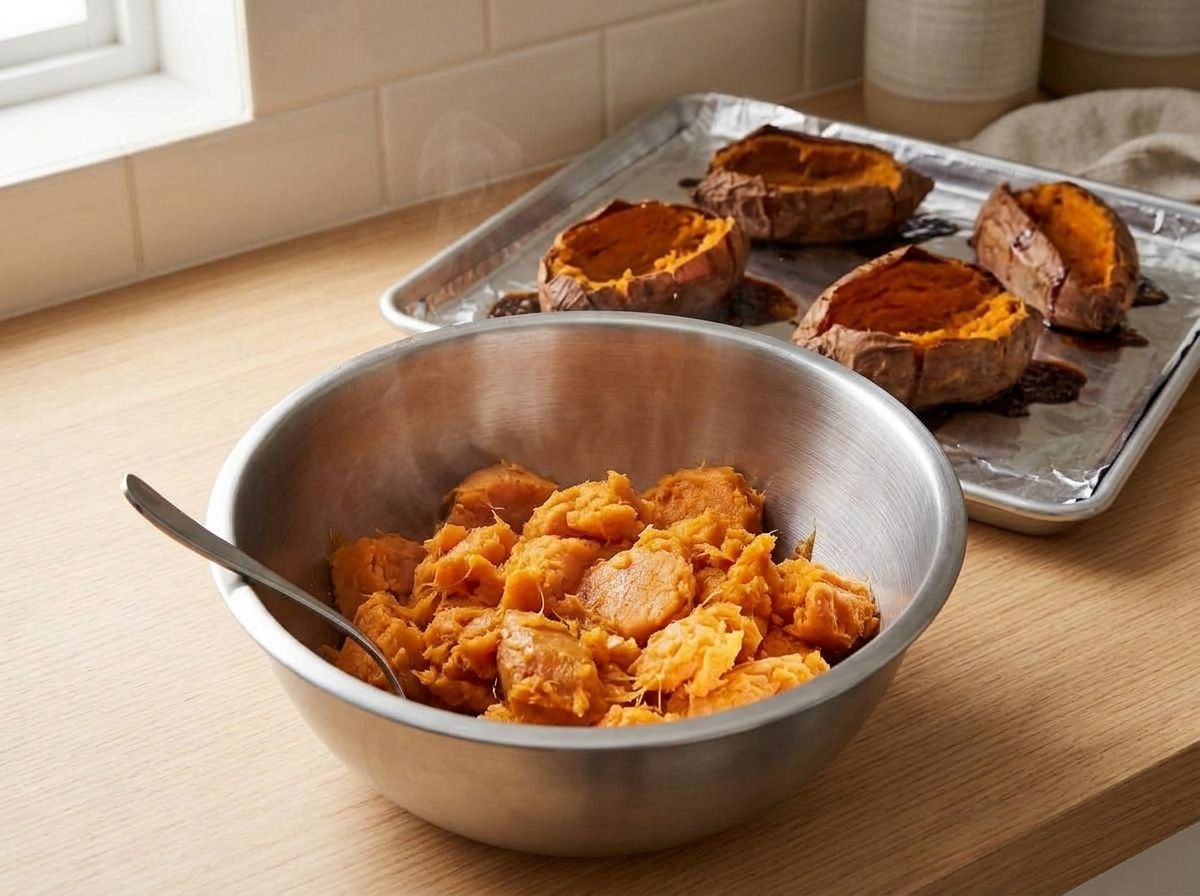
Leave the potatoes until they are warm rather than hot, about 15 minutes. Split each one open and scoop the flesh into a large bowl, leaving the skins behind. Scrape in any syrup that has caramelized on the foil. You should have around 900 g (2 lb).
- 3
Mash and season the filling
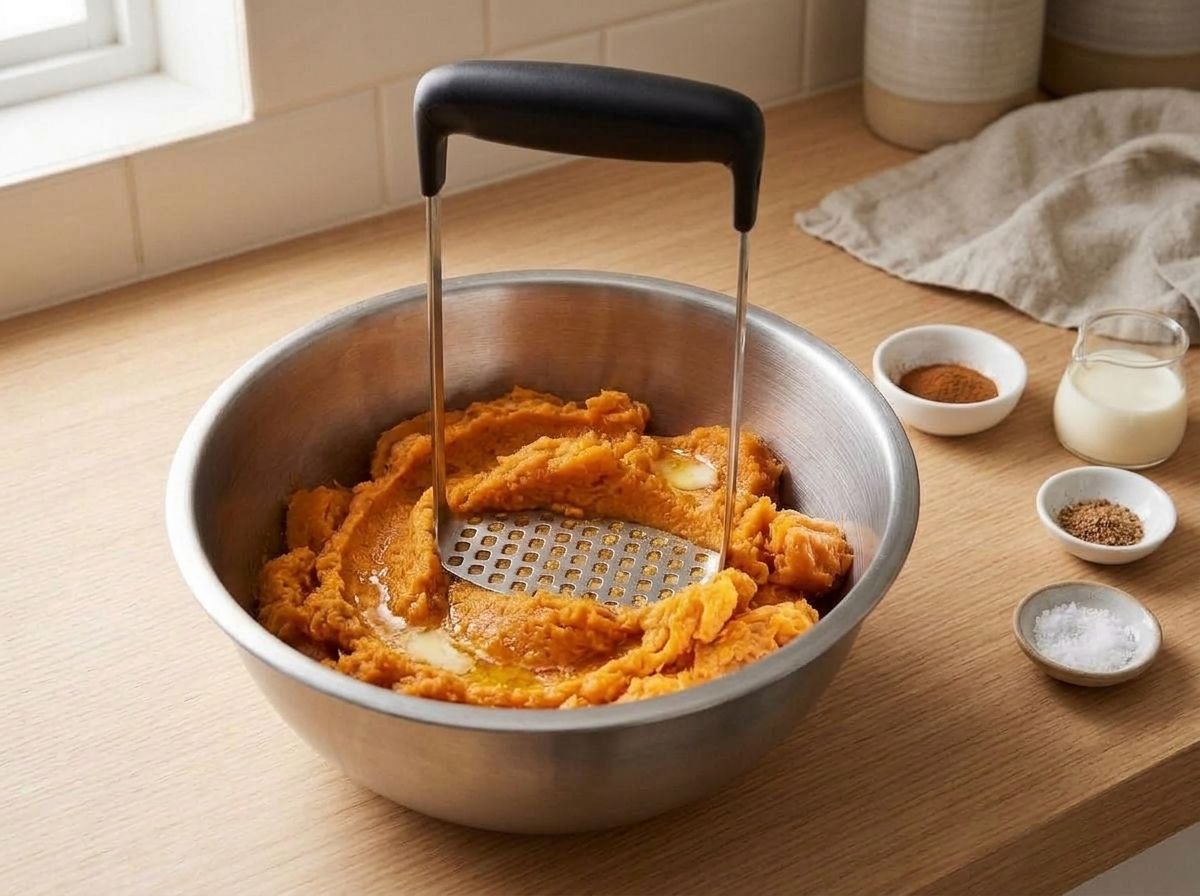
Mash the flesh smooth with a potato masher, then stir in the cream, melted butter, brown sugar, vanilla, cinnamon, nutmeg and salt. Taste it at this point, while you still can: it should read sweet but clearly salted, not vague.
- 4
Beat in the eggs
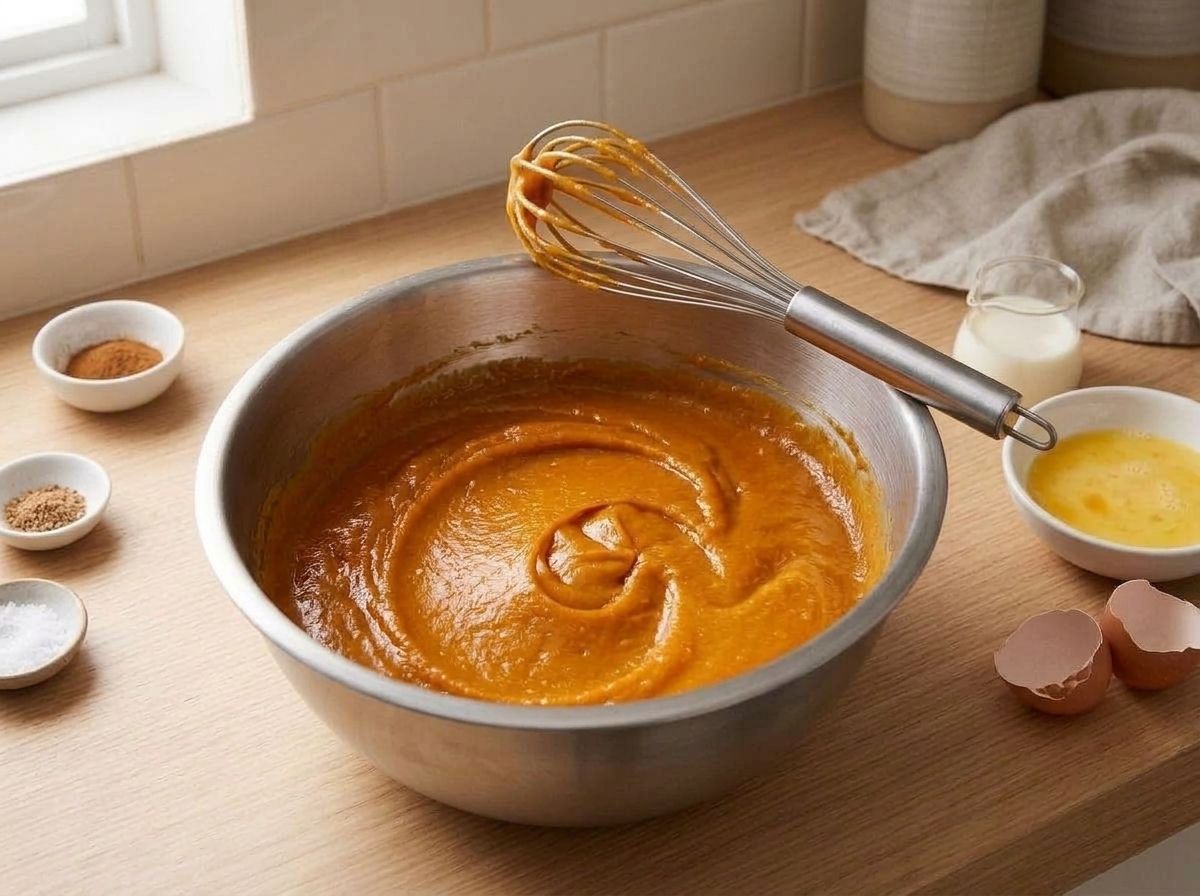
Check that the mixture is no more than warm to the back of your hand, then beat in the eggs a little at a time until the filling is glossy and uniform. Hot potato cooks the egg on contact into yellow threads, which is why the cooling step matters.
- 5
Spread it in the dish
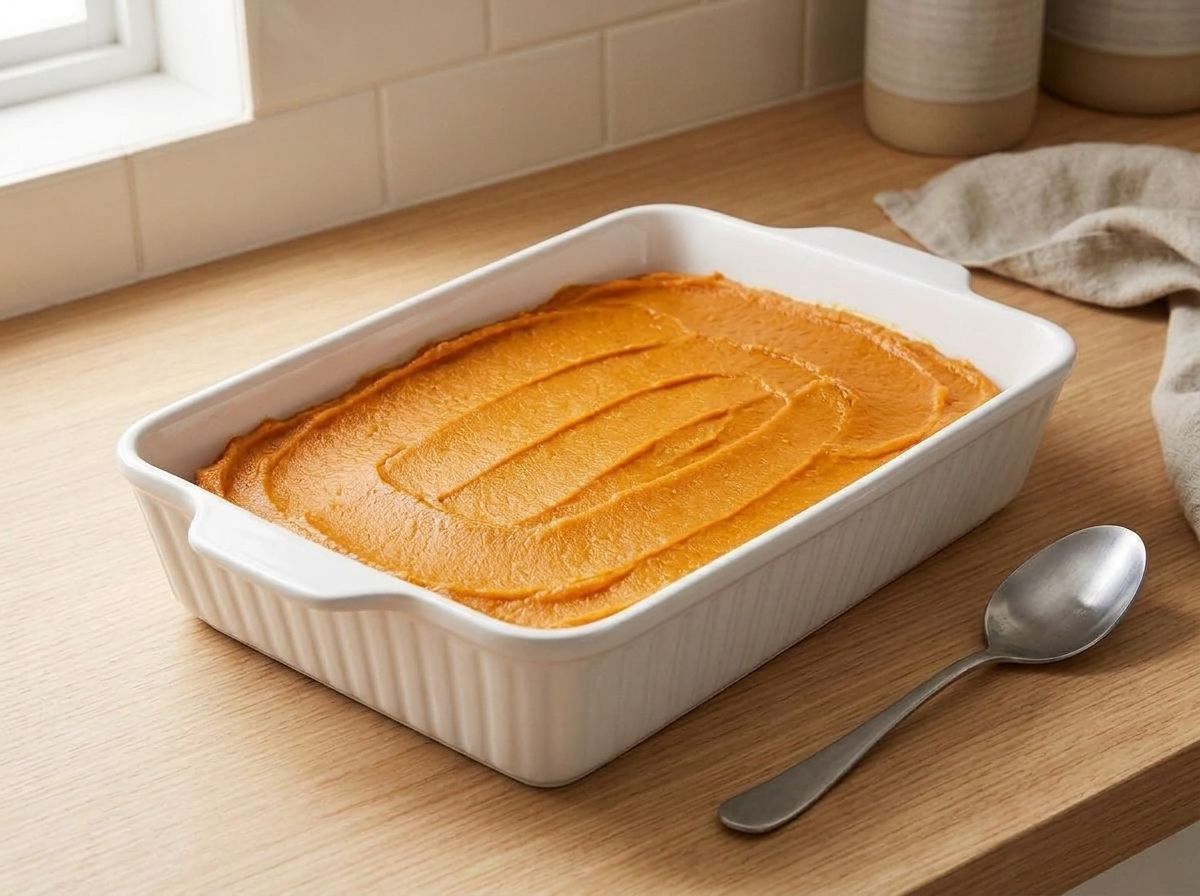
Turn the oven down to 350°F (175°C). Butter a 9x13 inch baking dish and spread the filling in an even layer, smoothing the top with the back of a spoon so the streusel sits flat rather than sinking into dips.
- 6
Rub the streusel together
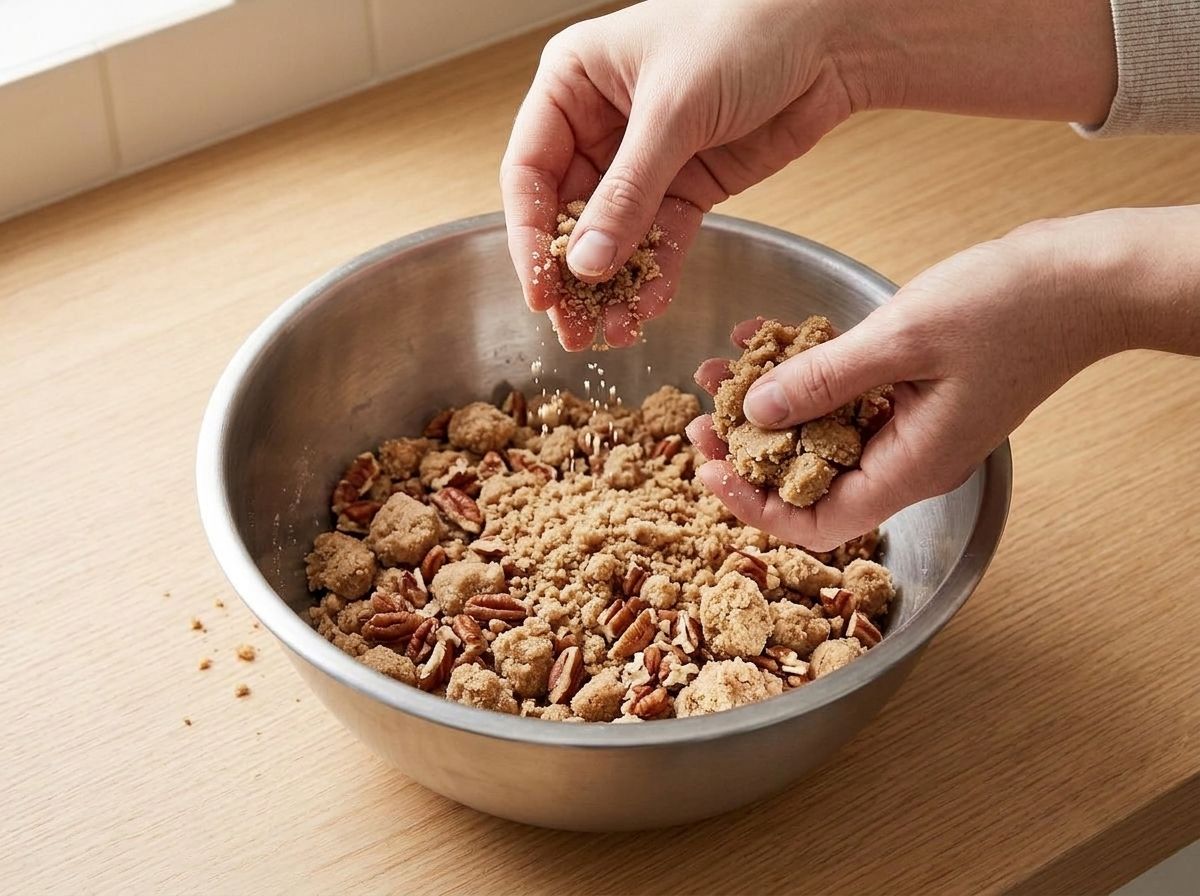
Stir the flour, brown sugar and salt together in a second bowl, then rub in the softened butter with your fingertips until it looks like damp sand. Toss through the pecans. Squeeze a handful: it should hold as a clump. If it stays loose, work in another teaspoon of butter.
- 7
Scatter and bake
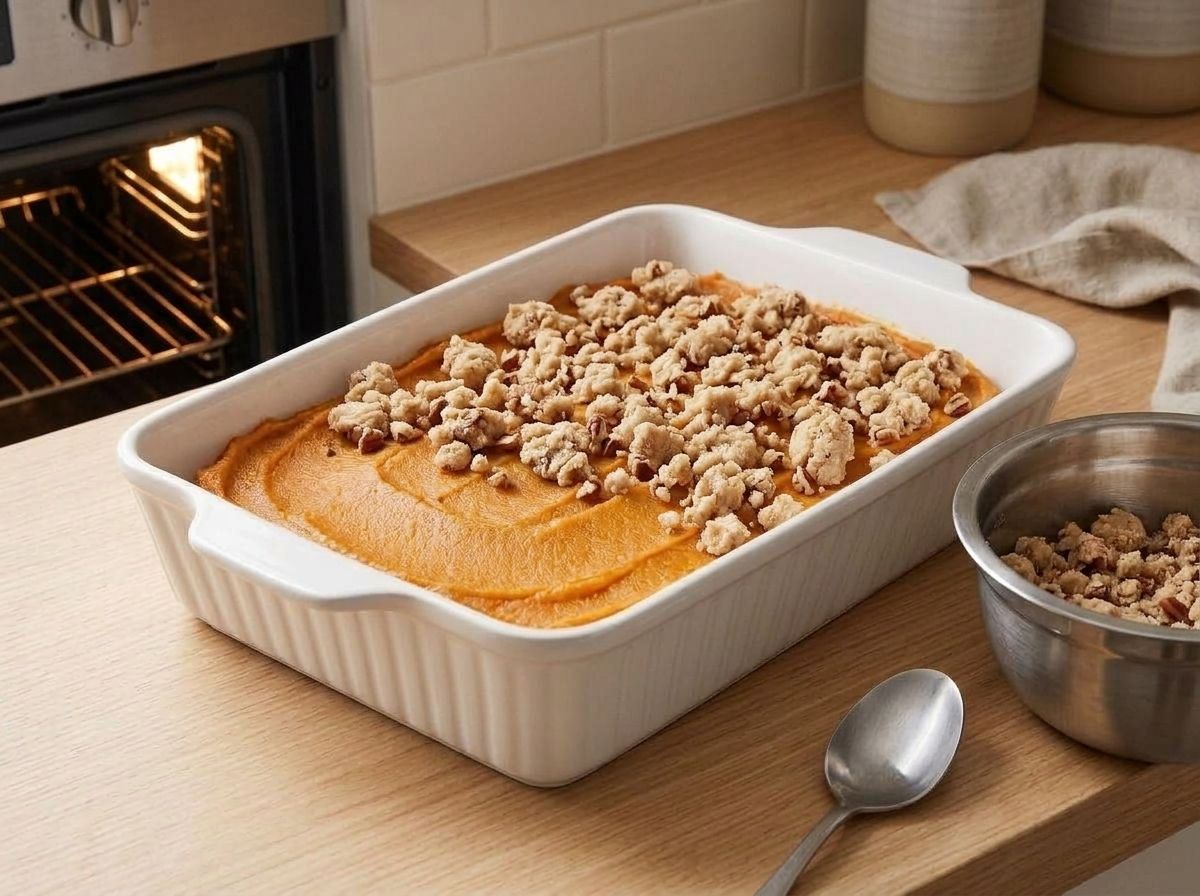
Scatter the streusel over the filling in loose clumps rather than an even dust, so it bakes into crisp clusters instead of a sandy crust. Bake for 30 to 35 minutes, until the topping is deep golden and the filling barely wobbles when you nudge the dish. If the pecans darken faster than the center sets, lay a sheet of foil loosely over the top for the last 10 minutes.
- 8
Rest before serving
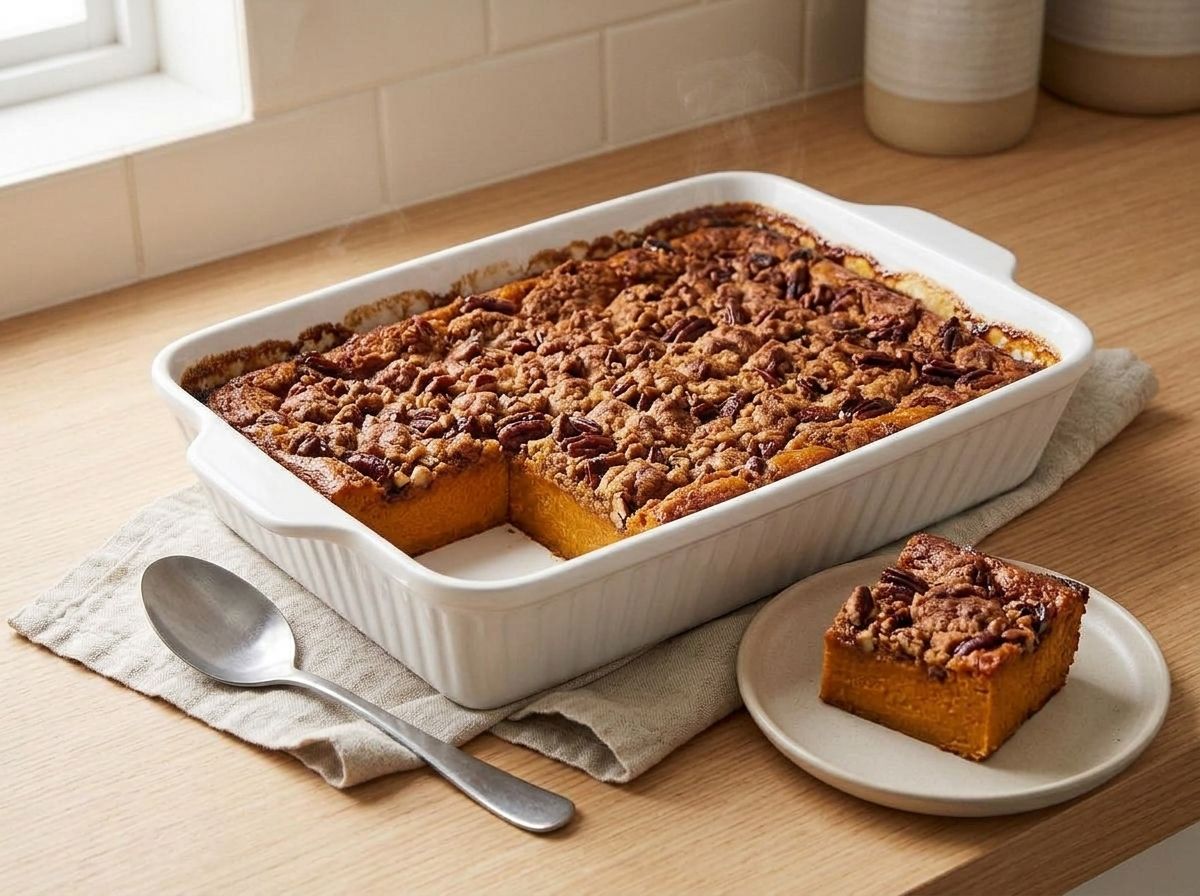
Let the casserole sit for 10 minutes. The egg-set filling firms as it cools, and a spoonful lifted straight from the oven will slump on the plate.
Notes
For a gluten-free streusel, swap the all-purpose flour for 30 g of a 1:1 gluten-free blend.
To make it without eggs, leave them out and cut the cream back to 60 ml (1/4 cup). The filling stays spoonable rather than cutting into squares.
Roasting is what makes this work. If you are short of time, steam the peeled chunks over an inch of water rather than boiling them in it.
Nutrition Facts
8 servings · 243 g per serving
- Calories
- 460 kcal
% Daily Value*
- Total Fat
- 25.3 g32%
- Saturated Fat
- 12.4 g62%
- Sodium
- 485 mg21%
- Total Carbohydrate
- 52.5 g19%
- Dietary Fiber
- 5.8 g21%
- Sugars
- 18.2 g—
- Protein
- 8.2 g16%
Recipe from veggierecipes.blog
When it goes wrong
Troubleshooting
It came out watery and will not hold its shape on the plate
The potatoes were boiled, or steamed and not drained properly. Sweet potato flesh is loose enough to take on cooking water, and everything it soaks up stays in the casserole. Roasting drives water off instead of adding it. If it has already happened, spread the mash in a wide pan and dry it over low heat for five to ten minutes, stirring, before the cream and eggs go in.
There are yellow threads running through the filling
Egg went into potato that was still hot and cooked on contact. Nothing takes them out again. Let the roasted flesh cool until it is warm to the back of your hand, about fifteen minutes, before the eggs go near it. If you are pressed, whisk a spoonful of warm potato into the beaten eggs first to bring their temperature up, then stir that back in.
The streusel is loose sand and falls off when I serve it
Not enough butter, or butter too cold to rub in. Squeeze a handful before it goes on the casserole: it should hold together and break into pieces rather than pour through your fingers. If it pours, work in another teaspoon of softened butter at a time. Scattering it in clumps rather than sprinkling evenly helps too, because the clumps bake into clusters.
The pecans are nearly black but the middle is still wobbly
Either the oven runs hot at the top, or the dish went in cold from the fridge and the center had further to travel. Lay foil loosely over the top, without sealing it down, and give it another ten to fifteen minutes. A chilled casserole needs roughly fifteen minutes more than one baked straight after assembly, so take it out of the fridge forty-five minutes ahead.
It tastes flat, like sweet potato and sugar and nothing else
Almost always salt. A full teaspoon in three pounds of sweet potato reads as a lot on paper, and it is what makes the sweetness and the spices legible instead of muddy. Boiling in salted water is not a substitute, because most of that salt goes down the sink with the water. Taste the filling before the eggs go in, the last point you can adjust it.
It is sweeter than the marshmallow version I was avoiding
Roasted sweet potatoes are considerably sweeter than boiled ones, and that is chemistry rather than accident: the slow rise through roughly 60 to 75°C gives the potato's own beta-amylase a long window to break starch down into maltose. That conversion is the reason for roasting, but the added sugar has to come down to match. Two tablespoons in the filling is right here; the quarter cup most recipes call for is calibrated for boiled potatoes, which never develop that sweetness. If yours still reads sweet, leave the filling sugar out next time.
Before you serve
Serving & Storage
On a Southern holiday table this sits among the other sides, and the convention worth keeping is contrast. The casserole is sweet, dense and soft, so it wants something sharp and green beside it: collard greens finished with vinegar, a slaw with mustard in the dressing, brussels sprouts roasted hard and hit with lemon. Put it next to macaroni cheese and cornbread stuffing and the plate turns into three shades of beige.
Because of the eggs and the cup of pecans, a generous square is closer to a main than a side. With a bitter leaf salad, something pickled and bread, it is dinner.
Making it ahead
Make the filling, spread it in the buttered dish, cover and refrigerate for up to two days. Keep the streusel in a separate covered bowl at room temperature. Put the topping on before it goes in the fridge and the butter chills solid while the sugar draws moisture up out of the filling, and it bakes into a paste rather than clusters. Take the dish out forty-five minutes before baking, scatter the streusel then, and add about fifteen minutes to the bake.
What does not work is baking it fully in advance and reheating the whole casserole for the table. The filling is forgiving but the streusel is crisp exactly once, and no amount of extra oven time gets it back.
Storing leftovers
Covered in the fridge it keeps four days. Reheat portions uncovered at 325°F (160°C) for 20 to 25 minutes, long enough for the dry heat to bring some crispness back to the topping. A microwave heats it through fine but leaves the streusel soft and slightly chewy: a fair trade for lunch at a desk, a poor one for putting the dish back on a table.
Baked, it does not freeze. The egg-set filling weeps as it thaws and comes back grainy. Freeze it before baking instead: filling in the dish, no streusel, wrapped well, up to two months. Thaw overnight in the fridge, add freshly made streusel and bake with the extra fifteen minutes.
Still wondering
Frequently Asked Questions
Is this casserole gluten-free?
Not as written, because of the quarter cup of all-purpose flour in the streusel. Everything else is naturally gluten-free. A 1:1 blend swaps in here more successfully than in most baking, because the topping is mostly pecans and so little flour is doing structural work that the usual penalties, a gritty crumb and weak browning, barely register. Measure the same 30 g by weight rather than by cup, since blends vary in density.
Can I make it vegan?
Yes, with three swaps and one compromise. Full-fat canned coconut milk for the cream, a solid vegan butter block rather than a tub spread for both filling and streusel, since spreads carry too much water for the crumb to clump, and 2 tbsp ground flaxseed whisked into 6 tbsp water and left ten minutes in place of the eggs. The compromise is the set: flax thickens but does not coagulate the way egg protein does, so the filling stays spoonable rather than cutting into squares.
Can I double this for a bigger crowd?
Double everything, but bake in two 9x13 dishes rather than one deep pan. The filling is an egg custard, and doubling the depth means the edges set and begin to weep well before the center reaches temperature. Two dishes on one shelf take the same 30 to 35 minutes; on separate shelves, swap them halfway and allow about five minutes more.
Featured In These Collections
More Sweet Potato Comforts
Made this?