
Homemade Vegetable Soup Recipe
Published · Updated
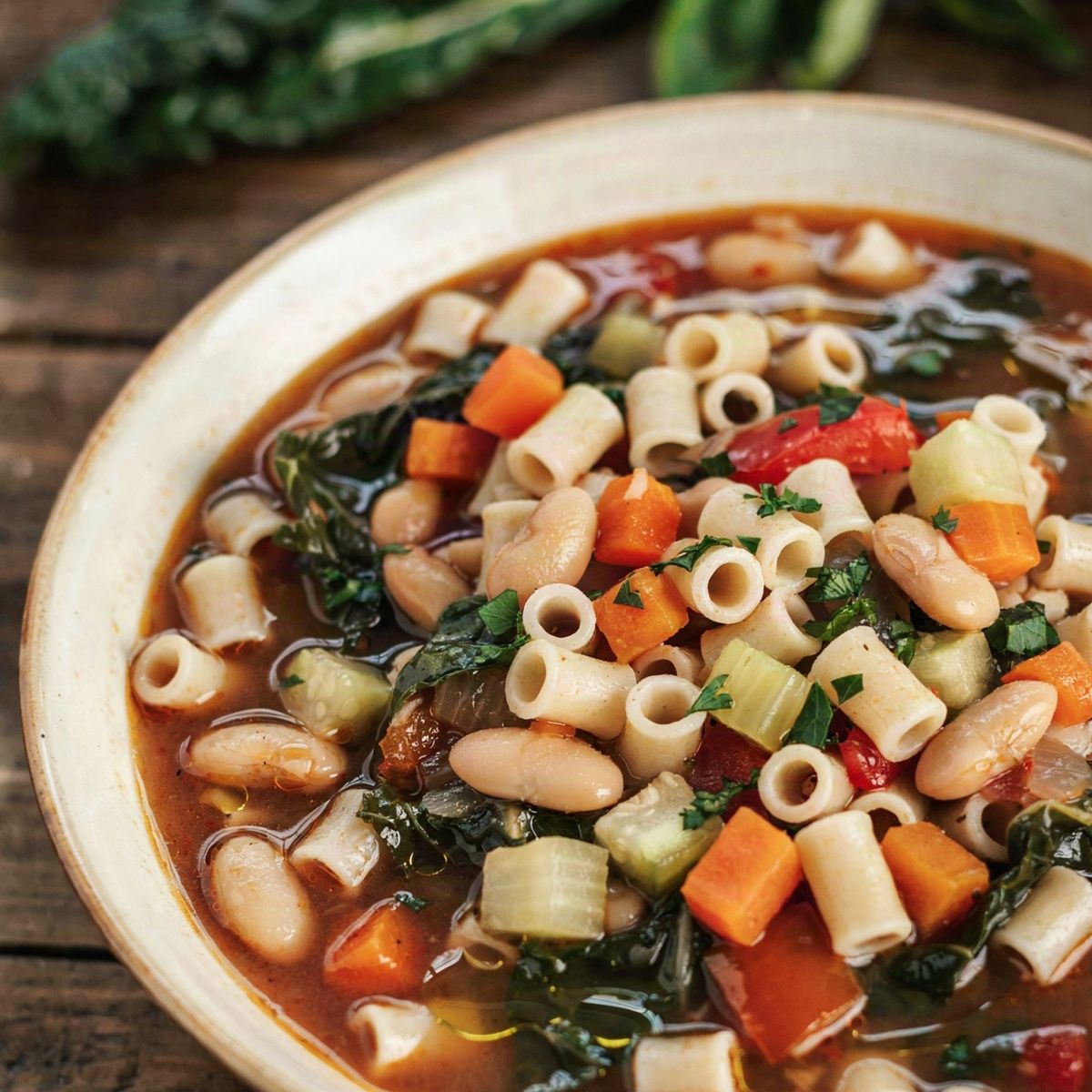
A vibrant, cozy soup packed with an array of fresh vegetables and delicious broth. The perfect light meal or healthy starter for any season!
Jump To Recipe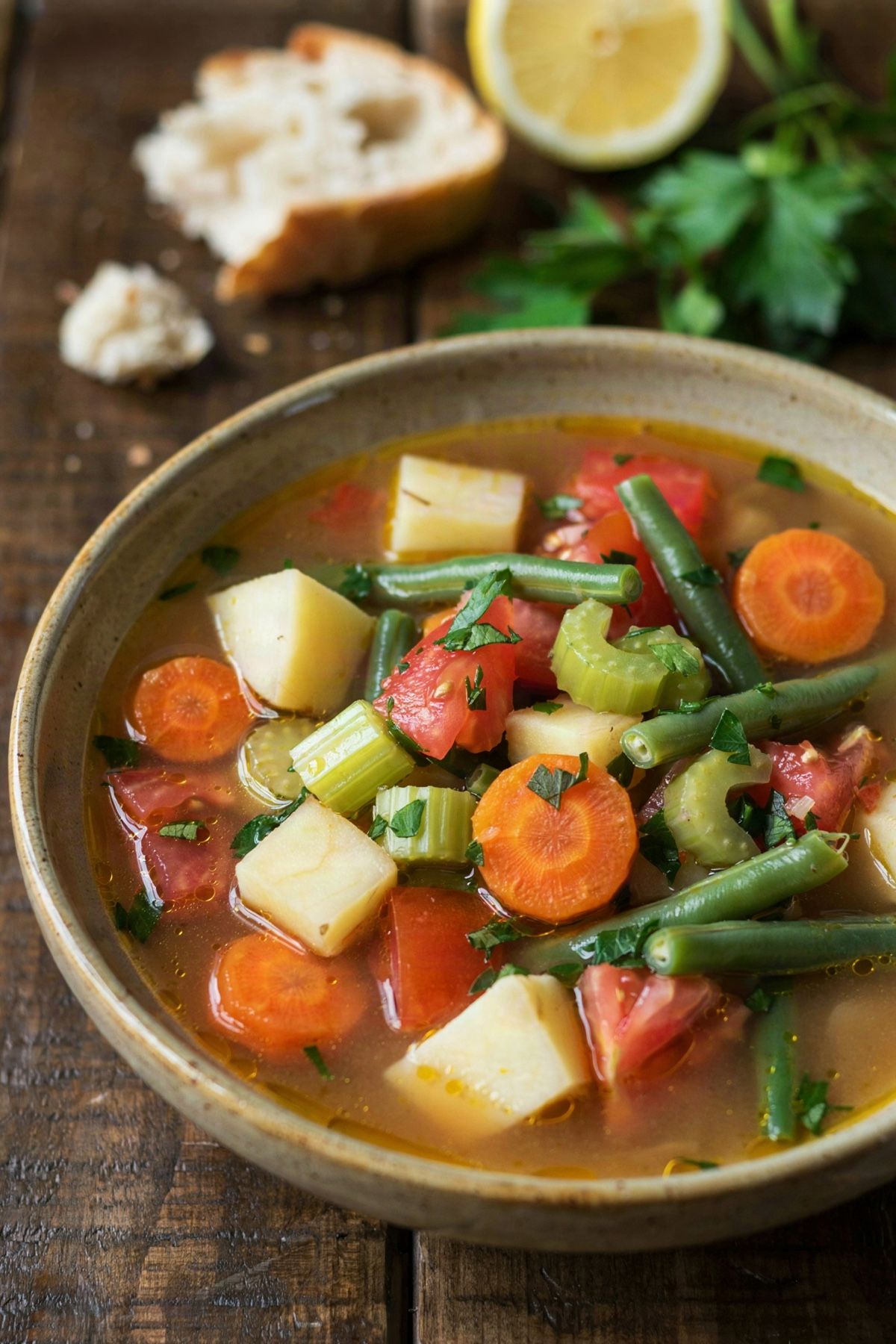
Why I Keep Coming Back to This Vegetable Soup
Whenever I need something comforting and healthy, this homemade vegetable soup hits the spot. It's easy to throw together, packs in a variety of vegetables, and is endlessly customizable depending on what I've got in the fridge.
The base is simple but loaded with flavor: starting with onions and garlic sautéed in olive oil, then layering in carrots, celery, potatoes, and green beans. The aroma alone makes me want to pull up a chair and relax for a while.
What stands out to me is how versatile this soup is. I can change up the vegetables, add beans for extra protein, or toss in some leafy greens at the end for more nutrients.
Here’s why I love making this soup:
- It’s quick to make with minimal prep.
- The flavors are clean and satisfying, perfect for any time of year.
- It keeps well for meal prep, and I can freeze leftovers for a quick meal later.
Served with crusty bread, it honestly doesn’t get much better if you ask me.
The story
America’s Most Famous Vegetable Soup Has Beef in It
Ask an American what vegetable soup tastes like and a surprising number will describe a can. Campbell’s has sold a condensed Vegetable soup since 1899, two years after a 24-year-old chemist named John T. Dorrance worked out how to boil most of the water out of soup before it shipped. That cut the weight, the can size and the freight bill, and dropped the price from 34 cents a can to a dime. Soup stopped being something you made and became something you bought.
The catch, and it still surprises people who have eaten the stuff their whole lives, is that Campbell’s Vegetable soup is not vegetarian. It is built on beef stock, and the current label says so on the front: Vegetable Made with Beef Stock. A separate meatless variety, Vegetarian Vegetable, arrived in 1937, and the fact that it needed its own name and its own can tells you what the default was. For most of the twentieth century the American vegetable soup was a beef soup with vegetables in it.
That history explains what trips up a from-scratch version. Vegetables bring sweetness, acidity and bulk, but almost none of the deep savory weight that makes a broth taste finished, and the canned original got that weight for free from meat. A homemade one has to build it back deliberately or it tastes like nice vegetables sitting in warm water. This recipe does it three ways: a slow ten-minute sweat that concentrates the sugars in the onion and carrot, a spoonful of tomato paste cooked until it turns brick red, and more salt at the end than most people are comfortable adding.
The older story about vegetable soup has no brand attached to it. In the stone soup folk tale, told across Europe in a dozen versions, travelers arrive in a village where nobody will share food. They set a pot of water boiling with a stone in it and remark, loudly, that it only wants a carrot to be perfect. Then an onion. Then a handful of beans, until the villagers have between them cooked a supper none of them meant to make. It is a story about the thing that separates this from most recipes here: there is no ingredient list it depends on, only an order of operations.
What to buy
Ingredient Notes
Green beans
Buy beans that snap cleanly when you bend one. A bean that folds over instead is old, and it will go limp in the pot no matter how carefully you time it. Frozen cut green beans work well here and need only 5 minutes rather than 8 to 10, since they were blanched before freezing. Canned beans are already fully cooked, so stir them in off the heat at the very end.
Potatoes
Use a waxy or all-purpose potato: Yukon Gold, red-skinned, Charlotte, anything sold for boiling. They hold their edges through a simmer. Russets and other floury baking potatoes shed starch, round off at the corners and cloud the broth into something closer to a thin chowder. That is not a disaster and some people prefer it, but it is a different soup, so choose it on purpose.
Tomato paste
This is the ingredient standing in for the beef stock, and it does nothing useful unless you cook it. Raw from the tube it tastes flatly of tin. Fried for a minute in the hot oil with the garlic it darkens from bright red to brick and turns sweet and meaty. Tubes keep for months in the fridge and are worth it over a can when you need two tablespoons at a time.
Vegetable broth
The largest variable in the recipe and the one nobody checks. Supermarket vegetable broths run from around 100 mg of sodium a cup to over 800, so six cups of the salty kind lands the soup at its salt ceiling before you have added a grain yourself. Taste the broth on its own first, and prefer a low-sodium one, since you can add salt and cannot take it out.
Dried thyme and dried basil
They go into the pot fifteen minutes apart on purpose. Thyme’s flavor sits mostly in thymol, which is robust and takes a long simmer without complaint, so it goes in early. Dried basil is carried by lighter aromatics that boil off, and half an hour over heat leaves nothing behind but a dusty, hay-like note. Using fresh herbs instead, both go in off the heat at the end, at roughly three times the quantity.
Lemon juice
It is not there to taste of lemon and nobody should be able to name it in the finished bowl. A tablespoon at the end lifts everything else, the way a squeeze over roast vegetables does. Bottled juice is fine here because the quantity is small and it is doing a chemical job rather than a flavor one. Red wine or cider vinegar does the same work.
Homemade Vegetable Soup
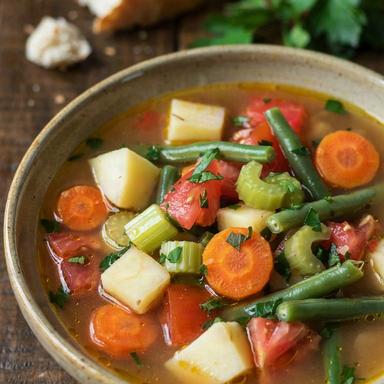
A cozy, colorful vegetable soup featuring carrots, potatoes, green beans, and aromatic herbs simmered in a rich broth.
Ingredients
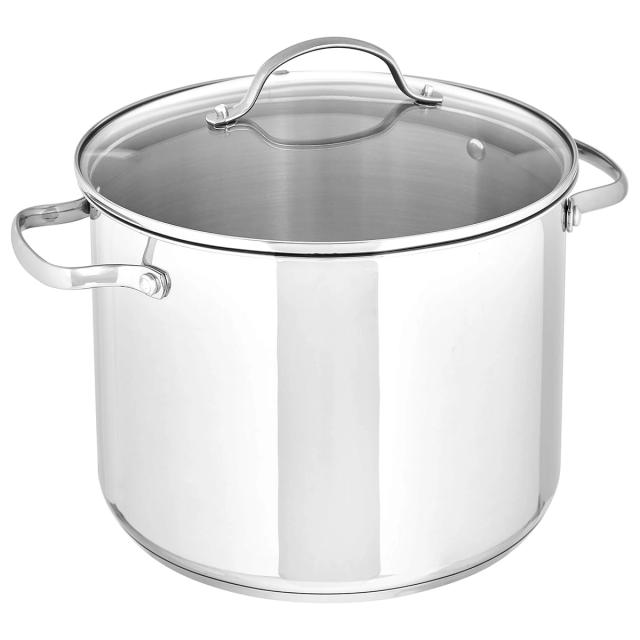
Equipment
As an Amazon Associate I earn from qualifying purchases, at no extra cost to you.
Instructions
- 1
Soften the aromatics
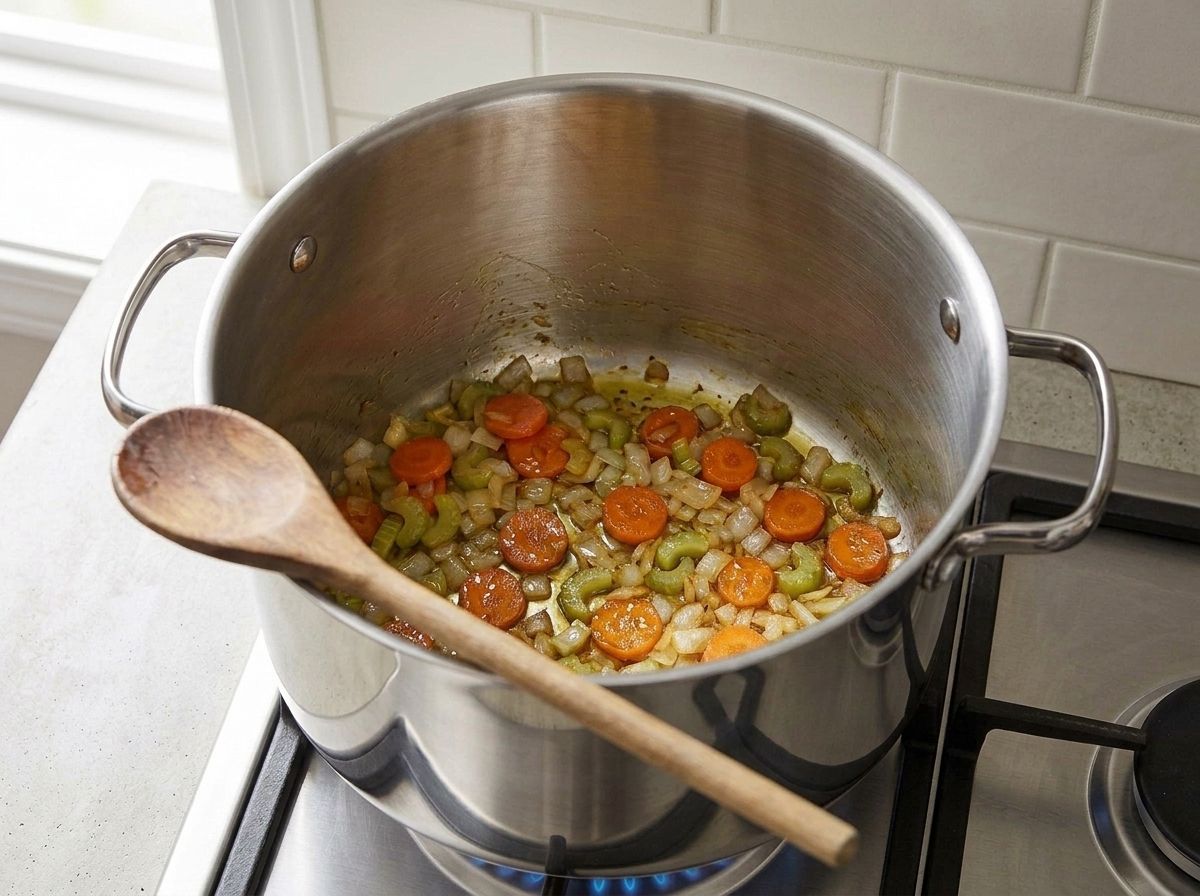
Heat the olive oil in a large pot over medium heat. Add the onion, carrots and celery with a pinch of salt and cook for 8 to 10 minutes, stirring now and then, until the onion is soft and translucent and the carrot edges look glassy rather than raw. This is the entire flavor base of the soup, so give it the full ten minutes.
- 2
Bloom the garlic and tomato paste
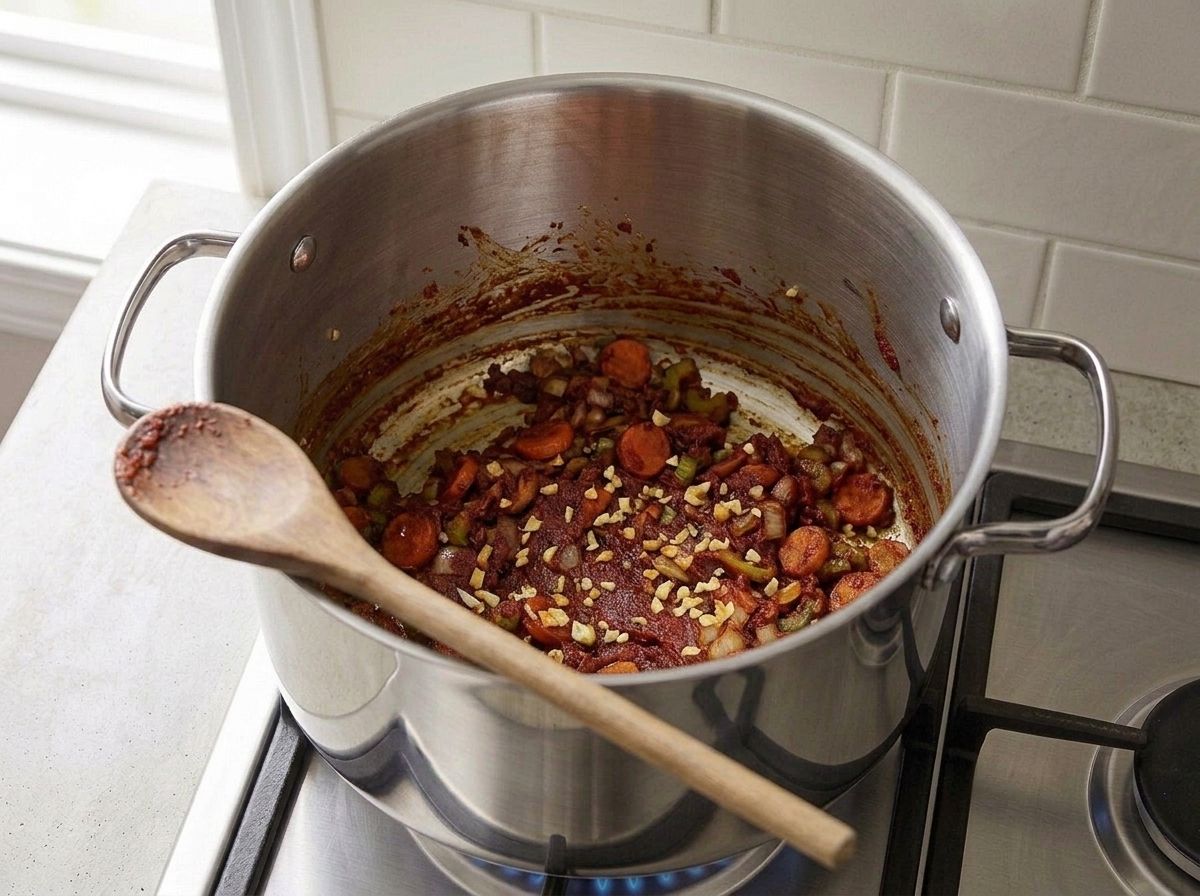
Stir in the garlic and the tomato paste and cook for 1 minute, until the paste darkens from red to brick and smells sweet instead of tinny. Garlic scorches in under two minutes over this heat, which is why it goes in here and not alongside the onion.
- 3
Add the potatoes and broth
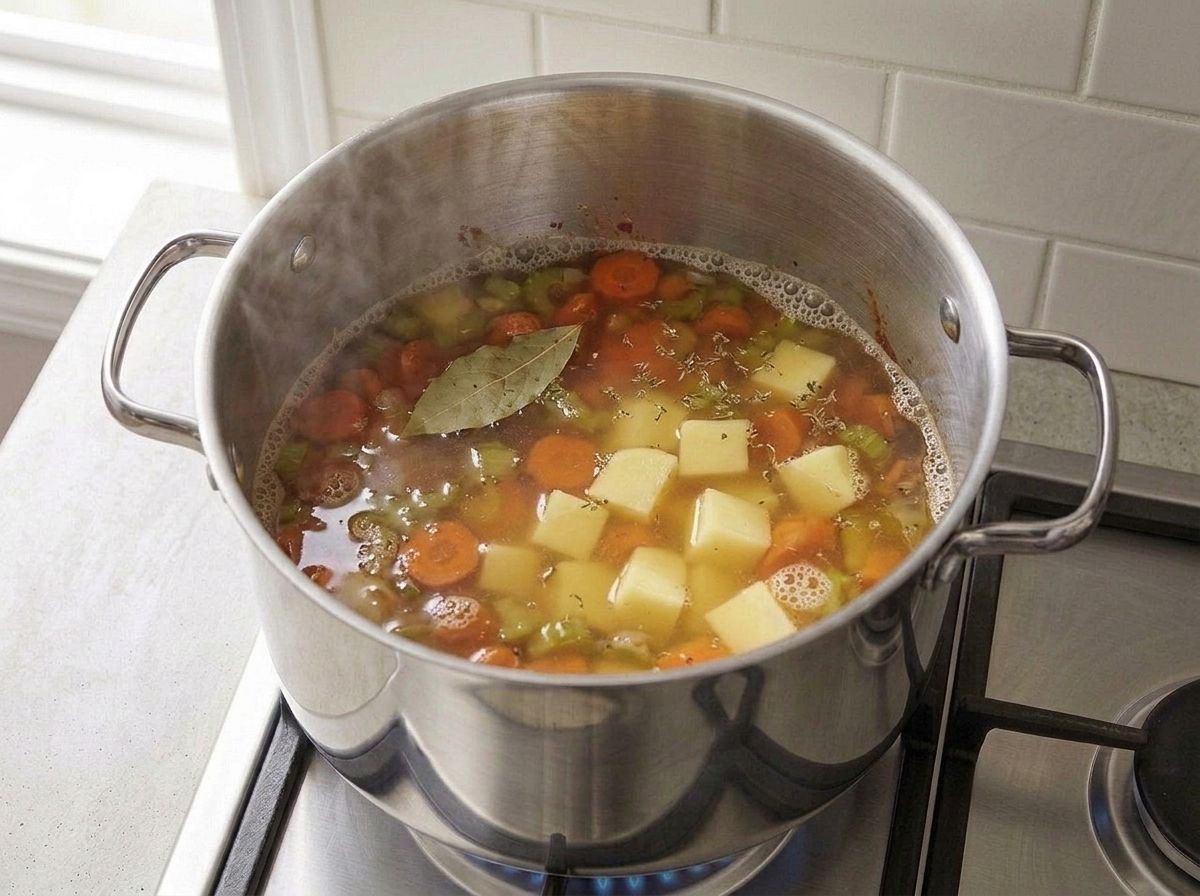
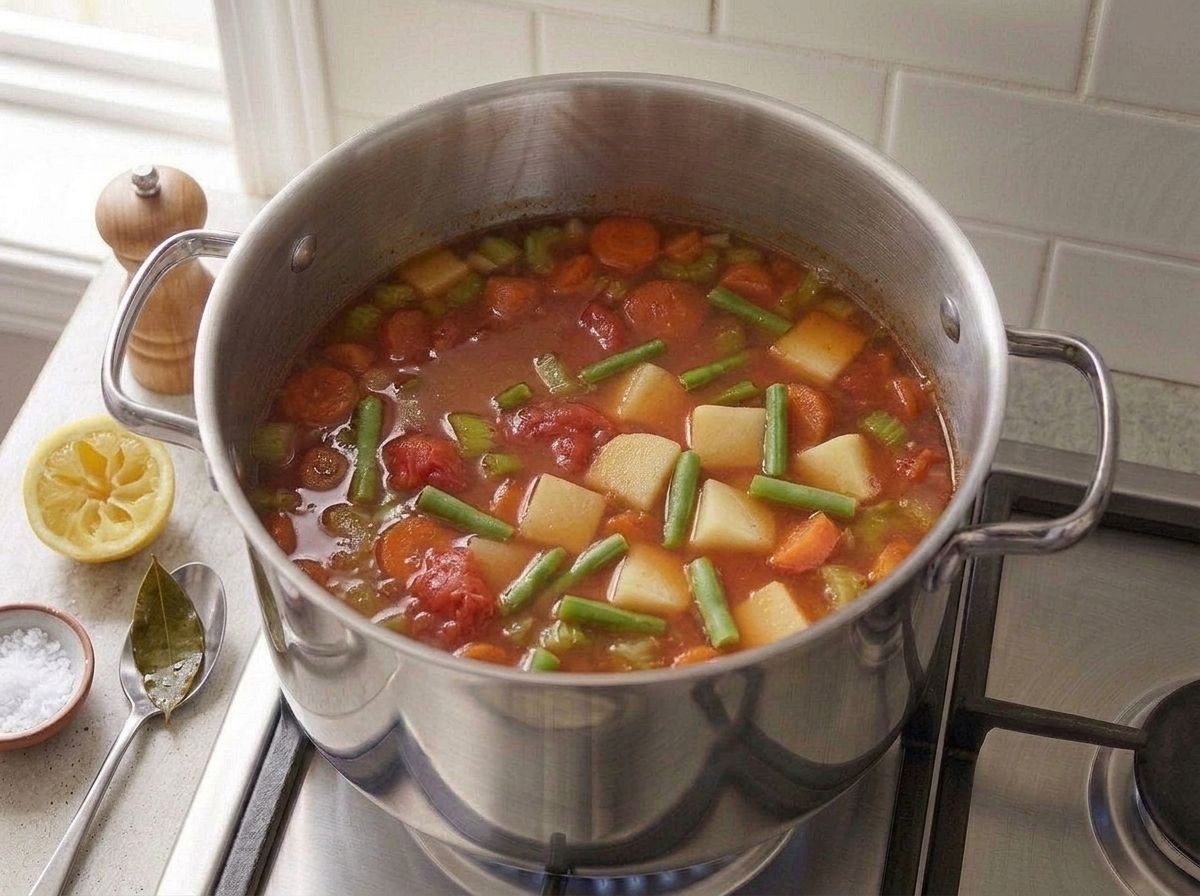
Add the potatoes, vegetable broth, dried thyme and bay leaf. Bring to a boil, then lower the heat until the surface barely moves. Hold the canned tomatoes back for now, because their acid keeps potatoes firm.
- 4
Simmer until the potatoes almost give
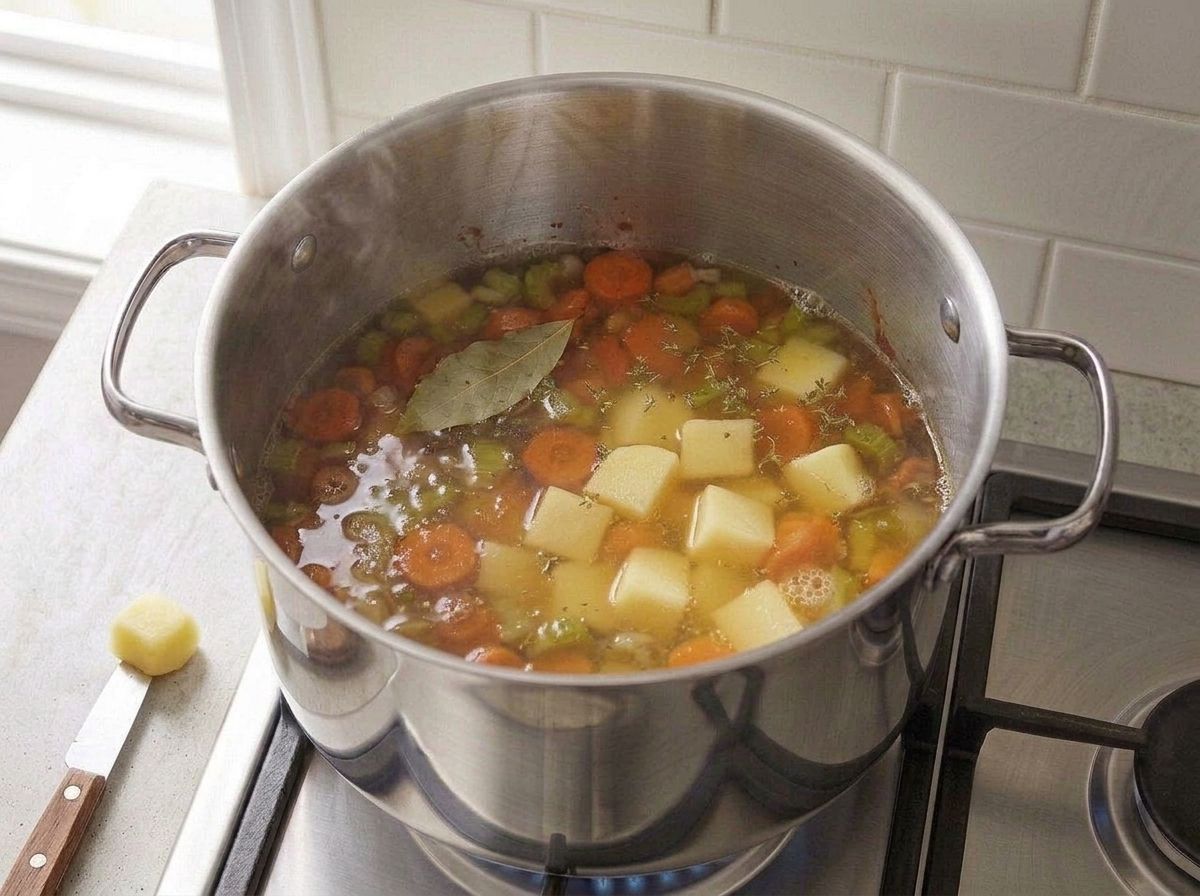
Simmer uncovered for 12 to 15 minutes, until a knife slides into a piece of potato with a little resistance still left in it. Stop short of fork-tender, because the potatoes get another ten minutes in the next step.
- 5
Add the tomatoes, beans and basil
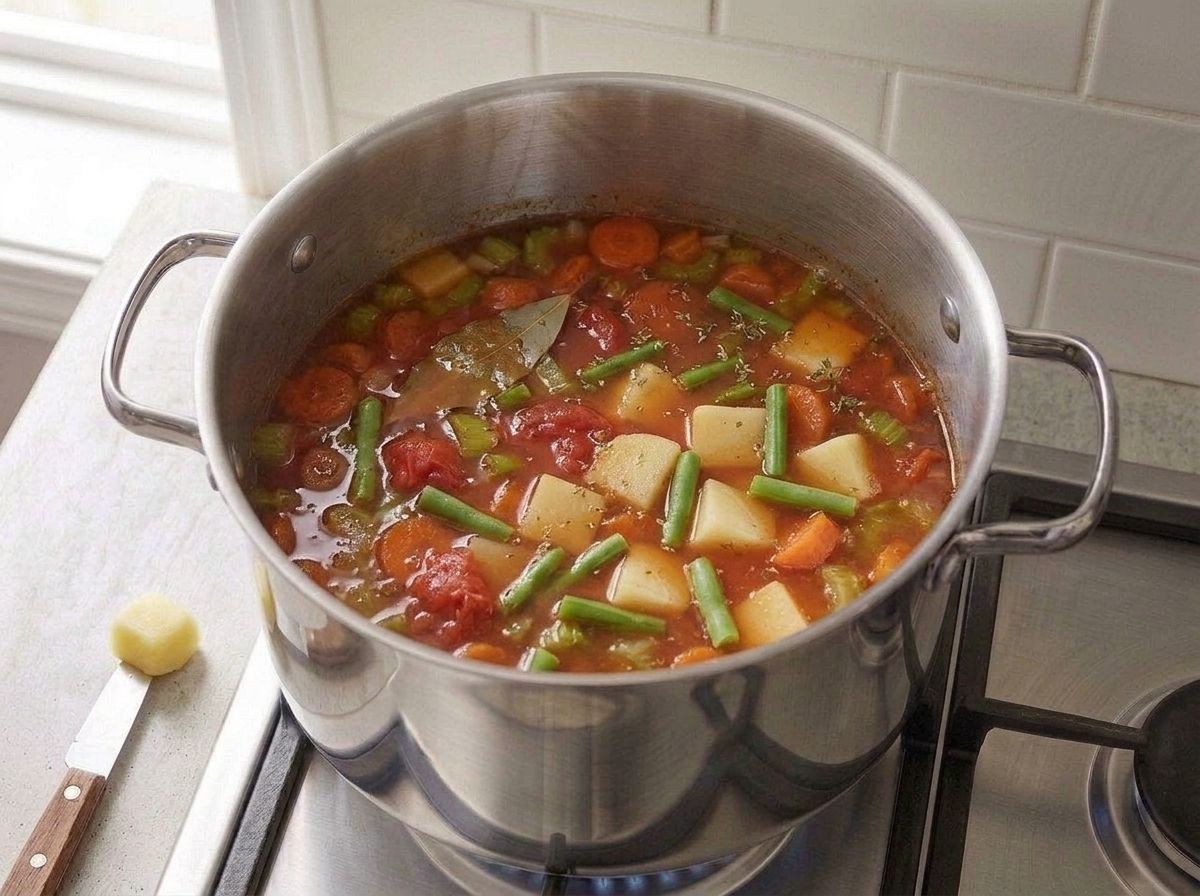
Stir in the diced tomatoes with their juice, the green beans and the dried basil. Simmer for 8 to 10 minutes, until the beans are tender but still bright green and the potatoes are soft the whole way through. Beans left in longer than this go olive-drab and limp.
- 6
Season and sharpen
Lift out the bay leaf and stir in the lemon juice. Season with salt and pepper, adding the salt a pinch at a time and tasting between each one. Keep going until the soup stops tasting like vegetables sitting in water, which usually takes more salt than feels comfortable.
- 7
Ladle and serve
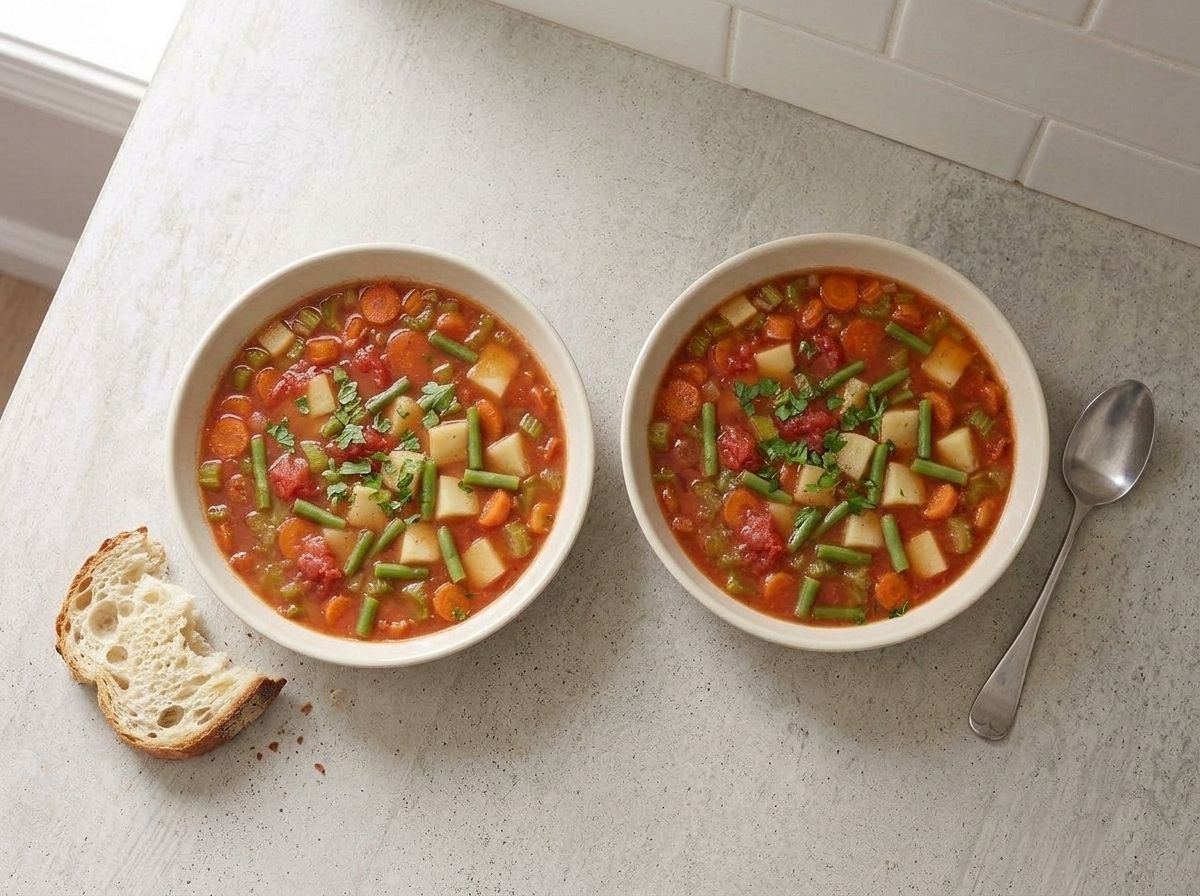
Ladle into bowls, scatter over the chopped parsley if using, and serve hot with crusty bread or crackers.
Notes
Swap in any seasonal vegetables you like. Zucchini, corn and peas belong in the last 5 minutes rather than the full simmer, and spinach or kale only needs to wilt in the residual heat.
For a more substantial bowl, add a drained 400 g (14 oz) can of chickpeas or white beans along with the tomatoes.
Red wine vinegar or apple cider vinegar stands in for the lemon juice at the same quantity.
If you have no tomato paste, leave it out rather than doubling the canned tomatoes, and stir in 1 teaspoon of white miso or a splash of tamari at the end for the savory depth it was carrying.
Nutrition Facts
6 bowls · 457 g per serving
- Calories
- 162 kcal
% Daily Value*
- Total Fat
- 5.1 g7%
- Saturated Fat
- 0.7 g3%
- Sodium
- 1289 mg56%
- Total Carbohydrate
- 27.9 g10%
- Dietary Fiber
- 4.9 g18%
- Sugars
- 8.9 g—
- Protein
- 3.9 g8%
Recipe from veggierecipes.blog
When it goes wrong
Troubleshooting
The potatoes are still hard after half an hour
The tomatoes went in too early. Acid strengthens the pectin holding plant cell walls together, so potatoes dropped into an already acidic broth stay firm almost indefinitely, and another twenty minutes of simmering will not fix it. That is why this recipe cooks the potatoes in plain broth first and only stirs the canned tomatoes in once they are nearly done. If you are stuck mid-cook with hard potatoes in a tomato broth, a scant quarter teaspoon of baking soda pulls the pH up enough for them to soften, at the cost of a little brightness.
The green beans came out olive-drab and floppy
They were simmered for the full half hour along with everything else, which is what almost every version of this recipe on the internet tells you to do. Heat plus acid converts the chlorophyll in a green bean into pheophytin, which is that dull army-green, and the texture goes at about the same time. Beans need 8 to 10 minutes, so they go in with the tomatoes near the end rather than with the potatoes at the start.
It tastes like vegetables sitting in warm water
Two causes, usually both at once. The aromatics were rushed, and three or four minutes of sweating an onion is not the same as ten: the sweetness a slow sweat pulls out of onion and carrot is most of what makes the broth taste like anything. The other is salt, and a soup at this volume needs a genuinely surprising amount of it. Add it a pinch at a time at the end and keep tasting, and you will hit the point where the whole thing snaps into focus.
There is a dusty, hay-like taste running through it
That is dried basil that has been simmered too long. Dried basil is not a robust herb the way dried thyme or oregano are, and thirty minutes of heat strips out everything pleasant and leaves the papery note behind. It goes in for the last ten minutes only. Fresh basil, if you use it, should never see the heat at all.
It was good hot and tasted flat out of the fridge the next day
Nothing has gone wrong, this is how palates work. Cold blunts your perception of both salt and acid, so a soup seasoned correctly at serving temperature genuinely does taste underseasoned once it has chilled and been reheated. Re-season every time you warm a portion: a pinch of salt and a small squeeze of lemon, tasted hot, brings it right back.
Before you serve
Serving & Storage
This is a soup that wants something starchy alongside it rather than in it. The American reflex pairing is a grilled cheese sandwich, and it is a good one, because the fat and salt of the cheese covers exactly the ground the vegetables cannot. Crusty bread and butter does the same job with less work. A spoonful of basil pesto stirred into each bowl at the table is worth trying at least once, since it drops in fat, salt and fresh herb all at the same moment.
If you are finishing bowls with grated hard cheese, check the label. Parmigiano-Reggiano and most traditional pecorino are made with animal rennet and are not vegetarian, whatever the deli counter says. Several brands now sell a vegetarian Italian-style hard cheese made with microbial rennet, and it grates and melts the same way.
Turning it into a full meal
A drained can of chickpeas or cannellini beans added with the tomatoes turns a starter into supper. Small pasta shapes work too, but cook them separately and add them to the bowl rather than the pot: pasta cooked in the soup drinks the broth and keeps drinking it in the fridge, and by the next day you have a casserole. Cooked rice, farro and pearl barley get the same treatment. Spinach or shredded kale stirred in off the heat wilts in under a minute.
Making it ahead
The broth is better on day two, once the thyme and tomato have had time to settle into each other. The green beans are not. If you are cooking specifically to eat later in the week, stop at the end of step 4, cool and refrigerate the soup with the potatoes in it, then bring it back to a simmer and add the tomatoes, beans and basil on the day. That is fifteen minutes of work at the far end and the beans stay green.
Storing leftovers
Cooled and covered, the soup keeps 4 days in the fridge. Reheat gently on the stove rather than in bursts in the microwave, which boils the edges while the middle is still cold, and taste for salt and lemon before serving.
Freezing is where this recipe has a real limitation, and it is the potatoes. Water inside cooked potato cells forms crystals as it freezes and ruptures the cell walls, so what thaws out is mealy and slightly grainy in a way you cannot cook back out. It is safe and edible but it is not the same soup. If a batch is destined for the freezer, leave the potatoes out and add freshly boiled ones on reheating, or use beans in their place. Without potatoes it holds 3 months.
Still wondering
Frequently Asked Questions
Is this vegetable soup vegan?
Yes. The recipe as written uses vegetable broth and olive oil and contains no animal products at all. Worth knowing, since it catches people out: the canned vegetable soup most Americans grew up on is not, because Campbell’s standard Vegetable variety is made with beef stock. The only thing that can break the vegan status here is what you put on top, so skip the grated cheese or use a plant-based one.
How can I make sure this soup is gluten-free?
The ingredients are naturally gluten-free, but check two things. Several supermarket vegetable broths and most bouillon cubes use wheat-derived ingredients or run on shared lines, so read the label rather than assuming. And the miso or soy sauce suggested in the notes as a tomato paste substitute needs to be tamari rather than ordinary soy sauce.
What can I use instead of potatoes?
Sweet potato is the closest swap but cooks faster, so give it 8 to 10 minutes in step 4 rather than 12 to 15 or it collapses. Turnip and rutabaga run the other way and want 18 to 20 minutes. Butternut squash needs about 12 and makes a noticeably sweeter soup, so add an extra teaspoon of lemon juice to balance it. You can also drop the potato entirely and serve the soup over 60 g of cooked pasta or rice per bowl.
More Hearty Soups to Cozy Up With
Made this?