
Kadai Paneer Recipe
Published
The coarse, toasted coriander and chili you crush yourself is the whole dish, and it takes five minutes and a mortar.
Jump To Recipe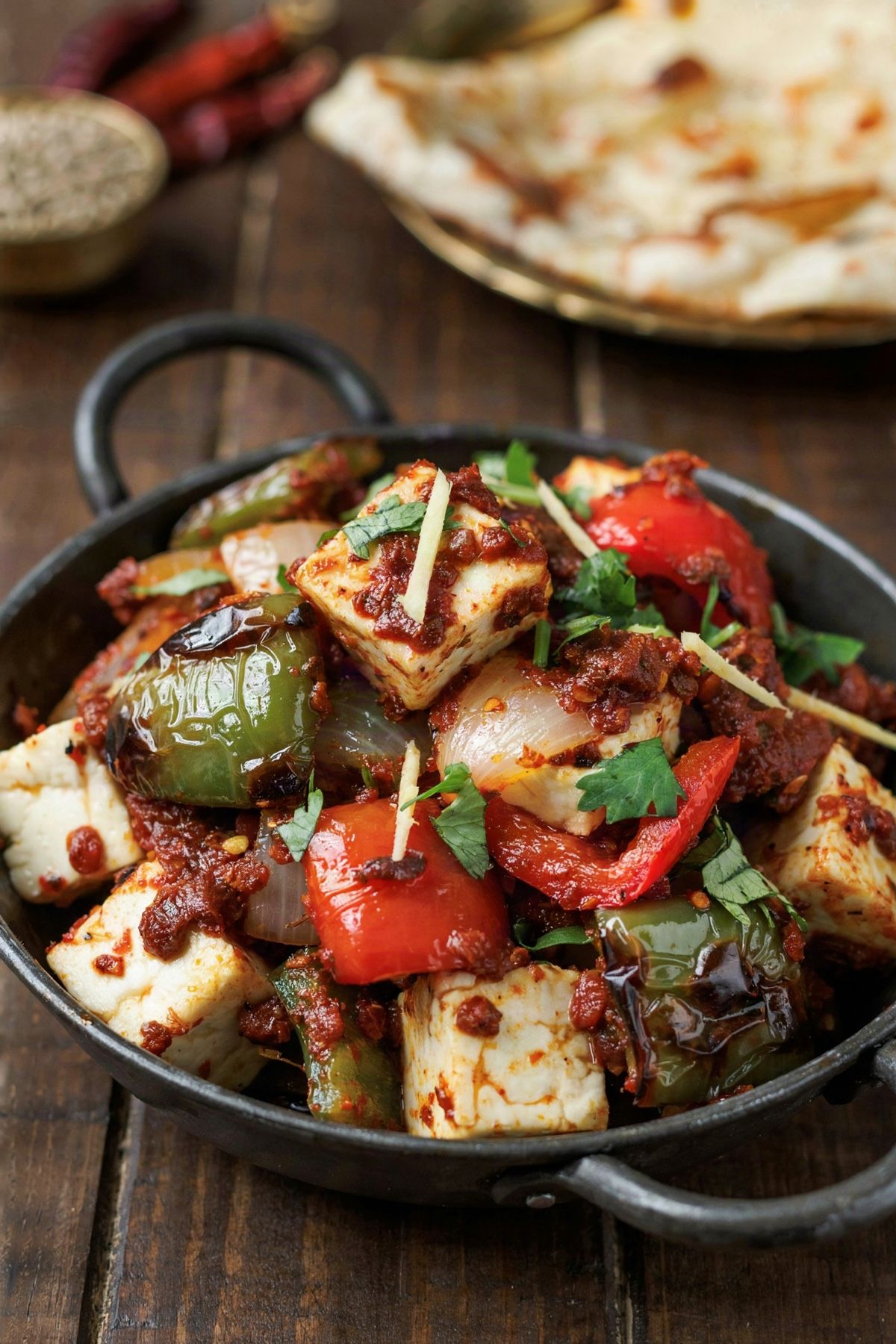
The Paneer Dish I Actually Cook On A Weeknight
Shahi paneer and tikka masala are the paneer dishes I make for guests, because they take a blender, a few pans and most of an evening. Kadai paneer is the one I make for myself on a Tuesday. One pan, half an hour, and the only special equipment is a mortar.
For years I made it badly, because I made it with ground coriander from a jar. It tasted like every other tomato and paneer curry. The first time I toasted whole coriander seed and dried chilies in the dry pan and crushed them roughly, the kitchen smelled like the restaurant version within a minute, and the dish finally had the coarse, peppery, almost citrus bite I had been missing.
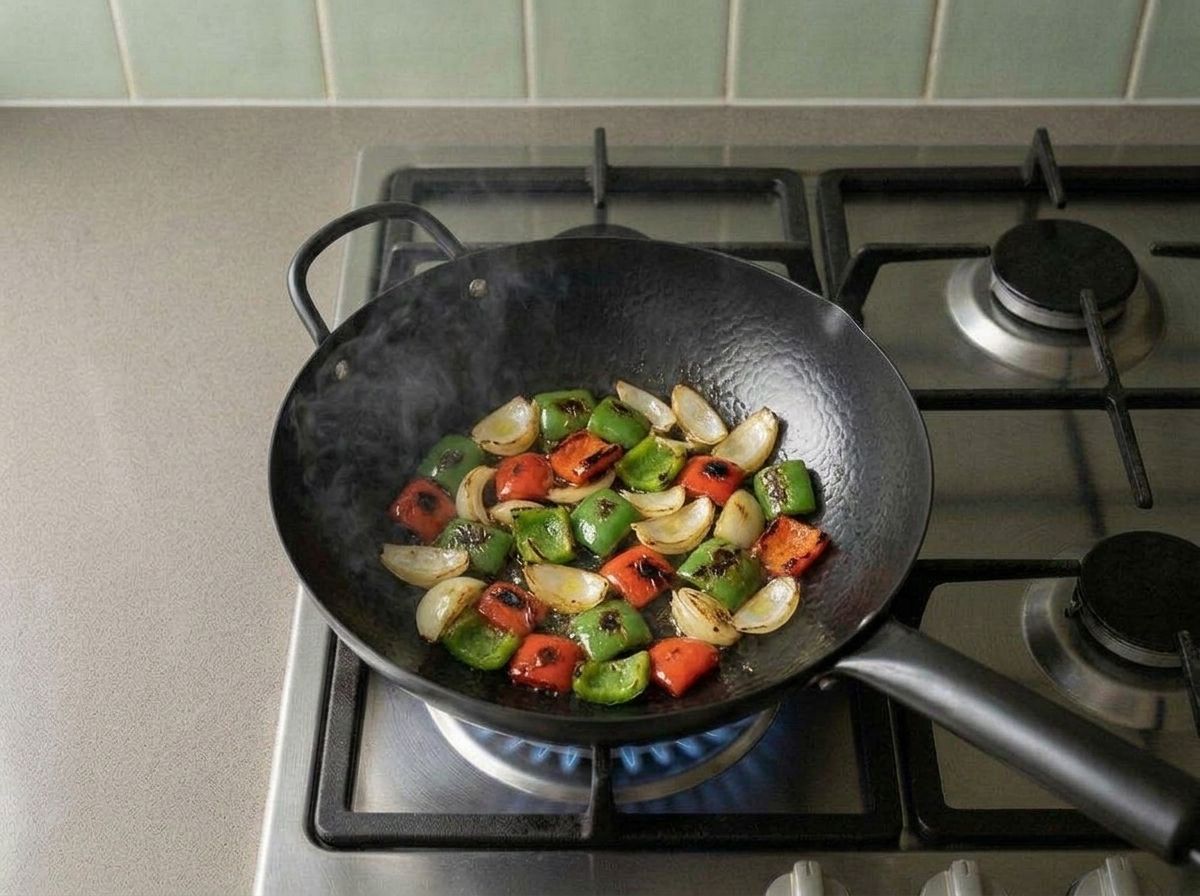
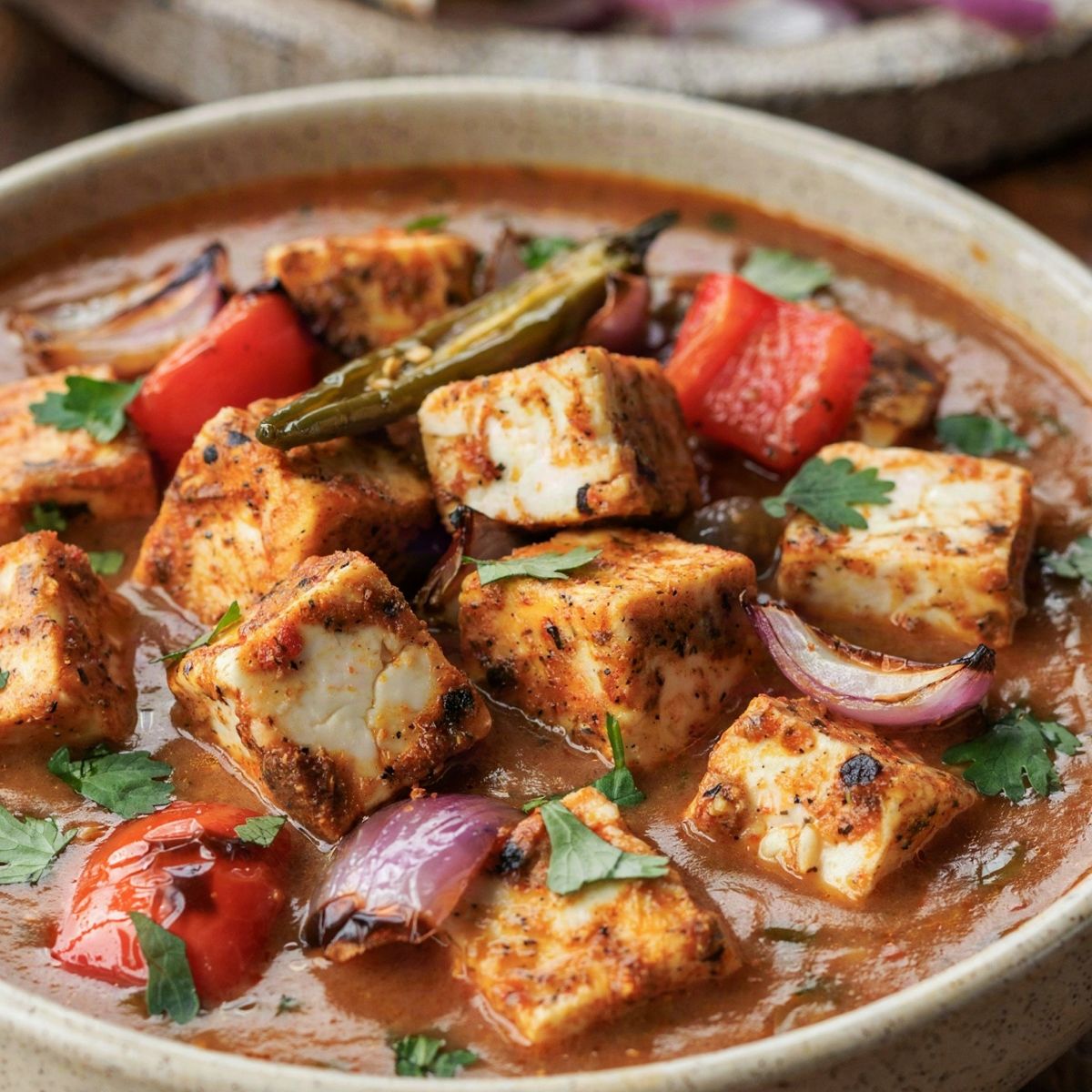
The other change was taking the peppers out. Seared on their own over high heat and stirred back in at the end, they stay bright and crunchy instead of collapsing into the sauce.
The story
Kadai Paneer Is Named After The Pan
A kadai, or karahi in Punjabi and Urdu, is the deep, round-bottomed, two-handled pan of north Indian and Pakistani kitchens, usually heavy iron. It does almost everything: it deep-fries pakoras and puris, roasts spices, stirs halwa and reduces curries. Dishes cooked and served in it take its name, so karahi gosht, kadai chicken and kadai paneer are all the same idea with a different main ingredient.
That idea comes from the dhabas, the roadside restaurants of Punjab and the northwest, where karahi dishes are cooked to order over a fierce flame. Tomatoes, ginger, green chilies and the main ingredient go into the hot pan and are reduced hard until the oil separates and the masala clings, then the pan goes to the table. The result is drier and more concentrated than a slow-simmered curry, and that is the texture to aim for.
What separates the kadai dishes on a restaurant menu from the other tomato-based ones is the kadai masala: whole coriander seed and dried red chilies, roasted and crushed coarsely, often with a little cumin and black pepper. Paneer tikka masala is smooth and creamy, paneer butter masala sweet and rich, shahi paneer white and nutty. Kadai paneer is the coarse, peppery one, with chunks of seared capsicum and onion through it.
Paneer suits the high heat because it does not melt. It is a fresh cheese set with lemon juice, vinegar or citric acid rather than rennet, which also makes it one of the few cheeses that is vegetarian by default.
What to buy
Ingredient Notes
Paneer
Use full-fat block paneer and cut it into 1-inch cubes, the same size as the peppers, so every forkful has both. Many recipes fry the cubes first, which gives them a golden skin but makes them chewy within minutes of hitting the sauce. Here they soak in hot salted water instead and go in near the end, which keeps them soft and seasoned through. If you want color, sear them for a minute in the hot pan after the peppers.
Coriander seeds
Whole seeds are not optional. Coriander changes completely when it is toasted, from soapy and green to warm, nutty and faintly orange-peel, and that toasted note is the flavor of the dish. Ground coriander from a jar cannot be toasted without burning and has usually lost most of its aroma. Look for the small, pale greenish-tan Indian seeds rather than the larger, rounder Moroccan ones, which are milder.
Dried red chilies
Kashmiri chilies give a deep red color with mild heat and are the usual choice. Four of them, seeds shaken out, keep the dish warm rather than hot. Use byadgi chilies the same way, or two small hot dried chilies such as chile de árbol plus a teaspoon of paprika for color. Break off the stems and tip out the loose seeds before toasting, since the seeds carry most of the heat.
Bell peppers
Green capsicum is the classic kadai pepper, and its slight bitterness balances the sweet tomato. A green and a red together look better and taste a little sweeter. Cut them into 1-inch squares rather than strips. Strips are jalfrezi; squares stay crisp in the center while their edges char, and they sit evenly with the paneer cubes and the onion petals.
Tomatoes
Ripe tomatoes, pureed, give the masala body without making it watery. Three medium tomatoes, about a pound, is the right amount for four servings. Out of season, one cup of canned crushed tomatoes is better than pale supermarket ones. The tomato is cooked until the oil separates from it at the edges of the pan, which is the sign that its raw, sharp edge has cooked out.
Kasuri methi
Dried fenugreek leaves, sold in bags in Indian groceries, add the faintly bitter, maple-like note that makes a home curry taste like restaurant food. Crush them between your palms as you add them, which releases the aroma, and add them at the end. A teaspoon is enough. If you cannot find them, leave them out rather than substituting fenugreek seeds, which taste much harsher.
Kadai Paneer
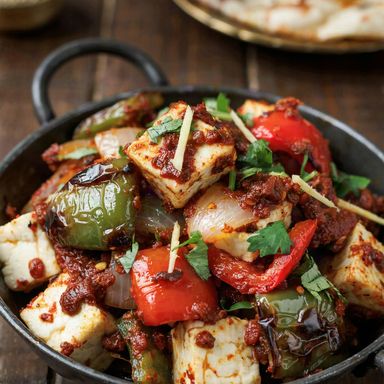
Punjabi kadai paneer: soft paneer and seared bell peppers in a thick tomato masala flavored with freshly toasted, coarsely crushed coriander seed and dried red chilies.
Ingredients
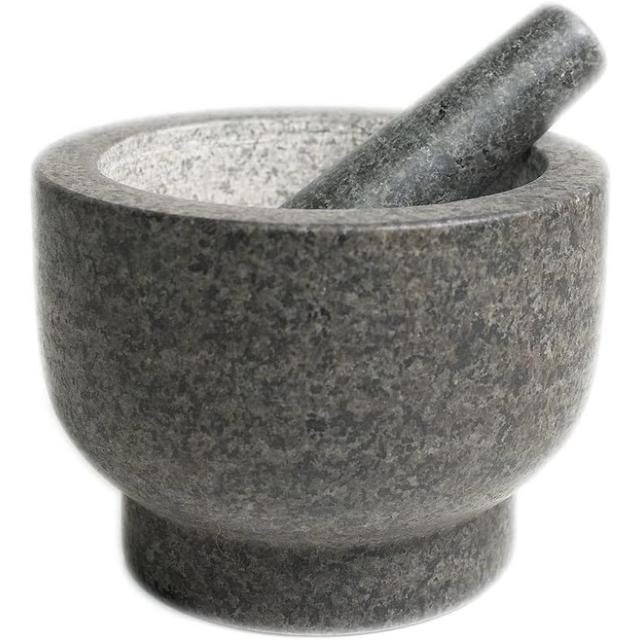
Equipment
As an Amazon Associate I earn from qualifying purchases, at no extra cost to you.
Instructions
- 1
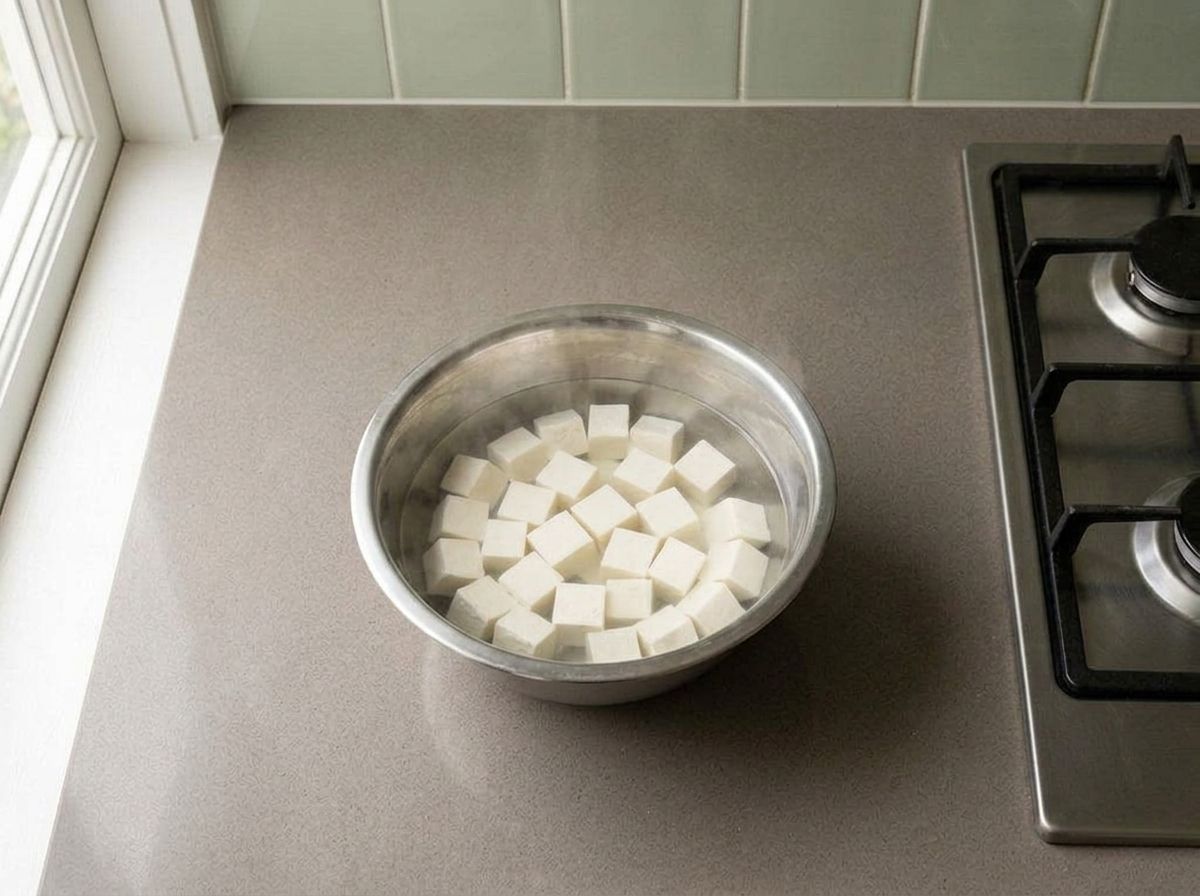
Soak the paneer
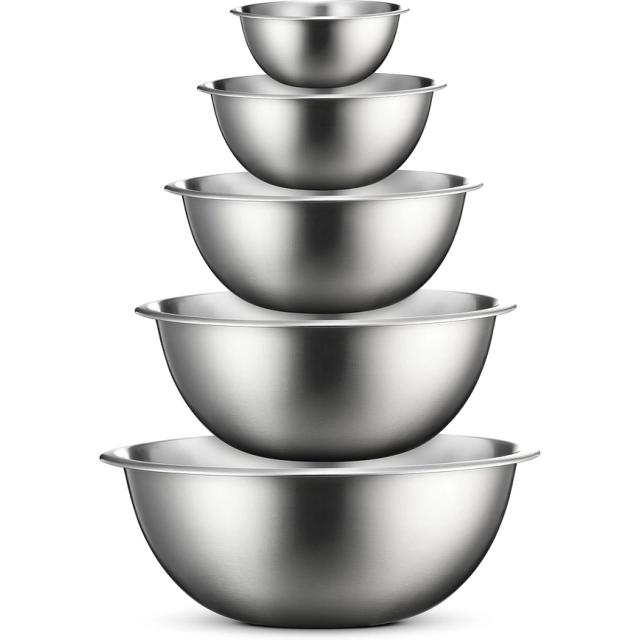
Put the paneer cubes in a bowl, sprinkle with 1/2 teaspoon of the salt and cover with hot water from the kettle. Leave them to soak for 15 minutes while you make the masala.
- 2
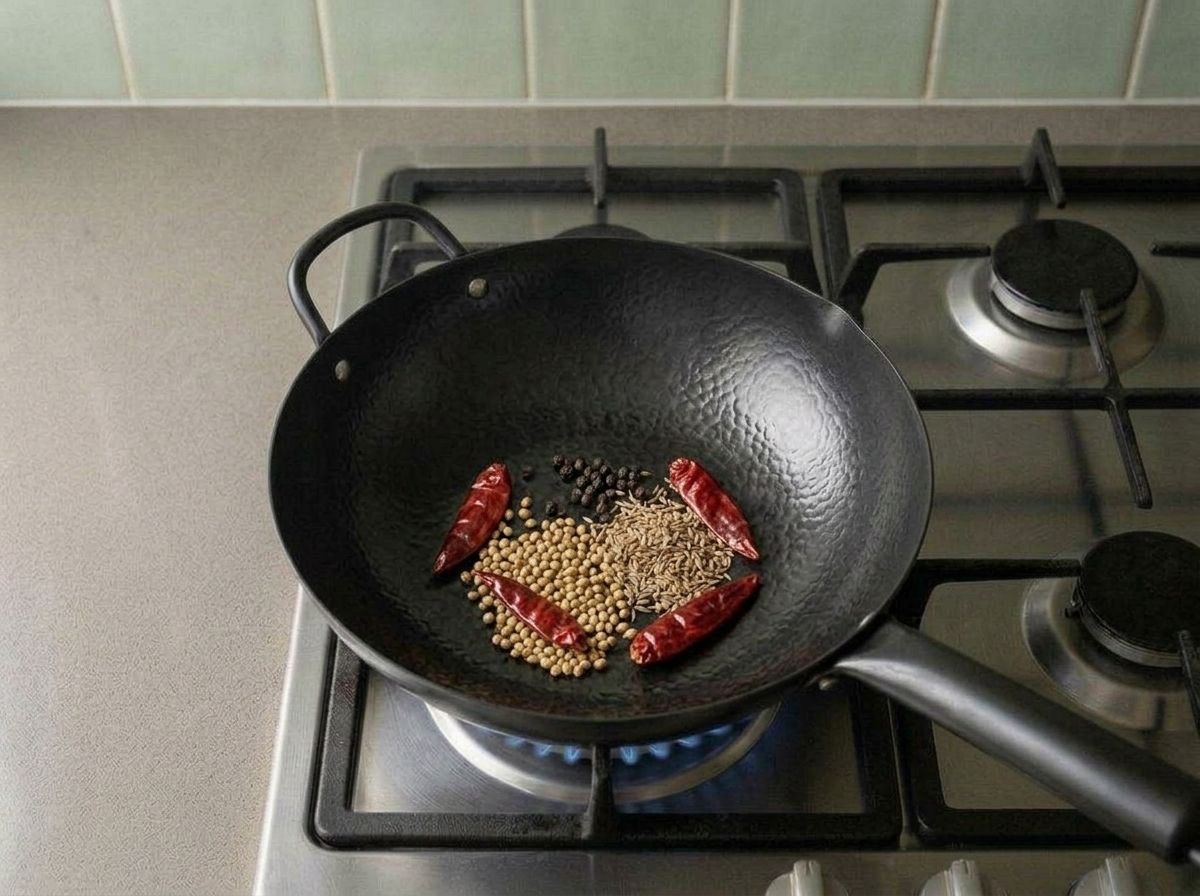
Toast the kadai masala
Put the coriander seeds, cumin seeds, dried chilies and peppercorns in the dry wok over medium-low heat. Toast, shaking the pan, for 2 to 3 minutes, until the coriander is a shade darker and smells warm and nutty and the chilies are crisp. Tip them onto a plate to cool.
- 3
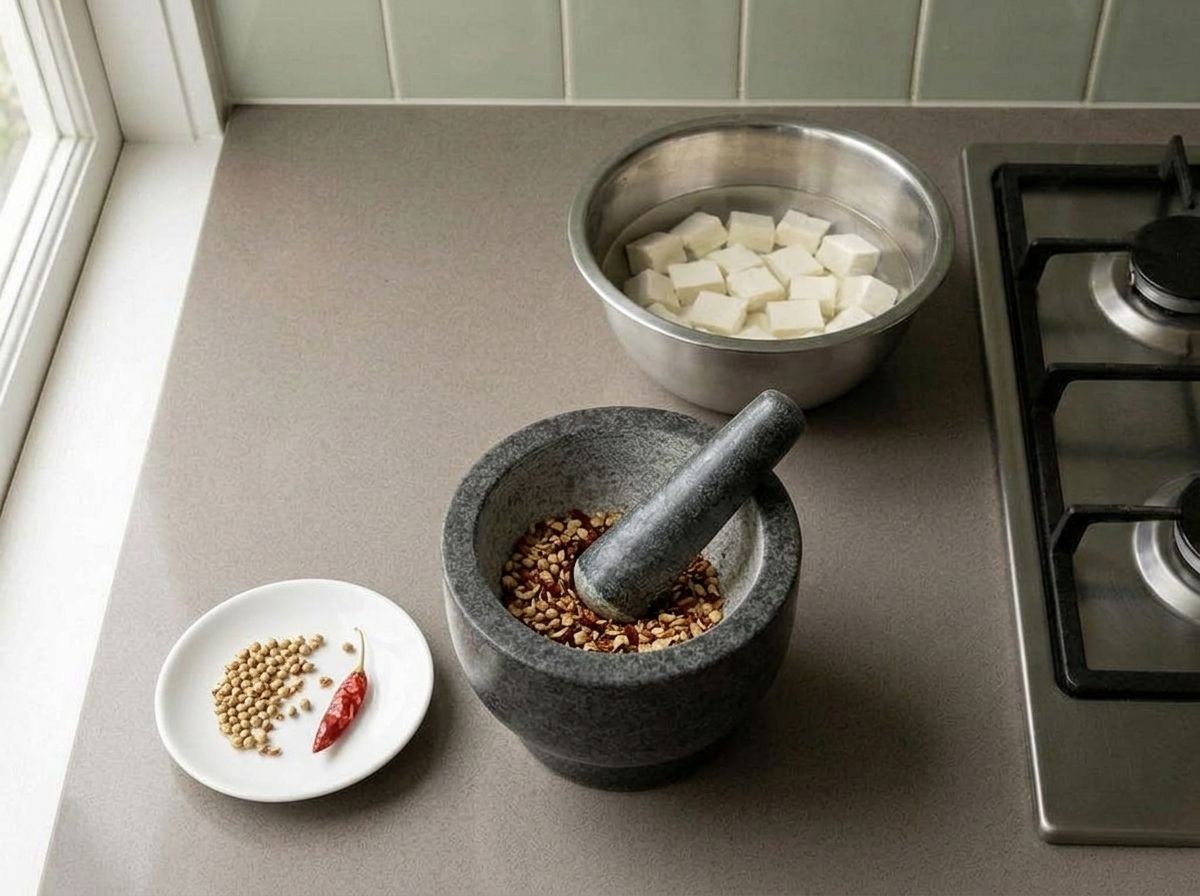
Crush the spices coarsely
Crush the toasted spices in a mortar and pestle to a coarse powder, like cracked black pepper, with some pieces of seed still visible. Do not grind them fine.
- 4
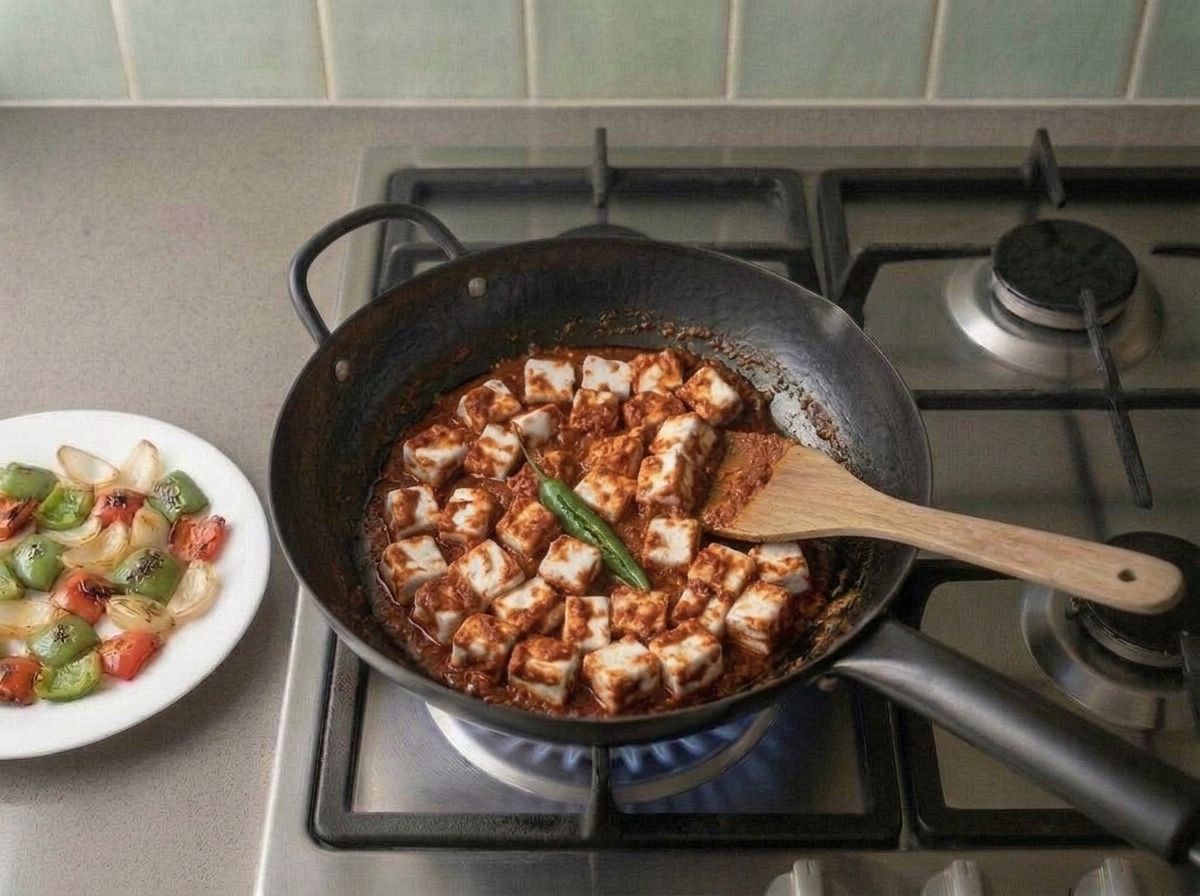
Sear the peppers and onion
Heat 1 tablespoon of the oil in the wok over high heat. Add the pepper squares and onion petals and toss for 2 to 3 minutes, until the edges are charred in spots but the centers are still crisp. Tip them onto a plate.
- 5
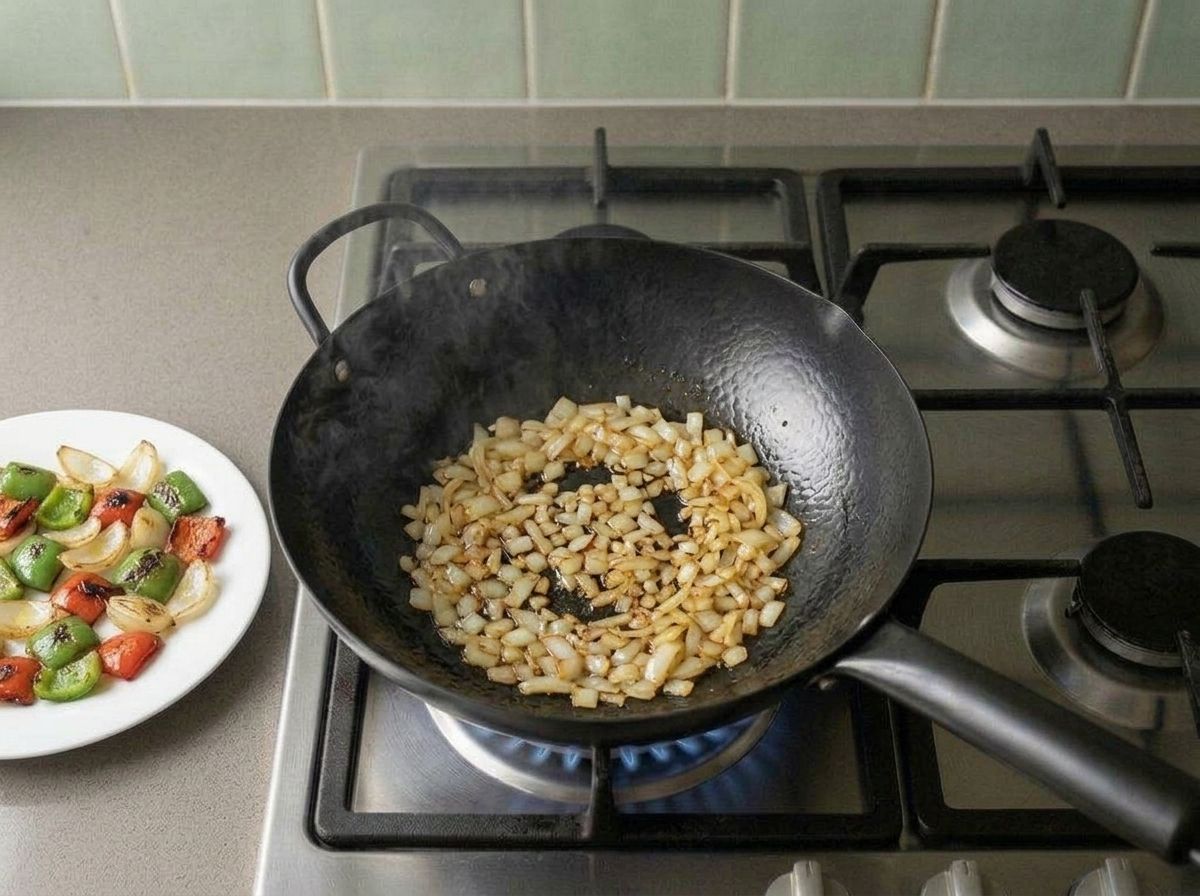
Brown the chopped onion
Turn the heat down to medium and add the remaining 2 tablespoons of oil and the chopped onion. Cook, stirring often, for 6 to 8 minutes until soft and golden brown.
- 6
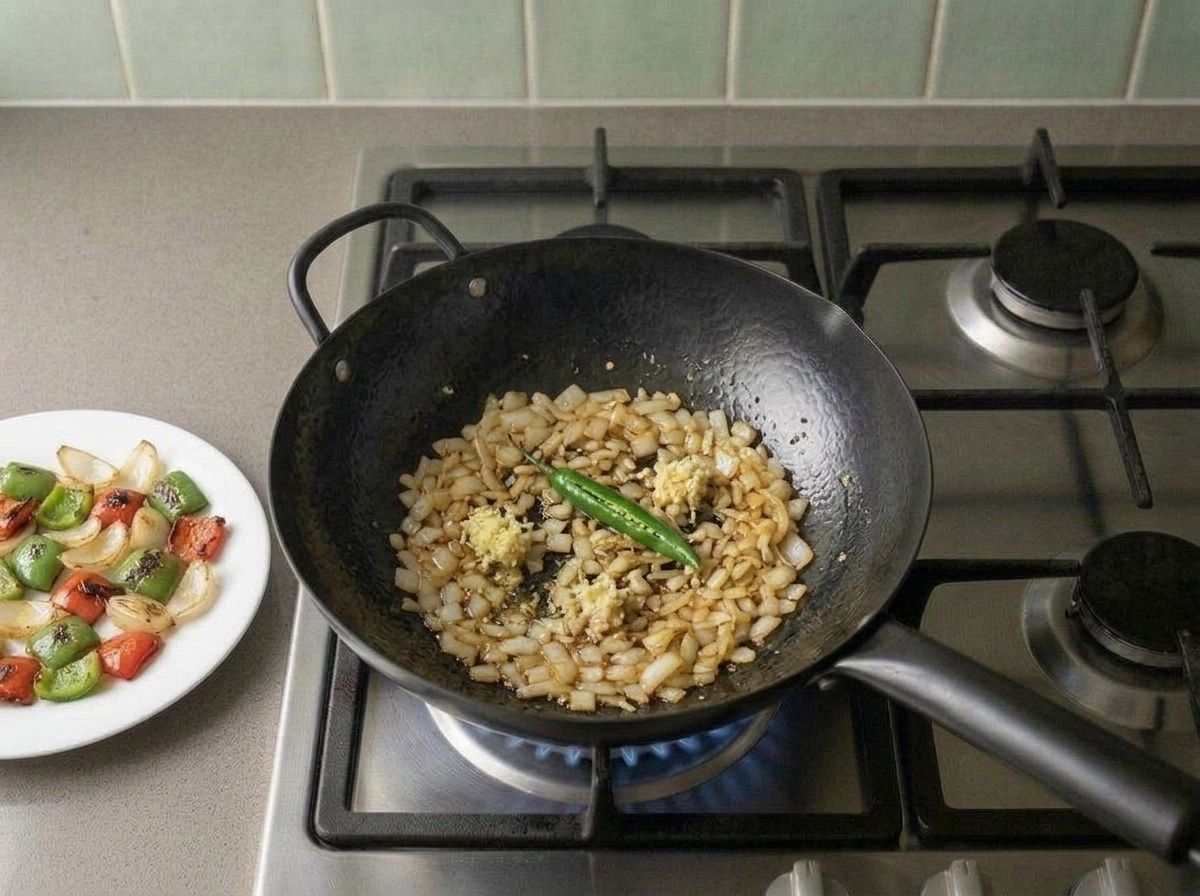
Add the ginger, garlic and chili
Stir in the ginger, garlic and slit green chili and cook for 1 minute, until the raw smell is gone.
- 7
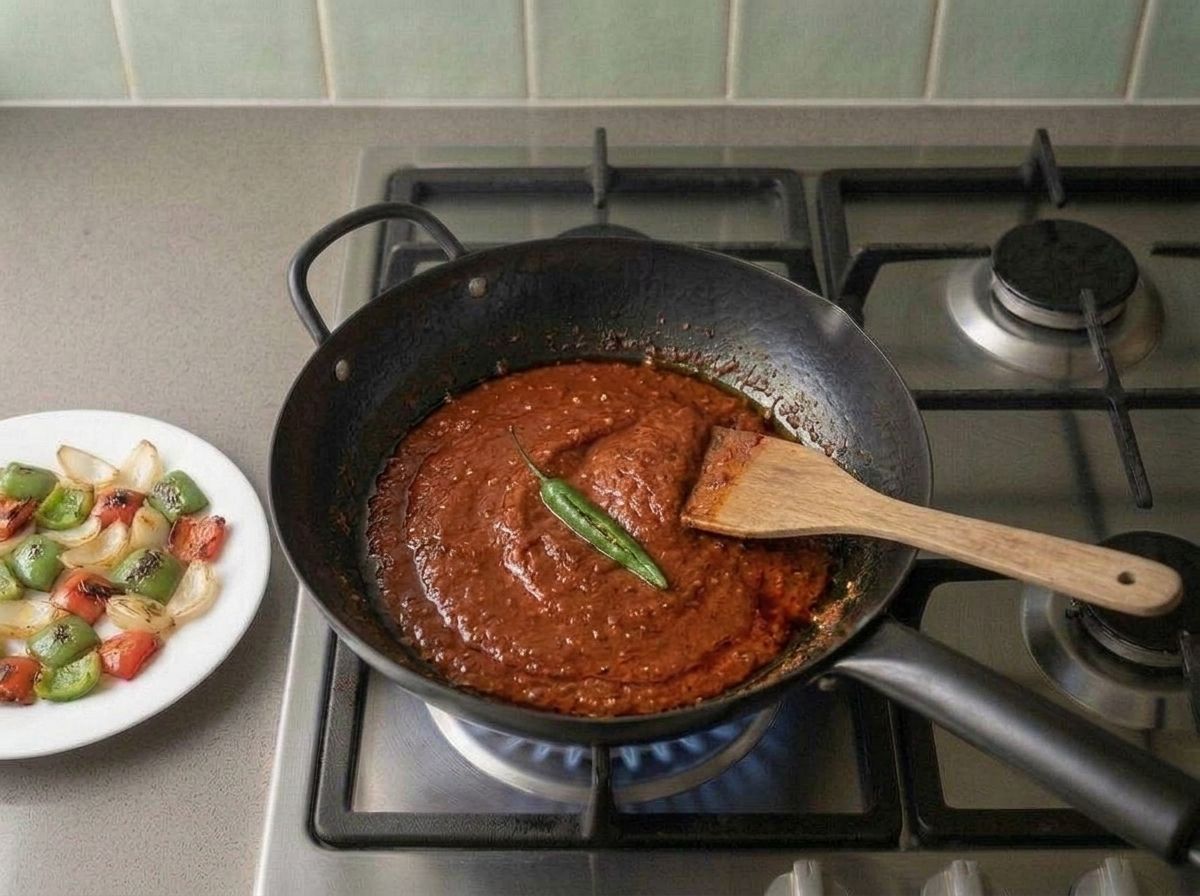
Cook down the tomatoes
Add the tomato puree, turmeric, chili powder, the remaining 1/2 teaspoon of salt and two thirds of the kadai masala. Cook over medium-high heat, stirring often, for 8 to 10 minutes, until it thickens into a deep red paste and the oil separates at the edges.
- 8
Add the paneer
Drain the paneer and add it to the wok with 1/4 cup of water. Toss gently for 2 minutes so the masala coats every cube.
- 9
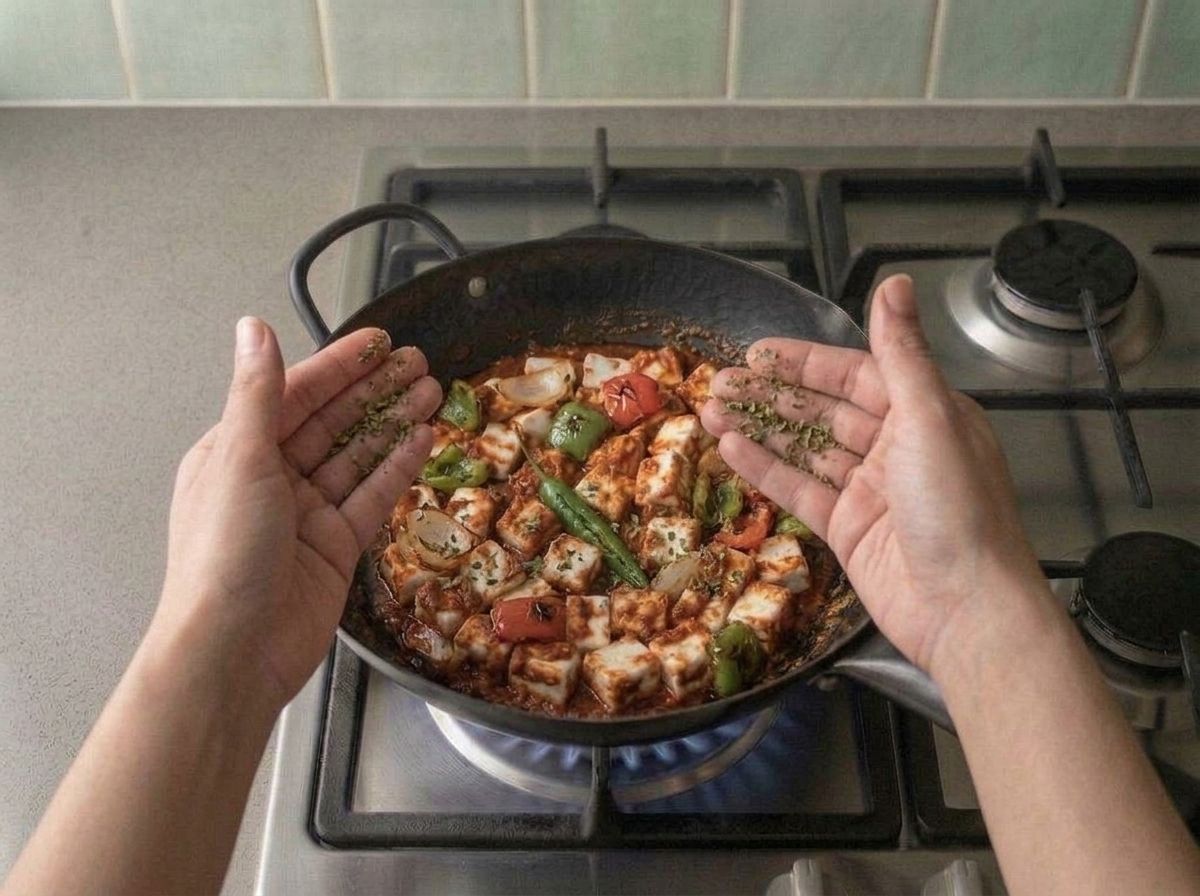
Return the peppers
Add the seared peppers and onion, the remaining kadai masala and the garam masala, and crush the kasuri methi between your palms over the pan. Toss over high heat for 1 to 2 minutes until the masala clings and everything is hot. Stir in the cream, if using.
- 10
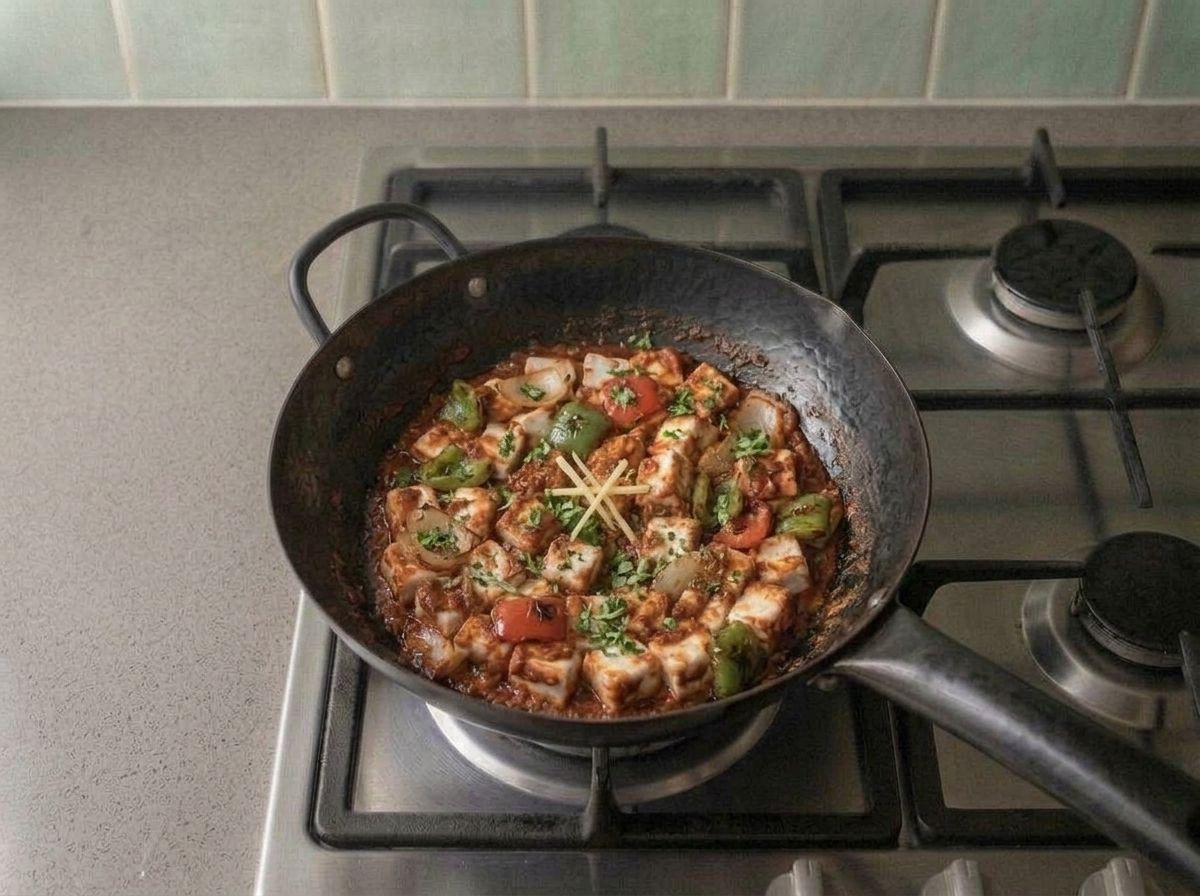
Finish and serve
Take the wok off the heat, taste for salt, and scatter the cilantro and the ginger strips over the top. Serve hot, with naan or roti.
Notes
Crush the toasted spices coarsely, like cracked pepper, not to a fine powder.
Sear the peppers separately and return them at the end so they stay crisp.
Cook the tomatoes until the oil separates before the paneer goes in.
The masala base can be made 3 days ahead or frozen for 3 months. Do not freeze the finished dish.
Nutrition Facts
4 servings · 368 g per serving
- Calories
- 481 kcal
% Daily Value*
- Total Fat
- 38.8 g50%
- Saturated Fat
- 18.3 g92%
- Sodium
- 664 mg29%
- Total Carbohydrate
- 19.4 g7%
- Dietary Fiber
- 5.2 g19%
- Sugars
- 8.2 g—
- Protein
- 17 g34%
Recipe from veggierecipes.blog
When it goes wrong
Troubleshooting
It tastes like any other paneer curry
The kadai masala is missing or was made from ground spices. Toast whole coriander seed and dried chilies until fragrant, crush them coarsely and add them in two stages: most of it with the tomatoes, where it melts into the masala, and the rest at the end, where it stays as distinct crunchy flecks. That second addition is what makes the dish recognizable.
The peppers went soft and turned army green
They cooked in the sauce too long. Peppers simmered in tomato for ten minutes lose their crunch and their color. Sear them separately over high heat for two or three minutes, until the edges char but the centers are still crisp, set them aside, and return them only for the last two minutes. They should still snap when you bite them.
The masala tastes raw and sharp
The tomatoes were not cooked long enough. Pureed tomato needs eight to ten minutes over medium-high heat, stirred often, until it darkens to a deep brick red, thickens into a paste and the oil pools at its edges. Indian cooks call this bhuna. If the paneer goes in before that point, the sauce will taste of raw tomato however long you simmer it afterward.
It’s soupy, more like a gravy
Kadai paneer is a semi-dry dish: the masala should coat the paneer and peppers rather than pool around them. Too much water, or tomatoes that were not reduced, will make it runny. Turn the heat up, leave the pan uncovered and toss for a minute or two until it clings. Only a splash of water goes in with the paneer, just enough to loosen the paste.
The spices taste bitter and burnt
They were toasted over too much heat. Coriander seed scorches in seconds once it starts to color, and chilies burn even faster. Toast over medium-low heat, shaking the pan, and stop when the coriander is one shade darker and smells warm and nutty, about two or three minutes. Tip them straight out onto a plate, because the hot pan keeps cooking them. Burnt seeds cannot be rescued, so start again.
It’s much hotter than I expected
The chili seeds went into the masala, or the chilies were a hot variety. For mild heat use Kashmiri chilies with their seeds shaken out, and leave the fresh green chili whole, slit but not chopped, so it can be lifted out. To cool down a pan that is already too hot, stir in two tablespoons of cream or a spoonful of yogurt off the heat.
Before you serve
Serving & Storage
Kadai paneer is a bread dish first. Serve it with butter naan, tandoori roti or flaky lachha paratha, which scoop up the thick masala better than rice does. If you want rice too, jeera rice or plain basmati works. In a Punjabi meal it sits beside a dal, usually dal makhani or a simple dal tadka, with sliced raw onion, a wedge of lemon and a bowl of plain yogurt or raita.
For a Diwali table it pairs well with a creamy dish like shahi paneer, because the two are so different in texture and heat, and with kheer or gulab jamun to finish. Scatter fresh cilantro and thin strips of ginger over it just before it goes to the table, and serve it straight from the pan if your pan is presentable.
Making it ahead
The masala base, everything up to the point where the tomatoes are cooked down, keeps for three days in the fridge or three months in the freezer. Reheat it in the pan until it sizzles, then sear the peppers, add the paneer and finish as written, which takes ten minutes. The kadai masala itself keeps in a sealed jar for about two weeks, though it is at its best on the day you crush it.
Storing leftovers
Leftovers keep covered in the fridge for three days. The peppers soften overnight and the paneer firms up, so reheat it in a pan over medium heat with a splash of water, stirring gently, rather than in the microwave, which makes paneer rubbery. Do not freeze the finished dish: the peppers turn watery and the paneer goes spongy as it thaws. Freeze the masala base instead.
Still wondering
Frequently Asked Questions
What is the difference between kadai paneer and paneer jalfrezi?
Both are paneer with peppers and onion, but they are built differently. Jalfrezi is a quick stir-fry of thin strips in a light, tangy coating, often sharpened with vinegar. Kadai paneer uses cubes and squares in a thick, reduced tomato masala flavored with toasted, crushed coriander and chili.
Can I use store-bought kadai masala?
Yes. Use 1 1/2 tablespoons of the powder, toast it in the oil for 20 seconds before the tomatoes go in, and keep back a teaspoon to stir in at the end. The flavor will be flatter and the texture finer, because commercial blends are ground to a powder, but it is far better than leaving it out.
Do I need a kadai to make it?
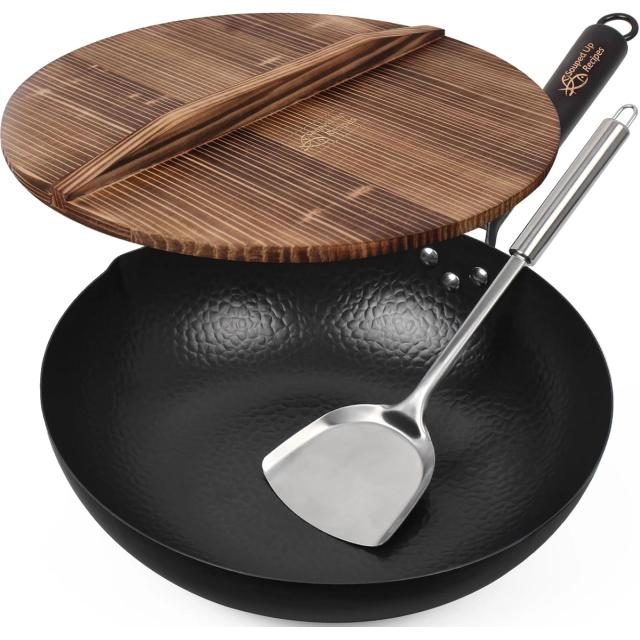
No. A wok is the closest substitute and is what this recipe is written for. A wide, heavy stainless steel or cast iron skillet also works. Avoid non-stick, which cannot take the high heat the peppers need to char.
More Paneer And Sweets For A Diwali Table
Made this?