
Kheer Recipe
Published
Kheer is milk that has been cooked for an hour with a little rice in it, not rice pudding with milk poured over, and the hour is where all the flavor comes from.
Jump To Recipe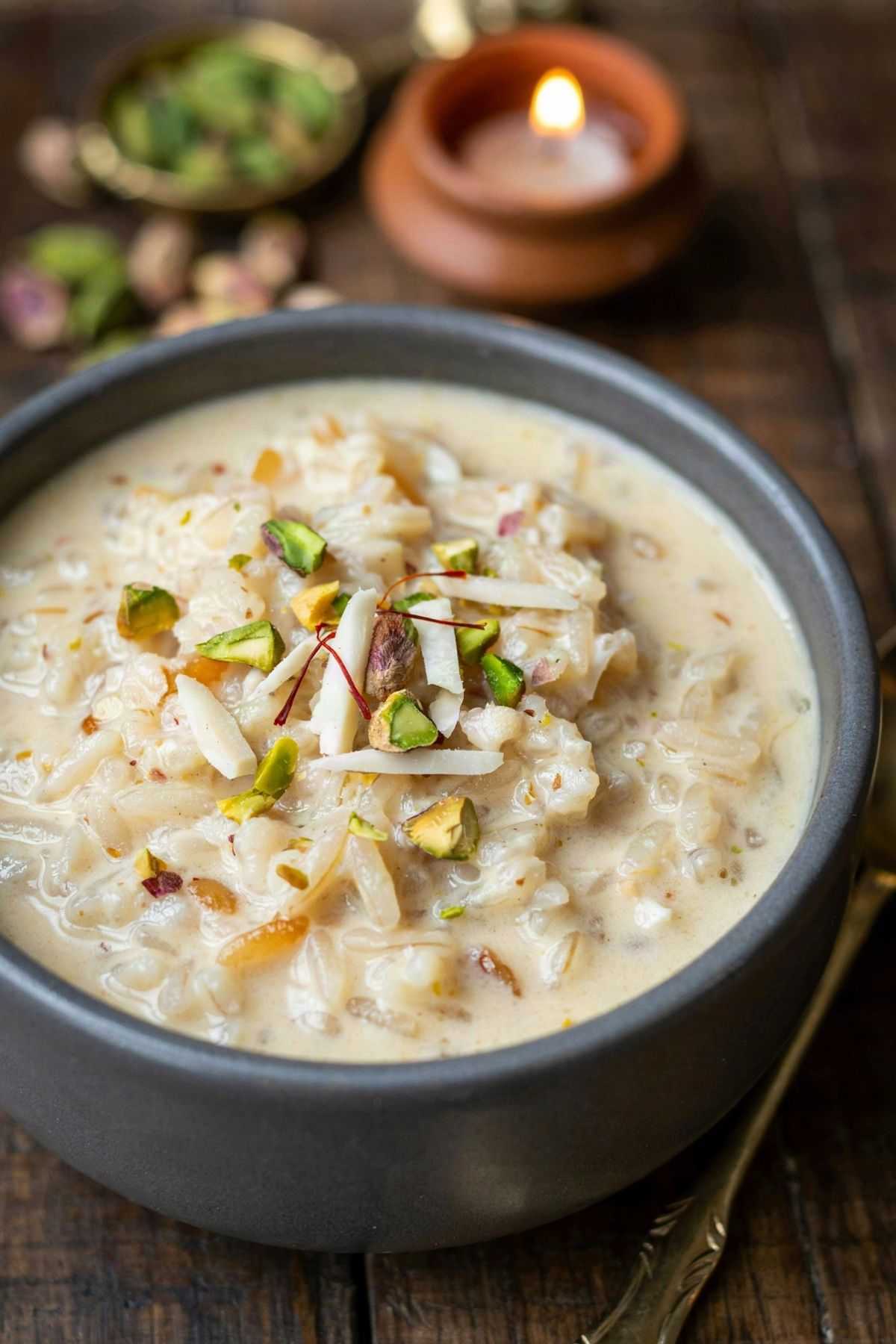
The Small Steel Bowl At The End Of The Thali
The first kheer I loved came at the end of a thali, in a small steel bowl I nearly ignored because I was full. It was barely sweet, cool, pale ivory with a faint caramel note, and so thin it was almost a drink, with rice that had melted into the milk. It tasted nothing like the thick, sugary rice pudding I had grown up with.
My own early attempts went wrong both ways. One was rice floating in sweet milk, because I lost patience after twenty minutes. The next set like cement in the fridge overnight, because I had kept going until it looked right while it was still hot. Kheer thickens a great deal as it cools, and learning to stop while it still pours from the spoon was the whole lesson.
It is not difficult, only slow. You stir a pot of milk every few minutes for an hour, and the kitchen smells of cardamom by the end.
The story
Kheer Is One Of The Oldest Desserts In India
The word comes from the Sanskrit kshira, milk, and the dish is as old as the word suggests. Rice boiled in milk turns up in ancient Indian texts as a temple offering, and Buddhist tradition holds that a village woman named Sujata brought a bowl of milk-rice to Siddhartha Gautama at Bodh Gaya, the meal that ended his fast before his enlightenment. In the south the same dish is called payasam, from payas, another Sanskrit word for milk, and in Bengal it is payesh.
Temples still make it in enormous quantities. At the Sri Krishna temple in Ambalappuzha in Kerala, the palpayasam served to pilgrims every day comes with a legend: a king lost a game of chess to a sage who asked for one grain of rice on the first square, doubled on every square after it. When the debt proved impossible to pay, the sage revealed himself as Krishna and let the king settle it a little at a time, by serving payasam to pilgrims for ever.
Kheer has two close relatives that are easy to confuse with it. Phirni, which came with Persian and Mughal cooking, uses ground rice instead of whole grains, sets smooth like a custard and is served chilled in clay bowls. Sheer khurma, made for Eid, swaps the rice for fine toasted vermicelli and adds dates. Kheer itself keeps the grains, even if they are cooked until they barely hold together.
It is made for almost every festival in north India, Diwali included, and offered as bhog at home shrines before it is eaten. It is vegetarian by definition, because there is nothing in it but milk, rice, sugar and spice.
What to buy
Ingredient Notes
Whole milk
Use whole milk and nothing lower. The fat is what carries the cardamom and gives kheer its body once it reduces, and skim or 2% milk cooks down to something thin, bluish and faintly sour. Ultra-pasteurized milk works but is more likely to catch on the bottom of the pot, so keep the heat lower if that is what you have. For an especially rich kheer, replace one cup of the milk with half-and-half.
Basmati rice
Short, starchy rice gives the creamiest kheer, which is why Bengal uses tiny fragrant gobindobhog grains. Basmati is the easiest to find and works well, and broken basmati, sold cheaply in Indian shops, is better still because the broken ends release their starch faster. Soaking the rice for 30 minutes lets it soften evenly. Do not use parboiled or converted rice, which stays in firm separate grains however long it cooks.
Sugar
The sugar goes in only once the rice is completely soft. Sugar competes with the starch for water, and rice simmered in sweetened milk from the start can stay firm and slightly chalky at the center no matter how long it cooks. Half a cup gives a lightly sweet kheer, which is how it is usually eaten. Add another two tablespoons if you like it sweeter, but taste first: the reduction concentrates the milk’s own sweetness.
Green cardamom
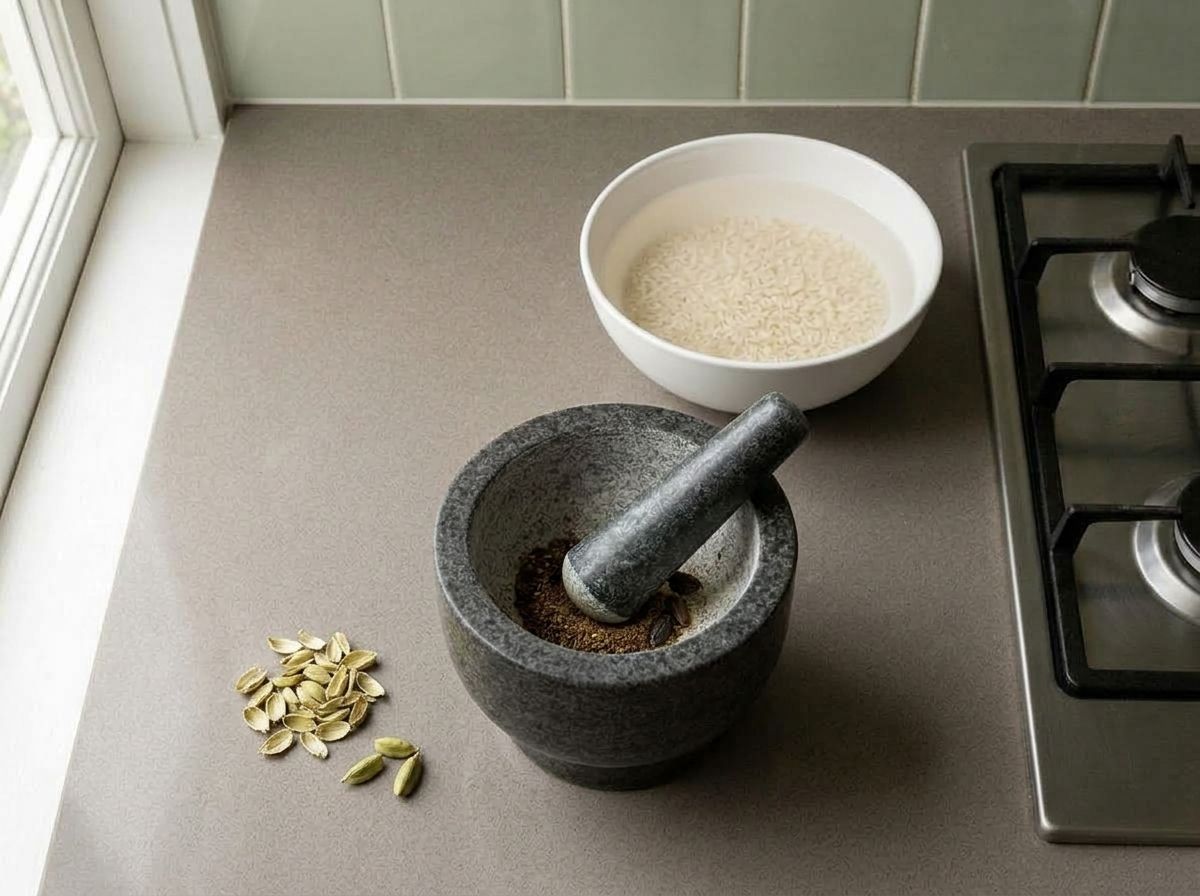
Buy whole green pods and grind the seeds yourself just before using them. Ground cardamom from a jar loses most of its aroma within months and is often mixed with the husks, which taste woody. Crack the pods in a mortar, pick out the papery shells and grind the black seeds to a powder. Six pods give a clear cardamom flavor without turning the kheer medicinal.
Saffron
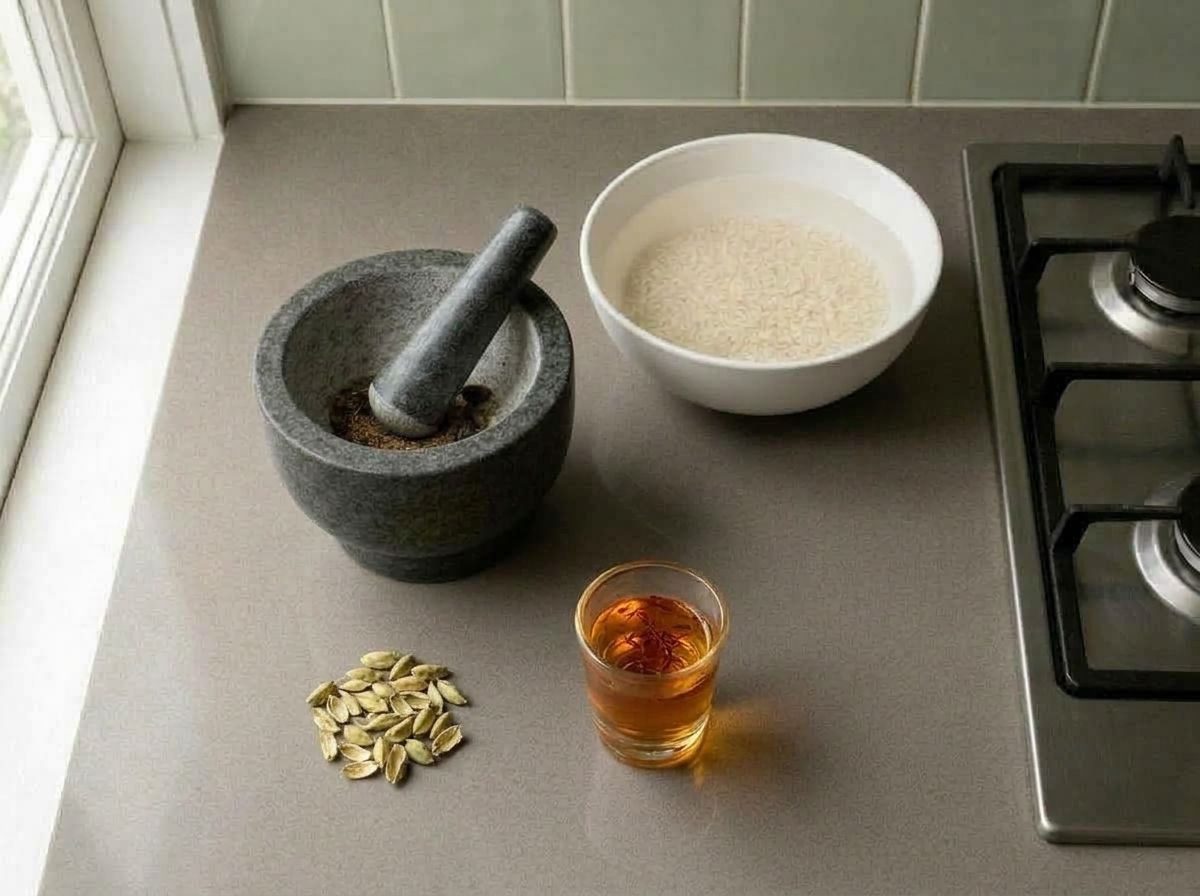
A large pinch, about 15 threads, is enough to tint the kheer a pale gold and add its honeyed smell. Soak the threads in warm water for a few minutes first, so the color spreads evenly instead of leaving orange streaks. Saffron is optional in everyday kheer and expected in festival kheer. Avoid cheap powdered saffron, which is often colored safflower or turmeric.
Nuts and silver leaf
Slivered almonds and chopped unsalted pistachios are the standard finish. Stir half of them in so they soften into the kheer, and keep the rest on top for crunch. Festival kheer is often topped with varak, edible silver leaf. It was traditionally beaten out between sheets of animal gut, and Indian food rules banned that in 2016, but imported or unlabeled varak may still be made that way. Buy only leaf labeled vegetarian.
Kheer
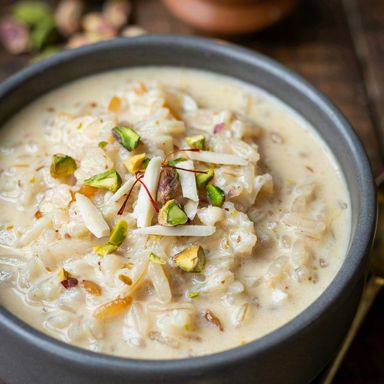
North Indian rice kheer: soaked basmati simmered in whole milk until it breaks down and the milk reduces by half, sweetened at the end and finished with cardamom, saffron, almonds and pistachios.
Ingredients
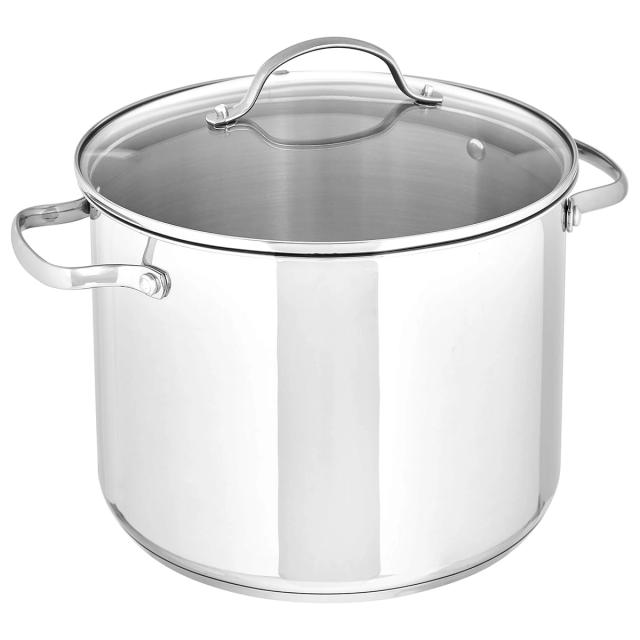
Equipment
As an Amazon Associate I earn from qualifying purchases, at no extra cost to you.
Instructions
- 1
Rinse and soak the rice
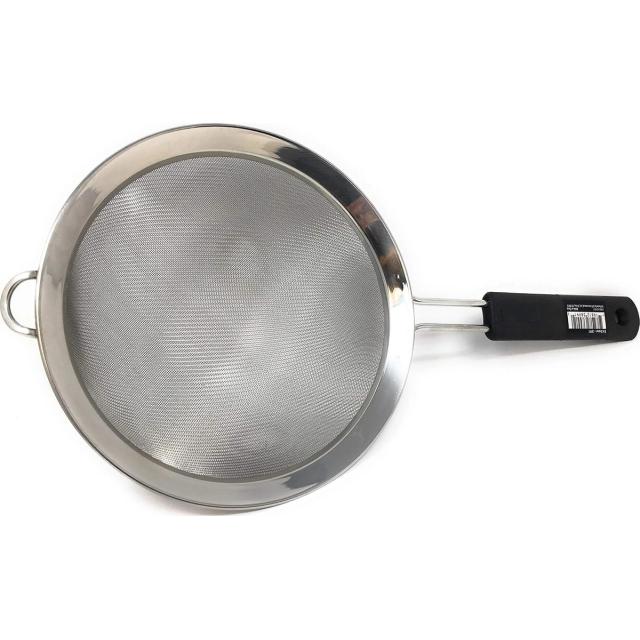
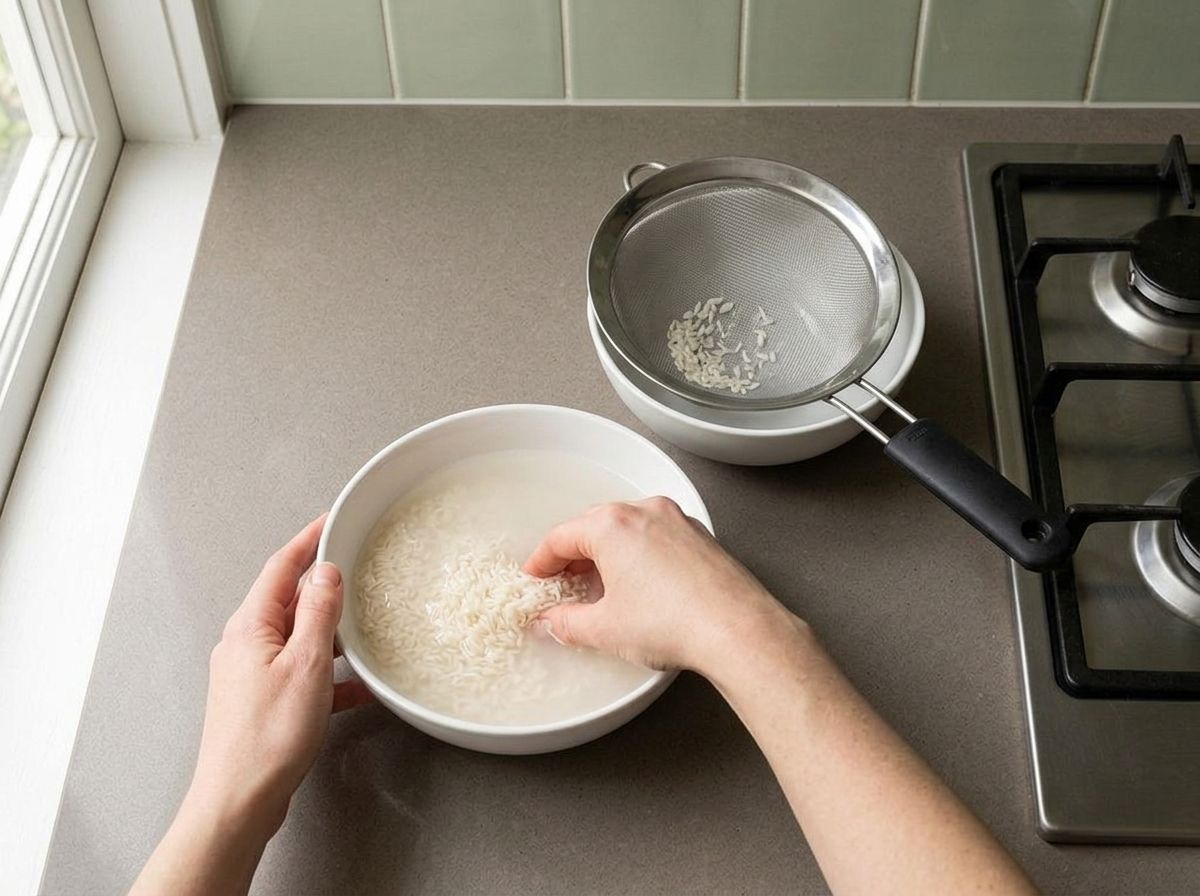
Put the rice in a bowl, cover it with cold water and swish it with your fingers until the water turns cloudy. Pour the water off through a fine mesh strainer to catch any grains, and repeat three or four times until the water stays almost clear. Tip the rice back into the bowl, cover with fresh water and leave it to soak for 30 minutes.
- 2
Grind the cardamom
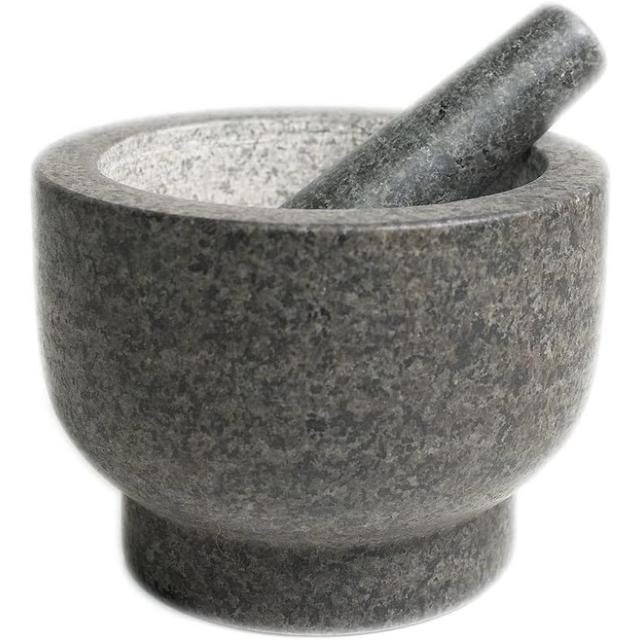
Crack the cardamom pods in a mortar and pestle, pick out the papery green husks and grind the black seeds to a fine powder. Set aside.
- 3
Soak the saffron
Put the saffron threads in a small cup with the warm water and leave them to steep until the water turns a deep orange.
- 4
Bring the milk to a boil
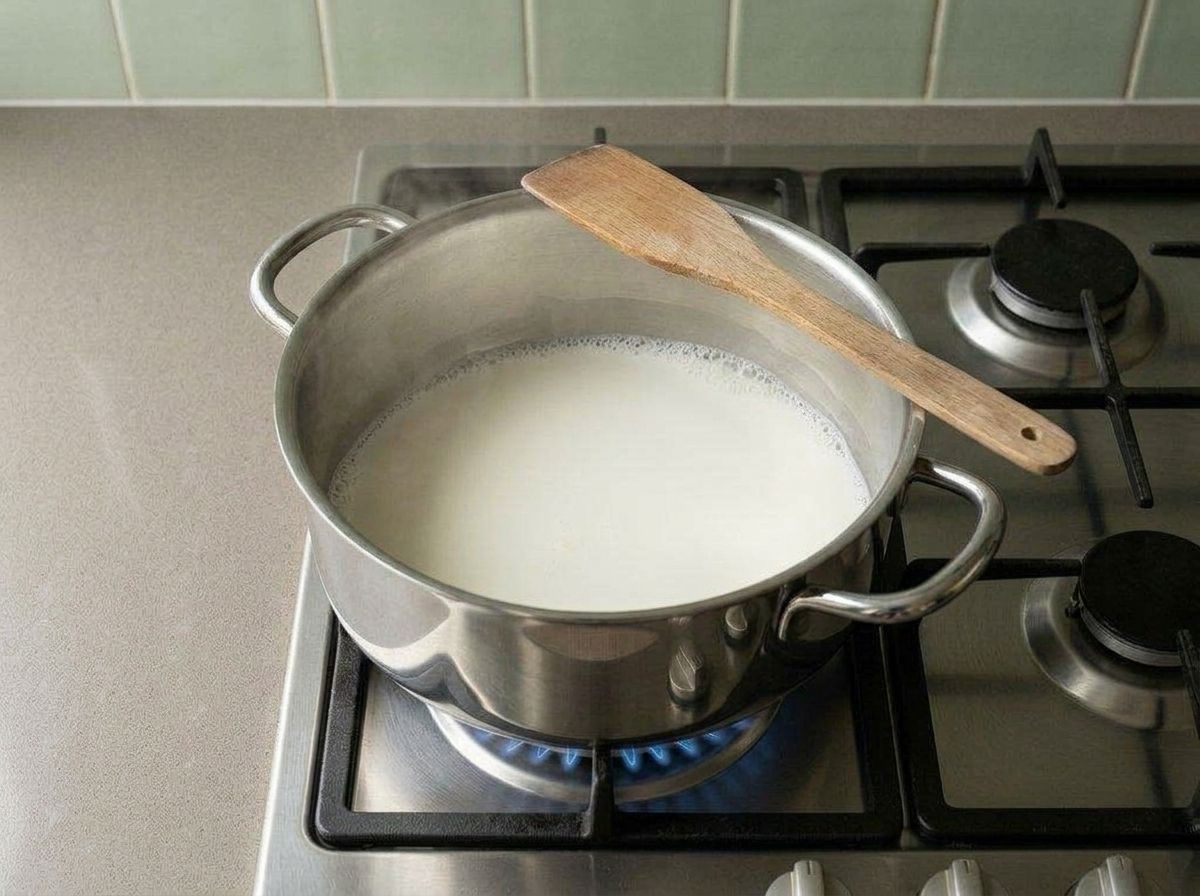
Rinse the large pot with cold water and leave it wet, which helps stop the milk catching. Pour in the milk and bring it to a boil over medium heat, stirring often and scraping the bottom so it does not scorch.
- 5
Add the rice
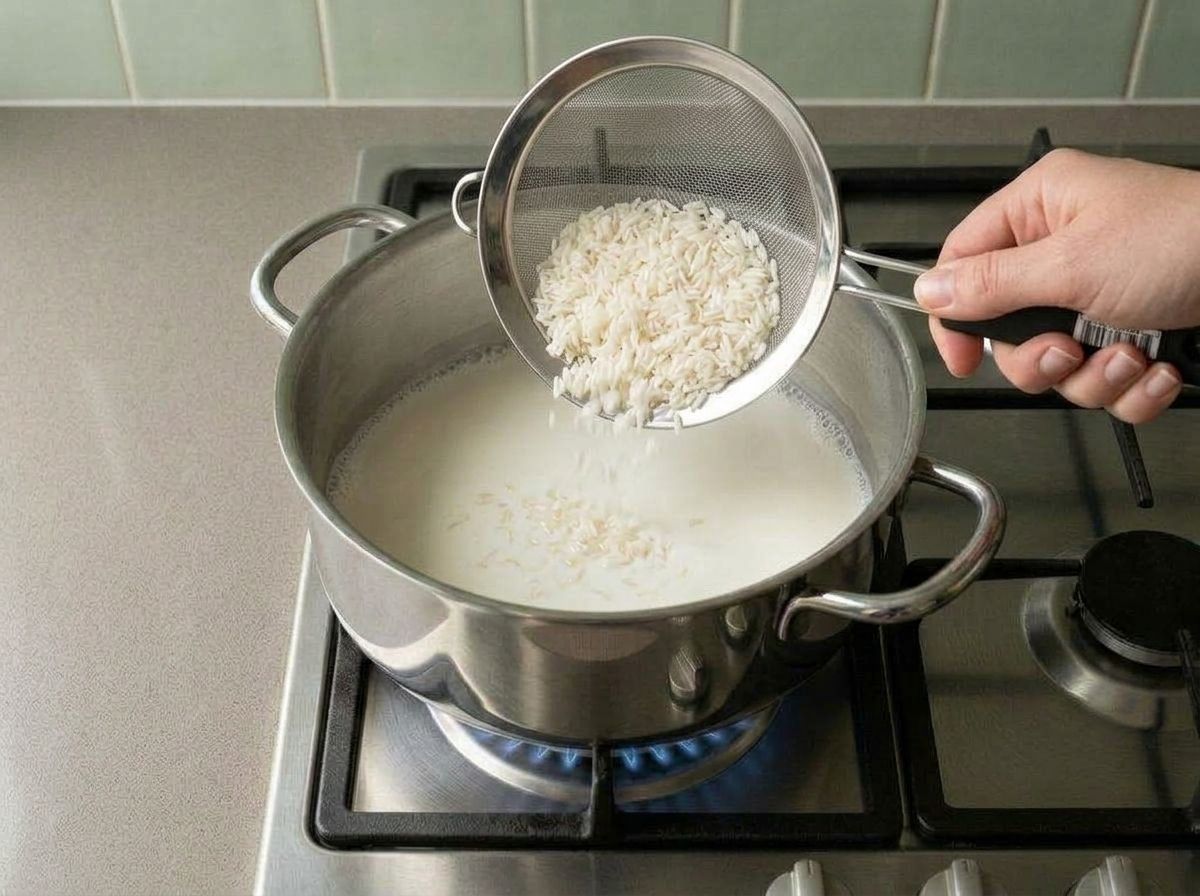
Drain the rice and stir it into the boiling milk. Turn the heat down to medium-low so the milk bubbles gently without rising up the pot.
- 6
Simmer and scrape
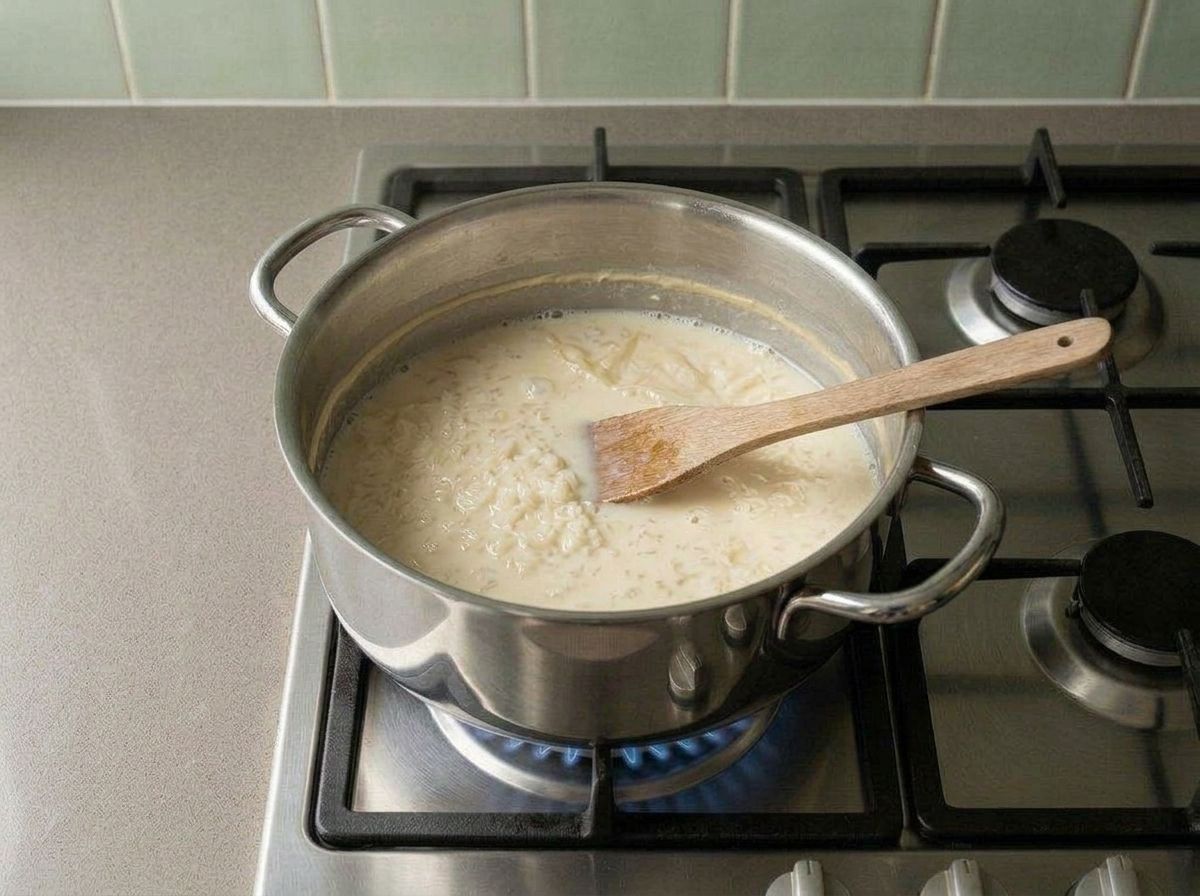
Simmer uncovered for 45 to 50 minutes, stirring every three or four minutes and scraping the bottom with a flat spatula. Stir the skin that forms on top and around the sides of the pot back into the milk. It is ready for the sugar when the rice is completely soft and breaking apart and the milk has reduced by about half and turned a pale ivory.
- 7
Stir in the sugar
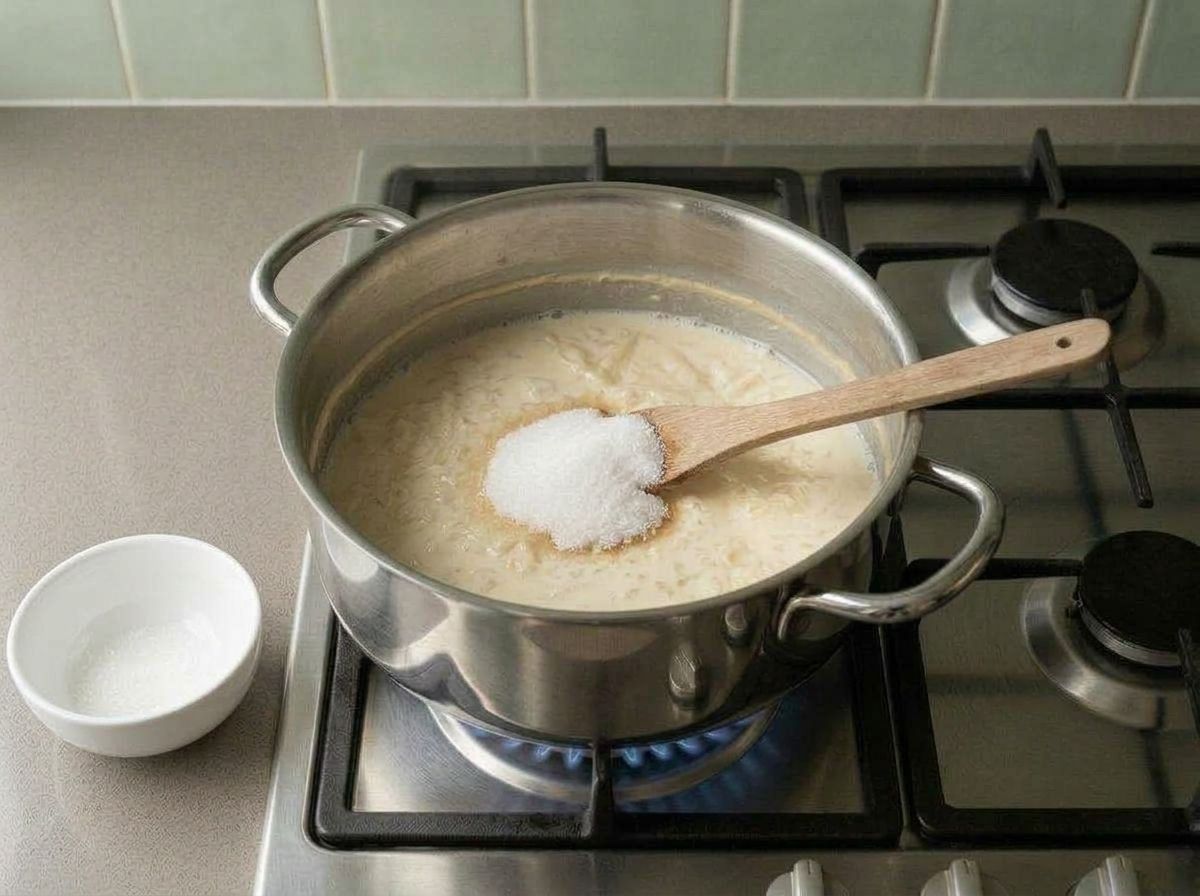
Add the sugar and stir until it dissolves. The kheer will thin out for a minute, then thicken again. Simmer for 5 minutes more, stirring constantly now, because the sweetened milk catches more easily.
- 8
Add the cardamom, saffron and nuts
Stir in the ground cardamom, the saffron with its soaking water, and half of the almonds and pistachios, plus the raisins if using. Simmer for 2 minutes.
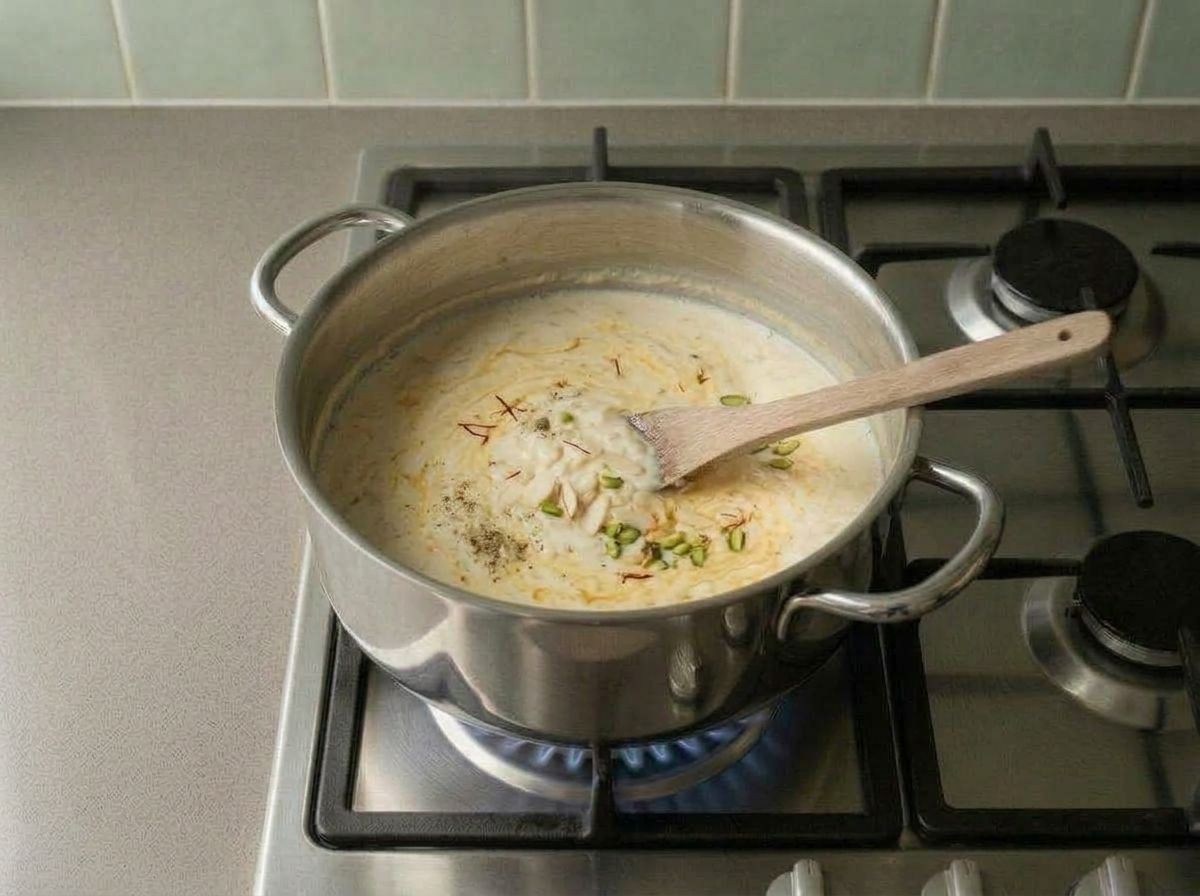
- 9
Check the consistency
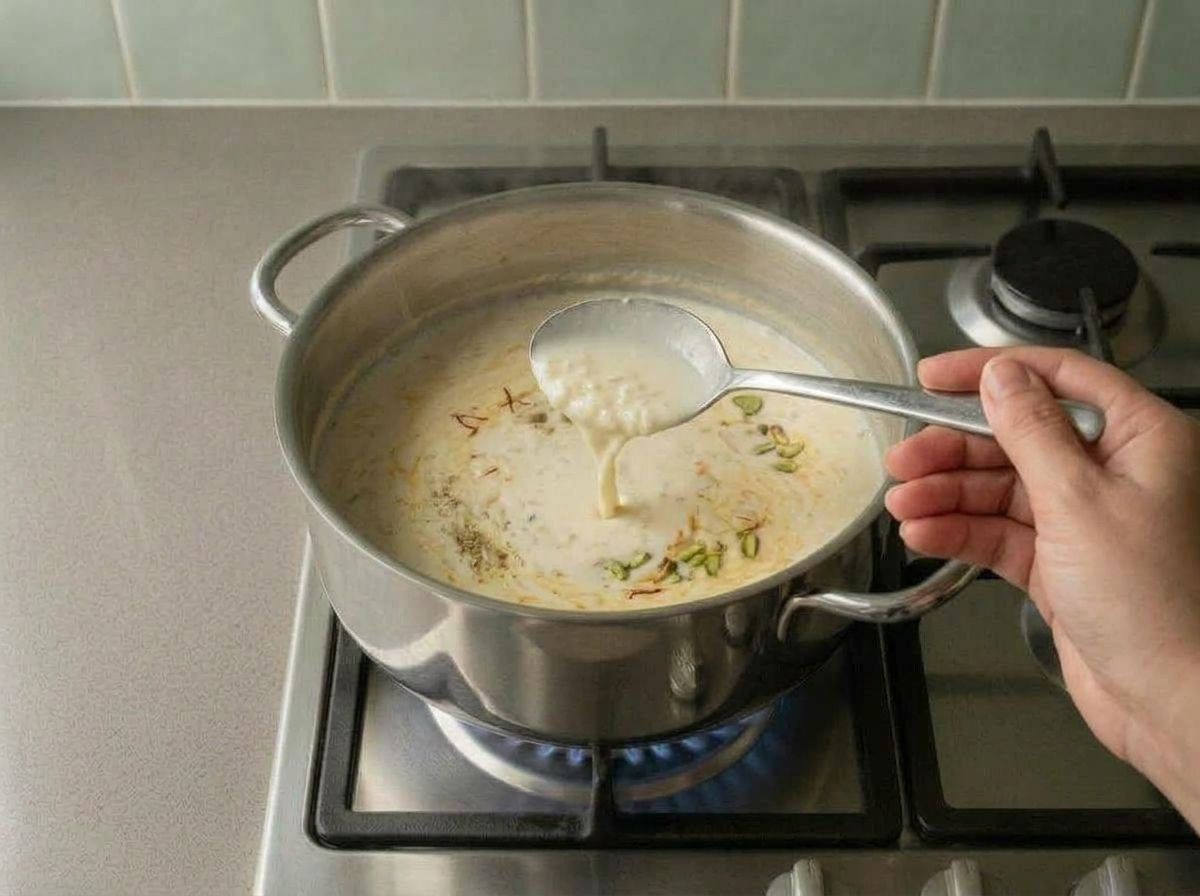
Lift the spoon: the kheer should coat the back of it and still pour off in a thick stream, like heavy cream with rice in it. It will thicken a lot as it cools, so take it off the heat now even if it looks thin. Stir in the rose water, if using.
- 10
Garnish and serve
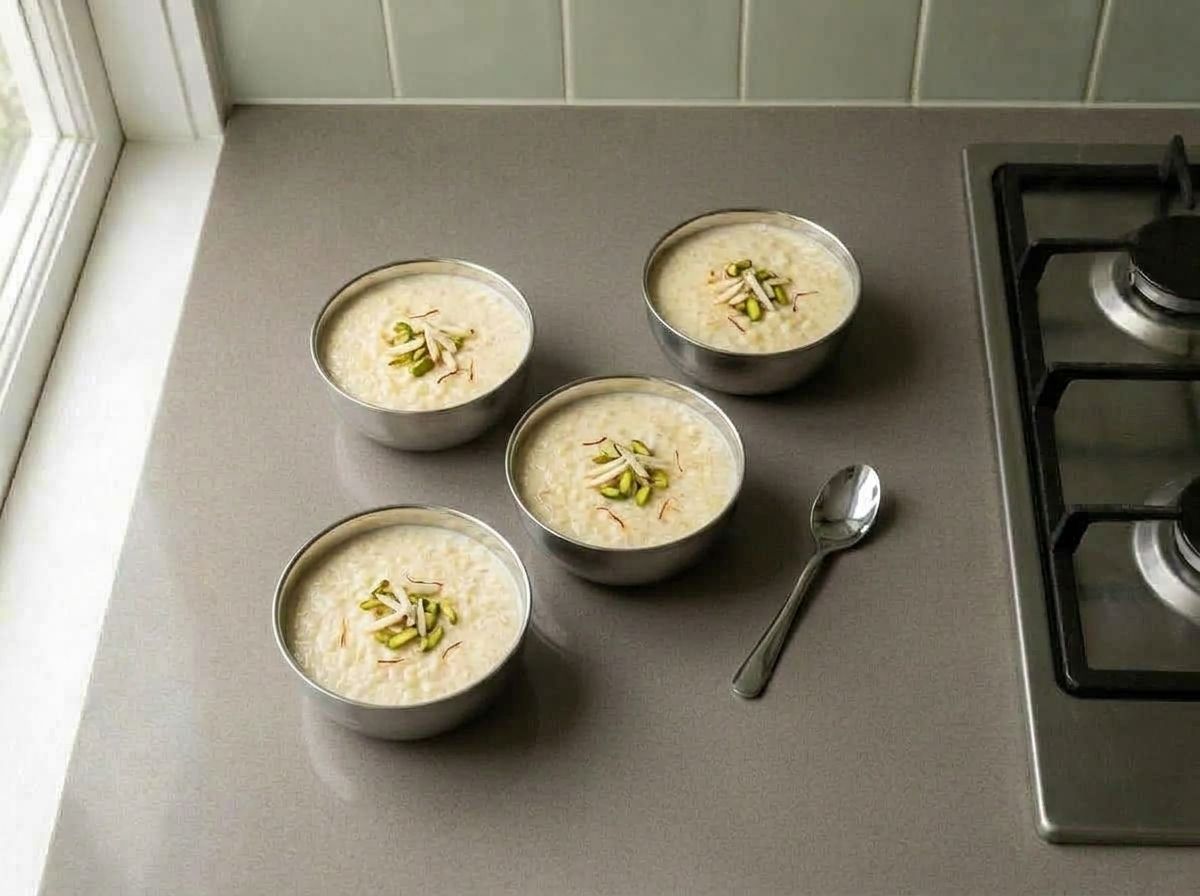
Ladle the kheer into small bowls and scatter the remaining almonds and pistachios on top. Serve it warm, or let it cool, stirring now and then, and chill for at least 4 hours to serve it cold.
Notes
Kheer thickens a great deal as it cools. Take it off the heat while it still pours from a spoon.
Add the sugar only once the rice is completely soft, or the grains can stay firm.
For a quicker version, see the FAQ for the condensed milk method.
Keeps for up to 4 days in the fridge. Loosen it with a little milk before serving. Do not freeze.
Nutrition Facts
6 servings · 285 g per serving
- Calories
- 313 kcal
% Daily Value*
- Total Fat
- 12.2 g16%
- Saturated Fat
- 5 g25%
- Sodium
- 94 mg4%
- Total Carbohydrate
- 42.4 g15%
- Dietary Fiber
- 1.4 g5%
- Sugars
- 31.9 g—
- Protein
- 10.7 g21%
Recipe from veggierecipes.blog
When it goes wrong
Troubleshooting
It’s just rice floating in sweet milk
It needs more time. Kheer is ready when the rice has broken down until the grains are soft and starting to fall apart and the milk has reduced by about half, which takes 45 to 60 minutes of simmering. Before that point it really is rice in milk. Keep it at a steady bubble, keep stirring, and judge by the coating on the back of the spoon rather than by the clock.
It set like a brick in the fridge
It was reduced too far. Kheer thickens dramatically as it cools, so it should leave the stove looking a little too thin, like heavy cream with rice in it, still pouring easily from a spoon. To rescue a set kheer, stir in warm milk two tablespoons at a time until it loosens. Next time take it off the heat about ten minutes earlier.
There are brown flecks and it tastes burnt
The milk scorched on the bottom of the pot. Do not scrape the burnt layer: pour the kheer straight into a clean pot, leaving the bottom behind, and taste. A light scorch often disappears, a strong one does not. To prevent it, rinse the pot with cold water before adding the milk, keep the heat low once it boils, and scrape the bottom with a flat spatula every three or four minutes, more often near the end.
The rice is still hard in the middle
Either the sugar went in too early or the rice was not soaked. Sugar slows the rice from absorbing water, so grains that were not fully soft before it was added stay firm. Add a splash of milk and keep simmering gently, and they will usually soften with another 15 minutes. Next time soak the rice and wait until a grain crushes completely between your fingers before adding the sugar.
It curdled when I added jaggery
Jaggery is slightly acidic, and stirred into milk that is still near boiling it can split it into fine curds. It is the reason Bengali payesh made with date palm jaggery is always sweetened off the heat. Let the kheer cool for five minutes, dissolve the grated jaggery in a little warm milk, then stir it in. Use about 2/3 cup of jaggery in place of the sugar.
A thick skin formed on top
That is the milk proteins setting as the surface dries, and it happens to any milk dessert left uncovered. While the kheer cooks, the skin that forms on top and on the sides of the pot is part of the reduction, so stir it back in. Once it is off the heat, stir it every few minutes as it cools, or press plastic wrap onto the surface before it goes into the fridge.
Before you serve
Serving & Storage
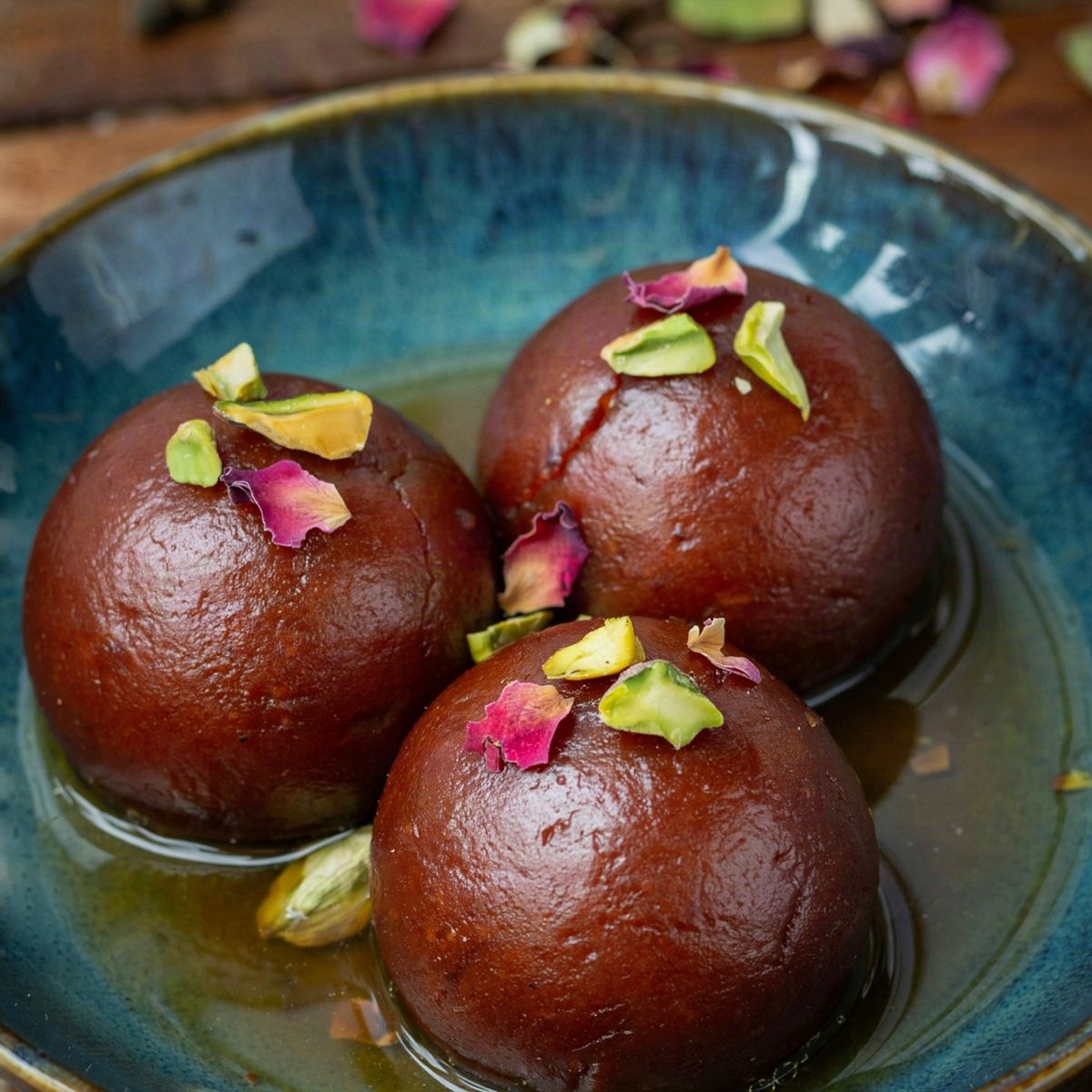
Kheer is eaten warm in winter and cold in summer, and both are correct. Warm kheer is looser and the cardamom is stronger; chilled kheer is thicker and tastes sweeter. In north India it often comes with hot puris, the puffed fried breads, and kheer puri is a festival meal of its own. At Diwali it sits beside the fried sweets as the one thing on the table that is not fried, so serve it with gulab jamun or jalebi.
Serve it in small bowls, about half a cup each, because it is rich. Clay pots, sold as matka or kulhad, are traditional for chilled kheer and phirni and absorb a little moisture, which thickens the top. Scatter the reserved nuts on just before serving, so they stay crisp, and add a few saffron threads or a sheet of vegetarian silver leaf for a festival table.
Making it ahead
Kheer is a good make-ahead dessert and is often better the next day, once the cardamom has spread through it. Make it up to two days ahead, cool it uncovered while stirring now and then, then cover it and chill. It will be much thicker by then. Loosen it with a few tablespoons of cold milk to serve it chilled, or warm it gently with a splash of milk to serve it hot.
Storing leftovers
Keep kheer covered in the fridge for up to four days. It thickens every day, so add milk as you serve it. Reheat it in a small pan over low heat, stirring, rather than in the microwave, which heats the edges until they boil over before the middle is warm. Do not freeze it. The rice turns grainy and the milk separates as it thaws, and no amount of stirring brings it back.
Still wondering
Frequently Asked Questions
Can I make kheer with condensed milk to save time?
Yes. Simmer the soaked rice in 4 cups of whole milk for about 25 minutes until soft, then stir in one 14 oz can of sweetened condensed milk, leave out the sugar entirely, and simmer 10 minutes more. It is quicker and reliably thick, but sweeter, with less of the gentle caramel flavor the long reduction gives.
Can I double the recipe?
Yes, in a wider pot rather than a deeper one, so the milk has more surface to evaporate from. Expect the simmering to take 20 to 30 minutes longer, and stir more often, because a heavier pot of milk scorches more easily on the bottom.
Is there a dairy-free kheer?
Not as such, because kheer is defined by its milk, but Kerala makes a coconut milk payasam that is dairy-free by tradition. Cook the rice in water until soft, sweeten it with jaggery, then add a can of full-fat coconut milk and heat it for only a few minutes. Coconut milk splits if it boils for long, so it cannot be reduced the way dairy milk is.
More Sweet Things For A Festival Table
Made this?