
Paneer Tikka Masala Recipe
Published · Updated
The charring is the whole dish, and most recipes skip it, which is how you end up with paneer butter masala wearing somebody else’s name.
Jump To Recipe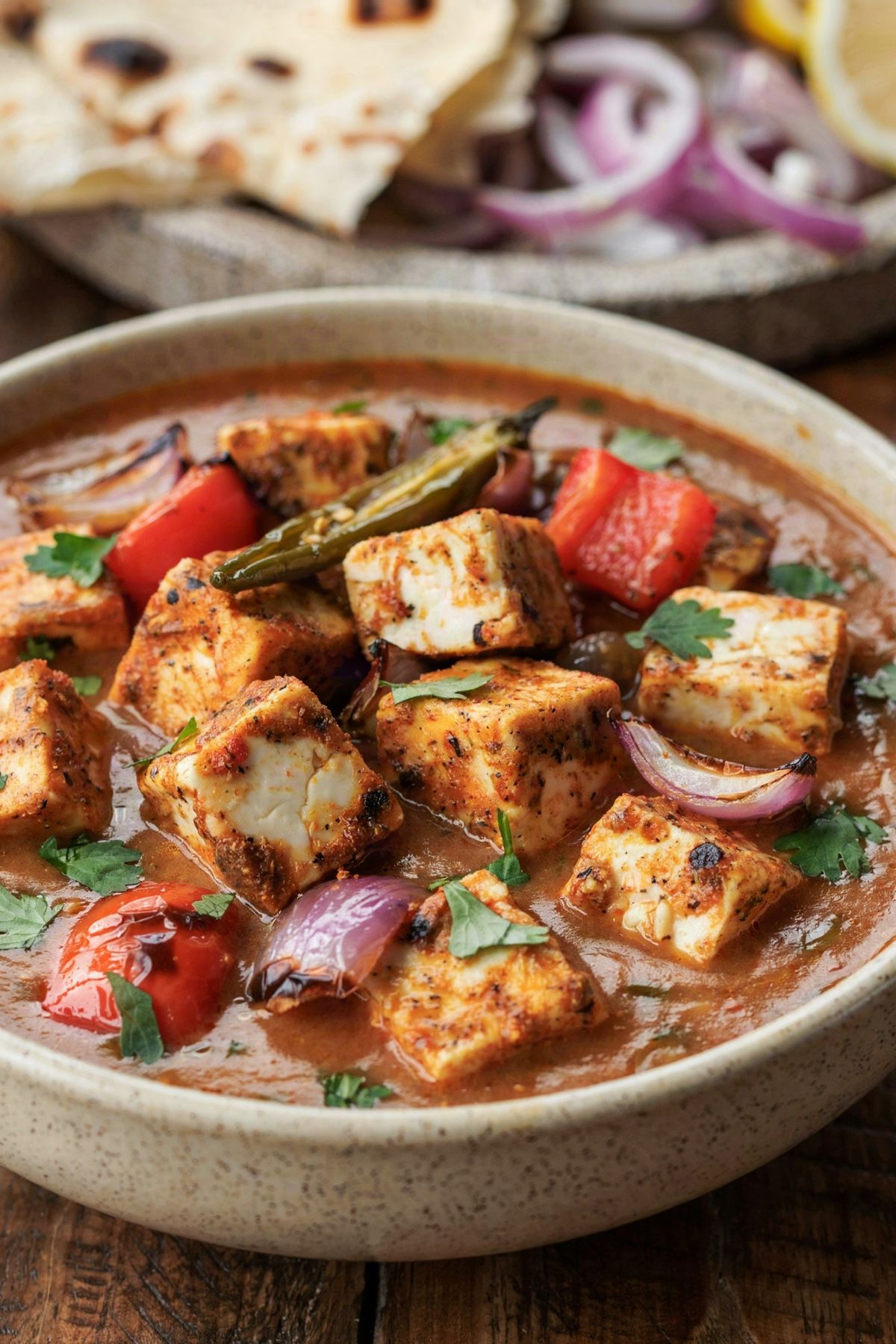
Why I Stopped Skipping The Broiler
The first several times I made this at home I left the tray out of it. It was a weeknight, the marinade was already one more bowl to wash, and the gravy seemed to be doing the real work anyway. So the paneer went into the sauce raw, straight from the block, and dinner was fine. It took me an embarrassingly long time to admit that what I had made was a slightly worse paneer butter masala with the wrong name on it.
What changed my mind was ordering the dish twice in the same week from two different places. One arrived as a uniform orange bowl, soft paneer suspended in something sweet and smooth, pleasant and completely anonymous. The other had black-edged cubes sitting up in the sauce with charred onion petals collapsed around them, and every third bite tasted of smoke rather than tomato. They were supposedly the same dish. Only one of them was worth the money.
So now the broiler goes on, and I have made my peace with the extra tray. It costs ten minutes and it is the only ten minutes in the recipe that you cannot get back later by simmering harder or adding more cream. Everything else here is negotiable. If you are short of time, buy the gravy spices pre-ground, use canned tomatoes rather than fresh, skip the cilantro. Just char the paneer.
The story
Tikka Masala Has An Origin Story Nobody Can Agree On
Tikka masala carries one of the most contested origin stories in restaurant cooking, and the paneer version inherits the entire argument. The best known claim belongs to Ali Ahmed Aslam of the Shish Mahal in Glasgow, who said that around 1971 a customer sent back a plate of chicken tikka as too dry, and that he answered it on the spot with a sauce improvised from spices and a tin of condensed tomato soup. He told that story for fifty years, and it is the version most people have heard.
It is not the only version. The food historians Peter and Colleen Grove traced a close relative to a recipe for shahi chicken masala in Mrs Balbir Singh’s Indian Cookery, published in 1961, three years before the Shish Mahal opened its doors. The Moti Mahal group in Delhi says its founders were serving something very like it to politicians in the late 1940s, alongside the butter chicken they are better known for. When Aslam applied in 2009 for protected designation of origin status from the European Union, the bid collapsed under competing claims from other British restaurants. Nobody won it, and the dish stayed everybody’s.
What nobody disputes is the scale it reached. In 2001 the British foreign secretary Robin Cook called chicken tikka masala a true British national dish, arguing in a speech that it demonstrated the way Britain absorbs and adapts outside influences. A dish that popular gets a vegetarian counterpart sooner or later, and in India, where the restaurant version had to feed a largely vegetarian dining room, that counterpart was never going to be a soy substitute. It was going to be paneer, which had been sitting in the tandoor repertoire the whole time.
The name is worth reading literally, because it is really a two-part instruction. Tikka means pieces or chunks, and it refers to something marinated and cooked over direct heat before anything else happens to it. Masala is the sauce those pieces are then finished in. So the dish is not a curry with paneer added; it is charred paneer and a gravy, made separately and introduced late. That is the whole structural difference between this and paneer butter masala, where raw or lightly fried cubes go into a milder, sweeter tomato and cream base and stay there. If you simmer the paneer in the sauce from the start, you have quietly cooked the second dish.
There is one more thing worth saying on a vegetarian site. Paneer is a fresh cheese, set with acid and pressed, and it does not have a convincing substitute. That puts the whole family of paneer mains, this one and shahi paneer and kadai paneer and the rest, out of reach of a dairy-free kitchen in a way that very few Indian dishes are. Most of the Indian canon adapts. This corner of it does not, which makes it one of the few places where cooking vegetarian rather than vegan is a genuine advantage rather than a compromise.
What to buy
Ingredient Notes
Paneer
Buy it vacuum-packed and firm rather than the crumbly fresh kind sold loose, which falls apart under the broiler. Whatever you buy, it will have been chilled hard, and cold paneer straight from the package is the single most common reason the finished dish squeaks. The hot salted soak in step one is not optional garnish; it relaxes the curd and lets the cubes take up a little water so they stay yielding through two rounds of heat. Frozen paneer works, thawed fully in the fridge overnight, and actually benefits from the soak more than fresh does.
Plain whole-milk Greek yogurt
The marinade has to cling to a smooth, wet cube of cheese, which ordinary yogurt is too loose to do. In India the answer is hung curd, yogurt drained in muslin for a few hours until it is thick and spoonable. Whole-milk Greek yogurt is already at roughly that consistency and is the honest shortcut. Avoid low-fat, which splits under the broiler and leaves a chalky film on the paneer instead of a coating that browns.
Gram flour (besan)
Two tablespoons of chickpea flour does more than thicken. It binds the yogurt to the paneer so the marinade does not slide off in the oven, and it dries into a thin crust that takes color much faster than yogurt alone. Toasting it first in a dry pan for a minute removes the raw bean taste, and if you cannot find it, cornstarch will hold the coating on but will not brown the same way.
Kashmiri red chili powder
This is a color ingredient far more than a heat ingredient, and it is why restaurant tikka masala is orange-red rather than brown. Kashmiri chilies are mild, roughly a quarter the heat of cayenne, so the two teaspoons here are not a typo. Substituting cayenne one for one will make the dish genuinely hot and still leave it looking dull, because cayenne carries less of the pigment. Sweet paprika plus a pinch of cayenne is the closest common substitute.
Kasuri methi (dried fenugreek leaves)
The one ingredient that makes a home version taste like a restaurant version, and the one people most often leave out. It is bitter and faintly maple-like, and it goes in twice here, once in the marinade and once off the heat at the end, because the aroma is volatile and mostly gone after a long simmer. Crush it between your palms as you add it. Fresh fenugreek and ground fenugreek seed are different products and are not substitutes; the seed in particular will make the sauce genuinely bitter.
Raw cashews
These are the body of the gravy. Blended into the cooked tomato they give the sauce weight and a faint sweetness without the flour or the extra cream that a lot of shortcut recipes reach for. They must be raw and unsalted; roasted cashews taste roasted and turn the gravy beige. If you are cooking for a nut allergy, an equal weight of raw sunflower seeds soaked in hot water for twenty minutes gets surprisingly close.
Canned whole peeled tomatoes
Better than fresh here for most of the year, and better than crushed or pureed, because whole tomatoes are packed at peak ripeness and you control how finely they break down. Crush them into the pan by hand so a little texture survives to the blender. If you use fresh, you want about 1 pound of very ripe tomatoes, peeled, and you will need to simmer noticeably longer to drive off the extra water.
Paneer Tikka Masala
Paneer marinated in spiced yogurt and charred under the broiler, then folded off the heat into a smooth cashew and tomato gravy so the cubes stay soft.
Ingredients
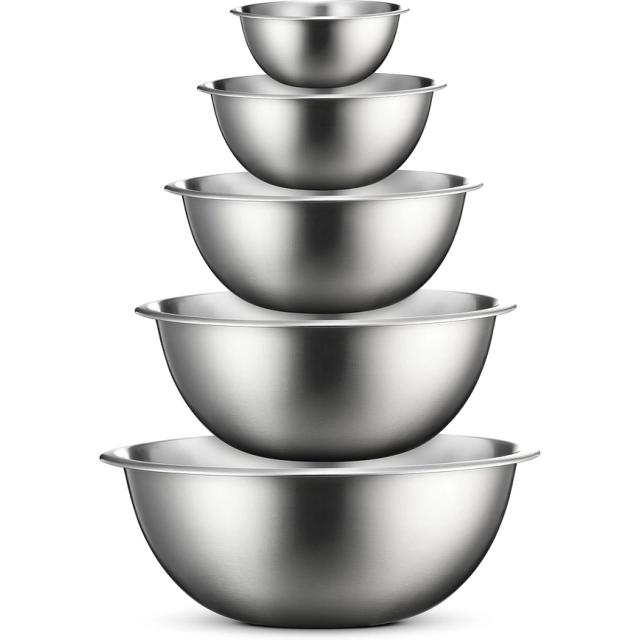
Equipment
As an Amazon Associate I earn from qualifying purchases, at no extra cost to you.

Instructions
- 1
Soften the paneer
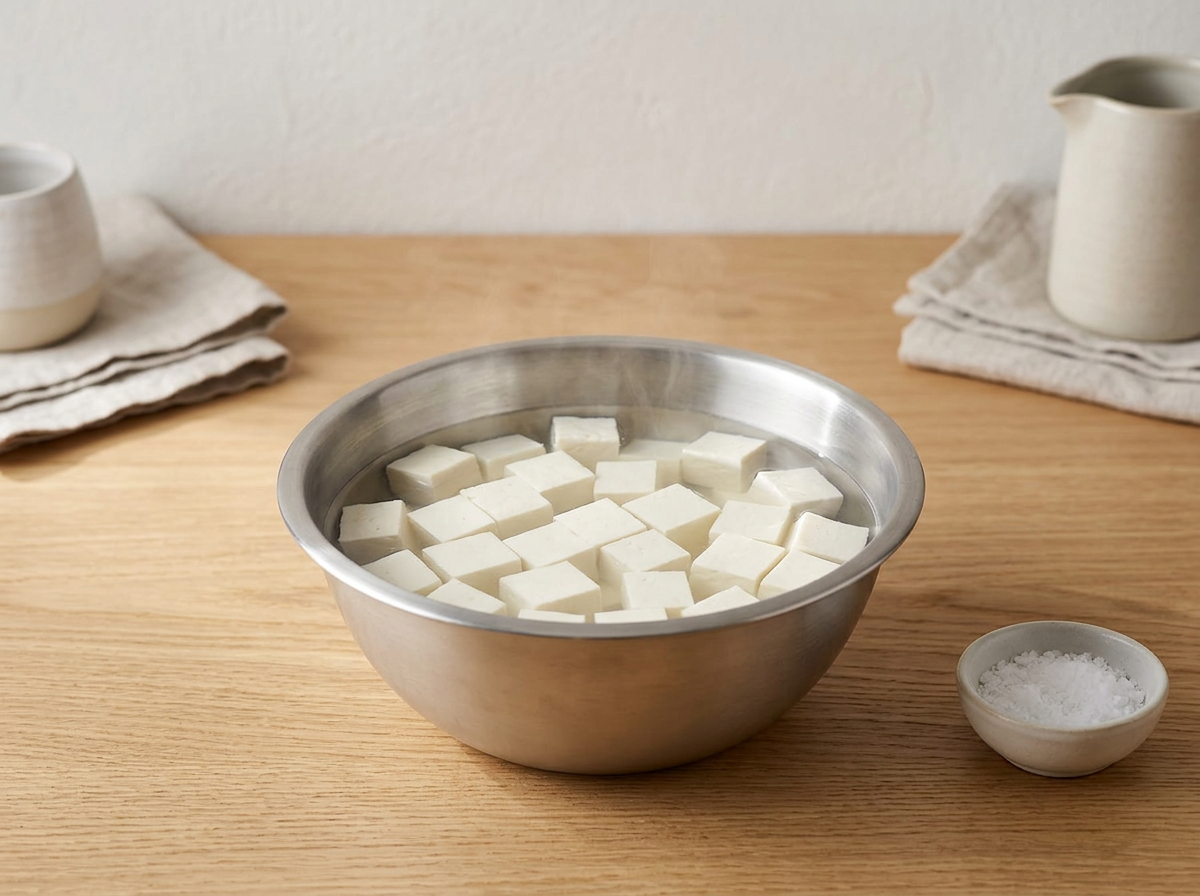
Put the paneer cubes in a bowl and cover them with hot tap water, stirring in 1 teaspoon of the salt. Leave them for 20 minutes while you mix the marinade. Hot tap water is warm enough to relax the curd without cooking the outside of the cubes, which is what boiling water does. Drain and pat dry.
- 2
Mix the tikka marinade
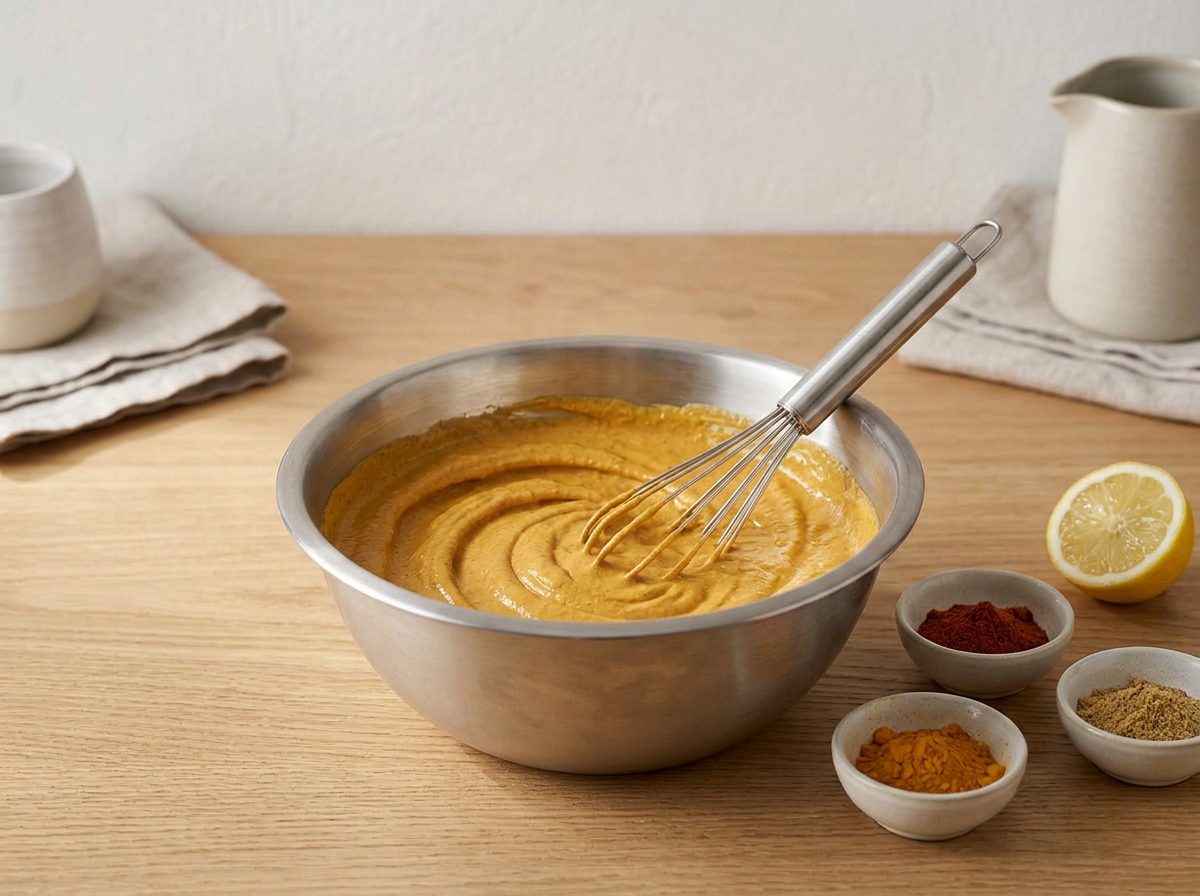
In a large bowl, whisk the yogurt with the gram flour, half the ginger, half the garlic, 1 teaspoon of the Kashmiri chili powder, 1 teaspoon of the cumin, 1 teaspoon of the garam masala, the turmeric, 1 teaspoon of the kasuri methi crushed between your palms, the lemon juice, 1 tablespoon of the oil and 1/2 teaspoon of the salt. Whisk until it is smooth and thick enough to coat a spoon.
- 3
Coat the paneer and vegetables
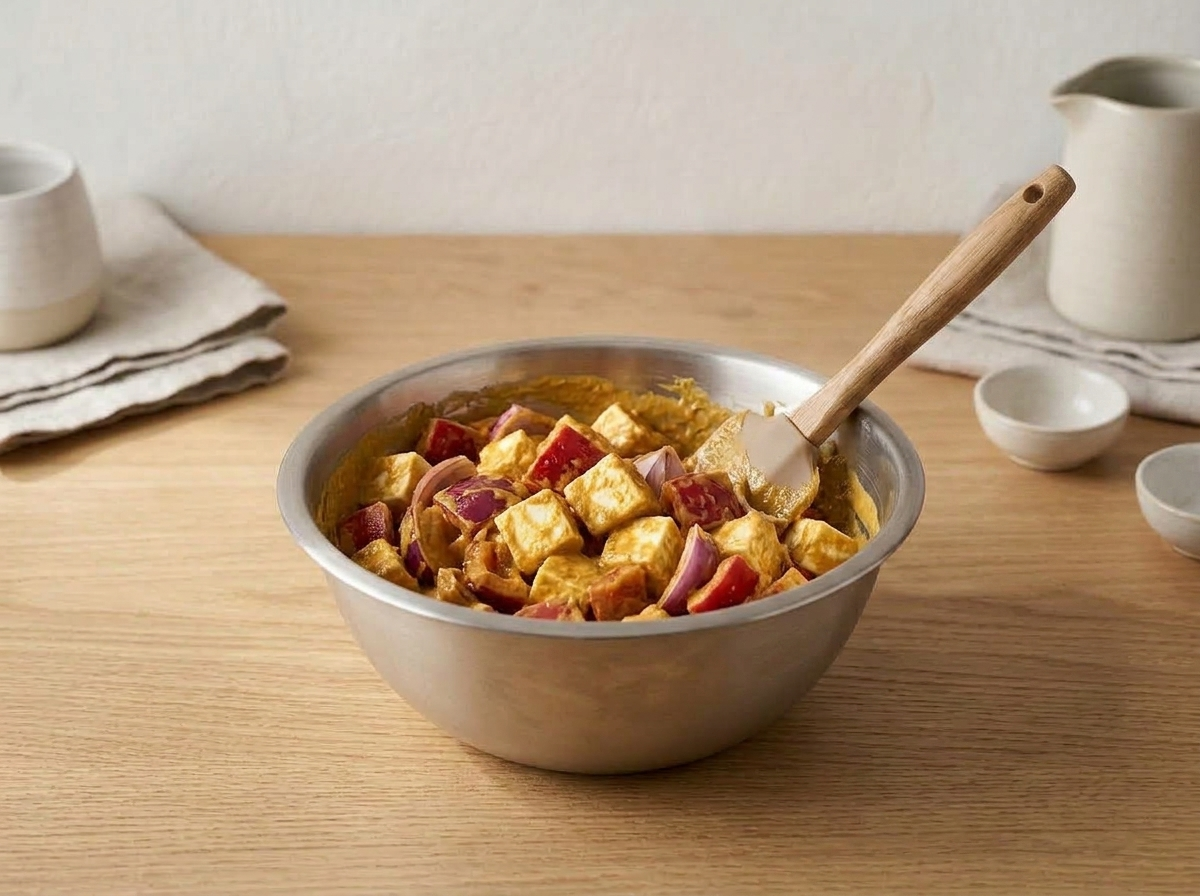
Fold the drained paneer, the bell pepper and the red onion petals through the marinade until every piece is covered. Cover the bowl and refrigerate for 30 minutes, or overnight if you have the time. Paneer does not absorb a marinade the way meat does, so this is about letting the coating set rather than soaking flavor in.
- 4
Char the tikka
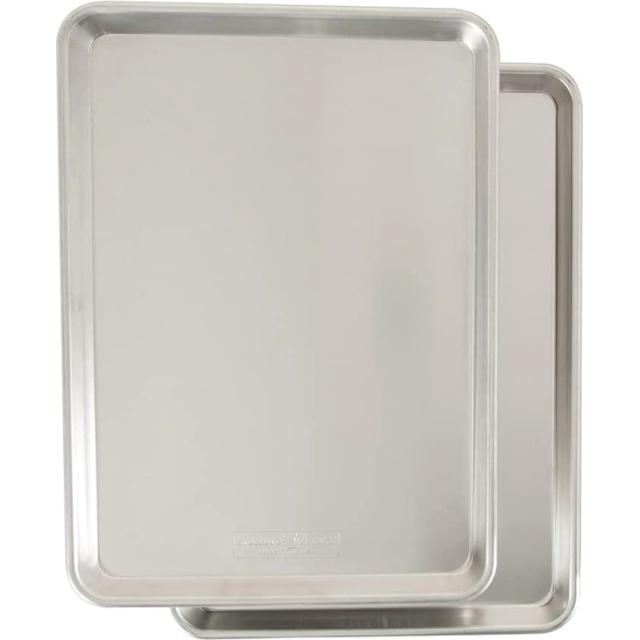
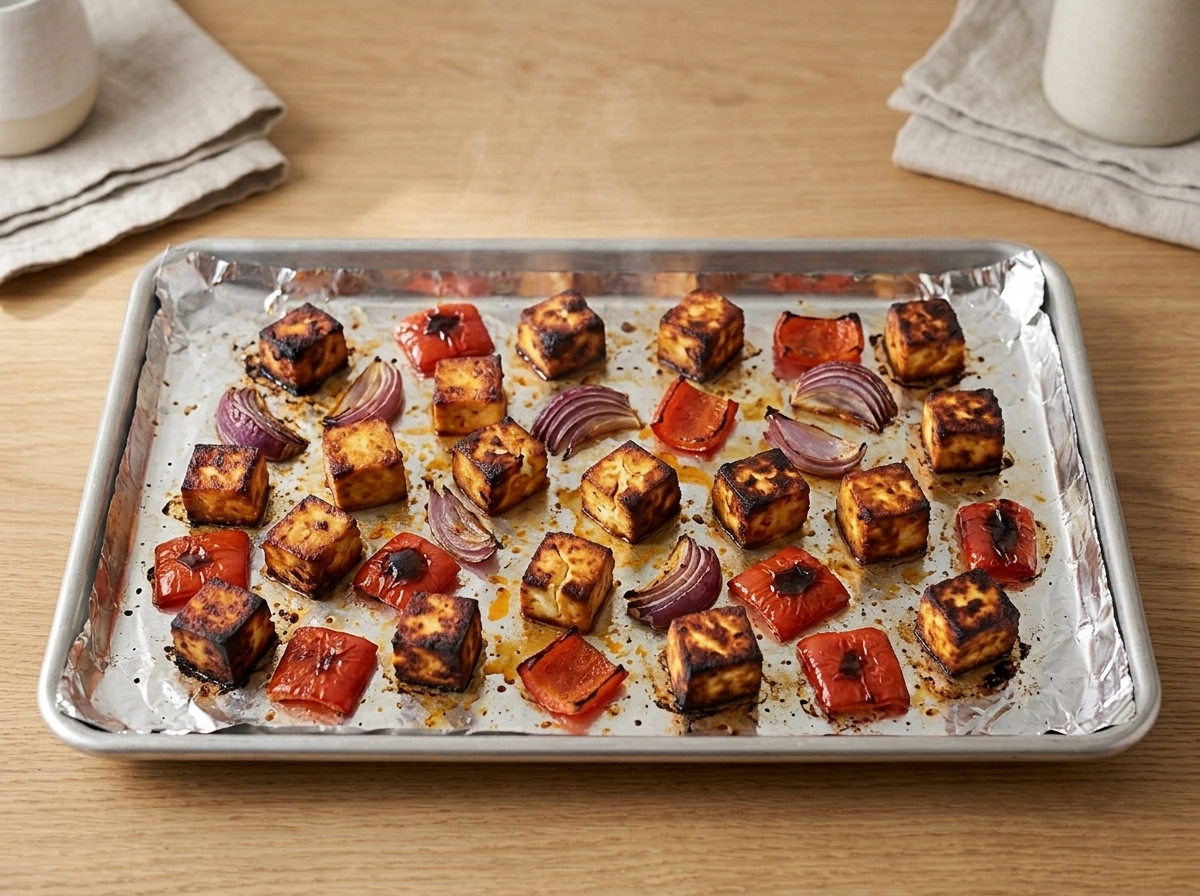
Heat the broiler with a rack about 6 inches below it and line a baking sheet with foil. Spread the paneer and vegetables in a single layer, leaving space between the pieces so they blister instead of steam. Broil for 8 to 10 minutes, until the marinade is dry and blackened in patches. Those black patches are the tikka. Set the tray aside.
- 5
Brown the onion
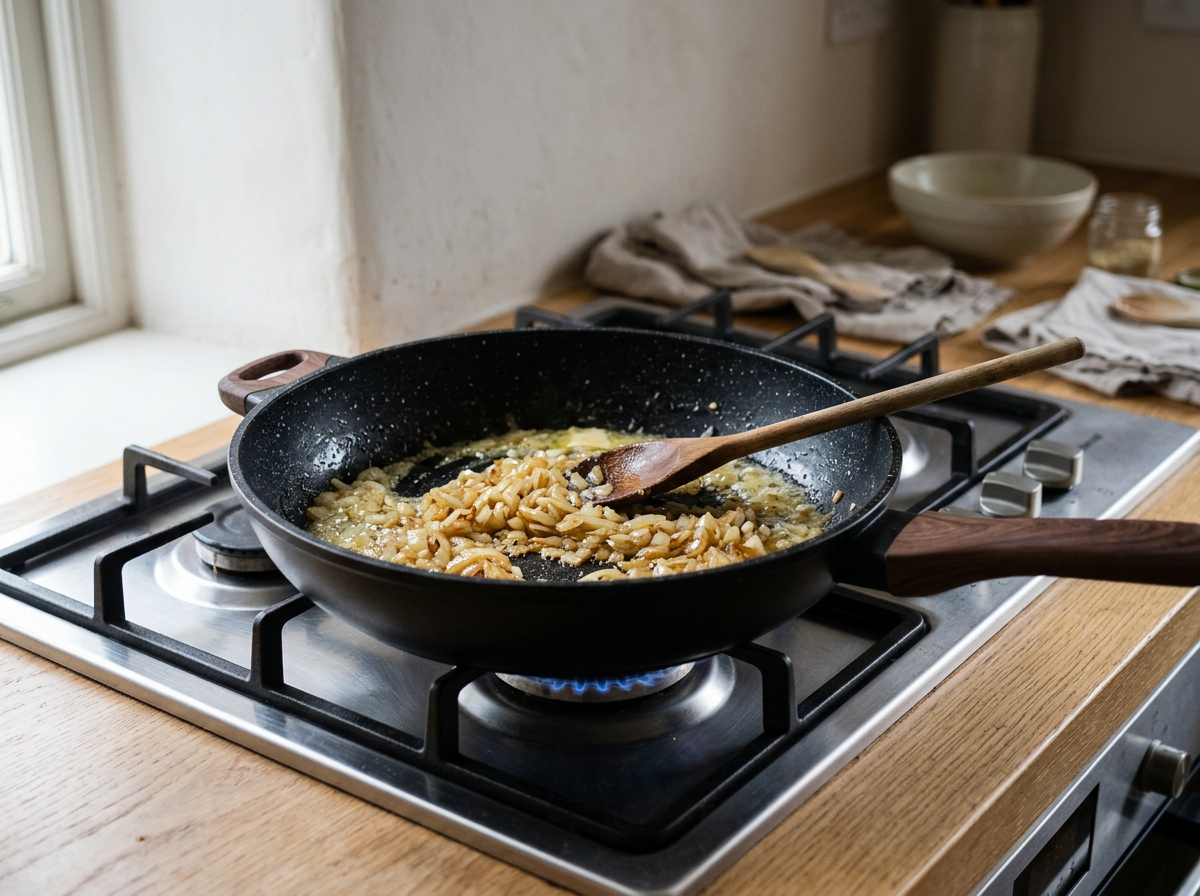
Melt the butter in a large skillet over medium heat and add the chopped yellow onion with 1/4 teaspoon of the salt. Cook for 10 to 12 minutes, stirring now and then, until the onion is soft and a deep golden brown at the edges. Pale onion makes a thin, sharp gravy, so give it the full time.
- 6
Bloom the spices
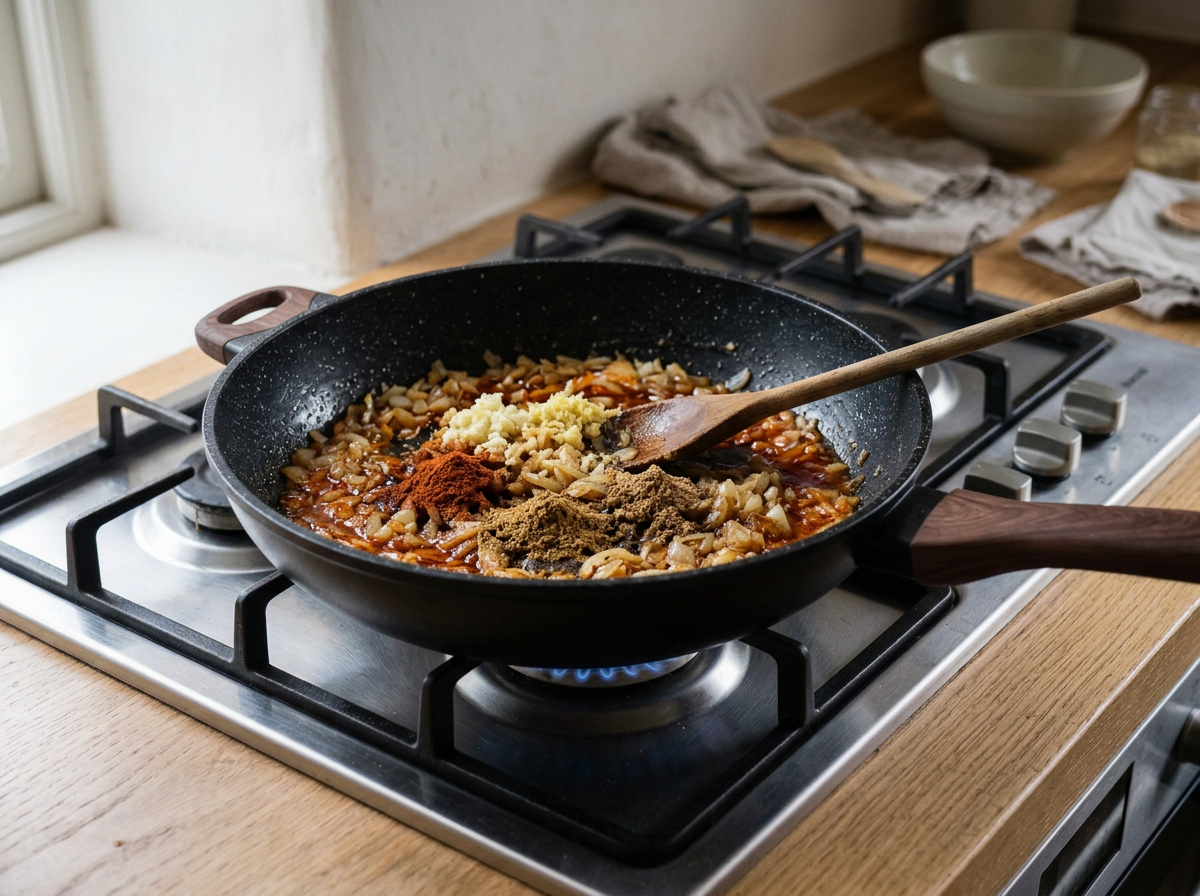
Add the remaining ginger and garlic and cook for 1 minute, then stir in the remaining Kashmiri chili powder, the remaining cumin and the ground coriander. Cook for 1 minute more, stirring constantly, until the spices smell toasted and the fat around them turns red.
- 7
Simmer the tomatoes and cashews
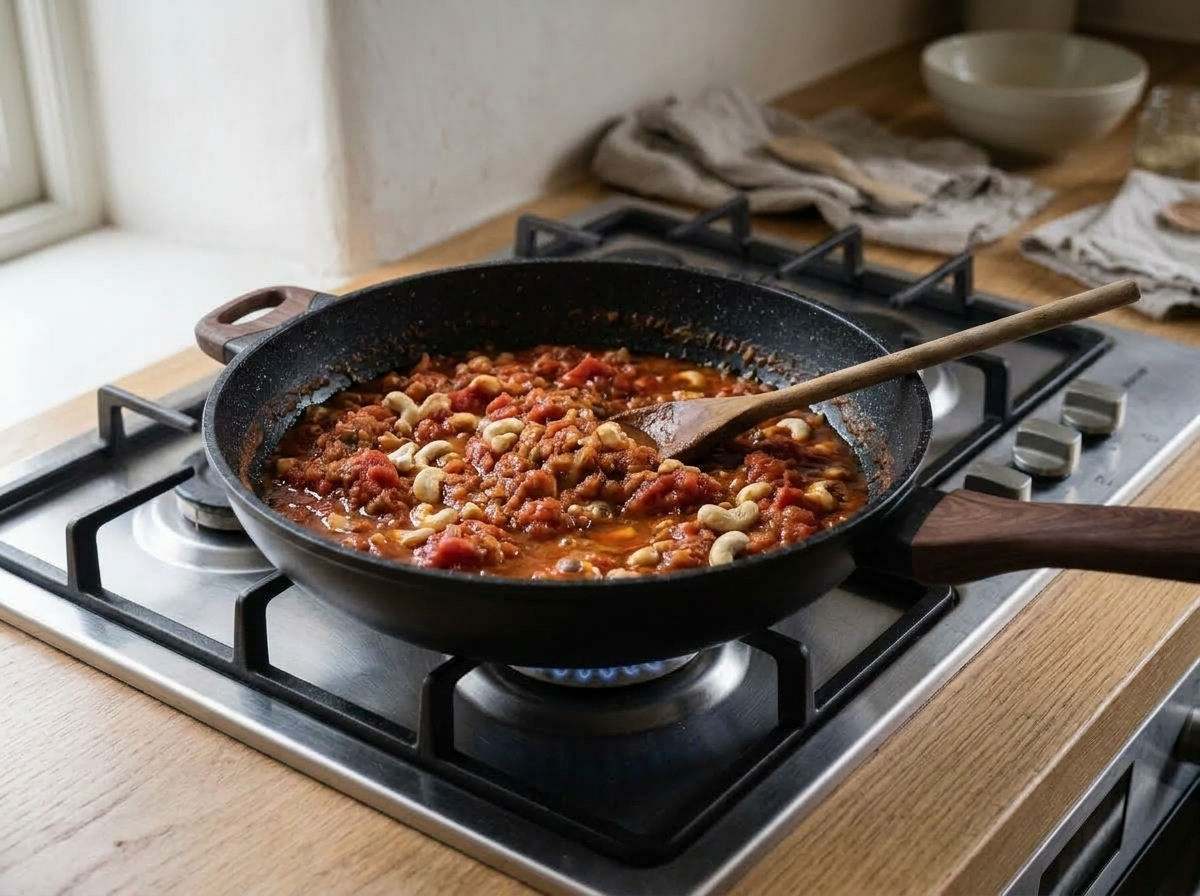
Crush the canned tomatoes into the pan with your hands, then add the cashews, the sugar, the remaining 1/4 teaspoon of salt and 1/2 cup of water. Simmer uncovered for 12 minutes, until the sauce has thickened and beads of red oil gather at the edge of the pan. That separation is the sign the tomato is cooked out.
- 8
Blend the gravy smooth
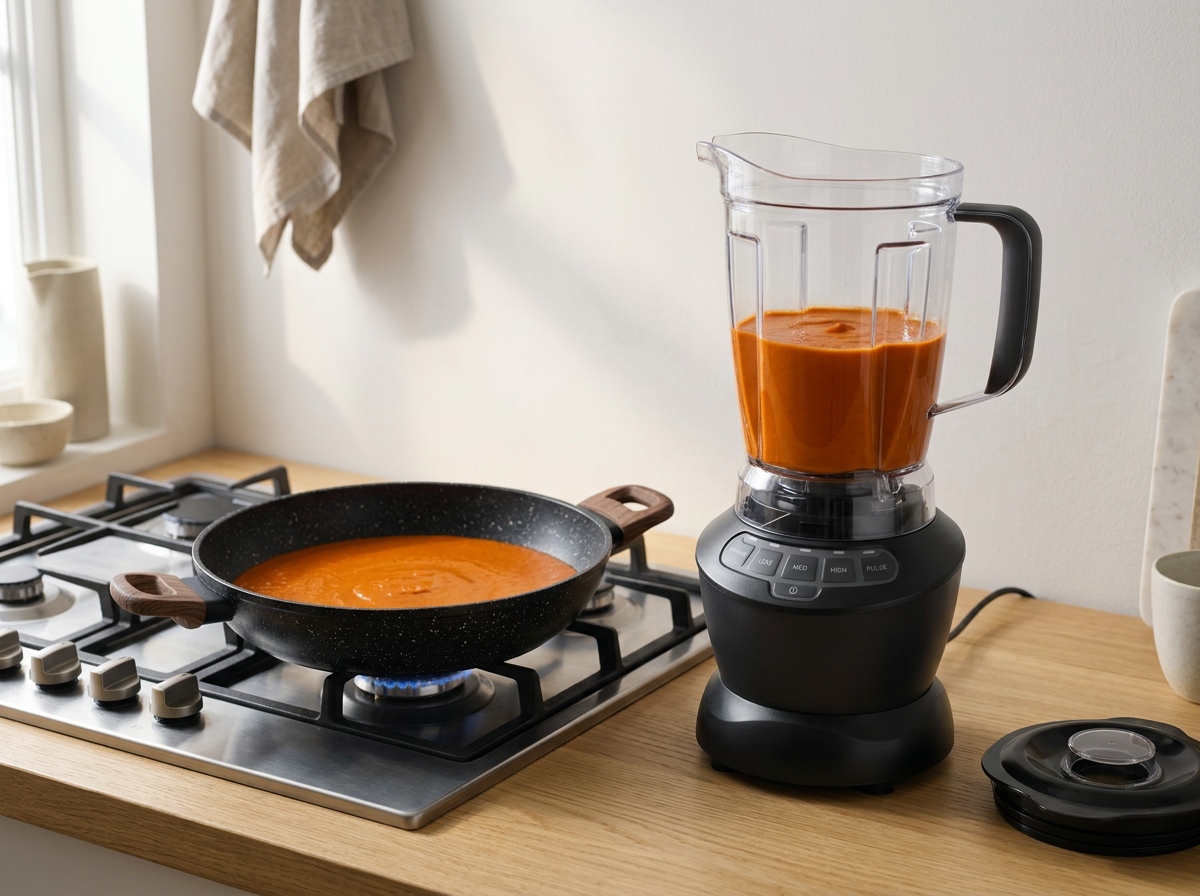
Take the pan off the heat and blend the sauce until it is completely smooth, either in a blender or with an immersion blender in the pan. Give it a full minute. A gravy that still has cashew grit in it will taste sandy no matter how good the seasoning is. Return it to the skillet over low heat.
- 9
Fold in the tikka and finish
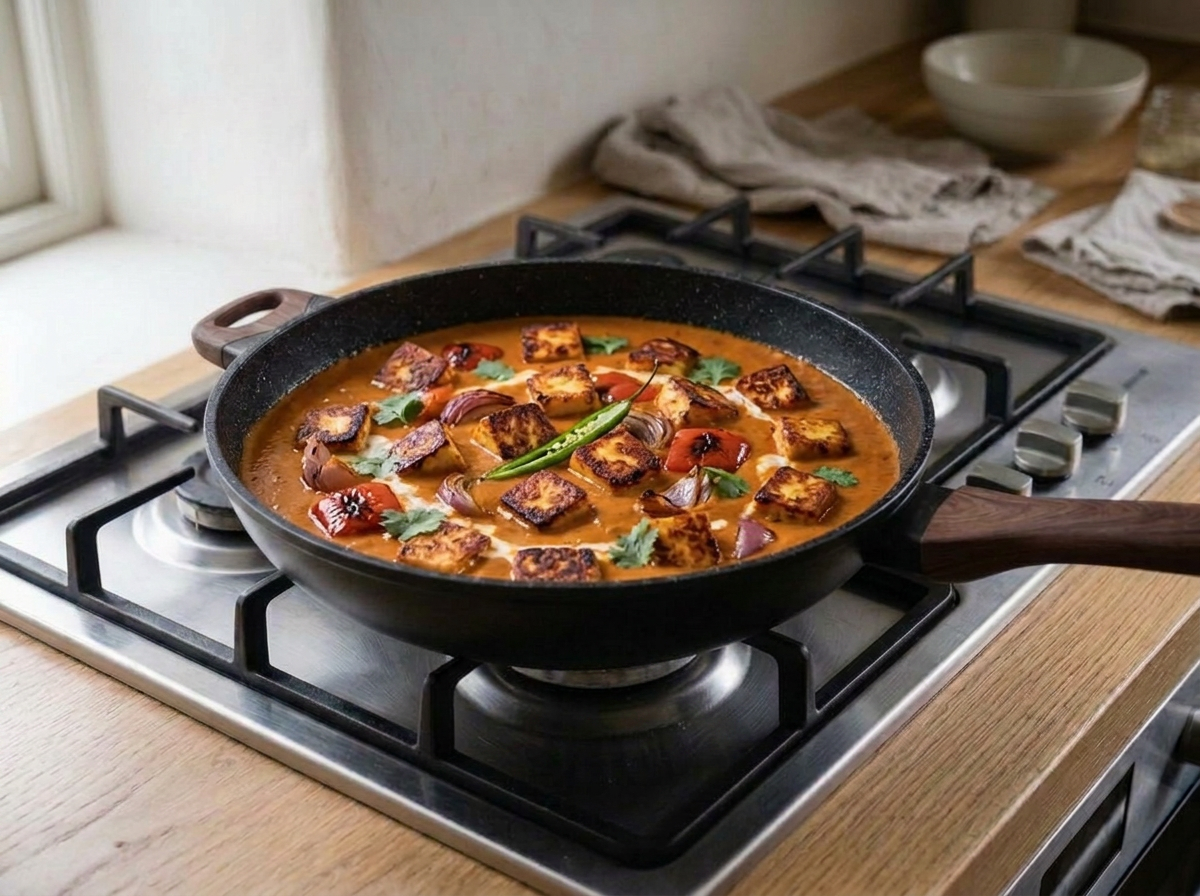
Stir in the cream, the remaining garam masala and the remaining kasuri methi crushed between your palms. Turn the heat off, then fold in the charred paneer and vegetables and any spiced juices on the tray. Let them warm through in the residual heat for 2 to 3 minutes without boiling, which would tighten the paneer and split the cream. Scatter the cilantro and the slit serrano over the top.
Notes
No broiler? Char the tikka in a dry cast iron or heavy skillet over high heat, in two batches, turning the pieces every couple of minutes until they are blistered. It takes about 8 minutes a batch.
The gravy can be built while the paneer marinates, which takes the real elapsed time down to about an hour. The times above assume you work through it in order.
Kashmiri chili powder is for color rather than heat. If you substitute cayenne, use a third as much and add 1/2 teaspoon of sweet paprika to make up the red.
Leftover marinated paneer and peppers, charred and left out of the gravy, make the starter version of this dish. Serve them with mint chutney and a squeeze of lemon.
Nutrition Facts
4 servings · 380 g per serving
- Calories
- 642 kcal
% Daily Value*
- Total Fat
- 52.4 g67%
- Saturated Fat
- 26.1 g131%
- Sodium
- 1372 mg60%
- Total Carbohydrate
- 24.7 g9%
- Dietary Fiber
- 4.7 g17%
- Sugars
- 9.6 g—
- Protein
- 22.2 g44%
Recipe from veggierecipes.blog
When it goes wrong
Troubleshooting
The paneer came out squeaky and rubbery
Two causes, and they compound. The first is skipping the hot salted soak, which leaves the curd tight and dry going into the oven. The second is boiling it in the gravy at the end. Paneer protein is not like meat; it does not tenderize with longer cooking, it only contracts and squeezes out moisture, so every extra minute in a simmering sauce makes it worse. Fold it in with the heat off and give it two or three minutes of residual warmth, no more.
The marinade slid off in the oven and burned on the tray
The yogurt was too thin, or the paneer was still wet from the soak. Use thick Greek yogurt or drained hung curd rather than the pourable kind, keep the gram flour in, and pat the cubes properly dry before they go into the bowl. A marinade that runs off has nothing to crust with and will scorch on the foil while the paneer above it stays pale.
It tastes fine but nothing like a restaurant tikka masala
You are almost certainly missing the char, and it is not a subtle difference. If the pieces came out of the broiler evenly orange with no black on them, the rack was too far from the element or the tray was crowded so the pieces steamed in their own moisture. Get the rack about 6 inches up, spread the pieces out with space between them, and let some patches go properly black. The other usual culprit is no kasuri methi.
The sauce is gritty rather than smooth
Undercooked cashews or an underworked blender. Cashews need the full twelve-minute simmer to soften before they will break down, and then the blender needs a full minute, not a few pulses. An immersion blender in a wide skillet struggles more than a jug blender because the pieces keep escaping the head. If it is still sandy, push the blended sauce through a fine mesh strainer before you add the cream.
The sauce split into oil and grains after I added the cream
Heat. Cream added to a sauce at a rolling simmer, or reheated to a boil afterwards, will break. Take the pan down to low before the cream goes in and never let it bubble after that. If it has already split, take it off the heat and whisk in a tablespoon of cold cream or a spoonful of yogurt; that will usually pull it back together.
It is brown, not the orange-red I was expecting
This is a spice problem rather than a technique problem. The color comes almost entirely from Kashmiri chili powder, and cayenne, hot paprika or generic chili powder will not do it no matter how much you use. It also fades if the spices are old, since the pigment degrades faster than the flavor does. Blooming the powder in fat, as step six does, releases more color than stirring it into liquid will.
Before you serve
Serving & Storage
In a north Indian restaurant this would arrive with bread rather than rice, and it is worth following that lead at least once. The gravy is thick enough to pick up in a torn piece of naan or roti, and a dish this rich benefits from something plain to break it up: a cucumber and onion kachumber dressed only with lemon and salt, or a bowl of plain yogurt. If you want rice, jeera rice is the traditional partner and its cumin echoes the gravy without competing.
Be honest with yourself about the richness. This is a special-occasion bowl at 642 calories a serving, most of it from the paneer, butter and cream, so four servings really is four servings and not two. A green vegetable on the side does more for the plate than a larger portion of the curry does.
Making it ahead
The gravy is the part that keeps, and it improves overnight; make it through the blending step, cool it, and refrigerate it for up to three days or freeze it for three months. The tikka does not keep in the same way, so marinate and broil the paneer on the day and fold it into the reheated sauce. If you need to get further ahead than that, the marinated raw paneer will sit covered in the fridge for a full day and comes out better for the extra time.
What does not work is assembling the whole dish in advance and reheating it. The paneer sits in hot liquid for a second time and tightens, and the char softens back into the sauce, which leaves you with the anonymous orange bowl the recipe was written to avoid.
Storing leftovers
Leftovers keep three days in an airtight container in the fridge. Reheat them gently in a covered pan over low heat with a splash of water or cream, and stop while the sauce is hot rather than bubbling. A microwave will work if you go in thirty-second bursts and stir between them, but a hard blast will make the paneer tough and split the cream. Freezing the finished dish is not worth it: the paneer comes out grainy and the sauce separates on thawing.
Still wondering
Frequently Asked Questions
Can I make this vegan?
Not really, and this is the one dish where the substitution genuinely does not hold up. Firm tofu, pressed and cubed, takes the marinade and chars beautifully, and cashew cream stands in for the dairy cream well enough that most people would not notice. But tofu is a set soy curd and paneer is a pressed milk curd, and the springy, squeaking bite of paneer is the thing people order this for. Make it with tofu by all means, it is a good dinner. Call it tofu tikka masala, because that is what it is.
Is this gluten-free as written?
Yes. Gram flour is ground chickpea, not wheat, and nothing else in the recipe carries gluten. The two things to watch are both outside the ingredient list: check your garam masala and asafoetida blends, which are sometimes cut with wheat flour as an anti-caking agent, and serve it with rice rather than naan or roti.
Can I double it for a crowd?
Double the gravy without changing anything except the pan, which needs to be wide enough that the tomato still reduces in about twelve minutes rather than fifteen or twenty. The tikka is the part that does not scale on one tray. Eight hundred grams of paneer plus the vegetables will crowd a single baking sheet and steam, so broil it in two trays or two batches and accept the extra ten minutes. Keep the salt at exactly double; it is easy to over-season a doubled curry.
Can I stop after the tikka and serve that on its own?
Yes, and it is a genuinely good starter rather than a consolation prize. Thread the marinated paneer, peppers and onion onto skewers before broiling, give them the same 8 to 10 minutes, and serve them hot with mint chutney, sliced raw onion and a hard squeeze of lemon. That is paneer tikka, the dish this one is built on top of. If you want both, make one and a half times the marinade and hold a dozen cubes back from the gravy.
More Indian Dishes To Build The Meal Around
Made this?