
Kimchi Fried Rice Recipe
The kimchi that has gone too sour to eat from the jar is exactly the kimchi this dish wants.
Jump To Recipe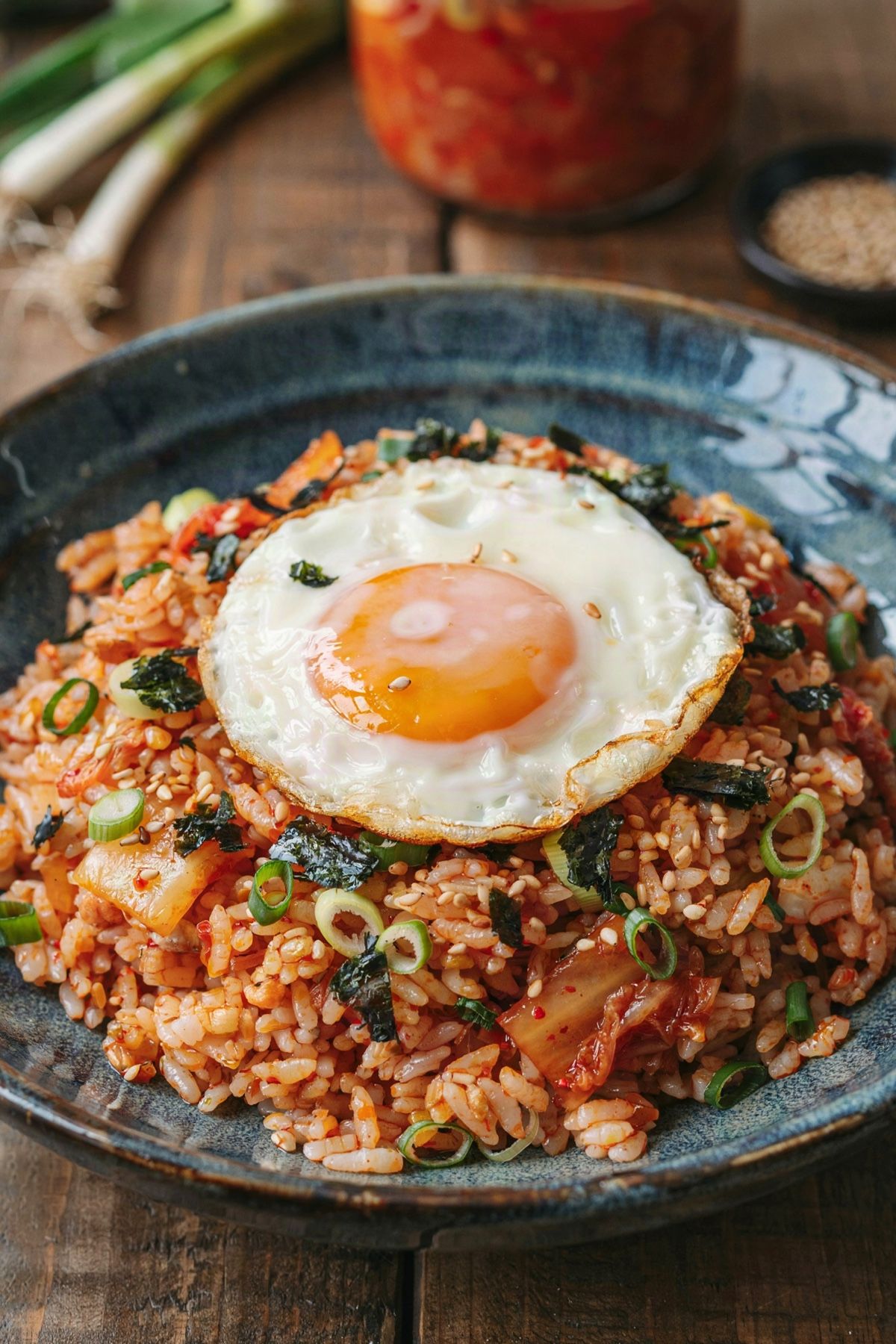
The Jar I Nearly Threw Away
The first kimchi fried rice I made was a rescue. A jar had been sitting at the back of the fridge for two months, and when I opened it the lid hissed, the brine had gone cloudy and the whole thing smelled like a cider that had turned. I was about to bin it when a Korean friend stopped me and said that was the good stuff, and that nobody in her family would waste kimchi like that on eating it raw. It went into a pan with yesterday’s rice and it was the best thing I had cooked that month.
It took a few more goes to learn why hers was better than mine. I had been tipping everything into the pan at once, which gives you warm pink rice with wet cabbage in it. She fried the kimchi on its own first, for longer than felt reasonable, until the edges caught and the sharpness cooked off into something sweet and deep. Then the rice, then the sesame oil with the heat off, then the egg. The order is the recipe. Everything else is a quantity.
The other thing that jar taught me was to read the label. It listed salted shrimp and anchovy sauce, which is what nearly every traditional kimchi is seasoned with, and it was the first time I understood that a bowl of cabbage and rice could quietly not be vegetarian at all. Now I buy the jar that says vegan, let it get properly sour, and make this about once a fortnight.
The story
Kimchi Fried Rice Is What Sour Kimchi Is For
Kimchi was never meant to be eaten at one stage of its life. Traditionally a household made it in bulk at kimjang, the late autumn cabbage-salting that still empties Korean markets of napa cabbage every November, and then ate its way through the crocks over the winter. Fresh kimchi is crisp, salty and barely sour. A few weeks on it is shin kimchi, sour kimchi, fizzy and sharp, and the cabbage has gone soft and translucent. Months on it is mugeunji, aged kimchi, too strong for most people to eat from the jar. Korean cooking has a dish for every one of those stages, and the sour and aged ones are where the cooked dishes live: kimchi jjigae, the stew, kimchi jeon, the pancake, and kimchi bokkeumbap, which is this. Sourness is not a fault the recipe works around. It is the ingredient.
Fried rice itself is a newer arrival in Korea than the kimchi. Bokkeumbap, from bokkeum, stir-fried, and bap, cooked rice, is twentieth-century home food built on the fact that cold rice from the day before fries better than fresh, and the kimchi version came out of the same thrift. After the Korean War, Spam arrived through the American bases and was folded into Korean cooking out of necessity before it became a taste; budae jjigae, army base stew, is the famous example, and the diced Spam in a great many kimchi fried rices is the same history in a smaller pan. The dish then became the food of people cooking for one: the cheapest thing on a bunsikjeom snack shop menu and the standard dinner of the student living alone with a rice cooker and a jar. It has been sung about, by Byun Jin-sub in the late 1980s and by Taeyang in 2010, which is not something you can say of many leftovers.
It also has a restaurant form that explains the finish. At a dakgalbi or nakji-bokkeum place, once the main dish has been eaten off the tabletop griddle, the server scrapes rice into the sauce that is left, adds crumbled gim and a slick of sesame oil, presses it flat and lets it crisp. That last minute of stillness, and the seaweed and sesame oil at the end, are what separate a Korean fried rice from a Chinese one, and they are in the method below.
The vegetarian question sits in the jar rather than in the pan. Kimchi is cabbage, chili, garlic and ginger, but almost every traditional recipe seasons it with jeotgal, salted fermented seafood: saeujeot, tiny salted shrimp, and myeolchi aekjeot, anchovy sauce, which feed the fermentation and give the finished kimchi its depth. That is why a jar labeled simply kimchi is very rarely vegetarian, and why the vegan kimchi in this recipe is a real choice rather than a formality. The idea is not new. Korean Buddhist temple cooking has made kimchi without any seafood for centuries, and without garlic, scallion or onion as well, since the five pungent vegetables are excluded from temple food, using soy sauce and fermented soybean for the depth instead. The vegan jars on American shelves take a gentler route, swapping the seafood for salt, miso or seaweed and keeping the garlic. Either way the fried rice needs no adaptation. The dish was always cabbage and rice; the only thing that changes is which jar you open.
What to buy
Ingredient Notes
Kimchi, ripe and vegan
Two things to get right, and both are on the jar. First, the label: look for one that says vegan or lists no fish sauce, anchovy, salted shrimp or fermented seafood, since traditional kimchi is seasoned with those. Nasoya, Trader Joe’s and Wildbrine all make a vegan napa cabbage kimchi that works here, and any Korean grocery sells one. Second, the ripeness: the jar should hiss when you open it, smell sharply sour, and the cabbage should be soft and translucent rather than crisp and white. A fresh jar makes a flat fried rice. If yours is young, leave it sealed on the counter for a day or two, or stir a teaspoon of rice vinegar into the sauce.
Rice
Short-grain or medium-grain white rice, cooked the day before and cold from the fridge. Overnight in the fridge dries the surface of each grain so it fries and separates instead of steaming into a gluey mass, which is what freshly cooked rice does in a hot pan. Jasmine works well enough; basmati stays dry and separate and never quite tastes like the dish. The same-day fallback is under the recipe card.
Kimchi juice
The brine in the jar is the seasoning of the dish and most of its salt, so pour it off and measure it rather than letting it drain away. A quarter cup for four servings is right for a well-fermented jar; if the jar is nearly empty, make up the difference with water and a pinch of salt. Without it the rice tastes of gochujang rather than of kimchi.
Gochujang
The fermented red chili paste, sold in a red tub, not gochugaru, the loose chili flakes. A tablespoon deepens the color and adds a sweet, savory heat behind the sourness; the kimchi carries most of the actual spice, so a mild jar and a full tablespoon of paste still makes a medium-hot bowl. Almost every gochujang contains wheat, which is why this recipe is not gluten free as written; a teaspoon of gochugaru is the fallback.
Toasted sesame oil
Goes in with the heat off, never as the frying oil, because it burns and turns bitter above a gentle heat. A tablespoon folded through at the end is what makes the rice taste Korean rather than generically spicy. Use the dark toasted kind, ideally a Korean brand, which is stronger than the Japanese ones.
Eggs, and the optional tofu
A sunny side up egg with a runny yolk is the sauce for this dish: you break it with your spoon and stir it through, and the yolk softens the heat and rounds off the sourness. Fry the eggs while the rice crisps, so the yolks are still liquid at the table. For a vegan bowl leave the eggs off and add the smoked tofu from the optional line, browned in the oil before the onion goes in. It stands in for the diced Spam that half the kimchi fried rices in Korea are made with, and smoked tofu gets closer to that than plain.
Roasted seaweed (gim)
The small packs of seasoned roasted seaweed sold as a snack, crumbled over the top at the end, are the classic finish: salt, a toasted flavor and the particular smell of a Korean table. A sheet of plain kimbap gim cut into thin strips with scissors does the same job. Japanese nori is thinner and less seasoned, so use a little more.
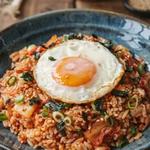
Kimchi Fried Rice
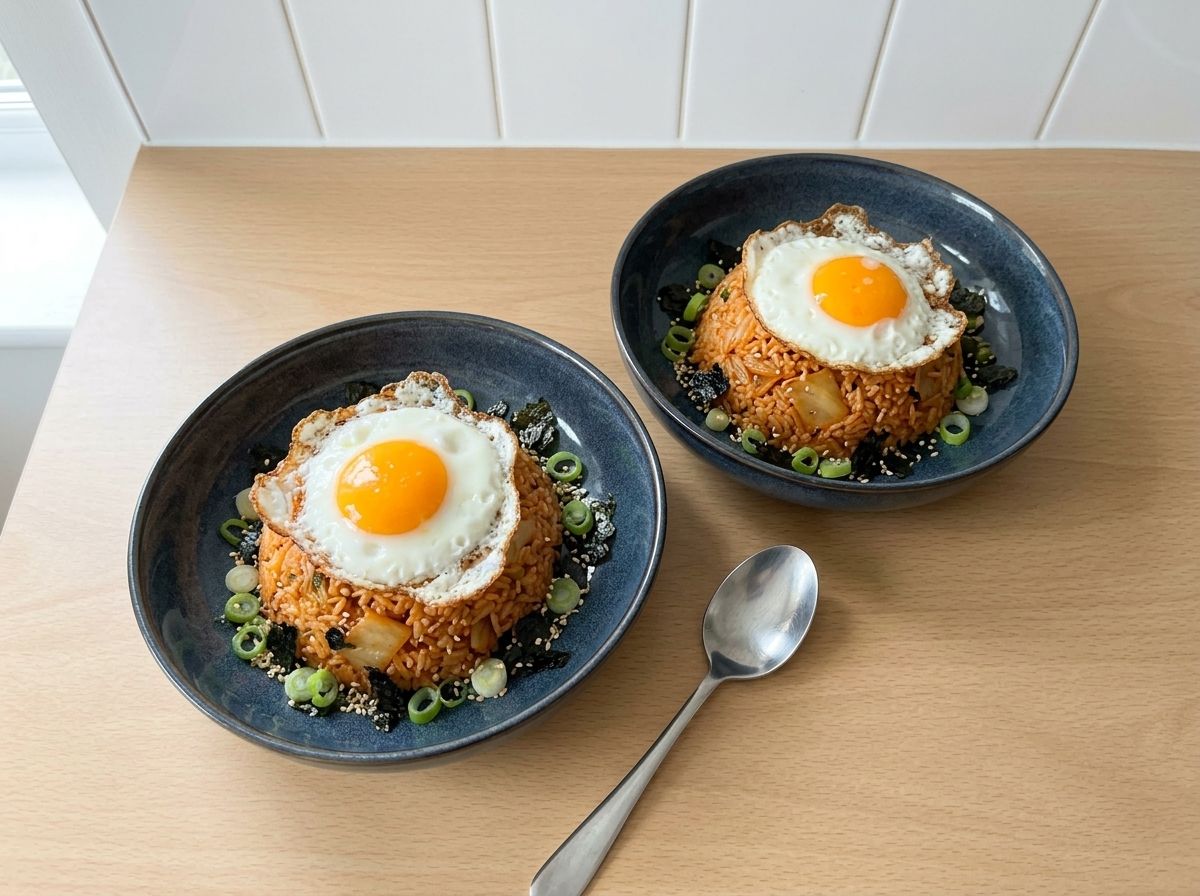
Korean kimchi fried rice made with ripe vegan kimchi fried until its edges catch, cold day-old rice, gochujang dissolved in the kimchi juice, toasted sesame oil off the heat and a runny fried egg on top, finished with scallions, sesame seeds and crumbled roasted seaweed. Four bowls in thirty minutes.
Ingredients
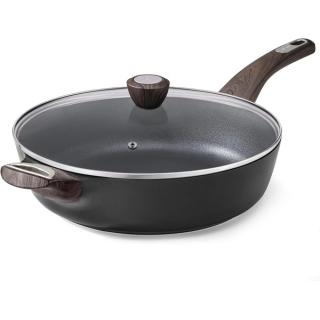
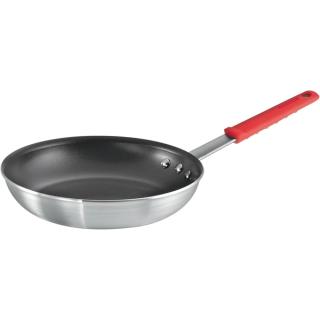
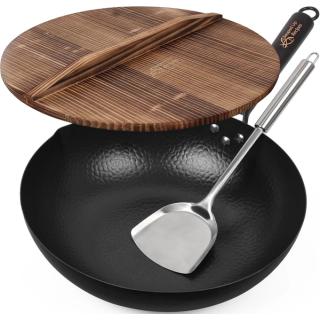
Equipment
As an Amazon Associate I earn from qualifying purchases, at no extra cost to you.
Instructions
- 1
Break up the cold rice
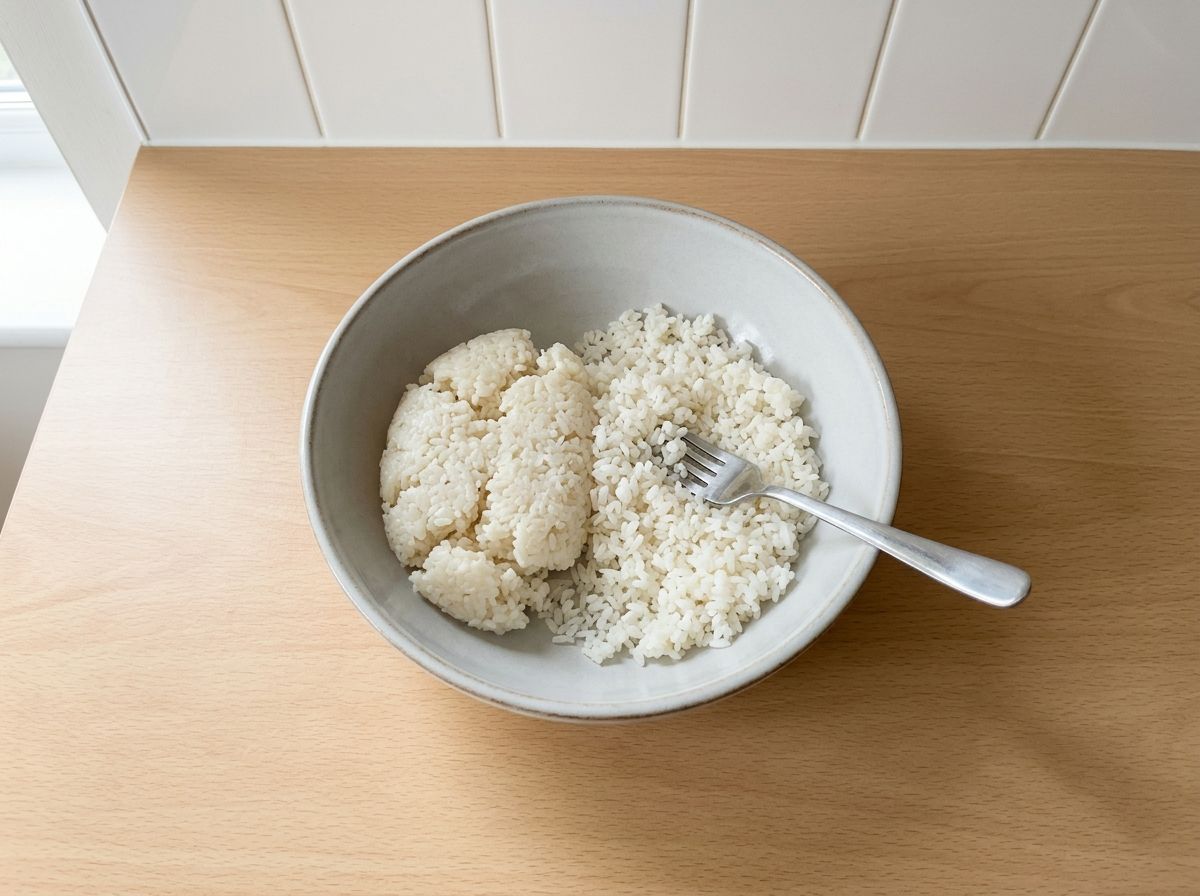
Tip the cold rice into a wide bowl and break the clumps apart with wet fingers or the back of a fork until the grains are loose and separate. It should feel dry and a little firm; that is what lets it fry rather than steam. Set it beside the stove.
- 2
Chop the kimchi and measure the juice
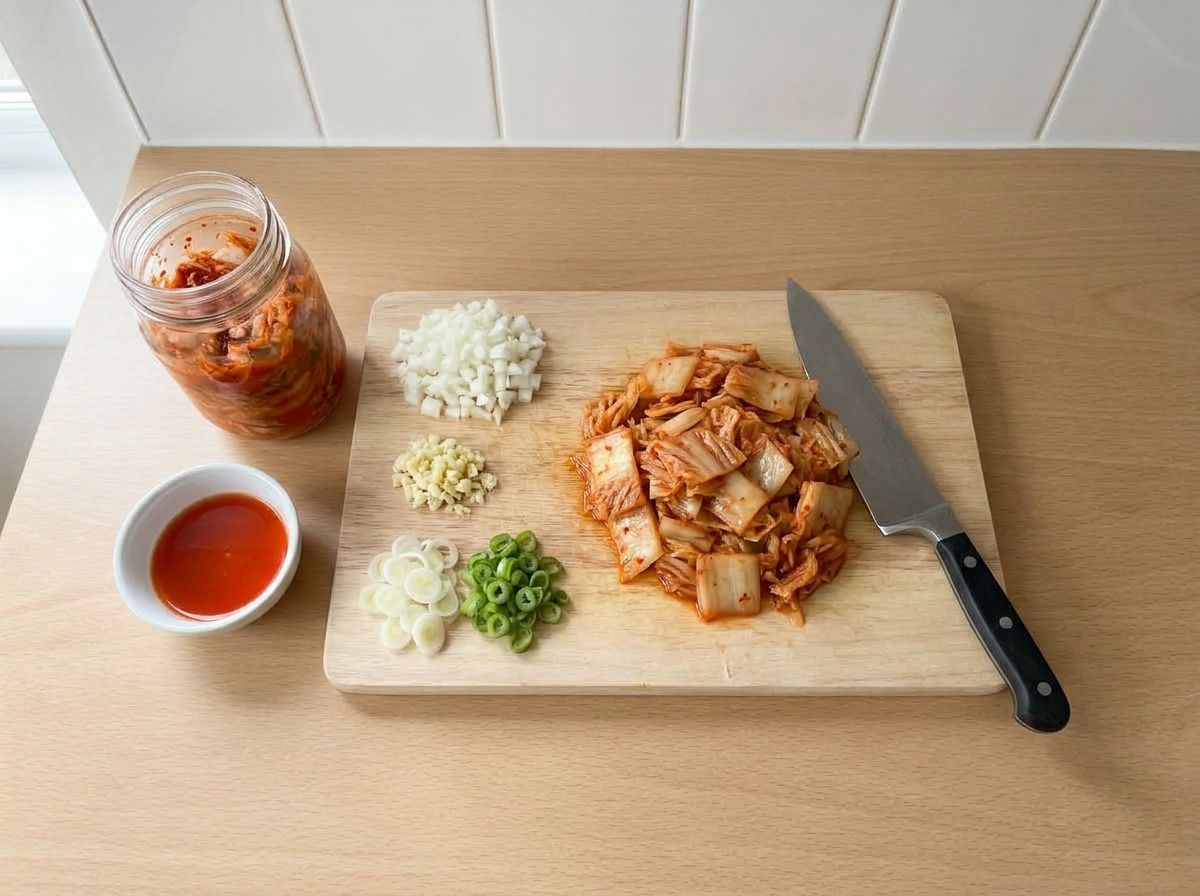
Lift the kimchi out of the jar with tongs, letting the brine drip back in, and chop it into thumbnail-sized pieces on a board. Pour 1/4 cup of the juice out of the jar into a small bowl. Dice the onion, mince the garlic, and slice the scallions, keeping the white parts and the green parts in separate piles.
- 3
Stir the sauce
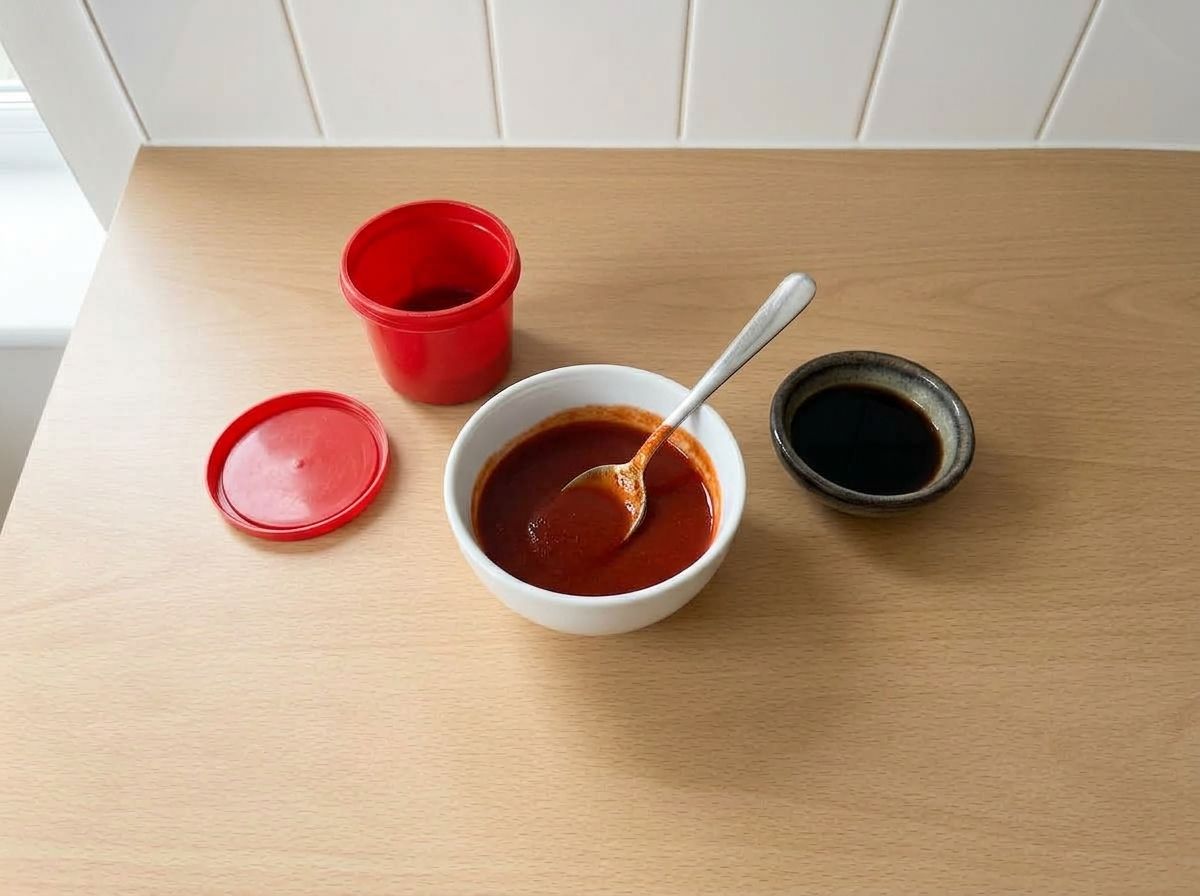
Add the gochujang, soy sauce and sugar to the bowl of kimchi juice and stir until the paste has dissolved and the sauce is a smooth, deep red. Dissolving it here, rather than dropping the paste into the pan, is what gets an even color through every grain.
- 4
Soften the onion
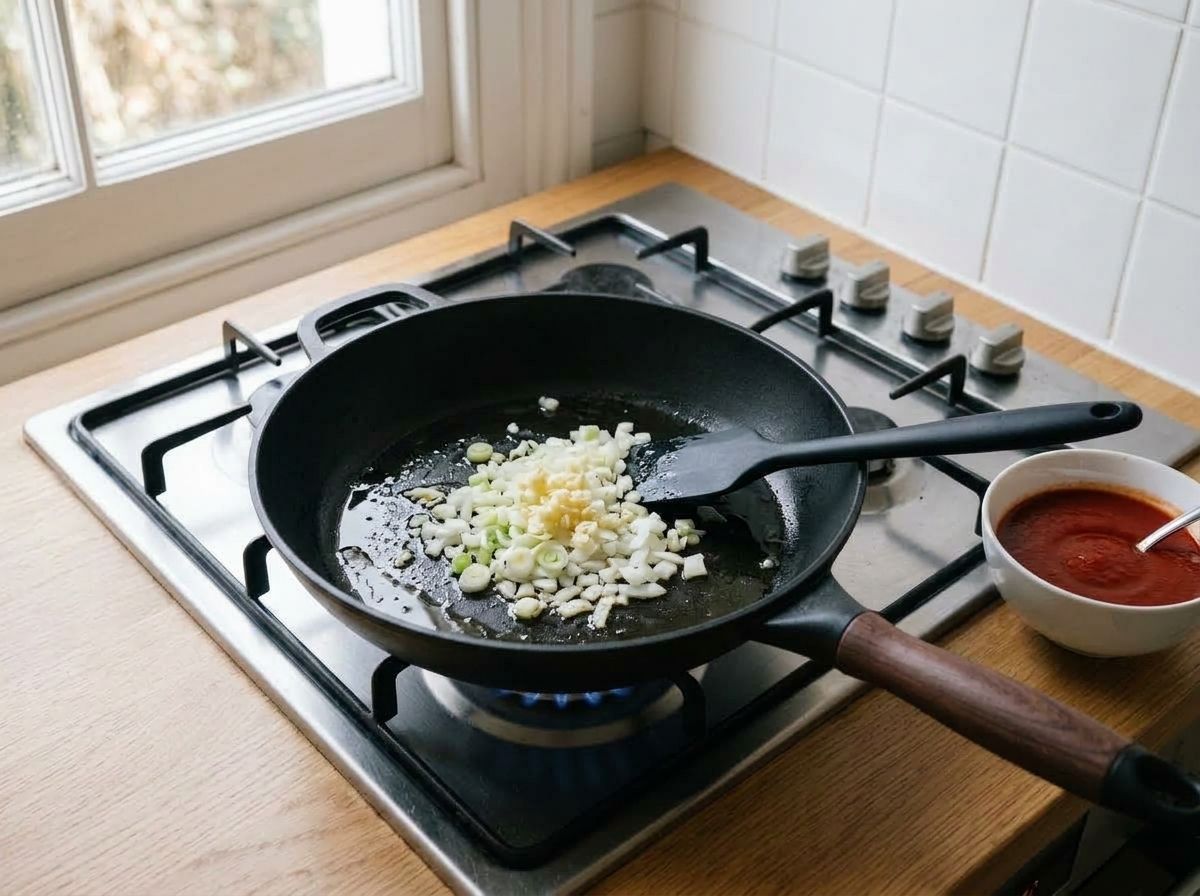
Heat 2 tablespoons of the oil in a large skillet over medium-high heat until it shimmers. If you are using the tofu, fry it first for 3 to 4 minutes until the edges brown. Add the onion and the scallion whites and cook for 2 minutes, stirring, until the onion turns translucent, then add the garlic and cook for 30 seconds more until it smells sweet.
- 5
Fry the kimchi
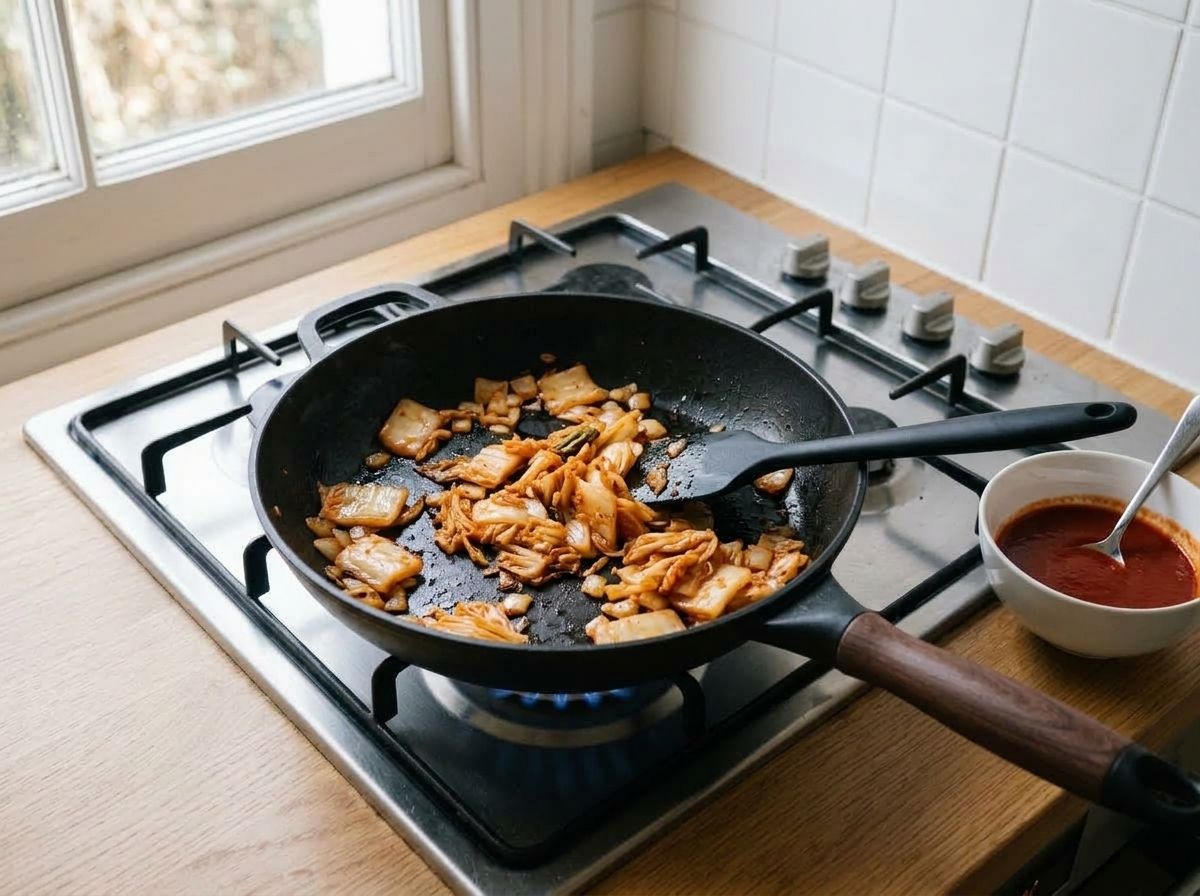
Add the chopped kimchi and spread it across the pan. Cook for 4 to 5 minutes, stirring now and then, until the liquid has cooked away, the cabbage has turned a deeper orange-red and the edges of some pieces are beginning to catch and darken on the pan. The sharp smell softens into something sweeter. This is the step that makes the dish, so do not rush it.
- 6
Add the rice and the sauce
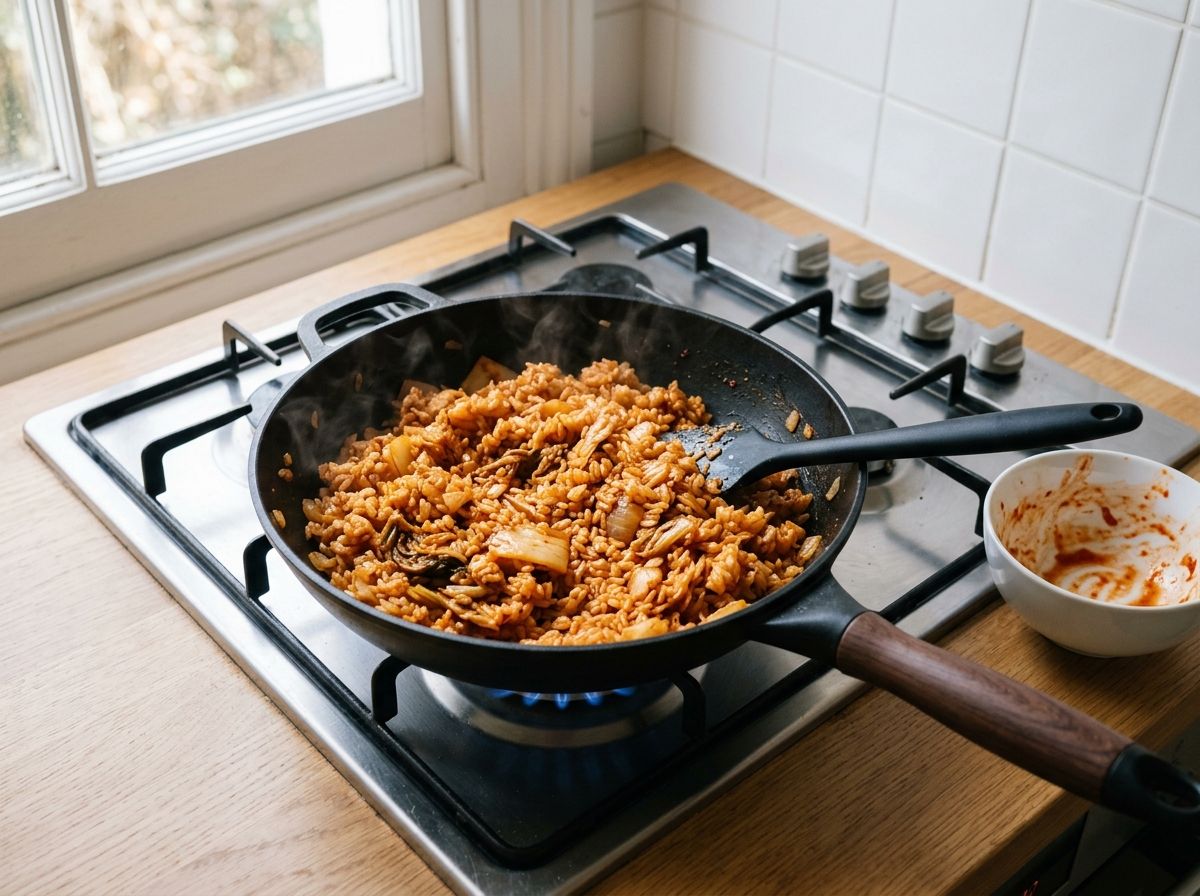
Add the rice and pour the sauce over it. Toss and press with the spatula, breaking up any clumps that are left, for 2 to 3 minutes until every grain is coated an even orange-red and the rice is hot all the way through. Taste a spoonful; it should be sour, savory and a little sweet. Add a splash more kimchi juice or a pinch of salt if it is flat.
- 7
Let the bottom crisp
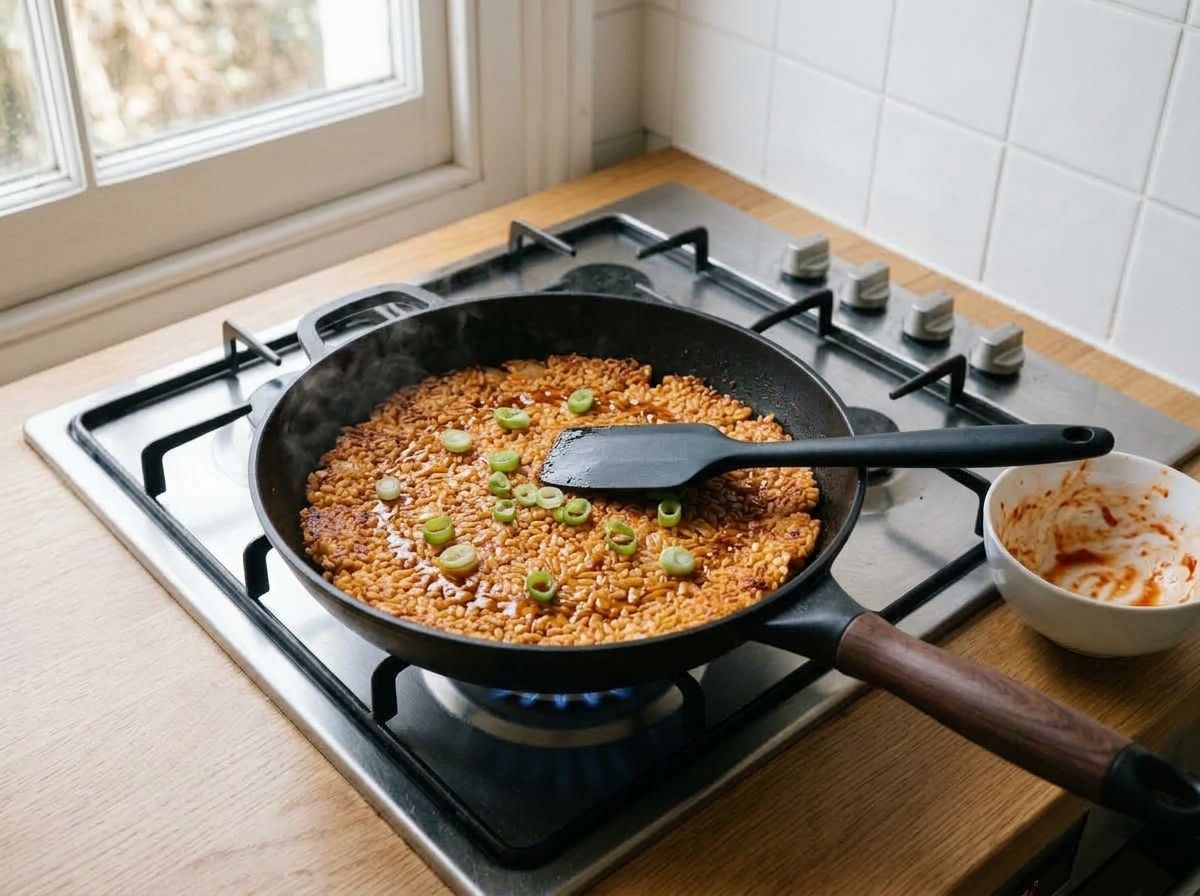
Spread the rice into an even layer, press it down firmly with the back of the spatula and leave it alone for 2 minutes, until you hear it crackle and the grains on the bottom turn crisp and golden. Turn off the heat, drizzle over the sesame oil, add half of the scallion greens and fold everything through once.
- 8
Fry the eggs
While the rice crisps, heat the remaining tablespoon of oil in a non-stick skillet over medium heat. Crack in the eggs and fry them sunny side up for 2 to 3 minutes, until the whites are set and the edges are lacy but the yolks are still runny. A pinch of salt on each.

- 9
Serve
Divide the rice between four bowls and slide an egg onto each. Scatter over the rest of the scallion greens, the sesame seeds and the crumbled seaweed. Break the yolk with a spoon and stir it through as you eat.
Notes
Vegan: leave off the eggs and add the smoked tofu, browned in the oil before the onion. Nothing else changes.
No day-old rice? Cook it with about 15 percent less water, spread it on a tray for 30 minutes to steam off, then refrigerate it uncovered for an hour.
If the kimchi is young and only mildly sour, stir a teaspoon of rice vinegar into the sauce.
A tablespoon of butter folded in with the sesame oil is a common Korean finish. It is not in the list so the recipe stays dairy free.
Nutrition Facts
4 servings · 339 g per serving
- Calories
- 464 kcal
% Daily Value*
- Total Fat
- 21.1 g27%
- Saturated Fat
- 4.1 g21%
- Sodium
- 398 mg17%
- Total Carbohydrate
- 52 g19%
- Dietary Fiber
- 1.9 g7%
- Sugars
- 3.3 g—
- Protein
- 16 g32%
Recipe from veggierecipes.blog
When it goes wrong
Troubleshooting
It came out wet and mushy, more like porridge than fried rice
Three causes, usually two of them together. The rice was fresh rather than cold from the fridge, so it steamed instead of frying; the kimchi went into the pan with the rice instead of before it, so its liquid had nowhere to go but into the grains; or the pan was crowded. Use day-old rice, fry the kimchi on its own until its liquid has cooked off, and cook a double batch in two rounds. A wet batch can be rescued by spreading it thin over high heat and leaving it alone for a couple of minutes, then turning and repeating.
It tastes raw and sharp, like cold kimchi stirred into hot rice
The kimchi was not fried for long enough. The step that makes this dish is cooking the chopped kimchi in oil, alone, for four or five minutes until its liquid is gone and the edges start to darken and stick. That is where the sharpness turns sweet. If the rice is already in, push it to one side, give the kimchi the pan for a few minutes, then fold everything back together. The teaspoon of sugar in the sauce is there for the same reason.
It is bland and not sour enough
Young kimchi. A jar opened within a week of buying it is crisp, salty and barely fermented, and no amount of gochujang makes up for the acidity it has not developed yet. Next time leave the sealed jar on the counter for a day or two first. This time, add a teaspoon of rice vinegar and a pinch of salt with the sauce, and check that the kimchi juice actually went in, because that is where most of the seasoning lives.
I wanted the crispy bottom and got either nothing or a burnt layer
Crisping needs enough oil, an even layer pressed down flat, and stillness. Stir it and nothing crisps; walk away and it burns. Spread the finished rice out, press it with the back of the spatula, leave it for two minutes over medium-high heat listening for the crackle, then lift a corner and look. A heavy skillet or a wok crisps better than a thin non-stick pan, and a thin pan with hot spots is usually the reason for the burnt layer.
It is pale pink and looks nothing like the picture
The color comes from three places, and one of them was missing. Ripe kimchi is deeper red than fresh, the kimchi juice carries the chili into the rice, and the gochujang finishes it. The commonest cause is draining the kimchi and throwing the juice away. The fix is the quarter cup of juice and the tablespoon of paste in the sauce, and a longer fry so the kimchi caramelizes to a deeper orange before the rice goes in.
The jar I used lists fish sauce. Is there a way round that?
Not for that jar, but it is worth knowing what to look for next time, because the seafood is rarely called seafood. Salted shrimp appears as saeujeot or shrimp paste, anchovy sauce as myeolchi aekjeot, fish sauce or fermented anchovy, and some brands add oyster or squid. The vegan jars are labeled as such. Nothing about the method changes with the jar, so once you have the right one the recipe is unchanged.
Before you serve
Serving & Storage
Kimchi fried rice is eaten from a bowl with a spoon, with the egg on top and the yolk broken into the rice in the first minute. In Korea it comes with a small bowl of clear soup on the side, often a light doenjang or seaweed soup, to cool the mouth between spoonfuls; our vegan miso soup does the same job. A few slices of cucumber or a little yellow pickled radish are the usual side, and a second helping of kimchi is not needed, since there is a good deal of it in the rice already.
The two popular Korean upgrades are cheese and butter. A handful of grated mozzarella melted over the hot rice under a lid for a minute is the snack bar version, and a tablespoon of butter stirred in with the sesame oil is how a lot of home cooks finish it. Both are left out so the recipe stays dairy free, and both are worth trying once; if you use cheese, a vegetarian-labeled one keeps the bowl vegetarian.
Making it ahead
The rice is the make-ahead part, and it has to be: cook it the day before, cool it and refrigerate it uncovered. The kimchi can be chopped and the sauce mixed in the morning. The frying itself takes ten minutes and does not improve with waiting, so do it when you are ready to eat, and fry the eggs last. A batch fried an hour ahead and kept warm goes soft; if you must hold it, leave it in the pan off the heat and give it two minutes over high heat, pressed flat, before serving.
Storing leftovers
The rice keeps for three days in a sealed container in the fridge and reheats well in a skillet with a tablespoon of water and a lid for the first minute, then uncovered until it crisps again. The microwave works but makes it soft. The fried eggs do not keep; fry fresh ones. Without the eggs the rice freezes well for up to two months, flat in a bag, and goes straight from frozen into a hot pan. Add the sesame oil and seaweed after reheating rather than before freezing.
Still wondering
Frequently Asked Questions
Is kimchi fried rice vegetarian?
Not usually, and the reason is the kimchi rather than the rice. Traditional kimchi is seasoned with salted shrimp and anchovy sauce, and the restaurant version often adds Spam, pork or bacon. Made with a vegan kimchi, as here, and with the egg as the only animal ingredient, it is vegetarian; leave off the egg and add the optional tofu and it is vegan.
Is kimchi fried rice gluten free?
Not as written. The soy sauce and nearly all gochujang contain wheat. Swap the soy sauce for tamari, and either buy one of the few gochujang brands that make a certified gluten-free version or replace the tablespoon of paste with a teaspoon of gochugaru flakes and a pinch of sugar. Check the kimchi label as well, since a few brands season theirs with soy sauce.
How many does this feed, and can I double it?
Four generous bowls, or two very hungry people, with one egg each. It halves cleanly. Doubling is fine for the quantities but not for the pan: eight cups of rice in one skillet steams rather than fries, so cook it in two batches, wiping the pan between them, and keep the first batch in a low oven while the second fries.
More Korean Home Cooking

Made this?